×
Request Free Sample ×

Kindly complete the form below to receive a free sample of this Report

* Please use a valid business email

Leading companies partner with us for data-driven Insights

clients tt-cursor
Hero Background
English
Chinese
French
Japanese
Korean
German
Spanish

Sex Cord Gonadal Stromal Tumor Market Size

ID: MRFR/MED/4456-HCR
100 Pages
Kinjoll Dey
February 2026

Sex Cord-Gonadal Stromal Tumor Market Research Report Information By Type (Granulosa Cell Tumor, Sertoli Cell Tumor, Others), By Diagnosis (Microscopy, Tumor Marker, Others), By Treatment (Chemotherapy, Surgery, Others), and By End-User – Global Forecast Till 2035

Share:
Download PDF ×

We do not share your information with anyone. However, we may send you emails based on your report interest from time to time. You may contact us at any time to opt-out.

Sex Cord Gonadal Stromal Tumor Market Infographic
Purchase Options

Sex Cord Gonadal Stromal Tumor Size

Sex Cord Gonadal Stromal Tumor Market Growth Projections and Opportunities

Sex Cord Gonadal Stromal Tumors (SCGST) are a rare collection of ovarian and testicular neoplasms that have their distinguishing histologic features. Like any other medical condition, market dynamics surrounding SCGST diagnosis, treatment, and management is influenced by many factors. This information reveals how it affects how the SCGST market is influenced by different things. Not being as common as some cancers means that little attention or resources are given to these tumors; thus affecting research funding and pharmaceutical interest. This makes it difficult for uniform guidelines to be established in relation to treatment protocols for healthcare providers.

Another important factor within the market is advancement in technology used for diagnosing such diseases. Thus early detection and accurate diagnosis of SCGSTs can be made possible by advancing medical imaging tools, genetic testing techniques among others. Consequently, this has a bearing on the entire market through better understanding of disease and enabling of timely interventions. The availability of sophisticated diagnostic tools also determines whether new therapies will work or not as they assist in guiding targeted therapy and improving outcomes for patients with SCGSTs.

In addition to that, drug development landscape influences the market dynamics associated with SCGSTs. One major challenge is having only few drugs approved specifically for treatment of these tumors. Small populations with SCGT may prompt pharmaceutical companies from investing into dedicated drug development processes thereby reducing availability of targeted therapies. However, emerging trends on precision medicine which has shifted focus on rare diseases might possibly alter this landscape hence leading more research as well as specialized treatments in treating STSGTs.

Healthcare policies and reimbursement mechanisms represent another critical factor influencing the SCGST market. Due to high prevalence disparities exist concerning coverage/payment for diagnostic tests and treatment of these conditions among them.Thus policy makers and insurers play an integral role where they determine financial support available to patients thereby making health care accessible on managing all aspects related to STSGTs at large.

Besides patient awareness and advocacy are market factors. This means that lack of knowledge about SCGSTs among the general population, healthcare professionals up to some specialists may lead to late detection and poor treatment. Efforts made by these patient organizations and healthcare providers through their various campaigns have raised awareness about the need for more research work on this disease; thus this is a possible reason why SCSTGs gained attention from researchers and policy makers.

Therefore, involvement of different players in the healthcare industry such as researchers, clinicians, pharmaceutical companies, and patient advocacy groups is crucial for shaping the SCGST market. These include multidisciplinary approaches aimed at facilitating information exchange, collaborative research, and clinical trials which accelerate development of effective treatments. As such, it can be safely stated that market reacts positively towards those actions which promote collaboration as well as sharing knowledge since they create enabling environment which in turn speeds up the progress of researches related to STSGTs.

Sex Cord Gonadal Stromal Tumor Market Size Graph
Author
Kinjoll Dey
Senior Research Analyst

He is an extremely curious individual currently working in Healthcare and Medical Devices Domain. Kinjoll is comfortably versed in data centric research backed by healthcare educational background. He leverages extensive data mining and analytics tools such as Primary and Secondary Research, Statistical Analysis, Machine Learning, Data Modelling. His key role also involves Technical Sales Support, Client Interaction and Project management within the Healthcare team. Lastly, he showcases extensive affinity towards learning new skills and remain fascinated in implementing them.

Leave a Comment

FAQs

What is the current market valuation of the Sex Cord-Gonadal Stromal Tumor Market?

<p>As of 2024, the market valuation stands at 1.65 USD Billion.</p>

What is the projected market size for the Sex Cord-Gonadal Stromal Tumor Market by 2035?

<p>The market is projected to reach approximately 4.885 USD Billion by 2035.</p>

What is the expected CAGR for the Sex Cord-Gonadal Stromal Tumor Market during the forecast period?

<p>The expected CAGR for the market from 2025 to 2035 is 10.37%.</p>

Which types of tumors are included in the Sex Cord-Gonadal Stromal Tumor Market segments?

<p>Key tumor types include granulosa cell tumor, Sertoli cell tumor, and Leydig cell tumor, among others.</p>

What is the market valuation for granulosa cell tumors in 2024?

<p>In 2024, the market valuation for granulosa cell tumors was approximately 0.495 USD Billion.</p>

How does the market for treatment options compare across different modalities?

In 2024, surgery accounted for 0.825 USD Billion, while chemotherapy and radiotherapy were valued at 0.495 USD Billion and 0.2475 USD Billion, respectively.

What are the primary end-users in the Sex Cord-Gonadal Stromal Tumor Market?

Primary end-users include hospitals and clinics, cancer research centers, and research and academic institutes.

What is the projected market size for immunohistochemistry diagnostics by 2035?

The market for immunohistochemistry diagnostics is expected to grow to approximately 0.9 USD Billion by 2035.

Which companies are leading the Sex Cord-Gonadal Stromal Tumor Market?

Key players in the market include Bristol-Myers Squibb, Novartis, and Pfizer, among others.

What is the expected growth trend for the market segments related to diagnosis?

The market segments for diagnosis, including microscopy and MRI, are anticipated to experience substantial growth during the forecast period.

Market Summary

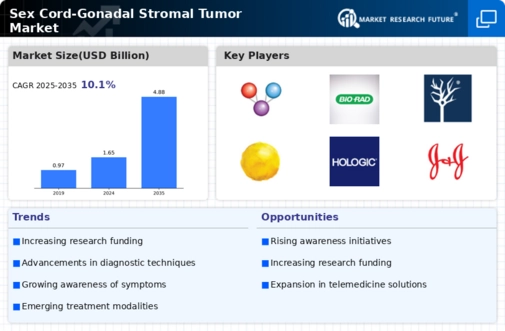
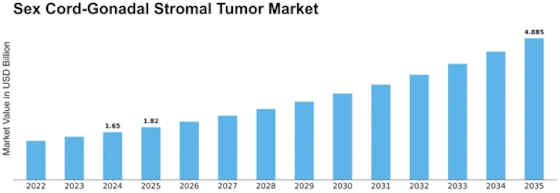
As per Market Research Future analysis, the Sex Cord-Gonadal Stromal Tumor Market Size was estimated at 1.65 USD Billion in 2024. The Sex Cord-Gonadal Stromal Tumor industry is projected to grow from USD 1.821 Billion in 2025 to USD 4.885 Billion by 2035, exhibiting a compound annual growth rate (CAGR) of 10.37% during the forecast period 2025 - 2035

Key Market Trends & Highlights

The Sex Cord-Gonadal Stromal Tumor Market is poised for growth driven by advancements in diagnostics and treatment.

  • North America remains the largest market for Sex Cord-Gonadal Stromal Tumors, reflecting a robust healthcare infrastructure.
  • The Asia-Pacific region is emerging as the fastest-growing market, fueled by increasing healthcare investments and awareness.
  • Granulosa Cell Tumors dominate the market, while Sertoli Cell Tumors are experiencing the fastest growth due to evolving treatment options.
  • Rising incidence rates and advancements in treatment modalities are key drivers propelling market expansion.

Market Size & Forecast

2024 Market Size 1.65 (USD Billion)
2035 Market Size 4.885 (USD Billion)
CAGR (2025 - 2035) 10.37%
Largest Regional Market Share in 2024 Americas

Major Players

Bristol-Myers Squibb (US), Novartis (CH), Pfizer (US), Merck & Co. (US), AstraZeneca (GB), Eli Lilly and Company (US), Bayer (DE), Amgen (US), Roche (CH)

Market Trends

The Sex Cord-Gonadal Stromal Tumor Market is currently experiencing a notable evolution, driven by advancements in diagnostic techniques and treatment modalities. Increased awareness regarding rare tumors has led to enhanced screening practices, which may contribute to earlier detection and improved patient outcomes. Furthermore, ongoing research into the genetic and molecular underpinnings of these tumors appears to be fostering the development of targeted therapies, potentially transforming the therapeutic landscape. As healthcare providers become more adept at recognizing and managing these conditions, the market is likely to expand, reflecting a growing demand for specialized care and innovative treatment options. In addition, the collaboration between academic institutions and pharmaceutical companies seems to be intensifying, facilitating the translation of research findings into clinical applications. This synergy may lead to the introduction of novel therapeutic agents and improved management strategies for patients with Sex Cord-Gonadal Stromal Tumors. Moreover, the increasing prevalence of these tumors, although rare, suggests a need for comprehensive treatment protocols and supportive care services. As the market continues to evolve, stakeholders must remain vigilant in adapting to emerging trends and addressing the unique challenges associated with these complex tumors.

Advancements in Diagnostic Techniques

Recent innovations in imaging and genetic testing are enhancing the ability to identify Sex Cord-Gonadal Stromal Tumors at earlier stages. These advancements may lead to more accurate diagnoses and tailored treatment plans, ultimately improving patient outcomes.

Emergence of Targeted Therapies

The ongoing research into the molecular characteristics of Sex Cord-Gonadal Stromal Tumors is paving the way for the development of targeted therapies. These treatments could offer more effective options for patients, potentially transforming the management of these tumors.

Increased Collaboration in Research

The growing partnership between research institutions and pharmaceutical companies is fostering the development of new therapeutic strategies. This collaboration may accelerate the translation of scientific discoveries into clinical practice, enhancing treatment options for affected individuals.

Sex Cord Gonadal Stromal Tumor Market Market Drivers

Increased Awareness and Education

The heightened awareness and education surrounding Sex Cord-Gonadal Stromal Tumors are pivotal drivers for the Sex Cord-Gonadal Stromal Tumor Market. As healthcare professionals and the general public become more informed about these tumors, early detection rates are likely to improve. Educational initiatives and campaigns aimed at increasing knowledge about symptoms and risk factors are essential in this regard. This increased awareness may lead to more patients seeking medical advice and subsequent treatment, thereby expanding the market. Furthermore, collaborations between healthcare organizations and educational institutions can facilitate research and development, potentially leading to new treatment options and diagnostic tools. This trend suggests a proactive approach to managing SCGST, which could positively impact market growth.

Advancements in Treatment Modalities

Innovations in treatment modalities for Sex Cord-Gonadal Stromal Tumors are significantly influencing the Sex Cord-Gonadal Stromal Tumor Market. The development of targeted therapies and personalized medicine approaches has shown promise in improving patient outcomes. Recent studies indicate that these advanced treatments may lead to higher survival rates and better quality of life for patients. As more healthcare professionals adopt these innovative therapies, the market is expected to grow. Additionally, the introduction of minimally invasive surgical techniques has the potential to enhance recovery times and reduce complications, further driving demand. The ongoing research into novel therapeutic agents may also expand the treatment landscape, indicating a dynamic evolution within the market.

Growing Investment in Oncology Research

The growing investment in oncology research is a significant driver for the Sex Cord-Gonadal Stromal Tumor Market. Increased funding from both public and private sectors is being directed towards understanding the biology of SCGST and developing effective treatment strategies. This influx of capital is likely to accelerate research initiatives, leading to breakthroughs in diagnosis and therapy. Moreover, partnerships between pharmaceutical companies and research institutions are becoming more common, fostering innovation in the field. As new findings emerge, they may translate into improved clinical practices and expanded treatment options for patients. This trend indicates a robust commitment to advancing the understanding and management of SCGST, which could enhance market dynamics.

Regulatory Support for Innovative Therapies

Regulatory support for innovative therapies is emerging as a crucial driver for the Sex Cord-Gonadal Stromal Tumor Market. Regulatory agencies are increasingly recognizing the need for expedited approval processes for novel treatments, particularly in oncology. This support can facilitate quicker access to cutting-edge therapies for patients suffering from SCGST. The implementation of programs aimed at encouraging the development of orphan drugs and rare disease treatments is particularly relevant, as SCGST falls within this category. As regulatory frameworks evolve to support innovation, the market may witness a surge in new therapeutic options. This trend suggests a favorable environment for the introduction of groundbreaking treatments, which could significantly impact patient care and market growth.

Rising Incidence of Sex Cord-Gonadal Stromal Tumors

The increasing incidence of Sex Cord-Gonadal Stromal Tumors (SCGST) is a notable driver for the Sex Cord-Gonadal Stromal Tumor Market. Recent data indicates that these tumors, although rare, are being diagnosed more frequently due to improved awareness and advancements in diagnostic techniques. The rise in cases has led to a greater demand for specialized treatment options and healthcare services. As healthcare providers become more adept at identifying these tumors, the market is likely to experience growth. Furthermore, the increasing prevalence of conditions that may lead to SCGST, such as hormonal imbalances, could further contribute to the rising incidence. This trend suggests a potential expansion in the market as more patients seek treatment and management options.

Market Segment Insights

By Type: Granulosa Cell Tumor (Largest) vs. Sertoli Cell Tumor (Fastest-Growing)

In the Sex Cord-Gonadal Stromal Tumor Market, granulosa cell tumors hold the largest share, given their relative frequency among sex cord tumors. This type is primarily found in females and is characterized by a slow growth rate, making it a significant focus for treatment strategies. Meanwhile, Sertoli cell tumors, though less common, are recognized as the fastest-growing segment, reflecting increased awareness and early detection strategies among healthcare providers.

Granulosa Cell Tumor (Dominant) vs. Sertoli Cell Tumor (Emerging)

Granulosa cell tumors are dominant in the Sex Cord-Gonadal Stromal Tumor Market, often associated with estrogen production, contributing to hormonal imbalances and symptoms in patients. Their occurrence primarily in post-menopausal women highlights a specific patient demographic for treatment. Conversely, Sertoli cell tumors are emerging with a growing incidence rate, particularly among younger populations, due to an increased focus on hormonal therapies. These tumors possess distinct histological features and clinical behaviors that differentiate them from granulosa cell tumors, necessitating varied therapeutic approaches to optimize patient outcomes.

By Diagnosis: Microscopy (Largest) vs. Immunohistochemistry (Fastest-Growing)

In the Sex Cord-Gonadal Stromal Tumor Market, the diagnosis segment exhibits a diverse array of techniques utilized to enhance diagnostic accuracy. Microscopy remains the largest segment, as it provides detailed cellular morphology and structure, essential for accurate identification of tumor types. Immunohistochemistry follows closely, capitalizing on its ability to reveal specific cellular markers that can differentiate between tumor types, thus gaining prominence in clinical settings for more precise diagnoses. Other techniques such as tumor marker assessments, ultrasound, and MRI also play critical roles but are not as predominant in market share.

Diagnosis Techniques: Microscopy (Dominant) vs. Immunohistochemistry (Emerging)

Microscopy is a cornerstone technique in the diagnosis of Sex Cord-Gonadal Stromal Tumors, utilized for its reliability in visualizing histopathological features that define tumor entities. It continues to dominate due to its established presence in laboratories and familiarity among pathologists. On the other hand, immunohistochemistry is rapidly emerging as a critical diagnostic tool, enabling healthcare professionals to identify specific proteins linked to tumor characteristics. The ongoing advancements in antibodies and staining techniques are propelling immunohistochemistry into the forefront of diagnostic methodologies, ensuring that it adapts to the evolving landscape of oncological pathology.

By Treatment: Chemotherapy (Largest) vs. Surgery (Fastest-Growing)

In the Sex Cord-Gonadal Stromal Tumor Market, chemotherapy holds the largest market share, benefiting from its established effectiveness against a variety of tumor types. This approach remains the cornerstone of treatment, widely adopted by healthcare providers for its proven results. Meanwhile, surgery is emerging rapidly as a preferred method among medical professionals due to its curative potential and effectiveness in localized cases, indicating a shifting preference in treatment methods. Growth trends in this segment highlight the increasing focus on personalized medicine and advancements in surgical techniques. The rise in awareness and detection of sex cord-gonadal stromal tumors is leading to more cases being identified, thus driving the demand for both chemotherapy and surgery. Emerging techniques are enhancing surgical outcomes, while chemotherapy continues to evolve with new agents and combination strategies, allowing more tailored and effective interventions for patients.

Chemotherapy (Dominant) vs. Surgery (Emerging)

Chemotherapy remains the dominant treatment modality in the Sex Cord-Gonadal Stromal Tumor Market, credited with extensive clinical experience and a historical foundation in oncological protocols. It comprises various agents that target tumor cells effectively, providing a systematic approach to treatment. On the other hand, surgery is emerging as a crucial alternative, especially for patients with localized tumors, enabling potential curative interventions. As surgical techniques improve and become less invasive, the popularity of surgery is surging. These advancements offer significant benefits, including reduced recovery times and improved patient outcomes. Consequently, while chemotherapy retains its prominence, surgical options are rapidly gaining traction, marking a shift in treatment paradigms.

By End-User: Hospitals and Clinics (Largest) vs. Cancer Research Centers (Fastest-Growing)

The Sex Cord-Gonadal Stromal Tumor Market showcases a diverse distribution of end-users. Hospitals and clinics hold the largest share due to their extensive patient base and availability of specialized treatment options. They are pivotal in early diagnosis and management of sex cord-gonadal stromal tumors. On the other hand, cancer research centers are gradually capturing attention as they focus on innovative treatment modalities and specialized research, indicating a growing significance within this segment that cannot be overlooked.

Hospitals and Clinics (Dominant) vs. Cancer Research Centers (Emerging)

Hospitals and clinics play a crucial role in the management of sex cord-gonadal stromal tumors. They offer comprehensive diagnostic and therapeutic services, making them the dominant players in this market segment. Their extensive infrastructure, experienced medical personnel, and multidisciplinary approach contribute to a more effective treatment pathway for patients. In contrast, cancer research centers are emerging as significant contributors by facilitating cutting-edge research and clinical trials, which are essential for advancing treatment options. These centers often collaborate with academic institutes to foster innovation and aim to improve patient outcomes, establishing themselves as vital players in the evolving landscape of oncology.

Get more detailed insights about Sex Cord-Gonadal Stromal Tumor Market Research Report – Forecast to 2035

Regional Insights

North America : Leading Market Innovators

The North American market for Sex Cord-Gonadal Stromal Tumors is driven by advanced healthcare infrastructure, high R&D investments, and increasing awareness of rare tumors. The region holds approximately 60% of the global market share, making it the largest market. Regulatory support from agencies like the FDA further catalyzes growth, ensuring timely access to innovative therapies and treatments. The United States is the leading country in this market, with significant contributions from key players such as Bristol-Myers Squibb, Pfizer, and Merck & Co. The competitive landscape is characterized by ongoing clinical trials and collaborations among pharmaceutical companies, enhancing treatment options for patients. Canada also plays a vital role, contributing to the overall market dynamics with its supportive healthcare policies.

Europe : Emerging Regulatory Frameworks

Europe is witnessing a significant rise in the Sex Cord-Gonadal Stromal Tumor market, driven by increasing healthcare expenditure and a focus on personalized medicine. The region accounts for approximately 25% of the global market share, making it the second-largest market. Regulatory frameworks, such as the European Medicines Agency's guidelines, are fostering innovation and expediting the approval process for new therapies, enhancing patient access to treatments. Leading countries in Europe include Germany, France, and the United Kingdom, where major pharmaceutical companies like Novartis and AstraZeneca are actively involved. The competitive landscape is marked by strategic partnerships and collaborations aimed at advancing research and development. The presence of robust healthcare systems and a growing emphasis on rare diseases further bolster market growth.

Asia-Pacific : Rapidly Expanding Market

The Asia-Pacific region is rapidly emerging as a significant player in the Sex Cord-Gonadal Stromal Tumor market, driven by increasing healthcare investments and a growing patient population. The region holds about 10% of the global market share, with countries like China and India leading the charge. Regulatory initiatives aimed at improving healthcare access and affordability are also contributing to market growth, making it a focal point for pharmaceutical companies. China is the largest market in the region, with a burgeoning pharmaceutical sector and increasing collaborations with global players. India follows closely, with a strong emphasis on research and development. The competitive landscape is characterized by local and international companies striving to innovate and provide effective treatment options, enhancing the overall market dynamics.

Middle East and Africa : Untapped Market Potential

The Middle East and Africa region presents untapped potential in the Sex Cord-Gonadal Stromal Tumor market, driven by increasing awareness and healthcare improvements. The market share in this region is approximately 5%, with countries like South Africa and the UAE showing promising growth trends. Regulatory bodies are beginning to focus on rare diseases, which is expected to catalyze market development in the coming years. South Africa is leading the market in this region, supported by a growing healthcare infrastructure and increasing investments in medical research. The competitive landscape is evolving, with both local and international players entering the market to address the unmet needs of patients. Collaborative efforts among healthcare providers and pharmaceutical companies are essential for enhancing treatment accessibility and improving patient outcomes.

Key Players and Competitive Insights

The Sex Cord-Gonadal Stromal Tumor Market is characterized by a complex interplay of competitive dynamics, driven by a growing emphasis on innovative treatment modalities and personalized medicine. Key players such as Bristol-Myers Squibb (US), Novartis (CH), and Pfizer (US) are actively shaping the landscape through strategic initiatives that focus on research and development, partnerships, and regional expansion. Bristol-Myers Squibb (US) has positioned itself as a leader in immunotherapy, which may enhance treatment options for patients with sex cord-gonadal stromal tumors. Meanwhile, Novartis (CH) appears to be leveraging its extensive pipeline of targeted therapies, indicating a commitment to addressing unmet medical needs in this niche market. Pfizer (US) is also making strides, particularly in the realm of digital health solutions, which could potentially streamline patient management and improve outcomes.

The business tactics employed by these companies reflect a concerted effort to optimize supply chains and localize manufacturing, thereby enhancing operational efficiency. The market structure is moderately fragmented, with several players vying for dominance. However, the collective influence of these key players is significant, as they drive innovation and set industry standards that smaller companies often follow.

In August 2025, Bristol-Myers Squibb (US) announced a collaboration with a leading biotechnology firm to develop a novel immunotherapy specifically targeting sex cord-gonadal stromal tumors. This strategic partnership is likely to bolster their research capabilities and accelerate the development of new treatment options, thereby reinforcing their competitive edge in the market.

In September 2025, Novartis (CH) launched a new clinical trial aimed at evaluating the efficacy of its latest targeted therapy in patients with sex cord-gonadal stromal tumors. This initiative not only underscores Novartis's commitment to advancing treatment options but also positions the company to potentially capture a larger market share as results from the trial become available.

In July 2025, Pfizer (US) unveiled a digital health platform designed to enhance patient engagement and streamline treatment protocols for sex cord-gonadal stromal tumor patients. This move reflects a broader trend towards digitalization in healthcare, suggesting that Pfizer is keen on integrating technology into its therapeutic offerings, which may lead to improved patient outcomes and satisfaction.

As of October 2025, the competitive landscape is increasingly defined by trends such as digitalization, sustainability, and the integration of artificial intelligence in treatment protocols. Strategic alliances are becoming more prevalent, as companies recognize the value of collaboration in driving innovation. Looking ahead, it appears that competitive differentiation will increasingly hinge on technological advancements and the reliability of supply chains, rather than solely on price. This shift suggests a future where innovation and patient-centric solutions will dominate the market.

Key Companies in the Sex Cord Gonadal Stromal Tumor Market include

Industry Developments

November 2023: OncoCell MDx announces the launch of its new OncoCell GIST test, a molecular diagnostic test for the detection of genetic mutations associated with sex cord-gonadal stromal tumors (SCGSTs). The OncoCell GIST test is designed to help clinicians diagnose SCGSTs more accurately and efficiently, and to guide treatment decisions.

October 2023: Bio-Rad Laboratories, Inc. announces the launch of its new QX200 Droplet Digital PCR (ddPCR) System, a ddPCR system that is designed to provide researchers with a more accurate and sensitive way to detect and quantify genetic mutations associated with SCGSTs.

September 2023: Thermo Fisher Scientific, Inc. announces the launch of its new Oncomine Focus Dx NGS Panel, a next-generation sequencing (NGS) panel that is designed to detect and quantify genetic mutations associated with SCGSTs and other rare cancers.

August 2023: QIAGEN N.V. announces the launch of its new Rotor-Gene Q MDx PCR System, a qPCR system that is designed to provide clinicians with a rapid and accurate way to detect genetic mutations associated with SCGSTs.

July 2023: Roche Diagnostics announces the launch of its new cobas 4800 System, a real-time PCR system that is designed to provide clinicians with a high-throughput and accurate way to detect genetic mutations associated with SCGSTs.

Future Outlook

Sex Cord Gonadal Stromal Tumor Market Future Outlook

The Sex Cord-Gonadal Stromal Tumor Market is projected to grow at a 10.37% CAGR from 2025 to 2035, driven by advancements in diagnostics, treatment options, and increasing awareness.

New opportunities lie in:

  • Development of targeted therapies for specific tumor types.
  • Expansion of telemedicine services for remote patient monitoring.
  • Investment in AI-driven diagnostic tools for early detection.

By 2035, the market is expected to achieve substantial growth and innovation.

Market Segmentation

Sex Cord Gonadal Stromal Tumor Market Type Outlook

  • granulosa cell tumor
  • Sertoli cell tumor
  • thecoma
  • Leydig cell tumor
  • Sertoli Leydig cell tumor
  • gynandroblastoma
  • Sex Cord Tumor with Annular Tubules (SCTAT)

Sex Cord Gonadal Stromal Tumor Market End-User Outlook

  • hospitals and clinics
  • cancer research centers
  • research and academic institutes
  • others

Sex Cord Gonadal Stromal Tumor Market Diagnosis Outlook

  • microscopy
  • immunohistochemistry
  • tumor marker
  • ultrasound
  • Magnetic Resonance Imaging (MRI)
  • others

Sex Cord Gonadal Stromal Tumor Market Treatment Outlook

  • chemotherapy
  • radiotherapy
  • surgery
  • others

Report Scope

MARKET SIZE 2024 1.65(USD Billion)
MARKET SIZE 2025 1.821(USD Billion)
MARKET SIZE 2035 4.885(USD Billion)
COMPOUND ANNUAL GROWTH RATE (CAGR) 10.37% (2025 - 2035)
REPORT COVERAGE Revenue Forecast, Competitive Landscape, Growth Factors, and Trends
BASE YEAR 2024
Market Forecast Period 2025 - 2035
Historical Data 2019 - 2024
Market Forecast Units USD Billion
Key Companies Profiled Bristol-Myers Squibb (US), Novartis (CH), Pfizer (US), Merck & Co. (US), AstraZeneca (GB), Eli Lilly and Company (US), Bayer (DE), Amgen (US), Roche (CH)
Segments Covered Type, Diagnosis, Treatment, End-User – Global Forecast Till 2035
Key Market Opportunities Advancements in targeted therapies enhance treatment options in the Sex Cord-Gonadal Stromal Tumor Market.
Key Market Dynamics Rising demand for targeted therapies drives innovation and competition in the Sex Cord-Gonadal Stromal Tumor market.
Countries Covered North America, Europe, APAC, South America, MEA

FAQs

What is the current market valuation of the Sex Cord-Gonadal Stromal Tumor Market?

<p>As of 2024, the market valuation stands at 1.65 USD Billion.</p>

What is the projected market size for the Sex Cord-Gonadal Stromal Tumor Market by 2035?

<p>The market is projected to reach approximately 4.885 USD Billion by 2035.</p>

What is the expected CAGR for the Sex Cord-Gonadal Stromal Tumor Market during the forecast period?

<p>The expected CAGR for the market from 2025 to 2035 is 10.37%.</p>

Which types of tumors are included in the Sex Cord-Gonadal Stromal Tumor Market segments?

<p>Key tumor types include granulosa cell tumor, Sertoli cell tumor, and Leydig cell tumor, among others.</p>

What is the market valuation for granulosa cell tumors in 2024?

<p>In 2024, the market valuation for granulosa cell tumors was approximately 0.495 USD Billion.</p>

How does the market for treatment options compare across different modalities?

In 2024, surgery accounted for 0.825 USD Billion, while chemotherapy and radiotherapy were valued at 0.495 USD Billion and 0.2475 USD Billion, respectively.

What are the primary end-users in the Sex Cord-Gonadal Stromal Tumor Market?

Primary end-users include hospitals and clinics, cancer research centers, and research and academic institutes.

What is the projected market size for immunohistochemistry diagnostics by 2035?

The market for immunohistochemistry diagnostics is expected to grow to approximately 0.9 USD Billion by 2035.

Which companies are leading the Sex Cord-Gonadal Stromal Tumor Market?

Key players in the market include Bristol-Myers Squibb, Novartis, and Pfizer, among others.

What is the expected growth trend for the market segments related to diagnosis?

The market segments for diagnosis, including microscopy and MRI, are anticipated to experience substantial growth during the forecast period.

  1. SECTION I: EXECUTIVE SUMMARY AND KEY HIGHLIGHTS
    1. | 1.1 EXECUTIVE SUMMARY
    2. | | 1.1.1 Market Overview
    3. | | 1.1.2 Key Findings
    4. | | 1.1.3 Market Segmentation
    5. | | 1.1.4 Competitive Landscape
    6. | | 1.1.5 Challenges and Opportunities
    7. | | 1.1.6 Future Outlook
  2. SECTION II: SCOPING, METHODOLOGY AND MARKET STRUCTURE
    1. | 2.1 MARKET INTRODUCTION
    2. | | 2.1.1 Definition
    3. | | 2.1.2 Scope of the study
    4. | | | 2.1.2.1 Research Objective
    5. | | | 2.1.2.2 Assumption
    6. | | | 2.1.2.3 Limitations
    7. | 2.2 RESEARCH METHODOLOGY
    8. | | 2.2.1 Overview
    9. | | 2.2.2 Data Mining
    10. | | 2.2.3 Secondary Research
    11. | | 2.2.4 Primary Research
    12. | | | 2.2.4.1 Primary Interviews and Information Gathering Process
    13. | | | 2.2.4.2 Breakdown of Primary Respondents
    14. | | 2.2.5 Forecasting Model
    15. | | 2.2.6 Market Size Estimation
    16. | | | 2.2.6.1 Bottom-Up Approach
    17. | | | 2.2.6.2 Top-Down Approach
    18. | | 2.2.7 Data Triangulation
    19. | | 2.2.8 Validation
  3. SECTION III: QUALITATIVE ANALYSIS
    1. | 3.1 MARKET DYNAMICS
    2. | | 3.1.1 Overview
    3. | | 3.1.2 Drivers
    4. | | 3.1.3 Restraints
    5. | | 3.1.4 Opportunities
    6. | 3.2 MARKET FACTOR ANALYSIS
    7. | | 3.2.1 Value chain Analysis
    8. | | 3.2.2 Porter's Five Forces Analysis
    9. | | | 3.2.2.1 Bargaining Power of Suppliers
    10. | | | 3.2.2.2 Bargaining Power of Buyers
    11. | | | 3.2.2.3 Threat of New Entrants
    12. | | | 3.2.2.4 Threat of Substitutes
    13. | | | 3.2.2.5 Intensity of Rivalry
    14. | | 3.2.3 COVID-19 Impact Analysis
    15. | | | 3.2.3.1 Market Impact Analysis
    16. | | | 3.2.3.2 Regional Impact
    17. | | | 3.2.3.3 Opportunity and Threat Analysis
  4. SECTION IV: QUANTITATIVE ANALYSIS
    1. | 4.1 Healthcare, BY Type (USD Billion)
    2. | | 4.1.1 granulosa cell tumor
    3. | | 4.1.2 Sertoli cell tumor
    4. | | 4.1.3 thecoma
    5. | | 4.1.4 Leydig cell tumor
    6. | | 4.1.5 Sertoli Leydig cell tumor
    7. | | 4.1.6 gynandroblastoma
    8. | | 4.1.7 Sex Cord Tumor with Annular Tubules (SCTAT)
    9. | 4.2 Healthcare, BY Diagnosis (USD Billion)
    10. | | 4.2.1 microscopy
    11. | | 4.2.2 immunohistochemistry
    12. | | 4.2.3 tumor marker
    13. | | 4.2.4 ultrasound
    14. | | 4.2.5 Magnetic Resonance Imaging (MRI)
    15. | | 4.2.6 others
    16. | 4.3 Healthcare, BY Treatment (USD Billion)
    17. | | 4.3.1 chemotherapy
    18. | | 4.3.2 radiotherapy
    19. | | 4.3.3 surgery
    20. | | 4.3.4 others
    21. | 4.4 Healthcare, BY End-User (USD Billion)
    22. | | 4.4.1 hospitals and clinics
    23. | | 4.4.2 cancer research centers
    24. | | 4.4.3 research and academic institutes
    25. | | 4.4.4 others
    26. | 4.5 Healthcare, BY Region (USD Billion)
    27. | | 4.5.1 North America
    28. | | | 4.5.1.1 US
    29. | | | 4.5.1.2 Canada
    30. | | 4.5.2 Europe
    31. | | | 4.5.2.1 Germany
    32. | | | 4.5.2.2 UK
    33. | | | 4.5.2.3 France
    34. | | | 4.5.2.4 Russia
    35. | | | 4.5.2.5 Italy
    36. | | | 4.5.2.6 Spain
    37. | | | 4.5.2.7 Rest of Europe
    38. | | 4.5.3 APAC
    39. | | | 4.5.3.1 China
    40. | | | 4.5.3.2 India
    41. | | | 4.5.3.3 Japan
    42. | | | 4.5.3.4 South Korea
    43. | | | 4.5.3.5 Malaysia
    44. | | | 4.5.3.6 Thailand
    45. | | | 4.5.3.7 Indonesia
    46. | | | 4.5.3.8 Rest of APAC
    47. | | 4.5.4 South America
    48. | | | 4.5.4.1 Brazil
    49. | | | 4.5.4.2 Mexico
    50. | | | 4.5.4.3 Argentina
    51. | | | 4.5.4.4 Rest of South America
    52. | | 4.5.5 MEA
    53. | | | 4.5.5.1 GCC Countries
    54. | | | 4.5.5.2 South Africa
    55. | | | 4.5.5.3 Rest of MEA
  5. SECTION V: COMPETITIVE ANALYSIS
    1. | 5.1 Competitive Landscape
    2. | | 5.1.1 Overview
    3. | | 5.1.2 Competitive Analysis
    4. | | 5.1.3 Market share Analysis
    5. | | 5.1.4 Major Growth Strategy in the Healthcare
    6. | | 5.1.5 Competitive Benchmarking
    7. | | 5.1.6 Leading Players in Terms of Number of Developments in the Healthcare
    8. | | 5.1.7 Key developments and growth strategies
    9. | | | 5.1.7.1 New Product Launch/Service Deployment
    10. | | | 5.1.7.2 Merger & Acquisitions
    11. | | | 5.1.7.3 Joint Ventures
    12. | | 5.1.8 Major Players Financial Matrix
    13. | | | 5.1.8.1 Sales and Operating Income
    14. | | | 5.1.8.2 Major Players R&D Expenditure. 2023
    15. | 5.2 Company Profiles
    16. | | 5.2.1 Bristol-Myers Squibb (US)
    17. | | | 5.2.1.1 Financial Overview
    18. | | | 5.2.1.2 Products Offered
    19. | | | 5.2.1.3 Key Developments
    20. | | | 5.2.1.4 SWOT Analysis
    21. | | | 5.2.1.5 Key Strategies
    22. | | 5.2.2 Novartis (CH)
    23. | | | 5.2.2.1 Financial Overview
    24. | | | 5.2.2.2 Products Offered
    25. | | | 5.2.2.3 Key Developments
    26. | | | 5.2.2.4 SWOT Analysis
    27. | | | 5.2.2.5 Key Strategies
    28. | | 5.2.3 Pfizer (US)
    29. | | | 5.2.3.1 Financial Overview
    30. | | | 5.2.3.2 Products Offered
    31. | | | 5.2.3.3 Key Developments
    32. | | | 5.2.3.4 SWOT Analysis
    33. | | | 5.2.3.5 Key Strategies
    34. | | 5.2.4 Merck & Co. (US)
    35. | | | 5.2.4.1 Financial Overview
    36. | | | 5.2.4.2 Products Offered
    37. | | | 5.2.4.3 Key Developments
    38. | | | 5.2.4.4 SWOT Analysis
    39. | | | 5.2.4.5 Key Strategies
    40. | | 5.2.5 AstraZeneca (GB)
    41. | | | 5.2.5.1 Financial Overview
    42. | | | 5.2.5.2 Products Offered
    43. | | | 5.2.5.3 Key Developments
    44. | | | 5.2.5.4 SWOT Analysis
    45. | | | 5.2.5.5 Key Strategies
    46. | | 5.2.6 Eli Lilly and Company (US)
    47. | | | 5.2.6.1 Financial Overview
    48. | | | 5.2.6.2 Products Offered
    49. | | | 5.2.6.3 Key Developments
    50. | | | 5.2.6.4 SWOT Analysis
    51. | | | 5.2.6.5 Key Strategies
    52. | | 5.2.7 Bayer (DE)
    53. | | | 5.2.7.1 Financial Overview
    54. | | | 5.2.7.2 Products Offered
    55. | | | 5.2.7.3 Key Developments
    56. | | | 5.2.7.4 SWOT Analysis
    57. | | | 5.2.7.5 Key Strategies
    58. | | 5.2.8 Amgen (US)
    59. | | | 5.2.8.1 Financial Overview
    60. | | | 5.2.8.2 Products Offered
    61. | | | 5.2.8.3 Key Developments
    62. | | | 5.2.8.4 SWOT Analysis
    63. | | | 5.2.8.5 Key Strategies
    64. | | 5.2.9 Roche (CH)
    65. | | | 5.2.9.1 Financial Overview
    66. | | | 5.2.9.2 Products Offered
    67. | | | 5.2.9.3 Key Developments
    68. | | | 5.2.9.4 SWOT Analysis
    69. | | | 5.2.9.5 Key Strategies
    70. | 5.3 Appendix
    71. | | 5.3.1 References
    72. | | 5.3.2 Related Reports
  6. LIST OF FIGURES
    1. | 6.1 MARKET SYNOPSIS
    2. | 6.2 NORTH AMERICA MARKET ANALYSIS
    3. | 6.3 US MARKET ANALYSIS BY TYPE
    4. | 6.4 US MARKET ANALYSIS BY DIAGNOSIS
    5. | 6.5 US MARKET ANALYSIS BY TREATMENT
    6. | 6.6 US MARKET ANALYSIS BY END-USER
    7. | 6.7 CANADA MARKET ANALYSIS BY TYPE
    8. | 6.8 CANADA MARKET ANALYSIS BY DIAGNOSIS
    9. | 6.9 CANADA MARKET ANALYSIS BY TREATMENT
    10. | 6.10 CANADA MARKET ANALYSIS BY END-USER
    11. | 6.11 EUROPE MARKET ANALYSIS
    12. | 6.12 GERMANY MARKET ANALYSIS BY TYPE
    13. | 6.13 GERMANY MARKET ANALYSIS BY DIAGNOSIS
    14. | 6.14 GERMANY MARKET ANALYSIS BY TREATMENT
    15. | 6.15 GERMANY MARKET ANALYSIS BY END-USER
    16. | 6.16 UK MARKET ANALYSIS BY TYPE
    17. | 6.17 UK MARKET ANALYSIS BY DIAGNOSIS
    18. | 6.18 UK MARKET ANALYSIS BY TREATMENT
    19. | 6.19 UK MARKET ANALYSIS BY END-USER
    20. | 6.20 FRANCE MARKET ANALYSIS BY TYPE
    21. | 6.21 FRANCE MARKET ANALYSIS BY DIAGNOSIS
    22. | 6.22 FRANCE MARKET ANALYSIS BY TREATMENT
    23. | 6.23 FRANCE MARKET ANALYSIS BY END-USER
    24. | 6.24 RUSSIA MARKET ANALYSIS BY TYPE
    25. | 6.25 RUSSIA MARKET ANALYSIS BY DIAGNOSIS
    26. | 6.26 RUSSIA MARKET ANALYSIS BY TREATMENT
    27. | 6.27 RUSSIA MARKET ANALYSIS BY END-USER
    28. | 6.28 ITALY MARKET ANALYSIS BY TYPE
    29. | 6.29 ITALY MARKET ANALYSIS BY DIAGNOSIS
    30. | 6.30 ITALY MARKET ANALYSIS BY TREATMENT
    31. | 6.31 ITALY MARKET ANALYSIS BY END-USER
    32. | 6.32 SPAIN MARKET ANALYSIS BY TYPE
    33. | 6.33 SPAIN MARKET ANALYSIS BY DIAGNOSIS
    34. | 6.34 SPAIN MARKET ANALYSIS BY TREATMENT
    35. | 6.35 SPAIN MARKET ANALYSIS BY END-USER
    36. | 6.36 REST OF EUROPE MARKET ANALYSIS BY TYPE
    37. | 6.37 REST OF EUROPE MARKET ANALYSIS BY DIAGNOSIS
    38. | 6.38 REST OF EUROPE MARKET ANALYSIS BY TREATMENT
    39. | 6.39 REST OF EUROPE MARKET ANALYSIS BY END-USER
    40. | 6.40 APAC MARKET ANALYSIS
    41. | 6.41 CHINA MARKET ANALYSIS BY TYPE
    42. | 6.42 CHINA MARKET ANALYSIS BY DIAGNOSIS
    43. | 6.43 CHINA MARKET ANALYSIS BY TREATMENT
    44. | 6.44 CHINA MARKET ANALYSIS BY END-USER
    45. | 6.45 INDIA MARKET ANALYSIS BY TYPE
    46. | 6.46 INDIA MARKET ANALYSIS BY DIAGNOSIS
    47. | 6.47 INDIA MARKET ANALYSIS BY TREATMENT
    48. | 6.48 INDIA MARKET ANALYSIS BY END-USER
    49. | 6.49 JAPAN MARKET ANALYSIS BY TYPE
    50. | 6.50 JAPAN MARKET ANALYSIS BY DIAGNOSIS
    51. | 6.51 JAPAN MARKET ANALYSIS BY TREATMENT
    52. | 6.52 JAPAN MARKET ANALYSIS BY END-USER
    53. | 6.53 SOUTH KOREA MARKET ANALYSIS BY TYPE
    54. | 6.54 SOUTH KOREA MARKET ANALYSIS BY DIAGNOSIS
    55. | 6.55 SOUTH KOREA MARKET ANALYSIS BY TREATMENT
    56. | 6.56 SOUTH KOREA MARKET ANALYSIS BY END-USER
    57. | 6.57 MALAYSIA MARKET ANALYSIS BY TYPE
    58. | 6.58 MALAYSIA MARKET ANALYSIS BY DIAGNOSIS
    59. | 6.59 MALAYSIA MARKET ANALYSIS BY TREATMENT
    60. | 6.60 MALAYSIA MARKET ANALYSIS BY END-USER
    61. | 6.61 THAILAND MARKET ANALYSIS BY TYPE
    62. | 6.62 THAILAND MARKET ANALYSIS BY DIAGNOSIS
    63. | 6.63 THAILAND MARKET ANALYSIS BY TREATMENT
    64. | 6.64 THAILAND MARKET ANALYSIS BY END-USER
    65. | 6.65 INDONESIA MARKET ANALYSIS BY TYPE
    66. | 6.66 INDONESIA MARKET ANALYSIS BY DIAGNOSIS
    67. | 6.67 INDONESIA MARKET ANALYSIS BY TREATMENT
    68. | 6.68 INDONESIA MARKET ANALYSIS BY END-USER
    69. | 6.69 REST OF APAC MARKET ANALYSIS BY TYPE
    70. | 6.70 REST OF APAC MARKET ANALYSIS BY DIAGNOSIS
    71. | 6.71 REST OF APAC MARKET ANALYSIS BY TREATMENT
    72. | 6.72 REST OF APAC MARKET ANALYSIS BY END-USER
    73. | 6.73 SOUTH AMERICA MARKET ANALYSIS
    74. | 6.74 BRAZIL MARKET ANALYSIS BY TYPE
    75. | 6.75 BRAZIL MARKET ANALYSIS BY DIAGNOSIS
    76. | 6.76 BRAZIL MARKET ANALYSIS BY TREATMENT
    77. | 6.77 BRAZIL MARKET ANALYSIS BY END-USER
    78. | 6.78 MEXICO MARKET ANALYSIS BY TYPE
    79. | 6.79 MEXICO MARKET ANALYSIS BY DIAGNOSIS
    80. | 6.80 MEXICO MARKET ANALYSIS BY TREATMENT
    81. | 6.81 MEXICO MARKET ANALYSIS BY END-USER
    82. | 6.82 ARGENTINA MARKET ANALYSIS BY TYPE
    83. | 6.83 ARGENTINA MARKET ANALYSIS BY DIAGNOSIS
    84. | 6.84 ARGENTINA MARKET ANALYSIS BY TREATMENT
    85. | 6.85 ARGENTINA MARKET ANALYSIS BY END-USER
    86. | 6.86 REST OF SOUTH AMERICA MARKET ANALYSIS BY TYPE
    87. | 6.87 REST OF SOUTH AMERICA MARKET ANALYSIS BY DIAGNOSIS
    88. | 6.88 REST OF SOUTH AMERICA MARKET ANALYSIS BY TREATMENT
    89. | 6.89 REST OF SOUTH AMERICA MARKET ANALYSIS BY END-USER
    90. | 6.90 MEA MARKET ANALYSIS
    91. | 6.91 GCC COUNTRIES MARKET ANALYSIS BY TYPE
    92. | 6.92 GCC COUNTRIES MARKET ANALYSIS BY DIAGNOSIS
    93. | 6.93 GCC COUNTRIES MARKET ANALYSIS BY TREATMENT
    94. | 6.94 GCC COUNTRIES MARKET ANALYSIS BY END-USER
    95. | 6.95 SOUTH AFRICA MARKET ANALYSIS BY TYPE
    96. | 6.96 SOUTH AFRICA MARKET ANALYSIS BY DIAGNOSIS
    97. | 6.97 SOUTH AFRICA MARKET ANALYSIS BY TREATMENT
    98. | 6.98 SOUTH AFRICA MARKET ANALYSIS BY END-USER
    99. | 6.99 REST OF MEA MARKET ANALYSIS BY TYPE
    100. | 6.100 REST OF MEA MARKET ANALYSIS BY DIAGNOSIS
    101. | 6.101 REST OF MEA MARKET ANALYSIS BY TREATMENT
    102. | 6.102 REST OF MEA MARKET ANALYSIS BY END-USER
    103. | 6.103 KEY BUYING CRITERIA OF HEALTHCARE
    104. | 6.104 RESEARCH PROCESS OF MRFR
    105. | 6.105 DRO ANALYSIS OF HEALTHCARE
    106. | 6.106 DRIVERS IMPACT ANALYSIS: HEALTHCARE
    107. | 6.107 RESTRAINTS IMPACT ANALYSIS: HEALTHCARE
    108. | 6.108 SUPPLY / VALUE CHAIN: HEALTHCARE
    109. | 6.109 HEALTHCARE, BY TYPE, 2024 (% SHARE)
    110. | 6.110 HEALTHCARE, BY TYPE, 2024 TO 2035 (USD Billion)
    111. | 6.111 HEALTHCARE, BY DIAGNOSIS, 2024 (% SHARE)
    112. | 6.112 HEALTHCARE, BY DIAGNOSIS, 2024 TO 2035 (USD Billion)
    113. | 6.113 HEALTHCARE, BY TREATMENT, 2024 (% SHARE)
    114. | 6.114 HEALTHCARE, BY TREATMENT, 2024 TO 2035 (USD Billion)
    115. | 6.115 HEALTHCARE, BY END-USER, 2024 (% SHARE)
    116. | 6.116 HEALTHCARE, BY END-USER, 2024 TO 2035 (USD Billion)
    117. | 6.117 BENCHMARKING OF MAJOR COMPETITORS
  7. LIST OF TABLES
    1. | 7.1 LIST OF ASSUMPTIONS
    2. | | 7.1.1
    3. | 7.2 North America MARKET SIZE ESTIMATES; FORECAST
    4. | | 7.2.1 BY TYPE, 2025-2035 (USD Billion)
    5. | | 7.2.2 BY DIAGNOSIS, 2025-2035 (USD Billion)
    6. | | 7.2.3 BY TREATMENT, 2025-2035 (USD Billion)
    7. | | 7.2.4 BY END-USER, 2025-2035 (USD Billion)
    8. | 7.3 US MARKET SIZE ESTIMATES; FORECAST
    9. | | 7.3.1 BY TYPE, 2025-2035 (USD Billion)
    10. | | 7.3.2 BY DIAGNOSIS, 2025-2035 (USD Billion)
    11. | | 7.3.3 BY TREATMENT, 2025-2035 (USD Billion)
    12. | | 7.3.4 BY END-USER, 2025-2035 (USD Billion)
    13. | 7.4 Canada MARKET SIZE ESTIMATES; FORECAST
    14. | | 7.4.1 BY TYPE, 2025-2035 (USD Billion)
    15. | | 7.4.2 BY DIAGNOSIS, 2025-2035 (USD Billion)
    16. | | 7.4.3 BY TREATMENT, 2025-2035 (USD Billion)
    17. | | 7.4.4 BY END-USER, 2025-2035 (USD Billion)
    18. | 7.5 Europe MARKET SIZE ESTIMATES; FORECAST
    19. | | 7.5.1 BY TYPE, 2025-2035 (USD Billion)
    20. | | 7.5.2 BY DIAGNOSIS, 2025-2035 (USD Billion)
    21. | | 7.5.3 BY TREATMENT, 2025-2035 (USD Billion)
    22. | | 7.5.4 BY END-USER, 2025-2035 (USD Billion)
    23. | 7.6 Germany MARKET SIZE ESTIMATES; FORECAST
    24. | | 7.6.1 BY TYPE, 2025-2035 (USD Billion)
    25. | | 7.6.2 BY DIAGNOSIS, 2025-2035 (USD Billion)
    26. | | 7.6.3 BY TREATMENT, 2025-2035 (USD Billion)
    27. | | 7.6.4 BY END-USER, 2025-2035 (USD Billion)
    28. | 7.7 UK MARKET SIZE ESTIMATES; FORECAST
    29. | | 7.7.1 BY TYPE, 2025-2035 (USD Billion)
    30. | | 7.7.2 BY DIAGNOSIS, 2025-2035 (USD Billion)
    31. | | 7.7.3 BY TREATMENT, 2025-2035 (USD Billion)
    32. | | 7.7.4 BY END-USER, 2025-2035 (USD Billion)
    33. | 7.8 France MARKET SIZE ESTIMATES; FORECAST
    34. | | 7.8.1 BY TYPE, 2025-2035 (USD Billion)
    35. | | 7.8.2 BY DIAGNOSIS, 2025-2035 (USD Billion)
    36. | | 7.8.3 BY TREATMENT, 2025-2035 (USD Billion)
    37. | | 7.8.4 BY END-USER, 2025-2035 (USD Billion)
    38. | 7.9 Russia MARKET SIZE ESTIMATES; FORECAST
    39. | | 7.9.1 BY TYPE, 2025-2035 (USD Billion)
    40. | | 7.9.2 BY DIAGNOSIS, 2025-2035 (USD Billion)
    41. | | 7.9.3 BY TREATMENT, 2025-2035 (USD Billion)
    42. | | 7.9.4 BY END-USER, 2025-2035 (USD Billion)
    43. | 7.10 Italy MARKET SIZE ESTIMATES; FORECAST
    44. | | 7.10.1 BY TYPE, 2025-2035 (USD Billion)
    45. | | 7.10.2 BY DIAGNOSIS, 2025-2035 (USD Billion)
    46. | | 7.10.3 BY TREATMENT, 2025-2035 (USD Billion)
    47. | | 7.10.4 BY END-USER, 2025-2035 (USD Billion)
    48. | 7.11 Spain MARKET SIZE ESTIMATES; FORECAST
    49. | | 7.11.1 BY TYPE, 2025-2035 (USD Billion)
    50. | | 7.11.2 BY DIAGNOSIS, 2025-2035 (USD Billion)
    51. | | 7.11.3 BY TREATMENT, 2025-2035 (USD Billion)
    52. | | 7.11.4 BY END-USER, 2025-2035 (USD Billion)
    53. | 7.12 Rest of Europe MARKET SIZE ESTIMATES; FORECAST
    54. | | 7.12.1 BY TYPE, 2025-2035 (USD Billion)
    55. | | 7.12.2 BY DIAGNOSIS, 2025-2035 (USD Billion)
    56. | | 7.12.3 BY TREATMENT, 2025-2035 (USD Billion)
    57. | | 7.12.4 BY END-USER, 2025-2035 (USD Billion)
    58. | 7.13 APAC MARKET SIZE ESTIMATES; FORECAST
    59. | | 7.13.1 BY TYPE, 2025-2035 (USD Billion)
    60. | | 7.13.2 BY DIAGNOSIS, 2025-2035 (USD Billion)
    61. | | 7.13.3 BY TREATMENT, 2025-2035 (USD Billion)
    62. | | 7.13.4 BY END-USER, 2025-2035 (USD Billion)
    63. | 7.14 China MARKET SIZE ESTIMATES; FORECAST
    64. | | 7.14.1 BY TYPE, 2025-2035 (USD Billion)
    65. | | 7.14.2 BY DIAGNOSIS, 2025-2035 (USD Billion)
    66. | | 7.14.3 BY TREATMENT, 2025-2035 (USD Billion)
    67. | | 7.14.4 BY END-USER, 2025-2035 (USD Billion)
    68. | 7.15 India MARKET SIZE ESTIMATES; FORECAST
    69. | | 7.15.1 BY TYPE, 2025-2035 (USD Billion)
    70. | | 7.15.2 BY DIAGNOSIS, 2025-2035 (USD Billion)
    71. | | 7.15.3 BY TREATMENT, 2025-2035 (USD Billion)
    72. | | 7.15.4 BY END-USER, 2025-2035 (USD Billion)
    73. | 7.16 Japan MARKET SIZE ESTIMATES; FORECAST
    74. | | 7.16.1 BY TYPE, 2025-2035 (USD Billion)
    75. | | 7.16.2 BY DIAGNOSIS, 2025-2035 (USD Billion)
    76. | | 7.16.3 BY TREATMENT, 2025-2035 (USD Billion)
    77. | | 7.16.4 BY END-USER, 2025-2035 (USD Billion)
    78. | 7.17 South Korea MARKET SIZE ESTIMATES; FORECAST
    79. | | 7.17.1 BY TYPE, 2025-2035 (USD Billion)
    80. | | 7.17.2 BY DIAGNOSIS, 2025-2035 (USD Billion)
    81. | | 7.17.3 BY TREATMENT, 2025-2035 (USD Billion)
    82. | | 7.17.4 BY END-USER, 2025-2035 (USD Billion)
    83. | 7.18 Malaysia MARKET SIZE ESTIMATES; FORECAST
    84. | | 7.18.1 BY TYPE, 2025-2035 (USD Billion)
    85. | | 7.18.2 BY DIAGNOSIS, 2025-2035 (USD Billion)
    86. | | 7.18.3 BY TREATMENT, 2025-2035 (USD Billion)
    87. | | 7.18.4 BY END-USER, 2025-2035 (USD Billion)
    88. | 7.19 Thailand MARKET SIZE ESTIMATES; FORECAST
    89. | | 7.19.1 BY TYPE, 2025-2035 (USD Billion)
    90. | | 7.19.2 BY DIAGNOSIS, 2025-2035 (USD Billion)
    91. | | 7.19.3 BY TREATMENT, 2025-2035 (USD Billion)
    92. | | 7.19.4 BY END-USER, 2025-2035 (USD Billion)
    93. | 7.20 Indonesia MARKET SIZE ESTIMATES; FORECAST
    94. | | 7.20.1 BY TYPE, 2025-2035 (USD Billion)
    95. | | 7.20.2 BY DIAGNOSIS, 2025-2035 (USD Billion)
    96. | | 7.20.3 BY TREATMENT, 2025-2035 (USD Billion)
    97. | | 7.20.4 BY END-USER, 2025-2035 (USD Billion)
    98. | 7.21 Rest of APAC MARKET SIZE ESTIMATES; FORECAST
    99. | | 7.21.1 BY TYPE, 2025-2035 (USD Billion)
    100. | | 7.21.2 BY DIAGNOSIS, 2025-2035 (USD Billion)
    101. | | 7.21.3 BY TREATMENT, 2025-2035 (USD Billion)
    102. | | 7.21.4 BY END-USER, 2025-2035 (USD Billion)
    103. | 7.22 South America MARKET SIZE ESTIMATES; FORECAST
    104. | | 7.22.1 BY TYPE, 2025-2035 (USD Billion)
    105. | | 7.22.2 BY DIAGNOSIS, 2025-2035 (USD Billion)
    106. | | 7.22.3 BY TREATMENT, 2025-2035 (USD Billion)
    107. | | 7.22.4 BY END-USER, 2025-2035 (USD Billion)
    108. | 7.23 Brazil MARKET SIZE ESTIMATES; FORECAST
    109. | | 7.23.1 BY TYPE, 2025-2035 (USD Billion)
    110. | | 7.23.2 BY DIAGNOSIS, 2025-2035 (USD Billion)
    111. | | 7.23.3 BY TREATMENT, 2025-2035 (USD Billion)
    112. | | 7.23.4 BY END-USER, 2025-2035 (USD Billion)
    113. | 7.24 Mexico MARKET SIZE ESTIMATES; FORECAST
    114. | | 7.24.1 BY TYPE, 2025-2035 (USD Billion)
    115. | | 7.24.2 BY DIAGNOSIS, 2025-2035 (USD Billion)
    116. | | 7.24.3 BY TREATMENT, 2025-2035 (USD Billion)
    117. | | 7.24.4 BY END-USER, 2025-2035 (USD Billion)
    118. | 7.25 Argentina MARKET SIZE ESTIMATES; FORECAST
    119. | | 7.25.1 BY TYPE, 2025-2035 (USD Billion)
    120. | | 7.25.2 BY DIAGNOSIS, 2025-2035 (USD Billion)
    121. | | 7.25.3 BY TREATMENT, 2025-2035 (USD Billion)
    122. | | 7.25.4 BY END-USER, 2025-2035 (USD Billion)
    123. | 7.26 Rest of South America MARKET SIZE ESTIMATES; FORECAST
    124. | | 7.26.1 BY TYPE, 2025-2035 (USD Billion)
    125. | | 7.26.2 BY DIAGNOSIS, 2025-2035 (USD Billion)
    126. | | 7.26.3 BY TREATMENT, 2025-2035 (USD Billion)
    127. | | 7.26.4 BY END-USER, 2025-2035 (USD Billion)
    128. | 7.27 MEA MARKET SIZE ESTIMATES; FORECAST
    129. | | 7.27.1 BY TYPE, 2025-2035 (USD Billion)
    130. | | 7.27.2 BY DIAGNOSIS, 2025-2035 (USD Billion)
    131. | | 7.27.3 BY TREATMENT, 2025-2035 (USD Billion)
    132. | | 7.27.4 BY END-USER, 2025-2035 (USD Billion)
    133. | 7.28 GCC Countries MARKET SIZE ESTIMATES; FORECAST
    134. | | 7.28.1 BY TYPE, 2025-2035 (USD Billion)
    135. | | 7.28.2 BY DIAGNOSIS, 2025-2035 (USD Billion)
    136. | | 7.28.3 BY TREATMENT, 2025-2035 (USD Billion)
    137. | | 7.28.4 BY END-USER, 2025-2035 (USD Billion)
    138. | 7.29 South Africa MARKET SIZE ESTIMATES; FORECAST
    139. | | 7.29.1 BY TYPE, 2025-2035 (USD Billion)
    140. | | 7.29.2 BY DIAGNOSIS, 2025-2035 (USD Billion)
    141. | | 7.29.3 BY TREATMENT, 2025-2035 (USD Billion)
    142. | | 7.29.4 BY END-USER, 2025-2035 (USD Billion)
    143. | 7.30 Rest of MEA MARKET SIZE ESTIMATES; FORECAST
    144. | | 7.30.1 BY TYPE, 2025-2035 (USD Billion)
    145. | | 7.30.2 BY DIAGNOSIS, 2025-2035 (USD Billion)
    146. | | 7.30.3 BY TREATMENT, 2025-2035 (USD Billion)
    147. | | 7.30.4 BY END-USER, 2025-2035 (USD Billion)
    148. | 7.31 PRODUCT LAUNCH/PRODUCT DEVELOPMENT/APPROVAL
    149. | | 7.31.1
    150. | 7.32 ACQUISITION/PARTNERSHIP
    151. | | 7.32.1

Healthcare Market Segmentation

Healthcare By Type (USD Billion, 2025-2035)

  • granulosa cell tumor
  • Sertoli cell tumor
  • thecoma
  • Leydig cell tumor
  • Sertoli Leydig cell tumor
  • gynandroblastoma
  • Sex Cord Tumor with Annular Tubules (SCTAT)

Healthcare By Diagnosis (USD Billion, 2025-2035)

  • microscopy
  • immunohistochemistry
  • tumor marker
  • ultrasound
  • Magnetic Resonance Imaging (MRI)
  • others

Healthcare By Treatment (USD Billion, 2025-2035)

  • chemotherapy
  • radiotherapy
  • surgery
  • others

Healthcare By End-User (USD Billion, 2025-2035)

  • hospitals and clinics
  • cancer research centers
  • research and academic institutes
  • others
Infographic

Free Sample Request

Kindly complete the form below to receive a free sample of this Report

Get Free Sample

Customer Strories

Compare Licence

×
Features License Type
Single User Multiuser License Enterprise User
Price $4,950 $5,950 $7,250
Maximum User Access Limit 1 User Upto 10 Users Unrestricted Access Throughout the Organization
Free Customization
Direct Access to Analyst
Deliverable Format
Platform Access
Discount on Next Purchase 10% 15% 15%
Printable Versions