Request Free Sample ×

Kindly complete the form below to receive a free sample of this Report

* Please use a valid business email

Leading companies partner with us for data-driven Insights

clients tt-cursor
Hero Background
English
Chinese
French
Japanese
Korean
German
Spanish

Search Rescue SAR Equipment Market Size

ID: MRFR/AD/12466-HCR
128 Pages
Abbas Raut
March 2026

Search and Rescue (SAR) Equipment Market Size, Share, Industry Trend & Analysis Research Report: Information By Equipment (Rescue Equipment, Search Equipment, Communication Equipment, Technical Equipment, Medical Equipment, Logistics Equipment, and Planning Equipment), By Application (Combat SAR and Urban SAR), By Platform (Airborne, Marine, and Ground-Based), And By Region (North America, Europe, Asia-Pacific, And Rest Of The World) – Forecast Till 2035

Share:
Download PDF ×

We do not share your information with anyone. However, we may send you emails based on your report interest from time to time. You may contact us at any time to opt-out.

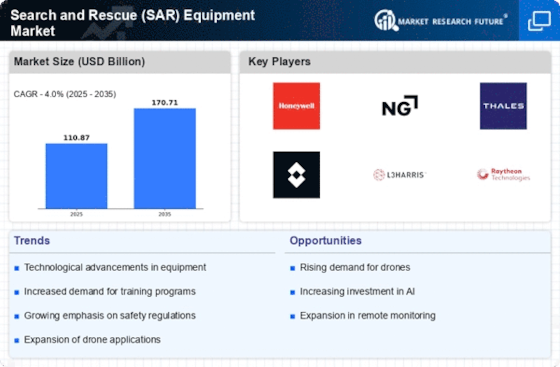
Search Rescue SAR Equipment Market Infographic
Purchase Options

Search Rescue Sar Equipment Size

Search Rescue SAR Equipment Market Growth Projections and Opportunities

The market for search and rescue (SAR) equipment is influenced by a variety of factors that shape its landscape and dynamics. Firstly, the prevalence and severity of natural disasters play a significant role. Regions prone to earthquakes, hurricanes, floods, and other calamities typically have higher demand for SAR equipment. As such, market trends often correlate with global climate patterns and the frequency of such disasters.

Secondly, technological advancements drive innovation within the SAR equipment market. Emerging technologies like drones, GPS tracking systems, and advanced communication devices enhance the effectiveness and efficiency of search and rescue operations. Companies investing in research and development to improve these technologies gain a competitive edge, shaping the direction of the market.

Government regulations and policies also heavily influence the SAR equipment market. Compliance with safety standards and certifications is essential for manufacturers to enter and thrive in this sector. Additionally, government agencies and NGOs often procure SAR equipment through contracts and tenders, directly impacting market demand and competition among suppliers.

Furthermore, economic factors such as GDP growth, infrastructure development, and government spending on disaster preparedness initiatives impact the SAR equipment market. During periods of economic prosperity, governments and organizations may allocate more resources towards enhancing their search and rescue capabilities, leading to increased demand for equipment.

Market competition and industry consolidation are significant factors driving innovation and pricing within the SAR equipment market. Established players compete for market share through product differentiation, pricing strategies, and mergers or acquisitions. This competitive landscape fosters innovation and drives companies to continually improve their offerings to stay ahead.

Moreover, demographics and population trends influence the SAR equipment market. Urbanization, population growth, and changes in demographics affect the demand for SAR equipment in both urban and rural areas. For instance, densely populated urban centers may require specialized equipment for high-rise rescue operations, while remote rural regions may necessitate rugged and portable gear for wilderness search and rescue missions.

Environmental factors also play a role in shaping the SAR equipment market. Climate change and environmental degradation can lead to an increase in natural disasters, driving up demand for SAR equipment. Additionally, environmental regulations may influence the design and manufacturing processes of SAR equipment to minimize ecological impact.

Lastly, public awareness and advocacy campaigns contribute to market trends within the SAR equipment sector. Media coverage of high-profile rescue missions, awareness campaigns about safety preparedness, and advocacy for funding allocation towards search and rescue initiatives can influence public perception and drive demand for SAR equipment.
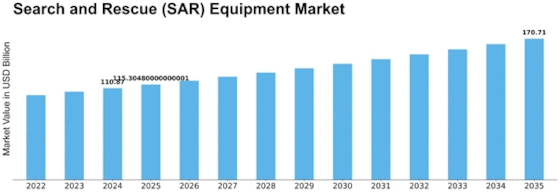

Search Rescue SAR Equipment Market Size Graph
Author
Author Profile
Abbas Raut
Research Analyst

Abbas Raut is a Senior Research Analyst with 5+ years of experience delivering data-driven insights and strategic recommendations across the Automotive and Aerospace & Defense sectors. He specializes in emerging technologies, industry value chains, and global market dynamics shaping the future of mobility and defense. In automotive, Abbas has led studies on EVs, charging stations, BMS, superchargers, and more, guiding stakeholders through electrification and regulatory shifts. In Aerospace & Defense, he has analyzed markets for military electronics, drones, radars, and electronic warfare solutions, supporting procurement and investment strategies. With expertise in market sizing, forecasting, benchmarking, and technology adoption, Abbas is known for transforming complex datasets into actionable insights that drive strategy, innovation, and growth.

Leave a Comment

FAQs

What is the projected market valuation of the Search and Rescue (SAR) Equipment Market by 2035?

<p>The projected market valuation for the Search and Rescue (SAR) Equipment Market is expected to reach 170.71 USD Billion by 2035.</p>

What was the overall market valuation of the SAR Equipment Market in 2024?

<p>The overall market valuation of the Search and Rescue (SAR) Equipment Market was 110.87 USD Billion in 2024.</p>

What is the expected CAGR for the SAR Equipment Market during the forecast period 2025 - 2035?

<p>The expected CAGR for the Search and Rescue (SAR) Equipment Market during the forecast period 2025 - 2035 is 4.0%.</p>

Which segments are included in the SAR Equipment Market, and what are their valuations?

<p>The SAR Equipment Market includes segments such as Rescue Equipment valued at 33.0 USD Billion and Search Equipment valued at 27.0 USD Billion.</p>

Who are the key players in the Search and Rescue (SAR) Equipment Market?

<p>Key players in the SAR Equipment Market include Honeywell, Northrop Grumman, Thales Group, and FLIR Systems.</p>

What are the projected valuations for the Combat SAR and Urban SAR applications by 2035?

<p>The projected valuation for Combat SAR is expected to reach 66.28 USD Billion, while Urban SAR is anticipated to reach 104.43 USD Billion by 2035.</p>

What platforms are included in the SAR Equipment Market, and what are their expected valuations?

The SAR Equipment Market includes platforms such as Airborne valued at 66.28 USD Billion and Marine valued at 50.45 USD Billion by 2035.

How does the valuation of Communication Equipment compare to Medical Equipment in the SAR Equipment Market?

Communication Equipment is projected to reach 22.0 USD Billion, whereas Medical Equipment is expected to reach 18.0 USD Billion by 2035.

What is the expected growth trend for Logistics Equipment in the SAR Equipment Market?

Logistics Equipment is projected to grow from 10.0 USD Billion to 15.0 USD Billion during the forecast period 2025 - 2035.

What is the significance of the SAR Equipment Market for emergency response operations?

The SAR Equipment Market plays a crucial role in enhancing emergency response operations, with various equipment segments projected to grow significantly by 2035.

Market Summary

As per Market Research Future analysis, the Search and Rescue (SAR) Equipment Market Size was estimated at 110.87 USD Billion in 2024. The SAR Equipment industry is projected to grow from 115.3 USD Billion in 2025 to 170.71 USD Billion by 2035, exhibiting a compound annual growth rate (CAGR) of 4.0% during the forecast period 2025 - 2035

Key Market Trends & Highlights

The Search and Rescue (SAR) Equipment Market is poised for growth driven by technological advancements and increasing safety awareness.

  • Technological advancements in SAR equipment are enhancing operational efficiency and effectiveness.
  • North America remains the largest market, while Asia-Pacific is emerging as the fastest-growing region.
  • Rescue equipment continues to dominate the market, whereas communication equipment is witnessing rapid growth.
  • Government initiatives and rising incidence of natural disasters are key drivers propelling market expansion.

Market Size & Forecast

2024 Market Size 110.87 (USD Billion)
2035 Market Size 170.71 (USD Billion)
CAGR (2025 - 2035) 4.0%
Largest Regional Market Share in 2024 North America

Major Players

Honeywell (US), Northrop Grumman (US), Thales Group (FR), FLIR Systems (US), L3Harris Technologies (US), Raytheon Technologies (US), General Dynamics (US), Boeing (US)

Market Trends

The Search and Rescue (SAR) Equipment Market is currently experiencing a notable evolution, driven by advancements in technology and an increasing emphasis on safety protocols across various sectors. The integration of innovative tools, such as drones and automated systems, appears to enhance operational efficiency and effectiveness in rescue missions. Furthermore, the growing awareness of natural disasters and emergencies has led to heightened demand for specialized equipment, which may include personal protective gear, communication devices, and navigation aids. This shift suggests a potential transformation in how rescue operations are conducted, with a focus on rapid response and improved coordination among agencies. In addition, the Search and Rescue (SAR) Equipment Market is likely to witness a surge in collaboration between public and private entities. This partnership could foster the development of cutting-edge solutions tailored to specific rescue scenarios. Moreover, training programs and simulations are becoming increasingly vital, as they prepare personnel to utilize advanced equipment effectively. As the landscape of emergency response continues to evolve, the SAR equipment sector may adapt to meet the changing needs of various stakeholders, ensuring that the right tools are available for effective rescue operations.

Technological Advancements

The Search and Rescue (SAR) Equipment Market is witnessing a rapid integration of advanced technologies, such as artificial intelligence and machine learning. These innovations are likely to enhance the capabilities of SAR teams, enabling them to analyze data more effectively and make informed decisions during critical operations.

Increased Focus on Safety

There is a growing emphasis on safety protocols within the Search and Rescue (SAR) Equipment Market. Organizations are prioritizing the procurement of high-quality gear and equipment that meet stringent safety standards, ensuring that personnel are adequately protected during rescue missions.

Collaboration and Partnerships

The Search and Rescue (SAR) Equipment Market is experiencing a trend towards increased collaboration between governmental agencies and private sector companies. This synergy may lead to the development of tailored solutions that address specific challenges faced during rescue operations, ultimately improving overall effectiveness.

Search Rescue SAR Equipment Market Market Drivers

Government Initiatives and Funding

Government initiatives aimed at improving emergency response capabilities are playing a pivotal role in the Search and Rescue (SAR) Equipment Market. Many countries are increasing their budgets for disaster management and emergency services, which directly influences the procurement of SAR equipment. For example, recent allocations in various national budgets have earmarked substantial funds for upgrading SAR technologies and training personnel. This financial support is crucial for enhancing the readiness and effectiveness of SAR operations. As a result, the market is expected to witness a steady growth trajectory, with investments in SAR equipment projected to rise by approximately 4.5% annually over the next few years.

Growing Awareness of Safety Protocols

There is a growing awareness of safety protocols among organizations and communities, which is positively influencing the Search and Rescue (SAR) Equipment Market. As safety becomes a priority, entities are increasingly investing in SAR equipment to ensure preparedness for emergencies. This trend is particularly evident in sectors such as maritime, aviation, and industrial operations, where the potential for accidents necessitates robust SAR capabilities. The emphasis on compliance with safety regulations is driving demand for advanced SAR tools, which are essential for effective emergency response. Consequently, the market is likely to see a rise in the adoption of innovative SAR solutions as organizations strive to enhance their safety measures.

Rising Incidence of Natural Disasters

The frequency of natural disasters has been on the rise, which significantly impacts the Search and Rescue (SAR) Equipment Market. Events such as earthquakes, floods, and wildfires necessitate the deployment of effective SAR operations to save lives and mitigate damage. According to recent data, the number of natural disasters has increased by over 30% in the last decade, leading to heightened demand for SAR equipment. This trend underscores the critical need for advanced tools and technologies that can operate in challenging environments. Consequently, the SAR equipment market is likely to expand as governments and organizations invest in enhancing their disaster response capabilities.

Increased Collaboration Among Agencies

The Search and Rescue (SAR) Equipment Market is benefiting from increased collaboration among various agencies, including governmental, non-governmental, and private organizations. This collaboration fosters the sharing of resources, knowledge, and technology, which enhances the overall effectiveness of SAR operations. Joint training exercises and coordinated response strategies are becoming more common, leading to improved preparedness and efficiency in rescue missions. As agencies work together, the demand for specialized SAR equipment is likely to grow, as each organization seeks to equip itself with the best tools available. This trend suggests a promising outlook for the SAR equipment market, with potential growth driven by collaborative efforts.

Technological Innovations in SAR Equipment

The Search and Rescue (SAR) Equipment Market is experiencing a surge in technological innovations that enhance operational efficiency and effectiveness. Advanced technologies such as drones, thermal imaging, and GPS tracking systems are becoming increasingly prevalent. These innovations not only improve the speed and accuracy of search operations but also reduce the risk to personnel involved in rescues. For instance, the integration of artificial intelligence in SAR equipment allows for better data analysis and decision-making during critical missions. As a result, the market is projected to grow at a compound annual growth rate (CAGR) of approximately 5.2% over the next five years, driven by the demand for more sophisticated and reliable SAR solutions.

Market Segment Insights

By Equipment: Rescue Equipment (Largest) vs. Communication Equipment (Fastest-Growing)

The Search and Rescue (SAR) Equipment Market showcases a diverse array of segments including Rescue Equipment, Search Equipment, Communication Equipment, Technical Equipment, Medical Equipment, Logistics Equipment, and Planning Equipment. Among these, Rescue Equipment holds the largest market share, underpinning its critical role in SAR operations. Communication Equipment, on the other hand, is emerging rapidly, capitalizing on technological advancements that enhance operational efficiency and coordination during rescue missions.

Rescue Equipment (Dominant) vs. Communication Equipment (Emerging)

Rescue Equipment dominates the Search and Rescue Equipment market, characterized by its essential role in life-saving operations. It encompasses a wide range of tools and devices such as ropes, stretchers, and more advanced systems like drones that significantly improve rescue effectiveness. Conversely, Communication Equipment represents an emerging segment, reflecting the increasing reliance on advanced communication technologies such as <a href="https://www.marketresearchfuture.com/reports/satellite-market-8025" target="_blank" title="satellite">satellite</a> phones, radios, and GPS devices. The growing complexity of disaster response necessitates robust communications solutions, driving innovation and investment in this area. Together, these segments play a vital role in enhancing the overall effectiveness of SAR operations.

By Application: Combat SAR (Largest) vs. Urban SAR (Fastest-Growing)

In the Search and Rescue (SAR) Equipment Market, the application segment is primarily dominated by Combat SAR, which accounts for a significant share of the market. The Combat SAR category includes various equipment and technology designed for rescue missions in conflict zones or battlefields. Urban SAR, while comparatively smaller, is rapidly gaining traction, especially as urbanization increases and the need for efficient respiratory and rescue equipment becomes more pronounced. This segment includes tools and technologies specifically tailored for rescuing individuals from collapsed buildings, disaster zones, and city environments.

Application: Combat SAR (Dominant) vs. Urban SAR (Emerging)

Combat SAR is characterized by its robust equipment, designed to withstand harsh conditions and deliver quick responses in critical situations. It encompasses advanced technologies such as drones, thermal imaging, and specialized vehicles superbly adapted for military contexts. In contrast, Urban SAR is emerging as a vital segment, driven by the rising frequency of natural disasters and urban emergencies. This segment focuses on lightweight, flexible equipment capable of maneuvering through urban landscapes, highlighting a shift toward smart technologies that improve efficiency. Urban SAR's growth is supported by increasing investments in infrastructure and disaster preparedness initiatives, demanding innovative solutions for urban rescuers.

By Platform: Airborne (Largest) vs. Marine (Fastest-Growing)

In the Search and Rescue (SAR) Equipment market, the distribution of platforms reveals significant insights into operational preferences. The Airborne segment leads the market, favored for its swift deployment and reach during emergencies, contributing to its substantial market share. In comparison, the Marine segment is catching up due to increasing <a href="https://www.marketresearchfuture.com/reports/maritime-market-41641" target="_blank" title="maritime">maritime</a> activities and heightened focus on coastal safety, making it a growing contender in the industry.

Airborne (Dominant) vs. Marine (Emerging)

The Airborne platform has established itself as the dominant force in the SAR Equipment market due to its application in rapid response scenarios, including search missions over large areas and inaccessible terrains. Its ability to integrate cutting-edge technologies, such as drones and helicopters, enhances operational efficiency and effectiveness. Meanwhile, the Marine platform emerges as a vital player, driven by ascending demand for water-based rescue operations, especially in disaster-prone coastal regions. This segment is being propelled by advancements in ship-mounted technologies and collaborative efforts between governments and private sectors to enhance marine safety, positioning it as a crucial area of growth in the SAR landscape.

Get more detailed insights about Search and Rescue (SAR) Equipment Market Research Report — Global Forecast till 2035

Regional Insights

By region, the study provides market insights into North America, Europe, Asia-Pacific, and Rest of the World. The North American Search and Rescue (SAR) Equipment market area will dominate this market due to its advanced technological infrastructure, well-established emergency response systems, and significant resources. The region invests heavily in research and development, leading to the adoption of cutting-edge technologies in search and rescue operations.

Further, the major countries studied in the market report are The US, Canada, Germany, France, the UK, Italy, Spain, China, Japan, India, Australia, South Korea, and Brazil.

Figure 2: SEARCH AND RESCUE (SAR) EQUIPMENT MARKET SHARE BY REGION 2022 (USD Billion)

Platform: Secondary Research, Primary Research, MRFR Database and Analyst Review

Europe Search and Rescue (SAR) Equipment market accounts for the second-largest market share due its integrated international cooperation and collaboration mechanisms. European countries work closely together through organizations like the European Civil Protection and Humanitarian Aid Operations (ECHO) and the European Search and Rescue (SAR) community. This collaboration enhances the sharing of resources, expertise, and best practices, fostering a more coordinated and effective response to emergencies and disasters across the continent.

Further, the German Search and Rescue (SAR) Equipment market held the largest market share, and the UK Search and Rescue (SAR) Equipment market was the fastest-growing market in the European region

The Asia-Pacific Search and Rescue (SAR) Equipment Market is expected to grow at the fastest CAGR from 2023 to 2032 due to its diverse geographical challenges and a commitment to innovation. The region encompasses varied terrains, including dense urban areas, vast wilderness, and areas prone to natural disasters. To address these challenges, countries in the Asia-Pacific region invest in innovative search and rescue technologies, such as advanced drones, early warning systems, and efficient communication tools.

Moreover, China’s Search and Rescue (SAR) Equipment market held the largest market share, and the Indian Search and Rescue (SAR) Equipment market was the fastest growing market in the Asia-Pacific region.

Key Players and Competitive Insights

defense

Key Companies in the Search Rescue SAR Equipment Market include

Industry Developments

April 2023: Flathead County Search and Rescue (FCSAR) secured funding of USD 2,670 million from its parent company, Flathead Electric Cooperative. The allocated funds are intended to fulfill the need for two specific types of rescue equipment, namely a vacuum spine board and a rescue litter kit. These resources will enhance FCSAR's capabilities for low- and medium-angle rescues, addressing critical operational requirements.

May 2021: Teledyne Technologies finalized the acquisition of FLIR Systems, resulting in the formation of Teledyne FLIR LLC. Teledyne FLIR offered a comprehensive range of imaging technologies, from X-ray to infrared, along with unmanned systems and imaging payloads. The transaction, valued at approximately USD 8.2 billion, positioned Teledyne FLIR as a leading provider of search and rescue equipment worldwide.

Future Outlook

Search Rescue SAR Equipment Market Future Outlook

The Search and Rescue (SAR) Equipment Market is projected to grow at a 4.0% CAGR from 2025 to 2035, driven by technological advancements, increasing natural disasters, and enhanced government funding.

New opportunities lie in:

  • Development of advanced <a href="https://www.marketresearchfuture.com/reports/drone-technology-market-28158" target="_blank" title="drone technology">drone technology</a> for remote SAR operations.
  • Integration of AI-driven analytics for real-time decision-making.
  • Expansion of training programs for SAR personnel using virtual reality.

By 2035, the SAR Equipment Market is expected to be robust, reflecting sustained growth and innovation.

Market Segmentation

Search Rescue SAR Equipment Market Platform Outlook

  • Airborne
  • Marine
  • Ground-Based

Search Rescue SAR Equipment Market Equipment Outlook

  • Rescue Equipment
  • Search Equipment
  • Communication Equipment
  • Technical Equipment
  • Medical Equipment
  • Logistics Equipment
  • Planning Equipment

Search Rescue SAR Equipment Market Application Outlook

  • Combat SAR
  • Urban SAR

Report Scope

MARKET SIZE 2024 110.87(USD Billion)
MARKET SIZE 2025 115.3(USD Billion)
MARKET SIZE 2035 170.71(USD Billion)
COMPOUND ANNUAL GROWTH RATE (CAGR) 4.0% (2025 - 2035)
REPORT COVERAGE Revenue Forecast, Competitive Landscape, Growth Factors, and Trends
BASE YEAR 2024
Market Forecast Period 2025 - 2035
Historical Data 2019 - 2024
Market Forecast Units USD Billion
Key Companies Profiled Honeywell (US), Northrop Grumman (US), Thales Group (FR), FLIR Systems (US), L3Harris Technologies (US), Raytheon Technologies (US), General Dynamics (US), Boeing (US)
Segments Covered Equipment, Application, Platform, Region
Key Market Opportunities Integration of advanced drone technology enhances efficiency in the Search and Rescue (SAR) Equipment Market.
Key Market Dynamics Technological advancements and regulatory changes drive innovation and competition in the Search and Rescue Equipment Market.
Countries Covered North America, Europe, APAC, South America, MEA

FAQs

What is the projected market valuation of the Search and Rescue (SAR) Equipment Market by 2035?

<p>The projected market valuation for the Search and Rescue (SAR) Equipment Market is expected to reach 170.71 USD Billion by 2035.</p>

What was the overall market valuation of the SAR Equipment Market in 2024?

<p>The overall market valuation of the Search and Rescue (SAR) Equipment Market was 110.87 USD Billion in 2024.</p>

What is the expected CAGR for the SAR Equipment Market during the forecast period 2025 - 2035?

<p>The expected CAGR for the Search and Rescue (SAR) Equipment Market during the forecast period 2025 - 2035 is 4.0%.</p>

Which segments are included in the SAR Equipment Market, and what are their valuations?

<p>The SAR Equipment Market includes segments such as Rescue Equipment valued at 33.0 USD Billion and Search Equipment valued at 27.0 USD Billion.</p>

Who are the key players in the Search and Rescue (SAR) Equipment Market?

<p>Key players in the SAR Equipment Market include Honeywell, Northrop Grumman, Thales Group, and FLIR Systems.</p>

What are the projected valuations for the Combat SAR and Urban SAR applications by 2035?

<p>The projected valuation for Combat SAR is expected to reach 66.28 USD Billion, while Urban SAR is anticipated to reach 104.43 USD Billion by 2035.</p>

What platforms are included in the SAR Equipment Market, and what are their expected valuations?

The SAR Equipment Market includes platforms such as Airborne valued at 66.28 USD Billion and Marine valued at 50.45 USD Billion by 2035.

How does the valuation of Communication Equipment compare to Medical Equipment in the SAR Equipment Market?

Communication Equipment is projected to reach 22.0 USD Billion, whereas Medical Equipment is expected to reach 18.0 USD Billion by 2035.

What is the expected growth trend for Logistics Equipment in the SAR Equipment Market?

Logistics Equipment is projected to grow from 10.0 USD Billion to 15.0 USD Billion during the forecast period 2025 - 2035.

What is the significance of the SAR Equipment Market for emergency response operations?

The SAR Equipment Market plays a crucial role in enhancing emergency response operations, with various equipment segments projected to grow significantly by 2035.

  1. SECTION I: EXECUTIVE SUMMARY AND KEY HIGHLIGHTS
    1. | 1.1 EXECUTIVE SUMMARY
    2. | | 1.1.1 Market Overview
    3. | | 1.1.2 Key Findings
    4. | | 1.1.3 Market Segmentation
    5. | | 1.1.4 Competitive Landscape
    6. | | 1.1.5 Challenges and Opportunities
    7. | | 1.1.6 Future Outlook
  2. SECTION II: SCOPING, METHODOLOGY AND MARKET STRUCTURE
    1. | 2.1 MARKET INTRODUCTION
    2. | | 2.1.1 Definition
    3. | | 2.1.2 Scope of the study
    4. | | | 2.1.2.1 Research Objective
    5. | | | 2.1.2.2 Assumption
    6. | | | 2.1.2.3 Limitations
    7. | 2.2 RESEARCH METHODOLOGY
    8. | | 2.2.1 Overview
    9. | | 2.2.2 Data Mining
    10. | | 2.2.3 Secondary Research
    11. | | 2.2.4 Primary Research
    12. | | | 2.2.4.1 Primary Interviews and Information Gathering Process
    13. | | | 2.2.4.2 Breakdown of Primary Respondents
    14. | | 2.2.5 Forecasting Model
    15. | | 2.2.6 Market Size Estimation
    16. | | | 2.2.6.1 Bottom-Up Approach
    17. | | | 2.2.6.2 Top-Down Approach
    18. | | 2.2.7 Data Triangulation
    19. | | 2.2.8 Validation
  3. SECTION III: QUALITATIVE ANALYSIS
    1. | 3.1 MARKET DYNAMICS
    2. | | 3.1.1 Overview
    3. | | 3.1.2 Drivers
    4. | | 3.1.3 Restraints
    5. | | 3.1.4 Opportunities
    6. | 3.2 MARKET FACTOR ANALYSIS
    7. | | 3.2.1 Value chain Analysis
    8. | | 3.2.2 Porter's Five Forces Analysis
    9. | | | 3.2.2.1 Bargaining Power of Suppliers
    10. | | | 3.2.2.2 Bargaining Power of Buyers
    11. | | | 3.2.2.3 Threat of New Entrants
    12. | | | 3.2.2.4 Threat of Substitutes
    13. | | | 3.2.2.5 Intensity of Rivalry
    14. | | 3.2.3 COVID-19 Impact Analysis
    15. | | | 3.2.3.1 Market Impact Analysis
    16. | | | 3.2.3.2 Regional Impact
    17. | | | 3.2.3.3 Opportunity and Threat Analysis
  4. SECTION IV: QUANTITATIVE ANALYSIS
    1. | 4.1 Aerospace & Defense, BY Equipment (USD Billion)
    2. | | 4.1.1 Rescue Equipment
    3. | | 4.1.2 Search Equipment
    4. | | 4.1.3 Communication Equipment
    5. | | 4.1.4 Technical Equipment
    6. | | 4.1.5 Medical Equipment
    7. | | 4.1.6 Logistics Equipment
    8. | | 4.1.7 Planning Equipment
    9. | 4.2 Aerospace & Defense, BY Application (USD Billion)
    10. | | 4.2.1 Combat SAR
    11. | | 4.2.2 Urban SAR
    12. | 4.3 Aerospace & Defense, BY Platform (USD Billion)
    13. | | 4.3.1 Airborne
    14. | | 4.3.2 Marine
    15. | | 4.3.3 Ground-Based
    16. | 4.4 Aerospace & Defense, BY Region (USD Billion)
    17. | | 4.4.1 North America
    18. | | | 4.4.1.1 US
    19. | | | 4.4.1.2 Canada
    20. | | 4.4.2 Europe
    21. | | | 4.4.2.1 Germany
    22. | | | 4.4.2.2 UK
    23. | | | 4.4.2.3 France
    24. | | | 4.4.2.4 Russia
    25. | | | 4.4.2.5 Italy
    26. | | | 4.4.2.6 Spain
    27. | | | 4.4.2.7 Rest of Europe
    28. | | 4.4.3 APAC
    29. | | | 4.4.3.1 China
    30. | | | 4.4.3.2 India
    31. | | | 4.4.3.3 Japan
    32. | | | 4.4.3.4 South Korea
    33. | | | 4.4.3.5 Malaysia
    34. | | | 4.4.3.6 Thailand
    35. | | | 4.4.3.7 Indonesia
    36. | | | 4.4.3.8 Rest of APAC
    37. | | 4.4.4 South America
    38. | | | 4.4.4.1 Brazil
    39. | | | 4.4.4.2 Mexico
    40. | | | 4.4.4.3 Argentina
    41. | | | 4.4.4.4 Rest of South America
    42. | | 4.4.5 MEA
    43. | | | 4.4.5.1 GCC Countries
    44. | | | 4.4.5.2 South Africa
    45. | | | 4.4.5.3 Rest of MEA
  5. SECTION V: COMPETITIVE ANALYSIS
    1. | 5.1 Competitive Landscape
    2. | | 5.1.1 Overview
    3. | | 5.1.2 Competitive Analysis
    4. | | 5.1.3 Market share Analysis
    5. | | 5.1.4 Major Growth Strategy in the Aerospace & Defense
    6. | | 5.1.5 Competitive Benchmarking
    7. | | 5.1.6 Leading Players in Terms of Number of Developments in the Aerospace & Defense
    8. | | 5.1.7 Key developments and growth strategies
    9. | | | 5.1.7.1 New Product Launch/Service Deployment
    10. | | | 5.1.7.2 Merger & Acquisitions
    11. | | | 5.1.7.3 Joint Ventures
    12. | | 5.1.8 Major Players Financial Matrix
    13. | | | 5.1.8.1 Sales and Operating Income
    14. | | | 5.1.8.2 Major Players R&D Expenditure. 2023
    15. | 5.2 Company Profiles
    16. | | 5.2.1 Honeywell (US)
    17. | | | 5.2.1.1 Financial Overview
    18. | | | 5.2.1.2 Products Offered
    19. | | | 5.2.1.3 Key Developments
    20. | | | 5.2.1.4 SWOT Analysis
    21. | | | 5.2.1.5 Key Strategies
    22. | | 5.2.2 Northrop Grumman (US)
    23. | | | 5.2.2.1 Financial Overview
    24. | | | 5.2.2.2 Products Offered
    25. | | | 5.2.2.3 Key Developments
    26. | | | 5.2.2.4 SWOT Analysis
    27. | | | 5.2.2.5 Key Strategies
    28. | | 5.2.3 Thales Group (FR)
    29. | | | 5.2.3.1 Financial Overview
    30. | | | 5.2.3.2 Products Offered
    31. | | | 5.2.3.3 Key Developments
    32. | | | 5.2.3.4 SWOT Analysis
    33. | | | 5.2.3.5 Key Strategies
    34. | | 5.2.4 FLIR Systems (US)
    35. | | | 5.2.4.1 Financial Overview
    36. | | | 5.2.4.2 Products Offered
    37. | | | 5.2.4.3 Key Developments
    38. | | | 5.2.4.4 SWOT Analysis
    39. | | | 5.2.4.5 Key Strategies
    40. | | 5.2.5 L3Harris Technologies (US)
    41. | | | 5.2.5.1 Financial Overview
    42. | | | 5.2.5.2 Products Offered
    43. | | | 5.2.5.3 Key Developments
    44. | | | 5.2.5.4 SWOT Analysis
    45. | | | 5.2.5.5 Key Strategies
    46. | | 5.2.6 Raytheon Technologies (US)
    47. | | | 5.2.6.1 Financial Overview
    48. | | | 5.2.6.2 Products Offered
    49. | | | 5.2.6.3 Key Developments
    50. | | | 5.2.6.4 SWOT Analysis
    51. | | | 5.2.6.5 Key Strategies
    52. | | 5.2.7 General Dynamics (US)
    53. | | | 5.2.7.1 Financial Overview
    54. | | | 5.2.7.2 Products Offered
    55. | | | 5.2.7.3 Key Developments
    56. | | | 5.2.7.4 SWOT Analysis
    57. | | | 5.2.7.5 Key Strategies
    58. | | 5.2.8 Boeing (US)
    59. | | | 5.2.8.1 Financial Overview
    60. | | | 5.2.8.2 Products Offered
    61. | | | 5.2.8.3 Key Developments
    62. | | | 5.2.8.4 SWOT Analysis
    63. | | | 5.2.8.5 Key Strategies
    64. | 5.3 Appendix
    65. | | 5.3.1 References
    66. | | 5.3.2 Related Reports
  6. LIST OF FIGURES
    1. | 6.1 MARKET SYNOPSIS
    2. | 6.2 NORTH AMERICA MARKET ANALYSIS
    3. | 6.3 US MARKET ANALYSIS BY EQUIPMENT
    4. | 6.4 US MARKET ANALYSIS BY APPLICATION
    5. | 6.5 US MARKET ANALYSIS BY PLATFORM
    6. | 6.6 CANADA MARKET ANALYSIS BY EQUIPMENT
    7. | 6.7 CANADA MARKET ANALYSIS BY APPLICATION
    8. | 6.8 CANADA MARKET ANALYSIS BY PLATFORM
    9. | 6.9 EUROPE MARKET ANALYSIS
    10. | 6.10 GERMANY MARKET ANALYSIS BY EQUIPMENT
    11. | 6.11 GERMANY MARKET ANALYSIS BY APPLICATION
    12. | 6.12 GERMANY MARKET ANALYSIS BY PLATFORM
    13. | 6.13 UK MARKET ANALYSIS BY EQUIPMENT
    14. | 6.14 UK MARKET ANALYSIS BY APPLICATION
    15. | 6.15 UK MARKET ANALYSIS BY PLATFORM
    16. | 6.16 FRANCE MARKET ANALYSIS BY EQUIPMENT
    17. | 6.17 FRANCE MARKET ANALYSIS BY APPLICATION
    18. | 6.18 FRANCE MARKET ANALYSIS BY PLATFORM
    19. | 6.19 RUSSIA MARKET ANALYSIS BY EQUIPMENT
    20. | 6.20 RUSSIA MARKET ANALYSIS BY APPLICATION
    21. | 6.21 RUSSIA MARKET ANALYSIS BY PLATFORM
    22. | 6.22 ITALY MARKET ANALYSIS BY EQUIPMENT
    23. | 6.23 ITALY MARKET ANALYSIS BY APPLICATION
    24. | 6.24 ITALY MARKET ANALYSIS BY PLATFORM
    25. | 6.25 SPAIN MARKET ANALYSIS BY EQUIPMENT
    26. | 6.26 SPAIN MARKET ANALYSIS BY APPLICATION
    27. | 6.27 SPAIN MARKET ANALYSIS BY PLATFORM
    28. | 6.28 REST OF EUROPE MARKET ANALYSIS BY EQUIPMENT
    29. | 6.29 REST OF EUROPE MARKET ANALYSIS BY APPLICATION
    30. | 6.30 REST OF EUROPE MARKET ANALYSIS BY PLATFORM
    31. | 6.31 APAC MARKET ANALYSIS
    32. | 6.32 CHINA MARKET ANALYSIS BY EQUIPMENT
    33. | 6.33 CHINA MARKET ANALYSIS BY APPLICATION
    34. | 6.34 CHINA MARKET ANALYSIS BY PLATFORM
    35. | 6.35 INDIA MARKET ANALYSIS BY EQUIPMENT
    36. | 6.36 INDIA MARKET ANALYSIS BY APPLICATION
    37. | 6.37 INDIA MARKET ANALYSIS BY PLATFORM
    38. | 6.38 JAPAN MARKET ANALYSIS BY EQUIPMENT
    39. | 6.39 JAPAN MARKET ANALYSIS BY APPLICATION
    40. | 6.40 JAPAN MARKET ANALYSIS BY PLATFORM
    41. | 6.41 SOUTH KOREA MARKET ANALYSIS BY EQUIPMENT
    42. | 6.42 SOUTH KOREA MARKET ANALYSIS BY APPLICATION
    43. | 6.43 SOUTH KOREA MARKET ANALYSIS BY PLATFORM
    44. | 6.44 MALAYSIA MARKET ANALYSIS BY EQUIPMENT
    45. | 6.45 MALAYSIA MARKET ANALYSIS BY APPLICATION
    46. | 6.46 MALAYSIA MARKET ANALYSIS BY PLATFORM
    47. | 6.47 THAILAND MARKET ANALYSIS BY EQUIPMENT
    48. | 6.48 THAILAND MARKET ANALYSIS BY APPLICATION
    49. | 6.49 THAILAND MARKET ANALYSIS BY PLATFORM
    50. | 6.50 INDONESIA MARKET ANALYSIS BY EQUIPMENT
    51. | 6.51 INDONESIA MARKET ANALYSIS BY APPLICATION
    52. | 6.52 INDONESIA MARKET ANALYSIS BY PLATFORM
    53. | 6.53 REST OF APAC MARKET ANALYSIS BY EQUIPMENT
    54. | 6.54 REST OF APAC MARKET ANALYSIS BY APPLICATION
    55. | 6.55 REST OF APAC MARKET ANALYSIS BY PLATFORM
    56. | 6.56 SOUTH AMERICA MARKET ANALYSIS
    57. | 6.57 BRAZIL MARKET ANALYSIS BY EQUIPMENT
    58. | 6.58 BRAZIL MARKET ANALYSIS BY APPLICATION
    59. | 6.59 BRAZIL MARKET ANALYSIS BY PLATFORM
    60. | 6.60 MEXICO MARKET ANALYSIS BY EQUIPMENT
    61. | 6.61 MEXICO MARKET ANALYSIS BY APPLICATION
    62. | 6.62 MEXICO MARKET ANALYSIS BY PLATFORM
    63. | 6.63 ARGENTINA MARKET ANALYSIS BY EQUIPMENT
    64. | 6.64 ARGENTINA MARKET ANALYSIS BY APPLICATION
    65. | 6.65 ARGENTINA MARKET ANALYSIS BY PLATFORM
    66. | 6.66 REST OF SOUTH AMERICA MARKET ANALYSIS BY EQUIPMENT
    67. | 6.67 REST OF SOUTH AMERICA MARKET ANALYSIS BY APPLICATION
    68. | 6.68 REST OF SOUTH AMERICA MARKET ANALYSIS BY PLATFORM
    69. | 6.69 MEA MARKET ANALYSIS
    70. | 6.70 GCC COUNTRIES MARKET ANALYSIS BY EQUIPMENT
    71. | 6.71 GCC COUNTRIES MARKET ANALYSIS BY APPLICATION
    72. | 6.72 GCC COUNTRIES MARKET ANALYSIS BY PLATFORM
    73. | 6.73 SOUTH AFRICA MARKET ANALYSIS BY EQUIPMENT
    74. | 6.74 SOUTH AFRICA MARKET ANALYSIS BY APPLICATION
    75. | 6.75 SOUTH AFRICA MARKET ANALYSIS BY PLATFORM
    76. | 6.76 REST OF MEA MARKET ANALYSIS BY EQUIPMENT
    77. | 6.77 REST OF MEA MARKET ANALYSIS BY APPLICATION
    78. | 6.78 REST OF MEA MARKET ANALYSIS BY PLATFORM
    79. | 6.79 KEY BUYING CRITERIA OF AEROSPACE & DEFENSE
    80. | 6.80 RESEARCH PROCESS OF MRFR
    81. | 6.81 DRO ANALYSIS OF AEROSPACE & DEFENSE
    82. | 6.82 DRIVERS IMPACT ANALYSIS: AEROSPACE & DEFENSE
    83. | 6.83 RESTRAINTS IMPACT ANALYSIS: AEROSPACE & DEFENSE
    84. | 6.84 SUPPLY / VALUE CHAIN: AEROSPACE & DEFENSE
    85. | 6.85 AEROSPACE & DEFENSE, BY EQUIPMENT, 2024 (% SHARE)
    86. | 6.86 AEROSPACE & DEFENSE, BY EQUIPMENT, 2024 TO 2035 (USD Billion)
    87. | 6.87 AEROSPACE & DEFENSE, BY APPLICATION, 2024 (% SHARE)
    88. | 6.88 AEROSPACE & DEFENSE, BY APPLICATION, 2024 TO 2035 (USD Billion)
    89. | 6.89 AEROSPACE & DEFENSE, BY PLATFORM, 2024 (% SHARE)
    90. | 6.90 AEROSPACE & DEFENSE, BY PLATFORM, 2024 TO 2035 (USD Billion)
    91. | 6.91 BENCHMARKING OF MAJOR COMPETITORS
  7. LIST OF TABLES
    1. | 7.1 LIST OF ASSUMPTIONS
    2. | | 7.1.1
    3. | 7.2 North America MARKET SIZE ESTIMATES; FORECAST
    4. | | 7.2.1 BY EQUIPMENT, 2025-2035 (USD Billion)
    5. | | 7.2.2 BY APPLICATION, 2025-2035 (USD Billion)
    6. | | 7.2.3 BY PLATFORM, 2025-2035 (USD Billion)
    7. | 7.3 US MARKET SIZE ESTIMATES; FORECAST
    8. | | 7.3.1 BY EQUIPMENT, 2025-2035 (USD Billion)
    9. | | 7.3.2 BY APPLICATION, 2025-2035 (USD Billion)
    10. | | 7.3.3 BY PLATFORM, 2025-2035 (USD Billion)
    11. | 7.4 Canada MARKET SIZE ESTIMATES; FORECAST
    12. | | 7.4.1 BY EQUIPMENT, 2025-2035 (USD Billion)
    13. | | 7.4.2 BY APPLICATION, 2025-2035 (USD Billion)
    14. | | 7.4.3 BY PLATFORM, 2025-2035 (USD Billion)
    15. | 7.5 Europe MARKET SIZE ESTIMATES; FORECAST
    16. | | 7.5.1 BY EQUIPMENT, 2025-2035 (USD Billion)
    17. | | 7.5.2 BY APPLICATION, 2025-2035 (USD Billion)
    18. | | 7.5.3 BY PLATFORM, 2025-2035 (USD Billion)
    19. | 7.6 Germany MARKET SIZE ESTIMATES; FORECAST
    20. | | 7.6.1 BY EQUIPMENT, 2025-2035 (USD Billion)
    21. | | 7.6.2 BY APPLICATION, 2025-2035 (USD Billion)
    22. | | 7.6.3 BY PLATFORM, 2025-2035 (USD Billion)
    23. | 7.7 UK MARKET SIZE ESTIMATES; FORECAST
    24. | | 7.7.1 BY EQUIPMENT, 2025-2035 (USD Billion)
    25. | | 7.7.2 BY APPLICATION, 2025-2035 (USD Billion)
    26. | | 7.7.3 BY PLATFORM, 2025-2035 (USD Billion)
    27. | 7.8 France MARKET SIZE ESTIMATES; FORECAST
    28. | | 7.8.1 BY EQUIPMENT, 2025-2035 (USD Billion)
    29. | | 7.8.2 BY APPLICATION, 2025-2035 (USD Billion)
    30. | | 7.8.3 BY PLATFORM, 2025-2035 (USD Billion)
    31. | 7.9 Russia MARKET SIZE ESTIMATES; FORECAST
    32. | | 7.9.1 BY EQUIPMENT, 2025-2035 (USD Billion)
    33. | | 7.9.2 BY APPLICATION, 2025-2035 (USD Billion)
    34. | | 7.9.3 BY PLATFORM, 2025-2035 (USD Billion)
    35. | 7.10 Italy MARKET SIZE ESTIMATES; FORECAST
    36. | | 7.10.1 BY EQUIPMENT, 2025-2035 (USD Billion)
    37. | | 7.10.2 BY APPLICATION, 2025-2035 (USD Billion)
    38. | | 7.10.3 BY PLATFORM, 2025-2035 (USD Billion)
    39. | 7.11 Spain MARKET SIZE ESTIMATES; FORECAST
    40. | | 7.11.1 BY EQUIPMENT, 2025-2035 (USD Billion)
    41. | | 7.11.2 BY APPLICATION, 2025-2035 (USD Billion)
    42. | | 7.11.3 BY PLATFORM, 2025-2035 (USD Billion)
    43. | 7.12 Rest of Europe MARKET SIZE ESTIMATES; FORECAST
    44. | | 7.12.1 BY EQUIPMENT, 2025-2035 (USD Billion)
    45. | | 7.12.2 BY APPLICATION, 2025-2035 (USD Billion)
    46. | | 7.12.3 BY PLATFORM, 2025-2035 (USD Billion)
    47. | 7.13 APAC MARKET SIZE ESTIMATES; FORECAST
    48. | | 7.13.1 BY EQUIPMENT, 2025-2035 (USD Billion)
    49. | | 7.13.2 BY APPLICATION, 2025-2035 (USD Billion)
    50. | | 7.13.3 BY PLATFORM, 2025-2035 (USD Billion)
    51. | 7.14 China MARKET SIZE ESTIMATES; FORECAST
    52. | | 7.14.1 BY EQUIPMENT, 2025-2035 (USD Billion)
    53. | | 7.14.2 BY APPLICATION, 2025-2035 (USD Billion)
    54. | | 7.14.3 BY PLATFORM, 2025-2035 (USD Billion)
    55. | 7.15 India MARKET SIZE ESTIMATES; FORECAST
    56. | | 7.15.1 BY EQUIPMENT, 2025-2035 (USD Billion)
    57. | | 7.15.2 BY APPLICATION, 2025-2035 (USD Billion)
    58. | | 7.15.3 BY PLATFORM, 2025-2035 (USD Billion)
    59. | 7.16 Japan MARKET SIZE ESTIMATES; FORECAST
    60. | | 7.16.1 BY EQUIPMENT, 2025-2035 (USD Billion)
    61. | | 7.16.2 BY APPLICATION, 2025-2035 (USD Billion)
    62. | | 7.16.3 BY PLATFORM, 2025-2035 (USD Billion)
    63. | 7.17 South Korea MARKET SIZE ESTIMATES; FORECAST
    64. | | 7.17.1 BY EQUIPMENT, 2025-2035 (USD Billion)
    65. | | 7.17.2 BY APPLICATION, 2025-2035 (USD Billion)
    66. | | 7.17.3 BY PLATFORM, 2025-2035 (USD Billion)
    67. | 7.18 Malaysia MARKET SIZE ESTIMATES; FORECAST
    68. | | 7.18.1 BY EQUIPMENT, 2025-2035 (USD Billion)
    69. | | 7.18.2 BY APPLICATION, 2025-2035 (USD Billion)
    70. | | 7.18.3 BY PLATFORM, 2025-2035 (USD Billion)
    71. | 7.19 Thailand MARKET SIZE ESTIMATES; FORECAST
    72. | | 7.19.1 BY EQUIPMENT, 2025-2035 (USD Billion)
    73. | | 7.19.2 BY APPLICATION, 2025-2035 (USD Billion)
    74. | | 7.19.3 BY PLATFORM, 2025-2035 (USD Billion)
    75. | 7.20 Indonesia MARKET SIZE ESTIMATES; FORECAST
    76. | | 7.20.1 BY EQUIPMENT, 2025-2035 (USD Billion)
    77. | | 7.20.2 BY APPLICATION, 2025-2035 (USD Billion)
    78. | | 7.20.3 BY PLATFORM, 2025-2035 (USD Billion)
    79. | 7.21 Rest of APAC MARKET SIZE ESTIMATES; FORECAST
    80. | | 7.21.1 BY EQUIPMENT, 2025-2035 (USD Billion)
    81. | | 7.21.2 BY APPLICATION, 2025-2035 (USD Billion)
    82. | | 7.21.3 BY PLATFORM, 2025-2035 (USD Billion)
    83. | 7.22 South America MARKET SIZE ESTIMATES; FORECAST
    84. | | 7.22.1 BY EQUIPMENT, 2025-2035 (USD Billion)
    85. | | 7.22.2 BY APPLICATION, 2025-2035 (USD Billion)
    86. | | 7.22.3 BY PLATFORM, 2025-2035 (USD Billion)
    87. | 7.23 Brazil MARKET SIZE ESTIMATES; FORECAST
    88. | | 7.23.1 BY EQUIPMENT, 2025-2035 (USD Billion)
    89. | | 7.23.2 BY APPLICATION, 2025-2035 (USD Billion)
    90. | | 7.23.3 BY PLATFORM, 2025-2035 (USD Billion)
    91. | 7.24 Mexico MARKET SIZE ESTIMATES; FORECAST
    92. | | 7.24.1 BY EQUIPMENT, 2025-2035 (USD Billion)
    93. | | 7.24.2 BY APPLICATION, 2025-2035 (USD Billion)
    94. | | 7.24.3 BY PLATFORM, 2025-2035 (USD Billion)
    95. | 7.25 Argentina MARKET SIZE ESTIMATES; FORECAST
    96. | | 7.25.1 BY EQUIPMENT, 2025-2035 (USD Billion)
    97. | | 7.25.2 BY APPLICATION, 2025-2035 (USD Billion)
    98. | | 7.25.3 BY PLATFORM, 2025-2035 (USD Billion)
    99. | 7.26 Rest of South America MARKET SIZE ESTIMATES; FORECAST
    100. | | 7.26.1 BY EQUIPMENT, 2025-2035 (USD Billion)
    101. | | 7.26.2 BY APPLICATION, 2025-2035 (USD Billion)
    102. | | 7.26.3 BY PLATFORM, 2025-2035 (USD Billion)
    103. | 7.27 MEA MARKET SIZE ESTIMATES; FORECAST
    104. | | 7.27.1 BY EQUIPMENT, 2025-2035 (USD Billion)
    105. | | 7.27.2 BY APPLICATION, 2025-2035 (USD Billion)
    106. | | 7.27.3 BY PLATFORM, 2025-2035 (USD Billion)
    107. | 7.28 GCC Countries MARKET SIZE ESTIMATES; FORECAST
    108. | | 7.28.1 BY EQUIPMENT, 2025-2035 (USD Billion)
    109. | | 7.28.2 BY APPLICATION, 2025-2035 (USD Billion)
    110. | | 7.28.3 BY PLATFORM, 2025-2035 (USD Billion)
    111. | 7.29 South Africa MARKET SIZE ESTIMATES; FORECAST
    112. | | 7.29.1 BY EQUIPMENT, 2025-2035 (USD Billion)
    113. | | 7.29.2 BY APPLICATION, 2025-2035 (USD Billion)
    114. | | 7.29.3 BY PLATFORM, 2025-2035 (USD Billion)
    115. | 7.30 Rest of MEA MARKET SIZE ESTIMATES; FORECAST
    116. | | 7.30.1 BY EQUIPMENT, 2025-2035 (USD Billion)
    117. | | 7.30.2 BY APPLICATION, 2025-2035 (USD Billion)
    118. | | 7.30.3 BY PLATFORM, 2025-2035 (USD Billion)
    119. | 7.31 PRODUCT LAUNCH/PRODUCT DEVELOPMENT/APPROVAL
    120. | | 7.31.1
    121. | 7.32 ACQUISITION/PARTNERSHIP
    122. | | 7.32.1

Aerospace & Defense Market Segmentation

Aerospace & Defense By Equipment (USD Billion, 2025-2035)

  • Rescue Equipment
  • Search Equipment
  • Communication Equipment
  • Technical Equipment
  • Medical Equipment
  • Logistics Equipment
  • Planning Equipment

Aerospace & Defense By Application (USD Billion, 2025-2035)

  • Combat SAR
  • Urban SAR

Aerospace & Defense By Platform (USD Billion, 2025-2035)

  • Airborne
  • Marine
  • Ground-Based
Infographic

Free Sample Request

Kindly complete the form below to receive a free sample of this Report

Get Free Sample

Customer Strories

Compare Licence

×
Features License Type
Single User Multiuser License Enterprise User
Price $4,950 $5,950 $7,250
Maximum User Access Limit 1 User Upto 10 Users Unrestricted Access Throughout the Organization
Free Customization
Direct Access to Analyst
Deliverable Format
Platform Access
Discount on Next Purchase 10% 15% 15%
Printable Versions