
×
Request Free Sample ×

Kindly complete the form below to receive a free sample of this Report

* Please use a valid business email

Leading companies partner with us for data-driven Insights

clients tt-cursor
Hero Background
English
Chinese
French
Japanese
Korean
German
Spanish

Ride Sharing Market Size

ID: MRFR/AT/5975-HCR
135 Pages
Swapnil Palwe
October 2025

Ride Sharing Market Size, Share & Growth Analysis Report By Service Model (Peer-to-Peer, Business-to-Consumer, Business-to-Business), By Vehicle Type (Sedan, SUV, Minivan, Luxury Car), By Ride Type (Pooling, Private, Luxury), By Payment Model (Pay-as-You-Go, Subscription-based, On-Demand) and By Regional (North America, Europe, South America, Asia Pacific, Middle East and Africa) - Industry Trends & Forecast to 2035

Share:
Download PDF ×

We do not share your information with anyone. However, we may send you emails based on your report interest from time to time. You may contact us at any time to opt-out.

Ride Sharing Market Infographic
Purchase Options

Ride Sharing Size

Market Size Snapshot

Year Value
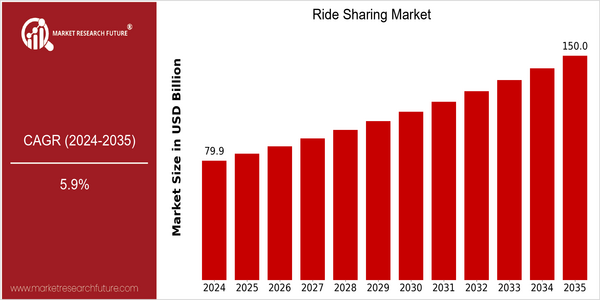
2024 USD 79.88 Billion
2035 USD 150.0 Billion
CAGR (2025-2035) 5.9 %

Note – Market size depicts the revenue generated over the financial year

The global ride-hailing market is set to soar. In 2024, it’s estimated to reach $79 billion, and by 2035, that figure is expected to jump to $158 billion. The annual compound growth rate for the entire period is 5.9 per cent, indicating a very robust expansion in the industry. The key growth drivers are rising urbanization, rising fuel costs and the growing preference for shared mobility. In addition, technological developments such as the introduction of mobile applications and the use of GPS have made the service more accessible and efficient, which is further bolstering its popularity. In the meantime, the big players such as Uber, Lyft and Didi Chuxing are investing heavily in technological solutions and strategic alliances to strengthen their offerings and further expand their market share. For instance, the recent move by Uber to introduce electric vehicles into its fleet and to partner with public transportation systems are two examples of how the ride-hailing companies are adapting to the evolving mobility landscape.
home-ubuntu-www-mrf_ne_design-batch-6-cp-ride-sharing-market size

Regional Market Size

Regional Deep Dive

The ride-hailing market is experiencing a dynamic growth in different regions, driven by technological advances, changing consumer preferences, and regulatory frameworks. In North America, the market is characterized by a high adoption of mobile technology and a strong demand for convenience, while Europe is experiencing an increase in regulatory frameworks, aimed at ensuring safety and security. The Asia-Pacific region is growing rapidly, as urbanization and the growing middle class drive demand. The Middle East and Africa are experiencing innovation, as local needs are being addressed through local solutions. Latin America, with its own unique socio-economic challenges, is also adapting ride-hailing models to fit its diverse markets. The combination of these factors is driving significant growth across all regions.

Europe

  • The European Union's stringent regulations on emissions are prompting ride-sharing companies to transition to electric fleets, with companies like Bolt and Free Now leading the charge in several major cities.
  • Innovative partnerships between ride-sharing platforms and public transportation systems, such as the collaboration between Uber and local transit authorities in London, are enhancing mobility solutions and reducing congestion.

Asia Pacific

  • In countries like India, the rise of local players such as Ola is challenging global giants, with unique offerings tailored to local preferences, including auto-rickshaw ride-sharing.
  • The rapid urbanization in cities like Jakarta and Bangkok is driving demand for ride-sharing services, leading to increased competition and innovation in service delivery.

Latin America

  • In Brazil, the ride-sharing market is witnessing significant growth due to the increasing smartphone penetration and urban mobility challenges, with companies like 99 and Uber competing fiercely.
  • Regulatory changes in countries like Mexico are creating a more structured environment for ride-sharing operations, which is expected to enhance safety and service quality.

North America

  • The introduction of new regulations in cities like New York and San Francisco is pushing ride-sharing companies to adopt more sustainable practices, such as electric vehicle integration, which is expected to reshape operational models.
  • Companies like Uber and Lyft are investing heavily in autonomous vehicle technology, with pilot programs underway that could revolutionize the ride-sharing experience and reduce operational costs.

Middle East And Africa

  • In the UAE, the government is promoting ride-sharing through initiatives like the Dubai Autonomous Transportation Strategy, which aims to have 25% of all transportation in Dubai be autonomous by 2030.
  • Local companies such as Careem are adapting their services to cater to cultural preferences, including women-only ride options, which is expected to enhance user trust and expand their customer base.

Did You Know?

“In 2022, it was estimated that ride-sharing services accounted for over 20% of all urban transportation in major cities worldwide, highlighting their growing importance in urban mobility.” — example.com

Segmental Market Size

The Ride-Hailing industry is growing fast, driven by urbanization and the trend towards on-demand transport. The need for cheap mobility and the awareness of the environment have led to a shift from private car ownership to shared transport. Regulatory policies are also becoming increasingly favorable to Ride-Hailing, enhancing its appeal. The current stage of development of Ride-Hailing is that of mass adoption. In North America, the industry is dominated by companies such as Uber and Lyft, while in China it is by Didi Chuxing. The most important applications are urban commuting, airport transfers, and last-mile delivery. There are also services aimed at specific customer groups, such as senior citizens or women. Growth is being further fueled by the drive towards electric vehicles and the introduction of new regulations on emissions. The use of mobile applications and GPS navigation is improving the experience for users and boosting the industry’s operational efficiency.

Future Outlook

Ride-hailing services are projected to grow from $ 79.88 billion in 2024 to $ 150 billion in 2035, with a CAGR of 5.9 percent. The trend is based on the trend of urbanization, the shift towards sharing mobility, and the demand for convenient and cost-effective transportation. Ride-hailing services will account for 20 percent of urban travel in 2035, driven by the integration of artificial intelligence and machine learning. , the improvement of service quality, and the efficiency of operation. The rise of self-driving vehicles and the improvement of smart phone applications will change the ride-hailing industry. The government's support for reducing carbon emissions and promoting sustainable development will also accelerate the development of the industry. Electric vehicles are also expected to be added to the car-hailing fleet. The use of micro-mobility, such as e-scooters and e-bikes, will also attract more people. Adapt to the trend, and take advantage of the data to optimize the service, and they will be able to share the market.

Ride Sharing Market Size Graph
Author
Swapnil Palwe
Team Lead - Research

With a technical background as Bachelor's in Mechanical Engineering, with MBA in Operations Management , Swapnil has 6+ years of experience in market research, consulting and analytics with the tasks of data mining, analysis, and project execution. He is the POC for our clients, for their consulting projects running under the Automotive/A&D domain. Swapnil has worked on major projects in verticals such as Aerospace & Defense, Automotive and many other domain projects. He has worked on projects for fortune 500 companies' syndicate and consulting projects along with several government projects.

Leave a Comment

FAQs

What is the projected market size of the Ride Sharing Market in 2024?

The projected market size of the Ride Sharing Market in 2024 is expected to be valued at 79.88 USD Billion.

What will be the market size of the Ride Sharing Market by 2035?

By 2035, the Ride Sharing Market is expected to be valued at 150.0 USD Billion.

What is the expected CAGR for the Ride Sharing Market from 2025 to 2035?

The expected CAGR for the Ride Sharing Market from 2025 to 2035 is 5.89%.

Which region is projected to dominate the Ride Sharing Market in 2024?

In 2024, North America is projected to dominate the Ride Sharing Market with a value of 30.0 USD Billion.

What will be the market value of the Ride Sharing Market in Europe by 2035?

By 2035, the market value of the Ride Sharing Market in Europe is expected to reach 40.0 USD Billion.

Which are the key players in the Ride Sharing Market?

Key players in the Ride Sharing Market include Uber, Lyft, Didi Chuxing, and Grab among others.

What is the expected market size for Peer-to-Peer ride sharing by 2035?

The market size for Peer-to-Peer ride sharing is expected to reach 50.0 USD Billion by 2035.

What will be the market value for the Business-to-Business model in 2024?

The market value for the Business-to-Business model in 2024 is anticipated to be 24.88 USD Billion.

How is the ride sharing market expected to grow in the APAC region by 2035?

The ride sharing market in the APAC region is expected to grow to 35.0 USD Billion by 2035.

What are the growth drivers behind the Ride Sharing Market?

Key growth drivers for the Ride Sharing Market include increasing urbanization and technological advancements.

Market Summary

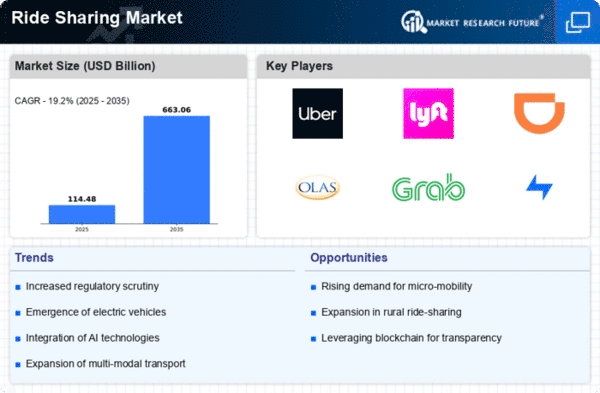
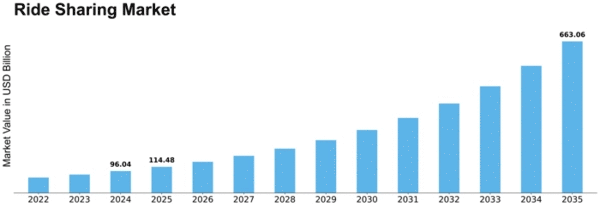
As per MRFR analysis, the Ride Sharing Market Size was estimated at 96.04 USD Billion in 2024. The Ride Sharing industry is projected to grow from 114.48 USD Billion in 2025 to 663.06 USD Billion by 2035, exhibiting a compound annual growth rate (CAGR) of 19.2 during the forecast period 2025 - 2035.

Key Market Trends & Highlights

The Ride Sharing Market is experiencing a transformative shift towards sustainability and technological integration.

  • Sustainability initiatives are becoming increasingly central to the operational strategies of ride-sharing companies in North America. Technological integration, particularly in mobile applications and payment systems, is enhancing user experience and operational efficiency across the Asia-Pacific region. The ride-hailing segment remains the largest, while carpooling is emerging as the fastest-growing segment, reflecting changing consumer preferences. Urbanization trends and environmental concerns are driving the demand for electric vehicles, which are gaining traction in the market.

Market Size & Forecast

2024 Market Size 96.04 (USD Billion)
2035 Market Size 663.06 (USD Billion)
CAGR (2025 - 2035) 19.2%
Largest Regional Market Share in 2024 North America

Major Players

<p>Uber (US), Lyft (US), Didi Chuxing (CN), Ola (IN), Grab (SG), Bolt (EE), Gett (IL), Careem (AE), Yandex.Taxi (RU)</p>

Market Trends

The Ride Sharing Market is currently experiencing a transformative phase characterized by evolving consumer preferences and technological advancements. As urbanization continues to rise, individuals increasingly seek convenient and cost-effective transportation solutions. This shift is prompting companies within the sector to innovate, enhancing user experiences through improved app functionalities and integrated services. Furthermore, the growing emphasis on sustainability is influencing the market, as consumers become more environmentally conscious and demand greener alternatives. Companies are responding by exploring electric vehicle options and promoting shared rides to reduce carbon footprints. In addition, regulatory frameworks are adapting to the changing landscape of the Ride Sharing Market. Governments are implementing policies aimed at ensuring safety and fair competition, which may shape operational strategies for various providers. The integration of artificial intelligence and data analytics is also becoming prevalent, allowing companies to optimize routes and enhance service efficiency. Overall, the Ride Sharing Market appears poised for continued growth, driven by technological innovation and shifting societal values.

Sustainability Initiatives

The Ride Sharing Market is increasingly focusing on sustainability, with companies exploring electric vehicles and promoting shared rides to minimize environmental impact. This trend reflects a broader societal shift towards eco-friendly practices, as consumers demand greener transportation options.

Technological Integration

Advancements in technology are reshaping the Ride Sharing Market, with companies leveraging artificial intelligence and data analytics to enhance user experiences. Improved app functionalities and optimized routing are becoming essential for maintaining competitive advantages.

Regulatory Adaptations

As the Ride Sharing Market evolves, regulatory frameworks are adapting to ensure safety and fair competition. Governments are implementing new policies that may influence operational strategies, compelling companies to navigate a complex regulatory landscape.

Ride Sharing Market Market Drivers

Environmental Concerns

Growing environmental concerns are influencing the Shared Ride Services Market as consumers increasingly prioritize sustainable transportation options. Ride-sharing reduces the number of vehicles on the road, leading to lower carbon emissions and decreased traffic congestion. Many cities are implementing policies to promote shared mobility as part of their sustainability initiatives. For instance, cities like Amsterdam have embraced ride-sharing as a means to reduce their carbon footprint. This shift towards eco-friendly transportation solutions is expected to bolster market growth, aligning with global efforts to combat climate change.

Increasing Urbanization

The Global Ride Sharing Market is experiencing a surge due to increasing urbanization. As more individuals migrate to urban areas, the demand for efficient transportation solutions rises. Urban centers often face congestion and limited parking, making ride-sharing an attractive alternative. For instance, cities like New York and Los Angeles have seen a significant uptick in ride-sharing usage as residents seek convenient mobility options. This trend is expected to contribute to the market's growth, with projections indicating a market value of 79.9 USD Billion in 2024, potentially reaching 150 USD Billion by 2035.

Market Growth Projections

The Ride Sharing Market is poised for substantial growth, with projections indicating a market value of 79.9 USD Billion in 2024 and an anticipated increase to 150 USD Billion by 2035. This growth trajectory reflects a compound annual growth rate of 5.9% from 2025 to 2035. The expansion is driven by various factors, including urbanization, technological advancements, and changing consumer preferences. As the industry evolves, it is likely to adapt to emerging trends and challenges, positioning itself as a key player in the transportation sector.

Technological Advancements

Technological advancements play a pivotal role in shaping the Ride Sharing Market. The integration of mobile applications, GPS navigation, and real-time data analytics enhances user experience and operational efficiency. Companies are leveraging technology to optimize routes, reduce wait times, and improve safety features. For example, ride-sharing platforms are increasingly utilizing artificial intelligence to predict demand and manage driver availability. This technological evolution is likely to drive market growth, with a projected compound annual growth rate of 5.9% from 2025 to 2035, reflecting the industry's adaptability to technological innovations.

Changing Consumer Preferences

The Ride Sharing Sector is also being driven by changing consumer preferences, particularly among younger demographics. Millennials and Generation Z are more inclined to utilize ride-sharing services over traditional car ownership. This shift is attributed to factors such as cost-effectiveness, convenience, and a desire for flexible transportation options. As these generations continue to dominate the consumer landscape, ride-sharing services are likely to see increased adoption. This trend is indicative of a broader cultural shift towards shared mobility, which could significantly impact market dynamics in the coming years.

Government Initiatives and Regulations

Government initiatives and regulations are shaping the Ride Sharing Industry by fostering a conducive environment for ride-sharing operations. Many governments are implementing policies that support shared mobility, such as tax incentives and infrastructure investments. For example, cities are increasingly designating specific lanes for ride-sharing vehicles to enhance efficiency. Additionally, regulatory frameworks are evolving to ensure safety and accountability within the industry. These supportive measures are expected to stimulate market growth, as they create a favorable landscape for ride-sharing companies to thrive.

Market Segment Insights

By Service Type: Ride Hailing (Largest) vs. Carpooling (Fastest-Growing)

<p>The Ride Sharing Market is primarily dominated by ride hailing application services, which constitute the largest share among the different service types. This segment appeals to consumers seeking convenience and immediate availability, enabling users to easily book rides via smartphone applications. In contrast, Carpooling is gaining traction as a sustainable alternative, attracting environmentally conscious users and those looking to save on transportation costs. As urban commuting patterns evolve, the demand for efficient ride-sharing options continues to shape market dynamics.</p>

<p>Ride Hailing (Dominant) vs. Luxury Rides (Emerging)</p>

<p>Ride Hailing remains the dominant player within the Ride Sharing Market due to its ease of access and reliability, catering to a wide demographic looking for flexible and efficient transportation solutions. This service type epitomizes the shift towards digital convenience, with its seamless integration into daily commuting routines. In contrast, Luxury Rides are rapidly emerging as a significant segment catering to a niche but affluent customer base eager for premium experiences. These can include high-end vehicle options and superior service. As the distinction between economy and luxury options grows, providers of Luxury Rides are focusing on enhancing customer experience through personalized services and exclusive offerings. Both segments highlight evolving consumer demands, balancing affordability with aspiration.</p>

By Vehicle Type: SUV (Largest) vs. Electric Vehicle (Fastest-Growing)

<p>The vehicle type segment in the ride-sharing market showcases a variety of options, where SUVs hold a significant portion of the Ride Sharing Market share thanks to their spacious interiors and popularity among consumers. Sedans follow as a close second for their affordability and fuel efficiency. Vans also cater to larger groups, making them a viable choice for ride-sharing services that focus on family and group transport. Meanwhile, motorcycles represent a niche segment but offer unique advantages in urban environments, particularly in maintaining lower operational costs and facilitating faster commutes.</p>

<p>SUV (Dominant) vs. Electric Vehicle (Emerging)</p>

<p>In the Ride Sharing Market, SUVs have established themselves as the dominant vehicle type due to their versatility, comfort, and capacity to accommodate multiple passengers. They appeal widely for their spacious design, making them suitable for both individual riders and group users alike. In contrast, electric vehicles are emerging as a vital segment, leveraging the growing consumer demand for eco-friendly transportation solutions. As regulations tighten regarding emissions and fuel efficiency, electric vehicles are becoming increasingly integrated into ride-sharing fleets, offering cost savings in operations and catering to environmentally conscious riders. The momentum towards sustainability is driving growth in this burgeoning segment, reflecting a significant shift in consumer preferences.</p>

By User Demographics: Millennials (Largest) vs. Generation Z (Fastest-Growing)

<p>In the ride share market, Millennials represent the largest user demographic, driven by their tech-savvy nature and preference for convenient transportation solutions. This segment has consistently shown a strong inclination towards ride-sharing services, contributing significantly to market share. Generation Z, however, is emerging rapidly, capturing attention as they prioritize eco-friendly options and digital engagement. Their increasing purchasing power and reliance on mobile apps for transportation highlight their potential in influencing Ride Sharing Market dynamics. As Generation Z continues to grow, the ride-sharing market is expected to see an acceleration in usage among younger users. Factors such as urbanization, technological advancements, and changing social attitudes toward ownership vs. access play pivotal roles in this shift. Millennials are establishing a solid base, albeit Generation Z's awareness and adoption rates suggest they will soon become a major force in the Ride Sharing Market, focusing on sustainable transportation alternatives.</p>

<p>Millennials: Dominant vs. Generation Z: Emerging</p>

<p>Millennials are currently the dominant demographic in the ride-sharing market, typically characterized by their adaptability and frequent use of technology. This group values convenience and affordability, making them avid users of ride-sharing platforms. Their preference for quick, app-based solutions translates into a solid, loyal customer base for ride-sharing services. In contrast, Generation Z, while still emerging, showcases unique characteristics such as a commitment to sustainability and preference for shared transport. This younger demographic tends to prioritize eco-friendly options and innovative technologies when choosing their transportation methods. Their growing influence is reshaping market strategies, prompting companies to enhance service offerings to meet their preferences and integrate sustainability into their business models.</p>

By Payment Model: Pay Per Ride (Largest) vs. Subscription Model (Fastest-Growing)

<p>In the Ride Sharing Market, the payment model landscape is diverse, with 'Pay Per Ride' leading the charge as the largest segment, capturing a significant portion of the market. This model appeals to occasional riders who prefer flexibility and immediate service. In contrast, the 'Subscription Model' is emerging rapidly, attracting a growing number of users who favor consistent use at a predictable expense. Both models contribute significantly to the overall dynamics of ride sharing, catering to different consumer preferences and behaviors. Growth trends indicate that the 'Subscription Model' is experiencing the fastest growth rate, driven by increasing demand for convenient and cost-effective ride solutions among regular users. Additionally, the rise in corporate accounts is contributing to this trend, as businesses look for efficient transportation solutions for employees. As awareness of these options increases, more consumers are likely to explore alternatives to the traditional pay-per-ride structure, signaling a shift in consumer preferences within the ride-sharing sector.</p>

<p>Pay Per Ride (Dominant) vs. Subscription Model (Emerging)</p>

<p>The 'Pay Per Ride' model stands as the dominant force in the ride sharing market, offering unmatched flexibility and catering primarily to users who require occasional transport. This model allows riders to pay only for the services they use, appealing to a broad demographic that values spontaneity. In contrast, the 'Subscription Model' is rapidly gaining traction, presenting an emerging alternative that provides unlimited rides for a flat fee over a set period. This model is particularly favored by frequent riders, including commuters and urban dwellers, who appreciate its value and simplicity. Both models illustrate the evolving trends in consumer behavior, where personalization and accessibility are paramount.</p>

By Technology Integration: Mobile Application (Largest) vs. GPS Navigation (Fastest-Growing)

<p>The Ride Sharing Market has seen significant diversification in technology integration, with the Mobile Application segment commanding the largest market share. As the primary interface for users, applications have become essential for ride-hailing services, facilitating seamless communication and service access. In contrast, GPS Navigation has emerged as the fastest-growing technology in the sector, driven by the increasing emphasis on optimized routing and real-time tracking, enabling more efficient and reliable service delivery.</p>

<p>Mobile Application (Dominant) vs. GPS Navigation (Emerging)</p>

<p>Mobile Applications are the dominant force in the Ride Sharing Market, providing essential functionalities such as ride-hailing, user profiles, and customer support. Their easy accessibility and user-friendly interface ensure a growing base of users, ultimately driving customer retention and loyalty. On the other hand, GPS Navigation stands out as an emerging technology, spurred by advancements in mapping and location-based services. As ride-sharing companies increasingly prioritize route efficiency and real-time traffic updates, GPS solutions are becoming indispensable, positioning themselves as vital tools for enhancing user experience and optimizing operational performance.</p>

Get more detailed insights about Ride Sharing Market Research Report – Global Forecast till 2035

Regional Insights

North America : Market Leader in Ride Sharing

North America continues to lead the global ride-sharing market, holding a significant share of 48.02% as of 2024. The growth is driven by increasing urbanization, a shift towards shared mobility, upholding the shared mobility market, and favorable regulatory frameworks that encourage innovation. The demand for convenient and cost-effective transportation options is rising, supported by technological advancements in mobile applications and payment systems. The competitive landscape is dominated by key players such as Uber Technologies Inc and Lyft Inc, which have established strong brand recognition and extensive service networks. The U.S. remains the largest market, with Canada also showing promising growth. The presence of these major companies fosters a dynamic environment, pushing for continuous improvements in service quality and customer experience.

Europe : Emerging Market with Growth Potential

Europe's ride-sharing market is rapidly evolving, with a market size of €25.5 billion projected for December 2025. The growth is fueled by increasing environmental awareness, government initiatives promoting sustainable transport, and a rising preference for shared mobility solutions. Regulatory support, including the European Commission's focus on reducing carbon emissions, is catalyzing the expansion of ride-sharing services across the continent. Leading countries in this market include the UK, Germany, and France, where companies like Bolt and Gett are making significant inroads. The competitive landscape is marked by a mix of established players and new entrants, all vying for market share. The presence of local regulations and varying consumer preferences across countries adds complexity, but also opportunities for innovation and tailored services.

Asia-Pacific : Rapid Growth in Emerging Markets

The Asia-Pacific region is witnessing a surge in the ride-sharing market, with a projected size of $18.0 billion by December 2025. This growth is driven by increasing smartphone penetration, urbanization, and a burgeoning middle class seeking affordable transportation options. Regulatory frameworks are gradually adapting to accommodate the rise of ride-sharing, fostering a more competitive environment that encourages innovation and service diversification. Key players in this region include Didi Chuxing in China, Ola in India, and Grab in Southeast Asia, each leveraging local market dynamics to expand their services. The competitive landscape is characterized by aggressive pricing strategies and partnerships with local businesses, enhancing service accessibility. As the market matures, companies are focusing on improving safety and customer experience to retain user loyalty.

Middle East and Africa : Emerging Frontier for Ride Sharing

The Middle East and Africa (MEA) region is emerging as a promising frontier for the ride-sharing market, with a market size of $4.52 billion anticipated by December 2025. The growth is driven by increasing urbanization, a young population, and rising smartphone usage. Governments are beginning to recognize the potential of ride-sharing as a solution to urban mobility challenges, leading to supportive regulatory measures that encourage market entry and competition. Countries like the UAE and South Africa are at the forefront of this growth, with local players such as Careem and Yandex.Taxi expanding their services. The competitive landscape is evolving, with both local and international companies vying for market share. As the region continues to develop its infrastructure, the demand for efficient and reliable transportation options is expected to rise, creating further opportunities for growth.

Key Players and Competitive Insights

The Ride Sharing Market is currently characterized by intense competition and rapid evolution, driven by technological advancements and shifting consumer preferences. Major players such as Uber (US), Didi Chuxing (CN), and Grab (SG) are at the forefront, each adopting distinct strategies to enhance their market positioning. Uber (US) continues to innovate with its focus on autonomous vehicle technology and expanding its delivery services, while Didi Chuxing (CN) emphasizes regional dominance through strategic partnerships and localized service offerings. Grab (SG) is diversifying its platform by integrating financial services, thereby enhancing user engagement and loyalty. Collectively, these strategies contribute to a dynamic competitive environment, where adaptability and innovation are paramount. In terms of business tactics, companies are increasingly localizing their operations to better cater to regional demands. This approach not only optimizes supply chains but also enhances customer satisfaction by providing tailored services. The market structure appears moderately fragmented, with several key players vying for market share. However, the influence of dominant companies like Uber (US) and Didi Chuxing (CN) remains substantial, shaping competitive dynamics through aggressive pricing and service diversification.

In November Uber (US) announced a partnership with a leading AI firm to enhance its ride-matching algorithms. This strategic move is likely to improve operational efficiency and reduce wait times for customers, thereby reinforcing Uber's competitive edge in the market. The integration of advanced AI technologies may also facilitate better resource allocation, which is crucial in a market where demand can fluctuate significantly.

In October Didi Chuxing (CN) launched a new initiative aimed at expanding its electric vehicle (EV) fleet. This initiative not only aligns with global sustainability trends but also positions Didi as a leader in environmentally friendly transportation solutions. By investing in EV technology, Didi is likely to attract a growing segment of eco-conscious consumers, thereby enhancing its market appeal and long-term viability.

In September Grab (SG) introduced a subscription model for its ride-sharing services, allowing users to pay a fixed monthly fee for unlimited rides. This innovative approach could potentially increase customer retention and predictability in revenue streams. By offering a subscription service, Grab is likely to differentiate itself from competitors, fostering a loyal customer base that values convenience and cost-effectiveness.

As of December the Ride Sharing Market is witnessing a pronounced shift towards digitalization, sustainability, and AI integration. Strategic alliances are becoming increasingly pivotal, as companies seek to leverage complementary strengths to enhance service offerings. The competitive landscape is evolving from a focus on price-based competition to one that prioritizes innovation, technology, and supply chain reliability. This transition suggests that future differentiation will hinge on the ability to deliver superior customer experiences through advanced technological solutions and sustainable practices.

Key Companies in the Ride Sharing Market include

Industry Developments

  • Q4 2025: Morocco’s Ministry of Transport has rejected new license applications from multiple ride share platforms, citing regulatory non-compliance and the need for updated policy frameworks. Authorities are expected to release revised mobility guidelines later in the year.
  • Q4 2025: RushOwl has raised USD 10 million in Series A funding to scale its dynamic ride-sharing platform, enabling wider deployment of AI-based routing, improved fleet connectivity, and expanded urban mobility services.
  • Q2 2025: Freenow acquired by Lyft for $200 million as U.S. ride-hailing firm plants flag in Europe Lyft announced the acquisition of German taxi app FreeNow for $200 million, marking its entry into the European ride-sharing market and expanding its global footprint.
  • Q3 2025: Lyft Goes Global: FREENOW Acquisition Complete Lyft completed its acquisition of FREENOW, with both teams beginning integration to roll out new features for riders and drivers worldwide.
  • Q3 2025: Abreu advises Lyft on €175M Freenow acquisition Lyft acquired 100% of Intelligent Apps GmbH, the operator of FreeNow, for €175 million, representing Lyft’s most significant expansion outside North America.
  • Q2 2025: The 2025 Government-wide Rideshare BPA has been awarded! Awarded Vendor: Uber Technologies, Inc. Uber Technologies, Inc. was awarded a five-year Blanket Purchase Agreement (BPA) by the U.S. government to provide rideshare services for federal employees from April 2025 through April 2030.
  • Q4 2025: Uber is targeting global robotaxi services expansion across ten countries in 2026 with plans to deploy autonomous ride-hailing fleets, strengthen partnerships with AV technology developers, and scale commercial robotaxi operations to meet growing urban mobility demand while enhancing safety and service reliability.

Future Outlook

Ride Sharing Market Future Outlook

<p>The ride sharing market share is projected to grow at a 19.2% CAGR from 2025 to 2035, driven by technological advancements, urbanization, and changing consumer preferences.</p>

New opportunities lie in:

  • <p>Integration of AI for dynamic pricing models Expansion into underserved rural markets Partnerships with public transport for seamless mobility solutions</p>

<p>By 2035, the Ride Sharing Market is expected to be a dominant force in global transportation.</p>

Market Segmentation

Ride Sharing Market Service Type Outlook

  • Ride Hailing
  • Carpooling
  • Ridesharing
  • Luxury Rides
  • Shared Shuttle

Ride Sharing Market Vehicle Type Outlook

  • Sedan
  • SUV
  • Van
  • Electric Vehicle
  • Motorcycle

Ride Sharing Market Payment Model Outlook

  • Pay Per Ride
  • Subscription Model
  • Freemium Model
  • Corporate Accounts
  • Dynamic Pricing

Ride Sharing Market User Demographics Outlook

  • Millennials
  • Generation Z
  • Families
  • Business Travelers
  • Senior Citizens

Ride Sharing Market Technology Integration Outlook

  • Mobile Application
  • GPS Navigation
  • Payment Gateway
  • User Rating System
  • Ride Scheduling

Report Scope

MARKET SIZE 2024 96.04(USD Billion)
MARKET SIZE 2025 114.48(USD Billion)
MARKET SIZE 2035 663.06(USD Billion)
COMPOUND ANNUAL GROWTH RATE (CAGR) 19.2% (2025 - 2035)
REPORT COVERAGE Revenue Forecast, Competitive Landscape, Growth Factors, and Trends
BASE YEAR 2024
Market Forecast Period 2025 - 2035
Historical Data 2019 - 2024
Market Forecast Units USD Billion
Key Companies Profiled Uber (US), Lyft (US), Didi Chuxing (CN), Ola (IN), Grab (SG), Bolt (EE), Gett (IL), Careem (AE), Yandex.Taxi (RU)
Segments Covered Service Type, Vehicle Type, User Demographics, Payment Model, Technology Integration
Key Market Opportunities Integration of electric vehicles and autonomous technology enhances sustainability in the Ride Sharing Market.
Key Market Dynamics Technological advancements and regulatory changes are reshaping competitive dynamics in the ride sharing market.
Countries Covered North America, Europe, APAC, South America, MEA

FAQs

What is the projected market size of the Ride Sharing Market in 2024?

The projected market size of the Ride Sharing Market in 2024 is expected to be valued at 79.88 USD Billion.

What will be the market size of the Ride Sharing Market by 2035?

By 2035, the Ride Sharing Market is expected to be valued at 150.0 USD Billion.

What is the expected CAGR for the Ride Sharing Market from 2025 to 2035?

The expected CAGR for the Ride Sharing Market from 2025 to 2035 is 5.89%.

Which region is projected to dominate the Ride Sharing Market in 2024?

In 2024, North America is projected to dominate the Ride Sharing Market with a value of 30.0 USD Billion.

What will be the market value of the Ride Sharing Market in Europe by 2035?

By 2035, the market value of the Ride Sharing Market in Europe is expected to reach 40.0 USD Billion.

Which are the key players in the Ride Sharing Market?

Key players in the Ride Sharing Market include Uber, Lyft, Didi Chuxing, and Grab among others.

What is the expected market size for Peer-to-Peer ride sharing by 2035?

The market size for Peer-to-Peer ride sharing is expected to reach 50.0 USD Billion by 2035.

What will be the market value for the Business-to-Business model in 2024?

The market value for the Business-to-Business model in 2024 is anticipated to be 24.88 USD Billion.

How is the ride sharing market expected to grow in the APAC region by 2035?

The ride sharing market in the APAC region is expected to grow to 35.0 USD Billion by 2035.

What are the growth drivers behind the Ride Sharing Market?

Key growth drivers for the Ride Sharing Market include increasing urbanization and technological advancements.

  1. SECTION I: EXECUTIVE SUMMARY AND KEY HIGHLIGHTS
    1. | 1.1 EXECUTIVE SUMMARY
    2. | 1.1.1 Market Overview
    3. | 1.1.2 Key Findings
    4. | 1.1.3 Market Segmentation
    5. | 1.1.4 Competitive Landscape
    6. | 1.1.5 Challenges and Opportunities
    7. | 1.1.6 Future Outlook
  2. SECTION II: SCOPING, METHODOLOGY AND MARKET STRUCTURE
    1. | 2.1 MARKET INTRODUCTION
    2. | 2.1.1 Definition
    3. | 2.1.2 Scope of the study
    4. |-- 2.1.2.1 Research Objective
    5. |-- 2.1.2.2 Assumption
    6. |-- 2.1.2.3 Limitations
    7. | 2.2 RESEARCH METHODOLOGY
    8. | 2.2.1 Overview
    9. | 2.2.2 Data Mining
    10. | 2.2.3 Secondary Research
    11. | 2.2.4 Primary Research
    12. |-- 2.2.4.1 Primary Interviews and Information Gathering Process
    13. |-- 2.2.4.2 Breakdown of Primary Respondents
    14. | 2.2.5 Forecasting Model
    15. | 2.2.6 Market Size Estimation
    16. |-- 2.2.6.1 Bottom-Up Approach
    17. |-- 2.2.6.2 Top-Down Approach
    18. | 2.2.7 Data Triangulation
    19. | 2.2.8 Validation
  3. SECTION III: QUALITATIVE ANALYSIS
    1. | 3.1 MARKET DYNAMICS
    2. | 3.1.1 Overview
    3. | 3.1.2 Drivers
    4. | 3.1.3 Restraints
    5. | 3.1.4 Opportunities
    6. | 3.2 MARKET FACTOR ANALYSIS
    7. | 3.2.1 Value chain Analysis
    8. | 3.2.2 Porter's Five Forces Analysis
    9. |-- 3.2.2.1 Bargaining Power of Suppliers
    10. |-- 3.2.2.2 Bargaining Power of Buyers
    11. |-- 3.2.2.3 Threat of New Entrants
    12. |-- 3.2.2.4 Threat of Substitutes
    13. |-- 3.2.2.5 Intensity of Rivalry
    14. | 3.2.3 COVID-19 Impact Analysis
    15. |-- 3.2.3.1 Market Impact Analysis
    16. |-- 3.2.3.2 Regional Impact
    17. |-- 3.2.3.3 Opportunity and Threat Analysis
  4. SECTION IV: QUANTITATIVE ANALYSIS
    1. | 4.1 Automobile, BY Service Type (USD Billion)
    2. | 4.1.1 Ride Hailing
    3. | 4.1.2 Carpooling
    4. | 4.1.3 Ridesharing
    5. | 4.1.4 Luxury Rides
    6. | 4.1.5 Shared Shuttle
    7. | 4.2 Automobile, BY Vehicle Type (USD Billion)
    8. | 4.2.1 Sedan
    9. | 4.2.2 SUV
    10. | 4.2.3 Van
    11. | 4.2.4 Electric Vehicle
    12. | 4.2.5 Motorcycle
    13. | 4.3 Automobile, BY User Demographics (USD Billion)
    14. | 4.3.1 Millennials
    15. | 4.3.2 Generation Z
    16. | 4.3.3 Families
    17. | 4.3.4 Business Travelers
    18. | 4.3.5 Senior Citizens
    19. | 4.4 Automobile, BY Payment Model (USD Billion)
    20. | 4.4.1 Pay Per Ride
    21. | 4.4.2 Subscription Model
    22. | 4.4.3 Freemium Model
    23. | 4.4.4 Corporate Accounts
    24. | 4.4.5 Dynamic Pricing
    25. | 4.5 Automobile, BY Technology Integration (USD Billion)
    26. | 4.5.1 Mobile Application
    27. | 4.5.2 GPS Navigation
    28. | 4.5.3 Payment Gateway
    29. | 4.5.4 User Rating System
    30. | 4.5.5 Ride Scheduling
    31. | 4.6 Automobile, BY Region (USD Billion)
    32. | 4.6.1 North America
    33. |-- 4.6.1.1 US
    34. |-- 4.6.1.2 Canada
    35. | 4.6.2 Europe
    36. |-- 4.6.2.1 Germany
    37. |-- 4.6.2.2 UK
    38. |-- 4.6.2.3 France
    39. |-- 4.6.2.4 Russia
    40. |-- 4.6.2.5 Italy
    41. |-- 4.6.2.6 Spain
    42. |-- 4.6.2.7 Rest of Europe
    43. | 4.6.3 APAC
    44. |-- 4.6.3.1 China
    45. |-- 4.6.3.2 India
    46. |-- 4.6.3.3 Japan
    47. |-- 4.6.3.4 South Korea
    48. |-- 4.6.3.5 Malaysia
    49. |-- 4.6.3.6 Thailand
    50. |-- 4.6.3.7 Indonesia
    51. |-- 4.6.3.8 Rest of APAC
    52. | 4.6.4 South America
    53. |-- 4.6.4.1 Brazil
    54. |-- 4.6.4.2 Mexico
    55. |-- 4.6.4.3 Argentina
    56. |-- 4.6.4.4 Rest of South America
    57. | 4.6.5 MEA
    58. |-- 4.6.5.1 GCC Countries
    59. |-- 4.6.5.2 South Africa
    60. |-- 4.6.5.3 Rest of MEA
  5. SECTION V: COMPETITIVE ANALYSIS
    1. | 5.1 Competitive Landscape
    2. | 5.1.1 Overview
    3. | 5.1.2 Competitive Analysis
    4. | 5.1.3 Market share Analysis
    5. | 5.1.4 Major Growth Strategy in the Automobile
    6. | 5.1.5 Competitive Benchmarking
    7. | 5.1.6 Leading Players in Terms of Number of Developments in the Automobile
    8. | 5.1.7 Key developments and growth strategies
    9. |-- 5.1.7.1 New Product Launch/Service Deployment
    10. |-- 5.1.7.2 Merger & Acquisitions
    11. |-- 5.1.7.3 Joint Ventures
    12. | 5.1.8 Major Players Financial Matrix
    13. |-- 5.1.8.1 Sales and Operating Income
    14. |-- 5.1.8.2 Major Players R&D Expenditure. 2023
    15. | 5.2 Company Profiles
    16. | 5.2.1 Uber (US)
    17. |-- 5.2.1.1 Financial Overview
    18. |-- 5.2.1.2 Products Offered
    19. |-- 5.2.1.3 Key Developments
    20. |-- 5.2.1.4 SWOT Analysis
    21. |-- 5.2.1.5 Key Strategies
    22. | 5.2.2 Lyft (US)
    23. |-- 5.2.2.1 Financial Overview
    24. |-- 5.2.2.2 Products Offered
    25. |-- 5.2.2.3 Key Developments
    26. |-- 5.2.2.4 SWOT Analysis
    27. |-- 5.2.2.5 Key Strategies
    28. | 5.2.3 Didi Chuxing (CN)
    29. |-- 5.2.3.1 Financial Overview
    30. |-- 5.2.3.2 Products Offered
    31. |-- 5.2.3.3 Key Developments
    32. |-- 5.2.3.4 SWOT Analysis
    33. |-- 5.2.3.5 Key Strategies
    34. | 5.2.4 Ola (IN)
    35. |-- 5.2.4.1 Financial Overview
    36. |-- 5.2.4.2 Products Offered
    37. |-- 5.2.4.3 Key Developments
    38. |-- 5.2.4.4 SWOT Analysis
    39. |-- 5.2.4.5 Key Strategies
    40. | 5.2.5 Grab (SG)
    41. |-- 5.2.5.1 Financial Overview
    42. |-- 5.2.5.2 Products Offered
    43. |-- 5.2.5.3 Key Developments
    44. |-- 5.2.5.4 SWOT Analysis
    45. |-- 5.2.5.5 Key Strategies
    46. | 5.2.6 Bolt (EE)
    47. |-- 5.2.6.1 Financial Overview
    48. |-- 5.2.6.2 Products Offered
    49. |-- 5.2.6.3 Key Developments
    50. |-- 5.2.6.4 SWOT Analysis
    51. |-- 5.2.6.5 Key Strategies
    52. | 5.2.7 Gett (IL)
    53. |-- 5.2.7.1 Financial Overview
    54. |-- 5.2.7.2 Products Offered
    55. |-- 5.2.7.3 Key Developments
    56. |-- 5.2.7.4 SWOT Analysis
    57. |-- 5.2.7.5 Key Strategies
    58. | 5.2.8 Careem (AE)
    59. |-- 5.2.8.1 Financial Overview
    60. |-- 5.2.8.2 Products Offered
    61. |-- 5.2.8.3 Key Developments
    62. |-- 5.2.8.4 SWOT Analysis
    63. |-- 5.2.8.5 Key Strategies
    64. | 5.2.9 Yandex.Taxi (RU)
    65. |-- 5.2.9.1 Financial Overview
    66. |-- 5.2.9.2 Products Offered
    67. |-- 5.2.9.3 Key Developments
    68. |-- 5.2.9.4 SWOT Analysis
    69. |-- 5.2.9.5 Key Strategies
    70. | 5.3 Appendix
    71. | 5.3.1 References
    72. | 5.3.2 Related Reports

Automobile Market Segmentation

Automobile By Service Type (USD Billion, 2025-2035)

  • Ride Hailing
  • Carpooling
  • Ridesharing
  • Luxury Rides
  • Shared Shuttle

Automobile By Vehicle Type (USD Billion, 2025-2035)

  • Sedan
  • SUV
  • Van
  • Electric Vehicle
  • Motorcycle

Automobile By User Demographics (USD Billion, 2025-2035)

  • Millennials
  • Generation Z
  • Families
  • Business Travelers
  • Senior Citizens

Automobile By Payment Model (USD Billion, 2025-2035)

  • Pay Per Ride
  • Subscription Model
  • Freemium Model
  • Corporate Accounts
  • Dynamic Pricing

Automobile By Technology Integration (USD Billion, 2025-2035)

  • Mobile Application
  • GPS Navigation
  • Payment Gateway
  • User Rating System
  • Ride Scheduling
Infographic

Free Sample Request

Kindly complete the form below to receive a free sample of this Report

Get Free Sample

Customer Strories

Compare Licence

×
Features License Type
Single User Multiuser License Enterprise User
Price $4,950 $5,950 $7,250
Maximum User Access Limit 1 User Upto 10 Users Unrestricted Access Throughout the Organization
Free Customization
Direct Access to Analyst
Deliverable Format
Platform Access
Discount on Next Purchase 10% 15% 15%
Printable Versions