Request Free Sample ×

Kindly complete the form below to receive a free sample of this Report

* Please use a valid business email

Leading companies partner with us for data-driven Insights

clients tt-cursor
Hero Background

Retail Pharmacy Market

ID: MRFR/HC/20832-HCR
100 Pages
Satyendra Maurya, Rahul Gotadki
Last Updated: April 24, 2026

Retail Pharmacy Market Research Report By Product Category (Prescription Drugs, Over-the-Counter (OTC) Drugs, Health and Beauty Products), By Distribution Channel (Chain Pharmacies, Independent Pharmacies), By Target Customer (Chronic Disease Patients, Acute Care Patients), By Technology Integration (Electronic Health Records (EHRs), Telemedicine Services, Mobile Health Applications, Artificial Intelligence (AI)) and By Regional (North America, Europe, South America, Asia Pacific, Middle East and Africa) - Growth & Industry Forecast 2025 To 2035

Share:
Download PDF ×

We do not share your information with anyone. However, we may send you emails based on your report interest from time to time. You may contact us at any time to opt-out.

Retail Pharmacy Market Infographic
Purchase Options

Retail Pharmacy Market Summary

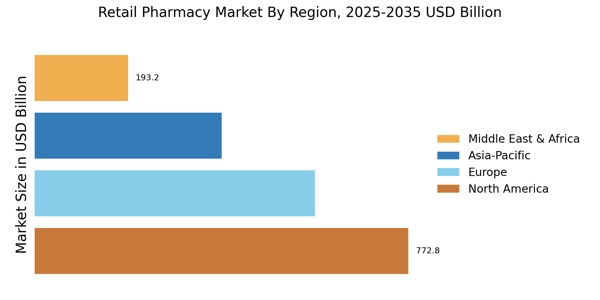
According to Market Research Future analysis, the Retail Pharmacy Market Size was valued at USD 1932.03 Billion in 2024 & the market is projected to grow from USD 2041.81 Billion in 2025 to USD 3548.36 Billion by 2035, registering a CAGR of 5.68% during the forecast period 2025–2035. North America led the market with over 40% share, generating around USD 772.81 billion in revenue.
 
Increasing prevalence of chronic diseases and expanding access to healthcare services are major growth drivers for the retail pharmacy market, as patients rely on pharmacies for continuous medication, consultation, and convenient healthcare solutions, strengthening their role in primary healthcare delivery systems globally. 
 
According to WHO, noncommunicable diseases cause 41 million deaths annually (74% globally), while CDC reports 60% of U.S. adults have at least one chronic disease and 40% have two or more; IHME estimates global disease burden rising by over 20% in key chronic conditions, reinforcing sustained demand for retail pharmacy services.

Key Market Trends & Highlights

The Retail Pharmacy Market is experiencing a dynamic shift towards enhanced service offerings and digital integration.

  • North America leads with over 40% share in 2024, supported by aging population and high chronic disease burden.
  • Europe valued at USD 579.61 billion in 2024, holding 30% share with strong healthcare spending and OTC demand growth.
  • Prescription drugs dominate with 54% share in 2024, driven by rising chronic disease prevalence and long-term medication demand globally.
  • Online pharmacies account for 22% share in 2024, expanding rapidly due to digital health adoption and home delivery convenience.

Market Size & Forecast

2024 Market Size 1932.03 (USD Billion)
2035 Market Size 3548.36 (USD Billion)
CAGR (2025 - 2035) 5.68%

Major Players

Companies such as CVS Health (US), Walgreens Boots Alliance (US), Rite Aid (US), Cigna(US), Loblaw Companies (CA), Ahold Delhaize (US), McKesson Corporation (US), Wal-Mart Stores (US), Boots UK (GB) are some of the major participants in the global market.

Our Impact
Enabled $4.3B Revenue Impact for Fortune 500 and Leading Multinationals
Partnering with 2000+ Global Organizations Each Year
30K+ Citations by Top-Tier Firms in the Industry

Retail Pharmacy Market Trends

The Retail Pharmacy Market is currently experiencing a dynamic transformation, driven by various factors that influence consumer behavior and healthcare delivery. The increasing demand for accessible healthcare services has led to a rise in the number of retail pharmacies, which are now seen as essential components of the healthcare ecosystem. These establishments are evolving beyond traditional roles, offering a wider range of services, including health screenings, immunizations, and medication management. This shift reflects a broader trend towards patient-centered care, where convenience and personalized services are prioritized.

Furthermore, the integration of technology into pharmacy operations is reshaping how services are delivered, enhancing efficiency and customer engagement. In addition to service expansion, the market is witnessing a strong focus on health and wellness products. Consumers are increasingly adopting preventive healthcare approaches, prompting pharmacies to diversify their offerings with vitamins, supplements, and natural remedies.

This trend is significantly contributing to the growth of the retail pharmacy market size and enhancing overall market share. Furthermore, the rise of e-commerce and digital health platforms is reshaping purchasing behavior, as consumers prefer the convenience of online ordering and home delivery. As a result, the market continues to evolve as a key player in modern healthcare delivery.

Expansion of Services

Retail pharmacies are broadening their service offerings to include health screenings, immunizations, and chronic disease management. This trend reflects a shift towards a more integrated approach to healthcare, where pharmacies serve as accessible points of care for patients.

WHO states that primary healthcare can address up to 80–90% of essential health needs, while PAHO reports over 70% population coverage through community-based healthcare services in the Americas; MSF operates in 70+ countries, highlighting growing reliance on decentralized care models including pharmacy-led services.

Focus on Health and Wellness

There is a noticeable increase in consumer interest in health and wellness products. Retail pharmacies are responding by diversifying their inventory to include vitamins, supplements, and natural remedies, catering to the growing demand for preventive health solutions.

WHO estimates 11 million deaths annually are linked to unhealthy diets, while UNICEF reports that over 340 million children suffer from micronutrient deficiencies globally, driving demand for supplements; UNFPA highlights increasing preventive healthcare investments across 150+ countries, supporting expansion of wellness product portfolios in pharmacies.

Digital Transformation

The retail pharmacy market is undergoing a digital transformation, with many pharmacies adopting e-commerce platforms and mobile applications. This shift enhances customer convenience, allowing for online ordering and home delivery, thereby meeting the evolving expectations of consumers.

CDC reports 37% of U.S. adults used telemedicine services in recent years, while IHME highlights digital health adoption increasing by over 15–20% annually globally; ECDC supports digital surveillance systems across 30 EU/EEA countries, reinforcing rapid expansion of e-pharmacy, online prescriptions, and home delivery models.

Retail Pharmacy Market Drivers

Aging Population

The aging population is a crucial driver of the Retail Pharmacy Market. As individuals age, they typically experience an increase in chronic health conditions, necessitating more frequent medication and healthcare services. This demographic shift is projected to lead to a substantial rise in prescription drug consumption.
 
According to recent data, the number of individuals aged 65 and older is expected to double by 2050, which will likely increase the demand for retail pharmacies. Consequently, pharmacies are adapting their services to cater to this demographic, offering specialized medication management and health consultations. This trend indicates that the market must evolve to meet the unique needs of older adults, potentially enhancing customer loyalty and driving revenue growth.

Regulatory Changes

Regulatory changes are a pivotal driver in the Retail Pharmacy Market, as governments worldwide implement new policies affecting pharmaceutical distribution and sales. Recent legislation aimed at improving drug pricing transparency and access to medications has prompted pharmacies to adapt their business models.
 
For instance, the introduction of value-based pricing models may encourage pharmacies to focus on patient outcomes rather than volume sales. Additionally, compliance with new regulations often requires investment in training and technology, which can be a challenge for smaller pharmacies. However, those that successfully navigate these changes may find new opportunities for growth and differentiation in the market.

Increased Health Awareness

Increased health awareness among consumers is significantly influencing the Retail Pharmacy Market. As individuals become more informed about health and wellness, there is a growing demand for preventive care and self-medication options. This trend is reflected in the rising sales of over-the-counter products and health supplements, which have seen a notable increase in recent years.
 
Retail pharmacies are responding by expanding their product offerings and providing health education resources to customers. This shift not only enhances the role of pharmacies as health advisors but also drives sales growth within the market, as consumers seek convenient access to health-related products and services.

Technological Advancements

Technological advancements are reshaping the Retail Pharmacy Market in profound ways. The integration of digital tools, such as electronic prescriptions and telepharmacy services, is streamlining operations and improving patient access to medications. Data suggests that pharmacies utilizing advanced technology can enhance efficiency by up to 30%, thereby reducing wait times and improving customer satisfaction.
 
Furthermore, the rise of mobile health applications allows consumers to manage their prescriptions and health information more effectively. As technology continues to evolve, retail pharmacies that embrace these innovations are likely to gain a competitive edge, positioning themselves as leaders in the market.

Rising Demand for Personalized Medicine

The rising demand for personalized medicine is emerging as a significant driver in the Retail Pharmacy Market. As healthcare shifts towards tailored treatment plans, pharmacies are increasingly involved in providing personalized medication management services. This trend is supported by advancements in pharmacogenomics, which allows for the customization of drug therapies based on individual genetic profiles.
 
Retail pharmacies that offer these specialized services can enhance patient outcomes and foster stronger relationships with healthcare providers. The potential for personalized medicine to improve treatment efficacy suggests that the market will continue to evolve, with pharmacies playing a critical role in the delivery of customized healthcare solutions.

Market Segment Insights

By Product Category: Prescription Drugs (Largest) vs. Health and Beauty Products (Fastest-Growing)

The distribution of market share among various product categories reveals that prescription drugs maintain a dominant position in the retail pharmacy market, accounting for 54%, reflecting the persistent demand for essential medications and treatments. Over-the-Counter (OTC) Drugs and Health and Beauty Products have carved out significant niches, witnessing steady growth among consumers seeking convenience and wellness. Medical Equipment and Pharmaceutical Services, although smaller segments, contribute positively to the overall dynamics of the market.

Prescription Drugs (Dominant) vs. Health and Beauty Products (Emerging)

Prescription Drugs serve as the cornerstone of the market, given their essential role in healthcare and patient treatment. This segment is characterized by a wide range of medications, including life-saving prescriptions, which are continually in demand. In contrast, Health and Beauty Products are emerging as a compelling segment, driven by changing consumer preferences towards self-care, wellness, and preventive health measures. With the rise of health-conscious consumers, this segment is witnessing rapid innovation and diversification, catering to the increasing demand for natural and organic products that enhance beauty and well-being.

By Distribution Channel: Chain Pharmacies (Largest) vs. Online Pharmacies (Fastest-Growing)

The Chain Pharmacies continue to represent the largest Retail Pharmacy Market share at 48%, driven by their expansive networks and strong brand recognition. Their ability to leverage economies of scale allows them to provide competitive pricing and a diverse range of products. On the other hand, Online Pharmacies have gained significant traction, rapidly increasing their market presence as consumers favor the convenience of shopping from home. The shift towards digital platforms has opened new avenues for growth, engaging tech-savvy customers looking for easy access to pharmaceutical services.

Chain Pharmacies: Dominant vs. Online Pharmacies: Emerging

Chain Pharmacies dominate the market due to their vast networks, strategic locations, and robust customer loyalty programs. Their operational efficiency, coupled with aggressive marketing strategies, solidifies their position in the industry. Conversely, Online Pharmacies represent an emerging segment, appealing to a growing consumer preference for convenience and accessibility. They utilize advanced technology to streamline ordering processes and offer home delivery services, positioning themselves as a modern alternative to traditional retail pharmacies. Together, these segments highlight the diverse landscape of distribution channels in the retail pharmacy sector.

By Target Customer: Chronic Disease Patients (Largest) vs. Wellness-Oriented Consumers (Fastest-Growing)

The distribution of target customers reveals that chronic disease patients represent the largest segment in the retail pharmacy market, accounting for a 46% share and significantly impacting the overall landscape. This segment comprises a considerable portion of pharmacy customers due to the increasing prevalence of chronic conditions such as diabetes, hypertension, and cardiovascular diseases that require ongoing medication and support. By contrast, Wellness-Oriented Consumers are emerging as a rapidly expanding segment, driven by a growing focus on preventive healthcare and holistic wellness. The growth trends indicate that Wellness-Oriented Consumers are becoming increasingly proactive about their health. The desire for preventive measures and natural products, along with heightened awareness around overall wellness, has resulted in a surge of pharmacy services tailored to this demographic. As a result, pharmacies are expanding their offerings to include supplements, health consultations, and wellness programs to capture this fast-growing market.

Chronic Disease Patients (Dominant) vs. Pediatric Patients (Emerging)

Chronic Disease Patients represent the dominant segment in the market, characterized by their need for regular medication management and chronic care support. This group typically requires specialized advice and tailored pharmaceutical services to manage their health conditions effectively. Pharmacy services are becoming increasingly crucial as these patients often rely on a consistent supply of essential medications and ongoing health monitoring. In contrast, Pediatric Patients are an emerging segment, driven by rising health concerns among children and a growing awareness among parents regarding pediatric health. This segment presents unique challenges and opportunities, prompting pharmacies to adapt their services to cater to the specific needs of children and to provide guidance for parents. The development of child-friendly formulations and educational resources for caregivers underscores the necessity of targeting this evolving demographic.

By Technology Integration: Electronic Health Records (EHRs) (Largest) vs. Telemedicine Services (Fastest-Growing)

The Technology Integration segment in the Retail Pharmacy Market showcases distinct preferences across its various components. Electronic Health Records (EHRs) hold the largest market share at 52%, serving as the foundational technology that pharmacies rely on for efficient patient management and record-keeping. In contrast, Telemedicine Services are emerging as the fastest-growing area within this segment, driven by an increasing demand for remote healthcare solutions, particularly in light of recent healthcare shifts driven by technological advancements and consumer preferences.

EHRs (Dominant) vs. Telemedicine Services (Emerging)

Electronic Health Records (EHRs) are currently the dominant technology in the market. They streamline patient information management and enhance communication between healthcare providers. This results in significant improvements in workflow efficiency and accuracy in medication dispensing. On the other hand, Telemedicine Services are classified as an emerging player in this field, primarily due to their growing necessity in offering accessible healthcare. This service enables pharmacies to provide virtual consultations, significantly improving patient engagement and appointment scheduling. Together, these technologies enhance the overall service quality and operational efficiency of retail pharmacies.

Get more detailed insights about Retail Pharmacy Market

Regional Insights

North America : Market Leader in Retail Pharmacy Market

North America leads in the Retail Pharmacy Market size, accounting for over 40% of the global revenue in 2024. Key growth drivers include an aging population, increasing chronic diseases, and a shift towards personalized medicine. Regulatory support, such as the Affordable Care Act, has also catalyzed growth by expanding access to healthcare services.

CDC reports 6 in 10 adults in the U.S. have chronic diseases, while WHO highlights increasing aging population trends; PAHO supports expanded healthcare access programs, collectively driving strong demand for pharmacy services and medication management across North America.

The U.S. remains the largest market, followed by Canada, which contributes around 10% to the overall market share. The competitive landscape is dominated by major players like CVS Health, Walgreens Boots Alliance, and Rite Aid. These companies leverage extensive networks and advanced technology to enhance customer experience and operational efficiency. The presence of large retail chains, such as Walmart and Ahold Delhaize, further intensifies competition. The market is characterized by a trend towards consolidation, with mergers and acquisitions shaping the future landscape.

Europe : Emerging Market Dynamics

Europe Retail Pharmacy Market size was valued at USD 579.61 billion in 2024, making it the second-largest regional market with a 30% share, with Germany and the UK being the largest contributors, accounting for about 12% and 10% respectively. Regulatory frameworks, such as the European Medicines Agency guidelines, are facilitating market expansion by ensuring safety and efficacy in pharmaceutical products. 

ECDC reports chronic diseases account for nearly 80% of healthcare burden in Europe, while WHO supports increasing healthcare investments; UNICEF highlights improved healthcare awareness, collectively strengthening demand for retail pharmacy products including OTC drugs and wellness solutions across European countries.

Leading countries in this region include Germany, the UK, and France, with a competitive landscape featuring key players like Boots UK and Ahold Delhaize. The market is characterized by a mix of independent pharmacies and large chains, fostering a diverse competitive environment. Innovations in digital health and e-pharmacy services are also gaining traction, enhancing customer access and convenience.

Asia-Pacific : Rapid Growth and Expansion

The Asia-Pacific region is emerging as a powerhouse in the retail pharmacy market, with a growth rate projected to surpass 10% annually. This region holds approximately 20% of the global market share, with China and India leading the way, contributing around 8% and 5% respectively. Key growth drivers include increasing urbanization, rising disposable incomes, and a growing awareness of health and wellness. Regulatory initiatives aimed at improving healthcare access are also propelling market growth. China's retail pharmacy sector is characterized by a mix of traditional and modern retail formats, while India is witnessing a surge in e-pharmacy services. Major players like Cigna and local chains are expanding their footprints, enhancing competition. The market is also seeing increased investment in technology and logistics to improve service delivery and customer experience, positioning the region for sustained growth.

Middle East and Africa : Untapped Market Potential

The Middle East and Africa region presents significant growth opportunities in the retail pharmacy market, driven by increasing healthcare investments and a rising prevalence of chronic diseases. This region holds approximately 10% of the global market share, with South Africa and the UAE being the largest markets, contributing around 4% and 3% respectively. Regulatory reforms aimed at improving healthcare infrastructure are catalyzing market growth, making it an attractive destination for investment. The competitive landscape is evolving, with both local and international players vying for market share. Key players include local chains and multinational corporations, which are expanding their presence through strategic partnerships and acquisitions. The market is also witnessing a shift towards digital health solutions, enhancing accessibility and convenience for consumers, thereby driving further growth in the sector.


Retail Pharmacy Market Regional Image

Key Players and Competitive Insights

Tactics major players are fighting for better market capitalization and penetration, including developing new products. On the other end, the competition is seeing a lot of effort directed at expanding their territories and penetrating markets beyond their current reach. The major players are investing millions of dollars in acquiring smaller players to improve their presence further.
 
Moreover, the companies are focused on developing new entrants to improve their market domination by investing in state-of-the-art research and development of new drugs and supportive services. Undoubtedly, the best approach for the major Retail Pharmacy Market players is concentrating on developing smarter drugs and forming substantial integration with other healthcare providers. The major factors driving the development of the market include the increasing number of chronic infectious diseases, the increasing population of the elderly, and the increasing propensity to seek convenient and cheap health delivery services.
 
A leading competitor in the Retail Pharmacy Market includes CVS Health. CVS Health operates a pool of retail pharmacystores and has a high presence in all states across the United States. CVS Health products and services include various medications such as prescription drugs, over-the-counter drugs, health and beauty productsand equipment. Moreover, the company is associated with selling a range of injections, including dance performances and diabetes screening.
 
Moreover, CVS Health is well-known in the market for its very welcoming price strategies and approaches. Another leading competitor company in the pharmacy market in the United States also includes Walgreens Boots Alliance which, like CVS Health, established several outlets across all states in the country.

Key Companies in the Retail Pharmacy Market include

Industry Developments

The global retail pharmacy market is projected to reach a value of USD 3548.36 billion by 2035, exhibiting a CAGR of 5.68% during the forecast period (2025-2035). The market growth is driven by factors such as the increasing prevalence of chronic diseases, rising demand for personalized healthcare, and the growing adoption of e-commerce platforms for pharmaceutical purchases.

Key industry trends include the integration of technology to enhance customer experience, the expansion of retail pharmacy chains into new markets, and the emergence of value-based care models. Recent news developments in the market include CVS Health's acquisition of Signify Health, Walgreens Boots Alliance's partnership with VillageMD to open 1,000 co-located clinics, and Walmart's launch of its "Health Hub" concept stores.

Future Outlook

Retail Pharmacy Market Future Outlook

The Retail Pharmacy Market size is projected to reach USD 3548.36 Billion by 2035, growing at a CAGR of 5.68%, driven by technological advancements, increasing healthcare demands, and evolving consumer preferences.

New opportunities lie in:

  • Expansion of telepharmacy services to enhance patient access and convenience. Integration of AI-driven inventory management systems for optimized stock control. Development of personalized medication management programs to improve patient adherence.

By 2035, the Retail Pharmacy Market is expected to be robust, reflecting substantial growth and innovation.

Market Segmentation

Retail Pharmacy Market Target Customer Outlook

  • Chronic Disease Patients
  • Acute Care Patients
  • Geriatric Patients
  • Pediatric Patients
  • Wellness-Oriented Consumers

Retail Pharmacy Market Product Category Outlook

  • Prescription Drugs
  • Over-the-Counter (OTC) Drugs
  • Health and Beauty Products
  • Medical Equipment
  • Pharmaceutical Services

Retail Pharmacy Market Distribution Channel Outlook

  • Chain Pharmacies
  • Independent Pharmacies
  • Online Pharmacies
  • Hospital Pharmacies
  • Specialty Pharmacies

Retail Pharmacy Market Technology Integration Outlook

  • Electronic Health Records (EHRs)
  • Telemedicine Services
  • Automated Dispensing Systems
  • Mobile Health Applications
  • Artificial Intelligence (AI)

Report Scope

MARKET SIZE 2024 1932.03(USD Billion)
MARKET SIZE 2025 2041.81(USD Billion)
MARKET SIZE 2035 3548.36(USD Billion)
COMPOUND ANNUAL GROWTH RATE (CAGR) 5.68% (2025 - 2035)
REPORT COVERAGE Revenue Forecast, Competitive Landscape, Growth Factors, and Trends
BASE YEAR 2024
Market Forecast Period 2025 - 2035
Historical Data 2019 - 2024
Market Forecast Units USD Billion
Key Companies Profiled CVS Health (US), Walgreens Boots Alliance (US), Rite Aid (US), Cigna (US), Loblaw Companies (CA), Ahold Delhaize (US), McKesson Corporation (US), Wal-Mart Stores (US), Boots UK (GB)
Segments Covered Product Category, Distribution Channel, Target Customer, Technology Integration, Regional
Key Market Opportunities Integration of telehealth services enhances accessibility in the market.
Key Market Dynamics Rising consumer demand for personalized healthcare services drives innovation and competition in the market.
Countries Covered North America, Europe, APAC, South America, MEA

FAQs

What is the current valuation of the Retail Pharmacy Market as of 2024?

The Retail Pharmacy Market was valued at 1932.03 USD Billion in 2024.

What is the projected market valuation for the market in 2035?

The market is projected to reach 3548.36 USD Billion by 2035.

What is the expected CAGR for the Retail Pharmacy Market during the forecast period 2025 - 2035?

The expected CAGR for the Retail Pharmacy Market during 2025 - 2035 is 5.68%.

Which companies are considered key players in the market?

Key players include CVS Health, Walgreens Boots Alliance, Rite Aid, Cigna, and Loblaw Companies.

What are the primary product categories in the Retail Pharmacy Market?

Primary product categories include Prescription Drugs, Over-the-Counter Drugs, Health and Beauty Products, Medical Equipment, and Pharmaceutical Services.

How do chain pharmacies compare to independent pharmacies in terms of market size?

Chain pharmacies are valued between 800.0 and 1500.0 USD Billion, whereas independent pharmacies range from 500.0 to 800.0 USD Billion.

What is the market size for online pharmacies as of 2024?

Online pharmacies were valued between 300.0 and 600.0 USD Billion in 2024.

Which target customer segment holds the largest market share in the Retail Pharmacy Market?

Chronic Disease Patients represent the largest segment, valued between 800.0 and 1500.0 USD Billion.

What technological integrations are influencing the market?

Technological integrations include Electronic Health Records, Telemedicine Services, Automated Dispensing Systems, Mobile Health Applications, and Artificial Intelligence.

What is the market size for health and beauty products in the Retail Pharmacy Market?

Health and Beauty Products are valued between 300.0 and 600.0 USD Billion.

Author
Author
Author Profile
Satyendra Maurya LinkedIn
Research Analyst
An accomplished research analyst with high proficiency in market forecasting, data visualization, competitive benchmarking, and others. He holds a pronounced track record in research and consulting projects for sectors such as life sciences, medical devices, and healthcare IT. His capabilities in qualitative and quantitative analysis have resulted in positive client outcomes. Working on niche market trends, opportunities, sales, and forecasted value is part of his skill set.
Co-Author
Co-Author Profile
Rahul Gotadki LinkedIn
Research Manager
He holds an experience of about 9+ years in Market Research and Business Consulting, working under the spectrum of Life Sciences and Healthcare domains. Rahul conceptualizes and implements a scalable business strategy and provides strategic leadership to the clients. His expertise lies in market estimation, competitive intelligence, pipeline analysis, customer assessment, etc.
Leave a Comment
Download Free Sample

Kindly complete the form below to receive a free sample of this Report

Compare Licence

×
Features License Type
Single User Multiuser License Enterprise User
Price $4,950 $5,950 $7,250
Maximum User Access Limit 1 User Upto 10 Users Unrestricted Access Throughout the Organization
Free Customization
Direct Access to Analyst
Deliverable Format
Platform Access
Discount on Next Purchase 10% 15% 15%
Printable Versions