Request Free Sample ×

Kindly complete the form below to receive a free sample of this Report

* Please use a valid business email

Leading companies partner with us for data-driven Insights

clients tt-cursor
Hero Background
English
Chinese
French
Japanese
Korean
German
Spanish

Remote Patient Monitoring Market Size

ID: MRFR/HC/9421-HCR
120 Pages
Rahul Gotadki
April 2026

Remote Patient Monitoring Market Research Report: Size, Share, Trend Analysis By Types (Devices and Services), By Applications (Cancer, Cardiovascular Diseases, and Diabetes), By End-User (Payers, Providers, and Patients), And By Region (North America, Europe, Asia-Pacific, And Rest Of The World) - Growth Outlook & Industry Forecast 2025 To 2035

Share:
Download PDF ×

We do not share your information with anyone. However, we may send you emails based on your report interest from time to time. You may contact us at any time to opt-out.

Remote Patient Monitoring Market Infographic
Purchase Options

Remote Patient Monitoring Size

Remote Patient Monitoring Market Growth Projections and Opportunities

The Remote Patient Monitoring Market is forecast to get up to USD 7.27 Billion by 2030 at 18.64% CARGF during the forecast period (2022-2030). The Remote Patient Monitoring (RPM) Market is influenced by multiple factors which shape as whole and results in its dynamics. One of the critical factors is the mounting need for people-centered, cost-effective and quality-driven health solutions, with the inevitably growing number of aged people and the disease burden. Remote Patient Monitoring via technology provides a means by which the provider can monitor the patient's vital signs and health information from a distance to help reduce the frequency of hospital visits and hence improve healthcare outcome.

Technological breakthroughs act as key factors for the Remote Patient Monitoring market development. Continuously improving of wearable devices, sensors, and wireless technologies has increased the capacity of RPM systems (remote patient monitoring systems). Among several other things, these techologies facilitate for the real-time monitoring of patients' various health parameters like heart rate, blood pressure, etc. The implementation of digital platforms which promote online discussions between healthcare professionals and patients promotes proactive and personalized approach to patients' care.

The distribution of Government policies and reimbursement procedure significantly drive the growth of the Remote patient monitoring market. Taking into consideration the advantages which remote monitoring brings in enhancing patient outcomes as well as lowering healthcare expenditures, the government has initiated policies to stimulate the rollout of these RPM solutions. The reimbursement models that encourage remote patient monitoring service provisioning act as a financial backup for healthcare providers who use those technologies as part of their care delivery models.

Chronic diseases incidence including diabetes, cardiovascular and respiratory diseases are the factors contributing this demand for Remote Patient Monitoring solutions. Constant observation of patients with chronic illnesses presents a possibility to detect complications and give timely treatment in due course, as well as to improve therapy schedules. This, however, not only helps in improving patients outcomes, but also, manages health systems strain.

The economy aspect, such as the costs of healthcare delivery and the medium for healthcare cost savings, carries out the implementation of Remote Patient Monitoring systems. RPM is an important strategy that improving the hospital readmission rate, averting complications, and facilitating precautionary care and thus increasing the efficiency of healthcare delivery system. Market vendors have to convince healthcare providers about the economic benefits and return on investment associated with their remote health monitoring solutions to incentivize their widespread use across healthcare settings.
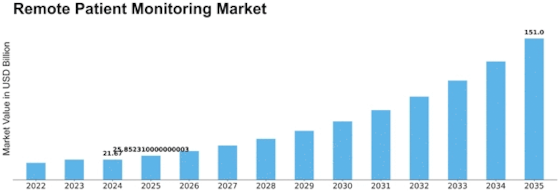
Remote Patient Monitoring Market Size Graph
Author
Author Profile
Rahul Gotadki
Research Manager

He holds an experience of about 9+ years in Market Research and Business Consulting, working under the spectrum of Life Sciences and Healthcare domains. Rahul conceptualizes and implements a scalable business strategy and provides strategic leadership to the clients. His expertise lies in market estimation, competitive intelligence, pipeline analysis, customer assessment, etc.

Leave a Comment

FAQs

What is the current valuation of the Remote Patient Monitoring Market?

<p>The Remote Patient Monitoring Market was valued at 21.67 USD Billion in 2024.</p>

What is the projected market size for the market by 2035?

The market is projected to reach 151.0 USD Billion by 2035.

What is the expected CAGR for the market during the forecast period?

The expected CAGR for the market from 2025 to 2035 is 19.3%.

Which companies are considered key players in the Remote Patient Monitoring Market?

<p>Key players include Philips, Medtronic, GE Healthcare, Honeywell, Abbott, Biotronik, Omron Healthcare, Boston Scientific, and Teleflex.</p>

How are the market segments categorized in the market?

The market segments are categorized into Type, Application, and End-User.

What are the projected revenues for Devices and Services in the Remote Patient Monitoring Market?

<p>Devices are projected to generate revenues from 10.0 to 70.0 USD Billion, while Services are expected to range from 11.67 to 81.0 USD Billion.</p>

Which applications are driving growth in the Remote Patient Monitoring Market?

Key applications include Cancer, Cardiovascular Diseases, and Diabetes, with projected revenues of 3.5 to 25.0, 8.0 to 60.0, and 10.17 to 66.0 USD Billion, respectively.

What is the revenue distribution among different end-users in the market?

The revenue distribution among end-users is projected as follows: Payers at 4.33 to 30.0 USD Billion, Providers at 10.0 to 70.0 USD Billion, and Patients at 7.34 to 51.0 USD Billion.

How does the Remote Patient Monitoring Market compare to other healthcare sectors?

The market appears to be experiencing robust growth, likely outpacing many traditional healthcare sectors due to technological advancements.

What factors are contributing to the growth of the Remote Patient Monitoring Market?

Factors contributing to growth include increasing demand for chronic disease management, advancements in technology, and a shift towards value-based care.

Market Summary

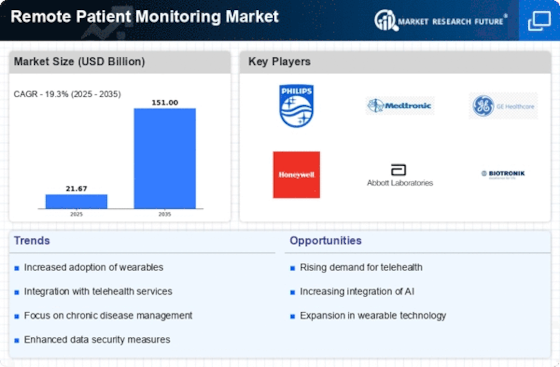
As per Market Research Future analysis, the Remote Patient Monitoring Market size was valued at USD 21.67 Billion in 2024. The market is projected to grow from USD 25.85 Billion in 2025 to USD 151.0 Billion by 2035, exhibiting a CAGR of 19.3% during the forecast period 2025-2035. North America led the market with over 45% share, generating around USD 9.7 billion in revenue.
 
The Remote Patient Monitoring Market is driven by increasing chronic disease prevalence, aging populations, and rising demand for telehealth solutions. Advancements in wearable devices and digital healthcare platforms enable efficient patient monitoring and improved health outcomes globally.
 
CDC reports that 60% of U.S. adults have at least one chronic condition, highlighting the growing need for continuous remote monitoring solutions.

Key Market Trends & Highlights

The Remote Patient Monitoring Market is experiencing robust growth driven by technological advancements and increasing healthcare demands.

  • North America leads RPM market with 45% revenue share in 2024. Europe market valued at USD 6.50 billion in 2024, 30% global share. Devices segment holds 65% share, largest due to wearable and medical technology adoption. Diabetes application captures 45% share, fastest-growing driven by continuous glucose monitoring demand.

Market Size & Forecast

2024 Market Size 21.67 (USD Billion)
2035 Market Size 151.0 (USD Billion)
CAGR (2025 - 2035) 19.3%
Largest Regional Market Share in 2024 North America

Major Players

Companies such as Philips (NL), <a href="https://www.medtronic.com/en-us/healthcare-professionals/products/patient-monitoring/remote-patient-monitoring.html">Medtronic</a> (US), GE Healthcare (US), Honeywell (US), <a href="https://www.abbott.com/product-list.html">Abbott </a>(US), Biotronik (DE), Omron Healthcare (JP), Boston Scientific (US), Teleflex (US) are some of the major participants in the global market.

Market Trends

The Remote Patient Monitoring Market is currently experiencing a transformative phase, driven by advancements in technology and an increasing emphasis on patient-centered care. This market encompasses a variety of devices and systems that facilitate the continuous monitoring of patients' health metrics from their homes or other remote locations. The integration of artificial intelligence and machine learning into these systems appears to enhance data analysis, enabling healthcare providers to make more informed decisions.

Furthermore, the growing prevalence of chronic diseases necessitates ongoing monitoring, which the Remote Patient Monitoring Market effectively addresses. As healthcare systems evolve, the demand for innovative solutions that promote efficiency and improve patient outcomes is likely to rise. In addition, regulatory support and reimbursement policies are evolving to accommodate the needs of this market. Stakeholders, including healthcare providers and technology developers, seem to be increasingly collaborating to create comprehensive solutions that integrate seamlessly into existing healthcare frameworks.

This collaboration may lead to enhanced patient engagement and adherence to treatment plans, ultimately fostering better health outcomes. The Remote Patient Monitoring Market is poised for growth, as it aligns with the broader trends of digital health and telemedicine, which are reshaping the landscape of healthcare delivery.

Technological Advancements

The Remote Patient Monitoring Market is witnessing rapid technological innovations, particularly in wearable devices and mobile applications. These advancements facilitate real-time data collection and transmission, allowing healthcare providers to monitor patients' health metrics more effectively. As technology continues to evolve, the potential for improved patient outcomes increases.

Wearable devices and mobile health apps are expanding RPM adoption. WHO indicates that mobile health interventions increased patient engagement by 40%, supporting improved health monitoring and adherence.

Increased Focus on Chronic Disease Management

There is a growing emphasis on managing chronic diseases within the Remote Patient Monitoring Market. This trend reflects the need for continuous monitoring and timely interventions, which can significantly enhance the quality of life for patients. Healthcare systems are increasingly adopting remote monitoring solutions to address this pressing need.

Continuous monitoring reduces hospitalizations and improves outcomes. IHME data shows cardiovascular diseases affect over 523 million people globally, emphasizing RPM’s importance in chronic disease management.

Regulatory Support and Reimbursement Policies

The market benefits from evolving regulatory frameworks and reimbursement policies that support the adoption of remote monitoring technologies. This trend indicates a shift towards recognizing the value of remote patient care, which may encourage more healthcare providers to integrate these solutions into their practices.

Government reimbursement incentives boost RPM adoption. PAHO reports that policies enabling telemonitoring programs increased patient access to care by 35% across the Americas.

Remote Patient Monitoring Market Market Drivers

Rising Demand for Telehealth Services

The Remote Patient Monitoring Market experiences a notable surge in demand for telehealth services. This trend is driven by the increasing need for accessible healthcare solutions, particularly for patients with chronic conditions. As healthcare providers seek to enhance patient engagement and improve outcomes, telehealth services have become integral.
 
According to recent data, the telehealth market is projected to reach substantial figures, indicating a robust growth trajectory. This demand is further fueled by the convenience and flexibility that remote monitoring offers, allowing patients to receive care from the comfort of their homes. Consequently, the market is poised to benefit significantly from this rising trend, as healthcare systems adapt to meet the evolving needs of patients.

Growing Emphasis on Preventive Healthcare

The Remote Patient Monitoring Market is benefiting from a growing emphasis on preventive healthcare. As healthcare systems shift from reactive to proactive approaches, the focus on early detection and management of health issues becomes paramount. Remote monitoring technologies facilitate continuous health tracking, allowing for timely interventions that can prevent complications.
 
This trend aligns with broader public health initiatives aimed at reducing healthcare costs and improving population health. Market data indicates that investments in preventive healthcare are increasing, which bodes well for the market. By enabling healthcare providers to monitor patients remotely, these technologies support the overarching goal of enhancing health outcomes and reducing the burden on healthcare systems.

Enhanced Patient Engagement and Empowerment

The Remote Patient Monitoring Market is increasingly characterized by enhanced patient engagement and empowerment. Patients are becoming more involved in their healthcare decisions, seeking tools that allow them to monitor their health actively. Remote monitoring solutions provide patients with real-time data about their health status, fostering a sense of ownership over their well-being.
 
This shift towards patient-centered care is supported by evidence suggesting that engaged patients are more likely to adhere to treatment plans and achieve better health outcomes. As healthcare providers recognize the importance of patient engagement, the market is likely to expand, driven by the demand for technologies that empower patients in their health journeys.

Aging Population and Increased Chronic Conditions

The Remote Patient Monitoring Market is significantly influenced by the aging population and the rising prevalence of chronic conditions. As individuals age, they often experience multiple health issues that require continuous monitoring. Data suggests that the number of elderly individuals is expected to increase dramatically, leading to a higher demand for healthcare services.
 
This demographic shift necessitates innovative solutions, such as remote patient monitoring, to manage health effectively. The market is likely to expand as healthcare providers implement these technologies to cater to the needs of an aging population, ensuring timely interventions and improved quality of life for patients.

Integration of Artificial Intelligence and Machine Learning

The Remote Patient Monitoring Market is witnessing a transformative phase with the integration of artificial intelligence (AI) and machine learning (ML) technologies. These advancements enable healthcare providers to analyze vast amounts of patient data, leading to more accurate diagnoses and personalized treatment plans.
 
AI-driven algorithms can identify patterns and predict potential health issues, enhancing proactive care. The market data indicates that investments in AI and ML within healthcare are on the rise, suggesting a strong future for these technologies in remote monitoring. As healthcare systems increasingly adopt these innovations, the market is expected to experience substantial growth, driven by improved patient outcomes and operational efficiencies.

Market Segment Insights

By Type: Devices (Largest) vs. Services (Fastest-Growing)

The Devices segment represents the largest share of the Remote Patient Monitoring Market at 65%, encompassing a wide range of technologies used to monitor patients’ health remotely. This includes wearable devices like fitness trackers, smartwatches, and dedicated medical devices that capture vital signs and health metrics. Meanwhile, the 'Services' segment, while smaller, is the fastest-growing, driven by increasing demand for telehealth solutions and remote diagnostics, which offer patients access to healthcare professionals without the need for hospital visits.

Remote Monitoring: Devices (Dominant) vs. Services (Emerging)

The 'Devices' segment of the market share is characterized by high penetration rates among healthcare consumers and innovative technologies that enhance patient engagement. Devices like continuous <a title="glucose" href="https://www.marketresearchfuture.com/reports/glucose-market-11828" target="_blank" rel="noopener">glucose</a> monitors, heart rate monitors, and pulse oximeters are integral to managing chronic conditions. On the other hand, the 'Services' segment, including telemonitoring and data analytics services, is emerging rapidly as healthcare systems seek to enhance patient care while reducing costs. This segment is distinguished by its adaptability, with service models often integrating with digital health platforms to streamline data flow between patients and providers. As technology advances, both segments will play crucial roles in shaping the future of healthcare.

By Application: Cardiovascular Diseases (Largest) vs. Diabetes (Fastest-Growing)

The Devices segment represents the largest share of the Remote Patient Monitoring Market at 65%, encompassing a wide range of technologies used to monitor patients’ health remotely. This application dominates the market as healthcare providers increasingly adopt remote monitoring technologies to manage chronic conditions effectively. In contrast, the Diabetes application, while currently smaller, is rapidly gaining traction, driven by the rising incidence of diabetes globally and the need for continuous glucose monitoring solutions.

Cardiovascular Diseases (Dominant) vs. Diabetes (Emerging)

Cardiovascular Diseases represent the dominant application within the market share, characterized by its robust demand due to increasing health awareness and advancements in technology. This segment benefits from the integration of sophisticated monitoring devices and <a href="https://www.marketresearchfuture.com/reports/telehealth-market-900">telehealth</a> systems that offer real-time data to healthcare providers, improving patient outcomes. Meanwhile, Diabetes is emerging as a fast-growing segment, propelled by technological innovations such as wearable glucose monitors and mobile health applications. As lifestyle diseases rise, remote monitoring solutions for diabetes cater to a need for proactive and personalized patient care, enabling better management of the condition and reducing hospital visits.

By End-User: Providers (Largest) vs. Patients (Fastest-Growing)

The distribution of the Remote Patient Monitoring Market shows a 60% share among the end-user segment, highlighting the dominant presence of providers who play a pivotal role in delivering remote care solutions. Providers account for the largest proportion of the market, utilizing technology to enhance patient management, care coordination, and treatment efficacy. In contrast, the patient segment, while smaller in share, is emerging rapidly as a vital component of this landscape, reflecting the increasing demand for tailored healthcare solutions directly at the consumer level. The growth trajectory for both providers and patients in the remote patient monitoring space is driven by several interrelated trends. Providers are leveraging innovative technologies, regulatory support, and financial incentives to expand their telehealth services. On the other hand, patients are increasingly embracing digital health tools as awareness of their capabilities grows, alongside a heightened focus on personalized healthcare experiences. The convergence of these trends is expected to yield significant changes within the market dynamics in the upcoming years.

Providers (Dominant) vs. Patients (Emerging)

Providers in the Remote Patient Monitoring Market serve as the backbone of the healthcare system, utilizing remote monitoring tools to enhance quality of care and efficiency. They represent established healthcare entities, leveraging their infrastructure and expertise to deploy remote solutions, which allows them to monitor patient conditions in real time, manage chronic diseases effectively, and reduce hospitalization rates. As dominant players, they continue to evolve their service offerings through investments in technology and partnerships with technology providers. Conversely, patients are emerging as key players in this market, driving the demand for remote monitoring solutions due to their increasing engagement in their healthcare management. Modern patients seek convenience, flexibility, and control over their health data, pushing healthcare providers to adapt to consumer-driven market dynamics. This shift is fostering innovation and leading to the introduction of user-friendly platforms that cater directly to patient needs, suggesting a promising future for both segments.

Get more detailed insights about Remote Patient Monitoring Market Research Report—Global Forecast till 2035

Regional Insights

North America : Healthcare Innovation Leader

North America leads in the Remote Patient Monitoring Market Size, accounting for over 45% of the global revenue in 2024. The region's growth is driven by increasing chronic diseases, technological advancements, and supportive government regulations. The demand for RPM solutions is further fueled by the rising need for cost-effective healthcare delivery and improved patient outcomes. Regulatory catalysts, such as the expansion of Medicare reimbursement for RPM services, are also significant drivers of market growth. 

The United States is the leading country in this region, with major players like Medtronic, GE Healthcare, and Abbott dominating the market. The competitive landscape is characterized by continuous innovation and strategic partnerships among key players. Canada also contributes to the market, focusing on enhancing healthcare accessibility through RPM technologies. The presence of advanced healthcare infrastructure and a tech-savvy population further supports the growth of RPM in North America.

Europe : Emerging Market Potential

Europe Remote Patient Monitoring Market size was valued at USD 6.50 billion in 2024, making it the second-largest regional market with a 30% share. The region's expansion is driven by an aging population, increasing prevalence of chronic diseases, and a shift towards value-based healthcare. Regulatory frameworks, such as the European Union's Digital Health Strategy, are fostering innovation and adoption of RPM technologies across member states. Countries like Germany and France are leading the charge, supported by favorable reimbursement policies and investment in digital health initiatives.

Germany stands out as a key player in the European RPM landscape, with a robust healthcare system and a strong presence of companies like Philips and Biotronik. France and the UK are also significant contributors, focusing on integrating RPM into their healthcare systems. The competitive landscape is marked by collaborations between technology firms and healthcare providers, enhancing the delivery of telehealth solutions across Europe.

Asia-Pacific : Rapidly Growing Market

Asia-Pacific is emerging as a rapidly growing market for market, holding around 20% of the global market share. The region's growth is propelled by increasing healthcare expenditure, rising awareness of chronic diseases, and a growing demand for telehealth solutions. Countries like China and India are witnessing a surge in RPM adoption, driven by government initiatives aimed at enhancing healthcare accessibility and affordability. The regulatory environment is becoming more supportive, encouraging investments in health technology.

China is the largest market in the region, with significant contributions from local companies like Omron Healthcare. India is also gaining traction, with a focus on integrating RPM into its healthcare system. The competitive landscape is characterized by a mix of local and international players, fostering innovation and collaboration. The increasing penetration of smartphones and internet connectivity further supports the growth of RPM solutions in Asia-Pacific.

Middle East and Africa : Emerging Healthcare Solutions

The Middle East and Africa region is gradually emerging in the market, accounting for approximately 5% of the global share. The growth is driven by increasing healthcare investments, a rising prevalence of chronic diseases, and a growing focus on digital health solutions. Countries like South Africa and the UAE are leading the way, with government initiatives aimed at improving healthcare infrastructure and accessibility. The regulatory landscape is evolving, promoting the adoption of RPM technologies in the region.

South Africa is a key player in the RPM market, with a growing number of startups and healthcare providers adopting telehealth solutions. The UAE is also making strides, focusing on integrating RPM into its healthcare system. The competitive landscape is characterized by collaborations between local and international companies, enhancing the delivery of remote monitoring solutions. The increasing smartphone penetration and internet access are further driving the growth of RPM in the Middle East and Africa.

.webp

Key Players and Competitive Insights

The Remote Patient Monitoring Market is currently characterized by a dynamic competitive landscape, driven by technological advancements and an increasing demand for efficient healthcare solutions. Key players such as Philips (NL), Medtronic (US), and Abbott (US) are strategically positioning themselves through innovation and partnerships, thereby enhancing their operational focus. Philips (NL) emphasizes digital transformation, integrating advanced analytics into its monitoring solutions, while Medtronic (US) is leveraging its extensive portfolio to expand its remote monitoring capabilities.
 
Abbott (US) is also focusing on partnerships to enhance its product offerings, particularly in chronic disease management, which collectively shapes a competitive environment that is increasingly reliant on technological integration and strategic collaborations. In terms of business tactics, companies are localizing manufacturing and optimizing supply chains to enhance efficiency and responsiveness to market demands. The market appears moderately fragmented, with a mix of established players and emerging startups.
 
This structure allows for a diverse range of solutions, although the influence of key players remains substantial, as they set benchmarks for innovation and service delivery. In August 2025, Philips (NL) announced a partnership with a leading telehealth provider to enhance its remote monitoring capabilities. This strategic move is likely to bolster Philips' position in the market by integrating telehealth services with its existing monitoring solutions, thereby providing a more comprehensive care model. Such partnerships may also facilitate better patient engagement and adherence to treatment protocols, which are critical in chronic disease management.
 
In September 2025, Medtronic (US) launched a new remote monitoring platform designed specifically for cardiac patients. This platform utilizes AI-driven analytics to provide real-time insights into patient health, which could significantly improve patient outcomes. The introduction of this platform indicates Medtronic's commitment to leveraging technology to enhance patient care, positioning the company as a leader in cardiac remote monitoring solutions. In July 2025, Abbott (US) expanded its remote monitoring services by acquiring a digital health startup specializing in diabetes management. This acquisition is strategically important as it allows Abbott to integrate advanced digital tools into its existing product line, potentially enhancing its market share in the diabetes segment.
 
The move reflects a broader trend of consolidation in the market, where established players seek to enhance their capabilities through strategic acquisitions. As of October 2025, the market is witnessing trends such as increased digitalization, sustainability initiatives, and the integration of artificial intelligence. Strategic alliances are becoming increasingly pivotal, as companies recognize the need for collaborative approaches to address complex healthcare challenges.
 
Looking ahead, competitive differentiation is likely to evolve, shifting from traditional price-based competition to a focus on innovation, technological advancements, and supply chain reliability. This transition underscores the importance of agility and responsiveness in a rapidly changing healthcare landscape. .webp

Key Companies in the Remote Patient Monitoring Market include

Industry Developments

Inspire Medical Systems: First Quarter 2025 Financial Results and Inspire V System Launch: Inspire Medical Systems reported strong Q1 2025 financial results, with a 23% revenue increase. A key highlight is the milestone of over 100,000 patients receiving Inspire therapy. They also announced the full U.S. launch of the Inspire V system in May 2025, which is their newest generation of hypoglossal nerve stimulation (HNS) therapy for OSA, offering a mask-free alternative. Their investor relations page also shows upcoming presentations at MedTech conferences in June 2025.

HealthSnap: RPM Impact Hypertension Study Insights HealthSnap's newsroom highlights insights from their hypertension study, showcasing the impact of RPM. They also mention their commitment to security and privacy, having earned HITRUST Certification for the 4th consecutive year (though the news release for the certification itself is from Feb 2025). Their website also mentions recent discussions on "The Promise of Remote Patient Monitoring Market to Uncover and Advance Novel Risk Factors.

OMRON Healthcare: OMRON Healthcare Donates 4000 BP Monitors & Advances AFib Screening OMRON Healthcare announced its continued sponsorship of May Measurement Month (MMM), donating approximately 4,000 blood pressure monitors. This year, the donated devices include monitors that detect possible atrial fibrillation (AFib) using new AI-based Intellisense AFib technology, as well as integrated ECG technology, highlighting their focus on advanced remote blood pressure monitoring for heart health.

June 2024: Philips has upgraded its remote patient monitoring platform with AI-powered predictive analytics, enabling early intervention in chronic conditions patients.

April 2024: Medtronic has introduced an AI-driven insulin monitoring solution for diabetes management, offering real-time glucose monitoring and predictive insights. The system automatically adjusts insulin delivery based on continuous glucose monitor readings, promoting a more personalized approach to diabetes care and improving glycemic control.

March 2024: Abbott Laboratories has introduced next-generation wearable biosensors, which monitor multiple biomarkers simultaneously, providing real-time data for remote monitoring by healthcare providers, especially for patients with chronic conditions, using a cloud-based platform.

Future Outlook

Remote Patient Monitoring Market Future Outlook

The Remote Patient Monitoring Market size is projected to reach USD 151.0 billion by 2035, growing at a CAGR of 19.3%, driven by technological advancements, increasing chronic diseases, and a shift towards value-based care.

New opportunities lie in:

  • <p>Integration of AI-driven analytics for personalized patient insights. Development of portable monitoring devices for home healthcare. Expansion of telehealth partnerships to enhance service delivery.</p>

By 2035, the market is expected to be robust, driven by innovation and strategic partnerships.

Market Segmentation

Remote Patient Monitoring Market Type Outlook

  • Devices
  • Services

Remote Patient Monitoring Market End-User Outlook

  • Payers
  • Providers
  • Patients

Remote Patient Monitoring Market Application Outlook

  • Cancer
  • Cardiovascular Diseases
  • Diabetes

Report Scope

MARKET SIZE 2024 21.67(USD Billion)
MARKET SIZE 2025 25.85(USD Billion)
MARKET SIZE 2035 151.0(USD Billion)
COMPOUND ANNUAL GROWTH RATE (CAGR) 19.3% (2025 - 2035)
REPORT COVERAGE Revenue Forecast, Competitive Landscape, Growth Factors, and Trends
BASE YEAR 2024
Market Forecast Period 2025 - 2035
Historical Data 2019 - 2024
Market Forecast Units USD Billion
Key Companies Profiled Philips (NL), Medtronic (US), GE Healthcare (US), Honeywell (US), Abbott (US), Biotronik (DE), Omron Healthcare (JP), Boston Scientific (US), Teleflex (US)
Segments Covered Types, Applications, End-User, Region
Key Market Opportunities Integration of artificial intelligence enhances patient engagement in the Remote Patient Monitoring Market.
Key Market Dynamics Technological advancements and regulatory support drive the expansion of the Remote Patient Monitoring Market.
Countries Covered North America, Europe, APAC, South America, MEA

FAQs

What is the current valuation of the Remote Patient Monitoring Market?

<p>The Remote Patient Monitoring Market was valued at 21.67 USD Billion in 2024.</p>

What is the projected market size for the market by 2035?

The market is projected to reach 151.0 USD Billion by 2035.

What is the expected CAGR for the market during the forecast period?

The expected CAGR for the market from 2025 to 2035 is 19.3%.

Which companies are considered key players in the Remote Patient Monitoring Market?

<p>Key players include Philips, Medtronic, GE Healthcare, Honeywell, Abbott, Biotronik, Omron Healthcare, Boston Scientific, and Teleflex.</p>

How are the market segments categorized in the market?

The market segments are categorized into Type, Application, and End-User.

What are the projected revenues for Devices and Services in the Remote Patient Monitoring Market?

<p>Devices are projected to generate revenues from 10.0 to 70.0 USD Billion, while Services are expected to range from 11.67 to 81.0 USD Billion.</p>

Which applications are driving growth in the Remote Patient Monitoring Market?

Key applications include Cancer, Cardiovascular Diseases, and Diabetes, with projected revenues of 3.5 to 25.0, 8.0 to 60.0, and 10.17 to 66.0 USD Billion, respectively.

What is the revenue distribution among different end-users in the market?

The revenue distribution among end-users is projected as follows: Payers at 4.33 to 30.0 USD Billion, Providers at 10.0 to 70.0 USD Billion, and Patients at 7.34 to 51.0 USD Billion.

How does the Remote Patient Monitoring Market compare to other healthcare sectors?

The market appears to be experiencing robust growth, likely outpacing many traditional healthcare sectors due to technological advancements.

What factors are contributing to the growth of the Remote Patient Monitoring Market?

Factors contributing to growth include increasing demand for chronic disease management, advancements in technology, and a shift towards value-based care.

  1. SECTION I: EXECUTIVE SUMMARY AND KEY HIGHLIGHTS |
    1. EXECUTIVE SUMMARY | |
      1. Market Overview | |
      2. Key Findings | |
      3. Market Segmentation | |
      4. Competitive Landscape | |
      5. Challenges and Opportunities | |
      6. Future Outlook 2
  2. SECTION II: SCOPING, METHODOLOGY AND MARKET STRUCTURE |
    1. MARKET INTRODUCTION | |
      1. Definition | |
      2. Scope of the study | | |
    2. RESEARCH METHODOLOGY | |
      1. Overview | |
      2. Data Mining | |
      3. Secondary Research | |
      4. Primary Research | | |
      5. Forecasting Model | |
      6. Market Size Estimation | | |
      7. Data Triangulation | |
      8. Validation 3
  3. SECTION III: QUALITATIVE ANALYSIS |
    1. MARKET DYNAMICS | |
      1. Overview | |
      2. Drivers | |
      3. Restraints | |
      4. Opportunities |
    2. MARKET FACTOR ANALYSIS | |
      1. Value chain Analysis | |
      2. Porter's Five Forces Analysis | | |
      3. COVID-19 Impact Analysis | | |
  4. SECTION IV: QUANTITATIVE ANALYSIS |
    1. Healthcare, BY Type (USD Billion) | |
      1. Devices | |
      2. Services |
    2. Healthcare, BY Application (USD Billion) | |
      1. Cancer | |
      2. Cardiovascular Diseases | |
      3. Diabetes |
    3. Healthcare, BY End-User (USD Billion) | |
      1. Payers | |
      2. Providers | |
      3. Patients |
    4. Healthcare, BY Region (USD Billion) | |
      1. North America | | |
      2. Europe | | |
      3. APAC | | |
      4. South America | | |
      5. MEA | | |
  5. SECTION V: COMPETITIVE ANALYSIS |
    1. Competitive Landscape | |
      1. Overview | |
      2. Competitive Analysis | |
      3. Market share Analysis | |
      4. Major Growth Strategy in the Healthcare | |
      5. Competitive Benchmarking | |
      6. Leading Players in Terms of Number of Developments in the Healthcare | |
      7. Key developments and growth strategies | | |
      8. Major Players Financial Matrix | | |
    2. Company Profiles | |
      1. Philips (NL) | | |
      2. Medtronic (US) | | |
      3. GE Healthcare (US) | | |
      4. Honeywell (US) | | |
      5. Abbott (US) | | |
      6. Biotronik (DE) | | |
      7. Omron Healthcare (JP) | | |
      8. Boston Scientific (US) | | |
      9. Teleflex (US) | | |
    3. Appendix | |
      1. References | |
      2. Related Reports 6 LIST OF FIGURES |
    4. MARKET SYNOPSIS |
    5. NORTH AMERICA MARKET ANALYSIS |
    6. US MARKET ANALYSIS BY TYPE |
    7. US MARKET ANALYSIS BY APPLICATION |
    8. US MARKET ANALYSIS BY END-USER |
    9. CANADA MARKET ANALYSIS BY TYPE |
    10. CANADA MARKET ANALYSIS BY APPLICATION |
    11. CANADA MARKET ANALYSIS BY END-USER |
    12. EUROPE MARKET ANALYSIS |
    13. GERMANY MARKET ANALYSIS BY TYPE |
    14. GERMANY MARKET ANALYSIS BY APPLICATION |
    15. GERMANY MARKET ANALYSIS BY END-USER |
    16. UK MARKET ANALYSIS BY TYPE |
    17. UK MARKET ANALYSIS BY APPLICATION |
    18. UK MARKET ANALYSIS BY END-USER |
    19. FRANCE MARKET ANALYSIS BY TYPE |
    20. FRANCE MARKET ANALYSIS BY APPLICATION |
    21. FRANCE MARKET ANALYSIS BY END-USER |
    22. RUSSIA MARKET ANALYSIS BY TYPE |
    23. RUSSIA MARKET ANALYSIS BY APPLICATION |
    24. RUSSIA MARKET ANALYSIS BY END-USER |
    25. ITALY MARKET ANALYSIS BY TYPE |
    26. ITALY MARKET ANALYSIS BY APPLICATION |
    27. ITALY MARKET ANALYSIS BY END-USER |
    28. SPAIN MARKET ANALYSIS BY TYPE |
    29. SPAIN MARKET ANALYSIS BY APPLICATION |
    30. SPAIN MARKET ANALYSIS BY END-USER |
    31. REST OF EUROPE MARKET ANALYSIS BY TYPE |
    32. REST OF EUROPE MARKET ANALYSIS BY APPLICATION |
    33. REST OF EUROPE MARKET ANALYSIS BY END-USER |
    34. APAC MARKET ANALYSIS |
    35. CHINA MARKET ANALYSIS BY TYPE |
    36. CHINA MARKET ANALYSIS BY APPLICATION |
    37. CHINA MARKET ANALYSIS BY END-USER |
    38. INDIA MARKET ANALYSIS BY TYPE |
    39. INDIA MARKET ANALYSIS BY APPLICATION |
    40. INDIA MARKET ANALYSIS BY END-USER |
    41. JAPAN MARKET ANALYSIS BY TYPE |
    42. JAPAN MARKET ANALYSIS BY APPLICATION |
    43. JAPAN MARKET ANALYSIS BY END-USER |
    44. SOUTH KOREA MARKET ANALYSIS BY TYPE |
    45. SOUTH KOREA MARKET ANALYSIS BY APPLICATION |
    46. SOUTH KOREA MARKET ANALYSIS BY END-USER |
    47. MALAYSIA MARKET ANALYSIS BY TYPE |
    48. MALAYSIA MARKET ANALYSIS BY APPLICATION |
    49. MALAYSIA MARKET ANALYSIS BY END-USER |
    50. THAILAND MARKET ANALYSIS BY TYPE |
    51. THAILAND MARKET ANALYSIS BY APPLICATION |
    52. THAILAND MARKET ANALYSIS BY END-USER |
    53. INDONESIA MARKET ANALYSIS BY TYPE |
    54. INDONESIA MARKET ANALYSIS BY APPLICATION |
    55. INDONESIA MARKET ANALYSIS BY END-USER |
    56. REST OF APAC MARKET ANALYSIS BY TYPE |
    57. REST OF APAC MARKET ANALYSIS BY APPLICATION |
    58. REST OF APAC MARKET ANALYSIS BY END-USER |
    59. SOUTH AMERICA MARKET ANALYSIS |
    60. BRAZIL MARKET ANALYSIS BY TYPE |
    61. BRAZIL MARKET ANALYSIS BY APPLICATION |
    62. BRAZIL MARKET ANALYSIS BY END-USER |
    63. MEXICO MARKET ANALYSIS BY TYPE |
    64. MEXICO MARKET ANALYSIS BY APPLICATION |
    65. MEXICO MARKET ANALYSIS BY END-USER |
    66. ARGENTINA MARKET ANALYSIS BY TYPE |
    67. ARGENTINA MARKET ANALYSIS BY APPLICATION |
    68. ARGENTINA MARKET ANALYSIS BY END-USER |
    69. REST OF SOUTH AMERICA MARKET ANALYSIS BY TYPE |
    70. REST OF SOUTH AMERICA MARKET ANALYSIS BY APPLICATION |
    71. REST OF SOUTH AMERICA MARKET ANALYSIS BY END-USER |
    72. MEA MARKET ANALYSIS |
    73. GCC COUNTRIES MARKET ANALYSIS BY TYPE |
    74. GCC COUNTRIES MARKET ANALYSIS BY APPLICATION |
    75. GCC COUNTRIES MARKET ANALYSIS BY END-USER |
    76. SOUTH AFRICA MARKET ANALYSIS BY TYPE |
    77. SOUTH AFRICA MARKET ANALYSIS BY APPLICATION |
    78. SOUTH AFRICA MARKET ANALYSIS BY END-USER |
    79. REST OF MEA MARKET ANALYSIS BY TYPE |
    80. REST OF MEA MARKET ANALYSIS BY APPLICATION |
    81. REST OF MEA MARKET ANALYSIS BY END-USER |
    82. KEY BUYING CRITERIA OF HEALTHCARE |
    83. RESEARCH PROCESS OF MRFR |
    84. DRO ANALYSIS OF HEALTHCARE |
    85. DRIVERS IMPACT ANALYSIS: HEALTHCARE |
    86. RESTRAINTS IMPACT ANALYSIS: HEALTHCARE |
    87. SUPPLY / VALUE CHAIN: HEALTHCARE |
    88. HEALTHCARE, BY TYPE, 2024 (% SHARE) |
    89. HEALTHCARE, BY TYPE, 2024 TO 2035 (USD Billion) |
    90. HEALTHCARE, BY APPLICATION, 2024 (% SHARE) |
    91. HEALTHCARE, BY APPLICATION, 2024 TO 2035 (USD Billion) |
    92. HEALTHCARE, BY END-USER, 2024 (% SHARE) |
    93. HEALTHCARE, BY END-USER, 2024 TO 2035 (USD Billion) |
    94. BENCHMARKING OF MAJOR COMPETITORS 7 LIST OF TABLES |
    95. LIST OF ASSUMPTIONS | |
      1. |
    96. North America MARKET SIZE ESTIMATES; FORECAST | |
      1. BY TYPE, 2025-2035 (USD Billion) | |
      2. BY APPLICATION, 2025-2035 (USD Billion) | |
      3. BY END-USER, 2025-2035 (USD Billion) |
    97. US MARKET SIZE ESTIMATES; FORECAST | |
      1. BY TYPE, 2025-2035 (USD Billion) | |
      2. BY APPLICATION, 2025-2035 (USD Billion) | |
      3. BY END-USER, 2025-2035 (USD Billion) |
    98. Canada MARKET SIZE ESTIMATES; FORECAST | |
      1. BY TYPE, 2025-2035 (USD Billion) | |
      2. BY APPLICATION, 2025-2035 (USD Billion) | |
      3. BY END-USER, 2025-2035 (USD Billion) |
    99. Europe MARKET SIZE ESTIMATES; FORECAST | |
      1. BY TYPE, 2025-2035 (USD Billion) | |
      2. BY APPLICATION, 2025-2035 (USD Billion) | |
      3. BY END-USER, 2025-2035 (USD Billion) |
    100. Germany MARKET SIZE ESTIMATES; FORECAST | |
      1. BY TYPE, 2025-2035 (USD Billion) | |
      2. BY APPLICATION, 2025-2035 (USD Billion) | |
      3. BY END-USER, 2025-2035 (USD Billion) |
    101. UK MARKET SIZE ESTIMATES; FORECAST | |
      1. BY TYPE, 2025-2035 (USD Billion) | |
      2. BY APPLICATION, 2025-2035 (USD Billion) | |
      3. BY END-USER, 2025-2035 (USD Billion) |
    102. France MARKET SIZE ESTIMATES; FORECAST | |
      1. BY TYPE, 2025-2035 (USD Billion) | |
      2. BY APPLICATION, 2025-2035 (USD Billion) | |
      3. BY END-USER, 2025-2035 (USD Billion) |
    103. Russia MARKET SIZE ESTIMATES; FORECAST | |
      1. BY TYPE, 2025-2035 (USD Billion) | |
      2. BY APPLICATION, 2025-2035 (USD Billion) | |
      3. BY END-USER, 2025-2035 (USD Billion) |
    104. Italy MARKET SIZE ESTIMATES; FORECAST | |
      1. BY TYPE, 2025-2035 (USD Billion) | |
      2. BY APPLICATION, 2025-2035 (USD Billion) | |
      3. BY END-USER, 2025-2035 (USD Billion) |
    105. Spain MARKET SIZE ESTIMATES; FORECAST | |
      1. BY TYPE, 2025-2035 (USD Billion) | |
      2. BY APPLICATION, 2025-2035 (USD Billion) | |
      3. BY END-USER, 2025-2035 (USD Billion) |
    106. Rest of Europe MARKET SIZE ESTIMATES; FORECAST | |
      1. BY TYPE, 2025-2035 (USD Billion) | |
      2. BY APPLICATION, 2025-2035 (USD Billion) | |
      3. BY END-USER, 2025-2035 (USD Billion) |
    107. APAC MARKET SIZE ESTIMATES; FORECAST | |
      1. BY TYPE, 2025-2035 (USD Billion) | |
      2. BY APPLICATION, 2025-2035 (USD Billion) | |
      3. BY END-USER, 2025-2035 (USD Billion) |
    108. China MARKET SIZE ESTIMATES; FORECAST | |
      1. BY TYPE, 2025-2035 (USD Billion) | |
      2. BY APPLICATION, 2025-2035 (USD Billion) | |
      3. BY END-USER, 2025-2035 (USD Billion) |
    109. India MARKET SIZE ESTIMATES; FORECAST | |
      1. BY TYPE, 2025-2035 (USD Billion) | |
      2. BY APPLICATION, 2025-2035 (USD Billion) | |
      3. BY END-USER, 2025-2035 (USD Billion) |
    110. Japan MARKET SIZE ESTIMATES; FORECAST | |
      1. BY TYPE, 2025-2035 (USD Billion) | |
      2. BY APPLICATION, 2025-2035 (USD Billion) | |
      3. BY END-USER, 2025-2035 (USD Billion) |
    111. South Korea MARKET SIZE ESTIMATES; FORECAST | |
      1. BY TYPE, 2025-2035 (USD Billion) | |
      2. BY APPLICATION, 2025-2035 (USD Billion) | |
      3. BY END-USER, 2025-2035 (USD Billion) |
    112. Malaysia MARKET SIZE ESTIMATES; FORECAST | |
      1. BY TYPE, 2025-2035 (USD Billion) | |
      2. BY APPLICATION, 2025-2035 (USD Billion) | |
      3. BY END-USER, 2025-2035 (USD Billion) |
    113. Thailand MARKET SIZE ESTIMATES; FORECAST | |
      1. BY TYPE, 2025-2035 (USD Billion) | |
      2. BY APPLICATION, 2025-2035 (USD Billion) | |
      3. BY END-USER, 2025-2035 (USD Billion) |
    114. Indonesia MARKET SIZE ESTIMATES; FORECAST | |
      1. BY TYPE, 2025-2035 (USD Billion) | |
      2. BY APPLICATION, 2025-2035 (USD Billion) | |
      3. BY END-USER, 2025-2035 (USD Billion) |
    115. Rest of APAC MARKET SIZE ESTIMATES; FORECAST | |
      1. BY TYPE, 2025-2035 (USD Billion) | |
      2. BY APPLICATION, 2025-2035 (USD Billion) | |
      3. BY END-USER, 2025-2035 (USD Billion) |
    116. South America MARKET SIZE ESTIMATES; FORECAST | |
      1. BY TYPE, 2025-2035 (USD Billion) | |
      2. BY APPLICATION, 2025-2035 (USD Billion) | |
      3. BY END-USER, 2025-2035 (USD Billion) |
    117. Brazil MARKET SIZE ESTIMATES; FORECAST | |
      1. BY TYPE, 2025-2035 (USD Billion) | |
      2. BY APPLICATION, 2025-2035 (USD Billion) | |
      3. BY END-USER, 2025-2035 (USD Billion) |
    118. Mexico MARKET SIZE ESTIMATES; FORECAST | |
      1. BY TYPE, 2025-2035 (USD Billion) | |
      2. BY APPLICATION, 2025-2035 (USD Billion) | |
      3. BY END-USER, 2025-2035 (USD Billion) |
    119. Argentina MARKET SIZE ESTIMATES; FORECAST | |
      1. BY TYPE, 2025-2035 (USD Billion) | |
      2. BY APPLICATION, 2025-2035 (USD Billion) | |
      3. BY END-USER, 2025-2035 (USD Billion) |
    120. Rest of South America MARKET SIZE ESTIMATES; FORECAST | |
      1. BY TYPE, 2025-2035 (USD Billion) | |
      2. BY APPLICATION, 2025-2035 (USD Billion) | |
      3. BY END-USER, 2025-2035 (USD Billion) |
    121. MEA MARKET SIZE ESTIMATES; FORECAST | |
      1. BY TYPE, 2025-2035 (USD Billion) | |
      2. BY APPLICATION, 2025-2035 (USD Billion) | |
      3. BY END-USER, 2025-2035 (USD Billion) |
    122. GCC Countries MARKET SIZE ESTIMATES; FORECAST | |
      1. BY TYPE, 2025-2035 (USD Billion) | |
      2. BY APPLICATION, 2025-2035 (USD Billion) | |
      3. BY END-USER, 2025-2035 (USD Billion) |
    123. South Africa MARKET SIZE ESTIMATES; FORECAST | |
      1. BY TYPE, 2025-2035 (USD Billion) | |
      2. BY APPLICATION, 2025-2035 (USD Billion) | |
      3. BY END-USER, 2025-2035 (USD Billion) |
    124. Rest of MEA MARKET SIZE ESTIMATES; FORECAST | |
      1. BY TYPE, 2025-2035 (USD Billion) | |
      2. BY APPLICATION, 2025-2035 (USD Billion) | |
      3. BY END-USER, 2025-2035 (USD Billion) |
    125. PRODUCT LAUNCH/PRODUCT DEVELOPMENT/APPROVAL | |
      1. |
    126. ACQUISITION/PARTNERSHIP | |

Healthcare Market Segmentation

Healthcare By Type (USD Billion, 2025-2035)

  • Devices
  • Services

Healthcare By Application (USD Billion, 2025-2035)

  • Cancer
  • Cardiovascular Diseases
  • Diabetes

Healthcare By End-User (USD Billion, 2025-2035)

  • Payers
  • Providers
  • Patients
Infographic

Free Sample Request

Kindly complete the form below to receive a free sample of this Report

Get Free Sample

Customer Strories

Compare Licence

×
Features License Type
Single User Multiuser License Enterprise User
Price $4,950 $5,950 $7,250
Maximum User Access Limit 1 User Upto 10 Users Unrestricted Access Throughout the Organization
Free Customization
Direct Access to Analyst
Deliverable Format
Platform Access
Discount on Next Purchase 10% 15% 15%
Printable Versions
%>