×
Hero Background
English
Chinese
French
Japanese
Korean
German
Spanish

Rectovaginal Fistula Market Size

ID: MRFR/HC/5672-HCR
90 Pages
Kinjoll Dey
October 2025

Rectovaginal Fistula Market Research Report Information by Diagnosis (Physical Exam, Contrast Tests, Blue Dye Test, Computerized Tomography (CT) Scan) By Treatment (Medications, Surgery) By End User (Hospitals & Clinics, Diagnostic Centers) - Forecast Till 2035

Share:
Download PDF ×

We do not share your information with anyone. However, we may send you emails based on your report interest from time to time. You may contact us at any time to opt-out.

Rectovaginal Fistula Market Infographic
Purchase Options

Rectovaginal Fistula Size

Rectovaginal Fistula Market Growth Projections and Opportunities

Market Factors of the Rectovaginal Fistula Market

  • Prevalence of Rectovaginal Fistulas:  The incidence of rectovaginal fistulas (RVF) is a key factor driving the market. These conditions, which often result from childbirth complications or surgical procedures, have a significant impact on women's health, leading to increased demand for effective treatments and management solutions.

  • Growing Awareness:  Increasing awareness about RVF and its treatment options among healthcare professionals and patients is contributing to market growth. Awareness campaigns and educational programs are helping to shed light on the condition, leading to early diagnosis and intervention.

  • Advancements in Medical Technology:  Innovations in medical technology, such as improved surgical techniques and new diagnostic tools, are advancing the treatment options available for RVF. These advancements enhance surgical outcomes and reduce recovery times, boosting market growth.

  • Rising Healthcare Expenditure:  Increased healthcare spending globally is providing more resources for the development and adoption of advanced treatments for RVF. This trend supports research and development efforts and expands access to high-quality care.

  • Supportive Government Policies:  Government initiatives and healthcare policies aimed at improving women's health and funding for research in urological and gynecological conditions are positively influencing the market. Supportive policies help to increase accessibility to treatments and foster innovation.

  • Growing Demand for Minimally Invasive Procedures:  The shift towards minimally invasive surgical techniques is a significant market factor. Patients and healthcare providers prefer these procedures due to their benefits, including reduced pain, shorter recovery times, and lower risk of complications.

  • Increasing Number of Surgical Procedures:  The rising number of surgical procedures for treating RVF, driven by both elective and emergency cases, contributes to market growth. As the number of surgeries increases, the demand for related medical devices and post-operative care also rises.

  • Expanding Market Players:  The presence of numerous market players and manufacturers focusing on RVF treatments is fostering competition and driving innovation. Companies are developing new products and technologies to address various aspects of RVF treatment, expanding market options.

  • Focus on Personalized Medicine:  There is a growing emphasis on personalized medicine in the RVF market. Tailoring treatments to individual patient needs and conditions improves outcomes and patient satisfaction, driving demand for customized solutions.

  • Rising Prevalence of Related Conditions:  The prevalence of conditions that predispose individuals to RVF, such as pelvic inflammatory disease and chronic constipation, is affecting the market. As these conditions become more common, the need for effective RVF treatments increases.

  • Patient-Centric Approaches:  There is an increasing focus on patient-centered care approaches in the healthcare sector. This shift emphasizes understanding and addressing the unique needs of RVF patients, leading to improved treatment options and greater market demand.

  • Global Market Expansion:  The RVF market is expanding beyond developed countries to emerging markets. Increased access to healthcare services and rising awareness in these regions are contributing to market growth on a global scale.

These factors collectively shape the Rectovaginal Fistula Market, influencing its dynamics and growth trajectory.
Rectovaginal Fistula Market Size Graph
Author
Kinjoll Dey
Research Analyst Level I

He is an extremely curious individual currently working in Healthcare and Medical Devices Domain. Kinjoll is comfortably versed in data centric research backed by healthcare educational background. He leverages extensive data mining and analytics tools such as Primary and Secondary Research, Statistical Analysis, Machine Learning, Data Modelling. His key role also involves Technical Sales Support, Client Interaction and Project management within the Healthcare team. Lastly, he showcases extensive affinity towards learning new skills and remain fascinated in implementing them.

Leave a Comment

Market Summary

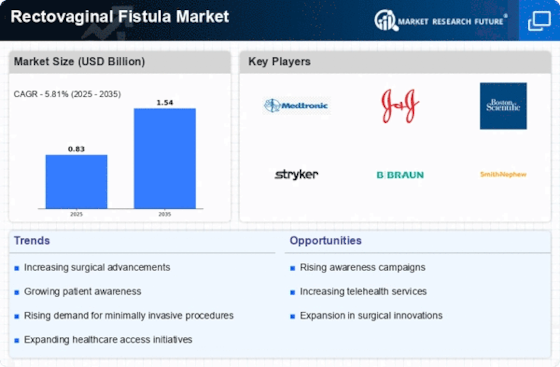
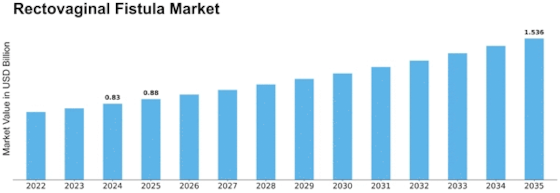
As per MRFR analysis, the Rectovaginal Fistula Market Size was estimated at 0.8253 USD Billion in 2024. The Rectovaginal Fistula industry is projected to grow from 0.8733 in 2025 to 1.536 by 2035, exhibiting a compound annual growth rate (CAGR) of 5.81 during the forecast period 2025 - 2035.

Key Market Trends & Highlights

The Rectovaginal Fistula Market is poised for growth driven by innovative treatment solutions and increased awareness.

  • Minimally invasive techniques are gaining traction, reflecting a shift towards less invasive surgical options.
  • North America remains the largest market, while the Asia-Pacific region is emerging as the fastest-growing area for rectovaginal fistula treatments.
  • The physical exam segment dominates the market, whereas MRI is rapidly becoming the fastest-growing diagnostic method.
  • Rising incidence of rectovaginal fistula and advancements in surgical techniques are key drivers propelling market expansion.

Market Size & Forecast

2024 Market Size 0.8253 (USD Billion)
2035 Market Size 1.536 (USD Billion)
CAGR (2025 - 2035) 5.81%
Largest Regional Market Share in 2024 Americas

Major Players

<p>Medtronic (US), Johnson & Johnson (US), Boston Scientific (US), Stryker (US), B. Braun Melsungen AG (DE), Smith & Nephew (GB), Coloplast (DK), Hollister Incorporated (US), ConvaTec Group (GB)</p>

Market Trends

The Rectovaginal Fistula Market is currently experiencing notable developments driven by a combination of factors including advancements in surgical techniques, increased awareness of women's health issues, and the growing demand for effective treatment options. As healthcare providers enhance their capabilities, the focus on minimally invasive procedures appears to be gaining traction. This shift not only improves patient outcomes but also reduces recovery times, which is likely to attract more individuals seeking treatment. Furthermore, the rising prevalence of conditions leading to rectovaginal fistulas, such as obstetric complications and inflammatory bowel diseases, suggests a sustained need for innovative solutions in this sector. In addition, the Rectovaginal Fistula Market is witnessing a surge in research and development activities aimed at creating novel therapeutic approaches. Collaborations between medical institutions and pharmaceutical companies may lead to the introduction of advanced biomaterials and regenerative medicine techniques. This trend indicates a potential shift towards personalized treatment plans that cater to the unique needs of patients. Overall, the market landscape appears to be evolving, with a strong emphasis on improving quality of life for affected individuals through enhanced medical interventions and supportive care services.

Minimally Invasive Techniques

The trend towards minimally invasive surgical techniques is reshaping the Rectovaginal Fistula Market. These approaches are designed to reduce patient trauma and expedite recovery, making them increasingly appealing to both healthcare providers and patients.

Increased Awareness and Education

There is a growing emphasis on raising awareness about rectovaginal fistulas and women's health issues. Educational initiatives are likely to empower patients, leading to earlier diagnosis and treatment, which could positively impact market growth.

Innovative Treatment Solutions

The Rectovaginal Fistula Market is seeing a rise in innovative treatment solutions, including the development of new biomaterials and regenerative therapies. These advancements may offer improved outcomes and cater to the diverse needs of patients.

Rectovaginal Fistula Market Market Drivers

Increased Focus on Women's Health

The increased focus on women's health is a driving force in the Rectovaginal Fistula Market. Advocacy for women's health issues has gained momentum, leading to heightened awareness and education about conditions such as rectovaginal fistula. Organizations and healthcare providers are prioritizing research and development of effective treatment options, which is likely to enhance patient care. Furthermore, the integration of women's health initiatives into public health policies may lead to improved screening and early intervention strategies. This shift in focus is expected to positively impact the Rectovaginal Fistula Market, as more resources are directed towards addressing this critical health concern.

Advancements in Surgical Techniques

Advancements in surgical techniques represent a critical driver for the Rectovaginal Fistula Market. The introduction of minimally invasive procedures has transformed the treatment landscape, offering patients reduced recovery times and lower complication rates. Techniques such as laparoscopic surgery and robotic-assisted surgery are gaining traction, enhancing the precision of rectovaginal fistula repairs. Market data indicates that the adoption of these advanced surgical methods is likely to increase, as they provide better outcomes and patient satisfaction. Consequently, the Rectovaginal Fistula Market is expected to expand as healthcare facilities invest in training and technology to implement these innovative surgical approaches.

Rising Incidence of Rectovaginal Fistula

The increasing incidence of rectovaginal fistula is a notable driver in the Rectovaginal Fistula Market. Factors such as obstetric complications, pelvic surgeries, and inflammatory bowel diseases contribute to the rising number of cases. According to health statistics, the prevalence of rectovaginal fistula is estimated to affect a significant percentage of women, particularly in regions with limited access to healthcare. This growing patient population necessitates the development and availability of effective treatment options, thereby propelling the market forward. As awareness of this condition increases, healthcare providers are more likely to seek innovative solutions, further stimulating growth in the Rectovaginal Fistula Market.

Emerging Technologies in Treatment Solutions

Emerging technologies in treatment solutions are poised to reshape the Rectovaginal Fistula Market. Innovations such as tissue engineering, regenerative medicine, and advanced biomaterials are being explored to enhance surgical outcomes and reduce recurrence rates. These technologies offer the potential for more effective and less invasive treatment options, which could significantly improve patient quality of life. Market trends indicate that as these technologies become more widely adopted, they will likely drive growth in the Rectovaginal Fistula Market. The ongoing research and development in this area suggest a promising future for patients suffering from rectovaginal fistula.

Growing Investment in Healthcare Infrastructure

The growing investment in healthcare infrastructure is a significant driver for the Rectovaginal Fistula Market. Governments and private entities are increasingly allocating resources to improve healthcare facilities, particularly in underserved regions. This investment aims to enhance access to surgical care and specialized treatments for conditions like rectovaginal fistula. As healthcare systems evolve, the availability of trained professionals and advanced medical technologies is likely to improve, leading to better patient outcomes. Market analysis suggests that this trend will contribute to the expansion of the Rectovaginal Fistula Market, as more patients gain access to necessary treatments.

Market Segment Insights

By Diagnosis: Physical Exam (Largest) vs. MRI (Fastest-Growing)

<p>The Rectovaginal Fistula Market showcases a diverse range of diagnostic methods utilized for accurate detection and assessment. Among these, the Physical Exam holds the largest market share due to its foundational role in initial diagnosis and patient evaluation. Other diagnostics such as Contrast Tests, Blue Dye Tests, and Anorectal Ultrasound also contribute significantly to overall market dynamics, each catering to specific diagnostic requirements. Meanwhile, advanced imaging techniques like MRI have emerged as vital tools, gaining notable traction in recent years.</p>

<p>Physical Exam: Dominant vs. MRI: Emerging</p>

<p>The dominance of the Physical Exam in the Rectovaginal Fistula diagnostic process is primarily rooted in its accessibility and cost-effectiveness, making it the go-to initial screening method for healthcare professionals. Coupled with a comprehensive patient history, it enables clinicians to identify symptoms indicative of rectovaginal fistulas decisively. In contrast, MRI has rapidly emerged as an essential diagnostic tool due to its high sensitivity and specificity. This non-invasive imaging technique provides detailed visualization of soft tissues and is particularly advantageous in complex cases, driving its increasing adoption among specialists looking for precise and reliable diagnostic information.</p>

By Treatment: Surgery (Largest) vs. Infliximab (Fastest-Growing)

<p>In the Rectovaginal Fistula Market, the treatment segment is diverse, but Surgery remains the largest contributor, encompassing various procedures like repairing anal sphincter muscles, sewing an anal fistula plug, and performing complex repairs. Medications, including antibiotics and Infliximab, also play a significant role in the treatment landscape, but their share is comparatively smaller. The overall market dynamics show a strong inclination towards surgical interventions due to their effectiveness in permanent repair of fistulas, positioning Surgery prominently among segment values. Growth trends indicate a significant shift towards minimally invasive surgical techniques and biologic treatments like Infliximab, which is emerging as a pivotal player in the market. The increasing prevalence of rectovaginal fistulas, particularly postpartum and due to inflammatory bowel diseases, drives the demand for innovative treatment options. As awareness grows about the benefits of specific surgical methods and biopharmaceuticals, there is an upward trend in their adoption, signaling a broader acceptance of diverse treatment pathways in managing rectovaginal fistulas.</p>

<p>Surgery (Dominant) vs. Infliximab (Emerging)</p>

<p>Surgery in the Rectovaginal Fistula Market is characterized by various established procedures aimed at achieving definitive repair of fistulas. Techniques such as sewing an anal fistula plug or patch of biologic tissue into the fistula, using tissue grafts, and repairing anal sphincter muscles are critical to successful outcomes. These surgical methods are often preferred due to their potential for permanent resolution of the condition. Meanwhile, Infliximab, a monoclonal antibody used primarily in autoimmune diseases, is gaining importance as an emerging treatment approach. Its ability to reduce inflammation and facilitate healing positions it strongly among non-surgical alternatives, appealing to patients seeking less invasive options. Collectively, these treatments showcase the evolving landscape of care in rectovaginal fistulas.</p>

By End User: Hospitals & Clinics (Largest) vs. Diagnostic Centers (Fastest-Growing)

<p>The Rectovaginal Fistula Market shows a significant alignment towards end users, especially Hospitals & Clinics, which command the largest share in terms of service delivery for patients. These facilities are equipped with advanced surgical techniques and experienced professionals, making them the preferred choice for treating rectovaginal fistulas. On the other hand, Diagnostic Centers, while smaller in comparative market share, showcase rapid growth due to their increasing role in early detection and education surrounding the condition, which is essential for timely intervention and management.</p>

<p>Hospitals & Clinics (Dominant) vs. Diagnostic Centers (Emerging)</p>

<p>Hospitals & Clinics play a dominant role in the Rectovaginal Fistula Market, primarily due to their comprehensive infrastructure, multidimensional healthcare services, and the availability of specialized personnel. These facilities not only excel in surgical intervention but also in post-operative care and patient education, enhancing patient outcomes. Conversely, Diagnostic Centers are emerging as critical players focused on early diagnosis and referrals, creating awareness about rectovaginal fistulas. Their growth is propelled by the rising demand for diagnostic services, technological advancements, and partnerships with hospitals, making them increasingly relevant in the overall treatment landscape.</p>

Get more detailed insights about Rectovaginal Fistula Market Research Report – Global Forecast till 2035

Regional Insights

North America : Leading Market for Innovation

The North American rectovaginal fistula market is driven by advanced healthcare infrastructure, increasing awareness, and a growing number of surgical procedures. The region holds approximately 45% of the global market share, making it the largest market. Regulatory support from agencies like the FDA facilitates the introduction of innovative treatment options, enhancing patient outcomes and driving demand for advanced surgical techniques. The United States is the leading country in this market, with significant contributions from key players such as Medtronic, Johnson & Johnson, and Boston Scientific. The competitive landscape is characterized by continuous innovation and strategic partnerships among these companies, which are focused on developing minimally invasive solutions. The presence of established healthcare systems further supports market growth, ensuring that patients have access to the latest treatment options.

Europe : Emerging Market with Growth Potential

The European rectovaginal fistula market is characterized by increasing healthcare expenditure and a rising prevalence of conditions leading to fistulas. This region accounts for approximately 30% of the global market share, making it the second largest market. Regulatory frameworks, such as the European Medicines Agency guidelines, promote the development and approval of innovative therapies, driving market growth and improving patient care. Leading countries in this region include Germany, France, and the UK, where healthcare systems are increasingly adopting advanced surgical techniques. Key players like B. Braun Melsungen AG and Coloplast are actively involved in research and development, enhancing their product offerings. The competitive landscape is marked by collaborations and partnerships aimed at improving treatment outcomes and expanding market reach.

Asia-Pacific : Rapidly Growing Healthcare Sector

The Asia-Pacific rectovaginal fistula market is witnessing rapid growth due to increasing healthcare investments and rising awareness about women's health issues. This region holds about 15% of the global market share, driven by a growing population and improving healthcare infrastructure. Government initiatives aimed at enhancing healthcare access and quality are also contributing to market expansion, making it a key area for future growth. Countries like India and China are leading the market, with significant investments in healthcare facilities and surgical training. The competitive landscape features both local and international players, including Smith & Nephew and ConvaTec Group, who are focusing on expanding their presence in this emerging market. The demand for innovative and effective treatment options is driving companies to invest in research and development, further propelling market growth.

Middle East and Africa : Untapped Market with Challenges

The Middle East and Africa region presents an untapped market for rectovaginal fistula treatments, with a market share of approximately 10%. The growth is hindered by limited healthcare infrastructure and awareness, but increasing government initiatives to improve women's health are paving the way for future developments. Regulatory bodies are beginning to focus on enhancing healthcare access, which is crucial for market growth in this region. Countries like South Africa and Nigeria are at the forefront of addressing these challenges, with efforts to improve surgical care and patient education. The competitive landscape is still developing, with a few key players like Hollister Incorporated making strides in this market. As healthcare systems evolve, there is potential for significant growth in the availability of effective treatment options for rectovaginal fistulas.

Key Companies in the Rectovaginal Fistula Market market include

Industry Developments

Future Outlook

Rectovaginal Fistula Market Future Outlook

<p>The Rectovaginal Fistula Market is projected to grow at a 5.81% CAGR from 2024 to 2035, driven by advancements in surgical techniques, increasing awareness, and rising healthcare expenditure.</p>

New opportunities lie in:

  • <p>Development of minimally invasive surgical devices for rectovaginal repair.</p>
  • <p>Expansion of telehealth services for pre- and post-operative care.</p>
  • <p>Investment in patient education programs to enhance treatment adherence.</p>

<p>By 2035, the Rectovaginal Fistula Market is expected to achieve substantial growth and innovation.</p>

Market Segmentation

Rectovaginal Fistula Market End User Outlook

  • Hospitals & Clinics
  • Diagnostic Centers
  • Academic Institutions and Research Organizations
  • Others

Rectovaginal Fistula Market Diagnosis Outlook

  • Physical Exam
  • Contrast Tests
  • Blue Dye Test
  • Computerized Tomography (CT) Scan
  • Magnetic Resonance Imaging (MRI)
  • Anorectal Ultrasound
  • Anorectal Manometry
  • Others

Rectovaginal Fistula Market Treatment Outlook

  • Medications
  • Antibiotics
  • Infliximab
  • Surgery
  • Sewing an Anal Fistula Plug or Patch of Biologic Tissue into the Fistula
  • Using a Tissue Graft
  • Repairing the Anal Sphincter Muscles
  • Performing a Colostomy before Repairing a Fistula in Complex or Recurrent Cases

Report Scope

MARKET SIZE 20240.8253(USD Billion)
MARKET SIZE 20250.8733(USD Billion)
MARKET SIZE 20351.536(USD Billion)
COMPOUND ANNUAL GROWTH RATE (CAGR)5.81% (2024 - 2035)
REPORT COVERAGERevenue Forecast, Competitive Landscape, Growth Factors, and Trends
BASE YEAR2024
Market Forecast Period2025 - 2035
Historical Data2019 - 2024
Market Forecast UnitsUSD Billion
Key Companies ProfiledMarket analysis in progress
Segments CoveredMarket segmentation analysis in progress
Key Market OpportunitiesAdvancements in minimally invasive surgical techniques enhance treatment options in the Rectovaginal Fistula Market.
Key Market DynamicsRising demand for innovative surgical techniques drives competition and technological advancements in the rectovaginal fistula market.
Countries CoveredNorth America, Europe, APAC, South America, MEA

FAQs

  1. SECTION I: EXECUTIVE SUMMARY AND KEY HIGHLIGHTS
    1. EXECUTIVE SUMMARY
      1. Market Overview
      2. Key Findings
      3. Market Segmentation
      4. Competitive Landscape
      5. Challenges and Opportunities
      6. Future Outlook
  2. SECTION II: SCOPING, METHODOLOGY AND MARKET STRUCTURE
    1. MARKET INTRODUCTION
      1. Definition
      2. Scope of the study
    2. RESEARCH METHODOLOGY
      1. Overview
      2. Data Mining
      3. Secondary Research
      4. Primary Research
      5. Forecasting Model
      6. Market Size Estimation
      7. Data Triangulation
      8. Validation
  3. SECTION III: QUALITATIVE ANALYSIS
    1. MARKET DYNAMICS
      1. Overview
      2. Drivers
      3. Restraints
      4. Opportunities
    2. MARKET FACTOR ANALYSIS
      1. Value chain Analysis
      2. Porter's Five Forces Analysis
      3. COVID-19 Impact Analysis
  4. SECTION IV: QUANTITATIVE ANALYSIS
    1. Healthcare, BY Diagnosis (USD Billion)
      1. Physical Exam
      2. Contrast Tests
      3. Blue Dye Test
      4. Computerized Tomography (CT) Scan
      5. Magnetic Resonance Imaging (MRI)
      6. Anorectal Ultrasound
      7. Anorectal Manometry
      8. Others
    2. Healthcare, BY Treatment (USD Billion)
      1. Medications
      2. Antibiotics
      3. Infliximab
      4. Surgery
      5. Sewing an Anal Fistula Plug or Patch of Biologic Tissue into the Fistula
      6. Using a Tissue Graft
      7. Repairing the Anal Sphincter Muscles
      8. Performing a Colostomy before Repairing a Fistula in Complex or Recurrent Cases
    3. Healthcare, BY End User (USD Billion)
      1. Hospitals & Clinics
      2. Diagnostic Centers
      3. Academic Institutions and Research Organizations
      4. Others
    4. Healthcare, BY Region (USD Billion)
      1. North America
      2. Europe
      3. APAC
      4. South America
      5. MEA
  5. SECTION V: COMPETITIVE ANALYSIS
    1. Competitive Landscape
      1. Overview
      2. Competitive Analysis
      3. Market share Analysis
      4. Major Growth Strategy in the Healthcare
      5. Competitive Benchmarking
      6. Leading Players in Terms of Number of Developments in the Healthcare
      7. Key developments and growth strategies
      8. Major Players Financial Matrix
    2. Company Profiles
      1. Medtronic (US)
      2. Johnson & Johnson (US)
      3. Boston Scientific (US)
      4. Stryker (US)
      5. B. Braun Melsungen AG (DE)
      6. Smith & Nephew (GB)
      7. Coloplast (DK)
      8. Hollister Incorporated (US)
      9. ConvaTec Group (GB)
    3. Appendix
      1. References
      2. Related Reports
  6. LIST OF FIGURES
    1. MARKET SYNOPSIS
    2. NORTH AMERICA MARKET ANALYSIS
    3. US MARKET ANALYSIS BY DIAGNOSIS
    4. US MARKET ANALYSIS BY TREATMENT
    5. US MARKET ANALYSIS BY END USER
    6. CANADA MARKET ANALYSIS BY DIAGNOSIS
    7. CANADA MARKET ANALYSIS BY TREATMENT
    8. CANADA MARKET ANALYSIS BY END USER
    9. EUROPE MARKET ANALYSIS
    10. GERMANY MARKET ANALYSIS BY DIAGNOSIS
    11. GERMANY MARKET ANALYSIS BY TREATMENT
    12. GERMANY MARKET ANALYSIS BY END USER
    13. UK MARKET ANALYSIS BY DIAGNOSIS
    14. UK MARKET ANALYSIS BY TREATMENT
    15. UK MARKET ANALYSIS BY END USER
    16. FRANCE MARKET ANALYSIS BY DIAGNOSIS
    17. FRANCE MARKET ANALYSIS BY TREATMENT
    18. FRANCE MARKET ANALYSIS BY END USER
    19. RUSSIA MARKET ANALYSIS BY DIAGNOSIS
    20. RUSSIA MARKET ANALYSIS BY TREATMENT
    21. RUSSIA MARKET ANALYSIS BY END USER
    22. ITALY MARKET ANALYSIS BY DIAGNOSIS
    23. ITALY MARKET ANALYSIS BY TREATMENT
    24. ITALY MARKET ANALYSIS BY END USER
    25. SPAIN MARKET ANALYSIS BY DIAGNOSIS
    26. SPAIN MARKET ANALYSIS BY TREATMENT
    27. SPAIN MARKET ANALYSIS BY END USER
    28. REST OF EUROPE MARKET ANALYSIS BY DIAGNOSIS
    29. REST OF EUROPE MARKET ANALYSIS BY TREATMENT
    30. REST OF EUROPE MARKET ANALYSIS BY END USER
    31. APAC MARKET ANALYSIS
    32. CHINA MARKET ANALYSIS BY DIAGNOSIS
    33. CHINA MARKET ANALYSIS BY TREATMENT
    34. CHINA MARKET ANALYSIS BY END USER
    35. INDIA MARKET ANALYSIS BY DIAGNOSIS
    36. INDIA MARKET ANALYSIS BY TREATMENT
    37. INDIA MARKET ANALYSIS BY END USER
    38. JAPAN MARKET ANALYSIS BY DIAGNOSIS
    39. JAPAN MARKET ANALYSIS BY TREATMENT
    40. JAPAN MARKET ANALYSIS BY END USER
    41. SOUTH KOREA MARKET ANALYSIS BY DIAGNOSIS
    42. SOUTH KOREA MARKET ANALYSIS BY TREATMENT
    43. SOUTH KOREA MARKET ANALYSIS BY END USER
    44. MALAYSIA MARKET ANALYSIS BY DIAGNOSIS
    45. MALAYSIA MARKET ANALYSIS BY TREATMENT
    46. MALAYSIA MARKET ANALYSIS BY END USER
    47. THAILAND MARKET ANALYSIS BY DIAGNOSIS
    48. THAILAND MARKET ANALYSIS BY TREATMENT
    49. THAILAND MARKET ANALYSIS BY END USER
    50. INDONESIA MARKET ANALYSIS BY DIAGNOSIS
    51. INDONESIA MARKET ANALYSIS BY TREATMENT
    52. INDONESIA MARKET ANALYSIS BY END USER
    53. REST OF APAC MARKET ANALYSIS BY DIAGNOSIS
    54. REST OF APAC MARKET ANALYSIS BY TREATMENT
    55. REST OF APAC MARKET ANALYSIS BY END USER
    56. SOUTH AMERICA MARKET ANALYSIS
    57. BRAZIL MARKET ANALYSIS BY DIAGNOSIS
    58. BRAZIL MARKET ANALYSIS BY TREATMENT
    59. BRAZIL MARKET ANALYSIS BY END USER
    60. MEXICO MARKET ANALYSIS BY DIAGNOSIS
    61. MEXICO MARKET ANALYSIS BY TREATMENT
    62. MEXICO MARKET ANALYSIS BY END USER
    63. ARGENTINA MARKET ANALYSIS BY DIAGNOSIS
    64. ARGENTINA MARKET ANALYSIS BY TREATMENT
    65. ARGENTINA MARKET ANALYSIS BY END USER
    66. REST OF SOUTH AMERICA MARKET ANALYSIS BY DIAGNOSIS
    67. REST OF SOUTH AMERICA MARKET ANALYSIS BY TREATMENT
    68. REST OF SOUTH AMERICA MARKET ANALYSIS BY END USER
    69. MEA MARKET ANALYSIS
    70. GCC COUNTRIES MARKET ANALYSIS BY DIAGNOSIS
    71. GCC COUNTRIES MARKET ANALYSIS BY TREATMENT
    72. GCC COUNTRIES MARKET ANALYSIS BY END USER
    73. SOUTH AFRICA MARKET ANALYSIS BY DIAGNOSIS
    74. SOUTH AFRICA MARKET ANALYSIS BY TREATMENT
    75. SOUTH AFRICA MARKET ANALYSIS BY END USER
    76. REST OF MEA MARKET ANALYSIS BY DIAGNOSIS
    77. REST OF MEA MARKET ANALYSIS BY TREATMENT
    78. REST OF MEA MARKET ANALYSIS BY END USER
    79. KEY BUYING CRITERIA OF HEALTHCARE
    80. RESEARCH PROCESS OF MRFR
    81. DRO ANALYSIS OF HEALTHCARE
    82. DRIVERS IMPACT ANALYSIS: HEALTHCARE
    83. RESTRAINTS IMPACT ANALYSIS: HEALTHCARE
    84. SUPPLY / VALUE CHAIN: HEALTHCARE
    85. HEALTHCARE, BY DIAGNOSIS, 2024 (% SHARE)
    86. HEALTHCARE, BY DIAGNOSIS, 2024 TO 2035 (USD Billion)
    87. HEALTHCARE, BY TREATMENT, 2024 (% SHARE)
    88. HEALTHCARE, BY TREATMENT, 2024 TO 2035 (USD Billion)
    89. HEALTHCARE, BY END USER, 2024 (% SHARE)
    90. HEALTHCARE, BY END USER, 2024 TO 2035 (USD Billion)
    91. BENCHMARKING OF MAJOR COMPETITORS
  7. LIST OF TABLES
    1. LIST OF ASSUMPTIONS
    2. North America MARKET SIZE ESTIMATES; FORECAST
      1. BY DIAGNOSIS, 2025-2035 (USD Billion)
      2. BY TREATMENT, 2025-2035 (USD Billion)
      3. BY END USER, 2025-2035 (USD Billion)
    3. US MARKET SIZE ESTIMATES; FORECAST
      1. BY DIAGNOSIS, 2025-2035 (USD Billion)
      2. BY TREATMENT, 2025-2035 (USD Billion)
      3. BY END USER, 2025-2035 (USD Billion)
    4. Canada MARKET SIZE ESTIMATES; FORECAST
      1. BY DIAGNOSIS, 2025-2035 (USD Billion)
      2. BY TREATMENT, 2025-2035 (USD Billion)
      3. BY END USER, 2025-2035 (USD Billion)
    5. Europe MARKET SIZE ESTIMATES; FORECAST
      1. BY DIAGNOSIS, 2025-2035 (USD Billion)
      2. BY TREATMENT, 2025-2035 (USD Billion)
      3. BY END USER, 2025-2035 (USD Billion)
    6. Germany MARKET SIZE ESTIMATES; FORECAST
      1. BY DIAGNOSIS, 2025-2035 (USD Billion)
      2. BY TREATMENT, 2025-2035 (USD Billion)
      3. BY END USER, 2025-2035 (USD Billion)
    7. UK MARKET SIZE ESTIMATES; FORECAST
      1. BY DIAGNOSIS, 2025-2035 (USD Billion)
      2. BY TREATMENT, 2025-2035 (USD Billion)
      3. BY END USER, 2025-2035 (USD Billion)
    8. France MARKET SIZE ESTIMATES; FORECAST
      1. BY DIAGNOSIS, 2025-2035 (USD Billion)
      2. BY TREATMENT, 2025-2035 (USD Billion)
      3. BY END USER, 2025-2035 (USD Billion)
    9. Russia MARKET SIZE ESTIMATES; FORECAST
      1. BY DIAGNOSIS, 2025-2035 (USD Billion)
      2. BY TREATMENT, 2025-2035 (USD Billion)
      3. BY END USER, 2025-2035 (USD Billion)
    10. Italy MARKET SIZE ESTIMATES; FORECAST
      1. BY DIAGNOSIS, 2025-2035 (USD Billion)
      2. BY TREATMENT, 2025-2035 (USD Billion)
      3. BY END USER, 2025-2035 (USD Billion)
    11. Spain MARKET SIZE ESTIMATES; FORECAST
      1. BY DIAGNOSIS, 2025-2035 (USD Billion)
      2. BY TREATMENT, 2025-2035 (USD Billion)
      3. BY END USER, 2025-2035 (USD Billion)
    12. Rest of Europe MARKET SIZE ESTIMATES; FORECAST
      1. BY DIAGNOSIS, 2025-2035 (USD Billion)
      2. BY TREATMENT, 2025-2035 (USD Billion)
      3. BY END USER, 2025-2035 (USD Billion)
    13. APAC MARKET SIZE ESTIMATES; FORECAST
      1. BY DIAGNOSIS, 2025-2035 (USD Billion)
      2. BY TREATMENT, 2025-2035 (USD Billion)
      3. BY END USER, 2025-2035 (USD Billion)
    14. China MARKET SIZE ESTIMATES; FORECAST
      1. BY DIAGNOSIS, 2025-2035 (USD Billion)
      2. BY TREATMENT, 2025-2035 (USD Billion)
      3. BY END USER, 2025-2035 (USD Billion)
    15. India MARKET SIZE ESTIMATES; FORECAST
      1. BY DIAGNOSIS, 2025-2035 (USD Billion)
      2. BY TREATMENT, 2025-2035 (USD Billion)
      3. BY END USER, 2025-2035 (USD Billion)
    16. Japan MARKET SIZE ESTIMATES; FORECAST
      1. BY DIAGNOSIS, 2025-2035 (USD Billion)
      2. BY TREATMENT, 2025-2035 (USD Billion)
      3. BY END USER, 2025-2035 (USD Billion)
    17. South Korea MARKET SIZE ESTIMATES; FORECAST
      1. BY DIAGNOSIS, 2025-2035 (USD Billion)
      2. BY TREATMENT, 2025-2035 (USD Billion)
      3. BY END USER, 2025-2035 (USD Billion)
    18. Malaysia MARKET SIZE ESTIMATES; FORECAST
      1. BY DIAGNOSIS, 2025-2035 (USD Billion)
      2. BY TREATMENT, 2025-2035 (USD Billion)
      3. BY END USER, 2025-2035 (USD Billion)
    19. Thailand MARKET SIZE ESTIMATES; FORECAST
      1. BY DIAGNOSIS, 2025-2035 (USD Billion)
      2. BY TREATMENT, 2025-2035 (USD Billion)
      3. BY END USER, 2025-2035 (USD Billion)
    20. Indonesia MARKET SIZE ESTIMATES; FORECAST
      1. BY DIAGNOSIS, 2025-2035 (USD Billion)
      2. BY TREATMENT, 2025-2035 (USD Billion)
      3. BY END USER, 2025-2035 (USD Billion)
    21. Rest of APAC MARKET SIZE ESTIMATES; FORECAST
      1. BY DIAGNOSIS, 2025-2035 (USD Billion)
      2. BY TREATMENT, 2025-2035 (USD Billion)
      3. BY END USER, 2025-2035 (USD Billion)
    22. South America MARKET SIZE ESTIMATES; FORECAST
      1. BY DIAGNOSIS, 2025-2035 (USD Billion)
      2. BY TREATMENT, 2025-2035 (USD Billion)
      3. BY END USER, 2025-2035 (USD Billion)
    23. Brazil MARKET SIZE ESTIMATES; FORECAST
      1. BY DIAGNOSIS, 2025-2035 (USD Billion)
      2. BY TREATMENT, 2025-2035 (USD Billion)
      3. BY END USER, 2025-2035 (USD Billion)
    24. Mexico MARKET SIZE ESTIMATES; FORECAST
      1. BY DIAGNOSIS, 2025-2035 (USD Billion)
      2. BY TREATMENT, 2025-2035 (USD Billion)
      3. BY END USER, 2025-2035 (USD Billion)
    25. Argentina MARKET SIZE ESTIMATES; FORECAST
      1. BY DIAGNOSIS, 2025-2035 (USD Billion)
      2. BY TREATMENT, 2025-2035 (USD Billion)
      3. BY END USER, 2025-2035 (USD Billion)
    26. Rest of South America MARKET SIZE ESTIMATES; FORECAST
      1. BY DIAGNOSIS, 2025-2035 (USD Billion)
      2. BY TREATMENT, 2025-2035 (USD Billion)
      3. BY END USER, 2025-2035 (USD Billion)
    27. MEA MARKET SIZE ESTIMATES; FORECAST
      1. BY DIAGNOSIS, 2025-2035 (USD Billion)
      2. BY TREATMENT, 2025-2035 (USD Billion)
      3. BY END USER, 2025-2035 (USD Billion)
    28. GCC Countries MARKET SIZE ESTIMATES; FORECAST
      1. BY DIAGNOSIS, 2025-2035 (USD Billion)
      2. BY TREATMENT, 2025-2035 (USD Billion)
      3. BY END USER, 2025-2035 (USD Billion)
    29. South Africa MARKET SIZE ESTIMATES; FORECAST
      1. BY DIAGNOSIS, 2025-2035 (USD Billion)
      2. BY TREATMENT, 2025-2035 (USD Billion)
      3. BY END USER, 2025-2035 (USD Billion)
    30. Rest of MEA MARKET SIZE ESTIMATES; FORECAST
      1. BY DIAGNOSIS, 2025-2035 (USD Billion)
      2. BY TREATMENT, 2025-2035 (USD Billion)
      3. BY END USER, 2025-2035 (USD Billion)
    31. PRODUCT LAUNCH/PRODUCT DEVELOPMENT/APPROVAL
    32. ACQUISITION/PARTNERSHIP

Rectovaginal Fistula Market Segmentation

Market Segmentation Overview

  • Detailed segmentation data will be available in the full report
  • Comprehensive analysis by multiple parameters
  • Regional and country-level breakdowns
  • Market size forecasts by segment
Infographic

Free Sample Request

Kindly complete the form below to receive a free sample of this Report

Get Free Sample

Customer Strories

Compare Licence

×
Features License Type
Single User Multiuser License Enterprise User
Price $4,950 $5,950 $7,250
Maximum User Access Limit 1 User Upto 10 Users Unrestricted Access Throughout the Organization
Free Customization
Direct Access to Analyst
Deliverable Format
Platform Access
Discount on Next Purchase 10% 15% 15%
Printable Versions