×
Request Free Sample ×

Kindly complete the form below to receive a free sample of this Report

* Please use a valid business email

Leading companies partner with us for data-driven Insights

clients tt-cursor
Hero Background
English
Chinese
French
Japanese
Korean
German
Spanish

Protein Trends Technologies Market Size

ID: MRFR/LS/0599-HCR
80 Pages
Rahul Gotadki
October 2025

Protein Trends & Technologies Market Research Report Information By Technology (Protein Chip, Tandem Mass Spectrometry, Nuclear Magnetic Resonance, X-Ray Crystallography, Electrophoresis, Liquid Chromatography, High-Performance liquid chromatography, Chromatography, and Others), By Application (Protein Identification, De Novo (Peptide) Sequencing, Protein Quantitation, Protein Structure Determination, Biomarkers, Proteogenomics, Diagnostics, Antibody Characterization, and Treatment Development), By End Users (Pharmaceutical Companies, Bi... read more

Share:
Download PDF ×

We do not share your information with anyone. However, we may send you emails based on your report interest from time to time. You may contact us at any time to opt-out.

Protein Trends Technologies Market Infographic
×
Protein Trends Technologies Market Infographic Full View
Purchase Options

Protein Trends Technologies Size

Protein Trends Technologies Market Growth Projections and Opportunities

Many variables shape the Protein Trends and Technologies market's growth and evolution. Awareness and demand for plant-based protein sources are major factors. Plant-derived proteins are becoming more popular as people adopt healthier lives and worry about the environmental impact of animal-based protein manufacturing. This change in diet has driven the creation and market growth of plant-based protein products like soy, pea, and others.

Advanced protein extraction and processing technologies shape the Protein Trends and Technologies market. Advanced filtration, enzyme-assisted extraction, and processing technologies provide high-quality, functional proteins. These technological advances improve protein product texture, taste, and nutrition, matching consumer expectations and growing the market. Protein technology research and development keep the industry competitive and responsive to consumer needs.

Changing consumer demographics and lifestyles affect protein trends and technology. Vegetarianism, flexitarianism, and interest in alternate protein sources reflect dietary changes. Busy lifestyles and a desire for convenient, healthy meals have raised demand for protein-rich snacks, beverages, and meal replacements. The market reacts with novel protein products that meet varied consumer needs.

Protein Trends and Technologies market regulations matter. Market actors must follow food safety, labelling, and innovative ingredient rules. Regulatory approval protects protein product safety and quality, building consumer trust and market share. Companies in this dynamic business must comply with changing regulations, notably with new proteins and genetic engineering.

The market is affected by economic factors including protein production and processing costs. Protein product affordability and competitive price influence consumer purchases. Protein-rich food production costs are also affected by economic factors, altering manufacturers' pricing strategies. Market operators must balance economic reasons with high-quality protein product demand to stay competitive and sustainable.

Global sustainability and environmental awareness drive Protein Trends and Technologies market growth. Plant-based proteins and cultured meat are becoming more popular as people seek eco-friendly solutions. Sustainable protein solutions are developed and used due to the environmental impact of traditional animal agriculture and the aim to reduce carbon footprints.

Immune-boosting proteins and home-based fitness products have grown because to the COVID-19 pandemic. The epidemic raised health and wellness awareness, driving protein-rich food and supplement purchases. Pandemic-related food supply chain disruptions highlighted the need for resilient and diverse protein sources.

Industry, research, and startup partnerships shape the Protein Trends and Technologies market. Collaboration promotes knowledge sharing, research, and protein technology innovation. Partnerships expand protein product portfolios, allowing enterprises to fulfill market demands with a variety of options."
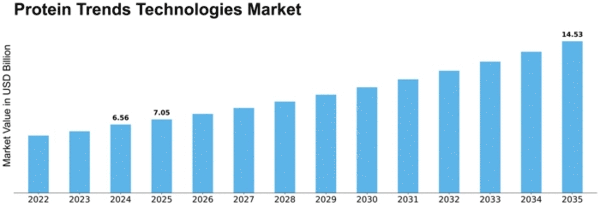

Protein Trends Technologies Market Size Graph
Author
Rahul Gotadki
Assistant Manager

He holds an experience of about 7+ years in Market Research and Business Consulting, working under the spectrum of Life Sciences and Healthcare domains. Rahul conceptualizes and implements a scalable business strategy and provides strategic leadership to the clients. His expertise lies in market estimation, competitive intelligence, pipeline analysis, customer assessment, etc. In addition to the above, his other responsibility includes strategic tracking of high growth markets & advising clients on the potential areas of focus they could direct their business initiatives

Leave a Comment

FAQs

What is the projected growth of the Protein Trends and Technologies market?

The Protein Trends and Technologies market is the expected increase in total market value of 14.53 USD billion over a defined forecast period 2025–2035. It is driven by factors such as demand trends, technological advances, regulatory changes, and geographic expansion.

What is the size of the Protein Trends and Technologies market?

Protein Trends and Technologies market size was valued at approximately 6.56 billion USD in 2024. This figure will reach 14.53 billion USD covering all regions (America, Europe, Asia, MEA and ROW), focusing its segments / services / distribution channels till 2035.

What is the CAGR of the Protein Trends and Technologies market?

Protein Trends and Technologies market is expected to grow at a CAGR of 7.5% between 2025 and 2035.

How much will the Protein Trends and Technologies market be worth by 2035?

Protein Trends and Technologies market is expected to be worth of 14.53 billion USD, reflecting growth driven by usage, technology and global demands by the end of 2035.

How will the Protein Trends and Technologies market perform over the next 10 years?

Over the next 10 years the Protein Trends and Technologies market is expected to shift from usd billion 6.56 to 14.53 billion USD, led by adoption of advanced tech, demographic trends, regulatory approvals, with potential headwinds from 2025 to 2035.

Which region held the largest market share in the Protein Trends & Technologies market?

North America had the largest share in the market

Market Summary

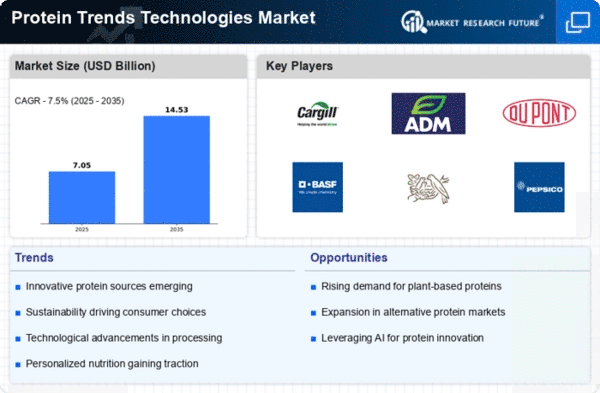
As per MRFR analysis, the Protein Trends Technologies Market Size was estimated at 6.56 USD Billion in 2024. The Protein Trends Technologies industry is projected to grow from 7.05 USD Billion in 2025 to 14.53 USD Billion by 2035, exhibiting a compound annual growth rate (CAGR) of 7.5 during the forecast period 2025 - 2035.

Key Market Trends & Highlights

The Protein Trends Technologies Market is experiencing a dynamic shift towards sustainable and innovative protein sources.

  • The rise of plant-based proteins is reshaping consumer preferences, particularly in North America, the largest market.
  • Technological advancements in protein production are enhancing efficiency and sustainability across the industry.
  • The focus on functional proteins is gaining traction, especially within the food and beverage segment, which remains the largest.
  • Increasing demand for sustainable protein sources and health trends are driving growth in the nutritional supplements segment, particularly in the Asia-Pacific region.

Market Size & Forecast

2024 Market Size 6.56 (USD Billion)
2035 Market Size 14.53 (USD Billion)
CAGR (2025 - 2035) 7.5%
Largest Regional Market Share in 2024 North America

Major Players

Cargill (US), Archer Daniels Midland (US), DuPont (US), BASF (DE), Nestle (CH), PepsiCo (US), Kraft Heinz (US), Unilever (GB), Olam International (SG)

Market Trends

The Protein Trends Technologies Market is currently experiencing a dynamic evolution, driven by a confluence of consumer preferences, technological advancements, and sustainability imperatives. As individuals increasingly prioritize health and wellness, there is a marked shift towards protein-rich diets, which has catalyzed innovation in protein sources and processing methods. This market encompasses a diverse array of products, including plant-based proteins, animal-derived proteins, and alternative protein sources such as insects and lab-grown meat. The integration of cutting-edge technologies, such as fermentation and precision fermentation, is reshaping the landscape, enabling the development of novel protein formulations that cater to various dietary needs and preferences. Moreover, the Protein Trends Technologies Market is witnessing a growing emphasis on transparency and traceability in food production. Consumers are becoming more discerning, seeking products that not only meet their nutritional requirements but also align with their ethical values. This trend is prompting companies to invest in sustainable sourcing practices and innovative supply chain solutions. As the market continues to evolve, it appears poised for further growth, with potential opportunities emerging in personalized nutrition and functional protein products that offer additional health benefits. The interplay of these factors suggests a vibrant future for the Protein Trends Technologies Market, characterized by ongoing innovation and adaptation to consumer demands.

Rise of Plant-Based Proteins

The Protein Trends Technologies Market is witnessing a notable increase in the popularity of plant-based proteins. This trend reflects a broader consumer shift towards healthier and more sustainable dietary choices. As individuals seek alternatives to traditional animal proteins, companies are innovating to create diverse plant-based options that mimic the taste and texture of meat, thereby appealing to a wider audience.

Technological Advancements in Protein Production

Innovations in technology are significantly impacting the Protein Trends Technologies Market. Techniques such as fermentation and precision fermentation are being utilized to enhance protein production efficiency and quality. These advancements not only improve the nutritional profile of protein products but also contribute to more sustainable production methods, aligning with consumer demand for environmentally friendly options.

Focus on Functional Proteins

There is a growing interest in functional proteins within the Protein Trends Technologies Market. Consumers are increasingly seeking protein products that offer additional health benefits, such as improved digestion or enhanced muscle recovery. This trend is driving companies to develop specialized protein formulations that cater to specific health needs, thereby expanding the market's offerings.

Protein Trends Technologies Market Market Drivers

Market Growth Projections

The Global Protein Trends and Technologies Market Industry is poised for substantial growth, with projections indicating a market size of 6.56 USD Billion in 2024 and an anticipated increase to 14.5 USD Billion by 2035. This growth trajectory reflects a compound annual growth rate of 7.5% from 2025 to 2035. Such figures highlight the increasing consumer interest in protein-rich diets and the ongoing innovations in protein technologies. The market's expansion is likely to be driven by various factors, including rising health consciousness, technological advancements, and the demand for sustainable protein sources.

Rising Health Consciousness

The increasing awareness of health and wellness among consumers drives the Global Protein Trends and Technologies Market Industry. As individuals prioritize nutritious diets, the demand for protein-rich foods surges. This trend is evident in the growing popularity of plant-based proteins, which cater to both health-conscious consumers and those seeking sustainable options. In 2024, the market is projected to reach 6.56 USD Billion, reflecting a significant shift towards healthier eating habits. Furthermore, the emphasis on protein intake for muscle maintenance and overall health is likely to sustain this growth trajectory, as consumers become more informed about dietary choices.

Diverse Applications of Protein Products

The versatility of protein products across various sectors fuels the Global Protein Trends and Technologies Market Industry. Proteins are not only essential in food and beverages but also find applications in pharmaceuticals, cosmetics, and animal feed. This broad applicability enhances market growth as industries seek to incorporate protein for its functional benefits. For instance, protein fortification in snacks and beverages is gaining traction, appealing to health-conscious consumers. The expanding range of protein applications is likely to contribute to the market's robust growth, as businesses recognize the value of protein in enhancing product offerings.

Sustainability and Environmental Concerns

Sustainability is becoming a pivotal factor influencing the Global Protein Trends and Technologies Market Industry. Consumers are increasingly concerned about the environmental impact of food production, particularly animal agriculture. This concern drives the demand for sustainable protein sources, such as plant-based proteins and lab-grown meats. Companies are responding by investing in sustainable practices and developing eco-friendly protein alternatives. The market's projected growth to 14.5 USD Billion by 2035 underscores the importance of sustainability in shaping consumer preferences. As awareness of climate change and resource depletion rises, the shift towards sustainable protein sources is likely to accelerate.

Consumer Demand for Personalized Nutrition

The trend towards personalized nutrition is gaining momentum within the Global Protein Trends and Technologies Market Industry. Consumers are increasingly seeking tailored dietary solutions that align with their individual health goals and lifestyles. This shift is prompting companies to develop protein products that cater to specific dietary needs, such as high-protein snacks for athletes or protein supplements for weight management. The growing interest in personalized nutrition is likely to drive innovation in protein formulations and product development, further propelling market growth. As consumers prioritize customized dietary options, the demand for diverse protein products is expected to rise.

Technological Advancements in Protein Production

Innovations in protein production technologies are reshaping the Global Protein Trends and Technologies Market Industry. Techniques such as fermentation, precision fermentation, and cellular agriculture are emerging, enabling the creation of high-quality proteins with reduced environmental impact. These advancements not only enhance the efficiency of protein production but also cater to the growing demand for alternative protein sources. As a result, the market is expected to witness a compound annual growth rate of 7.5% from 2025 to 2035. This technological evolution is crucial for meeting the protein needs of a growing global population while addressing sustainability concerns.

Market Segment Insights

By Application: Food and Beverage (Largest) vs. Nutritional Supplements (Fastest-Growing)

The Protein Trends Technologies Market shows a diverse distribution among its application segments, with 'Food and Beverage' holding the largest share. This segment capitalizes on the increasing consumer demand for protein-enriched foods, driven by health-conscious lifestyles and dietary trends. Meanwhile, 'Nutritional Supplements' is emerging as a significant contender, thanks to the rising popularity of fitness and wellness, which propels its market penetration. Growth in the 'Nutritional Supplements' sector is notably rapid, fueled by factors such as increasing awareness about health benefits associated with protein consumption and a greater focus on fitness among consumers. Additionally, the 'Animal Feed' and 'Pharmaceuticals' segments are witnessing stable growth driven by advancements in animal nutrition and the rising demand for protein-based therapies, respectively, although they lag behind the pace of the fastest-growing category.

Food and Beverage: Dominant vs. Nutritional Supplements: Emerging

In the current landscape of the Protein Trends Technologies Market, the 'Food and Beverage' segment remains dominant, characterized by its wide variety of protein-rich products tailored to consumers seeking healthier and high-protein dietary options. This segment benefits from extensive innovation, with new formulations and flavor profiles being continuously developed to attract a broader consumer base. On the other hand, 'Nutritional Supplements' is an emerging segment that is rapidly gaining traction in the market. This sector is defined by a focus on convenience and targeted nutritional benefits, appealing to fitness enthusiasts and health-conscious individuals. The growth is attributed to increased disposable income, changing dietary preferences, and a greater awareness of health and wellness, making it a vital area for future development.

By Source: Plant-Based (Largest) vs. Animal-Based (Fastest-Growing)

The Protein Trends Technologies Market exhibits a diverse landscape concerning its source segments, namely, Plant-Based, Animal-Based, and Microbial proteins. Currently, Plant-Based proteins dominate the market share, reflecting a robust consumer preference for sustainable and environmentally friendly alternatives. This segment has carved a significant portion of the market, driven by the increasing demand for vegan and vegetarian diets globally. In contrast, the Animal-Based segment, while historically significant, continues to grow at an accelerating pace owing to the rising interest in high-quality, nutrient-rich proteins sourced from animal products, reflecting changing consumer attitudes towards meat consumption. Growth trends in the Protein Trends Technologies Market are largely influenced by shifting dietary preferences and health consciousness among consumers. The Plant-Based segment is driven by an expanding range of innovative products that cater to taste and nutrition without compromising ethical considerations. Simultaneously, the Animal-Based segment is capitalizing on advancements in sustainable farming practices and product formulations, leading to increased consumer awareness of the benefits of high-quality animal proteins. These dynamics underscore a competitive interplay between established and emerging sources of protein, shaping future market trajectories.

Plant-Based (Dominant) vs. Animal-Based (Emerging)

In the Protein Trends Technologies Market, Plant-Based proteins are recognized as the dominant source, characterized by their extensive variety and alignment with health and sustainability trends. This segment benefits from the backing of significant innovations in texture, flavor, and nutritional profiles, making plant-based options more appealing to both vegetarians and meat-eaters. Conversely, the Animal-Based segment, while historically robust, is emerging with new forms and products that cater to modern consumer preferences. Innovations such as lab-grown meat and enhanced animal protein sources are gaining traction, appealing to those seeking traditional taste without compromising environmental and ethical standards. Together, these segments illustrate a market influenced by evolving consumer demands and regulatory landscapes.

By Form: Powder (Largest) vs. Liquid (Fastest-Growing)

In the Protein Trends Technologies Market, the distribution of market share among various forms indicates that powder proteins hold the largest share due to their versatility and established presence in the industry. Liquid proteins, however, are gaining significant traction, appealing to consumers looking for convenient and ready-to-consume solutions. Granular proteins, while present, capture a smaller segment of the overall market, primarily serving niche applications and specific consumer needs. The growth trends in this segment are notably influenced by changing consumer preferences towards health and wellness products, with an increasing demand for convenient protein sources. Powder proteins are favored for their adaptability in various applications like snacks and dietary supplements, while the liquid format is emerging as the go-to choice for on-the-go protein intake. The rise of fitness culture and an active lifestyle further propel the growth of these segments, making them key players in market dynamics.

Powder (Dominant) vs. Liquid (Emerging)

Powder protein dominates the Protein Trends Technologies Market due to its wide-ranging applications in sports nutrition, dietary supplements, and food products. Its versatility allows for easy integration into various recipes, catering to different consumer preferences. Additionally, its longer shelf life and ease of storage contribute to its appeal among manufacturers and consumers alike. On the other hand, liquid protein products are emerging rapidly, driven by the trend towards convenience and ready-to-drink options. They are increasingly seen in fitness and health-conscious circles, with innovations in flavors and formulations enhancing their attractiveness. Both segments are poised for growth, but powder presides as the established leader while liquid formats are capturing growing interest.

By Functionality: Texturizing Agent (Largest) vs. Emulsifier (Fastest-Growing)

In the Protein Trends Technologies Market, the functionality segment is marked by significant distinctions among its values. Texturizing agents hold the largest share due to their vital role in enhancing the texture and mouthfeel of protein-based products. Emulsifiers, on the other hand, are recognized for their crucial function in stabilizing mixtures, making them increasingly relevant in the market with a growing share as food manufacturers look towards more complex protein formulations. The growth trends within this segment indicate a notable shift towards cleaner label products, driving demand for natural texturizing agents and emulsifiers. Consumers are prioritizing enhanced sensory experiences and clean labels in their dietary choices. This trend reflects an evolving market landscape influenced by health consciousness and the need for innovative solutions in protein applications, ultimately propelling the emulsifier sector as the fastest-growing area in functionality.

Texturizing Agent (Dominant) vs. Foaming Agent (Emerging)

The comparison between texturizing agents and foaming agents reveals intriguing insights into the Protein Trends Technologies Market. Texturizing agents are dominant in this segment due to their widespread applications in improving the texture of protein products, creating a more palatable and appealing mouthfeel. They are extensively used in plant-based protein formulations, catering to a diverse consumer base seeking quality and satisfaction. Conversely, foaming agents are emerging as a significant player, driven by rising demands in sectors like beverages and desserts where foaming properties are desirable for product differentiation. As innovation continues, foaming agents are gaining traction, especially in formulations aimed at enhancing visual appeal and unique texture experiences.

Get more detailed insights about Protein Trends & Technologies Market Research Report - Forecast to 2035

Regional Insights

North America : Market Leader in Protein Trends

North America continues to lead the Protein Trends Technologies Market, holding a significant market share of 3.3 billion. The region's growth is driven by increasing consumer demand for plant-based proteins, innovations in food technology, and supportive regulatory frameworks. The rise in health consciousness among consumers is also a key factor, pushing companies to invest in sustainable protein sources and alternative proteins. The competitive landscape is robust, with major players like Cargill, Archer Daniels Midland, and DuPont leading the charge. The U.S. is the primary market, benefiting from advanced research and development capabilities. Companies are focusing on strategic partnerships and acquisitions to enhance their product offerings and expand their market reach, ensuring a dynamic and competitive environment.

Europe : Emerging Market with Growth Potential

Europe's Protein Trends Technologies Market is valued at €1.8 billion, showcasing a growing interest in sustainable protein sources and innovative food technologies. The region is experiencing a shift towards plant-based diets, driven by health trends and environmental concerns. Regulatory support for sustainable practices is also a catalyst for growth, encouraging investments in protein technology innovations. Leading countries such as Germany, France, and the UK are at the forefront of this market, with key players like BASF and Unilever actively participating. The competitive landscape is characterized by a mix of established companies and startups focusing on alternative proteins. The European market is poised for further expansion as consumer preferences evolve and regulatory frameworks adapt to support new protein technologies.

Asia-Pacific : Rapid Growth in Protein Demand

The Asia-Pacific region, valued at $1.2 billion, is witnessing a rapid increase in demand for protein technologies, driven by population growth and rising disposable incomes. The shift towards healthier eating habits and the adoption of Western dietary patterns are significant growth drivers. Additionally, government initiatives promoting food security and nutrition are enhancing the market landscape. Countries like China and India are leading the charge, with a growing number of local and international players entering the market. Companies such as Olam International are expanding their presence, focusing on innovative protein solutions. The competitive environment is dynamic, with a mix of traditional and modern approaches to protein sourcing and technology, positioning the region for substantial growth in the coming years.

Middle East and Africa : Emerging Market with Unique Challenges

The Middle East and Africa region, with a market size of $0.26 billion, is emerging in the Protein Trends Technologies Market. The growth is primarily driven by increasing urbanization, changing dietary preferences, and a rising awareness of health and nutrition. However, challenges such as economic instability and regulatory hurdles can impact market growth. Governments are beginning to recognize the importance of food technology in addressing food security issues. Countries like South Africa and the UAE are leading the market, with a growing interest in alternative protein sources. The competitive landscape is evolving, with both local and international players seeking to establish a foothold. Companies are focusing on innovative solutions to meet the unique dietary needs of the region, paving the way for future growth in protein technologies.

Key Players and Competitive Insights

The Protein Trends Technologies Market is currently characterized by a dynamic competitive landscape, driven by increasing consumer demand for protein-rich products and innovations in food technology. Major players such as Cargill (US), Archer Daniels Midland (US), and DuPont (US) are strategically positioning themselves through a combination of product innovation, sustainability initiatives, and strategic partnerships. These companies are not only focusing on enhancing their product portfolios but are also investing in research and development to create alternative protein sources, which appears to be a significant growth driver in the market.In terms of business tactics, companies are increasingly localizing manufacturing to reduce supply chain vulnerabilities and optimize logistics. The market structure is moderately fragmented, with a mix of large multinational corporations and smaller niche players. The collective influence of key players is shaping the competitive dynamics, as they leverage their scale and resources to innovate and capture market share.

In November Cargill (US) announced a partnership with a leading plant-based protein startup to co-develop new protein products aimed at the health-conscious consumer segment. This strategic move underscores Cargill's commitment to expanding its footprint in the alternative protein space, which is expected to enhance its competitive positioning and cater to the growing demand for sustainable food options.Similarly, in October 2025, Archer Daniels Midland (US) launched a new line of plant-based protein ingredients designed for use in meat alternatives. This initiative not only reflects the company's focus on innovation but also highlights its strategy to meet the rising consumer preference for plant-based diets. By diversifying its product offerings, ADM is likely to strengthen its market presence and appeal to a broader customer base.

In September DuPont (US) unveiled a new technology platform aimed at improving the nutritional profile of protein products. This development is particularly significant as it aligns with the increasing consumer awareness regarding health and nutrition. DuPont's investment in advanced technologies may provide it with a competitive edge, allowing it to offer differentiated products that meet evolving consumer expectations.

As of December current trends in the Protein Trends Technologies Market indicate a strong emphasis on digitalization, sustainability, and the integration of artificial intelligence in product development. Strategic alliances among key players are shaping the landscape, fostering innovation and enhancing supply chain efficiencies. Looking ahead, competitive differentiation is likely to evolve from traditional price-based competition to a focus on innovation, technology, and reliability in supply chains, as companies strive to meet the demands of a more discerning consumer base.

Key Companies in the Protein Trends Technologies Market include

Industry Developments

November 2021: Pronativ® Native Micellar Casein and Pronativ® Native Whey Protein were used by Lactalis Ingredients in the introduction of novel high-protein product concepts. High-protein puddings and shakes are two of the notions that were deduced.

Future Outlook

Protein Trends Technologies Market Future Outlook

The Protein Trends Technologies Market is projected to grow at a 7.5% CAGR from 2025 to 2035, driven by increasing demand for plant-based proteins and technological advancements.

New opportunities lie in:

  • Development of personalized protein supplements for niche markets.
  • Integration of AI in protein sourcing and production processes.
  • Expansion of protein-based food alternatives in emerging markets.

By 2035, the market is expected to be robust, reflecting substantial growth and innovation.

Market Segmentation

Protein Trends Technologies Market Form Outlook

  • Powder
  • Liquid
  • Granular

Protein Trends Technologies Market Source Outlook

  • Plant-Based
  • Animal-Based
  • Microbial

Protein Trends Technologies Market Application Outlook

  • Food and Beverage
  • Nutritional Supplements
  • Animal Feed
  • Pharmaceuticals

Protein Trends Technologies Market Functionality Outlook

  • Texturizing Agent
  • Emulsifier
  • Foaming Agent
  • Thickening Agent

Report Scope

MARKET SIZE 20246.56(USD Billion)
MARKET SIZE 20257.05(USD Billion)
MARKET SIZE 203514.53(USD Billion)
COMPOUND ANNUAL GROWTH RATE (CAGR)7.5% (2025 - 2035)
REPORT COVERAGERevenue Forecast, Competitive Landscape, Growth Factors, and Trends
BASE YEAR2024
Market Forecast Period2025 - 2035
Historical Data2019 - 2024
Market Forecast UnitsUSD Billion
Key Companies ProfiledCargill (US), Archer Daniels Midland (US), DuPont (US), BASF (DE), Nestle (CH), PepsiCo (US), Kraft Heinz (US), Unilever (GB), Olam International (SG)
Segments CoveredApplication, Source, Form, Functionality
Key Market OpportunitiesAdvancements in plant-based protein technologies cater to rising consumer demand for sustainable food options.
Key Market DynamicsRising consumer demand for plant-based proteins drives innovation and competition in protein technology solutions.
Countries CoveredNorth America, Europe, APAC, South America, MEA

FAQs

What is the projected growth of the Protein Trends and Technologies market?

The Protein Trends and Technologies market is the expected increase in total market value of 14.53 USD billion over a defined forecast period 2025–2035. It is driven by factors such as demand trends, technological advances, regulatory changes, and geographic expansion.

What is the size of the Protein Trends and Technologies market?

Protein Trends and Technologies market size was valued at approximately 6.56 billion USD in 2024. This figure will reach 14.53 billion USD covering all regions (America, Europe, Asia, MEA and ROW), focusing its segments / services / distribution channels till 2035.

What is the CAGR of the Protein Trends and Technologies market?

Protein Trends and Technologies market is expected to grow at a CAGR of 7.5% between 2025 and 2035.

How much will the Protein Trends and Technologies market be worth by 2035?

Protein Trends and Technologies market is expected to be worth of 14.53 billion USD, reflecting growth driven by usage, technology and global demands by the end of 2035.

How will the Protein Trends and Technologies market perform over the next 10 years?

Over the next 10 years the Protein Trends and Technologies market is expected to shift from usd billion 6.56 to 14.53 billion USD, led by adoption of advanced tech, demographic trends, regulatory approvals, with potential headwinds from 2025 to 2035.

Which region held the largest market share in the Protein Trends & Technologies market?

North America had the largest share in the market

  1. SECTION I: EXECUTIVE SUMMARY AND KEY HIGHLIGHTS
    1. | 1.1 EXECUTIVE SUMMARY
    2. | 1.1.1 Market Overview
    3. | 1.1.2 Key Findings
    4. | 1.1.3 Market Segmentation
    5. | 1.1.4 Competitive Landscape
    6. | 1.1.5 Challenges and Opportunities
    7. | 1.1.6 Future Outlook
  2. SECTION II: SCOPING, METHODOLOGY AND MARKET STRUCTURE
    1. | 2.1 MARKET INTRODUCTION
    2. | 2.1.1 Definition
    3. | 2.1.2 Scope of the study
    4. |-- 2.1.2.1 Research Objective
    5. |-- 2.1.2.2 Assumption
    6. |-- 2.1.2.3 Limitations
    7. | 2.2 RESEARCH METHODOLOGY
    8. | 2.2.1 Overview
    9. | 2.2.2 Data Mining
    10. | 2.2.3 Secondary Research
    11. | 2.2.4 Primary Research
    12. |-- 2.2.4.1 Primary Interviews and Information Gathering Process
    13. |-- 2.2.4.2 Breakdown of Primary Respondents
    14. | 2.2.5 Forecasting Model
    15. | 2.2.6 Market Size Estimation
    16. |-- 2.2.6.1 Bottom-Up Approach
    17. |-- 2.2.6.2 Top-Down Approach
    18. | 2.2.7 Data Triangulation
    19. | 2.2.8 Validation
  3. SECTION III: QUALITATIVE ANALYSIS
    1. | 3.1 MARKET DYNAMICS
    2. | 3.1.1 Overview
    3. | 3.1.2 Drivers
    4. | 3.1.3 Restraints
    5. | 3.1.4 Opportunities
    6. | 3.2 MARKET FACTOR ANALYSIS
    7. | 3.2.1 Value chain Analysis
    8. | 3.2.2 Porter's Five Forces Analysis
    9. |-- 3.2.2.1 Bargaining Power of Suppliers
    10. |-- 3.2.2.2 Bargaining Power of Buyers
    11. |-- 3.2.2.3 Threat of New Entrants
    12. |-- 3.2.2.4 Threat of Substitutes
    13. |-- 3.2.2.5 Intensity of Rivalry
    14. | 3.2.3 COVID-19 Impact Analysis
    15. |-- 3.2.3.1 Market Impact Analysis
    16. |-- 3.2.3.2 Regional Impact
    17. |-- 3.2.3.3 Opportunity and Threat Analysis
  4. SECTION IV: QUANTITATIVE ANALYSIS
    1. | 4.1 Healthcare, BY Application (USD Billion)
    2. | 4.1.1 Food and Beverage
    3. | 4.1.2 Nutritional Supplements
    4. | 4.1.3 Animal Feed
    5. | 4.1.4 Pharmaceuticals
    6. | 4.2 Healthcare, BY Source (USD Billion)
    7. | 4.2.1 Plant-Based
    8. | 4.2.2 Animal-Based
    9. | 4.2.3 Microbial
    10. | 4.3 Healthcare, BY Form (USD Billion)
    11. | 4.3.1 Powder
    12. | 4.3.2 Liquid
    13. | 4.3.3 Granular
    14. | 4.4 Healthcare, BY Functionality (USD Billion)
    15. | 4.4.1 Texturizing Agent
    16. | 4.4.2 Emulsifier
    17. | 4.4.3 Foaming Agent
    18. | 4.4.4 Thickening Agent
    19. | 4.5 Healthcare, BY Region (USD Billion)
    20. | 4.5.1 North America
    21. |-- 4.5.1.1 US
    22. |-- 4.5.1.2 Canada
    23. | 4.5.2 Europe
    24. |-- 4.5.2.1 Germany
    25. |-- 4.5.2.2 UK
    26. |-- 4.5.2.3 France
    27. |-- 4.5.2.4 Russia
    28. |-- 4.5.2.5 Italy
    29. |-- 4.5.2.6 Spain
    30. |-- 4.5.2.7 Rest of Europe
    31. | 4.5.3 APAC
    32. |-- 4.5.3.1 China
    33. |-- 4.5.3.2 India
    34. |-- 4.5.3.3 Japan
    35. |-- 4.5.3.4 South Korea
    36. |-- 4.5.3.5 Malaysia
    37. |-- 4.5.3.6 Thailand
    38. |-- 4.5.3.7 Indonesia
    39. |-- 4.5.3.8 Rest of APAC
    40. | 4.5.4 South America
    41. |-- 4.5.4.1 Brazil
    42. |-- 4.5.4.2 Mexico
    43. |-- 4.5.4.3 Argentina
    44. |-- 4.5.4.4 Rest of South America
    45. | 4.5.5 MEA
    46. |-- 4.5.5.1 GCC Countries
    47. |-- 4.5.5.2 South Africa
    48. |-- 4.5.5.3 Rest of MEA
  5. SECTION V: COMPETITIVE ANALYSIS
    1. | 5.1 Competitive Landscape
    2. | 5.1.1 Overview
    3. | 5.1.2 Competitive Analysis
    4. | 5.1.3 Market share Analysis
    5. | 5.1.4 Major Growth Strategy in the Healthcare
    6. | 5.1.5 Competitive Benchmarking
    7. | 5.1.6 Leading Players in Terms of Number of Developments in the Healthcare
    8. | 5.1.7 Key developments and growth strategies
    9. |-- 5.1.7.1 New Product Launch/Service Deployment
    10. |-- 5.1.7.2 Merger & Acquisitions
    11. |-- 5.1.7.3 Joint Ventures
    12. | 5.1.8 Major Players Financial Matrix
    13. |-- 5.1.8.1 Sales and Operating Income
    14. |-- 5.1.8.2 Major Players R&D Expenditure. 2023
    15. | 5.2 Company Profiles
    16. | 5.2.1 Cargill (US)
    17. |-- 5.2.1.1 Financial Overview
    18. |-- 5.2.1.2 Products Offered
    19. |-- 5.2.1.3 Key Developments
    20. |-- 5.2.1.4 SWOT Analysis
    21. |-- 5.2.1.5 Key Strategies
    22. | 5.2.2 Archer Daniels Midland (US)
    23. |-- 5.2.2.1 Financial Overview
    24. |-- 5.2.2.2 Products Offered
    25. |-- 5.2.2.3 Key Developments
    26. |-- 5.2.2.4 SWOT Analysis
    27. |-- 5.2.2.5 Key Strategies
    28. | 5.2.3 DuPont (US)
    29. |-- 5.2.3.1 Financial Overview
    30. |-- 5.2.3.2 Products Offered
    31. |-- 5.2.3.3 Key Developments
    32. |-- 5.2.3.4 SWOT Analysis
    33. |-- 5.2.3.5 Key Strategies
    34. | 5.2.4 BASF (DE)
    35. |-- 5.2.4.1 Financial Overview
    36. |-- 5.2.4.2 Products Offered
    37. |-- 5.2.4.3 Key Developments
    38. |-- 5.2.4.4 SWOT Analysis
    39. |-- 5.2.4.5 Key Strategies
    40. | 5.2.5 Nestle (CH)
    41. |-- 5.2.5.1 Financial Overview
    42. |-- 5.2.5.2 Products Offered
    43. |-- 5.2.5.3 Key Developments
    44. |-- 5.2.5.4 SWOT Analysis
    45. |-- 5.2.5.5 Key Strategies
    46. | 5.2.6 PepsiCo (US)
    47. |-- 5.2.6.1 Financial Overview
    48. |-- 5.2.6.2 Products Offered
    49. |-- 5.2.6.3 Key Developments
    50. |-- 5.2.6.4 SWOT Analysis
    51. |-- 5.2.6.5 Key Strategies
    52. | 5.2.7 Kraft Heinz (US)
    53. |-- 5.2.7.1 Financial Overview
    54. |-- 5.2.7.2 Products Offered
    55. |-- 5.2.7.3 Key Developments
    56. |-- 5.2.7.4 SWOT Analysis
    57. |-- 5.2.7.5 Key Strategies
    58. | 5.2.8 Unilever (GB)
    59. |-- 5.2.8.1 Financial Overview
    60. |-- 5.2.8.2 Products Offered
    61. |-- 5.2.8.3 Key Developments
    62. |-- 5.2.8.4 SWOT Analysis
    63. |-- 5.2.8.5 Key Strategies
    64. | 5.2.9 Olam International (SG)
    65. |-- 5.2.9.1 Financial Overview
    66. |-- 5.2.9.2 Products Offered
    67. |-- 5.2.9.3 Key Developments
    68. |-- 5.2.9.4 SWOT Analysis
    69. |-- 5.2.9.5 Key Strategies
    70. | 5.3 Appendix
    71. | 5.3.1 References
    72. | 5.3.2 Related Reports

Healthcare Market Segmentation

Healthcare By Application (USD Billion, 2025-2035)

  • Food and Beverage
  • Nutritional Supplements
  • Animal Feed
  • Pharmaceuticals

Healthcare By Source (USD Billion, 2025-2035)

  • Plant-Based
  • Animal-Based
  • Microbial

Healthcare By Form (USD Billion, 2025-2035)

  • Powder
  • Liquid
  • Granular

Healthcare By Functionality (USD Billion, 2025-2035)

  • Texturizing Agent
  • Emulsifier
  • Foaming Agent
  • Thickening Agent
Infographic

Free Sample Request

Kindly complete the form below to receive a free sample of this Report

Get Free Sample

Customer Strories

Compare Licence

×
Features License Type
Single User Multiuser License Enterprise User
Price $4,950 $5,950 $7,250
Maximum User Access Limit 1 User Upto 10 Users Unrestricted Access Throughout the Organization
Free Customization
Direct Access to Analyst
Deliverable Format
Platform Access
Discount on Next Purchase 10% 15% 15%
Printable Versions