×
Hero Background
English
Chinese
French
Japanese
Korean
German
Spanish

Porcine Vaccines Market Trends

ID: MRFR/Pharma/5969-HCR
90 Pages
Rahul Gotadki
October 2025

Porcine Vaccines Market Research Report Information by Type (Inactivated Vaccines, DNA Vaccines), Disease Indication (Diarrhea, Swine Influenza), End User - Forecast Till 2035

Share:
Download PDF ×

We do not share your information with anyone. However, we may send you emails based on your report interest from time to time. You may contact us at any time to opt-out.

Porcine Vaccines Market Infographic
Purchase Options

Market Trends

Key Emerging Trends in the Porcine Vaccines Market

Porcine vaccinations are showing some intriguing tendencies. Pig farming modifications, disease prevention, and food safety values drive these developments. Veterinarians, pork producers, and vaccine manufacturers must grasp these market patterns to optimize pig health and productivity. The pig industry is booming because more people desire protein-rich diets. As bacon remains a valuable source of animal energy, pigs require excellent treatments to be healthy and prevent disease. New hog illnesses influence pig vaccination sales. African Swine Fever (ASF) and Porcine Epidemic Diarrhea Virus (PEDV) demonstrate the need for new vaccinations to address emerging pig farm issues. New technologies are altering pig vaccination production. New genetics and genomic technologies are improving medical efficacy and targeting. These modifications help prevent illnesses and make pigs healthier. Pig vaccinations are increasingly focused on protection. Stopping disease introduction and spread in pig communities is crucial to their health. Pig vaccinations are crucial to pork growers' security strategy. Knowing more about viral infections affects pig vaccine development. Animal-to-human illnesses like influenza are gaining attention. Pig vaccines protect communities and reduce zoonotic illness transmission. Globalization in pig farming affects pig medication sales. As pig farms grow increasingly interconnected, illnesses may spread across nations. This development requires drugs that can address particular pig farming issues. Combination vaccinations are increasing in pig health management. Combination vaccinations prevent many illnesses with one injection, making immunization regimens simpler and less traumatic for pigs. This tendency helps prevent disease transmission. Following laws and prioritizing vaccination safety are crucial in the pig vaccine business. To fulfill regulatory regulations, vaccine companies are investing in research and development to ensure their medicines are safe, effective, and approved. Pig farmers are prioritizing genetic preservation and disease tolerance. Selective breeding aims to generate disease-resistant pigs. Vaccinations and this strategy provide a more comprehensive disease-free pig farm plan. Digitalization is altering how vets deliver and monitor pig medications. Digital solutions simplify record-keeping, shot scheduling, and real-time pig health monitoring. This tendency makes massive pig farm immunization programs more effective and trackable. When public and private sectors produce vaccines together, new ideas emerge. Public-private partnership shares resources and expertise to accelerate pig medical research and development. Successful drugs are launched faster with this cooperative approach.


Author
Rahul Gotadki
Assistant Manager

He holds an experience of about 7+ years in Market Research and Business Consulting, working under the spectrum of Life Sciences and Healthcare domains. Rahul conceptualizes and implements a scalable business strategy and provides strategic leadership to the clients. His expertise lies in market estimation, competitive intelligence, pipeline analysis, customer assessment, etc. In addition to the above, his other responsibility includes strategic tracking of high growth markets & advising clients on the potential areas of focus they could direct their business initiatives

Leave a Comment

Market Summary

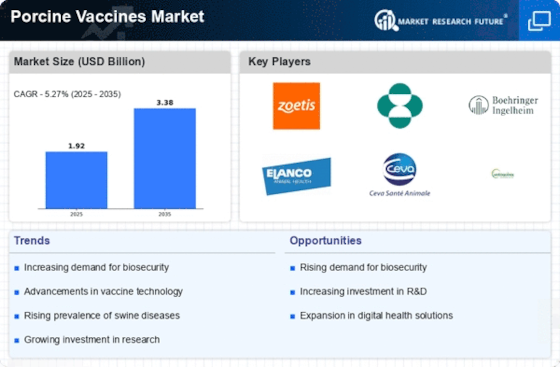
As per MRFR analysis, the Porcine Vaccines Market Size was estimated at 1.92 USD Billion in 2024. The Porcine Vaccines industry is projected to grow from 2.021 USD Billion in 2025 to 3.378 USD Billion by 2035, exhibiting a compound annual growth rate (CAGR) of 5.27 during the forecast period 2025 - 2035.

Key Market Trends & Highlights

The Porcine Vaccines Market is experiencing robust growth driven by technological advancements and increasing awareness of animal health.

  • North America remains the largest market for porcine vaccines, driven by a well-established livestock industry. The Asia-Pacific region is emerging as the fastest-growing market, reflecting rising investments in animal health. Inactivated vaccines dominate the market, while live attenuated vaccines are witnessing rapid growth due to their effectiveness. Key drivers include the increasing incidence of porcine diseases and regulatory support for vaccine development.

Market Size & Forecast

2024 Market Size 1.92 (USD Billion)
2035 Market Size 3.378 (USD Billion)
CAGR (2025 - 2035) 5.27%
Largest Regional Market Share in 2024 Americas

Major Players

<p><a href="https://www.zoetisus.com/products/pork/">Zoetis (US),</a> Merck Animal Health (US), Boehringer Ingelheim (DE), <a href="https://farmanimal.elanco.com/us/products-services/swine/prrs">Elanco Animal Health</a> (US), Ceva Santé Animale (FR), Vetoquinol (FR), Huvepharma (BG), Phibro Animal Health (US), IDT Biologika (DE)</p>

Market Trends

The Porcine Vaccines Market is currently experiencing a dynamic evolution, driven by various factors that influence both production and consumption. The increasing global demand for pork, coupled with heightened awareness regarding animal health, has led to a surge in vaccine development aimed at preventing diseases in swine populations. This trend is further supported by advancements in biotechnology, which enable the creation of more effective and targeted vaccines. Additionally, regulatory frameworks are becoming more stringent, prompting manufacturers to innovate and comply with safety standards, thereby enhancing the overall quality of vaccines available in the market. Moreover, the Porcine Vaccines Market is witnessing a shift towards preventive healthcare measures, as stakeholders recognize the economic implications of disease outbreaks in livestock. This proactive approach not only safeguards animal welfare but also ensures food security for the growing global population. The integration of digital technologies in vaccine distribution and monitoring is also emerging, potentially streamlining processes and improving traceability. As the market continues to adapt to these changes, it appears poised for sustained growth, with opportunities for new entrants and established players alike to contribute to advancements in swine health management.

Rising Demand for Sustainable Practices

The Porcine Vaccines Market is increasingly influenced by the demand for sustainable farming practices. Producers are seeking vaccines that not only enhance animal health but also align with environmental stewardship. This trend suggests a shift towards more eco-friendly vaccine formulations and production methods.

Technological Advancements in Vaccine Development

Innovations in biotechnology are playing a crucial role in the Porcine Vaccines Market. The development of novel vaccine platforms, such as mRNA technology, appears to enhance efficacy and reduce production times. This trend indicates a potential for more rapid responses to emerging diseases.

Focus on Preventive Health Strategies

There is a growing emphasis on preventive health measures within the Porcine Vaccines Market. Stakeholders are increasingly recognizing the economic benefits of vaccination programs, which may lead to reduced disease incidence and improved herd productivity. This focus on prevention could reshape market dynamics.

Porcine Vaccines Market Market Drivers

Advancements in Vaccine Technology

Advancements in vaccine technology are significantly influencing the Porcine Vaccines Market. Innovations such as recombinant vaccines and DNA vaccines are emerging as effective alternatives to traditional methods. These new technologies offer enhanced efficacy and safety profiles, which are crucial for gaining acceptance among producers. Moreover, the ability to develop vaccines that target multiple pathogens simultaneously could streamline vaccination processes and reduce costs. As research continues to evolve, the market is likely to see a surge in the availability of advanced vaccine options, catering to the diverse needs of the swine industry. This technological evolution is expected to play a pivotal role in shaping the future landscape of porcine vaccination.

Economic Growth in Emerging Markets

Economic growth in emerging markets is contributing to the expansion of the Porcine Vaccines Market. As these regions experience increased investment in agriculture and livestock production, the demand for effective vaccination solutions is on the rise. The growing middle class in these markets is also driving the demand for high-quality pork products, which necessitates improved animal health management practices. Consequently, producers are more inclined to invest in vaccines to ensure the health of their herds. This trend indicates a promising opportunity for vaccine manufacturers to penetrate these markets, as they seek to meet the rising demand for porcine vaccines that can enhance productivity and animal welfare.

Increasing Incidence of Porcine Diseases

The rising incidence of porcine diseases, such as Porcine Reproductive and Respiratory Syndrome (PRRS) and Swine Influenza, is a primary driver for the Porcine Vaccines Market. These diseases have led to significant economic losses in the swine industry, prompting farmers and producers to seek effective vaccination solutions. According to recent data, the economic impact of PRRS alone can reach billions annually, underscoring the urgency for vaccination. As awareness of these diseases grows, the demand for innovative vaccines that can provide effective protection is likely to increase. This trend indicates a robust market potential for vaccine manufacturers, as they strive to develop products that can mitigate the impact of these diseases on swine health and productivity.

Regulatory Support for Vaccine Development

Regulatory bodies are increasingly supporting the development and approval of vaccines for porcine diseases, which is a significant driver for the Porcine Vaccines Market. Initiatives aimed at streamlining the approval process for new vaccines can enhance market entry for innovative products. For instance, the introduction of expedited review processes for vaccines targeting high-impact diseases may encourage investment in research and development. This regulatory support not only fosters innovation but also ensures that effective vaccines reach the market more swiftly. As a result, the overall growth of the porcine vaccine sector is likely to be bolstered by favorable regulatory environments that prioritize animal health and welfare.

Growing Awareness of Animal Health and Welfare

There is a growing awareness of animal health and welfare among consumers and producers, which is driving the Porcine Vaccines Market. As consumers become more conscious of the conditions under which livestock are raised, there is an increasing demand for products that ensure the health and well-being of animals. This trend is reflected in the rising adoption of vaccination programs aimed at preventing diseases in pigs. Furthermore, producers are recognizing that healthy animals lead to better productivity and profitability. Consequently, the emphasis on animal welfare is likely to propel the demand for effective vaccines, as stakeholders seek to align with consumer expectations and regulatory standards.

Market Segment Insights

By Type: Inactivated Vaccines (Largest) vs. Live Attenuated Vaccines (Fastest-Growing)

<p>In the Porcine Vaccines Market, the type of vaccine significantly influences market share dynamics. Inactivated vaccines dominate the market due to their proven efficacy and safety profile, being a preferred choice among veterinarians and pig farmers. Meanwhile, live attenuated vaccines follow closely, leveraging their ability to provide rapid immunity and stimulate robust immune responses, making them popular for preventive measures against prevalent diseases in swine populations. The growth trends in this segment are propelled by increasing awareness of swine health and a rise in pig farming practices globally. Additionally, advances in vaccine technology, such as the development of recombinant and DNA vaccines, are creating new opportunities within the market. As such, prioritizing health management in livestock is becoming increasingly essential, further driving demand for innovative vaccine solutions.</p>

<p>Inactivated Vaccines (Dominant) vs. Recombinant Vaccines (Emerging)</p>

<p>Inactivated vaccines are a dominant force within the Porcine Vaccines Market, known for their reliability and safety. These vaccines are often preferred in commercial pig farming due to their ability to elicit strong immune responses without the risk of disease transmission. On the other hand, recombinant vaccines are emerging as a significant alternative, utilizing advanced biotechnology to enhance efficacy and safety. They provide specific protection against certain pathogens, showcasing quicker development cycles and the potential for stability in various storage conditions. As<a href="https://www.marketresearchfuture.com/reports/animal-health-market-7163"> animal health </a>protocols evolve, the introduction and acceptance of recombinant vaccines are likely to increase, catering to the industry’s demand for more effective immunization strategies against evolving diseases.</p>

By Disease Indication: PED (Largest) vs. PRRS (Fastest-Growing)

<p>In the Porcine Vaccines Market, the market share distribution is dominated by the Porcine Epidemic Diarrhea (PED) vaccine, which holds the largest share among disease indications. Following PED, the Porcine Reproductive &amp; Respiratory Syndrome (PRRS) vaccine is also significant, emerging as the fastest-growing segment. Other notable competitors in the market include Swine Influenza, Aujeszky's Disease, and Porcine Circovirus Associated Disease (PCVAD), all of which contribute to the overall market landscape, but with lesser shares than the leading segments. The growth trends within this segment are largely driven by rising incidence rates of the diseases and heightened awareness of the economic impacts of these conditions on swine production. Additionally, advancements in vaccine technology and increased investments in research and development are further propelling market growth. The ongoing emphasis on biosecurity and disease prevention among swine producers underscores the critical need for effective vaccination programs, thereby bolstering the demand for these vaccines.</p>

<p>PED (Dominant) vs. PRRS (Emerging)</p>

<p>The Porcine Epidemic Diarrhea (PED) vaccine remains the dominant force in the Porcine Vaccines Market, known for its crucial role in controlling outbreaks of this highly contagious disease, which can significantly impact pig mortality rates and production efficiency. The high levels of awareness and preventive measures taken by producers have reinforced the strong market position of PED vaccines. Conversely, the Porcine Reproductive &amp; Respiratory Syndrome (PRRS) vaccine is positioned as an emerging segment, experiencing rapid growth due to an increase in the prevalence of PRRS in swine herds. The continuous challenges posed by this respiratory disease are leading to heightened innovation and adoption of effective PRRS vaccines, as producers strive to mitigate the health impacts on their livestock.</p>

By End-user: Hog Production Farm (Largest) vs. Veterinary Hospitals (Fastest-Growing)

<p>In the Porcine Vaccines Market, the end-user segment is primarily dominated by hog production farms, which utilize a vast majority of the vaccines to ensure herd health and productivity. These farms require continuous vaccination for disease prevention, making them a key player in the market. Veterinary hospitals, while representing a smaller portion of the market share, are increasingly significant as they often play a vital role in the distribution and administration of porcine vaccines, catering to smaller livestock operations and niche markets.</p>

<p>End-User: Hog Production Farm (Dominant) vs. Veterinary Hospitals (Emerging)</p>

<p>Hog production farms are characterized by their large-scale operations and focus on maximizing health outcomes for their herds through preventive measures, including vaccination. The demand for vaccines in these settings is driven by the need for maintaining herd immunity and productivity. In contrast, veterinary hospitals are emerging as vital players in the market, particularly as awareness of animal health rises among smaller producers. These facilities offer not only vaccination services but also consultations, diagnostics, and treatment, catering to a specialized clientele. As the industry evolves, both segments are crucial to ensuring the overall health of pig populations.</p>

Get more detailed insights about Porcine Vaccines Market Research Report - Forecast till 2035

Regional Insights

Key Companies in the Porcine Vaccines Market market include

Industry Developments

In the year 2021

The vaccine was created together and manufactured using CrisBio. This improved the rate of vaccine sales in the market. 

Intended Audience

  • Porcine vaccines manufacturers
  • Porcine vaccines suppliers
  • Private research laboratories
  • Research and development (R&D) companies
  • Market research and consulting service providers
  • Government research laboratories
  • Contract manufacturing organizations

Future Outlook

Porcine Vaccines Market Future Outlook

<p>The Porcine Vaccines Market is projected to grow at a 5.27% CAGR from 2024 to 2035, driven by increasing disease outbreaks, advancements in vaccine technology, and rising demand for pork products.</p>

New opportunities lie in:

  • <p>Development of combination vaccines targeting multiple diseases</p><p>Expansion into emerging markets with tailored vaccine solutions</p><p>Investment in <a href="https://www.marketresearchfuture.com/reports/digital-healthcare-market-7636">digital healthcare</a> platforms for vaccine tracking and management</p>

<p>By 2035, the Porcine Vaccines Market is expected to achieve robust growth and enhanced market dynamics.</p>

Market Segmentation

Porcine Vaccines Market Type Outlook

  • Inactivated vaccines
  • Live attenuated vaccines
  • Toxoid vaccines
  • Recombinant vaccines
  • Conjugate vaccines
  • DNA vaccines

Porcine Vaccines Market End-user Outlook

  • Veterinary Hospitals
  • Hog Production Farm

Porcine Vaccines Market Disease Indication Outlook

  • PED (Porcine Epidemic Diarrhea)
  • PRRS (Porcine Reproductive & Respiratory Syndrome)
  • Swine influenza
  • Aujeszky's disease (AD)
  • Porcine Circovirus Associated Disease (PCVAD)
  • Others

Report Scope

MARKET SIZE 20241.92(USD Billion)
MARKET SIZE 20252.021(USD Billion)
MARKET SIZE 20353.378(USD Billion)
COMPOUND ANNUAL GROWTH RATE (CAGR)5.27% (2024 - 2035)
REPORT COVERAGERevenue Forecast, Competitive Landscape, Growth Factors, and Trends
BASE YEAR2024
Market Forecast Period2025 - 2035
Historical Data2019 - 2024
Market Forecast UnitsUSD Billion
Key Companies ProfiledMarket analysis in progress
Segments CoveredMarket segmentation analysis in progress
Key Market OpportunitiesAdvancements in vaccine technology enhance disease prevention in the Porcine Vaccines Market.
Key Market DynamicsRising demand for porcine vaccines driven by regulatory changes and advancements in veterinary biotechnology.
Countries CoveredNorth America, Europe, APAC, South America, MEA

FAQs

  1. SECTION I: EXECUTIVE SUMMARY AND KEY HIGHLIGHTS
    1. EXECUTIVE SUMMARY
      1. Market Overview
      2. Key Findings
      3. Market Segmentation
      4. Competitive Landscape
      5. Challenges and Opportunities
      6. Future Outlook
  2. SECTION II: SCOPING, METHODOLOGY AND MARKET STRUCTURE
    1. MARKET INTRODUCTION
      1. Definition
      2. Scope of the study
    2. RESEARCH METHODOLOGY
      1. Overview
      2. Data Mining
      3. Secondary Research
      4. Primary Research
      5. Forecasting Model
      6. Market Size Estimation
      7. Data Triangulation
      8. Validation
  3. SECTION III: QUALITATIVE ANALYSIS
    1. MARKET DYNAMICS
      1. Overview
      2. Drivers
      3. Restraints
      4. Opportunities
    2. MARKET FACTOR ANALYSIS
      1. Value chain Analysis
      2. Porter's Five Forces Analysis
      3. COVID-19 Impact Analysis
  4. SECTION IV: QUANTITATIVE ANALYSIS
    1. Healthcare, BY Type (USD Billion)
      1. Inactivated vaccines
      2. Live attenuated vaccines
      3. Toxoid vaccines
      4. Recombinant vaccines
      5. Conjugate vaccines
      6. DNA vaccines
    2. Healthcare, BY Disease Indication (USD Billion)
      1. PED (Porcine Epidemic Diarrhea)
      2. PRRS (Porcine Reproductive & Respiratory Syndrome)
      3. Swine influenza
      4. Aujeszky's disease (AD)
      5. Porcine Circovirus Associated Disease (PCVAD)
      6. Others
    3. Healthcare, BY End-user (USD Billion)
      1. Veterinary Hospitals
      2. Hog Production Farm
    4. Healthcare, BY Region (USD Billion)
      1. North America
      2. Europe
      3. APAC
      4. South America
      5. MEA
  5. SECTION V: COMPETITIVE ANALYSIS
    1. Competitive Landscape
      1. Overview
      2. Competitive Analysis
      3. Market share Analysis
      4. Major Growth Strategy in the Healthcare
      5. Competitive Benchmarking
      6. Leading Players in Terms of Number of Developments in the Healthcare
      7. Key developments and growth strategies
      8. Major Players Financial Matrix
    2. Company Profiles
      1. Zoetis (US)
      2. Merck Animal Health (US)
      3. Boehringer Ingelheim (DE)
      4. Elanco Animal Health (US)
      5. Ceva Santé Animale (FR)
      6. Vetoquinol (FR)
      7. Huvepharma (BG)
      8. Phibro Animal Health (US)
      9. IDT Biologika (DE)
    3. Appendix
      1. References
      2. Related Reports
  6. LIST OF FIGURES
    1. MARKET SYNOPSIS
    2. NORTH AMERICA MARKET ANALYSIS
    3. US MARKET ANALYSIS BY TYPE
    4. US MARKET ANALYSIS BY DISEASE INDICATION
    5. US MARKET ANALYSIS BY END-USER
    6. CANADA MARKET ANALYSIS BY TYPE
    7. CANADA MARKET ANALYSIS BY DISEASE INDICATION
    8. CANADA MARKET ANALYSIS BY END-USER
    9. EUROPE MARKET ANALYSIS
    10. GERMANY MARKET ANALYSIS BY TYPE
    11. GERMANY MARKET ANALYSIS BY DISEASE INDICATION
    12. GERMANY MARKET ANALYSIS BY END-USER
    13. UK MARKET ANALYSIS BY TYPE
    14. UK MARKET ANALYSIS BY DISEASE INDICATION
    15. UK MARKET ANALYSIS BY END-USER
    16. FRANCE MARKET ANALYSIS BY TYPE
    17. FRANCE MARKET ANALYSIS BY DISEASE INDICATION
    18. FRANCE MARKET ANALYSIS BY END-USER
    19. RUSSIA MARKET ANALYSIS BY TYPE
    20. RUSSIA MARKET ANALYSIS BY DISEASE INDICATION
    21. RUSSIA MARKET ANALYSIS BY END-USER
    22. ITALY MARKET ANALYSIS BY TYPE
    23. ITALY MARKET ANALYSIS BY DISEASE INDICATION
    24. ITALY MARKET ANALYSIS BY END-USER
    25. SPAIN MARKET ANALYSIS BY TYPE
    26. SPAIN MARKET ANALYSIS BY DISEASE INDICATION
    27. SPAIN MARKET ANALYSIS BY END-USER
    28. REST OF EUROPE MARKET ANALYSIS BY TYPE
    29. REST OF EUROPE MARKET ANALYSIS BY DISEASE INDICATION
    30. REST OF EUROPE MARKET ANALYSIS BY END-USER
    31. APAC MARKET ANALYSIS
    32. CHINA MARKET ANALYSIS BY TYPE
    33. CHINA MARKET ANALYSIS BY DISEASE INDICATION
    34. CHINA MARKET ANALYSIS BY END-USER
    35. INDIA MARKET ANALYSIS BY TYPE
    36. INDIA MARKET ANALYSIS BY DISEASE INDICATION
    37. INDIA MARKET ANALYSIS BY END-USER
    38. JAPAN MARKET ANALYSIS BY TYPE
    39. JAPAN MARKET ANALYSIS BY DISEASE INDICATION
    40. JAPAN MARKET ANALYSIS BY END-USER
    41. SOUTH KOREA MARKET ANALYSIS BY TYPE
    42. SOUTH KOREA MARKET ANALYSIS BY DISEASE INDICATION
    43. SOUTH KOREA MARKET ANALYSIS BY END-USER
    44. MALAYSIA MARKET ANALYSIS BY TYPE
    45. MALAYSIA MARKET ANALYSIS BY DISEASE INDICATION
    46. MALAYSIA MARKET ANALYSIS BY END-USER
    47. THAILAND MARKET ANALYSIS BY TYPE
    48. THAILAND MARKET ANALYSIS BY DISEASE INDICATION
    49. THAILAND MARKET ANALYSIS BY END-USER
    50. INDONESIA MARKET ANALYSIS BY TYPE
    51. INDONESIA MARKET ANALYSIS BY DISEASE INDICATION
    52. INDONESIA MARKET ANALYSIS BY END-USER
    53. REST OF APAC MARKET ANALYSIS BY TYPE
    54. REST OF APAC MARKET ANALYSIS BY DISEASE INDICATION
    55. REST OF APAC MARKET ANALYSIS BY END-USER
    56. SOUTH AMERICA MARKET ANALYSIS
    57. BRAZIL MARKET ANALYSIS BY TYPE
    58. BRAZIL MARKET ANALYSIS BY DISEASE INDICATION
    59. BRAZIL MARKET ANALYSIS BY END-USER
    60. MEXICO MARKET ANALYSIS BY TYPE
    61. MEXICO MARKET ANALYSIS BY DISEASE INDICATION
    62. MEXICO MARKET ANALYSIS BY END-USER
    63. ARGENTINA MARKET ANALYSIS BY TYPE
    64. ARGENTINA MARKET ANALYSIS BY DISEASE INDICATION
    65. ARGENTINA MARKET ANALYSIS BY END-USER
    66. REST OF SOUTH AMERICA MARKET ANALYSIS BY TYPE
    67. REST OF SOUTH AMERICA MARKET ANALYSIS BY DISEASE INDICATION
    68. REST OF SOUTH AMERICA MARKET ANALYSIS BY END-USER
    69. MEA MARKET ANALYSIS
    70. GCC COUNTRIES MARKET ANALYSIS BY TYPE
    71. GCC COUNTRIES MARKET ANALYSIS BY DISEASE INDICATION
    72. GCC COUNTRIES MARKET ANALYSIS BY END-USER
    73. SOUTH AFRICA MARKET ANALYSIS BY TYPE
    74. SOUTH AFRICA MARKET ANALYSIS BY DISEASE INDICATION
    75. SOUTH AFRICA MARKET ANALYSIS BY END-USER
    76. REST OF MEA MARKET ANALYSIS BY TYPE
    77. REST OF MEA MARKET ANALYSIS BY DISEASE INDICATION
    78. REST OF MEA MARKET ANALYSIS BY END-USER
    79. KEY BUYING CRITERIA OF HEALTHCARE
    80. RESEARCH PROCESS OF MRFR
    81. DRO ANALYSIS OF HEALTHCARE
    82. DRIVERS IMPACT ANALYSIS: HEALTHCARE
    83. RESTRAINTS IMPACT ANALYSIS: HEALTHCARE
    84. SUPPLY / VALUE CHAIN: HEALTHCARE
    85. HEALTHCARE, BY TYPE, 2024 (% SHARE)
    86. HEALTHCARE, BY TYPE, 2024 TO 2035 (USD Billion)
    87. HEALTHCARE, BY DISEASE INDICATION, 2024 (% SHARE)
    88. HEALTHCARE, BY DISEASE INDICATION, 2024 TO 2035 (USD Billion)
    89. HEALTHCARE, BY END-USER, 2024 (% SHARE)
    90. HEALTHCARE, BY END-USER, 2024 TO 2035 (USD Billion)
    91. BENCHMARKING OF MAJOR COMPETITORS
  7. LIST OF TABLES
    1. LIST OF ASSUMPTIONS
    2. North America MARKET SIZE ESTIMATES; FORECAST
      1. BY TYPE, 2025-2035 (USD Billion)
      2. BY DISEASE INDICATION, 2025-2035 (USD Billion)
      3. BY END-USER, 2025-2035 (USD Billion)
    3. US MARKET SIZE ESTIMATES; FORECAST
      1. BY TYPE, 2025-2035 (USD Billion)
      2. BY DISEASE INDICATION, 2025-2035 (USD Billion)
      3. BY END-USER, 2025-2035 (USD Billion)
    4. Canada MARKET SIZE ESTIMATES; FORECAST
      1. BY TYPE, 2025-2035 (USD Billion)
      2. BY DISEASE INDICATION, 2025-2035 (USD Billion)
      3. BY END-USER, 2025-2035 (USD Billion)
    5. Europe MARKET SIZE ESTIMATES; FORECAST
      1. BY TYPE, 2025-2035 (USD Billion)
      2. BY DISEASE INDICATION, 2025-2035 (USD Billion)
      3. BY END-USER, 2025-2035 (USD Billion)
    6. Germany MARKET SIZE ESTIMATES; FORECAST
      1. BY TYPE, 2025-2035 (USD Billion)
      2. BY DISEASE INDICATION, 2025-2035 (USD Billion)
      3. BY END-USER, 2025-2035 (USD Billion)
    7. UK MARKET SIZE ESTIMATES; FORECAST
      1. BY TYPE, 2025-2035 (USD Billion)
      2. BY DISEASE INDICATION, 2025-2035 (USD Billion)
      3. BY END-USER, 2025-2035 (USD Billion)
    8. France MARKET SIZE ESTIMATES; FORECAST
      1. BY TYPE, 2025-2035 (USD Billion)
      2. BY DISEASE INDICATION, 2025-2035 (USD Billion)
      3. BY END-USER, 2025-2035 (USD Billion)
    9. Russia MARKET SIZE ESTIMATES; FORECAST
      1. BY TYPE, 2025-2035 (USD Billion)
      2. BY DISEASE INDICATION, 2025-2035 (USD Billion)
      3. BY END-USER, 2025-2035 (USD Billion)
    10. Italy MARKET SIZE ESTIMATES; FORECAST
      1. BY TYPE, 2025-2035 (USD Billion)
      2. BY DISEASE INDICATION, 2025-2035 (USD Billion)
      3. BY END-USER, 2025-2035 (USD Billion)
    11. Spain MARKET SIZE ESTIMATES; FORECAST
      1. BY TYPE, 2025-2035 (USD Billion)
      2. BY DISEASE INDICATION, 2025-2035 (USD Billion)
      3. BY END-USER, 2025-2035 (USD Billion)
    12. Rest of Europe MARKET SIZE ESTIMATES; FORECAST
      1. BY TYPE, 2025-2035 (USD Billion)
      2. BY DISEASE INDICATION, 2025-2035 (USD Billion)
      3. BY END-USER, 2025-2035 (USD Billion)
    13. APAC MARKET SIZE ESTIMATES; FORECAST
      1. BY TYPE, 2025-2035 (USD Billion)
      2. BY DISEASE INDICATION, 2025-2035 (USD Billion)
      3. BY END-USER, 2025-2035 (USD Billion)
    14. China MARKET SIZE ESTIMATES; FORECAST
      1. BY TYPE, 2025-2035 (USD Billion)
      2. BY DISEASE INDICATION, 2025-2035 (USD Billion)
      3. BY END-USER, 2025-2035 (USD Billion)
    15. India MARKET SIZE ESTIMATES; FORECAST
      1. BY TYPE, 2025-2035 (USD Billion)
      2. BY DISEASE INDICATION, 2025-2035 (USD Billion)
      3. BY END-USER, 2025-2035 (USD Billion)
    16. Japan MARKET SIZE ESTIMATES; FORECAST
      1. BY TYPE, 2025-2035 (USD Billion)
      2. BY DISEASE INDICATION, 2025-2035 (USD Billion)
      3. BY END-USER, 2025-2035 (USD Billion)
    17. South Korea MARKET SIZE ESTIMATES; FORECAST
      1. BY TYPE, 2025-2035 (USD Billion)
      2. BY DISEASE INDICATION, 2025-2035 (USD Billion)
      3. BY END-USER, 2025-2035 (USD Billion)
    18. Malaysia MARKET SIZE ESTIMATES; FORECAST
      1. BY TYPE, 2025-2035 (USD Billion)
      2. BY DISEASE INDICATION, 2025-2035 (USD Billion)
      3. BY END-USER, 2025-2035 (USD Billion)
    19. Thailand MARKET SIZE ESTIMATES; FORECAST
      1. BY TYPE, 2025-2035 (USD Billion)
      2. BY DISEASE INDICATION, 2025-2035 (USD Billion)
      3. BY END-USER, 2025-2035 (USD Billion)
    20. Indonesia MARKET SIZE ESTIMATES; FORECAST
      1. BY TYPE, 2025-2035 (USD Billion)
      2. BY DISEASE INDICATION, 2025-2035 (USD Billion)
      3. BY END-USER, 2025-2035 (USD Billion)
    21. Rest of APAC MARKET SIZE ESTIMATES; FORECAST
      1. BY TYPE, 2025-2035 (USD Billion)
      2. BY DISEASE INDICATION, 2025-2035 (USD Billion)
      3. BY END-USER, 2025-2035 (USD Billion)
    22. South America MARKET SIZE ESTIMATES; FORECAST
      1. BY TYPE, 2025-2035 (USD Billion)
      2. BY DISEASE INDICATION, 2025-2035 (USD Billion)
      3. BY END-USER, 2025-2035 (USD Billion)
    23. Brazil MARKET SIZE ESTIMATES; FORECAST
      1. BY TYPE, 2025-2035 (USD Billion)
      2. BY DISEASE INDICATION, 2025-2035 (USD Billion)
      3. BY END-USER, 2025-2035 (USD Billion)
    24. Mexico MARKET SIZE ESTIMATES; FORECAST
      1. BY TYPE, 2025-2035 (USD Billion)
      2. BY DISEASE INDICATION, 2025-2035 (USD Billion)
      3. BY END-USER, 2025-2035 (USD Billion)
    25. Argentina MARKET SIZE ESTIMATES; FORECAST
      1. BY TYPE, 2025-2035 (USD Billion)
      2. BY DISEASE INDICATION, 2025-2035 (USD Billion)
      3. BY END-USER, 2025-2035 (USD Billion)
    26. Rest of South America MARKET SIZE ESTIMATES; FORECAST
      1. BY TYPE, 2025-2035 (USD Billion)
      2. BY DISEASE INDICATION, 2025-2035 (USD Billion)
      3. BY END-USER, 2025-2035 (USD Billion)
    27. MEA MARKET SIZE ESTIMATES; FORECAST
      1. BY TYPE, 2025-2035 (USD Billion)
      2. BY DISEASE INDICATION, 2025-2035 (USD Billion)
      3. BY END-USER, 2025-2035 (USD Billion)
    28. GCC Countries MARKET SIZE ESTIMATES; FORECAST
      1. BY TYPE, 2025-2035 (USD Billion)
      2. BY DISEASE INDICATION, 2025-2035 (USD Billion)
      3. BY END-USER, 2025-2035 (USD Billion)
    29. South Africa MARKET SIZE ESTIMATES; FORECAST
      1. BY TYPE, 2025-2035 (USD Billion)
      2. BY DISEASE INDICATION, 2025-2035 (USD Billion)
      3. BY END-USER, 2025-2035 (USD Billion)
    30. Rest of MEA MARKET SIZE ESTIMATES; FORECAST
      1. BY TYPE, 2025-2035 (USD Billion)
      2. BY DISEASE INDICATION, 2025-2035 (USD Billion)
      3. BY END-USER, 2025-2035 (USD Billion)
    31. PRODUCT LAUNCH/PRODUCT DEVELOPMENT/APPROVAL
    32. ACQUISITION/PARTNERSHIP

Porcine Vaccines Market Segmentation

Market Segmentation Overview

  • Detailed segmentation data will be available in the full report
  • Comprehensive analysis by multiple parameters
  • Regional and country-level breakdowns
  • Market size forecasts by segment
Infographic

Free Sample Request

Kindly complete the form below to receive a free sample of this Report

Get Free Sample

Customer Strories

Compare Licence

×
Features License Type
Single User Multiuser License Enterprise User
Price $4,950 $5,950 $7,250
Maximum User Access Limit 1 User Upto 10 Users Unrestricted Access Throughout the Organization
Free Customization
Direct Access to Analyst
Deliverable Format
Platform Access
Discount on Next Purchase 10% 15% 15%
Printable Versions