×
Hero Background
English
Chinese
French
Japanese
Korean
German
Spanish

Piriformis Syndrome Market Analysis

ID: MRFR/Pharma/4788-HCR
100 Pages
Rahul Gotadki
October 2025

Piriformis Syndrome Market Research Report Information By Cause (Trauma, Spasms, Others), Diagnostic Test (MRI, Others), Treatment (Medication, Physical Therapy, Others), Distribution Channel (Retail Pharmacies, Others), End-User – Forecast Till 2035

Share:
Download PDF ×

We do not share your information with anyone. However, we may send you emails based on your report interest from time to time. You may contact us at any time to opt-out.

Piriformis Syndrome Market Infographic
Purchase Options

Market Analysis

In-depth Analysis of Piriformis Syndrome Market Industry Landscape

The Piriformis Syndrome market is seeing powerful changes in its scene, driven by different variables affecting the predominance, finding, and treatment of this condition. Understanding the market elements is essential for partners to explore through the developing medical care outlook. The market elements of Piriformis Syndrome are altogether affected by the developing awareness and comprehension of the condition. As awareness increments, more cases are being analyzed, adding to the extension of the market. Endeavors in teaching medical care experts and the overall population assume a vital part in molding the interest for symptomatic and restorative arrangements. The Piriformis Syndrome market is seeing a change in treatment modalities, with an emphasis on a multidisciplinary approach. Physical therapy, medications, and minimally invasive systems are acquiring unmistakable quality. The market elements are affected by the adequacy and patient acknowledgment of these therapy choices, molding the competitive scene for drug and clinical gadget organizations. Continuous innovative work exercises are encouraging the development of new treatments for Piriformis Syndrome. Biopharmaceutical organizations are putting resources into novel medication plans, introducing open doors for market development. The elements of the market are firmly connected to the achievement and reception of these arising treatments. The accessibility and openness of medical care framework assume a critical part in forming the market elements of Piriformis Syndrome. Districts with cutting edge medical care offices and a higher pervasiveness of the condition will generally contribute essentially to market growth. Differences in medical care framework can set out varieties in market open doors. Monetary variables, including medical care use and repayment strategies, are key determinants of the market elements. Reasonableness of symptomatic techniques and medicines impacts patient decisions and medical care supplier choices, affecting the general market scene. The globalization of medical care has extended the degree for market extension. Organizations are investigating open doors in assorted geographic locations, considering diversities in illness pervasiveness, medical care practices, and patient socioeconomics. The elements of globalization influence market infiltration systems and item confinement endeavors.


Author
Rahul Gotadki
Assistant Manager

He holds an experience of about 7+ years in Market Research and Business Consulting, working under the spectrum of Life Sciences and Healthcare domains. Rahul conceptualizes and implements a scalable business strategy and provides strategic leadership to the clients. His expertise lies in market estimation, competitive intelligence, pipeline analysis, customer assessment, etc. In addition to the above, his other responsibility includes strategic tracking of high growth markets & advising clients on the potential areas of focus they could direct their business initiatives

Leave a Comment

FAQs

What would be the CAGR of the piriformis syndrome market during the forecast period (2020-2027)?

The expected CAGR would be 6.10% for piriformis syndrome market.

What are the major piriformis syndrome market drivers?

Major piriformis syndrome market drivers are increasing screening, rising safety and success of drug treatments, the occurrences of piriformis syndrome, and the growing geriatric population.

What are the treatments included in the piriformis syndrome market study?

The piriformis syndrome market study would include surgery, physical therapy, medication, prolotherapy, acupuncture, Osteopathic Manipulative Treatment (OMT), and others.

What are the distribution channels included in the piriformis syndrome market study?

Piriformis syndrome market study includes diagnostic centers, hospitals and clinics, and others.

What are the distribution channels mentioned in the piriformis syndrome market study?

The distribution channels are retail pharmacies, E-commerce, and others in piriformis syndrome market study.

Market Summary

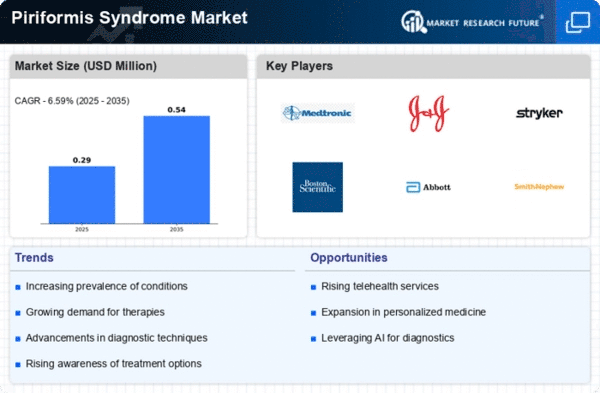
As per MRFR analysis, the Piriformis Syndrome Market Size was estimated at 0.268 USD Million in 2024. The Piriformis Syndrome industry is projected to grow from 0.289 in 2025 to 0.544 by 2035, exhibiting a compound annual growth rate (CAGR) of 6.59 during the forecast period 2025 - 2035.

Key Market Trends & Highlights

The Piriformis Syndrome Market is experiencing notable growth driven by increased awareness and advancements in treatment options.

  • North America remains the largest market for Piriformis Syndrome, driven by rising healthcare expenditure and patient education.
  • The Asia-Pacific region is emerging as the fastest-growing market, fueled by increasing incidence rates and demand for innovative treatment solutions.
  • Physical therapy continues to dominate the market segment, while medication is rapidly gaining traction as a preferred treatment option.
  • Key market drivers include the growing demand for non-invasive treatment options and advancements in diagnostic techniques, which are enhancing patient outcomes.

Market Size & Forecast

2024 Market Size 0.268 (USD Million)
2035 Market Size 0.544 (USD Million)
CAGR (2025 - 2035) 6.59%
Largest Regional Market Share in 2024 North America

Major Players

<p>Medtronic (US), Johnson & Johnson (US), Stryker (US), Boston Scientific (US), Abbott Laboratories (US), Baxter International (US), Smith & Nephew (GB), Zimmer Biomet (US), NuVasive (US)</p>

Market Trends

The Piriformis Syndrome Market is currently experiencing a notable evolution, driven by a growing awareness of the condition and its impact on individuals' quality of life. This syndrome, characterized by pain in the buttocks and potential nerve compression, has garnered increased attention from healthcare professionals and patients alike. As a result, there is a rising demand for effective treatment options, including physical therapy, medications, and innovative surgical techniques. The market appears to be expanding as more individuals seek relief from symptoms, leading to a broader range of therapeutic solutions being developed and offered. Moreover, advancements in diagnostic tools and techniques are likely to enhance the identification of Piriformis Syndrome, thereby facilitating timely intervention. The integration of technology in treatment modalities, such as telehealth services and mobile health applications, seems to be reshaping patient engagement and management strategies. This shift may contribute to a more personalized approach to care, allowing for tailored treatment plans that address individual needs. Overall, the Piriformis Syndrome Market is poised for growth, reflecting a combination of increased awareness, technological innovation, and a commitment to improving patient outcomes.

Rising Awareness and Diagnosis

There is a growing recognition of Piriformis Syndrome among both healthcare providers and patients. This heightened awareness is leading to more accurate diagnoses and a subsequent increase in demand for treatment options. As individuals become more informed about their symptoms, they are more likely to seek medical advice, thereby driving market growth.

Technological Advancements in Treatment

Innovations in medical technology are influencing the Piriformis Syndrome Market. New treatment modalities, including minimally invasive surgical techniques and advanced physical therapy methods, are emerging. These advancements not only improve patient outcomes but also attract more individuals seeking effective solutions for their condition.

Integration of Telehealth Services

The incorporation of telehealth into the management of Piriformis Syndrome is becoming increasingly prevalent. This trend allows patients to access care remotely, enhancing convenience and potentially increasing adherence to treatment plans. As telehealth continues to evolve, it may play a crucial role in expanding access to care for those affected by this syndrome.

Piriformis Syndrome Market Market Drivers

Market Growth Projections

The Global Piriformis Syndrome Market Industry is projected to experience substantial growth over the next decade. With an estimated market value of 171.9 USD Million in 2024, the industry is expected to reach 330.0 USD Million by 2035. This growth trajectory suggests a compound annual growth rate of 6.11% from 2025 to 2035. Such projections indicate a robust demand for effective treatment options and highlight the increasing recognition of Piriformis Syndrome Market as a significant health concern. The market's expansion reflects the ongoing efforts to improve patient care and enhance treatment modalities.

Increased Awareness and Diagnosis

The growing awareness of Piriformis Syndrome Market among healthcare professionals and the general public is a significant driver for the Global Piriformis Syndrome Market Industry. Enhanced education and training for clinicians lead to more accurate diagnoses, which in turn encourages patients to seek treatment. Public health campaigns and resources available online contribute to this awareness, helping individuals recognize symptoms earlier. As a result, the market is likely to see an increase in demand for diagnostic tools and therapeutic interventions. This heightened awareness is expected to support the market's growth trajectory, with projections indicating a rise to 330.0 USD Million by 2035.

Integration of Telehealth Services

The integration of telehealth services into the management of Piriformis Syndrome Market is transforming the Global Piriformis Syndrome Market Industry. Telehealth offers patients convenient access to healthcare professionals, particularly for those in remote areas or with mobility challenges. This shift not only enhances patient engagement but also facilitates timely diagnosis and treatment. As telehealth continues to gain traction, it is likely to expand the reach of healthcare providers and improve patient outcomes. The ongoing evolution of telehealth services may further stimulate market growth, as more patients utilize these platforms for managing their conditions.

Advancements in Treatment Modalities

Innovations in treatment options for Piriformis Syndrome Market are propelling the Global Piriformis Syndrome Market Industry forward. Recent advancements include minimally invasive surgical techniques, physical therapy, and the use of targeted injections. These developments enhance patient outcomes and reduce recovery times, making treatment more appealing. Furthermore, the introduction of new therapeutic devices and medications is likely to improve the management of this condition. As the market evolves, it is anticipated that the Global Piriformis Syndrome Market will experience a compound annual growth rate of 6.11% from 2025 to 2035, driven by these advancements.

Rising Prevalence of Piriformis Syndrome

The increasing incidence of Piriformis Syndrome Market is a notable driver for the Global Piriformis Syndrome Market Industry. Factors such as sedentary lifestyles and the growing aging population contribute to this trend. Reports indicate that the prevalence of this condition is rising, particularly among individuals engaged in repetitive activities or prolonged sitting. As awareness of this syndrome grows, more patients seek medical intervention, thereby expanding the market. The Global Piriformis Syndrome Market is projected to reach 171.9 USD Million by 2024, reflecting the urgent need for effective treatment options and management strategies.

Growing Demand for Rehabilitation Services

The increasing demand for rehabilitation services for individuals suffering from Piriformis Syndrome Market is a crucial driver for the Global Piriformis Syndrome Market Industry. Rehabilitation programs focusing on physical therapy, exercise regimens, and pain management are becoming more prevalent. This trend is largely influenced by the rising number of patients seeking non-invasive treatment options. As healthcare systems prioritize rehabilitation to improve quality of life, the market is expected to expand significantly. The emphasis on holistic approaches to treatment aligns with the growing preference for personalized care, further supporting the market's development.

Market Segment Insights

By Treatment Type: Physical Therapy (Largest) vs. Medication (Fastest-Growing)

<p>The Piriformis Syndrome market is primarily segmented by treatment type, with Physical Therapy holding the largest share among existing therapies. This modality is highly favored due to its non-invasive nature and the effective relief it provides to patients suffering from this condition. Closely following is the Medication segment, which includes anti-inflammatory drugs and pain relievers, offering significant benefits for acute pain management.</p>

<p>Physical Therapy (Dominant) vs. Medication (Emerging)</p>

<p>Physical Therapy is recognized as the dominant treatment for Piriformis Syndrome, focusing on targeted exercises, stretching, and therapeutic techniques to alleviate pain and improve mobility. Patients often report favorable outcomes, making this approach a preferred choice among healthcare providers. In contrast, the Medication segment is emerging robustly as patients seek quick relief from acute discomfort. This segment encompasses over-the-counter and prescription options, with ongoing innovations and increased physician endorsement driving its popularity in managing Piriformis Syndrome.</p>

By Diagnosis Method: Physical Examination (Largest) vs. MRI Scan (Fastest-Growing)

<p>In the Piriformis Syndrome Market, diagnosis methods such as Physical Examination have established a substantial presence, representing the largest share within this segment. While Physical Examination remains a critical component in assessing the condition's severity, MRI Scans are emerging as the method with the fastest growth rate. Their ability to provide detailed imaging of soft tissues has increased their utilization among healthcare professionals, leading to a notable shift toward advanced diagnostic techniques. The growth trends for diagnosis methods in the Piriformis Syndrome Market are driven by advances in imaging technology and the need for accurate diagnoses. MRI Scans, in particular, are benefiting from technological enhancements, enabling clearer and more precise visualizations. Simultaneously, awareness about the syndrome among practitioners and patients is boosting the adoption of various diagnostic methods, enhancing overall market dynamics and providing diverse options for clinical assessments.</p>

<p>Physical Examination (Dominant) vs. Nerve Conduction Study (Emerging)</p>

<p>The Physical Examination remains the dominant diagnosis method in the Piriformis Syndrome Market due to its accessibility, effectiveness, and cost-efficiency. This traditional method allows healthcare providers to assess the patient's physical condition and identify piriformis syndrome symptoms through basic tests and evaluations. On the other hand, the Nerve Conduction Study is an emerging technique gaining traction in diagnosing nerve-related issues associated with the syndrome. It involves testing the electrical conduction of nerves, helping in identifying nerve entrapment and related conditions. The growing emphasis on comprehensive diagnostic approaches is likely to position the Nerve Conduction Study as a valuable tool in the assessment arsenal for Piriformis Syndrome.</p>

By Patient Demographics: Age Group (Largest) vs. Gender (Fastest-Growing)

<p>In the Piriformis Syndrome Market, the distribution of patient demographics reveals that age group holds the largest share of patients suffering from this condition, primarily affecting individuals aged between 30-50 years. This demographic represents a significant portion of the total market due to their active lifestyles, which can contribute to the onset of piriformis syndrome. Gender also plays a crucial role, with a growing number of women being diagnosed, indicating an increasing recognition of the syndrome's prevalence among female patients.</p>

<p>Age Group (Dominant) vs. Gender (Emerging)</p>

<p>The age group segment, particularly individuals aged 30-50 years, proves to be the dominant force in the Piriformis Syndrome Market due to their higher likelihood of engaging in activities that can lead to irritation of the sciatic nerve. This age bracket is often characterized by physical jobs or hobbies that exacerbate the condition. Meanwhile, the gender segment is emerging, reflecting a noteworthy trend where women, historically underrepresented, are increasingly diagnosed with piriformis syndrome. Awareness and outreach programs are pivotal in identifying and treating this condition in women, leading to expected growth in female patient numbers in the near future.</p>

By Severity Level: Mild (Largest) vs. Severe (Fastest-Growing)

<p>The Piriformis Syndrome market is characterized by varying severity levels, with 'Mild' symptoms commanding the largest market share. This segment appeals to a broad demographic, as individuals often seek early intervention for manageable pain. The distribution among 'Moderate', 'Severe', 'Chronic', and 'Acute' levels reflects the nuanced understanding of patient needs, with 'Moderate' and 'Severe' also capturing significant attention due to their relative prevalence among affected individuals. 'Chronic' and 'Acute' categories, while vital, contribute to a smaller fraction of the market, indicating varied treatment complexities. Growth trends highlight an increasing focus on acute and severe Piriformis Syndrome cases, driven by heightened awareness and advancements in therapeutic options. Factors such as innovative treatment modalities, the rise of specialty clinics, and increased patient education have contributed to the swift growth of the severe category. Furthermore, the chronic nature of some cases continues to necessitate improvements in management strategies, promoting ongoing research and development in targeted therapies.</p>

<p>Mild (Dominant) vs. Severe (Emerging)</p>

<p>The 'Mild' severity level represents a dominant segment in the Piriformis Syndrome market, characterized by lower intensity symptoms that often lead patients to pursue conservative treatment options. Individuals in this category tend to experience occasional discomfort, resulting in a proactive approach to management through physiotherapy and lifestyle adjustments. In contrast, the 'Severe' segment is emerging as a critical focus for healthcare providers, driven by increasing awareness and more comprehensive treatment protocols. Patients experiencing severe symptoms often require more aggressive intervention, potentially including surgical options. This differentiation in severity shapes treatment pathways and patient engagement, influencing the overall market dynamics as stakeholders adapt to the evolving landscape.</p>

By Healthcare Setting: Outpatient Clinic (Largest) vs. Hospital (Fastest-Growing)

<p>The healthcare setting for the Piriformis Syndrome market is diverse, with outpatient clinics holding the largest share of the market. These clinics are pivotal in providing accessible treatments and quick interventions for patients suffering from piriformis syndrome. Hospitals also occupy a significant place in this landscape, but their market share is growing rapidly due to increasing recognition of more complex cases that require comprehensive care and advanced treatment options.</p>

<p>Outpatient Clinic (Dominant) vs. Hospital (Emerging)</p>

<p>Outpatient clinics serve as the dominant setting in the Piriformis Syndrome market, offering targeted interventions and a convenient environment for patients. Their personalized approach and emphasis on non-invasive treatments appeal to many individuals seeking relief. In contrast, hospitals, labeled as an emerging setting, are stepping up their game to cater to the more complex cases of piriformis syndrome. The increase in surgical interventions and integrated care protocols in hospitals is aimed at accommodating patients with multifaceted issues, driving their growth in this market.</p>

Get more detailed insights about Piriformis Syndrome Market Research Report – Forecast to 2035

Regional Insights

North America : Market Leader in Innovation

North America is poised to maintain its leadership in the Piriformis Syndrome market, holding a significant market share of 12% in 2024. The region benefits from advanced healthcare infrastructure, increasing awareness of musculoskeletal disorders, and a growing elderly population. Regulatory support for innovative treatments and technologies further drives market growth, as healthcare providers seek effective solutions for pain management and rehabilitation. The competitive landscape in North America is robust, featuring key players such as Medtronic, Johnson & Johnson, and Stryker. These companies are at the forefront of developing advanced medical devices and therapies tailored for Piriformis Syndrome. The U.S. remains the largest market, supported by a high prevalence of the condition and a strong focus on research and development. This dynamic environment fosters innovation and enhances patient outcomes, solidifying North America's position as a market leader.

Europe : Emerging Market with Growth Potential

Europe is witnessing a growing interest in the Piriformis Syndrome market, with a market share of 8% in 2024. Factors such as an aging population, increased physical activity, and rising healthcare expenditures are driving demand for effective treatment options. Regulatory frameworks in various countries are evolving to support innovative therapies, enhancing patient access to advanced medical solutions and improving overall healthcare outcomes. Leading countries in Europe include Germany, France, and the UK, where healthcare systems are increasingly adopting new technologies. The competitive landscape features prominent players like Smith & Nephew and Zimmer Biomet, who are investing in research and development to address the needs of patients suffering from Piriformis Syndrome. The European market is characterized by a focus on minimally invasive procedures and personalized treatment plans, positioning it for significant growth in the coming years.

Asia-Pacific : Emerging Powerhouse in Healthcare

The Asia-Pacific region is emerging as a significant player in the Piriformis Syndrome market, with a market share of 5% in 2024. Rapid urbanization, increasing disposable incomes, and a growing awareness of healthcare issues are key drivers of market growth. Additionally, government initiatives aimed at improving healthcare infrastructure and access to treatment are expected to further boost demand for effective solutions in managing Piriformis Syndrome. Countries like China, India, and Japan are leading the charge in this region, with a rising prevalence of musculoskeletal disorders. The competitive landscape is evolving, with both local and international players, including Abbott Laboratories and Baxter International, expanding their presence. The focus on innovative therapies and rehabilitation techniques is expected to enhance patient care and drive market growth in the Asia-Pacific region.

Middle East and Africa : Resource-Rich Frontier for Healthcare

The Middle East and Africa region is gradually developing its market for Piriformis Syndrome, holding a market share of 3% in 2024. Factors such as increasing healthcare investments, a growing population, and rising awareness of musculoskeletal disorders are contributing to market growth. Governments are implementing policies to enhance healthcare access and improve treatment options, which is expected to drive demand for effective therapies in the region. Leading countries in this region include South Africa and the UAE, where healthcare systems are evolving to meet the needs of patients. The competitive landscape is still developing, with opportunities for both local and international companies to introduce innovative solutions. As healthcare infrastructure improves, the potential for growth in the Piriformis Syndrome market in the Middle East and Africa is significant, paving the way for future advancements in patient care.

Key Players and Competitive Insights

The Piriformis Syndrome Market is characterized by a competitive landscape that is increasingly shaped by innovation, strategic partnerships, and a focus on patient-centric solutions. Key players such as Medtronic (US), Johnson & Johnson (US), and Stryker (US) are actively engaged in enhancing their product offerings and expanding their market presence. Medtronic (US) has positioned itself as a leader in neuromodulation therapies, which are crucial for managing pain associated with Piriformis Syndrome. Meanwhile, Johnson & Johnson (US) emphasizes a diversified portfolio that includes surgical instruments and advanced imaging technologies, thereby catering to a broad spectrum of healthcare needs. Stryker (US) focuses on integrating digital health solutions into its surgical products, which appears to enhance operational efficiency and patient outcomes. Collectively, these strategies contribute to a dynamic competitive environment where innovation and operational excellence are paramount.

In terms of business tactics, companies are increasingly localizing manufacturing to reduce costs and improve supply chain resilience. This approach is particularly relevant in the context of the Piriformis Syndrome Market, which is moderately fragmented, with several players vying for market share. The collective influence of these key players is significant, as they not only drive technological advancements but also set industry standards that smaller companies may follow. The competitive structure is evolving, with larger firms leveraging their resources to optimize supply chains and enhance product accessibility.

In November 2025, Medtronic (US) announced a strategic partnership with a leading telehealth provider to integrate remote monitoring capabilities into its pain management solutions. This move is likely to enhance patient engagement and adherence to treatment protocols, thereby improving overall outcomes for individuals suffering from Piriformis Syndrome. The integration of telehealth services reflects a broader trend towards digital health solutions, which are becoming increasingly vital in managing chronic conditions.

In October 2025, Johnson & Johnson (US) launched a new line of minimally invasive surgical instruments specifically designed for procedures related to Piriformis Syndrome. This product launch is significant as it not only expands their existing portfolio but also addresses the growing demand for less invasive treatment options. By focusing on innovation in surgical technology, Johnson & Johnson (US) is likely to strengthen its competitive position in the market.

In September 2025, Stryker (US) unveiled a new AI-driven analytics platform aimed at optimizing surgical workflows and improving patient outcomes in Piriformis Syndrome surgeries. This strategic initiative underscores the increasing importance of artificial intelligence in healthcare, as it enables more precise decision-making and enhances operational efficiency. Stryker's commitment to integrating advanced technologies into its offerings may provide a competitive edge in a rapidly evolving market.

As of December 2025, the Piriformis Syndrome Market is witnessing trends that emphasize digitalization, sustainability, and the integration of AI technologies. Strategic alliances among key players are shaping the competitive landscape, fostering innovation and enhancing service delivery. The shift from price-based competition to a focus on technological advancement and supply chain reliability is evident. Moving forward, competitive differentiation will likely hinge on the ability to innovate and adapt to changing market dynamics, with a strong emphasis on patient-centric solutions and operational excellence.

Key Companies in the Piriformis Syndrome Market market include

Industry Developments

Future Outlook

Piriformis Syndrome Market Future Outlook

<p>The Piriformis Syndrome Market is projected to grow at a 6.59% CAGR from 2024 to 2035, driven by increasing awareness, innovative treatment options, and rising healthcare expenditures.</p>

New opportunities lie in:

  • <p>Development of telehealth platforms for remote consultations and treatment plans.</p>
  • <p>Investment in targeted physical therapy programs tailored for Piriformis Syndrome patients.</p>
  • <p>Creation of specialized ergonomic products to alleviate symptoms in workplaces.</p>

<p>By 2035, the Piriformis Syndrome Market is expected to be robust, reflecting significant growth and innovation.</p>

Market Segmentation

Piriformis Syndrome Market Severity Level Outlook

  • Mild
  • Moderate
  • Severe
  • Chronic
  • Acute

Piriformis Syndrome Market Treatment Type Outlook

  • Physical Therapy
  • Medication
  • Surgery
  • Chiropractic Care
  • Massage Therapy

Piriformis Syndrome Market Diagnosis Method Outlook

  • Physical Examination
  • MRI Scan
  • Ultrasound
  • X-ray
  • Nerve Conduction Study

Piriformis Syndrome Market Healthcare Setting Outlook

  • Outpatient Clinic
  • Hospital
  • Rehabilitation Center
  • Home Care
  • Sports Facility

Piriformis Syndrome Market Patient Demographics Outlook

  • Age Group
  • Gender
  • Activity Level
  • Occupation
  • Health Status

Report Scope

MARKET SIZE 20240.268(USD Million)
MARKET SIZE 20250.289(USD Million)
MARKET SIZE 20350.544(USD Million)
COMPOUND ANNUAL GROWTH RATE (CAGR)6.59% (2024 - 2035)
REPORT COVERAGERevenue Forecast, Competitive Landscape, Growth Factors, and Trends
BASE YEAR2024
Market Forecast Period2025 - 2035
Historical Data2019 - 2024
Market Forecast UnitsUSD Million
Key Companies ProfiledMedtronic (US), Johnson & Johnson (US), Stryker (US), Boston Scientific (US), Abbott Laboratories (US), Baxter International (US), Smith & Nephew (GB), Zimmer Biomet (US), NuVasive (US)
Segments CoveredTreatment Type, Diagnosis Method, Patient Demographics, Severity Level, Healthcare Setting
Key Market OpportunitiesAdvancements in non-invasive treatment options for Piriformis Syndrome enhance patient outcomes and market potential.
Key Market DynamicsRising demand for non-invasive treatment options drives innovation in the Piriformis Syndrome market.
Countries CoveredNorth America, Europe, APAC, South America, MEA

FAQs

What would be the CAGR of the piriformis syndrome market during the forecast period (2020-2027)?

The expected CAGR would be 6.10% for piriformis syndrome market.

What are the major piriformis syndrome market drivers?

Major piriformis syndrome market drivers are increasing screening, rising safety and success of drug treatments, the occurrences of piriformis syndrome, and the growing geriatric population.

What are the treatments included in the piriformis syndrome market study?

The piriformis syndrome market study would include surgery, physical therapy, medication, prolotherapy, acupuncture, Osteopathic Manipulative Treatment (OMT), and others.

What are the distribution channels included in the piriformis syndrome market study?

Piriformis syndrome market study includes diagnostic centers, hospitals and clinics, and others.

What are the distribution channels mentioned in the piriformis syndrome market study?

The distribution channels are retail pharmacies, E-commerce, and others in piriformis syndrome market study.

  1. Definition
    1. Scope of the Study
      1. Research Objective
      2. Assumptions
      3. Limitations
    2. Introduction
    3. Primary Research
    4. Secondary Research
    5. Market Size Estimation
    6. Drivers
    7. Restraints
    8. Opportunities
    9. Challenges
    10. Macroeconomic Indicators
    11. Technology Trends & Assessment
    12. Porter’s Five Forces Analysis
      1. Bargaining Power of Suppliers
      2. Bargaining Power of Buyers
      3. Threat of New Entrants
      4. Threat of Substitutes
      5. Intensity of Rivalry
    13. Value Chain Analysis
    14. Investment Feasibility Analysis
    15. Pricing Analysis
  2. Chapter 6. Global Piriformis Syndrome Market, by Cause
    1. Introduction
    2. Trauma
  3. Market Estimates & Forecast, by Region, 2020–2027
  4. Market Estimates & Forecast, by Country, 2020–2027
    1. Spasms
  5. Market Estimates & Forecast, by Region, 2020–2027
  6. Market Estimates & Forecast, by Country, 2020–2027
    1. Overuse Injury
  7. Market Estimates & Forecast, by Region, 2020–2027
  8. Market Estimates & Forecast, by Country, 2020–2027
    1. Others
  9. Market Estimates & Forecast, by Region, 2020–2027
  10. Market Estimates & Forecast, by Country, 2020–2027
  11. Chapter 7. Global Piriformis Syndrome Market, by Diagnostic Test
    1. Introduction
    2. Magnetic Resonance Imaging (MRI)
  12. Market Estimates & Forecast, by Region, 2020–2027
  13. Market Estimates & Forecast, by Country, 2020–2027
    1. Computed Tomography (CT)
  14. Market Estimates & Forecast, by Region, 2020–2027
  15. Market Estimates & Forecast, by Country, 2020–2027
    1. X-rays
  16. Market Estimates & Forecast, by Region, 2020–2027
  17. Market Estimates & Forecast, by Country, 2020–2027
    1. Neurophysiologic Testing
  18. Market Estimates & Forecast, by Region, 2020–2027
  19. Market Estimates & Forecast, by Country, 2020–2027
    1. Electromyography (EMG)
  20. Market Estimates & Forecast, by Region, 2020–2027
  21. Market Estimates & Forecast, by Country, 2020–2027
    1. Beatty Test
  22. Market Estimates & Forecast, by Region, 2020–2027
  23. Market Estimates & Forecast, by Country, 2020–2027
    1. FAIR (Flexion, adduction, and Internal Rotation) Test
  24. Market Estimates & Forecast, by Region, 2020–2027
  25. Market Estimates & Forecast, by Country, 2020–2027
    1. Others
  26. Market Estimates & Forecast, by Region, 2020–2027
  27. Market Estimates & Forecast, by Country, 2020–2027
  28. Chapter 8. Global Piriformis Syndrome Market, by Treatment
    1. Introduction
    2. Medications
      1. NSAIDs
  29. Market Estimates & Forecast, by Region, 2020–2027
  30. Market Estimates & Forecast, by Country, 2020–2027
  31. Ibuprofen
  32. Market Estimates & Forecast, by Region, 2020–2027
  33. Market Estimates & Forecast, by Country, 2020–2027
  34. Others
  35. Market Estimates & Forecast, by Region, 2020–2027
  36. Market Estimates & Forecast, by Country, 2020–2027
  37. Piriformis Muscle Injection
  38. Botox Injection
  39. Market Estimates & Forecast, by Region, 2020–2027
  40. Market Estimates & Forecast, by Country, 2020–2027
  41. Steroid Injection
  42. Market Estimates & Forecast, by Region, 2020–2027
  43. Market Estimates & Forecast, by Country, 2020–2027
  44. Others
  45. Market Estimates & Forecast, by Region, 2020–2027
  46. Market Estimates & Forecast, by Country, 2020–2027
    1. Physical Therapy
  47. Market Estimates & Forecast, by Region, 2020–2027
  48. Market Estimates & Forecast, by Country, 2020–2027
    1. Acupuncture
  49. Market Estimates & Forecast, by Region, 2020–2027
  50. Market Estimates & Forecast, by Country, 2020–2027
    1. Prolotherapy
  51. Market Estimates & Forecast, by Region, 2020–2027
  52. Market Estimates & Forecast, by Country, 2020–2027
    1. Osteopathic Manipulative Treatment (OMT)
  53. Market Estimates & Forecast, by Region, 2020–2027
  54. Market Estimates & Forecast, by Country, 2020–2027
    1. Surgery
  55. Market Estimates & Forecast, by Region, 2020–2027
  56. Market Estimates & Forecast, by Country, 2020–2027
    1. Others
  57. Market Estimates & Forecast, by Region, 2020–2027
  58. Market Estimates & Forecast, by Country, 2020–2027
  59. Chapter 9. Global Piriformis Syndrome Market, by Distribution Channel
    1. Introduction
    2. E-Commerce
  60. Market Estimates & Forecast, by Region, 2020–2027
  61. Market Estimates & Forecast, by Country, 2020–2027
    1. Retail Pharmacies
  62. Market Estimates & Forecast, by Region, 2020–2027
  63. Market Estimates & Forecast, by Country, 2020–2027
    1. Others
  64. Market Estimates & Forecast, by Region, 2020–2027
  65. Market Estimates & Forecast, by Country, 2020–2027
  66. Chapter 10. Global Piriformis Syndrome Market, by End-User
    1. Introduction
    2. Hospitals and Clinics
  67. Market Estimates & Forecast, by Region, 2020–2027
  68. Market Estimates & Forecast, by Country, 2020–2027
    1. Diagnostic Centers
  69. Market Estimates & Forecast, by Region, 2020–2027
  70. Market Estimates & Forecast, by Country, 2020–2027
    1. Others
  71. Market Estimates & Forecast, by Region, 2020–2027
  72. Market Estimates & Forecast, by Country, 2020–2027
  73. Chapter 11. Global Piriformis Syndrome Market, by Region
    1. Introduction
    2. Americas
      1. North America
      2. South America
    3. Europe
      1. Western Europe
      2. Eastern Europe
    4. Asia-Pacific
      1. Japan
      2. China
      3. India
      4. Australia
      5. Republic of Korea
      6. Rest of Asia-Pacific
    5. The Middle East & Africa
      1. The Middle East
      2. Africa
    6. Chapter 12. Company Landscape
    7. Introduction
    8. Market Share Analysis
    9. Key Development & Strategies
    10. Chapter 13. Company Profiles
    11. Bayer AG
      1. Company Overview
      2. Product Overview
      3. Financials Overview
      4. Key Developments
      5. SWOT Analysis
    12. Novartis AG
      1. Company Overview
      2. Product Overview
      3. Financial Overview
      4. Key Developments
      5. SWOT Analysis
    13. AstraZeneca
      1. Company Overview
      2. Product Overview
      3. Financial Overview
      4. Key Development
      5. SWOT Analysis
    14. Endo Pharmaceuticals
      1. Company Overview
      2. Technology/Business Segment Overview
      3. Financial Overview
      4. Key Development
      5. SWOT Analysis
    15. Teva Pharmaceuticals
      1. Company Overview
      2. Product Overview
      3. Financial overview
      4. Key Developments
      5. SWOT Analysis
    16. Omron Healthcare
      1. Company Overview
      2. Product Overview
      3. Financial Overview
      4. Key Developments
      5. SWOT Analysis
    17. Sanofi S.A.
      1. Overview
      2. Product Overview
      3. Financial Overview
      4. Key Developments
      5. SWOT Analysis
    18. DePuy Synthes Companies
      1. Overview
      2. Product/ Technology Overview
      3. Financials
      4. Key Developments
      5. SWOT Analysis
    19. Miracle Stretch, LLC
      1. Overview
      2. Product Overview
      3. Financials
      4. Key Developments
      5. SWOT Analysis
    20. Flex Pharma, Inc.
      1. Overview
      2. Product Overview
      3. Financials
      4. Key Developments
      5. SWOT Analysis
    21. Nidd Valley Medical
      1. Overview
      2. Product Overview
      3. Financials
      4. Key Developments
      5. SWOT Analysis
    22. SEIRIN Corporation
      1. Overview
      2. Product Overview
      3. Financials
      4. Key Developments
      5. SWOT Analysis
    23. Others
      1. Overview
      2. Product Overview
      3. Financials
      4. Key Developments
      5. SWOT Analysis
    24. Chapter 14 MRFR Conclusion
    25. Key Findings
      1. From CEO’s View Point
      2. Unmet Needs of the Market
    26. Key Companies to Watch
    27. Prediction of the Global Piriformis Syndrome Industry
    28. Chapter 15 Appendix
  74. LIST OF TABLES
  75. Global Piriformis Syndrome Market Synopsis, 2020–2027
  76. Global Piriformis Syndrome Market Estimates and Forecast, 2020–2027, (USD Million)
  77. Global Piriformis Syndrome Market, by Region, 2020–2027, (USD Million)
  78. Global Piriformis Syndrome Market, by Cause, 2020–2027, (USD Million)
  79. Global Piriformis Syndrome Market, by Diagnostic Test, 2020–2027, (USD Million)
  80. Global Piriformis Syndrome Market, by Treatment, 2020–2027, (USD Million)
  81. Global Piriformis Syndrome Market, by Distribution Channel, 2020–2027, (USD Million)
  82. Global Piriformis Syndrome Market, by End-User, 2020–2027, (USD Million)
  83. North America Piriformis Syndrome Market, by Cause, 2020–2027, (USD
    1. Million)
  84. North America Piriformis Syndrome Market, by Diagnostic Test, 2020–2027, (USD
    1. Million)
  85. North America Piriformis Syndrome Market, by Treatment, 2020–2027, (USD
    1. Million)
  86. North America Piriformis Syndrome Market, by Distribution Channel, 2020–2027, (USD
    1. Million)
  87. North America Piriformis Syndrome Market, by End-User, 2020–2027, (USD
    1. Million)
  88. US Piriformis Syndrome Market, by Cause, 2020–2027, (USD Million)
  89. US Piriformis Syndrome Market, by Diagnostic Test, 2020–2027, (USD Million)
  90. US Piriformis Syndrome Market, by Treatment, 2020–2027, (USD Million)
  91. US Piriformis Syndrome Market, by Distribution Channel, 2020–2027, (USD Million)
  92. US Piriformis Syndrome Market, by End-User, 2020–2027, (USD Million)
  93. Canada Piriformis Syndrome Market, by Cause, 2020–2027, (USD Million)
  94. Canada Piriformis Syndrome Market, by Diagnostic Test, 2020–2027, (USD Million)
  95. Canada Piriformis Syndrome Market, by Treatment, 2020–2027, (USD Million)
  96. Canada Piriformis Syndrome Market, by Distribution Channel, 2020–2027, (USD Million)
  97. Canada Piriformis Syndrome Market, by End-User, 2020–2027, (USD Million)
  98. South America Piriformis Syndrome Market, by Cause, 2020–2027, (USD Million)
  99. South America Piriformis Syndrome Market, by Diagnostic Test, 2020–2027, (USD
    1. Million)
  100. South America Piriformis Syndrome Market, by Treatment, 2020–2027, (USD
    1. Million)
  101. South America Piriformis Syndrome Market, by Distribution Channel, 2020–2027,
    1. (USD Million)
  102. South America Piriformis Syndrome Market, by End-User, 2020–2027, (USD
    1. Million)
  103. Europe Piriformis Syndrome Market, by Cause, 2020–2027, (USD Million)
  104. Europe Piriformis Syndrome Market, by Diagnostic Test, 2020–2027, (USD Million)
  105. Europe Piriformis Syndrome Market, by Treatment, 2020–2027, (USD Million)
  106. Europe Piriformis Syndrome Market, by Distribution Channel, 2020–2027, (USD
    1. Million)
  107. Europe Piriformis Syndrome Market, by End-User, 2020–2027, (USD Million)
  108. Western Europe Piriformis Syndrome Market, by Cause, 2020–2027, (USD
    1. Million)
  109. Western Europe Piriformis Syndrome Market, by Diagnostic Test, 2020–2027, (USD
    1. Million)
  110. Western Europe Piriformis Syndrome Market, by Treatment, 2020–2027,
    1. (USD Million)
  111. Western Europe Piriformis Syndrome Market, by Distribution Channel, 2020–2027,
    1. (USD Million)
  112. Western Europe Piriformis Syndrome Market, by End-User, 2020–2027, (USD
    1. Million)
  113. Eastern Europe Piriformis Syndrome Market, by Cause, 2020–2027, (USD
    1. Million)
  114. Eastern Europe Piriformis Syndrome Market, by Diagnostic Test, 2020–2027, (USD
    1. Million)
  115. Eastern Europe Piriformis Syndrome Market, by Treatment, 2020–2027,
    1. (USD Million)
  116. Eastern Europe Piriformis Syndrome Market, by Distribution Channel, 2020–2027,
    1. (USD Million)
  117. Eastern Europe Piriformis Syndrome Market, by End-User, 2020–2027, (USD
    1. Million)
  118. Asia-Pacific Piriformis Syndrome Market, by Cause, 2020–2027, (USD
    1. Million)
  119. Asia-Pacific Piriformis Syndrome Market, by Diagnostic Test, 2020–2027, (USD
    1. Million)
  120. Asia-Pacific Piriformis Syndrome Market, by Treatment, 2020–2027, (USD
    1. Million)
  121. Asia-Pacific Piriformis Syndrome Market, by Distribution Channel, 2020–2027, (USD
    1. Million)
  122. Asia-Pacific Piriformis Syndrome Market, by End-User, 2020–2027, (USD Million)
  123. Middle East & Africa Piriformis Syndrome Market, by Cause, 2020–2027,
    1. (USD Million)
  124. Middle East & Africa Piriformis Syndrome Market, by Diagnostic Test, 2020–2027,
    1. (USD Million)
  125. Middle East & Africa Piriformis Syndrome Market, by Treatment, 2020–2027,
    1. (USD Million)
  126. Middle East & Africa Piriformis Syndrome Market, by Distribution Channel, 2020–2027,
    1. (USD Million)
  127. Middle East & Africa Piriformis Syndrome Market, by End-User, 2020–2027, (USD
    1. Million)
  128. LIST OF FIGURES
  129. Research Process
  130. Segmentation for Global Piriformis Syndrome Market
  131. Segmentation Market Dynamics for Global Piriformis Syndrome Market
  132. Global Piriformis Syndrome Market Share, by Cause, 2020
  133. Global Piriformis Syndrome Market Share, by Diagnostic Test, 2020
  134. Global Piriformis Syndrome Market Share, by Treatment, 2020
  135. Global Piriformis Syndrome Market Share, by Distribution Channel, 2020
  136. Global Piriformis Syndrome Market Share, by End-User, 2020
  137. Global Piriformis Syndrome Market Share, by Region, 2020
  138. North America Piriformis Syndrome Market Share, by Country, 2020
  139. Europe Piriformis Syndrome Market Share, by Country, 2020
  140. Asia-Pacific Piriformis Syndrome Market Share, by Country, 2020
  141. Middle East & Africa Piriformis Syndrome Market Share, by Country, 2020
  142. Global Piriformis Syndrome Market: Company Share Analysis, 2020 (%)
  143. Bayer AG: Key Financials
  144. Bayer AG: Segmental Revenue
  145. Bayer AG: Geographical Revenue
  146. Novartis AG: Key Financials
  147. Novartis AG: Segmental Revenue
  148. Novartis AG: Geographical Revenue
  149. AstraZeneca:: Key Financials
  150. AstraZeneca: Segmental Revenue
  151. AstraZeneca: Geographical Revenue
  152. Endo Pharmaceuticals: Key Financials
  153. Endo Pharmaceuticals: Segmental Revenue
  154. Endo Pharmaceuticals: Geographical Revenue
  155. Teva Pharmaceuticals: Key Financials
  156. Teva Pharmaceuticals: Segmental Revenue
  157. Teva Pharmaceuticals. Geographical Revenue
  158. Omron Healthcare: Key Financials
  159. Omron Healthcare: Segmental Revenue
  160. Omron Healthcare: Geographical Revenue
  161. Sanofi S.A.: Key Financials
  162. Sanofi S.A.: Segmental Revenue
  163. Sanofi S.A.: Geographical Revenue
  164. DePuy Synthes Companies: Key Financials
  165. DePuy Synthes Companies: Segmental Revenue
  166. DePuy Synthes Companies: Geographical Revenue
  167. Miracle Stretch, LLC: Key Financials
  168. Miracle Stretch, LLC: Segmental Revenue
  169. Miracle Stretch, LLC: Geographical Revenue
  170. Flex Pharma, Inc.: Key Financials
  171. Flex Pharma, Inc.: Segmental Revenue
  172. Flex Pharma, Inc.: Geographical Revenue
  173. Nidd Valley Medical: Key Financials
  174. Nidd Valley Medical Segmental Revenue
  175. Nidd Valley Medical: Geographical Revenue
  176. SEIRIN Corporation: Key Financials
  177. SEIRIN Corporation: Segmental Revenue
  178. SEIRIN Corporation: Geographical Revenue

Piriformis Syndrome Market Segmentation

Market Segmentation Overview

  • Detailed segmentation data will be available in the full report
  • Comprehensive analysis by multiple parameters
  • Regional and country-level breakdowns
  • Market size forecasts by segment
Infographic

Free Sample Request

Kindly complete the form below to receive a free sample of this Report

Get Free Sample

Customer Strories

Compare Licence

×
Features License Type
Single User Multiuser License Enterprise User
Price $4,950 $5,950 $7,250
Maximum User Access Limit 1 User Upto 10 Users Unrestricted Access Throughout the Organization
Free Customization
Direct Access to Analyst
Deliverable Format
Platform Access
Discount on Next Purchase 10% 15% 15%
Printable Versions