×
Request Free Sample ×

Kindly complete the form below to receive a free sample of this Report

* Please use a valid business email

Leading companies partner with us for data-driven Insights

clients tt-cursor
Hero Background

Elastomeric Membrane Market

ID: MRFR/CnM/8443-HCR
111 Pages
Snehal Singh
October 2025

Elastomeric Membrane Market Research Report By Membrane Type (Polyisobutylene Elastomers, Neoprene Elastomers, Ethylene Propylene Diene Monomer Elastomers, Chlorosulfonated Polyethylene Elastomers, Hypalon Elastomers), By Application (Roofing, Waterproofing, Flashing, Air and Vapor Barriers), By End-Use Industry (Residential, Commercial, Industrial), By Reinforcement (Fabric-Reinforced, Scrim-Reinforced, Unreinforced) and By Regional (North America, Europe, South America, Asia Pacific, Middle East and Africa) - Forecast to 2035

Share:
Download PDF ×

We do not share your information with anyone. However, we may send you emails based on your report interest from time to time. You may contact us at any time to opt-out.

Elastomeric Membrane Market Infographic
Purchase Options

Elastomeric Membrane Market Summary

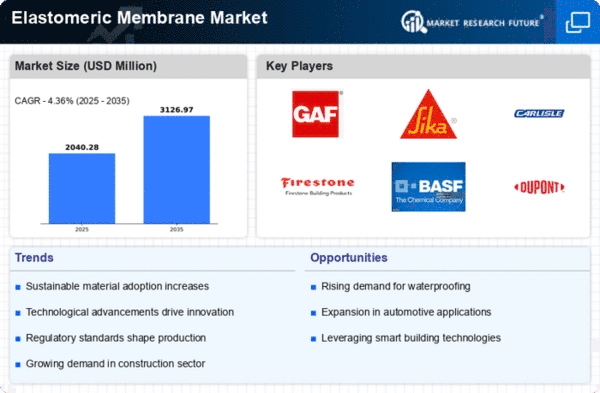
As per MRFR analysis, the Elastomeric Membrane Market Size was estimated at 1955.04 USD Million in 2024. The Elastomeric Membrane industry is projected to grow from 2040.32 in 2025 to 3126.97 by 2035, exhibiting a compound annual growth rate (CAGR) of 4.36 during the forecast period 2025 - 2035.

Key Market Trends & Highlights

The elastomeric membrane market is poised for robust growth driven by sustainability and technological advancements.

  • The North American region remains the largest market for elastomeric membranes, primarily due to its extensive construction activities.
  • Asia-Pacific is emerging as the fastest-growing region, fueled by rapid urbanization and increasing infrastructure investments.
  • The roofing segment continues to dominate the market, while the waterproofing segment is witnessing the fastest growth due to heightened demand for effective moisture management.
  • Sustainability initiatives and technological innovations are key drivers propelling the market forward, particularly in construction and automotive applications.

Market Size & Forecast

2024 Market Size 1955.04 (USD Million)
2035 Market Size 3126.97 (USD Million)
CAGR (2025 - 2035) 4.36%

Major Players

GAF Materials Corporation (US), Sika AG (CH), Carlisle Companies Incorporated (US), Firestone Building Products Company (US), BASF SE (DE), Henry Company (US), Versico Roofing Systems (US), Johns Manville (US), DuPont de Nemours, Inc. (US)

Elastomeric Membrane Market Trends

The Elastomeric Membrane Market is currently experiencing a notable transformation, driven by a confluence of factors that are reshaping its landscape. The increasing demand for durable and flexible materials across various industries, including construction, automotive, and electronics, appears to be a primary catalyst for growth. Furthermore, the rising emphasis on sustainable building practices and energy-efficient solutions suggests a shift towards materials that not only perform well but also contribute to environmental conservation. This trend is likely to encourage manufacturers to innovate and develop advanced elastomeric membranes that meet stringent regulatory standards while providing enhanced performance characteristics. In addition, the ongoing advancements in polymer technology seem to play a crucial role in expanding the applications of elastomeric membranes. As industries seek to improve product longevity and reduce maintenance costs, the versatility of these membranes is increasingly recognized. Moreover, the growing awareness of the benefits associated with waterproofing and weatherproofing solutions indicates a potential increase in market penetration. Overall, the Elastomeric Membrane Market is poised for continued evolution, with emerging technologies and changing consumer preferences likely to shape its future trajectory.

Sustainability Focus

The growing emphasis on sustainable practices is influencing the Elastomeric Membrane Market. Manufacturers are increasingly developing eco-friendly products that align with environmental regulations and consumer preferences for greener solutions.

Technological Advancements

Innovations in polymer technology are expanding the applications of elastomeric membranes. Enhanced performance characteristics and durability are becoming key selling points, attracting diverse industries to adopt these materials.

Rising Demand in Construction

The construction sector's demand for high-performance materials is driving growth in the Elastomeric Membrane Market. Waterproofing and weatherproofing solutions are particularly sought after, reflecting a trend towards improved building longevity.

Elastomeric Membrane Market Drivers

Rising Demand for Sustainable Construction Materials

The Global Elastomeric Membrane Market Industry is experiencing a notable shift towards sustainable construction materials. As environmental regulations tighten, builders are increasingly opting for elastomeric membranes due to their durability and energy efficiency. These membranes not only provide superior waterproofing but also contribute to energy savings in buildings. For instance, the use of elastomeric membranes can reduce energy consumption by up to 30% in roofing applications. This trend is expected to drive the market's growth, with the industry projected to reach 1.96 USD Billion in 2024, reflecting a growing preference for eco-friendly solutions.

Market Segment Insights

By Application: Roofing (Largest) vs. Waterproofing (Fastest-Growing)

The Elastomeric Membrane Market is characterized by a diverse range of applications including roofing, waterproofing, pavement, membrane structures, and automotive sectors. Among these, roofing holds the largest share due to its widespread use in commercial and residential buildings. Waterproofing follows closely, gaining traction due to growing concerns over leaks and water damage in various structures, thus driving increased investment in waterproofing solutions in recent years.

Waterproofing: Dominant vs. Automotive: Emerging

Waterproofing within the Elastomeric Membrane Market is recognized as the dominant application, bolstered by increasing regulatory requirements for construction integrity and performance standards. This segment supports not only residential buildings but also infrastructure projects, aligning with green building practices for sustainability. Conversely, the automotive application is considered emerging, characterized by rising trends in electric vehicles and advancements in automotive design, which demand lightweight yet durable materials. The automotive sector attracts innovations focusing on enhancing vehicle efficiency and performance while leveraging the benefits of elastomeric membranes in sealing and insulation.

By End Use: Construction (Largest) vs. Automotive (Fastest-Growing)

In the Elastomeric Membrane Market, the distribution of market share reveals that the construction sector holds the largest portion, driven by the increasing demand for durable, weather-resistant materials for roofing and waterproofing applications. The automotive and aerospace industries are also significant contributors but occupy smaller portions of the overall market share. Industrial applications further diversify the demand, placing the marine sector in a niche position among the key end-use categories, as each end-use segment continues to respond dynamically to evolving technological innovations and market needs.

Construction: Dominant vs. Automotive: Emerging

The construction sector is characterized by its vast need for durable elastomeric membranes, which enhance the longevity and performance of structures through superior waterproofing and thermal insulation properties. Dominating the market, construction applications make extensive use of these membranes in roofing systems, facades, and other critical structural components. In contrast, the automotive end-use segment is emerging rapidly, driven by a growing demand for lightweight, flexible materials that improve vehicle efficiency and performance. This increasing trend for enhanced fuel economy and reduced emissions in the automotive sector is propelling elastomeric membranes to the forefront of innovation and application, paving the way for notable growth in this segment.

By Material Type: Thermoplastic Polyurethane (Largest) vs. Silicone (Fastest-Growing)

In the Elastomeric Membrane Market, the material type segment is characterized by a competitive distribution among various materials. Thermoplastic Polyurethane (TPU) currently holds the largest market share due to its versatility and superior performance attributes in various applications, including roofing and automotive sectors. Other materials like Polyvinyl Chloride (PVC) and Silicone also play significant roles, with Silicone witnessing a notable increase in adoption, primarily due to its excellent weather-resistant properties and eco-friendly formulations.

Thermoplastic Polyurethane (Dominant) vs. Silicone (Emerging)

Thermoplastic Polyurethane stands out as the dominant material in the elastomeric membrane segment, renowned for its outstanding elasticity, transparency, and resistance to oil, grease, and abrasion. Its wide range of applications includes roofing, automotive interiors, and waterproofing, providing strong durability and a balanced cost-performance ratio. In contrast, Silicone membranes are emerging rapidly due to their outstanding resilience against extreme temperatures and UV radiation. This makes them ideal for a variety of outdoor applications. Furthermore, the increasing demand for sustainable materials is propelling Silicone's growth, positioning it as a vital player in the market.

By Form: Sheet (Largest) vs. Liquid (Fastest-Growing)

In the Elastomeric Membrane Market, the form segment is dominated by sheets, which have established a significant share due to their versatility and effectiveness in various applications. Liquid forms are emerging as a promising alternative, gaining traction in specialized applications, particularly in the construction sector. Coating and sealant forms also contribute to the market, albeit at a lower share, driven by specific use cases in waterproofing and protective solutions.

Sheet (Dominant) vs. Liquid (Emerging)

Sheets represent the dominant form in the Elastomeric Membrane Market, appreciated for their robustness and ease of installation in roofing and flooring applications. These membranes offer excellent durability, water resistance, and aesthetic flexibility, making them very popular among consumers and contractors alike. Liquid elastomeric membranes, on the other hand, are emerging as a flexible and adaptable solution, suitable for irregular surfaces and complex shapes where traditional sheets may fall short. Their application methods allow for seamless integration and enhanced performance in waterproofing. The growing emphasis on sustainable building practices and the demand for energy-efficient solutions are propelling the growth of liquid forms, making them a critical area of focus for future innovations.

By Technology: Water Based (Largest) vs. Hot Melt (Fastest-Growing)

In the Elastomeric Membrane Market, the technology segment is characterized by various formulations including Hot Melt, Solvent Based, Water Based, and Reactive categories. Currently, Water Based elastomeric membranes hold the largest market share due to their environmentally friendly attributes and superior application flexibility. Solvent Based technology follows closely, mainly utilized in specialized applications where durability is crucial while Hot Melt and Reactive types are becoming increasingly significant for their efficiency in application processes.

Technology: Water Based (Dominant) vs. Hot Melt (Emerging)

Water Based elastomeric membranes are recognized for their sustainability and versatility, making them a preferred choice across various industries such as construction and automotive. Their non-toxic nature and ease of application make them suitable for diverse environments. In comparison, Hot Melt membranes are gaining traction rapidly as they offer significant advantages including quick curing times and strong adhesion properties. They are particularly favorable for projects requiring speed and efficiency. The growing demand for eco-friendly solutions and high-performance materials is driving the rapid adoption of Hot Melt technology, indicating a promising trend in the market.

Get more detailed insights about Elastomeric Membrane Market

Regional Insights

North America : Market Leader in Innovation

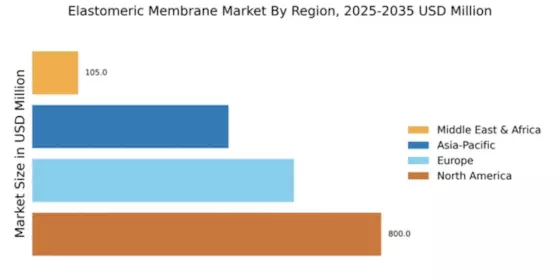
North America is poised to maintain its leadership in the elastomeric membrane market, holding a significant share of 800.0M in 2025. The region's growth is driven by increasing construction activities, stringent building codes, and a rising demand for energy-efficient roofing solutions. Regulatory support for sustainable building practices further catalyzes market expansion, making it a hub for innovation in elastomeric technologies. The competitive landscape is robust, with key players like GAF Materials Corporation, Carlisle Companies, and Firestone Building Products leading the charge. The U.S. remains the largest market, supported by a strong manufacturing base and advanced R&D capabilities. Companies are increasingly focusing on product differentiation and sustainability to capture market share, ensuring a dynamic and competitive environment.

Europe : Sustainable Growth and Innovation

Europe's elastomeric membrane market is projected to reach 600.0M by 2025, driven by a growing emphasis on sustainability and energy efficiency in construction. Regulatory frameworks, such as the EU's Green Deal, are pushing for eco-friendly building materials, which is a significant catalyst for market growth. The demand for high-performance roofing solutions is also on the rise, aligning with the region's commitment to reducing carbon footprints. Leading countries like Germany, France, and the UK are at the forefront of this market, with a strong presence of key players such as Sika AG and BASF SE. The competitive landscape is characterized by innovation and collaboration, as companies invest in R&D to develop advanced elastomeric solutions. This focus on sustainability and performance is shaping the future of the market in Europe.

Asia-Pacific : Emerging Market Potential

The Asia-Pacific elastomeric membrane market is expected to grow to 450.0M by 2025, fueled by rapid urbanization and infrastructure development. Countries like China and India are experiencing a construction boom, leading to increased demand for durable and efficient roofing solutions. Government initiatives promoting sustainable building practices are also contributing to market growth, making this region a focal point for elastomeric membrane applications. China is the largest market in the region, with significant investments in infrastructure and construction. The competitive landscape features both local and international players, including DuPont and Henry Company. As the market evolves, companies are focusing on innovation and cost-effective solutions to meet the diverse needs of the growing urban population, ensuring a vibrant market environment.

Middle East and Africa : Untapped Market Opportunities

The Middle East and Africa elastomeric membrane market is projected to reach 105.04M by 2025, driven by a surge in construction activities and infrastructure projects. The region's growing population and urbanization are leading to increased demand for effective roofing solutions. Additionally, government investments in infrastructure development are acting as a catalyst for market growth, making it an attractive area for elastomeric membrane applications. Countries like the UAE and South Africa are leading the market, with a mix of local and international players vying for market share. The competitive landscape is evolving, with companies focusing on innovative solutions tailored to the region's unique climate challenges. As the market matures, opportunities for growth and expansion are becoming increasingly evident.

Key Players and Competitive Insights

The elastomeric membrane market is characterized by a dynamic competitive landscape, driven by increasing demand for durable and weather-resistant roofing solutions. Key players are actively engaging in strategies that emphasize innovation, sustainability, and regional expansion. For instance, GAF Materials Corporation (US) has positioned itself as a leader in the market by focusing on product innovation and sustainability initiatives, which resonate with the growing environmental consciousness among consumers. Similarly, Sika AG (CH) has been enhancing its operational focus on digital transformation and smart building solutions, thereby strengthening its competitive edge in the elastomeric membrane sector.

The market structure appears moderately fragmented, with several key players influencing the competitive dynamics. Companies are increasingly localizing manufacturing and optimizing supply chains to enhance efficiency and reduce costs. This trend is indicative of a broader strategy among major players to adapt to regional market demands while maintaining competitive pricing. The collective influence of these companies shapes a landscape where innovation and operational efficiency are paramount.

In November 2025, Carlisle Companies Incorporated (US) announced the acquisition of a regional roofing materials manufacturer, which is expected to bolster its market presence and expand its product offerings. This strategic move not only enhances Carlisle's manufacturing capabilities but also allows for greater penetration into emerging markets, aligning with the company's long-term growth objectives. The acquisition underscores the importance of strategic consolidation in a competitive environment.

In October 2025, BASF SE (DE) launched a new line of eco-friendly elastomeric membranes designed to meet stringent environmental regulations. This initiative reflects BASF's commitment to sustainability and positions the company favorably among environmentally conscious consumers. The introduction of these products is likely to enhance BASF's market share while addressing the increasing demand for sustainable building materials.

In September 2025, DuPont de Nemours, Inc. (US) entered into a strategic partnership with a leading technology firm to integrate AI-driven analytics into its manufacturing processes. This collaboration aims to optimize production efficiency and reduce waste, thereby enhancing the overall sustainability of its elastomeric membrane offerings. The integration of advanced technologies signifies a shift towards more intelligent manufacturing practices, which could redefine competitive advantages in the market.

As of December 2025, the elastomeric membrane market is witnessing trends that emphasize digitalization, sustainability, and technological integration. Strategic alliances are increasingly shaping the competitive landscape, allowing companies to leverage shared resources and expertise. The evolution of competition appears to be shifting from price-based strategies to a focus on innovation, technology, and supply chain reliability. This transition suggests that companies that prioritize these aspects are likely to achieve a sustainable competitive advantage in the future.

Key Companies in the Elastomeric Membrane Market market include

Industry Developments

Rising demand for elastomeric membranes in roofing applications, coupled with increasing construction activities, is anticipated to drive market growth. Moreover, the growing adoption of elastomeric membranes in waterproofing applications in non-residential buildings is expected to contribute to market expansion. Recent news developments in the elastomeric membrane market include the launch of new products and strategic partnerships. For instance, in May 2023, Carlisle Companies Incorporated introduced a new line of EPDM roofing membranes designed for low-slope commercial and residential applications.

Additionally, in March 2023, Sika AG signed a partnership agreement with BASF SE to develop and market innovative roofing solutions, including elastomeric membranes. Key players operating in the elastomeric membrane market include Carlisle Companies Incorporated, Sika AG, GAF, Owens Corning, and Firestone Building Products. These companies are focusing on expanding their product portfolios, investing in research and development, and forming strategic partnerships to gain a competitive edge in the market.

Future Outlook

Elastomeric Membrane Market Future Outlook

The Elastomeric Membrane Market is projected to grow at a 4.36% CAGR from 2024 to 2035, driven by increasing demand in construction, automotive, and renewable energy sectors.

New opportunities lie in:

  • Development of eco-friendly elastomeric membranes for sustainable construction projects.
  • Expansion into emerging markets with tailored product offerings.
  • Integration of smart technologies for enhanced membrane performance monitoring.

By 2035, the market is expected to achieve robust growth, positioning itself as a leader in innovative membrane solutions.

Market Segmentation

Elastomeric Membrane Market Form Outlook

  • Sheet
  • Liquid
  • Coating
  • Sealant
  • Film

Elastomeric Membrane Market End Use Outlook

  • Construction
  • Automotive
  • Aerospace
  • Marine
  • Industrial

Elastomeric Membrane Market Technology Outlook

  • Hot Melt
  • Solvent Based
  • Water Based
  • Reactive

Elastomeric Membrane Market Application Outlook

  • Roofing
  • Waterproofing
  • Pavement
  • Membrane Structures
  • Automotive

Elastomeric Membrane Market Material Type Outlook

  • Thermoplastic Polyurethane
  • Polyvinyl Chloride
  • Silicone
  • Ethylene Propylene Diene Monomer
  • Polyethylene

Report Scope

MARKET SIZE 20241955.04(USD Million)
MARKET SIZE 20252040.32(USD Million)
MARKET SIZE 20353126.97(USD Million)
COMPOUND ANNUAL GROWTH RATE (CAGR)4.36% (2024 - 2035)
REPORT COVERAGERevenue Forecast, Competitive Landscape, Growth Factors, and Trends
BASE YEAR2024
Market Forecast Period2025 - 2035
Historical Data2019 - 2024
Market Forecast UnitsUSD Million
Key Companies ProfiledGAF Materials Corporation (US), Sika AG (CH), Carlisle Companies Incorporated (US), Firestone Building Products Company (US), BASF SE (DE), Henry Company (US), Versico Roofing Systems (US), Johns Manville (US), DuPont de Nemours, Inc. (US)
Segments CoveredApplication, End Use, Material Type, Form, Technology
Key Market OpportunitiesGrowing demand for sustainable construction materials drives innovation in the Elastomeric Membrane Market.
Key Market DynamicsRising demand for sustainable construction materials drives innovation in elastomeric membrane technologies and applications.
Countries CoveredNorth America, Europe, APAC, South America, MEA

Leave a Comment

FAQs

What is the estimated market size of the Elastomeric Membrane Market in 2024?

The Elastomeric Membrane Market is expected to reach an overall valuation of 1.96 Billion USD in 2024.

What is the projected CAGR of the Elastomeric Membrane Market from 2025 to 2034?

Elastomeric Membrane Market is projected to register a CAGR of 4.36% from 2025-2035

Which region is expected to dominate the Elastomeric Membrane Market in 2024?

The North American region is expected to dominate the Elastomeric Membrane Market in 2024.

What are the key applications of Elastomeric Membranes?

Elastomeric Membranes are primarily used in roofing, waterproofing, and tank lining applications.

Who are the key competitors in the Elastomeric Membrane Market?

Major players in the Elastomeric Membrane Market include Carlisle Companies Incorporated, Firestone Building Products Company LLC, GAF, Johns Manville, and Sika AG.

What are the growth drivers of the Elastomeric Membrane Market?

The growth of the Elastomeric Membrane Market is driven by factors such as increasing demand for sustainable and energy-efficient building materials, rising infrastructure development, and growing urbanization.

What are the challenges faced by the Elastomeric Membrane Market?

The Elastomeric Membrane Market faces challenges such as fluctuating raw material prices, intense competition, and the availability of alternative roofing materials.

What are the latest trends in the Elastomeric Membrane Market?

Current trends in the Elastomeric Membrane Market include the development of self-healing membranes, the integration of solar panels into membranes, and the use of recycled materials in membrane production.

What are the key opportunities for growth in the Elastomeric Membrane Market?

Key opportunities for growth in the Elastomeric Membrane Market include the expansion into emerging markets, the development of innovative products, and the adoption of sustainable practices.

Download Free Sample

Kindly complete the form below to receive a free sample of this Report

Compare Licence

×
Features License Type
Single User Multiuser License Enterprise User
Price $4,950 $5,950 $7,250
Maximum User Access Limit 1 User Upto 10 Users Unrestricted Access Throughout the Organization
Free Customization
Direct Access to Analyst
Deliverable Format
Platform Access
Discount on Next Purchase 10% 15% 15%
Printable Versions