×
Hero Background
English
Chinese
French
Japanese
Korean
German
Spanish

Paroxysmal Supraventricular Tachycardia Market Analysis

ID: MRFR/MED/4462-HCR
100 Pages
Kinjoll Dey
October 2025

Paroxysmal Supraventricular Tachycardia (PSVT) Market: by Type (AVNRT, AVRT, PAT, WPW) Diagnosis (EPS, Echocardiogram, Holter Monitor, Event Monitor) Treatment (Physical Maneuvers, medications), End-User (Hospitals & Clinics) - Forecast Till 2035

Share:
Download PDF ×

We do not share your information with anyone. However, we may send you emails based on your report interest from time to time. You may contact us at any time to opt-out.

Paroxysmal Supraventricular Tachycardia Market Infographic
Purchase Options

Market Analysis

In-depth Analysis of Paroxysmal Supraventricular Tachycardia Market Industry Landscape

PSVT is a common arrhythmia form, influencing people of random ages. The market elements are affected by the frequency of PSVT and its likely effect on the personal satisfaction, inciting the requirement for compelling symptomatic and cooperative arrangements. Symptomatic devices like electrocardiography (ECG) and electrophysiology studies are necessary to recognizing and affirming PSVT. The market solution developments in these analytic advancements, improving the exactness and effectiveness of diagnosing PSVT episodes. Continuous checking gadgets, including Holter monitors and event recorders, assume a urgent part in discovery of irregular PSVT episodes. These devices add to a far-reaching understanding of the arrhythmia's sample and help in treatment direction. Drug choices are a vital part of the PSVT market. Antiarrhythmic medications, beta-blockers, and calcium channel blockers are commonly recommended to oversee PSVT episodes and prevent their recurrence, meaning to reestablish typical heart musicality. Interventional cardiology techniques, especially catheter removal, are huge in the PSVT market. Catheter removal targets and dispenses with the strange electrical pathways causing PSVT, offering a possible fix or long-haul side effect help for specific patients. Patient training is vital in overseeing PSVT. Lifestyle alterations, stress management, and evasion of triggers add to the general consideration technique. The market elements incorporate drives advancing patient commitment and self-management for further developed results. Implantable gadgets, like pacemakers and implantable cardioverter-defibrillators (ICDs), might be considered for people with repetitive or high-risk PSVT. These gadgets screen heart disposition and give restorative intercessions while required, upgrading the market's treatment choices. The joining of telehealth arrangements is turning out to be progressively important in the PSVT market. Telehealth empowers distant interviews, working with convenient conversations among patients and healthcare suppliers, particularly during episodes or for medicine changes. Cooperative endeavors among healthcare experts, scientists, and drug organizations drive headways in PSVT treatment. Clinical preliminaries investigate new restorative choices, refine existing agreements, and add to the continuous development of the market.


Author
Kinjoll Dey
Research Analyst Level I

He is an extremely curious individual currently working in Healthcare and Medical Devices Domain. Kinjoll is comfortably versed in data centric research backed by healthcare educational background. He leverages extensive data mining and analytics tools such as Primary and Secondary Research, Statistical Analysis, Machine Learning, Data Modelling. His key role also involves Technical Sales Support, Client Interaction and Project management within the Healthcare team. Lastly, he showcases extensive affinity towards learning new skills and remain fascinated in implementing them.

Leave a Comment

FAQs

What is Paroxysmal Supraventricular Tachycardia?

Supraventricular tachycardia is a condition where there is a rapid increase in the heart rate caused by electrical impulses originating above the heart. Paroxysmal supraventricular tachycardia, also known as PSVT, is a condition wherein the patient shows an irregularity in heartbeats.

What is the CAGR of the Paroxysmal Supraventricular Tachycardia Market?

Paroxysmal Supraventricular Tachycardia Market is expected to exhibit a strong 6.30% CAGR over the forecast period from 2024 to 2032.

What is the major driver for the Paroxysmal Supraventricular Tachycardia Market?

Growing prevalence of cardiovascular diseases is the major driver for the Paroxysmal Supraventricular Tachycardia Market.

Which is the major regional Paroxysmal Supraventricular Tachycardia Market?

The Americas dominate the global Paroxysmal Supraventricular Tachycardia Market.

What are the key players in the Paroxysmal Supraventricular Tachycardia Market?

Leading players in the Paroxysmal Supraventricular Tachycardia Market include GSK, Novartis, and Pfizer, among others.

Market Summary

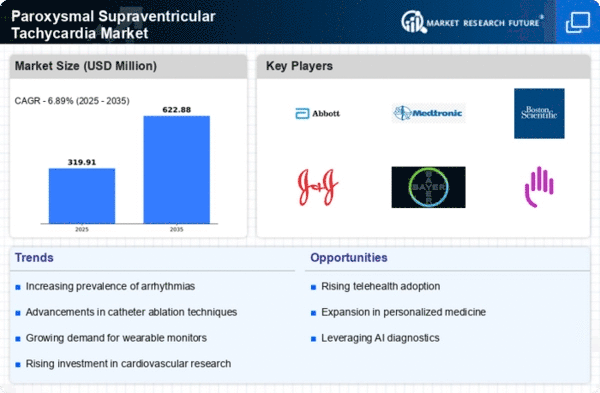
As per MRFR analysis, the Paroxysmal Supraventricular Tachycardia Market Size was estimated at 299.29 USD Million in 2024. The Paroxysmal Supraventricular Tachycardia industry is projected to grow from 319.91 in 2025 to 622.88 by 2035, exhibiting a compound annual growth rate (CAGR) of 6.89 during the forecast period 2025 - 2035.

Key Market Trends & Highlights

The Paroxysmal Supraventricular Tachycardia Market is experiencing notable growth driven by technological advancements and increasing awareness.

  • Technological advancements in treatment are reshaping the Paroxysmal Supraventricular Tachycardia Market, particularly in North America.
  • The rise of personalized medicine is gaining traction, especially in the Asia-Pacific region, enhancing patient outcomes.
  • Integration of telehealth solutions is becoming increasingly prevalent, facilitating remote monitoring and management of patients.
  • The market is driven by the increasing prevalence of cardiovascular diseases and the growing geriatric population, which necessitates improved treatment options.

Market Size & Forecast

2024 Market Size 299.29 (USD Million)
2035 Market Size 622.88 (USD Million)
CAGR (2025 - 2035) 6.89%
Largest Regional Market Share in 2024 North America

Major Players

<p>Abbott Laboratories (US), Medtronic (US), Boston Scientific (US), Johnson & Johnson (US), Bayer AG (DE), Bristol-Myers Squibb (US), AstraZeneca (GB), Cardinal Health (US), Stryker Corporation (US)</p>

Market Trends

The Paroxysmal Supraventricular Tachycardia Market is currently experiencing notable developments, driven by advancements in medical technology and an increasing understanding of cardiovascular conditions. As healthcare providers enhance their diagnostic and treatment capabilities, there is a growing emphasis on personalized medicine. This trend appears to be fostering a more tailored approach to managing paroxysmal supraventricular tachycardia, which may lead to improved patient outcomes. Furthermore, the integration of telemedicine and remote monitoring solutions is likely to reshape how patients interact with healthcare professionals, potentially increasing accessibility and convenience for those affected by this condition. In addition, the rising prevalence of risk factors associated with paroxysmal supraventricular tachycardia, such as hypertension and obesity, suggests a need for more comprehensive management strategies. Pharmaceutical companies are focusing on developing innovative therapies that address the underlying causes of this arrhythmia. This shift towards more effective treatment options may enhance the overall quality of care for patients. Overall, the Paroxysmal Supraventricular Tachycardia Market is poised for growth, influenced by technological advancements and a deeper understanding of patient needs.

Technological Advancements in Treatment

Recent innovations in medical devices and treatment methodologies are transforming the Paroxysmal Supraventricular Tachycardia Market. New catheter ablation techniques and advanced monitoring systems are enhancing the precision of interventions, potentially leading to better patient outcomes.

Rise of Personalized Medicine

The trend towards personalized medicine is becoming increasingly prominent within the Paroxysmal Supraventricular Tachycardia Market. Tailoring treatment plans to individual patient profiles may improve efficacy and adherence, thereby enhancing overall management of the condition.

Integration of Telehealth Solutions

The incorporation of telehealth services is reshaping patient care in the Paroxysmal Supraventricular Tachycardia Market. Remote monitoring and virtual consultations are likely to improve access to care, allowing for timely interventions and ongoing management of the condition.

Paroxysmal Supraventricular Tachycardia Market Market Drivers

Aging Population

The demographic shift towards an aging population is a significant driver of the Global Paroxysmal Supraventricular Tachycardia Market (PSVT) Market Industry. Older adults are more susceptible to cardiovascular conditions, including PSVT, due to age-related physiological changes. As the global population ages, the incidence of PSVT is likely to rise, leading to increased demand for treatment options. This trend is particularly evident in developed countries, where healthcare systems are adapting to cater to the needs of older patients. Consequently, the market is poised for growth as healthcare providers focus on managing PSVT in this demographic.

Rising Incidence of PSVT

The Global Paroxysmal Supraventricular Tachycardia Market (PSVT) Market Industry is witnessing a notable increase in the incidence of PSVT, driven by factors such as lifestyle changes and increased stress levels. As more individuals experience episodes of rapid heart rate, the demand for effective treatment options rises. In 2024, the market is valued at approximately 0.3 USD Billion, reflecting the growing awareness and diagnosis of this condition. This trend is expected to continue, with projections indicating a market value of 0.62 USD Billion by 2035, suggesting a robust growth trajectory fueled by the rising prevalence of PSVT.

Market Growth Projections

The Global Paroxysmal Supraventricular Tachycardia Market (PSVT) Market Industry is projected to experience substantial growth over the next decade. With a market valuation of 0.3 USD Billion in 2024, it is expected to reach 0.62 USD Billion by 2035, reflecting a compound annual growth rate (CAGR) of 6.89% from 2025 to 2035. This growth is indicative of the increasing recognition of PSVT as a significant health issue and the corresponding demand for effective treatment options. The market dynamics suggest a favorable environment for stakeholders, including healthcare providers and pharmaceutical companies, to engage in the development and distribution of PSVT therapies.

Increased Awareness and Diagnosis

There is a growing awareness regarding cardiovascular diseases, including PSVT, which is positively influencing the Global Paroxysmal Supraventricular Tachycardia Market (PSVT) Market Industry. Public health campaigns and educational initiatives are helping to inform both healthcare professionals and patients about the symptoms and risks associated with PSVT. This heightened awareness leads to earlier diagnosis and treatment, which is essential for effective management of the condition. As a result, the market is expected to see substantial growth, with a projected compound annual growth rate (CAGR) of 6.89% from 2025 to 2035, indicating a sustained interest in addressing this health concern.

Advancements in Treatment Modalities

Innovations in medical technology are significantly impacting the Global Paroxysmal Supraventricular Tachycardia Market (PSVT) Market Industry. New treatment modalities, including catheter ablation and advanced antiarrhythmic drugs, are emerging, offering patients more effective and less invasive options. These advancements not only enhance patient outcomes but also contribute to the overall growth of the market. The introduction of novel therapies is likely to attract more patients seeking relief from PSVT symptoms, thereby expanding the market. As the industry evolves, it is anticipated that these innovations will play a crucial role in shaping the future landscape of PSVT treatment.

Regulatory Support for New Therapies

Regulatory bodies are increasingly supportive of the development and approval of new therapies for PSVT, which is fostering growth in the Global Paroxysmal Supraventricular Tachycardia Market (PSVT) Market Industry. Streamlined approval processes and incentives for innovation are encouraging pharmaceutical companies to invest in research and development of novel treatment options. This regulatory environment not only accelerates the availability of new therapies but also enhances competition within the market. As a result, patients benefit from a wider array of treatment choices, which is likely to drive market expansion in the coming years.

Market Segment Insights

By Type of Paroxysmal Supraventricular Tachycardia: Atrioventricular Nodal Reentrant Tachycardia (Largest) vs. Atrial Tachycardia (Fastest-Growing)

<p>The Paroxysmal Supraventricular Tachycardia (PSVT) market showcases a diverse landscape of segment values, with Atrioventricular Nodal Reentrant Tachycardia leading the charge as the largest segment due to its prevalence in the population. This condition accounts for a significant share of PSVT cases, making it a focal point for both clinical attention and market investments. In contrast, Atrial Tachycardia is emerging rapidly, with increased recognition and advancements in treatment options driving its growth in recent years. As healthcare providers refine their approaches to managing PSVT, the dynamics among these segments evolve, reflecting shifts in clinical practice and patient awareness.</p>

<p>Atrioventricular Nodal Reentrant Tachycardia (Dominant) vs. Atrial Tachycardia (Emerging)</p>

<p>Atrioventricular Nodal Reentrant Tachycardia (AVNRT) is recognized as the dominant form of paroxysmal supraventricular tachycardia, characterized by its typical presentation and established treatment pathways, thus commanding a substantial share of market attention. AVNRT is often effectively managed through ablation techniques, which have improved patient outcomes significantly. On the other hand, Atrial Tachycardia is becoming an important emerging segment, gaining traction as awareness increases around different tachycardia types. Atrial Tachycardia is known for its variable characteristics and, while less common than AVNRT, it is witnessing a faster growth rate due to advancements in diagnostic technologies and therapeutic options, positioning it uniquely in the evolving market landscape.</p>

By Treatment Approach: Medication (Largest) vs. Catheter Ablation (Fastest-Growing)

<p>In the Paroxysmal Supraventricular Tachycardia market, the treatment approach reveals a diverse distribution in market share among the various options available. Medication dominates as the largest treatment option, being the first-line therapy for many patients due to its non-invasive nature and ease of administration. In contrast, Catheter Ablation is gaining traction and emerging as the fastest-growing segment, increasingly preferred by patients seeking a long-term cure for their condition over traditional medication regimens.</p>

<p>Treatment Approaches: Medication (Dominant) vs. Catheter Ablation (Emerging)</p>

<p>Medication remains the dominant treatment for Paroxysmal Supraventricular Tachycardia, primarily due to its established efficacy and accessibility, making it a go-to choice for both patients and healthcare providers. The growing adoption of Catheter Ablation as an emerging treatment reflects a shift toward more definitive solutions as patients and doctors seek to minimize recurrent episodes of tachycardia. This technique offers the potential for permanent resolution, thereby reducing the long-term dependency on medications. As a result, healthcare practitioners are increasingly recommending Catheter Ablation for suitably selected patients, fostering a more significant market presence in recent years.</p>

By Patient Demographics: Age Group (Largest) vs. Gender (Fastest-Growing)

<p>In the Paroxysmal Supraventricular Tachycardia (PSVT) market, the age group segment holds a substantial share, indicating a higher prevalence of PSVT incidents among older adults. Younger demographics also contribute to the market, but they represent a smaller fraction of the patients diagnosed. The male to female ratio in PSVT cases displays varied distribution, typically leaning towards males, which aligns with observed trends in cardiovascular conditions across different age groups.</p>

<p>Age Group: 60+ (Dominant) vs. Gender: Female (Emerging)</p>

<p>In the patient demographics for PSVT, individuals aged 60 and above are recognized as the dominant age group, primarily due to age-related physiological changes that increase the risk of tachyarrhythmias. Meanwhile, the female patient demographic is emerging as a significant segment, driven by rising awareness and diagnosis rates among women suffering from cardiovascular issues. The inclusion of women patients into clinical studies and marketing strategies highlights a growing understanding of PSVT's impact on diverse populations, emphasizing tailored approaches to treatment and management.</p>

By Diagnosis Method: Electrocardiogram (Largest) vs. Holter Monitor (Fastest-Growing)

<p>The Paroxysmal Supraventricular Tachycardia (PSVT) market is significantly influenced by the various diagnosis methods, with the Electrocardiogram (ECG) leading the segment due to its widespread accessibility and effectiveness in detecting arrhythmias promptly. Holter Monitor follows closely as it provides extended monitoring, offering a significant advantage for diagnosing intermittent conditions like PSVT. The Event Monitor and Electrophysiological Study, while essential, hold a smaller market share but are critical when patients exhibit atypical symptoms leading to further investigation.</p>

<p>Diagnosis Methods: ECG (Dominant) vs. Electrophysiological Study (Emerging)</p>

<p>The Electrocardiogram (ECG) remains the dominant diagnostic method in the PSVT market due to its efficiency and immediate results in identifying tachycardia episodes. Its simplicity and quick turnaround time position it as the first-line diagnostic tool. Conversely, the Electrophysiological Study, though less commonly performed, is emerging as a vital method for patients with complex cases. This invasive procedure allows for in-depth analysis and can guide targeted therapeutic strategies. As technology improves, the Electrophysiological Study is gaining traction, becoming crucial for tailored patient management.</p>

Get more detailed insights about Paroxysmal Supraventricular Tachycardia Market Research Report – Forecast to 2035

Regional Insights

North America : Market Leader in Innovation

North America is poised to maintain its leadership in the Paroxysmal Supraventricular Tachycardia market, holding a significant market size of $149.65M in 2025. Key growth drivers include an aging population, increasing prevalence of cardiovascular diseases, and advancements in medical technology. Regulatory support from agencies like the FDA further catalyzes innovation and market expansion, ensuring a robust demand for effective treatment options. The competitive landscape in North America is characterized by the presence of major players such as Abbott Laboratories, Medtronic, and Boston Scientific. These companies are actively engaged in research and development to enhance treatment modalities. The U.S. remains the largest market, driven by high healthcare expenditure and a well-established healthcare infrastructure, ensuring that patients have access to cutting-edge therapies.

Europe : Emerging Market with Growth Potential

Europe's Paroxysmal Supraventricular Tachycardia market is projected to reach $85.0M by 2025, driven by increasing awareness of cardiovascular health and supportive healthcare policies. The region benefits from a strong regulatory framework that encourages innovation in medical devices and pharmaceuticals. Countries like Germany and France are leading the charge, with a growing demand for advanced treatment options and a focus on preventive healthcare measures. The competitive landscape in Europe features key players such as Bayer AG and Bristol-Myers Squibb, who are investing in new technologies and therapies. The European market is characterized by collaborations between healthcare providers and manufacturers, enhancing the availability of effective treatments. As the region continues to prioritize cardiovascular health, the market is expected to see sustained growth, supported by favorable regulations and increasing patient awareness.

Asia-Pacific : Rapidly Growing Healthcare Sector

The Asia-Pacific region is witnessing significant growth in the Paroxysmal Supraventricular Tachycardia market, projected to reach $50.0M by 2025. Key drivers include rising healthcare expenditure, increasing prevalence of heart diseases, and a growing middle-class population seeking advanced medical care. Governments are also investing in healthcare infrastructure, which is expected to enhance access to treatment options across the region. Countries like China and India are at the forefront of this growth, with a surge in demand for innovative therapies. The competitive landscape is evolving, with both local and international players, including Johnson & Johnson and AstraZeneca, expanding their presence. As regulatory bodies streamline approval processes, the market is set to benefit from quicker access to new treatments, further propelling growth in this dynamic region.

Middle East and Africa : Untapped Market Potential

The Middle East and Africa (MEA) region presents a unique opportunity in the Paroxysmal Supraventricular Tachycardia market, with a projected size of $14.64M by 2025. Factors such as increasing urbanization, rising healthcare awareness, and government initiatives to improve healthcare access are driving market growth. The region is gradually recognizing the importance of cardiovascular health, leading to a growing demand for effective treatment options. Countries like South Africa and the UAE are emerging as key players in this market, with investments in healthcare infrastructure and partnerships with global companies. The competitive landscape is still developing, but the presence of key players like Cardinal Health and Stryker Corporation is expected to enhance market dynamics. As healthcare systems evolve, the MEA region is poised for significant growth in the coming years.

Key Players and Competitive Insights

The Paroxysmal Supraventricular Tachycardia Market is characterized by a dynamic competitive landscape, driven by increasing prevalence rates and advancements in treatment modalities. Key players such as Abbott Laboratories (US), Medtronic (US), and Boston Scientific (US) are strategically positioned to leverage innovation and technological advancements. Abbott Laboratories (US) focuses on developing cutting-edge cardiac monitoring devices, while Medtronic (US) emphasizes its robust portfolio of catheter ablation technologies. Boston Scientific (US) is actively pursuing partnerships to enhance its product offerings, thereby shaping a competitive environment that prioritizes innovation and patient-centric solutions.

In terms of business tactics, companies are increasingly localizing manufacturing to reduce costs and optimize supply chains. The market appears moderately fragmented, with several players vying for market share. However, the collective influence of major companies is significant, as they drive advancements in technology and treatment options, thereby enhancing the overall market structure.

In November 2025, Abbott Laboratories (US) announced the launch of a new remote monitoring system designed to improve patient outcomes in paroxysmal supraventricular tachycardia management. This strategic move is likely to enhance patient engagement and adherence to treatment protocols, positioning Abbott as a leader in innovative cardiac care solutions. The introduction of such technology may also facilitate better data collection for ongoing research and development.

In October 2025, Medtronic (US) expanded its catheter ablation product line with the introduction of a novel energy source aimed at improving procedural efficiency. This development is indicative of Medtronic's commitment to enhancing the efficacy of its offerings, potentially leading to better patient outcomes and reduced procedural times. Such innovations are crucial in a market where procedural success rates are paramount.

In September 2025, Boston Scientific (US) entered into a strategic partnership with a leading telehealth provider to integrate remote monitoring capabilities into its existing cardiac devices. This collaboration is expected to enhance the company's ability to provide comprehensive care solutions, aligning with the growing trend of digital health integration. By leveraging telehealth, Boston Scientific may improve patient access to care and streamline follow-up processes.

As of December 2025, the competitive trends in the Paroxysmal Supraventricular Tachycardia Market are increasingly defined by digitalization, sustainability, and the integration of artificial intelligence (AI) in treatment protocols. Strategic alliances are becoming more prevalent, as companies recognize the value of collaboration in enhancing product offerings and market reach. The competitive differentiation is likely to evolve from traditional price-based strategies to a focus on innovation, technology, and supply chain reliability, reflecting a broader shift in the healthcare landscape.

Key Companies in the Paroxysmal Supraventricular Tachycardia Market market include

Industry Developments

Future Outlook

Paroxysmal Supraventricular Tachycardia Market Future Outlook

<p>The Paroxysmal Supraventricular Tachycardia Market is projected to grow at a 6.89% CAGR from 2024 to 2035, driven by technological advancements, increasing prevalence, and enhanced treatment options.</p>

New opportunities lie in:

  • <p>Development of wearable cardiac monitoring devices for real-time data collection.</p>
  • <p>Expansion of telehealth services for remote patient management and follow-up.</p>
  • <p>Investment in AI-driven analytics for personalized treatment plans and outcomes.</p>

<p>By 2035, the market is expected to achieve substantial growth, driven by innovation and increased patient engagement.</p>

Market Segmentation

Paroxysmal Supraventricular Tachycardia Market Diagnosis Method Outlook

  • Electrocardiogram
  • Holter Monitor
  • Event Monitor
  • Electrophysiological Study

Paroxysmal Supraventricular Tachycardia Market Treatment Approach Outlook

  • Medication
  • Catheter Ablation
  • Electrical Cardioversion
  • Lifestyle Modifications

Paroxysmal Supraventricular Tachycardia Market Patient Demographics Outlook

  • Age Group
  • Gender
  • Comorbid Conditions
  • Lifestyle Factors

Paroxysmal Supraventricular Tachycardia Market Type of Paroxysmal Supraventricular Tachycardia Outlook

  • Atrioventricular Nodal Reentrant Tachycardia
  • Atrioventricular Reentrant Tachycardia
  • Atrial Tachycardia
  • Multifocal Atrial Tachycardia

Report Scope

MARKET SIZE 2024299.29(USD Million)
MARKET SIZE 2025319.91(USD Million)
MARKET SIZE 2035622.88(USD Million)
COMPOUND ANNUAL GROWTH RATE (CAGR)6.89% (2024 - 2035)
REPORT COVERAGERevenue Forecast, Competitive Landscape, Growth Factors, and Trends
BASE YEAR2024
Market Forecast Period2025 - 2035
Historical Data2019 - 2024
Market Forecast UnitsUSD Million
Key Companies ProfiledAbbott Laboratories (US), Medtronic (US), Boston Scientific (US), Johnson & Johnson (US), Bayer AG (DE), Bristol-Myers Squibb (US), AstraZeneca (GB), Cardinal Health (US), Stryker Corporation (US)
Segments CoveredType of Paroxysmal Supraventricular Tachycardia, Treatment Approach, Patient Demographics, Diagnosis Method
Key Market OpportunitiesAdvancements in catheter ablation techniques enhance treatment options in the Paroxysmal Supraventricular Tachycardia Market.
Key Market DynamicsRising demand for innovative treatment options drives competitive dynamics in the Paroxysmal Supraventricular Tachycardia market.
Countries CoveredNorth America, Europe, APAC, South America, MEA

FAQs

What is Paroxysmal Supraventricular Tachycardia?

Supraventricular tachycardia is a condition where there is a rapid increase in the heart rate caused by electrical impulses originating above the heart. Paroxysmal supraventricular tachycardia, also known as PSVT, is a condition wherein the patient shows an irregularity in heartbeats.

What is the CAGR of the Paroxysmal Supraventricular Tachycardia Market?

Paroxysmal Supraventricular Tachycardia Market is expected to exhibit a strong 6.30% CAGR over the forecast period from 2024 to 2032.

What is the major driver for the Paroxysmal Supraventricular Tachycardia Market?

Growing prevalence of cardiovascular diseases is the major driver for the Paroxysmal Supraventricular Tachycardia Market.

Which is the major regional Paroxysmal Supraventricular Tachycardia Market?

The Americas dominate the global Paroxysmal Supraventricular Tachycardia Market.

What are the key players in the Paroxysmal Supraventricular Tachycardia Market?

Leading players in the Paroxysmal Supraventricular Tachycardia Market include GSK, Novartis, and Pfizer, among others.

  1. Definition
    1. Scope Of The Study
      1. Research Objective
      2. Limitations
    2. Primary Research
    3. Secondary Research
    4. Market
    5. Drivers
    6. Restraints
    7. Opportunities
    8. Challenges
    9. Macroeconomic Indicators
      1. Bargaining Power Of Suppliers
      2. Bargaining Power Of Buyers
      3. Threat Of New Entrants
      4. Intensity Of Rivalry
    10. Value Chain Analysis
    11. Investment Feasibility Analysis
    12. Pricing Analysis
  2. Global Paroxysmal Supraventricular Tachycardia (PSVT) Market, By Type
    1. Introduction
    2. AV Nodal Re-Entrant Tachycardia (AVNRT)
      1. Market Estimates &
    3. Forecast, 2023–2030
    4. AV Reciprocating Tachycardia (AVRT),
    5. Market Estimates & Forecast, 2023–2030
    6. Paroxysmal Atrial Tachycardia
      1. Market Estimates & Forecast, 2023–2030
    7. (PAT),
    8. Wolff-Parkinson-White
      1. Market Estimates & Forecast, 2023–2030
    9. Syndrome (WPW)
    10. Chapter
  3. Global Paroxysmal Supraventricular Tachycardia (PSVT) Market, By Diagnosis
    1. Introduction
    2. Electrophysiology Study (EPS)
      1. Market Estimates
    3. & Forecast, 2023–2030
    4. Stress Test
      1. Market Estimates
    5. & Forecast, 2023–2030
    6. Cardiac Catheterization
      1. Market
    7. Estimates & Forecast, 2023–2030
    8. Coronary Angiography
    9. Market Estimates & Forecast, 2023–2030
    10. Electrocardiogram (ECG)
      1. Market Estimates & Forecast, 2023–2030
    11. Echocardiogram
      1. Market Estimates & Forecast, 2023–2030
    12. Holter Monitor
      1. Market Estimates & Forecast, 2023–2030
    13. Event Monitor
      1. Market Estimates & Forecast, 2023–2030
    14. Implantable Monitor
      1. Market Estimates & Forecast, 2023–2030
    15. Lab Tests
      1. Market Estimates & Forecast, 2023–2030
      2. Blood Test
      3. Urine Test
      4. Others
    16. Others
    17. Chapter 8. Global Paroxysmal Supraventricular Tachycardia (PSVT)
  4. Market, By Treatment
    1. Introduction
    2. Physical Maneuvers
    3. Market Estimates & Forecast, 2023–2030
    4. Medications
      1. Calcium Channel Blockers
      2. Antiarrhythmic
    5. Market Estimates & Forecast, 2023–2030
    6. Medication
    7. Sotalol
    8. Amiodarone
    9. Amiodarone
    10. Flecainide
    11. Propafenone
    12. Adenosine
    13. Beta Blockers
    14. Others
    15. Catheter Ablation
      1. Market Estimates & Forecast, 2023–2030
    16. Pacemaker
      1. Market Estimates & Forecast, 2023–2030
      2. Market Estimates & Forecast, 2023–2030
    17. Cardioversion
    18. Chapter
  5. Global Paroxysmal Supraventricular Tachycardia (PSVT) Market, By End-User
    1. Introduction
    2. Hospitals & Clinics
      1. Market Estimates
    3. & Forecast, 2023–2030
    4. Diagnostic Centers
      1. Market Estimates
    5. & Forecast, 2023–2030
    6. Medical Research Centers
      1. Market
    7. Estimates & Forecast, 2023–2030
    8. Others
    9. Chapter .10 Global
  6. Paroxysmal Supraventricular Tachycardia (PSVT) Market, By Region
    1. Introduction
    2. Americas
      1. North America
      2. South America
    3. Europe
      1. Western Europe
      2. Eastern Europe
    4. Germany
    5. U.K.
    6. Asia
      1. Japan
      2. China
      3. India
      4. Australia
      5. Republic Of Korea
      6. Rest Of Asia Pacific
    7. Pacific
    8. The Middle
      1. United Arab Emirates
      2. Saudi Arabia
      3. Kuwait
      4. Qatar
      5. Rest Of The Middle East &
    9. East & Africa
    10. Oman
    11. Africa
    12. Chapter 11 Company Landscape
    13. Introduction
    14. Market
    15. Share Analysis
    16. Key Development & Strategies
    17. Chapter 12 Company
    18. Profiles
    19. GlaxoSmithKline PLC
      1. Company Overview
      2. Financials
      3. SWOT Analysis
    20. Product Overview
    21. Sanofi
      1. Company Overview
      2. Product Overview
      3. Financial
      4. Key Developments
      5. SWOT Analysis
    22. SA
    23. Overview
    24. Pfizer
      1. Company Overview
      2. Product Overview
      3. Financial
      4. Key Development
      5. SWOT Analysis
    25. Inc.
    26. Overview
    27. Novartis
      1. Company Overview
      2. Product/Business Segment
      3. Financial Overview
      4. Key Development
    28. International AG
    29. Overview
    30. SWOT Analysis
    31. Teva Pharmaceutical Industries Ltd.
      1. Company
      2. Product Overview
      3. Financial Overview
    32. Overview
    33. Key Developments
    34. Medtronic, Inc.
      1. Company Overview
      2. Financial Overview
      3. Key Developments
    35. Product Overview
    36. Glenmark Pharmaceuticals
      1. Overview
      2. Product Overview
      3. Financials
      4. Key Developments
      5. SWOT Analysis
      6. Company Overview
      7. Product/Business
      8. Financial Overview
      9. Key Development
    37. St. Jude Medical, Inc.
    38. Segment Overview
    39. SWOT Analysis
    40. Boston Scientific Corporation
      1. Company Overview
      2. Product Overview
      3. Financial Overview
      4. Key Developments
    41. Others
    42. Chapter 13 MRFR Conclusion
    43. Key Findings
      1. Unmet Needs Of The Market
    44. From CEO’s View Point
    45. Key
    46. Companies To Watch
    47. Prediction Of The Pharmaceutical Industry
    48. Chapter
  7. Appendix
  8. LIST OF TABLES
  9. Paroxysmal Supraventricular Tachycardia
    1. (PSVT) Industry Synopsis, 2023–2030
  10. Paroxysmal Supraventricular
    1. Tachycardia (PSVT) Market Estimates & Forecast, 2023–2030, (USD Million)
  11. Paroxysmal Supraventricular Tachycardia (PSVT) Market, By Region, 2023–2030,
    1. (USD Million)
  12. Paroxysmal Supraventricular Tachycardia (PSVT) Market,
    1. By Type, 2023–2030, (USD Million)
  13. Paroxysmal Supraventricular
  14. Tachycardia (PSVT) Market, By Diagnosis, 2023–2030, (USD Million)
    1. Table
  15. Paroxysmal Supraventricular Tachycardia (PSVT) Market, By Treatment, 2023–2030,
    1. (USD Million)
  16. North America Paroxysmal Supraventricular Tachycardia
  17. (PSVT) Market, By Type, 2023–2030, (USD Million)
  18. North America
  19. Paroxysmal Supraventricular Tachycardia (PSVT) Market, By Diagnosis, 2023–2030,
    1. (USD Million)
  20. North America Paroxysmal Supraventricular Tachycardia
  21. (PSVT) Market, By Treatment, 2023–2030, (USD Million)
  22. U.S. Paroxysmal
  23. Supraventricular Tachycardia (PSVT) Market, By Type, 2023–2030, (USD Million)
  24. U.S. Paroxysmal Supraventricular Tachycardia (PSVT) Market, By Diagnosis,
  25. U.S. Paroxysmal Supraventricular Tachycardia
  26. (PSVT) Market, By Treatment, 2023–2030, (USD Million)
  27. Canada
  28. Paroxysmal Supraventricular Tachycardia (PSVT) Market, By Type, 2023–2030,
    1. (USD Million)
  29. Canada Paroxysmal Supraventricular Tachycardia (PSVT)
  30. Market, By Diagnosis, 2023–2030, (USD Million)
  31. Canada Paroxysmal
  32. Supraventricular Tachycardia (PSVT) Market, By Treatment, 2023–2030, (USD
    1. Million)
  33. South America Paroxysmal Supraventricular Tachycardia (PSVT)
  34. Market, By Type, 2023–2030, (USD Million)
  35. South America Paroxysmal
  36. Supraventricular Tachycardia (PSVT) Market, By Diagnosis, 2023–2030, (USD
    1. Million)
  37. South America Paroxysmal Supraventricular Tachycardia (PSVT)
  38. Market, By Treatment, 2023–2030, (USD Million)
  39. Europe Paroxysmal
  40. Supraventricular Tachycardia (PSVT) Market, By Type, 2023–2030, (USD Million)
  41. Europe Paroxysmal Supraventricular Tachycardia (PSVT) Market, By Diagnosis,
  42. Europe Paroxysmal Supraventricular
  43. Tachycardia (PSVT) Market, By Treatment, 2023–2030, (USD Million)
    1. Table
  44. Western Europe Paroxysmal Supraventricular Tachycardia (PSVT) Market, By Type,
  45. Western Europe Paroxysmal Supraventricular
  46. Tachycardia (PSVT) Market, By Diagnosis, 2023–2030, (USD Million)
    1. Table
  47. Western Europe Paroxysmal Supraventricular Tachycardia (PSVT) Market, By Treatment,
  48. Eastern Europe Paroxysmal Supraventricular
  49. Tachycardia (PSVT) Market, By Type, 2023–2030, (USD Million)
    1. Table 26
  50. Eastern Europe Paroxysmal Supraventricular Tachycardia (PSVT) Market, By Diagnosis,
  51. Eastern Europe Paroxysmal Supraventricular
  52. Tachycardia (PSVT) Market, By Treatment, 2023–2030, (USD Million)
    1. Table
  53. Asia Pacific Paroxysmal Supraventricular Tachycardia (PSVT) Market, By Type,
  54. Asia Pacific Paroxysmal Supraventricular
  55. Tachycardia (PSVT) Market, By Diagnosis, 2023–2030, (USD Million)
    1. Table
  56. Asia Pacific Paroxysmal Supraventricular Tachycardia (PSVT) Market, By Treatment,
  57. Middle East & Africa Paroxysmal
  58. Supraventricular Tachycardia (PSVT) Market, By Type, 2023–2030, (USD Million)
  59. Middle East & Africa Paroxysmal Supraventricular Tachycardia (PSVT)
  60. Market, By Diagnosis, 2023–2030, (USD Million)
  61. Middle East &
  62. Africa Paroxysmal Supraventricular Tachycardia (PSVT) Market, By Treatment, 2023–2030,
    1. (USD Million)
  63. LIST OF FIGURES
  64. Research Process
    1. Figure
  65. Segmentation For Paroxysmal Supraventricular Tachycardia (PSVT) Market
    1. Figure
  66. Segmentation Market Dynamics For Paroxysmal Supraventricular Tachycardia (PSVT)
    1. Market
  67. Global Paroxysmal Supraventricular Tachycardia (PSVT) Market
    1. Share, By Type 2023
  68. Global Paroxysmal Supraventricular Tachycardia
  69. (PSVT) Market Share, By Diagnosis 2023
  70. Global Paroxysmal Supraventricular
  71. Tachycardia (PSVT) Market Share, By Treatment, 2023
  72. Global Paroxysmal
  73. Supraventricular Tachycardia (PSVT) Market Share, By Region, 2023
    1. Figure 8
  74. North America Paroxysmal Supraventricular Tachycardia (PSVT) Market Share, By Country,
  75. Europe Paroxysmal Supraventricular Tachycardia (PSVT) Market
    1. Share, By Country, 2023
  76. Asia Pacific Paroxysmal Supraventricular
  77. Tachycardia (PSVT) Market Share, By Country, 2023
  78. Middle East &
  79. Africa Paroxysmal Supraventricular Tachycardia (PSVT) Market Share, By Country,
  80. Global Paroxysmal Supraventricular Tachycardia (PSVT) Market:
    1. Company Share Analysis, 2023 (%)
  81. GLAXOSMITHKLINE PLC: Key Financials
  82. GLAXOSMITHKLINE PLC: Segmental Revenue
  83. GLAXOSMITHKLINE
    1. PLC: Geographical Revenue
  84. Sanofi SA: Key Financials
    1. Figure 17
    2. Sanofi SA: Segmental Revenue
  85. Sanofi SA: Geographical Revenue
    1. Figure
  86. Pfizer Inc.: Key Financials
  87. Pfizer Inc.: Segmental Revenue
  88. Pfizer Inc.: Geographical Revenue
  89. Novartis International
    1. AG: Key Financials
  90. Novartis International AG: Segmental Revenue
  91. Novartis International AG: Geographical Revenue
  92. Teva
    1. Pharmaceutical Industries Ltd.: Key Financials
  93. Teva Pharmaceutical
    1. Industries Ltd.: Segmental Revenue
  94. Teva Pharmaceutical Industries
    1. Ltd.: Geographical Revenue
  95. Medtronic, Inc..: Key Financials
    1. Figure
  96. Medtronic, Inc.: Segmental Revenue
  97. Medtronic, Inc.: Geographical
    1. Revenue
  98. Glenmark Pharmaceuticals: Key Financials
  99. Glenmark
    1. Pharmaceuticals: Segmental Revenue
  100. Glenmark Pharmaceuticals: Geographical
    1. Revenue
  101. St. Jude Medical, Inc.: Key Financials
  102. St.
    1. Jude Medical, Inc.: Segmental Revenue
  103. St. Jude Medical, Inc.: Geographical
    1. Revenue
  104. Boston Scientific Corporation: Key Financials
    1. Figure
  105. Boston Scientific Corporation: Segmental Revenue
  106. Boston Scientific
    1. Corporation: Geographical Revenue

Paroxysmal Supraventricular Tachycardia Market Segmentation

Market Segmentation Overview

  • Detailed segmentation data will be available in the full report
  • Comprehensive analysis by multiple parameters
  • Regional and country-level breakdowns
  • Market size forecasts by segment
Infographic

Free Sample Request

Kindly complete the form below to receive a free sample of this Report

Get Free Sample

Customer Strories

Compare Licence

×
Features License Type
Single User Multiuser License Enterprise User
Price $4,950 $5,950 $7,250
Maximum User Access Limit 1 User Upto 10 Users Unrestricted Access Throughout the Organization
Free Customization
Direct Access to Analyst
Deliverable Format
Platform Access
Discount on Next Purchase 10% 15% 15%
Printable Versions