Request Free Sample ×

Kindly complete the form below to receive a free sample of this Report

* Please use a valid business email

Leading companies partner with us for data-driven Insights

clients tt-cursor
Hero Background

Runtime Application Self Protection Market

ID: MRFR/ICT/1007-HCR
100 Pages
Shubham Munde
December 2024

Runtime Application Self-Protection Market Research Report By Application (Web Applications, Mobile Applications, Cloud Applications, API Security), By Deployment Type (On-Premises, Cloud-Based, Hybrid), By End User (BFSI, Healthcare, Retail, Government, Telecommunications), By Technology (Machine Learning, Behavioral Analysis, Signature-Based Detection) and By Regional (North America, Europe, South America, Asia Pacific, Middle East and Africa) - Forecast to 2035

Share:
Download PDF ×

We do not share your information with anyone. However, we may send you emails based on your report interest from time to time. You may contact us at any time to opt-out.

Runtime Application Self Protection Market Infographic
Purchase Options

Runtime Application Self Protection Market Summary

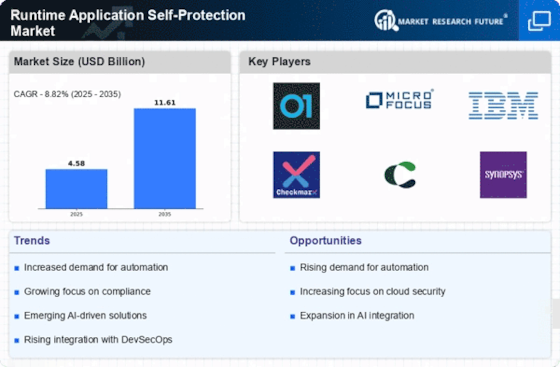
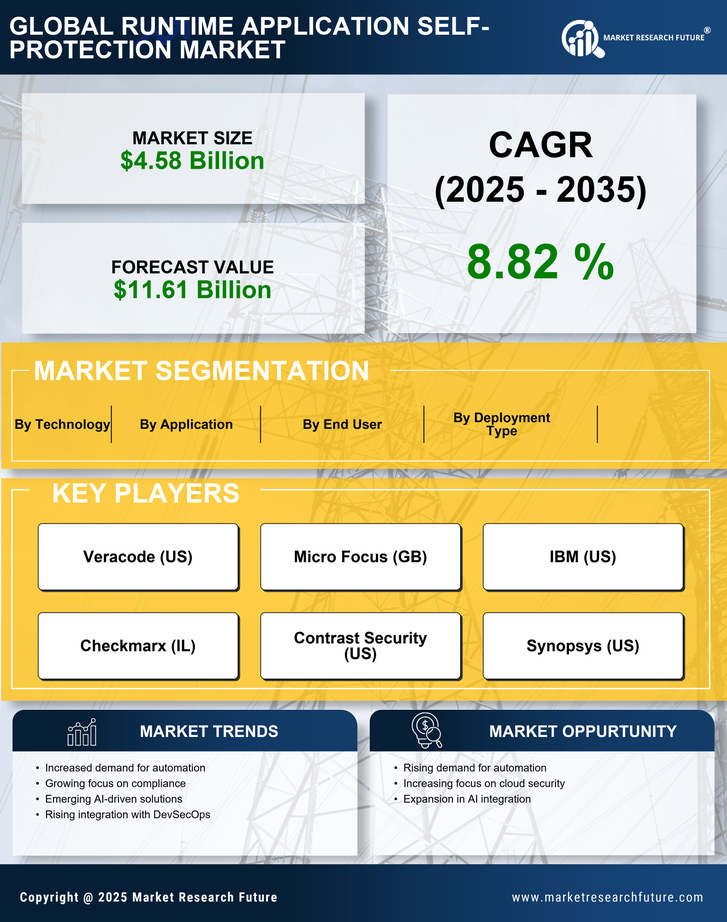
As per Market Research Future analysis, the Runtime Application Self-Protection Market was estimated at 4.581 USD Billion in 2024. The Runtime Application Self-Protection industry is projected to grow from 4.985 USD Billion in 2025 to 11.61 USD Billion by 2035, exhibiting a compound annual growth rate (CAGR) of 8.82% during the forecast period 2025 - 2035

Key Market Trends & Highlights

The Runtime Application Self-Protection Market is experiencing robust growth driven by technological advancements and increasing security demands.

  • The integration of AI and machine learning is enhancing the effectiveness of runtime application self-protection solutions.
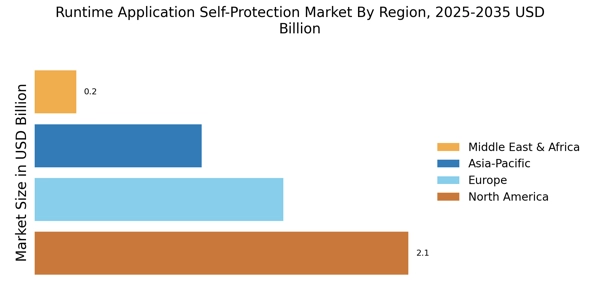
  • North America remains the largest market, while Asia-Pacific is emerging as the fastest-growing region in this sector.
  • Web applications dominate the market, whereas API security is witnessing the fastest growth due to rising digital interactions.
  • Increasing cybersecurity threats and regulatory compliance requirements are key drivers propelling the demand for application security solutions.

Market Size & Forecast

2024 Market Size 4.581 (USD Billion)
2035 Market Size 11.61 (USD Billion)
CAGR (2025 - 2035) 8.82%

Major Players

Veracode (US), Micro Focus (GB), IBM (US), Checkmarx (IL), Contrast Security (US), Synopsys (US), Fortify (US), WhiteHat Security (US), Snyk (GB)

Our Impact
Enabled $4.3B Revenue Impact for Fortune 500 and Leading Multinationals
Partnering with 2000+ Global Organizations Each Year
30K+ Citations by Top-Tier Firms in the Industry

Runtime Application Self Protection Market Trends

The Runtime Application Self-Protection Market is currently experiencing a notable evolution, driven by the increasing need for robust security measures in software applications. As organizations become more reliant on digital solutions, the demand for real-time protection mechanisms has surged. This market appears to be influenced by a growing awareness of cyber threats, prompting businesses to adopt advanced security technologies that can proactively defend against potential vulnerabilities. Furthermore, the integration of artificial intelligence and machine learning into runtime application self-protection solutions is likely enhancing their effectiveness, enabling them to adapt to emerging threats dynamically. In addition, the market landscape is characterized by a shift towards cloud-based solutions, which offer scalability and flexibility. Organizations are increasingly favoring these models as they seek to optimize their security frameworks without compromising performance. The collaboration between software developers and security experts seems to be fostering innovation, leading to the development of more sophisticated self-protection mechanisms. Overall, the Runtime Application Self-Protection Market is poised for continued growth, as businesses recognize the necessity of safeguarding their applications in an ever-evolving threat environment.

Integration of AI and Machine Learning

The incorporation of artificial intelligence and machine learning technologies into runtime application self-protection solutions is becoming more prevalent. This trend suggests that security measures are evolving to become more adaptive and responsive to new threats, potentially enhancing the overall effectiveness of application security.

Shift Towards Cloud-Based Solutions

There is a noticeable transition towards cloud-based runtime application self-protection solutions. This shift indicates that organizations are seeking scalable and flexible security options that can be easily integrated into their existing infrastructures, thereby improving their overall security posture.

Collaboration Between Developers and Security Experts

The growing collaboration between software developers and security professionals appears to be fostering innovation within the Runtime Application Self-Protection Market. This partnership may lead to the creation of more advanced self-protection mechanisms, ultimately enhancing the security of applications.

Runtime Application Self Protection Market Drivers

Increasing Cybersecurity Threats

The Runtime Application Self-Protection Market is experiencing heightened demand due to the increasing frequency and sophistication of cyber threats. Organizations are recognizing the necessity of robust security measures to protect sensitive data and applications. In 2025, it is estimated that cybercrime will cost businesses over 10 trillion dollars annually, prompting a shift towards proactive security solutions. Runtime Application Self-Protection (RASP) technologies provide real-time protection by monitoring application behavior and blocking attacks as they occur. This proactive approach is becoming essential for organizations aiming to safeguard their digital assets against evolving threats.

Regulatory Compliance Requirements

The Runtime Application Self-Protection Market is significantly influenced by stringent regulatory compliance requirements across various sectors. Regulations such as GDPR, HIPAA, and PCI DSS mandate organizations to implement adequate security measures to protect user data. As compliance becomes increasingly critical, businesses are turning to RASP solutions to ensure they meet these legal obligations. In 2025, the market for compliance-related security solutions is projected to grow, with RASP playing a pivotal role in helping organizations demonstrate adherence to regulations while minimizing the risk of data breaches and associated penalties.

Shift Towards Digital Transformation

The Runtime Application Self-Protection Market is closely linked to the ongoing shift towards digital transformation across various industries. As organizations embrace digital technologies to enhance operational efficiency and customer engagement, the security of applications becomes increasingly critical. RASP solutions are designed to protect applications in real-time, ensuring that digital initiatives do not compromise security. By 2025, the digital transformation market is expected to exceed 2 trillion dollars, with RASP technologies being integral to securing the applications that drive this transformation, thereby fostering trust and confidence among users.

Growing Adoption of DevSecOps Practices

The Runtime Application Self-Protection Market is benefiting from the growing adoption of DevSecOps practices, which integrate security into the software development lifecycle. This approach emphasizes the importance of embedding security measures early in the development process, thereby reducing vulnerabilities in applications. As organizations strive for faster deployment cycles, RASP solutions are increasingly being utilized to provide continuous security monitoring and protection. By 2025, it is anticipated that the DevSecOps market will expand significantly, with RASP technologies being a key component in ensuring secure application development and deployment.

Rising Demand for Application Security Solutions

The Runtime Application Self-Protection Market is witnessing a surge in demand for comprehensive application security solutions. As businesses increasingly rely on software applications for critical operations, the need for effective security measures has become paramount. RASP technologies offer a unique advantage by providing in-application protection, which traditional security measures often overlook. In 2025, the application security market is projected to reach over 30 billion dollars, with RASP solutions playing a crucial role in addressing the security challenges posed by modern application architectures, including microservices and cloud-native environments.

Market Segment Insights

By Application: Web Applications (Largest) vs. API Security (Fastest-Growing)

The Runtime Application Self-Protection Market exhibits a diverse application landscape characterized by distinct segment values. Web Applications currently dominate the market, accounting for the largest share due to their widespread usage across various industries. Organizations increasingly prioritize the security of these applications to protect sensitive data and maintain customer trust. In contrast, API Security is rapidly gaining traction, fueled by the increasing adoption of microservices and cloud-based architectures, leading to heightened concerns over API vulnerabilities.

Web Applications (Dominant) vs. API Security (Emerging)

Web Applications serve as the cornerstone of the Runtime Application Self-Protection Market, reflecting the highest demand as organizations seek to secure their portals from escalating cyber threats. This dominance is characterized by extensive investments in security protocols and tools, ensuring robust protection against various risks. On the other hand, API Security is positioned as an emerging segment, gaining momentum as organizations expand their digital ecosystems. With the rise of developer-driven initiatives and the explosion of APIs in integration, the focus on securing these entry points has intensified. This duality illustrates a compelling trend: established web applications grounded in traditional frameworks versus the agile and rapidly adapting API environment, creating a balanced yet dynamic market landscape.

By Deployment Type: Cloud-Based (Largest) vs. Hybrid (Fastest-Growing)

In the Runtime Application Self-Protection Market, the deployment type segment showcases a diverse array of solutions, prominently featuring cloud-based and hybrid models. Cloud-based solutions currently dominate the market, attributed to their scalability, flexibility, and ease of integration within modern development environments. As businesses increasingly migrate to digital platforms, the adoption of cloud-based RASP tools has surged, establishing a substantial market presence. Conversely, hybrid deployment is recognized as the fastest-growing segment within this landscape. Companies are increasingly leaning towards hybrid models to combine the benefits of both on-premises and cloud solutions, catering to specific security needs and regulatory requirements. This trend is spurred by the rising demand for flexibility and the ability to leverage existing on-premises infrastructure while adopting cloud capabilities for enhanced security features.

Deployment Type: Cloud-Based (Dominant) vs. Hybrid (Emerging)

Cloud-based deployment models have emerged as the dominant force in the Runtime Application Self-Protection Market, offering extensive advantages in terms of scalability and ease of use. These solutions enable organizations to rapidly deploy security measures without the constraints of physical infrastructure. In contrast, hybrid deployments are fast becoming an emerging trend, as they offer a balanced approach. Hybrid models provide the flexibility needed to satisfy diverse organizational requirements, allowing businesses to draw on the strengths of both cloud and on-premises systems. This adaptability makes hybrid solutions particularly appealing in scenarios where security concerns dictate a more nuanced approach to application protection.

By End User: BFSI (Largest) vs. Healthcare (Fastest-Growing)

In the Runtime Application Self-Protection Market, the Banking, Financial Services, and Insurance (BFSI) sector holds the largest share, significantly outpacing other segments due to its stringent regulatory requirements and heightened focus on cybersecurity. Following BFSI, the healthcare sector is becoming increasingly important. With the shocking rise in healthcare data breaches and the urgent need to safeguard sensitive patient information, there are growing investments in runtime application self-protection mechanisms here.

BFSI: Security Leader (Dominant) vs. Healthcare: Data Protection Crusader (Emerging)

BFSI represents a dominant segment within the Runtime Application Self-Protection Market, as financial institutions prioritize security to protect sensitive financial data and meet regulatory compliance. The increasing number of online transactions and rising cyber threats have driven investments in advanced protection solutions. In contrast, the healthcare sector is emerging rapidly, fueled by legal requirements for patient confidentiality and the digital transformation of health services. This transformation presents a unique challenge as healthcare organizations balance innovation with the necessity for robust runtime protections, making them a key player in the market.

By Technology: Machine Learning (Largest) vs. Behavioral Analysis (Fastest-Growing)

In the Runtime Application Self-Protection Market, Machine Learning holds the largest market share, owing to its extensive capabilities in identifying and mitigating vulnerabilities in real-time. This advanced technology leverages vast datasets and algorithms to learn and adapt, enabling it to stay ahead of emerging threats. Meanwhile, Behavioral Analysis is rapidly gaining traction as an innovative approach, capturing a significant share of new investments and interest due to its effectiveness in spotting anomalies by monitoring application behavior. The growth trends in the Technology segment are fueled by a surge in cyber threats and the evolving landscape of application security. Machine Learning continues to expand as organizations seek robust solutions, while Behavioral Analysis attracts firms looking for novel methods to enhance security postures. The integration of these technologies within security frameworks is anticipated to strengthen defenses and drive further growth in the Runtime Application Self-Protection Market.

Technology: Machine Learning (Dominant) vs. Behavioral Analysis (Emerging)

Machine Learning is characterized by its ability to process and analyze large volumes of data to predict and mitigate security threats, establishing itself as the dominant technology in the Runtime Application Self-Protection Market. Its adaptability and efficiency in learning from historical data empower organizations to proactively defend against potentially harmful activities. Conversely, Behavioral Analysis is emerging as a vital tool, specializing in recognizing deviations in application behavior. This technology enables organizations to identify threats that signature-based methods might miss, making it an increasingly valuable asset in modern cybersecurity infrastructures. Together, these technologies represent a dual approach to security, enhancing the robustness of application defenses.

Get more detailed insights about Runtime Application Self Protection Market

Regional Insights

North America : Technology Leadership and Innovation

North America is the largest market for Runtime Application Self-Protection (RASP), holding approximately 45% of the global market share. The region's growth is driven by increasing cyber threats, stringent regulatory requirements, and a strong focus on application security. The demand for RASP solutions is further fueled by the rapid digital transformation across various sectors, including finance and healthcare, which necessitates robust security measures. The United States leads the market, followed by Canada, with a competitive landscape featuring key players like Veracode, IBM, and Contrast Security. These companies are at the forefront of innovation, offering advanced RASP solutions that integrate seamlessly into existing development processes. The presence of a well-established IT infrastructure and a skilled workforce further enhances the region's market position.

Europe : Regulatory Compliance and Growth

Europe is the second-largest market for Runtime Application Self-Protection, accounting for approximately 30% of the global market share. The region's growth is significantly influenced by stringent data protection regulations such as the GDPR, which compel organizations to adopt advanced security measures. Additionally, the increasing frequency of cyberattacks has heightened awareness and demand for RASP solutions across various industries. Leading countries in this region include the United Kingdom, Germany, and France, where companies are actively investing in cybersecurity technologies. The competitive landscape features key players like Micro Focus and Snyk, who are innovating to meet the evolving security needs of businesses. The European market is characterized by a strong emphasis on compliance and risk management, driving further adoption of RASP solutions.

Asia-Pacific : Emerging Market Potential

Asia-Pacific is witnessing rapid growth in the Runtime Application Self-Protection market, holding about 20% of the global market share. The region's expansion is driven by increasing digitalization, a surge in mobile applications, and rising cyber threats. Governments are also implementing supportive regulations to enhance cybersecurity frameworks, which further propels the demand for RASP solutions across various sectors, including finance and e-commerce. Countries like China, India, and Japan are leading the charge, with significant investments in cybersecurity technologies. The competitive landscape is evolving, with both local and international players, including Checkmarx and Synopsys, striving to capture market share. The growing awareness of cybersecurity risks among businesses is fostering a robust environment for RASP adoption, making Asia-Pacific a key player in the global market.

Middle East and Africa : Growing Awareness and Investment

The Middle East and Africa region is gradually emerging in the Runtime Application Self-Protection market, holding approximately 5% of the global market share. The growth is primarily driven by increasing awareness of cybersecurity threats and the need for compliance with international standards. Governments are beginning to invest in cybersecurity initiatives, which is expected to boost the adoption of RASP solutions in the coming years. Countries like South Africa, the UAE, and Saudi Arabia are at the forefront of this growth, with a rising number of organizations recognizing the importance of application security. The competitive landscape is still developing, with both local and international players looking to establish a foothold. As the region continues to evolve, the demand for RASP solutions is anticipated to grow significantly, driven by both regulatory and market forces.

Runtime Application Self Protection Market Regional Image

Key Players and Competitive Insights

The Runtime Application Self-Protection Market is characterized by rapid innovation and growing demand as organizations seek to enhance the security of their applications in an increasingly complex threat landscape. As cyberattacks become more sophisticated, the importance of runtime application self-protection (RASP) has surged, positioning it as a vital component in comprehensive application security strategies. This market is being driven by the need for real-time security solutions that can operate within application runtimes to detect and mitigate threats without impacting performance. The competitive dynamics within this sphere are influenced by various factors, including technological advancements, the urgency of regulatory compliance, and the increasing integration of RASP solutions into DevOps methodologies. Key players are continuously evolving their products and services to meet emerging security challenges, thereby enabling them to gain competitive advantages across diverse industry verticals.Fortinet has established a notable presence in the Runtime Application Self-Protection Market through its cutting-edge security solutions that are engineered to protect applications from runtime vulnerabilities. The company's strengths lie in its comprehensive security architecture which integrates seamlessly with existing IT infrastructures, thereby offering enhanced visibility and control over application security. Fortinet’s innovative technologies, including advanced machine learning algorithms for threat detection and automated response mechanisms, allow organizations to proactively defend against a wide range of cyber threats. The company's commitment to research and development has allowed it to stay ahead of the curve in an ever-evolving market, making its solutions appealing to enterprises looking to fortify their application security posture. Furthermore, Fortinet's strong brand reputation and customer trust further elevate its competitive standing in the global landscape of RASP solutions, ultimately aiding organizations in achieving compliance and protecting sensitive data.Palo Alto Networks is another formidable competitor in the Runtime Application Self-Protection Market, recognized for its robust cybersecurity framework, which encompasses a variety of applications aimed at security management. The company's unique proposition revolves around its ability to provide integrated security solutions that not only secure applications in real time but also offer comprehensive insights into threat vectors and potential vulnerabilities. With a focus on advancing security at every stage of the software development lifecycle, Palo Alto Networks empowers organizations to adopt DevSecOps practices, making security a shared responsibility among teams. The strength of Palo Alto Networks resides in its commitment to innovation, evidenced by its continued investment in next-generation technologies like AI-driven security analytics. This enables the company to deliver solutions that are adaptable and scalable, effectively addressing the complexities of modern application environments. Its strong partnerships and extensive global reach contribute to a well-established market presence, reinforcing the company’s position as a leading player in the runtime application self-protection domain.

Key Companies in the Runtime Application Self Protection Market include

Industry Developments

Recent developments in the Runtime Application Self-Protection Market have been characterized by a surge in demand for advanced security solutions amid increasing cyber threats. Companies such as Fortinet and Palo Alto Networks are enhancing their offerings with more sophisticated threat detection capabilities to protect applications in real time. Meanwhile, F5 Networks and Dynatrace focus on integrating AI and machine learning to bolster their application security frameworks. Notably, Akamai Technologies has been leading innovations in the edge security space to enhance application protection at critical network points.

Current affairs also highlight mergers and acquisitions among key players, with significant interest from IBM in expanding its security portfolio, which may create new synergies with existing technologies. Oracle continues to invest heavily in its cloud and security services, aligning with the growing market emphasis on integrated security solutions. Growth in market valuations for companies like Cisco and Check Point Software Technologies indicates positive investor sentiment driven by the rising need for comprehensive runtime application self-protection. The increasing digitization across industries propels organizations to adopt robust security measures, thereby shaping the landscape of the runtime application self-protection market.

Future Outlook

Runtime Application Self Protection Market Future Outlook

The Runtime Application Self-Protection Market is projected to grow at 8.82% CAGR from 2025 to 2035, driven by increasing cybersecurity threats and demand for real-time protection solutions.

New opportunities lie in:

  • Integration of AI-driven analytics for threat detection
  • Development of cloud-based self-protection solutions
  • Expansion into emerging markets with tailored offerings

By 2035, the market is expected to be robust, reflecting substantial growth and innovation.

Market Segmentation

Runtime Application Self Protection Market End User Outlook

  • BFSI
  • Healthcare
  • Retail
  • Government
  • Telecommunications

Runtime Application Self Protection Market Technology Outlook

  • Machine Learning
  • Behavioral Analysis
  • Signature-Based Detection

Runtime Application Self Protection Market Application Outlook

  • Web Applications
  • Mobile Applications
  • Cloud Applications
  • API Security

Runtime Application Self Protection Market Deployment Type Outlook

  • On-Premises
  • Cloud-Based
  • Hybrid

Report Scope

MARKET SIZE 2024 4.581(USD Billion)
MARKET SIZE 2025 4.985(USD Billion)
MARKET SIZE 2035 11.61(USD Billion)
COMPOUND ANNUAL GROWTH RATE (CAGR) 8.82% (2025 - 2035)
REPORT COVERAGE Revenue Forecast, Competitive Landscape, Growth Factors, and Trends
BASE YEAR 2024
Market Forecast Period 2025 - 2035
Historical Data 2019 - 2024
Market Forecast Units USD Billion
Key Companies Profiled Veracode (US), Micro Focus (GB), IBM (US), Checkmarx (IL), Contrast Security (US), Synopsys (US), Fortify (US), WhiteHat Security (US), Snyk (GB)
Segments Covered Application, Deployment Type, End User, Technology, Regional
Key Market Opportunities Integration of artificial intelligence enhances threat detection in the Runtime Application Self-Protection Market.
Key Market Dynamics Rising cybersecurity threats drive demand for Runtime Application Self-Protection solutions, enhancing application security and compliance.
Countries Covered North America, Europe, APAC, South America, MEA

Market Highlights

Author
Author Profile
Shubham Munde LinkedIn
Team Lead - Research

Shubham brings over 7 years of expertise in Market Intelligence and Strategic Consulting, with a strong focus on the Automotive, Aerospace, and Defense sectors. Backed by a solid foundation in semiconductors, electronics, and software, he has successfully delivered high-impact syndicated and custom research on a global scale. His core strengths include market sizing, forecasting, competitive intelligence, consumer insights, and supply chain mapping. Widely recognized for developing scalable growth strategies, Shubham empowers clients to navigate complex markets and achieve a lasting competitive edge. Trusted by start-ups and Fortune 500 companies alike, he consistently converts challenges into strategic opportunities that drive sustainable growth.

Leave a Comment

FAQs

What is the projected market valuation of the Runtime Application Self-Protection Market by 2035?

<p>The Runtime Application Self-Protection Market is projected to reach a valuation of 11.61 USD Billion by 2035.</p>

What was the market valuation of the Runtime Application Self-Protection Market in 2024?

<p>In 2024, the market valuation of the Runtime Application Self-Protection Market was 4.581 USD Billion.</p>

What is the expected CAGR for the Runtime Application Self-Protection Market during the forecast period 2025 - 2035?

<p>The expected CAGR for the Runtime Application Self-Protection Market during the forecast period 2025 - 2035 is 8.82%.</p>

Which segment of the Runtime Application Self-Protection Market is projected to grow the most by 2035?

<p>The Web Applications segment is projected to grow from 1.5 USD Billion in 2024 to 3.8 USD Billion by 2035.</p>

How does the market for Cloud Applications compare to Mobile Applications in 2025?

<p>In 2025, the Cloud Applications market is expected to reach 3.2 USD Billion, while the Mobile Applications market is anticipated to reach 3.0 USD Billion.</p>

What are the key technologies driving the Runtime Application Self-Protection Market?

<p>Key technologies driving the market include Machine Learning, Behavioral Analysis, and Signature-Based Detection, with projected valuations of 1.374 USD Billion, 1.374 USD Billion, and 1.833 USD Billion respectively in 2024.</p>

Which end-user segment is expected to see the highest growth by 2035?

<p>The BFSI segment is expected to grow from 1.374 USD Billion in 2024 to 3.43 USD Billion by 2035.</p>

What is the anticipated growth of the Hybrid deployment type in the Runtime Application Self-Protection Market?

<p>The Hybrid deployment type is projected to grow from 1.833 USD Billion in 2024 to 4.78 USD Billion by 2035.</p>

Who are the leading players in the Runtime Application Self-Protection Market?

<p>Key players in the Runtime Application Self-Protection Market include Veracode, Micro Focus, IBM, Checkmarx, and Contrast Security.</p>

What is the market size for API Security in 2025?

<p>The market size for API Security is expected to reach 1.61 USD Billion by 2035, growing from 0.581 USD Billion in 2024.</p>

Download Free Sample

Kindly complete the form below to receive a free sample of this Report

Compare Licence

×
Features License Type
Single User Multiuser License Enterprise User
Price $4,950 $5,950 $7,250
Maximum User Access Limit 1 User Upto 10 Users Unrestricted Access Throughout the Organization
Free Customization
Direct Access to Analyst
Deliverable Format
Platform Access
Discount on Next Purchase 10% 15% 15%
Printable Versions