Request Free Sample ×

Kindly complete the form below to receive a free sample of this Report

* Please use a valid business email

Leading companies partner with us for data-driven Insights

clients tt-cursor
Hero Background
English
Chinese
French
Japanese
Korean
German
Spanish

Oral Cancer Treatment Market Analysis

ID: MRFR/Pharma/1288-HCR
90 Pages
Satyendra Maurya
April 2026

Oral Cancer Treatment Market Research Report Information By Product Type (Squamous Cell Carcinoma, Verrucous Carcinoma, Minor Salivary Gland Carcinomas, Lymphomas), By Treatment (Surgery, Radiation Therapy, Targeted Therapy, Chemotherapy, Other Treatments), By Application (Hospitals And Clinics, Research Organization, Academic Institutes), And By Region (North America, Europe, Asia-Pacific, And Rest Of The World) - Growth & Industry Forecast 2025 To 2035

Share:
Download PDF ×

We do not share your information with anyone. However, we may send you emails based on your report interest from time to time. You may contact us at any time to opt-out.

Oral Cancer Treatment Market Infographic
Purchase Options

Market Analysis

In-depth Analysis of Oral Cancer Treatment Market Industry Landscape

Growing Incidence Rates : The market for oral cancer treatment is witnessing growth due to the rising incidence rates of oral cancer globally. Factors such as tobacco use, excessive alcohol consumption, and HPV infections contribute to the increasing prevalence of this disease.

Advancements in Treatment Modalities : Technological advancements and innovations in treatment modalities, including surgery, chemotherapy, radiation therapy, targeted therapy, and immunotherapy, are driving the market forward. These advancements offer patients more effective and personalized treatment options, improving survival rates and quality of life.

Increasing Awareness and Early Detection Initiatives : Growing awareness campaigns and early detection initiatives by healthcare organizations and governments are leading to the early diagnosis of oral cancer cases. Early detection enables timely intervention and better treatment outcomes, fueling market growth.

Rising Healthcare Expenditure : Increasing healthcare expenditure, particularly in emerging economies, is supporting market expansion. Governments and private organizations are investing in healthcare infrastructure, research, and development, enhancing access to advanced oral cancer treatments for patients.

Preference for Minimally Invasive Procedures : There is a growing preference for minimally invasive surgical procedures among patients due to their reduced post-operative complications, shorter recovery times, and improved cosmetic outcomes. This preference is influencing treatment decisions and shaping market dynamics.

Challenges in Affordability and Access : Despite advancements, affordability and accessibility remain significant challenges in the oral cancer treatment market, particularly in low- and middle-income countries. High treatment costs and limited access to healthcare facilities hinder market growth in these regions.

Strategic Collaborations and Partnerships : Pharmaceutical companies, research institutions, and healthcare providers are increasingly forming strategic collaborations and partnerships to accelerate the development and commercialization of novel oral cancer therapies. These collaborations facilitate knowledge sharing, resource pooling, and market expansion efforts.

Regulatory Framework and Drug Approval Process : Stringent regulatory requirements and lengthy drug approval processes pose challenges to market players seeking to introduce new oral cancer treatments. Compliance with regulatory standards and navigating the approval process effectively are essential for market success.

Emerging Markets and Untapped Opportunities : Emerging markets present untapped opportunities for market expansion due to the increasing prevalence of oral cancer and growing healthcare infrastructure investments. Market players are focusing on these regions to capitalize on the growing demand for oral cancer treatments.

Patient-Centric Care and Support Services : The shift towards patient-centric care and the integration of support services such as counseling, rehabilitation, and palliative care are enhancing the overall treatment experience for oral cancer patients. This holistic approach is gaining traction and influencing market dynamics.

Author
Author Profile
Satyendra Maurya
Research Analyst

An accomplished research analyst with high proficiency in market forecasting, data visualization, competitive benchmarking, and others. He holds a pronounced track record in research and consulting projects for sectors such as life sciences, medical devices, and healthcare IT. His capabilities in qualitative and quantitative analysis have resulted in positive client outcomes. Working on niche market trends, opportunities, sales, and forecasted value is part of his skill set.

Leave a Comment

FAQs

What is the projected market valuation of The Global Oral Cancer Treatment by 2035?

<p>The projected market valuation for The Global Oral Cancer Treatment is expected to reach 4.079 USD Billion by 2035.</p>

What was the market valuation of The Global Oral Cancer Treatment in 2024?

The overall market valuation of the Oral Cancer Treatment Market was 2.04 USD Billion in 2024.

What is the expected CAGR for The Global Oral Cancer Treatment during the forecast period 2025 - 2035?

<p>The expected CAGR for The Global Oral Cancer Treatment during the forecast period 2025 - 2035 is 6.5%.</p>

Which product type segment had the highest valuation in 2024?

<p>In 2024, the Squamous Cell Carcinoma segment had the highest valuation at 0.9 USD Billion.</p>

What are the projected values for Chemotherapy in the treatment segment by 2035?

<p>The projected value for Chemotherapy in the treatment segment is expected to reach 1.0 USD Billion by 2035.</p>

Which application segment is anticipated to grow significantly by 2035?

<p>The Hospitals and Clinics application segment is anticipated to grow significantly, reaching 1.632 USD Billion by 2035.</p>

Who are the key players in The Global Oral Cancer Treatment?

Key players in the market include Amgen, Bristol-Myers Squibb, Merck &amp; Co., Roche, Novartis, Eli Lilly and Company, Pfizer, AstraZeneca, and GSK.

What is the projected value for Radiation Therapy in the treatment segment by 2035?

The projected value for Radiation Therapy in the treatment segment is expected to reach 0.75 USD Billion by 2035.

How does the valuation of Minor Salivary Gland Carcinomas compare to Verrucous Carcinoma in 2024?

In 2024, the valuation for Minor Salivary Gland Carcinomas was 0.3 USD Billion, compared to 0.5 USD Billion for Verrucous Carcinoma.

What is the expected growth trend for the Research Organization application segment by 2035?

The Research Organization application segment is expected to grow, reaching a projected value of 0.816 USD Billion by 2035.

Market Summary

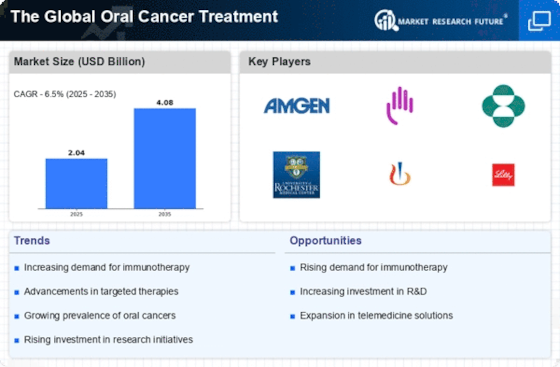
As per Market Research Future analysis, The Global Oral Cancer Treatment Market was estimated at 2.04 USD Billion in 2024. The oral cancer treatment industry is projected to grow from 2.173 USD Billion in 2025 to 4.079 USD Billion by 2035, exhibiting a compound annual growth rate (CAGR) of 6.5% during the forecast period 2025 - 2035

Key Market Trends & Highlights

The Global Oral Cancer Treatment Market is poised for substantial growth driven by innovative therapies and increasing awareness.

  • The emergence of targeted therapies is reshaping treatment paradigms in the oral cancer landscape. North America remains the largest market, while the Asia-Pacific region is recognized as the fastest-growing area for oral cancer treatments. Squamous cell carcinoma continues to dominate the market, whereas lymphomas are emerging as the fastest-growing segment. The increasing incidence of oral cancer and advancements in treatment modalities are key drivers propelling market expansion.

Market Size & Forecast

2024 Market Size 2.04 (USD Billion)
2035 Market Size 4.079 (USD Billion)
CAGR (2025 - 2035) 6.5%
Largest Regional Market Share in 2024 North America

Major Players

Amgen (US), <a title="Bristol-Myers Squibb" href="https://www.bms.com/gb/our-therapy-areas/cancer/head-and-neck-cancer.html" target="_blank" rel="noopener">Bristol-Myers Squibb</a> (US), Merck &amp; Co. (US), Roche (CH), <a title="Novartis" href="https://www.novartis.com/us-en/sites/novartis_us/files/MMO-1192118-oral-oncology-medication-therapy-management-flowsheet.pdf" target="_blank" rel="noopener">Novartis</a> (CH), Eli Lilly and Company (US), Pfizer (US), AstraZeneca (GB), GSK (GB)

Market Trends

The Global Oral Cancer Treatment Market is currently experiencing a dynamic evolution, driven by advancements in medical technology and an increasing awareness of oral health. Innovative therapies, including targeted treatments and immunotherapy, are gaining traction, suggesting a shift towards more personalized approaches in managing oral cancer. This transformation is further supported by ongoing research initiatives aimed at understanding the molecular mechanisms underlying oral malignancies, which may lead to the development of novel therapeutic agents. Additionally, the rising prevalence of oral cancer, attributed to factors such as tobacco use and dietary habits, underscores the urgent need for effective treatment options. As healthcare systems worldwide adapt to these challenges, collaboration among stakeholders, including pharmaceutical companies, healthcare providers, and research institutions, appears essential for fostering innovation and improving patient outcomes. Driven by a rising global health burden and diagnostic innovations, the oral cancer treatment market size is anticipated to expand significantly.

Moreover, The Global Oral Cancer Treatment Market is likely to witness a surge in demand for minimally invasive procedures, as patients increasingly prefer treatments that offer quicker recovery times and reduced side effects. The integration of digital health technologies, such as telemedicine and mobile health applications, may also play a pivotal role in enhancing patient engagement and adherence to treatment regimens. Overall, the oral cancer treatment market landscape is poised for significant transformation, with a focus on improving accessibility and affordability of oral cancer therapies, thereby ensuring that patients receive timely and effective care. A comprehensive oral cancer treatment market analysis reveals that this growth is primarily fueled by the rising global incidence of oral malignancies and significant breakthroughs in immunotherapy and precision medicine.

Emergence of Targeted Therapies

The Global Oral Cancer Treatment Market is witnessing a notable shift towards targeted therapies, which aim to attack specific cancer cells while sparing healthy tissue. This approach not only enhances treatment efficacy but also minimizes adverse effects, making it a preferred choice among patients and healthcare providers alike.

Rise of Digital Health Solutions

Digital health solutions are becoming increasingly prevalent in The Global Oral Cancer Treatment Market. These technologies facilitate remote monitoring and consultations, thereby improving patient access to care and enabling timely interventions. The integration of such solutions may enhance overall treatment adherence and patient satisfaction.

Focus on Preventive Care

There is a growing emphasis on preventive care within The Global Oral Cancer Treatment Market. Educational initiatives aimed at raising awareness about risk factors and early detection are likely to play a crucial role in reducing the incidence of oral cancer, ultimately leading to better health outcomes.

Oral Cancer Treatment Market Market Drivers

Rising Geriatric Population

The increasing geriatric population is a significant factor driving The Global Oral Cancer Treatment Industry. As the global population ages, the incidence of oral cancer is expected to rise, given that older adults are more susceptible to various health conditions, including cancer. By 2030, it is projected that the number of individuals aged 65 and older will reach approximately 1.4 billion, creating a larger demographic at risk for oral cancer. This demographic shift necessitates the development of tailored treatment options that cater to the unique needs of older patients. Consequently, pharmaceutical companies and healthcare providers are likely to focus on creating therapies that are not only effective but also consider the comorbidities often present in this age group. This trend is expected to significantly influence market growth.

Growing Awareness and Education

The increasing awareness and education regarding oral cancer are pivotal drivers for The Global Oral Cancer Treatment Industry. Public health campaigns and educational initiatives have been instrumental in informing individuals about the risks associated with oral cancer, leading to earlier diagnosis and treatment. This heightened awareness is reflected in the rising number of screenings and consultations, which have surged by approximately 20% in recent years. As more individuals recognize the importance of oral health, the demand for effective treatment options is expected to rise correspondingly. Additionally, healthcare providers are focusing on educating patients about available therapies, which may further enhance treatment adherence and outcomes. This trend underscores the critical role of education in shaping market dynamics.

Government Initiatives and Funding

Government initiatives and funding aimed at combating oral cancer are crucial drivers for The Global Oral Cancer Treatment Industry. Various governments are implementing policies to enhance cancer care, including increased funding for research and development of new treatment options. For instance, several countries have established national cancer control programs that prioritize oral cancer, leading to improved access to treatment and care. This support is vital for fostering innovation within the industry, as it encourages collaboration between public and private sectors. Additionally, government-sponsored awareness campaigns are helping to educate the public about oral cancer prevention and treatment, further driving demand for effective therapies. As these initiatives continue to expand, they are likely to have a lasting impact on the market.

Increasing Incidence of Oral Cancer

The rising incidence of oral cancer is a primary driver for The Global Oral Cancer Treatment Industry. According to recent statistics, oral cancer cases have been steadily increasing, with an estimated 377,000 new cases reported annually. This alarming trend is attributed to various factors, including tobacco use, alcohol consumption, and the human papillomavirus (HPV). As awareness of these risk factors grows, healthcare systems are compelled to enhance their treatment offerings. Consequently, pharmaceutical companies are investing in research and development to create innovative therapies, thereby expanding the market. The increasing prevalence of oral cancer not only necessitates advanced treatment options but also drives demand for early detection and preventive measures, further propelling the market forward.

Advancements in Treatment Modalities

Technological advancements in treatment modalities are significantly influencing The Global Oral Cancer Treatment Industry. Innovations such as targeted therapies, immunotherapy, and minimally invasive surgical techniques are transforming the landscape of oral cancer treatment. For instance, targeted therapies have shown promising results in improving patient outcomes, leading to a projected market growth rate of approximately 7.5% over the next five years. These advancements not only enhance the efficacy of treatments but also reduce side effects, making them more appealing to patients. Furthermore, the integration of artificial intelligence in treatment planning and patient management is expected to streamline processes and improve overall care. As these technologies continue to evolve, they are likely to attract more investments, thereby fostering growth in the market.

Market Segment Insights

By Product Type: Squamous Cell Carcinoma (Largest) vs. Lymphomas (Fastest-Growing)

In The Global Oral Cancer Treatment, the segment of Squamous Cell Carcinoma commands the largest share, reflecting its prevalence in oral cancer cases worldwide. Following it are Verrucous Carcinoma and Minor Salivary Gland Carcinomas, which hold varying shares as well, while Lymphomas represent a smaller yet increasingly important segment. The significant market presence of Squamous Cell Carcinoma can be attributed to its high incidence, making it a focal point for treatment development and patient care in oral oncology. The growth trends within this segment are being driven by advances in treatment options and an increasing awareness of oral cancer symptoms, particularly surrounding Squamous Cell Carcinoma. The rising incidence of Lymphomas is shifting market dynamics, with a noticeable increase in research and treatment options dedicated to this form, indicating its fastest-growing status. Additionally, innovative therapies and the introduction of new drug formulations are enhancing patient outcomes, thus contributing to the overall positive growth outlook in the segment.

Squamous Cell Carcinoma (Dominant) vs. Lymphomas (Emerging)

The Global Oral Cancer Treatment shows Squamous Cell Carcinoma as the dominant segment, characterized by its high prevalence and the extensive treatment options available to manage this type of cancer. Extensive research and development in therapeutics have positioned it at the forefront of oral cancer therapies. In contrast, Lymphomas, while currently smaller in size, represent an emerging segment with rapid growth potential. Their unique treatment needs and increasing recognition in the oral cancer category drive innovation and investment, thus expanding the therapeutic landscape. Both segments showcase distinct characteristics and diversifying treatment modalities, shaping the future of oral cancer management.

By Treatment: Surgery (Largest) vs. Targeted Therapy (Fastest-Growing)

The Global Oral Cancer Treatment is characterized by a diverse array of treatment options, with Surgery holding the largest share among them. This is largely attributed to the rising incidence of oral cancers and the effectiveness of surgical interventions in early-stage diagnoses. Following Surgery, Radiation Therapy and Chemotherapy present significant contributions, while targeted therapies are increasingly gaining traction due to their specific targeting of cancer cells, offering reduced side effects and improved outcomes. In recent years, the landscape of oral cancer treatments has evolved, with targeted therapies emerging as the fastest-growing segment within the market. Advances in molecular biology and genetic profiling have prompted the development of <a title="personalized medicine" href="https://www.marketresearchfuture.com/reports/personalized-medicine-market-2937" target="_blank" rel="noopener">personalized medicine</a> approaches, enhancing treatment efficacy. Increased awareness among the population and improved healthcare access are propelling the sector forward, thereby driving investments and innovations in targeted and combination therapies to address diverse patient needs.

Surgery (Dominant) vs. Targeted Therapy (Emerging)

Surgery remains the dominant treatment modality in The Global Oral Cancer Treatment due to its direct approach in removing tumors and offering a better chance of complete cancer removal, especially in localized cases. Surgeons employ advanced techniques and technologies, such as minimally invasive surgery, to enhance recovery times and patient outcomes. Conversely, Targeted Therapy is an emerging sector, leveraging advancements in biopharmaceuticals to specifically attack cancer cells while sparing healthy tissues. This treatment leads to improved survival rates and fewer side effects, reflecting a significant shift towards personalized medicine. The integration of biomarkers in therapy selection further solidifies Targeted Therapy's role, indicating its potential to become a staple treatment option alongside traditional modalities.

By Application: Hospitals and Clinics (Largest) vs. Research Organizations (Fastest-Growing)

In The Global Oral Cancer Treatment, Hospitals and Clinics dominate the application segment, accounting for a significant portion of the market share. These healthcare facilities are often the first point of care for patients, providing comprehensive treatment services including diagnostics, surgery, and follow-up care. Research Organizations, while currently smaller in market share, are rapidly gaining traction due to their crucial role in developing innovative therapies and conducting clinical trials that advance the field of oral cancer treatment.

Hospitals and Clinics (Dominant) vs. Research Organizations (Emerging)

Hospitals and Clinics play a dominant role in The Global Oral Cancer Treatment as they provide essential treatment services and have well-established infrastructures. They are equipped with advanced technology for diagnosis and treatment, allowing for comprehensive patient care. On the other hand, Research Organizations are emerging as vital players due to their focus on innovative research and development. They contribute to clinical trials and new therapeutic approaches, driving market growth through advancements in oral cancer treatment. This synergy between clinical treatment facilities and research entities is crucial for improving patient outcomes and fostering innovation in therapeutic strategies.

Get more detailed insights about Oral Cancer Treatment Market Research Report – Forecast till 2035

Regional Insights

North America : Leading Innovation and Research

North America is the largest market for oral cancer treatment, holding approximately 45% of the global market share. The region benefits from advanced healthcare infrastructure, significant R&D investments, and a high prevalence of oral cancer. Regulatory support from agencies like the FDA accelerates the approval of innovative therapies, driving market growth. Increasing awareness and early detection initiatives further boost demand for effective treatment options. The United States is the primary contributor, with key players such as Amgen, Merck & Co., and Bristol-Myers Squibb leading the competitive landscape. Canada also plays a significant role, focusing on improving patient access to cutting-edge therapies. The presence of major pharmaceutical companies enhances collaboration and innovation, ensuring a robust pipeline of oral cancer treatments.

Europe : Regulatory Support and Growth

Europe is the second-largest market for oral cancer treatment, accounting for approximately 30% of the global market share. The region is characterized by stringent regulatory frameworks that ensure the safety and efficacy of treatments. Initiatives by the European Medicines Agency (EMA) promote research and development, fostering innovation in oral cancer therapies. The increasing incidence of oral cancer and rising healthcare expenditure are key drivers of market growth. Leading countries include Germany, France, and the UK, where significant investments in healthcare infrastructure and research are evident. Major players like Roche and Novartis are actively involved in developing new therapies. The competitive landscape is marked by collaborations between pharmaceutical companies and research institutions, enhancing the availability of advanced treatment options. The focus on personalized medicine is also gaining traction in the region.

Asia-Pacific : Rapid Growth and Opportunities

Asia-Pacific is witnessing rapid growth in the oral cancer treatment market, holding approximately 20% of the global market share. The region's increasing population, rising awareness about oral health, and improving healthcare infrastructure are significant growth drivers. Government initiatives aimed at cancer prevention and treatment are also contributing to market expansion. Countries like India and China are focusing on enhancing access to innovative therapies, which is expected to boost demand further. China and India are the leading markets in this region, with a growing number of local and international players entering the market. Companies like Pfizer and AstraZeneca are expanding their presence, driven by the increasing prevalence of oral cancer. The competitive landscape is evolving, with a focus on affordable treatment options and collaborations with local healthcare providers to improve patient access to therapies.

Middle East and Africa : Emerging Market with Challenges

The Middle East and Africa region is gradually emerging in the oral cancer treatment market, holding about 5% of the global market share. The growth is driven by increasing awareness of oral cancer, rising healthcare investments, and government initiatives aimed at improving cancer care. However, challenges such as limited access to advanced treatments and healthcare disparities persist. Countries like South Africa and the UAE are leading the market, focusing on enhancing treatment accessibility and quality of care. In South Africa, the government is implementing programs to improve cancer diagnosis and treatment, while the UAE is investing in healthcare infrastructure. The competitive landscape includes both local and international players, with companies like GSK and Eli Lilly expanding their operations. The focus on public-private partnerships is expected to enhance the availability of oral cancer treatments in the region, addressing the existing healthcare challenges.

Key Players and Competitive Insights

Major market players are spending a lot of money on R&D to increase their product lines, which will help the oral cancer treatment market grow even more. Market participants are also taking a range of strategic initiatives to grow their worldwide footprint, with key market developments such as new product launches, contractual agreements, mergers and acquisitions, increased investments, and collaboration with other organizations. Competitors in the oral cancer treatment industry must offer cost-effective items to expand and survive in an increasingly competitive and rising market environment. One of the primary business strategies adopted by manufacturers in the global oral cancer treatment industry to benefit clients and expand the market sector is to manufacture locally to reduce operating costs. In recent years, oral cancer treatment industry has provided medicine and treatment with some of the most significant benefits. The oral cancer treatment market major player such as Bristol-Myers Squibb Company (the U.S.), Merck & Co., Inc. (U.S.), Qilu Pharmaceutical Co., Ltd. (Asia Pacific) and others are working to expand the market demand by investing in research and development activities. Bristol-Myers Squibb Company (BMS) is a global biopharmaceutical company that focuses on discovering, developing, and delivering innovative medicines for patients with serious diseases. BMS was founded in 1858 and is headquartered in New York City. BMS has a diverse portfolio of medicines that includes treatments for cancer, cardiovascular diseases, immunoscience, and fibrosis. Some of the company's most well-known drugs include Opdivo, Eliquis, Orencia, and Yervoy. In 2020, Bristol Myers Squibb announced that the FDA had granted accelerated approval for its drug OPDIVO (nivolumab) for the treatment of patients with unresectable advanced, recurrent, or metastatic esophageal squamous cell carcinoma (ESCC) after prior fluoropyrimidine- and platinum-based chemotherapy. ESCC is a type of oral cancer that affects the lining of the esophagus. Also, Merck & Co., Inc. (also known as MSD outside of the United States and Canada) is a global pharmaceutical company headquartered in New Jersey, USA. Merck is one of the largest pharmaceutical companies in the world, with a focus on developing, manufacturing, and marketing innovative medicines, vaccines, and animal health products. The company's areas of focus include oncology, vaccines, infectious diseases, neuroscience, and cardiovascular disease, among others. Merck is known for its research and development capabilities, as well as its commitment to advancing healthcare and improving patient outcomes. In 2021, Merck announced that it had received FDA approval for KEYTRUDA (pembrolizumab) in combination with chemotherapy for the treatment of locally advanced or metastatic esophageal or gastroesophageal junction (GEJ) carcinoma. GEJ cancer can be a form of oral cancer. Merck has also been involved in ongoing clinical trials for the treatment of oral cancer with KEYTRUDA.

Key Companies in the Oral Cancer Treatment Market include

Industry Developments

In 2020 Bristol Myers Squibb announced that the FDA had granted accelerated approval for its drug OPDIVO (nivolumab) for the treatment of patients with unresectable advanced, recurrent, or metastatic esophageal squamous cell carcinoma (ESCC) after prior fluoropyrimidine- and platinum-based chemotherapy. ESCC is a type of oral cancer that affects the lining of the esophagus.

In 2019 GlaxoSmithKline announced the FDA approval of its drug BLENREP (belantamab mafodotin-blmf) for the treatment of adult patients with relapsed or refractory multiple myeloma. Multiple myeloma is a type of cancer that affects plasma cells, which are found in the bone marrow and can also be a form of oral cancer. BLENREP is an antibody-drug conjugate that targets the BCMA protein, which is expressed on the surface of multiple myeloma cells.

Future Outlook

Oral Cancer Treatment Market Future Outlook

The Global Oral Cancer Treatment Market is projected to grow at a 6.5% CAGR from 2025 to 2035, driven by advancements in treatment technologies, increasing awareness, and rising incidence rates.

New opportunities lie in:

  • <p>Development of personalized immunotherapy solutions for oral cancer patients. Expansion of <a title="telehealth service" href="https://www.marketresearchfuture.com/reports/telehealth-service-market-43509" target="_blank" rel="noopener">telehealth services</a> for remote patient monitoring and consultations. Investment in AI-driven diagnostic tools to enhance early detection and treatment planning.</p>

By 2035, the Oral Cancer Treatment Market is expected to achieve substantial growth, reflecting advancements in treatment and increased patient access.

Market Segmentation

Oral Cancer Treatment Market Treatment Outlook

  • Surgery
  • Radiation Therapy
  • Targeted Therapy
  • Chemotherapy
  • Other Treatments

Oral Cancer Treatment Market Application Outlook

  • Hospitals and Clinics
  • Research Organization
  • Academic Institutes

Oral Cancer Treatment Market Product Type Outlook

  • Squamous Cell Carcinoma
  • Verrucous Carcinoma
  • Minor Salivary Gland Carcinomas
  • Lymphomas

Report Scope

MARKET SIZE 2024 2.04(USD Billion)
MARKET SIZE 2025 2.173(USD Billion)
MARKET SIZE 2035 4.079(USD Billion)
COMPOUND ANNUAL GROWTH RATE (CAGR) 6.5% (2025 - 2035)
REPORT COVERAGE Revenue Forecast, Competitive Landscape, Growth Factors, and Trends
BASE YEAR 2024
Market Forecast Period 2025 - 2035
Historical Data 2019 - 2024
Market Forecast Units USD Billion
Key Companies Profiled Amgen (US), Bristol-Myers Squibb (US), Merck & Co. (US), Roche (CH), Novartis (CH), Eli Lilly and Company (US), Pfizer (US), AstraZeneca (GB), GSK (GB)
Segments Covered Product Type, Treatment, Application, Region
Key Market Opportunities Advancements in immunotherapy and targeted therapies enhance treatment options in The Global Oral Cancer Treatment.
Key Market Dynamics Rising demand for innovative therapies drives competition and regulatory scrutiny in the oral cancer treatment sector.
Countries Covered North America, Europe, APAC, South America, MEA

FAQs

What is the projected market valuation of The Global Oral Cancer Treatment by 2035?

<p>The projected market valuation for The Global Oral Cancer Treatment is expected to reach 4.079 USD Billion by 2035.</p>

What was the market valuation of The Global Oral Cancer Treatment in 2024?

The overall market valuation of the Oral Cancer Treatment Market was 2.04 USD Billion in 2024.

What is the expected CAGR for The Global Oral Cancer Treatment during the forecast period 2025 - 2035?

<p>The expected CAGR for The Global Oral Cancer Treatment during the forecast period 2025 - 2035 is 6.5%.</p>

Which product type segment had the highest valuation in 2024?

<p>In 2024, the Squamous Cell Carcinoma segment had the highest valuation at 0.9 USD Billion.</p>

What are the projected values for Chemotherapy in the treatment segment by 2035?

<p>The projected value for Chemotherapy in the treatment segment is expected to reach 1.0 USD Billion by 2035.</p>

Which application segment is anticipated to grow significantly by 2035?

<p>The Hospitals and Clinics application segment is anticipated to grow significantly, reaching 1.632 USD Billion by 2035.</p>

Who are the key players in The Global Oral Cancer Treatment?

Key players in the market include Amgen, Bristol-Myers Squibb, Merck &amp; Co., Roche, Novartis, Eli Lilly and Company, Pfizer, AstraZeneca, and GSK.

What is the projected value for Radiation Therapy in the treatment segment by 2035?

The projected value for Radiation Therapy in the treatment segment is expected to reach 0.75 USD Billion by 2035.

How does the valuation of Minor Salivary Gland Carcinomas compare to Verrucous Carcinoma in 2024?

In 2024, the valuation for Minor Salivary Gland Carcinomas was 0.3 USD Billion, compared to 0.5 USD Billion for Verrucous Carcinoma.

What is the expected growth trend for the Research Organization application segment by 2035?

The Research Organization application segment is expected to grow, reaching a projected value of 0.816 USD Billion by 2035.

  1. SECTION I: EXECUTIVE SUMMARY AND KEY HIGHLIGHTS |
    1. EXECUTIVE SUMMARY | |
      1. Market Overview | |
      2. Key Findings | |
      3. Market Segmentation | |
      4. Competitive Landscape | |
      5. Challenges and Opportunities | |
      6. Future Outlook 2
  2. SECTION II: SCOPING, METHODOLOGY AND MARKET STRUCTURE |
    1. MARKET INTRODUCTION | |
      1. Definition | |
      2. Scope of the study | | |
    2. RESEARCH METHODOLOGY | |
      1. Overview | |
      2. Data Mining | |
      3. Secondary Research | |
      4. Primary Research | | |
      5. Forecasting Model | |
      6. Market Size Estimation | | |
      7. Data Triangulation | |
      8. Validation 3
  3. SECTION III: QUALITATIVE ANALYSIS |
    1. MARKET DYNAMICS | |
      1. Overview | |
      2. Drivers | |
      3. Restraints | |
      4. Opportunities |
    2. MARKET FACTOR ANALYSIS | |
      1. Value chain Analysis | |
      2. Porter's Five Forces Analysis | | |
      3. COVID-19 Impact Analysis | | |
  4. SECTION IV: QUANTITATIVE ANALYSIS |
    1. Healthcare, BY Product Type (USD Billion) | |
      1. Squamous Cell Carcinoma | |
      2. Verrucous Carcinoma | |
      3. Minor Salivary Gland Carcinomas | |
      4. Lymphomas |
    2. Healthcare, BY Treatment (USD Billion) | |
      1. Surgery | |
      2. Radiation Therapy | |
      3. Targeted Therapy | |
      4. Chemotherapy | |
      5. Other Treatments |
    3. Healthcare, BY Application (USD Billion) | |
      1. Hospitals and Clinics | |
      2. Research Organization | |
      3. Academic Institutes |
    4. Healthcare, BY Region (USD Billion) | |
      1. North America | | |
      2. Europe | | |
      3. APAC | | |
      4. South America | | |
      5. MEA | | |
  5. SECTION V: COMPETITIVE ANALYSIS |
    1. Competitive Landscape | |
      1. Overview | |
      2. Competitive Analysis | |
      3. Market share Analysis | |
      4. Major Growth Strategy in the Healthcare | |
      5. Competitive Benchmarking | |
      6. Leading Players in Terms of Number of Developments in the Healthcare | |
      7. Key developments and growth strategies | | |
      8. Major Players Financial Matrix | | |
    2. Company Profiles | |
      1. Amgen (US) | | |
      2. Bristol-Myers Squibb (US) | | |
      3. Merck & Co. (US) | | |
      4. Roche (CH) | | |
      5. Novartis (CH) | | |
      6. Eli Lilly and Company (US) | | |
      7. Pfizer (US) | | |
      8. AstraZeneca (GB) | | |
      9. GSK (GB) | | |
    3. Appendix | |
      1. References | |
      2. Related Reports 6 LIST OF FIGURES |
    4. MARKET SYNOPSIS |
    5. NORTH AMERICA MARKET ANALYSIS |
    6. US MARKET ANALYSIS BY PRODUCT TYPE |
    7. US MARKET ANALYSIS BY TREATMENT |
    8. US MARKET ANALYSIS BY APPLICATION |
    9. CANADA MARKET ANALYSIS BY PRODUCT TYPE |
    10. CANADA MARKET ANALYSIS BY TREATMENT |
    11. CANADA MARKET ANALYSIS BY APPLICATION |
    12. EUROPE MARKET ANALYSIS |
    13. GERMANY MARKET ANALYSIS BY PRODUCT TYPE |
    14. GERMANY MARKET ANALYSIS BY TREATMENT |
    15. GERMANY MARKET ANALYSIS BY APPLICATION |
    16. UK MARKET ANALYSIS BY PRODUCT TYPE |
    17. UK MARKET ANALYSIS BY TREATMENT |
    18. UK MARKET ANALYSIS BY APPLICATION |
    19. FRANCE MARKET ANALYSIS BY PRODUCT TYPE |
    20. FRANCE MARKET ANALYSIS BY TREATMENT |
    21. FRANCE MARKET ANALYSIS BY APPLICATION |
    22. RUSSIA MARKET ANALYSIS BY PRODUCT TYPE |
    23. RUSSIA MARKET ANALYSIS BY TREATMENT |
    24. RUSSIA MARKET ANALYSIS BY APPLICATION |
    25. ITALY MARKET ANALYSIS BY PRODUCT TYPE |
    26. ITALY MARKET ANALYSIS BY TREATMENT |
    27. ITALY MARKET ANALYSIS BY APPLICATION |
    28. SPAIN MARKET ANALYSIS BY PRODUCT TYPE |
    29. SPAIN MARKET ANALYSIS BY TREATMENT |
    30. SPAIN MARKET ANALYSIS BY APPLICATION |
    31. REST OF EUROPE MARKET ANALYSIS BY PRODUCT TYPE |
    32. REST OF EUROPE MARKET ANALYSIS BY TREATMENT |
    33. REST OF EUROPE MARKET ANALYSIS BY APPLICATION |
    34. APAC MARKET ANALYSIS |
    35. CHINA MARKET ANALYSIS BY PRODUCT TYPE |
    36. CHINA MARKET ANALYSIS BY TREATMENT |
    37. CHINA MARKET ANALYSIS BY APPLICATION |
    38. INDIA MARKET ANALYSIS BY PRODUCT TYPE |
    39. INDIA MARKET ANALYSIS BY TREATMENT |
    40. INDIA MARKET ANALYSIS BY APPLICATION |
    41. JAPAN MARKET ANALYSIS BY PRODUCT TYPE |
    42. JAPAN MARKET ANALYSIS BY TREATMENT |
    43. JAPAN MARKET ANALYSIS BY APPLICATION |
    44. SOUTH KOREA MARKET ANALYSIS BY PRODUCT TYPE |
    45. SOUTH KOREA MARKET ANALYSIS BY TREATMENT |
    46. SOUTH KOREA MARKET ANALYSIS BY APPLICATION |
    47. MALAYSIA MARKET ANALYSIS BY PRODUCT TYPE |
    48. MALAYSIA MARKET ANALYSIS BY TREATMENT |
    49. MALAYSIA MARKET ANALYSIS BY APPLICATION |
    50. THAILAND MARKET ANALYSIS BY PRODUCT TYPE |
    51. THAILAND MARKET ANALYSIS BY TREATMENT |
    52. THAILAND MARKET ANALYSIS BY APPLICATION |
    53. INDONESIA MARKET ANALYSIS BY PRODUCT TYPE |
    54. INDONESIA MARKET ANALYSIS BY TREATMENT |
    55. INDONESIA MARKET ANALYSIS BY APPLICATION |
    56. REST OF APAC MARKET ANALYSIS BY PRODUCT TYPE |
    57. REST OF APAC MARKET ANALYSIS BY TREATMENT |
    58. REST OF APAC MARKET ANALYSIS BY APPLICATION |
    59. SOUTH AMERICA MARKET ANALYSIS |
    60. BRAZIL MARKET ANALYSIS BY PRODUCT TYPE |
    61. BRAZIL MARKET ANALYSIS BY TREATMENT |
    62. BRAZIL MARKET ANALYSIS BY APPLICATION |
    63. MEXICO MARKET ANALYSIS BY PRODUCT TYPE |
    64. MEXICO MARKET ANALYSIS BY TREATMENT |
    65. MEXICO MARKET ANALYSIS BY APPLICATION |
    66. ARGENTINA MARKET ANALYSIS BY PRODUCT TYPE |
    67. ARGENTINA MARKET ANALYSIS BY TREATMENT |
    68. ARGENTINA MARKET ANALYSIS BY APPLICATION |
    69. REST OF SOUTH AMERICA MARKET ANALYSIS BY PRODUCT TYPE |
    70. REST OF SOUTH AMERICA MARKET ANALYSIS BY TREATMENT |
    71. REST OF SOUTH AMERICA MARKET ANALYSIS BY APPLICATION |
    72. MEA MARKET ANALYSIS |
    73. GCC COUNTRIES MARKET ANALYSIS BY PRODUCT TYPE |
    74. GCC COUNTRIES MARKET ANALYSIS BY TREATMENT |
    75. GCC COUNTRIES MARKET ANALYSIS BY APPLICATION |
    76. SOUTH AFRICA MARKET ANALYSIS BY PRODUCT TYPE |
    77. SOUTH AFRICA MARKET ANALYSIS BY TREATMENT |
    78. SOUTH AFRICA MARKET ANALYSIS BY APPLICATION |
    79. REST OF MEA MARKET ANALYSIS BY PRODUCT TYPE |
    80. REST OF MEA MARKET ANALYSIS BY TREATMENT |
    81. REST OF MEA MARKET ANALYSIS BY APPLICATION |
    82. KEY BUYING CRITERIA OF HEALTHCARE |
    83. RESEARCH PROCESS OF MRFR |
    84. DRO ANALYSIS OF HEALTHCARE |
    85. DRIVERS IMPACT ANALYSIS: HEALTHCARE |
    86. RESTRAINTS IMPACT ANALYSIS: HEALTHCARE |
    87. SUPPLY / VALUE CHAIN: HEALTHCARE |
    88. HEALTHCARE, BY PRODUCT TYPE, 2024 (% SHARE) |
    89. HEALTHCARE, BY PRODUCT TYPE, 2024 TO 2035 (USD Billion) |
    90. HEALTHCARE, BY TREATMENT, 2024 (% SHARE) |
    91. HEALTHCARE, BY TREATMENT, 2024 TO 2035 (USD Billion) |
    92. HEALTHCARE, BY APPLICATION, 2024 (% SHARE) |
    93. HEALTHCARE, BY APPLICATION, 2024 TO 2035 (USD Billion) |
    94. BENCHMARKING OF MAJOR COMPETITORS 7 LIST OF TABLES |
    95. LIST OF ASSUMPTIONS | |
      1. |
    96. North America MARKET SIZE ESTIMATES; FORECAST | |
      1. BY PRODUCT TYPE, 2025-2035 (USD Billion) | |
      2. BY TREATMENT, 2025-2035 (USD Billion) | |
      3. BY APPLICATION, 2025-2035 (USD Billion) |
    97. US MARKET SIZE ESTIMATES; FORECAST | |
      1. BY PRODUCT TYPE, 2025-2035 (USD Billion) | |
      2. BY TREATMENT, 2025-2035 (USD Billion) | |
      3. BY APPLICATION, 2025-2035 (USD Billion) |
    98. Canada MARKET SIZE ESTIMATES; FORECAST | |
      1. BY PRODUCT TYPE, 2025-2035 (USD Billion) | |
      2. BY TREATMENT, 2025-2035 (USD Billion) | |
      3. BY APPLICATION, 2025-2035 (USD Billion) |
    99. Europe MARKET SIZE ESTIMATES; FORECAST | |
      1. BY PRODUCT TYPE, 2025-2035 (USD Billion) | |
      2. BY TREATMENT, 2025-2035 (USD Billion) | |
      3. BY APPLICATION, 2025-2035 (USD Billion) |
    100. Germany MARKET SIZE ESTIMATES; FORECAST | |
      1. BY PRODUCT TYPE, 2025-2035 (USD Billion) | |
      2. BY TREATMENT, 2025-2035 (USD Billion) | |
      3. BY APPLICATION, 2025-2035 (USD Billion) |
    101. UK MARKET SIZE ESTIMATES; FORECAST | |
      1. BY PRODUCT TYPE, 2025-2035 (USD Billion) | |
      2. BY TREATMENT, 2025-2035 (USD Billion) | |
      3. BY APPLICATION, 2025-2035 (USD Billion) |
    102. France MARKET SIZE ESTIMATES; FORECAST | |
      1. BY PRODUCT TYPE, 2025-2035 (USD Billion) | |
      2. BY TREATMENT, 2025-2035 (USD Billion) | |
      3. BY APPLICATION, 2025-2035 (USD Billion) |
    103. Russia MARKET SIZE ESTIMATES; FORECAST | |
      1. BY PRODUCT TYPE, 2025-2035 (USD Billion) | |
      2. BY TREATMENT, 2025-2035 (USD Billion) | |
      3. BY APPLICATION, 2025-2035 (USD Billion) |
    104. Italy MARKET SIZE ESTIMATES; FORECAST | |
      1. BY PRODUCT TYPE, 2025-2035 (USD Billion) | |
      2. BY TREATMENT, 2025-2035 (USD Billion) | |
      3. BY APPLICATION, 2025-2035 (USD Billion) |
    105. Spain MARKET SIZE ESTIMATES; FORECAST | |
      1. BY PRODUCT TYPE, 2025-2035 (USD Billion) | |
      2. BY TREATMENT, 2025-2035 (USD Billion) | |
      3. BY APPLICATION, 2025-2035 (USD Billion) |
    106. Rest of Europe MARKET SIZE ESTIMATES; FORECAST | |
      1. BY PRODUCT TYPE, 2025-2035 (USD Billion) | |
      2. BY TREATMENT, 2025-2035 (USD Billion) | |
      3. BY APPLICATION, 2025-2035 (USD Billion) |
    107. APAC MARKET SIZE ESTIMATES; FORECAST | |
      1. BY PRODUCT TYPE, 2025-2035 (USD Billion) | |
      2. BY TREATMENT, 2025-2035 (USD Billion) | |
      3. BY APPLICATION, 2025-2035 (USD Billion) |
    108. China MARKET SIZE ESTIMATES; FORECAST | |
      1. BY PRODUCT TYPE, 2025-2035 (USD Billion) | |
      2. BY TREATMENT, 2025-2035 (USD Billion) | |
      3. BY APPLICATION, 2025-2035 (USD Billion) |
    109. India MARKET SIZE ESTIMATES; FORECAST | |
      1. BY PRODUCT TYPE, 2025-2035 (USD Billion) | |
      2. BY TREATMENT, 2025-2035 (USD Billion) | |
      3. BY APPLICATION, 2025-2035 (USD Billion) |
    110. Japan MARKET SIZE ESTIMATES; FORECAST | |
      1. BY PRODUCT TYPE, 2025-2035 (USD Billion) | |
      2. BY TREATMENT, 2025-2035 (USD Billion) | |
      3. BY APPLICATION, 2025-2035 (USD Billion) |
    111. South Korea MARKET SIZE ESTIMATES; FORECAST | |
      1. BY PRODUCT TYPE, 2025-2035 (USD Billion) | |
      2. BY TREATMENT, 2025-2035 (USD Billion) | |
      3. BY APPLICATION, 2025-2035 (USD Billion) |
    112. Malaysia MARKET SIZE ESTIMATES; FORECAST | |
      1. BY PRODUCT TYPE, 2025-2035 (USD Billion) | |
      2. BY TREATMENT, 2025-2035 (USD Billion) | |
      3. BY APPLICATION, 2025-2035 (USD Billion) |
    113. Thailand MARKET SIZE ESTIMATES; FORECAST | |
      1. BY PRODUCT TYPE, 2025-2035 (USD Billion) | |
      2. BY TREATMENT, 2025-2035 (USD Billion) | |
      3. BY APPLICATION, 2025-2035 (USD Billion) |
    114. Indonesia MARKET SIZE ESTIMATES; FORECAST | |
      1. BY PRODUCT TYPE, 2025-2035 (USD Billion) | |
      2. BY TREATMENT, 2025-2035 (USD Billion) | |
      3. BY APPLICATION, 2025-2035 (USD Billion) |
    115. Rest of APAC MARKET SIZE ESTIMATES; FORECAST | |
      1. BY PRODUCT TYPE, 2025-2035 (USD Billion) | |
      2. BY TREATMENT, 2025-2035 (USD Billion) | |
      3. BY APPLICATION, 2025-2035 (USD Billion) |
    116. South America MARKET SIZE ESTIMATES; FORECAST | |
      1. BY PRODUCT TYPE, 2025-2035 (USD Billion) | |
      2. BY TREATMENT, 2025-2035 (USD Billion) | |
      3. BY APPLICATION, 2025-2035 (USD Billion) |
    117. Brazil MARKET SIZE ESTIMATES; FORECAST | |
      1. BY PRODUCT TYPE, 2025-2035 (USD Billion) | |
      2. BY TREATMENT, 2025-2035 (USD Billion) | |
      3. BY APPLICATION, 2025-2035 (USD Billion) |
    118. Mexico MARKET SIZE ESTIMATES; FORECAST | |
      1. BY PRODUCT TYPE, 2025-2035 (USD Billion) | |
      2. BY TREATMENT, 2025-2035 (USD Billion) | |
      3. BY APPLICATION, 2025-2035 (USD Billion) |
    119. Argentina MARKET SIZE ESTIMATES; FORECAST | |
      1. BY PRODUCT TYPE, 2025-2035 (USD Billion) | |
      2. BY TREATMENT, 2025-2035 (USD Billion) | |
      3. BY APPLICATION, 2025-2035 (USD Billion) |
    120. Rest of South America MARKET SIZE ESTIMATES; FORECAST | |
      1. BY PRODUCT TYPE, 2025-2035 (USD Billion) | |
      2. BY TREATMENT, 2025-2035 (USD Billion) | |
      3. BY APPLICATION, 2025-2035 (USD Billion) |
    121. MEA MARKET SIZE ESTIMATES; FORECAST | |
      1. BY PRODUCT TYPE, 2025-2035 (USD Billion) | |
      2. BY TREATMENT, 2025-2035 (USD Billion) | |
      3. BY APPLICATION, 2025-2035 (USD Billion) |
    122. GCC Countries MARKET SIZE ESTIMATES; FORECAST | |
      1. BY PRODUCT TYPE, 2025-2035 (USD Billion) | |
      2. BY TREATMENT, 2025-2035 (USD Billion) | |
      3. BY APPLICATION, 2025-2035 (USD Billion) |
    123. South Africa MARKET SIZE ESTIMATES; FORECAST | |
      1. BY PRODUCT TYPE, 2025-2035 (USD Billion) | |
      2. BY TREATMENT, 2025-2035 (USD Billion) | |
      3. BY APPLICATION, 2025-2035 (USD Billion) |
    124. Rest of MEA MARKET SIZE ESTIMATES; FORECAST | |
      1. BY PRODUCT TYPE, 2025-2035 (USD Billion) | |
      2. BY TREATMENT, 2025-2035 (USD Billion) | |
      3. BY APPLICATION, 2025-2035 (USD Billion) |
    125. PRODUCT LAUNCH/PRODUCT DEVELOPMENT/APPROVAL | |
      1. |
    126. ACQUISITION/PARTNERSHIP | |

Healthcare Market Segmentation

Healthcare By Product Type (USD Billion, 2025-2035)

  • Squamous Cell Carcinoma
  • Verrucous Carcinoma
  • Minor Salivary Gland Carcinomas
  • Lymphomas

Healthcare By Treatment (USD Billion, 2025-2035)

  • Surgery
  • Radiation Therapy
  • Targeted Therapy
  • Chemotherapy
  • Other Treatments

Healthcare By Application (USD Billion, 2025-2035)

  • Hospitals and Clinics
  • Research Organization
  • Academic Institutes
Infographic

Free Sample Request

Kindly complete the form below to receive a free sample of this Report

Get Free Sample

Customer Strories

Compare Licence

×
Features License Type
Single User Multiuser License Enterprise User
Price $4,950 $5,950 $7,250
Maximum User Access Limit 1 User Upto 10 Users Unrestricted Access Throughout the Organization
Free Customization
Direct Access to Analyst
Deliverable Format
Platform Access
Discount on Next Purchase 10% 15% 15%
Printable Versions
%>