
×
Hero Background
English
Chinese
French
Japanese
Korean
German
Spanish

Okra Seeds Market Analysis

ID: MRFR/Agri/6246-CR
129 Pages
Snehal Singh
April 2019

Global Okra Seeds Market Research Report Information By Category (Conventional and Organic) and By Region (Asia-Pacific, North America, Europe and the Rest of the World) - Forecast till 2035

Share:
Download PDF ×

We do not share your information with anyone. However, we may send you emails based on your report interest from time to time. You may contact us at any time to opt-out.

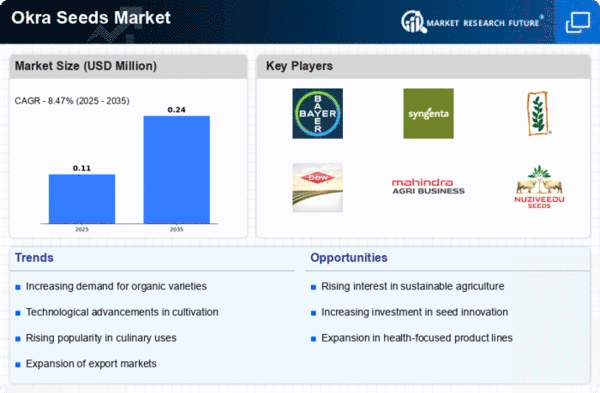
Okra Seeds Market Infographic
Purchase Options

Market Analysis

In-depth Analysis of Okra Seeds Market Industry Landscape

Private sector companies have emerged as key players in the production and distribution of seeds, contributing significantly to the agricultural landscapes of both developed and developing economies. This sector has witnessed remarkable growth in recent decades, driven by the forces of globalization in trade and advancements in biotechnology for plant breeding. The influence of private enterprises is evident across the spectrum, with multinational corporations, small-scale enterprises, and medium-sized companies establishing a robust presence, particularly in the developing regions of Asia-Pacific and Latin America.

A notable example illustrating the impact of private sector involvement is found in Colombia, where over 70% of certified vegetable seeds are produced by domestic companies. The Colombian government has recognized the pivotal role played by the private sector and has responded with policy changes aimed at fostering its growth. One significant shift has been the transition from compulsory regulations governing seed certification and variety releases to a more voluntary framework in Latin America. This adjustment not only reflects the adaptability of the regulatory environment but also encourages private sector participation and innovation.

Furthermore, Brazil stands out as a prime example of collaboration between private and state sectors in research and development (R&D). The Brazilian Agricultural Research Corporation (EMBRAPA) serves as a platform where both private enterprises and the state engage in collaborative efforts to advance agricultural research. This model of cooperation is instrumental in driving innovation and addressing challenges in the agriculture sector, ultimately benefiting farmers and contributing to global food security.

The partnership between the public and private sectors proves to be a strategic alliance for the efficient distribution of high-quality seeds, particularly to smallholder farmers. This collaborative approach directly aligns with global initiatives aimed at achieving food security targets. The involvement of private companies brings with it a level of agility and innovation that complements the efforts of the public sector. This synergy is crucial in ensuring that farmers, especially those in resource-limited settings, have access to a diverse range of quality seeds, which is fundamental for sustainable and productive agriculture.

The globalization of trade has facilitated the cross-border movement of seeds, allowing private companies to establish a presence in diverse markets. This has not only spurred economic growth in the seed industry but has also contributed to agricultural diversification and increased resilience in the face of evolving environmental and market conditions.


Author
Snehal Singh
Assistant Manager - Research

High acumen in analyzing complex macro & micro markets with more than 6 years of work experience in the field of market research. By implementing her analytical skills in forecasting and estimation into market research reports, she has expertise in Packaging, Construction, and Equipment domains. She handles a team size of 20-25 resources and ensures smooth running of the projects, associated marketing activities, and client servicing.

Leave a Comment

FAQs

What is the predicted growth rate of the Okra Seeds Market?

Okra Seeds Market is expected to expand at 11% CAGR from 2022 to 2030.

How big will the Okra Seeds Market be in 2030?

Okra Seeds Market size can reach USD 380 Million by 2030.

Who is the Leading Key Player in the Okra Seeds Market?

Syngenta AG (Switzerland), Kitazawa Seed Company (US), Maharashtra Hybrid Seeds Company Private Limited (India), Sakata Seed Corporation (Japan), W. Atlee Burpee & Co (US), Alabama Farmers Cooperative Inc (US), Western Bio Vegetable Seeds Ltd (India), UPL Limited (India), Mahindra Agri Solutions Pvt. Ltd (India), Terra Agro Biotech Pvt. Ltd (India)

Which region will hold the largest share of the okra market?

APAC okra seed market can hold share of about 63.77% of the entire market by 2030

Market Summary

As per MRFR analysis, the Okra Seeds Market Size was estimated at 0.1 USD Million in 2024. The Okra Seeds industry is projected to grow from 0.107 in 2025 to 0.24 by 2035, exhibiting a compound annual growth rate (CAGR) of 8.47 during the forecast period 2025 - 2035.

Key Market Trends & Highlights

The Okra Seeds Market is experiencing a dynamic shift driven by health trends and technological advancements.

  • Rising health consciousness among consumers is propelling the demand for okra seeds, particularly in North America.
  • Technological advancements in agriculture are enhancing the efficiency of okra cultivation, especially in the Asia-Pacific region.
  • Commercial cultivation remains the largest segment, while home gardening is emerging as the fastest-growing segment in the market.
  • Increasing demand for organic produce and the rising popularity of ethnic cuisines are key drivers influencing market growth.

Market Size & Forecast

2024 Market Size 0.1 (USD Million)
2035 Market Size 0.24 (USD Million)
CAGR (2025 - 2035) 8.47%
Largest Regional Market Share in 2024 Asia-Pacific

Major Players

<p>Bayer CropScience (DE), Syngenta (CH), Monsanto (US), Dow AgroSciences (US), Mahindra Agribusiness (IN), Nuziveedu Seeds (IN), Kaveri Seed Company (IN), Rasi Seeds (IN), Sakata Seed Corporation (JP), East-West Seed (TH)</p>

Market Trends

The Okra Seeds Market is currently experiencing a dynamic phase characterized by evolving consumer preferences and agricultural practices. As the demand for nutritious and sustainable food sources rises, okra seeds are gaining traction among farmers and agricultural enterprises. This trend appears to be driven by the vegetable's adaptability to various climates and its potential for high yield. Furthermore, the increasing awareness of health benefits associated with okra, such as its rich nutrient profile, seems to be influencing consumer choices, thereby enhancing market growth. In addition, advancements in seed technology and breeding techniques are likely to play a pivotal role in shaping the Okra Seeds Market. Innovations aimed at improving disease resistance and enhancing crop resilience are becoming more prevalent. These developments may not only boost productivity but also attract a broader range of stakeholders, including smallholder farmers. Overall, the Okra Seeds Market appears poised for continued expansion, driven by both consumer demand and technological advancements in agriculture.

Rising Health Consciousness

The growing awareness of health and nutrition among consumers is influencing the Okra Seeds Market. As individuals seek healthier food options, the demand for okra, known for its beneficial properties, is likely to increase. This trend may encourage farmers to cultivate more okra, thereby expanding the market.

Technological Advancements in Agriculture

Innovations in agricultural technology are shaping the Okra Seeds Market. Enhanced breeding techniques and improved seed varieties are emerging, which could lead to higher yields and better disease resistance. This trend may attract more farmers to invest in okra cultivation.

Sustainable Farming Practices

The shift towards sustainable agriculture is impacting the Okra Seeds Market. As environmental concerns grow, farmers are increasingly adopting practices that promote sustainability. This trend may lead to a rise in organic okra cultivation, appealing to eco-conscious consumers.

Okra Seeds Market Market Drivers

Market Growth Projections

The Global Okra Seeds Market Industry is projected to grow significantly, with estimates indicating a market value of 195.5 USD Million in 2024 and a remarkable increase to 640.3 USD Million by 2035. This growth trajectory suggests a compound annual growth rate of 11.39% from 2025 to 2035, highlighting the increasing interest in okra cultivation and its economic potential. The market dynamics are influenced by various factors, including rising health consciousness, agricultural advancements, and export opportunities. These projections underscore the promising future of the Global Okra Seeds Market Industry.

Increased Export Opportunities

The Global Okra Seeds Market Industry is witnessing increased export opportunities, particularly as countries recognize the economic potential of okra cultivation. Regions such as Africa and Asia are becoming key players in the global okra market, exporting seeds and produce to various international markets. This trend is likely to contribute to the projected market value of 640.3 USD Million by 2035, indicating a robust export market. As countries enhance their agricultural capabilities and seek to tap into global demand, the Global Okra Seeds Market Industry stands to benefit significantly from these export opportunities.

Expansion of Agricultural Practices

The Global Okra Seeds Market Industry is benefiting from the expansion of agricultural practices, particularly in developing countries where okra is a traditional crop. Governments are promoting sustainable farming techniques and providing support to farmers, which enhances the cultivation of okra. This is evidenced by the projected growth rate of 11.39% CAGR from 2025 to 2035, suggesting a strong future for okra cultivation. As agricultural practices improve and more farmers adopt okra cultivation, the Global Okra Seeds Market Industry is poised for significant growth, meeting the rising demand for this versatile vegetable.

Rising Demand for Nutritional Crops

The Global Okra Seeds Market Industry is experiencing a notable increase in demand for nutritional crops, driven by a growing awareness of health and wellness among consumers. Okra, rich in vitamins and minerals, is gaining popularity as a dietary staple in various regions. This trend is reflected in the projected market value of 195.5 USD Million in 2024, indicating a robust interest in cultivating okra for its health benefits. As consumers increasingly seek out nutritious food options, the demand for okra seeds is likely to rise, further propelling the growth of the Global Okra Seeds Market Industry.

Growing Popularity of Organic Farming

The Global Okra Seeds Market Industry is increasingly influenced by the growing popularity of organic farming. As consumers become more conscious of the environmental impact of conventional farming practices, there is a shift towards organic cultivation methods. This trend is reflected in the rising demand for organic okra seeds, which are perceived as healthier and more sustainable. The market is likely to respond positively to this shift, with organic okra cultivation becoming a significant segment. The emphasis on organic farming practices could potentially reshape the landscape of the Global Okra Seeds Market Industry.

Technological Advancements in Seed Production

The Global Okra Seeds Market Industry is experiencing a transformation due to technological advancements in seed production. Innovations in breeding techniques and genetic modifications are leading to the development of high-yield and disease-resistant okra varieties. These advancements not only enhance productivity but also appeal to farmers looking to maximize their returns. As a result, the market is likely to see an influx of new seed varieties, which could further stimulate growth. The integration of technology in seed production is expected to play a crucial role in shaping the future of the Global Okra Seeds Market Industry.

Market Segment Insights

By Application: Commercial Cultivation (Largest) vs. Home Gardening (Fastest-Growing)

<p>In the Okra Seeds Market, the application segment is predominantly led by commercial cultivation, which holds the largest market share. This segment is driven by the increasing demand for okra in various food industries, contributing significantly to the overall growth of the market. Conversely, home gardening is rapidly expanding, particularly among urban consumers seeking sustainable and fresh produce. This trend is reflective of a broader consumer shift towards home-based vegetable cultivation and health consciousness, positioning home gardening as a rapidly growing segment in the industry. The expected growth in the home gardening segment is propelled by the rising interest in organic food and the popularity of gardening as a hobby. Additionally, the increasing availability of resources and tools for home gardening has facilitated its ascent. Research and development is also gaining ground as agricultural institutions and private firms invest in improving okra seed varieties. Organic farming, while valuable, remains a smaller but stable segment compared to commercial cultivation.</p>

<p>Commercial Cultivation (Dominant) vs. Research and Development (Emerging)</p>

<p>Commercial cultivation of okra seeds is recognized as the dominant force within the application segment, reflecting the high-volume production required by food suppliers and restaurants. This segment benefits from established supply chains and robust agricultural practices, enabling efficiency and scalability. On the other hand, research and development in okra seeds is emerging as a crucial area, focusing on enhancing seed resilience, yield quality, and pest resistance. This segment is characterized by innovation and adaptation to changing agricultural challenges, thereby attracting investments. As R&D progresses, it aims to provide sustainable solutions that could eventually influence commercial agricultural practices, highlighting the synergy between cultivation and research efforts in the okra industry.</p>

By Seed Type: Hybrid Seeds (Largest) vs. Open-Pollinated Seeds (Fastest-Growing)

<p>In the Okra Seeds Market, the seed type segment is characterized by three primary categories: Hybrid Seeds, Open-Pollinated Seeds, and Heirloom Seeds. Among these, Hybrid Seeds hold the largest market share due to their enhanced yields and resistance to pests and diseases. Open-Pollinated Seeds, while not as dominant in market share, are increasingly being embraced by farmers for their natural growing attributes and seed-saving potential. Heirloom Seeds, although a smaller segment, are cherished by niche markets for their unique flavors and varieties. Growth trends within the seed type segment indicate a shift towards sustainability and natural farming practices. Open-Pollinated Seeds are witnessing rapid growth as consumers demand organic produce, and growers seek to minimize costs through seed saving. The hybrid seed market remains robust, driven by the need for reliable yields amidst changing climatic conditions. This dual growth in both segments is reshaping the market landscape, responding to diverse agricultural needs and consumer preferences.</p>

<p>Hybrid Seeds (Dominant) vs. Heirloom Seeds (Emerging)</p>

<p>Hybrid Seeds are known for their superior agricultural traits, such as higher yields, disease resistance, and adaptability to various climatic conditions, making them the dominant choice among commercial growers in the Okra Seeds Market. They play a crucial role in enhancing food production efficiency and meeting the rising demands of both domestic and international markets. In contrast, Heirloom Seeds represent an emerging segment that attracts attention for their rich genetic diversity and preservation of traditional varieties. These seeds appeal to the growing segment of consumers interested in organic farming and unique produce, thus filling a niche market that values heritage and flavor. The coexistence of these segments reflects the broader trends towards diversification and sustainability in agriculture.</p>

By Growth Type: Dwarf Varieties (Largest) vs. Tall Varieties (Fastest-Growing)

<p>In the Okra Seeds Market, the growth type segment showcases a diverse array of varieties, with dwarf varieties commanding the largest market share. These varieties have been favored for their compact size and high yield potential, making them particularly suitable for smaller farming operations. Meanwhile, tall varieties are experiencing rapid growth as they offer advantages in terms of resource optimization, allowing farmers to cultivate a higher number of plants per unit area, thereby maximizing productivity. As sustainability becomes increasingly important, both dwarf and tall varieties are responding to the growing demand for efficient agricultural practices. The rapid adoption of tall varieties is driven by their resilience to climate variations and their ability to thrive under varying soil and water conditions. Moreover, advancements in breeding technologies and increased awareness about crop diversity are propelling market growth for semi-trailing varieties, which combine traits of both dwarf and tall options, leading to a broader acceptance in diverse farming systems.</p>

<p>Dwarf Varieties (Dominant) vs. Semi-Trailing Varieties (Emerging)</p>

<p>Dwarf varieties are recognized as the dominant force in the Okra Seeds Market, offering advantages such as early maturity and high-density planting, which directly appeal to farmers seeking to optimize land use. Their suitability for urban farming and home gardens has made them particularly popular, leading to consistent demand. In contrast, semi-trailing varieties are emerging as an exciting option, providing a more flexible growth pattern that allows for easier maintenance and adaptability to various growth conditions. These varieties combine some of the beneficial traits of both dwarf and tall plants, making them appealing to a growing segment of farmers looking for versatility in their crops. With increasing interest in sustainable agriculture, semi-trailing varieties are gaining attention for their potential to enhance biodiversity on farms.</p>

By Market Channel: Direct Sales (Largest) vs. Online Sales (Fastest-Growing)

<p>In the Okra Seeds Market, the distribution of market share among the various channels showcases a robust preference for Direct Sales, which holds the largest portion. This channel typically captures the attention of farmers who seek quality assurance and personalized service. Retail Sales follows as the second significant contributor, appealing to small-scale farmers and home gardeners who prefer a hands-on purchasing experience. Online Sales, although smaller in share, is rapidly gaining traction, especially among tech-savvy consumers and larger commercial growers who appreciate the convenience and accessibility it offers.</p>

<p>Direct Sales (Dominant) vs. Online Sales (Emerging)</p>

<p>The Direct Sales channel is currently the dominant force within the Okra Seeds Market, characterized by its strong relationships between producers and buyers. This channel emphasizes quality and trust, as many farmers prefer direct interaction to ensure they are getting high-quality seeds tailored to their specific needs. In contrast, Online Sales represents an emerging segment, reflecting changing consumer behaviors as more buyers embrace e-commerce for its convenience and wider selection. This growth is propelled by increased internet penetration and the availability of detailed product information online, positioning Online Sales as a critical area for future expansion.</p>

Get more detailed insights about Okra Seeds Market Research Report - Forecast till 2035

Regional Insights

North America : Stable Market with Growth Potential

The North American okra seeds market is characterized by a stable growth trajectory, driven by increasing consumer demand for organic produce and sustainable farming practices. With a market size of $0.02 billion, the region is witnessing a gradual rise in the adoption of okra cultivation, supported by favorable regulations and agricultural policies. The focus on enhancing crop yields through innovative seed technologies is also a significant growth driver. Leading countries in this region include the United States and Canada, where major agricultural firms are investing in research and development. Key players such as Monsanto and Dow AgroSciences are actively involved in the market, contributing to advancements in seed quality and pest resistance. The competitive landscape is marked by collaborations and partnerships aimed at improving market share and expanding product offerings.

Europe : Emerging Market with Innovation Focus

The European okra seeds market is emerging, with a market size of $0.03 billion, driven by increasing interest in diverse crops and health-conscious consumer trends. Regulatory support for sustainable agriculture and organic farming practices is fostering growth in this sector. The demand for high-quality seeds that can withstand climate variability is also a significant catalyst for market expansion, as farmers seek to enhance productivity and sustainability. Countries like Germany, France, and the Netherlands are leading the charge in okra cultivation, supported by innovative agricultural practices. Key players such as Bayer CropScience and Syngenta are at the forefront, focusing on research and development to introduce new seed varieties. The competitive landscape is characterized by a mix of established firms and emerging startups, all vying for a share of this growing market.

Asia-Pacific : Dominant Market with High Demand

The Asia-Pacific region holds the majority market share in the okra seeds market, valued at $0.05 billion. This growth is driven by rising population demands, increasing agricultural productivity, and a shift towards hybrid seed varieties. Government initiatives promoting sustainable agriculture and food security are also significant catalysts for market growth. The region's favorable climate conditions further enhance the cultivation of okra, making it a staple crop in many countries. Leading countries in this region include India, China, and Thailand, where the presence of key players like Mahindra Agribusiness and Nuziveedu Seeds is prominent. The competitive landscape is robust, with numerous local and international firms competing for market share. The focus on innovation and quality improvement is evident, as companies strive to meet the growing demand for high-yield and disease-resistant seed varieties. The market is expected to continue its upward trajectory as investments in agricultural technology increase.

Middle East and Africa : Emerging Market with Challenges

The Middle East and Africa region is currently in the nascent stages of developing its okra seeds market, with a market size of $0.0 billion. The growth is hindered by various challenges, including limited agricultural infrastructure and varying climatic conditions. However, there is a growing recognition of the importance of okra as a nutritious crop, which could drive future demand. Government initiatives aimed at improving food security may also catalyze market growth in the coming years. Countries such as South Africa and Nigeria are beginning to explore the potential of okra cultivation, with local players starting to emerge. The competitive landscape is still developing, with few established firms. However, as awareness of the crop's benefits increases, there is potential for growth, especially with the support of international agricultural organizations and investment in local farming practices.

Key Players and Competitive Insights

The Okra Seeds Market is currently characterized by a dynamic competitive landscape, driven by increasing demand for high-yield and disease-resistant varieties. Key players are actively engaging in strategies that emphasize innovation, regional expansion, and partnerships to enhance their market presence. Notably, Bayer CropScience (DE) has been focusing on developing genetically modified seeds that promise higher resilience against pests, while Syngenta (CH) is investing in digital agriculture technologies to optimize crop management. These strategic initiatives collectively shape a competitive environment that is increasingly focused on sustainability and technological advancement.

In terms of business tactics, companies are localizing manufacturing to reduce costs and improve supply chain efficiency. The market structure appears moderately fragmented, with several regional players complementing the strategies of larger corporations. This fragmentation allows for a diverse range of products and innovations, although the influence of major players remains substantial in setting industry standards and practices.

In November 2025, Mahindra Agribusiness (IN) announced a partnership with local farmers to enhance the cultivation of okra through sustainable practices. This initiative not only aims to improve yield but also to promote environmentally friendly farming techniques. The strategic importance of this move lies in its potential to strengthen Mahindra's brand loyalty among consumers who are increasingly prioritizing sustainability in their purchasing decisions.

In October 2025, Nuziveedu Seeds (IN) launched a new line of hybrid okra seeds designed to thrive in arid conditions. This product development is particularly significant as it addresses the challenges posed by climate change, potentially positioning Nuziveedu as a leader in drought-resistant seed technology. The introduction of such innovative products could enhance their competitive edge in regions facing water scarcity.

In September 2025, Sakata Seed Corporation (JP) expanded its research and development facilities in Thailand, focusing on the genetic improvement of okra varieties. This expansion is indicative of Sakata's commitment to innovation and its strategy to tap into the Southeast Asian market, which is witnessing a growing demand for high-quality seeds. The investment in R&D is likely to yield long-term benefits, enhancing their product portfolio and market share.

As of December 2025, current competitive trends in the Okra Seeds Market are increasingly defined by digitalization, sustainability, and the integration of AI technologies in agricultural practices. Strategic alliances among companies are shaping the landscape, fostering innovation and collaboration. The shift from price-based competition to a focus on technological advancements and supply chain reliability is evident, suggesting that future differentiation will hinge on the ability to innovate and adapt to changing market demands.

Key Companies in the Okra Seeds Market market include

Industry Developments

In 2024, Syngenta, a worldwide agricultural leader, released a new product under its newest subsidiary, "SONIVA," delivering high-quality seeds in Southeast Asia at the Syngenta Seeds factory Khoktum-Phatthana Nikhom facility in Lopburi Province. Syngenta is committed to promoting Thailand as a seed center by providing effective solutions and outstanding support to small-scale farmers in Southeast Asia. With a commitment to ensure that small-scale farmers may access high-quality agricultural goods that satisfy their needs.

January 2022 – Kerala government assured increase in basic price of fruit and vegetables to farmers.

January 2022 – Arunjyothi Lokhanday, a homemaker from Telengana, India; invented seed-paper napkins fabricated from vegetable waste. These napkins aid in converting wet waste into a medium that contributes to the preservation of seeds. The napkin, when sown, can cultivate into vegetables. Innovations in the food and beverage sector can positively impact the okra seeds market.

Future Outlook

Okra Seeds Market Future Outlook

<p>The Okra Seeds Market is projected to grow at an 8.47% CAGR from 2024 to 2035, driven by increasing demand for healthy food options and sustainable agricultural practices.</p>

New opportunities lie in:

  • <p>Development of high-yield, disease-resistant okra seed varieties</p>
  • <p>Expansion into emerging markets with tailored marketing strategies</p>
  • <p>Investment in precision agriculture technologies for enhanced crop management</p>

<p>By 2035, the Okra Seeds Market is expected to achieve robust growth, reflecting evolving consumer preferences and agricultural innovations.</p>

Market Segmentation

Okra Seeds Market Seed Type Outlook

  • Hybrid Seeds
  • Open-Pollinated Seeds
  • Heirloom Seeds

Okra Seeds Market Application Outlook

  • Commercial Cultivation
  • Home Gardening
  • Research and Development
  • Organic Farming

Okra Seeds Market Growth Type Outlook

  • Dwarf Varieties
  • Tall Varieties
  • Semi-Trailing Varieties

Okra Seeds Market Market Channel Outlook

  • Direct Sales
  • Retail Sales
  • Online Sales

Report Scope

MARKET SIZE 20240.1(USD Million)
MARKET SIZE 20250.107(USD Million)
MARKET SIZE 20350.24(USD Million)
COMPOUND ANNUAL GROWTH RATE (CAGR)8.47% (2024 - 2035)
REPORT COVERAGERevenue Forecast, Competitive Landscape, Growth Factors, and Trends
BASE YEAR2024
Market Forecast Period2025 - 2035
Historical Data2019 - 2024
Market Forecast UnitsUSD Million
Key Companies ProfiledBayer CropScience (DE), Syngenta (CH), Monsanto (US), Dow AgroSciences (US), Mahindra Agribusiness (IN), Nuziveedu Seeds (IN), Kaveri Seed Company (IN), Rasi Seeds (IN), Sakata Seed Corporation (JP), East-West Seed (TH)
Segments CoveredApplication, Seed Type, Growth Type, Market Channel
Key Market OpportunitiesGrowing demand for organic produce drives innovation in Okra Seeds Market cultivation techniques.
Key Market DynamicsRising consumer demand for organic produce drives innovation in Okra seed varieties and sustainable farming practices.
Countries CoveredNorth America, Europe, APAC, South America, MEA

FAQs

What is the predicted growth rate of the Okra Seeds Market?

Okra Seeds Market is expected to expand at 11% CAGR from 2022 to 2030.

How big will the Okra Seeds Market be in 2030?

Okra Seeds Market size can reach USD 380 Million by 2030.

Who is the Leading Key Player in the Okra Seeds Market?

Syngenta AG (Switzerland), Kitazawa Seed Company (US), Maharashtra Hybrid Seeds Company Private Limited (India), Sakata Seed Corporation (Japan), W. Atlee Burpee &amp; Co (US), Alabama Farmers Cooperative Inc (US), Western Bio Vegetable Seeds Ltd (India), UPL Limited (India), Mahindra Agri Solutions Pvt. Ltd (India), Terra Agro Biotech Pvt. Ltd (India)

Which region will hold the largest share of the okra market?

APAC okra seed market can hold share of about 63.77% of the entire market by 2030

  1. Executive Summary
  2. Market Introduction
    1. Definition 17
    2. Scope of the Study
    3. Assumptions
    4. Market
    5. Structure 18
    6. Key Takeaways 19
    7. Key Buying Criteria 19
    8. Research Methodology
    9. Research Process 21
    10. Primary Research 22
    11. Secondary Research 23
    12. Market Size Estimation 23
    13. Forecast Model 24
  3. Market Dynamics
    1. Introduction 26
    2. Drivers 27
      1. Increase in pet population and pet adoption
      2. Functional
      3. Continuous product innovation 27
      4. Drivers Impact Analysis 28
    3. benefits of pea in pet food 27
    4. Restraints 29
      1. Fluctuating prices of field
      2. Restraints Impact Analysis 29
    5. peas 29
    6. Intolerance of peas among the pets 29
    7. Opportunities 30
      1. Increasing demand for grain-free pet diet 30
      2. Inclination towards
    8. plant-sourced protein in pet food 30
    9. Challenges 30
      1. Change in feed preferences among the pet owners
  4. Market
    1. Factor Analysis
    2. Value Chain Analysis 32
    3. Supply Chain Analysis 33
    4. Porter’s Five Forces Analysis 34
      1. Threat of New Entrants
      2. Bargaining
      3. Bargaining Power of Buyers 35
      4. Intensity of Rivalry 36
    5. Power of Suppliers 35
    6. Threat of Substitutes 35
  5. Global Field Peas Market for Pet Food, By Type
    1. Overview 38
      1. Peas 38
      2. Chickpeas 38
      3. Others 38
  6. Global Field Peas Market
    1. for Pet Food, By Application
    2. Overview 43
      1. Dog Food 43
      2. Cat Food 43
      3. Others 43
  7. Global Field Peas Market for Pet Food, By Region
    1. Introduction 48
    2. North America 49
      1. U.S. 52
      2. Canada 54
      3. Mexico 56
    3. Europe 58
      1. U.K 61
      2. Germany 63
      3. France 65
      4. Italy 67
      5. Spain 69
      6. Rest of Europe
    4. Asia
    5. Pacific 73
    6. China 76
    7. India 78
    8. Japan 80
    9. Australia 82
    10. Rest of Asia Pacific 84
    11. Rest of the World 86
      1. Latin America 89
      2. Middle East 91
      3. Africa 93
  8. Competitive Landscape
  9. Company Profiles
    1. AGT Food and Ingredients, Inc. 100
      1. Company Overview
      2. Company Overview 103
      3. Financial Overview 103
      4. Products Offerings 104
      5. Key Development 104
      6. SWOT Analysis 104
      7. Key Strategy 104
    2. Financial Overview 100
    3. Products Offerings 100
    4. Key Developments 101
    5. SWOT Analysis 101
    6. Key Strategy 102
    7. Ceres Global Ag Corp. 103
    8. George F. Brocke & Sons Inc. 105
      1. Company Overview
      2. Company Overview 109
      3. Financial Overview 109
      4. Products Offerings 109
      5. Key Developments 109
      6. Key Strategy 109
    9. Financial Overview 105
    10. Products Offerings 105
    11. Key Developments 105
    12. SWOT Analysis 105
    13. Key Strategy 106
    14. Great Northern AG. 107
    15. Company Overview 107
    16. Financial Overview 107
    17. Products Offerings 107
    18. Key Development 107
    19. SWOT Analysis 108
    20. Key Strategy 108
    21. Columbia Grain International, LLC 109
    22. Crites Seed Inc. 110
      1. Company Overview 110
      2. Financial Overview 110
      3. Products Offerings 110
      4. Key Development 110
      5. Key Strategy 110
    23. Palouse Brand 111
      1. Company Overview 111
      2. Financial Overview 111
      3. Products Offerings 111
      4. Key Developments 111
      5. Key Strategy 111
  10. Conclusion
    1. Key Findings 113
  11. List of Tables
  12. GLOBAL FIELD PEAS MARKET FOR PET FOOD, BY
    1. REGION, 2022-2030 (USD MILLION) 13
  13. GLOBAL FIELD PEAS MARKET FOR PET FOOD, BY REGION,
  14. GLOBAL FIELD PEAS MARKET FOR PET FOOD, BY TYPE,
  15. GLOBAL FIELD PEAS MARKET FOR PET FOOD, BY TYPE, 2022-2030 (“000”
    1. TONS) 14
    2. TABLE
  16. GLOBAL FIELD PEAS MARKET FOR PET FOOD, BY APPLICATION, 2022-2030 (USD MILLION)
    1. TABLE 6
  17. GLOBAL FIELD PEAS MARKET FOR PET FOOD, BY APPLICATION, 2022-2030 (“000”
    1. TONS) 15
    2. TABLE
  18. LIST OF ASSUMPTIONS 18
  19. GLOBAL FIELD PEAS MARKET FOR PET FOOD (PEAS), BY REGION, 2022-2030
    1. (USD MILLION) 39
    2. TABLE
  20. GLOBAL FIELD PEAS MARKET FOR PET FOOD (PEAS), BY REGION, 2022-2030 (“000”
    1. TONS) 39
    2. TABLE
  21. GLOBAL FIELD PEAS MARKET FOR PET FOOD (CHICKPEAS), BY REGION, 2022-2030 (USD
    1. MILLION) 40
    2. TABLE
  22. GLOBAL FIELD PEAS MARKET FOR PET FOOD (CHICKPEAS), BY REGION, 2022-2030 (“000”
    1. TONS) 40
    2. TABLE
  23. GLOBAL FIELD PEAS MARKET FOR PET FOOD (OTHERS), BY REGION, 2022-2030 (USD MILLION)
    1. TABLE 13
  24. GLOBAL FIELD PEAS MARKET FOR PET FOOD (OTHERS), BY REGION, 2022-2030 (“000”
    1. TONS) 41
    2. TABLE
  25. GLOBAL FIELD PEAS MARKET FOR PET FOOD (DOG FOOD), BY REGION, 2022-2030 (USD MILLION)
    1. TABLE 15
  26. GLOBAL FIELD PEAS MARKET FOR PET FOOD (DOG FOOD), BY REGION, 2022-2030 (“000”
    1. TONS) 44
    2. TABLE
  27. GLOBAL FIELD PEAS MARKET FOR PET FOOD (CAT FOOD), BY REGION, 2022-2030 (USD MILLION)
    1. TABLE 17
  28. GLOBAL FIELD PEAS MARKET FOR PET FOOD (CAT FOOD), BY REGION, 2022-2030 (“000”
    1. TONS) 45
    2. TABLE
  29. GLOBAL FIELD PEAS MARKET FOR PET FOOD (OTHERS), BY REGION, 2022-2030 (USD MILLION)
    1. TABLE 19
  30. GLOBAL FIELD PEAS MARKET FOR PET FOOD (OTHERS), BY REGION, 2022-2030 (“000”
    1. TONS) 46
    2. TABLE
  31. NORTH AMERICA: FIELD PEAS MARKET FOR PET FOOD, BY COUNTRY, 2022-2030 (USD MILLION)
    1. TABLE 21
  32. NORTH AMERICA: FIELD PEAS MARKET FOR PET FOOD, BY COUNTRY, 2022-2030 (“000”
    1. TONS) 50
    2. TABLE
  33. NORTH AMERICA: FIELD PEAS MARKET FOR PET FOOD, BY TYPE, 2022-2030 (USD MILLION)
    1. TABLE 23
  34. NORTH AMERICA: FIELD PEAS MARKET FOR PET FOOD, BY TYPE, 2022-2030 (“000”
    1. TONS) 50
    2. TABLE
  35. NORTH AMERICA: FIELD PEAS MARKET FOR PET FOOD, BY APPLICATION, 2022-2030 (USD
    1. MILLION) 51
    2. TABLE
  36. NORTH AMERICA: FIELD PEAS MARKET FOR PET FOOD, BY APPLICATION, 2022-2030 (“000”
    1. TONS) 51
    2. TABLE
  37. U.S.: FIELD PEAS MARKET FOR PET FOOD, BY TYPE, 2022-2030 (USD MILLION) 52
  38. U.S.: FIELD
  39. PEAS MARKET FOR PET FOOD, BY TYPE, 2022-2030 (“000” TONS) 52
  40. U.S.: FIELD
  41. PEAS MARKET FOR PET FOOD, BY APPLICATION, 2022-2030 (USD MILLION) 53
  42. U.S.: FIELD PEAS MARKET
    1. FOR PET FOOD, BY APPLICATION, 2022-2030 (“000” TONS) 53
  43. CANADA: FIELD PEAS MARKET
    1. FOR PET FOOD, BY TYPE, 2022-2030 (USD MILLION) 54
  44. CANADA: FIELD PEAS MARKET FOR PET FOOD,
    1. BY TYPE, 2022-2030 (“000” TONS) 54
  45. CANADA: FIELD PEAS MARKET FOR PET FOOD,
    1. BY APPLICATION, 2022-2030 (USD MILLION) 55
  46. CANADA: FIELD PEAS MARKET FOR PET FOOD,
    1. BY APPLICATION, 2022-2030 (“000” TONS) 55
  47. MEXICO: FIELD PEAS MARKET FOR PET FOOD,
    1. BY TYPE, 2022-2030 (USD MILLION) 56
  48. MEXICO: FIELD PEAS MARKET FOR PET FOOD, BY TYPE,
  49. MEXICO: FIELD PEAS MARKET FOR PET FOOD, BY APPLICATION,
  50. MEXICO: FIELD PEAS MARKET FOR PET FOOD, BY APPLICATION, 2022-2030
    1. (“000” TONS) 57
  51. EUROPE: FIELD PEAS MARKET FOR PET FOOD, BY COUNTRY, 2022-2030
    1. (USD MILLION) 58
    2. TABLE
  52. EUROPE: FIELD PEAS MARKET FOR PET FOOD, BY COUNTRY, 2022-2030 (“000”
    1. TONS) 59
    2. TABLE
  53. EUROPE: FIELD PEAS MARKET FOR PET FOOD, BY TYPE, 2022-2030 (USD MILLION) 59
  54. EUROPE: FIELD
  55. PEAS MARKET FOR PET FOOD, BY TYPE, 2022-2030 (“000” TONS) 60
  56. EUROPE: FIELD
  57. PEAS MARKET FOR PET FOOD, BY APPLICATION, 2022-2030 (USD MILLION) 60
  58. EUROPE: FIELD PEAS MARKET
    1. FOR PET FOOD, BY APPLICATION, 2022-2030 (“000” TONS) 60
  59. U.K: FIELD PEAS MARKET
    1. FOR PET FOOD, BY TYPE, 2022-2030 (USD MILLION) 61
  60. U.K: FIELD PEAS MARKET FOR PET FOOD, BY
    1. TYPE, 2022-2030 (“000” TONS) 61
  61. U.K: FIELD PEAS MARKET FOR PET FOOD, BY
    1. APPLICATION, 2022-2030 (USD MILLION) 62
  62. U.K: FIELD PEAS MARKET FOR PET FOOD, BY APPLICATION,
  63. GERMANY: FIELD PEAS MARKET FOR PET FOOD, BY TYPE,
  64. GERMANY: FIELD PEAS MARKET FOR PET FOOD, BY TYPE, 2022-2030
    1. (“000” TONS) 63
  65. GERMANY: FIELD PEAS MARKET FOR PET FOOD, BY APPLICATION, 2022-2030
    1. (USD MILLION) 64
    2. TABLE
  66. GERMANY: FIELD PEAS MARKET FOR PET FOOD, BY APPLICATION, 2022-2030 (“000”
    1. TONS) 64
    2. TABLE
  67. FRANCE: FIELD PEAS MARKET FOR PET FOOD, BY TYPE, 2022-2030 (USD MILLION) 65
  68. FRANCE: FIELD
  69. PEAS MARKET FOR PET FOOD, BY TYPE, 2022-2030 (“000” TONS) 65
  70. FRANCE: FIELD
  71. PEAS MARKET FOR PET FOOD, BY APPLICATION, 2022-2030 (USD MILLION) 66
  72. FRANCE: FIELD PEAS MARKET
    1. FOR PET FOOD, BY APPLICATION, 2022-2030 (“000” TONS) 66
  73. ITALY: FIELD PEAS MARKET
    1. FOR PET FOOD, BY TYPE, 2022-2030 (USD MILLION) 67
  74. ITALY: FIELD PEAS MARKET FOR PET FOOD, BY
    1. TYPE, 2022-2030 (“000” TONS) 67
  75. ITALY: FIELD PEAS MARKET FOR PET FOOD, BY
    1. APPLICATION, 2022-2030 (USD MILLION) 68
  76. ITALY: FIELD PEAS MARKET FOR PET FOOD, BY APPLICATION,
  77. SPAIN: FIELD PEAS MARKET FOR PET FOOD, BY TYPE,
  78. SPAIN: FIELD PEAS MARKET FOR PET FOOD, BY TYPE, 2022-2030
    1. (“000” TONS) 69
  79. SPAIN: FIELD PEAS MARKET FOR PET FOOD, BY APPLICATION, 2022-2030
    1. (USD MILLION) 70
    2. TABLE
  80. SPAIN: FIELD PEAS MARKET FOR PET FOOD, BY APPLICATION, 2022-2030 (“000”
    1. TONS) 70
    2. TABLE
  81. REST OF EUROPE: FIELD PEAS MARKET FOR PET FOOD, BY TYPE, 2022-2030 (USD MILLION)
    1. TABLE 65
  82. REST OF EUROPE: FIELD PEAS MARKET FOR PET FOOD, BY TYPE, 2022-2030 (“000”
    1. TONS) 71
    2. TABLE
  83. REST OF EUROPE: FIELD PEAS MARKET FOR PET FOOD, BY APPLICATION, 2022-2030 (USD
    1. MILLION) 72
    2. TABLE
  84. REST OF EUROPE: FIELD PEAS MARKET FOR PET FOOD, BY APPLICATION, 2022-2030 (“000”
    1. TONS) 72
    2. TABLE
  85. ASIA PACIFIC: FIELD PEAS MARKET FOR PET FOOD, BY COUNTRY, 2022-2030 (USD MILLION)
    1. TABLE 69
  86. ASIA PACIFIC: FIELD PEAS MARKET FOR PET FOOD, BY COUNTRY, 2022-2030 (“000”
    1. TONS) 74
    2. TABLE
  87. ASIA PACIFIC: FIELD PEAS MARKET FOR PET FOOD, BY TYPE, 2022-2030 (USD MILLION)
    1. TABLE 71
  88. ASIA PACIFIC: FIELD PEAS MARKET FOR PET FOOD, BY TYPE, 2022-2030 (“000”
    1. TONS) 75
    2. TABLE
  89. ASIA PACIFIC: FIELD PEAS MARKET FOR PET FOOD, BY APPLICATION, 2022-2030 (USD
    1. MILLION) 75
    2. TABLE
  90. ASIA PACIFIC: FIELD PEAS MARKET FOR PET FOOD, BY APPLICATION, 2022-2030 (“000”
    1. TONS) 75
    2. TABLE
  91. CHINA: FIELD PEAS MARKET FOR PET FOOD, BY TYPE, 2022-2030 (USD MILLION) 76
  92. CHINA: FIELD
  93. PEAS MARKET FOR PET FOOD, BY TYPE, 2022-2030 (“000” TONS) 76
  94. CHINA: FIELD
  95. PEAS MARKET FOR PET FOOD, BY APPLICATION, 2022-2030 (USD MILLION) 77
  96. CHINA: FIELD PEAS MARKET
    1. FOR PET FOOD, BY APPLICATION, 2022-2030 (“000” TONS) 77
  97. INDIA: FIELD PEAS MARKET
    1. FOR PET FOOD, BY TYPE, 2022-2030 (USD MILLION) 78
  98. INDIA: FIELD PEAS MARKET FOR PET FOOD, BY
    1. TYPE, 2022-2030 (“000” TONS) 78
  99. INDIA: FIELD PEAS MARKET FOR PET FOOD, BY
    1. APPLICATION, 2022-2030 (USD MILLION) 79
  100. INDIA: FIELD PEAS MARKET FOR PET FOOD, BY APPLICATION,
  101. JAPAN: FIELD PEAS MARKET FOR PET FOOD, BY TYPE,
  102. JAPAN: FIELD PEAS MARKET FOR PET FOOD, BY TYPE, 2022-2030
    1. (“000” TONS) 80
  103. JAPAN: FIELD PEAS MARKET FOR PET FOOD, BY APPLICATION, 2022-2030
    1. (USD MILLION) 81
    2. TABLE
  104. JAPAN: FIELD PEAS MARKET FOR PET FOOD, BY APPLICATION, 2022-2030 (“000”
    1. TONS) 81
    2. TABLE
  105. AUSTRALIA: FIELD PEAS MARKET FOR PET FOOD, BY TYPE, 2022-2030 (USD MILLION) 82
  106. AUSTRALIA: FIELD
  107. PEAS MARKET FOR PET FOOD, BY TYPE, 2022-2030 (“000” TONS) 82
  108. AUSTRALIA: FIELD
  109. PEAS MARKET FOR PET FOOD, BY APPLICATION, 2022-2030 (USD MILLION) 83
  110. AUSTRALIA: FIELD PEAS
  111. MARKET FOR PET FOOD, BY APPLICATION, 2022-2030 (“000” TONS) 83
  112. REST OF ASIA
  113. PACIFIC: FIELD PEAS MARKET FOR PET FOOD, BY TYPE, 2022-2030 (USD MILLION) 84
  114. REST OF ASIA
  115. PACIFIC: FIELD PEAS MARKET FOR PET FOOD, BY TYPE, 2022-2030 (“000” TONS)
    1. TABLE 92
  116. REST OF ASIA PACIFIC: FIELD PEAS MARKET FOR PET FOOD, BY APPLICATION, 2022-2030
    1. (USD MILLION) 85
    2. TABLE
  117. REST OF ASIA PACIFIC: FIELD PEAS MARKET FOR PET FOOD, BY APPLICATION, 2022-2030
    1. (“000” TONS) 85
  118. REST OF THE WORLD: FIELD PEAS MARKET FOR PET FOOD, BY REGION,
  119. REST OF THE WORLD: FIELD PEAS MARKET FOR PET FOOD, BY REGION,
  120. REST OF THE WORLD: FIELD PEAS MARKET FOR PET FOOD,
    1. BY TYPE, 2022-2030 (USD MILLION) 87
  121. REST OF THE WORLD: FIELD PEAS MARKET FOR PET FOOD,
    1. BY TYPE, 2022-2030 (“000” TONS) 87
  122. REST OF THE WORLD: FIELD PEAS MARKET FOR
    1. PET FOOD, BY APPLICATION, 2022-2030 (USD MILLION) 88
  123. REST OF THE WORLD: FIELD PEAS MARKET FOR
    1. PET FOOD, BY APPLICATION, 2022-2030 (“000” TONS) 88
  124. LATIN AMERICA: FIELD
  125. PEAS MARKET FOR PET FOOD, BY TYPE, 2022-2030 (USD MILLION) 89
  126. LATIN AMERICA: FIELD
  127. PEAS MARKET FOR PET FOOD, BY TYPE, 2022-2030 (“000” TONS) 89
  128. LATIN AMERICA:
  129. FIELD PEAS MARKET FOR PET FOOD, BY APPLICATION, 2022-2030 (USD MILLION) 90
  130. LATIN AMERICA:
  131. FIELD PEAS MARKET FOR PET FOOD, BY APPLICATION, 2022-2030 (“000” TONS)
    1. TABLE 104
  132. MIDDLE EAST: FIELD PEAS MARKET FOR PET FOOD, BY TYPE, 2022-2030 (USD MILLION) 91
  133. MIDDLE EAST:
  134. FIELD PEAS MARKET FOR PET FOOD, BY TYPE, 2022-2030 (“000” TONS) 91
  135. MIDDLE EAST:
  136. FIELD PEAS MARKET FOR PET FOOD, BY APPLICATION, 2022-2030 (USD MILLION) 92
  137. MIDDLE EAST:
  138. FIELD PEAS MARKET FOR PET FOOD, BY APPLICATION, 2022-2030 (“000” TONS)
    1. TABLE 108
  139. AFRICA: FIELD PEAS MARKET FOR PET FOOD, BY TYPE, 2022-2030 (USD MILLION) 93
  140. AFRICA: FIELD
  141. PEAS MARKET FOR PET FOOD, BY TYPE, 2022-2030 (“000” TONS) 93
  142. AFRICA: FIELD
  143. PEAS MARKET FOR PET FOOD, BY APPLICATION, 2022-2030 (USD MILLION) 94
  144. AFRICA: FIELD PEAS
  145. MARKET FOR PET FOOD, BY APPLICATION, 2022-2030 (“000” TONS) 94
  146. COMPETIVE LANDSCAPING:
    1. GLOBAL FIELD PEAS MARKET FOR PET FOOD MARKET: BY STRATEGY (2022-2030) 97
  147. List of Tables
  148. GLOBAL FIELD
  149. PEAS MARKET FOR PET FOOD SHARE (%), BY REGION (2022 & 2030) 13
  150. GLOBAL FIELD PEAS MARKET
    1. FOR PET FOOD SHARE (%), BY TYPE (2022 & 2030) 14
  151. GLOBAL FIELD PEAS MARKET FOR PET FOOD SHARE
    1. (%), BY APPLICATION (2022 & 2030) 15
  152. GLOBAL FIELD PEAS MARKET FOR PET FOOD: MARKET STRUCTURE
    1. FIGURE 5
    2. KEY TAKEAWAYS OF THE FIELD PEAS MARKET FOR PET FOOD 19
  153. KEY BUYING CRITERIA OF FIELD PEAS MARKET
    1. FOR PET FOOD 19
    2. FIGURE
  154. RESEARCH PROCESS OF MRFR 21
  155. TOP DOWN & BOTTOM-UP APPROACH 24
  156. MARKET DYNAMICS OF GLOBAL FIELD PEAS MARKET
    1. FOR PET FOOD 26
    2. FIGURE
  157. DRIVERS IMPACT ANALYSIS: GLOBAL FIELD PEAS MARKET FOR PET FOOD 28
  158. RESTRAINTS IMPACT ANALYSIS:
    1. FIELD PEAS MARKET FOR PET FOOD 29
  159. VALUE CHAIN ANALYSIS: FIELD PEAS MARKET FOR PET FOOD 32
  160. SUPPLY CHAIN
    1. ANALYSIS: FIELD PEAS MARKET FOR PET FOOD 33
  161. PORTER''S FIVE FORCES ANALYSIS OF THE GLOBAL
    1. FIELD PEAS MARKET FOR PET FOOD 34
  162. GLOBAL FIELD PEAS MARKET FOR PET FOOD, BY TYPE 2022 &
    1. FIGURE
  163. GLOBAL FIELD PEAS MARKET FOR PET FOOD, BY APPLICATION 2022 & 2030 (USD MILLION)

Okra Seeds Market Segmentation

Market Segmentation Overview

  • Detailed segmentation data will be available in the full report
  • Comprehensive analysis by multiple parameters
  • Regional and country-level breakdowns
  • Market size forecasts by segment
Infographic

Free Sample Request

Kindly complete the form below to receive a free sample of this Report

Get Free Sample

Customer Strories

Compare Licence

×
Features License Type
Single User Multiuser License Enterprise User
Price $4,950 $5,950 $7,250
Maximum User Access Limit 1 User Upto 10 Users Unrestricted Access Throughout the Organization
Free Customization
Direct Access to Analyst
Deliverable Format
Platform Access
Discount on Next Purchase 10% 15% 15%
Printable Versions