Request Free Sample ×

Kindly complete the form below to receive a free sample of this Report

* Please use a valid business email

Leading companies partner with us for data-driven Insights

clients tt-cursor
Hero Background
English
Chinese
French
Japanese
Korean
German
Spanish

NIR Raman Spectroscopy Market Size

ID: MRFR/HC/9420-CR
127 Pages
Vikita Thakur
August 2022

NIR and Raman Spectroscopy Market by Product (Near-infrared Spectroscopy and Raman Spectroscopy), by Application (Pharmaceutical Applications, Biotechnology &, Biopharmaceutical Applications, Food & Beverage Testing Environment Testing, Academic Research, and Others), and by Region (North America, Europe, Asia Pacific, and Rest of the World) - Global Forecast to 2035.

Share:
Download PDF ×

We do not share your information with anyone. However, we may send you emails based on your report interest from time to time. You may contact us at any time to opt-out.

NIR Raman Spectroscopy Market Infographic
Purchase Options

Nir Raman Spectroscopy Size

NIR Raman Spectroscopy Market Growth Projections and Opportunities

The developing demand for renal function tracking considerably inspires the creatinine test market. As renal illnesses and disorders continue to rise globally, healthcare carriers increasingly depend upon creatinine tests to evaluate kidney characteristics, riding marketplace increase. The growing older population is a crucial market element. With age, kidney function tends to decline, leading to a higher incidence of renal issues. As a result, the elderly demographic contributes extensively to the demand for creatinine tests, shaping the market panorama. The worldwide epidemics of diabetes and high blood pressure substantially impact the creatinine test market. Both situations are foremost chance factors for kidney illnesses, a growing higher demand for creatinine testing as an important diagnostic tool in handling those chronic diseases. Advances in creatinine testing methods play a pivotal function in market dynamics. Continuous enhancements in technology, together with the improvement of extra correct and efficient creatinine testing assays, entice healthcare specialists and establishments, driving the adoption of those checks. Growing focus on the importance of normal fitness check-America and screenings is a full-size marketplace issue. As people end up extra proactive about their health, creatinine tests end up a routine part of preventive healthcare, contributing to a marketplace boom. Government projects and healthcare policies also form the creatinine test marketplace. Public fitness applications promoting kidney health and the inclusion of creatinine tests in screening protocols beautify marketplace penetration and accessibility. Lifestyle-related problems, including weight problems and a sedentary life, contribute to the increasing prevalence of kidney-related issues. The correlation between lifestyle alternatives and kidney health underscores the significance of creatinine tests in early detection and management. The globalization of healthcare offerings affects the creatinine test marketplace as diagnostic standards and practices become more standardized globally. This allows the widespread adoption of creatinine tests, particularly in regions wherein kidney diseases are emerging as massive fitness-demanding situations. Intense competition among market gamers and their strategic projects influences the creatinine test market. The availability of insurance coverage and repayment rules for creatinine tests impacts marketplace growth. Favorable reimbursement policies inspire healthcare providers to perform these tests, ensuring financial viability and sustained marketplace demand.
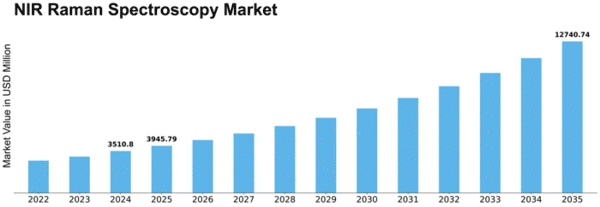
NIR Raman Spectroscopy Market Size Graph
Author
Author Profile
Vikita Thakur
Senior Research Analyst

She holds an experience of about 5+ years in market research and business consulting projects for sectors such as life sciences, medical devices, and healthcare IT. She possesses a robust background in data analysis, market estimation, competitive intelligence, pipeline analysis market trend identification, and consumer behavior insights. Her expertise lies in technical Sales support, client interaction and project management, designing and implementing market research studies, conducting competitive analysis, and synthesizing complex data into actionable recommendations that drive business growth.

Leave a Comment

FAQs

What is the current valuation of the NIR Raman Spectroscopy Market as of 2024?

<p>The NIR Raman Spectroscopy Market was valued at approximately 3510.8 USD Million in 2024.</p>

What is the projected market valuation for the NIR Raman Spectroscopy Market in 2035?

<p>The market is expected to reach a valuation of around 12740.74 USD Million by 2035.</p>

What is the expected CAGR for the NIR Raman Spectroscopy Market during the forecast period 2025 - 2035?

<p>The expected CAGR for the NIR Raman Spectroscopy Market during the forecast period 2025 - 2035 is 12.39%.</p>

Which application segment is projected to have the highest valuation in 2035?

<p>The Chemical Analysis segment is projected to reach approximately 4240.74 USD Million by 2035.</p>

How does the Pharmaceuticals segment perform in terms of market valuation?

<p>The Pharmaceuticals segment had a valuation of 800.0 USD Million in 2024 and is expected to grow to 3000.0 USD Million by 2035.</p>

What are the key players in the NIR Raman Spectroscopy Market?

Key players in the market include Horiba, Renishaw, Thermo Fisher Scientific, and PerkinElmer, among others.

Which end-use segment is anticipated to show significant growth by 2035?

The Industrial Manufacturing segment is anticipated to grow from 900.0 USD Million in 2024 to 3500.0 USD Million by 2035.

What is the expected performance of the Portable Spectroscopy technology segment?

The Portable Spectroscopy segment is expected to grow from 500.0 USD Million in 2024 to 1500.0 USD Million by 2035.

How does the Environmental Monitoring segment compare to others in terms of growth?

The Environmental Monitoring segment is projected to increase from 500.0 USD Million in 2024 to 1800.0 USD Million by 2035.

What is the market outlook for Raman Spectroscopy technology by 2035?

The Raman Spectroscopy technology segment is expected to grow from 800.0 USD Million in 2024 to 3000.0 USD Million by 2035.

Market Summary

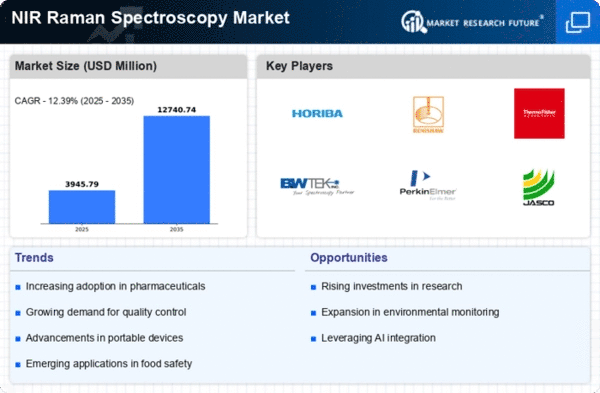
As per MRFR analysis, the NIR Raman Spectroscopy Market Size was estimated at 3510.8 USD Million in 2024. The NIR Raman Spectroscopy industry is projected to grow from 3986.02 in 2025 to 12740.74 by 2035, exhibiting a compound annual growth rate (CAGR) of 12.39% during the forecast period 2025 - 2035.

Key Market Trends & Highlights

The NIR Raman Spectroscopy Market is poised for substantial growth driven by technological advancements and increasing applications across various sectors.

  • Technological advancements are enhancing the capabilities and applications of NIR Raman spectroscopy. The demand for portable spectroscopic devices is rising, particularly in field applications and remote analysis. Integration of AI and machine learning is streamlining data analysis and improving accuracy in results. Growing applications in pharmaceuticals and rising demand in food safety and quality control are key drivers of market expansion.

Market Size & Forecast

2024 Market Size 3510.8 (USD Million)
2035 Market Size 12740.74 (USD Million)
CAGR (2025 - 2035) 12.39%
Largest Regional Market Share in 2024 North America

Major Players

Horiba (JP), Renishaw (GB), Thermo Fisher Scientific (US), B&amp;W Tek (US), PerkinElmer (US), JASCO (JP), Bruker (DE), Agilent Technologies (US), SciAps (US)

Market Trends

The NIR Raman Spectroscopy Market is currently experiencing a notable evolution, driven by advancements in technology and increasing applications across various sectors. This analytical technique, which utilizes near-infrared light to provide molecular information, is gaining traction in industries such as pharmaceuticals, food and beverage, and environmental monitoring.

The growing emphasis on quality control and process optimization is propelling the adoption of NIR Raman spectroscopy, as it offers rapid, non-destructive analysis with minimal sample preparation. Furthermore, the integration of artificial intelligence and machine learning into spectroscopic systems is enhancing data interpretation, thereby expanding the market's potential. In addition to technological advancements, the NIR Raman Spectroscopy Market is influenced by the rising demand for portable and user-friendly devices.

As industries seek to streamline operations and improve efficiency, portable spectrometers are becoming increasingly popular. This trend is particularly evident in field applications, where on-site analysis is essential. Moreover, the growing awareness of the benefits of real-time monitoring is likely to drive further growth in this market. Overall, the NIR Raman Spectroscopy Market appears poised for continued expansion, with innovations and evolving user needs shaping its trajectory.

Technological Advancements

Recent innovations in NIR Raman spectroscopy technology are enhancing the capabilities of analytical instruments. Developments in miniaturization and sensor technology are leading to more compact and efficient devices, which are easier to integrate into various workflows. This trend is likely to facilitate broader adoption across diverse industries.

Increased Demand for Portability

The growing preference for portable NIR Raman spectrometers is reshaping the market landscape. Industries are increasingly seeking solutions that allow for on-site analysis, which enhances operational efficiency. This shift towards mobility is expected to drive the development of more user-friendly and compact devices.

Integration of AI and Machine Learning

The incorporation of artificial intelligence and machine learning into NIR Raman spectroscopy is transforming data analysis processes. These technologies enable more accurate interpretation of spectral data, potentially leading to improved decision-making in various applications. This trend suggests a future where automated systems play a crucial role in spectroscopic analysis.

NIR Raman Spectroscopy Market Market Drivers

Market Growth Projections

The Global NIR and Raman Spectroscopy Market Industry is projected to experience robust growth over the coming years. With a market value of 1.47 USD Billion in 2024, it is anticipated to reach 5.48 USD Billion by 2035. This growth trajectory indicates a compound annual growth rate of 12.71% from 2025 to 2035. Factors such as technological advancements, increasing applications across various industries, and rising demand for quality control and safety measures are likely to contribute to this positive outlook.

Technological Advancements

The Global NIR and Raman Spectroscopy Market Industry is witnessing rapid technological advancements that enhance the capabilities and applications of these spectroscopic techniques. Innovations in detector technology, miniaturization of instruments, and the integration of artificial intelligence are driving the market forward. For instance, portable Raman spectrometers are now capable of providing real-time analysis in various fields, including pharmaceuticals and food safety. These advancements not only improve the accuracy and speed of analyses but also expand the potential user base, thereby contributing to the projected market growth from 1.47 USD Billion in 2024 to 5.48 USD Billion by 2035.

Expansion in Emerging Markets

Emerging markets are becoming increasingly important for the Global NIR and Raman Spectroscopy Market Industry. Countries in Asia-Pacific and Latin America are experiencing rapid industrialization and urbanization, leading to a growing need for advanced analytical techniques. The expansion of industries such as agriculture, pharmaceuticals, and environmental monitoring in these regions is likely to drive demand for NIR and Raman spectroscopy. As these markets develop, they present significant opportunities for growth, contributing to the overall market expansion projected to reach 5.48 USD Billion by 2035.

Growing Demand in Pharmaceuticals

The pharmaceutical sector is a major driver for the Global NIR and Raman Spectroscopy Market Industry, as these techniques are essential for quality control and drug formulation. The increasing emphasis on stringent regulatory requirements necessitates the adoption of advanced analytical techniques. Raman spectroscopy, for example, is utilized for polymorph characterization and to ensure the consistency of drug products. As the pharmaceutical industry continues to expand, the demand for reliable and efficient analytical methods is expected to rise, contributing to a compound annual growth rate of 12.71% from 2025 to 2035.

Rising Applications in Food Safety

Food safety is becoming increasingly critical, and the Global NIR and Raman Spectroscopy Market Industry is poised to benefit from this trend. These spectroscopic techniques are employed for rapid and non-destructive analysis of food products, ensuring compliance with safety standards. For example, NIR spectroscopy is widely used for determining moisture content and detecting adulteration in food items. As consumers become more health-conscious and regulatory bodies enforce stricter safety measures, the demand for these analytical tools is likely to surge, further driving market growth.

Increasing Adoption in Environmental Monitoring

Environmental monitoring is an emerging application area for the Global NIR and Raman Spectroscopy Market Industry. These techniques are utilized for analyzing pollutants and assessing environmental quality. For instance, Raman spectroscopy can identify hazardous substances in water and air samples, providing critical data for regulatory compliance. As governments worldwide intensify their focus on environmental protection and sustainability, the demand for effective monitoring solutions is expected to rise. This trend may lead to increased investments in spectroscopic technologies, thereby enhancing market growth.

Market Segment Insights

By Application: Pharmaceuticals (Largest) vs. Food Safety (Fastest-Growing)

The NIR Raman Spectroscopy Market exhibits a diverse application landscape, with Pharmaceuticals leading in market share. This sector leverages Raman spectroscopy for drug formulation, quality control, and validation processes. Following closely are sectors like Environmental Monitoring and Chemical Analysis, which also play pivotal roles in promoting the technology. Food Safety, while smaller currently, is rapidly gaining traction due to heightened regulatory scrutiny and consumer demand for safety in food products.

Environmental Monitoring (Dominant) vs. Material Science (Emerging)

Environmental Monitoring remains a dominant application in the NIR Raman Spectroscopy Market, using the technology for pollutant detection and compliance monitoring. Its versatile applications in various environmental settings such as air, water, and soil make it crucial for regulatory assessments. In contrast, Material Science is emerging as a significant segment as more industries recognize the capability of NIR Raman for characterizing materials and studying their properties. Advances in material fabrication drive demand, indicating a robust growth trajectory driven by innovation and the need for precise material analysis.

By End Use: Research Laboratories (Largest) vs. Healthcare (Fastest-Growing)

In the NIR Raman Spectroscopy Market, Research Laboratories constitute the largest segment, leveraging advanced spectroscopic techniques for various applications, including material science, chemistry, and biology. This segment benefits from significant investments in R&amp;D, contributing to its dominant market share. Following closely is the Healthcare sector, which is experiencing rapid growth owing to the increasing demand for non-invasive diagnostic tools and real-time monitoring, making it a key player in the industry's expansion.

Research Laboratories (Dominant) vs. Healthcare (Emerging)

Research Laboratories are considered the dominant segment in the NIR Raman Spectroscopy Market, as they encompass a wide range of applications, from basic research to advanced material characterization. These laboratories utilize NIR Raman technology for its precision and ability to analyze complex materials, which drives their market position. On the other hand, the Healthcare sector is emerging as a significant player, highlighted by its innovative applications in drug formulation, disease detection, and molecular diagnostics. The growing need for efficient and non-invasive testing methods is propelling the adoption of NIR Raman spectroscopy, making it a vital component in advancing <a href="https://www.marketresearchfuture.com/reports/medical-devices-market-2869">medical devices </a>technologies.

By Technology: Raman Spectroscopy (Largest) vs. Portable Spectroscopy (Fastest-Growing)

The NIR Raman Spectroscopy market shows a diversified distribution among several technological segments. At present, Raman Spectroscopy holds the largest market share due to its extensive application across various industries, including pharmaceuticals, food safety, and materials science. Near Infrared and Hybrid Spectroscopy follow closely, catering to specialized needs while contributing significantly to market dynamics. Portable Spectroscopy, although smaller in market share, is rapidly gaining traction as advanced miniaturization technologies make it more accessible for on-site testing and analysis. Growth trends in this segment are significantly influenced by technological advancements and the rising demand for versatile and efficient analytical tools across industries. The increasing focus on quality control and real-time monitoring has propelled the adoption of Raman and Portable Spectroscopy. Additionally, the trend towards automation and the integration of AI technologies in spectroscopy systems is expected to further enhance market growth and drive innovation in the coming years.

Raman Spectroscopy: Dominant vs. Portable Spectroscopy: Emerging

Raman Spectroscopy is a dominant player in the NIR Raman Spectroscopy market, known for its precision and reliability in molecular identification and analysis. Its wide-ranging applications, particularly in pharmaceuticals and chemical analysis, cement its status as the preferred technology for detailed spectral analysis. Conversely, Portable Spectroscopy represents an emerging segment, characterized by its ease of use and mobility, making it ideal for fieldwork and on-the-go analysis. The rapid development of portable devices equipped with advanced sensors and software enhances their functionality, allowing for real-time analytical capabilities. As industries increasingly seek flexible and efficient solutions for various applications, Portable Spectroscopy's growth trajectory looks promising, positioning it as a key player in the evolving landscape of spectral analysis.

Get more detailed insights about NIR and Raman Spectroscopy Market Research Report—Global Forecast till 2035

Regional Insights

North America : Market Leader in Innovation

North America continues to lead the NIR Raman Spectroscopy market, holding a significant share of $1750.0M in 2024. The growth is driven by advancements in technology, increasing demand for analytical instruments in pharmaceuticals, and stringent regulatory requirements. The region's robust research infrastructure and investment in R&D further catalyze market expansion, making it a hub for innovation in spectroscopy applications. The United States is the primary contributor, with key players like Thermo Fisher Scientific, Agilent Technologies, and B&W Tek dominating the landscape. The competitive environment is characterized by continuous product development and strategic partnerships. The presence of established companies ensures a steady supply of advanced NIR Raman systems, catering to diverse industries such as healthcare, environmental monitoring, and food safety.

Europe : Emerging Market with Growth Potential

Europe's NIR Raman Spectroscopy market is poised for growth, valued at $950.0M in 2024. The region benefits from increasing investments in healthcare and environmental monitoring, alongside supportive regulatory frameworks that encourage innovation. The European Union's commitment to enhancing research capabilities and sustainability initiatives further drives demand for advanced analytical technologies, positioning Europe as a key player in the global market. Leading countries such as Germany, the UK, and France are at the forefront, with companies like Bruker and Renishaw contributing significantly to market dynamics. The competitive landscape is marked by collaborations between academia and industry, fostering innovation. The presence of regulatory bodies ensures compliance and quality standards, enhancing market credibility. "The European market is witnessing a surge in demand for advanced analytical solutions, driven by regulatory compliance and innovation," European Commission report.

Asia-Pacific : Rapidly Growing Market Segment

The Asia-Pacific region is experiencing rapid growth in the NIR Raman Spectroscopy market, projected at $600.0M in 2024. Factors such as increasing industrialization, rising healthcare expenditures, and a growing focus on research and development are driving this expansion. Additionally, government initiatives aimed at enhancing scientific research capabilities are creating a favorable environment for market growth, making the region a focal point for technological advancements. Countries like China, Japan, and India are leading the charge, with significant investments in spectroscopy technologies. The competitive landscape features both established players and emerging companies, fostering innovation and collaboration. Key players such as Horiba and JASCO are actively contributing to the market, ensuring a diverse range of applications across various sectors, including pharmaceuticals and environmental analysis.

Middle East and Africa : Emerging Market with Unique Challenges

The Middle East and Africa (MEA) NIR Raman Spectroscopy market is valued at $210.8M in 2024, reflecting a growing interest in advanced analytical technologies. The region's growth is driven by increasing investments in healthcare and environmental monitoring, alongside a rising demand for quality control in various industries. However, challenges such as regulatory hurdles and limited access to advanced technologies may hinder rapid growth, necessitating strategic initiatives to overcome these barriers. Countries like South Africa and the UAE are leading the market, with a focus on enhancing research capabilities and fostering innovation. The competitive landscape is characterized by a mix of local and international players, with companies like SciAps making significant contributions. Collaborative efforts between governments and private sectors are essential to address challenges and promote the adoption of NIR Raman technologies in the region.

Key Players and Competitive Insights

The NIR Raman Spectroscopy Market is currently characterized by a dynamic competitive landscape, driven by technological advancements and increasing demand across various sectors, including pharmaceuticals, food safety, and environmental monitoring. Key players such as Horiba (JP), Renishaw (GB), and Thermo Fisher Scientific (US) are strategically positioned to leverage innovation and expand their market presence. Horiba (JP) focuses on enhancing its product portfolio through continuous research and development, while Renishaw (GB) emphasizes partnerships to integrate advanced technologies into its offerings. Thermo Fisher Scientific (US) adopts a strategy of regional expansion, aiming to penetrate emerging markets, thereby shaping a competitive environment that is increasingly collaborative and innovation-driven. The business tactics employed by these companies include localizing manufacturing and optimizing supply chains to enhance operational efficiency. The market structure appears moderately fragmented, with several players vying for market share. However, the collective influence of these key players fosters a competitive atmosphere that encourages innovation and responsiveness to market demands. In November 2025, Horiba (JP) announced the launch of a new NIR Raman spectrometer designed for real-time analysis in pharmaceutical applications. This strategic move is likely to enhance its competitive edge by addressing the growing need for rapid and accurate testing solutions in the pharmaceutical sector, thereby reinforcing its market position. In October 2025, Renishaw (GB) entered into a strategic partnership with a leading AI technology firm to develop AI-driven analytical tools for NIR Raman spectroscopy. This collaboration is expected to significantly enhance the analytical capabilities of their products, positioning Renishaw as a frontrunner in integrating AI into spectroscopy, which may attract a broader customer base seeking advanced analytical solutions. In September 2025, Thermo Fisher Scientific (US) completed the acquisition of a smaller competitor specializing in portable Raman spectroscopy devices. This acquisition is anticipated to bolster Thermo Fisher's product offerings and expand its reach in the portable segment, catering to the increasing demand for on-site analysis in various industries. As of December 2025, current competitive trends in the NIR Raman Spectroscopy Market are heavily influenced by digitalization, sustainability, and the integration of AI technologies. Strategic alliances are becoming increasingly pivotal, as companies seek to combine strengths and innovate collaboratively. Looking ahead, competitive differentiation is likely to evolve from traditional price-based competition to a focus on innovation, technological advancements, and supply chain reliability, suggesting a transformative shift in how companies position themselves in the market.

Key Companies in the NIR Raman Spectroscopy Market include

Industry Developments

    • In April 2022, Thermo Fisher Scientific, Inc. introduced a Raman spectroscopic analyser, the Thermo Scientific Ramina Process Analyzer. This is intended to simplify Raman spectroscopy measurements and promote user accessibility. Customers can generate real-time data whenever and wherever they want it. This contributes to the market's expansion.
    • In April 2022, Bruker acquired Optimal Industrial Automation and Technologies (UK), a leader in pharma and biopharma Process Analytical Technology (PAT). The Optimal biopharma tools and automation capabilities supplement Bruker's market-leading and distinctive PAT analytical solutions.
    • In June 2021, Shimadzu and Horiba, Ltd. (Japan) release LC-Raman system merging separating, and visualizing technologies offers new value for R&D applications in a wide variety of fields.


Future Outlook

NIR Raman Spectroscopy Market Future Outlook

The NIR Raman Spectroscopy Market is projected to grow at a 12.39% CAGR from 2025 to 2035, driven by advancements in analytical techniques and increasing demand across various industries.

New opportunities lie in:

  • <p>Development of portable NIR Raman devices for field applications. Integration of AI algorithms for enhanced data analysis and interpretation. Expansion into emerging markets with tailored solutions for local industries.</p>

By 2035, the NIR Raman Spectroscopy Market is expected to achieve substantial growth and innovation.

Market Segmentation

NIR Raman Spectroscopy Market End Use Outlook

  • Research Laboratories
  • Industrial Manufacturing
  • Healthcare
  • Academic Institutions
  • Government Agencies

NIR Raman Spectroscopy Market Technology Outlook

  • Near Infrared Spectroscopy
  • Raman Spectroscopy
  • Hybrid Spectroscopy
  • Portable Spectroscopy
  • Automated Spectroscopy

NIR Raman Spectroscopy Market Application Outlook

  • Pharmaceuticals
  • Material Science
  • Environmental Monitoring
  • Food Safety
  • Chemical Analysis

Report Scope

MARKET SIZE 2024 3510.8(USD Million)
MARKET SIZE 2025 3986.02(USD Million)
MARKET SIZE 2035 12740.74(USD Million)
COMPOUND ANNUAL GROWTH RATE (CAGR) 12.39% (2025 - 2035)
REPORT COVERAGE Revenue Forecast, Competitive Landscape, Growth Factors, and Trends
BASE YEAR 2024
Market Forecast Period 2025 - 2035
Historical Data 2019 - 2024
Market Forecast Units USD Million
Key Companies Profiled Horiba (JP), Renishaw (GB), Thermo Fisher Scientific (US), B&W Tek (US), PerkinElmer (US), JASCO (JP), Bruker (DE), Agilent Technologies (US), SciAps (US)
Segments Covered Application, End Use, Technology
Key Market Opportunities Advancements in portable NIR Raman Spectroscopy devices enhance accessibility for diverse applications across industries.
Key Market Dynamics Technological advancements and regulatory changes drive the adoption of NIR Raman spectroscopy across various industries.
Countries Covered North America, Europe, APAC, South America, MEA

FAQs

What is the current valuation of the NIR Raman Spectroscopy Market as of 2024?

<p>The NIR Raman Spectroscopy Market was valued at approximately 3510.8 USD Million in 2024.</p>

What is the projected market valuation for the NIR Raman Spectroscopy Market in 2035?

<p>The market is expected to reach a valuation of around 12740.74 USD Million by 2035.</p>

What is the expected CAGR for the NIR Raman Spectroscopy Market during the forecast period 2025 - 2035?

<p>The expected CAGR for the NIR Raman Spectroscopy Market during the forecast period 2025 - 2035 is 12.39%.</p>

Which application segment is projected to have the highest valuation in 2035?

<p>The Chemical Analysis segment is projected to reach approximately 4240.74 USD Million by 2035.</p>

How does the Pharmaceuticals segment perform in terms of market valuation?

<p>The Pharmaceuticals segment had a valuation of 800.0 USD Million in 2024 and is expected to grow to 3000.0 USD Million by 2035.</p>

What are the key players in the NIR Raman Spectroscopy Market?

Key players in the market include Horiba, Renishaw, Thermo Fisher Scientific, and PerkinElmer, among others.

Which end-use segment is anticipated to show significant growth by 2035?

The Industrial Manufacturing segment is anticipated to grow from 900.0 USD Million in 2024 to 3500.0 USD Million by 2035.

What is the expected performance of the Portable Spectroscopy technology segment?

The Portable Spectroscopy segment is expected to grow from 500.0 USD Million in 2024 to 1500.0 USD Million by 2035.

How does the Environmental Monitoring segment compare to others in terms of growth?

The Environmental Monitoring segment is projected to increase from 500.0 USD Million in 2024 to 1800.0 USD Million by 2035.

What is the market outlook for Raman Spectroscopy technology by 2035?

The Raman Spectroscopy technology segment is expected to grow from 800.0 USD Million in 2024 to 3000.0 USD Million by 2035.

  1. SECTION I: EXECUTIVE SUMMARY AND KEY HIGHLIGHTS
    1. | 1.1 EXECUTIVE SUMMARY
    2. | | 1.1.1 Market Overview
    3. | | 1.1.2 Key Findings
    4. | | 1.1.3 Market Segmentation
    5. | | 1.1.4 Competitive Landscape
    6. | | 1.1.5 Challenges and Opportunities
    7. | | 1.1.6 Future Outlook
  2. SECTION II: SCOPING, METHODOLOGY AND MARKET STRUCTURE
    1. | 2.1 MARKET INTRODUCTION
    2. | | 2.1.1 Definition
    3. | | 2.1.2 Scope of the study
    4. | | | 2.1.2.1 Research Objective
    5. | | | 2.1.2.2 Assumption
    6. | | | 2.1.2.3 Limitations
    7. | 2.2 RESEARCH METHODOLOGY
    8. | | 2.2.1 Overview
    9. | | 2.2.2 Data Mining
    10. | | 2.2.3 Secondary Research
    11. | | 2.2.4 Primary Research
    12. | | | 2.2.4.1 Primary Interviews and Information Gathering Process
    13. | | | 2.2.4.2 Breakdown of Primary Respondents
    14. | | 2.2.5 Forecasting Model
    15. | | 2.2.6 Market Size Estimation
    16. | | | 2.2.6.1 Bottom-Up Approach
    17. | | | 2.2.6.2 Top-Down Approach
    18. | | 2.2.7 Data Triangulation
    19. | | 2.2.8 Validation
  3. SECTION III: QUALITATIVE ANALYSIS
    1. | 3.1 MARKET DYNAMICS
    2. | | 3.1.1 Overview
    3. | | 3.1.2 Drivers
    4. | | 3.1.3 Restraints
    5. | | 3.1.4 Opportunities
    6. | 3.2 MARKET FACTOR ANALYSIS
    7. | | 3.2.1 Value chain Analysis
    8. | | 3.2.2 Porter's Five Forces Analysis
    9. | | | 3.2.2.1 Bargaining Power of Suppliers
    10. | | | 3.2.2.2 Bargaining Power of Buyers
    11. | | | 3.2.2.3 Threat of New Entrants
    12. | | | 3.2.2.4 Threat of Substitutes
    13. | | | 3.2.2.5 Intensity of Rivalry
    14. | | 3.2.3 COVID-19 Impact Analysis
    15. | | | 3.2.3.1 Market Impact Analysis
    16. | | | 3.2.3.2 Regional Impact
    17. | | | 3.2.3.3 Opportunity and Threat Analysis
  4. SECTION IV: QUANTITATIVE ANALYSIS
    1. | 4.1 Healthcare, BY Application (USD Million)
    2. | | 4.1.1 Pharmaceuticals
    3. | | 4.1.2 Material Science
    4. | | 4.1.3 Environmental Monitoring
    5. | | 4.1.4 Food Safety
    6. | | 4.1.5 Chemical Analysis
    7. | 4.2 Healthcare, BY End Use (USD Million)
    8. | | 4.2.1 Research Laboratories
    9. | | 4.2.2 Industrial Manufacturing
    10. | | 4.2.3 Healthcare
    11. | | 4.2.4 Academic Institutions
    12. | | 4.2.5 Government Agencies
    13. | 4.3 Healthcare, BY Technology (USD Million)
    14. | | 4.3.1 Near Infrared Spectroscopy
    15. | | 4.3.2 Raman Spectroscopy
    16. | | 4.3.3 Hybrid Spectroscopy
    17. | | 4.3.4 Portable Spectroscopy
    18. | | 4.3.5 Automated Spectroscopy
    19. | 4.4 Healthcare, BY Region (USD Million)
    20. | | 4.4.1 North America
    21. | | | 4.4.1.1 US
    22. | | | 4.4.1.2 Canada
    23. | | 4.4.2 Europe
    24. | | | 4.4.2.1 Germany
    25. | | | 4.4.2.2 UK
    26. | | | 4.4.2.3 France
    27. | | | 4.4.2.4 Russia
    28. | | | 4.4.2.5 Italy
    29. | | | 4.4.2.6 Spain
    30. | | | 4.4.2.7 Rest of Europe
    31. | | 4.4.3 APAC
    32. | | | 4.4.3.1 China
    33. | | | 4.4.3.2 India
    34. | | | 4.4.3.3 Japan
    35. | | | 4.4.3.4 South Korea
    36. | | | 4.4.3.5 Malaysia
    37. | | | 4.4.3.6 Thailand
    38. | | | 4.4.3.7 Indonesia
    39. | | | 4.4.3.8 Rest of APAC
    40. | | 4.4.4 South America
    41. | | | 4.4.4.1 Brazil
    42. | | | 4.4.4.2 Mexico
    43. | | | 4.4.4.3 Argentina
    44. | | | 4.4.4.4 Rest of South America
    45. | | 4.4.5 MEA
    46. | | | 4.4.5.1 GCC Countries
    47. | | | 4.4.5.2 South Africa
    48. | | | 4.4.5.3 Rest of MEA
  5. SECTION V: COMPETITIVE ANALYSIS
    1. | 5.1 Competitive Landscape
    2. | | 5.1.1 Overview
    3. | | 5.1.2 Competitive Analysis
    4. | | 5.1.3 Market share Analysis
    5. | | 5.1.4 Major Growth Strategy in the Healthcare
    6. | | 5.1.5 Competitive Benchmarking
    7. | | 5.1.6 Leading Players in Terms of Number of Developments in the Healthcare
    8. | | 5.1.7 Key developments and growth strategies
    9. | | | 5.1.7.1 New Product Launch/Service Deployment
    10. | | | 5.1.7.2 Merger & Acquisitions
    11. | | | 5.1.7.3 Joint Ventures
    12. | | 5.1.8 Major Players Financial Matrix
    13. | | | 5.1.8.1 Sales and Operating Income
    14. | | | 5.1.8.2 Major Players R&D Expenditure. 2023
    15. | 5.2 Company Profiles
    16. | | 5.2.1 Horiba (JP)
    17. | | | 5.2.1.1 Financial Overview
    18. | | | 5.2.1.2 Products Offered
    19. | | | 5.2.1.3 Key Developments
    20. | | | 5.2.1.4 SWOT Analysis
    21. | | | 5.2.1.5 Key Strategies
    22. | | 5.2.2 Renishaw (GB)
    23. | | | 5.2.2.1 Financial Overview
    24. | | | 5.2.2.2 Products Offered
    25. | | | 5.2.2.3 Key Developments
    26. | | | 5.2.2.4 SWOT Analysis
    27. | | | 5.2.2.5 Key Strategies
    28. | | 5.2.3 Thermo Fisher Scientific (US)
    29. | | | 5.2.3.1 Financial Overview
    30. | | | 5.2.3.2 Products Offered
    31. | | | 5.2.3.3 Key Developments
    32. | | | 5.2.3.4 SWOT Analysis
    33. | | | 5.2.3.5 Key Strategies
    34. | | 5.2.4 B&W Tek (US)
    35. | | | 5.2.4.1 Financial Overview
    36. | | | 5.2.4.2 Products Offered
    37. | | | 5.2.4.3 Key Developments
    38. | | | 5.2.4.4 SWOT Analysis
    39. | | | 5.2.4.5 Key Strategies
    40. | | 5.2.5 PerkinElmer (US)
    41. | | | 5.2.5.1 Financial Overview
    42. | | | 5.2.5.2 Products Offered
    43. | | | 5.2.5.3 Key Developments
    44. | | | 5.2.5.4 SWOT Analysis
    45. | | | 5.2.5.5 Key Strategies
    46. | | 5.2.6 JASCO (JP)
    47. | | | 5.2.6.1 Financial Overview
    48. | | | 5.2.6.2 Products Offered
    49. | | | 5.2.6.3 Key Developments
    50. | | | 5.2.6.4 SWOT Analysis
    51. | | | 5.2.6.5 Key Strategies
    52. | | 5.2.7 Bruker (DE)
    53. | | | 5.2.7.1 Financial Overview
    54. | | | 5.2.7.2 Products Offered
    55. | | | 5.2.7.3 Key Developments
    56. | | | 5.2.7.4 SWOT Analysis
    57. | | | 5.2.7.5 Key Strategies
    58. | | 5.2.8 Agilent Technologies (US)
    59. | | | 5.2.8.1 Financial Overview
    60. | | | 5.2.8.2 Products Offered
    61. | | | 5.2.8.3 Key Developments
    62. | | | 5.2.8.4 SWOT Analysis
    63. | | | 5.2.8.5 Key Strategies
    64. | | 5.2.9 SciAps (US)
    65. | | | 5.2.9.1 Financial Overview
    66. | | | 5.2.9.2 Products Offered
    67. | | | 5.2.9.3 Key Developments
    68. | | | 5.2.9.4 SWOT Analysis
    69. | | | 5.2.9.5 Key Strategies
    70. | 5.3 Appendix
    71. | | 5.3.1 References
    72. | | 5.3.2 Related Reports
  6. LIST OF FIGURES
    1. | 6.1 MARKET SYNOPSIS
    2. | 6.2 NORTH AMERICA MARKET ANALYSIS
    3. | 6.3 US MARKET ANALYSIS BY APPLICATION
    4. | 6.4 US MARKET ANALYSIS BY END USE
    5. | 6.5 US MARKET ANALYSIS BY TECHNOLOGY
    6. | 6.6 CANADA MARKET ANALYSIS BY APPLICATION
    7. | 6.7 CANADA MARKET ANALYSIS BY END USE
    8. | 6.8 CANADA MARKET ANALYSIS BY TECHNOLOGY
    9. | 6.9 EUROPE MARKET ANALYSIS
    10. | 6.10 GERMANY MARKET ANALYSIS BY APPLICATION
    11. | 6.11 GERMANY MARKET ANALYSIS BY END USE
    12. | 6.12 GERMANY MARKET ANALYSIS BY TECHNOLOGY
    13. | 6.13 UK MARKET ANALYSIS BY APPLICATION
    14. | 6.14 UK MARKET ANALYSIS BY END USE
    15. | 6.15 UK MARKET ANALYSIS BY TECHNOLOGY
    16. | 6.16 FRANCE MARKET ANALYSIS BY APPLICATION
    17. | 6.17 FRANCE MARKET ANALYSIS BY END USE
    18. | 6.18 FRANCE MARKET ANALYSIS BY TECHNOLOGY
    19. | 6.19 RUSSIA MARKET ANALYSIS BY APPLICATION
    20. | 6.20 RUSSIA MARKET ANALYSIS BY END USE
    21. | 6.21 RUSSIA MARKET ANALYSIS BY TECHNOLOGY
    22. | 6.22 ITALY MARKET ANALYSIS BY APPLICATION
    23. | 6.23 ITALY MARKET ANALYSIS BY END USE
    24. | 6.24 ITALY MARKET ANALYSIS BY TECHNOLOGY
    25. | 6.25 SPAIN MARKET ANALYSIS BY APPLICATION
    26. | 6.26 SPAIN MARKET ANALYSIS BY END USE
    27. | 6.27 SPAIN MARKET ANALYSIS BY TECHNOLOGY
    28. | 6.28 REST OF EUROPE MARKET ANALYSIS BY APPLICATION
    29. | 6.29 REST OF EUROPE MARKET ANALYSIS BY END USE
    30. | 6.30 REST OF EUROPE MARKET ANALYSIS BY TECHNOLOGY
    31. | 6.31 APAC MARKET ANALYSIS
    32. | 6.32 CHINA MARKET ANALYSIS BY APPLICATION
    33. | 6.33 CHINA MARKET ANALYSIS BY END USE
    34. | 6.34 CHINA MARKET ANALYSIS BY TECHNOLOGY
    35. | 6.35 INDIA MARKET ANALYSIS BY APPLICATION
    36. | 6.36 INDIA MARKET ANALYSIS BY END USE
    37. | 6.37 INDIA MARKET ANALYSIS BY TECHNOLOGY
    38. | 6.38 JAPAN MARKET ANALYSIS BY APPLICATION
    39. | 6.39 JAPAN MARKET ANALYSIS BY END USE
    40. | 6.40 JAPAN MARKET ANALYSIS BY TECHNOLOGY
    41. | 6.41 SOUTH KOREA MARKET ANALYSIS BY APPLICATION
    42. | 6.42 SOUTH KOREA MARKET ANALYSIS BY END USE
    43. | 6.43 SOUTH KOREA MARKET ANALYSIS BY TECHNOLOGY
    44. | 6.44 MALAYSIA MARKET ANALYSIS BY APPLICATION
    45. | 6.45 MALAYSIA MARKET ANALYSIS BY END USE
    46. | 6.46 MALAYSIA MARKET ANALYSIS BY TECHNOLOGY
    47. | 6.47 THAILAND MARKET ANALYSIS BY APPLICATION
    48. | 6.48 THAILAND MARKET ANALYSIS BY END USE
    49. | 6.49 THAILAND MARKET ANALYSIS BY TECHNOLOGY
    50. | 6.50 INDONESIA MARKET ANALYSIS BY APPLICATION
    51. | 6.51 INDONESIA MARKET ANALYSIS BY END USE
    52. | 6.52 INDONESIA MARKET ANALYSIS BY TECHNOLOGY
    53. | 6.53 REST OF APAC MARKET ANALYSIS BY APPLICATION
    54. | 6.54 REST OF APAC MARKET ANALYSIS BY END USE
    55. | 6.55 REST OF APAC MARKET ANALYSIS BY TECHNOLOGY
    56. | 6.56 SOUTH AMERICA MARKET ANALYSIS
    57. | 6.57 BRAZIL MARKET ANALYSIS BY APPLICATION
    58. | 6.58 BRAZIL MARKET ANALYSIS BY END USE
    59. | 6.59 BRAZIL MARKET ANALYSIS BY TECHNOLOGY
    60. | 6.60 MEXICO MARKET ANALYSIS BY APPLICATION
    61. | 6.61 MEXICO MARKET ANALYSIS BY END USE
    62. | 6.62 MEXICO MARKET ANALYSIS BY TECHNOLOGY
    63. | 6.63 ARGENTINA MARKET ANALYSIS BY APPLICATION
    64. | 6.64 ARGENTINA MARKET ANALYSIS BY END USE
    65. | 6.65 ARGENTINA MARKET ANALYSIS BY TECHNOLOGY
    66. | 6.66 REST OF SOUTH AMERICA MARKET ANALYSIS BY APPLICATION
    67. | 6.67 REST OF SOUTH AMERICA MARKET ANALYSIS BY END USE
    68. | 6.68 REST OF SOUTH AMERICA MARKET ANALYSIS BY TECHNOLOGY
    69. | 6.69 MEA MARKET ANALYSIS
    70. | 6.70 GCC COUNTRIES MARKET ANALYSIS BY APPLICATION
    71. | 6.71 GCC COUNTRIES MARKET ANALYSIS BY END USE
    72. | 6.72 GCC COUNTRIES MARKET ANALYSIS BY TECHNOLOGY
    73. | 6.73 SOUTH AFRICA MARKET ANALYSIS BY APPLICATION
    74. | 6.74 SOUTH AFRICA MARKET ANALYSIS BY END USE
    75. | 6.75 SOUTH AFRICA MARKET ANALYSIS BY TECHNOLOGY
    76. | 6.76 REST OF MEA MARKET ANALYSIS BY APPLICATION
    77. | 6.77 REST OF MEA MARKET ANALYSIS BY END USE
    78. | 6.78 REST OF MEA MARKET ANALYSIS BY TECHNOLOGY
    79. | 6.79 KEY BUYING CRITERIA OF HEALTHCARE
    80. | 6.80 RESEARCH PROCESS OF MRFR
    81. | 6.81 DRO ANALYSIS OF HEALTHCARE
    82. | 6.82 DRIVERS IMPACT ANALYSIS: HEALTHCARE
    83. | 6.83 RESTRAINTS IMPACT ANALYSIS: HEALTHCARE
    84. | 6.84 SUPPLY / VALUE CHAIN: HEALTHCARE
    85. | 6.85 HEALTHCARE, BY APPLICATION, 2024 (% SHARE)
    86. | 6.86 HEALTHCARE, BY APPLICATION, 2024 TO 2035 (USD Million)
    87. | 6.87 HEALTHCARE, BY END USE, 2024 (% SHARE)
    88. | 6.88 HEALTHCARE, BY END USE, 2024 TO 2035 (USD Million)
    89. | 6.89 HEALTHCARE, BY TECHNOLOGY, 2024 (% SHARE)
    90. | 6.90 HEALTHCARE, BY TECHNOLOGY, 2024 TO 2035 (USD Million)
    91. | 6.91 BENCHMARKING OF MAJOR COMPETITORS
  7. LIST OF TABLES
    1. | 7.1 LIST OF ASSUMPTIONS
    2. | | 7.1.1
    3. | 7.2 North America MARKET SIZE ESTIMATES; FORECAST
    4. | | 7.2.1 BY APPLICATION, 2025-2035 (USD Million)
    5. | | 7.2.2 BY END USE, 2025-2035 (USD Million)
    6. | | 7.2.3 BY TECHNOLOGY, 2025-2035 (USD Million)
    7. | 7.3 US MARKET SIZE ESTIMATES; FORECAST
    8. | | 7.3.1 BY APPLICATION, 2025-2035 (USD Million)
    9. | | 7.3.2 BY END USE, 2025-2035 (USD Million)
    10. | | 7.3.3 BY TECHNOLOGY, 2025-2035 (USD Million)
    11. | 7.4 Canada MARKET SIZE ESTIMATES; FORECAST
    12. | | 7.4.1 BY APPLICATION, 2025-2035 (USD Million)
    13. | | 7.4.2 BY END USE, 2025-2035 (USD Million)
    14. | | 7.4.3 BY TECHNOLOGY, 2025-2035 (USD Million)
    15. | 7.5 Europe MARKET SIZE ESTIMATES; FORECAST
    16. | | 7.5.1 BY APPLICATION, 2025-2035 (USD Million)
    17. | | 7.5.2 BY END USE, 2025-2035 (USD Million)
    18. | | 7.5.3 BY TECHNOLOGY, 2025-2035 (USD Million)
    19. | 7.6 Germany MARKET SIZE ESTIMATES; FORECAST
    20. | | 7.6.1 BY APPLICATION, 2025-2035 (USD Million)
    21. | | 7.6.2 BY END USE, 2025-2035 (USD Million)
    22. | | 7.6.3 BY TECHNOLOGY, 2025-2035 (USD Million)
    23. | 7.7 UK MARKET SIZE ESTIMATES; FORECAST
    24. | | 7.7.1 BY APPLICATION, 2025-2035 (USD Million)
    25. | | 7.7.2 BY END USE, 2025-2035 (USD Million)
    26. | | 7.7.3 BY TECHNOLOGY, 2025-2035 (USD Million)
    27. | 7.8 France MARKET SIZE ESTIMATES; FORECAST
    28. | | 7.8.1 BY APPLICATION, 2025-2035 (USD Million)
    29. | | 7.8.2 BY END USE, 2025-2035 (USD Million)
    30. | | 7.8.3 BY TECHNOLOGY, 2025-2035 (USD Million)
    31. | 7.9 Russia MARKET SIZE ESTIMATES; FORECAST
    32. | | 7.9.1 BY APPLICATION, 2025-2035 (USD Million)
    33. | | 7.9.2 BY END USE, 2025-2035 (USD Million)
    34. | | 7.9.3 BY TECHNOLOGY, 2025-2035 (USD Million)
    35. | 7.10 Italy MARKET SIZE ESTIMATES; FORECAST
    36. | | 7.10.1 BY APPLICATION, 2025-2035 (USD Million)
    37. | | 7.10.2 BY END USE, 2025-2035 (USD Million)
    38. | | 7.10.3 BY TECHNOLOGY, 2025-2035 (USD Million)
    39. | 7.11 Spain MARKET SIZE ESTIMATES; FORECAST
    40. | | 7.11.1 BY APPLICATION, 2025-2035 (USD Million)
    41. | | 7.11.2 BY END USE, 2025-2035 (USD Million)
    42. | | 7.11.3 BY TECHNOLOGY, 2025-2035 (USD Million)
    43. | 7.12 Rest of Europe MARKET SIZE ESTIMATES; FORECAST
    44. | | 7.12.1 BY APPLICATION, 2025-2035 (USD Million)
    45. | | 7.12.2 BY END USE, 2025-2035 (USD Million)
    46. | | 7.12.3 BY TECHNOLOGY, 2025-2035 (USD Million)
    47. | 7.13 APAC MARKET SIZE ESTIMATES; FORECAST
    48. | | 7.13.1 BY APPLICATION, 2025-2035 (USD Million)
    49. | | 7.13.2 BY END USE, 2025-2035 (USD Million)
    50. | | 7.13.3 BY TECHNOLOGY, 2025-2035 (USD Million)
    51. | 7.14 China MARKET SIZE ESTIMATES; FORECAST
    52. | | 7.14.1 BY APPLICATION, 2025-2035 (USD Million)
    53. | | 7.14.2 BY END USE, 2025-2035 (USD Million)
    54. | | 7.14.3 BY TECHNOLOGY, 2025-2035 (USD Million)
    55. | 7.15 India MARKET SIZE ESTIMATES; FORECAST
    56. | | 7.15.1 BY APPLICATION, 2025-2035 (USD Million)
    57. | | 7.15.2 BY END USE, 2025-2035 (USD Million)
    58. | | 7.15.3 BY TECHNOLOGY, 2025-2035 (USD Million)
    59. | 7.16 Japan MARKET SIZE ESTIMATES; FORECAST
    60. | | 7.16.1 BY APPLICATION, 2025-2035 (USD Million)
    61. | | 7.16.2 BY END USE, 2025-2035 (USD Million)
    62. | | 7.16.3 BY TECHNOLOGY, 2025-2035 (USD Million)
    63. | 7.17 South Korea MARKET SIZE ESTIMATES; FORECAST
    64. | | 7.17.1 BY APPLICATION, 2025-2035 (USD Million)
    65. | | 7.17.2 BY END USE, 2025-2035 (USD Million)
    66. | | 7.17.3 BY TECHNOLOGY, 2025-2035 (USD Million)
    67. | 7.18 Malaysia MARKET SIZE ESTIMATES; FORECAST
    68. | | 7.18.1 BY APPLICATION, 2025-2035 (USD Million)
    69. | | 7.18.2 BY END USE, 2025-2035 (USD Million)
    70. | | 7.18.3 BY TECHNOLOGY, 2025-2035 (USD Million)
    71. | 7.19 Thailand MARKET SIZE ESTIMATES; FORECAST
    72. | | 7.19.1 BY APPLICATION, 2025-2035 (USD Million)
    73. | | 7.19.2 BY END USE, 2025-2035 (USD Million)
    74. | | 7.19.3 BY TECHNOLOGY, 2025-2035 (USD Million)
    75. | 7.20 Indonesia MARKET SIZE ESTIMATES; FORECAST
    76. | | 7.20.1 BY APPLICATION, 2025-2035 (USD Million)
    77. | | 7.20.2 BY END USE, 2025-2035 (USD Million)
    78. | | 7.20.3 BY TECHNOLOGY, 2025-2035 (USD Million)
    79. | 7.21 Rest of APAC MARKET SIZE ESTIMATES; FORECAST
    80. | | 7.21.1 BY APPLICATION, 2025-2035 (USD Million)
    81. | | 7.21.2 BY END USE, 2025-2035 (USD Million)
    82. | | 7.21.3 BY TECHNOLOGY, 2025-2035 (USD Million)
    83. | 7.22 South America MARKET SIZE ESTIMATES; FORECAST
    84. | | 7.22.1 BY APPLICATION, 2025-2035 (USD Million)
    85. | | 7.22.2 BY END USE, 2025-2035 (USD Million)
    86. | | 7.22.3 BY TECHNOLOGY, 2025-2035 (USD Million)
    87. | 7.23 Brazil MARKET SIZE ESTIMATES; FORECAST
    88. | | 7.23.1 BY APPLICATION, 2025-2035 (USD Million)
    89. | | 7.23.2 BY END USE, 2025-2035 (USD Million)
    90. | | 7.23.3 BY TECHNOLOGY, 2025-2035 (USD Million)
    91. | 7.24 Mexico MARKET SIZE ESTIMATES; FORECAST
    92. | | 7.24.1 BY APPLICATION, 2025-2035 (USD Million)
    93. | | 7.24.2 BY END USE, 2025-2035 (USD Million)
    94. | | 7.24.3 BY TECHNOLOGY, 2025-2035 (USD Million)
    95. | 7.25 Argentina MARKET SIZE ESTIMATES; FORECAST
    96. | | 7.25.1 BY APPLICATION, 2025-2035 (USD Million)
    97. | | 7.25.2 BY END USE, 2025-2035 (USD Million)
    98. | | 7.25.3 BY TECHNOLOGY, 2025-2035 (USD Million)
    99. | 7.26 Rest of South America MARKET SIZE ESTIMATES; FORECAST
    100. | | 7.26.1 BY APPLICATION, 2025-2035 (USD Million)
    101. | | 7.26.2 BY END USE, 2025-2035 (USD Million)
    102. | | 7.26.3 BY TECHNOLOGY, 2025-2035 (USD Million)
    103. | 7.27 MEA MARKET SIZE ESTIMATES; FORECAST
    104. | | 7.27.1 BY APPLICATION, 2025-2035 (USD Million)
    105. | | 7.27.2 BY END USE, 2025-2035 (USD Million)
    106. | | 7.27.3 BY TECHNOLOGY, 2025-2035 (USD Million)
    107. | 7.28 GCC Countries MARKET SIZE ESTIMATES; FORECAST
    108. | | 7.28.1 BY APPLICATION, 2025-2035 (USD Million)
    109. | | 7.28.2 BY END USE, 2025-2035 (USD Million)
    110. | | 7.28.3 BY TECHNOLOGY, 2025-2035 (USD Million)
    111. | 7.29 South Africa MARKET SIZE ESTIMATES; FORECAST
    112. | | 7.29.1 BY APPLICATION, 2025-2035 (USD Million)
    113. | | 7.29.2 BY END USE, 2025-2035 (USD Million)
    114. | | 7.29.3 BY TECHNOLOGY, 2025-2035 (USD Million)
    115. | 7.30 Rest of MEA MARKET SIZE ESTIMATES; FORECAST
    116. | | 7.30.1 BY APPLICATION, 2025-2035 (USD Million)
    117. | | 7.30.2 BY END USE, 2025-2035 (USD Million)
    118. | | 7.30.3 BY TECHNOLOGY, 2025-2035 (USD Million)
    119. | 7.31 PRODUCT LAUNCH/PRODUCT DEVELOPMENT/APPROVAL
    120. | | 7.31.1
    121. | 7.32 ACQUISITION/PARTNERSHIP
    122. | | 7.32.1

Healthcare Market Segmentation

Healthcare By Application (USD Million, 2025-2035)

  • Pharmaceuticals
  • Material Science
  • Environmental Monitoring
  • Food Safety
  • Chemical Analysis

Healthcare By End Use (USD Million, 2025-2035)

  • Research Laboratories
  • Industrial Manufacturing
  • Healthcare
  • Academic Institutions
  • Government Agencies

Healthcare By Technology (USD Million, 2025-2035)

  • Near Infrared Spectroscopy
  • Raman Spectroscopy
  • Hybrid Spectroscopy
  • Portable Spectroscopy
  • Automated Spectroscopy
Infographic

Free Sample Request

Kindly complete the form below to receive a free sample of this Report

Get Free Sample

Customer Strories

Compare Licence

×
Features License Type
Single User Multiuser License Enterprise User
Price $4,950 $5,950 $7,250
Maximum User Access Limit 1 User Upto 10 Users Unrestricted Access Throughout the Organization
Free Customization
Direct Access to Analyst
Deliverable Format
Platform Access
Discount on Next Purchase 10% 15% 15%
Printable Versions