×
Request Free Sample ×

Kindly complete the form below to receive a free sample of this Report

* Please use a valid business email

Leading companies partner with us for data-driven Insights

clients tt-cursor
Hero Background
English
Chinese
French
Japanese
Korean
German
Spanish

Myasthenia Gravis Disease Market Share

ID: MRFR/Pharma/4387-HCR
200 Pages
Rahul Gotadki
October 2025

Myasthenia Gravis Disease Market Research Report: Size, Share, Trend Analysis By Treatment Type (Immunosuppressants, Cholinesterase Inhibitors, Monoclonal Antibodies, Plasmapheresis, Intravenous Immunoglobulin), By Diagnosis Method (Electromyography, Blood Tests, CT Scan, MRI, Edrophonium Test), By Patient Demographics (Adults, Children, Elderly), By Distribution Channel (Hospitals, Pharmacies, Online Stores), and By Regional (North America, Europe, South America, Asia Pacific, Middle East and Africa) - Growth Outlook & Industry Forecast... read more

Share:
Download PDF ×

We do not share your information with anyone. However, we may send you emails based on your report interest from time to time. You may contact us at any time to opt-out.

Myasthenia Gravis Disease Market Infographic
×
Myasthenia Gravis Disease Market Infographic Full View
Purchase Options

Market Share

Myasthenia Gravis Disease Market Share Analysis

The Myasthenia Gravis Disease Market is undergoing significant transformative processes caused by the advance in medical research, better autoimmune disease understanding and patient outcomes’ enhancement commitment. This has led to increased interest in treatment and management options for chronic autoimmune neuromuscular disease known as myasthenia gravis (MG), thereby driving market growth. A new trend in this area encompasses investigations into innovative therapeutic alternatives that move beyond traditional methods.

Additionally, mononuclear antibodies are some of the immunotherapies that have been increasingly used to treat myasthenia gravis disease targeting specific components within the immune system. Through a targeted approach, maximal therapeutic efficacy while minimizing generalized immunosuppression associated side effects can be achieved.” This direction follows current trends in managing autoimmune diseases where the response of the market to immunotherapies emphasizes personalized treatment plans as well as precision medicine.

Besides, developments are going on regarding diagnostic tools that help in early and accurate identification of MG aiding timely intervention. Electromyography imaging studies along with serological tests are requested for confirming muscle paralysis diagnosis and assessing its severity level. There is a paradigm shift towards patient-centered care in managing MG through market dynamics transformation. Indeed, advocacy programs, patient education initiatives, and support services feature among crucial elements constituting holistic care package for individuals diagnosed with MG. On one hand providing patients with relevant information materials plus other useful resources enhances their ability to effectively deal with their condition while on the other hand it cultivates self-awareness and active engagement in the decision-making process of their health. The myasthenia gravis disease market is being impacted by the demographic transition toward an aging population, given that the disease is more prevalent among elderly individuals. As the global population ages, there is a growing emphasis on customizing treatment strategies to effectively address the distinct requirements and obstacles that arise in the management of MG in elderly patients. Hence, pharmaceutical companies are directing their efforts towards research and development aimed at producing therapies that are effective yet tolerable to this group.


Author
Rahul Gotadki
Assistant Manager

He holds an experience of about 7+ years in Market Research and Business Consulting, working under the spectrum of Life Sciences and Healthcare domains. Rahul conceptualizes and implements a scalable business strategy and provides strategic leadership to the clients. His expertise lies in market estimation, competitive intelligence, pipeline analysis, customer assessment, etc. In addition to the above, his other responsibility includes strategic tracking of high growth markets & advising clients on the potential areas of focus they could direct their business initiatives

Leave a Comment

FAQs

What is the projected growth of the Myasthenia Gravis Disease market?

The Myasthenia Gravis Disease market is the expected increase in total market value of 3.07 USD billion over a defined forecast period 2025–2035. It is driven by factors such as demand trends, technological advances, regulatory changes, and geographic expansion.

What is the size of the Myasthenia Gravis Disease market?

Myasthenia Gravis Disease market size was valued at approximately 1.33 billion USD in 2024. This figure will reach 3.07 billion USD covering all regions (America, Europe, Asia, MEA and ROW), focusing its segments / services / distribution channels till 2035.

What is the CAGR of the Myasthenia Gravis Disease market?

Myasthenia Gravis Disease market is expected to grow at a CAGR of 7.92% between 2025 and 2035.

How much will the Myasthenia Gravis Disease market be worth by 2035?

Myasthenia Gravis Disease market is expected to be worth of 3.07 billion USD, reflecting growth driven by usage, technology and global demands by the end of 2035.

How will the Myasthenia Gravis Disease market perform over the next 10 years?

Over the next 10 years the Myasthenia Gravis Disease market is expected to shift from usd billion 1.33 to 3.07 billion USD, led by adoption of advanced tech, demographic trends, regulatory approvals, with potential headwinds from 2025 to 2035.

What was the market size of the Myasthenia Gravis Disease Market in 2024?

The Myasthenia Gravis Disease Market was valued at 2.01 billion USD in 2024.

What is the projected market valuation for the Myasthenia Gravis Disease Market by 2035?

By 2035, the Myasthenia Gravis Disease Market is projected to reach a valuation of 3.8 billion USD.

Which region held the largest market share in 2024 for the Myasthenia Gravis Disease Market?

North America held the largest market share in 2024, valued at 0.85 billion USD.

What is the expected value of the Myasthenia Gravis Disease Market in Europe by 2035?

By 2035, the Myasthenia Gravis Disease Market in Europe is expected to reach a value of 1.05 billion USD.

Who are the key players in the Myasthenia Gravis Disease Market?

Key players include Pfizer, Mallinckrodt Pharmaceuticals, Bristol-Myers Squibb, Amgen, and UCB.

Market Summary

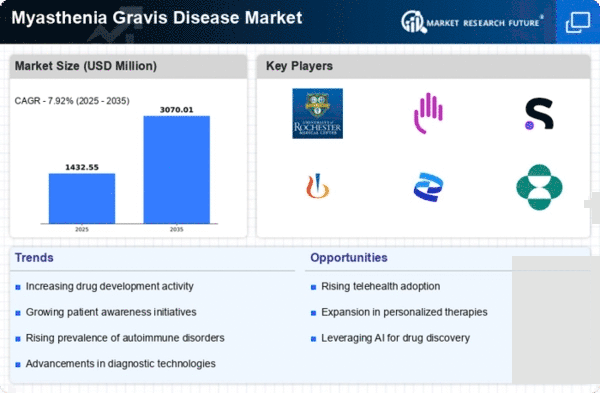
As per MRFR analysis, the Myasthenia Gravis Disease Market Size was estimated at 1327.42 USD Million in 2024. The Myasthenia Gravis industry is projected to grow from 1432.55 USD Million in 2025 to 3070.01 USD Million by 2035, exhibiting a compound annual growth rate (CAGR) of 7.92 during the forecast period 2025 - 2035.

Key Market Trends & Highlights

The Myasthenia Gravis Disease Market is poised for substantial growth driven by innovative therapies and increasing patient awareness.

  • The market is witnessing the emergence of novel therapies that enhance treatment options for patients.
  • North America remains the largest market, while Asia-Pacific is recognized as the fastest-growing region in this sector.
  • Anticholinesterase inhibitors dominate the market, whereas monoclonal antibodies are emerging as the fastest-growing segment.
  • The rising incidence of Myasthenia Gravis and advancements in diagnostic techniques are key drivers propelling market expansion.

Market Size & Forecast

2024 Market Size 1327.42 (USD Million)
2035 Market Size 3070.01 (USD Million)
CAGR (2025 - 2035) 7.92%
Largest Regional Market Share in 2024 North America

Major Players

Roche (CH), Bristol-Myers Squibb (US), Sanofi (FR), Novartis (CH), Pfizer (US), Merck & Co. (US), Amgen (US), Eisai (JP), AstraZeneca (GB)

Market Trends

The Myasthenia Gravis Disease Market is currently experiencing notable developments driven by advancements in treatment options and increased awareness of the condition. As healthcare providers and researchers delve deeper into the complexities of this autoimmune disorder, innovative therapies are emerging, which may enhance patient outcomes. The growing understanding of the disease's pathophysiology appears to be fostering a more targeted approach to treatment, potentially leading to improved management strategies. Furthermore, the rising prevalence of Myasthenia Gravis is prompting stakeholders to invest in research and development, thereby expanding the therapeutic landscape. In addition to therapeutic advancements, the Myasthenia Gravis Disease Market is witnessing a shift in patient engagement and support systems. Patients are increasingly seeking information and resources to better manage their condition, which may lead to a more informed patient population. This trend suggests that healthcare providers must adapt their communication strategies to meet the evolving needs of individuals living with Myasthenia Gravis. Overall, the market appears poised for growth as it navigates these emerging trends and challenges, ultimately aiming to enhance the quality of life for those affected by this debilitating disease.

Emergence of Novel Therapies

The Myasthenia Gravis Disease Market is seeing the introduction of innovative treatment modalities that target the underlying mechanisms of the disease. These novel therapies may offer improved efficacy and safety profiles compared to traditional options, potentially transforming patient care.

Increased Patient Awareness

There is a growing trend of heightened awareness among patients regarding Myasthenia Gravis. This shift is likely to result in more individuals seeking diagnosis and treatment, thereby expanding the market and encouraging healthcare providers to enhance their support services.

Focus on Personalized Medicine

The Myasthenia Gravis Disease Market is gradually moving towards personalized medicine approaches. Tailoring treatments based on individual patient profiles may lead to better outcomes and a more effective management of the disease.

Myasthenia Gravis Disease Market Market Drivers

Market Trends and Projections

The Global Myasthenia Gravis Disease Market Industry is characterized by various trends that indicate a positive growth trajectory. Current projections suggest that the market will achieve a value of 2.01 USD Billion in 2024, with an anticipated CAGR of 5.96% from 2025 to 2035. This growth is driven by factors such as increasing prevalence, advancements in treatment options, and supportive government policies. The market's expansion reflects the ongoing commitment to improving patient care and developing innovative therapies. As the industry evolves, it is essential to monitor these trends to understand their implications for future market dynamics.

Supportive Government Policies

Government initiatives aimed at improving healthcare access and funding for rare diseases are positively impacting the Global Myasthenia Gravis Disease Market Industry. Policies that promote research funding and support for clinical trials are essential for advancing treatment options. For example, various countries have established rare disease registries and funding mechanisms to facilitate research. These supportive measures are likely to enhance the development of new therapies, thereby expanding the market. As the industry grows, it is anticipated that the market will reach a valuation of 2.01 USD Billion in 2024, reflecting the positive influence of government involvement in healthcare.

Growing Awareness and Diagnosis

The Global Myasthenia Gravis Disease Market Industry benefits from increasing awareness among healthcare professionals and the general public. Enhanced educational initiatives and advocacy efforts are leading to earlier diagnosis and treatment, which is crucial for managing the disease effectively. As more individuals recognize the symptoms and seek medical advice, the number of diagnosed cases is expected to rise. This trend is likely to contribute to the market's expansion, with projections indicating a compound annual growth rate (CAGR) of 5.96% from 2025 to 2035. The focus on early intervention may also lead to improved patient outcomes and reduced healthcare costs.

Advancements in Treatment Options

Innovations in treatment modalities for Myasthenia Gravis are significantly influencing the Global Myasthenia Gravis Disease Market Industry. The development of monoclonal antibodies and immunotherapies has transformed patient management, offering more effective and targeted approaches. For instance, therapies such as eculizumab have shown promising results in clinical trials, leading to improved patient outcomes. As these advanced treatments gain regulatory approval and enter the market, they are expected to contribute to the market's growth trajectory, potentially reaching a value of 3.8 USD Billion by 2035. The ongoing research and development efforts indicate a robust pipeline of therapies that may enhance patient quality of life.

Emerging Markets and Global Expansion

The Global Myasthenia Gravis Disease Market Industry is experiencing growth in emerging markets, where increased healthcare investments and rising awareness are driving demand for treatment options. Countries in Asia-Pacific and Latin America are witnessing a surge in healthcare infrastructure development, which is likely to enhance access to Myasthenia Gravis therapies. This expansion into new markets presents significant opportunities for pharmaceutical companies. As these regions develop, the market is projected to grow, potentially reaching 3.8 USD Billion by 2035. The increasing focus on healthcare access in these areas may lead to improved patient outcomes and a broader market reach.

Increasing Prevalence of Myasthenia Gravis

The Global Myasthenia Gravis Disease Market Industry is witnessing a notable rise in prevalence rates, which is likely to drive market growth. Current estimates suggest that the incidence of Myasthenia Gravis is approximately 20 per 100,000 individuals globally. This increasing prevalence necessitates enhanced healthcare resources and treatment options, thereby expanding the market. As awareness of the disease grows, more patients are diagnosed, contributing to the projected market value of 2.01 USD Billion in 2024. The rising number of patients emphasizes the need for innovative therapies and management strategies, which could further stimulate market dynamics.

Market Segment Insights

By Treatment Type: Anticholinesterase Inhibitors (Largest) vs. Monoclonal Antibodies (Fastest-Growing)

The treatment type segment for Myasthenia Gravis shows a diverse distribution among various therapies, including Anticholinesterase Inhibitors, Immunosuppressants, Monoclonal Antibodies, Plasmapheresis, and Intravenous Immunoglobulin. Anticholinesterase Inhibitors remain the dominant therapy, reflecting a substantial share in the market due to their established efficacy in symptom management. Conversely, Monoclonal Antibodies are emerging as a fast-growing segment, indicating a shift toward more targeted therapeutic options.

Anticholinesterase Inhibitors (Dominant) vs. Monoclonal Antibodies (Emerging)

Anticholinesterase Inhibitors serve as the cornerstone of Myasthenia Gravis treatment, effectively enhancing neuromuscular transmission and symptom relief. They benefit from a long-established presence and deep-rooted clinical acceptance. In contrast, Monoclonal Antibodies represent a transformative approach in management, characterized by their mechanism to target specific pathways in the disease process. Their rapid adoption reflects growing physician confidence, driven by favorable clinical outcomes. Both treatments play distinctive roles, with Anticholinesterase Inhibitors continuing to dominate while Monoclonal Antibodies tap into innovative approaches, indicating a dynamic and evolving therapeutic landscape.

By Disease Severity: Mild (Largest) vs. Severe (Fastest-Growing)

In the Myasthenia Gravis Disease Market, the disease severity segment showcases a diverse distribution with 'Mild' cases constituting the largest share. Approximately 40% of patients fall into this category, primarily influenced by early diagnosis and effective management strategies. In contrast, 'Severe' cases, while less numerous, are emerging rapidly due to heightened awareness and better healthcare access that leads to more diagnoses in this category. As such, the severity of cases influences treatment approaches and the allocation of healthcare resources significantly. Market growth trends indicate that while 'Mild' cases maintain dominance, 'Severe' cases are experiencing the fastest growth rate. This trend can be attributed to an increase in research initiatives focused on treatment efficacy for severe manifestations, coupled with an aging population that is more susceptible to severe forms of the disease. This environment fosters a strategic shift in market focus towards therapies suitable for severe conditions, enhancing the overall market dynamics.

Severity: Mild (Dominant) vs. Severe (Emerging)

The 'Mild' segment within the Myasthenia Gravis Disease Market is characterized by patients who experience relatively manageable symptoms, often leading to a positive quality of life with appropriate treatment. This group reflects the efficacy of current therapeutic strategies and lifestyle modifications that allow patients to lead active lives. They typically have lower healthcare costs and require less intensive interventions. Conversely, the 'Severe' segment is defined by significant symptom episodes, impacting everyday functioning and necessitating more aggressive treatment protocols. This segment is emerging as a focal point for pharmaceutical innovation as unmet medical needs drive research and development efforts. The need for more effective management strategies presents opportunities for drug manufacturers looking to cater to this rapidly growing patient demographic.

By Patient Demographics: Age (Largest) vs. Gender (Fastest-Growing)

In the Myasthenia Gravis Disease market, age distribution significantly influences patient demographics, with the age group of 50-69 representing the largest segment due to higher prevalence rates of the disease. Patients aged 70 and above also contribute substantially, as Myasthenia Gravis is predominant among older populations. Meanwhile, the gender divide shows a growing trend, with a higher percentage of diagnosed cases being female, reflecting changing diagnostic practices and increased awareness across demographics.

Age: 50-69 (Dominant) vs. Gender: Female (Emerging)

The age group of 50-69 years stands out as the dominant demographic in the Myasthenia Gravis Disease market, characterized by a significantly higher incidence rate in this population compared to younger age groups. This is primarily attributed to biological changes and increased susceptibility to autoimmune disorders that accompany aging. Conversely, the emerging trend of increased diagnoses among females highlights a shift in awareness and healthcare access, as well as potential genetic and hormonal influences that necessitate focused research. This demographic's growing representation in clinical settings emphasizes the need for tailored treatment approaches.

By Diagnosis Method: Clinical Examination (Largest) vs. Electromyography (Fastest-Growing)

Within the Myasthenia Gravis Disease Market, the Clinical Examination remains the largest diagnostic method, accounting for a significant share of the overall evaluations conducted. This approach is predominantly relied upon due to its non-invasive nature and the ability of healthcare professionals to observe symptoms and assess muscle control. Following this, Electromyography, which measures the electrical activity of muscles, is gaining traction as a crucial diagnostic tool. This method not only confirms the diagnosis of myasthenia gravis but also differentiates it from other neuromuscular disorders.

Diagnosis Methods: Clinical Examination (Dominant) vs. Electromyography (Emerging)

The Clinical Examination is a well-established diagnostic process and serves as the first line of evaluation for myasthenia gravis, where practitioners assess the clinical signs and historical symptoms in patients. Its widespread adoption is anchored in its immediacy and accessibility during preliminary assessments. Conversely, Electromyography is an emerging technique that is quickly gaining ground due to advancements in technology and its enhanced ability to provide detailed insights into neuromuscular junction issues. Its speed and specificity propel its emergence as a preferred diagnostic tool, with increasing demand from specialists seeking accuracy in diagnosing myasthenia gravis.

By Healthcare Setting: Hospitals (Largest) vs. Outpatient Clinics (Fastest-Growing)

In the healthcare setting for Myasthenia Gravis, hospitals represent the largest segment, attracting a significant portion of patients requiring intensive treatment and specialized care. They benefit from comprehensive resources and multidisciplinary teams capable of managing complex cases. Outpatient clinics, while smaller in market share, are rapidly gaining traction, providing accessible and less costly options for ongoing patient management and regular check-ups. This shift reflects the increasing patient preference for convenient care locations. The growth trends in this segment are driven by various factors, including the aging population and the rising prevalence of Myasthenia Gravis. Advances in treatment protocols and a greater emphasis on long-term disease management are propelling outpatient services to the forefront. Additionally, the recent emphasis on personalized care and home healthcare services is influencing the dynamics, promoting innovation and flexibility in treatment delivery across these settings.

Hospitals (Dominant) vs. Home Healthcare (Emerging)

Hospitals serve as the dominant setting for Myasthenia Gravis management due to their extensive medical infrastructure and multi-specialty care teams. They provide critical services including diagnosis, treatment, and rehabilitation, especially for acute exacerbations of the disease. In contrast, home healthcare is an emerging segment, appealing to patients seeking comfort and ongoing assistance in familiar environments. This segment includes skilled nursing care, physical therapy, and telehealth services tailored specifically for Myasthenia Gravis patients. The trend toward home care is fueled by its potential to enhance the quality of life, reduce hospital readmissions, and facilitate continuous monitoring. Both settings play pivotal roles in the care continuum, addressing different phases of disease management.

Get more detailed insights about Myasthenia Gravis Disease Market Research Report - Forecast to 2035

Regional Insights

North America : Market Leader in Innovation

North America is poised to maintain its leadership in the Myasthenia Gravis market, holding a significant share of $800.0M in 2025. The region benefits from advanced healthcare infrastructure, robust research initiatives, and a growing patient population. Regulatory support, including expedited drug approvals, further drives market growth. The increasing prevalence of autoimmune diseases and rising awareness among healthcare professionals are key demand trends fueling this expansion. The competitive landscape in North America is characterized by the presence of major pharmaceutical players such as Roche, Bristol-Myers Squibb, and Pfizer. These companies are actively engaged in developing innovative therapies and expanding their product portfolios. The U.S. remains the leading country, supported by favorable reimbursement policies and a strong focus on research and development. This environment fosters collaboration between industry and academia, enhancing treatment options for patients.

Europe : Emerging Market with Potential

Europe's Myasthenia Gravis market is projected to reach $350.0M by 2025, driven by increasing healthcare investments and a growing aging population. Regulatory frameworks, such as the European Medicines Agency's initiatives, are facilitating faster drug approvals, which is crucial for addressing unmet medical needs. The rising incidence of autoimmune disorders and enhanced patient awareness are also contributing to market growth, making Europe a key player in the global landscape. Leading countries in this region include Germany, France, and the UK, where significant investments in healthcare infrastructure are evident. Major pharmaceutical companies like Sanofi and Novartis are actively involved in research and development, focusing on innovative treatment options. The competitive landscape is evolving, with a mix of established players and emerging biotech firms, creating a dynamic environment for growth and collaboration.

Asia-Pacific : Emerging Powerhouse in Healthcare

The Asia-Pacific Myasthenia Gravis market is estimated at $150.0M in 2025, reflecting a growing awareness of autoimmune diseases and increasing healthcare expenditure. Countries like Japan and Australia are leading the charge, supported by government initiatives aimed at improving healthcare access and quality. The region's diverse population and rising prevalence of chronic diseases are key drivers of market demand, alongside advancements in medical technology and treatment options. In this competitive landscape, key players such as Eisai and Amgen are making significant strides in developing therapies tailored to regional needs. The presence of a burgeoning biotech sector is fostering innovation, while collaborations between pharmaceutical companies and research institutions are enhancing treatment availability. As regulatory frameworks evolve, the Asia-Pacific region is set to become a vital hub for Myasthenia Gravis treatment advancements.

Middle East and Africa : Resource-Rich Frontier

The Middle East and Africa Myasthenia Gravis market is valued at $27.42M in 2025, facing unique challenges such as limited healthcare access and varying regulatory environments. However, the region presents opportunities for growth, driven by increasing awareness of autoimmune diseases and improving healthcare infrastructure. Government initiatives aimed at enhancing healthcare services are expected to catalyze market development, despite existing barriers to treatment access. Countries like South Africa and the UAE are emerging as key players in the market, with a focus on improving patient care and expanding treatment options. The competitive landscape is characterized by a mix of local and international pharmaceutical companies, striving to address the unmet needs of patients. As healthcare systems evolve, the potential for growth in the Myasthenia Gravis market in this region is significant, paving the way for innovative solutions and partnerships.

Key Players and Competitive Insights

The Myasthenia Gravis Disease Market is characterized by a dynamic competitive landscape, driven by a confluence of innovation, strategic partnerships, and a growing emphasis on personalized medicine. Key players such as Roche (CH), Bristol-Myers Squibb (US), and Novartis (CH) are actively shaping the market through their distinct operational focuses. Roche (CH) has been particularly aggressive in advancing its research and development initiatives, aiming to enhance treatment efficacy and patient outcomes. Meanwhile, Bristol-Myers Squibb (US) has concentrated on strategic collaborations to bolster its pipeline, indicating a trend towards synergistic partnerships that could redefine therapeutic approaches. Novartis (CH), on the other hand, appears to be leveraging its global footprint to expand access to innovative therapies, thereby enhancing its competitive positioning in this niche market.The business tactics employed by these companies reflect a nuanced understanding of the market's structure, which is moderately fragmented yet increasingly influenced by a few dominant players. Localizing manufacturing and optimizing supply chains have emerged as critical strategies to enhance operational efficiency and reduce costs. This collective approach not only strengthens individual company positions but also contributes to a more resilient market structure, where agility and responsiveness to patient needs are paramount.

In November Roche (CH) announced a groundbreaking partnership with a leading biotechnology firm to co-develop a novel monoclonal antibody targeting specific autoantibodies associated with Myasthenia Gravis. This strategic move underscores Roche's commitment to innovation and its proactive stance in addressing unmet medical needs. The collaboration is expected to accelerate the development timeline, potentially bringing a new treatment option to market sooner than anticipated, thereby enhancing Roche's competitive edge.

In October Bristol-Myers Squibb (US) expanded its clinical trial program for a promising therapy aimed at refractory Myasthenia Gravis patients. This expansion not only reflects the company's dedication to addressing diverse patient populations but also positions it to capture a larger market share as it seeks to establish itself as a leader in this therapeutic area. The strategic importance of this initiative lies in its potential to generate robust clinical data that could support regulatory approvals and subsequent market entry.

In September Novartis (CH) launched a digital health platform designed to facilitate patient engagement and adherence to treatment regimens. This initiative aligns with the growing trend of digitalization in healthcare, aiming to empower patients and improve treatment outcomes. By integrating technology into its therapeutic offerings, Novartis is likely to enhance its value proposition, thereby differentiating itself in a competitive landscape increasingly focused on patient-centric solutions.

As of December the competitive trends within the Myasthenia Gravis Disease Market are increasingly defined by digital transformation, sustainability initiatives, and the integration of artificial intelligence in drug development. Strategic alliances are becoming pivotal, as companies recognize the value of collaborative innovation in navigating complex regulatory environments and accelerating time-to-market for new therapies. Looking ahead, the competitive differentiation is expected to evolve from traditional price-based competition towards a landscape where innovation, technological advancements, and supply chain reliability take precedence. This shift may ultimately redefine how companies engage with healthcare providers and patients, fostering a more integrated and responsive healthcare ecosystem.

Key Companies in the Myasthenia Gravis Disease Market include

Industry Developments

The FDA approved Johnson & Johnson's FcRn-blocking monoclonal antibody, Imaavy (nipocalimab), on April 30, 2025, making it the first to be approved in the United States for the treatment of generalized myasthenia gravis (gMG) in patients 12 years of age and older. This establishes the medication as a crucial therapeutic choice that targets IgG-mediated illness processes.

The FDA authorized Argenx's Vyvgart Hytrulo prefilled syringe on April 10, 2025, allowing adult gMG and CIDP patients to self-administer their efgartigimod/hyaluronidase combo at home. This step is anticipated to increase patient convenience and accessibility.Positive Phase 3 findings from the MINT study, which showed that Uplizna (inebilizumab) significantly improved daily living activities in AChR+ gMG patients during a 52-week period, were announced by Amgen on March 14, 2025.

The FDA authorized the first pediatric treatment for gMG on March 12, 2025, when it extended the use of Soliris (eculizumab) to kids patients six years of age and up. UCB received FDA clearance in October 2023 for Zilbrysq (zilucoplan), a subcutaneous complement C5 inhibitor for adult AChR+ gMG patients.In June 2023, the company introduced Rystiggo (rozanolixizumab), an FcRn modulator for adult gMG that is licensed in the US and the EU. The gMG environment has a strong diversity of treatment approaches, as seen by these recent regulatory accomplishments.

Future Outlook

Myasthenia Gravis Disease Market Future Outlook

The Myasthenia Gravis Disease Market is projected to grow at a 7.92% CAGR from 2025 to 2035, driven by advancements in therapies, increased awareness, and improved diagnostic tools.

New opportunities lie in:

  • Development of personalized medicine approaches for targeted therapies.
  • Expansion of telehealth services for remote patient monitoring.
  • Investment in AI-driven drug discovery platforms for faster treatment development.

By 2035, the Myasthenia Gravis Disease Market is expected to be robust, driven by innovative solutions and strategic investments.

Market Segmentation

Myasthenia Gravis Disease Market Treatment Type Outlook

  • Anticholinesterase Inhibitors
  • Immunosuppressants
  • Monoclonal Antibodies
  • Plasmapheresis
  • Intravenous Immunoglobulin

Myasthenia Gravis Disease Market Diagnosis Method Outlook

  • Clinical Examination
  • Electromyography
  • Antibody Testing
  • CT Scan
  • MRI

Myasthenia Gravis Disease Market Disease Severity Outlook

  • Mild
  • Moderate
  • Severe
  • Crisis
  • Remission

Myasthenia Gravis Disease Market Healthcare Setting Outlook

  • Hospitals
  • Outpatient Clinics
  • Home Healthcare
  • Rehabilitation Centers
  • Specialized Clinics

Myasthenia Gravis Disease Market Patient Demographics Outlook

  • Age
  • Gender
  • Ethnicity
  • Socioeconomic Status
  • Geographic Distribution

Report Scope

MARKET SIZE 20241327.42(USD Million)
MARKET SIZE 20251432.55(USD Million)
MARKET SIZE 20353070.01(USD Million)
COMPOUND ANNUAL GROWTH RATE (CAGR)7.92% (2025 - 2035)
REPORT COVERAGERevenue Forecast, Competitive Landscape, Growth Factors, and Trends
BASE YEAR2024
Market Forecast Period2025 - 2035
Historical Data2019 - 2024
Market Forecast UnitsUSD Million
Key Companies ProfiledRoche (CH), Bristol-Myers Squibb (US), Sanofi (FR), Novartis (CH), Pfizer (US), Merck & Co. (US), Amgen (US), Eisai (JP), AstraZeneca (GB)
Segments CoveredTreatment Type, Disease Severity, Patient Demographics, Diagnosis Method, Healthcare Setting
Key Market OpportunitiesAdvancements in targeted therapies and personalized medicine enhance treatment options in the Myasthenia Gravis Disease Market.
Key Market DynamicsRising demand for innovative therapies drives competitive dynamics in the Myasthenia Gravis Disease market.
Countries CoveredNorth America, Europe, APAC, South America, MEA

FAQs

What is the projected growth of the Myasthenia Gravis Disease market?

The Myasthenia Gravis Disease market is the expected increase in total market value of 3.07 USD billion over a defined forecast period 2025–2035. It is driven by factors such as demand trends, technological advances, regulatory changes, and geographic expansion.

What is the size of the Myasthenia Gravis Disease market?

Myasthenia Gravis Disease market size was valued at approximately 1.33 billion USD in 2024. This figure will reach 3.07 billion USD covering all regions (America, Europe, Asia, MEA and ROW), focusing its segments / services / distribution channels till 2035.

What is the CAGR of the Myasthenia Gravis Disease market?

Myasthenia Gravis Disease market is expected to grow at a CAGR of 7.92% between 2025 and 2035.

How much will the Myasthenia Gravis Disease market be worth by 2035?

Myasthenia Gravis Disease market is expected to be worth of 3.07 billion USD, reflecting growth driven by usage, technology and global demands by the end of 2035.

How will the Myasthenia Gravis Disease market perform over the next 10 years?

Over the next 10 years the Myasthenia Gravis Disease market is expected to shift from usd billion 1.33 to 3.07 billion USD, led by adoption of advanced tech, demographic trends, regulatory approvals, with potential headwinds from 2025 to 2035.

What was the market size of the Myasthenia Gravis Disease Market in 2024?

The Myasthenia Gravis Disease Market was valued at 2.01 billion USD in 2024.

What is the projected market valuation for the Myasthenia Gravis Disease Market by 2035?

By 2035, the Myasthenia Gravis Disease Market is projected to reach a valuation of 3.8 billion USD.

Which region held the largest market share in 2024 for the Myasthenia Gravis Disease Market?

North America held the largest market share in 2024, valued at 0.85 billion USD.

What is the expected value of the Myasthenia Gravis Disease Market in Europe by 2035?

By 2035, the Myasthenia Gravis Disease Market in Europe is expected to reach a value of 1.05 billion USD.

Who are the key players in the Myasthenia Gravis Disease Market?

Key players include Pfizer, Mallinckrodt Pharmaceuticals, Bristol-Myers Squibb, Amgen, and UCB.

  1. SECTION I: EXECUTIVE SUMMARY AND KEY HIGHLIGHTS
    1. | 1.1 EXECUTIVE SUMMARY
    2. | 1.1.1 Market Overview
    3. | 1.1.2 Key Findings
    4. | 1.1.3 Market Segmentation
    5. | 1.1.4 Competitive Landscape
    6. | 1.1.5 Challenges and Opportunities
    7. | 1.1.6 Future Outlook
  2. SECTION II: SCOPING, METHODOLOGY AND MARKET STRUCTURE
    1. | 2.1 MARKET INTRODUCTION
    2. | 2.1.1 Definition
    3. | 2.1.2 Scope of the study
    4. |-- 2.1.2.1 Research Objective
    5. |-- 2.1.2.2 Assumption
    6. |-- 2.1.2.3 Limitations
    7. | 2.2 RESEARCH METHODOLOGY
    8. | 2.2.1 Overview
    9. | 2.2.2 Data Mining
    10. | 2.2.3 Secondary Research
    11. | 2.2.4 Primary Research
    12. |-- 2.2.4.1 Primary Interviews and Information Gathering Process
    13. |-- 2.2.4.2 Breakdown of Primary Respondents
    14. | 2.2.5 Forecasting Model
    15. | 2.2.6 Market Size Estimation
    16. |-- 2.2.6.1 Bottom-Up Approach
    17. |-- 2.2.6.2 Top-Down Approach
    18. | 2.2.7 Data Triangulation
    19. | 2.2.8 Validation
  3. SECTION III: QUALITATIVE ANALYSIS
    1. | 3.1 MARKET DYNAMICS
    2. | 3.1.1 Overview
    3. | 3.1.2 Drivers
    4. | 3.1.3 Restraints
    5. | 3.1.4 Opportunities
    6. | 3.2 MARKET FACTOR ANALYSIS
    7. | 3.2.1 Value chain Analysis
    8. | 3.2.2 Porter's Five Forces Analysis
    9. |-- 3.2.2.1 Bargaining Power of Suppliers
    10. |-- 3.2.2.2 Bargaining Power of Buyers
    11. |-- 3.2.2.3 Threat of New Entrants
    12. |-- 3.2.2.4 Threat of Substitutes
    13. |-- 3.2.2.5 Intensity of Rivalry
    14. | 3.2.3 COVID-19 Impact Analysis
    15. |-- 3.2.3.1 Market Impact Analysis
    16. |-- 3.2.3.2 Regional Impact
    17. |-- 3.2.3.3 Opportunity and Threat Analysis
  4. SECTION IV: QUANTITATIVE ANALYSIS
    1. | 4.1 Healthcare, BY Treatment Type (USD Million)
    2. | 4.1.1 Anticholinesterase Inhibitors
    3. | 4.1.2 Immunosuppressants
    4. | 4.1.3 Monoclonal Antibodies
    5. | 4.1.4 Plasmapheresis
    6. | 4.1.5 Intravenous Immunoglobulin
    7. | 4.2 Healthcare, BY Disease Severity (USD Million)
    8. | 4.2.1 Mild
    9. | 4.2.2 Moderate
    10. | 4.2.3 Severe
    11. | 4.2.4 Crisis
    12. | 4.2.5 Remission
    13. | 4.3 Healthcare, BY Patient Demographics (USD Million)
    14. | 4.3.1 Age
    15. | 4.3.2 Gender
    16. | 4.3.3 Ethnicity
    17. | 4.3.4 Socioeconomic Status
    18. | 4.3.5 Geographic Distribution
    19. | 4.4 Healthcare, BY Diagnosis Method (USD Million)
    20. | 4.4.1 Clinical Examination
    21. | 4.4.2 Electromyography
    22. | 4.4.3 Antibody Testing
    23. | 4.4.4 CT Scan
    24. | 4.4.5 MRI
    25. | 4.5 Healthcare, BY Healthcare Setting (USD Million)
    26. | 4.5.1 Hospitals
    27. | 4.5.2 Outpatient Clinics
    28. | 4.5.3 Home Healthcare
    29. | 4.5.4 Rehabilitation Centers
    30. | 4.5.5 Specialized Clinics
    31. | 4.6 Healthcare, BY Region (USD Million)
    32. | 4.6.1 North America
    33. |-- 4.6.1.1 US
    34. |-- 4.6.1.2 Canada
    35. | 4.6.2 Europe
    36. |-- 4.6.2.1 Germany
    37. |-- 4.6.2.2 UK
    38. |-- 4.6.2.3 France
    39. |-- 4.6.2.4 Russia
    40. |-- 4.6.2.5 Italy
    41. |-- 4.6.2.6 Spain
    42. |-- 4.6.2.7 Rest of Europe
    43. | 4.6.3 APAC
    44. |-- 4.6.3.1 China
    45. |-- 4.6.3.2 India
    46. |-- 4.6.3.3 Japan
    47. |-- 4.6.3.4 South Korea
    48. |-- 4.6.3.5 Malaysia
    49. |-- 4.6.3.6 Thailand
    50. |-- 4.6.3.7 Indonesia
    51. |-- 4.6.3.8 Rest of APAC
    52. | 4.6.4 South America
    53. |-- 4.6.4.1 Brazil
    54. |-- 4.6.4.2 Mexico
    55. |-- 4.6.4.3 Argentina
    56. |-- 4.6.4.4 Rest of South America
    57. | 4.6.5 MEA
    58. |-- 4.6.5.1 GCC Countries
    59. |-- 4.6.5.2 South Africa
    60. |-- 4.6.5.3 Rest of MEA
  5. SECTION V: COMPETITIVE ANALYSIS
    1. | 5.1 Competitive Landscape
    2. | 5.1.1 Overview
    3. | 5.1.2 Competitive Analysis
    4. | 5.1.3 Market share Analysis
    5. | 5.1.4 Major Growth Strategy in the Healthcare
    6. | 5.1.5 Competitive Benchmarking
    7. | 5.1.6 Leading Players in Terms of Number of Developments in the Healthcare
    8. | 5.1.7 Key developments and growth strategies
    9. |-- 5.1.7.1 New Product Launch/Service Deployment
    10. |-- 5.1.7.2 Merger & Acquisitions
    11. |-- 5.1.7.3 Joint Ventures
    12. | 5.1.8 Major Players Financial Matrix
    13. |-- 5.1.8.1 Sales and Operating Income
    14. |-- 5.1.8.2 Major Players R&D Expenditure. 2023
    15. | 5.2 Company Profiles
    16. | 5.2.1 Roche (CH)
    17. |-- 5.2.1.1 Financial Overview
    18. |-- 5.2.1.2 Products Offered
    19. |-- 5.2.1.3 Key Developments
    20. |-- 5.2.1.4 SWOT Analysis
    21. |-- 5.2.1.5 Key Strategies
    22. | 5.2.2 Bristol-Myers Squibb (US)
    23. |-- 5.2.2.1 Financial Overview
    24. |-- 5.2.2.2 Products Offered
    25. |-- 5.2.2.3 Key Developments
    26. |-- 5.2.2.4 SWOT Analysis
    27. |-- 5.2.2.5 Key Strategies
    28. | 5.2.3 Sanofi (FR)
    29. |-- 5.2.3.1 Financial Overview
    30. |-- 5.2.3.2 Products Offered
    31. |-- 5.2.3.3 Key Developments
    32. |-- 5.2.3.4 SWOT Analysis
    33. |-- 5.2.3.5 Key Strategies
    34. | 5.2.4 Novartis (CH)
    35. |-- 5.2.4.1 Financial Overview
    36. |-- 5.2.4.2 Products Offered
    37. |-- 5.2.4.3 Key Developments
    38. |-- 5.2.4.4 SWOT Analysis
    39. |-- 5.2.4.5 Key Strategies
    40. | 5.2.5 Pfizer (US)
    41. |-- 5.2.5.1 Financial Overview
    42. |-- 5.2.5.2 Products Offered
    43. |-- 5.2.5.3 Key Developments
    44. |-- 5.2.5.4 SWOT Analysis
    45. |-- 5.2.5.5 Key Strategies
    46. | 5.2.6 Merck & Co. (US)
    47. |-- 5.2.6.1 Financial Overview
    48. |-- 5.2.6.2 Products Offered
    49. |-- 5.2.6.3 Key Developments
    50. |-- 5.2.6.4 SWOT Analysis
    51. |-- 5.2.6.5 Key Strategies
    52. | 5.2.7 Amgen (US)
    53. |-- 5.2.7.1 Financial Overview
    54. |-- 5.2.7.2 Products Offered
    55. |-- 5.2.7.3 Key Developments
    56. |-- 5.2.7.4 SWOT Analysis
    57. |-- 5.2.7.5 Key Strategies
    58. | 5.2.8 Eisai (JP)
    59. |-- 5.2.8.1 Financial Overview
    60. |-- 5.2.8.2 Products Offered
    61. |-- 5.2.8.3 Key Developments
    62. |-- 5.2.8.4 SWOT Analysis
    63. |-- 5.2.8.5 Key Strategies
    64. | 5.2.9 AstraZeneca (GB)
    65. |-- 5.2.9.1 Financial Overview
    66. |-- 5.2.9.2 Products Offered
    67. |-- 5.2.9.3 Key Developments
    68. |-- 5.2.9.4 SWOT Analysis
    69. |-- 5.2.9.5 Key Strategies
    70. | 5.3 Appendix
    71. | 5.3.1 References
    72. | 5.3.2 Related Reports

Healthcare Market Segmentation

Healthcare By Treatment Type (USD Million, 2025-2035)

  • Anticholinesterase Inhibitors
  • Immunosuppressants
  • Monoclonal Antibodies
  • Plasmapheresis
  • Intravenous Immunoglobulin

Healthcare By Disease Severity (USD Million, 2025-2035)

  • Mild
  • Moderate
  • Severe
  • Crisis
  • Remission

Healthcare By Patient Demographics (USD Million, 2025-2035)

  • Age
  • Gender
  • Ethnicity
  • Socioeconomic Status
  • Geographic Distribution

Healthcare By Diagnosis Method (USD Million, 2025-2035)

  • Clinical Examination
  • Electromyography
  • Antibody Testing
  • CT Scan
  • MRI

Healthcare By Healthcare Setting (USD Million, 2025-2035)

  • Hospitals
  • Outpatient Clinics
  • Home Healthcare
  • Rehabilitation Centers
  • Specialized Clinics
Infographic

Free Sample Request

Kindly complete the form below to receive a free sample of this Report

Get Free Sample

Customer Strories

Compare Licence

×
Features License Type
Single User Multiuser License Enterprise User
Price $4,950 $5,950 $7,250
Maximum User Access Limit 1 User Upto 10 Users Unrestricted Access Throughout the Organization
Free Customization
Direct Access to Analyst
Deliverable Format
Platform Access
Discount on Next Purchase 10% 15% 15%
Printable Versions