

×
Request Free Sample ×

Kindly complete the form below to receive a free sample of this Report

* Please use a valid business email

Leading companies partner with us for data-driven Insights

clients tt-cursor
Hero Background
English
Chinese
French
Japanese
Korean
German
Spanish

Middle East Oilfield Service Market Size

ID: MRFR/EnP/11031-HCR
128 Pages
Garvit Vyas
October 2025

Middle East Oilfield Service Market Research Report Information By Service Type (Drilling Services, Drilling and Completion Fluids, Formation Evaluation, Completion and Production Services, Drilling Waste Management Services and Other Services), By Location (Onshore and Offshore) –and Middle East Market Forecast Till 2035

Share:
Download PDF ×

We do not share your information with anyone. However, we may send you emails based on your report interest from time to time. You may contact us at any time to opt-out.

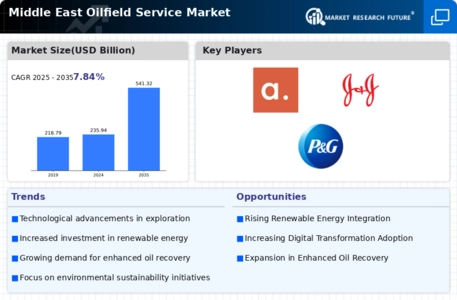
Middle East Oilfield Service Market Infographic
Purchase Options

Middle East Oilfield Service Size

Middle East Oilfield Service Market Growth Projections and Opportunities

The Middle East oilfield service market is influenced by various market factors that shape its dynamics and growth. These factors play a significant role in determining the demand for oilfield services in the region, affecting both suppliers and consumers alike.

One crucial market factor is the global oil demand and price fluctuations. The Middle East is a major contributor to the world's oil supply, and any changes in global demand or oil prices directly impact the region's oilfield service market. When oil prices are high, there's typically an increase in drilling activities and oilfield development projects, leading to higher demand for services such as drilling, well completion, and production enhancement. Conversely, during periods of low oil prices, companies may reduce their capital expenditures, resulting in a slowdown in the oilfield service market.

Another significant factor is government policies and regulations. The Middle East governments often play a central role in the oil and gas sector, implementing policies that can either stimulate or hinder market growth. Regulatory changes, such as taxation policies, licensing requirements, and environmental regulations, can influence investment decisions and project timelines in the oilfield service sector. Moreover, geopolitical tensions and regional conflicts in the Middle East can also disrupt oilfield operations and impact market stability.

Technological advancements are also driving forces in the Middle East oilfield service market. Innovations in drilling techniques, reservoir characterization, and digitalization have transformed the way oil and gas companies operate. These advancements improve efficiency, reduce costs, and enable the exploitation of previously inaccessible reserves. As a result, oilfield service providers must continually invest in research and development to remain competitive and meet the evolving needs of their clients in the Middle East.

Market competition is another factor that shapes the Middle East oilfield service market. The region is home to numerous international and local service providers competing for contracts and market share. Competition can drive innovation, improve service quality, and lower costs for oil and gas operators. However, intense competition can also squeeze profit margins and lead to consolidation within the industry as companies seek to gain a competitive edge through mergers and acquisitions.

Furthermore, macroeconomic factors such as economic growth, inflation rates, and currency exchange rates influence the Middle East oilfield service market. Strong economic growth in the region typically correlates with increased oil and gas activities, driving demand for oilfield services. Conversely, economic downturns can lead to reduced investment in the oil and gas sector, impacting service providers' revenue and profitability. Additionally, fluctuations in currency exchange rates can affect the cost of imported equipment and services, potentially impacting project economics for oil and gas operators.

Lastly, environmental and sustainability considerations are becoming increasingly important factors in the Middle East oilfield service market. As global awareness of climate change grows, there is a growing pressure on oil and gas companies to reduce their environmental footprint and adopt sustainable practices. This shift towards cleaner energy sources and carbon emission reduction initiatives can influence investment decisions and project priorities in the region's oilfield service sector.

The Middle East oilfield service market is influenced by a combination of market factors ranging from global oil demand and price fluctuations to technological advancements and environmental considerations. Understanding and adapting to these factors are essential for oilfield service providers to navigate the dynamic market landscape and capitalize on emerging opportunities in the region.
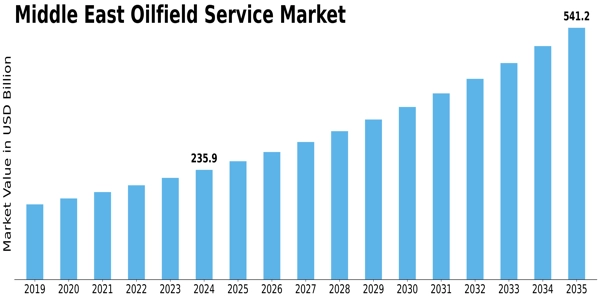
Middle East Oilfield Service Market Size Graph
Author
Garvit Vyas
Analyst

Explore the profile of Garvit Vyas, one of our esteemed authors at Market Research Future, and access their expert research contributions in the field of market research and industry analysis

Leave a Comment

FAQs

What is the current valuation of the MEA Oilfield Services Market?

<p>As of 2024, the MEA Oilfield Services Market was valued at 16.14 USD Billion.</p>

What is the projected market size for the MEA Oilfield Services Market by 2035?

<p>The market is projected to reach a valuation of 28.64 USD Billion by 2035.</p>

What is the expected CAGR for the MEA Oilfield Services Market during the forecast period?

<p>The expected CAGR for the MEA Oilfield Services Market from 2025 to 2035 is 5.35%.</p>

Which companies are considered key players in the MEA Oilfield Services Market?

<p>Key players include Schlumberger, Halliburton, Baker Hughes, and Weatherford International, among others.</p>

What are the primary service types in the MEA Oilfield Services Market?

<p>The primary service types include Drilling Services, Completion Services, Production Services, and Workover Services.</p>

Market Summary

As per analysis, the MEA Oilfield Services Market is projected to grow from USD 17.09 Billion in 2025 to USD 28.64 Billion by 2035, exhibiting a compound annual growth rate (CAGR) of 5.35% during the forecast period (2025 - 2035).

Key Market Trends & Highlights

The MEA Oilfield Services Market is poised for growth driven by technological advancements and sustainability initiatives.

  • Technological innovation is reshaping the MEA Oilfield Services Market, enhancing operational efficiency and reducing costs.
  • Sustainability initiatives are increasingly influencing market dynamics, as companies strive to meet environmental standards and consumer expectations.
  • Geopolitical influences, particularly in the GCC region, are shaping investment strategies and operational frameworks within the oilfield services sector.
  • Increased energy demand and investment in infrastructure development are key drivers propelling growth in both drilling services and conventional oil segments.

Market Size & Forecast

2024 Market Size 16.14 (USD Billion)
2035 Market Size 28.64 (USD Billion)
CAGR (2025 - 2035) 5.35%

Major Players

<p>Schlumberger (US), Halliburton (US), Baker Hughes (US), Weatherford International (US), National Oilwell Varco (US), Saipem (IT), TechnipFMC (GB), Kuwait Oil Company (KW), Petrofac (GB), SNC-Lavalin (CA)</p>

Market Trends

The MEA Oilfield Services Market is currently experiencing a dynamic transformation, driven by a confluence of technological advancements and evolving energy demands. Countries within the Middle East and Africa are increasingly investing in innovative oilfield technologies, which appear to enhance operational efficiency and reduce environmental impact. This shift is likely influenced by the region's rich hydrocarbon resources and the necessity to optimize extraction processes. Furthermore, the growing emphasis on sustainability and regulatory compliance is prompting service providers to adopt greener practices, which may reshape traditional operational frameworks. In addition, the geopolitical landscape in the MEA region plays a crucial role in shaping market dynamics. Political stability and international relations can significantly impact investment flows and project viability. As nations strive to diversify their economies, the oilfield services sector is poised to adapt to new challenges and opportunities. The interplay between local regulations, technological innovation, and market demand suggests a complex yet promising future for the MEA Oilfield Services Market, where adaptability and foresight will be essential for stakeholders to thrive.

Technological Innovation

The MEA Oilfield Services Market is witnessing a surge in technological innovation, with companies increasingly adopting advanced drilling techniques and digital solutions. This trend appears to enhance operational efficiency and reduce costs, allowing for more effective resource management. The integration of artificial intelligence and data analytics is likely to play a pivotal role in optimizing exploration and production activities.

Sustainability Initiatives

There is a growing focus on sustainability within the MEA Oilfield Services Market, as stakeholders recognize the importance of minimizing environmental impact. Companies are increasingly implementing eco-friendly practices and technologies, which may lead to improved compliance with regulatory standards. This trend suggests a shift towards more responsible resource extraction and management.

Geopolitical Influences

The geopolitical landscape in the MEA region significantly influences the oilfield services sector. Political stability and international relations can affect investment decisions and project execution. As countries in the region seek to diversify their economies, the oilfield services market may experience shifts in demand and operational strategies, reflecting the broader economic context.

Middle East Oilfield Service Market Market Drivers

Increased Energy Demand

The MEA Oilfield Services Market is currently experiencing a surge in energy demand, driven by population growth and industrialization across the region. Countries such as Saudi Arabia and the UAE are ramping up their oil production capabilities to meet both domestic and international needs. According to recent estimates, the region's oil consumption is projected to grow by approximately 2.5% annually over the next five years. This increasing demand necessitates enhanced oilfield services, including drilling, completion, and maintenance, thereby creating lucrative opportunities for service providers. The MEA Oilfield Services Market is thus positioned to benefit from this upward trend, as companies invest in advanced technologies and skilled labor to optimize production efficiency.

Investment in Infrastructure Development

The MEA Oilfield Services Market is witnessing substantial investments in infrastructure development, particularly in oil-rich nations. Governments are prioritizing the enhancement of oilfield infrastructure to facilitate efficient extraction and transportation of hydrocarbons. For instance, the Saudi Vision 2030 initiative aims to diversify the economy and increase oil production capacity, which is expected to attract significant foreign direct investment. This influx of capital is likely to bolster the oilfield services sector, as companies will require advanced technologies and services to support large-scale projects. The MEA Oilfield Services Market stands to gain from these developments, as infrastructure improvements will enhance operational efficiency and reduce costs.

Regulatory Support and Policy Frameworks

The MEA Oilfield Services Market benefits from supportive regulatory frameworks that encourage exploration and production activities. Governments in the region are implementing policies aimed at attracting foreign investment and fostering partnerships with international oil companies. For example, the UAE has introduced favorable tax regimes and streamlined licensing processes to enhance its oil and gas sector's competitiveness. Such regulatory support is likely to stimulate growth in the oilfield services market, as companies seek to capitalize on new opportunities. The MEA Oilfield Services Market is thus poised for expansion, driven by a conducive business environment that promotes innovation and investment.

Technological Advancements in Oilfield Services

The MEA Oilfield Services Market is increasingly influenced by technological advancements that enhance operational efficiency and reduce costs. Innovations such as digital oilfield technologies, automation, and data analytics are transforming traditional oilfield operations. For instance, the adoption of advanced drilling techniques and real-time monitoring systems is enabling companies to optimize production and minimize downtime. As the region's oilfields become more complex, the demand for sophisticated services is likely to rise. This trend suggests that the MEA Oilfield Services Market will continue to evolve, with service providers investing in cutting-edge technologies to maintain a competitive edge.

Focus on Sustainability and Environmental Practices

The MEA Oilfield Services Market is increasingly aligning with global sustainability trends, as companies adopt environmentally friendly practices. There is a growing emphasis on reducing carbon footprints and minimizing environmental impacts associated with oil extraction. Countries in the region are implementing stricter environmental regulations, prompting service providers to innovate and adopt sustainable technologies. For example, initiatives aimed at reducing flaring and improving water management are becoming more prevalent. This focus on sustainability is likely to reshape the MEA Oilfield Services Market, as companies that prioritize environmental stewardship may gain a competitive advantage in securing contracts and partnerships.

Market Segment Insights

By Service Type: Drilling Services (Largest) vs. Completion Services (Fastest-Growing)

<p>In the MEA Oilfield Services Market, the distribution of market share among service types reveals that Drilling Services holds the largest portion, underscoring its significance in exploration and extraction activities. Completion Services, while initially a smaller segment, is rapidly gaining traction, reflecting the industry's shift towards optimizing production post-drilling. Its growth indicates a transformation in service demand, influenced by market conditions and technological advancements. As oil demands fluctuate and operational efficiencies become paramount, focus on Completion Services is expected to surge. Enhanced completion techniques and innovations are expected to act as catalysts for growth in this segment. Additionally, increased exploration activities and rising investments in oilfield development further drive the demand for both Drilling and Completion Services, shaping a dynamic service landscape in the region.</p>

<p>Drilling Services (Dominant) vs. Workover Services (Emerging)</p>

<p>Drilling Services remain the dominant force within the MEA Oilfield Services Market due to their critical role in facilitating initial oil extraction processes. These services encompass a comprehensive range of activities including well planning, site preparation, and actual drilling operations, making them essential for successful oilfield development. In contrast, Workover Services are emerging, focused on the maintenance and enhancement of existing wells. This segment is gaining attention as operators seek to maximize output from established wells, reflecting an overarching industry trend towards optimizing resource extraction. The combination of efficiency in workover strategies and the traditional robustness of drilling services illustrates the evolving dynamics within the oilfield service landscape, where demand is shaped by both technological advancements and operational necessities.</p>

By Application: Conventional Oil (Largest) vs. Shale Gas (Fastest-Growing)

<p>In the MEA Oilfield Services Market, the application segment reveals a dynamic landscape characterized by a diverse distribution of market shares. Conventional Oil remains the largest segment, driven primarily by established production infrastructures and ongoing investments in the region's oil fields. Conversely, the Offshore and Shale Gas segments are gaining traction, indicating a shift in focus towards alternative extraction techniques that cater to rising energy demands. Growth trends in the MEA Oilfield Services Market suggest a significant pivot towards shale gas extraction as technological advancements and favorable regulatory environments encourage investment. The Offshore segment also showcases robust growth, driven by increased offshore drilling activities and a heightened focus on sustainability in energy procurement. This mixed growth landscape illustrates the need for service providers to stay agile and responsive to market demands as the energy sector continues to evolve.</p>

<p>Conventional Oil (Dominant) vs. Offshore (Emerging)</p>

<p>Conventional Oil is recognized as the dominant segment in the MEA Oilfield Services Market, primarily due to its established exploration and extraction methodologies that have undergone years of refinement. This segment benefits from robust supply chains and a wealth of operational experience in handling large-scale projects. Offshore operations are emerging as an essential player, driven by innovations in subsea technology and a shift towards deeper water drilling efforts. While still maturing, the Offshore segment possesses significant potential for growth as demand for untapped resources increases alongside technological advancements. The interplay between these two segments is vital, as service providers must navigate the challenges posed by differing operational requirements and evolving energy policies.</p>

By Technology: Artificial Lift (Largest) vs. Well Intervention (Fastest-Growing)

<p>In the MEA Oilfield Services Market, Artificial Lift holds the largest market share, primarily due to its essential role in optimizing production from existing wells. This segment is critical in enhancing oil recovery and is widely implemented across various oilfields in the region. Following closely is the Well Intervention segment, which is experiencing rapid growth as operators increasingly recognize the importance of maintaining and enhancing well performance throughout their lifecycle. Growth in the Well Intervention segment is driven by rising demand for advanced technologies that facilitate maintenance and productivity improvements at lower costs. Simultaneously, the push towards maximizing output from existing oilfields amid fluctuating global oil prices is fueling innovation and investment. This trend is expected to continue, positioning Well Intervention as a key growth driver in the market.</p>

<p>Technology: Artificial Lift (Dominant) vs. Well Intervention (Emerging)</p>

<p>Artificial Lift is characterized by its robust application in hydrocarbon extraction, providing essential services that prolong well life cycles and maximize output. This segment is crucial for operators seeking to enhance production efficiency in mature fields, making it a dominant player in the market. In contrast, Well Intervention is gaining momentum as an emerging segment, focusing on the maintenance and restoration of well productivity. This area is witnessing increased investment in advanced technologies and methods, such as coiled tubing and slickline operations. The need for regular maintenance and the emphasis on optimizing existing infrastructure drive Well Intervention's growth, positioning it as a strategic focus for oilfield services in the MEA region.</p>

By End Use: Oil Exploration (Largest) vs. Enhanced Oil Recovery (Fastest-Growing)

<p>In the MEA Oilfield Services Market, the distribution of market share among end use segments reveals that Oil Exploration holds the largest share, dominating the market as the primary focus for many oilfield service companies. Natural Gas Extraction follows closely, benefiting from increasing global demand for cleaner energy sources. Enhanced Oil Recovery and Decommissioning, while smaller in share, are emerging as vital components of the overall landscape, driven by the need for sustainability and optimization of existing resources.</p>

<p>Oil Exploration (Dominant) vs. Enhanced Oil Recovery (Emerging)</p>

<p>Oil Exploration remains the dominant end use segment, characterized by significant investment in new drilling technologies and geological surveying. This sector is bolstered by ongoing discoveries and extensive reserves within the region. On the other hand, Enhanced Oil Recovery is gaining traction as companies seek to extract more from aging fields through advanced techniques. As oil demand stabilizes, this segment is positioned for rapid growth, driven by technological innovations and regulatory support for sustainable practices, indicating a shift in focus as markets evolve.</p>

Get more detailed insights about Middle East Oilfield Service Market Research Report – Forecast till 2035

Regional Insights

The Middle East Oilfield Service Market is growing rapidly over the forecast period because major players in the biggest consumer market with the highest GDP are present. Due to the surge in technical innovation and the rising investment in various technologies, Saudi Arabia is predicted to dominate the Middle East area. Furthermore, the nation is the world's greatest exporter of crude oil. The world's fifth-largest shale gas reservoir is thought to be found in Saudi Arabia. As such, it has a significant deal of potential to emulate the development growth of the unconventional reserves of the United States.

Additionally, Saudi Arabia is developing its current gas and oil assets. The Berri field and the Marjan oil field are two examples of significant expansion initiatives. Thus, Middle East is anticipated to experience notable growth in the oilfield services market over the projected period.

Figure 2: Middle East Oilfield Service Market Share By Region 2022 (USD Billion)

Key Players and Competitive Insights

The Oilfield Services Market is currently characterized by a dynamic competitive landscape, driven by technological advancements, increasing energy demand, and a focus on sustainability. Major players such as Schlumberger (US), Halliburton (US), and Baker Hughes (US) are at the forefront, each adopting distinct strategies to enhance their market positioning. Schlumberger (US) emphasizes digital transformation and innovation, investing heavily in data analytics and automation to optimize operations. Halliburton (US), on the other hand, focuses on strategic partnerships and mergers to expand its service offerings and geographical reach. Baker Hughes (US) is increasingly prioritizing sustainability, integrating eco-friendly practices into its operations, which appears to resonate well with current market demands. Collectively, these strategies not only enhance individual company profiles but also intensify competition within the market, as firms strive to differentiate themselves through technological prowess and sustainable practices.

Key business tactics employed by these companies include localizing manufacturing and optimizing supply chains to enhance operational efficiency. The market structure is moderately fragmented, with a mix of large multinational corporations and regional players. This fragmentation allows for a diverse range of services and innovations, although the influence of key players remains substantial, shaping market trends and customer expectations.

In December 2025, Schlumberger (US) announced a strategic partnership with a leading technology firm to develop advanced AI-driven solutions for oilfield operations. This collaboration is poised to enhance predictive maintenance capabilities, potentially reducing downtime and operational costs for clients. The strategic importance of this move lies in its alignment with the growing trend towards digitalization in the oilfield services sector, positioning Schlumberger (US) as a leader in technological innovation.

In November 2025, Halliburton (US) completed the acquisition of a regional service provider, which is expected to bolster its presence in the Middle East and Africa. This acquisition not only expands Halliburton's service portfolio but also enhances its ability to cater to local market needs. The strategic significance of this action is evident in Halliburton's commitment to strengthening its regional footprint, thereby increasing its competitive edge in a rapidly evolving market.

In October 2025, Baker Hughes (US) launched a new suite of sustainable technologies aimed at reducing carbon emissions in oilfield operations. This initiative reflects the company's proactive approach to sustainability, which is becoming increasingly critical in the oil and gas sector. The strategic importance of this launch is underscored by the growing regulatory pressures and market demand for environmentally responsible practices, positioning Baker Hughes (US) favorably among environmentally conscious clients.

As of January 2026, current competitive trends in the Oilfield Services Market are heavily influenced by digitalization, sustainability, and the integration of AI technologies. Strategic alliances are increasingly shaping the landscape, enabling companies to leverage complementary strengths and enhance service offerings. Looking ahead, competitive differentiation is likely to evolve from traditional price-based competition to a focus on innovation, technological advancements, and supply chain reliability. This shift underscores the necessity for companies to adapt and innovate continuously to maintain a competitive edge in a rapidly changing market.

Key Companies in the Middle East Oilfield Service Market include

Industry Developments

Future Outlook

Middle East Oilfield Service Market Future Outlook

The MEA Oilfield Services Market is projected to grow at a 5.35% CAGR from 2025 to 2035, driven by technological advancements, increasing energy demand, and enhanced operational efficiencies.

New opportunities lie in:

  • Investment in digital oilfield technologies for real-time data analytics.
  • Expansion of renewable energy integration services within oilfield operations.
  • Development of advanced drilling techniques to reduce operational costs.

By 2035, the MEA Oilfield Services Market is expected to be robust, driven by innovation and strategic investments.

Market Segmentation

Middle East Oilfield Service Market End Use Outlook

  • Oil Exploration
  • Natural Gas Extraction
  • Enhanced Oil Recovery
  • Decommissioning

Middle East Oilfield Service Market Technology Outlook

  • Artificial Lift
  • Well Intervention
  • Seismic Services
  • Reservoir Management

Middle East Oilfield Service Market Application Outlook

  • Onshore
  • Offshore
  • Shale Gas
  • Conventional Oil

Middle East Oilfield Service Market Service Type Outlook

  • Drilling Services
  • Completion Services
  • Production Services
  • Workover Services

Report Scope

MARKET SIZE 202416.14(USD Billion)
MARKET SIZE 202517.09(USD Billion)
MARKET SIZE 203528.64(USD Billion)
COMPOUND ANNUAL GROWTH RATE (CAGR)5.35% (2024 - 2035)
REPORT COVERAGERevenue Forecast, Competitive Landscape, Growth Factors, and Trends
BASE YEAR2024
Market Forecast Period2025 - 2035
Historical Data2019 - 2024
Market Forecast UnitsUSD Billion
Key Companies ProfiledSchlumberger (US), Halliburton (US), Baker Hughes (US), Weatherford International (US), National Oilwell Varco (US), Saipem (IT), TechnipFMC (GB), Kuwait Oil Company (KW), Petrofac (GB), SNC-Lavalin (CA)
Segments CoveredService Type, Application, Technology, End Use
Key Market OpportunitiesAdoption of advanced digital technologies enhances operational efficiency in the MEA Oilfield Services Market.
Key Market DynamicsGrowing emphasis on sustainable practices drives innovation in the MEA Oilfield Services Market.
Countries CoveredGCC Countries, South Africa, Rest of MEA

FAQs

What is the current valuation of the MEA Oilfield Services Market?

<p>As of 2024, the MEA Oilfield Services Market was valued at 16.14 USD Billion.</p>

What is the projected market size for the MEA Oilfield Services Market by 2035?

<p>The market is projected to reach a valuation of 28.64 USD Billion by 2035.</p>

What is the expected CAGR for the MEA Oilfield Services Market during the forecast period?

<p>The expected CAGR for the MEA Oilfield Services Market from 2025 to 2035 is 5.35%.</p>

Which companies are considered key players in the MEA Oilfield Services Market?

<p>Key players include Schlumberger, Halliburton, Baker Hughes, and Weatherford International, among others.</p>

What are the primary service types in the MEA Oilfield Services Market?

<p>The primary service types include Drilling Services, Completion Services, Production Services, and Workover Services.</p>

  1. EXECUTIVE SUMMARY
  2. MARKET INTRODUCTION
    1. Definition
    2. Scope of the Study
      1. Research Objective
      2. Assumptions
      3. Limitations
  3. RESEARCH METHODOLOGY
    1. Overview
    2. Data Mining
    3. Secondary Research
    4. Primary Research
      1. Primary Interviews and Information Gathering Process
      2. Breakdown of Primary Respondents
    5. Forecasting Modality
    6. Market Size Estimation
      1. Bottom-Up Approach
      2. Top-Down Approach
    7. Data Triangulation
    8. Validation
  4. MARKET DYNAMICS
    1. Overview
    2. Drivers
    3. Restraints
    4. Opportunities
  5. MARKET FACTOR ANALYSIS
    1. Value Chain Analysis
    2. Porter’s Five Forces Analysis
      1. Bargaining Power of Suppliers
      2. Bargaining Power of Buyers
      3. Threat of New Entrants
      4. Threat of Substitutes
      5. Intensity of Rivalry
    3. COVID-19 Impact Analysis
      1. Market Impact Analysis
      2. Regional Impact
      3. Opportunity and Threat Analysis
  6. MIDDLE EAST OILFIELD SERVICE MARKET, BY SERVICE TYPE
    1. Overview
    2. Active Packaging
    3. Controlled Packaging
    4. Modified Atmosphere Packaging
    5. Others
  7. MIDDLE EAST OILFIELD SERVICE MARKET, BY LOCATION
    1. Overview
    2. Plastic
    3. Metal
    4. Glass
    5. Paper
    6. Aluminium
  8. MIDDLE EAST OILFIELD SERVICE MARKET, BY REGION
    1. Overview
    2. Middle East
      1. GCC Countries
      2. Saudi Arabia
      3. Iran
      4. Rest of Middle East
  9. COMPETITIVE LANDSCAPE
    1. Overview
    2. Competitive Analysis
    3. Market Share Analysis
    4. Major Growth Strategy in the Middle East Oilfield Service Market,
    5. Competitive Benchmarking
    6. Leading Players in Terms of Number of Developments in the Middle East Oilfield Service Market,
    7. Key developments and Growth Strategies
      1. New Location Launch/Service Deployment
      2. Merger & Acquisitions
      3. Joint Ventures
    8. Major Players Financial Matrix
      1. Sales & Operating Income, 2022
      2. Major Players R&D Expenditure. 2022
  10. COMPANY PROFILES
    1. Anton Oilfield Services (Group) Ltd.
      1. Company Overview
      2. Financial Overview
      3. Products Offered
      4. Key Developments
      5. SWOT Analysis
      6. Key Strategies
    2. Baker Hughes Co.
      1. Company Overview
      2. Financial Overview
      3. Products Offered
      4. Key Developments
      5. SWOT Analysis
      6. Key Strategies
    3. Denholm Oilfield Services
      1. Company Overview
      2. Financial Overview
      3. Products Offered
      4. Key Developments
      5. SWOT Analysis
      6. Key Strategies
    4. Halliburton Company
      1. Company Overview
      2. Financial Overview
      3. Products Offered
      4. Key Developments
      5. SWOT Analysis
      6. Key Strategies
    5. Middle East Oilfield Services
      1. Company Overview
      2. Financial Overview
      3. Products Offered
      4. Key Developments
      5. SWOT Analysis
      6. Key Strategies
    6. Welltec A/S
      1. Company Overview
      2. Financial Overview
      3. Products Offered
      4. Key Developments
      5. SWOT Analysis
      6. Key Strategies
    7. OILSERV LIMITED
      1. Company Overview
      2. Financial Overview
      3. Products Offered
      4. Key Developments
      5. SWOT Analysis
      6. Key Strategies
    8. Schlumberger Limited
      1. Company Overview
      2. Financial Overview
      3. Products Offered
      4. Key Developments
      5. SWOT Analysis
      6. Key Strategies
    9. Swire Oilfield Services Ltd.
      1. Company Overview
      2. Financial Overview
      3. Products Offered
      4. Key Developments
      5. SWOT Analysis
      6. Key Strategies
    10. Weatherford International PLC
      1. Company Overview
      2. Financial Overview
      3. Products Offered
      4. Key Developments
      5. SWOT Analysis
      6. Key Strategies
  11. APPENDIX
    1. References
    2. Related Reports
  12. LIST OF TABLES
  13. MIDDLE EAST OILFIELD SERVICE MARKET, SYNOPSIS, 2018–2032
  14. MIDDLE EAST OILFIELD SERVICE MARKET, ESTIMATES & FORECAST, 2018–2032 (USD BILLION)
  15. MIDDLE EAST OILFIELD SERVICE MARKET, BY SERVICE TYPE, 2018–2032 (USD BILLION)
  16. MIDDLE EAST OILFIELD SERVICE MARKET, BY LOCATION, 2018–2032 (USD BILLION)
  17. GCC COUNTRIES: LUBRICANTS MARKET, BY SERVICE TYPE, 2018–2032 (USD BILLION)
  18. GCC COUNTRIES: LUBRICANTS MARKET, BY LOCATION, 2018–2032 (USD BILLION)
  19. SAUDI ARABIA: LUBRICANTS MARKET, BY SERVICE TYPE, 2018–2032 (USD BILLION)
  20. SAUDI ARABIA: LUBRICANTS MARKET, BY LOCATION, 2018–2032 (USD BILLION)
  21. IRAN: LUBRICANTS MARKET, BY SERVICE TYPE, 2018–2032 (USD BILLION)
  22. IRAN: LUBRICANTS MARKET, BY LOCATION, 2018–2032 (USD BILLION)
  23. REST OF MIDDLE EAST: LUBRICANTS MARKET, BY SERVICE TYPE, 2018–2032 (USD BILLION)
  24. REST OF MIDDLE EAST: LUBRICANTS MARKET, BY LOCATION, 2018–2032 (USD BILLION)
  25. LIST OF FIGURES
  26. RESEARCH PROCESS
  27. MARKET STRUCTURE FOR THE MIDDLE EAST OILFIELD SERVICE MARKET
  28. MARKET DYNAMICS FOR THE MIDDLE EAST OILFIELD SERVICE MARKET
  29. MIDDLE EAST OILFIELD SERVICE MARKET, SHARE (%), BY SERVICE TYPE, 2021
  30. MIDDLE EAST OILFIELD SERVICE MARKET, SHARE (%), BY LOCATION, 2021
  31. MIDDLE EAST OILFIELD SERVICE MARKET, SHARE (%), BY REGION, 2021
  32. ANTON OILFIELD SERVICES (GROUP) LTD.: FINANCIAL OVERVIEW SNAPSHOT
  33. ANTON OILFIELD SERVICES (GROUP) LTD.: SWOT ANALYSIS
  34. BAKER HUGHES CO.: FINANCIAL OVERVIEW SNAPSHOT
  35. BAKER HUGHES CO.: SWOT ANALYSIS
  36. DENHOLM OILFIELD SERVICES: FINANCIAL OVERVIEW SNAPSHOT
  37. DENHOLM OILFIELD SERVICES: SWOT ANALYSIS
  38. HALLIBURTON COMPANY: FINANCIAL OVERVIEW SNAPSHOT
  39. HALLIBURTON COMPANY: SWOT ANALYSIS
  40. MIDDLE EAST OILFIELD SERVICES: FINANCIAL OVERVIEW SNAPSHOT
  41. MIDDLE EAST OILFIELD SERVICES: SWOT ANALYSIS
  42. WELLTEC A/S: FINANCIAL OVERVIEW SNAPSHOT
  43. WELLTEC A/S: SWOT ANALYSIS
  44. OILSERV LIMITED: FINANCIAL OVERVIEW SNAPSHOT
  45. OILSERV LIMITED: SWOT ANALYSIS
  46. SCHLUMBERGER LIMITED: FINANCIAL OVERVIEW SNAPSHOT
  47. SCHLUMBERGER LIMITED: SWOT ANALYSIS
  48. SWIRE OILFIELD SERVICES LTD.: FINANCIAL OVERVIEW SNAPSHOT
  49. SWIRE OILFIELD SERVICES LTD.: SWOT ANALYSIS
  50. WEATHERFORD INTERNATIONAL PLC: FINANCIAL OVERVIEW SNAPSHOT
  51. WEATHERFORD INTERNATIONAL PLC: SWOT ANALYSIS

Middle East Oilfield Service Market Segmentation

Market Segmentation Overview

  • Detailed segmentation data will be available in the full report
  • Comprehensive analysis by multiple parameters
  • Regional and country-level breakdowns
  • Market size forecasts by segment
Infographic

Free Sample Request

Kindly complete the form below to receive a free sample of this Report

Get Free Sample

Customer Strories

Compare Licence

×
Features License Type
Single User Multiuser License Enterprise User
Price $4,950 $5,950 $7,250
Maximum User Access Limit 1 User Upto 10 Users Unrestricted Access Throughout the Organization
Free Customization
Direct Access to Analyst
Deliverable Format
Platform Access
Discount on Next Purchase 10% 15% 15%
Printable Versions















