Growing Emphasis on Patient-Centric Care
The Medical Pendant Market is witnessing a growing emphasis on patient-centric care, which is reshaping healthcare delivery models. As healthcare providers prioritize patient engagement and satisfaction, the demand for tools that facilitate communication and monitoring has intensified. Medical pendants serve as vital instruments in this paradigm shift, allowing patients to easily access assistance and communicate their needs. This trend is supported by data indicating that patient satisfaction scores are closely linked to the availability of responsive healthcare technologies. Consequently, the Medical Pendant Market is likely to expand as healthcare facilities invest in solutions that enhance the patient experience and foster a more collaborative environment between patients and providers.
Rising Demand for Advanced Healthcare Solutions
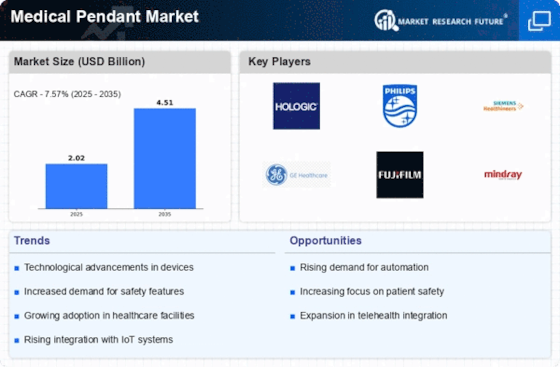
The Medical Pendant Market is experiencing a notable surge in demand for advanced healthcare solutions. This trend is primarily driven by the increasing complexity of medical procedures and the need for efficient patient monitoring systems. As healthcare facilities strive to enhance operational efficiency, the integration of medical pendants has become essential. According to recent data, the market is projected to grow at a compound annual growth rate of approximately 8.5% over the next five years. This growth is indicative of the healthcare sector's commitment to adopting innovative technologies that improve patient care and streamline workflows. The Medical Pendant Market is thus positioned to benefit from this rising demand, as hospitals and clinics seek to implement solutions that facilitate real-time communication and monitoring.
Technological Advancements in Medical Equipment
Technological advancements play a pivotal role in shaping the Medical Pendant Market. Innovations such as wireless connectivity, enhanced user interfaces, and integration with electronic health records are transforming how medical pendants are utilized in healthcare settings. These advancements not only improve the functionality of medical pendants but also enhance the overall patient experience. For instance, the incorporation of IoT technology allows for seamless data transmission, enabling healthcare providers to monitor patients more effectively. The Medical Pendant Market is likely to see a significant uptick in adoption rates as these technologies become more prevalent. Furthermore, the increasing focus on telemedicine and remote patient monitoring is expected to further drive the demand for advanced medical pendants.
Increasing Investment in Healthcare Infrastructure
Investment in healthcare infrastructure is a significant driver for the Medical Pendant Market. Governments and private entities are allocating substantial resources to upgrade healthcare facilities, particularly in emerging markets. This investment is aimed at enhancing the quality of care and ensuring that healthcare systems can meet the growing demands of their populations. As new hospitals and clinics are established, the integration of medical pendants becomes a priority to ensure efficient patient monitoring and communication. Recent reports suggest that healthcare infrastructure spending is expected to increase by over 10% in the coming years, which will likely bolster the Medical Pendant Market as facilities seek to implement state-of-the-art technologies.
Regulatory Support for Advanced Medical Technologies
Regulatory support for advanced medical technologies is a crucial factor influencing the Medical Pendant Market. Governments and regulatory bodies are increasingly recognizing the importance of innovative healthcare solutions in improving patient outcomes. This support often translates into streamlined approval processes for new medical devices, including medical pendants. As regulations evolve to accommodate technological advancements, manufacturers are encouraged to develop and market new products. This regulatory environment is expected to foster growth in the Medical Pendant Market, as companies are more likely to invest in research and development. Furthermore, the alignment of regulatory frameworks with industry needs may lead to enhanced safety and efficacy standards, ultimately benefiting healthcare providers and patients alike.






















Leave a Comment