Request Free Sample ×

Kindly complete the form below to receive a free sample of this Report

* Please use a valid business email

Leading companies partner with us for data-driven Insights

clients tt-cursor
Hero Background
English
Chinese
French
Japanese
Korean
German
Spanish

Maltodextrin Market Size

ID: MRFR/FnB/10254-CR
128 Pages
Pradeep Nandi
May 2023

Maltodextrin Market Size, Share, Industry Trend & Analysis Research Report Information By Source (Corn, Wheat, Potato and Others), By Form (Spray Dried Powder and Agglomerated), By Application (Food & Beverages, Pharmaceuticals, Cosmetics & Personal Care Products and Agriculture), And By Region (North America, Europe, Asia-Pacific, And Rest Of The World) - Forecast Till 2035

Share:
Download PDF ×

We do not share your information with anyone. However, we may send you emails based on your report interest from time to time. You may contact us at any time to opt-out.

Maltodextrin Market Infographic
Purchase Options

Maltodextrin Size

Maltodextrin Market Growth Projections and Opportunities

The Maltodextrin market is influenced by a myriad of factors that collectively shape its dynamics and growth trajectory. One of the primary drivers of this market is the widespread application of maltodextrin in the food and beverage industry as a versatile and cost-effective ingredient. Maltodextrin, derived from starch, serves various functions such as a thickener, filler, or stabilizer in a wide range of food products, contributing to its popularity among manufacturers for enhancing texture and mouthfeel. The multifunctional nature of maltodextrin makes it a key ingredient in the formulation of processed foods, beverages, and nutritional products.

Changing consumer dietary patterns and the demand for convenience foods also play a significant role in shaping the Maltodextrin market. As lifestyles become busier, consumers seek convenient and ready-to-eat food options. Maltodextrin, with its ability to improve the texture and shelf stability of processed foods, is widely used in convenience products like instant soups, sauces, and snacks. This aligns with the growing preference for on-the-go and easily preparable food items, contributing to the sustained demand for maltodextrin.

The impact of the sports nutrition and functional food trends is another notable factor influencing the Maltodextrin market. Maltodextrin is commonly used in sports drinks and energy bars as a quick source of carbohydrates for athletes and fitness enthusiasts. Its rapid digestion and absorption make it an ideal ingredient for replenishing glycogen stores during and after physical activity. The increasing emphasis on health and wellness, coupled with the popularity of sports nutrition products, contributes to the growth of maltodextrin consumption.

Technological advancements in food processing and the development of modified forms of maltodextrin contribute to the market's evolution. Modified maltodextrins, such as resistant maltodextrin, are designed to have specific functional properties, including resistance to digestion in the small intestine. This innovation opens new possibilities for incorporating maltodextrin into products catering to consumers seeking low-calorie or low-glycemic index options, aligning with the demand for healthier food choices.

The influence of clean-label and natural ingredients trends is impacting the Maltodextrin market. As consumers become more conscious of the ingredients in their food and beverages, there is a growing demand for clean-label alternatives. Maltodextrin manufacturers are responding by offering organic and non-GMO (genetically modified organism) options, meeting the preferences of consumers who seek natural and transparent ingredient lists in the products they consume.

Economic factors, including raw material prices and production costs, play a significant role in the Maltodextrin market. Maltodextrin is primarily derived from starch sources such as corn, wheat, or tapioca. Fluctuations in the prices of these raw materials can impact the overall production cost of maltodextrin, influencing pricing and profitability for both manufacturers and consumers. Market players must navigate these economic considerations to maintain competitive pricing and ensure the stability of their supply chains.

The impact of global food trends and cultural influences shapes the demand for maltodextrin in various regions. In some cultures, maltodextrin is used in traditional culinary applications, contributing to the regional variations in consumption patterns. Additionally, the globalization of food preferences has led to an increased adoption of maltodextrin in diverse cuisines and food products worldwide.

The influence of sustainability considerations is gaining importance in the Maltodextrin market. Consumers are increasingly concerned about the environmental impact of food production and packaging. Maltodextrin manufacturers are responding by exploring sustainable sourcing practices, eco-friendly packaging solutions, and reducing their carbon footprint to align with the growing demand for environmentally conscious products.

Maltodextrin Market Size Graph
Author
Author Profile
Pradeep Nandi
Senior Research Analyst

I have a bachelor's degree in mechanical engineering and an MBA. I have more than two years of expertise in the retail, food, and beverage, chemical, and material industries, and hence have developed a sound cross-domain expertise. A firm believer in lifelong learning and sharing of knowledge. Having a proclivity for hatching ideas and trying to absorb as much information as possible in a short amount of time. Introducing corporates to the data and insight, which enables them to move from probability to possibility, has been my key areas of interest. 

Leave a Comment

FAQs

What is the projected market valuation of The Global Maltodextrin by 2035?

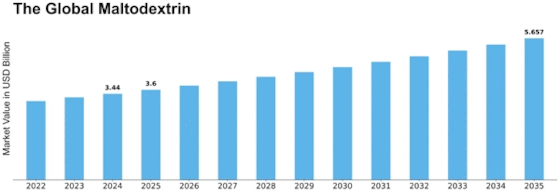
<p>The Global Maltodextrin is projected to reach a valuation of 5.657 USD Billion by 2035.</p>

What was the market valuation of The Global Maltodextrin in 2024?

<p>In 2024, The Global Maltodextrin was valued at 3.442 USD Billion.</p>

What is the expected CAGR for The Global Maltodextrin during the forecast period 2025 - 2035?

<p>The expected CAGR for The Global Maltodextrin during the forecast period 2025 - 2035 is 4.62%.</p>

Which companies are considered key players in The Global Maltodextrin?

<p>Key players in The Global Maltodextrin include Cargill, Tate & Lyle, ADM, Roquette Freres, and Ingredion.</p>

What are the primary sources of maltodextrin in the market?

<p>The primary sources of maltodextrin in the market include corn, wheat, potato, and others, with corn valued at 2.5 USD Billion by 2035.</p>

What forms of maltodextrin are available in the market?

<p>The available forms of maltodextrin in the market include spray dried powder and agglomerated, with spray dried powder projected to reach 2.828 USD Billion by 2035.</p>

What applications are driving the demand for maltodextrin?

<p>The demand for maltodextrin is driven by applications in food & beverage, pharmaceuticals, cosmetics & personal care products, and agriculture.</p>

How much is the food & beverage segment of the maltodextrin market expected to grow by 2035?

The food &amp; beverage segment of the maltodextrin market is expected to grow to 2.5 USD Billion by 2035.

What is the projected growth for the agriculture application of maltodextrin by 2035?

The agriculture application of maltodextrin is projected to grow to 1.057 USD Billion by 2035.

How does the maltodextrin market's growth compare across different sources?

The maltodextrin market's growth appears to be strongest in corn, with a projected valuation of 2.5 USD Billion, compared to wheat and potato sources.

Market Summary

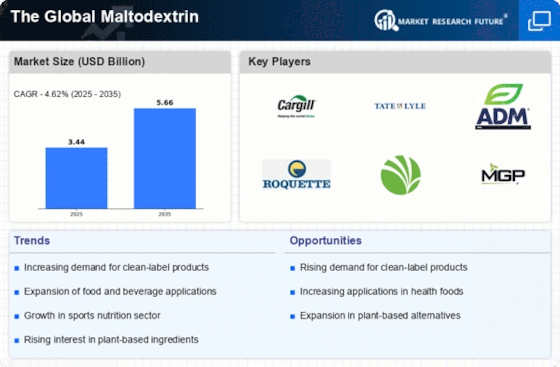
As per Market Research Future analysis, The Global Maltodextrin Market Size was estimated at 3.442 USD Billion in 2024. The maltodextrin industry is projected to grow from 3.601 USD Billion in 2025 to 5.657 USD Billion by 2035, exhibiting a compound annual growth rate (CAGR) of 4.62% during the forecast period 2025 - 2035

Key Market Trends & Highlights

The Global Maltodextrin Market is poised for substantial growth driven by health trends and technological advancements.

  • North America remains the largest market for maltodextrin, driven by increasing demand for convenience foods. The Asia-Pacific region is the fastest-growing market, reflecting a surge in health consciousness among consumers. Corn-based maltodextrin continues to dominate the market, while potato-based variants are emerging rapidly. Technological innovations in food processing and the expansion of the beverage industry are key drivers of market growth.

Market Size & Forecast

2024 Market Size 3.442 (USD Billion)
2035 Market Size 5.657 (USD Billion)
CAGR (2025 - 2035) 4.62%
Largest Regional Market Share in 2024 North America

Major Players

Cargill (US), Tate &amp; Lyle (GB), ADM (US), Roquette Freres (FR), Ingredion (US), MGP Ingredients (US), Grain Processing Corporation (US), Emsland Group (DE), Südzucker AG (DE)

Market Trends

The Global Maltodextrin Market is currently experiencing a notable transformation, driven by evolving consumer preferences and the increasing demand for versatile food ingredients. Maltodextrin Market, a polysaccharide derived from starch, is widely utilized in various sectors, including food and beverage, pharmaceuticals, and personal care. Its ability to enhance texture, improve mouthfeel, and act as a thickening agent makes it a favored choice among manufacturers. As health consciousness rises, there is a growing inclination towards clean-label products, prompting companies to explore natural sources for maltodextrin production. This shift appears to be influencing overall maltodextrin market trends and reshaping competitive dynamics within the broader maltodextrin market.

Moreover, The Global Maltodextrin Market is likely to witness advancements in production technologies, which may enhance efficiency and reduce costs. Innovations in extraction and processing methods could lead to higher quality products that meet the stringent requirements of various applications. Additionally, product diversification across the maltodextrin and maltodextrin syrup market is contributing to expanding application potential.

Health and Wellness Trends

There is a growing emphasis on health and wellness among consumers, leading to an increased demand for maltodextrin derived from natural sources. This trend suggests that manufacturers may need to reformulate products to align with consumer preferences for clean-label ingredients, influencing overall maltodextrin market share distribution across application segments.

Technological Advancements in Production

Innovations in production technologies are likely to enhance the efficiency of maltodextrin manufacturing. These advancements may result in improved product quality and reduced costs, thereby influencing market competitiveness.

E-commerce Growth

The rise of e-commerce platforms is facilitating greater access to maltodextrin products. This trend indicates that manufacturers could expand their market reach and cater to a diverse consumer base through online sales channels.

Maltodextrin Market Market Drivers

Expansion of the Beverage Industry

The beverage industry is experiencing substantial growth, which serves as a significant driver for the maltodextrin market. With the rise in demand for functional beverages, including energy drinks and sports nutrition products, maltodextrin is increasingly utilized for its ability to provide a smooth mouthfeel and enhance flavor profiles. Market analysis suggests that the beverage sector is expected to expand at a rate of around 5% annually, creating a favorable environment for The Global Maltodextrin Industry. Additionally, maltodextrin's role as a carbohydrate source in these beverages aligns with consumer preferences for healthier options, further propelling its adoption. As manufacturers innovate and diversify their beverage offerings, the demand for maltodextrin is likely to continue its upward trajectory.

Growth in the Pharmaceutical Sector

The pharmaceutical industry is witnessing a surge in demand for excipients, with maltodextrin emerging as a preferred choice due to its favorable properties. As a filler and binder in tablet formulations, maltodextrin enhances the stability and bioavailability of active ingredients. The Global Maltodextrin Industry is poised to benefit from this trend, as the pharmaceutical sector is projected to grow at a compound annual growth rate of approximately 6% over the next few years. This growth is driven by an increasing focus on research and development, leading to the introduction of new drug formulations. Furthermore, the versatility of maltodextrin in various dosage forms, including powders and liquids, positions it as a critical component in the evolving pharmaceutical landscape.

Rising Demand for Convenience Foods

The increasing consumer preference for convenience foods is a notable driver in the maltodextrin market. As lifestyles become busier, there is a growing inclination towards ready-to-eat meals and snacks, which often incorporate maltodextrin as a thickening agent or stabilizer. This trend is reflected in market data, indicating that the convenience food sector is projected to grow at a compound annual growth rate of approximately 4.5% over the next five years. Consequently, The Global Maltodextrin Industry is likely to benefit from this shift, as manufacturers seek to enhance the texture and shelf-life of their products. The versatility of maltodextrin in various food applications, including sauces, dressings, and baked goods, further solidifies its role in meeting consumer demands for convenience.

Rising Health Consciousness Among Consumers

The growing awareness of health and wellness among consumers is significantly influencing the maltodextrin market. As individuals become more health-conscious, there is a marked shift towards products that offer functional benefits, such as low-calorie and low-sugar options. Maltodextrin Market, often perceived as a healthier alternative to sugar, is increasingly incorporated into food products aimed at health-conscious consumers. Market data indicates that the demand for low-calorie food products is expected to rise by approximately 7% annually, thereby positively impacting The Global Maltodextrin Industry. This trend is further supported by the increasing prevalence of lifestyle-related diseases, prompting consumers to seek healthier dietary choices. Consequently, maltodextrin's role in formulating health-oriented products is likely to expand.

Technological Innovations in Food Processing

Technological advancements in food processing are playing a pivotal role in shaping the maltodextrin market. Innovations in production techniques, such as spray drying and enzymatic hydrolysis, enhance the efficiency and quality of maltodextrin production. These advancements not only improve the cost-effectiveness of manufacturing but also ensure the consistent quality of maltodextrin, which is crucial for its application in various food products. The Global Maltodextrin Industry is expected to benefit from these technological improvements, as they enable manufacturers to meet the increasing demand for high-quality maltodextrin. Furthermore, the integration of automation and digital technologies in production processes is likely to streamline operations, reduce waste, and enhance overall productivity, thereby fostering growth in the maltodextrin market.

Market Segment Insights

By Source: Corn (Largest) vs. Potato (Fastest-Growing)

In The Global Maltodextrin Market, the source of maltodextrin significantly influences its market dynamics. Corn dominates the market share due to its widespread availability and cost-effectiveness, making it the preferred choice for manufacturers. Wheat and potato derived maltodextrin share the remaining market, with wheat holding a notable portion due to its successful application in food and beverage industries. The 'Others' category constitutes various lesser-used sources, which collectively represent a smaller share.

Corn: Dominant vs. Potato: Emerging

Corn-based maltodextrin remains the most dominant source in the market, attributed to its excellent functional properties and affordability. It is extensively utilized in various industries, particularly food and beverages, due to its ability to enhance texture and stability. Conversely, potato-based maltodextrin is emerging as a strong contender, driven by rising demand for gluten-free and clean-label products. The unique functional characteristics of potato maltodextrin, such as its ability to retain moisture and provide a mild flavor, are appealing to manufacturers seeking innovative solutions that align with consumer preferences for healthier options.

By Form: Spray Dried Powder (Largest) vs. Agglomerated (Fastest-Growing)

In The Global Maltodextrin Market, the segment of Spray Dried Powder is the largest, commanding a significant share due to its widespread application in various industries, particularly in food processing, beverages, and pharmaceuticals. It is favored for its ease of use and ability to quickly dissolve in liquids, making it a staple in formulations where rapid solubility is crucial. Conversely, the Agglomerated form, although smaller in market share, is rapidly gaining traction. Its unique characteristics allow for enhanced solubility and reduced dust formation, appealing to sectors where these features are critical in production processes and end-user experiences.

Spray Dried Powder (Dominant) vs. Agglomerated (Emerging)

Spray Dried Powder is the dominant player in The Global Maltodextrin Market, characterized by its efficient production process that offers superior solubility and convenience for manufacturers. It’s extensively used in instant food products, beverages, and nutritional supplements, where quick dissolving capabilities are essential. On the other hand, Agglomerated Maltodextrin Market is emerging as a strong competitor in the market, known for its superior performance in applications that require low dust and high flowability. This form is increasingly adopted in the food industry due to its valuable properties that enhance product stability and texture. Both forms play crucial roles in catering to unique consumer demands and preferences, shaping the future landscape of the maltodextrin market.

By Application: Food & Beverage (Largest) vs. Pharmaceuticals (Fastest-Growing)

In The Global Maltodextrin Market, the application segment is largely dominated by the food and beverage industry, which holds a significant share due to the widespread use of maltodextrin as a food additive. This segment benefits from the rising demand for processed and convenience food, where maltodextrin is used for its bulking properties and as a stabilizer. Other applications such as pharmaceuticals, cosmetics, and agriculture contribute noteworthy shares, but they are comparatively smaller. The increasing health consciousness among consumers is also seen influencing the food and beverage segment strongly, which may lead to shifts in overall market dynamics. The growth trends in the maltodextrin applications are quite dynamic, with pharmaceuticals emerging as a significant sector driven by the rising demand for innovative drug delivery systems. Additionally, there is a growing trend towards natural and healthier formulations in food and cosmetics, resulting in an escalating use of maltodextrin in these fields. The sustained growth in the agriculture sector due to rising food production needs and enhanced crop yields also supports the market growth for maltodextrin, further diversifying its application range across various sectors.

Food &amp; Beverage (Dominant) vs. Cosmetics &amp; Personal Care Products (Emerging)

The food and beverage application of maltodextrin is the dominant segment in the market, deriving its strength from the increased usage of maltodextrin as a thickening and preservative agent in various food products. It is particularly valued in the manufacturing of low-calorie and low-fat products, as it enhances the texture and mouthfeel without significantly affecting the caloric content. In contrast, the cosmetics and personal care products segment represents an emerging application, showing promising growth opportunities. Maltodextrin Market is used in various formulations, providing benefits like improved stability and texture. As consumer preferences shift toward more natural and clean label products, the cosmetics sector is likely to increasingly incorporate maltodextrin for its beneficial properties, leading to enhanced product offerings.

Get more detailed insights about Maltodextrin Market Research Report—Global Forecast till 2035

Regional Insights

North America : Market Leader in Production

North America is the largest market for maltodextrin, accounting for approximately 40% of the global share. The region's growth is driven by increasing demand in the food and beverage sector, particularly in health-conscious products. Regulatory support for food safety and quality standards further catalyzes market expansion. The rise in consumer preference for natural and clean-label products is also a significant driver of demand. The United States is the leading country in this region, with major players like Cargill, ADM, and Ingredion dominating the market. The competitive landscape is characterized by innovation and strategic partnerships among key players. Canada also contributes to the market, albeit to a lesser extent, focusing on niche applications in food and pharmaceuticals. Overall, the presence of established companies ensures a robust supply chain and product availability.

Europe : Emerging Market Dynamics

Europe is witnessing a significant rise in the maltodextrin market, holding approximately 30% of the global share. The growth is primarily driven by increasing health awareness among consumers and the demand for low-calorie food options. Regulatory frameworks, such as the EU Food Information Regulation, promote transparency in food labeling, which supports the market's expansion. Additionally, the rise of the organic food trend is further boosting demand for maltodextrin as a natural thickening agent. Germany and France are the leading countries in this region, with a strong presence of key players like Roquette Freres and Südzucker AG. The competitive landscape is marked by innovation in product formulations and a focus on sustainability. Companies are increasingly investing in R&D to develop maltodextrin variants that cater to specific dietary needs. This dynamic environment fosters healthy competition and enhances product offerings in the market.

Asia-Pacific : Rapid Growth and Demand

Asia-Pacific is rapidly emerging as a significant player in the maltodextrin market, accounting for approximately 25% of the global share. The region's growth is fueled by rising disposable incomes, urbanization, and changing dietary habits. The increasing demand for processed foods and beverages, along with regulatory support for food safety, is driving market expansion. Countries like China and India are at the forefront of this growth, with a rising middle class seeking convenience foods. China is the largest market in the region, with a growing number of local and international players entering the market. The competitive landscape is characterized by a mix of established companies and new entrants, focusing on product innovation and affordability. India is also emerging as a key market, with increasing investments in food processing and distribution. This competitive environment is expected to enhance product availability and drive further growth in the region.

Middle East and Africa : Untapped Market Potential

The Middle East and Africa region is gradually developing its maltodextrin market, currently holding about 5% of the global share. The growth is driven by increasing urbanization, a shift towards processed foods, and rising health awareness among consumers. Regulatory initiatives aimed at improving food safety standards are also contributing to market growth. Countries like South Africa and the UAE are leading this trend, with a growing demand for food additives in various applications. South Africa is the primary market in this region, with local manufacturers beginning to explore maltodextrin production. The competitive landscape is still in its nascent stages, with opportunities for both local and international players to establish a foothold. The presence of key players is limited, but as demand grows, more companies are likely to enter the market, enhancing competition and product diversity.

Key Players and Competitive Insights

Major market participants are spending a lot of money on R&D to increase the range of their products, which will drive the maltodextrin market's future expansion. Market participants are also introducing new products, signing agreements, buying businesses, raising investments, and working with other organizations to broaden their worldwide reach. To grow and survive in a more cutthroat and competitive market climate, maltodextrin business competitors must provide affordable products. One of the primary business strategies adopted by manufacturers in the global maltodextrin industry to benefit clients and expand the maltodextrin market sector is to manufacture locally to reduce operating costs. In recent years, maltodextrin has provided enormous benefits to its consumers.

Key Companies in the Maltodextrin Market include

Industry Developments

September 2022: To address the demand for starches, sweeteners and feed in Asia and Indonesia, Cargill opened a new maize wet mill in Pandaan, Indonesia. Maltodextrin Market, sorbitol, glucose, and other high-value speciality goods are made from maize starches in Indonesia and sold to more than 40 countries in Asia and Africa, including Egypt, Japan, the Philippines, India, South Africa, Australia, and Vietnam.

April 2021: Cargill has announced a partnership with Starpro, the leading food-grade tapioca starch producer in Thailand, to expand its specialty tapioca starch offerings in the Asia Pacific region, supporting the product processing requirements of food manufacturers and meeting the sensory expectations of consumers.

Future Outlook

Maltodextrin Market Future Outlook

The Global Maltodextrin Market is projected to grow at a 4.62% CAGR from 2025 to 2035, driven by increasing demand in food and beverage applications, and expanding pharmaceutical uses.

New opportunities lie in:

  • <p>Developing customized maltodextrin blends for specific dietary needs. Investing in sustainable sourcing and production methods. Expanding distribution channels in emerging markets for food products.</p>

By 2035, the market is expected to solidify its position as a key ingredient across diverse industries.

Market Segmentation

Maltodextrin Market Form Outlook

  • Spray Dried Powder
  • Agglomerated

Maltodextrin Market Source Outlook

  • Corn
  • Wheat
  • Potato
  • Others

Maltodextrin Market Application Outlook

  • Food & Beverage
  • Pharmaceuticals
  • Cosmetics & Personal Care Products
  • Agriculture

Report Scope

MARKET SIZE 2024 3.442(USD Billion)
MARKET SIZE 2025 3.601(USD Billion)
MARKET SIZE 2035 5.657(USD Billion)
COMPOUND ANNUAL GROWTH RATE (CAGR) 4.62% (2025 - 2035)
REPORT COVERAGE Revenue Forecast, Competitive Landscape, Growth Factors, and Trends
BASE YEAR 2024
Market Forecast Period 2025 - 2035
Historical Data 2019 - 2024
Market Forecast Units USD Billion
Key Companies Profiled Cargill (US), Tate & Lyle (GB), ADM (US), Roquette Freres (FR), Ingredion (US), MGP Ingredients (US), Grain Processing Corporation (US), Emsland Group (DE), Südzucker AG (DE)
Segments Covered Source, Form, Application, Region
Key Market Opportunities Rising demand for clean label products drives innovation in The Global Maltodextrin.
Key Market Dynamics Rising demand for clean label products drives innovation and competition in the maltodextrin market.
Countries Covered North America, Europe, APAC, South America, MEA

FAQs

What is the projected market valuation of The Global Maltodextrin by 2035?

<p>The Global Maltodextrin is projected to reach a valuation of 5.657 USD Billion by 2035.</p>

What was the market valuation of The Global Maltodextrin in 2024?

<p>In 2024, The Global Maltodextrin was valued at 3.442 USD Billion.</p>

What is the expected CAGR for The Global Maltodextrin during the forecast period 2025 - 2035?

<p>The expected CAGR for The Global Maltodextrin during the forecast period 2025 - 2035 is 4.62%.</p>

Which companies are considered key players in The Global Maltodextrin?

<p>Key players in The Global Maltodextrin include Cargill, Tate & Lyle, ADM, Roquette Freres, and Ingredion.</p>

What are the primary sources of maltodextrin in the market?

<p>The primary sources of maltodextrin in the market include corn, wheat, potato, and others, with corn valued at 2.5 USD Billion by 2035.</p>

What forms of maltodextrin are available in the market?

<p>The available forms of maltodextrin in the market include spray dried powder and agglomerated, with spray dried powder projected to reach 2.828 USD Billion by 2035.</p>

What applications are driving the demand for maltodextrin?

<p>The demand for maltodextrin is driven by applications in food & beverage, pharmaceuticals, cosmetics & personal care products, and agriculture.</p>

How much is the food & beverage segment of the maltodextrin market expected to grow by 2035?

The food &amp; beverage segment of the maltodextrin market is expected to grow to 2.5 USD Billion by 2035.

What is the projected growth for the agriculture application of maltodextrin by 2035?

The agriculture application of maltodextrin is projected to grow to 1.057 USD Billion by 2035.

How does the maltodextrin market's growth compare across different sources?

The maltodextrin market's growth appears to be strongest in corn, with a projected valuation of 2.5 USD Billion, compared to wheat and potato sources.

  1. SECTION I: EXECUTIVE SUMMARY AND KEY HIGHLIGHTS
    1. | 1.1 EXECUTIVE SUMMARY
    2. | | 1.1.1 Market Overview
    3. | | 1.1.2 Key Findings
    4. | | 1.1.3 Market Segmentation
    5. | | 1.1.4 Competitive Landscape
    6. | | 1.1.5 Challenges and Opportunities
    7. | | 1.1.6 Future Outlook
  2. SECTION II: SCOPING, METHODOLOGY AND MARKET STRUCTURE
    1. | 2.1 MARKET INTRODUCTION
    2. | | 2.1.1 Definition
    3. | | 2.1.2 Scope of the study
    4. | | | 2.1.2.1 Research Objective
    5. | | | 2.1.2.2 Assumption
    6. | | | 2.1.2.3 Limitations
    7. | 2.2 RESEARCH METHODOLOGY
    8. | | 2.2.1 Overview
    9. | | 2.2.2 Data Mining
    10. | | 2.2.3 Secondary Research
    11. | | 2.2.4 Primary Research
    12. | | | 2.2.4.1 Primary Interviews and Information Gathering Process
    13. | | | 2.2.4.2 Breakdown of Primary Respondents
    14. | | 2.2.5 Forecasting Model
    15. | | 2.2.6 Market Size Estimation
    16. | | | 2.2.6.1 Bottom-Up Approach
    17. | | | 2.2.6.2 Top-Down Approach
    18. | | 2.2.7 Data Triangulation
    19. | | 2.2.8 Validation
  3. SECTION III: QUALITATIVE ANALYSIS
    1. | 3.1 MARKET DYNAMICS
    2. | | 3.1.1 Overview
    3. | | 3.1.2 Drivers
    4. | | 3.1.3 Restraints
    5. | | 3.1.4 Opportunities
    6. | 3.2 MARKET FACTOR ANALYSIS
    7. | | 3.2.1 Value chain Analysis
    8. | | 3.2.2 Porter's Five Forces Analysis
    9. | | | 3.2.2.1 Bargaining Power of Suppliers
    10. | | | 3.2.2.2 Bargaining Power of Buyers
    11. | | | 3.2.2.3 Threat of New Entrants
    12. | | | 3.2.2.4 Threat of Substitutes
    13. | | | 3.2.2.5 Intensity of Rivalry
    14. | | 3.2.3 COVID-19 Impact Analysis
    15. | | | 3.2.3.1 Market Impact Analysis
    16. | | | 3.2.3.2 Regional Impact
    17. | | | 3.2.3.3 Opportunity and Threat Analysis
  4. SECTION IV: QUANTITATIVE ANALYSIS
    1. | 4.1 Food, Beverages & Nutrition, BY Source (USD Billion)
    2. | | 4.1.1 Corn
    3. | | 4.1.2 Wheat
    4. | | 4.1.3 Potato
    5. | | 4.1.4 Others
    6. | 4.2 Food, Beverages & Nutrition, BY Form (USD Billion)
    7. | | 4.2.1 Spray Dried Powder
    8. | | 4.2.2 Agglomerated
    9. | 4.3 Food, Beverages & Nutrition, BY Application (USD Billion)
    10. | | 4.3.1 Food & Beverage
    11. | | 4.3.2 Pharmaceuticals
    12. | | 4.3.3 Cosmetics & Personal Care Products
    13. | | 4.3.4 Agriculture
    14. | 4.4 Food, Beverages & Nutrition, BY Region (USD Billion)
    15. | | 4.4.1 North America
    16. | | | 4.4.1.1 US
    17. | | | 4.4.1.2 Canada
    18. | | 4.4.2 Europe
    19. | | | 4.4.2.1 Germany
    20. | | | 4.4.2.2 UK
    21. | | | 4.4.2.3 France
    22. | | | 4.4.2.4 Russia
    23. | | | 4.4.2.5 Italy
    24. | | | 4.4.2.6 Spain
    25. | | | 4.4.2.7 Rest of Europe
    26. | | 4.4.3 APAC
    27. | | | 4.4.3.1 China
    28. | | | 4.4.3.2 India
    29. | | | 4.4.3.3 Japan
    30. | | | 4.4.3.4 South Korea
    31. | | | 4.4.3.5 Malaysia
    32. | | | 4.4.3.6 Thailand
    33. | | | 4.4.3.7 Indonesia
    34. | | | 4.4.3.8 Rest of APAC
    35. | | 4.4.4 South America
    36. | | | 4.4.4.1 Brazil
    37. | | | 4.4.4.2 Mexico
    38. | | | 4.4.4.3 Argentina
    39. | | | 4.4.4.4 Rest of South America
    40. | | 4.4.5 MEA
    41. | | | 4.4.5.1 GCC Countries
    42. | | | 4.4.5.2 South Africa
    43. | | | 4.4.5.3 Rest of MEA
  5. SECTION V: COMPETITIVE ANALYSIS
    1. | 5.1 Competitive Landscape
    2. | | 5.1.1 Overview
    3. | | 5.1.2 Competitive Analysis
    4. | | 5.1.3 Market share Analysis
    5. | | 5.1.4 Major Growth Strategy in the Food, Beverages & Nutrition
    6. | | 5.1.5 Competitive Benchmarking
    7. | | 5.1.6 Leading Players in Terms of Number of Developments in the Food, Beverages & Nutrition
    8. | | 5.1.7 Key developments and growth strategies
    9. | | | 5.1.7.1 New Product Launch/Service Deployment
    10. | | | 5.1.7.2 Merger & Acquisitions
    11. | | | 5.1.7.3 Joint Ventures
    12. | | 5.1.8 Major Players Financial Matrix
    13. | | | 5.1.8.1 Sales and Operating Income
    14. | | | 5.1.8.2 Major Players R&D Expenditure. 2023
    15. | 5.2 Company Profiles
    16. | | 5.2.1 Cargill (US)
    17. | | | 5.2.1.1 Financial Overview
    18. | | | 5.2.1.2 Products Offered
    19. | | | 5.2.1.3 Key Developments
    20. | | | 5.2.1.4 SWOT Analysis
    21. | | | 5.2.1.5 Key Strategies
    22. | | 5.2.2 Tate & Lyle (GB)
    23. | | | 5.2.2.1 Financial Overview
    24. | | | 5.2.2.2 Products Offered
    25. | | | 5.2.2.3 Key Developments
    26. | | | 5.2.2.4 SWOT Analysis
    27. | | | 5.2.2.5 Key Strategies
    28. | | 5.2.3 ADM (US)
    29. | | | 5.2.3.1 Financial Overview
    30. | | | 5.2.3.2 Products Offered
    31. | | | 5.2.3.3 Key Developments
    32. | | | 5.2.3.4 SWOT Analysis
    33. | | | 5.2.3.5 Key Strategies
    34. | | 5.2.4 Roquette Freres (FR)
    35. | | | 5.2.4.1 Financial Overview
    36. | | | 5.2.4.2 Products Offered
    37. | | | 5.2.4.3 Key Developments
    38. | | | 5.2.4.4 SWOT Analysis
    39. | | | 5.2.4.5 Key Strategies
    40. | | 5.2.5 Ingredion (US)
    41. | | | 5.2.5.1 Financial Overview
    42. | | | 5.2.5.2 Products Offered
    43. | | | 5.2.5.3 Key Developments
    44. | | | 5.2.5.4 SWOT Analysis
    45. | | | 5.2.5.5 Key Strategies
    46. | | 5.2.6 MGP Ingredients (US)
    47. | | | 5.2.6.1 Financial Overview
    48. | | | 5.2.6.2 Products Offered
    49. | | | 5.2.6.3 Key Developments
    50. | | | 5.2.6.4 SWOT Analysis
    51. | | | 5.2.6.5 Key Strategies
    52. | | 5.2.7 Grain Processing Corporation (US)
    53. | | | 5.2.7.1 Financial Overview
    54. | | | 5.2.7.2 Products Offered
    55. | | | 5.2.7.3 Key Developments
    56. | | | 5.2.7.4 SWOT Analysis
    57. | | | 5.2.7.5 Key Strategies
    58. | | 5.2.8 Emsland Group (DE)
    59. | | | 5.2.8.1 Financial Overview
    60. | | | 5.2.8.2 Products Offered
    61. | | | 5.2.8.3 Key Developments
    62. | | | 5.2.8.4 SWOT Analysis
    63. | | | 5.2.8.5 Key Strategies
    64. | | 5.2.9 Südzucker AG (DE)
    65. | | | 5.2.9.1 Financial Overview
    66. | | | 5.2.9.2 Products Offered
    67. | | | 5.2.9.3 Key Developments
    68. | | | 5.2.9.4 SWOT Analysis
    69. | | | 5.2.9.5 Key Strategies
    70. | 5.3 Appendix
    71. | | 5.3.1 References
    72. | | 5.3.2 Related Reports
  6. LIST OF FIGURES
    1. | 6.1 MARKET SYNOPSIS
    2. | 6.2 NORTH AMERICA MARKET ANALYSIS
    3. | 6.3 US MARKET ANALYSIS BY SOURCE
    4. | 6.4 US MARKET ANALYSIS BY FORM
    5. | 6.5 US MARKET ANALYSIS BY APPLICATION
    6. | 6.6 CANADA MARKET ANALYSIS BY SOURCE
    7. | 6.7 CANADA MARKET ANALYSIS BY FORM
    8. | 6.8 CANADA MARKET ANALYSIS BY APPLICATION
    9. | 6.9 EUROPE MARKET ANALYSIS
    10. | 6.10 GERMANY MARKET ANALYSIS BY SOURCE
    11. | 6.11 GERMANY MARKET ANALYSIS BY FORM
    12. | 6.12 GERMANY MARKET ANALYSIS BY APPLICATION
    13. | 6.13 UK MARKET ANALYSIS BY SOURCE
    14. | 6.14 UK MARKET ANALYSIS BY FORM
    15. | 6.15 UK MARKET ANALYSIS BY APPLICATION
    16. | 6.16 FRANCE MARKET ANALYSIS BY SOURCE
    17. | 6.17 FRANCE MARKET ANALYSIS BY FORM
    18. | 6.18 FRANCE MARKET ANALYSIS BY APPLICATION
    19. | 6.19 RUSSIA MARKET ANALYSIS BY SOURCE
    20. | 6.20 RUSSIA MARKET ANALYSIS BY FORM
    21. | 6.21 RUSSIA MARKET ANALYSIS BY APPLICATION
    22. | 6.22 ITALY MARKET ANALYSIS BY SOURCE
    23. | 6.23 ITALY MARKET ANALYSIS BY FORM
    24. | 6.24 ITALY MARKET ANALYSIS BY APPLICATION
    25. | 6.25 SPAIN MARKET ANALYSIS BY SOURCE
    26. | 6.26 SPAIN MARKET ANALYSIS BY FORM
    27. | 6.27 SPAIN MARKET ANALYSIS BY APPLICATION
    28. | 6.28 REST OF EUROPE MARKET ANALYSIS BY SOURCE
    29. | 6.29 REST OF EUROPE MARKET ANALYSIS BY FORM
    30. | 6.30 REST OF EUROPE MARKET ANALYSIS BY APPLICATION
    31. | 6.31 APAC MARKET ANALYSIS
    32. | 6.32 CHINA MARKET ANALYSIS BY SOURCE
    33. | 6.33 CHINA MARKET ANALYSIS BY FORM
    34. | 6.34 CHINA MARKET ANALYSIS BY APPLICATION
    35. | 6.35 INDIA MARKET ANALYSIS BY SOURCE
    36. | 6.36 INDIA MARKET ANALYSIS BY FORM
    37. | 6.37 INDIA MARKET ANALYSIS BY APPLICATION
    38. | 6.38 JAPAN MARKET ANALYSIS BY SOURCE
    39. | 6.39 JAPAN MARKET ANALYSIS BY FORM
    40. | 6.40 JAPAN MARKET ANALYSIS BY APPLICATION
    41. | 6.41 SOUTH KOREA MARKET ANALYSIS BY SOURCE
    42. | 6.42 SOUTH KOREA MARKET ANALYSIS BY FORM
    43. | 6.43 SOUTH KOREA MARKET ANALYSIS BY APPLICATION
    44. | 6.44 MALAYSIA MARKET ANALYSIS BY SOURCE
    45. | 6.45 MALAYSIA MARKET ANALYSIS BY FORM
    46. | 6.46 MALAYSIA MARKET ANALYSIS BY APPLICATION
    47. | 6.47 THAILAND MARKET ANALYSIS BY SOURCE
    48. | 6.48 THAILAND MARKET ANALYSIS BY FORM
    49. | 6.49 THAILAND MARKET ANALYSIS BY APPLICATION
    50. | 6.50 INDONESIA MARKET ANALYSIS BY SOURCE
    51. | 6.51 INDONESIA MARKET ANALYSIS BY FORM
    52. | 6.52 INDONESIA MARKET ANALYSIS BY APPLICATION
    53. | 6.53 REST OF APAC MARKET ANALYSIS BY SOURCE
    54. | 6.54 REST OF APAC MARKET ANALYSIS BY FORM
    55. | 6.55 REST OF APAC MARKET ANALYSIS BY APPLICATION
    56. | 6.56 SOUTH AMERICA MARKET ANALYSIS
    57. | 6.57 BRAZIL MARKET ANALYSIS BY SOURCE
    58. | 6.58 BRAZIL MARKET ANALYSIS BY FORM
    59. | 6.59 BRAZIL MARKET ANALYSIS BY APPLICATION
    60. | 6.60 MEXICO MARKET ANALYSIS BY SOURCE
    61. | 6.61 MEXICO MARKET ANALYSIS BY FORM
    62. | 6.62 MEXICO MARKET ANALYSIS BY APPLICATION
    63. | 6.63 ARGENTINA MARKET ANALYSIS BY SOURCE
    64. | 6.64 ARGENTINA MARKET ANALYSIS BY FORM
    65. | 6.65 ARGENTINA MARKET ANALYSIS BY APPLICATION
    66. | 6.66 REST OF SOUTH AMERICA MARKET ANALYSIS BY SOURCE
    67. | 6.67 REST OF SOUTH AMERICA MARKET ANALYSIS BY FORM
    68. | 6.68 REST OF SOUTH AMERICA MARKET ANALYSIS BY APPLICATION
    69. | 6.69 MEA MARKET ANALYSIS
    70. | 6.70 GCC COUNTRIES MARKET ANALYSIS BY SOURCE
    71. | 6.71 GCC COUNTRIES MARKET ANALYSIS BY FORM
    72. | 6.72 GCC COUNTRIES MARKET ANALYSIS BY APPLICATION
    73. | 6.73 SOUTH AFRICA MARKET ANALYSIS BY SOURCE
    74. | 6.74 SOUTH AFRICA MARKET ANALYSIS BY FORM
    75. | 6.75 SOUTH AFRICA MARKET ANALYSIS BY APPLICATION
    76. | 6.76 REST OF MEA MARKET ANALYSIS BY SOURCE
    77. | 6.77 REST OF MEA MARKET ANALYSIS BY FORM
    78. | 6.78 REST OF MEA MARKET ANALYSIS BY APPLICATION
    79. | 6.79 KEY BUYING CRITERIA OF FOOD, BEVERAGES & NUTRITION
    80. | 6.80 RESEARCH PROCESS OF MRFR
    81. | 6.81 DRO ANALYSIS OF FOOD, BEVERAGES & NUTRITION
    82. | 6.82 DRIVERS IMPACT ANALYSIS: FOOD, BEVERAGES & NUTRITION
    83. | 6.83 RESTRAINTS IMPACT ANALYSIS: FOOD, BEVERAGES & NUTRITION
    84. | 6.84 SUPPLY / VALUE CHAIN: FOOD, BEVERAGES & NUTRITION
    85. | 6.85 FOOD, BEVERAGES & NUTRITION, BY SOURCE, 2024 (% SHARE)
    86. | 6.86 FOOD, BEVERAGES & NUTRITION, BY SOURCE, 2024 TO 2035 (USD Billion)
    87. | 6.87 FOOD, BEVERAGES & NUTRITION, BY FORM, 2024 (% SHARE)
    88. | 6.88 FOOD, BEVERAGES & NUTRITION, BY FORM, 2024 TO 2035 (USD Billion)
    89. | 6.89 FOOD, BEVERAGES & NUTRITION, BY APPLICATION, 2024 (% SHARE)
    90. | 6.90 FOOD, BEVERAGES & NUTRITION, BY APPLICATION, 2024 TO 2035 (USD Billion)
    91. | 6.91 BENCHMARKING OF MAJOR COMPETITORS
  7. LIST OF TABLES
    1. | 7.1 LIST OF ASSUMPTIONS
    2. | | 7.1.1
    3. | 7.2 North America MARKET SIZE ESTIMATES; FORECAST
    4. | | 7.2.1 BY SOURCE, 2025-2035 (USD Billion)
    5. | | 7.2.2 BY FORM, 2025-2035 (USD Billion)
    6. | | 7.2.3 BY APPLICATION, 2025-2035 (USD Billion)
    7. | 7.3 US MARKET SIZE ESTIMATES; FORECAST
    8. | | 7.3.1 BY SOURCE, 2025-2035 (USD Billion)
    9. | | 7.3.2 BY FORM, 2025-2035 (USD Billion)
    10. | | 7.3.3 BY APPLICATION, 2025-2035 (USD Billion)
    11. | 7.4 Canada MARKET SIZE ESTIMATES; FORECAST
    12. | | 7.4.1 BY SOURCE, 2025-2035 (USD Billion)
    13. | | 7.4.2 BY FORM, 2025-2035 (USD Billion)
    14. | | 7.4.3 BY APPLICATION, 2025-2035 (USD Billion)
    15. | 7.5 Europe MARKET SIZE ESTIMATES; FORECAST
    16. | | 7.5.1 BY SOURCE, 2025-2035 (USD Billion)
    17. | | 7.5.2 BY FORM, 2025-2035 (USD Billion)
    18. | | 7.5.3 BY APPLICATION, 2025-2035 (USD Billion)
    19. | 7.6 Germany MARKET SIZE ESTIMATES; FORECAST
    20. | | 7.6.1 BY SOURCE, 2025-2035 (USD Billion)
    21. | | 7.6.2 BY FORM, 2025-2035 (USD Billion)
    22. | | 7.6.3 BY APPLICATION, 2025-2035 (USD Billion)
    23. | 7.7 UK MARKET SIZE ESTIMATES; FORECAST
    24. | | 7.7.1 BY SOURCE, 2025-2035 (USD Billion)
    25. | | 7.7.2 BY FORM, 2025-2035 (USD Billion)
    26. | | 7.7.3 BY APPLICATION, 2025-2035 (USD Billion)
    27. | 7.8 France MARKET SIZE ESTIMATES; FORECAST
    28. | | 7.8.1 BY SOURCE, 2025-2035 (USD Billion)
    29. | | 7.8.2 BY FORM, 2025-2035 (USD Billion)
    30. | | 7.8.3 BY APPLICATION, 2025-2035 (USD Billion)
    31. | 7.9 Russia MARKET SIZE ESTIMATES; FORECAST
    32. | | 7.9.1 BY SOURCE, 2025-2035 (USD Billion)
    33. | | 7.9.2 BY FORM, 2025-2035 (USD Billion)
    34. | | 7.9.3 BY APPLICATION, 2025-2035 (USD Billion)
    35. | 7.10 Italy MARKET SIZE ESTIMATES; FORECAST
    36. | | 7.10.1 BY SOURCE, 2025-2035 (USD Billion)
    37. | | 7.10.2 BY FORM, 2025-2035 (USD Billion)
    38. | | 7.10.3 BY APPLICATION, 2025-2035 (USD Billion)
    39. | 7.11 Spain MARKET SIZE ESTIMATES; FORECAST
    40. | | 7.11.1 BY SOURCE, 2025-2035 (USD Billion)
    41. | | 7.11.2 BY FORM, 2025-2035 (USD Billion)
    42. | | 7.11.3 BY APPLICATION, 2025-2035 (USD Billion)
    43. | 7.12 Rest of Europe MARKET SIZE ESTIMATES; FORECAST
    44. | | 7.12.1 BY SOURCE, 2025-2035 (USD Billion)
    45. | | 7.12.2 BY FORM, 2025-2035 (USD Billion)
    46. | | 7.12.3 BY APPLICATION, 2025-2035 (USD Billion)
    47. | 7.13 APAC MARKET SIZE ESTIMATES; FORECAST
    48. | | 7.13.1 BY SOURCE, 2025-2035 (USD Billion)
    49. | | 7.13.2 BY FORM, 2025-2035 (USD Billion)
    50. | | 7.13.3 BY APPLICATION, 2025-2035 (USD Billion)
    51. | 7.14 China MARKET SIZE ESTIMATES; FORECAST
    52. | | 7.14.1 BY SOURCE, 2025-2035 (USD Billion)
    53. | | 7.14.2 BY FORM, 2025-2035 (USD Billion)
    54. | | 7.14.3 BY APPLICATION, 2025-2035 (USD Billion)
    55. | 7.15 India MARKET SIZE ESTIMATES; FORECAST
    56. | | 7.15.1 BY SOURCE, 2025-2035 (USD Billion)
    57. | | 7.15.2 BY FORM, 2025-2035 (USD Billion)
    58. | | 7.15.3 BY APPLICATION, 2025-2035 (USD Billion)
    59. | 7.16 Japan MARKET SIZE ESTIMATES; FORECAST
    60. | | 7.16.1 BY SOURCE, 2025-2035 (USD Billion)
    61. | | 7.16.2 BY FORM, 2025-2035 (USD Billion)
    62. | | 7.16.3 BY APPLICATION, 2025-2035 (USD Billion)
    63. | 7.17 South Korea MARKET SIZE ESTIMATES; FORECAST
    64. | | 7.17.1 BY SOURCE, 2025-2035 (USD Billion)
    65. | | 7.17.2 BY FORM, 2025-2035 (USD Billion)
    66. | | 7.17.3 BY APPLICATION, 2025-2035 (USD Billion)
    67. | 7.18 Malaysia MARKET SIZE ESTIMATES; FORECAST
    68. | | 7.18.1 BY SOURCE, 2025-2035 (USD Billion)
    69. | | 7.18.2 BY FORM, 2025-2035 (USD Billion)
    70. | | 7.18.3 BY APPLICATION, 2025-2035 (USD Billion)
    71. | 7.19 Thailand MARKET SIZE ESTIMATES; FORECAST
    72. | | 7.19.1 BY SOURCE, 2025-2035 (USD Billion)
    73. | | 7.19.2 BY FORM, 2025-2035 (USD Billion)
    74. | | 7.19.3 BY APPLICATION, 2025-2035 (USD Billion)
    75. | 7.20 Indonesia MARKET SIZE ESTIMATES; FORECAST
    76. | | 7.20.1 BY SOURCE, 2025-2035 (USD Billion)
    77. | | 7.20.2 BY FORM, 2025-2035 (USD Billion)
    78. | | 7.20.3 BY APPLICATION, 2025-2035 (USD Billion)
    79. | 7.21 Rest of APAC MARKET SIZE ESTIMATES; FORECAST
    80. | | 7.21.1 BY SOURCE, 2025-2035 (USD Billion)
    81. | | 7.21.2 BY FORM, 2025-2035 (USD Billion)
    82. | | 7.21.3 BY APPLICATION, 2025-2035 (USD Billion)
    83. | 7.22 South America MARKET SIZE ESTIMATES; FORECAST
    84. | | 7.22.1 BY SOURCE, 2025-2035 (USD Billion)
    85. | | 7.22.2 BY FORM, 2025-2035 (USD Billion)
    86. | | 7.22.3 BY APPLICATION, 2025-2035 (USD Billion)
    87. | 7.23 Brazil MARKET SIZE ESTIMATES; FORECAST
    88. | | 7.23.1 BY SOURCE, 2025-2035 (USD Billion)
    89. | | 7.23.2 BY FORM, 2025-2035 (USD Billion)
    90. | | 7.23.3 BY APPLICATION, 2025-2035 (USD Billion)
    91. | 7.24 Mexico MARKET SIZE ESTIMATES; FORECAST
    92. | | 7.24.1 BY SOURCE, 2025-2035 (USD Billion)
    93. | | 7.24.2 BY FORM, 2025-2035 (USD Billion)
    94. | | 7.24.3 BY APPLICATION, 2025-2035 (USD Billion)
    95. | 7.25 Argentina MARKET SIZE ESTIMATES; FORECAST
    96. | | 7.25.1 BY SOURCE, 2025-2035 (USD Billion)
    97. | | 7.25.2 BY FORM, 2025-2035 (USD Billion)
    98. | | 7.25.3 BY APPLICATION, 2025-2035 (USD Billion)
    99. | 7.26 Rest of South America MARKET SIZE ESTIMATES; FORECAST
    100. | | 7.26.1 BY SOURCE, 2025-2035 (USD Billion)
    101. | | 7.26.2 BY FORM, 2025-2035 (USD Billion)
    102. | | 7.26.3 BY APPLICATION, 2025-2035 (USD Billion)
    103. | 7.27 MEA MARKET SIZE ESTIMATES; FORECAST
    104. | | 7.27.1 BY SOURCE, 2025-2035 (USD Billion)
    105. | | 7.27.2 BY FORM, 2025-2035 (USD Billion)
    106. | | 7.27.3 BY APPLICATION, 2025-2035 (USD Billion)
    107. | 7.28 GCC Countries MARKET SIZE ESTIMATES; FORECAST
    108. | | 7.28.1 BY SOURCE, 2025-2035 (USD Billion)
    109. | | 7.28.2 BY FORM, 2025-2035 (USD Billion)
    110. | | 7.28.3 BY APPLICATION, 2025-2035 (USD Billion)
    111. | 7.29 South Africa MARKET SIZE ESTIMATES; FORECAST
    112. | | 7.29.1 BY SOURCE, 2025-2035 (USD Billion)
    113. | | 7.29.2 BY FORM, 2025-2035 (USD Billion)
    114. | | 7.29.3 BY APPLICATION, 2025-2035 (USD Billion)
    115. | 7.30 Rest of MEA MARKET SIZE ESTIMATES; FORECAST
    116. | | 7.30.1 BY SOURCE, 2025-2035 (USD Billion)
    117. | | 7.30.2 BY FORM, 2025-2035 (USD Billion)
    118. | | 7.30.3 BY APPLICATION, 2025-2035 (USD Billion)
    119. | 7.31 PRODUCT LAUNCH/PRODUCT DEVELOPMENT/APPROVAL
    120. | | 7.31.1
    121. | 7.32 ACQUISITION/PARTNERSHIP
    122. | | 7.32.1

Food, Beverages & Nutrition Market Segmentation

Food, Beverages & Nutrition By Source (USD Billion, 2025-2035)

  • Corn
  • Wheat
  • Potato
  • Others

Food, Beverages & Nutrition By Form (USD Billion, 2025-2035)

  • Spray Dried Powder
  • Agglomerated

Food, Beverages & Nutrition By Application (USD Billion, 2025-2035)

  • Food & Beverage
  • Pharmaceuticals
  • Cosmetics & Personal Care Products
  • Agriculture
Infographic

Free Sample Request

Kindly complete the form below to receive a free sample of this Report

Get Free Sample

Customer Strories

Compare Licence

×
Features License Type
Single User Multiuser License Enterprise User
Price $4,950 $5,950 $7,250
Maximum User Access Limit 1 User Upto 10 Users Unrestricted Access Throughout the Organization
Free Customization
Direct Access to Analyst
Deliverable Format
Platform Access
Discount on Next Purchase 10% 15% 15%
Printable Versions