
×
Hero Background
English
Chinese
French
Japanese
Korean
German
Spanish

Leo Satellite Market Size

ID: MRFR/AD/10047-HCR
128 Pages
Sejal Akre
October 2025

Global Leo Satellite Market Research Report: By Application (Telecommunications, Earth Observation, Navigation, Scientific Research), By End Use (Government, Commercial, Military), By Satellite Type (Small Satellites, CubeSats, Nano Satellites), By Orbit Configuration (Constellation, Single Satellite, Meshed Network) andBy Regional (North America, Europe, South America, Asia Pacific, Middle East and Africa)- Forecast to 2035.

Share:
Download PDF ×

We do not share your information with anyone. However, we may send you emails based on your report interest from time to time. You may contact us at any time to opt-out.

Leo Satellite Market Infographic
Purchase Options

Leo Satellite Size

Leo Satellite Market Growth Projections and Opportunities

The Low Earth Orbit (LEO) satellite market is influenced by several key factors that shape its growth and development. Firstly, technological advancements in satellite design, manufacturing, and launch capabilities play a significant role in driving the expansion of the LEO satellite market. Innovations such as miniaturization of satellite components, improved propulsion systems, and cost-effective launch solutions enable companies to deploy a growing constellation of LEO satellites for various applications, including communication, Earth observation, and remote sensing.

Secondly, the increasing demand for high-speed internet connectivity in remote and underserved areas drives the growth of the LEO satellite market. LEO satellite constellations offer low-latency, high-bandwidth internet connectivity to regions where terrestrial infrastructure is inadequate or unavailable. Companies such as SpaceX, OneWeb, and Amazon are deploying LEO satellite megaconstellations to provide global broadband coverage, tapping into a vast market of potential customers seeking reliable internet access.

Furthermore, market competition among satellite operators and service providers is a significant factor shaping the LEO satellite market. With several companies vying to establish dominant positions in the burgeoning LEO satellite industry, competition is driving innovation, lowering costs, and expanding service offerings. Companies differentiate themselves through factors such as network performance, coverage area, pricing models, and value-added services, creating a dynamic and competitive market landscape.

Moreover, regulatory policies and spectrum allocation decisions impact the growth of the LEO satellite market. Governments and regulatory bodies allocate frequency bands for satellite communications and establish rules governing satellite operations, spectrum use, and licensing requirements. Clear and favorable regulatory frameworks facilitate investment and deployment of LEO satellite systems, while regulatory hurdles or spectrum constraints can impede market growth and innovation.

Additionally, partnerships and collaborations between satellite operators, technology providers, and end-users drive market expansion and diversification. Satellite operators form strategic alliances with telecommunications companies, government agencies, research institutions, and commercial enterprises to develop customized solutions and address specific market needs. Collaborative efforts facilitate technology transfer, knowledge sharing, and joint research and development initiatives, fostering innovation and market growth in the LEO satellite sector.

Furthermore, economic factors such as market demand, capital investment, and return on investment (ROI) considerations influence the development of the LEO satellite market. Companies assess market trends, customer preferences, and revenue potential to make strategic decisions regarding satellite deployment, service offerings, and business expansion. Financial viability, cost-effectiveness, and profitability are key considerations for stakeholders in the LEO satellite industry as they navigate market dynamics and investment opportunities.

Moreover, environmental sustainability and space debris mitigation efforts are increasingly important considerations in the LEO satellite market. With the growing number of satellites being launched into LEO, concerns about orbital debris, collision risks, and space sustainability have gained prominence. Satellite operators implement measures to minimize space debris generation, deorbit defunct satellites, and adhere to space debris mitigation guidelines to ensure the long-term sustainability of LEO satellite operations.
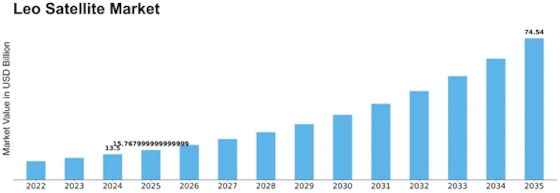

Leo Satellite Market Size Graph
Author
Sejal Akre
Senior Research Analyst

She has over 5 years of rich experience, in market research and consulting providing valuable market insights to client. Hands on expertise in management consulting, and extensive knowledge in domain including ICT, Automotive & Transportation and Aerospace & Defense. She is skilled in Go-to market strategy, industry analysis, market sizing, in depth company profiling, competitive intelligence & benchmarking and value chain amongst others.

Leave a Comment

FAQs

What is the current valuation of the Leo Satellite Market as of 2024?

The Leo Satellite Market was valued at 13.5 USD Billion in 2024.

Market Summary

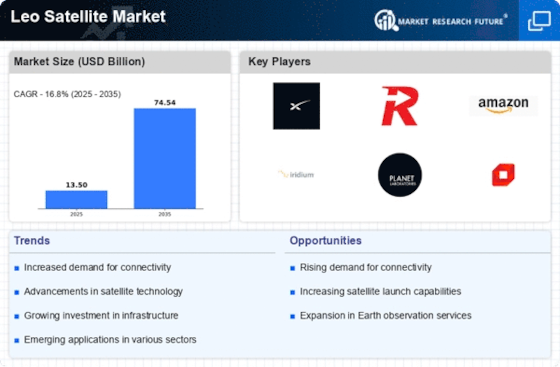
As per MRFR analysis, the Leo Satellite Market Size was estimated at 13.5 USD Billion in 2024. The Leo Satellite industry is projected to grow from 15.77 USD Billion in 2025 to 74.54 USD Billion by 2035, exhibiting a compound annual growth rate (CAGR) of 16.8 during the forecast period 2025 - 2035.

Key Market Trends & Highlights

The Leo Satellite Market is experiencing dynamic growth driven by technological advancements and increasing demand for connectivity.

  • The emergence of mega-constellations is reshaping the landscape of satellite communications, particularly in North America. Sustainability initiatives are gaining traction, influencing satellite design and operational practices across the Asia-Pacific region. Advancements in ground infrastructure are enhancing the efficiency and reliability of satellite services in the telecommunications segment. The growing demand for high-speed internet and government initiatives are key drivers propelling the market forward.

Market Size & Forecast

2024 Market Size 13.5 (USD Billion)
2035 Market Size 74.54 (USD Billion)
CAGR (2025 - 2035) 16.8%
Largest Regional Market Share in 2024 North America

Major Players

<p>SpaceX (US), OneWeb (GB), Amazon (US), Iridium Communications (US), Planet Labs (US), Telesat (CA), Globalstar (US), <a href="https://investors.ast-science.com/press-releases">AST SpaceMobile</a> (US)</p>

Market Trends

The Leo Satellite Market is currently experiencing a transformative phase characterized by rapid advancements in technology and increasing demand for global connectivity. The proliferation of small satellites, often referred to as CubeSats, is reshaping the landscape, enabling a diverse range of applications from telecommunications to Earth observation. This shift is driven by the need for enhanced data transmission capabilities and the desire for real-time information access. As industries such as agriculture, transportation, and disaster management increasingly rely on satellite data, the market appears poised for substantial growth. Furthermore, the collaboration between private enterprises and governmental agencies is fostering innovation, leading to the development of more efficient satellite systems. In addition to technological advancements, regulatory frameworks are evolving to accommodate the burgeoning Leo Satellite Market. Governments worldwide are recognizing the strategic importance of satellite infrastructure, prompting initiatives to streamline licensing processes and promote investment. This regulatory support is likely to attract new players into the market, enhancing competition and driving further innovation. As the demand for satellite-based services continues to rise, the Leo Satellite Market is expected to expand, offering new opportunities for stakeholders across various sectors. The interplay between technology, regulation, and market demand suggests a dynamic future for this sector, with potential implications for global communication and data accessibility.

Emergence of Mega-Constellations

The Leo Satellite Market is witnessing the rise of mega-constellations, which consist of large groups of satellites working in unison to provide extensive coverage and high-speed internet access. These constellations aim to bridge the digital divide, particularly in underserved regions, by offering affordable connectivity solutions. As more companies invest in this model, the competitive landscape is likely to intensify, leading to innovations in satellite design and deployment.

Increased Focus on Sustainability

Sustainability is becoming a central theme within the Leo Satellite Market, as stakeholders prioritize environmentally friendly practices. This includes the development of satellites designed for end-of-life deorbiting and the use of recyclable materials in manufacturing. Such initiatives not only address environmental concerns but also enhance the long-term viability of satellite operations, aligning with global sustainability goals.

Advancements in Ground Infrastructure

The Leo Satellite Market is also experiencing significant improvements in ground infrastructure, which is essential for effective satellite communication. Enhanced ground stations and data processing capabilities are being developed to support the increasing volume of data generated by satellites. This trend indicates a shift towards more integrated systems that can efficiently manage and analyze satellite data, thereby improving service delivery across various applications.

Leo Satellite Market Market Drivers

Government Initiatives and Funding

Government initiatives play a pivotal role in the Leo Satellite Market, as various nations recognize the strategic importance of satellite technology. Many governments are allocating substantial funding to support the development and deployment of satellite constellations. For instance, recent reports indicate that investments in satellite technology could exceed 20 billion dollars over the next five years. These initiatives aim to enhance national security, improve communication infrastructure, and foster technological innovation. As a result, the Leo Satellite Market is likely to benefit from increased collaboration between public and private sectors, leading to accelerated advancements in satellite capabilities.

Growing Demand for High-Speed Internet

The Leo Satellite Market is experiencing a surge in demand for high-speed internet services, particularly in underserved regions. As more individuals and businesses seek reliable connectivity, the deployment of low Earth orbit satellites becomes increasingly attractive. According to recent data, the number of satellite internet subscribers is projected to reach 10 million by 2026, indicating a robust growth trajectory. This demand is driven by the need for enhanced digital services, including remote work, online education, and telehealth. Consequently, companies in the Leo Satellite Market are investing heavily in satellite technology to meet this growing need, which is likely to reshape the telecommunications landscape.

Increased Investment from Private Sector

The Leo Satellite Market is attracting significant investment from the private sector, as venture capitalists and technology firms recognize the potential for lucrative returns. Recent data indicates that private investments in satellite technology have surged, with funding reaching approximately 15 billion dollars in the past year alone. This influx of capital is facilitating the development of innovative satellite solutions and expanding the range of services offered. As private companies continue to enter the Leo Satellite Market, competition is likely to intensify, driving further advancements and potentially lowering costs for consumers.

Rising Demand for Earth Observation Services

The Leo Satellite Market is experiencing a notable increase in demand for earth observation services, driven by various sectors such as agriculture, environmental monitoring, and disaster management. The ability to collect high-resolution imagery and data from low Earth orbit satellites is becoming increasingly valuable for decision-makers. Recent estimates suggest that the earth observation market could grow to 5 billion dollars by 2027, highlighting the potential for Leo satellites to play a crucial role in this sector. As industries seek to leverage satellite data for improved insights, the Leo Satellite Market is likely to expand, offering new opportunities for service providers.

Technological Advancements in Satellite Design

The Leo Satellite Market is witnessing rapid technological advancements in satellite design and manufacturing. Innovations such as miniaturization, improved propulsion systems, and enhanced communication payloads are enabling the deployment of more efficient satellite constellations. Recent studies suggest that advancements in satellite technology could reduce launch costs by up to 30%, making it economically viable for more companies to enter the market. This trend not only fosters competition but also enhances the overall capabilities of satellite networks. As technology continues to evolve, the Leo Satellite Market is poised for transformative growth, potentially leading to new applications and services.

Market Segment Insights

By Application: Telecommunications (Largest) vs. Earth Observation (Fastest-Growing)

<p>The Leo <a href="https://www.marketresearchfuture.com/reports/satellite-market-8025">Satellite </a>Market is witnessing a diverse distribution of applications across several segments including Telecommunications, Earth Observation, Navigation, and Scientific Research. Currently, Telecommunications holds the largest market share, driven by the growing demand for high-speed internet and connectivity solutions globally. Earth Observation is rapidly gaining traction, providing essential data for a myriad of applications such as agriculture, climate monitoring, and urban planning, thus contributing significantly to market dynamics.</p>

<p>Telecommunications (Dominant) vs. Earth Observation (Emerging)</p>

<p>In the Leo Satellite Market, Telecommunications stands as the dominant application segment, primarily due to the rising need for enhanced mobile connectivity and the rollout of 5G technology. This segment benefits from established infrastructure and a growing user base driving satellite communication services. Conversely, Earth Observation is emerging swiftly, fueled by increasing investments in remote sensing technologies and the growing importance of data analytics in decision-making processes across various sectors. The applications range from environmental monitoring to disaster management, reflecting its versatile utility and expanding market potential.</p>

By End Use: Government (Largest) vs. Commercial (Fastest-Growing)

<p>In the Leo Satellite Market, the distribution of end-use segments reveals a significant dominance of the government sector, which commands a substantial share due to its extensive investments in satellite technologies for various applications including communication, surveillance, and scientific research. The commercial sector, while smaller in terms of market share, is rapidly capturing attention as businesses increasingly leverage low Earth orbit satellites for broadband services and Earth observation, signaling a shift in the market landscape.</p>

<p>Government (Dominant) vs. Commercial (Emerging)</p>

<p>The government segment remains the cornerstone of the Leo Satellite Market, driven by national defense strategies and the need for enhanced communication capabilities. Its market position is fortified by long-term contracts and rigorous regulatory oversight. Conversely, the commercial segment is emerging swiftly, supported by innovations in satellite technology and growing demand for data services. Private enterprises are investing heavily in LEO satellite capabilities, focusing on scalability and reduced latency to gain a competitive edge. This emerging segment is characterized by its adaptability and the ability to respond to the dynamic needs of consumers, presenting new opportunities for growth in satellite services.</p>

By Satellite Type: CubeSat (Largest) vs. Nano Satellites (Fastest-Growing)

<p>In the Leo Satellite Market, the segment distribution shows that CubeSats occupy the largest share due to their versatility and cost-effectiveness. These small satellites are extensively used in a variety of applications, including earth observation, communications, and scientific research, thus leading to their dominance in the market. Conversely, while nano satellites currently hold a smaller share, their innovative designs and rapid deployment capabilities have driven interest and investment, making them increasingly prominent.</p>

<p>CubeSat (Dominant) vs. Nano Satellites (Emerging)</p>

<p>CubeSats are compact, standardized small satellites that benefit from a robust ecosystem, providing a wide range of configurations suitable for different missions. Their low launch costs and relatively simple integration have made them popular among educational institutions and startups, allowing for more experimental and diverse uses. On the other hand, nano satellites, which are even smaller than CubeSats, are emerging as significant players due to advances in miniaturization and technology. These satellites are increasingly being utilized for specific missions that require unique functionalities such as low-cost monitoring and quick deployment, placing them in a rapidly growing niche within the Leo Satellite Market.</p>

By Orbit Configuration: Constellation (Largest) vs. Single Satellite (Fastest-Growing)

<p>In the Leo Satellite Market, the orbit configuration segment is primarily dominated by constellation arrangements, which provide extensive coverage and communication capabilities. Constellations leverage multiple satellites working in unison, resulting in a significant share of the market driven by increasing demand for global connectivity and internet access. Conversely, the single satellite configuration is gaining traction as a fast-growing segment, capitalizing on specific mission requirements and reduced operational costs, appealing to smaller enterprises and niche applications. The growth trends for the orbit configuration segment reflect a dynamic shift in customer preferences. Factors such as the escalating need for broadband services and advancements in satellite technology drive the expansion of both constellations and single satellites. While constellations are set to cater to mass connectivity needs across various sectors, the agility and simplicity of single satellite systems are resonating well with emerging markets, indicating a unique trajectory for growth in the sector.</p>

<p>Constellation (Dominant) vs. Single Satellite (Emerging)</p>

<p>Constellations represent the dominant force in the Leo Satellite Market due to their ability to deliver comprehensive global coverage and enhanced communication services. Operating in a coordinated manner, these configurations can effectively address the growing demands for high-speed internet and data services across multiple regions. Major players are investing heavily in constellation development, seeking to establish reliable and resilient satellite networks. In contrast, single satellites are emerging as a flexible and cost-effective solution for specific telecommunication and data transmission needs. This configuration allows for rapid deployment, targeted service delivery, and operational efficiency, appealing particularly to startups and specialized service providers. The divergence in characteristics between these two configurations shapes the competitive landscape of the Leo Satellite Market.</p>

Get more detailed insights about LEO Satellite Market Research Report – Forecast till 2035

Regional Insights

North America : Innovation and Leadership Hub

North America is the largest market for Leo satellites, holding approximately 60% of the global share. The region's growth is driven by advancements in technology, increasing demand for broadband connectivity, and supportive regulatory frameworks. The U.S. government has been proactive in promoting satellite communications, which has catalyzed investments and innovation in the sector. The presence of major players like SpaceX and Amazon further fuels this growth. The competitive landscape in North America is characterized by a few dominant players, including SpaceX, OneWeb, and Iridium Communications. These companies are leveraging advanced technologies to enhance satellite capabilities and expand their service offerings. The U.S. and Canada are the leading countries in this market, with significant investments in satellite infrastructure and a focus on expanding broadband access to underserved areas. The competitive dynamics are expected to intensify as new entrants emerge.

Europe : Emerging Market with Potential

Europe is witnessing a significant rise in the Leo satellite market, accounting for approximately 25% of the global share. The region's growth is propelled by increasing demand for high-speed internet and government initiatives aimed at enhancing digital connectivity. The European Space Agency has been instrumental in fostering innovation and collaboration among member states, creating a conducive environment for market expansion. Regulatory support for satellite launches and operations is also a key driver. Leading countries in Europe include the United Kingdom, Germany, and France, which are home to several key players like OneWeb and Telesat. The competitive landscape is evolving, with a mix of established companies and new entrants focusing on innovative solutions. The presence of strong regulatory frameworks and funding opportunities from the EU further enhances the region's attractiveness for investment in satellite technologies. The market is expected to grow as demand for connectivity continues to rise.

Asia-Pacific : Rapidly Growing Market

Asia-Pacific is emerging as a significant player in the Leo satellite market, holding around 10% of the global share. The region's growth is driven by increasing internet penetration, urbanization, and government initiatives to improve telecommunications infrastructure. Countries like India and Japan are leading the charge, with supportive policies aimed at enhancing satellite communications. The demand for reliable connectivity in remote areas is also a key factor driving market growth. The competitive landscape in Asia-Pacific features a mix of local and international players, including companies like Iridium Communications and Planet Labs. The region is characterized by a growing number of partnerships and collaborations aimed at expanding satellite services. As countries invest in their satellite capabilities, the market is expected to see significant growth, driven by both commercial and governmental demand for enhanced connectivity solutions.

Middle East and Africa : Emerging Powerhouse in Connectivity

The Middle East and Africa region is gradually establishing itself in the Leo satellite market, accounting for approximately 5% of the global share. The growth is primarily driven by increasing demand for broadband services and government initiatives aimed at improving digital infrastructure. Countries like South Africa and the UAE are leading the way, with investments in satellite technology to enhance connectivity in underserved areas. Regulatory support is also becoming more robust, facilitating market entry for new players. The competitive landscape in this region is evolving, with a mix of local and international companies entering the market. Key players are focusing on innovative solutions to address the unique challenges of connectivity in remote and rural areas. As the region continues to invest in satellite infrastructure, the market is expected to grow, driven by both commercial and governmental demand for enhanced communication services.

Key Players and Competitive Insights

The Leo Satellite Market is currently characterized by a dynamic competitive landscape, driven by advancements in technology and increasing demand for global connectivity. Key players such as SpaceX (US), OneWeb (GB), and Amazon (US) are at the forefront, each adopting distinct strategies to enhance their market positioning. SpaceX (US) continues to leverage its Falcon 9 launch system to deploy large constellations, focusing on cost efficiency and rapid deployment. OneWeb (GB) emphasizes partnerships with local telecommunications providers to expand its reach in underserved regions, while Amazon (US) is investing heavily in its Project Kuiper, aiming to integrate satellite services with its existing cloud infrastructure, thereby enhancing its competitive edge in the digital space.

The business tactics employed by these companies reflect a trend towards localized manufacturing and supply chain optimization, which are crucial in a moderately fragmented market. The collective influence of these key players shapes a competitive structure that encourages innovation and collaboration, as companies seek to differentiate themselves through technological advancements and strategic partnerships. This environment fosters a sense of urgency among competitors to enhance their operational efficiencies and service offerings.

In August 2025, SpaceX (US) announced the successful launch of its 50th Starlink satellite batch, significantly expanding its constellation and enhancing global internet coverage. This strategic move not only solidifies SpaceX's leadership in the Leo satellite sector but also underscores its commitment to providing reliable broadband services worldwide. The implications of this expansion are profound, as it positions SpaceX to capture a larger share of the growing demand for satellite-based internet services, particularly in remote areas.

In September 2025, OneWeb (GB) secured a partnership with a major telecommunications provider in Africa, aimed at delivering high-speed internet to rural communities. This collaboration is pivotal, as it aligns with OneWeb's mission to bridge the digital divide and demonstrates its strategic focus on regional expansion. By localizing its services, OneWeb enhances its competitive positioning and addresses the unique needs of underserved markets, potentially leading to increased market penetration.

In July 2025, Amazon (US) revealed plans to launch its first batch of Project Kuiper satellites, marking a significant milestone in its entry into the Leo satellite market. This initiative is strategically important as it not only diversifies Amazon's service offerings but also positions the company to compete directly with established players like SpaceX and OneWeb. The integration of satellite services with Amazon's existing cloud infrastructure could create synergies that enhance customer value and drive growth.

As of October 2025, the Leo Satellite Market is witnessing trends that emphasize digitalization, sustainability, and the integration of artificial intelligence. Strategic alliances are increasingly shaping the competitive landscape, as companies recognize the value of collaboration in addressing complex challenges. Looking ahead, competitive differentiation is likely to evolve from traditional price-based competition to a focus on innovation, technological advancements, and supply chain reliability. This shift suggests that companies that prioritize these elements will be better positioned to thrive in an increasingly competitive environment.

Key Companies in the Leo Satellite Market market include

Industry Developments

The Global Low Earth Orbit (LEO) Satellite Market has seen notable developments recently, particularly with companies like Iridium Communications, Amazon, OneWeb, and SpaceX at the forefront.

In October 2023, SpaceX launched another batch of Starlink satellites, further expanding its constellation to provide global internet coverage. Meanwhile, OneWeb announced plans to launch additional satellites through 2024 to enhance their broadband services.

In September 2023, Amazon's Project Kuiper made headlines with its progress towards a satellite launch, aiming to compete directly with existing players like SpaceX and OneWeb. The market is also witnessing a significant increase in valuation, with companies like Maxar Technologies and Planet Labs focusing on Earth observation services that are gaining traction across various sectors.

Notably, a merger announcement in August 2023 revealed that Telesat is set to merge with a consortium that includes Northrop Grumman, solidifying its position in the LEO market. As the competition intensifies, innovations in satellite technology and new partnerships continue to impact the dynamics of the Global LEO Satellite Market, driving advancements in communication and data transfer globally.

Future Outlook

Leo Satellite Market Future Outlook

<p>The Leo Satellite Market is projected to grow at a 16.8% CAGR from 2024 to 2035, driven by advancements in satellite technology, increasing demand for global connectivity, and expanding applications in various sectors.</p>

New opportunities lie in:

  • <p>Development of low-cost satellite manufacturing processes</p><p>Expansion of satellite-based IoT solutions for smart cities</p><p>Partnerships with telecommunications firms for enhanced broadband services</p>

<p>By 2035, the Leo Satellite Market is expected to be a pivotal component of global communications.</p>

Market Segmentation

Leo Satellite Market End Use Outlook

  • Government
  • Commercial
  • Military

Leo Satellite Market Application Outlook

  • Telecommunications
  • Earth Observation
  • Navigation
  • Scientific Research

Leo Satellite Market Satellite Type Outlook

  • Small Satellites
  • CubeSat
  • Nano Satellites

Leo Satellite Market Orbit Configuration Outlook

  • Constellation
  • Single Satellite
  • Meshed Network

Report Scope

MARKET SIZE 202413.5(USD Billion)
MARKET SIZE 202515.77(USD Billion)
MARKET SIZE 203574.54(USD Billion)
COMPOUND ANNUAL GROWTH RATE (CAGR)16.8% (2024 - 2035)
REPORT COVERAGERevenue Forecast, Competitive Landscape, Growth Factors, and Trends
BASE YEAR2024
Market Forecast Period2025 - 2035
Historical Data2019 - 2024
Market Forecast UnitsUSD Billion
Key Companies ProfiledMarket analysis in progress
Segments CoveredMarket segmentation analysis in progress
Key Market OpportunitiesExpansion of global broadband access through innovative Leo Satellite constellations.
Key Market DynamicsIntensifying competition and technological advancements drive rapid innovation in the Low Earth Orbit satellite market.
Countries CoveredNorth America, Europe, APAC, South America, MEA

FAQs

What is the current valuation of the Leo Satellite Market as of 2024?

The Leo Satellite Market was valued at 13.5 USD Billion in 2024.

  1. SECTION I: EXECUTIVE SUMMARY AND KEY HIGHLIGHTS
    1. EXECUTIVE SUMMARY
      1. Market Overview
      2. Key Findings
      3. Market Segmentation
      4. Competitive Landscape
      5. Challenges and Opportunities
      6. Future Outlook
  2. SECTION II: SCOPING, METHODOLOGY AND MARKET STRUCTURE
    1. MARKET INTRODUCTION
      1. Definition
      2. Scope of the study
    2. RESEARCH METHODOLOGY
      1. Overview
      2. Data Mining
      3. Secondary Research
      4. Primary Research
      5. Forecasting Model
      6. Market Size Estimation
      7. Data Triangulation
      8. Validation
  3. SECTION III: QUALITATIVE ANALYSIS
    1. MARKET DYNAMICS
      1. Overview
      2. Drivers
      3. Restraints
      4. Opportunities
    2. MARKET FACTOR ANALYSIS
      1. Value chain Analysis
      2. Porter's Five Forces Analysis
      3. COVID-19 Impact Analysis
  4. SECTION IV: QUANTITATIVE ANALYSIS
    1. Aerospace & Defense, BY Application (USD Billion)
      1. Telecommunications
      2. Earth Observation
      3. Navigation
      4. Scientific Research
    2. Aerospace & Defense, BY End Use (USD Billion)
      1. Government
      2. Commercial
      3. Military
    3. Aerospace & Defense, BY Satellite Type (USD Billion)
      1. Small Satellites
      2. CubeSat
      3. Nano Satellites
    4. Aerospace & Defense, BY Orbit Configuration (USD Billion)
      1. Constellation
      2. Single Satellite
      3. Meshed Network
    5. Aerospace & Defense, BY Region (USD Billion)
      1. North America
      2. Europe
      3. APAC
      4. South America
      5. MEA
  5. SECTION V: COMPETITIVE ANALYSIS
    1. Competitive Landscape
      1. Overview
      2. Competitive Analysis
      3. Market share Analysis
      4. Major Growth Strategy in the Aerospace & Defense
      5. Competitive Benchmarking
      6. Leading Players in Terms of Number of Developments in the Aerospace & Defense
      7. Key developments and growth strategies
      8. Major Players Financial Matrix
    2. Company Profiles
      1. SpaceX (US)
      2. OneWeb (GB)
      3. Amazon (US)
      4. Iridium Communications (US)
      5. Planet Labs (US)
      6. Telesat (CA)
      7. Globalstar (US)
      8. AST SpaceMobile (US)
    3. Appendix
      1. References
      2. Related Reports
  6. LIST OF FIGURES
    1. MARKET SYNOPSIS
    2. NORTH AMERICA MARKET ANALYSIS
    3. US MARKET ANALYSIS BY APPLICATION
    4. US MARKET ANALYSIS BY END USE
    5. US MARKET ANALYSIS BY SATELLITE TYPE
    6. US MARKET ANALYSIS BY ORBIT CONFIGURATION
    7. CANADA MARKET ANALYSIS BY APPLICATION
    8. CANADA MARKET ANALYSIS BY END USE
    9. CANADA MARKET ANALYSIS BY SATELLITE TYPE
    10. CANADA MARKET ANALYSIS BY ORBIT CONFIGURATION
    11. EUROPE MARKET ANALYSIS
    12. GERMANY MARKET ANALYSIS BY APPLICATION
    13. GERMANY MARKET ANALYSIS BY END USE
    14. GERMANY MARKET ANALYSIS BY SATELLITE TYPE
    15. GERMANY MARKET ANALYSIS BY ORBIT CONFIGURATION
    16. UK MARKET ANALYSIS BY APPLICATION
    17. UK MARKET ANALYSIS BY END USE
    18. UK MARKET ANALYSIS BY SATELLITE TYPE
    19. UK MARKET ANALYSIS BY ORBIT CONFIGURATION
    20. FRANCE MARKET ANALYSIS BY APPLICATION
    21. FRANCE MARKET ANALYSIS BY END USE
    22. FRANCE MARKET ANALYSIS BY SATELLITE TYPE
    23. FRANCE MARKET ANALYSIS BY ORBIT CONFIGURATION
    24. RUSSIA MARKET ANALYSIS BY APPLICATION
    25. RUSSIA MARKET ANALYSIS BY END USE
    26. RUSSIA MARKET ANALYSIS BY SATELLITE TYPE
    27. RUSSIA MARKET ANALYSIS BY ORBIT CONFIGURATION
    28. ITALY MARKET ANALYSIS BY APPLICATION
    29. ITALY MARKET ANALYSIS BY END USE
    30. ITALY MARKET ANALYSIS BY SATELLITE TYPE
    31. ITALY MARKET ANALYSIS BY ORBIT CONFIGURATION
    32. SPAIN MARKET ANALYSIS BY APPLICATION
    33. SPAIN MARKET ANALYSIS BY END USE
    34. SPAIN MARKET ANALYSIS BY SATELLITE TYPE
    35. SPAIN MARKET ANALYSIS BY ORBIT CONFIGURATION
    36. REST OF EUROPE MARKET ANALYSIS BY APPLICATION
    37. REST OF EUROPE MARKET ANALYSIS BY END USE
    38. REST OF EUROPE MARKET ANALYSIS BY SATELLITE TYPE
    39. REST OF EUROPE MARKET ANALYSIS BY ORBIT CONFIGURATION
    40. APAC MARKET ANALYSIS
    41. CHINA MARKET ANALYSIS BY APPLICATION
    42. CHINA MARKET ANALYSIS BY END USE
    43. CHINA MARKET ANALYSIS BY SATELLITE TYPE
    44. CHINA MARKET ANALYSIS BY ORBIT CONFIGURATION
    45. INDIA MARKET ANALYSIS BY APPLICATION
    46. INDIA MARKET ANALYSIS BY END USE
    47. INDIA MARKET ANALYSIS BY SATELLITE TYPE
    48. INDIA MARKET ANALYSIS BY ORBIT CONFIGURATION
    49. JAPAN MARKET ANALYSIS BY APPLICATION
    50. JAPAN MARKET ANALYSIS BY END USE
    51. JAPAN MARKET ANALYSIS BY SATELLITE TYPE
    52. JAPAN MARKET ANALYSIS BY ORBIT CONFIGURATION
    53. SOUTH KOREA MARKET ANALYSIS BY APPLICATION
    54. SOUTH KOREA MARKET ANALYSIS BY END USE
    55. SOUTH KOREA MARKET ANALYSIS BY SATELLITE TYPE
    56. SOUTH KOREA MARKET ANALYSIS BY ORBIT CONFIGURATION
    57. MALAYSIA MARKET ANALYSIS BY APPLICATION
    58. MALAYSIA MARKET ANALYSIS BY END USE
    59. MALAYSIA MARKET ANALYSIS BY SATELLITE TYPE
    60. MALAYSIA MARKET ANALYSIS BY ORBIT CONFIGURATION
    61. THAILAND MARKET ANALYSIS BY APPLICATION
    62. THAILAND MARKET ANALYSIS BY END USE
    63. THAILAND MARKET ANALYSIS BY SATELLITE TYPE
    64. THAILAND MARKET ANALYSIS BY ORBIT CONFIGURATION
    65. INDONESIA MARKET ANALYSIS BY APPLICATION
    66. INDONESIA MARKET ANALYSIS BY END USE
    67. INDONESIA MARKET ANALYSIS BY SATELLITE TYPE
    68. INDONESIA MARKET ANALYSIS BY ORBIT CONFIGURATION
    69. REST OF APAC MARKET ANALYSIS BY APPLICATION
    70. REST OF APAC MARKET ANALYSIS BY END USE
    71. REST OF APAC MARKET ANALYSIS BY SATELLITE TYPE
    72. REST OF APAC MARKET ANALYSIS BY ORBIT CONFIGURATION
    73. SOUTH AMERICA MARKET ANALYSIS
    74. BRAZIL MARKET ANALYSIS BY APPLICATION
    75. BRAZIL MARKET ANALYSIS BY END USE
    76. BRAZIL MARKET ANALYSIS BY SATELLITE TYPE
    77. BRAZIL MARKET ANALYSIS BY ORBIT CONFIGURATION
    78. MEXICO MARKET ANALYSIS BY APPLICATION
    79. MEXICO MARKET ANALYSIS BY END USE
    80. MEXICO MARKET ANALYSIS BY SATELLITE TYPE
    81. MEXICO MARKET ANALYSIS BY ORBIT CONFIGURATION
    82. ARGENTINA MARKET ANALYSIS BY APPLICATION
    83. ARGENTINA MARKET ANALYSIS BY END USE
    84. ARGENTINA MARKET ANALYSIS BY SATELLITE TYPE
    85. ARGENTINA MARKET ANALYSIS BY ORBIT CONFIGURATION
    86. REST OF SOUTH AMERICA MARKET ANALYSIS BY APPLICATION
    87. REST OF SOUTH AMERICA MARKET ANALYSIS BY END USE
    88. REST OF SOUTH AMERICA MARKET ANALYSIS BY SATELLITE TYPE
    89. REST OF SOUTH AMERICA MARKET ANALYSIS BY ORBIT CONFIGURATION
    90. MEA MARKET ANALYSIS
    91. GCC COUNTRIES MARKET ANALYSIS BY APPLICATION
    92. GCC COUNTRIES MARKET ANALYSIS BY END USE
    93. GCC COUNTRIES MARKET ANALYSIS BY SATELLITE TYPE
    94. GCC COUNTRIES MARKET ANALYSIS BY ORBIT CONFIGURATION
    95. SOUTH AFRICA MARKET ANALYSIS BY APPLICATION
    96. SOUTH AFRICA MARKET ANALYSIS BY END USE
    97. SOUTH AFRICA MARKET ANALYSIS BY SATELLITE TYPE
    98. SOUTH AFRICA MARKET ANALYSIS BY ORBIT CONFIGURATION
    99. REST OF MEA MARKET ANALYSIS BY APPLICATION
    100. REST OF MEA MARKET ANALYSIS BY END USE
    101. REST OF MEA MARKET ANALYSIS BY SATELLITE TYPE
    102. REST OF MEA MARKET ANALYSIS BY ORBIT CONFIGURATION
    103. KEY BUYING CRITERIA OF AEROSPACE & DEFENSE
    104. RESEARCH PROCESS OF MRFR
    105. DRO ANALYSIS OF AEROSPACE & DEFENSE
    106. DRIVERS IMPACT ANALYSIS: AEROSPACE & DEFENSE
    107. RESTRAINTS IMPACT ANALYSIS: AEROSPACE & DEFENSE
    108. SUPPLY / VALUE CHAIN: AEROSPACE & DEFENSE
    109. AEROSPACE & DEFENSE, BY APPLICATION, 2024 (% SHARE)
    110. AEROSPACE & DEFENSE, BY APPLICATION, 2024 TO 2035 (USD Billion)
    111. AEROSPACE & DEFENSE, BY END USE, 2024 (% SHARE)
    112. AEROSPACE & DEFENSE, BY END USE, 2024 TO 2035 (USD Billion)
    113. AEROSPACE & DEFENSE, BY SATELLITE TYPE, 2024 (% SHARE)
    114. AEROSPACE & DEFENSE, BY SATELLITE TYPE, 2024 TO 2035 (USD Billion)
    115. AEROSPACE & DEFENSE, BY ORBIT CONFIGURATION, 2024 (% SHARE)
    116. AEROSPACE & DEFENSE, BY ORBIT CONFIGURATION, 2024 TO 2035 (USD Billion)
    117. BENCHMARKING OF MAJOR COMPETITORS
  7. LIST OF TABLES
    1. LIST OF ASSUMPTIONS
    2. North America MARKET SIZE ESTIMATES; FORECAST
      1. BY APPLICATION, 2025-2035 (USD Billion)
      2. BY END USE, 2025-2035 (USD Billion)
      3. BY SATELLITE TYPE, 2025-2035 (USD Billion)
      4. BY ORBIT CONFIGURATION, 2025-2035 (USD Billion)
    3. US MARKET SIZE ESTIMATES; FORECAST
      1. BY APPLICATION, 2025-2035 (USD Billion)
      2. BY END USE, 2025-2035 (USD Billion)
      3. BY SATELLITE TYPE, 2025-2035 (USD Billion)
      4. BY ORBIT CONFIGURATION, 2025-2035 (USD Billion)
    4. Canada MARKET SIZE ESTIMATES; FORECAST
      1. BY APPLICATION, 2025-2035 (USD Billion)
      2. BY END USE, 2025-2035 (USD Billion)
      3. BY SATELLITE TYPE, 2025-2035 (USD Billion)
      4. BY ORBIT CONFIGURATION, 2025-2035 (USD Billion)
    5. Europe MARKET SIZE ESTIMATES; FORECAST
      1. BY APPLICATION, 2025-2035 (USD Billion)
      2. BY END USE, 2025-2035 (USD Billion)
      3. BY SATELLITE TYPE, 2025-2035 (USD Billion)
      4. BY ORBIT CONFIGURATION, 2025-2035 (USD Billion)
    6. Germany MARKET SIZE ESTIMATES; FORECAST
      1. BY APPLICATION, 2025-2035 (USD Billion)
      2. BY END USE, 2025-2035 (USD Billion)
      3. BY SATELLITE TYPE, 2025-2035 (USD Billion)
      4. BY ORBIT CONFIGURATION, 2025-2035 (USD Billion)
    7. UK MARKET SIZE ESTIMATES; FORECAST
      1. BY APPLICATION, 2025-2035 (USD Billion)
      2. BY END USE, 2025-2035 (USD Billion)
      3. BY SATELLITE TYPE, 2025-2035 (USD Billion)
      4. BY ORBIT CONFIGURATION, 2025-2035 (USD Billion)
    8. France MARKET SIZE ESTIMATES; FORECAST
      1. BY APPLICATION, 2025-2035 (USD Billion)
      2. BY END USE, 2025-2035 (USD Billion)
      3. BY SATELLITE TYPE, 2025-2035 (USD Billion)
      4. BY ORBIT CONFIGURATION, 2025-2035 (USD Billion)
    9. Russia MARKET SIZE ESTIMATES; FORECAST
      1. BY APPLICATION, 2025-2035 (USD Billion)
      2. BY END USE, 2025-2035 (USD Billion)
      3. BY SATELLITE TYPE, 2025-2035 (USD Billion)
      4. BY ORBIT CONFIGURATION, 2025-2035 (USD Billion)
    10. Italy MARKET SIZE ESTIMATES; FORECAST
      1. BY APPLICATION, 2025-2035 (USD Billion)
      2. BY END USE, 2025-2035 (USD Billion)
      3. BY SATELLITE TYPE, 2025-2035 (USD Billion)
      4. BY ORBIT CONFIGURATION, 2025-2035 (USD Billion)
    11. Spain MARKET SIZE ESTIMATES; FORECAST
      1. BY APPLICATION, 2025-2035 (USD Billion)
      2. BY END USE, 2025-2035 (USD Billion)
      3. BY SATELLITE TYPE, 2025-2035 (USD Billion)
      4. BY ORBIT CONFIGURATION, 2025-2035 (USD Billion)
    12. Rest of Europe MARKET SIZE ESTIMATES; FORECAST
      1. BY APPLICATION, 2025-2035 (USD Billion)
      2. BY END USE, 2025-2035 (USD Billion)
      3. BY SATELLITE TYPE, 2025-2035 (USD Billion)
      4. BY ORBIT CONFIGURATION, 2025-2035 (USD Billion)
    13. APAC MARKET SIZE ESTIMATES; FORECAST
      1. BY APPLICATION, 2025-2035 (USD Billion)
      2. BY END USE, 2025-2035 (USD Billion)
      3. BY SATELLITE TYPE, 2025-2035 (USD Billion)
      4. BY ORBIT CONFIGURATION, 2025-2035 (USD Billion)
    14. China MARKET SIZE ESTIMATES; FORECAST
      1. BY APPLICATION, 2025-2035 (USD Billion)
      2. BY END USE, 2025-2035 (USD Billion)
      3. BY SATELLITE TYPE, 2025-2035 (USD Billion)
      4. BY ORBIT CONFIGURATION, 2025-2035 (USD Billion)
    15. India MARKET SIZE ESTIMATES; FORECAST
      1. BY APPLICATION, 2025-2035 (USD Billion)
      2. BY END USE, 2025-2035 (USD Billion)
      3. BY SATELLITE TYPE, 2025-2035 (USD Billion)
      4. BY ORBIT CONFIGURATION, 2025-2035 (USD Billion)
    16. Japan MARKET SIZE ESTIMATES; FORECAST
      1. BY APPLICATION, 2025-2035 (USD Billion)
      2. BY END USE, 2025-2035 (USD Billion)
      3. BY SATELLITE TYPE, 2025-2035 (USD Billion)
      4. BY ORBIT CONFIGURATION, 2025-2035 (USD Billion)
    17. South Korea MARKET SIZE ESTIMATES; FORECAST
      1. BY APPLICATION, 2025-2035 (USD Billion)
      2. BY END USE, 2025-2035 (USD Billion)
      3. BY SATELLITE TYPE, 2025-2035 (USD Billion)
      4. BY ORBIT CONFIGURATION, 2025-2035 (USD Billion)
    18. Malaysia MARKET SIZE ESTIMATES; FORECAST
      1. BY APPLICATION, 2025-2035 (USD Billion)
      2. BY END USE, 2025-2035 (USD Billion)
      3. BY SATELLITE TYPE, 2025-2035 (USD Billion)
      4. BY ORBIT CONFIGURATION, 2025-2035 (USD Billion)
    19. Thailand MARKET SIZE ESTIMATES; FORECAST
      1. BY APPLICATION, 2025-2035 (USD Billion)
      2. BY END USE, 2025-2035 (USD Billion)
      3. BY SATELLITE TYPE, 2025-2035 (USD Billion)
      4. BY ORBIT CONFIGURATION, 2025-2035 (USD Billion)
    20. Indonesia MARKET SIZE ESTIMATES; FORECAST
      1. BY APPLICATION, 2025-2035 (USD Billion)
      2. BY END USE, 2025-2035 (USD Billion)
      3. BY SATELLITE TYPE, 2025-2035 (USD Billion)
      4. BY ORBIT CONFIGURATION, 2025-2035 (USD Billion)
    21. Rest of APAC MARKET SIZE ESTIMATES; FORECAST
      1. BY APPLICATION, 2025-2035 (USD Billion)
      2. BY END USE, 2025-2035 (USD Billion)
      3. BY SATELLITE TYPE, 2025-2035 (USD Billion)
      4. BY ORBIT CONFIGURATION, 2025-2035 (USD Billion)
    22. South America MARKET SIZE ESTIMATES; FORECAST
      1. BY APPLICATION, 2025-2035 (USD Billion)
      2. BY END USE, 2025-2035 (USD Billion)
      3. BY SATELLITE TYPE, 2025-2035 (USD Billion)
      4. BY ORBIT CONFIGURATION, 2025-2035 (USD Billion)
    23. Brazil MARKET SIZE ESTIMATES; FORECAST
      1. BY APPLICATION, 2025-2035 (USD Billion)
      2. BY END USE, 2025-2035 (USD Billion)
      3. BY SATELLITE TYPE, 2025-2035 (USD Billion)
      4. BY ORBIT CONFIGURATION, 2025-2035 (USD Billion)
    24. Mexico MARKET SIZE ESTIMATES; FORECAST
      1. BY APPLICATION, 2025-2035 (USD Billion)
      2. BY END USE, 2025-2035 (USD Billion)
      3. BY SATELLITE TYPE, 2025-2035 (USD Billion)
      4. BY ORBIT CONFIGURATION, 2025-2035 (USD Billion)
    25. Argentina MARKET SIZE ESTIMATES; FORECAST
      1. BY APPLICATION, 2025-2035 (USD Billion)
      2. BY END USE, 2025-2035 (USD Billion)
      3. BY SATELLITE TYPE, 2025-2035 (USD Billion)
      4. BY ORBIT CONFIGURATION, 2025-2035 (USD Billion)
    26. Rest of South America MARKET SIZE ESTIMATES; FORECAST
      1. BY APPLICATION, 2025-2035 (USD Billion)
      2. BY END USE, 2025-2035 (USD Billion)
      3. BY SATELLITE TYPE, 2025-2035 (USD Billion)
      4. BY ORBIT CONFIGURATION, 2025-2035 (USD Billion)
    27. MEA MARKET SIZE ESTIMATES; FORECAST
      1. BY APPLICATION, 2025-2035 (USD Billion)
      2. BY END USE, 2025-2035 (USD Billion)
      3. BY SATELLITE TYPE, 2025-2035 (USD Billion)
      4. BY ORBIT CONFIGURATION, 2025-2035 (USD Billion)
    28. GCC Countries MARKET SIZE ESTIMATES; FORECAST
      1. BY APPLICATION, 2025-2035 (USD Billion)
      2. BY END USE, 2025-2035 (USD Billion)
      3. BY SATELLITE TYPE, 2025-2035 (USD Billion)
      4. BY ORBIT CONFIGURATION, 2025-2035 (USD Billion)
    29. South Africa MARKET SIZE ESTIMATES; FORECAST
      1. BY APPLICATION, 2025-2035 (USD Billion)
      2. BY END USE, 2025-2035 (USD Billion)
      3. BY SATELLITE TYPE, 2025-2035 (USD Billion)
      4. BY ORBIT CONFIGURATION, 2025-2035 (USD Billion)
    30. Rest of MEA MARKET SIZE ESTIMATES; FORECAST
      1. BY APPLICATION, 2025-2035 (USD Billion)
      2. BY END USE, 2025-2035 (USD Billion)
      3. BY SATELLITE TYPE, 2025-2035 (USD Billion)
      4. BY ORBIT CONFIGURATION, 2025-2035 (USD Billion)
    31. PRODUCT LAUNCH/PRODUCT DEVELOPMENT/APPROVAL
    32. ACQUISITION/PARTNERSHIP

Leo Satellite Market Segmentation


Leo Satellite Market By Application (USD Billion, 2019-2035)

Telecommunications

Earth Observation

Navigation

Scientific Research


Leo Satellite Market By End Use (USD Billion, 2019-2035)

Government

Commercial

Military


Leo Satellite Market By Satellite Type (USD Billion, 2019-2035)

Small Satellites

CubeSats

Nano Satellites


Leo Satellite Market By Orbit Configuration (USD Billion, 2019-2035)

Constellation

Single Satellite

Meshed Network


Leo Satellite Market By Regional (USD Billion, 2019-2035)

North America

Europe

South America

Asia Pacific

Middle East and Africa


Leo Satellite Market Regional Outlook (USD Billion, 2019-2035)


North America Outlook (USD Billion, 2019-2035)

North America Leo Satellite Market by Application Type

Telecommunications

Earth Observation

Navigation

Scientific Research

North America Leo Satellite Market by End Use Type

Government

Commercial

Military

North America Leo Satellite Market by Satellite Type

Small Satellites

CubeSats

Nano Satellites

North America Leo Satellite Market by Orbit Configuration Type

Constellation

Single Satellite

Meshed Network

North America Leo Satellite Market by Regional Type

US

Canada

US Outlook (USD Billion, 2019-2035)

US Leo Satellite Market by Application Type

Telecommunications

Earth Observation

Navigation

Scientific Research

US Leo Satellite Market by End Use Type

Government

Commercial

Military

US Leo Satellite Market by Satellite Type

Small Satellites

CubeSats

Nano Satellites

US Leo Satellite Market by Orbit Configuration Type

Constellation

Single Satellite

Meshed Network

CANADA Outlook (USD Billion, 2019-2035)

CANADA Leo Satellite Market by Application Type

Telecommunications

Earth Observation

Navigation

Scientific Research

CANADA Leo Satellite Market by End Use Type

Government

Commercial

Military

CANADA Leo Satellite Market by Satellite Type

Small Satellites

CubeSats

Nano Satellites

CANADA Leo Satellite Market by Orbit Configuration Type

Constellation

Single Satellite

Meshed Network

Europe Outlook (USD Billion, 2019-2035)

Europe Leo Satellite Market by Application Type

Telecommunications

Earth Observation

Navigation

Scientific Research

Europe Leo Satellite Market by End Use Type

Government

Commercial

Military

Europe Leo Satellite Market by Satellite Type

Small Satellites

CubeSats

Nano Satellites

Europe Leo Satellite Market by Orbit Configuration Type

Constellation

Single Satellite

Meshed Network

Europe Leo Satellite Market by Regional Type

Germany

UK

France

Russia

Italy

Spain

Rest of Europe

GERMANY Outlook (USD Billion, 2019-2035)

GERMANY Leo Satellite Market by Application Type

Telecommunications

Earth Observation

Navigation

Scientific Research

GERMANY Leo Satellite Market by End Use Type

Government

Commercial

Military

GERMANY Leo Satellite Market by Satellite Type

Small Satellites

CubeSats

Nano Satellites

GERMANY Leo Satellite Market by Orbit Configuration Type

Constellation

Single Satellite

Meshed Network

UK Outlook (USD Billion, 2019-2035)

UK Leo Satellite Market by Application Type

Telecommunications

Earth Observation

Navigation

Scientific Research

UK Leo Satellite Market by End Use Type

Government

Commercial

Military

UK Leo Satellite Market by Satellite Type

Small Satellites

CubeSats

Nano Satellites

UK Leo Satellite Market by Orbit Configuration Type

Constellation

Single Satellite

Meshed Network

FRANCE Outlook (USD Billion, 2019-2035)

FRANCE Leo Satellite Market by Application Type

Telecommunications

Earth Observation

Navigation

Scientific Research

FRANCE Leo Satellite Market by End Use Type

Government

Commercial

Military

FRANCE Leo Satellite Market by Satellite Type

Small Satellites

CubeSats

Nano Satellites

FRANCE Leo Satellite Market by Orbit Configuration Type

Constellation

Single Satellite

Meshed Network

RUSSIA Outlook (USD Billion, 2019-2035)

RUSSIA Leo Satellite Market by Application Type

Telecommunications

Earth Observation

Navigation

Scientific Research

RUSSIA Leo Satellite Market by End Use Type

Government

Commercial

Military

RUSSIA Leo Satellite Market by Satellite Type

Small Satellites

CubeSats

Nano Satellites

RUSSIA Leo Satellite Market by Orbit Configuration Type

Constellation

Single Satellite

Meshed Network

ITALY Outlook (USD Billion, 2019-2035)

ITALY Leo Satellite Market by Application Type

Telecommunications

Earth Observation

Navigation

Scientific Research

ITALY Leo Satellite Market by End Use Type

Government

Commercial

Military

ITALY Leo Satellite Market by Satellite Type

Small Satellites

CubeSats

Nano Satellites

ITALY Leo Satellite Market by Orbit Configuration Type

Constellation

Single Satellite

Meshed Network

SPAIN Outlook (USD Billion, 2019-2035)

SPAIN Leo Satellite Market by Application Type

Telecommunications

Earth Observation

Navigation

Scientific Research

SPAIN Leo Satellite Market by End Use Type

Government

Commercial

Military

SPAIN Leo Satellite Market by Satellite Type

Small Satellites

CubeSats

Nano Satellites

SPAIN Leo Satellite Market by Orbit Configuration Type

Constellation

Single Satellite

Meshed Network

REST OF EUROPE Outlook (USD Billion, 2019-2035)

REST OF EUROPE Leo Satellite Market by Application Type

Telecommunications

Earth Observation

Navigation

Scientific Research

REST OF EUROPE Leo Satellite Market by End Use Type

Government

Commercial

Military

REST OF EUROPE Leo Satellite Market by Satellite Type

Small Satellites

CubeSats

Nano Satellites

REST OF EUROPE Leo Satellite Market by Orbit Configuration Type

Constellation

Single Satellite

Meshed Network

APAC Outlook (USD Billion, 2019-2035)

APAC Leo Satellite Market by Application Type

Telecommunications

Earth Observation

Navigation

Scientific Research

APAC Leo Satellite Market by End Use Type

Government

Commercial

Military

APAC Leo Satellite Market by Satellite Type

Small Satellites

CubeSats

Nano Satellites

APAC Leo Satellite Market by Orbit Configuration Type

Constellation

Single Satellite

Meshed Network

APAC Leo Satellite Market by Regional Type

China

India

Japan

South Korea

Malaysia

Thailand

Indonesia

Rest of APAC

CHINA Outlook (USD Billion, 2019-2035)

CHINA Leo Satellite Market by Application Type

Telecommunications

Earth Observation

Navigation

Scientific Research

CHINA Leo Satellite Market by End Use Type

Government

Commercial

Military

CHINA Leo Satellite Market by Satellite Type

Small Satellites

CubeSats

Nano Satellites

CHINA Leo Satellite Market by Orbit Configuration Type

Constellation

Single Satellite

Meshed Network

INDIA Outlook (USD Billion, 2019-2035)

INDIA Leo Satellite Market by Application Type

Telecommunications

Earth Observation

Navigation

Scientific Research

INDIA Leo Satellite Market by End Use Type

Government

Commercial

Military

INDIA Leo Satellite Market by Satellite Type

Small Satellites

CubeSats

Nano Satellites

INDIA Leo Satellite Market by Orbit Configuration Type

Constellation

Single Satellite

Meshed Network

JAPAN Outlook (USD Billion, 2019-2035)

JAPAN Leo Satellite Market by Application Type

Telecommunications

Earth Observation

Navigation

Scientific Research

JAPAN Leo Satellite Market by End Use Type

Government

Commercial

Military

JAPAN Leo Satellite Market by Satellite Type

Small Satellites

CubeSats

Nano Satellites

JAPAN Leo Satellite Market by Orbit Configuration Type

Constellation

Single Satellite

Meshed Network

SOUTH KOREA Outlook (USD Billion, 2019-2035)

SOUTH KOREA Leo Satellite Market by Application Type

Telecommunications

Earth Observation

Navigation

Scientific Research

SOUTH KOREA Leo Satellite Market by End Use Type

Government

Commercial

Military

SOUTH KOREA Leo Satellite Market by Satellite Type

Small Satellites

CubeSats

Nano Satellites

SOUTH KOREA Leo Satellite Market by Orbit Configuration Type

Constellation

Single Satellite

Meshed Network

MALAYSIA Outlook (USD Billion, 2019-2035)

MALAYSIA Leo Satellite Market by Application Type

Telecommunications

Earth Observation

Navigation

Scientific Research

MALAYSIA Leo Satellite Market by End Use Type

Government

Commercial

Military

MALAYSIA Leo Satellite Market by Satellite Type

Small Satellites

CubeSats

Nano Satellites

MALAYSIA Leo Satellite Market by Orbit Configuration Type

Constellation

Single Satellite

Meshed Network

THAILAND Outlook (USD Billion, 2019-2035)

THAILAND Leo Satellite Market by Application Type

Telecommunications

Earth Observation

Navigation

Scientific Research

THAILAND Leo Satellite Market by End Use Type

Government

Commercial

Military

THAILAND Leo Satellite Market by Satellite Type

Small Satellites

CubeSats

Nano Satellites

THAILAND Leo Satellite Market by Orbit Configuration Type

Constellation

Single Satellite

Meshed Network

INDONESIA Outlook (USD Billion, 2019-2035)

INDONESIA Leo Satellite Market by Application Type

Telecommunications

Earth Observation

Navigation

Scientific Research

INDONESIA Leo Satellite Market by End Use Type

Government

Commercial

Military

INDONESIA Leo Satellite Market by Satellite Type

Small Satellites

CubeSats

Nano Satellites

INDONESIA Leo Satellite Market by Orbit Configuration Type

Constellation

Single Satellite

Meshed Network

REST OF APAC Outlook (USD Billion, 2019-2035)

REST OF APAC Leo Satellite Market by Application Type

Telecommunications

Earth Observation

Navigation

Scientific Research

REST OF APAC Leo Satellite Market by End Use Type

Government

Commercial

Military

REST OF APAC Leo Satellite Market by Satellite Type

Small Satellites

CubeSats

Nano Satellites

REST OF APAC Leo Satellite Market by Orbit Configuration Type

Constellation

Single Satellite

Meshed Network

South America Outlook (USD Billion, 2019-2035)

South America Leo Satellite Market by Application Type

Telecommunications

Earth Observation

Navigation

Scientific Research

South America Leo Satellite Market by End Use Type

Government

Commercial

Military

South America Leo Satellite Market by Satellite Type

Small Satellites

CubeSats

Nano Satellites

South America Leo Satellite Market by Orbit Configuration Type

Constellation

Single Satellite

Meshed Network

South America Leo Satellite Market by Regional Type

Brazil

Mexico

Argentina

Rest of South America

BRAZIL Outlook (USD Billion, 2019-2035)

BRAZIL Leo Satellite Market by Application Type

Telecommunications

Earth Observation

Navigation

Scientific Research

BRAZIL Leo Satellite Market by End Use Type

Government

Commercial

Military

BRAZIL Leo Satellite Market by Satellite Type

Small Satellites

CubeSats

Nano Satellites

BRAZIL Leo Satellite Market by Orbit Configuration Type

Constellation

Single Satellite

Meshed Network

MEXICO Outlook (USD Billion, 2019-2035)

MEXICO Leo Satellite Market by Application Type

Telecommunications

Earth Observation

Navigation

Scientific Research

MEXICO Leo Satellite Market by End Use Type

Government

Commercial

Military

MEXICO Leo Satellite Market by Satellite Type

Small Satellites

CubeSats

Nano Satellites

MEXICO Leo Satellite Market by Orbit Configuration Type

Constellation

Single Satellite

Meshed Network

ARGENTINA Outlook (USD Billion, 2019-2035)

ARGENTINA Leo Satellite Market by Application Type

Telecommunications

Earth Observation

Navigation

Scientific Research

ARGENTINA Leo Satellite Market by End Use Type

Government

Commercial

Military

ARGENTINA Leo Satellite Market by Satellite Type

Small Satellites

CubeSats

Nano Satellites

ARGENTINA Leo Satellite Market by Orbit Configuration Type

Constellation

Single Satellite

Meshed Network

REST OF SOUTH AMERICA Outlook (USD Billion, 2019-2035)

REST OF SOUTH AMERICA Leo Satellite Market by Application Type

Telecommunications

Earth Observation

Navigation

Scientific Research

REST OF SOUTH AMERICA Leo Satellite Market by End Use Type

Government

Commercial

Military

REST OF SOUTH AMERICA Leo Satellite Market by Satellite Type

Small Satellites

CubeSats

Nano Satellites

REST OF SOUTH AMERICA Leo Satellite Market by Orbit Configuration Type

Constellation

Single Satellite

Meshed Network

MEA Outlook (USD Billion, 2019-2035)

MEA Leo Satellite Market by Application Type

Telecommunications

Earth Observation

Navigation

Scientific Research

MEA Leo Satellite Market by End Use Type

Government

Commercial

Military

MEA Leo Satellite Market by Satellite Type

Small Satellites

CubeSats

Nano Satellites

MEA Leo Satellite Market by Orbit Configuration Type

Constellation

Single Satellite

Meshed Network

MEA Leo Satellite Market by Regional Type

GCC Countries

South Africa

Rest of MEA

GCC COUNTRIES Outlook (USD Billion, 2019-2035)

GCC COUNTRIES Leo Satellite Market by Application Type

Telecommunications

Earth Observation

Navigation

Scientific Research

GCC COUNTRIES Leo Satellite Market by End Use Type

Government

Commercial

Military

GCC COUNTRIES Leo Satellite Market by Satellite Type

Small Satellites

CubeSats

Nano Satellites

GCC COUNTRIES Leo Satellite Market by Orbit Configuration Type

Constellation

Single Satellite

Meshed Network

SOUTH AFRICA Outlook (USD Billion, 2019-2035)

SOUTH AFRICA Leo Satellite Market by Application Type

Telecommunications

Earth Observation

Navigation

Scientific Research

SOUTH AFRICA Leo Satellite Market by End Use Type

Government

Commercial

Military

SOUTH AFRICA Leo Satellite Market by Satellite Type

Small Satellites

CubeSats

Nano Satellites

SOUTH AFRICA Leo Satellite Market by Orbit Configuration Type

Constellation

Single Satellite

Meshed Network

REST OF MEA Outlook (USD Billion, 2019-2035)

REST OF MEA Leo Satellite Market by Application Type

Telecommunications

Earth Observation

Navigation

Scientific Research

REST OF MEA Leo Satellite Market by End Use Type

Government

Commercial

Military

REST OF MEA Leo Satellite Market by Satellite Type

Small Satellites

CubeSats

Nano Satellites

REST OF MEA Leo Satellite Market by Orbit Configuration Type

Constellation

Single Satellite

Meshed Network


Infographic

Free Sample Request

Kindly complete the form below to receive a free sample of this Report

Get Free Sample

Customer Strories

Compare Licence

×
Features License Type
Single User Multiuser License Enterprise User
Price $4,950 $5,950 $7,250
Maximum User Access Limit 1 User Upto 10 Users Unrestricted Access Throughout the Organization
Free Customization
Direct Access to Analyst
Deliverable Format
Platform Access
Discount on Next Purchase 10% 15% 15%
Printable Versions