×
Hero Background
English
Chinese
French
Japanese
Korean
German
Spanish

Keloid Treatment Market Size

ID: MRFR/Pharma/5340-HCR
90 Pages
Rahul Gotadki
October 2025

Keloid Treatment Market Research Report Information By Product (Elastic Wraps, Ointment), by Treatment (Radiation Therapy, Cry Therapy, Surgical Treatment, Laser Treatment, Laser Treatment, Interferon), by End-User (Hospitals and Others), Regions - Forecast till 2035

Share:
Download PDF ×

We do not share your information with anyone. However, we may send you emails based on your report interest from time to time. You may contact us at any time to opt-out.

Keloid Treatment Market Infographic
Purchase Options

Keloid Treatment Size

Keloid Treatment Market Growth Projections and Opportunities

Within healthcare, the keloid Treatment Market is an integral sector that addresses the challenges posed by keloids or abnormal scars that are overgrown and extend beyond the original site of injury. This has become a popular market because of the increased incidence of keloid formation as well as the rising demand for effective treatments. Aesthetically displeasing and, at times, uncomfortable or painful, they are often found because of injuries, surgeries, or even minor skin trauma. The rise in awareness towards aesthetic concerns and a better understanding of how visible scars affect someone psychologically have led to demand for therapies that will find use against Keloids. In this regard, it can be noticed that there are various aspects regarding its size, which include topical drugs, corticosteroid injections, and surgical interventions, among others. The market also includes several types of surgical procedures used for keloid removal. However, since surgery may aggravate further development of additional keloids, surgical interventions must be combined with other adjuvant therapies. For example, laser therapy using pulse dye lasers or fractional lasers has shown promising results in reducing the size of keloids as well as improving the texture of their scar tissues. Challenges faced by this particular market include high recurrence rates for keloid scarring, variable responses to treatment among individuals, and lack of a standard solution applicable to all cases. While some patients may develop Keloids due to genetic predisposition, other factors such as age, skin type, and nature of injury determine what happens during treatment. Moreover, striking a balance between effectiveness and minimal side effects is problematic in this market field, so it is crucial to provide safe but efficient solutions, particularly for long-term treatment plans for those who are prone to developing Keloids. Geographically speaking, there are diverse patterns in the distribution of this segment known as the Keloid Treatment Market. For instance, we have regions like Sub-Saharan Africa and South East Asian countries where there is a higher occurrence of keloids than others. Moreover, it should be noted that developed economies in North America and Europe contribute greatly due to increased awareness of aesthetic concerns and more emphasis on scar management. Also, the developing countries' healthcare infrastructure has improved with better awareness about keloid treatment.
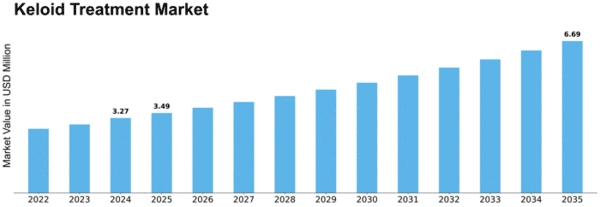
Keloid Treatment Market Size Graph
Author
Rahul Gotadki
Assistant Manager

He holds an experience of about 7+ years in Market Research and Business Consulting, working under the spectrum of Life Sciences and Healthcare domains. Rahul conceptualizes and implements a scalable business strategy and provides strategic leadership to the clients. His expertise lies in market estimation, competitive intelligence, pipeline analysis, customer assessment, etc. In addition to the above, his other responsibility includes strategic tracking of high growth markets & advising clients on the potential areas of focus they could direct their business initiatives

Leave a Comment

FAQs

What is the valuation of the global keloid market?

The global keloid market is expected to reach a valuation of USD 1.72 billion by 2035.

What is the CAGR of the market?

The market is expected to exhibit a strong 0.86% CAGR over the forecast period from 2023-2035.

What is the leading driver for the market?

The rapid rise in the technological scenario behind skin care products is the major driver for the global keloid treatment market.

What is the leading regional market?

North America is the dominant regional market for keloid treatment.

What are the key players in the market?

Leading players in the keloid treatment market include Valeant, RXi Pharmaceuticals, Novartis, and Pacific World Corporation, among others.

Market Summary

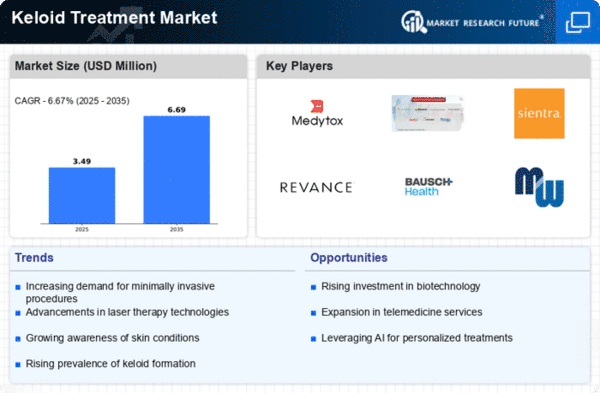
As per MRFR analysis, the Keloid Treatment Market Size was estimated at 3.27 USD Million in 2024. The Keloid Treatment industry is projected to grow from 3.53 in 2025 to 6.69 by 2035, exhibiting a compound annual growth rate (CAGR) of 6.67 during the forecast period 2025 - 2035.

Key Market Trends & Highlights

The Keloid Treatment Market is poised for substantial growth driven by technological advancements and increasing patient awareness.

  • The North American region remains the largest market for keloid treatments, characterized by a high demand for advanced therapies.
  • In the Asia-Pacific region, the keloid treatment market is experiencing rapid growth, fueled by rising healthcare expenditure and awareness.
  • Surgical excision continues to dominate the market as the largest segment, while laser therapy is emerging as the fastest-growing treatment option.
  • The rising incidence of keloids and advancements in treatment technologies are key drivers propelling market expansion.

Market Size & Forecast

2024 Market Size 3.27 (USD Million)
2035 Market Size 6.69 (USD Million)
CAGR (2025 - 2035) 6.67%
Largest Regional Market Share in 2024 North America

Major Players

<p>Bristol-Myers Squibb (US), Mylan N.V. (US), Merck & Co. (US), Pfizer Inc. (US), Galderma S.A. (CH), Sientra, Inc. (US), Revance Therapeutics, Inc. (US), Hugel, Inc. (KR), Evolus, Inc. (US)</p>

Market Trends

The Keloid Treatment Market is currently experiencing a notable evolution, driven by advancements in medical technology and an increasing awareness of skin health. Various treatment modalities, including surgical interventions, laser therapies, and topical applications, are gaining traction among healthcare providers and patients alike. This shift appears to be influenced by a growing understanding of keloid formation and the psychological impact these scars can have on individuals. As a result, there is a heightened demand for effective and minimally invasive treatment options that cater to diverse patient needs. Moreover, the Keloid Treatment Market seems to be expanding due to the rising prevalence of keloids, particularly in populations with darker skin types. This demographic trend indicates a potential for targeted therapies that address specific skin characteristics and healing processes. Additionally, the integration of telemedicine and digital health solutions is likely to enhance patient access to treatment options, thereby fostering market growth. Overall, the Keloid Treatment Market is poised for continued development, with innovative approaches and a focus on patient-centered care shaping its future landscape.

Emergence of Advanced Therapies

The Keloid Treatment Market is witnessing the emergence of advanced therapies that leverage cutting-edge technology. These include novel laser treatments and biologic agents that aim to improve efficacy and reduce recurrence rates. Such innovations may provide patients with more effective options, potentially transforming the treatment landscape.

Increased Patient Awareness

There is a growing awareness among patients regarding keloid formation and available treatment options. This trend suggests that individuals are becoming more proactive in seeking medical advice and interventions, which could lead to an uptick in demand for specialized keloid treatments.

Integration of Telehealth Solutions

The integration of telehealth solutions into the Keloid Treatment Market is gaining momentum. This development may facilitate remote consultations and follow-ups, thereby improving access to care for patients who may otherwise face barriers to treatment. Such advancements could reshape how keloid management is approached.

Keloid Treatment Market Market Drivers

Market Growth Projections

The Global Keloid Treatment Market Industry is projected to experience steady growth, with estimates indicating a market size of 1.73 USD Billion in 2024 and a potential increase to 1.9 USD Billion by 2035. This growth trajectory suggests a compound annual growth rate (CAGR) of 0.86% from 2025 to 2035. Such projections highlight the ongoing demand for keloid treatments and the industry's responsiveness to emerging trends and technologies. The market's expansion reflects broader healthcare trends, including a focus on personalized medicine and improved patient care.

Rising Cosmetic Procedures

The rise in cosmetic procedures is another driver for the Global Keloid Treatment Market Industry. As more individuals undergo surgeries for aesthetic enhancements, the likelihood of keloid formation increases. This trend is particularly pronounced in regions where cosmetic surgery is gaining popularity. Patients seeking to minimize the appearance of keloids post-surgery are driving demand for effective treatment solutions. The market's growth is expected to be sustained as the beauty industry continues to expand, with keloid treatments becoming an integral part of post-operative care.

Rising Prevalence of Keloids

The Global Keloid Treatment Market Industry is experiencing growth due to the rising prevalence of keloids, which are often associated with surgical scars, acne, and trauma. As awareness increases regarding the condition, more individuals seek treatment options. In 2024, the market is projected to reach 1.73 USD Billion, reflecting a growing demand for effective therapies. This trend is particularly evident in regions with high rates of skin injuries, such as urban areas where surgical procedures are common. The increasing incidence of keloids is likely to drive innovation in treatment modalities, further expanding the market.

Growing Awareness and Education

The Global Keloid Treatment Market Industry benefits from increasing awareness and education about keloids among both healthcare professionals and patients. Educational campaigns and resources provided by dermatological associations are helping to demystify keloids, leading to earlier diagnosis and treatment. This heightened awareness is crucial, as it encourages individuals to seek medical advice sooner, thereby increasing treatment uptake. As more patients become informed about their options, the market is likely to see a steady rise in demand for keloid treatments, contributing to a projected CAGR of 0.86% from 2025 to 2035.

Increased Research and Development

Increased investment in research and development is propelling the Global Keloid Treatment Market Industry forward. Pharmaceutical companies and research institutions are focusing on understanding the underlying mechanisms of keloid formation, which may lead to the discovery of novel therapeutic agents. This emphasis on R&D is likely to yield new treatment options that are more effective and tailored to individual patient needs. As the market evolves, the introduction of innovative therapies could significantly alter the treatment landscape, enhancing patient satisfaction and outcomes.

Advancements in Treatment Technologies

Innovations in treatment technologies are significantly influencing the Global Keloid Treatment Market Industry. New methods, such as laser therapy, cryotherapy, and intralesional injections, are being developed and refined, offering patients more effective options. These advancements not only enhance treatment efficacy but also reduce recovery times and side effects. As a result, healthcare providers are increasingly adopting these technologies, contributing to market growth. The anticipated increase in market size to 1.9 USD Billion by 2035 underscores the potential of these advancements to reshape treatment paradigms and improve patient outcomes.

Market Segment Insights

Keloid Treatment Market Product Type Insights

<p>Based on product type the market is segmented into elastic wraps, spray, ointment, creams, oils, topical gels &amp; gel sheets.</p>

Keloid Treatment Market Insights

<p>Based on treatment market for keloid has been segmented into ligature, <a href="https://www.marketresearchfuture.com/reports/radiotherapy-market-1526">radiation therapy</a>, cry therapy, surgical treatment, laser treatment, steroid injections, corticosteroid injections (intralesional steroids), silicone gel or sheeting, occlusive dressing, compression therapy, and interferon. Corticosteroid injections treatment segments lead the keloid treatment market as this treatment is used in combination with other therapies. Intralesional steroids injection is considered to be the second largest segment of treatment type that drives market.</p>

Keloid Treatment Market End-User Insights

<p>On the basis of end-users, the keloid treatment market is segmented into dermatology clinics, hospitals, ambulatory surgical centers. Hospital is expected to hold the largest share in the segment market of end-users as most doctors prefer radiation therapy which has reported safe and effective use of radiation to treat keloid.</p>

Get more detailed insights about Keloid Treatment Market Research Report - Global Forecast till 2035

Regional Insights

North America : Market Leader in Keloid Treatment

North America is poised to maintain its leadership in the keloid treatment market, holding a significant market size of $1.5 billion as of 2024. The region's growth is driven by increasing awareness of keloid treatments, advancements in medical technology, and a robust healthcare infrastructure. Regulatory support and favorable reimbursement policies further enhance market dynamics, making it a prime area for investment and innovation. The United States stands out as the leading country in this region, with major players like Bristol-Myers Squibb, Merck & Co., and Pfizer Inc. actively participating in the market. The competitive landscape is characterized by a mix of established pharmaceutical companies and emerging biotech firms, all striving to develop effective treatment options. This competitive environment fosters innovation and ensures a diverse range of therapies for patients.

Europe : Emerging Market with Growth Potential

Europe is witnessing a growing interest in keloid treatment, with a market size of $0.9 billion projected for 2025. Factors such as rising incidences of keloids, increased healthcare expenditure, and a focus on dermatological advancements are driving this growth. Regulatory frameworks in various countries are becoming more supportive, facilitating the introduction of new therapies and treatment modalities in the market. Leading countries in Europe include Germany, France, and the UK, where key players like Galderma S.A. and Mylan N.V. are making significant contributions. The competitive landscape is evolving, with a mix of local and international companies vying for market share. The presence of innovative treatment options and a growing patient base are expected to further enhance market dynamics in the region.

Asia-Pacific : Rapidly Growing Market Segment

The Asia-Pacific region is emerging as a significant player in the keloid treatment market, with a market size of $0.7 billion anticipated by 2025. The growth is fueled by increasing awareness of skin health, rising disposable incomes, and a growing population. Additionally, regulatory bodies are beginning to recognize the need for effective keloid treatments, which is expected to catalyze market expansion in the coming years. Countries like Japan, South Korea, and Australia are leading the charge in this region, with companies such as Hugel, Inc. and Sientra, Inc. actively involved in developing innovative solutions. The competitive landscape is characterized by a mix of established firms and new entrants, all focused on addressing the unique needs of patients suffering from keloids. This dynamic environment is likely to foster further advancements in treatment options.

Middle East and Africa : Emerging Market with Challenges

The Middle East and Africa region is gradually developing its keloid treatment market, currently valued at $0.17 billion. The growth is hindered by limited healthcare access and varying levels of awareness about keloid treatments. However, increasing healthcare investments and initiatives aimed at improving dermatological care are expected to drive market growth in the future. Regulatory bodies are beginning to focus on skin health, which may lead to more effective treatment options becoming available. Countries like South Africa and the UAE are at the forefront of this market, with a growing number of healthcare providers recognizing the need for specialized keloid treatments. The competitive landscape is still in its infancy, with few key players present. However, as awareness and healthcare access improve, the market is likely to attract more investment and innovation in keloid treatment solutions.

Key Players and Competitive Insights

The Keloid Treatment Market is characterized by a dynamic competitive landscape, driven by increasing awareness of skin conditions and advancements in treatment modalities. Key players such as Bristol-Myers Squibb (US), Merck & Co. (US), and Galderma S.A. (CH) are strategically positioned to leverage innovation and partnerships to enhance their market presence. Bristol-Myers Squibb (US) focuses on developing novel therapies, while Merck & Co. (US) emphasizes expanding its product portfolio through strategic acquisitions. Galderma S.A. (CH) is enhancing its operational focus on dermatological solutions, which collectively shapes a competitive environment that is increasingly reliant on innovation and strategic collaborations.

The market structure appears moderately fragmented, with several players vying for market share. Key business tactics such as localizing manufacturing and optimizing supply chains are becoming prevalent among these companies. This approach not only reduces operational costs but also enhances responsiveness to regional market demands. The collective influence of these key players fosters a competitive atmosphere where agility and adaptability are paramount.

In November 2025, Merck & Co. (US) announced a strategic partnership with a leading biotechnology firm to co-develop a new keloid treatment. This collaboration is expected to accelerate the development timeline and enhance the therapeutic options available in the market. The strategic importance of this partnership lies in its potential to combine resources and expertise, thereby increasing the likelihood of successful product development and market entry.

In October 2025, Galderma S.A. (CH) launched a new line of topical treatments specifically designed for keloid management. This product introduction is significant as it reflects the company's commitment to innovation in dermatological care. By expanding its product offerings, Galderma aims to capture a larger share of the market and address the unmet needs of patients suffering from keloids.

In September 2025, Bristol-Myers Squibb (US) completed the acquisition of a smaller biotech firm specializing in regenerative medicine. This acquisition is likely to enhance Bristol-Myers Squibb's capabilities in developing advanced therapies for keloid treatment. The strategic move underscores the company's focus on integrating cutting-edge technologies into its product pipeline, which may provide a competitive edge in the evolving market landscape.

As of December 2025, current trends in the Keloid Treatment Market indicate a shift towards digitalization and AI integration, with companies increasingly leveraging technology to enhance patient outcomes. Strategic alliances are shaping the landscape, fostering innovation and collaboration among key players. Looking ahead, competitive differentiation is expected to evolve, with a pronounced shift from price-based competition to a focus on innovation, technology, and supply chain reliability. This transition may redefine how companies position themselves in the market, emphasizing the importance of sustainable practices and advanced therapeutic solutions.

Key Companies in the Keloid Treatment Market market include

Industry Developments

POETYK PSO-2, the second pivotal Phase III clinical trial assessing deucravacitinib, a new, selective tyrosine kinase 2 inhibitor for the treatment of patients with moderate to severe plaque psoriasis, was published in February 2021 by Bristol Myers Squibb Company.

POETYK PSO-2 looked at deucravacitinib 6 mg once a day and found that it met both co-primary objectives, with considerably more patients reaching Psoriasis Area and Severity Index (PASI 75). JUBLIA (efinaconazole) topical solution for the treatment of onychomycosis was approved by the US Food and Drug Administration (FDA) in April 2020 for Bausch Health Companies Inc. and its dermatology business Ortho Dermatologics in Keloid Treatment Market

Intended Audience

  • Manufacturers and Suppliers
  • Dermatology Hospitals and Clinics
  • Dermatology laboratories and associations
  • Research and development centers


Future Outlook

Keloid Treatment Market Future Outlook

<p>The Keloid Treatment Market is projected to grow at a 6.67% CAGR from 2024 to 2035, driven by increasing awareness, technological advancements, and rising demand for effective treatments.</p>

New opportunities lie in:

  • <p>Development of personalized keloid treatment plans using AI technology.</p>
  • <p>Expansion of telemedicine platforms for remote consultations and follow-ups.</p>
  • <p>Investment in regenerative medicine techniques for innovative keloid therapies.</p>

<p>By 2035, the Keloid Treatment Market is expected to achieve substantial growth and innovation.</p>

Market Segmentation

Keloid Treatment Market End User Outlook

  • Healthcare Providers
  • Patients
  • Research Institutions

Keloid Treatment Market Keloid Size Outlook

  • Small Keloids
  • Medium Keloids
  • Large Keloids
  • Giant Keloids

Keloid Treatment Market Treatment Type Outlook

  • Surgical Excision
  • Intralesional Steroid Injection
  • Cryotherapy
  • Laser Therapy
  • Radiation Therapy

Keloid Treatment Market Distribution Channel Outlook

  • Hospitals
  • Dermatology Clinics
  • Online Pharmacies
  • Retail Pharmacies

Keloid Treatment Market Patient Demographics Outlook

  • Age Group
  • Gender
  • Skin Type
  • Ethnicity

Report Scope

MARKET SIZE 20243.27(USD Million)
MARKET SIZE 20253.53(USD Million)
MARKET SIZE 20356.69(USD Million)
COMPOUND ANNUAL GROWTH RATE (CAGR)6.67% (2024 - 2035)
REPORT COVERAGERevenue Forecast, Competitive Landscape, Growth Factors, and Trends
BASE YEAR2024
Market Forecast Period2025 - 2035
Historical Data2019 - 2024
Market Forecast UnitsUSD Million
Key Companies ProfiledBristol-Myers Squibb (US), Mylan N.V. (US), Merck & Co. (US), Pfizer Inc. (US), Galderma S.A. (CH), Sientra, Inc. (US), Revance Therapeutics, Inc. (US), Hugel, Inc. (KR), Evolus, Inc. (US)
Segments CoveredTreatment Type, Keloid Size, Patient Demographics, Distribution Channel, End User
Key Market OpportunitiesAdvancements in minimally invasive techniques enhance patient outcomes in the Keloid Treatment Market.
Key Market DynamicsRising demand for innovative therapies drives competition and regulatory scrutiny in the keloid treatment market.
Countries CoveredNorth America, Europe, APAC, South America, MEA

FAQs

What is the valuation of the global keloid market?

The global keloid market is expected to reach a valuation of USD 1.72 billion by 2035.

What is the CAGR of the market?

The market is expected to exhibit a strong 0.86% CAGR over the forecast period from 2023-2035.

What is the leading driver for the market?

The rapid rise in the technological scenario behind skin care products is the major driver for the global keloid treatment market.

What is the leading regional market?

North America is the dominant regional market for keloid treatment.

What are the key players in the market?

Leading players in the keloid treatment market include Valeant, RXi Pharmaceuticals, Novartis, and Pacific World Corporation, among others.

  1. Definition
    1. Scope of the Study
      1. Research Objective
      2. Assumptions
      3. Limitations
    2. Introduction
    3. Primary Research
    4. Secondary Research
    5. Market Size Estimation
    6. Drivers
    7. Restraints
    8. Opportunities
    9. Challenges
    10. Macroeconomic Indicators
    11. Technology Trends & Assessment
    12. Porter’s Five Forces Analysis
      1. Bargaining Power of Suppliers
      2. Bargaining Power of Buyers
      3. Threat of New Entrants
      4. Threat of Substitutes
      5. Intensity of Rivalry
    13. Value Chain Analysis
    14. Investment Feasibility Analysis
    15. Pricing Analysis
  2. Chapter 6. Global Keloid Treatment Market, by Product
    1. Introduction
    2. Elastic Wraps
  3. Market Estimates & Forecast, by Region, 2020–2027
  4. Market Estimates & Forecast, by Country, 2020–2027
    1. Sprays
  5. Market Estimates & Forecast, by Region, 2020–2027
  6. Market Estimates & Forecast, by Country, 2020–2027
    1. Ointment
  7. Market Estimates & Forecast, by Region, 2020–2027
  8. Market Estimates & Forecast, by Country, 2020–2027
    1. Creams
  9. Market Estimates & Forecast, by Region, 2020–2027
  10. Market Estimates & Forecast, by Country, 2020–2027
    1. Oils
  11. Market Estimates & Forecast, by Region, 2020–2027
  12. Market Estimates & Forecast, by Country, 2020–2027
    1. Topical Gels & Gel Sheets
  13. Market Estimates & Forecast, by Region, 2020–2027
  14. Market Estimates & Forecast, by Country, 2020–2027
  15. Chapter 7. Global Keloid Treatment Market, by Treatment
    1. Introduction
    2. Ligature
  16. Market Estimates & Forecast, by Region, 2020–2027
  17. Market Estimates & Forecast, by Country, 2020–2027
    1. Radiation Therapy
  18. Market Estimates & Forecast, by Region, 2020–2027
  19. Market Estimates & Forecast, by Country, 2020–2027
    1. Cryo Therapy
  20. Market Estimates & Forecast, by Region, 2020–2027
  21. Market Estimates & Forecast, by Country, 2020–2027
    1. Surgical Treatment
  22. Market Estimates & Forecast, by Region, 2020–2027
  23. Market Estimates & Forecast, by Country, 2020–2027
    1. Laser Treatment
  24. Market Estimates & Forecast, by Region, 2020–2027
  25. Market Estimates & Forecast, by Country, 2020–2027
    1. Steroid Injections
  26. Market Estimates & Forecast, by Region, 2020–2027
  27. Market Estimates & Forecast, by Country, 2020–2027
    1. Corticosteroid injections (intralesional steroids)
  28. Market Estimates & Forecast, by Region, 2020–2027
  29. Market Estimates & Forecast, by Country, 2020–2027
    1. Silicone gel or sheeting
  30. Market Estimates & Forecast, by Region, 2020–2027
  31. Market Estimates & Forecast, by Country, 2020–2027
    1. Interferon
  32. Market Estimates & Forecast, by Region, 2020–2027
  33. Market Estimates & Forecast, by Country, 2020–2027
  34. Chapter 8. Global Keloid Treatment Market, by End User
    1. Introduction
    2. Dermatology Clinics
  35. Market Estimates & Forecast, by Region, 2020–2027
  36. Market Estimates & Forecast, by Country, 2020–2027
    1. Hospitals
  37. Market Estimates & Forecast, by Region, 2020–2027
  38. Market Estimates & Forecast, by Country, 2020–2027
    1. Ambulatory Surgical Centers
  39. Market Estimates & Forecast, by Region, 2020–2027
  40. Market Estimates & Forecast, by Country, 2020–2027
  41. Chapter 9. Global Keloid Treatment Market, by Region
    1. Introduction
    2. Americas
      1. North America
      2. South America
    3. Europe
      1. Western Europe
      2. Eastern Europe
    4. Asia-Pacific
      1. Japan
      2. China
      3. India
      4. Australia
      5. South Korea
      6. Rest of Asia-Pacific
    5. Middle East & Africa
      1. Middle East
      2. Africa
    6. Chapter 10. Company Landscape
    7. Introduction
    8. Market Share Analysis
    9. Key Development & Strategies
    10. Chapter 11. Company Profiles
    11. Novartis AG
      1. Company Overview
      2. Product Overview
      3. Financials Overview
      4. Key Developments
      5. SWOT Analysis
    12. RXi Pharmaceuticals, Inc
      1. Company Overview
      2. Product Overview
      3. Financial Overview
      4. Key Developments
      5. SWOT Analysis
    13. Sonoma Pharmaceuticals, Inc
      1. Company Overview
      2. Product Overview
      3. Financial Overview
      4. Key Development
      5. SWOT Analysis
    14. Bristol-Myers Squibb
      1. Company Overview
      2. Product Overview
      3. Financial Overview
      4. Key Development
      5. SWOT Analysis
    15. Pacific World Corporation
      1. Company Overview
      2. Product Overview
      3. Financial overview
      4. Key Developments
      5. SWOT Analysis
    16. Valeant Pharmaceuticals International, Inc
      1. Company Overview
      2. Product Overview
      3. Financial Overview
      4. Key Developments
      5. SWOT Analysis
    17. Revitol Corporation
      1. Overview
      2. Product Overview
      3. Financial Overview
      4. Key Developments
      5. SWOT Analysis
    18. Avita Medical Limited
      1. Overview
      2. Product Overview
      3. Financials
      4. Key Developments
      5. SWOT Analysis
    19. Sensus Healthcare
      1. Overview
      2. Product Overview
      3. Financials
      4. Key Developments
      5. SWOT Analysis
    20. Perrigo Company plc
      1. Overview
      2. Product Overview
      3. Financials
      4. Key Developments
      5. SWOT Analysis
    21. Chapter 12 MRFR Conclusion
    22. Key Findings
      1. From CEO’s Viewpoint
      2. Unmet Needs of the Market
    23. Key Companies to Watch
    24. Predictions for the Keloid Treatment Industry
    25. Chapter 13. Appendix
  42. LIST OF TABLES
  43. Global Keloid Treatment Market Synopsis, 2020–2027
  44. Global Keloid Treatment Market Estimates and Forecast, 2020–2027
    1. (USD Million)
  45. Global Keloid Treatment Market, by Region, 2020–2027 (USD Million)
  46. Global Keloid Treatment Market, by Product, 2020–2027 (USD Million)
  47. Global Keloid Treatment Market, by Treatment, 2020–2027(USD Million)
  48. Global Keloid Treatment Market, by End User, 2020–2027 (USD Million)
  49. North America: Keloid Treatment Market, by Product, 2020–2027 (USD Million)
  50. North America: Keloid Treatment Market, by Treatment, 2020–2027 (USD Million)
  51. North America: Keloid Treatment Market, by End User, 2020–2027 (USD Million)
  52. US: Keloid Treatment Market, by Product, 2020–2027 (USD Million)
  53. US: Keloid Treatment Market, by Treatment, 2020–2027 (USD Million)
  54. US: Keloid Treatment Market, by End User, 2020–2027 (USD Million)
  55. Canada: Keloid Treatment Market, by Product, 2020–2027 (USD Million)
  56. Canada: Keloid Treatment Market, by Treatment, 2020–2027 (USD Million)
  57. Canada: Keloid Treatment Market, by End User, 2020–2027 (USD Million)
  58. South America: Keloid Treatment Market, by Product, 2020–2027 (USD
    1. Million)
  59. South America: Keloid Treatment Market, by Treatment, 2020–2027 (USD Million)
  60. South America: Keloid Treatment Market, by End User, 2020–2027 (USD Million)
  61. Europe: Keloid Treatment Market, by Product, 2020–2027 (USD Million)
  62. Europe: Keloid Treatment Market, by Treatment, 2020–2027 (USD Million)
  63. Europe: Keloid Treatment Market, by End User, 2020–2027 (USD Million)
  64. Western Europe: Keloid Treatment Market, by Product, 2020–2027 (USD Million)
  65. Western Europe: Keloid Treatment Market, by Treatment, 2020–2027 (USD Million)
  66. Western Europe: Keloid Treatment Market, by End User, 2020–2027 (USD Million)
  67. Eastern Europe: Keloid Treatment Market, by Product, 2020–2027 (USD Million)
  68. Eastern Europe: Keloid Treatment Market, by Treatment, 2020–2027 (USD Million)
  69. Eastern Europe: Keloid Treatment Market, by End User, 2020–2027(USD Million)
  70. Asia-Pacific: Keloid Treatment Market, by Product, 2020–2027 (USD Million)
  71. Asia-Pacific: Keloid Treatment Market, by Treatment, 2020–2027 (USD Million)
  72. Asia-Pacific: Keloid Treatment Market, by End User, 2020–2027 (USD Million)
  73. Middle East & Africa: Keloid Treatment Market, by Product, 2020–2027 (USD Million)
  74. Middle East & Africa: Keloid Treatment Market, by Treatment, 2020–2027 (USD Million)
  75. Middle East & Africa: Keloid Treatment Market, by End User, 2020–2027 (USD Million)
  76. LIST OF FIGURES
  77. Research Process
  78. Segmentation for Global Keloid Treatment Market
  79. Segmentation Market Dynamics for Global Keloid Treatment Market
  80. Global Keloid Treatment Market Share, by Product, 2020
  81. Global Keloid Treatment Market Share, by Treatment, 2020
  82. Global Keloid Treatment Market Share, by End User, 2020
  83. Global Keloid Treatment Market Share, by Region, 2020
  84. North America: Keloid Treatment Market Share, by Country, 2020
  85. Europe: Keloid Treatment Market Share, by Country, 2020
  86. Asia-Pacific: Keloid Treatment Market Share, by Country, 2020
  87. Middle East & Africa: Keloid Treatment Market Share, by Country, 2020
  88. Global Keloid Treatment Market: Company Share Analysis, 2020 (%)
  89. Novartis AG: Key Financials
  90. Novartis AG: Segmental Revenue
  91. Novartis AG: Geographical Revenue
  92. RXi Pharmaceuticals, Inc: Key Financials
  93. RXi Pharmaceuticals, Inc: Segmental Revenue
  94. RXi Pharmaceuticals, Inc: Geographical Revenue
  95. Sonoma Pharmaceuticals, Inc: Key Financials
  96. Sonoma Pharmaceuticals, Inc: Segmental Revenue
  97. Sonoma Pharmaceuticals, Inc: Geographical Revenue
  98. Bristol-Myers Squibb : Key Financials
  99. Bristol-Myers Squibb : Segmental Revenue
  100. Bristol-Myers Squibb : Geographical Revenue
  101. Pacific World Corporation: Key Financials
  102. Pacific World Corporation: Segmental Revenue
  103. Pacific World Corporation. Geographical Revenue
  104. Valeant Pharmaceuticals International, Inc: Key Financials
  105. Valeant Pharmaceuticals International, Inc: Segmental Revenue
  106. Valeant Pharmaceuticals International, Inc: Geographical Revenue
  107. Revitol Corporation: Key Financials
  108. Revitol Corporation: Segmental Revenue
  109. Revitol Corporation: Geographical Revenue
  110. Avita Medical Limited: Key Financials
  111. Avita Medical Limited: Segmental Revenue
  112. Avita Medical Limited: Geographical Revenue
  113. Sensus Healthcare: Key Financials
  114. Sensus Healthcare: Segmental Revenue
  115. Sensus Healthcare: Geographical Revenue
  116. Perrigo Company plc: Key Financials
  117. Perrigo Company plc: Segmental Revenue
  118. Perrigo Company plc: Geographical Revenue

Keloid Treatment Market Segmentation

Market Segmentation Overview

  • Detailed segmentation data will be available in the full report
  • Comprehensive analysis by multiple parameters
  • Regional and country-level breakdowns
  • Market size forecasts by segment
Infographic

Free Sample Request

Kindly complete the form below to receive a free sample of this Report

Get Free Sample

Customer Strories

Compare Licence

×
Features License Type
Single User Multiuser License Enterprise User
Price $4,950 $5,950 $7,250
Maximum User Access Limit 1 User Upto 10 Users Unrestricted Access Throughout the Organization
Free Customization
Direct Access to Analyst
Deliverable Format
Platform Access
Discount on Next Purchase 10% 15% 15%
Printable Versions