×
Request Free Sample ×

Kindly complete the form below to receive a free sample of this Report

* Please use a valid business email

Leading companies partner with us for data-driven Insights

clients tt-cursor
Hero Background
English
Chinese
French
Japanese
Korean
German
Spanish

IOT- Identity Access Management Market Size

ID: MRFR/SEM/1502-HCR
200 Pages
Aarti Dhapte
February 2026

IOT- Identity Access Management Market Size, Share and Research Report By Services (Multi-factor Authentication, Password Management, Directory Services), By Components (Network Hardware, Cooling Units), By End-Users (Banking, IT, Healthcare, Government) - Industry Forecast Till 2035

Share:
Download PDF ×

We do not share your information with anyone. However, we may send you emails based on your report interest from time to time. You may contact us at any time to opt-out.

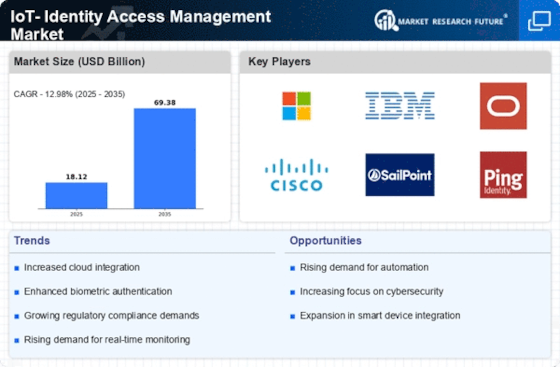
IOT Identity Access Management Market Infographic
Purchase Options

Iot Identity Access Management Size

IOT Identity Access Management Market Growth Projections and Opportunities

The Internet of Things (IoT) has revolutionized the manner in which we interact with generation, connecting devices and structures to enhance performance and convenience. One critical thing of the IoT surroundings is Identity Access Management (IAM), a marketplace influenced by various factors that form its dynamics. First and most important, the proliferation of IoT gadgets plays a pivotal position in driving the IAM market. As extra devices become interconnected, the need for steady and seamless access control will become paramount. Moreover, the growing recognition of cybersecurity threats amplifies the demand for sturdy IAM solutions within the IoT area. With the growing quantity of excessive-profile statistics breaches and cyberattacks, businesses and individuals are becoming more vigilant about protecting their virtual assets. IAM presents a layer of defense by handling and authenticating consumer identities, preventing unauthorized admission to and ability misuse of IoT networks. Interoperability is another key factor influencing the IAM market inside the IoT realm. As the IoT landscape continues to enlarge, devices from distinctive producers and ecosystems need to speak seamlessly. IAM answers, which can integrate with various IoT structures and protocols, become crucial in ensuring a cohesive and interconnected IoT surrounding. Furthermore, regulatory compliance and records privacy worries drastically impact the IAM market in the IoT space. Governments and regulatory bodies are increasingly implementing stringent policies to defend personal privacy and secure sensitive statistics. IAM solutions play an important role in assisting corporations to adhere to these regulations by imposing robust get-entry controls, encryption, and identity verification measures. The evolving nature of cyber threats additionally drives innovation inside the IAM marketplace for IoT. As cyber attackers end up extra sophisticated, IAM answers should constantly adapt to cope with rising threats. This ongoing improvement in IAM technologies guarantees that businesses live in advance of capacity safety dangers, making the market dynamic and aware of the ever-converting cybersecurity panorama. Cost issues and scalability are extra market factors shaping the adoption of IAM inside the IoT area. Businesses and groups weigh the cost of implementing IAM solutions against the capability risks and blessings. Scalability is vital as IoT ecosystems grow over time, requiring IAM answers that may seamlessly make bigger to house increasing devices and users without compromising safety.
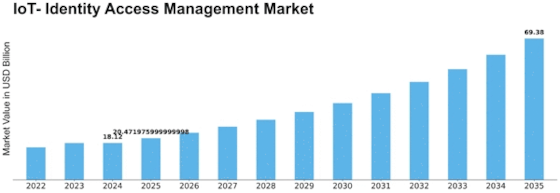

IOT Identity Access Management Market Size Graph
Author
Aarti Dhapte
AVP - Research

A consulting professional focused on helping businesses navigate complex markets through structured research and strategic insights. I partner with clients to solve high-impact business problems across market entry strategy, competitive intelligence, and opportunity assessment. Over the course of my experience, I have led and contributed to 100+ market research and consulting engagements, delivering insights across multiple industries and geographies, and supporting strategic decisions linked to $500M+ market opportunities. My core expertise lies in building robust market sizing, forecasting, and commercial models (top-down and bottom-up), alongside deep-dive competitive and industry analysis. I have played a key role in shaping go-to-market strategies, investment cases, and growth roadmaps, enabling clients to make confident, data-backed decisions in dynamic markets.

Leave a Comment

FAQs

What is the projected market valuation of the IoT-Identity Access Management Market by 2035?

<p>The projected market valuation for the IoT-Identity Access Management Market is 69.38 USD Billion by 2035.</p>

What was the market valuation of the IoT-Identity Access Management Market in 2024?

<p>The overall market valuation was 18.12 USD Billion in 2024.</p>

What is the expected CAGR for the IoT-Identity Access Management Market during the forecast period 2025 - 2035?

<p>The expected CAGR for the IoT-Identity Access Management Market during the forecast period 2025 - 2035 is 12.98%.</p>

Which companies are considered key players in the IoT-Identity Access Management Market?

<p>Key players in the market include Microsoft, IBM, Oracle, Cisco, SailPoint Technologies, Ping Identity, Okta, ForgeRock, CyberArk, and Duo Security.</p>

What segment is projected to have the highest valuation in the IoT-Identity Access Management Market by 2035?

<p>The banking and financial services segment is projected to reach 13.98 USD Billion by 2035.</p>

How does the on-cloud deployment segment compare to on-premise in terms of future valuation?

The on-cloud deployment segment is expected to reach 30.0 USD Billion, surpassing the on-premise segment, which is projected at 20.0 USD Billion by 2035.

What is the anticipated valuation for multi-factor authentication services by 2035?

The multi-factor authentication services segment is anticipated to reach 15.0 USD Billion by 2035.

What is the projected market size for large enterprises in the IoT-Identity Access Management Market by 2035?

The projected market size for large enterprises is expected to be 48.61 USD Billion by 2035.

Which customer type segment is expected to grow significantly in the IoT-Identity Access Management Market?

The retail and e-commerce segment is expected to grow significantly, reaching 10.45 USD Billion by 2035.

What is the future outlook for user provisioning services in the IoT-Identity Access Management Market?

User provisioning services are projected to reach 8.0 USD Billion by 2035, indicating a robust growth trajectory.

Market Summary

As per Market Research Future analysis, the IoT Identity Access Management Market Size was estimated at 5.44 USD Billion in 2024. The IoT- Identity Access Management industry is projected to grow from 6.6 USD Billion in 2025 to 44.2 USD Billion by 2035, exhibiting a compound annual growth rate (CAGR) of 20.97% during the forecast period 2025 - 2035

Key Market Trends & Highlights

The IoT-Identity Access Management Market is experiencing robust growth driven by security needs and technological advancements.

  • North America remains the largest market for IoT-Identity Access Management, driven by increasing security concerns. Asia-Pacific is the fastest-growing region, fueled by rapid digital transformation and urbanization. The Banking and Financial Services sector leads in market share, while Retail and E-Commerce is witnessing the fastest growth. Rising demand for secure IoT solutions and regulatory pressures are key drivers propelling market expansion.

Market Size & Forecast

2024 Market Size 5.44 (USD Billion)
2035 Market Size 44.2 (USD Billion)
CAGR (2025 - 2035) 20.97%
Largest Regional Market Share in 2024 North America

Major Players

Microsoft (US), IBM (US), Oracle (US), Cisco (US), SailPoint Technologies (US), Ping Identity (US), Okta (US), ForgeRock (US), CyberArk (IL), Duo Security (US)

Market Trends

The IoT- Identity Access Management Market is currently experiencing a transformative phase, driven by the increasing integration of Internet of Things (IoT) devices across various sectors. Organizations are recognizing the necessity of robust identity access management solutions to safeguard sensitive data and ensure compliance with evolving regulations. As the number of connected devices continues to rise, the complexity of managing user identities and access rights also escalates. This dynamic environment necessitates innovative approaches to identity management, which are becoming essential for maintaining security and operational efficiency. Moreover, the growing emphasis on digital transformation is propelling organizations to adopt advanced identity access management systems. These systems not only enhance security but also streamline user experiences, thereby fostering greater productivity. The convergence of IoT and identity management is likely to create new opportunities for vendors and service providers, as businesses seek to leverage technology to improve their security postures. As the market evolves, it appears that organizations will increasingly prioritize solutions that offer scalability, flexibility, and integration capabilities to address their unique challenges in managing identities across diverse IoT ecosystems.

Increased Focus on Security Protocols

Organizations are placing heightened emphasis on implementing stringent security protocols within the IoT- Identity Access Management Market. This trend reflects a growing awareness of the vulnerabilities associated with connected devices, prompting businesses to adopt multi-factor authentication and advanced encryption methods to protect sensitive information.

Integration of Artificial Intelligence

The integration of artificial intelligence into identity access management solutions is becoming more prevalent. AI technologies are being utilized to enhance threat detection, automate user provisioning, and improve overall system efficiency, thereby enabling organizations to respond swiftly to potential security breaches.

Regulatory Compliance and Data Privacy

As data privacy regulations continue to evolve, organizations are increasingly focusing on compliance within the IoT- Identity Access Management Market. This trend indicates a shift towards adopting solutions that not only secure identities but also ensure adherence to legal requirements, thereby mitigating risks associated with non-compliance.

IOT Identity Access Management Market Market Drivers

Adoption of Cloud-Based IAM Solutions

The IoT- Identity Access Management Market is witnessing a significant shift towards cloud-based identity access management solutions. This trend is largely attributed to the flexibility and scalability offered by cloud technologies, which allow organizations to manage identities and access rights more efficiently. According to recent estimates, the cloud IAM market is expected to grow at a compound annual growth rate of over 20% through 2026. As businesses increasingly migrate to cloud environments, the need for integrated IAM solutions that can seamlessly manage access across diverse IoT devices becomes critical. This transition not only enhances security but also streamlines operations, making it a key driver in the IoT- Identity Access Management Market.

Rising Demand for Secure IoT Solutions

The IoT- Identity Access Management Market is experiencing a notable surge in demand for secure IoT solutions. As organizations increasingly adopt IoT devices, the need for robust identity access management becomes paramount. This demand is driven by the growing number of cyber threats targeting IoT ecosystems, which have been projected to reach 75 billion connected devices by 2025. Consequently, businesses are prioritizing the implementation of advanced security measures to protect sensitive data and ensure compliance with industry regulations. The integration of identity access management solutions is seen as a critical strategy to mitigate risks associated with unauthorized access and data breaches, thereby fostering trust among users and stakeholders.

Emergence of Smart Cities and Infrastructure

The IoT- Identity Access Management Market is significantly influenced by the emergence of smart cities and advanced infrastructure projects. As urban areas evolve into smart ecosystems, the integration of IoT devices for traffic management, energy efficiency, and public safety becomes essential. This transformation necessitates robust identity access management frameworks to ensure secure interactions between devices and users. With investments in smart city initiatives projected to exceed 1 trillion by 2025, the demand for effective IAM solutions is likely to escalate. These solutions are crucial for managing the identities of various stakeholders, including citizens, service providers, and government entities, thereby enhancing the overall security and functionality of smart urban environments.

Regulatory Pressures and Compliance Requirements

The IoT- Identity Access Management Market is increasingly shaped by regulatory pressures and compliance requirements. Governments and regulatory bodies are implementing stringent data protection laws that mandate organizations to adopt comprehensive identity access management practices. For instance, regulations such as the General Data Protection Regulation (GDPR) and the California Consumer Privacy Act (CCPA) impose significant obligations on businesses to safeguard personal data. As a result, organizations are compelled to invest in IAM solutions that not only ensure compliance but also enhance their security posture. This trend is expected to drive growth in the IoT- Identity Access Management Market, as companies seek to avoid hefty fines and reputational damage associated with non-compliance.

Integration of Advanced Analytics and Machine Learning

The IoT- Identity Access Management Market is being propelled by the integration of advanced analytics and machine learning technologies. These innovations enable organizations to analyze vast amounts of data generated by IoT devices, facilitating more informed decision-making regarding identity access management. By leveraging machine learning algorithms, businesses can identify patterns and anomalies in user behavior, thereby enhancing their ability to detect and respond to potential security threats. This capability is particularly crucial in an era where cyber threats are becoming increasingly sophisticated. As organizations recognize the value of data-driven insights, the adoption of analytics-driven IAM solutions is likely to accelerate, further fueling growth in the IoT- Identity Access Management Market.

Market Segment Insights

By Customer Type: Banking & Financial Services (Largest) vs. Retail & E-Commerce (Fastest-Growing)

In the IoT-Identity Access Management Market, customer type segments are widely varied, with significant representation across various industries. The banking and financial services sector holds the largest market share due to its stringent security requirements and increasing digital transformation. Other sectors, such as education, IT &amp; telecom, and government, also contribute to market dynamics, showcasing distinct needs for identity management. Retail &amp; e-commerce, while smaller, is rapidly expanding as businesses prioritize online security and customer data protection in response to increasing digital transactions.

Banking &amp; Financial Services: Dominant vs. Retail &amp; E-Commerce: Emerging

The banking and financial services sector is the dominant player in the IoT-Identity Access Management Market, primarily driven by a critical need for robust security and compliance measures. Institutions in this sector adopt advanced identity management solutions to prevent fraud and manage customer identities effectively. On the other hand, retail and e-commerce are emerging segments fueled by the exponential rise in online shopping and digital payment functionalities. Retailers are increasingly leveraging IoT solutions to enhance customer experiences while ensuring safeguarded transactions. This specific customer type emphasizes innovative identity access solutions as vital to building trust and ensuring data protection in an increasingly competitive market.

By Service: Multi-Factor Authentication (Largest) vs. Password Management (Fastest-Growing)

In the IoT- Identity Access Management Market, the service segment is diverse, featuring several key components including password management, access management, user provisioning, multi-factor authentication, directory services, and single-sign-on (SSO). Among these, multi-factor authentication holds the largest market share due to a growing emphasis on enhanced security protocols. Password management, in contrast, is seeing rapid adoption, emerging as a fast-growing segment as organizations seek streamlined user experiences and robust security mechanisms. Analysis of growth trends shows that the push towards digital transformation and increasing cyber threats are key drivers for adopting innovative solutions within this segment. As businesses adopt more IoT devices, the need for efficient identity access management becomes pivotal. Notably, multi-factor authentication components are increasingly integrated into various systems, further establishing their dominant market position. Meanwhile, the rise in remote work culture is propelling the growth of password management solutions as users demand convenience alongside security.

Multi-Factor Authentication (Dominant) vs. Password Management (Emerging)

Multi-Factor Authentication (MFA) stands out as a dominant force in the IoT- Identity Access Management Market, driven by its ability to enhance security by requiring multiple forms of verification before granting access to systems. This added layer of security significantly reduces the risk of unauthorized access, making it a critical component in safeguarding sensitive information across IoT platforms. As cyber threats evolve, the demand for MFA solutions continues to rise, positioning them as integral to comprehensive identity access strategies. In contrast, Password Management is an emerging area, reflecting a growing trend for simplified user experiences and robust password hygiene among organizations. Effective password management solutions enable users to easily create, store, and manage their credentials securely, reducing the burden of multiple passwords while promoting enhanced security practices.

By Deployment: On-Premise (Largest) vs. On-Cloud (Fastest-Growing)

In the IoT- Identity Access Management Market, the deployment segment is dominated by the on-premise solution, which holds the largest market share due to its extensive use among large enterprises requiring stringent security controls. On-premise deployments allow organizations to maintain complete control over their identity access management systems, making them preferable for businesses in regulated industries. In contrast, the on-cloud deployment is seeing rapid adoption, driven by the growing preference for flexible and scalable solutions that support remote work and the proliferation of IoT devices. Many companies are transitioning to cloud-based IAM solutions for their lower initial investment and operational efficiencies.

Deployment: On-Premise (Dominant) vs. On-Cloud (Emerging)

The on-premise deployment segment remains dominant due to its traditional roots in enterprise IT, providing organizations with tailored solutions that align closely with their internal security policies. Its ability to operate within existing on-premise infrastructure gives companies increased control over data security, compliance, and customization. Conversely, the on-cloud deployment segment is emerging as a rapidly growing alternative, appealing to businesses seeking agility and cost-effectiveness. As organizations increasingly embrace digital transformation, the demand for cloud-based identity access management solutions is surging. This rise is particularly prominent among smaller companies and startups, which benefit from the cloud model’s scalability and reduced operational burdens.

By Industry: Small and Medium Enterprises (Largest) vs. Large Enterprises (Fastest-Growing)

The IoT-Identity Access Management market exhibits a distinct distribution of market share among small and medium enterprises (SMEs) and large enterprises. SMEs currently hold the largest share due to their increased adoption of IoT solutions to enhance security and manage access to resources. In contrast, while large enterprises occupy a smaller share, they are experiencing rapid growth as they invest in advanced IAM solutions to meet compliance requirements and address sophisticated security threats.

SMEs (Dominant) vs. Large Enterprises (Emerging)

Small and medium enterprises (SMEs) are leveraging IoT-enabled Identity Access Management solutions to streamline operations and mitigate security risks effectively. Their dominant market position is attributed to a heightened focus on digital transformation, where SMEs employ IAM tools to enhance authentication processes and manage user access efficiently. Meanwhile, large enterprises are emerging significantly in this market by prioritizing comprehensive IAM solutions that cater to their complex infrastructures. They are adopting advanced technologies such as AI and machine learning to strengthen their security frameworks, making them responsive to evolving threats and regulatory demands.

Get more detailed insights about IOT- Identity Access Management Market Research Report- Global Forecast 2035

Regional Insights

North America : Leading Innovation and Adoption

North America is the largest market for IoT Identity Access Management (IAM), holding approximately 45% of the global market share. The region's growth is driven by increasing cybersecurity threats, regulatory compliance requirements, and the rapid adoption of IoT devices across various sectors. The U.S. and Canada are the primary contributors, with significant investments in technology and infrastructure supporting this growth. The competitive landscape in North America is robust, featuring key players such as Microsoft, IBM, and Cisco. These companies are at the forefront of innovation, offering advanced IAM solutions tailored for IoT environments. The presence of a strong technology ecosystem, coupled with a focus on enhancing security protocols, positions North America as a leader in the IoT IAM market.

Europe : Regulatory Framework and Growth

Europe is the second-largest market for IoT Identity Access Management, accounting for approximately 30% of the global share. The region's growth is propelled by stringent data protection regulations, such as the GDPR, which mandate robust identity management solutions. Countries like Germany and the UK are leading the charge, with increasing investments in digital transformation and cybersecurity initiatives. The competitive landscape in Europe is characterized by a mix of established players and innovative startups. Companies like Oracle and ForgeRock are prominent, providing comprehensive IAM solutions. The emphasis on compliance and security is driving demand for advanced IAM technologies, making Europe a critical player in The IoT- Identity Access Management.

Asia-Pacific : Rapid Growth and Adoption

Asia-Pacific is witnessing rapid growth in the IoT Identity Access Management market, holding about 20% of the global share. The region's expansion is fueled by increasing internet penetration, a surge in IoT device adoption, and a growing awareness of cybersecurity threats. Countries like China and India are at the forefront, investing heavily in digital infrastructure and security measures to support this growth. The competitive landscape in Asia-Pacific is diverse, with both local and international players vying for market share. Companies such as Ping Identity and Okta are expanding their presence, offering tailored solutions to meet regional demands. The focus on enhancing security frameworks and compliance with emerging regulations is driving the adoption of IAM solutions in this dynamic market.

Middle East and Africa : Emerging Market with Potential

The Middle East and Africa region is gradually emerging in the IoT Identity Access Management market, holding approximately 5% of the global share. The growth is primarily driven by digital transformation initiatives across various sectors, including finance and healthcare. Countries like the UAE and South Africa are leading the way, focusing on enhancing their cybersecurity frameworks to support IoT adoption. The competitive landscape is still developing, with a mix of local and international players entering the market. Companies are increasingly recognizing the importance of IAM solutions to secure their IoT ecosystems. As regulatory frameworks evolve, the demand for effective identity management solutions is expected to rise, positioning the region for future growth.

Key Players and Competitive Insights

The IoT-Identity Access Management Market is currently characterized by a dynamic competitive landscape, driven by the increasing demand for secure and efficient identity management solutions in an increasingly interconnected world. Key players such as Microsoft (US), IBM (US), and Okta (US) are strategically positioning themselves through innovation and partnerships, thereby enhancing their operational focus. Microsoft (US) emphasizes cloud-based solutions, while IBM (US) leverages its extensive AI capabilities to offer advanced security features. Okta (US), on the other hand, focuses on seamless integration with various applications, which appears to resonate well with enterprises seeking flexibility and security in their identity management processes. Collectively, these strategies contribute to a competitive environment that is both collaborative and competitive, as companies seek to differentiate themselves through technological advancements and customer-centric solutions.

In terms of business tactics, companies are increasingly localizing their operations and optimizing supply chains to enhance responsiveness to market demands. The competitive structure of the IoT-Identity Access Management Market is moderately fragmented, with several players vying for market share. This fragmentation allows for a diverse range of solutions, but it also necessitates that companies continuously innovate to maintain their competitive edge. The collective influence of key players is significant, as they set industry standards and drive technological advancements that shape market dynamics.

In September 2025, Microsoft (US) announced the launch of its new Azure Active Directory features, which integrate advanced AI capabilities to enhance user authentication processes. This strategic move is likely to bolster Microsoft’s position in the market by providing enterprises with more robust security measures, thereby addressing growing concerns over data breaches and identity theft. The integration of AI not only streamlines user experiences but also positions Microsoft as a leader in the evolving landscape of identity management solutions.

In August 2025, IBM (US) unveiled its latest identity governance solution, which incorporates machine learning algorithms to automate compliance processes. This development is particularly significant as it reflects IBM's commitment to leveraging AI to enhance operational efficiency and reduce the burden of regulatory compliance on organizations. By automating these processes, IBM (US) appears to be addressing a critical pain point for many enterprises, potentially leading to increased adoption of its solutions in the market.

In July 2025, Okta (US) entered into a strategic partnership with a leading cloud service provider to enhance its identity management offerings. This collaboration is expected to expand Okta's reach into new markets and customer segments, thereby strengthening its competitive position. The partnership not only enhances Okta's product portfolio but also signifies a broader trend of companies seeking alliances to leverage complementary strengths in the rapidly evolving IoT landscape.

As of October 2025, current competitive trends in the IoT-Identity Access Management Market are heavily influenced by digitalization, sustainability, and the integration of AI technologies. Strategic alliances are increasingly shaping the landscape, as companies recognize the value of collaboration in driving innovation and expanding market reach. Looking ahead, it is anticipated that competitive differentiation will evolve, with a notable shift from price-based competition to a focus on innovation, technological advancements, and supply chain reliability. This evolution underscores the importance of adaptability and forward-thinking strategies in maintaining a competitive edge in the market.

Key Companies in the IOT Identity Access Management Market include

Industry Developments

February 2024: A prominent leader in identity and access management for Enterprise IoT ecosystems, Device Authority, has lately augmented its financial backing with an extra USD2m investment from Prelude, the venture practice of Mercato Partners. The US-based venture capital organization is well-known for its emphasis on high-growth cyber technology organizations. It has recognized Device Authority as a prime candidate for investment, given the robust team, innovative SaaS KeyScaler platform, and the platform's capability to supply zero trust for IoT across growing use cases that address real market requirements. The organization focuses on guaranteeing the security and management of digital identities and access within the Internet of Things (IoT) ecosystem. Its SaaS KeyScaler platform plays a crucial part in the domain by offering indispensable zero-trust security measures for IoT devices. The latest investment is reserved for expanding Device Authority's KeyScaler platform and growing its North American presence. Device Authority focuses on using the fund to upgrade its technology further and strengthen its standing as a leader in the field of IoT identity and access management. Darron Antill, the Device Authority CEO, said that the enthusiasm regarding the funding and the organization's path by saying that since the company is merged in the connected world and observes the newest use cases being implemented by users across the globe, the company is minutely aware of how important it is to guarantee complete trust in the devices and data being used. He further added that their KeyScaler platform and KSaaS cloud service have already been identified as the 'Rising Azure Technology' in Microsoft's Partner of The Year Awards and by experts who have recognized Device Authority as the technological leader in its field.

August 2023: SecureAuth has disclosed that it will provide Citrix Workspace, the digital workspace software platform developed by Citrix Systems, the leading U.S. cloud computing and virtualization company, with its authentication platform in August 2023. Thus, the partnership aims to make Citrix Workspace more secure by enhancing its security capabilities. The integration of SecureAuth's platform into Citrix Workspace promises nothing less than a complete, seamless digital workspace encounter to its users, hence fortifying its position as one of the best cloud-based solutions suppliers.

April 2023: Introduction of Saviynt’s New Partner with IBM and Other Worlds Technology and Consulting Giants in April 2023 for a Hospitality Store of Ready-to-Improve Solutions towards Scaling Cloud Identity Security by Organizations.

May 2023: PingOne Protect was launched by Ping Identity in May 2023, which helps prevent account takeover through fraud detection and risk management while also addressing multi-factor authentication (MFA) fatigue among end-users. MFA burden is reduced, hence heightening user experience and improving their security status with such organizations using PingOne Protect. The solution is innovative enough to further cement Ping Identity’s reputation of being a reliable provider of cutting-edge enterprise IAM.

March 2023: Since March 2023, its Password Management Software for Workforce has been updated. These include new capabilities such as a web application firewall that can help businesses protect themselves from risks like high-risk access control for high-value business applications.

November 2022: Okta’s November 2022 Workforce Identity Cloud Innovations that Improve Corporate Security, Productivity, and Resilience. This novelty will strengthen a single SCP for managing identity across all resources as well as enterprise users.

October 2022: Saviynt, on the other hand, unveiled new features for its Enterprise Identity Cloud (EIC) in October 2022 that focus on key areas within zero trust by organizations, including Identity Governance, Cloud Privileged Access Management (CPAM), and Identity Analytics. These new capabilities are expected to improve both the EIC’s strength in delivering strong security and protection as well as its ability to assimilate Zero Trust policies into an organization’s existing security framework seamlessly.

May 2022: In May 2022, Microsoft announced the launch of a family of IAM called Entra. Entra is made up of existing tools such as Azure AD and its new product, Decentralized Identity and Cloud Infrastructure Entitlement Management (CIEM). It was designed to help safeguard access to any resource or application by enabling security professionals to identify and manage privileges in multi-cloud environments, thereby securing digital identities end-to-end.

IOT- Identity Access Management Market Segmental Outlook

IOT- Identity Access Management Customer Types Outlook

  • education,
  • retail & e-commerce,
  • IT & telecom,
  • government,
  • energy & utility services,
  • media & entertainment,
  • manufacturing

IOT- Identity Access Management Service Outlook

  • password management,
  • access management user provisioning,
  • multi-factor authentication,
  • directory services,
  • single-sign-on (SSO).

IOT- Identity Access Management Deployment Outlook

  • on-premise,
  • on-cloud,

IOT- Identity Access Management Industry Outlook

  • small and medium enterprises (SME's)
  • large enterprises based on industry segmentation

Future Outlook

IOT Identity Access Management Market Future Outlook

The IoT-Identity Access Management Market is poised for growth at 20.97% CAGR from 2025 to 2035, driven by increasing security demands, regulatory compliance, and technological advancements.

New opportunities lie in:

  • <p>Integration of AI-driven analytics for real-time access control</p>
  • <p> </p>
  • <p>Development of multi-factor authentication solutions for IoT devices</p>
  • <p>Expansion of cloud-based IAM platforms for scalability and flexibility</p>

By 2035, the market is expected to achieve robust growth, reflecting its critical role in digital security.

Market Segmentation

IOT Identity Access Management Market Service Outlook

  • password management
  • access management
  • user provisioning
  • multi-factor authentication
  • directory services
  • single-sign-on (SSO)

IOT Identity Access Management Market Industry Outlook

  • small and medium enterprises (SMEs)
  • large enterprises

IOT Identity Access Management Market Deployment Outlook

  • on-premise
  • on-cloud
  • hybrid

IOT Identity Access Management Market Customer Type Outlook

  • education
  • retail & e-commerce
  • banking & financial services
  • IT & telecom
  • government
  • energy & utility services
  • media & entertainment
  • manufacturing

Report Scope

MARKET SIZE 2024 5.44(USD Billion)
MARKET SIZE 2025 6.6(USD Billion)
MARKET SIZE 2035 44.2(USD Billion)
COMPOUND ANNUAL GROWTH RATE (CAGR) 20.97% (2025 - 2035)
REPORT COVERAGE Revenue Forecast, Competitive Landscape, Growth Factors, and Trends
BASE YEAR 2024
Market Forecast Period 2025 - 2035
Historical Data 2019 - 2024
Market Forecast Units USD Billion
Key Companies Profiled Microsoft (US), IBM (US), Oracle (US), Cisco (US), SailPoint Technologies (US), Ping Identity (US), Okta (US), ForgeRock (US), CyberArk (IL), Duo Security (US)
Segments Covered Services, Components, End-Users
Key Market Opportunities Integration of advanced biometrics enhances security in the IoT- Identity Access Management Market.
Key Market Dynamics Rising demand for secure IoT environments drives innovation in Identity Access Management solutions and regulatory compliance.
Countries Covered North America, Europe, APAC, South America, MEA

FAQs

What is the projected market valuation of the IoT-Identity Access Management Market by 2035?

<p>The projected market valuation for the IoT-Identity Access Management Market is 69.38 USD Billion by 2035.</p>

What was the market valuation of the IoT-Identity Access Management Market in 2024?

<p>The overall market valuation was 18.12 USD Billion in 2024.</p>

What is the expected CAGR for the IoT-Identity Access Management Market during the forecast period 2025 - 2035?

<p>The expected CAGR for the IoT-Identity Access Management Market during the forecast period 2025 - 2035 is 12.98%.</p>

Which companies are considered key players in the IoT-Identity Access Management Market?

<p>Key players in the market include Microsoft, IBM, Oracle, Cisco, SailPoint Technologies, Ping Identity, Okta, ForgeRock, CyberArk, and Duo Security.</p>

What segment is projected to have the highest valuation in the IoT-Identity Access Management Market by 2035?

<p>The banking and financial services segment is projected to reach 13.98 USD Billion by 2035.</p>

How does the on-cloud deployment segment compare to on-premise in terms of future valuation?

The on-cloud deployment segment is expected to reach 30.0 USD Billion, surpassing the on-premise segment, which is projected at 20.0 USD Billion by 2035.

What is the anticipated valuation for multi-factor authentication services by 2035?

The multi-factor authentication services segment is anticipated to reach 15.0 USD Billion by 2035.

What is the projected market size for large enterprises in the IoT-Identity Access Management Market by 2035?

The projected market size for large enterprises is expected to be 48.61 USD Billion by 2035.

Which customer type segment is expected to grow significantly in the IoT-Identity Access Management Market?

The retail and e-commerce segment is expected to grow significantly, reaching 10.45 USD Billion by 2035.

What is the future outlook for user provisioning services in the IoT-Identity Access Management Market?

User provisioning services are projected to reach 8.0 USD Billion by 2035, indicating a robust growth trajectory.

  1. SECTION I: EXECUTIVE SUMMARY AND KEY HIGHLIGHTS
    1. | 1.1 EXECUTIVE SUMMARY
    2. | | 1.1.1 Market Overview
    3. | | 1.1.2 Key Findings
    4. | | 1.1.3 Market Segmentation
    5. | | 1.1.4 Competitive Landscape
    6. | | 1.1.5 Challenges and Opportunities
    7. | | 1.1.6 Future Outlook
  2. SECTION II: SCOPING, METHODOLOGY AND MARKET STRUCTURE
    1. | 2.1 MARKET INTRODUCTION
    2. | | 2.1.1 Definition
    3. | | 2.1.2 Scope of the study
    4. | | | 2.1.2.1 Research Objective
    5. | | | 2.1.2.2 Assumption
    6. | | | 2.1.2.3 Limitations
    7. | 2.2 RESEARCH METHODOLOGY
    8. | | 2.2.1 Overview
    9. | | 2.2.2 Data Mining
    10. | | 2.2.3 Secondary Research
    11. | | 2.2.4 Primary Research
    12. | | | 2.2.4.1 Primary Interviews and Information Gathering Process
    13. | | | 2.2.4.2 Breakdown of Primary Respondents
    14. | | 2.2.5 Forecasting Model
    15. | | 2.2.6 Market Size Estimation
    16. | | | 2.2.6.1 Bottom-Up Approach
    17. | | | 2.2.6.2 Top-Down Approach
    18. | | 2.2.7 Data Triangulation
    19. | | 2.2.8 Validation
  3. SECTION III: QUALITATIVE ANALYSIS
    1. | 3.1 MARKET DYNAMICS
    2. | | 3.1.1 Overview
    3. | | 3.1.2 Drivers
    4. | | 3.1.3 Restraints
    5. | | 3.1.4 Opportunities
    6. | 3.2 MARKET FACTOR ANALYSIS
    7. | | 3.2.1 Value chain Analysis
    8. | | 3.2.2 Porter's Five Forces Analysis
    9. | | | 3.2.2.1 Bargaining Power of Suppliers
    10. | | | 3.2.2.2 Bargaining Power of Buyers
    11. | | | 3.2.2.3 Threat of New Entrants
    12. | | | 3.2.2.4 Threat of Substitutes
    13. | | | 3.2.2.5 Intensity of Rivalry
    14. | | 3.2.3 COVID-19 Impact Analysis
    15. | | | 3.2.3.1 Market Impact Analysis
    16. | | | 3.2.3.2 Regional Impact
    17. | | | 3.2.3.3 Opportunity and Threat Analysis
  4. SECTION IV: QUANTITATIVE ANALYSIS
    1. | 4.1 Semiconductor & Electronics, BY Customer Type (USD Billion)
    2. | | 4.1.1 education
    3. | | 4.1.2 retail & e-commerce
    4. | | 4.1.3 banking & financial services
    5. | | 4.1.4 IT & telecom
    6. | | 4.1.5 government
    7. | | 4.1.6 energy & utility services
    8. | | 4.1.7 media & entertainment
    9. | | 4.1.8 manufacturing
    10. | 4.2 Semiconductor & Electronics, BY Service (USD Billion)
    11. | | 4.2.1 password management
    12. | | 4.2.2 access management
    13. | | 4.2.3 user provisioning
    14. | | 4.2.4 multi-factor authentication
    15. | | 4.2.5 directory services
    16. | | 4.2.6 single-sign-on (SSO)
    17. | 4.3 Semiconductor & Electronics, BY Deployment (USD Billion)
    18. | | 4.3.1 on-premise
    19. | | 4.3.2 on-cloud
    20. | | 4.3.3 hybrid
    21. | 4.4 Semiconductor & Electronics, BY Industry (USD Billion)
    22. | | 4.4.1 small and medium enterprises (SMEs)
    23. | | 4.4.2 large enterprises
    24. | 4.5 Semiconductor & Electronics, BY Region (USD Billion)
    25. | | 4.5.1 North America
    26. | | | 4.5.1.1 US
    27. | | | 4.5.1.2 Canada
    28. | | 4.5.2 Europe
    29. | | | 4.5.2.1 Germany
    30. | | | 4.5.2.2 UK
    31. | | | 4.5.2.3 France
    32. | | | 4.5.2.4 Russia
    33. | | | 4.5.2.5 Italy
    34. | | | 4.5.2.6 Spain
    35. | | | 4.5.2.7 Rest of Europe
    36. | | 4.5.3 APAC
    37. | | | 4.5.3.1 China
    38. | | | 4.5.3.2 India
    39. | | | 4.5.3.3 Japan
    40. | | | 4.5.3.4 South Korea
    41. | | | 4.5.3.5 Malaysia
    42. | | | 4.5.3.6 Thailand
    43. | | | 4.5.3.7 Indonesia
    44. | | | 4.5.3.8 Rest of APAC
    45. | | 4.5.4 South America
    46. | | | 4.5.4.1 Brazil
    47. | | | 4.5.4.2 Mexico
    48. | | | 4.5.4.3 Argentina
    49. | | | 4.5.4.4 Rest of South America
    50. | | 4.5.5 MEA
    51. | | | 4.5.5.1 GCC Countries
    52. | | | 4.5.5.2 South Africa
    53. | | | 4.5.5.3 Rest of MEA
  5. SECTION V: COMPETITIVE ANALYSIS
    1. | 5.1 Competitive Landscape
    2. | | 5.1.1 Overview
    3. | | 5.1.2 Competitive Analysis
    4. | | 5.1.3 Market share Analysis
    5. | | 5.1.4 Major Growth Strategy in the Semiconductor & Electronics
    6. | | 5.1.5 Competitive Benchmarking
    7. | | 5.1.6 Leading Players in Terms of Number of Developments in the Semiconductor & Electronics
    8. | | 5.1.7 Key developments and growth strategies
    9. | | | 5.1.7.1 New Product Launch/Service Deployment
    10. | | | 5.1.7.2 Merger & Acquisitions
    11. | | | 5.1.7.3 Joint Ventures
    12. | | 5.1.8 Major Players Financial Matrix
    13. | | | 5.1.8.1 Sales and Operating Income
    14. | | | 5.1.8.2 Major Players R&D Expenditure. 2023
    15. | 5.2 Company Profiles
    16. | | 5.2.1 Microsoft (US)
    17. | | | 5.2.1.1 Financial Overview
    18. | | | 5.2.1.2 Products Offered
    19. | | | 5.2.1.3 Key Developments
    20. | | | 5.2.1.4 SWOT Analysis
    21. | | | 5.2.1.5 Key Strategies
    22. | | 5.2.2 IBM (US)
    23. | | | 5.2.2.1 Financial Overview
    24. | | | 5.2.2.2 Products Offered
    25. | | | 5.2.2.3 Key Developments
    26. | | | 5.2.2.4 SWOT Analysis
    27. | | | 5.2.2.5 Key Strategies
    28. | | 5.2.3 Oracle (US)
    29. | | | 5.2.3.1 Financial Overview
    30. | | | 5.2.3.2 Products Offered
    31. | | | 5.2.3.3 Key Developments
    32. | | | 5.2.3.4 SWOT Analysis
    33. | | | 5.2.3.5 Key Strategies
    34. | | 5.2.4 Cisco (US)
    35. | | | 5.2.4.1 Financial Overview
    36. | | | 5.2.4.2 Products Offered
    37. | | | 5.2.4.3 Key Developments
    38. | | | 5.2.4.4 SWOT Analysis
    39. | | | 5.2.4.5 Key Strategies
    40. | | 5.2.5 SailPoint Technologies (US)
    41. | | | 5.2.5.1 Financial Overview
    42. | | | 5.2.5.2 Products Offered
    43. | | | 5.2.5.3 Key Developments
    44. | | | 5.2.5.4 SWOT Analysis
    45. | | | 5.2.5.5 Key Strategies
    46. | | 5.2.6 Ping Identity (US)
    47. | | | 5.2.6.1 Financial Overview
    48. | | | 5.2.6.2 Products Offered
    49. | | | 5.2.6.3 Key Developments
    50. | | | 5.2.6.4 SWOT Analysis
    51. | | | 5.2.6.5 Key Strategies
    52. | | 5.2.7 Okta (US)
    53. | | | 5.2.7.1 Financial Overview
    54. | | | 5.2.7.2 Products Offered
    55. | | | 5.2.7.3 Key Developments
    56. | | | 5.2.7.4 SWOT Analysis
    57. | | | 5.2.7.5 Key Strategies
    58. | | 5.2.8 ForgeRock (US)
    59. | | | 5.2.8.1 Financial Overview
    60. | | | 5.2.8.2 Products Offered
    61. | | | 5.2.8.3 Key Developments
    62. | | | 5.2.8.4 SWOT Analysis
    63. | | | 5.2.8.5 Key Strategies
    64. | | 5.2.9 CyberArk (IL)
    65. | | | 5.2.9.1 Financial Overview
    66. | | | 5.2.9.2 Products Offered
    67. | | | 5.2.9.3 Key Developments
    68. | | | 5.2.9.4 SWOT Analysis
    69. | | | 5.2.9.5 Key Strategies
    70. | | 5.2.10 Duo Security (US)
    71. | | | 5.2.10.1 Financial Overview
    72. | | | 5.2.10.2 Products Offered
    73. | | | 5.2.10.3 Key Developments
    74. | | | 5.2.10.4 SWOT Analysis
    75. | | | 5.2.10.5 Key Strategies
    76. | 5.3 Appendix
    77. | | 5.3.1 References
    78. | | 5.3.2 Related Reports
  6. LIST OF FIGURES
    1. | 6.1 MARKET SYNOPSIS
    2. | 6.2 NORTH AMERICA MARKET ANALYSIS
    3. | 6.3 US MARKET ANALYSIS BY CUSTOMER TYPE
    4. | 6.4 US MARKET ANALYSIS BY SERVICE
    5. | 6.5 US MARKET ANALYSIS BY DEPLOYMENT
    6. | 6.6 US MARKET ANALYSIS BY INDUSTRY
    7. | 6.7 CANADA MARKET ANALYSIS BY CUSTOMER TYPE
    8. | 6.8 CANADA MARKET ANALYSIS BY SERVICE
    9. | 6.9 CANADA MARKET ANALYSIS BY DEPLOYMENT
    10. | 6.10 CANADA MARKET ANALYSIS BY INDUSTRY
    11. | 6.11 EUROPE MARKET ANALYSIS
    12. | 6.12 GERMANY MARKET ANALYSIS BY CUSTOMER TYPE
    13. | 6.13 GERMANY MARKET ANALYSIS BY SERVICE
    14. | 6.14 GERMANY MARKET ANALYSIS BY DEPLOYMENT
    15. | 6.15 GERMANY MARKET ANALYSIS BY INDUSTRY
    16. | 6.16 UK MARKET ANALYSIS BY CUSTOMER TYPE
    17. | 6.17 UK MARKET ANALYSIS BY SERVICE
    18. | 6.18 UK MARKET ANALYSIS BY DEPLOYMENT
    19. | 6.19 UK MARKET ANALYSIS BY INDUSTRY
    20. | 6.20 FRANCE MARKET ANALYSIS BY CUSTOMER TYPE
    21. | 6.21 FRANCE MARKET ANALYSIS BY SERVICE
    22. | 6.22 FRANCE MARKET ANALYSIS BY DEPLOYMENT
    23. | 6.23 FRANCE MARKET ANALYSIS BY INDUSTRY
    24. | 6.24 RUSSIA MARKET ANALYSIS BY CUSTOMER TYPE
    25. | 6.25 RUSSIA MARKET ANALYSIS BY SERVICE
    26. | 6.26 RUSSIA MARKET ANALYSIS BY DEPLOYMENT
    27. | 6.27 RUSSIA MARKET ANALYSIS BY INDUSTRY
    28. | 6.28 ITALY MARKET ANALYSIS BY CUSTOMER TYPE
    29. | 6.29 ITALY MARKET ANALYSIS BY SERVICE
    30. | 6.30 ITALY MARKET ANALYSIS BY DEPLOYMENT
    31. | 6.31 ITALY MARKET ANALYSIS BY INDUSTRY
    32. | 6.32 SPAIN MARKET ANALYSIS BY CUSTOMER TYPE
    33. | 6.33 SPAIN MARKET ANALYSIS BY SERVICE
    34. | 6.34 SPAIN MARKET ANALYSIS BY DEPLOYMENT
    35. | 6.35 SPAIN MARKET ANALYSIS BY INDUSTRY
    36. | 6.36 REST OF EUROPE MARKET ANALYSIS BY CUSTOMER TYPE
    37. | 6.37 REST OF EUROPE MARKET ANALYSIS BY SERVICE
    38. | 6.38 REST OF EUROPE MARKET ANALYSIS BY DEPLOYMENT
    39. | 6.39 REST OF EUROPE MARKET ANALYSIS BY INDUSTRY
    40. | 6.40 APAC MARKET ANALYSIS
    41. | 6.41 CHINA MARKET ANALYSIS BY CUSTOMER TYPE
    42. | 6.42 CHINA MARKET ANALYSIS BY SERVICE
    43. | 6.43 CHINA MARKET ANALYSIS BY DEPLOYMENT
    44. | 6.44 CHINA MARKET ANALYSIS BY INDUSTRY
    45. | 6.45 INDIA MARKET ANALYSIS BY CUSTOMER TYPE
    46. | 6.46 INDIA MARKET ANALYSIS BY SERVICE
    47. | 6.47 INDIA MARKET ANALYSIS BY DEPLOYMENT
    48. | 6.48 INDIA MARKET ANALYSIS BY INDUSTRY
    49. | 6.49 JAPAN MARKET ANALYSIS BY CUSTOMER TYPE
    50. | 6.50 JAPAN MARKET ANALYSIS BY SERVICE
    51. | 6.51 JAPAN MARKET ANALYSIS BY DEPLOYMENT
    52. | 6.52 JAPAN MARKET ANALYSIS BY INDUSTRY
    53. | 6.53 SOUTH KOREA MARKET ANALYSIS BY CUSTOMER TYPE
    54. | 6.54 SOUTH KOREA MARKET ANALYSIS BY SERVICE
    55. | 6.55 SOUTH KOREA MARKET ANALYSIS BY DEPLOYMENT
    56. | 6.56 SOUTH KOREA MARKET ANALYSIS BY INDUSTRY
    57. | 6.57 MALAYSIA MARKET ANALYSIS BY CUSTOMER TYPE
    58. | 6.58 MALAYSIA MARKET ANALYSIS BY SERVICE
    59. | 6.59 MALAYSIA MARKET ANALYSIS BY DEPLOYMENT
    60. | 6.60 MALAYSIA MARKET ANALYSIS BY INDUSTRY
    61. | 6.61 THAILAND MARKET ANALYSIS BY CUSTOMER TYPE
    62. | 6.62 THAILAND MARKET ANALYSIS BY SERVICE
    63. | 6.63 THAILAND MARKET ANALYSIS BY DEPLOYMENT
    64. | 6.64 THAILAND MARKET ANALYSIS BY INDUSTRY
    65. | 6.65 INDONESIA MARKET ANALYSIS BY CUSTOMER TYPE
    66. | 6.66 INDONESIA MARKET ANALYSIS BY SERVICE
    67. | 6.67 INDONESIA MARKET ANALYSIS BY DEPLOYMENT
    68. | 6.68 INDONESIA MARKET ANALYSIS BY INDUSTRY
    69. | 6.69 REST OF APAC MARKET ANALYSIS BY CUSTOMER TYPE
    70. | 6.70 REST OF APAC MARKET ANALYSIS BY SERVICE
    71. | 6.71 REST OF APAC MARKET ANALYSIS BY DEPLOYMENT
    72. | 6.72 REST OF APAC MARKET ANALYSIS BY INDUSTRY
    73. | 6.73 SOUTH AMERICA MARKET ANALYSIS
    74. | 6.74 BRAZIL MARKET ANALYSIS BY CUSTOMER TYPE
    75. | 6.75 BRAZIL MARKET ANALYSIS BY SERVICE
    76. | 6.76 BRAZIL MARKET ANALYSIS BY DEPLOYMENT
    77. | 6.77 BRAZIL MARKET ANALYSIS BY INDUSTRY
    78. | 6.78 MEXICO MARKET ANALYSIS BY CUSTOMER TYPE
    79. | 6.79 MEXICO MARKET ANALYSIS BY SERVICE
    80. | 6.80 MEXICO MARKET ANALYSIS BY DEPLOYMENT
    81. | 6.81 MEXICO MARKET ANALYSIS BY INDUSTRY
    82. | 6.82 ARGENTINA MARKET ANALYSIS BY CUSTOMER TYPE
    83. | 6.83 ARGENTINA MARKET ANALYSIS BY SERVICE
    84. | 6.84 ARGENTINA MARKET ANALYSIS BY DEPLOYMENT
    85. | 6.85 ARGENTINA MARKET ANALYSIS BY INDUSTRY
    86. | 6.86 REST OF SOUTH AMERICA MARKET ANALYSIS BY CUSTOMER TYPE
    87. | 6.87 REST OF SOUTH AMERICA MARKET ANALYSIS BY SERVICE
    88. | 6.88 REST OF SOUTH AMERICA MARKET ANALYSIS BY DEPLOYMENT
    89. | 6.89 REST OF SOUTH AMERICA MARKET ANALYSIS BY INDUSTRY
    90. | 6.90 MEA MARKET ANALYSIS
    91. | 6.91 GCC COUNTRIES MARKET ANALYSIS BY CUSTOMER TYPE
    92. | 6.92 GCC COUNTRIES MARKET ANALYSIS BY SERVICE
    93. | 6.93 GCC COUNTRIES MARKET ANALYSIS BY DEPLOYMENT
    94. | 6.94 GCC COUNTRIES MARKET ANALYSIS BY INDUSTRY
    95. | 6.95 SOUTH AFRICA MARKET ANALYSIS BY CUSTOMER TYPE
    96. | 6.96 SOUTH AFRICA MARKET ANALYSIS BY SERVICE
    97. | 6.97 SOUTH AFRICA MARKET ANALYSIS BY DEPLOYMENT
    98. | 6.98 SOUTH AFRICA MARKET ANALYSIS BY INDUSTRY
    99. | 6.99 REST OF MEA MARKET ANALYSIS BY CUSTOMER TYPE
    100. | 6.100 REST OF MEA MARKET ANALYSIS BY SERVICE
    101. | 6.101 REST OF MEA MARKET ANALYSIS BY DEPLOYMENT
    102. | 6.102 REST OF MEA MARKET ANALYSIS BY INDUSTRY
    103. | 6.103 KEY BUYING CRITERIA OF SEMICONDUCTOR & ELECTRONICS
    104. | 6.104 RESEARCH PROCESS OF MRFR
    105. | 6.105 DRO ANALYSIS OF SEMICONDUCTOR & ELECTRONICS
    106. | 6.106 DRIVERS IMPACT ANALYSIS: SEMICONDUCTOR & ELECTRONICS
    107. | 6.107 RESTRAINTS IMPACT ANALYSIS: SEMICONDUCTOR & ELECTRONICS
    108. | 6.108 SUPPLY / VALUE CHAIN: SEMICONDUCTOR & ELECTRONICS
    109. | 6.109 SEMICONDUCTOR & ELECTRONICS, BY CUSTOMER TYPE, 2024 (% SHARE)
    110. | 6.110 SEMICONDUCTOR & ELECTRONICS, BY CUSTOMER TYPE, 2024 TO 2035 (USD Billion)
    111. | 6.111 SEMICONDUCTOR & ELECTRONICS, BY SERVICE, 2024 (% SHARE)
    112. | 6.112 SEMICONDUCTOR & ELECTRONICS, BY SERVICE, 2024 TO 2035 (USD Billion)
    113. | 6.113 SEMICONDUCTOR & ELECTRONICS, BY DEPLOYMENT, 2024 (% SHARE)
    114. | 6.114 SEMICONDUCTOR & ELECTRONICS, BY DEPLOYMENT, 2024 TO 2035 (USD Billion)
    115. | 6.115 SEMICONDUCTOR & ELECTRONICS, BY INDUSTRY, 2024 (% SHARE)
    116. | 6.116 SEMICONDUCTOR & ELECTRONICS, BY INDUSTRY, 2024 TO 2035 (USD Billion)
    117. | 6.117 BENCHMARKING OF MAJOR COMPETITORS
  7. LIST OF TABLES
    1. | 7.1 LIST OF ASSUMPTIONS
    2. | | 7.1.1
    3. | 7.2 North America MARKET SIZE ESTIMATES; FORECAST
    4. | | 7.2.1 BY CUSTOMER TYPE, 2025-2035 (USD Billion)
    5. | | 7.2.2 BY SERVICE, 2025-2035 (USD Billion)
    6. | | 7.2.3 BY DEPLOYMENT, 2025-2035 (USD Billion)
    7. | | 7.2.4 BY INDUSTRY, 2025-2035 (USD Billion)
    8. | 7.3 US MARKET SIZE ESTIMATES; FORECAST
    9. | | 7.3.1 BY CUSTOMER TYPE, 2025-2035 (USD Billion)
    10. | | 7.3.2 BY SERVICE, 2025-2035 (USD Billion)
    11. | | 7.3.3 BY DEPLOYMENT, 2025-2035 (USD Billion)
    12. | | 7.3.4 BY INDUSTRY, 2025-2035 (USD Billion)
    13. | 7.4 Canada MARKET SIZE ESTIMATES; FORECAST
    14. | | 7.4.1 BY CUSTOMER TYPE, 2025-2035 (USD Billion)
    15. | | 7.4.2 BY SERVICE, 2025-2035 (USD Billion)
    16. | | 7.4.3 BY DEPLOYMENT, 2025-2035 (USD Billion)
    17. | | 7.4.4 BY INDUSTRY, 2025-2035 (USD Billion)
    18. | 7.5 Europe MARKET SIZE ESTIMATES; FORECAST
    19. | | 7.5.1 BY CUSTOMER TYPE, 2025-2035 (USD Billion)
    20. | | 7.5.2 BY SERVICE, 2025-2035 (USD Billion)
    21. | | 7.5.3 BY DEPLOYMENT, 2025-2035 (USD Billion)
    22. | | 7.5.4 BY INDUSTRY, 2025-2035 (USD Billion)
    23. | 7.6 Germany MARKET SIZE ESTIMATES; FORECAST
    24. | | 7.6.1 BY CUSTOMER TYPE, 2025-2035 (USD Billion)
    25. | | 7.6.2 BY SERVICE, 2025-2035 (USD Billion)
    26. | | 7.6.3 BY DEPLOYMENT, 2025-2035 (USD Billion)
    27. | | 7.6.4 BY INDUSTRY, 2025-2035 (USD Billion)
    28. | 7.7 UK MARKET SIZE ESTIMATES; FORECAST
    29. | | 7.7.1 BY CUSTOMER TYPE, 2025-2035 (USD Billion)
    30. | | 7.7.2 BY SERVICE, 2025-2035 (USD Billion)
    31. | | 7.7.3 BY DEPLOYMENT, 2025-2035 (USD Billion)
    32. | | 7.7.4 BY INDUSTRY, 2025-2035 (USD Billion)
    33. | 7.8 France MARKET SIZE ESTIMATES; FORECAST
    34. | | 7.8.1 BY CUSTOMER TYPE, 2025-2035 (USD Billion)
    35. | | 7.8.2 BY SERVICE, 2025-2035 (USD Billion)
    36. | | 7.8.3 BY DEPLOYMENT, 2025-2035 (USD Billion)
    37. | | 7.8.4 BY INDUSTRY, 2025-2035 (USD Billion)
    38. | 7.9 Russia MARKET SIZE ESTIMATES; FORECAST
    39. | | 7.9.1 BY CUSTOMER TYPE, 2025-2035 (USD Billion)
    40. | | 7.9.2 BY SERVICE, 2025-2035 (USD Billion)
    41. | | 7.9.3 BY DEPLOYMENT, 2025-2035 (USD Billion)
    42. | | 7.9.4 BY INDUSTRY, 2025-2035 (USD Billion)
    43. | 7.10 Italy MARKET SIZE ESTIMATES; FORECAST
    44. | | 7.10.1 BY CUSTOMER TYPE, 2025-2035 (USD Billion)
    45. | | 7.10.2 BY SERVICE, 2025-2035 (USD Billion)
    46. | | 7.10.3 BY DEPLOYMENT, 2025-2035 (USD Billion)
    47. | | 7.10.4 BY INDUSTRY, 2025-2035 (USD Billion)
    48. | 7.11 Spain MARKET SIZE ESTIMATES; FORECAST
    49. | | 7.11.1 BY CUSTOMER TYPE, 2025-2035 (USD Billion)
    50. | | 7.11.2 BY SERVICE, 2025-2035 (USD Billion)
    51. | | 7.11.3 BY DEPLOYMENT, 2025-2035 (USD Billion)
    52. | | 7.11.4 BY INDUSTRY, 2025-2035 (USD Billion)
    53. | 7.12 Rest of Europe MARKET SIZE ESTIMATES; FORECAST
    54. | | 7.12.1 BY CUSTOMER TYPE, 2025-2035 (USD Billion)
    55. | | 7.12.2 BY SERVICE, 2025-2035 (USD Billion)
    56. | | 7.12.3 BY DEPLOYMENT, 2025-2035 (USD Billion)
    57. | | 7.12.4 BY INDUSTRY, 2025-2035 (USD Billion)
    58. | 7.13 APAC MARKET SIZE ESTIMATES; FORECAST
    59. | | 7.13.1 BY CUSTOMER TYPE, 2025-2035 (USD Billion)
    60. | | 7.13.2 BY SERVICE, 2025-2035 (USD Billion)
    61. | | 7.13.3 BY DEPLOYMENT, 2025-2035 (USD Billion)
    62. | | 7.13.4 BY INDUSTRY, 2025-2035 (USD Billion)
    63. | 7.14 China MARKET SIZE ESTIMATES; FORECAST
    64. | | 7.14.1 BY CUSTOMER TYPE, 2025-2035 (USD Billion)
    65. | | 7.14.2 BY SERVICE, 2025-2035 (USD Billion)
    66. | | 7.14.3 BY DEPLOYMENT, 2025-2035 (USD Billion)
    67. | | 7.14.4 BY INDUSTRY, 2025-2035 (USD Billion)
    68. | 7.15 India MARKET SIZE ESTIMATES; FORECAST
    69. | | 7.15.1 BY CUSTOMER TYPE, 2025-2035 (USD Billion)
    70. | | 7.15.2 BY SERVICE, 2025-2035 (USD Billion)
    71. | | 7.15.3 BY DEPLOYMENT, 2025-2035 (USD Billion)
    72. | | 7.15.4 BY INDUSTRY, 2025-2035 (USD Billion)
    73. | 7.16 Japan MARKET SIZE ESTIMATES; FORECAST
    74. | | 7.16.1 BY CUSTOMER TYPE, 2025-2035 (USD Billion)
    75. | | 7.16.2 BY SERVICE, 2025-2035 (USD Billion)
    76. | | 7.16.3 BY DEPLOYMENT, 2025-2035 (USD Billion)
    77. | | 7.16.4 BY INDUSTRY, 2025-2035 (USD Billion)
    78. | 7.17 South Korea MARKET SIZE ESTIMATES; FORECAST
    79. | | 7.17.1 BY CUSTOMER TYPE, 2025-2035 (USD Billion)
    80. | | 7.17.2 BY SERVICE, 2025-2035 (USD Billion)
    81. | | 7.17.3 BY DEPLOYMENT, 2025-2035 (USD Billion)
    82. | | 7.17.4 BY INDUSTRY, 2025-2035 (USD Billion)
    83. | 7.18 Malaysia MARKET SIZE ESTIMATES; FORECAST
    84. | | 7.18.1 BY CUSTOMER TYPE, 2025-2035 (USD Billion)
    85. | | 7.18.2 BY SERVICE, 2025-2035 (USD Billion)
    86. | | 7.18.3 BY DEPLOYMENT, 2025-2035 (USD Billion)
    87. | | 7.18.4 BY INDUSTRY, 2025-2035 (USD Billion)
    88. | 7.19 Thailand MARKET SIZE ESTIMATES; FORECAST
    89. | | 7.19.1 BY CUSTOMER TYPE, 2025-2035 (USD Billion)
    90. | | 7.19.2 BY SERVICE, 2025-2035 (USD Billion)
    91. | | 7.19.3 BY DEPLOYMENT, 2025-2035 (USD Billion)
    92. | | 7.19.4 BY INDUSTRY, 2025-2035 (USD Billion)
    93. | 7.20 Indonesia MARKET SIZE ESTIMATES; FORECAST
    94. | | 7.20.1 BY CUSTOMER TYPE, 2025-2035 (USD Billion)
    95. | | 7.20.2 BY SERVICE, 2025-2035 (USD Billion)
    96. | | 7.20.3 BY DEPLOYMENT, 2025-2035 (USD Billion)
    97. | | 7.20.4 BY INDUSTRY, 2025-2035 (USD Billion)
    98. | 7.21 Rest of APAC MARKET SIZE ESTIMATES; FORECAST
    99. | | 7.21.1 BY CUSTOMER TYPE, 2025-2035 (USD Billion)
    100. | | 7.21.2 BY SERVICE, 2025-2035 (USD Billion)
    101. | | 7.21.3 BY DEPLOYMENT, 2025-2035 (USD Billion)
    102. | | 7.21.4 BY INDUSTRY, 2025-2035 (USD Billion)
    103. | 7.22 South America MARKET SIZE ESTIMATES; FORECAST
    104. | | 7.22.1 BY CUSTOMER TYPE, 2025-2035 (USD Billion)
    105. | | 7.22.2 BY SERVICE, 2025-2035 (USD Billion)
    106. | | 7.22.3 BY DEPLOYMENT, 2025-2035 (USD Billion)
    107. | | 7.22.4 BY INDUSTRY, 2025-2035 (USD Billion)
    108. | 7.23 Brazil MARKET SIZE ESTIMATES; FORECAST
    109. | | 7.23.1 BY CUSTOMER TYPE, 2025-2035 (USD Billion)
    110. | | 7.23.2 BY SERVICE, 2025-2035 (USD Billion)
    111. | | 7.23.3 BY DEPLOYMENT, 2025-2035 (USD Billion)
    112. | | 7.23.4 BY INDUSTRY, 2025-2035 (USD Billion)
    113. | 7.24 Mexico MARKET SIZE ESTIMATES; FORECAST
    114. | | 7.24.1 BY CUSTOMER TYPE, 2025-2035 (USD Billion)
    115. | | 7.24.2 BY SERVICE, 2025-2035 (USD Billion)
    116. | | 7.24.3 BY DEPLOYMENT, 2025-2035 (USD Billion)
    117. | | 7.24.4 BY INDUSTRY, 2025-2035 (USD Billion)
    118. | 7.25 Argentina MARKET SIZE ESTIMATES; FORECAST
    119. | | 7.25.1 BY CUSTOMER TYPE, 2025-2035 (USD Billion)
    120. | | 7.25.2 BY SERVICE, 2025-2035 (USD Billion)
    121. | | 7.25.3 BY DEPLOYMENT, 2025-2035 (USD Billion)
    122. | | 7.25.4 BY INDUSTRY, 2025-2035 (USD Billion)
    123. | 7.26 Rest of South America MARKET SIZE ESTIMATES; FORECAST
    124. | | 7.26.1 BY CUSTOMER TYPE, 2025-2035 (USD Billion)
    125. | | 7.26.2 BY SERVICE, 2025-2035 (USD Billion)
    126. | | 7.26.3 BY DEPLOYMENT, 2025-2035 (USD Billion)
    127. | | 7.26.4 BY INDUSTRY, 2025-2035 (USD Billion)
    128. | 7.27 MEA MARKET SIZE ESTIMATES; FORECAST
    129. | | 7.27.1 BY CUSTOMER TYPE, 2025-2035 (USD Billion)
    130. | | 7.27.2 BY SERVICE, 2025-2035 (USD Billion)
    131. | | 7.27.3 BY DEPLOYMENT, 2025-2035 (USD Billion)
    132. | | 7.27.4 BY INDUSTRY, 2025-2035 (USD Billion)
    133. | 7.28 GCC Countries MARKET SIZE ESTIMATES; FORECAST
    134. | | 7.28.1 BY CUSTOMER TYPE, 2025-2035 (USD Billion)
    135. | | 7.28.2 BY SERVICE, 2025-2035 (USD Billion)
    136. | | 7.28.3 BY DEPLOYMENT, 2025-2035 (USD Billion)
    137. | | 7.28.4 BY INDUSTRY, 2025-2035 (USD Billion)
    138. | 7.29 South Africa MARKET SIZE ESTIMATES; FORECAST
    139. | | 7.29.1 BY CUSTOMER TYPE, 2025-2035 (USD Billion)
    140. | | 7.29.2 BY SERVICE, 2025-2035 (USD Billion)
    141. | | 7.29.3 BY DEPLOYMENT, 2025-2035 (USD Billion)
    142. | | 7.29.4 BY INDUSTRY, 2025-2035 (USD Billion)
    143. | 7.30 Rest of MEA MARKET SIZE ESTIMATES; FORECAST
    144. | | 7.30.1 BY CUSTOMER TYPE, 2025-2035 (USD Billion)
    145. | | 7.30.2 BY SERVICE, 2025-2035 (USD Billion)
    146. | | 7.30.3 BY DEPLOYMENT, 2025-2035 (USD Billion)
    147. | | 7.30.4 BY INDUSTRY, 2025-2035 (USD Billion)
    148. | 7.31 PRODUCT LAUNCH/PRODUCT DEVELOPMENT/APPROVAL
    149. | | 7.31.1
    150. | 7.32 ACQUISITION/PARTNERSHIP
    151. | | 7.32.1

Semiconductor & Electronics Market Segmentation

Semiconductor & Electronics By Customer Type (USD Billion, 2025-2035)

  • education
  • retail & e-commerce
  • banking & financial services
  • IT & telecom
  • government
  • energy & utility services
  • media & entertainment
  • manufacturing

Semiconductor & Electronics By Service (USD Billion, 2025-2035)

  • password management
  • access management
  • user provisioning
  • multi-factor authentication
  • directory services
  • single-sign-on (SSO)

Semiconductor & Electronics By Deployment (USD Billion, 2025-2035)

  • on-premise
  • on-cloud
  • hybrid

Semiconductor & Electronics By Industry (USD Billion, 2025-2035)

  • small and medium enterprises (SMEs)
  • large enterprises
Infographic

Free Sample Request

Kindly complete the form below to receive a free sample of this Report

Get Free Sample

Customer Strories

Compare Licence

×
Features License Type
Single User Multiuser License Enterprise User
Price $4,950 $5,950 $7,250
Maximum User Access Limit 1 User Upto 10 Users Unrestricted Access Throughout the Organization
Free Customization
Direct Access to Analyst
Deliverable Format
Platform Access
Discount on Next Purchase 10% 15% 15%
Printable Versions