Request Free Sample ×

Kindly complete the form below to receive a free sample of this Report

* Please use a valid business email

Leading companies partner with us for data-driven Insights

clients tt-cursor
Hero Background
English
Chinese
French
Japanese
Korean
German
Spanish

In-Vitro Diagnostics [IVD] Market Share

ID: MRFR/MED/0659-CR
100 Pages
Satyendra Maurya
February 2021

In Vitro Diagnostics (IVD) Market Research Report: Size, Share, Trend Analysis By Test Type (Clinical Chemistry, Microbiology, Immunology, Molecular Diagnostics, Hematology), By Product (Reagents, Instruments, Software, Quality Control Products, Consumables), By End Users (Hospitals, Diagnostic Laboratories, Academic and Research Institutions, Home Care Settings), By Applications (Infectious Diseases, Diabetes, Oncology, Cardiovascular Diseases, Genetic Testing) and By Regional (North America, Europe, South America, Asia Pacific, Middle East and Africa) - Growth Outlook & IVD Industry Forecast 2025 To 2035

Share:
Download PDF ×

We do not share your information with anyone. However, we may send you emails based on your report interest from time to time. You may contact us at any time to opt-out.

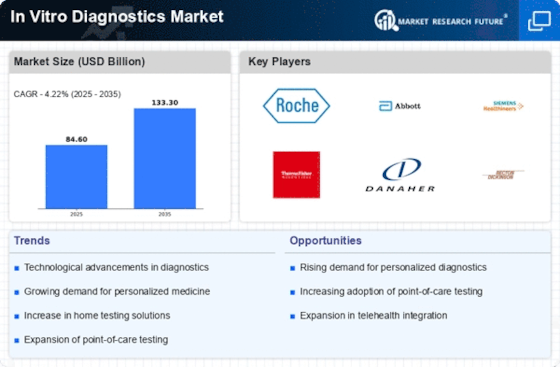
In Vitro Diagnostics Market Infographic
Purchase Options

Market Share

In Vitro Diagnostics Market Share Analysis

Participants in the In Vitro Diagnostics market utilize several methods to establish a strong market position. This market is crucial to healthcare. Despite fierce rivalry, companies in this area are striving to gain market share to address the rising need for precise diagnostic solutions. IVD companies are prioritizing expanding their diagnostic products to cover more illnesses and conditions. This category includes infectious disease, cancer biomarker, genetic abnormality, and chronic illness tests. Businesses may boost their market position by offering test portfolios for various healthcare needs. Maintaining technical advancement is crucial for IVD organizations. Molecular tests, point-of-care testing, and next-generation sequencing are examples of cutting-edge technology that businesses need to spend a lot of money on research and development (R&D). Technological advances increase diagnostic accuracy and position organizations as industry leaders. Due to global healthcare issues, corporations are rapidly expanding internationally. A company's market share may rise by strategically expanding across multiple regions. This growth provides the organization access to varied patient populations and healthcare systems. IVD industry cooperation is common. Research groups, healthcare institutions, and others are developing strategic partnerships with corporations. Collaboration allows for group research and development, market entry, and information sharing, which increases market dominance. In vitro diagnostics (IVD) businesses are changing to meet the needs of patients as personalized medicine becomes more popular. This approach requires diagnostic tests that may predict treatment responses, detect genetic predispositions, and customize healthcare. Presenting items as personalized medicinal assets may increase business competitiveness. Regulatory compliance is crucial in the IVD sector. Businesses increasingly value compliance with strict regulations and certifications. Compliance increases market share by ensuring product safety and instilling confidence in healthcare professionals and end-users. Cost-effectiveness is crucial in the IVD business due to global healthcare budget restrictions. Businesses are creating methods to provide affordable, high-quality diagnostic solutions. Cost-effective choices attract healthcare providers and boost corporate development and market dominance. Businesses are funding training programs to familiarize healthcare workers with the newest diagnostic technology and methods. Online resources, training, and seminars may reduce the knowledge gap. This increases market share and IVD product acceptance. Digital healthcare is driving organizations to build comprehensive data management and linking solutions. Due to seamless integration of EHR and data exchange tools, diagnostic processes are more effective overall. Companies that lead in data management might increase their market share. Effective marketing and branding tactics are needed to build market share. Businesses are investing in focused marketing to promote their diagnostic solutions. Attending conferences, publishing relevant materials, and using internet platforms may build a strong IVD brand presence. This greatly boosts brand awareness and trust.


Author
Author Profile
Satyendra Maurya
Research Analyst

An accomplished research analyst with high proficiency in market forecasting, data visualization, competitive benchmarking, and others. He holds a pronounced track record in research and consulting projects for sectors such as life sciences, medical devices, and healthcare IT. His capabilities in qualitative and quantitative analysis have resulted in positive client outcomes. Working on niche market trends, opportunities, sales, and forecasted value is part of his skill set.

Leave a Comment

FAQs

What is the projected market valuation of the In Vitro Diagnostics Market by 2035?

The market is projected to reach a valuation of 133.3 USD Billion by 2035.

What was the market valuation of the In Vitro Diagnostics Market in 2024?

<p>In 2024, the market valuation of the In Vitro Diagnostics Market was 84.6 USD Billion.</p>

What is the expected CAGR from 2025 to 2035?

The expected CAGR  during the forecast period 2025 - 2035 is 4.22%.

Which segment is projected to have the highest valuation in the by 2035?

By 2035, the Oncology segment is projected to reach a valuation of 40.0 USD Billion.

What are the key product segments in the In Vitro Diagnostics Market?

<p>Key product segments include Reagents, Instruments, Software, Quality Control Products, and Consumables.</p>

Which company is a leading player in the In Vitro Diagnostics Market?

<p>Roche Diagnostics is recognized as a leading player in the In Vitro Diagnostics Market.</p>

What is the projected valuation for the Reagents segment by 2035?

<p>The Reagents segment is projected to reach a valuation of 48.0 USD Billion by 2035.</p>

How does the market for Diagnostic Laboratories compare to that of Hospitals in 2035?

<p>By 2035, the market for Hospitals is projected to reach 48.0 USD Billion, while Diagnostic Laboratories may reach 40.0 USD Billion.</p>

What is the expected growth for the Molecular Diagnostics segment from 2024 to 2035?

<p>The Molecular Diagnostics segment is expected to grow from 20.0 USD Billion in 2024 to 30.0 USD Billion by 2035.</p>

What applications are driving growth in the In Vitro Diagnostics Market?

<p>Key applications driving growth include Infectious Diseases, Diabetes, Oncology, Cardiovascular Diseases, and Genetic Testing.</p>

Market Summary

As per Market Research Future Report analysis, the In Vitro Diagnostics (IVD) Market size was valued at USD 84.6 Billion in 2024. The market is projected to grow from USD 88.17 Billion in 2025 to USD 133.3 Billion by 2035, exhibiting a CAGR of 4.22% during the forecast period 2025–2035. North America led the market with over 45% share, generating around USD 38 billion in revenue.
 
The In Vitro Diagnostics (IVD) Market is primarily driven by increasing demand for early disease detection and personalized medicine, supported by technological advancements in diagnostic tools, enabling faster, accurate testing and improving patient outcomes across diverse healthcare settings globally.
 
According to the World Health Organization (WHO), infectious diseases such as HIV, tuberculosis, and malaria still account for millions of cases annually, while noncommunicable diseases cause 74% of global deaths, significantly increasing demand for diagnostic testing and accelerating adoption of advanced in vitro diagnostics technologies worldwide.

Key Market Trends & Highlights

The In Vitro Diagnostics (IVD) Market is poised for substantial growth driven by technological advancements and increasing demand for personalized healthcare solutions.

  • North America holds 38.1% share in 2024, driven by advanced healthcare infrastructure and diagnostic adoption. Europe accounts for 30% share, valued at USD 25.38 billion in 2024. Reagents dominate with 61% share, driven by high testing volumes and recurring diagnostic usage globally. Infectious diseases lead with 48% share, supported by increasing global screening and surveillance programs.

Market Size & Forecast

2024 Market Size 84.6 (USD Billion)
2035 Market Size 133.3 (USD Billion)
CAGR (2025 - 2035) 4.22%
Largest Regional Market Share in 2024 North America

Major Players

Companies such as <a href="https://www.roche.com/solutions/diagnostics">Roche Diagnostics</a> (CH), Abbott Laboratories (US),<a href="https://www.siemens-healthineers.com/laboratory-diagnostics/ivdr"> Siemens Healthineers </a>(DE), Thermo Fisher Scientific (US), Danaher Corporation (US), Becton Dickinson and Company (US), bioMérieux (FR), Ortho Clinical Diagnostics (US), Hologic, Inc. (US) are some of the major participants in the global market.

Market Trends

The In Vitro Diagnostics (IVD) Market is currently experiencing a transformative phase, driven by advancements in technology and an increasing emphasis on personalized medicine. The integration of artificial intelligence and machine learning into diagnostic tools appears to enhance accuracy and efficiency, potentially leading to improved patient outcomes.

Furthermore, according to the in vitro diagnostics industry overview, the growing prevalence of chronic diseases and the aging population are likely to fuel demand for innovative diagnostic solutions. As healthcare systems evolve, the focus on early detection and preventive care seems to be reshaping the landscape of in vitro diagnostics, encouraging the development of novel assays and testing methods.

In addition, regulatory bodies are adapting to the rapid changes within the market, which may facilitate faster approvals for new products. This dynamic environment suggests that companies are increasingly investing in research and development to stay competitive. The rise of point-of-care testing is also noteworthy, as it offers convenience and immediate results, aligning with the needs of both healthcare providers and patients. Overall, the In Vitro Diagnostics (IVD) Market is poised for substantial growth, driven by innovation and a shift towards more patient-centric approaches in healthcare.

Technological Advancements

According to the in vitro diagnostics industry overview, the integration of cutting-edge technologies, such as artificial intelligence and machine learning, is revolutionizing the market. These innovations enhance the precision and speed of diagnostic tests, potentially leading to better patient management and outcomes.

The European Centre for Disease Prevention and Control (ECDC) reports increasing adoption of advanced laboratory surveillance systems across Europe to monitor infectious diseases effectively. These systems enhance diagnostic accuracy and speed, supporting integration of AI and automation in diagnostics, which improves disease detection rates and overall healthcare response efficiency.

Personalized Medicine

There is a noticeable shift towards personalized medicine within the market. This trend emphasizes tailored treatment plans based on individual patient profiles, which may improve therapeutic efficacy and minimize adverse effects

According to the Institute for Health Metrics and Evaluation (IHME), chronic diseases contribute to a majority of global morbidity, with millions requiring tailored treatment approaches. This drives demand for personalized diagnostics, enabling targeted therapies and improving clinical outcomes through precise biomarker-based testing and individualized patient care strategies.

Point-of-Care Testing

Point-of-care testing is gaining traction in the In Vitro Diagnostics (IVD) Market, offering rapid results and convenience for both patients and healthcare providers. This trend aligns with the growing demand for accessible and efficient diagnostic solutions. Clinical diagnostics and point-of-care (POC) diagnostics are key segments within the market, sharing several common keyword themes that reflect their overlapping technologies and applications. Shared keywords include in vitro diagnostics, laboratory testing, biomarker detection, disease screening, early diagnosis, and clinical decision support.

Both segments rely on assay development, immunoassays, molecular diagnostics, and reagent-based testing to deliver accurate results. Additional shared terms such as rapid diagnostics, sample preparation, quality control, regulatory compliance, and automation highlight the convergence of centralized labs and decentralized testing. Together, clinical and POC diagnostics are driving innovation, accessibility, and efficiency across the global in vitro diagnostics market.

The Pan American Health Organization (PAHO) highlights that rapid diagnostic testing has significantly improved healthcare accessibility across remote regions in the Americas. Point-of-care testing enables faster clinical decisions, reduces diagnostic delays, and supports timely treatment interventions, particularly in resource-limited settings and primary healthcare environments.

In Vitro Diagnostics Market Market Drivers

Rising Prevalence of Chronic Diseases

The increasing incidence of chronic diseases such as diabetes, cardiovascular disorders, and cancer is a primary driver of the In Vitro Diagnostics Market. As healthcare systems strive to manage these conditions effectively, the demand for diagnostic tests that can provide timely and accurate results is surging.
 
For instance, the World Health Organization has reported that chronic diseases account for approximately 70% of all deaths worldwide. This trend necessitates the development and deployment of advanced diagnostic tools, thereby propelling the market forward. Furthermore, the growing aging population, which is more susceptible to these diseases, is likely to further amplify the demand for in vitro diagnostic solutions.

Growing Awareness of Personalized Medicine

The rising awareness and adoption of personalized medicine are shaping the In Vitro Diagnostics Market. Personalized medicine, which tailors treatment based on individual patient characteristics, relies heavily on accurate diagnostic testing. As healthcare providers increasingly utilize genetic and biomarker testing to inform treatment decisions, the demand for in vitro diagnostics is expected to grow.
 
Market analysis indicates that the personalized medicine market is projected to reach USD 2 trillion by 2025, which will likely drive the market as well. This trend underscores the importance of precision diagnostics in improving patient outcomes and optimizing therapeutic strategies.

Increasing Demand for Preventive Healthcare

The growing emphasis on preventive healthcare is significantly influencing the In Vitro Diagnostics Market. As healthcare providers and patients alike recognize the importance of early detection and prevention of diseases, the demand for diagnostic tests is expected to rise. Preventive diagnostics can lead to timely interventions, reducing the overall burden on healthcare systems.
 
Market data suggests that the preventive healthcare market is anticipated to grow at a rate of 8% annually, which will likely bolster the market. This shift towards preventive measures is fostering a culture of health awareness, thereby increasing the utilization of diagnostic tests across various demographics.

Regulatory Support and Reimbursement Policies

Supportive regulatory frameworks and favorable reimbursement policies are crucial drivers of the In Vitro Diagnostics Market. Governments and regulatory bodies are increasingly recognizing the value of in vitro diagnostics in enhancing patient care and reducing healthcare costs. For instance, streamlined approval processes for new diagnostic tests can expedite their entry into the market, fostering innovation.
 
Additionally, reimbursement policies that cover a wide range of diagnostic tests encourage healthcare providers to adopt these technologies. This supportive environment is likely to enhance the growth prospects of the market, as more stakeholders become willing to invest in advanced diagnostic solutions.

Technological Innovations in Diagnostic Tools

Technological advancements are revolutionizing the In Vitro Diagnostics Market, leading to the introduction of more sophisticated and efficient diagnostic tools. Innovations such as next-generation sequencing, microfluidics, and point-of-care testing devices are enhancing the accuracy and speed of diagnostic results.
 
According to recent data, the market for molecular diagnostics alone is projected to reach USD 11 billion by 2026, reflecting a compound annual growth rate of over 10%. These innovations not only improve patient outcomes but also streamline laboratory workflows, making them essential in the evolving landscape of healthcare. As technology continues to advance, the market is expected to witness further growth driven by these cutting-edge solutions.

Market Segment Insights

By Test Type: Clinical Chemistry (Largest) vs. Molecular Diagnostics (Fastest-Growing)

The In Vitro Diagnostics Market shows a diverse landscape across various test types, with Clinical Chemistry holding the largest market share of 36% due to its widespread application in routine health monitoring and various disease diagnoses. Following closely are Microbiology and Immunology, which are critical for infectious disease detection and autoimmune conditions, respectively. Meanwhile, Hematology and Molecular Diagnostics are also significant, contributing to the market with advanced testing methods and specialized applications that cater to precise patient management.

Clinical Chemistry (Dominant) vs. Molecular Diagnostics (Emerging)

Clinical Chemistry remains dominant in the In Vitro Diagnostics Market, driven by its essential role in routine clinical evaluations and the increasing prevalence of chronic diseases. This segment is characterized by a vast array of tests that measure biochemical markers in blood and other body fluids, making it vital for patient management. Conversely, Molecular Diagnostics is emerging rapidly, leveraging advancements in genetic testing and personalized medicine. This segment is driven by the growing demand for precise diagnostic tools that enable earlier detection of diseases, with innovations leading to higher sensitivity and specificity. Together, these segments highlight the evolving landscape of diagnostic methodologies in healthcare.

By Product: Reagents (Largest) vs. Instruments (Fastest-Growing)

In the In Vitro Diagnostics Market, the product segment showcases a diverse range of offerings that contribute to the overall market dynamics. Reagents continue to dominate the market with 61% market share, driven by their essential role in diagnostic procedures. Instruments, while holding a significant share, are growing at an accelerated pace as technological advancements enhance their capabilities, making them increasingly essential in clinical settings. The growth trends in this segment are primarily driven by the rise in chronic diseases and the demand for early and accurate diagnostics. Innovations in instrumentation, coupled with the increasing complexity of diagnostic tasks, position instruments as the fastest-growing segment. Furthermore, the advent of automation and integrated solutions boosts the efficiency of diagnostic workflows, creating a robust momentum for instruments in the market.

Reagents (Dominant) vs. Consumables (Emerging)

Reagents represent the dominant force within the In Vitro Diagnostics Market, largely due to their critical role in various diagnostic assays and procedures. These products are essential for translating lab results into actionable clinical insights, thus commanding substantial use in both hospital and laboratory settings. On the other hand, consumables are emerging as a vital supporting segment, underpinning the operational processes of diagnostics with supplies needed for testing. As labs increasingly adopt standardized testing protocols, the demand for consumables is on the rise. The interplay between reagents and consumables illustrates a balanced market, where reagents provide the foundational testing capabilities while consumables ensure the seamless flow of operations.

By End User: Hospitals (Largest) vs. Diagnostic Laboratories (Fastest-Growing)

In the In Vitro Diagnostics Market, the end user segment is increasingly bifurcated among hospitals, diagnostic laboratories, academic and research institutions, and home care settings. Hospitals represent the largest share of 54%, primarily due to their extensive infrastructure and demand for a wide variety of diagnostic tests. Diagnostic laboratories are rapidly gaining ground and present a significant market due to their specialized capabilities and the growing preference for outsourced testing services. As we look at growth trends, diagnostic laboratories are emerging as the fastest-growing segment, spurred by advancements in technology and an increase in chronic diseases necessitating rapid and accurate diagnostics. Furthermore, the rise of home care settings is attributed to an aging population and the ongoing push for at-home testing solutions, driven by patient convenience and healthcare affordability.

Hospitals (Dominant) vs. Home Care Settings (Emerging)

Hospitals dominate the In Vitro Diagnostics Market due to their broad patient base and the pressing need for diverse diagnostic services. Their investment in advanced diagnostic technologies enhances patient care, thus solidifying their market leadership. Conversely, home care settings are an emerging trend, driven by the convenience of at-home testing and a growing preference among patients for self-management of health. This segment is supported by technological innovations that facilitate easy-to-use diagnostic kits, allowing more individuals to monitor their health from home, catering to the increasing demand for personalized healthcare solutions.

By Application: Infectious Diseases (Largest) vs. Diabetes (Fastest-Growing)

The In Vitro Diagnostics Market showcases a varied distribution of market share of 48% among its key application segments. Infectious diseases continue to lead the market, driven by rising incidences of healthcare-associated infections and the need for efficient testing solutions. Diabetes, on the other hand, is experiencing rapid growth as the prevalence of diabetes increases globally, emphasizing the need for advanced diagnostic tools and continuous glucose monitoring systems. As we analyze growth trends, infectious diseases hold a significant position due to ongoing public health initiatives and technological advancements in testing methods. However, the diabetes segment is emerging as the fastest-growing, fueled by the expanding diabetic population and increasing awareness regarding early diagnosis and management. Innovations in diagnostic devices and rising healthcare expenditure also play pivotal roles in enhancing the growth of this segment.

Infectious Diseases (Dominant) vs. Diabetes (Emerging)

Infectious diseases remain the dominant segment in the In Vitro Diagnostics Market, driven by critical global health challenges such as the COVID-19 pandemic, HIV, and various viral and bacterial infections. This segment benefits from established technologies and robust demand for rapid and accurate testing solutions. Alternatively, the diabetes segment is recognized as an emerging force, largely due to rising rates of obesity and sedentary lifestyles leading to higher diabetes incidences. This segment is characterized by innovative diagnostics, including point-of-care testing and continuous monitors, which cater to the needs for patient-centric care and immediate results, positioning it for substantial growth in the coming years.

Get more detailed insights about In Vitro Diagnostics Market Research Report – Forecast to 2035

Regional Insights

North America : Market Leader in Diagnostics

North America leads in the In Vitro Diagnostics (IVD) Market Size, accounting for over 38.1% of the global revenue in 2024. Key growth drivers include advanced healthcare infrastructure, increasing prevalence of chronic diseases, and a strong focus on personalized medicine. Regulatory support from agencies like the FDA further catalyzes innovation and in vitro diagnostics market expansion. 

The US IVD market is the primary contributor, followed by Canada, which is experiencing significant growth due to rising healthcare investments. The competitive landscape is characterized by the presence of major players such as Abbott Laboratories, Thermo Fisher Scientific, and Roche Diagnostics. These companies are investing heavily in R&D to develop innovative diagnostic solutions. The in-vitro diagnostics market is also witnessing a trend towards point-of-care testing, driven by the need for rapid and accurate results. This shift is expected to enhance patient outcomes and streamline healthcare delivery.

Europe : Regulatory Framework and Innovation

Europe In Vitro Diagnostics (IVD) Market size was valued at USD 25.38 billion in 2024, making it the second-largest regional market with 30% share.

The region's growth is driven by an aging population, increasing healthcare expenditure, and a robust regulatory framework that encourages innovation. The European Union's In Vitro Diagnostic Regulation (IVDR) aims to enhance patient safety and ensure high-quality diagnostic products, further stimulating IVD market growth. Leading countries in this region include Germany, France, and the UK, which are home to several key players like Siemens Healthineers and bioMérieux.

The competitive landscape is marked by a strong emphasis on technological advancements and partnerships among companies to enhance product offerings. The presence of well-established healthcare systems facilitates the adoption of innovative diagnostic solutions, making Europe a vital hub for IVD market expansion.

Asia-Pacific : Emerging Market Potential

Asia-Pacific is rapidly emerging as a significant player in the In Vitro Diagnostics (IVD) Market, holding approximately 20% of the global share. The region's growth is fueled by increasing healthcare investments, rising awareness of preventive healthcare, and a growing population with chronic diseases. Countries like China and India are leading this growth, supported by government initiatives aimed at improving healthcare access and quality. The competitive landscape in Asia-Pacific is evolving, with both multinational corporations and local players vying for IVD market share.

Key players such as Danaher Corporation and Becton Dickinson are expanding their presence through strategic partnerships and acquisitions. The region is also witnessing a surge in demand for point-of-care testing, driven by the need for rapid diagnostics in remote areas, further enhancing IVD market dynamics.

Middle East and Africa : Untapped Market Opportunities

The Middle East and Africa represent an emerging IVD market, holding approximately 5% of the global share. The growth in this region is driven by increasing healthcare investments, rising prevalence of infectious diseases, and a growing focus on improving healthcare infrastructure. Ecosystems like South Africa IVD market and the UAE are leading the IVD market, supported by government initiatives aimed at enhancing healthcare access and quality.

The competitive landscape is characterized by a mix of local and international players, with in vitro diagnostics companies like Ortho Clinical Diagnostics and Hologic, Inc. making significant inroads. The region is witnessing a growing demand for innovative diagnostic solutions, particularly in point-of-care testing, which is crucial for addressing healthcare challenges in remote and underserved areas. This presents significant opportunities for IVD industry expansion and investment.

Key Players and Competitive Insights

The In Vitro Diagnostics (IVD) Market is characterized by a dynamic competitive landscape, driven by technological advancements, increasing demand for early disease detection, and a growing emphasis on personalized medicine. Major players such as Roche Diagnostics (CH), Abbott Laboratories (US), and Siemens Healthineers (DE) are strategically positioned to leverage these trends. Roche Diagnostics (CH) focuses on innovation in molecular diagnostics, while Abbott Laboratories (US) emphasizes a broad portfolio that includes point-of-care testing. Siemens Healthineers (DE) is investing heavily in digital transformation and AI integration, which collectively shapes a competitive environment that is increasingly reliant on technological prowess and strategic partnerships.
 

The IVD industry structure appears moderately fragmented, with key players employing various business tactics to enhance their competitive edge. Localizing manufacturing and optimizing supply chains are prevalent strategies, allowing in vitro diagnostics companies to respond swiftly to regional demands and regulatory requirements. This fragmentation is indicative of a landscape where no single entity dominates, yet the collective influence of these major players drives innovation and market growth.
 

In August 2025, Roche Diagnostics (CH) announced the launch of a new molecular diagnostic platform aimed at enhancing the speed and accuracy of infectious disease testing. This strategic move is significant as it not only reinforces Roche's commitment to innovation but also positions the company to capture a larger share of the growing demand for rapid testing solutions. The introduction of this platform is likely to enhance Roche's competitive positioning in a market that increasingly values efficiency and precision.
 

In September 2025, Abbott Laboratories (US) expanded its collaboration with a leading telehealth provider to integrate its diagnostic solutions into remote patient monitoring systems. This partnership is pivotal as it aligns with the ongoing trend towards digital health solutions, enabling Abbott to reach a broader patient base and enhance the accessibility of its diagnostic products. Such strategic alliances are indicative of a shift towards integrated healthcare solutions, which may redefine patient engagement and diagnostics delivery.
 

In October 2025, Siemens Healthineers (DE) unveiled a new AI-driven analytics tool designed to optimize laboratory workflows and improve diagnostic accuracy. This development underscores Siemens' commitment to digitalization and reflects a broader trend within the industry towards leveraging artificial intelligence to enhance operational efficiency. The introduction of such tools is likely to set Siemens apart in a competitive landscape increasingly focused on technological integration and data-driven decision-making.
 

As of October 2025, the In Vitro Diagnostics (IVD) Market is witnessing trends that emphasize digitalization, sustainability, and the integration of artificial intelligence. Strategic alliances are becoming increasingly important, as in vitro diagnostics companies seek to enhance their capabilities and market reach through collaborative efforts. Looking ahead, competitive differentiation is expected to evolve, with a notable shift from price-based competition towards innovation, technological advancement, and supply chain reliability. This transition may redefine the competitive landscape, compelling companies to invest in cutting-edge technologies and sustainable practices to maintain their market positions.

Key Companies in the In Vitro Diagnostics Market include

Industry Developments

Abbott Laboratories

  • May 2025: Abbott announced it received CE Mark to the IVD Directive (98/79/EC) for its laboratory-based serology blood test for the detection of the1 IgG antibody, which identifies if a person has had COVID-19.

Roche Diagnostics (F. Hoffmann-La Roche Ltd)

  • June 2025: Access Medical Labs, a subsidiary of Empresas Aries, completed a full transition from Siemens to Roche Diagnostics systems in under 6 months, increasing its daily diagnostic capacity fivefold.
  • May 2025: Roche announced a new collaboration with Broad Clinical Labs to accelerate the adoption of cutting-edge SBX sequencing technology.
  • May 2025: Roche received FDA approval for the VENTANA MET (SP44) RxDx Assay as the first companion diagnostic to identify non-squamous non-small cell lung cancer patients eligible for treatment with Emrelis.

Recent developments in the Global In Vitro Diagnostics (IVD) Market have seen significant growth, particularly amid the ongoing demand for advanced testing solutions in response to public health needs. In vitro diagnostics companies such as Abbott Laboratories and Thermo Fisher Scientific continue to innovate, with expanded product offerings focusing on molecular diagnostics and infectious disease testing. In September 2023, Hologic announced the release of new PCR technology aimed at enhancing testing efficiency and accuracy.

Notably, Danaher Corporation's acquisition of GE Healthcare's biomanufacturing business in October 2023 is expected to strengthen its portfolio in molecular diagnostics. The market is also experiencing upward valuation trends, driven by increased funding for Research and Development initiatives among key players like Roche Diagnostics and Siemens Healthineers, which are investing heavily in digital health technologies. 

Current affairs highlight the growing regulatory support for rapid diagnostic tests, particularly for respiratory illnesses, emphasizing the need for innovation. Over the past two to three years, the IVD industry has also seen robust expansion in regions like North America and Europe, propelled by increasing healthcare expenditures and advancements in laboratory automation, reinforcing the importance of ongoing collaboration and strategic partnerships to address emerging healthcare challenges.

Future Outlook

In Vitro Diagnostics Market Future Outlook

The In Vitro Diagnostics (IVD) Market size is projected to reach USD 84.6 billion by 2035, growing at a CAGR of 4.22%, driven by technological advancements, increasing prevalence of chronic diseases, and rising demand for personalized medicine.<br> 

New opportunities lie in:

  • <p>Development of point-of-care testing devices for rapid diagnostics. Expansion into emerging markets with tailored diagnostic solutions. Integration of AI and machine learning for enhanced data analysis in diagnostics.</p>

By 2035, the In Vitro Diagnostics Market is expected to be robust, driven by innovation and strategic expansions.

Market Segmentation

IVD Market Product Outlook

  • Reagents
  • Instruments
  • Software
  • Quality Control Products
  • Consumables

IVD Market End User Outlook

  • Hospitals
  • Diagnostic Laboratories
  • Academic and Research Institutions
  • Home Care Settings

IVD Market Test Type Outlook

  • Clinical Chemistry
  • Microbiology
  • Immunology
  • Molecular Diagnostics
  • Hematology

IVD Market Application Outlook

  • Infectious Diseases
  • Diabetes
  • Oncology
  • Cardiovascular Diseases
  • Genetic Testing

Report Scope

MARKET SIZE 2024 84.6(USD Billion)
MARKET SIZE 2025 88.17(USD Billion)
MARKET SIZE 2035 133.3(USD Billion)
COMPOUND ANNUAL GROWTH RATE (CAGR) 4.22% (2025 - 2035)
REPORT COVERAGE Revenue Forecast, Competitive Landscape, Growth Factors, and Trends
BASE YEAR 2024
Market Forecast Period 2025 - 2035
Historical Data 2019 - 2024
Market Forecast Units USD Billion
Key Companies Profiled Roche Diagnostics (CH), Abbott Laboratories (US), Siemens Healthineers (DE), Thermo Fisher Scientific (US), Danaher Corporation (US), Becton Dickinson and Company (US), bioMérieux (FR), Ortho Clinical Diagnostics (US), Hologic, Inc. (US)
Segments Covered Test Type, Product, End Users, Applications, Regional
Key Market Opportunities Integration of artificial intelligence in diagnostic processes enhances accuracy and efficiency
Key Market Dynamics Technological advancements and regulatory changes are reshaping competitive dynamics
Countries Covered North America, Europe, APAC, South America, MEA

FAQs

What is the projected market valuation of the In Vitro Diagnostics Market by 2035?

The market is projected to reach a valuation of 133.3 USD Billion by 2035.

What was the market valuation of the In Vitro Diagnostics Market in 2024?

<p>In 2024, the market valuation of the In Vitro Diagnostics Market was 84.6 USD Billion.</p>

What is the expected CAGR from 2025 to 2035?

The expected CAGR  during the forecast period 2025 - 2035 is 4.22%.

Which segment is projected to have the highest valuation in the by 2035?

By 2035, the Oncology segment is projected to reach a valuation of 40.0 USD Billion.

What are the key product segments in the In Vitro Diagnostics Market?

<p>Key product segments include Reagents, Instruments, Software, Quality Control Products, and Consumables.</p>

Which company is a leading player in the In Vitro Diagnostics Market?

<p>Roche Diagnostics is recognized as a leading player in the In Vitro Diagnostics Market.</p>

What is the projected valuation for the Reagents segment by 2035?

<p>The Reagents segment is projected to reach a valuation of 48.0 USD Billion by 2035.</p>

How does the market for Diagnostic Laboratories compare to that of Hospitals in 2035?

<p>By 2035, the market for Hospitals is projected to reach 48.0 USD Billion, while Diagnostic Laboratories may reach 40.0 USD Billion.</p>

What is the expected growth for the Molecular Diagnostics segment from 2024 to 2035?

<p>The Molecular Diagnostics segment is expected to grow from 20.0 USD Billion in 2024 to 30.0 USD Billion by 2035.</p>

What applications are driving growth in the In Vitro Diagnostics Market?

<p>Key applications driving growth include Infectious Diseases, Diabetes, Oncology, Cardiovascular Diseases, and Genetic Testing.</p>

  1. SECTION I: EXECUTIVE SUMMARY AND KEY HIGHLIGHTS |
    1. EXECUTIVE SUMMARY | |
      1. Market Overview | |
      2. Key Findings | |
      3. Market Segmentation | |
      4. Competitive Landscape | |
      5. Challenges and Opportunities | |
      6. Future Outlook 2
  2. SECTION II: SCOPING, METHODOLOGY AND MARKET STRUCTURE |
    1. MARKET INTRODUCTION | |
      1. Definition | |
      2. Scope of the study | | |
    2. RESEARCH METHODOLOGY | |
      1. Overview | |
      2. Data Mining | |
      3. Secondary Research | |
      4. Primary Research | | |
      5. Forecasting Model | |
      6. Market Size Estimation | | |
      7. Data Triangulation | |
      8. Validation 3
  3. SECTION III: QUALITATIVE ANALYSIS |
    1. MARKET DYNAMICS | |
      1. Overview | |
      2. Drivers | |
      3. Restraints | |
      4. Opportunities |
    2. MARKET FACTOR ANALYSIS | |
      1. Value chain Analysis | |
      2. Porter's Five Forces Analysis | | |
      3. COVID-19 Impact Analysis | | |
  4. SECTION IV: QUANTITATIVE ANALYSIS |
    1. Healthcare, BY Test Type (USD Billion) | |
      1. Clinical Chemistry | |
      2. Microbiology | |
      3. Immunology | |
      4. Molecular Diagnostics | |
      5. Hematology |
    2. Healthcare, BY Product (USD Billion) | |
      1. Reagents | |
      2. Instruments | |
      3. Software | |
      4. Quality Control Products | |
      5. Consumables |
    3. Healthcare, BY End User (USD Billion) | |
      1. Hospitals | |
      2. Diagnostic Laboratories | |
      3. Academic and Research Institutions | |
      4. Home Care Settings |
    4. Healthcare, BY Application (USD Billion) | |
      1. Infectious Diseases | |
      2. Diabetes | |
      3. Oncology | |
      4. Cardiovascular Diseases | |
      5. Genetic Testing |
    5. Healthcare, BY Region (USD Billion) | |
      1. North America | | |
      2. Europe | | |
      3. APAC | | |
      4. South America | | |
      5. MEA | | |
  5. SECTION V: COMPETITIVE ANALYSIS |
    1. Competitive Landscape | |
      1. Overview | |
      2. Competitive Analysis | |
      3. Market share Analysis | |
      4. Major Growth Strategy in the Healthcare | |
      5. Competitive Benchmarking | |
      6. Leading Players in Terms of Number of Developments in the Healthcare | |
      7. Key developments and growth strategies | | |
      8. Major Players Financial Matrix | | |
    2. Company Profiles | |
      1. Roche Diagnostics (CH) | | |
      2. Abbott Laboratories (US) | | |
      3. Siemens Healthineers (DE) | | |
      4. Thermo Fisher Scientific (US) | | |
      5. Danaher Corporation (US) | | |
      6. Becton Dickinson and Company (US) | | |
      7. bioMérieux (FR) | | |
      8. Ortho Clinical Diagnostics (US) | | |
      9. Hologic, Inc. (US) | | |
    3. Appendix | |
      1. References | |
      2. Related Reports 6 LIST OF FIGURES |
    4. MARKET SYNOPSIS |
    5. NORTH AMERICA MARKET ANALYSIS |
    6. US MARKET ANALYSIS BY TEST TYPE |
    7. US MARKET ANALYSIS BY PRODUCT |
    8. US MARKET ANALYSIS BY END USER |
    9. US MARKET ANALYSIS BY APPLICATION |
    10. CANADA MARKET ANALYSIS BY TEST TYPE |
    11. CANADA MARKET ANALYSIS BY PRODUCT |
    12. CANADA MARKET ANALYSIS BY END USER |
    13. CANADA MARKET ANALYSIS BY APPLICATION |
    14. EUROPE MARKET ANALYSIS |
    15. GERMANY MARKET ANALYSIS BY TEST TYPE |
    16. GERMANY MARKET ANALYSIS BY PRODUCT |
    17. GERMANY MARKET ANALYSIS BY END USER |
    18. GERMANY MARKET ANALYSIS BY APPLICATION |
    19. UK MARKET ANALYSIS BY TEST TYPE |
    20. UK MARKET ANALYSIS BY PRODUCT |
    21. UK MARKET ANALYSIS BY END USER |
    22. UK MARKET ANALYSIS BY APPLICATION |
    23. FRANCE MARKET ANALYSIS BY TEST TYPE |
    24. FRANCE MARKET ANALYSIS BY PRODUCT |
    25. FRANCE MARKET ANALYSIS BY END USER |
    26. FRANCE MARKET ANALYSIS BY APPLICATION |
    27. RUSSIA MARKET ANALYSIS BY TEST TYPE |
    28. RUSSIA MARKET ANALYSIS BY PRODUCT |
    29. RUSSIA MARKET ANALYSIS BY END USER |
    30. RUSSIA MARKET ANALYSIS BY APPLICATION |
    31. ITALY MARKET ANALYSIS BY TEST TYPE |
    32. ITALY MARKET ANALYSIS BY PRODUCT |
    33. ITALY MARKET ANALYSIS BY END USER |
    34. ITALY MARKET ANALYSIS BY APPLICATION |
    35. SPAIN MARKET ANALYSIS BY TEST TYPE |
    36. SPAIN MARKET ANALYSIS BY PRODUCT |
    37. SPAIN MARKET ANALYSIS BY END USER |
    38. SPAIN MARKET ANALYSIS BY APPLICATION |
    39. REST OF EUROPE MARKET ANALYSIS BY TEST TYPE |
    40. REST OF EUROPE MARKET ANALYSIS BY PRODUCT |
    41. REST OF EUROPE MARKET ANALYSIS BY END USER |
    42. REST OF EUROPE MARKET ANALYSIS BY APPLICATION |
    43. APAC MARKET ANALYSIS |
    44. CHINA MARKET ANALYSIS BY TEST TYPE |
    45. CHINA MARKET ANALYSIS BY PRODUCT |
    46. CHINA MARKET ANALYSIS BY END USER |
    47. CHINA MARKET ANALYSIS BY APPLICATION |
    48. INDIA MARKET ANALYSIS BY TEST TYPE |
    49. INDIA MARKET ANALYSIS BY PRODUCT |
    50. INDIA MARKET ANALYSIS BY END USER |
    51. INDIA MARKET ANALYSIS BY APPLICATION |
    52. JAPAN MARKET ANALYSIS BY TEST TYPE |
    53. JAPAN MARKET ANALYSIS BY PRODUCT |
    54. JAPAN MARKET ANALYSIS BY END USER |
    55. JAPAN MARKET ANALYSIS BY APPLICATION |
    56. SOUTH KOREA MARKET ANALYSIS BY TEST TYPE |
    57. SOUTH KOREA MARKET ANALYSIS BY PRODUCT |
    58. SOUTH KOREA MARKET ANALYSIS BY END USER |
    59. SOUTH KOREA MARKET ANALYSIS BY APPLICATION |
    60. MALAYSIA MARKET ANALYSIS BY TEST TYPE |
    61. MALAYSIA MARKET ANALYSIS BY PRODUCT |
    62. MALAYSIA MARKET ANALYSIS BY END USER |
    63. MALAYSIA MARKET ANALYSIS BY APPLICATION |
    64. THAILAND MARKET ANALYSIS BY TEST TYPE |
    65. THAILAND MARKET ANALYSIS BY PRODUCT |
    66. THAILAND MARKET ANALYSIS BY END USER |
    67. THAILAND MARKET ANALYSIS BY APPLICATION |
    68. INDONESIA MARKET ANALYSIS BY TEST TYPE |
    69. INDONESIA MARKET ANALYSIS BY PRODUCT |
    70. INDONESIA MARKET ANALYSIS BY END USER |
    71. INDONESIA MARKET ANALYSIS BY APPLICATION |
    72. REST OF APAC MARKET ANALYSIS BY TEST TYPE |
    73. REST OF APAC MARKET ANALYSIS BY PRODUCT |
    74. REST OF APAC MARKET ANALYSIS BY END USER |
    75. REST OF APAC MARKET ANALYSIS BY APPLICATION |
    76. SOUTH AMERICA MARKET ANALYSIS |
    77. BRAZIL MARKET ANALYSIS BY TEST TYPE |
    78. BRAZIL MARKET ANALYSIS BY PRODUCT |
    79. BRAZIL MARKET ANALYSIS BY END USER |
    80. BRAZIL MARKET ANALYSIS BY APPLICATION |
    81. MEXICO MARKET ANALYSIS BY TEST TYPE |
    82. MEXICO MARKET ANALYSIS BY PRODUCT |
    83. MEXICO MARKET ANALYSIS BY END USER |
    84. MEXICO MARKET ANALYSIS BY APPLICATION |
    85. ARGENTINA MARKET ANALYSIS BY TEST TYPE |
    86. ARGENTINA MARKET ANALYSIS BY PRODUCT |
    87. ARGENTINA MARKET ANALYSIS BY END USER |
    88. ARGENTINA MARKET ANALYSIS BY APPLICATION |
    89. REST OF SOUTH AMERICA MARKET ANALYSIS BY TEST TYPE |
    90. REST OF SOUTH AMERICA MARKET ANALYSIS BY PRODUCT |
    91. REST OF SOUTH AMERICA MARKET ANALYSIS BY END USER |
    92. REST OF SOUTH AMERICA MARKET ANALYSIS BY APPLICATION |
    93. MEA MARKET ANALYSIS |
    94. GCC COUNTRIES MARKET ANALYSIS BY TEST TYPE |
    95. GCC COUNTRIES MARKET ANALYSIS BY PRODUCT |
    96. GCC COUNTRIES MARKET ANALYSIS BY END USER |
    97. GCC COUNTRIES MARKET ANALYSIS BY APPLICATION |
    98. SOUTH AFRICA MARKET ANALYSIS BY TEST TYPE |
    99. SOUTH AFRICA MARKET ANALYSIS BY PRODUCT |
    100. SOUTH AFRICA MARKET ANALYSIS BY END USER |
    101. SOUTH AFRICA MARKET ANALYSIS BY APPLICATION |
    102. REST OF MEA MARKET ANALYSIS BY TEST TYPE |
    103. REST OF MEA MARKET ANALYSIS BY PRODUCT |
    104. REST OF MEA MARKET ANALYSIS BY END USER |
    105. REST OF MEA MARKET ANALYSIS BY APPLICATION |
    106. KEY BUYING CRITERIA OF HEALTHCARE |
    107. RESEARCH PROCESS OF MRFR |
    108. DRO ANALYSIS OF HEALTHCARE |
    109. DRIVERS IMPACT ANALYSIS: HEALTHCARE |
    110. RESTRAINTS IMPACT ANALYSIS: HEALTHCARE |
    111. SUPPLY / VALUE CHAIN: HEALTHCARE |
    112. HEALTHCARE, BY TEST TYPE, 2024 (% SHARE) |
    113. HEALTHCARE, BY TEST TYPE, 2024 TO 2035 (USD Billion) |
    114. HEALTHCARE, BY PRODUCT, 2024 (% SHARE) |
    115. HEALTHCARE, BY PRODUCT, 2024 TO 2035 (USD Billion) |
    116. HEALTHCARE, BY END USER, 2024 (% SHARE) |
    117. HEALTHCARE, BY END USER, 2024 TO 2035 (USD Billion) |
    118. HEALTHCARE, BY APPLICATION, 2024 (% SHARE) |
    119. HEALTHCARE, BY APPLICATION, 2024 TO 2035 (USD Billion) |
    120. BENCHMARKING OF MAJOR COMPETITORS 7 LIST OF TABLES |
    121. LIST OF ASSUMPTIONS | |
      1. |
    122. North America MARKET SIZE ESTIMATES; FORECAST | |
      1. BY TEST TYPE, 2025-2035 (USD Billion) | |
      2. BY PRODUCT, 2025-2035 (USD Billion) | |
      3. BY END USER, 2025-2035 (USD Billion) | |
      4. BY APPLICATION, 2025-2035 (USD Billion) |
    123. US MARKET SIZE ESTIMATES; FORECAST | |
      1. BY TEST TYPE, 2025-2035 (USD Billion) | |
      2. BY PRODUCT, 2025-2035 (USD Billion) | |
      3. BY END USER, 2025-2035 (USD Billion) | |
      4. BY APPLICATION, 2025-2035 (USD Billion) |
    124. Canada MARKET SIZE ESTIMATES; FORECAST | |
      1. BY TEST TYPE, 2025-2035 (USD Billion) | |
      2. BY PRODUCT, 2025-2035 (USD Billion) | |
      3. BY END USER, 2025-2035 (USD Billion) | |
      4. BY APPLICATION, 2025-2035 (USD Billion) |
    125. Europe MARKET SIZE ESTIMATES; FORECAST | |
      1. BY TEST TYPE, 2025-2035 (USD Billion) | |
      2. BY PRODUCT, 2025-2035 (USD Billion) | |
      3. BY END USER, 2025-2035 (USD Billion) | |
      4. BY APPLICATION, 2025-2035 (USD Billion) |
    126. Germany MARKET SIZE ESTIMATES; FORECAST | |
      1. BY TEST TYPE, 2025-2035 (USD Billion) | |
      2. BY PRODUCT, 2025-2035 (USD Billion) | |
      3. BY END USER, 2025-2035 (USD Billion) | |
      4. BY APPLICATION, 2025-2035 (USD Billion) |
    127. UK MARKET SIZE ESTIMATES; FORECAST | |
      1. BY TEST TYPE, 2025-2035 (USD Billion) | |
      2. BY PRODUCT, 2025-2035 (USD Billion) | |
      3. BY END USER, 2025-2035 (USD Billion) | |
      4. BY APPLICATION, 2025-2035 (USD Billion) |
    128. France MARKET SIZE ESTIMATES; FORECAST | |
      1. BY TEST TYPE, 2025-2035 (USD Billion) | |
      2. BY PRODUCT, 2025-2035 (USD Billion) | |
      3. BY END USER, 2025-2035 (USD Billion) | |
      4. BY APPLICATION, 2025-2035 (USD Billion) |
    129. Russia MARKET SIZE ESTIMATES; FORECAST | |
      1. BY TEST TYPE, 2025-2035 (USD Billion) | |
      2. BY PRODUCT, 2025-2035 (USD Billion) | |
      3. BY END USER, 2025-2035 (USD Billion) | |
      4. BY APPLICATION, 2025-2035 (USD Billion) |
    130. Italy MARKET SIZE ESTIMATES; FORECAST | |
      1. BY TEST TYPE, 2025-2035 (USD Billion) | |
      2. BY PRODUCT, 2025-2035 (USD Billion) | |
      3. BY END USER, 2025-2035 (USD Billion) | |
      4. BY APPLICATION, 2025-2035 (USD Billion) |
    131. Spain MARKET SIZE ESTIMATES; FORECAST | |
      1. BY TEST TYPE, 2025-2035 (USD Billion) | |
      2. BY PRODUCT, 2025-2035 (USD Billion) | |
      3. BY END USER, 2025-2035 (USD Billion) | |
      4. BY APPLICATION, 2025-2035 (USD Billion) |
    132. Rest of Europe MARKET SIZE ESTIMATES; FORECAST | |
      1. BY TEST TYPE, 2025-2035 (USD Billion) | |
      2. BY PRODUCT, 2025-2035 (USD Billion) | |
      3. BY END USER, 2025-2035 (USD Billion) | |
      4. BY APPLICATION, 2025-2035 (USD Billion) |
    133. APAC MARKET SIZE ESTIMATES; FORECAST | |
      1. BY TEST TYPE, 2025-2035 (USD Billion) | |
      2. BY PRODUCT, 2025-2035 (USD Billion) | |
      3. BY END USER, 2025-2035 (USD Billion) | |
      4. BY APPLICATION, 2025-2035 (USD Billion) |
    134. China MARKET SIZE ESTIMATES; FORECAST | |
      1. BY TEST TYPE, 2025-2035 (USD Billion) | |
      2. BY PRODUCT, 2025-2035 (USD Billion) | |
      3. BY END USER, 2025-2035 (USD Billion) | |
      4. BY APPLICATION, 2025-2035 (USD Billion) |
    135. India MARKET SIZE ESTIMATES; FORECAST | |
      1. BY TEST TYPE, 2025-2035 (USD Billion) | |
      2. BY PRODUCT, 2025-2035 (USD Billion) | |
      3. BY END USER, 2025-2035 (USD Billion) | |
      4. BY APPLICATION, 2025-2035 (USD Billion) |
    136. Japan MARKET SIZE ESTIMATES; FORECAST | |
      1. BY TEST TYPE, 2025-2035 (USD Billion) | |
      2. BY PRODUCT, 2025-2035 (USD Billion) | |
      3. BY END USER, 2025-2035 (USD Billion) | |
      4. BY APPLICATION, 2025-2035 (USD Billion) |
    137. South Korea MARKET SIZE ESTIMATES; FORECAST | |
      1. BY TEST TYPE, 2025-2035 (USD Billion) | |
      2. BY PRODUCT, 2025-2035 (USD Billion) | |
      3. BY END USER, 2025-2035 (USD Billion) | |
      4. BY APPLICATION, 2025-2035 (USD Billion) |
    138. Malaysia MARKET SIZE ESTIMATES; FORECAST | |
      1. BY TEST TYPE, 2025-2035 (USD Billion) | |
      2. BY PRODUCT, 2025-2035 (USD Billion) | |
      3. BY END USER, 2025-2035 (USD Billion) | |
      4. BY APPLICATION, 2025-2035 (USD Billion) |
    139. Thailand MARKET SIZE ESTIMATES; FORECAST | |
      1. BY TEST TYPE, 2025-2035 (USD Billion) | |
      2. BY PRODUCT, 2025-2035 (USD Billion) | |
      3. BY END USER, 2025-2035 (USD Billion) | |
      4. BY APPLICATION, 2025-2035 (USD Billion) |
    140. Indonesia MARKET SIZE ESTIMATES; FORECAST | |
      1. BY TEST TYPE, 2025-2035 (USD Billion) | |
      2. BY PRODUCT, 2025-2035 (USD Billion) | |
      3. BY END USER, 2025-2035 (USD Billion) | |
      4. BY APPLICATION, 2025-2035 (USD Billion) |
    141. Rest of APAC MARKET SIZE ESTIMATES; FORECAST | |
      1. BY TEST TYPE, 2025-2035 (USD Billion) | |
      2. BY PRODUCT, 2025-2035 (USD Billion) | |
      3. BY END USER, 2025-2035 (USD Billion) | |
      4. BY APPLICATION, 2025-2035 (USD Billion) |
    142. South America MARKET SIZE ESTIMATES; FORECAST | |
      1. BY TEST TYPE, 2025-2035 (USD Billion) | |
      2. BY PRODUCT, 2025-2035 (USD Billion) | |
      3. BY END USER, 2025-2035 (USD Billion) | |
      4. BY APPLICATION, 2025-2035 (USD Billion) |
    143. Brazil MARKET SIZE ESTIMATES; FORECAST | |
      1. BY TEST TYPE, 2025-2035 (USD Billion) | |
      2. BY PRODUCT, 2025-2035 (USD Billion) | |
      3. BY END USER, 2025-2035 (USD Billion) | |
      4. BY APPLICATION, 2025-2035 (USD Billion) |
    144. Mexico MARKET SIZE ESTIMATES; FORECAST | |
      1. BY TEST TYPE, 2025-2035 (USD Billion) | |
      2. BY PRODUCT, 2025-2035 (USD Billion) | |
      3. BY END USER, 2025-2035 (USD Billion) | |
      4. BY APPLICATION, 2025-2035 (USD Billion) |
    145. Argentina MARKET SIZE ESTIMATES; FORECAST | |
      1. BY TEST TYPE, 2025-2035 (USD Billion) | |
      2. BY PRODUCT, 2025-2035 (USD Billion) | |
      3. BY END USER, 2025-2035 (USD Billion) | |
      4. BY APPLICATION, 2025-2035 (USD Billion) |
    146. Rest of South America MARKET SIZE ESTIMATES; FORECAST | |
      1. BY TEST TYPE, 2025-2035 (USD Billion) | |
      2. BY PRODUCT, 2025-2035 (USD Billion) | |
      3. BY END USER, 2025-2035 (USD Billion) | |
      4. BY APPLICATION, 2025-2035 (USD Billion) |
    147. MEA MARKET SIZE ESTIMATES; FORECAST | |
      1. BY TEST TYPE, 2025-2035 (USD Billion) | |
      2. BY PRODUCT, 2025-2035 (USD Billion) | |
      3. BY END USER, 2025-2035 (USD Billion) | |
      4. BY APPLICATION, 2025-2035 (USD Billion) |
    148. GCC Countries MARKET SIZE ESTIMATES; FORECAST | |
      1. BY TEST TYPE, 2025-2035 (USD Billion) | |
      2. BY PRODUCT, 2025-2035 (USD Billion) | |
      3. BY END USER, 2025-2035 (USD Billion) | |
      4. BY APPLICATION, 2025-2035 (USD Billion) |
    149. South Africa MARKET SIZE ESTIMATES; FORECAST | |
      1. BY TEST TYPE, 2025-2035 (USD Billion) | |
      2. BY PRODUCT, 2025-2035 (USD Billion) | |
      3. BY END USER, 2025-2035 (USD Billion) | |
      4. BY APPLICATION, 2025-2035 (USD Billion) |
    150. Rest of MEA MARKET SIZE ESTIMATES; FORECAST | |
      1. BY TEST TYPE, 2025-2035 (USD Billion) | |
      2. BY PRODUCT, 2025-2035 (USD Billion) | |
      3. BY END USER, 2025-2035 (USD Billion) | |
      4. BY APPLICATION, 2025-2035 (USD Billion) |
    151. PRODUCT LAUNCH/PRODUCT DEVELOPMENT/APPROVAL | |
      1. |
    152. ACQUISITION/PARTNERSHIP | |

Healthcare Market Segmentation

Healthcare By Test Type (USD Billion, 2025-2035)

  • Clinical Chemistry
  • Microbiology
  • Immunology
  • Molecular Diagnostics
  • Hematology

Healthcare By Product (USD Billion, 2025-2035)

  • Reagents
  • Instruments
  • Software
  • Quality Control Products
  • Consumables

Healthcare By End User (USD Billion, 2025-2035)

  • Hospitals
  • Diagnostic Laboratories
  • Academic and Research Institutions
  • Home Care Settings

Healthcare By Application (USD Billion, 2025-2035)

  • Infectious Diseases
  • Diabetes
  • Oncology
  • Cardiovascular Diseases
  • Genetic Testing
Infographic

Free Sample Request

Kindly complete the form below to receive a free sample of this Report

Get Free Sample

Customer Strories

Compare Licence

×
Features License Type
Single User Multiuser License Enterprise User
Price $4,950 $5,950 $7,250
Maximum User Access Limit 1 User Upto 10 Users Unrestricted Access Throughout the Organization
Free Customization
Direct Access to Analyst
Deliverable Format
Platform Access
Discount on Next Purchase 10% 15% 15%
Printable Versions