


Market Trends
Introduction
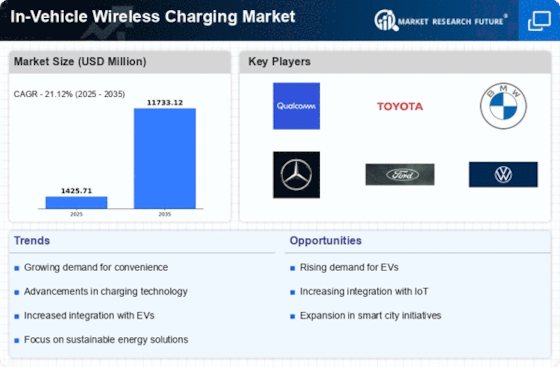
In-vehicle wireless charging market is a very promising market, as the development of the vehicle wireless charging industry has been accelerated by several macroeconomic factors. The development of wireless power transmission and the improvement of the energy efficiency of batteries has led to the emergence of new consumer demands, and the realization of in-vehicle wireless charging. Meanwhile, the policy of reducing carbon emissions and promoting the use of electric vehicles has also pressed automobile manufacturers to integrate new charging technology. In addition, the trend of convenience and seamless connection has also led to the increasing demand for in-vehicle wireless charging. The development trend of in-vehicle wireless charging is a major trend in the future of automobile industry.
Top Trends
-
Integration with Electric Vehicles
Electric vehicles are on the rise, and so is the demand for wireless charging solutions in the car. The big car manufacturers are increasingly integrating wireless charging technology into their vehicles to enhance convenience and reduce cable clutter. Several EV models, for example, already have integrated charging mats, which reflects a trend towards more seamless experiences. This is likely to continue as EV uptake grows, and could lead to a more standardized approach to vehicle design. -
Government Regulations and Standards
Governments are increasingly promoting wireless charging of vehicles. For example, the European Union is examining standards for wireless charging to ensure safety and interoperability. These regulations can have a significant impact on manufacturers, forcing them to develop and comply with new guidelines. Companies that are willing to meet these standards may increase their R&D spending. -
Advancements in Charging Efficiency
Advances in technology are increasing the efficiency of wireless charging systems. Some systems have an efficiency of over ninety percent. Companies are now working on ways to transfer more power and reduce the amount of energy lost during charging. Efficiency is an important factor in gaining public acceptance. People want to be able to charge their devices more quickly and reliably. Future developments may also include the use of smart technology to optimize charging according to the habits of the individual. -
Increased Consumer Demand for Convenience
As a result, the demand for convenient charging is increasing. A recent survey showed that over 70 per cent of consumers prefer wireless charging in their cars. This demand is putting increasing pressure on manufacturers to include wireless charging in new models. As customer expectations rise, companies may need to adapt their offerings in order to remain competitive. -
Collaboration Between Tech and Automotive Industries
A closer co-operation between technology companies and car manufacturers is gaining ground. The result is more and more advanced wireless charging systems. These co-operations aim at combining the respective expertise in both fields, resulting in new products. For instance, the technology companies are supplying the necessary hardware and software, while the car manufacturers concentrate on the integration of these systems into the vehicle design. This trend is likely to foster rapid technological development and the widening of the range of products on the market. -
Focus on Safety and User Experience
The emanation of the radio waves and the incompatibility of the devices to the wireless charging systems are the main causes of the manufacturers to develop wireless charging systems with safety in mind. They are investing in the research to meet the standards of safety, which can help build trust with the consumers. In addition, the improvement of the usability through intuitive design and feedback systems is becoming a major focus, which can also influence the purchasing decisions. -
Emergence of Multi-Device Charging Solutions
The number of devices that can be charged simultaneously is increasing. And there is a growing interest in wireless chargers that can be used by several devices at once. Surveys show that the preference is for versatile charging solutions. There may be innovations in the future that enable multiple devices to be charged faster and more conveniently. -
Integration with Smart Vehicle Technologies
INTEGRATION OF SMART VEHICLE TECHNOLOGIES WITH INTEGRATED VEHICLE TECHNOLOGY, I.O.T. AND CONNECTED CAR TECHNOLOGY IS ON THE RISE. Among the features of this integration are remote monitoring and status of charging. As smart vehicle technology evolves, the wireless charging technology could provide more sophisticated charging solutions. This trend could lead to new business models based on vehicle connectivity. -
Sustainability and Eco-Friendly Solutions
It is a question of a broader compass that has come to guide the development of wireless charging. The companies are looking for new materials, more efficient and more sustainable, to satisfy the green conscience of consumers. It is a growing clientele that gives priority to the environment in their purchases. It is likely that in the future the innovations will focus on the use of electricity from a renewable source, a more direct participation in the world's sustainable development goals. -
Global Expansion of Charging Infrastructure
Growth is also driven by the rapid development of wireless charging technology. The government of some cities and regions has started to build public charging stations. This is to increase the convenience and access of users. This will accelerate the use of wireless charging technology in vehicles. In the future, it will be possible to combine the charging network with the city's development plan.
Conclusion: Navigating Competitive Terrain in 2023
In 2023, the wireless in-vehicle charging market will be highly competitive and fragmented, with the presence of both traditional automobile manufacturers and new-generation technology companies. In terms of geographical development, North America and Europe will see the greatest demand, driven by a growing demand for convenience and environmental protection. The leading companies will use a combination of advanced features such as artificial intelligence to improve the user experience, automation to ensure operational efficiency, and a strong focus on safety to meet regulatory requirements. Product flexibility will be a critical success factor as the market evolves. Strategic decision-makers should therefore place a high priority on the development of these capabilities to ensure they maintain a long-term competitive advantage in this rapidly changing environment.























Leave a Comment