×
Request Free Sample ×

Kindly complete the form below to receive a free sample of this Report

* Please use a valid business email

Leading companies partner with us for data-driven Insights

clients tt-cursor
Hero Background
English
Chinese
French
Japanese
Korean
German
Spanish

Home Decor Market Size

ID: MRFR/CG/10005-HCR
128 Pages
Tejas Chaudhary
February 2026

Home Decor Market Size, Share, Industry Trend & Analysis Research Report By Product Type (Furniture, Textiles, Wall Decor, Tableware, Lighting), By Material (Wood, Metal, Glass, Plastic, Ceramic), By Style (Modern, Traditional, Vintage, Industrial, Bohemian), By Distribution Channel (Online Retail, Specialty Stores, Department Stores, Home Improvement Stores) andBy Regional (North America, Europe, South America, Asia Pacific, Middle East and Africa)- Forecast to 2035

Share:
Download PDF ×

We do not share your information with anyone. However, we may send you emails based on your report interest from time to time. You may contact us at any time to opt-out.

Home Decor Market Infographic
Purchase Options

Home Decor Size

Home Decor Market Growth Projections and Opportunities

The market dynamics of the home decor industry are shaped by a diverse range of factors, reflecting changing consumer tastes, economic conditions, and design trends. At the heart of this market lies the desire for individuals to personalize and beautify their living spaces, creating environments that reflect their personalities and lifestyles. From furniture and textiles to accessories and wall art, home decor products encompass a wide array of items that contribute to the aesthetic appeal and functionality of interior spaces, driving consistent demand for these products.

One of the primary drivers of the home decor market is the increasing importance placed on home aesthetics and interior design. With more people spending time at home due to remote work arrangements and lifestyle changes, there is a growing emphasis on creating comfortable and visually appealing living environments. Consumers are seeking home decor products that not only enhance the aesthetics of their homes but also improve functionality and comfort, driving demand for a wide range of decor items.

Moreover, demographic trends such as urbanization, rising disposable incomes, and changing household compositions contribute to the expansion of the home decor market. Urban dwellers, in particular, are more inclined towards interior design and home improvement projects as they seek to maximize the functionality of smaller living spaces. Additionally, the rise of dual-income households and the aging population contribute to increased spending on home decor products as individuals invest in upgrading and renovating their homes.

Furthermore, design trends and aesthetic preferences play a significant role in shaping market dynamics within the home decor industry. From minimalist and Scandinavian-inspired designs to bohemian and eclectic styles, consumer preferences for home decor are influenced by a variety of factors, including fashion, culture, and lifestyle trends. Manufacturers and retailers respond to these trends by introducing new collections and product lines that reflect current design aesthetics, driving consumer interest and demand.

The influence of technological advancements on market dynamics cannot be overlooked in the home decor industry. The proliferation of e-commerce platforms and digital marketing channels has transformed the way consumers discover, research, and purchase home decor products. Online retailers offer a wide selection of home decor items, providing consumers with convenience and accessibility to a diverse range of products from the comfort of their homes. Additionally, virtual reality (VR) and augmented reality (AR) technologies allow consumers to visualize how home decor products will look in their living spaces before making a purchase, enhancing the online shopping experience.

However, alongside the growth drivers, the home decor market also faces certain challenges that impact its dynamics. One such challenge is the economic uncertainty and fluctuations in consumer spending patterns, particularly during periods of recession or economic downturns. Discretionary spending on non-essential items such as home decor products may decline as consumers prioritize essential needs and budget-conscious purchases. Additionally, supply chain disruptions and material shortages can impact product availability and pricing, affecting market dynamics within the home decor industry.

Moreover, environmental sustainability considerations play an increasingly important role in shaping market dynamics within the home decor industry. As awareness grows regarding the environmental impact of manufacturing processes and materials used in home decor products, there is a rising demand for eco-friendly and sustainable alternatives. Manufacturers are responding to this demand by incorporating recycled materials, natural fibers, and sustainable production practices into their product lines. Additionally, efforts to reduce packaging waste and promote ethical sourcing contribute to the sustainability credentials of home decor brands.

Home Decor Market Size Graph
Author
Tejas Chaudhary
Research Analyst Level II

I have a degree in Engineering (Civil), with masters in Business Administration (Marketing). With more than 4 years of experience in market research and consulting, I am involved in end-to-end process of market research, proposals, project kickoffs and delivery. I have research knowledge and expertise in consumer goods/packaging domain. Also I have worked for various other domains like construction & equipment. Effectively managed and delivered more than 60 report studies for regional as well as global clientele.

Leave a Comment

FAQs

What is the current valuation of The Global Home Decor?

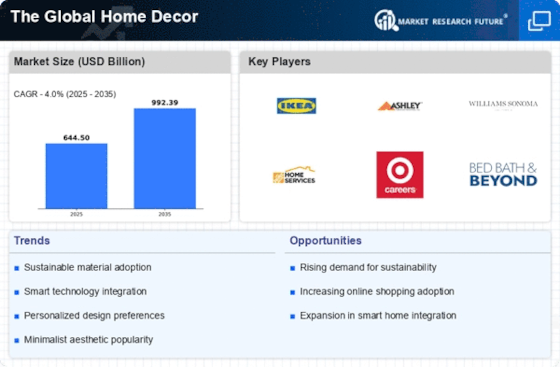
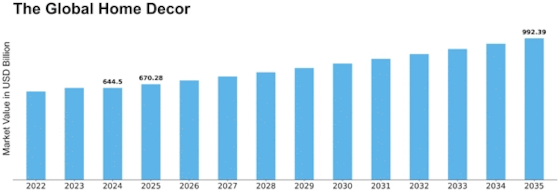
<p>The Global Home Decor was valued at 644.5 USD Billion in 2024.</p>

What is the projected market valuation for The Global Home Decor in 2035?

The market is projected to reach 992.39 USD Billion by 2035.

What is the expected CAGR for The Global Home Decor during the forecast period 2025 - 2035?

The expected CAGR for The Global Home Decor during 2025 - 2035 is 4.0%.

Which companies are considered key players in The Global Home Decor?

Key players include IKEA, Ashley Furniture Industries, Williams-Sonoma, Home Depot, Target, Bed Bath &amp; Beyond, Wayfair, Havertys Furniture, and La-Z-Boy.

What are the main segments of The Global Home Decor?

The main segments include Furniture, Textiles, Wall Decor, Tableware, and Lighting.

How did the Furniture segment perform in terms of valuation?

The Furniture segment was valued between 200.0 and 300.0 USD Billion.

What is the valuation range for the Lighting segment in The Global Home Decor?

The Lighting segment is valued between 114.5 and 202.39 USD Billion.

Which distribution channels are most prominent in The Global Home Decor?

Prominent distribution channels include Online Retail, Specialty Stores, Department Stores, and Home Improvement Stores.

What is the valuation range for the Online Retail segment?

The Online Retail segment is valued between 193.8 and 290.0 USD Billion.

What styles are represented in The Global Home Decor, and how do they perform?

Styles include Modern, Traditional, Vintage, Industrial, and Bohemian, with Modern valued between 193.8 and 290.72 USD Billion.

Market Summary

As per Market Research Future analysis, The Global Home Decor Market Size was estimated at 410.2 USD Billion in 2024. The home decor industry is projected to grow from 751.4 USD Billion in 2025 to 2320.5 USD Billion by 2035, exhibiting a compound annual growth rate (CAGR) of 5.8% during the forecast period 2025 - 2035

Key Market Trends & Highlights

The Global Home Decor Market is experiencing a dynamic shift towards personalization and sustainability.

  • Personalization and customization are becoming increasingly prevalent in home decor choices, reflecting individual consumer preferences. Sustainability and eco-friendly products are gaining traction, driven by a growing awareness of environmental issues among consumers. Digital transformation in retail is reshaping the shopping experience, particularly in North America, where e-commerce continues to expand. Rising disposable income and the influence of social media are key drivers propelling the demand for furniture and textiles in the market.

Market Size & Forecast

2024 Market Size 410.2 (USD Billion)
2035 Market Size 2320.5 (USD Billion)
CAGR (2025 - 2035) 5.8%
Largest Regional Market Share in 2024 North America

Major Players

IKEA (SE), <a href="https://www.ashleyfurniture.com/">Ashley Furniture Industries (US)</a>, Williams-Sonoma (US), Home Depot (US), Target (US), Bed Bath &amp; Beyond (US), Wayfair (US), Havertys Furniture (US), La-Z-Boy (US)

Market Trends

The Global Home Decor Market is currently experiencing a dynamic evolution, driven by shifting consumer preferences and an increasing emphasis on personalization across the world market. As individuals seek to create unique living spaces that reflect their identities, the demand for diverse home decor products is on the rise, including aesthetic room decor and creative decor and decor combinations. This trend is further fueled by the growing influence of social media platforms, where users share their interior design inspirations, leading to heightened awareness and interest in various styles and products. Additionally, sustainability has emerged as a pivotal factor, with consumers increasingly favoring eco-friendly materials and ethically sourced items. This shift not only aligns with broader environmental concerns but also enhances the appeal of products that contribute to a healthier living environment and affordable economy home decor solutions.

Moreover, The Global Home Decor Market is witnessing a surge in online shopping, as digital platforms provide consumers with convenient access to a vast array of products such as home goods online and online furniture selections. This transition to e-commerce is reshaping traditional retail dynamics, allowing for greater competition and innovation among brands within the world market. As technology continues to advance, augmented reality and virtual reality tools are likely to play a significant role in enhancing the shopping experience, enabling customers to visualize how products will fit into their homes. Overall, the market appears poised for continued growth, driven by evolving consumer behaviors and technological advancements that redefine how individuals approach home decoration and purchase home goods online.

Personalization and Customization

Consumers increasingly seek personalized home decor solutions that reflect their unique tastes and lifestyles. This trend emphasizes the importance of customization, allowing individuals to select colors, materials, and designs that resonate with their personal aesthetics, especially when choosing aesthetic room decor and decor and decor styling combinations.

Sustainability and Eco-Friendly Products

There is a growing preference for sustainable home decor items, as consumers become more environmentally conscious. This trend highlights the demand for products made from recycled materials, organic fabrics, and ethically sourced components, aligning with a broader commitment to sustainability and supporting the growth of economy home decor products across the world market

Digital Transformation in Retail

The rise of e-commerce is transforming The Global Home Decor Market, as consumers turn to online platforms for their shopping needs, particularly for online furniture and home goods online purchases. This shift not only enhances convenience but also encourages brands to innovate through technology, such as virtual reality tools that improve the shopping experience in the world market.

Home Decor Market Market Drivers

Sustainability Trends

The growing emphasis on sustainability and eco-friendly products is a crucial driver for The Global Home Decor Industry. Consumers are increasingly aware of the environmental impact of their purchases and are seeking decor items that align with their values. This trend is reflected in the rising demand for products made from sustainable materials, such as reclaimed wood and organic textiles. Industry expert's indicates that the eco-friendly home decor segment is expected to expand by approximately 7% over the next few years, as consumers prioritize sustainability in their buying decisions. This shift not only influences product offerings but also encourages brands to adopt more sustainable practices, thereby reshaping the landscape of the home decor industry.

Rising Disposable Income

The increase in disposable income across various demographics appears to be a pivotal driver for The Global Home Decor Industry. As consumers experience enhanced financial flexibility, they are more inclined to invest in home decor products that reflect their personal style and preferences. This trend is particularly evident in emerging markets, where a growing middle class is seeking to elevate their living spaces. According to recent data, the home decor segment is projected to witness a compound annual growth rate of approximately 4.5% over the next few years, driven by this increase in consumer spending. The willingness to allocate a portion of disposable income towards home aesthetics indicates a shift in consumer priorities, emphasizing the importance of home environments in overall well-being.

Influence of Social Media

The pervasive influence of social media platforms on consumer behavior is a notable driver for The Global Home Decor Industry. Platforms such as Instagram and Pinterest serve as visual inspiration for home decor enthusiasts, showcasing trends and innovative designs. This digital exposure encourages consumers to explore new styles and products, often leading to impulsive purchases. Data suggests that nearly 70% of consumers are influenced by social media when making home decor decisions. As influencers and brands collaborate to create engaging content, the market is likely to see a surge in demand for unique and trendy home decor items. This phenomenon underscores the importance of digital marketing strategies in reaching potential customers and shaping their purchasing decisions.

Growing Interest in DIY Projects

The increasing interest in do-it-yourself (DIY) projects is emerging as a significant driver for The Global Home Decor Industry. Consumers are increasingly motivated to personalize their living spaces through creative and hands-on approaches. This trend is fueled by the availability of online tutorials and resources that empower individuals to undertake home improvement projects. Market data indicates that the DIY home decor segment is projected to grow at a rate of 6% annually, as more consumers seek to express their individuality and creativity. This shift not only enhances consumer engagement but also encourages the purchase of materials and tools necessary for DIY endeavors, thereby contributing to overall market growth.

Urbanization and Space Optimization

The ongoing trend of urbanization significantly impacts The Global Home Decor Industry, as more individuals and families move to urban areas. This shift often results in smaller living spaces, prompting consumers to seek decor solutions that maximize functionality without compromising aesthetics. The demand for multi-functional furniture and space-saving designs is on the rise, as urban dwellers aim to create comfortable and stylish environments within limited square footage. Market analysis indicates that the segment for space-efficient home decor is expected to grow by approximately 5% annually, reflecting the changing needs of consumers in urban settings. This trend highlights the necessity for innovative design solutions that cater to the unique challenges posed by urban living.

Emerging Markets Growth: India's Rising Influence

The home decor market size in India is witnessing remarkable growth, emerging as a key contributor to the Asia-Pacific region's market expansion. With a burgeoning population of aspirational consumers and increasing disposable incomes, India's home decor sector is projected to grow at an accelerated pace through 2035. The country's unique blend of traditional craftsmanship and modern design preferences, combined with the boom in e-commerce platforms like Amazon India and Flipkart, is creating unprecedented opportunities for both domestic and international home decor brands to capture this lucrative market.

Market Segment Insights

By Type: Furniture (Largest) vs. Textiles (Fastest-Growing)

In The Global Home Decor Industry, the <a href="https://www.marketresearchfuture.com/reports/furniture-market-7625">Furniture</a> segment holds the largest share, reflecting its foundational role in home aesthetics and functionality. It encompasses a diverse range of products, from traditional wooden pieces to contemporary designs, catering to various consumer preferences. Textiles, on the other hand, while smaller in market share, are proving to be the fastest-growing segment, driven by increasing demand for soft furnishings such as curtains, cushions, and area rugs that enhance comfort and style.

Furniture (Dominant) vs. Textiles (Emerging)

The furniture segment stands out with its dominance in The Global Home Decor Industry, characterized by a wide array of offerings including sofas, chairs, tables, and storage units. It appeals to a broad customer base seeking both traditional and modern styles, thereby driving significant sales. Conversely, the textiles segment is emerging rapidly, fueled by trends favoring personalization and comfort. With consumers increasingly looking to add warmth and character to their spaces, textiles such as throws, pillow covers, and wall hangings are gaining traction, making this segment vibrant and lucrative.

By Material: Wood (Largest) vs. Metal (Fastest-Growing)

The Global Home Decor Industry showcases a diverse range of materials with varying shares. Wood stands out as the largest segment due to its timeless aesthetic and versatility, appealing to a wide array of consumer preferences. In contrast, the metal segment has emerged as the fastest-growing material, fueled by rising trends in industrial and modern decor that emphasize durability and a sleek look. As aesthetics shift, virtually every aspect of decor is being influenced by these materials, reshaping consumer choices.

Wood: Dominant vs. Metal: Emerging

Wood has established itself as the dominant material in The Global Home Decor Industry, often associated with warmth and natural beauty. Its sustainability aspect further enhances its appeal, as environmentally-conscious consumers gravitate towards wood furnishings and decor. On the other hand, metal is recognized as an emerging trend, increasingly favored for its contemporary look and strength. As styles become more eclectic, the combination of materials, especially metal accents in traditionally warmer settings, creates a unique juxtaposition that attracts modern consumers.

By Style: Modern (Largest) vs. Bohemian (Fastest-Growing)

In The Global Home Decor Industry, the 'Style' segment is dominated by the Modern design category, capturing the largest share due to its contemporary aesthetic appeal and integration with technology. Traditional and Vintage styles follow, being favored by consumers seeking classic and timeless decor elements. The Industrial and Bohemian styles have also carved out niches in the market, attracting specific demographics that appreciate their unique characteristics, albeit with smaller market shares compared to Modern.

Modern: Dominant vs. Bohemian: Emerging

The Modern style in home decor is characterized by clean lines, minimalism, and a focus on functionality. It represents a lifestyle choice for many consumers who prioritize contemporary designs that blend seamlessly with modern technology. In contrast, the Bohemian style is gaining traction as an emerging trend, reflecting a free-spirited and eclectic approach to home decor. This style emphasizes artistic expression and individuality, appealing to younger consumers who seek to create personalized and vibrant living spaces. While Modern decor remains the dominant force, the Bohemian style's rapid rise showcases a growing desire for diversity and unique expressions in home design.

By Distribution Channel: Online Retail (Largest) vs. Home Improvement Stores (Fastest-Growing)

In The Global Home Decor Industry, the distribution channels have seen varied success, with online <a href="https://www.marketresearchfuture.com/reports/retail-industry-in-market-34684">retail</a> emerging as the largest segment due to its convenience and expansive reach. Specialty stores and department stores hold notable shares, catering to niche audiences with curated selections. Home improvement stores, while historically strong, are gradually capturing more attention as consumers look for comprehensive solutions for home enhancements, often combining decor elements with renovation needs. Growth trends indicate a significant shift towards online retail, driven by changing consumer preferences for convenience and the variety offered through digital platforms. Furthermore, the rise of home improvement stores is fueled by increased consumer interest in DIY projects and home renovations, tailoring their offerings to meet evolving market demands. The blend of physical and online channels is crucial in responding to consumer needs and enhancing market presence.

Specialty Stores: Curated (Dominant) vs. Department Stores: Generalist (Emerging)

In The Global Home Decor Industry, specialty stores are characterized by their curated selections of products that cater to specific tastes and trends, positioning themselves as dominant players among discerning consumers. They often focus on unique, high-quality items that appeal to niche markets, which allows them to maintain strong customer loyalty and satisfaction. Conversely, department stores provide a broader, more generalist assortment of home decor items, representing an emerging segment in the market. While they may not offer the same level of specialization, their advantage lies in convenience, often attracting shoppers seeking one-stop solutions. Both segments must navigate the competitive landscape by enhancing customer experiences and adapting to rapidly evolving consumer behaviors.

Get more detailed insights about Home Decor Market Research Report - Global Forecast till 2035

Regional Insights

The Regional segment of the Global Home Decor Market showcases significant growth and revenue potential across various regions. In 2024, North America leads with a valuation of 250.0 USD Billion, demonstrating its dominant position within the Global Home Decor Market, largely driven by high disposable incomes and a strong demand for premium products. Europe follows closely, valued at 200.0 USD Billion, with a growing interest in sustainable and eco-friendly home decor solutions reflecting evolving consumer preferences.

The APAC region, valued at 180.0 USD Billion, is increasingly becoming a crucial market as urbanization and rising living standards foster rapid growth in home decor spending.In South America, the market stands at 60.0 USD Billion, where the demand is gradually growing, driven by a burgeoning middle class and an interest in home personalization. Lastly, the Middle East and Africa (MEA) market is valued at 18.34 USD Billion, showing potential for growth fueled by increases in construction and a growing interest in interior design trends.

The overall Global Home Decor Market data indicates a varied but promising outlook across these regions, influenced by economic conditions, consumer trends, and cultural preferences.

Key Players and Competitive Insights

The Global Home Decor Market is experiencing dynamic changes driven by evolving consumer preferences, increased disposable incomes, and a growing inclination toward home personalization. This vibrant market showcases a range of products, including furniture, textiles, wall art, and decorative accessories, which cater to various aesthetic tastes and functional needs. As consumers increasingly seek to create aesthetically pleasing environments in their homes, companies in this sector are compelled to innovate and diversify their offerings. The competition among key players is fierce, with brands striving to not only capture market share but also enhance their relevance in the ever-evolving home decor landscape.Effective branding, a comprehensive understanding of customer needs, and the ability to swiftly adapt to market trends are crucial for companies seeking a competitive advantage in this burgeoning market.Crate and Barrel has established a strong presence in the Global Home Decor Market, renowned for its contemporary and modern design aesthetics that resonate with a discerning clientele. The company excels in offering high-quality furniture and decor items that are both functional and stylish, appealing to consumers who prioritize quality in their home furnishings.One of the primary strengths of Crate and Barrel is its emphasis on lifestyle-oriented marketing, which effectively engages consumers by showcasing how its products can enhance living spaces. The brand is also known for its commitment to sustainability, often offering products made from responsibly sourced materials, which is increasingly important to environmentally conscious consumers.This focus on quality design, coupled with an efficient supply chain and well-curated collections, has solidified Crate and Barrel's position as a leader in the home decor segment on a global scale.Home Depot holds a significant position in the Global Home Decor Market, primarily recognized for its extensive range of building materials and home improvement products. While traditionally known for hardware, the company has effectively expanded its offerings to include a variety of home decor solutions, essential for consumers tackling both renovations and fresh decor projects.Key products and services encompass decorative items, furniture, and various outdoor and indoor decor elements, bolstered by a widespread network of retail locations and a robust online platform. Home Depot's strengths lie in its brand equity and vast distribution channels, enabling it to provide a comprehensive shopping experience for customers. Notably, the company has engaged in strategic mergers and acquisitions to bolster its product offerings and enhance its market position in the home decor space globally. Such strategies ensure that Home Depot remains competitive by broadening its inventory and enhancing consumer accessibility to diverse home decor solutions.

Key Companies in the Home Decor Market include

Industry Developments

Recent developments in the Global Home Decor Market indicate a consistent shift towards e-commerce platforms, with companies like Wayfair and IKEA expanding their online offerings to meet the increasing demand for home furnishings during the pandemic. In October 2023, industry growth was further bolstered by Home Depot and Target reporting significant sales increases during their recent earnings calls, showcasing strong consumer interest in home improvement and decor. Merger and acquisition activities have also picked up, with Pier 1 Imports announcing plans to acquire select assets from a rival in June 2023, aimed at revitalizing its brand presence.

Furthermore, Ashley Furniture Industries has been focusing on sustainable practices, aligning with consumer preferences for eco-friendly products. The market valuation for companies such as WilliamsSonoma and Pottery Barn has experienced an upward trend as they launched new collections in response to shifting consumer tastes. The sector is projected to see further expansion fueled by the rise of remote work, leading homeowners to invest more in their living spaces for comfort and aesthetics.

Over the last 2-3 years, the merger of Bed Bath and Beyond with a private equity firm in March 2022 marked a significant shift as the company adjusted to the evolving retail landscape.

Future Outlook

Home Decor Market Future Outlook

The Global Home Decor Industry is projected to grow at a 5.8% CAGR from 2025 to 2035, driven by rising disposable incomes, urbanization, and evolving consumer preferences.

New opportunities lie in:

  • <p>Expansion of eco-friendly product lines targeting sustainability-conscious consumers.</p>
  • <p> </p>
  • <p>Development of augmented reality tools for virtual home styling solutions.</p>
  • <p>Strategic partnerships with e-commerce platforms to enhance online sales channels.</p>

By 2035, the market is expected to achieve robust growth, reflecting evolving consumer demands and innovative strategies.

Market Segmentation

Home Decor Market Type Outlook

  • Furniture
  • Textiles
  • Wall Decor
  • Tableware
  • Lighting

Home Decor Market Style Outlook

  • Modern
  • Traditional
  • Vintage
  • Industrial
  • Bohemian

Home Decor Market Material Outlook

  • Wood
  • Metal
  • Glass
  • Plastic
  • Ceramic

Home Decor Market Distribution Channel Outlook

  • Online Retail
  • Specialty Stores
  • Department Stores
  • Home Improvement Stores

Report Scope

MARKET SIZE 2024 410.2(USD Billion)
MARKET SIZE 2025 751.4 (USD Billion)
MARKET SIZE 2035 1320.5(USD Billion)
COMPOUND ANNUAL GROWTH RATE (CAGR) 5.8% (2025 - 2035)
REPORT COVERAGE Revenue Forecast, Competitive Landscape, Growth Factors, and Trends
BASE YEAR 2024
Market Forecast Period 2025 - 2035
Historical Data 2019 - 2024
Market Forecast Units USD Billion
Key Companies Profiled IKEA (SE), Ashley Furniture Industries (US), Williams-Sonoma (US), Home Depot (US), Target (US), Bed Bath & Beyond (US), Wayfair (US), Havertys Furniture (US), La-Z-Boy (US)
Segments Covered Product Type, Material, Style, Distribution Channel, Regional
Key Market Opportunities Integration of smart home technology into traditional home decor enhances consumer engagement and market growth.
Key Market Dynamics Shifting consumer preferences towards sustainable materials drive innovation and competition in the home decor sector.
Countries Covered North America, Europe, APAC, South America, MEA

FAQs

What is the current valuation of The Global Home Decor?

<p>The Global Home Decor was valued at 644.5 USD Billion in 2024.</p>

What is the projected market valuation for The Global Home Decor in 2035?

The market is projected to reach 992.39 USD Billion by 2035.

What is the expected CAGR for The Global Home Decor during the forecast period 2025 - 2035?

The expected CAGR for The Global Home Decor during 2025 - 2035 is 4.0%.

Which companies are considered key players in The Global Home Decor?

Key players include IKEA, Ashley Furniture Industries, Williams-Sonoma, Home Depot, Target, Bed Bath &amp; Beyond, Wayfair, Havertys Furniture, and La-Z-Boy.

What are the main segments of The Global Home Decor?

The main segments include Furniture, Textiles, Wall Decor, Tableware, and Lighting.

How did the Furniture segment perform in terms of valuation?

The Furniture segment was valued between 200.0 and 300.0 USD Billion.

What is the valuation range for the Lighting segment in The Global Home Decor?

The Lighting segment is valued between 114.5 and 202.39 USD Billion.

Which distribution channels are most prominent in The Global Home Decor?

Prominent distribution channels include Online Retail, Specialty Stores, Department Stores, and Home Improvement Stores.

What is the valuation range for the Online Retail segment?

The Online Retail segment is valued between 193.8 and 290.0 USD Billion.

What styles are represented in The Global Home Decor, and how do they perform?

Styles include Modern, Traditional, Vintage, Industrial, and Bohemian, with Modern valued between 193.8 and 290.72 USD Billion.

  1. SECTION I: EXECUTIVE SUMMARY AND KEY HIGHLIGHTS
    1. | 1.1 EXECUTIVE SUMMARY
    2. | | 1.1.1 Market Overview
    3. | | 1.1.2 Key Findings
    4. | | 1.1.3 Market Segmentation
    5. | | 1.1.4 Competitive Landscape
    6. | | 1.1.5 Challenges and Opportunities
    7. | | 1.1.6 Future Outlook
  2. SECTION II: SCOPING, METHODOLOGY AND MARKET STRUCTURE
    1. | 2.1 MARKET INTRODUCTION
    2. | | 2.1.1 Definition
    3. | | 2.1.2 Scope of the study
    4. | | | 2.1.2.1 Research Objective
    5. | | | 2.1.2.2 Assumption
    6. | | | 2.1.2.3 Limitations
    7. | 2.2 RESEARCH METHODOLOGY
    8. | | 2.2.1 Overview
    9. | | 2.2.2 Data Mining
    10. | | 2.2.3 Secondary Research
    11. | | 2.2.4 Primary Research
    12. | | | 2.2.4.1 Primary Interviews and Information Gathering Process
    13. | | | 2.2.4.2 Breakdown of Primary Respondents
    14. | | 2.2.5 Forecasting Model
    15. | | 2.2.6 Market Size Estimation
    16. | | | 2.2.6.1 Bottom-Up Approach
    17. | | | 2.2.6.2 Top-Down Approach
    18. | | 2.2.7 Data Triangulation
    19. | | 2.2.8 Validation
  3. SECTION III: QUALITATIVE ANALYSIS
    1. | 3.1 MARKET DYNAMICS
    2. | | 3.1.1 Overview
    3. | | 3.1.2 Drivers
    4. | | 3.1.3 Restraints
    5. | | 3.1.4 Opportunities
    6. | 3.2 MARKET FACTOR ANALYSIS
    7. | | 3.2.1 Value chain Analysis
    8. | | 3.2.2 Porter's Five Forces Analysis
    9. | | | 3.2.2.1 Bargaining Power of Suppliers
    10. | | | 3.2.2.2 Bargaining Power of Buyers
    11. | | | 3.2.2.3 Threat of New Entrants
    12. | | | 3.2.2.4 Threat of Substitutes
    13. | | | 3.2.2.5 Intensity of Rivalry
    14. | | 3.2.3 COVID-19 Impact Analysis
    15. | | | 3.2.3.1 Market Impact Analysis
    16. | | | 3.2.3.2 Regional Impact
    17. | | | 3.2.3.3 Opportunity and Threat Analysis
  4. SECTION IV: QUANTITATIVE ANALYSIS
    1. | 4.1 Consumer and Retail, BY Type (USD Billion)
    2. | | 4.1.1 Furniture
    3. | | 4.1.2 Textiles
    4. | | 4.1.3 Wall Decor
    5. | | 4.1.4 Tableware
    6. | | 4.1.5 Lighting
    7. | 4.2 Consumer and Retail, BY Material (USD Billion)
    8. | | 4.2.1 Wood
    9. | | 4.2.2 Metal
    10. | | 4.2.3 Glass
    11. | | 4.2.4 Plastic
    12. | | 4.2.5 Ceramic
    13. | 4.3 Consumer and Retail, BY Style (USD Billion)
    14. | | 4.3.1 Modern
    15. | | 4.3.2 Traditional
    16. | | 4.3.3 Vintage
    17. | | 4.3.4 Industrial
    18. | | 4.3.5 Bohemian
    19. | 4.4 Consumer and Retail, BY Distribution Channel (USD Billion)
    20. | | 4.4.1 Online Retail
    21. | | 4.4.2 Specialty Stores
    22. | | 4.4.3 Department Stores
    23. | | 4.4.4 Home Improvement Stores
    24. | 4.5 Consumer and Retail, BY Region (USD Billion)
    25. | | 4.5.1 North America
    26. | | | 4.5.1.1 US
    27. | | | 4.5.1.2 Canada
    28. | | 4.5.2 Europe
    29. | | | 4.5.2.1 Germany
    30. | | | 4.5.2.2 UK
    31. | | | 4.5.2.3 France
    32. | | | 4.5.2.4 Russia
    33. | | | 4.5.2.5 Italy
    34. | | | 4.5.2.6 Spain
    35. | | | 4.5.2.7 Rest of Europe
    36. | | 4.5.3 APAC
    37. | | | 4.5.3.1 China
    38. | | | 4.5.3.2 India
    39. | | | 4.5.3.3 Japan
    40. | | | 4.5.3.4 South Korea
    41. | | | 4.5.3.5 Malaysia
    42. | | | 4.5.3.6 Thailand
    43. | | | 4.5.3.7 Indonesia
    44. | | | 4.5.3.8 Rest of APAC
    45. | | 4.5.4 South America
    46. | | | 4.5.4.1 Brazil
    47. | | | 4.5.4.2 Mexico
    48. | | | 4.5.4.3 Argentina
    49. | | | 4.5.4.4 Rest of South America
    50. | | 4.5.5 MEA
    51. | | | 4.5.5.1 GCC Countries
    52. | | | 4.5.5.2 South Africa
    53. | | | 4.5.5.3 Rest of MEA
  5. SECTION V: COMPETITIVE ANALYSIS
    1. | 5.1 Competitive Landscape
    2. | | 5.1.1 Overview
    3. | | 5.1.2 Competitive Analysis
    4. | | 5.1.3 Market share Analysis
    5. | | 5.1.4 Major Growth Strategy in the Consumer and Retail
    6. | | 5.1.5 Competitive Benchmarking
    7. | | 5.1.6 Leading Players in Terms of Number of Developments in the Consumer and Retail
    8. | | 5.1.7 Key developments and growth strategies
    9. | | | 5.1.7.1 New Product Launch/Service Deployment
    10. | | | 5.1.7.2 Merger & Acquisitions
    11. | | | 5.1.7.3 Joint Ventures
    12. | | 5.1.8 Major Players Financial Matrix
    13. | | | 5.1.8.1 Sales and Operating Income
    14. | | | 5.1.8.2 Major Players R&D Expenditure. 2023
    15. | 5.2 Company Profiles
    16. | | 5.2.1 IKEA (SE)
    17. | | | 5.2.1.1 Financial Overview
    18. | | | 5.2.1.2 Products Offered
    19. | | | 5.2.1.3 Key Developments
    20. | | | 5.2.1.4 SWOT Analysis
    21. | | | 5.2.1.5 Key Strategies
    22. | | 5.2.2 Ashley Furniture Industries (US)
    23. | | | 5.2.2.1 Financial Overview
    24. | | | 5.2.2.2 Products Offered
    25. | | | 5.2.2.3 Key Developments
    26. | | | 5.2.2.4 SWOT Analysis
    27. | | | 5.2.2.5 Key Strategies
    28. | | 5.2.3 Williams-Sonoma (US)
    29. | | | 5.2.3.1 Financial Overview
    30. | | | 5.2.3.2 Products Offered
    31. | | | 5.2.3.3 Key Developments
    32. | | | 5.2.3.4 SWOT Analysis
    33. | | | 5.2.3.5 Key Strategies
    34. | | 5.2.4 Home Depot (US)
    35. | | | 5.2.4.1 Financial Overview
    36. | | | 5.2.4.2 Products Offered
    37. | | | 5.2.4.3 Key Developments
    38. | | | 5.2.4.4 SWOT Analysis
    39. | | | 5.2.4.5 Key Strategies
    40. | | 5.2.5 Target (US)
    41. | | | 5.2.5.1 Financial Overview
    42. | | | 5.2.5.2 Products Offered
    43. | | | 5.2.5.3 Key Developments
    44. | | | 5.2.5.4 SWOT Analysis
    45. | | | 5.2.5.5 Key Strategies
    46. | | 5.2.6 Bed Bath & Beyond (US)
    47. | | | 5.2.6.1 Financial Overview
    48. | | | 5.2.6.2 Products Offered
    49. | | | 5.2.6.3 Key Developments
    50. | | | 5.2.6.4 SWOT Analysis
    51. | | | 5.2.6.5 Key Strategies
    52. | | 5.2.7 Wayfair (US)
    53. | | | 5.2.7.1 Financial Overview
    54. | | | 5.2.7.2 Products Offered
    55. | | | 5.2.7.3 Key Developments
    56. | | | 5.2.7.4 SWOT Analysis
    57. | | | 5.2.7.5 Key Strategies
    58. | | 5.2.8 Havertys Furniture (US)
    59. | | | 5.2.8.1 Financial Overview
    60. | | | 5.2.8.2 Products Offered
    61. | | | 5.2.8.3 Key Developments
    62. | | | 5.2.8.4 SWOT Analysis
    63. | | | 5.2.8.5 Key Strategies
    64. | | 5.2.9 La-Z-Boy (US)
    65. | | | 5.2.9.1 Financial Overview
    66. | | | 5.2.9.2 Products Offered
    67. | | | 5.2.9.3 Key Developments
    68. | | | 5.2.9.4 SWOT Analysis
    69. | | | 5.2.9.5 Key Strategies
    70. | 5.3 Appendix
    71. | | 5.3.1 References
    72. | | 5.3.2 Related Reports
  6. LIST OF FIGURES
    1. | 6.1 MARKET SYNOPSIS
    2. | 6.2 NORTH AMERICA MARKET ANALYSIS
    3. | 6.3 US MARKET ANALYSIS BY TYPE
    4. | 6.4 US MARKET ANALYSIS BY MATERIAL
    5. | 6.5 US MARKET ANALYSIS BY STYLE
    6. | 6.6 US MARKET ANALYSIS BY DISTRIBUTION CHANNEL
    7. | 6.7 CANADA MARKET ANALYSIS BY TYPE
    8. | 6.8 CANADA MARKET ANALYSIS BY MATERIAL
    9. | 6.9 CANADA MARKET ANALYSIS BY STYLE
    10. | 6.10 CANADA MARKET ANALYSIS BY DISTRIBUTION CHANNEL
    11. | 6.11 EUROPE MARKET ANALYSIS
    12. | 6.12 GERMANY MARKET ANALYSIS BY TYPE
    13. | 6.13 GERMANY MARKET ANALYSIS BY MATERIAL
    14. | 6.14 GERMANY MARKET ANALYSIS BY STYLE
    15. | 6.15 GERMANY MARKET ANALYSIS BY DISTRIBUTION CHANNEL
    16. | 6.16 UK MARKET ANALYSIS BY TYPE
    17. | 6.17 UK MARKET ANALYSIS BY MATERIAL
    18. | 6.18 UK MARKET ANALYSIS BY STYLE
    19. | 6.19 UK MARKET ANALYSIS BY DISTRIBUTION CHANNEL
    20. | 6.20 FRANCE MARKET ANALYSIS BY TYPE
    21. | 6.21 FRANCE MARKET ANALYSIS BY MATERIAL
    22. | 6.22 FRANCE MARKET ANALYSIS BY STYLE
    23. | 6.23 FRANCE MARKET ANALYSIS BY DISTRIBUTION CHANNEL
    24. | 6.24 RUSSIA MARKET ANALYSIS BY TYPE
    25. | 6.25 RUSSIA MARKET ANALYSIS BY MATERIAL
    26. | 6.26 RUSSIA MARKET ANALYSIS BY STYLE
    27. | 6.27 RUSSIA MARKET ANALYSIS BY DISTRIBUTION CHANNEL
    28. | 6.28 ITALY MARKET ANALYSIS BY TYPE
    29. | 6.29 ITALY MARKET ANALYSIS BY MATERIAL
    30. | 6.30 ITALY MARKET ANALYSIS BY STYLE
    31. | 6.31 ITALY MARKET ANALYSIS BY DISTRIBUTION CHANNEL
    32. | 6.32 SPAIN MARKET ANALYSIS BY TYPE
    33. | 6.33 SPAIN MARKET ANALYSIS BY MATERIAL
    34. | 6.34 SPAIN MARKET ANALYSIS BY STYLE
    35. | 6.35 SPAIN MARKET ANALYSIS BY DISTRIBUTION CHANNEL
    36. | 6.36 REST OF EUROPE MARKET ANALYSIS BY TYPE
    37. | 6.37 REST OF EUROPE MARKET ANALYSIS BY MATERIAL
    38. | 6.38 REST OF EUROPE MARKET ANALYSIS BY STYLE
    39. | 6.39 REST OF EUROPE MARKET ANALYSIS BY DISTRIBUTION CHANNEL
    40. | 6.40 APAC MARKET ANALYSIS
    41. | 6.41 CHINA MARKET ANALYSIS BY TYPE
    42. | 6.42 CHINA MARKET ANALYSIS BY MATERIAL
    43. | 6.43 CHINA MARKET ANALYSIS BY STYLE
    44. | 6.44 CHINA MARKET ANALYSIS BY DISTRIBUTION CHANNEL
    45. | 6.45 INDIA MARKET ANALYSIS BY TYPE
    46. | 6.46 INDIA MARKET ANALYSIS BY MATERIAL
    47. | 6.47 INDIA MARKET ANALYSIS BY STYLE
    48. | 6.48 INDIA MARKET ANALYSIS BY DISTRIBUTION CHANNEL
    49. | 6.49 JAPAN MARKET ANALYSIS BY TYPE
    50. | 6.50 JAPAN MARKET ANALYSIS BY MATERIAL
    51. | 6.51 JAPAN MARKET ANALYSIS BY STYLE
    52. | 6.52 JAPAN MARKET ANALYSIS BY DISTRIBUTION CHANNEL
    53. | 6.53 SOUTH KOREA MARKET ANALYSIS BY TYPE
    54. | 6.54 SOUTH KOREA MARKET ANALYSIS BY MATERIAL
    55. | 6.55 SOUTH KOREA MARKET ANALYSIS BY STYLE
    56. | 6.56 SOUTH KOREA MARKET ANALYSIS BY DISTRIBUTION CHANNEL
    57. | 6.57 MALAYSIA MARKET ANALYSIS BY TYPE
    58. | 6.58 MALAYSIA MARKET ANALYSIS BY MATERIAL
    59. | 6.59 MALAYSIA MARKET ANALYSIS BY STYLE
    60. | 6.60 MALAYSIA MARKET ANALYSIS BY DISTRIBUTION CHANNEL
    61. | 6.61 THAILAND MARKET ANALYSIS BY TYPE
    62. | 6.62 THAILAND MARKET ANALYSIS BY MATERIAL
    63. | 6.63 THAILAND MARKET ANALYSIS BY STYLE
    64. | 6.64 THAILAND MARKET ANALYSIS BY DISTRIBUTION CHANNEL
    65. | 6.65 INDONESIA MARKET ANALYSIS BY TYPE
    66. | 6.66 INDONESIA MARKET ANALYSIS BY MATERIAL
    67. | 6.67 INDONESIA MARKET ANALYSIS BY STYLE
    68. | 6.68 INDONESIA MARKET ANALYSIS BY DISTRIBUTION CHANNEL
    69. | 6.69 REST OF APAC MARKET ANALYSIS BY TYPE
    70. | 6.70 REST OF APAC MARKET ANALYSIS BY MATERIAL
    71. | 6.71 REST OF APAC MARKET ANALYSIS BY STYLE
    72. | 6.72 REST OF APAC MARKET ANALYSIS BY DISTRIBUTION CHANNEL
    73. | 6.73 SOUTH AMERICA MARKET ANALYSIS
    74. | 6.74 BRAZIL MARKET ANALYSIS BY TYPE
    75. | 6.75 BRAZIL MARKET ANALYSIS BY MATERIAL
    76. | 6.76 BRAZIL MARKET ANALYSIS BY STYLE
    77. | 6.77 BRAZIL MARKET ANALYSIS BY DISTRIBUTION CHANNEL
    78. | 6.78 MEXICO MARKET ANALYSIS BY TYPE
    79. | 6.79 MEXICO MARKET ANALYSIS BY MATERIAL
    80. | 6.80 MEXICO MARKET ANALYSIS BY STYLE
    81. | 6.81 MEXICO MARKET ANALYSIS BY DISTRIBUTION CHANNEL
    82. | 6.82 ARGENTINA MARKET ANALYSIS BY TYPE
    83. | 6.83 ARGENTINA MARKET ANALYSIS BY MATERIAL
    84. | 6.84 ARGENTINA MARKET ANALYSIS BY STYLE
    85. | 6.85 ARGENTINA MARKET ANALYSIS BY DISTRIBUTION CHANNEL
    86. | 6.86 REST OF SOUTH AMERICA MARKET ANALYSIS BY TYPE
    87. | 6.87 REST OF SOUTH AMERICA MARKET ANALYSIS BY MATERIAL
    88. | 6.88 REST OF SOUTH AMERICA MARKET ANALYSIS BY STYLE
    89. | 6.89 REST OF SOUTH AMERICA MARKET ANALYSIS BY DISTRIBUTION CHANNEL
    90. | 6.90 MEA MARKET ANALYSIS
    91. | 6.91 GCC COUNTRIES MARKET ANALYSIS BY TYPE
    92. | 6.92 GCC COUNTRIES MARKET ANALYSIS BY MATERIAL
    93. | 6.93 GCC COUNTRIES MARKET ANALYSIS BY STYLE
    94. | 6.94 GCC COUNTRIES MARKET ANALYSIS BY DISTRIBUTION CHANNEL
    95. | 6.95 SOUTH AFRICA MARKET ANALYSIS BY TYPE
    96. | 6.96 SOUTH AFRICA MARKET ANALYSIS BY MATERIAL
    97. | 6.97 SOUTH AFRICA MARKET ANALYSIS BY STYLE
    98. | 6.98 SOUTH AFRICA MARKET ANALYSIS BY DISTRIBUTION CHANNEL
    99. | 6.99 REST OF MEA MARKET ANALYSIS BY TYPE
    100. | 6.100 REST OF MEA MARKET ANALYSIS BY MATERIAL
    101. | 6.101 REST OF MEA MARKET ANALYSIS BY STYLE
    102. | 6.102 REST OF MEA MARKET ANALYSIS BY DISTRIBUTION CHANNEL
    103. | 6.103 KEY BUYING CRITERIA OF CONSUMER AND RETAIL
    104. | 6.104 RESEARCH PROCESS OF MRFR
    105. | 6.105 DRO ANALYSIS OF CONSUMER AND RETAIL
    106. | 6.106 DRIVERS IMPACT ANALYSIS: CONSUMER AND RETAIL
    107. | 6.107 RESTRAINTS IMPACT ANALYSIS: CONSUMER AND RETAIL
    108. | 6.108 SUPPLY / VALUE CHAIN: CONSUMER AND RETAIL
    109. | 6.109 CONSUMER AND RETAIL, BY TYPE, 2024 (% SHARE)
    110. | 6.110 CONSUMER AND RETAIL, BY TYPE, 2024 TO 2035 (USD Billion)
    111. | 6.111 CONSUMER AND RETAIL, BY MATERIAL, 2024 (% SHARE)
    112. | 6.112 CONSUMER AND RETAIL, BY MATERIAL, 2024 TO 2035 (USD Billion)
    113. | 6.113 CONSUMER AND RETAIL, BY STYLE, 2024 (% SHARE)
    114. | 6.114 CONSUMER AND RETAIL, BY STYLE, 2024 TO 2035 (USD Billion)
    115. | 6.115 CONSUMER AND RETAIL, BY DISTRIBUTION CHANNEL, 2024 (% SHARE)
    116. | 6.116 CONSUMER AND RETAIL, BY DISTRIBUTION CHANNEL, 2024 TO 2035 (USD Billion)
    117. | 6.117 BENCHMARKING OF MAJOR COMPETITORS
  7. LIST OF TABLES
    1. | 7.1 LIST OF ASSUMPTIONS
    2. | | 7.1.1
    3. | 7.2 North America MARKET SIZE ESTIMATES; FORECAST
    4. | | 7.2.1 BY TYPE, 2025-2035 (USD Billion)
    5. | | 7.2.2 BY MATERIAL, 2025-2035 (USD Billion)
    6. | | 7.2.3 BY STYLE, 2025-2035 (USD Billion)
    7. | | 7.2.4 BY DISTRIBUTION CHANNEL, 2025-2035 (USD Billion)
    8. | 7.3 US MARKET SIZE ESTIMATES; FORECAST
    9. | | 7.3.1 BY TYPE, 2025-2035 (USD Billion)
    10. | | 7.3.2 BY MATERIAL, 2025-2035 (USD Billion)
    11. | | 7.3.3 BY STYLE, 2025-2035 (USD Billion)
    12. | | 7.3.4 BY DISTRIBUTION CHANNEL, 2025-2035 (USD Billion)
    13. | 7.4 Canada MARKET SIZE ESTIMATES; FORECAST
    14. | | 7.4.1 BY TYPE, 2025-2035 (USD Billion)
    15. | | 7.4.2 BY MATERIAL, 2025-2035 (USD Billion)
    16. | | 7.4.3 BY STYLE, 2025-2035 (USD Billion)
    17. | | 7.4.4 BY DISTRIBUTION CHANNEL, 2025-2035 (USD Billion)
    18. | 7.5 Europe MARKET SIZE ESTIMATES; FORECAST
    19. | | 7.5.1 BY TYPE, 2025-2035 (USD Billion)
    20. | | 7.5.2 BY MATERIAL, 2025-2035 (USD Billion)
    21. | | 7.5.3 BY STYLE, 2025-2035 (USD Billion)
    22. | | 7.5.4 BY DISTRIBUTION CHANNEL, 2025-2035 (USD Billion)
    23. | 7.6 Germany MARKET SIZE ESTIMATES; FORECAST
    24. | | 7.6.1 BY TYPE, 2025-2035 (USD Billion)
    25. | | 7.6.2 BY MATERIAL, 2025-2035 (USD Billion)
    26. | | 7.6.3 BY STYLE, 2025-2035 (USD Billion)
    27. | | 7.6.4 BY DISTRIBUTION CHANNEL, 2025-2035 (USD Billion)
    28. | 7.7 UK MARKET SIZE ESTIMATES; FORECAST
    29. | | 7.7.1 BY TYPE, 2025-2035 (USD Billion)
    30. | | 7.7.2 BY MATERIAL, 2025-2035 (USD Billion)
    31. | | 7.7.3 BY STYLE, 2025-2035 (USD Billion)
    32. | | 7.7.4 BY DISTRIBUTION CHANNEL, 2025-2035 (USD Billion)
    33. | 7.8 France MARKET SIZE ESTIMATES; FORECAST
    34. | | 7.8.1 BY TYPE, 2025-2035 (USD Billion)
    35. | | 7.8.2 BY MATERIAL, 2025-2035 (USD Billion)
    36. | | 7.8.3 BY STYLE, 2025-2035 (USD Billion)
    37. | | 7.8.4 BY DISTRIBUTION CHANNEL, 2025-2035 (USD Billion)
    38. | 7.9 Russia MARKET SIZE ESTIMATES; FORECAST
    39. | | 7.9.1 BY TYPE, 2025-2035 (USD Billion)
    40. | | 7.9.2 BY MATERIAL, 2025-2035 (USD Billion)
    41. | | 7.9.3 BY STYLE, 2025-2035 (USD Billion)
    42. | | 7.9.4 BY DISTRIBUTION CHANNEL, 2025-2035 (USD Billion)
    43. | 7.10 Italy MARKET SIZE ESTIMATES; FORECAST
    44. | | 7.10.1 BY TYPE, 2025-2035 (USD Billion)
    45. | | 7.10.2 BY MATERIAL, 2025-2035 (USD Billion)
    46. | | 7.10.3 BY STYLE, 2025-2035 (USD Billion)
    47. | | 7.10.4 BY DISTRIBUTION CHANNEL, 2025-2035 (USD Billion)
    48. | 7.11 Spain MARKET SIZE ESTIMATES; FORECAST
    49. | | 7.11.1 BY TYPE, 2025-2035 (USD Billion)
    50. | | 7.11.2 BY MATERIAL, 2025-2035 (USD Billion)
    51. | | 7.11.3 BY STYLE, 2025-2035 (USD Billion)
    52. | | 7.11.4 BY DISTRIBUTION CHANNEL, 2025-2035 (USD Billion)
    53. | 7.12 Rest of Europe MARKET SIZE ESTIMATES; FORECAST
    54. | | 7.12.1 BY TYPE, 2025-2035 (USD Billion)
    55. | | 7.12.2 BY MATERIAL, 2025-2035 (USD Billion)
    56. | | 7.12.3 BY STYLE, 2025-2035 (USD Billion)
    57. | | 7.12.4 BY DISTRIBUTION CHANNEL, 2025-2035 (USD Billion)
    58. | 7.13 APAC MARKET SIZE ESTIMATES; FORECAST
    59. | | 7.13.1 BY TYPE, 2025-2035 (USD Billion)
    60. | | 7.13.2 BY MATERIAL, 2025-2035 (USD Billion)
    61. | | 7.13.3 BY STYLE, 2025-2035 (USD Billion)
    62. | | 7.13.4 BY DISTRIBUTION CHANNEL, 2025-2035 (USD Billion)
    63. | 7.14 China MARKET SIZE ESTIMATES; FORECAST
    64. | | 7.14.1 BY TYPE, 2025-2035 (USD Billion)
    65. | | 7.14.2 BY MATERIAL, 2025-2035 (USD Billion)
    66. | | 7.14.3 BY STYLE, 2025-2035 (USD Billion)
    67. | | 7.14.4 BY DISTRIBUTION CHANNEL, 2025-2035 (USD Billion)
    68. | 7.15 India MARKET SIZE ESTIMATES; FORECAST
    69. | | 7.15.1 BY TYPE, 2025-2035 (USD Billion)
    70. | | 7.15.2 BY MATERIAL, 2025-2035 (USD Billion)
    71. | | 7.15.3 BY STYLE, 2025-2035 (USD Billion)
    72. | | 7.15.4 BY DISTRIBUTION CHANNEL, 2025-2035 (USD Billion)
    73. | 7.16 Japan MARKET SIZE ESTIMATES; FORECAST
    74. | | 7.16.1 BY TYPE, 2025-2035 (USD Billion)
    75. | | 7.16.2 BY MATERIAL, 2025-2035 (USD Billion)
    76. | | 7.16.3 BY STYLE, 2025-2035 (USD Billion)
    77. | | 7.16.4 BY DISTRIBUTION CHANNEL, 2025-2035 (USD Billion)
    78. | 7.17 South Korea MARKET SIZE ESTIMATES; FORECAST
    79. | | 7.17.1 BY TYPE, 2025-2035 (USD Billion)
    80. | | 7.17.2 BY MATERIAL, 2025-2035 (USD Billion)
    81. | | 7.17.3 BY STYLE, 2025-2035 (USD Billion)
    82. | | 7.17.4 BY DISTRIBUTION CHANNEL, 2025-2035 (USD Billion)
    83. | 7.18 Malaysia MARKET SIZE ESTIMATES; FORECAST
    84. | | 7.18.1 BY TYPE, 2025-2035 (USD Billion)
    85. | | 7.18.2 BY MATERIAL, 2025-2035 (USD Billion)
    86. | | 7.18.3 BY STYLE, 2025-2035 (USD Billion)
    87. | | 7.18.4 BY DISTRIBUTION CHANNEL, 2025-2035 (USD Billion)
    88. | 7.19 Thailand MARKET SIZE ESTIMATES; FORECAST
    89. | | 7.19.1 BY TYPE, 2025-2035 (USD Billion)
    90. | | 7.19.2 BY MATERIAL, 2025-2035 (USD Billion)
    91. | | 7.19.3 BY STYLE, 2025-2035 (USD Billion)
    92. | | 7.19.4 BY DISTRIBUTION CHANNEL, 2025-2035 (USD Billion)
    93. | 7.20 Indonesia MARKET SIZE ESTIMATES; FORECAST
    94. | | 7.20.1 BY TYPE, 2025-2035 (USD Billion)
    95. | | 7.20.2 BY MATERIAL, 2025-2035 (USD Billion)
    96. | | 7.20.3 BY STYLE, 2025-2035 (USD Billion)
    97. | | 7.20.4 BY DISTRIBUTION CHANNEL, 2025-2035 (USD Billion)
    98. | 7.21 Rest of APAC MARKET SIZE ESTIMATES; FORECAST
    99. | | 7.21.1 BY TYPE, 2025-2035 (USD Billion)
    100. | | 7.21.2 BY MATERIAL, 2025-2035 (USD Billion)
    101. | | 7.21.3 BY STYLE, 2025-2035 (USD Billion)
    102. | | 7.21.4 BY DISTRIBUTION CHANNEL, 2025-2035 (USD Billion)
    103. | 7.22 South America MARKET SIZE ESTIMATES; FORECAST
    104. | | 7.22.1 BY TYPE, 2025-2035 (USD Billion)
    105. | | 7.22.2 BY MATERIAL, 2025-2035 (USD Billion)
    106. | | 7.22.3 BY STYLE, 2025-2035 (USD Billion)
    107. | | 7.22.4 BY DISTRIBUTION CHANNEL, 2025-2035 (USD Billion)
    108. | 7.23 Brazil MARKET SIZE ESTIMATES; FORECAST
    109. | | 7.23.1 BY TYPE, 2025-2035 (USD Billion)
    110. | | 7.23.2 BY MATERIAL, 2025-2035 (USD Billion)
    111. | | 7.23.3 BY STYLE, 2025-2035 (USD Billion)
    112. | | 7.23.4 BY DISTRIBUTION CHANNEL, 2025-2035 (USD Billion)
    113. | 7.24 Mexico MARKET SIZE ESTIMATES; FORECAST
    114. | | 7.24.1 BY TYPE, 2025-2035 (USD Billion)
    115. | | 7.24.2 BY MATERIAL, 2025-2035 (USD Billion)
    116. | | 7.24.3 BY STYLE, 2025-2035 (USD Billion)
    117. | | 7.24.4 BY DISTRIBUTION CHANNEL, 2025-2035 (USD Billion)
    118. | 7.25 Argentina MARKET SIZE ESTIMATES; FORECAST
    119. | | 7.25.1 BY TYPE, 2025-2035 (USD Billion)
    120. | | 7.25.2 BY MATERIAL, 2025-2035 (USD Billion)
    121. | | 7.25.3 BY STYLE, 2025-2035 (USD Billion)
    122. | | 7.25.4 BY DISTRIBUTION CHANNEL, 2025-2035 (USD Billion)
    123. | 7.26 Rest of South America MARKET SIZE ESTIMATES; FORECAST
    124. | | 7.26.1 BY TYPE, 2025-2035 (USD Billion)
    125. | | 7.26.2 BY MATERIAL, 2025-2035 (USD Billion)
    126. | | 7.26.3 BY STYLE, 2025-2035 (USD Billion)
    127. | | 7.26.4 BY DISTRIBUTION CHANNEL, 2025-2035 (USD Billion)
    128. | 7.27 MEA MARKET SIZE ESTIMATES; FORECAST
    129. | | 7.27.1 BY TYPE, 2025-2035 (USD Billion)
    130. | | 7.27.2 BY MATERIAL, 2025-2035 (USD Billion)
    131. | | 7.27.3 BY STYLE, 2025-2035 (USD Billion)
    132. | | 7.27.4 BY DISTRIBUTION CHANNEL, 2025-2035 (USD Billion)
    133. | 7.28 GCC Countries MARKET SIZE ESTIMATES; FORECAST
    134. | | 7.28.1 BY TYPE, 2025-2035 (USD Billion)
    135. | | 7.28.2 BY MATERIAL, 2025-2035 (USD Billion)
    136. | | 7.28.3 BY STYLE, 2025-2035 (USD Billion)
    137. | | 7.28.4 BY DISTRIBUTION CHANNEL, 2025-2035 (USD Billion)
    138. | 7.29 South Africa MARKET SIZE ESTIMATES; FORECAST
    139. | | 7.29.1 BY TYPE, 2025-2035 (USD Billion)
    140. | | 7.29.2 BY MATERIAL, 2025-2035 (USD Billion)
    141. | | 7.29.3 BY STYLE, 2025-2035 (USD Billion)
    142. | | 7.29.4 BY DISTRIBUTION CHANNEL, 2025-2035 (USD Billion)
    143. | 7.30 Rest of MEA MARKET SIZE ESTIMATES; FORECAST
    144. | | 7.30.1 BY TYPE, 2025-2035 (USD Billion)
    145. | | 7.30.2 BY MATERIAL, 2025-2035 (USD Billion)
    146. | | 7.30.3 BY STYLE, 2025-2035 (USD Billion)
    147. | | 7.30.4 BY DISTRIBUTION CHANNEL, 2025-2035 (USD Billion)
    148. | 7.31 PRODUCT LAUNCH/PRODUCT DEVELOPMENT/APPROVAL
    149. | | 7.31.1
    150. | 7.32 ACQUISITION/PARTNERSHIP
    151. | | 7.32.1

Consumer and Retail Market Segmentation

Consumer and Retail By Type (USD Billion, 2025-2035)

  • Furniture
  • Textiles
  • Wall Decor
  • Tableware
  • Lighting

Consumer and Retail By Material (USD Billion, 2025-2035)

  • Wood
  • Metal
  • Glass
  • Plastic
  • Ceramic

Consumer and Retail By Style (USD Billion, 2025-2035)

  • Modern
  • Traditional
  • Vintage
  • Industrial
  • Bohemian

Consumer and Retail By Distribution Channel (USD Billion, 2025-2035)

  • Online Retail
  • Specialty Stores
  • Department Stores
  • Home Improvement Stores
Infographic

Free Sample Request

Kindly complete the form below to receive a free sample of this Report

Get Free Sample

Customer Strories

Compare Licence

×
Features License Type
Single User Multiuser License Enterprise User
Price $4,950 $5,950 $7,250
Maximum User Access Limit 1 User Upto 10 Users Unrestricted Access Throughout the Organization
Free Customization
Direct Access to Analyst
Deliverable Format
Platform Access
Discount on Next Purchase 10% 15% 15%
Printable Versions