×
Hero Background
English
Chinese
French
Japanese
Korean
German
Spanish

Hematuria Treatment Market Trends

ID: MRFR/MED/1200-HCR
85 Pages
Kinjoll Dey
October 2025

Hematuria Treatment Market Research Report: Information By Type (Gross Or Macroscopic Hematuria, Microscopic Hematuria, Idiopathic Hematuria, Jogger's Hematuria), By Causes (Kidney Stones, Urinary Tract Infections (UTI), Urethritis, Blood Cancer, Bladder Stones, Prostate Cancer, Cystitis, Trauma, Vigorous Exercise, Polycystic Kidney Disease, Endometriosis, Menstruation), By Treatment (Drugs, Therapeutics, Others), By End-Users (Hospitals, Clinics, Laboratories, Research Centers, Others), And By Region (North America, Europe, Asia-Pacific... read more

Share:
Download PDF ×

We do not share your information with anyone. However, we may send you emails based on your report interest from time to time. You may contact us at any time to opt-out.

Hematuria Treatment Market Infographic
Purchase Options

Market Trends

Key Emerging Trends in the Hematuria Treatment Market

Recent advances in medical research, technology, and patient care have changed the hematuria therapy industry. Advanced imaging and urinalysis technology allow doctors to identify hematuria more quickly and comfortably.

Hematuria therapy is also moving toward individualized medication. Understanding the many causes of hematuria has led to customized therapy. A more focused strategy takes into account patient features, genetic variables, and the underlying illness. Tailored treatment plans increase intervention efficacy, patient outcomes, and healthcare resource use.

Hematuria management is increasingly using telemedicine and digital health technologies together with tailored therapy. Telemedicine systems help patients be diagnosed and treated quickly. Mobile applications for symptom tracking and virtual follow-ups improve patient involvement and compliance. These technologies optimise healthcare delivery, especially in areas with little specialised medical care.

Another trend is the rise of less invasive hematuria treatments. Laser treatment and endoscopic therapies are popular because they treat underlying disorders with less invasiveness, faster recovery, and lower dangers than standard surgery. Patients choose therapies with faster recovery and fewer surgical consequences.

Research and development are also increasing, introducing new treatment techniques and pharmacological interventions. Innovative medications targeting particular biological pathways are making hematuria therapies more effective and tailored. This trend expands treatment options and advances hematuria management tactics.

The hematuria treatment market is also affected by preventative and early detection awareness. Public health programs and awareness campaigns are helping people understand the necessity of frequent checkups, lifestyle changes, and hematuria symptoms. Early diagnosis improves treatment results and minimizes the cost burden of complex situations."


Author
Kinjoll Dey
Research Analyst Level I

He is an extremely curious individual currently working in Healthcare and Medical Devices Domain. Kinjoll is comfortably versed in data centric research backed by healthcare educational background. He leverages extensive data mining and analytics tools such as Primary and Secondary Research, Statistical Analysis, Machine Learning, Data Modelling. His key role also involves Technical Sales Support, Client Interaction and Project management within the Healthcare team. Lastly, he showcases extensive affinity towards learning new skills and remain fascinated in implementing them.

Leave a Comment

FAQs

What is the current valuation of the Hematuria Treatment Market?

The Hematuria Treatment Market was valued at 1.161 USD Billion in 2024.

What is the projected market size for the Hematuria Treatment Market by 2035?

The market is projected to reach 1.556 USD Billion by 2035.

What is the expected CAGR for the Hematuria Treatment Market during the forecast period?

The expected CAGR for the Hematuria Treatment Market from 2025 to 2035 is 2.7%.

Which companies are the key players in the Hematuria Treatment Market?

Key players include AstraZeneca, Bristol-Myers Squibb, Pfizer, Novartis, Roche, Johnson & Johnson, Merck & Co., Eli Lilly and Company, and Sanofi.

What are the main types of hematuria and their market valuations?

Gross or macroscopic hematuria and microscopic hematuria are leading types, valued at 0.623 and 0.516 USD Billion respectively in 2024.

What are the primary causes of hematuria and their market impact?

Kidney stones and urinary tract infections are significant causes, with market valuations of 0.4 and 0.35 USD Billion respectively in 2024.

Market Summary

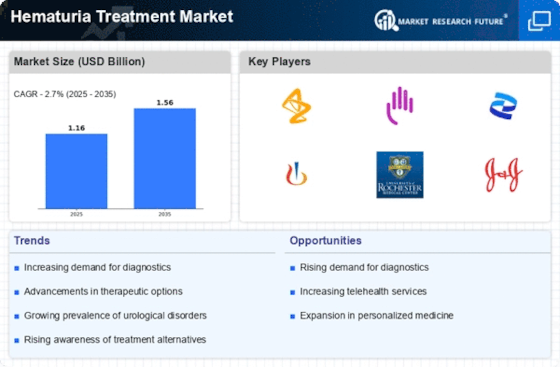
As per MRFR analysis, the Hematuria Treatment Market Size was estimated at 1.161 USD Billion in 2024. The Hematuria Treatment industry is projected to grow from 1.192 USD Billion in 2025 to 1.556 USD Billion by 2035, exhibiting a compound annual growth rate (CAGR) of 2.7 during the forecast period 2025 - 2035.

Key Market Trends & Highlights

The Hematuria Treatment Market is poised for growth driven by technological advancements and increasing awareness.

  • Technological advancements in treatment are enhancing patient outcomes and expanding therapeutic options.
  • North America remains the largest market, while Asia-Pacific is emerging as the fastest-growing region in hematuria treatment.
  • Gross or macroscopic hematuria represents the largest segment, whereas microscopic hematuria is experiencing the fastest growth.
  • The rising incidence of hematuria and advancements in diagnostic technologies are key drivers propelling market expansion.

Market Size & Forecast

2024 Market Size 1.161 (USD Billion)
2035 Market Size 1.556 (USD Billion)
CAGR (2025 - 2035) 2.7%
Largest Regional Market Share in 2024 Asia Pacific

Major Players

<p>AstraZeneca (GB), Bristol-Myers Squibb (US), Pfizer (US), Novartis (CH), Roche (CH), Johnson & Johnson (US), Merck & Co. (US), Eli Lilly and Company (US), Sanofi (FR)</p>

Market Trends

The Hematuria Treatment Market is currently experiencing a notable evolution, driven by advancements in medical technology and an increasing awareness of urological health. As healthcare systems worldwide prioritize early diagnosis and effective management of hematuria, a condition characterized by the presence of blood in urine, various treatment modalities are being explored. This market encompasses a range of therapeutic options, including pharmacological interventions, minimally invasive procedures, and surgical techniques. The growing prevalence of urinary tract disorders and the rising geriatric population are likely to further propel the demand for innovative treatment solutions. Moreover, the Hematuria Treatment Market appears to be influenced by ongoing research and development efforts aimed at enhancing patient outcomes. Emerging therapies, such as targeted drug delivery systems and personalized medicine approaches, suggest a shift towards more tailored treatment regimens. Additionally, the integration of telemedicine and digital health technologies into urological care may facilitate better patient monitoring and adherence to treatment protocols. As the landscape of hematuria management continues to evolve, stakeholders in the healthcare sector must remain vigilant to adapt to these changes and meet the needs of patients effectively.

Technological Advancements in Treatment

The Hematuria Treatment Market is witnessing a surge in technological innovations that enhance diagnostic accuracy and treatment efficacy. New imaging techniques and minimally invasive surgical options are becoming more prevalent, allowing for quicker recovery times and reduced patient discomfort. These advancements may lead to improved patient outcomes and satisfaction.

Increased Awareness and Education

There is a growing emphasis on public awareness regarding urological health, particularly concerning hematuria. Educational campaigns and initiatives by healthcare organizations are likely to encourage individuals to seek timely medical attention, thereby increasing the demand for treatment options. This trend may contribute to earlier diagnosis and intervention.

Shift Towards Personalized Medicine

The Hematuria Treatment Market appears to be moving towards personalized medicine, where treatment plans are tailored to individual patient profiles. This approach may involve genetic testing and biomarker identification to determine the most effective therapies, potentially leading to better management of hematuria and improved patient outcomes.

Hematuria Treatment Market Market Drivers

Growing Geriatric Population

The expanding geriatric population is a significant factor influencing the Hematuria Treatment Market. As individuals age, the likelihood of developing conditions associated with hematuria, such as bladder cancer and kidney stones, increases. According to demographic data, the proportion of individuals aged 65 and older is projected to rise, leading to a higher incidence of hematuria-related health issues. This demographic shift necessitates a corresponding increase in treatment options tailored to the needs of older patients. Consequently, the Hematuria Treatment Market is likely to experience growth as healthcare providers seek to address the unique challenges posed by this aging population.

Rising Incidence of Hematuria

The increasing prevalence of hematuria, often indicative of underlying health issues, is a primary driver of the Hematuria Treatment Market. Studies suggest that hematuria affects approximately 2-3% of the population, with higher rates observed in older adults. This rise in incidence necessitates effective treatment options, thereby propelling market growth. As healthcare providers become more vigilant in diagnosing and treating hematuria, the demand for innovative therapies and diagnostic tools is likely to escalate. Furthermore, the correlation between hematuria and serious conditions such as urinary tract infections and kidney diseases underscores the urgency for timely intervention, which in turn fuels the Hematuria Treatment Market.

Advancements in Diagnostic Technologies

Recent advancements in diagnostic technologies are transforming the Hematuria Treatment Market. Innovations such as non-invasive imaging techniques and enhanced urinalysis methods have improved the accuracy of hematuria diagnosis. For instance, the introduction of advanced biomarkers and molecular diagnostics allows for earlier detection of potential underlying conditions. This technological evolution not only facilitates timely treatment but also enhances patient outcomes, thereby increasing the overall demand for hematuria treatments. As healthcare systems continue to adopt these cutting-edge technologies, the Hematuria Treatment Market is poised for substantial growth, driven by the need for precise and efficient diagnostic solutions.

Increased Focus on Preventive Healthcare

The growing emphasis on preventive healthcare is shaping the Hematuria Treatment Market. As awareness of the importance of early detection and intervention rises, more individuals are seeking medical advice for symptoms such as hematuria. This trend is supported by public health campaigns aimed at educating the population about urinary health. The proactive approach to healthcare encourages regular screenings and check-ups, leading to an uptick in diagnoses of hematuria. Consequently, this heightened awareness drives demand for effective treatment options, thereby contributing to the expansion of the Hematuria Treatment Market.

Regulatory Support for Innovative Treatments

Regulatory bodies are increasingly supporting the development of innovative treatments for hematuria, which is a crucial driver of the Hematuria Treatment Market. Initiatives aimed at expediting the approval process for new therapies and diagnostic tools are fostering a conducive environment for market growth. For instance, regulatory agencies are providing incentives for research and development in the field of urology, encouraging pharmaceutical companies to invest in novel treatment options. This regulatory support not only accelerates the introduction of new products but also enhances competition within the Hematuria Treatment Market, ultimately benefiting patients through improved treatment choices.

Market Segment Insights

By Type: Gross or Macroscopic Hematuria (Largest) vs. Microscopic Hematuria (Fastest-Growing)

<p>The Hematuria Treatment Market exhibits a notable distribution across its segments, with Gross or Macroscopic Hematuria holding the largest market share. This segment is prominently recognized due to its clear presentation of blood in urine, leading to increased patient consultations and subsequent treatment interventions. Microscopic Hematuria, while smaller in share, is rapidly gaining traction as advancements in diagnostic techniques unveil more cases previously unnoticed. Both segments demand attention due to their distinct clinical implications and treatment approaches.</p>

<p>Gross or Macroscopic Hematuria: Dominant vs. Microscopic Hematuria: Emerging</p>

<p>Gross or Macroscopic Hematuria is characterized by overt blood in the urine, leading to immediate medical evaluation and management. This segment's dominance in the market is propelled by its visibility and the urgency often associated with its presentation. In contrast, Microscopic Hematuria, defined by the presence of blood detected via microscopic examination, is emerging as a significant focus area within the market. Increased awareness and enhanced diagnostic capabilities are driving its growth, with more patients being diagnosed and seeking treatment options. As healthcare providers emphasize early intervention, both segments reveal critical insights into patient management and treatment outcomes.</p>

By Causes: Kidney Stones (Largest) vs. Urinary Tract Infections (Fastest-Growing)

<p>In the Hematuria Treatment Market, the causes of hematuria are diverse, with kidney stones accounting for a significant share due to their prevalence among all age groups. Urinary Tract Infections (UTIs) closely follow, particularly affecting women, creating a notable market for treatments. Other causes like blood cancer and prostate cancer also contribute substantially to market dynamics, but kidney stones remain the most common reason for hematuria cases, influencing treatment demand. While bladder stones and urethritis account for smaller shares, they still play a role, especially in particular demographics and medical histories. The growth of this segment is driven by an increased awareness of hematuria and its underlying causes, along with advancements in diagnostics and treatment options. UTIs, classified as the fastest-growing cause in this market, have seen a surge due to lifestyle changes and increased risk factors, prompting healthcare systems to focus on effective treatments. Simultaneously, kidney stones continue to hold their ground due to their high incidence rates, underscoring a stable demand for existing treatment solutions. As the healthcare landscape evolves, these trends will shape the Hematuria Treatment Market significantly.</p>

<p>Kidney Stones (Dominant) vs. Urinary Tract Infections (Emerging)</p>

<p>Kidney stones represent the dominant cause in the Hematuria Treatment Market, characterized by a robust need for surgical and non-surgical treatment options. Patients experience intense pain, driving a demand for rapid and effective interventions, including lithotripsy and ureteroscopy. On the other hand, urinary tract infections (UTIs) are emerging as a fast-growing concern due to increased incidence rates, particularly in women, stemming from factors like hormonal changes and increased susceptibility. The treatment landscape for UTIs is rapidly evolving with the introduction of new antibiotics and preventive measures, highlighting the need for healthcare providers to adapt treatment protocols. Both segments thus demonstrate varying market characteristics, with kidney stones retaining dominance while UTIs are capturing increasing attention.</p>

By Treatment: Drugs (Largest) vs. Therapeutics (Fastest-Growing)

<p>The Hematuria Treatment Market is characterized by a robust distribution among its primary segments: Drugs, Therapeutics, and Others. Currently, the Drugs segment holds the largest share, indicating its critical role in managing hematuria. This segment includes various pharmaceuticals that are commonly prescribed for symptomatic relief and underlying causes, making it essential for patient treatment protocols. Following closely, the Therapeutics segment, which is witnessing rapid growth, signifies increasing acceptance and innovation within targeted treatment strategies, aimed at underlying conditions causing hematuria.</p>

<p>Drugs: Traditional (Dominant) vs. Therapeutics: Innovative (Emerging)</p>

<p>The Drugs segment is considered the dominant force in the Hematuria Treatment Market, encompassing a wide range of traditional pharmacological options such as anti-inflammatory agents, antibiotics, and hemostatic agents. These drugs are integral to immediate symptom management and have a well-established market presence. In contrast, the Therapeutics segment is emerging as a significant player, focusing on advanced treatment modalities such as monoclonal antibodies and targeted therapies. With ongoing research and a trend toward personalized medicine, this segment is expected to revolutionize hematuria management, leveraging innovation to tackle the complexities of underlying diseases.</p>

By End-Users: Hospitals (Largest) vs. Clinics (Fastest-Growing)

<p>In the Hematuria Treatment Market, hospitals dominate the end-user segment, holding the largest share due to their comprehensive treatment capabilities and advanced medical infrastructure. Clinics follow, contributing significantly to the market as they offer convenient and accessible treatment options for patients. Laboratories and research centers play a vital role as well, although their market share is comparatively smaller. The presence of specialized facilities for diagnostics and research aids in developing innovative treatment solutions, enhancing service delivery across the segment.</p>

<p>Hospitals (Dominant) vs. Clinics (Emerging)</p>

<p>Hospitals represent the dominant force in the Hematuria Treatment Market, equipped with high-level medical technologies and a wide array of specialists that facilitate superior patient care. Their ability to offer immediate treatments and emergency services positions them as the primary choice for many patients suffering from hematuria. Conversely, clinics have emerged as a fast-growing segment, leveraging their accessibility and affordability. They cater to a large patient population seeking quick evaluations and treatments, thus, playing a crucial role in the market's evolution. This growing trend reflects a shift in patient preferences towards outpatient services, driven by an increasing awareness and education around hematuria.</p>

Get more detailed insights about Hematuria Treatment Market Research Report -Forecast to 2035

Regional Insights

By region, the study provides the market insights into North America, Europe, Asia-Pacific and Rest of the World. The Asia Pacific Hematuria Treatment Market area will be dominant, due to the expansion of healthcare facilities, the prevalence of generic manufacturers, the growth of government initiatives, and the emergence of specialized communities.

Further, the major countries studied in the market report are The US, Germany, Canada, France, the United Kingdom, Italy, Spain, Australia, South Korea, and Brazil.

Figure2: HEMATURIA TREATMENT MARKET SHARE BY REGION 2022 (USD Billion) 

Europe Hematuria Treatment Market accounts for the second-largest market share due to the desire for novel therapies, as well as other significant reasons including the enormous research being conducted in the area of treating urinary tract infections, the market participants have begun to expand internationally. Further, the German Hematuria Treatment Market held the largest market share, and the UK Hematuria Treatment Market was the European region's fastest-growing market.

The North America Hematuria Treatment Market is predicted to see the highest CAGR between 2023 and 2035. This is because of the early adoption of branded products, favorable healthcare reimbursement regulations, recent FDA permits, the vast number of drugs in development, the emphasis on reducing the overall number of unresolved hematuria cases, and the early treatment of hematuria. Moreover, China’s Hematuria Treatment Market held the largest market share, and the Indian Hematuria Treatment Market was the Asia-Pacific region's fastest-growing market.

Key Players and Competitive Insights

Leading market players are paying a large sum of money on research and development in order to expand their product lines, which will help the Hematuria Treatment Market, grow even more. Additionally, market participants are engaging in a range of strategic initiatives to increase their worldwide reach, with important market developments such as the introduction of new products, contracts, mergers and acquisitions, increased investments, and cooperation with other organizations. To grow and endure in an increasingly competitive and challenging market environment, Hematuria Treatment industry must provide affordable options.

One of the main business strategies employed by manufacturers is to produce locally to reduce operational expenses in the Hematuria Treatment industry to benefit clients and increase the market sector. In recent years, the Hematuria Treatment industry has offered some of the most significant advantages to medicine. Major players in the Hematuria Treatment Market, including AstraZeneca Plc. Bristol-Myers Squibb, F. Hoffmann-La Roche Ltd., GlaxoSmithKline Inc., Janssen Pharmaceuticals, Inc., Merck & Co., Novartis International AG, Pfizer, Inc., Sun Pharmaceutical Industries Limited, The Medicines Company and others are making investments in research and development activities in an effort to boost market demand.

AstraZeneca plc is a worldwide pharmaceutical and biotechnology business with British and Swedish roots. Its headquarters are in Cambridge, England's Cambridge Biomedical Campus. Its product portfolio covers cancer, cardiovascular, gastrointestinal, infectious, neurological, respiratory, and inflammatory illnesses. It has been among the largest pharmaceutical corporations in the world since the merger and has acquired a number of businesses, notably Cambridge Antibody Technology. In 2021, India authorized the use of the Oxford-AstraZeneca vaccine, opening the door for a widespread immunization campaign in the second-most populous nation in the world.

It was revealed that the Oxford-AstraZeneca shot would be produced domestically by the Serum Institute of India (SII) under the trade name COVISHIELD.

The Bristol-Myers Squibb Company (BMS) is a pharmaceutical company with headquarters in the US. With its headquarters in New York City, one of the largest pharmaceutical companies in the world, BMS routinely makes the Fortune 500 list of the largest American companies. Cancer, HIV/AIDS, cardiovascular disease, diabetes, hepatitis, rheumatoid arthritis, and psychiatric disorders are among the therapeutic areas where Bristol Myers Squibb produces prescription medications and biologics. Lawrence, New Jersey, Summit, New Jersey, New Brunswick, New Jersey, Redwood City, California, and Seville in Spain are the locations of BMS's main research and development facilities.

Additional facilities can be found in Devens and Cambridge in Massachusetts, East Syracuse, New York, Braine-l'Alleud, Belgium, and Tokyo in Japan, India's Bangalore, and Wirral, United Kingdom. In the past, BMS operated an R&D facility in Wallingford, Connecticut. In June 2022, BMS announced that it would buy Turning Point Therapeutics Inc. for $4.1 billion in cash ($76 per share, a 122.5% premium to its most recent closing price), expanding its line-up of cancer medications to include repotrectinib.

Key Companies in the Hematuria Treatment Market market include

Industry Developments

April 2019:Otsuka Pharmaceutical Co., Ltd. declared that, JYNARQUE (tolvaptan) has been approved by the FDA as the first medication to be used to stop kidney function decline in persons at risk of autosomal dominant polycystic kidney disease increasing quickly.

April 2021:FDA-approved oral tablets of Farxiga (dapagliflozin) to lower the risk of renal function loss, kidney failure, cardiovascular death, and heart failure hospitalization in chronic renal disease patients who are at risk of disease progression.

June 2021:Eisai Co., Ltd. and Bristol-Myers Squibb Company have entered into an exclusive strategic collaboration agreement, in order to jointly develop and market MORAb-202, an antibody drug conjugate (ADC).

Future Outlook

Hematuria Treatment Market Future Outlook

<p>The Hematuria Treatment Market is projected to grow at a 2.7% CAGR from 2024 to 2035, driven by increasing prevalence of urinary disorders and advancements in diagnostic technologies.</p>

New opportunities lie in:

  • <p>Development of telehealth platforms for remote patient monitoring</p>
  • <p>Investment in AI-driven diagnostic tools for early detection</p>
  • <p>Expansion of personalized treatment plans based on genetic profiling</p>

<p>By 2035, the Hematuria Treatment Market is expected to achieve substantial growth and innovation.</p>

Market Segmentation

Hematuria Treatment Market Type Outlook

  • Gross or Macroscopic Hematuria
  • Microscopic Hematuria
  • Idiopathic Hematuria
  • Jogger's Hematuria

Hematuria Treatment Market Causes Outlook

  • Kidney Stones
  • Urinary Tract Infections (UTI)
  • Urethritis
  • Blood Cancer
  • Bladder Stones
  • Prostate Cancer
  • Cystitis
  • Trauma
  • Vigorous Exercise
  • Polycystic Kidney Disease
  • Endometriosis
  • Menstruation

Hematuria Treatment Market End-Users Outlook

  • Hospitals
  • Clinics
  • Laboratories
  • Research Centers
  • Others

Hematuria Treatment Market Treatment Outlook

  • Drugs
  • Therapeutics
  • Others

Report Scope

MARKET SIZE 20241.161(USD Billion)
MARKET SIZE 20251.192(USD Billion)
MARKET SIZE 20351.556(USD Billion)
COMPOUND ANNUAL GROWTH RATE (CAGR)2.7% (2024 - 2035)
REPORT COVERAGERevenue Forecast, Competitive Landscape, Growth Factors, and Trends
BASE YEAR2024
Market Forecast Period2025 - 2035
Historical Data2019 - 2024
Market Forecast UnitsUSD Billion
Key Companies ProfiledMarket analysis in progress
Segments CoveredMarket segmentation analysis in progress
Key Market OpportunitiesAdvancements in minimally invasive procedures enhance treatment options in the Hematuria Treatment Market.
Key Market DynamicsRising demand for minimally invasive procedures drives innovation in hematuria treatment options and technologies.
Countries CoveredNorth America, Europe, APAC, South America, MEA

FAQs

What is the current valuation of the Hematuria Treatment Market?

The Hematuria Treatment Market was valued at 1.161 USD Billion in 2024.

What is the projected market size for the Hematuria Treatment Market by 2035?

The market is projected to reach 1.556 USD Billion by 2035.

What is the expected CAGR for the Hematuria Treatment Market during the forecast period?

The expected CAGR for the Hematuria Treatment Market from 2025 to 2035 is 2.7%.

Which companies are the key players in the Hematuria Treatment Market?

Key players include AstraZeneca, Bristol-Myers Squibb, Pfizer, Novartis, Roche, Johnson & Johnson, Merck & Co., Eli Lilly and Company, and Sanofi.

What are the main types of hematuria and their market valuations?

Gross or macroscopic hematuria and microscopic hematuria are leading types, valued at 0.623 and 0.516 USD Billion respectively in 2024.

What are the primary causes of hematuria and their market impact?

Kidney stones and urinary tract infections are significant causes, with market valuations of 0.4 and 0.35 USD Billion respectively in 2024.

  1. SECTION I: EXECUTIVE SUMMARY AND KEY HIGHLIGHTS
    1. EXECUTIVE SUMMARY
      1. Market Overview
      2. Key Findings
      3. Market Segmentation
      4. Competitive Landscape
      5. Challenges and Opportunities
      6. Future Outlook
  2. SECTION II: SCOPING, METHODOLOGY AND MARKET STRUCTURE
    1. MARKET INTRODUCTION
      1. Definition
      2. Scope of the study
    2. RESEARCH METHODOLOGY
      1. Overview
      2. Data Mining
      3. Secondary Research
      4. Primary Research
      5. Forecasting Model
      6. Market Size Estimation
      7. Data Triangulation
      8. Validation
  3. SECTION III: QUALITATIVE ANALYSIS
    1. MARKET DYNAMICS
      1. Overview
      2. Drivers
      3. Restraints
      4. Opportunities
    2. MARKET FACTOR ANALYSIS
      1. Value chain Analysis
      2. Porter's Five Forces Analysis
      3. COVID-19 Impact Analysis
  4. SECTION IV: QUANTITATIVE ANALYSIS
    1. Healthcare, BY Type (USD Billion)
      1. Gross or Macroscopic Hematuria
      2. Microscopic Hematuria
      3. Idiopathic Hematuria
      4. Jogger's Hematuria
    2. Healthcare, BY Causes (USD Billion)
      1. Kidney Stones
      2. Urinary Tract Infections (UTI)
      3. Urethritis
      4. Blood Cancer
      5. Bladder Stones
      6. Prostate Cancer
      7. Cystitis
      8. Trauma
      9. Vigorous Exercise
      10. Polycystic Kidney Disease
      11. Endometriosis
      12. Menstruation
    3. Healthcare, BY Treatment (USD Billion)
      1. Drugs
      2. Therapeutics
      3. Others
    4. Healthcare, BY End-Users (USD Billion)
      1. Hospitals
      2. Clinics
      3. Laboratories
      4. Research Centers
      5. Others
    5. Healthcare, BY Region (USD Billion)
      1. North America
      2. Europe
      3. APAC
      4. South America
      5. MEA
  5. SECTION V: COMPETITIVE ANALYSIS
    1. Competitive Landscape
      1. Overview
      2. Competitive Analysis
      3. Market share Analysis
      4. Major Growth Strategy in the Healthcare
      5. Competitive Benchmarking
      6. Leading Players in Terms of Number of Developments in the Healthcare
      7. Key developments and growth strategies
      8. Major Players Financial Matrix
    2. Company Profiles
      1. AstraZeneca (GB)
      2. Bristol-Myers Squibb (US)
      3. Pfizer (US)
      4. Novartis (CH)
      5. Roche (CH)
      6. Johnson & Johnson (US)
      7. Merck & Co. (US)
      8. Eli Lilly and Company (US)
      9. Sanofi (FR)
    3. Appendix
      1. References
      2. Related Reports
  6. LIST OF FIGURES
    1. MARKET SYNOPSIS
    2. NORTH AMERICA MARKET ANALYSIS
    3. US MARKET ANALYSIS BY TYPE
    4. US MARKET ANALYSIS BY CAUSES
    5. US MARKET ANALYSIS BY TREATMENT
    6. US MARKET ANALYSIS BY END-USERS
    7. CANADA MARKET ANALYSIS BY TYPE
    8. CANADA MARKET ANALYSIS BY CAUSES
    9. CANADA MARKET ANALYSIS BY TREATMENT
    10. CANADA MARKET ANALYSIS BY END-USERS
    11. EUROPE MARKET ANALYSIS
    12. GERMANY MARKET ANALYSIS BY TYPE
    13. GERMANY MARKET ANALYSIS BY CAUSES
    14. GERMANY MARKET ANALYSIS BY TREATMENT
    15. GERMANY MARKET ANALYSIS BY END-USERS
    16. UK MARKET ANALYSIS BY TYPE
    17. UK MARKET ANALYSIS BY CAUSES
    18. UK MARKET ANALYSIS BY TREATMENT
    19. UK MARKET ANALYSIS BY END-USERS
    20. FRANCE MARKET ANALYSIS BY TYPE
    21. FRANCE MARKET ANALYSIS BY CAUSES
    22. FRANCE MARKET ANALYSIS BY TREATMENT
    23. FRANCE MARKET ANALYSIS BY END-USERS
    24. RUSSIA MARKET ANALYSIS BY TYPE
    25. RUSSIA MARKET ANALYSIS BY CAUSES
    26. RUSSIA MARKET ANALYSIS BY TREATMENT
    27. RUSSIA MARKET ANALYSIS BY END-USERS
    28. ITALY MARKET ANALYSIS BY TYPE
    29. ITALY MARKET ANALYSIS BY CAUSES
    30. ITALY MARKET ANALYSIS BY TREATMENT
    31. ITALY MARKET ANALYSIS BY END-USERS
    32. SPAIN MARKET ANALYSIS BY TYPE
    33. SPAIN MARKET ANALYSIS BY CAUSES
    34. SPAIN MARKET ANALYSIS BY TREATMENT
    35. SPAIN MARKET ANALYSIS BY END-USERS
    36. REST OF EUROPE MARKET ANALYSIS BY TYPE
    37. REST OF EUROPE MARKET ANALYSIS BY CAUSES
    38. REST OF EUROPE MARKET ANALYSIS BY TREATMENT
    39. REST OF EUROPE MARKET ANALYSIS BY END-USERS
    40. APAC MARKET ANALYSIS
    41. CHINA MARKET ANALYSIS BY TYPE
    42. CHINA MARKET ANALYSIS BY CAUSES
    43. CHINA MARKET ANALYSIS BY TREATMENT
    44. CHINA MARKET ANALYSIS BY END-USERS
    45. INDIA MARKET ANALYSIS BY TYPE
    46. INDIA MARKET ANALYSIS BY CAUSES
    47. INDIA MARKET ANALYSIS BY TREATMENT
    48. INDIA MARKET ANALYSIS BY END-USERS
    49. JAPAN MARKET ANALYSIS BY TYPE
    50. JAPAN MARKET ANALYSIS BY CAUSES
    51. JAPAN MARKET ANALYSIS BY TREATMENT
    52. JAPAN MARKET ANALYSIS BY END-USERS
    53. SOUTH KOREA MARKET ANALYSIS BY TYPE
    54. SOUTH KOREA MARKET ANALYSIS BY CAUSES
    55. SOUTH KOREA MARKET ANALYSIS BY TREATMENT
    56. SOUTH KOREA MARKET ANALYSIS BY END-USERS
    57. MALAYSIA MARKET ANALYSIS BY TYPE
    58. MALAYSIA MARKET ANALYSIS BY CAUSES
    59. MALAYSIA MARKET ANALYSIS BY TREATMENT
    60. MALAYSIA MARKET ANALYSIS BY END-USERS
    61. THAILAND MARKET ANALYSIS BY TYPE
    62. THAILAND MARKET ANALYSIS BY CAUSES
    63. THAILAND MARKET ANALYSIS BY TREATMENT
    64. THAILAND MARKET ANALYSIS BY END-USERS
    65. INDONESIA MARKET ANALYSIS BY TYPE
    66. INDONESIA MARKET ANALYSIS BY CAUSES
    67. INDONESIA MARKET ANALYSIS BY TREATMENT
    68. INDONESIA MARKET ANALYSIS BY END-USERS
    69. REST OF APAC MARKET ANALYSIS BY TYPE
    70. REST OF APAC MARKET ANALYSIS BY CAUSES
    71. REST OF APAC MARKET ANALYSIS BY TREATMENT
    72. REST OF APAC MARKET ANALYSIS BY END-USERS
    73. SOUTH AMERICA MARKET ANALYSIS
    74. BRAZIL MARKET ANALYSIS BY TYPE
    75. BRAZIL MARKET ANALYSIS BY CAUSES
    76. BRAZIL MARKET ANALYSIS BY TREATMENT
    77. BRAZIL MARKET ANALYSIS BY END-USERS
    78. MEXICO MARKET ANALYSIS BY TYPE
    79. MEXICO MARKET ANALYSIS BY CAUSES
    80. MEXICO MARKET ANALYSIS BY TREATMENT
    81. MEXICO MARKET ANALYSIS BY END-USERS
    82. ARGENTINA MARKET ANALYSIS BY TYPE
    83. ARGENTINA MARKET ANALYSIS BY CAUSES
    84. ARGENTINA MARKET ANALYSIS BY TREATMENT
    85. ARGENTINA MARKET ANALYSIS BY END-USERS
    86. REST OF SOUTH AMERICA MARKET ANALYSIS BY TYPE
    87. REST OF SOUTH AMERICA MARKET ANALYSIS BY CAUSES
    88. REST OF SOUTH AMERICA MARKET ANALYSIS BY TREATMENT
    89. REST OF SOUTH AMERICA MARKET ANALYSIS BY END-USERS
    90. MEA MARKET ANALYSIS
    91. GCC COUNTRIES MARKET ANALYSIS BY TYPE
    92. GCC COUNTRIES MARKET ANALYSIS BY CAUSES
    93. GCC COUNTRIES MARKET ANALYSIS BY TREATMENT
    94. GCC COUNTRIES MARKET ANALYSIS BY END-USERS
    95. SOUTH AFRICA MARKET ANALYSIS BY TYPE
    96. SOUTH AFRICA MARKET ANALYSIS BY CAUSES
    97. SOUTH AFRICA MARKET ANALYSIS BY TREATMENT
    98. SOUTH AFRICA MARKET ANALYSIS BY END-USERS
    99. REST OF MEA MARKET ANALYSIS BY TYPE
    100. REST OF MEA MARKET ANALYSIS BY CAUSES
    101. REST OF MEA MARKET ANALYSIS BY TREATMENT
    102. REST OF MEA MARKET ANALYSIS BY END-USERS
    103. KEY BUYING CRITERIA OF HEALTHCARE
    104. RESEARCH PROCESS OF MRFR
    105. DRO ANALYSIS OF HEALTHCARE
    106. DRIVERS IMPACT ANALYSIS: HEALTHCARE
    107. RESTRAINTS IMPACT ANALYSIS: HEALTHCARE
    108. SUPPLY / VALUE CHAIN: HEALTHCARE
    109. HEALTHCARE, BY TYPE, 2024 (% SHARE)
    110. HEALTHCARE, BY TYPE, 2024 TO 2035 (USD Billion)
    111. HEALTHCARE, BY CAUSES, 2024 (% SHARE)
    112. HEALTHCARE, BY CAUSES, 2024 TO 2035 (USD Billion)
    113. HEALTHCARE, BY TREATMENT, 2024 (% SHARE)
    114. HEALTHCARE, BY TREATMENT, 2024 TO 2035 (USD Billion)
    115. HEALTHCARE, BY END-USERS, 2024 (% SHARE)
    116. HEALTHCARE, BY END-USERS, 2024 TO 2035 (USD Billion)
    117. BENCHMARKING OF MAJOR COMPETITORS
  7. LIST OF TABLES
    1. LIST OF ASSUMPTIONS
    2. North America MARKET SIZE ESTIMATES; FORECAST
      1. BY TYPE, 2025-2035 (USD Billion)
      2. BY CAUSES, 2025-2035 (USD Billion)
      3. BY TREATMENT, 2025-2035 (USD Billion)
      4. BY END-USERS, 2025-2035 (USD Billion)
    3. US MARKET SIZE ESTIMATES; FORECAST
      1. BY TYPE, 2025-2035 (USD Billion)
      2. BY CAUSES, 2025-2035 (USD Billion)
      3. BY TREATMENT, 2025-2035 (USD Billion)
      4. BY END-USERS, 2025-2035 (USD Billion)
    4. Canada MARKET SIZE ESTIMATES; FORECAST
      1. BY TYPE, 2025-2035 (USD Billion)
      2. BY CAUSES, 2025-2035 (USD Billion)
      3. BY TREATMENT, 2025-2035 (USD Billion)
      4. BY END-USERS, 2025-2035 (USD Billion)
    5. Europe MARKET SIZE ESTIMATES; FORECAST
      1. BY TYPE, 2025-2035 (USD Billion)
      2. BY CAUSES, 2025-2035 (USD Billion)
      3. BY TREATMENT, 2025-2035 (USD Billion)
      4. BY END-USERS, 2025-2035 (USD Billion)
    6. Germany MARKET SIZE ESTIMATES; FORECAST
      1. BY TYPE, 2025-2035 (USD Billion)
      2. BY CAUSES, 2025-2035 (USD Billion)
      3. BY TREATMENT, 2025-2035 (USD Billion)
      4. BY END-USERS, 2025-2035 (USD Billion)
    7. UK MARKET SIZE ESTIMATES; FORECAST
      1. BY TYPE, 2025-2035 (USD Billion)
      2. BY CAUSES, 2025-2035 (USD Billion)
      3. BY TREATMENT, 2025-2035 (USD Billion)
      4. BY END-USERS, 2025-2035 (USD Billion)
    8. France MARKET SIZE ESTIMATES; FORECAST
      1. BY TYPE, 2025-2035 (USD Billion)
      2. BY CAUSES, 2025-2035 (USD Billion)
      3. BY TREATMENT, 2025-2035 (USD Billion)
      4. BY END-USERS, 2025-2035 (USD Billion)
    9. Russia MARKET SIZE ESTIMATES; FORECAST
      1. BY TYPE, 2025-2035 (USD Billion)
      2. BY CAUSES, 2025-2035 (USD Billion)
      3. BY TREATMENT, 2025-2035 (USD Billion)
      4. BY END-USERS, 2025-2035 (USD Billion)
    10. Italy MARKET SIZE ESTIMATES; FORECAST
      1. BY TYPE, 2025-2035 (USD Billion)
      2. BY CAUSES, 2025-2035 (USD Billion)
      3. BY TREATMENT, 2025-2035 (USD Billion)
      4. BY END-USERS, 2025-2035 (USD Billion)
    11. Spain MARKET SIZE ESTIMATES; FORECAST
      1. BY TYPE, 2025-2035 (USD Billion)
      2. BY CAUSES, 2025-2035 (USD Billion)
      3. BY TREATMENT, 2025-2035 (USD Billion)
      4. BY END-USERS, 2025-2035 (USD Billion)
    12. Rest of Europe MARKET SIZE ESTIMATES; FORECAST
      1. BY TYPE, 2025-2035 (USD Billion)
      2. BY CAUSES, 2025-2035 (USD Billion)
      3. BY TREATMENT, 2025-2035 (USD Billion)
      4. BY END-USERS, 2025-2035 (USD Billion)
    13. APAC MARKET SIZE ESTIMATES; FORECAST
      1. BY TYPE, 2025-2035 (USD Billion)
      2. BY CAUSES, 2025-2035 (USD Billion)
      3. BY TREATMENT, 2025-2035 (USD Billion)
      4. BY END-USERS, 2025-2035 (USD Billion)
    14. China MARKET SIZE ESTIMATES; FORECAST
      1. BY TYPE, 2025-2035 (USD Billion)
      2. BY CAUSES, 2025-2035 (USD Billion)
      3. BY TREATMENT, 2025-2035 (USD Billion)
      4. BY END-USERS, 2025-2035 (USD Billion)
    15. India MARKET SIZE ESTIMATES; FORECAST
      1. BY TYPE, 2025-2035 (USD Billion)
      2. BY CAUSES, 2025-2035 (USD Billion)
      3. BY TREATMENT, 2025-2035 (USD Billion)
      4. BY END-USERS, 2025-2035 (USD Billion)
    16. Japan MARKET SIZE ESTIMATES; FORECAST
      1. BY TYPE, 2025-2035 (USD Billion)
      2. BY CAUSES, 2025-2035 (USD Billion)
      3. BY TREATMENT, 2025-2035 (USD Billion)
      4. BY END-USERS, 2025-2035 (USD Billion)
    17. South Korea MARKET SIZE ESTIMATES; FORECAST
      1. BY TYPE, 2025-2035 (USD Billion)
      2. BY CAUSES, 2025-2035 (USD Billion)
      3. BY TREATMENT, 2025-2035 (USD Billion)
      4. BY END-USERS, 2025-2035 (USD Billion)
    18. Malaysia MARKET SIZE ESTIMATES; FORECAST
      1. BY TYPE, 2025-2035 (USD Billion)
      2. BY CAUSES, 2025-2035 (USD Billion)
      3. BY TREATMENT, 2025-2035 (USD Billion)
      4. BY END-USERS, 2025-2035 (USD Billion)
    19. Thailand MARKET SIZE ESTIMATES; FORECAST
      1. BY TYPE, 2025-2035 (USD Billion)
      2. BY CAUSES, 2025-2035 (USD Billion)
      3. BY TREATMENT, 2025-2035 (USD Billion)
      4. BY END-USERS, 2025-2035 (USD Billion)
    20. Indonesia MARKET SIZE ESTIMATES; FORECAST
      1. BY TYPE, 2025-2035 (USD Billion)
      2. BY CAUSES, 2025-2035 (USD Billion)
      3. BY TREATMENT, 2025-2035 (USD Billion)
      4. BY END-USERS, 2025-2035 (USD Billion)
    21. Rest of APAC MARKET SIZE ESTIMATES; FORECAST
      1. BY TYPE, 2025-2035 (USD Billion)
      2. BY CAUSES, 2025-2035 (USD Billion)
      3. BY TREATMENT, 2025-2035 (USD Billion)
      4. BY END-USERS, 2025-2035 (USD Billion)
    22. South America MARKET SIZE ESTIMATES; FORECAST
      1. BY TYPE, 2025-2035 (USD Billion)
      2. BY CAUSES, 2025-2035 (USD Billion)
      3. BY TREATMENT, 2025-2035 (USD Billion)
      4. BY END-USERS, 2025-2035 (USD Billion)
    23. Brazil MARKET SIZE ESTIMATES; FORECAST
      1. BY TYPE, 2025-2035 (USD Billion)
      2. BY CAUSES, 2025-2035 (USD Billion)
      3. BY TREATMENT, 2025-2035 (USD Billion)
      4. BY END-USERS, 2025-2035 (USD Billion)
    24. Mexico MARKET SIZE ESTIMATES; FORECAST
      1. BY TYPE, 2025-2035 (USD Billion)
      2. BY CAUSES, 2025-2035 (USD Billion)
      3. BY TREATMENT, 2025-2035 (USD Billion)
      4. BY END-USERS, 2025-2035 (USD Billion)
    25. Argentina MARKET SIZE ESTIMATES; FORECAST
      1. BY TYPE, 2025-2035 (USD Billion)
      2. BY CAUSES, 2025-2035 (USD Billion)
      3. BY TREATMENT, 2025-2035 (USD Billion)
      4. BY END-USERS, 2025-2035 (USD Billion)
    26. Rest of South America MARKET SIZE ESTIMATES; FORECAST
      1. BY TYPE, 2025-2035 (USD Billion)
      2. BY CAUSES, 2025-2035 (USD Billion)
      3. BY TREATMENT, 2025-2035 (USD Billion)
      4. BY END-USERS, 2025-2035 (USD Billion)
    27. MEA MARKET SIZE ESTIMATES; FORECAST
      1. BY TYPE, 2025-2035 (USD Billion)
      2. BY CAUSES, 2025-2035 (USD Billion)
      3. BY TREATMENT, 2025-2035 (USD Billion)
      4. BY END-USERS, 2025-2035 (USD Billion)
    28. GCC Countries MARKET SIZE ESTIMATES; FORECAST
      1. BY TYPE, 2025-2035 (USD Billion)
      2. BY CAUSES, 2025-2035 (USD Billion)
      3. BY TREATMENT, 2025-2035 (USD Billion)
      4. BY END-USERS, 2025-2035 (USD Billion)
    29. South Africa MARKET SIZE ESTIMATES; FORECAST
      1. BY TYPE, 2025-2035 (USD Billion)
      2. BY CAUSES, 2025-2035 (USD Billion)
      3. BY TREATMENT, 2025-2035 (USD Billion)
      4. BY END-USERS, 2025-2035 (USD Billion)
    30. Rest of MEA MARKET SIZE ESTIMATES; FORECAST
      1. BY TYPE, 2025-2035 (USD Billion)
      2. BY CAUSES, 2025-2035 (USD Billion)
      3. BY TREATMENT, 2025-2035 (USD Billion)
      4. BY END-USERS, 2025-2035 (USD Billion)
    31. PRODUCT LAUNCH/PRODUCT DEVELOPMENT/APPROVAL
    32. ACQUISITION/PARTNERSHIP

Market Segmentation

Hematuria Treatment Type Outlook (USD Billion, 2018-2032)

Gross Or Macroscopic Hematuria

Microscopic Hematuria

Idiopathic Hematuria

Jogger's Hematuria

Hematuria Treatment Causes Outlook (USD Billion, 2018-2032)

Kidney Stones

Urinary Tract Infections (UTI)

Urethritis

Blood Cancer

Bladder Stones

Prostate Cancer

Cystitis

Trauma

Vigorous Exercise

Polycystic Kidney Disease

Endometriosis

Menstruation

Hematuria Treatment Treatment Outlook (USD Billion, 2018-2032)

Drugs

Therapeutics

Others

Hematuria Treatment End-Users Outlook (USD Billion, 2018-2032)

Hospitals

Clinics

Laboratories

Research Centers

Others

Hematuria Treatment Regional Outlook (USD Billion, 2018-2032)

North America Outlook (USD Billion, 2018-2032)

North America Hematuria Treatment by Type

Gross Or Macroscopic Hematuria

Microscopic Hematuria

Idiopathic Hematuria

Jogger's Hematuria

North America Hematuria Treatment by Causes

Kidney Stones

Urinary Tract Infections (UTI)

Urethritis

Blood Cancer

Bladder Stones

Prostate Cancer

Cystitis

Trauma

Vigorous Exercise

Polycystic Kidney Disease

Endometriosis

Menstruation

North America Hematuria Treatment by Treatment

Drugs

Therapeutics

Others

North America Hematuria Treatment by End-Users

Hospitals

Clinics

Laboratories

Research Centers

Others

US Outlook (USD Billion, 2018-2032)

US Hematuria Treatment by Type

Gross Or Macroscopic Hematuria

Microscopic Hematuria

Idiopathic Hematuria

Jogger's Hematuria

US Hematuria Treatment by Causes

Kidney Stones

Urinary Tract Infections (UTI)

Urethritis

Blood Cancer

Bladder Stones

Prostate Cancer

Cystitis

Trauma

Vigorous Exercise

Polycystic Kidney Disease

Endometriosis

Menstruation

US Hematuria Treatment by Treatment

Drugs

Therapeutics

Others

US Hematuria Treatment by End-Users

Hospitals

Clinics

Laboratories

Research Centers

Others

CANADA Outlook (USD Billion, 2018-2032)

CANADA Hematuria Treatment by Type

Gross Or Macroscopic Hematuria

Microscopic Hematuria

Idiopathic Hematuria

Jogger's Hematuria

CANADA Hematuria Treatment by Causes

Kidney Stones

Urinary Tract Infections (UTI)

Urethritis

Blood Cancer

Bladder Stones

Prostate Cancer

Cystitis

Trauma

Vigorous Exercise

Polycystic Kidney Disease

Endometriosis

Menstruation

CANADA Hematuria Treatment by Treatment

Drugs

Therapeutics

Others

CANADA Hematuria Treatment by End-Users

Hospitals

Clinics

Laboratories

Research Centers

Others

Europe Outlook (USD Billion, 2018-2032)

Europe Hematuria Treatment by Type

Gross Or Macroscopic Hematuria

Microscopic Hematuria

Idiopathic Hematuria

Jogger's Hematuria

Europe Hematuria Treatment by Causes

Kidney Stones

Urinary Tract Infections (UTI)

Urethritis

Blood Cancer

Bladder Stones

Prostate Cancer

Cystitis

Trauma

Vigorous Exercise

Polycystic Kidney Disease

Endometriosis

Menstruation

Europe Hematuria Treatment by Treatment

Drugs

Therapeutics

Others

Europe Hematuria Treatment by End-Users

Hospitals

Clinics

Laboratories

Research Centers

Others

Germany Outlook (USD Billion, 2018-2032)

Germany Hematuria Treatment by Type

Gross Or Macroscopic Hematuria

Microscopic Hematuria

Idiopathic Hematuria

Jogger's Hematuria

Germany Hematuria Treatment by Causes

Kidney Stones

Urinary Tract Infections (UTI)

Urethritis

Blood Cancer

Bladder Stones

Prostate Cancer

Cystitis

Trauma

Vigorous Exercise

Polycystic Kidney Disease

Endometriosis

Menstruation

Germany Hematuria Treatment by Treatment

Drugs

Therapeutics

Others

Germany Hematuria Treatment by End-Users

Hospitals

Clinics

Laboratories

Research Centers

Others

France Outlook (USD Billion, 2018-2032)

France Hematuria Treatment by Type

Gross Or Macroscopic Hematuria

Microscopic Hematuria

Idiopathic Hematuria

Jogger's Hematuria

France Hematuria Treatment by Causes

Kidney Stones

Urinary Tract Infections (UTI)

Urethritis

Blood Cancer

Bladder Stones

Prostate Cancer

Cystitis

Trauma

Vigorous Exercise

Polycystic Kidney Disease

Endometriosis

Menstruation

France Hematuria Treatment by Treatment

Drugs

Therapeutics

Others

France Hematuria Treatment by End-Users

Hospitals

Clinics

Laboratories

Research Centers

Others

UK Outlook (USD Billion, 2018-2032)

UK Hematuria Treatment by Type

Gross Or Macroscopic Hematuria

Microscopic Hematuria

Idiopathic Hematuria

Jogger's Hematuria

UK Hematuria Treatment by Causes

Kidney Stones

Urinary Tract Infections (UTI)

Urethritis

Blood Cancer

Bladder Stones

Prostate Cancer

Cystitis

Trauma

Vigorous Exercise

Polycystic Kidney Disease

Endometriosis

Menstruation

UK Hematuria Treatment by Treatment

Drugs

Therapeutics

Others

UK Hematuria Treatment by End-Users

Hospitals

Clinics

Laboratories

Research Centers

Others

ITALY Outlook (USD Billion, 2018-2032)

ITALY Hematuria Treatment by Type

Gross Or Macroscopic Hematuria

Microscopic Hematuria

Idiopathic Hematuria

Jogger's Hematuria

ITALY Hematuria Treatment by Causes

Kidney Stones

Urinary Tract Infections (UTI)

Urethritis

Blood Cancer

Bladder Stones

Prostate Cancer

Cystitis

Trauma

Vigorous Exercise

Polycystic Kidney Disease

Endometriosis

Menstruation

ITALY Hematuria Treatment by Treatment

Drugs

Therapeutics

Others

ITALY Hematuria Treatment by End-Users

Hospitals

Clinics

Laboratories

Research Centers

Others

SPAIN Outlook (USD Billion, 2018-2032)

Spain Hematuria Treatment by Type

Gross Or Macroscopic Hematuria

Microscopic Hematuria

Idiopathic Hematuria

Jogger's Hematuria

Spain Hematuria Treatment by Causes

Kidney Stones

Urinary Tract Infections (UTI)

Urethritis

Blood Cancer

Bladder Stones

Prostate Cancer

Cystitis

Trauma

Vigorous Exercise

Polycystic Kidney Disease

Endometriosis

Menstruation

Spain Hematuria Treatment by Treatment

Drugs

Therapeutics

Others

Spain Hematuria Treatment by End-Users

Hospitals

Clinics

Laboratories

Research Centers

Others

Rest Of Europe Outlook (USD Billion, 2018-2032)

Rest Of Europe Hematuria Treatment by Type

Gross Or Macroscopic Hematuria

Microscopic Hematuria

Idiopathic Hematuria

Jogger's Hematuria

REST OF EUROPE Hematuria Treatment by Causes

Kidney Stones

Urinary Tract Infections (UTI)

Urethritis

Blood Cancer

Bladder Stones

Prostate Cancer

Cystitis

Trauma

Vigorous Exercise

Polycystic Kidney Disease

Endometriosis

Menstruation

REST OF EUROPE Hematuria Treatment by Treatment

Drugs

Therapeutics

Others

REST OF EUROPE Hematuria Treatment by End-Users

Hospitals

Clinics

Laboratories

Research Centers

Others

Asia-Pacific Outlook (USD Billion, 2018-2032)

Asia-Pacific Hematuria Treatment by Type

Gross Or Macroscopic Hematuria

Microscopic Hematuria

Idiopathic Hematuria

Jogger's Hematuria

Asia-Pacific Hematuria Treatment by Causes

Kidney Stones

Urinary Tract Infections (UTI)

Urethritis

Blood Cancer

Bladder Stones

Prostate Cancer

Cystitis

Trauma

Vigorous Exercise

Polycystic Kidney Disease

Endometriosis

Menstruation

Asia-Pacific Hematuria Treatment by Treatment

Drugs

Therapeutics

Others

Asia-Pacific Hematuria Treatment by End-Users

Hospitals

Clinics

Laboratories

Research Centers

Others

China Outlook (USD Billion, 2018-2032)

China Hematuria Treatment by Type

Gross Or Macroscopic Hematuria

Microscopic Hematuria

Idiopathic Hematuria

Jogger's Hematuria

China Hematuria Treatment by Causes

Kidney Stones

Urinary Tract Infections (UTI)

Urethritis

Blood Cancer

Bladder Stones

Prostate Cancer

Cystitis

Trauma

Vigorous Exercise

Polycystic Kidney Disease

Endometriosis

Menstruation

China Hematuria Treatment by Treatment

Drugs

Therapeutics

Others

China Hematuria Treatment by End-Users

Hospitals

Clinics

Laboratories

Research Centers

Others

Japan Outlook (USD Billion, 2018-2032)

Japan Hematuria Treatment by Type

Gross Or Macroscopic Hematuria

Microscopic Hematuria

Idiopathic Hematuria

Jogger's Hematuria

Japan Hematuria Treatment by Causes

Kidney Stones

Urinary Tract Infections (UTI)

Urethritis

Blood Cancer

Bladder Stones

Prostate Cancer

Cystitis

Trauma

Vigorous Exercise

Polycystic Kidney Disease

Endometriosis

Menstruation

Japan Hematuria Treatment by Treatment

Drugs

Therapeutics

Others

Japan Hematuria Treatment by End-Users

Hospitals

Clinics

Laboratories

Research Centers

Others

India Outlook (USD Billion, 2018-2032)

India Hematuria Treatment by Type

Gross Or Macroscopic Hematuria

Microscopic Hematuria

Idiopathic Hematuria

Jogger's Hematuria

India Hematuria Treatment by Causes

Kidney Stones

Urinary Tract Infections (UTI)

Urethritis

Blood Cancer

Bladder Stones

Prostate Cancer

Cystitis

Trauma

Vigorous Exercise

Polycystic Kidney Disease

Endometriosis

Menstruation

India Hematuria Treatment by Treatment

Drugs

Therapeutics

Others

India Hematuria Treatment by End-Users

Hospitals

Clinics

Laboratories

Research Centers

Others

Australia Outlook (USD Billion, 2018-2032)

Australia Hematuria Treatment by Type

Gross Or Macroscopic Hematuria

Microscopic Hematuria

Idiopathic Hematuria

Jogger's Hematuria

Australia Hematuria Treatment by Causes

Kidney Stones

Urinary Tract Infections (UTI)

Urethritis

Blood Cancer

Bladder Stones

Prostate Cancer

Cystitis

Trauma

Vigorous Exercise

Polycystic Kidney Disease

Endometriosis

Menstruation

Australia Hematuria Treatment by Treatment

Drugs

Therapeutics

Others

Australia Hematuria Treatment by End-Users

Hospitals

Clinics

Laboratories

Research Centers

Others

Rest of Asia-Pacific Outlook (USD Billion, 2018-2032)

Rest of Asia-Pacific Hematuria Treatment by Type

Gross Or Macroscopic Hematuria

Microscopic Hematuria

Idiopathic Hematuria

Jogger's Hematuria

Rest of Asia-Pacific Hematuria Treatment by Causes

Kidney Stones

Urinary Tract Infections (UTI)

Urethritis

Blood Cancer

Bladder Stones

Prostate Cancer

Cystitis

Trauma

Vigorous Exercise

Polycystic Kidney Disease

Endometriosis

Menstruation

Rest of Asia-Pacific Hematuria Treatment by Treatment

Drugs

Therapeutics

Others

Rest of Asia-Pacific Hematuria Treatment by End-Users

Hospitals

Clinics

Laboratories

Research Centers

Others

Rest of the World Outlook (USD Billion, 2018-2032)

Rest of the World Hematuria Treatment by Type

Gross Or Macroscopic Hematuria

Microscopic Hematuria

Idiopathic Hematuria

Jogger's Hematuria

Rest of the World Hematuria Treatment by Causes

Kidney Stones

Urinary Tract Infections (UTI)

Urethritis

Blood Cancer

Bladder Stones

Prostate Cancer

Cystitis

Trauma

Vigorous Exercise

Polycystic Kidney Disease

Endometriosis

Menstruation

Rest of the World Hematuria Treatment by Treatment

Drugs

Therapeutics

Others

Rest of the World Hematuria Treatment by End-Users

Hospitals

Clinics

Laboratories

Research Centers

Others

Middle East Outlook (USD Billion, 2018-2032)

Middle East Hematuria Treatment by Type

Gross Or Macroscopic Hematuria

Microscopic Hematuria

Idiopathic Hematuria

Jogger's Hematuria

Middle East Hematuria Treatment by Causes

Kidney Stones

Urinary Tract Infections (UTI)

Urethritis

Blood Cancer

Bladder Stones

Prostate Cancer

Cystitis

Trauma

Vigorous Exercise

Polycystic Kidney Disease

Endometriosis

Menstruation

Middle East Hematuria Treatment by Treatment

Drugs

Therapeutics

Others

Middle East Hematuria Treatment by End-Users

Hospitals

Clinics

Laboratories

Research Centers

Others

Africa Outlook (USD Billion, 2018-2032)

Africa Hematuria Treatment by Type

Gross Or Macroscopic Hematuria

Microscopic Hematuria

Idiopathic Hematuria

Jogger's Hematuria

Africa Hematuria Treatment by Causes

Kidney Stones

Urinary Tract Infections (UTI)

Urethritis

Blood Cancer

Bladder Stones

Prostate Cancer

Cystitis

Trauma

Vigorous Exercise

Polycystic Kidney Disease

Endometriosis

Menstruation

Africa Hematuria Treatment by Treatment

Drugs

Therapeutics

Others

Africa Hematuria Treatment by End-Users

Hospitals

Clinics

Laboratories

Research Centers

Others

Latin America Outlook (USD Billion, 2018-2032)

Latin America Hematuria Treatment by Type

Gross Or Macroscopic Hematuria

Microscopic Hematuria

Idiopathic Hematuria

Jogger's Hematuria

Latin America Hematuria Treatment by Causes

Kidney Stones

Urinary Tract Infections (UTI)

Urethritis

Blood Cancer

Bladder Stones

Prostate Cancer

Cystitis

Trauma

Vigorous Exercise

Polycystic Kidney Disease

Endometriosis

Menstruation

Latin America Hematuria Treatment by Treatment

Drugs

Therapeutics

Others

Latin America Hematuria Treatment by End-Users

Hospitals

Clinics

Laboratories

Research Centers

Others

Infographic

Free Sample Request

Kindly complete the form below to receive a free sample of this Report

Get Free Sample

Customer Strories

Compare Licence

×
Features License Type
Single User Multiuser License Enterprise User
Price $4,950 $5,950 $7,250
Maximum User Access Limit 1 User Upto 10 Users Unrestricted Access Throughout the Organization
Free Customization
Direct Access to Analyst
Deliverable Format
Platform Access
Discount on Next Purchase 10% 15% 15%
Printable Versions