Rising Incidence of Heart Tumors
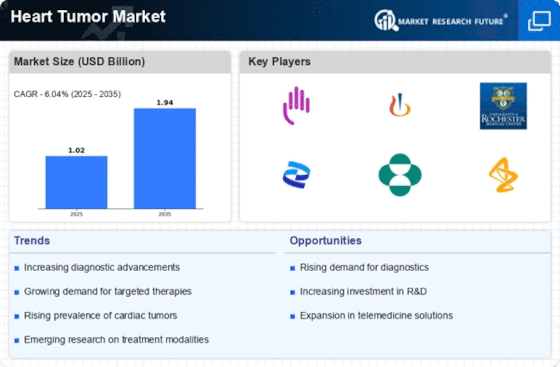
The increasing incidence of heart tumors is a primary driver for the Heart Tumor Market. Recent data indicates that the prevalence of cardiac tumors has been on the rise, with estimates suggesting that approximately 0.02% to 0.3% of all cardiac tumors are malignant. This growing incidence necessitates enhanced diagnostic and therapeutic options, thereby propelling market growth. As healthcare systems adapt to this trend, investments in research and development are likely to increase, fostering innovation in treatment modalities. Furthermore, the aging population, which is more susceptible to various forms of cancer, contributes to the rising number of heart tumor cases. Consequently, the Heart Tumor Market is expected to expand as healthcare providers seek to address this pressing health concern.
Rising Patient Awareness and Advocacy
Rising patient awareness and advocacy are playing a pivotal role in shaping the Heart Tumor Market. As patients become more informed about heart tumors and their treatment options, there is a growing demand for comprehensive care and support services. Advocacy groups are actively promoting education and awareness campaigns, which are instrumental in encouraging early detection and timely intervention. This heightened awareness is likely to lead to increased screening and diagnostic testing, ultimately contributing to market growth. Additionally, as patients seek more personalized treatment options, healthcare providers are compelled to adapt their services to meet these expectations. The Heart Tumor Market is thus experiencing a shift towards patient-centered care, driven by the collective efforts of advocacy organizations and informed patients.
Technological Advancements in Treatment
Technological advancements in treatment methodologies are significantly influencing the Heart Tumor Market. Innovations such as minimally invasive surgical techniques, targeted therapies, and advanced imaging technologies are transforming the landscape of cardiac tumor management. For instance, the introduction of robotic-assisted surgeries has improved surgical outcomes and reduced recovery times for patients. Additionally, the development of novel pharmacological agents that target specific tumor markers is enhancing treatment efficacy. Market data suggests that the adoption of these technologies is likely to increase, as healthcare providers aim to improve patient outcomes and reduce healthcare costs. As a result, the Heart Tumor Market is poised for growth, driven by the continuous evolution of treatment options that cater to the unique needs of patients.
Increased Research and Development Activities
Increased research and development activities are propelling the Heart Tumor Market forward. The scientific community is actively engaged in exploring novel therapeutic approaches and understanding the underlying mechanisms of heart tumors. Recent studies have highlighted the importance of genetic profiling in tailoring treatment strategies, which is likely to enhance the effectiveness of interventions. Furthermore, collaborations between academic institutions and pharmaceutical companies are fostering innovation in drug development. Market data indicates that R&D spending in oncology is expected to rise, reflecting a commitment to addressing the challenges posed by heart tumors. This surge in research efforts is anticipated to yield new treatment options and improve existing therapies, thereby driving growth in the Heart Tumor Market.
Growing Investment in Healthcare Infrastructure
The growing investment in healthcare infrastructure is a crucial driver for the Heart Tumor Market. Governments and private entities are increasingly allocating resources to enhance healthcare facilities, particularly in oncology and cardiology departments. This trend is evident in various regions, where new hospitals and specialized treatment centers are being established to cater to the rising demand for heart tumor management. According to recent reports, healthcare expenditure is projected to increase, with a focus on advanced diagnostic and therapeutic technologies. This influx of investment is likely to facilitate the development of comprehensive care pathways for patients with heart tumors, thereby expanding the Heart Tumor Market. Enhanced infrastructure not only improves access to care but also fosters collaboration among healthcare professionals, ultimately benefiting patient outcomes.

























Leave a Comment