×
Hero Background
English
Chinese
French
Japanese
Korean
German
Spanish

Heart Tumor Market Share

ID: MRFR/HC/3629-CR
137 Pages
Kinjoll Dey
September 2022

Heart Tumor Market Research Report Information by Tumor Type (Primary Tumors and Secondary Tumors), by Diagnosis & Treatment (Diagnosis & Treatment), by Region (North America, Europe, Asia-Pacific, and Rest of the World) - Forecast till 2035

Share:
Download PDF ×

We do not share your information with anyone. However, we may send you emails based on your report interest from time to time. You may contact us at any time to opt-out.

Heart Tumor Market Infographic
Purchase Options

Market Share

Heart Tumor Market Share Analysis

The healthcare industry's heart tumor market is tiny. Finding and treating cardiac tumors is its major goal. This industry is so particular that organizations trying to expand confront distinct challenges and opportunities. Before trading, you must comprehend the market. Heart tumor rates, technology, and business restrictions drive market trends. Identifying the target audience is crucial. Because treating cardiac tumors is highly specialized, precision is crucial. Cardiologists, oncologists, and other cardiac physicians require corporations to adapt to their demands. Market positioning requires emphasizing USPs. Companies should develop and market innovative testing and treatment options to stand out from competitors. This might include advanced imaging equipment, less invasive operations, or novel pharmaceuticals that alter medicine. Because cardiac tumors are difficult, clinicians and patients must be educated. Companies may use advertisements to promote early diagnosis, treatment options, and industry advances. Being thought leaders helps their market image. Working with healthcare institutes, study centers, and medication businesses may increase market share. Smart connections provide companies access to pooled resources, expertise, and networks. These distinguish them on the market. Going worldwide for cardiac tumor treatment is smart despite the limited market. Businesses may construct healthcare systems in new nations to service more people and increase market share. The healthcare industry requires tight legal compliance. Businesses must invest in quality control and comply with international laws. This establishes their credibility and market trust. Cost matters, particularly in healthcare. Cheaper testing and treatment options make a company more competitive and accessible. Placement and market entry may benefit from this technique. The patient must be the focus of their strategy. Companies should improve patient experiences, provide all necessary assistance, and promote patient-centered treatment. This method boosts market share and brand perception. Long-term success requires staying ahead of technology. Companies who invest in R&D may create innovative solutions to remain ahead of the competition and increase their market position. Data analytics may reveal market trends, consumer preferences, and rivals. Data-driven choices help companies enhance planning and adjust to market changes.


Author
Kinjoll Dey
Research Analyst Level I

He is an extremely curious individual currently working in Healthcare and Medical Devices Domain. Kinjoll is comfortably versed in data centric research backed by healthcare educational background. He leverages extensive data mining and analytics tools such as Primary and Secondary Research, Statistical Analysis, Machine Learning, Data Modelling. His key role also involves Technical Sales Support, Client Interaction and Project management within the Healthcare team. Lastly, he showcases extensive affinity towards learning new skills and remain fascinated in implementing them.

Leave a Comment

Market Summary

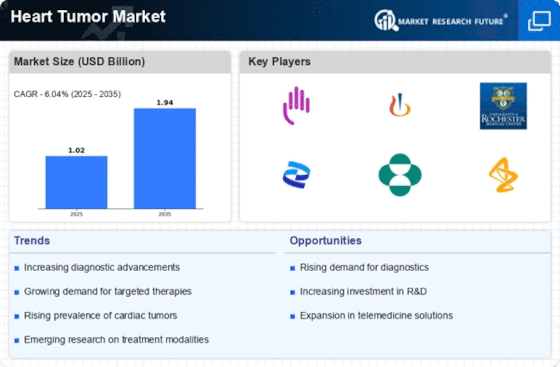
As per MRFR analysis, the Heart Tumor Market Size was estimated at 1.02 USD Billion in 2024. The Heart Tumor industry is projected to grow from 1.082 in 2025 to 1.944 by 2035, exhibiting a compound annual growth rate (CAGR) of 6.04 during the forecast period 2025 - 2035.

Key Market Trends & Highlights

The Heart Tumor Market is experiencing notable growth driven by technological advancements and increasing patient awareness.

  • North America remains the largest market for heart tumors, driven by advanced healthcare infrastructure and diagnostic capabilities.
  • The Asia-Pacific region is emerging as the fastest-growing market, fueled by rising healthcare investments and increasing patient populations.
  • Primary tumors represent the largest segment in the heart tumor market, while secondary tumors are witnessing the fastest growth due to evolving treatment paradigms.
  • Key market drivers include the rising incidence of heart tumors and technological advancements in treatment, which are enhancing patient outcomes.

Market Size & Forecast

2024 Market Size 1.02 (USD Billion)
2035 Market Size 1.944 (USD Billion)
CAGR (2025 - 2035) 6.04%
Largest Regional Market Share in 2024 North America

Major Players

<p>Bristol-Myers Squibb (US), Novartis (CH), Roche (CH), Pfizer (US), Merck & Co. (US), AstraZeneca (GB), Eli Lilly and Company (US), Bayer (DE), Amgen (US)</p>

Market Trends

The Heart Tumor Market is currently experiencing a notable evolution, driven by advancements in diagnostic technologies and therapeutic approaches. The increasing prevalence of cardiac tumors, although rare, has prompted a surge in research and development efforts aimed at improving patient outcomes. Innovative imaging techniques, such as cardiac MRI and CT scans, are enhancing the accuracy of tumor detection, thereby facilitating timely interventions. Furthermore, the integration of personalized medicine is becoming more prevalent, allowing for tailored treatment plans that align with individual patient profiles. This shift towards precision in therapy is likely to enhance the efficacy of interventions and improve overall survival rates. In addition to technological advancements, the Heart Tumor Market is also influenced by the growing awareness of cardiovascular health among the general population. Educational initiatives and outreach programs are fostering a better understanding of heart tumors, which may lead to earlier diagnosis and treatment. Moreover, collaborations between healthcare providers and research institutions are expected to yield novel therapeutic options, including targeted therapies and immunotherapies. As the landscape of the Heart Tumor Market continues to evolve, stakeholders must remain vigilant in adapting to these changes to optimize patient care and outcomes.

Advancements in Diagnostic Technologies

The Heart Tumor Market is witnessing a transformation due to the emergence of advanced diagnostic tools. Enhanced imaging modalities, such as cardiac MRI and high-resolution CT scans, are improving the detection rates of cardiac tumors. These innovations facilitate earlier diagnosis, which is crucial for effective treatment planning and management.

Personalized Treatment Approaches

There is a growing trend towards personalized medicine within the Heart Tumor Market. Tailored treatment strategies that consider individual patient characteristics are becoming more common. This approach aims to optimize therapeutic efficacy and minimize adverse effects, thereby improving patient outcomes.

Increased Awareness and Education

The Heart Tumor Market is benefiting from heightened awareness regarding cardiovascular health. Educational campaigns are informing the public about the signs and symptoms of heart tumors, potentially leading to earlier detection. This increased knowledge may drive demand for diagnostic services and treatment options.

Heart Tumor Market Market Drivers

Rising Incidence of Heart Tumors

The increasing incidence of heart tumors is a primary driver for the Heart Tumor Market. Recent data indicates that the prevalence of cardiac tumors has been on the rise, with estimates suggesting that approximately 0.02% to 0.3% of all cardiac tumors are malignant. This growing incidence necessitates enhanced diagnostic and therapeutic options, thereby propelling market growth. As healthcare systems adapt to this trend, investments in research and development are likely to increase, fostering innovation in treatment modalities. Furthermore, the aging population, which is more susceptible to various forms of cancer, contributes to the rising number of heart tumor cases. Consequently, the Heart Tumor Market is expected to expand as healthcare providers seek to address this pressing health concern.

Rising Patient Awareness and Advocacy

Rising patient awareness and advocacy are playing a pivotal role in shaping the Heart Tumor Market. As patients become more informed about heart tumors and their treatment options, there is a growing demand for comprehensive care and support services. Advocacy groups are actively promoting education and awareness campaigns, which are instrumental in encouraging early detection and timely intervention. This heightened awareness is likely to lead to increased screening and diagnostic testing, ultimately contributing to market growth. Additionally, as patients seek more personalized treatment options, healthcare providers are compelled to adapt their services to meet these expectations. The Heart Tumor Market is thus experiencing a shift towards patient-centered care, driven by the collective efforts of advocacy organizations and informed patients.

Technological Advancements in Treatment

Technological advancements in treatment methodologies are significantly influencing the Heart Tumor Market. Innovations such as minimally invasive surgical techniques, targeted therapies, and advanced imaging technologies are transforming the landscape of cardiac tumor management. For instance, the introduction of robotic-assisted surgeries has improved surgical outcomes and reduced recovery times for patients. Additionally, the development of novel pharmacological agents that target specific tumor markers is enhancing treatment efficacy. Market data suggests that the adoption of these technologies is likely to increase, as healthcare providers aim to improve patient outcomes and reduce healthcare costs. As a result, the Heart Tumor Market is poised for growth, driven by the continuous evolution of treatment options that cater to the unique needs of patients.

Increased Research and Development Activities

Increased research and development activities are propelling the Heart Tumor Market forward. The scientific community is actively engaged in exploring novel therapeutic approaches and understanding the underlying mechanisms of heart tumors. Recent studies have highlighted the importance of genetic profiling in tailoring treatment strategies, which is likely to enhance the effectiveness of interventions. Furthermore, collaborations between academic institutions and pharmaceutical companies are fostering innovation in drug development. Market data indicates that R&D spending in oncology is expected to rise, reflecting a commitment to addressing the challenges posed by heart tumors. This surge in research efforts is anticipated to yield new treatment options and improve existing therapies, thereby driving growth in the Heart Tumor Market.

Growing Investment in Healthcare Infrastructure

The growing investment in healthcare infrastructure is a crucial driver for the Heart Tumor Market. Governments and private entities are increasingly allocating resources to enhance healthcare facilities, particularly in oncology and cardiology departments. This trend is evident in various regions, where new hospitals and specialized treatment centers are being established to cater to the rising demand for heart tumor management. According to recent reports, healthcare expenditure is projected to increase, with a focus on advanced diagnostic and therapeutic technologies. This influx of investment is likely to facilitate the development of comprehensive care pathways for patients with heart tumors, thereby expanding the Heart Tumor Market. Enhanced infrastructure not only improves access to care but also fosters collaboration among healthcare professionals, ultimately benefiting patient outcomes.

Market Segment Insights

By Tumor Type: Primary Tumor (Largest) vs. Secondary Tumor (Fastest-Growing)

<p>In the Heart Tumor Market, the primary tumor segment holds a significant portion of the market share, reflecting its established presence and recognition among healthcare providers. Primary tumors, originating within the heart, account for the majority of cases, thereby shaping market dynamics and treatment approaches. In contrast, the secondary tumor segment has emerged as a rapidly growing area of concern, primarily due to the increasing incidence of metastatic diseases that affect the heart, leading to a notable shift in treatment priorities and market focus.</p>

<p>Tumor Type: Primary (Dominant) vs. Secondary (Emerging)</p>

<p>The primary tumor segment is characterized by tumors that develop as the initial site in the heart, such as myxomas and sarcomas. These tumors are often diagnosed earlier due to their distinct symptoms and the patient's direct interaction with healthcare systems. On the other hand, secondary tumors arise from cancers originating elsewhere in the body and metastasize to the heart. This segment is witnessing increased attention as advancements in oncology lead to better survival rates, thereby growing the need for targeted therapeutic approaches in treating these patients. As research continues to evolve, both segments attract unique treatment regimens designed to address their specific biological behaviors and distinct clinical challenges.</p>

By Diagnosis: MRI Scan (Largest) vs. CT Scan (Fastest-Growing)

<p>The 'Diagnosis' segment in the Heart Tumor Market is characterized by a diverse range of imaging technologies used for identification and assessment. Among these, MRI Scans hold the largest market share, owing to their superior imaging capabilities that provide detailed views of soft tissue structures, which are crucial for accurately diagnosing heart tumors. In contrast, CT Scans are emerging rapidly, capturing market interest due to advancements in technology that enhance their imaging precision and reduce radiation exposure, positioning them as the fastest-growing diagnostic tool in this segment.</p>

<p>MRI Scan (Dominant) vs. CT Scan (Emerging)</p>

<p>MRI Scans represent the dominant technology in the Heart Tumor diagnosis segment, largely because of their ability to capture multi-directional images without radiation exposure, making them ideal for soft tissue evaluation. Hospitals and specialized clinics prefer MRI for initial diagnostics and treatment planning due to its efficacy in detailing soft tissue lesions. On the other hand, CT Scans are considered an emerging diagnostic solution, driven by recent innovations that have improved image resolution and scan speed, coupled with lower operational costs. Their efficiency in quickly imaging large areas of the heart makes them a favorable option in emergency settings, further contributing to their rapid adoption and growth in the market.</p>

By Treatment: Surgery (Largest) vs. Chemotherapy (Fastest-Growing)

<p>In the Heart Tumor Market, the Treatment segment is primarily divided among Surgery, Chemotherapy, Radiotherapy, and Others. Currently, Surgery holds the largest market share, benefiting from its established role as a primary intervention for heart tumors. Meanwhile, Chemotherapy is recognized for its growing application, which is reflected in its rapid increase in utilization. Radiotherapy and Others contribute to the segment but on a comparatively smaller scale, often used in conjunction with the dominant treatments.</p>

<p>Surgery (Dominant) vs. Chemotherapy (Emerging)</p>

<p>Surgery is the dominant approach in the treatment of heart tumors, providing direct intervention and often leading to curative outcomes for patients. It includes various techniques such as resection and minimal invasive methods. In contrast, Chemotherapy is emerging rapidly as a supportive treatment, particularly for patients with inoperable tumors or as an adjuvant therapy post-surgery. This shift is driven by advances in pharmacology and personalized medicine, which enhance the effectiveness of chemotherapy regimens. As research progresses, the synergy between surgical methods and chemotherapy is expected to grow stronger, emphasizing the importance of integrated treatment approaches for heart tumors.</p>

Get more detailed insights about Heart Tumor Market Research Report—Global Forecast till 2035

Regional Insights

North America : Leading Innovation and Research

North America is the largest market for heart tumor treatments, accounting for approximately 45% of the global market share. The region benefits from advanced healthcare infrastructure, significant R&D investments, and a high prevalence of heart-related diseases. Regulatory support from agencies like the FDA accelerates the approval of innovative therapies, driving market growth. The increasing demand for personalized medicine and targeted therapies further fuels this expansion. The United States is the primary contributor to this market, with key players such as Bristol-Myers Squibb, Pfizer, and Merck & Co. leading the charge. The competitive landscape is characterized by a mix of established pharmaceutical giants and emerging biotech firms. Canada also plays a significant role, focusing on research collaborations and clinical trials, enhancing the overall market dynamics.

Europe : Regulatory Support and Growth

Europe is the second-largest market for heart tumor treatments, holding around 30% of the global market share. The region's growth is driven by increasing awareness of heart tumors, advancements in diagnostic technologies, and supportive regulatory frameworks from the European Medicines Agency (EMA). Countries like Germany and France are at the forefront, with a rising demand for innovative therapies and a focus on improving patient outcomes. Germany leads the market, supported by a robust healthcare system and significant investments in medical research. France and the UK also contribute substantially, with numerous clinical trials and collaborations among key players like Novartis and Roche. The competitive landscape is evolving, with a mix of established companies and startups focusing on novel treatment options, enhancing the region's market potential.

Asia-Pacific : Rapidly Growing Healthcare Sector

Asia-Pacific is an emerging powerhouse in the heart tumor market, accounting for approximately 20% of the global share. The region's growth is propelled by increasing healthcare expenditure, rising awareness of heart diseases, and a growing aging population. Countries like China and India are witnessing significant advancements in healthcare infrastructure, which are crucial for the adoption of innovative treatment options. Regulatory bodies are also becoming more supportive, facilitating faster approvals for new therapies. China is the largest market in the region, with a rapidly expanding pharmaceutical sector and a focus on research and development. India follows closely, with a growing number of clinical trials and collaborations among local and international players. The competitive landscape is marked by the presence of both global giants and local firms, creating a dynamic environment for innovation and growth.

Middle East and Africa : Emerging Market with Challenges

The Middle East and Africa represent a smaller segment of the heart tumor market, holding about 5% of the global share. However, the region is witnessing gradual growth driven by increasing healthcare investments, rising awareness of heart diseases, and improving access to advanced medical technologies. Countries like South Africa and the UAE are leading the way, focusing on enhancing healthcare infrastructure and regulatory frameworks to support new treatments. South Africa is the largest market in the region, with a growing number of healthcare facilities and initiatives aimed at improving patient care. The competitive landscape is characterized by a mix of local and international players, with a focus on addressing the unique healthcare challenges faced in the region. Collaborative efforts among governments and private sectors are essential for fostering innovation and expanding market access.

Key Companies in the Heart Tumor Market market include

Industry Developments

    • In May 2022, GE Healthcare (US) and Alliance Medical (UK) collaborated to improve patient access to diagnostics and enhance radiology productivity using data analytics and AI.
    • In April 2021, Koninklijke Philips N.V. (Netherlands) received FDA 510(k) clearance for 3D CT image acquisition software. This software will provide interventionalists with CT-like 3D images to support diagnosis, therapy planning, treatment, and follow-up for interventional radiology procedures
    • In November 2021, Siemens Healthineers (Germany) introduced Magnetom Free. Star, is a cost-effective whole-body MRI scanner designed to enable significantly better access to magnetic resonance imaging.

Future Outlook

Heart Tumor Market Future Outlook

<p>The Heart Tumor Market is projected to grow at a 6.04% CAGR from 2024 to 2035, driven by advancements in diagnostic technologies, increasing prevalence, and enhanced treatment options.</p>

New opportunities lie in:

  • <p>Development of targeted therapies for specific heart tumor types.</p>
  • <p>Expansion of telemedicine platforms for remote patient monitoring.</p>
  • <p>Investment in AI-driven diagnostic tools for early detection.</p>

<p>By 2035, the Heart Tumor Market is expected to achieve substantial growth, reflecting evolving treatment paradigms and technological advancements.</p>

Market Segmentation

Heart Tumor Market Diagnosis Outlook

  • CT Scan
  • MRI Scan
  • Nuclear Imaging
  • Echocardiography
  • Others

Heart Tumor Market Treatment Outlook

  • Surgery
  • Chemotherapy
  • Radiotherapy
  • Others

Heart Tumor Market Tumor Type Outlook

  • Primary Tumor
  • Secondary Tumor

Report Scope

MARKET SIZE 20241.02(USD Billion)
MARKET SIZE 20251.082(USD Billion)
MARKET SIZE 20351.944(USD Billion)
COMPOUND ANNUAL GROWTH RATE (CAGR)6.04% (2024 - 2035)
REPORT COVERAGERevenue Forecast, Competitive Landscape, Growth Factors, and Trends
BASE YEAR2024
Market Forecast Period2025 - 2035
Historical Data2019 - 2024
Market Forecast UnitsUSD Billion
Key Companies ProfiledMarket analysis in progress
Segments CoveredMarket segmentation analysis in progress
Key Market OpportunitiesAdvancements in minimally invasive surgical techniques enhance treatment options in the Heart Tumor Market.
Key Market DynamicsRising demand for innovative therapies drives competition and regulatory scrutiny in the heart tumor treatment landscape.
Countries CoveredNorth America, Europe, APAC, South America, MEA

FAQs

  1. SECTION I: EXECUTIVE SUMMARY AND KEY HIGHLIGHTS
    1. EXECUTIVE SUMMARY
      1. Market Overview
      2. Key Findings
      3. Market Segmentation
      4. Competitive Landscape
      5. Challenges and Opportunities
      6. Future Outlook
  2. SECTION II: SCOPING, METHODOLOGY AND MARKET STRUCTURE
    1. MARKET INTRODUCTION
      1. Definition
      2. Scope of the study
    2. RESEARCH METHODOLOGY
      1. Overview
      2. Data Mining
      3. Secondary Research
      4. Primary Research
      5. Forecasting Model
      6. Market Size Estimation
      7. Data Triangulation
      8. Validation
  3. SECTION III: QUALITATIVE ANALYSIS
    1. MARKET DYNAMICS
      1. Overview
      2. Drivers
      3. Restraints
      4. Opportunities
    2. MARKET FACTOR ANALYSIS
      1. Value chain Analysis
      2. Porter's Five Forces Analysis
      3. COVID-19 Impact Analysis
  4. SECTION IV: QUANTITATIVE ANALYSIS
    1. Healthcare, BY Tumor Type (USD Billion)
      1. Primary Tumor
      2. Secondary Tumor
    2. Healthcare, BY Diagnosis (USD Billion)
      1. CT Scan
      2. MRI Scan
      3. Nuclear Imaging
      4. Echocardiography
      5. Others
    3. Healthcare, BY Treatment (USD Billion)
      1. Surgery
      2. Chemotherapy
      3. Radiotherapy
      4. Others
    4. Healthcare, BY Region (USD Billion)
      1. North America
      2. Europe
      3. APAC
      4. South America
      5. MEA
  5. SECTION V: COMPETITIVE ANALYSIS
    1. Competitive Landscape
      1. Overview
      2. Competitive Analysis
      3. Market share Analysis
      4. Major Growth Strategy in the Healthcare
      5. Competitive Benchmarking
      6. Leading Players in Terms of Number of Developments in the Healthcare
      7. Key developments and growth strategies
      8. Major Players Financial Matrix
    2. Company Profiles
      1. Bristol-Myers Squibb (US)
      2. Novartis (CH)
      3. Roche (CH)
      4. Pfizer (US)
      5. Merck & Co. (US)
      6. AstraZeneca (GB)
      7. Eli Lilly and Company (US)
      8. Bayer (DE)
      9. Amgen (US)
    3. Appendix
      1. References
      2. Related Reports
  6. LIST OF FIGURES
    1. MARKET SYNOPSIS
    2. NORTH AMERICA MARKET ANALYSIS
    3. US MARKET ANALYSIS BY TUMOR TYPE
    4. US MARKET ANALYSIS BY DIAGNOSIS
    5. US MARKET ANALYSIS BY TREATMENT
    6. CANADA MARKET ANALYSIS BY TUMOR TYPE
    7. CANADA MARKET ANALYSIS BY DIAGNOSIS
    8. CANADA MARKET ANALYSIS BY TREATMENT
    9. EUROPE MARKET ANALYSIS
    10. GERMANY MARKET ANALYSIS BY TUMOR TYPE
    11. GERMANY MARKET ANALYSIS BY DIAGNOSIS
    12. GERMANY MARKET ANALYSIS BY TREATMENT
    13. UK MARKET ANALYSIS BY TUMOR TYPE
    14. UK MARKET ANALYSIS BY DIAGNOSIS
    15. UK MARKET ANALYSIS BY TREATMENT
    16. FRANCE MARKET ANALYSIS BY TUMOR TYPE
    17. FRANCE MARKET ANALYSIS BY DIAGNOSIS
    18. FRANCE MARKET ANALYSIS BY TREATMENT
    19. RUSSIA MARKET ANALYSIS BY TUMOR TYPE
    20. RUSSIA MARKET ANALYSIS BY DIAGNOSIS
    21. RUSSIA MARKET ANALYSIS BY TREATMENT
    22. ITALY MARKET ANALYSIS BY TUMOR TYPE
    23. ITALY MARKET ANALYSIS BY DIAGNOSIS
    24. ITALY MARKET ANALYSIS BY TREATMENT
    25. SPAIN MARKET ANALYSIS BY TUMOR TYPE
    26. SPAIN MARKET ANALYSIS BY DIAGNOSIS
    27. SPAIN MARKET ANALYSIS BY TREATMENT
    28. REST OF EUROPE MARKET ANALYSIS BY TUMOR TYPE
    29. REST OF EUROPE MARKET ANALYSIS BY DIAGNOSIS
    30. REST OF EUROPE MARKET ANALYSIS BY TREATMENT
    31. APAC MARKET ANALYSIS
    32. CHINA MARKET ANALYSIS BY TUMOR TYPE
    33. CHINA MARKET ANALYSIS BY DIAGNOSIS
    34. CHINA MARKET ANALYSIS BY TREATMENT
    35. INDIA MARKET ANALYSIS BY TUMOR TYPE
    36. INDIA MARKET ANALYSIS BY DIAGNOSIS
    37. INDIA MARKET ANALYSIS BY TREATMENT
    38. JAPAN MARKET ANALYSIS BY TUMOR TYPE
    39. JAPAN MARKET ANALYSIS BY DIAGNOSIS
    40. JAPAN MARKET ANALYSIS BY TREATMENT
    41. SOUTH KOREA MARKET ANALYSIS BY TUMOR TYPE
    42. SOUTH KOREA MARKET ANALYSIS BY DIAGNOSIS
    43. SOUTH KOREA MARKET ANALYSIS BY TREATMENT
    44. MALAYSIA MARKET ANALYSIS BY TUMOR TYPE
    45. MALAYSIA MARKET ANALYSIS BY DIAGNOSIS
    46. MALAYSIA MARKET ANALYSIS BY TREATMENT
    47. THAILAND MARKET ANALYSIS BY TUMOR TYPE
    48. THAILAND MARKET ANALYSIS BY DIAGNOSIS
    49. THAILAND MARKET ANALYSIS BY TREATMENT
    50. INDONESIA MARKET ANALYSIS BY TUMOR TYPE
    51. INDONESIA MARKET ANALYSIS BY DIAGNOSIS
    52. INDONESIA MARKET ANALYSIS BY TREATMENT
    53. REST OF APAC MARKET ANALYSIS BY TUMOR TYPE
    54. REST OF APAC MARKET ANALYSIS BY DIAGNOSIS
    55. REST OF APAC MARKET ANALYSIS BY TREATMENT
    56. SOUTH AMERICA MARKET ANALYSIS
    57. BRAZIL MARKET ANALYSIS BY TUMOR TYPE
    58. BRAZIL MARKET ANALYSIS BY DIAGNOSIS
    59. BRAZIL MARKET ANALYSIS BY TREATMENT
    60. MEXICO MARKET ANALYSIS BY TUMOR TYPE
    61. MEXICO MARKET ANALYSIS BY DIAGNOSIS
    62. MEXICO MARKET ANALYSIS BY TREATMENT
    63. ARGENTINA MARKET ANALYSIS BY TUMOR TYPE
    64. ARGENTINA MARKET ANALYSIS BY DIAGNOSIS
    65. ARGENTINA MARKET ANALYSIS BY TREATMENT
    66. REST OF SOUTH AMERICA MARKET ANALYSIS BY TUMOR TYPE
    67. REST OF SOUTH AMERICA MARKET ANALYSIS BY DIAGNOSIS
    68. REST OF SOUTH AMERICA MARKET ANALYSIS BY TREATMENT
    69. MEA MARKET ANALYSIS
    70. GCC COUNTRIES MARKET ANALYSIS BY TUMOR TYPE
    71. GCC COUNTRIES MARKET ANALYSIS BY DIAGNOSIS
    72. GCC COUNTRIES MARKET ANALYSIS BY TREATMENT
    73. SOUTH AFRICA MARKET ANALYSIS BY TUMOR TYPE
    74. SOUTH AFRICA MARKET ANALYSIS BY DIAGNOSIS
    75. SOUTH AFRICA MARKET ANALYSIS BY TREATMENT
    76. REST OF MEA MARKET ANALYSIS BY TUMOR TYPE
    77. REST OF MEA MARKET ANALYSIS BY DIAGNOSIS
    78. REST OF MEA MARKET ANALYSIS BY TREATMENT
    79. KEY BUYING CRITERIA OF HEALTHCARE
    80. RESEARCH PROCESS OF MRFR
    81. DRO ANALYSIS OF HEALTHCARE
    82. DRIVERS IMPACT ANALYSIS: HEALTHCARE
    83. RESTRAINTS IMPACT ANALYSIS: HEALTHCARE
    84. SUPPLY / VALUE CHAIN: HEALTHCARE
    85. HEALTHCARE, BY TUMOR TYPE, 2024 (% SHARE)
    86. HEALTHCARE, BY TUMOR TYPE, 2024 TO 2035 (USD Billion)
    87. HEALTHCARE, BY DIAGNOSIS, 2024 (% SHARE)
    88. HEALTHCARE, BY DIAGNOSIS, 2024 TO 2035 (USD Billion)
    89. HEALTHCARE, BY TREATMENT, 2024 (% SHARE)
    90. HEALTHCARE, BY TREATMENT, 2024 TO 2035 (USD Billion)
    91. BENCHMARKING OF MAJOR COMPETITORS
  7. LIST OF TABLES
    1. LIST OF ASSUMPTIONS
    2. North America MARKET SIZE ESTIMATES; FORECAST
      1. BY TUMOR TYPE, 2025-2035 (USD Billion)
      2. BY DIAGNOSIS, 2025-2035 (USD Billion)
      3. BY TREATMENT, 2025-2035 (USD Billion)
    3. US MARKET SIZE ESTIMATES; FORECAST
      1. BY TUMOR TYPE, 2025-2035 (USD Billion)
      2. BY DIAGNOSIS, 2025-2035 (USD Billion)
      3. BY TREATMENT, 2025-2035 (USD Billion)
    4. Canada MARKET SIZE ESTIMATES; FORECAST
      1. BY TUMOR TYPE, 2025-2035 (USD Billion)
      2. BY DIAGNOSIS, 2025-2035 (USD Billion)
      3. BY TREATMENT, 2025-2035 (USD Billion)
    5. Europe MARKET SIZE ESTIMATES; FORECAST
      1. BY TUMOR TYPE, 2025-2035 (USD Billion)
      2. BY DIAGNOSIS, 2025-2035 (USD Billion)
      3. BY TREATMENT, 2025-2035 (USD Billion)
    6. Germany MARKET SIZE ESTIMATES; FORECAST
      1. BY TUMOR TYPE, 2025-2035 (USD Billion)
      2. BY DIAGNOSIS, 2025-2035 (USD Billion)
      3. BY TREATMENT, 2025-2035 (USD Billion)
    7. UK MARKET SIZE ESTIMATES; FORECAST
      1. BY TUMOR TYPE, 2025-2035 (USD Billion)
      2. BY DIAGNOSIS, 2025-2035 (USD Billion)
      3. BY TREATMENT, 2025-2035 (USD Billion)
    8. France MARKET SIZE ESTIMATES; FORECAST
      1. BY TUMOR TYPE, 2025-2035 (USD Billion)
      2. BY DIAGNOSIS, 2025-2035 (USD Billion)
      3. BY TREATMENT, 2025-2035 (USD Billion)
    9. Russia MARKET SIZE ESTIMATES; FORECAST
      1. BY TUMOR TYPE, 2025-2035 (USD Billion)
      2. BY DIAGNOSIS, 2025-2035 (USD Billion)
      3. BY TREATMENT, 2025-2035 (USD Billion)
    10. Italy MARKET SIZE ESTIMATES; FORECAST
      1. BY TUMOR TYPE, 2025-2035 (USD Billion)
      2. BY DIAGNOSIS, 2025-2035 (USD Billion)
      3. BY TREATMENT, 2025-2035 (USD Billion)
    11. Spain MARKET SIZE ESTIMATES; FORECAST
      1. BY TUMOR TYPE, 2025-2035 (USD Billion)
      2. BY DIAGNOSIS, 2025-2035 (USD Billion)
      3. BY TREATMENT, 2025-2035 (USD Billion)
    12. Rest of Europe MARKET SIZE ESTIMATES; FORECAST
      1. BY TUMOR TYPE, 2025-2035 (USD Billion)
      2. BY DIAGNOSIS, 2025-2035 (USD Billion)
      3. BY TREATMENT, 2025-2035 (USD Billion)
    13. APAC MARKET SIZE ESTIMATES; FORECAST
      1. BY TUMOR TYPE, 2025-2035 (USD Billion)
      2. BY DIAGNOSIS, 2025-2035 (USD Billion)
      3. BY TREATMENT, 2025-2035 (USD Billion)
    14. China MARKET SIZE ESTIMATES; FORECAST
      1. BY TUMOR TYPE, 2025-2035 (USD Billion)
      2. BY DIAGNOSIS, 2025-2035 (USD Billion)
      3. BY TREATMENT, 2025-2035 (USD Billion)
    15. India MARKET SIZE ESTIMATES; FORECAST
      1. BY TUMOR TYPE, 2025-2035 (USD Billion)
      2. BY DIAGNOSIS, 2025-2035 (USD Billion)
      3. BY TREATMENT, 2025-2035 (USD Billion)
    16. Japan MARKET SIZE ESTIMATES; FORECAST
      1. BY TUMOR TYPE, 2025-2035 (USD Billion)
      2. BY DIAGNOSIS, 2025-2035 (USD Billion)
      3. BY TREATMENT, 2025-2035 (USD Billion)
    17. South Korea MARKET SIZE ESTIMATES; FORECAST
      1. BY TUMOR TYPE, 2025-2035 (USD Billion)
      2. BY DIAGNOSIS, 2025-2035 (USD Billion)
      3. BY TREATMENT, 2025-2035 (USD Billion)
    18. Malaysia MARKET SIZE ESTIMATES; FORECAST
      1. BY TUMOR TYPE, 2025-2035 (USD Billion)
      2. BY DIAGNOSIS, 2025-2035 (USD Billion)
      3. BY TREATMENT, 2025-2035 (USD Billion)
    19. Thailand MARKET SIZE ESTIMATES; FORECAST
      1. BY TUMOR TYPE, 2025-2035 (USD Billion)
      2. BY DIAGNOSIS, 2025-2035 (USD Billion)
      3. BY TREATMENT, 2025-2035 (USD Billion)
    20. Indonesia MARKET SIZE ESTIMATES; FORECAST
      1. BY TUMOR TYPE, 2025-2035 (USD Billion)
      2. BY DIAGNOSIS, 2025-2035 (USD Billion)
      3. BY TREATMENT, 2025-2035 (USD Billion)
    21. Rest of APAC MARKET SIZE ESTIMATES; FORECAST
      1. BY TUMOR TYPE, 2025-2035 (USD Billion)
      2. BY DIAGNOSIS, 2025-2035 (USD Billion)
      3. BY TREATMENT, 2025-2035 (USD Billion)
    22. South America MARKET SIZE ESTIMATES; FORECAST
      1. BY TUMOR TYPE, 2025-2035 (USD Billion)
      2. BY DIAGNOSIS, 2025-2035 (USD Billion)
      3. BY TREATMENT, 2025-2035 (USD Billion)
    23. Brazil MARKET SIZE ESTIMATES; FORECAST
      1. BY TUMOR TYPE, 2025-2035 (USD Billion)
      2. BY DIAGNOSIS, 2025-2035 (USD Billion)
      3. BY TREATMENT, 2025-2035 (USD Billion)
    24. Mexico MARKET SIZE ESTIMATES; FORECAST
      1. BY TUMOR TYPE, 2025-2035 (USD Billion)
      2. BY DIAGNOSIS, 2025-2035 (USD Billion)
      3. BY TREATMENT, 2025-2035 (USD Billion)
    25. Argentina MARKET SIZE ESTIMATES; FORECAST
      1. BY TUMOR TYPE, 2025-2035 (USD Billion)
      2. BY DIAGNOSIS, 2025-2035 (USD Billion)
      3. BY TREATMENT, 2025-2035 (USD Billion)
    26. Rest of South America MARKET SIZE ESTIMATES; FORECAST
      1. BY TUMOR TYPE, 2025-2035 (USD Billion)
      2. BY DIAGNOSIS, 2025-2035 (USD Billion)
      3. BY TREATMENT, 2025-2035 (USD Billion)
    27. MEA MARKET SIZE ESTIMATES; FORECAST
      1. BY TUMOR TYPE, 2025-2035 (USD Billion)
      2. BY DIAGNOSIS, 2025-2035 (USD Billion)
      3. BY TREATMENT, 2025-2035 (USD Billion)
    28. GCC Countries MARKET SIZE ESTIMATES; FORECAST
      1. BY TUMOR TYPE, 2025-2035 (USD Billion)
      2. BY DIAGNOSIS, 2025-2035 (USD Billion)
      3. BY TREATMENT, 2025-2035 (USD Billion)
    29. South Africa MARKET SIZE ESTIMATES; FORECAST
      1. BY TUMOR TYPE, 2025-2035 (USD Billion)
      2. BY DIAGNOSIS, 2025-2035 (USD Billion)
      3. BY TREATMENT, 2025-2035 (USD Billion)
    30. Rest of MEA MARKET SIZE ESTIMATES; FORECAST
      1. BY TUMOR TYPE, 2025-2035 (USD Billion)
      2. BY DIAGNOSIS, 2025-2035 (USD Billion)
      3. BY TREATMENT, 2025-2035 (USD Billion)
    31. PRODUCT LAUNCH/PRODUCT DEVELOPMENT/APPROVAL
    32. ACQUISITION/PARTNERSHIP

Heart Tumor Market Segmentation

Market Segmentation Overview

  • Detailed segmentation data will be available in the full report
  • Comprehensive analysis by multiple parameters
  • Regional and country-level breakdowns
  • Market size forecasts by segment
Infographic

Free Sample Request

Kindly complete the form below to receive a free sample of this Report

Get Free Sample

Customer Strories

Compare Licence

×
Features License Type
Single User Multiuser License Enterprise User
Price $4,950 $5,950 $7,250
Maximum User Access Limit 1 User Upto 10 Users Unrestricted Access Throughout the Organization
Free Customization
Direct Access to Analyst
Deliverable Format
Platform Access
Discount on Next Purchase 10% 15% 15%
Printable Versions