Request Free Sample ×

Kindly complete the form below to receive a free sample of this Report

* Please use a valid business email

Leading companies partner with us for data-driven Insights

clients tt-cursor
Hero Background
English
Chinese
French
Japanese
Korean
German
Spanish

Hearing Aids Market Size

ID: MRFR/HC/6892-CR
131 Pages
Nidhi Mandole
July 2025

Hearing Aids Market Research Report Information by Product (Hearing Aid Devices (Receiver-In-The-Ear (RITE) Hearing Aids, Behind-The-Ear (BTE) Hearing Aids, Canal Hearing Aids, In-The-Ear (ITE) Hearing Aids, Other), Hearing Implants (Cochlear Implants and Bone-Anchored Systems), by Type of Hearing Loss (Sensorineural Hearing Loss and Conductive Hearing Loss), by Patient Type (Adults and Pediatrics), by Technology (Analog and Digital), by End-User (Private Pay/Out of Pocket, Third Party Payer, Medicare/Medicaid) and Region (North America, Europe, Asia-Pacific, South America, Middle East & Africa) - Forecast till 2035

Share:
Download PDF ×

We do not share your information with anyone. However, we may send you emails based on your report interest from time to time. You may contact us at any time to opt-out.

Hearing Aids Market Infographic
Purchase Options

Hearing Aids Size

Hearing Aids Market Growth Projections and Opportunities

There is a variety of factors that significantly determine the dynamics in hearing aid market. One of the leading forces is an aging world population. With advancing years, the possibility of developing hearing loss also increases; this represents market demand for efficient and effective types of hearing aids. The increasing prevalence of hearing impairment in the old population, there have been innovations on hearing aid technology and fashion to meet diverse needs from this growing consumer group. Innovations on technology contribute to the market dynamics with enhanced functionality and performance of hearing aids. Digital hearing aids presented the turning point of switching from analog to digital systems that allowed for better sound quality, programmability, and features such as noise reduction. The market continues to evolve due to the integration of artificial intelligence, connectivity options and smart functionalities that provides users with a more streamlined personalized hearing experience. Market trends are very much affected by factors such as consumer awareness and changing of preferences. Hearing aids are de-stigmatizing from sleek and discreet designs. Today’s consumers are looking for devices that do not only meet their hearing requirements effectively, but also match with their lifestyle and fashion. In response to this need, manufacturers are diversifying their product lineups with different styles and form factors. Regulatory landscape is one of the importing elements that have an impact on hearing aids market. Governments and health bodies across the globe set standards for the safety, efficacy, and quality of hearing aid systems. Besides, regulatory compliance not only creates a standard for the manufacturers but also gives confidence to consumers regarding reliability of products. Regulations changes affect market entry barriers, new product development and the overall competitive position of an industry. Hearing aids market is also influenced by economic factors. Economic forces such as recessions or expansions may spill over onto consumer purchasing power and, in turn manufacturers production costs. In certain areas, there are government programs and health policies that assist in cheaper hearing aids by subsidies or insurance coverages. Factors in economic stability and the infrastructure of healthcare play significant roles that contribute to market growth and penetration.

Hearing Aids Market Size Graph
Author
Author Profile
Nidhi Mandole
Senior Research Analyst

She is an extremely curious individual currently working in Healthcare and Medical Devices Domain. Nidhi is comfortably versed in data centric research backed by healthcare educational background. She leverages extensive data mining and analytics tools such as Primary and Secondary Research, Statistical Analysis, Machine Learning, Data Modelling. Her key role also involves Technical Sales Support, Client Interaction and Project management within the Healthcare team. Lastly, she showcases extensive affinity towards learning new skills and remain fascinated in implementing them.

Leave a Comment

FAQs

What is the current valuation of the hearing aid market as of 2024?

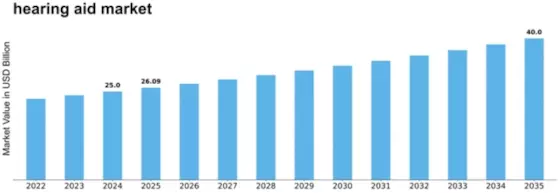
<p>The hearing aid market was valued at 25.0 USD Billion in 2024.</p>

What is the projected market size for the hearing aid industry by 2035?

<p>The hearing aid market is projected to reach 40.0 USD Billion by 2035.</p>

What is the expected CAGR for the hearing aid market during the forecast period 2025 - 2035?

<p>The expected CAGR for the hearing aid market during the forecast period 2025 - 2035 is 4.37%.</p>

Which companies are considered key players in the hearing aid market?

<p>Key players in the hearing aid market include Sonova Holding AG, Demant A/S, WS Audiology A/S, and Cochlear Limited.</p>

What are the primary applications of hearing aids in the market?

<p>The primary applications of hearing aids include Hearing Loss, Tinnitus Management, and Communication Enhancement.</p>

How do the revenues from digital hearing aids compare to analog hearing aids?

<p>Revenues from digital hearing aids are projected to range from 10.0 to 15.0 USD Billion, whereas analog hearing aids are expected to generate 3.0 to 5.0 USD Billion.</p>

What segment of the hearing aid market is expected to generate the highest revenue?

<p>The Hearing Loss segment is anticipated to generate the highest revenue, with projections between 10.0 and 16.0 USD Billion.</p>

What is the revenue outlook for Bluetooth hearing aids by 2035?

<p>The revenue outlook for Bluetooth hearing aids is projected to be between 5.0 and 10.0 USD Billion by 2035.</p>

Which demographic is expected to contribute significantly to the hearing aid market?

<p>The adult demographic is expected to contribute significantly, with revenues projected between 10.0 and 16.0 USD Billion.</p>

What is the anticipated revenue range for rechargeable hearing aids in the coming years?

<p>The anticipated revenue range for rechargeable hearing aids is expected to be between 4.0 and 6.0 USD Billion.</p>

Market Summary

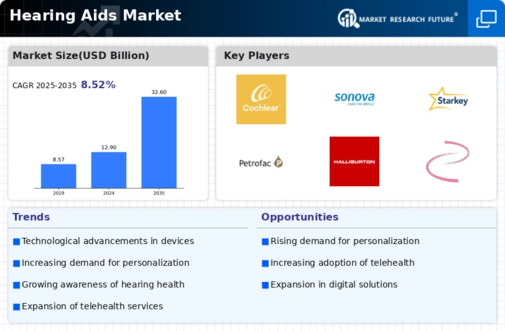
As per Market Research Future Analysis, the Hearing Aids Market was valued at 13.16 USD Billion in 2024 and is projected to grow to 32.45 USD Billion, expected to grow at a CAGR of 8.55% between 2025 and 2035. The market is driven by an aging global population, technological advancements, and increasing awareness of hearing health. The demand for hearing aids and hearing devices is expected to rise significantly due to the growing incidence of hearing loss, particularly among the elderly and in developing nations.

Key Market Trends & Highlights

The global hearing aids market is witnessing substantial growth driven by several key trends.

  • The market is expected to grow from 9.13 USD Billion in 2024 to 14.5 USD Billion by 2035, with a CAGR of 4.29% from 2025 to 2035. Digital Hearing Aids Market are projected to increase from 4.25 USD Billion in 2024 to 6.72 USD Billion by 2035. The aging population is expected to double from 1 billion in 2020 to 2.1 billion by 2050, correlating with a rise in age-related hearing loss. Approximately 1.1 billion young people are at risk of hearing loss due to unsafe listening practices.

Market Size & Forecast

2024 Market Size USD 13.16 Billion
2035 Market Size USD 32.45 Billion
CAGR (2025-2035) 8.55%
Largest Regional Market Share in 2024 North America

Major Players

<a href="https://www.starkey.com/hearing-aids">Starkey Hearing Technologies</a>, Signia, Oticon, Demant, GN Store Nord, Unitron, Eargo, Cochlear, WS Audiology, Rexton, <a href="https://www.amplifonusa.com/hearing-aids">Amplifon</a>, Sonova, Audina Hearing Instruments, <a href="https://www.beltone.com/en-us/products/hearing-aids">Beltone</a>, Hearing Life

Market Trends

The hearing aid market is currently experiencing a transformative phase characterized by technological advancements and evolving consumer preferences. Innovations in digital signal processing and miniaturization have led to the development of more discreet and efficient devices. These enhancements not only improve sound quality but also cater to the aesthetic preferences of users, making hearing aids more appealing. Furthermore, the integration of smart technology, such as Bluetooth connectivity and mobile applications, appears to enhance user experience by providing personalized settings and remote adjustments. This trend suggests a shift towards a more user-centric approach in the design and functionality of hearing aids. In addition to technological progress, the hearing aid market is influenced by changing demographics and increased awareness of hearing health. An aging population, coupled with a growing recognition of the importance of early intervention, indicates a rising demand for hearing solutions. Moreover, the stigma associated with hearing loss is gradually diminishing, encouraging more individuals to seek assistance. As a result, the market is likely to expand, driven by both innovation and a broader acceptance of hearing aids as essential health devices. This evolving landscape presents opportunities for manufacturers to cater to diverse consumer needs and preferences, ultimately shaping the future of the hearing aid market.

Technological Advancements

The hearing aid market is witnessing rapid technological innovations, particularly in digital signal processing and connectivity features. These advancements enhance sound quality and user experience, making devices more efficient and user-friendly.

Demographic Shifts

An aging global population is contributing to increased demand for hearing aids. As awareness of hearing health grows, more individuals are seeking solutions, leading to a broader acceptance of these devices.

Smart Technology Integration

The incorporation of smart technology into hearing aids is becoming prevalent. Features such as Bluetooth connectivity and mobile app integration allow users to customize their experience, indicating a trend towards personalized hearing solutions.

Hearing Aids Market Market Drivers

Aging Population

The aging population is a primary driver of the hearing aid market. As individuals age, the prevalence of hearing loss increases significantly. According to data, approximately 30 percent of people aged 65 to 74 experience hearing loss, and this figure rises to 50 percent for those over 75. This demographic shift creates a substantial demand for hearing aids, as older adults seek solutions to maintain their quality of life. The hearing aid market is likely to see continued growth as the population ages, with projections indicating that the number of individuals requiring hearing assistance will rise dramatically in the coming years. This trend underscores the necessity for innovative products tailored to the needs of older consumers, thereby driving market expansion.

Rising Disposable Income

Rising disposable income among consumers is contributing to the growth of the hearing aid market. As individuals experience increased financial stability, they are more willing to invest in health-related products, including hearing aids. This trend is particularly evident in emerging markets, where economic development is leading to higher spending on healthcare and wellness. The hearing aid market is poised to benefit from this shift, as consumers prioritize their health and seek quality solutions for hearing loss. Additionally, the availability of financing options and insurance coverage for hearing aids is likely to further facilitate access, making it easier for individuals to purchase these essential devices.

Technological Innovations

Technological innovations are reshaping the hearing aid market, leading to the development of advanced devices that offer improved functionality and user experience. Recent advancements include features such as Bluetooth connectivity, smartphone integration, and artificial intelligence, which enhance the usability of hearing aids. These innovations not only improve sound quality but also provide users with customizable settings to suit their preferences. The hearing aid market is witnessing a surge in demand for these high-tech solutions, as consumers increasingly seek devices that integrate seamlessly into their daily lives. As technology continues to evolve, the market is likely to expand further, driven by consumer expectations for enhanced performance and convenience.

Increased Awareness of Hearing Health

Increased awareness of hearing health is significantly influencing the hearing aid market. Public health campaigns and educational initiatives have heightened understanding of the importance of addressing hearing loss. As a result, more individuals are seeking solutions, including hearing aids, to manage their conditions. Research indicates that untreated hearing loss can lead to cognitive decline and social isolation, prompting many to take proactive measures. The hearing aid market benefits from this growing awareness, as consumers are more inclined to invest in hearing aids to enhance their overall well-being. This trend is expected to continue, with more emphasis on preventive care and early intervention, further propelling market growth.

Regulatory Support and Reimbursement Policies

Regulatory support and favorable reimbursement policies are playing a crucial role in the hearing aid market. Governments and health organizations are increasingly recognizing the importance of hearing health, leading to the implementation of policies that support access to hearing aids. These policies often include reimbursement for hearing aid purchases, making them more affordable for consumers. As a result, the hearing aid market is experiencing growth, as more individuals can obtain the devices they need without financial burden. This trend is expected to continue, with ongoing advocacy for improved access to hearing healthcare, further driving market expansion and ensuring that hearing aids are within reach for a larger segment of the population.

Market Segment Insights

By Application: Hearing Loss (Largest) vs. Tinnitus Management (Fastest-Growing)

<p>The hearing aid market exhibits a diverse application landscape, with Hearing Loss commanding a significant share due to its widespread prevalence. It is the most sought-after application of hearing aids, capturing attention from individuals facing auditory challenges. On the other hand, Tinnitus Management is rapidly gaining traction, becoming a critical segment as awareness around tinnitus increases. Both applications showcase the importance of addressing different auditory concerns among users and highlight a market increasingly tailored to diverse needs.</p>

<p>Communication Enhancement (Dominant) vs. Music Listening (Emerging)</p>

<p>Communication Enhancement stands as a dominant application in the hearing aid market, driven by the essential need for effective interaction in social and work environments. As individuals increasingly seek tools that facilitate seamless conversations, this segment captures substantial interest from consumers. Meanwhile, Music Listening is emerging as a noteworthy application, appealing to audiophiles and those who enjoy auditory experiences. As technology improves audio quality and customization, this segment is poised for growth, particularly among younger demographics seeking enhanced sound experiences from their devices.</p>

By Technology: Bluetooth Hearing Aids (Largest) vs. Smart Hearing Aids (Fastest-Growing)

<p>The hearing aid market is witnessing a significant shift in technology preferences, with Bluetooth hearing aids emerging as the largest segment. This category is increasingly popular due to their compatibility with smartphones and other devices, enabling seamless connectivity for users. Following closely are digital hearing aids, which continue to dominate due to their advanced features and improved sound quality, appealing to a broader audience. Analog hearing aids, while still in demand, are gradually losing market share as consumers seek more innovative solutions. In contrast, smart hearing aids represent the fastest-growing segment in this market. With features like personalized sound processing and integration with health tracking applications, they cater to a tech-savvy demographic. The rise of rechargeable hearing aids is also notable, driven by consumer preference for convenience and sustainability. These trends reflect a broader shift towards smarter, more connected hearing solutions that enhance user experience and accessibility.</p>

<p>Bluetooth Hearing Aids (Dominant) vs. Smart Hearing Aids (Emerging)</p>

<p>Bluetooth hearing aids are currently the dominant technology segment in the hearing aid market. Their ability to connect wirelessly to various devices offers users unparalleled convenience, allowing for direct streaming of audio from smartphones, televisions, and other media sources. This technological innovation has attracted many users, leading to increased brand loyalty and satisfaction. On the other hand, smart hearing aids are categorized as an emerging segment, rapidly gaining attention for their advanced capabilities such as adaptive sound processing and integration with mobile apps for personalized settings. While Bluetooth hearing aids focus on connectivity, smart hearing aids emphasize adaptability and user interaction, making them appealing to younger generations seeking cutting-edge features in their hearing aids.</p>

By End User: Adults (Largest) vs. Geriatric Population (Fastest-Growing)

<p>The hearing aid market shows a varied distribution across its end-user segments, with adults holding the largest share. This is largely driven by the increasing prevalence of hearing loss in this demographic, compounded by the growing awareness of treatment options. Geriatric populations are also significant in this market, experiencing substantial growth due to the aging global population. As baby boomers reach elderhood, the need for hearing aids in this segment is escalating rapidly.</p>

<p>Adults (Dominant) vs. Geriatric Population (Emerging)</p>

<p>Adults comprise the dominant force in the hearing aid market, benefiting from advances in technology that cater specifically to their lifestyle and preferences. This segment typically seeks devices that offer versatility and connectivity with other devices. In contrast, the geriatric population represents an emerging segment that is growing quickly as a result of increasing age-associated hearing loss. Products designed for this group often feature user-friendly designs, enhanced amplification, and basic functionalities that cater to users with varying levels of tech-savviness. The intersection of aging demographics and innovative product offerings positions both segments favorably within the market.</p>

Get more detailed insights about Hearing Aids Market Research Report – Forecast Till 2035

Regional Insights

North America : Market Leader in Hearing Aids

North America continues to lead the hearing aid market, holding a significant share of 12.5 in 2024. The growth is driven by an aging population, increasing awareness of hearing health, and advancements in technology. Regulatory support, including favorable reimbursement policies, has further catalyzed market expansion. The demand for innovative and user-friendly devices is on the rise, reflecting a shift towards personalized healthcare solutions. The United States is the primary market within North America, hosting key players such as Sonova Holding AG and Starkey Hearing Technologies. The competitive landscape is characterized by continuous innovation and strategic partnerships among leading companies. With a strong focus on research and development, these firms are enhancing product offerings to meet diverse consumer needs, ensuring sustained growth in this lucrative market.

Europe : Emerging Market Dynamics

Europe's hearing aid market is projected to grow, with a market size of 8.0 in 2025. Factors such as an increasing elderly population, rising disposable incomes, and heightened awareness of hearing loss are driving demand. Regulatory frameworks across various countries are also evolving to support better access to hearing aids, enhancing market potential. The region is witnessing a shift towards digital solutions, with consumers favoring advanced technology in hearing aids. Leading countries in Europe include Germany, France, and the UK, where major players like Demant A/S and Amplifon S.p.A. are actively competing. The competitive landscape is marked by innovation and strategic collaborations, as companies aim to capture a larger market share. The presence of established brands and a growing number of startups are contributing to a dynamic market environment, fostering healthy competition and consumer choice.

Asia-Pacific : Rapidly Growing Market Potential

The Asia-Pacific region is emerging as a significant player in the hearing aid market, with a market size of 3.5 in 2025. The growth is fueled by increasing awareness of hearing health, rising disposable incomes, and a growing elderly population. Governments are implementing initiatives to improve healthcare access, which includes enhancing the availability of hearing aids. The region is also witnessing technological advancements, leading to the introduction of innovative products that cater to diverse consumer needs. Countries like Australia, Japan, and China are at the forefront of this growth, with key players such as Cochlear Limited and GN Store Nord A/S leading the market. The competitive landscape is characterized by a mix of established companies and emerging startups, all vying for market share. As consumer preferences shift towards advanced technology, companies are focusing on research and development to deliver high-quality, user-friendly devices that meet the demands of the market.

Middle East and Africa : Untapped Market Opportunities

The Middle East and Africa (MEA) region presents untapped opportunities in the hearing aid market, with a market size of 1.0 in 2025. The growth is driven by increasing awareness of hearing health, coupled with rising healthcare expenditures. Governments are beginning to recognize the importance of addressing hearing loss, leading to initiatives aimed at improving access to hearing aids. The region's diverse demographics and varying economic conditions create a unique market landscape. Countries such as South Africa and the UAE are leading the way in market development, with key players like Eargo, Inc. and Hearing Life making strides in the region. The competitive landscape is evolving, with both local and international companies seeking to establish a foothold. As awareness and demand for hearing aids grow, the market is expected to expand, presenting significant opportunities for investment and innovation.

Key Players and Competitive Insights

The hearing aid market is currently characterized by a dynamic competitive landscape, driven by technological advancements, an aging population, and increasing awareness of hearing health. Major players such as Sonova Holding AG (CH), Demant A/S (DK), and WS Audiology A/S (DK) are at the forefront, each adopting distinct strategies to enhance their market positioning. Sonova, for instance, emphasizes innovation through its extensive R&D investments, focusing on developing advanced hearing solutions that integrate seamlessly with digital platforms. Meanwhile, Demant has pursued strategic partnerships to expand its product offerings and enhance customer engagement, thereby solidifying its presence in key markets. WS Audiology, on the other hand, appears to be concentrating on sustainability initiatives, which resonate well with environmentally conscious consumers, thus shaping a competitive environment that increasingly values corporate responsibility alongside technological prowess.

In terms of business tactics, companies are localizing manufacturing to reduce costs and improve supply chain efficiency. This approach is particularly relevant in a moderately fragmented market where smaller players also vie for market share. The collective influence of these key players fosters a competitive structure that encourages innovation while maintaining a focus on customer-centric solutions. As companies optimize their supply chains and enhance operational efficiencies, they are better positioned to respond to the evolving demands of consumers.

In November 2025, Sonova Holding AG (CH) announced the launch of its latest hearing aid model, which incorporates AI-driven features designed to personalize user experiences. This strategic move not only showcases Sonova's commitment to innovation but also positions the company to capture a larger share of the tech-savvy demographic that seeks advanced auditory solutions. The integration of AI is likely to enhance user satisfaction and retention, thereby reinforcing Sonova's competitive edge.

In October 2025, Demant A/S (DK) entered into a partnership with a leading telehealth provider to offer remote audiology services. This collaboration is significant as it aligns with the growing trend of telehealth, allowing Demant to expand its service offerings and reach a broader audience. By integrating remote services, Demant enhances accessibility for users, particularly in underserved regions, which could lead to increased market penetration and customer loyalty.

In September 2025, WS Audiology A/S (DK) launched a sustainability initiative aimed at reducing the environmental impact of its manufacturing processes. This initiative is indicative of a broader trend within the industry, where companies are increasingly prioritizing sustainability as a core component of their business strategies. By adopting eco-friendly practices, WS Audiology not only appeals to environmentally conscious consumers but also positions itself as a leader in corporate responsibility, potentially attracting new customers who value sustainability.

As of December 2025, the hearing aid market is witnessing a shift towards digitalization, with trends such as AI integration and sustainability becoming central to competitive strategies. Strategic alliances are increasingly shaping the landscape, enabling companies to leverage complementary strengths and enhance their offerings. Looking ahead, competitive differentiation is likely to evolve from traditional price-based competition to a focus on innovation, technology, and supply chain reliability. This shift underscores the importance of adaptability and forward-thinking strategies in maintaining a competitive advantage in a rapidly changing market.

Key Companies in the Hearing Aids Market include

Industry Developments

Future Outlook

Hearing Aids Market Future Outlook

The hearing aid market is projected to grow at a 4.37% CAGR from 2024 to 2035, driven by technological advancements, increasing aging population, and rising awareness of hearing health.

New opportunities lie in:

  • Development of AI-driven hearing aids for personalized user experiences.
  • Expansion of <a href="https://www.marketresearchfuture.com/reports/telehealth-service-market-43509" target="_blank" title="telehealth service">telehealth services</a> for remote fitting and support.
  • Partnerships with audiology clinics for integrated care solutions.

By 2035, the hearing aid market is expected to be robust, driven by innovation and strategic partnerships.

Market Segmentation

Hearing Aids Market End User Outlook

  • Adults
  • Children
  • Geriatric Population
  • Veterans
  • Individuals with Disabilities

Hearing Aids Market Technology Outlook

  • Analog Hearing Aids
  • Digital Hearing Aids
  • Bluetooth Hearing Aids
  • Rechargeable Hearing Aids
  • Smart Hearing Aids

Hearing Aids Market Application Outlook

  • Hearing Loss
  • Tinnitus Management
  • Communication Enhancement
  • Music Listening
  • Television Listening

Report Scope

MARKET SIZE 202425.0(USD Billion)
MARKET SIZE 202526.09(USD Billion)
MARKET SIZE 203540.0(USD Billion)
COMPOUND ANNUAL GROWTH RATE (CAGR)4.37% (2024 - 2035)
REPORT COVERAGERevenue Forecast, Competitive Landscape, Growth Factors, and Trends
BASE YEAR2024
Market Forecast Period2025 - 2035
Historical Data2019 - 2024
Market Forecast UnitsUSD Billion
Key Companies ProfiledSonova Holding AG (CH), Demant A/S (DK), WS Audiology A/S (DK), Cochlear Limited (AU), GN Store Nord A/S (DK), Amplifon S.p.A. (IT), Eargo, Inc. (US), Starkey Hearing Technologies (US), Hearing Life (US), Audicus (US)
Segments CoveredApplication, Technology, End User
Key Market OpportunitiesIntegration of artificial intelligence in hearing aid market enhances user experience and personalization.
Key Market DynamicsTechnological advancements and consumer demand drive innovation and competition in the hearing aid market.
Countries CoveredNorth America, Europe, APAC, South America, MEA

FAQs

What is the current valuation of the hearing aid market as of 2024?

<p>The hearing aid market was valued at 25.0 USD Billion in 2024.</p>

What is the projected market size for the hearing aid industry by 2035?

<p>The hearing aid market is projected to reach 40.0 USD Billion by 2035.</p>

What is the expected CAGR for the hearing aid market during the forecast period 2025 - 2035?

<p>The expected CAGR for the hearing aid market during the forecast period 2025 - 2035 is 4.37%.</p>

Which companies are considered key players in the hearing aid market?

<p>Key players in the hearing aid market include Sonova Holding AG, Demant A/S, WS Audiology A/S, and Cochlear Limited.</p>

What are the primary applications of hearing aids in the market?

<p>The primary applications of hearing aids include Hearing Loss, Tinnitus Management, and Communication Enhancement.</p>

How do the revenues from digital hearing aids compare to analog hearing aids?

<p>Revenues from digital hearing aids are projected to range from 10.0 to 15.0 USD Billion, whereas analog hearing aids are expected to generate 3.0 to 5.0 USD Billion.</p>

What segment of the hearing aid market is expected to generate the highest revenue?

<p>The Hearing Loss segment is anticipated to generate the highest revenue, with projections between 10.0 and 16.0 USD Billion.</p>

What is the revenue outlook for Bluetooth hearing aids by 2035?

<p>The revenue outlook for Bluetooth hearing aids is projected to be between 5.0 and 10.0 USD Billion by 2035.</p>

Which demographic is expected to contribute significantly to the hearing aid market?

<p>The adult demographic is expected to contribute significantly, with revenues projected between 10.0 and 16.0 USD Billion.</p>

What is the anticipated revenue range for rechargeable hearing aids in the coming years?

<p>The anticipated revenue range for rechargeable hearing aids is expected to be between 4.0 and 6.0 USD Billion.</p>

  1. SECTION I: EXECUTIVE SUMMARY AND KEY HIGHLIGHTS
    1. | 1.1 EXECUTIVE SUMMARY
    2. | | 1.1.1 Market Overview
    3. | | 1.1.2 Key Findings
    4. | | 1.1.3 Market Segmentation
    5. | | 1.1.4 Competitive Landscape
    6. | | 1.1.5 Challenges and Opportunities
    7. | | 1.1.6 Future Outlook
  2. SECTION II: SCOPING, METHODOLOGY AND MARKET STRUCTURE
    1. | 2.1 MARKET INTRODUCTION
    2. | | 2.1.1 Definition
    3. | | 2.1.2 Scope of the study
    4. | | | 2.1.2.1 Research Objective
    5. | | | 2.1.2.2 Assumption
    6. | | | 2.1.2.3 Limitations
    7. | 2.2 RESEARCH METHODOLOGY
    8. | | 2.2.1 Overview
    9. | | 2.2.2 Data Mining
    10. | | 2.2.3 Secondary Research
    11. | | 2.2.4 Primary Research
    12. | | | 2.2.4.1 Primary Interviews and Information Gathering Process
    13. | | | 2.2.4.2 Breakdown of Primary Respondents
    14. | | 2.2.5 Forecasting Model
    15. | | 2.2.6 Market Size Estimation
    16. | | | 2.2.6.1 Bottom-Up Approach
    17. | | | 2.2.6.2 Top-Down Approach
    18. | | 2.2.7 Data Triangulation
    19. | | 2.2.8 Validation
  3. SECTION III: QUALITATIVE ANALYSIS
    1. | 3.1 MARKET DYNAMICS
    2. | | 3.1.1 Overview
    3. | | 3.1.2 Drivers
    4. | | 3.1.3 Restraints
    5. | | 3.1.4 Opportunities
    6. | 3.2 MARKET FACTOR ANALYSIS
    7. | | 3.2.1 Value chain Analysis
    8. | | 3.2.2 Porter's Five Forces Analysis
    9. | | | 3.2.2.1 Bargaining Power of Suppliers
    10. | | | 3.2.2.2 Bargaining Power of Buyers
    11. | | | 3.2.2.3 Threat of New Entrants
    12. | | | 3.2.2.4 Threat of Substitutes
    13. | | | 3.2.2.5 Intensity of Rivalry
    14. | | 3.2.3 COVID-19 Impact Analysis
    15. | | | 3.2.3.1 Market Impact Analysis
    16. | | | 3.2.3.2 Regional Impact
    17. | | | 3.2.3.3 Opportunity and Threat Analysis
  4. SECTION IV: QUANTITATIVE ANALYSIS
    1. | 4.1 Healthcare, BY Application (USD Billion)
    2. | | 4.1.1 Hearing Loss
    3. | | 4.1.2 Tinnitus Management
    4. | | 4.1.3 Communication Enhancement
    5. | | 4.1.4 Music Listening
    6. | | 4.1.5 Television Listening
    7. | 4.2 Healthcare, BY Technology (USD Billion)
    8. | | 4.2.1 Analog Hearing Aids
    9. | | 4.2.2 Digital Hearing Aids
    10. | | 4.2.3 Bluetooth Hearing Aids
    11. | | 4.2.4 Rechargeable Hearing Aids
    12. | | 4.2.5 Smart Hearing Aids
    13. | 4.3 Healthcare, BY End User (USD Billion)
    14. | | 4.3.1 Adults
    15. | | 4.3.2 Children
    16. | | 4.3.3 Geriatric Population
    17. | | 4.3.4 Veterans
    18. | | 4.3.5 Individuals with Disabilities
    19. | 4.4 Healthcare, BY Region (USD Billion)
    20. | | 4.4.1 North America
    21. | | | 4.4.1.1 US
    22. | | | 4.4.1.2 Canada
    23. | | 4.4.2 Europe
    24. | | | 4.4.2.1 Germany
    25. | | | 4.4.2.2 UK
    26. | | | 4.4.2.3 France
    27. | | | 4.4.2.4 Russia
    28. | | | 4.4.2.5 Italy
    29. | | | 4.4.2.6 Spain
    30. | | | 4.4.2.7 Rest of Europe
    31. | | 4.4.3 APAC
    32. | | | 4.4.3.1 China
    33. | | | 4.4.3.2 India
    34. | | | 4.4.3.3 Japan
    35. | | | 4.4.3.4 South Korea
    36. | | | 4.4.3.5 Malaysia
    37. | | | 4.4.3.6 Thailand
    38. | | | 4.4.3.7 Indonesia
    39. | | | 4.4.3.8 Rest of APAC
    40. | | 4.4.4 South America
    41. | | | 4.4.4.1 Brazil
    42. | | | 4.4.4.2 Mexico
    43. | | | 4.4.4.3 Argentina
    44. | | | 4.4.4.4 Rest of South America
    45. | | 4.4.5 MEA
    46. | | | 4.4.5.1 GCC Countries
    47. | | | 4.4.5.2 South Africa
    48. | | | 4.4.5.3 Rest of MEA
  5. SECTION V: COMPETITIVE ANALYSIS
    1. | 5.1 Competitive Landscape
    2. | | 5.1.1 Overview
    3. | | 5.1.2 Competitive Analysis
    4. | | 5.1.3 Market share Analysis
    5. | | 5.1.4 Major Growth Strategy in the Healthcare
    6. | | 5.1.5 Competitive Benchmarking
    7. | | 5.1.6 Leading Players in Terms of Number of Developments in the Healthcare
    8. | | 5.1.7 Key developments and growth strategies
    9. | | | 5.1.7.1 New Product Launch/Service Deployment
    10. | | | 5.1.7.2 Merger & Acquisitions
    11. | | | 5.1.7.3 Joint Ventures
    12. | | 5.1.8 Major Players Financial Matrix
    13. | | | 5.1.8.1 Sales and Operating Income
    14. | | | 5.1.8.2 Major Players R&D Expenditure. 2023
    15. | 5.2 Company Profiles
    16. | | 5.2.1 Sonova Holding AG (CH)
    17. | | | 5.2.1.1 Financial Overview
    18. | | | 5.2.1.2 Products Offered
    19. | | | 5.2.1.3 Key Developments
    20. | | | 5.2.1.4 SWOT Analysis
    21. | | | 5.2.1.5 Key Strategies
    22. | | 5.2.2 Demant A/S (DK)
    23. | | | 5.2.2.1 Financial Overview
    24. | | | 5.2.2.2 Products Offered
    25. | | | 5.2.2.3 Key Developments
    26. | | | 5.2.2.4 SWOT Analysis
    27. | | | 5.2.2.5 Key Strategies
    28. | | 5.2.3 WS Audiology A/S (DK)
    29. | | | 5.2.3.1 Financial Overview
    30. | | | 5.2.3.2 Products Offered
    31. | | | 5.2.3.3 Key Developments
    32. | | | 5.2.3.4 SWOT Analysis
    33. | | | 5.2.3.5 Key Strategies
    34. | | 5.2.4 Cochlear Limited (AU)
    35. | | | 5.2.4.1 Financial Overview
    36. | | | 5.2.4.2 Products Offered
    37. | | | 5.2.4.3 Key Developments
    38. | | | 5.2.4.4 SWOT Analysis
    39. | | | 5.2.4.5 Key Strategies
    40. | | 5.2.5 GN Store Nord A/S (DK)
    41. | | | 5.2.5.1 Financial Overview
    42. | | | 5.2.5.2 Products Offered
    43. | | | 5.2.5.3 Key Developments
    44. | | | 5.2.5.4 SWOT Analysis
    45. | | | 5.2.5.5 Key Strategies
    46. | | 5.2.6 Amplifon S.p.A. (IT)
    47. | | | 5.2.6.1 Financial Overview
    48. | | | 5.2.6.2 Products Offered
    49. | | | 5.2.6.3 Key Developments
    50. | | | 5.2.6.4 SWOT Analysis
    51. | | | 5.2.6.5 Key Strategies
    52. | | 5.2.7 Eargo, Inc. (US)
    53. | | | 5.2.7.1 Financial Overview
    54. | | | 5.2.7.2 Products Offered
    55. | | | 5.2.7.3 Key Developments
    56. | | | 5.2.7.4 SWOT Analysis
    57. | | | 5.2.7.5 Key Strategies
    58. | | 5.2.8 Starkey Hearing Technologies (US)
    59. | | | 5.2.8.1 Financial Overview
    60. | | | 5.2.8.2 Products Offered
    61. | | | 5.2.8.3 Key Developments
    62. | | | 5.2.8.4 SWOT Analysis
    63. | | | 5.2.8.5 Key Strategies
    64. | | 5.2.9 Hearing Life (US)
    65. | | | 5.2.9.1 Financial Overview
    66. | | | 5.2.9.2 Products Offered
    67. | | | 5.2.9.3 Key Developments
    68. | | | 5.2.9.4 SWOT Analysis
    69. | | | 5.2.9.5 Key Strategies
    70. | | 5.2.10 Audicus (US)
    71. | | | 5.2.10.1 Financial Overview
    72. | | | 5.2.10.2 Products Offered
    73. | | | 5.2.10.3 Key Developments
    74. | | | 5.2.10.4 SWOT Analysis
    75. | | | 5.2.10.5 Key Strategies
    76. | 5.3 Appendix
    77. | | 5.3.1 References
    78. | | 5.3.2 Related Reports
  6. LIST OF FIGURES
    1. | 6.1 MARKET SYNOPSIS
    2. | 6.2 NORTH AMERICA MARKET ANALYSIS
    3. | 6.3 US MARKET ANALYSIS BY APPLICATION
    4. | 6.4 US MARKET ANALYSIS BY TECHNOLOGY
    5. | 6.5 US MARKET ANALYSIS BY END USER
    6. | 6.6 CANADA MARKET ANALYSIS BY APPLICATION
    7. | 6.7 CANADA MARKET ANALYSIS BY TECHNOLOGY
    8. | 6.8 CANADA MARKET ANALYSIS BY END USER
    9. | 6.9 EUROPE MARKET ANALYSIS
    10. | 6.10 GERMANY MARKET ANALYSIS BY APPLICATION
    11. | 6.11 GERMANY MARKET ANALYSIS BY TECHNOLOGY
    12. | 6.12 GERMANY MARKET ANALYSIS BY END USER
    13. | 6.13 UK MARKET ANALYSIS BY APPLICATION
    14. | 6.14 UK MARKET ANALYSIS BY TECHNOLOGY
    15. | 6.15 UK MARKET ANALYSIS BY END USER
    16. | 6.16 FRANCE MARKET ANALYSIS BY APPLICATION
    17. | 6.17 FRANCE MARKET ANALYSIS BY TECHNOLOGY
    18. | 6.18 FRANCE MARKET ANALYSIS BY END USER
    19. | 6.19 RUSSIA MARKET ANALYSIS BY APPLICATION
    20. | 6.20 RUSSIA MARKET ANALYSIS BY TECHNOLOGY
    21. | 6.21 RUSSIA MARKET ANALYSIS BY END USER
    22. | 6.22 ITALY MARKET ANALYSIS BY APPLICATION
    23. | 6.23 ITALY MARKET ANALYSIS BY TECHNOLOGY
    24. | 6.24 ITALY MARKET ANALYSIS BY END USER
    25. | 6.25 SPAIN MARKET ANALYSIS BY APPLICATION
    26. | 6.26 SPAIN MARKET ANALYSIS BY TECHNOLOGY
    27. | 6.27 SPAIN MARKET ANALYSIS BY END USER
    28. | 6.28 REST OF EUROPE MARKET ANALYSIS BY APPLICATION
    29. | 6.29 REST OF EUROPE MARKET ANALYSIS BY TECHNOLOGY
    30. | 6.30 REST OF EUROPE MARKET ANALYSIS BY END USER
    31. | 6.31 APAC MARKET ANALYSIS
    32. | 6.32 CHINA MARKET ANALYSIS BY APPLICATION
    33. | 6.33 CHINA MARKET ANALYSIS BY TECHNOLOGY
    34. | 6.34 CHINA MARKET ANALYSIS BY END USER
    35. | 6.35 INDIA MARKET ANALYSIS BY APPLICATION
    36. | 6.36 INDIA MARKET ANALYSIS BY TECHNOLOGY
    37. | 6.37 INDIA MARKET ANALYSIS BY END USER
    38. | 6.38 JAPAN MARKET ANALYSIS BY APPLICATION
    39. | 6.39 JAPAN MARKET ANALYSIS BY TECHNOLOGY
    40. | 6.40 JAPAN MARKET ANALYSIS BY END USER
    41. | 6.41 SOUTH KOREA MARKET ANALYSIS BY APPLICATION
    42. | 6.42 SOUTH KOREA MARKET ANALYSIS BY TECHNOLOGY
    43. | 6.43 SOUTH KOREA MARKET ANALYSIS BY END USER
    44. | 6.44 MALAYSIA MARKET ANALYSIS BY APPLICATION
    45. | 6.45 MALAYSIA MARKET ANALYSIS BY TECHNOLOGY
    46. | 6.46 MALAYSIA MARKET ANALYSIS BY END USER
    47. | 6.47 THAILAND MARKET ANALYSIS BY APPLICATION
    48. | 6.48 THAILAND MARKET ANALYSIS BY TECHNOLOGY
    49. | 6.49 THAILAND MARKET ANALYSIS BY END USER
    50. | 6.50 INDONESIA MARKET ANALYSIS BY APPLICATION
    51. | 6.51 INDONESIA MARKET ANALYSIS BY TECHNOLOGY
    52. | 6.52 INDONESIA MARKET ANALYSIS BY END USER
    53. | 6.53 REST OF APAC MARKET ANALYSIS BY APPLICATION
    54. | 6.54 REST OF APAC MARKET ANALYSIS BY TECHNOLOGY
    55. | 6.55 REST OF APAC MARKET ANALYSIS BY END USER
    56. | 6.56 SOUTH AMERICA MARKET ANALYSIS
    57. | 6.57 BRAZIL MARKET ANALYSIS BY APPLICATION
    58. | 6.58 BRAZIL MARKET ANALYSIS BY TECHNOLOGY
    59. | 6.59 BRAZIL MARKET ANALYSIS BY END USER
    60. | 6.60 MEXICO MARKET ANALYSIS BY APPLICATION
    61. | 6.61 MEXICO MARKET ANALYSIS BY TECHNOLOGY
    62. | 6.62 MEXICO MARKET ANALYSIS BY END USER
    63. | 6.63 ARGENTINA MARKET ANALYSIS BY APPLICATION
    64. | 6.64 ARGENTINA MARKET ANALYSIS BY TECHNOLOGY
    65. | 6.65 ARGENTINA MARKET ANALYSIS BY END USER
    66. | 6.66 REST OF SOUTH AMERICA MARKET ANALYSIS BY APPLICATION
    67. | 6.67 REST OF SOUTH AMERICA MARKET ANALYSIS BY TECHNOLOGY
    68. | 6.68 REST OF SOUTH AMERICA MARKET ANALYSIS BY END USER
    69. | 6.69 MEA MARKET ANALYSIS
    70. | 6.70 GCC COUNTRIES MARKET ANALYSIS BY APPLICATION
    71. | 6.71 GCC COUNTRIES MARKET ANALYSIS BY TECHNOLOGY
    72. | 6.72 GCC COUNTRIES MARKET ANALYSIS BY END USER
    73. | 6.73 SOUTH AFRICA MARKET ANALYSIS BY APPLICATION
    74. | 6.74 SOUTH AFRICA MARKET ANALYSIS BY TECHNOLOGY
    75. | 6.75 SOUTH AFRICA MARKET ANALYSIS BY END USER
    76. | 6.76 REST OF MEA MARKET ANALYSIS BY APPLICATION
    77. | 6.77 REST OF MEA MARKET ANALYSIS BY TECHNOLOGY
    78. | 6.78 REST OF MEA MARKET ANALYSIS BY END USER
    79. | 6.79 KEY BUYING CRITERIA OF HEALTHCARE
    80. | 6.80 RESEARCH PROCESS OF MRFR
    81. | 6.81 DRO ANALYSIS OF HEALTHCARE
    82. | 6.82 DRIVERS IMPACT ANALYSIS: HEALTHCARE
    83. | 6.83 RESTRAINTS IMPACT ANALYSIS: HEALTHCARE
    84. | 6.84 SUPPLY / VALUE CHAIN: HEALTHCARE
    85. | 6.85 HEALTHCARE, BY APPLICATION, 2024 (% SHARE)
    86. | 6.86 HEALTHCARE, BY APPLICATION, 2024 TO 2035 (USD Billion)
    87. | 6.87 HEALTHCARE, BY TECHNOLOGY, 2024 (% SHARE)
    88. | 6.88 HEALTHCARE, BY TECHNOLOGY, 2024 TO 2035 (USD Billion)
    89. | 6.89 HEALTHCARE, BY END USER, 2024 (% SHARE)
    90. | 6.90 HEALTHCARE, BY END USER, 2024 TO 2035 (USD Billion)
    91. | 6.91 BENCHMARKING OF MAJOR COMPETITORS
  7. LIST OF TABLES
    1. | 7.1 LIST OF ASSUMPTIONS
    2. | | 7.1.1
    3. | 7.2 North America MARKET SIZE ESTIMATES; FORECAST
    4. | | 7.2.1 BY APPLICATION, 2025-2035 (USD Billion)
    5. | | 7.2.2 BY TECHNOLOGY, 2025-2035 (USD Billion)
    6. | | 7.2.3 BY END USER, 2025-2035 (USD Billion)
    7. | 7.3 US MARKET SIZE ESTIMATES; FORECAST
    8. | | 7.3.1 BY APPLICATION, 2025-2035 (USD Billion)
    9. | | 7.3.2 BY TECHNOLOGY, 2025-2035 (USD Billion)
    10. | | 7.3.3 BY END USER, 2025-2035 (USD Billion)
    11. | 7.4 Canada MARKET SIZE ESTIMATES; FORECAST
    12. | | 7.4.1 BY APPLICATION, 2025-2035 (USD Billion)
    13. | | 7.4.2 BY TECHNOLOGY, 2025-2035 (USD Billion)
    14. | | 7.4.3 BY END USER, 2025-2035 (USD Billion)
    15. | 7.5 Europe MARKET SIZE ESTIMATES; FORECAST
    16. | | 7.5.1 BY APPLICATION, 2025-2035 (USD Billion)
    17. | | 7.5.2 BY TECHNOLOGY, 2025-2035 (USD Billion)
    18. | | 7.5.3 BY END USER, 2025-2035 (USD Billion)
    19. | 7.6 Germany MARKET SIZE ESTIMATES; FORECAST
    20. | | 7.6.1 BY APPLICATION, 2025-2035 (USD Billion)
    21. | | 7.6.2 BY TECHNOLOGY, 2025-2035 (USD Billion)
    22. | | 7.6.3 BY END USER, 2025-2035 (USD Billion)
    23. | 7.7 UK MARKET SIZE ESTIMATES; FORECAST
    24. | | 7.7.1 BY APPLICATION, 2025-2035 (USD Billion)
    25. | | 7.7.2 BY TECHNOLOGY, 2025-2035 (USD Billion)
    26. | | 7.7.3 BY END USER, 2025-2035 (USD Billion)
    27. | 7.8 France MARKET SIZE ESTIMATES; FORECAST
    28. | | 7.8.1 BY APPLICATION, 2025-2035 (USD Billion)
    29. | | 7.8.2 BY TECHNOLOGY, 2025-2035 (USD Billion)
    30. | | 7.8.3 BY END USER, 2025-2035 (USD Billion)
    31. | 7.9 Russia MARKET SIZE ESTIMATES; FORECAST
    32. | | 7.9.1 BY APPLICATION, 2025-2035 (USD Billion)
    33. | | 7.9.2 BY TECHNOLOGY, 2025-2035 (USD Billion)
    34. | | 7.9.3 BY END USER, 2025-2035 (USD Billion)
    35. | 7.10 Italy MARKET SIZE ESTIMATES; FORECAST
    36. | | 7.10.1 BY APPLICATION, 2025-2035 (USD Billion)
    37. | | 7.10.2 BY TECHNOLOGY, 2025-2035 (USD Billion)
    38. | | 7.10.3 BY END USER, 2025-2035 (USD Billion)
    39. | 7.11 Spain MARKET SIZE ESTIMATES; FORECAST
    40. | | 7.11.1 BY APPLICATION, 2025-2035 (USD Billion)
    41. | | 7.11.2 BY TECHNOLOGY, 2025-2035 (USD Billion)
    42. | | 7.11.3 BY END USER, 2025-2035 (USD Billion)
    43. | 7.12 Rest of Europe MARKET SIZE ESTIMATES; FORECAST
    44. | | 7.12.1 BY APPLICATION, 2025-2035 (USD Billion)
    45. | | 7.12.2 BY TECHNOLOGY, 2025-2035 (USD Billion)
    46. | | 7.12.3 BY END USER, 2025-2035 (USD Billion)
    47. | 7.13 APAC MARKET SIZE ESTIMATES; FORECAST
    48. | | 7.13.1 BY APPLICATION, 2025-2035 (USD Billion)
    49. | | 7.13.2 BY TECHNOLOGY, 2025-2035 (USD Billion)
    50. | | 7.13.3 BY END USER, 2025-2035 (USD Billion)
    51. | 7.14 China MARKET SIZE ESTIMATES; FORECAST
    52. | | 7.14.1 BY APPLICATION, 2025-2035 (USD Billion)
    53. | | 7.14.2 BY TECHNOLOGY, 2025-2035 (USD Billion)
    54. | | 7.14.3 BY END USER, 2025-2035 (USD Billion)
    55. | 7.15 India MARKET SIZE ESTIMATES; FORECAST
    56. | | 7.15.1 BY APPLICATION, 2025-2035 (USD Billion)
    57. | | 7.15.2 BY TECHNOLOGY, 2025-2035 (USD Billion)
    58. | | 7.15.3 BY END USER, 2025-2035 (USD Billion)
    59. | 7.16 Japan MARKET SIZE ESTIMATES; FORECAST
    60. | | 7.16.1 BY APPLICATION, 2025-2035 (USD Billion)
    61. | | 7.16.2 BY TECHNOLOGY, 2025-2035 (USD Billion)
    62. | | 7.16.3 BY END USER, 2025-2035 (USD Billion)
    63. | 7.17 South Korea MARKET SIZE ESTIMATES; FORECAST
    64. | | 7.17.1 BY APPLICATION, 2025-2035 (USD Billion)
    65. | | 7.17.2 BY TECHNOLOGY, 2025-2035 (USD Billion)
    66. | | 7.17.3 BY END USER, 2025-2035 (USD Billion)
    67. | 7.18 Malaysia MARKET SIZE ESTIMATES; FORECAST
    68. | | 7.18.1 BY APPLICATION, 2025-2035 (USD Billion)
    69. | | 7.18.2 BY TECHNOLOGY, 2025-2035 (USD Billion)
    70. | | 7.18.3 BY END USER, 2025-2035 (USD Billion)
    71. | 7.19 Thailand MARKET SIZE ESTIMATES; FORECAST
    72. | | 7.19.1 BY APPLICATION, 2025-2035 (USD Billion)
    73. | | 7.19.2 BY TECHNOLOGY, 2025-2035 (USD Billion)
    74. | | 7.19.3 BY END USER, 2025-2035 (USD Billion)
    75. | 7.20 Indonesia MARKET SIZE ESTIMATES; FORECAST
    76. | | 7.20.1 BY APPLICATION, 2025-2035 (USD Billion)
    77. | | 7.20.2 BY TECHNOLOGY, 2025-2035 (USD Billion)
    78. | | 7.20.3 BY END USER, 2025-2035 (USD Billion)
    79. | 7.21 Rest of APAC MARKET SIZE ESTIMATES; FORECAST
    80. | | 7.21.1 BY APPLICATION, 2025-2035 (USD Billion)
    81. | | 7.21.2 BY TECHNOLOGY, 2025-2035 (USD Billion)
    82. | | 7.21.3 BY END USER, 2025-2035 (USD Billion)
    83. | 7.22 South America MARKET SIZE ESTIMATES; FORECAST
    84. | | 7.22.1 BY APPLICATION, 2025-2035 (USD Billion)
    85. | | 7.22.2 BY TECHNOLOGY, 2025-2035 (USD Billion)
    86. | | 7.22.3 BY END USER, 2025-2035 (USD Billion)
    87. | 7.23 Brazil MARKET SIZE ESTIMATES; FORECAST
    88. | | 7.23.1 BY APPLICATION, 2025-2035 (USD Billion)
    89. | | 7.23.2 BY TECHNOLOGY, 2025-2035 (USD Billion)
    90. | | 7.23.3 BY END USER, 2025-2035 (USD Billion)
    91. | 7.24 Mexico MARKET SIZE ESTIMATES; FORECAST
    92. | | 7.24.1 BY APPLICATION, 2025-2035 (USD Billion)
    93. | | 7.24.2 BY TECHNOLOGY, 2025-2035 (USD Billion)
    94. | | 7.24.3 BY END USER, 2025-2035 (USD Billion)
    95. | 7.25 Argentina MARKET SIZE ESTIMATES; FORECAST
    96. | | 7.25.1 BY APPLICATION, 2025-2035 (USD Billion)
    97. | | 7.25.2 BY TECHNOLOGY, 2025-2035 (USD Billion)
    98. | | 7.25.3 BY END USER, 2025-2035 (USD Billion)
    99. | 7.26 Rest of South America MARKET SIZE ESTIMATES; FORECAST
    100. | | 7.26.1 BY APPLICATION, 2025-2035 (USD Billion)
    101. | | 7.26.2 BY TECHNOLOGY, 2025-2035 (USD Billion)
    102. | | 7.26.3 BY END USER, 2025-2035 (USD Billion)
    103. | 7.27 MEA MARKET SIZE ESTIMATES; FORECAST
    104. | | 7.27.1 BY APPLICATION, 2025-2035 (USD Billion)
    105. | | 7.27.2 BY TECHNOLOGY, 2025-2035 (USD Billion)
    106. | | 7.27.3 BY END USER, 2025-2035 (USD Billion)
    107. | 7.28 GCC Countries MARKET SIZE ESTIMATES; FORECAST
    108. | | 7.28.1 BY APPLICATION, 2025-2035 (USD Billion)
    109. | | 7.28.2 BY TECHNOLOGY, 2025-2035 (USD Billion)
    110. | | 7.28.3 BY END USER, 2025-2035 (USD Billion)
    111. | 7.29 South Africa MARKET SIZE ESTIMATES; FORECAST
    112. | | 7.29.1 BY APPLICATION, 2025-2035 (USD Billion)
    113. | | 7.29.2 BY TECHNOLOGY, 2025-2035 (USD Billion)
    114. | | 7.29.3 BY END USER, 2025-2035 (USD Billion)
    115. | 7.30 Rest of MEA MARKET SIZE ESTIMATES; FORECAST
    116. | | 7.30.1 BY APPLICATION, 2025-2035 (USD Billion)
    117. | | 7.30.2 BY TECHNOLOGY, 2025-2035 (USD Billion)
    118. | | 7.30.3 BY END USER, 2025-2035 (USD Billion)
    119. | 7.31 PRODUCT LAUNCH/PRODUCT DEVELOPMENT/APPROVAL
    120. | | 7.31.1
    121. | 7.32 ACQUISITION/PARTNERSHIP
    122. | | 7.32.1

Healthcare Market Segmentation

Healthcare By Application (USD Billion, 2025-2035)

  • Hearing Loss
  • Tinnitus Management
  • Communication Enhancement
  • Music Listening
  • Television Listening

Healthcare By Technology (USD Billion, 2025-2035)

  • Analog Hearing Aids
  • Digital Hearing Aids
  • Bluetooth Hearing Aids
  • Rechargeable Hearing Aids
  • Smart Hearing Aids

Healthcare By End User (USD Billion, 2025-2035)

  • Adults
  • Children
  • Geriatric Population
  • Veterans
  • Individuals with Disabilities
Infographic

Free Sample Request

Kindly complete the form below to receive a free sample of this Report

Get Free Sample

Customer Strories

Compare Licence

×
Features License Type
Single User Multiuser License Enterprise User
Price $4,950 $5,950 $7,250
Maximum User Access Limit 1 User Upto 10 Users Unrestricted Access Throughout the Organization
Free Customization
Direct Access to Analyst
Deliverable Format
Platform Access
Discount on Next Purchase 10% 15% 15%
Printable Versions
%>