×
Hero Background
English
Chinese
French
Japanese
Korean
German
Spanish

Grand Mal Seizure Market Analysis

ID: MRFR/Pharma/2755-HCR
80 Pages
Kinjoll Dey
October 2025

Grand Mal Seizure Market information: by drug generation (first, second, third), by drug class (barbiturates, hydantoin, others), by surgery (resective surgery, others), by diagnosis (EEG, MRI, others), and by end users - Global forecast till 2035

Share:
Download PDF ×

We do not share your information with anyone. However, we may send you emails based on your report interest from time to time. You may contact us at any time to opt-out.

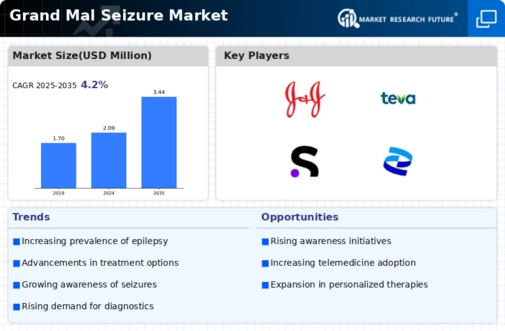
Grand Mal Seizure Market Infographic
Purchase Options

Market Analysis

In-depth Analysis of Grand Mal Seizure Market Industry Landscape

The Grand Mal Seizure Market is going through unique changes driven by elements like expanded predominance of epilepsy, progresses in demonstrative advances, and developing treatment options for people encountering grand mal seizures. Grand mal seizures, otherwise called tonic-clonic seizures, present one-of-a-kind difficulties that shape the market elements. The market is essentially influenced by the rising predominance of epilepsy, a neurological problem frequently connected with grand mal seizures. As the worldwide frequency of epilepsy keeps on rising, the interest for successful indicative instruments and treatment options for grand mal seizures is developing, impacting market patterns. The market elements are developing with progresses in demonstrative advancements, including electroencephalogram (EEG) monitoring, brain imaging techniques, and genetic testing. Further developed analytic apparatuses add to precise recognizable proof of grand mal seizures, aiding in treatment arranging and affecting market elements. The essential treatment for grand mal seizures includes antiepileptic drugs (AEDs). The market is molded by continuous improvements in AED details, with an emphasis on upgrading viability, limiting secondary effects, and working on understanding adherence. The variety of available AEDs adds to the general market scene. The market elements are affected by surgical interventions for people with drug-safe grand mal seizures. Surgical options, like epilepsy medical procedure and neurostimulation gadgets, take care of patients who do not answer well to medicine, affecting the general way to deal with therapy and market patterns. The variety in epilepsy care and accessibility to treatment options worldwide is a huge component molding market element. Provincial contrasts in healthcare framework and social perspectives toward epilepsy influence the availability and reception of explicit medicines, impacting market patterns. The market elements are developing with the rising reception of telemedicine and far off persistent monitoring, particularly for people with ongoing circumstances like epilepsy. Virtual healthcare arrangements add to better management of grand mal seizures, working on understanding admittance to specific consideration and affecting market patterns.


Author
Kinjoll Dey
Research Analyst Level I

He is an extremely curious individual currently working in Healthcare and Medical Devices Domain. Kinjoll is comfortably versed in data centric research backed by healthcare educational background. He leverages extensive data mining and analytics tools such as Primary and Secondary Research, Statistical Analysis, Machine Learning, Data Modelling. His key role also involves Technical Sales Support, Client Interaction and Project management within the Healthcare team. Lastly, he showcases extensive affinity towards learning new skills and remain fascinated in implementing them.

Leave a Comment

FAQs

At what CAGR is the grand mal seizure market projected to grow during the forecast period?

grand mal seizure market is projected to grow at a 4.2% CAGR between 2022-2030.

Which region is expected to dominate the grand mal seizure market?

The Americas is expected to dominate the grand mal seizure market.

What are the two phases of grand mal seizures?

Clonic phase and tonic phase are the two phases of grand mal seizures.

What will be the value of the grand mal seizure market during the forecast period?

grand mal seizure market is predicted to touch 2,800 Million by 2030.

Name the major end users of the grand mal seizure market?

Major end users of the grand mal seizure market include academic and research center, neurological centers, hospitals, and others.

Market Summary

As per MRFR analysis, the Grand Mal Seizure Market Size was estimated at 2.46 USD Million in 2024. The Grand Mal Seizure industry is projected to grow from 2.66 in 2025 to 5.11 by 2035, exhibiting a compound annual growth rate (CAGR) of 6.83 during the forecast period 2025 - 2035.

Key Market Trends & Highlights

The Grand Mal Seizure Market is poised for substantial growth driven by technological advancements and increasing awareness.

  • Technological integration in treatment is enhancing patient outcomes and streamlining care processes.
  • Collaborative research initiatives are fostering innovation and accelerating the development of new therapies.
  • The focus on personalized medicine is reshaping treatment approaches, particularly in the diagnosis segment.
  • Rising prevalence of epilepsy and advancements in medical technology are key drivers propelling market expansion in North America and Asia-Pacific.

Market Size & Forecast

2024 Market Size 2.46 (USD Million)
2035 Market Size 5.11 (USD Million)
CAGR (2025 - 2035) 6.83%
Largest Regional Market Share in 2024 North America

Major Players

<p>UCB (BE), Eisai (JP), Pfizer (US), Novartis (CH), GlaxoSmithKline (GB), Bristol-Myers Squibb (US), Sanofi (FR), Teva Pharmaceutical Industries (IL), AbbVie (US)</p>

Market Trends

The Grand Mal Seizure Market is currently experiencing notable developments, driven by advancements in medical research and increasing awareness of epilepsy. The growing prevalence of neurological disorders has prompted healthcare providers to seek innovative treatment options, which may lead to a rise in demand for effective therapies. Furthermore, the integration of technology in treatment methodologies, such as telemedicine and wearable devices, appears to enhance patient monitoring and management, potentially improving outcomes for individuals affected by grand mal seizures. As a result, stakeholders in the Grand Mal Seizure Market are likely to focus on developing comprehensive care strategies that encompass both pharmacological and non-pharmacological interventions. In addition, the market landscape is evolving due to the collaboration between pharmaceutical companies and research institutions. This synergy may facilitate the discovery of novel therapeutic agents and improve existing treatment protocols. Moreover, the increasing emphasis on personalized medicine suggests that tailored approaches to managing grand mal seizures could become more prevalent. Overall, the Grand Mal Seizure Market seems poised for growth, with a focus on innovative solutions that address the unique needs of patients and healthcare providers alike.

Technological Integration in Treatment

The Grand Mal Seizure Market is witnessing a trend towards the incorporation of advanced technologies in treatment protocols. Innovations such as telemedicine and mobile health applications are enhancing patient engagement and monitoring, allowing for timely interventions and improved management of seizures.

Collaborative Research Initiatives

There is a growing trend of collaboration between pharmaceutical companies and academic institutions aimed at advancing research in epilepsy treatments. These partnerships may lead to the development of new therapeutic options and improved understanding of the underlying mechanisms of grand mal seizures.

Focus on Personalized Medicine

The emphasis on personalized medicine is becoming increasingly relevant in the Grand Mal Seizure Market. Tailored treatment plans that consider individual patient characteristics and responses to therapy may enhance the effectiveness of interventions and improve overall patient outcomes.

Grand Mal Seizure Market Market Drivers

Market Growth Projections

The Global Grand Mal Seizure Market Industry is anticipated to experience substantial growth over the coming years. Projections indicate that the market will reach 2.09 USD Billion in 2024, with a steady increase expected to 3.44 USD Billion by 2035. This growth trajectory, characterized by a CAGR of 4.65% from 2025 to 2035, reflects the ongoing advancements in treatment options, increased awareness, and the rising prevalence of epilepsy. The market dynamics suggest a robust future for stakeholders involved in the development and distribution of therapies for Grand Mal seizures.

Enhanced Diagnostic Techniques

The evolution of diagnostic techniques for epilepsy, particularly Grand Mal seizures, is a crucial factor in the growth of the Global Grand Mal Seizure Market Industry. Advanced imaging technologies, such as MRI and EEG, enable more accurate and timely diagnosis of seizure disorders. This improved diagnostic capability not only facilitates early intervention but also allows for personalized treatment plans tailored to individual patient needs. As diagnostic accuracy increases, the demand for effective therapies rises, thereby contributing to the overall expansion of the market.

Rising Awareness and Education

Increased awareness and education regarding epilepsy and its manifestations, particularly Grand Mal seizures, play a pivotal role in driving the Global Grand Mal Seizure Market Industry. Public health campaigns and educational initiatives have led to better recognition of seizure symptoms, prompting individuals to seek medical attention sooner. This heightened awareness not only aids in timely diagnosis but also fosters a supportive environment for patients and families. Consequently, the demand for effective treatment options rises, further propelling market growth as more individuals are diagnosed and treated for Grand Mal seizures.

Increasing Prevalence of Epilepsy

The rising incidence of epilepsy globally serves as a primary driver for the Global Grand Mal Seizure Market Industry. According to health statistics, approximately 50 million individuals are affected by epilepsy worldwide, with a significant portion experiencing Grand Mal seizures. This growing patient population necessitates enhanced treatment options and healthcare resources, thereby expanding the market. The Global Grand Mal Seizure Market Industry is projected to reach 2.09 USD Billion in 2024, reflecting the urgent need for effective therapies and interventions to manage this neurological condition.

Advancements in Treatment Modalities

Innovations in treatment approaches for Grand Mal seizures contribute substantially to the growth of the Global Grand Mal Seizure Market Industry. Recent developments in antiepileptic drugs, including newer generation medications, have demonstrated improved efficacy and safety profiles. These advancements not only enhance patient outcomes but also encourage healthcare providers to adopt these therapies. As a result, the market is expected to grow at a CAGR of 4.65% from 2025 to 2035, reaching an estimated value of 3.44 USD Billion by 2035. This trend underscores the importance of continuous research and development in the field.

Growing Investment in Neurological Research

The surge in investment directed towards neurological research significantly influences the Global Grand Mal Seizure Market Industry. Governments and private entities are increasingly funding studies aimed at understanding the underlying mechanisms of epilepsy and developing novel therapeutic strategies. This influx of research funding is likely to yield breakthroughs in treatment options, enhancing the quality of life for those affected by Grand Mal seizures. As research progresses, the market is expected to expand, driven by the introduction of innovative therapies and improved patient management strategies.

Market Segment Insights

By Application: Diagnosis (Largest) vs. Treatment (Fastest-Growing)

<p>In the Grand Mal Seizure Market, the application segment is primarily categorized into Diagnosis, Treatment, Monitoring, and Research. Diagnosis holds the largest share, reflecting its critical role in early intervention and management of grand mal seizures. As awareness around neurological disorders increases, the demand for advanced diagnosis tools is also surging. Treatment, however, is identified as the fastest-growing segment due to the continuous development of innovative therapies and medications aimed at improving patient outcomes and reducing seizure frequency.</p>

<p>Treatment: Pharmaceuticals (Dominant) vs. Behavioral Therapy (Emerging)</p>

<p>Within the Treatment segment, Pharmaceuticals is the dominant force, comprising a wide array of antiepileptic drugs that have transformed seizure management. This category benefits from ongoing research and significant investments aimed at enhancing drug efficacy and minimizing side effects. In contrast, Behavioral Therapy is emerging as a complementary approach, focusing on lifestyle adjustments and cognitive strategies that support overall well-being. As patient-centric care becomes more prevalent, Behavioral Therapy is gaining traction, presenting opportunities for integrative treatment plans that combine both pharmacological and psychological interventions.</p>

By End Use: Hospitals (Largest) vs. Home Care (Fastest-Growing)

<p>In the Grand Mal Seizure Market, hospitals command a significant share due to their comprehensive facilities and advanced medical technology. They serve as the primary point of care for severe cases, leading to a substantial volume of patient admissions. Clinics also hold a notable position, catering to outpatient care and routine follow-ups, while home care is rapidly gaining traction as an alternative, enabling patients to receive treatment in the comfort of their homes. Research institutions, although smaller in market share, play a crucial role in developing innovative therapies and understanding seizure disorders.</p>

<p>Hospitals (Dominant) vs. Home Care (Emerging)</p>

<p>Within the Grand Mal Seizure Market, hospitals are recognized as the dominant segment due to their extensive resources and specialized staff trained in managing seizure conditions. Their ability to provide immediate and effective treatment makes them a cornerstone of seizure management. Conversely, home care is emerging as a vital segment, driven by the growing preference for in-home treatments and advancements in telehealth services. Patients and their families increasingly favor home care solutions for comfort and convenience. This segment encompasses remote monitoring and personalized care plans, showcasing a significant shift towards patient-centric approaches in seizure management.</p>

By Type of Seizure: Generalized Seizures (Largest) vs. Focal Seizures (Fastest-Growing)

<p>In the Grand Mal Seizure Market, Generalized Seizures represent the largest segment, dominating the overall market share due to their prevalence among seizure types. Focal Seizures, while having a smaller share, are garnering attention due to increased awareness and diagnosis rates. The distribution of market share reflects the medical community's understanding of these conditions and their respective treatment approaches, leading to variations in patient management strategies. The growth trends within this segment are being driven by advancements in treatment protocols and technologies aimed at better managing different types of seizures. An increase in research activities and rising awareness about seizure disorders are contributing to the rapid growth of Focal Seizures, which are currently recognized as one of the fastest-growing categories. This evolution indicates a shift in therapeutic focus and patient care strategies over the coming years.</p>

<p>Generalized Seizures: Dominant vs. Focal Seizures: Emerging</p>

<p>Generalized Seizures are characterized by their widespread effect on the brain, leading to a loss of consciousness and motor control. They form the dominant segment in the Grand Mal Seizure Market due to their high incidence and established treatment methodologies. In contrast, Focal Seizures, which occur in specific brain regions, are emerging rapidly as healthcare providers develop targeted therapies and personalized treatment solutions tailored to individual patient needs. With a growing understanding of their neurophysiology and the introduction of innovative management strategies, Focal Seizures are poised to enhance their market position significantly. Both segments highlight the diverse nature of seizure disorders, reflecting distinct clinical pathways and treatment challenges.</p>

By Age Group: Pediatric (Largest) vs. Geriatric (Fastest-Growing)

<p>The age group segment of the Grand Mal Seizure Market is characterized by a varied distribution among Pediatric, Adult, and Geriatric groups. The Pediatric segment holds the largest market share, primarily due to higher prevalence rates of epilepsy in children and the recent improvements in treatment options. On the other hand, the Adult segment presents significant market presence, while the Geriatric segment is emerging as a rapidly growing demographic given the aging population and increased diagnosis of epilepsy among elderly patients. Growth trends within this segment are driven by the rising awareness of seizure disorders across all age groups and the advancements in healthcare technology. Pediatric cases have seen robust growth owing to enhanced healthcare initiatives and effective treatment plans tailored for children, while the Geriatric segment's expansion is propelled by the increasing incidence of Grand Mal seizures in older adults stemming from age-related health issues and improved access to healthcare services. This diverse landscape not only highlights the demand for tailored therapeutic solutions but also emphasizes the necessity for continuous research and development in managing Grand Mal seizures across different age categories.</p>

<p>Pediatric (Dominant) vs. Geriatric (Emerging)</p>

<p>In the Grand Mal Seizure Market, the Pediatric segment is dominant, representing a crucial area for treatment due to unique medical requirements and the importance of early intervention in childhood epilepsy. Pediatric patients often face diverse challenges, necessitating specialized therapies and a strong support system from healthcare providers and parents. Treatment approaches are frequently designed to minimize side effects and maximize efficacy, focusing on long-term management and quality of life. Conversely, the Geriatric segment is rapidly emerging, reflecting the demographic shift toward an older population. Older adults typically present distinct clinical features and require tailored care due to comorbidities and medication interactions. This segment's growth is underscored by the need for innovative treatment solutions that cater to age-specific needs, thus driving demand for ongoing research in geriatric epilepsy management.</p>

By Severity Level: Moderate (Largest) vs. Severe (Fastest-Growing)

<p>In the Grand Mal Seizure Market, the severity levels of seizures significantly shape patient management strategies and treatment protocols. The market share distribution reveals that the Moderate severity category accounts for the largest share, due to its higher prevalence and the more widespread recognition of suitable treatment options. Conversely, the Severe category, although it currently holds a smaller segment of the market, is rapidly gaining ground, driven by an increasing number of reported cases and heightened awareness around the need for effective management and intervention strategies.</p>

<p>Severity Level: Moderate (Dominant) vs. Severe (Emerging)</p>

<p>The Moderate severity level is characterized by a more frequent occurrence and a consistent demand for therapeutic solutions, making it the dominant segment in the Grand Mal Seizure Market. Patients experiencing Moderate seizures often benefit from a range of anti-seizure medications, and healthcare providers are well-equipped to manage these cases effectively. On the other hand, the Severe severity level is gaining attention as an emerging segment, given the growing numbers of patients presenting severe symptoms that require advanced treatment approaches. With advancements in medical technology and an increased focus on personalized medicine, the Severe category is expected to develop rapidly, driven by both patient needs and evolving healthcare practices.</p>

Get more detailed insights about Grand Mal Seizure Market Research Report- Global Forecast till 2035

Regional Insights

North America : Market Leader in Seizure Treatment

North America continues to lead the Grand Mal Seizure market, holding a significant share of 1.23B in 2024. The region's growth is driven by increasing prevalence of epilepsy, advancements in treatment options, and robust healthcare infrastructure. Regulatory support for innovative therapies and a focus on patient-centric care further enhance market dynamics. The demand for effective seizure management solutions is on the rise, fueled by heightened awareness and improved diagnostic capabilities. The competitive landscape in North America is characterized by the presence of major pharmaceutical players such as Pfizer, AbbVie, and Bristol-Myers Squibb. These companies are actively engaged in research and development to introduce novel therapies. The U.S. remains the largest market, supported by favorable reimbursement policies and a strong emphasis on clinical trials. The collaboration between healthcare providers and pharmaceutical firms is pivotal in driving innovation and improving patient outcomes.

Europe : Emerging Market with Growth Potential

Europe's Grand Mal Seizure market is valued at 0.74B, reflecting a growing demand for effective treatment options. The region benefits from a well-established healthcare system and increasing investments in neurological research. Regulatory bodies are actively promoting the development of new therapies, which is expected to drive market growth. The rising incidence of epilepsy and the need for better management solutions are key factors contributing to this upward trend. Leading countries in this market include Germany, France, and the UK, where significant investments in healthcare infrastructure are evident. Key players like Novartis and GlaxoSmithKline are focusing on expanding their product portfolios to meet the rising demand. The competitive landscape is evolving, with an emphasis on innovative therapies and personalized medicine. As regulatory frameworks become more supportive, the market is poised for further expansion.

Asia-Pacific : Rapidly Growing Market Segment

The Asia-Pacific region, with a market size of 0.4B, is witnessing rapid growth in the Grand Mal Seizure market. Factors such as increasing awareness of epilepsy, rising healthcare expenditure, and a growing patient population are driving demand for effective treatment options. Governments are also implementing policies to improve healthcare access, which is expected to further boost market growth. The region's diverse demographics present unique challenges and opportunities for market players. Countries like Japan, China, and India are at the forefront of this growth, with significant investments in healthcare infrastructure and research. Key players such as Eisai and UCB are actively involved in developing new therapies tailored to regional needs. The competitive landscape is becoming increasingly dynamic, with a focus on collaboration between pharmaceutical companies and healthcare providers to enhance treatment outcomes and patient care.

Middle East and Africa : Emerging Market with Challenges

The Grand Mal Seizure market in the Middle East and Africa is valued at 0.09B, reflecting its emerging status. The region faces challenges such as limited healthcare access and varying levels of awareness about epilepsy. However, there is a growing recognition of the need for effective treatment options, driven by increasing prevalence rates. Governments are beginning to prioritize neurological health, which may catalyze market growth in the coming years. Countries like South Africa and the UAE are leading the way in healthcare improvements, with investments aimed at enhancing treatment accessibility. Key players, including Sanofi and Teva Pharmaceutical Industries, are exploring opportunities to expand their presence in this region. The competitive landscape is characterized by a mix of local and international companies, all striving to address the unique healthcare needs of the population.

Key Players and Competitive Insights

The Grand Mal Seizure Market is characterized by a competitive landscape that is increasingly shaped by innovation, strategic partnerships, and a focus on patient-centric solutions. Key players such as UCB (BE), Eisai (JP), and Pfizer (US) are actively engaged in enhancing their product portfolios and expanding their market reach. UCB (BE) has positioned itself as a leader in neurology, emphasizing the development of novel therapies that address unmet medical needs. Meanwhile, Eisai (JP) has been focusing on strategic collaborations to bolster its research capabilities, particularly in the realm of epilepsy treatments. Pfizer (US), with its extensive resources, is leveraging digital transformation to optimize its drug development processes and improve patient outcomes, thereby influencing the competitive dynamics of the market.

The business tactics employed by these companies reflect a concerted effort to localize manufacturing and optimize supply chains, which are crucial in a moderately fragmented market. The collective influence of these key players is significant, as they not only drive innovation but also set benchmarks for quality and efficacy in treatment options. This competitive structure allows for a diverse range of products, catering to various patient needs while fostering an environment of continuous improvement and adaptation.

In November 2025, UCB (BE) announced a strategic partnership with a leading technology firm to integrate AI-driven analytics into its clinical trials for epilepsy medications. This move is expected to enhance the efficiency of drug development and accelerate the time to market for new therapies, thereby reinforcing UCB's commitment to innovation in the Grand Mal Seizure Market. The integration of AI could potentially streamline processes and improve patient recruitment, which is often a bottleneck in clinical trials.

In October 2025, Eisai (JP) launched a new initiative aimed at expanding access to its epilepsy treatments in underserved regions. This initiative includes collaborations with local healthcare providers to ensure that patients receive timely and effective care. By focusing on accessibility, Eisai is not only addressing a critical gap in the market but also enhancing its brand reputation as a socially responsible entity committed to improving patient outcomes.

In September 2025, Pfizer (US) unveiled a new digital platform designed to facilitate real-time monitoring of patients with epilepsy. This platform allows healthcare providers to track patient responses to treatment more effectively, thereby enabling personalized care strategies. The strategic importance of this development lies in its potential to transform patient management and adherence, ultimately leading to better health outcomes and reduced healthcare costs.

As of December 2025, the Grand Mal Seizure Market is witnessing trends that emphasize digitalization, sustainability, and the integration of advanced technologies such as AI. Strategic alliances are increasingly shaping the competitive landscape, allowing companies to pool resources and expertise to drive innovation. The shift from price-based competition to a focus on technological advancement and supply chain reliability is evident, suggesting that future competitive differentiation will hinge on the ability to deliver innovative solutions that meet the evolving needs of patients and healthcare providers.

Key Companies in the Grand Mal Seizure Market market include

Industry Developments

    • Recently, the market players are focusing on dietary therapy, deep brain stimulation, surgery, vagus nerve stimulation, and responsive neurostimulation that can propel the global market for Grand Mal Seizure Market in the upcoming years. 

Report Overview

Future Outlook

Grand Mal Seizure Market Future Outlook

<p>The Grand Mal Seizure Market is projected to grow at a 6.83% CAGR from 2024 to 2035, driven by advancements in treatment options and increased awareness.</p>

New opportunities lie in:

  • <p>Development of personalized medication regimens for patients</p>
  • <p>Expansion of telehealth services for remote monitoring</p>
  • <p>Investment in AI-driven diagnostic tools for early seizure detection</p>

<p>By 2035, the market is expected to achieve substantial growth, reflecting evolving treatment paradigms.</p>

Market Segmentation

Grand Mal Seizure Market End Use Outlook

  • Hospitals
  • Clinics
  • Home Care
  • Research Institutions

Grand Mal Seizure Market Age Group Outlook

  • Pediatric
  • Adult
  • Geriatric

Grand Mal Seizure Market Application Outlook

  • Diagnosis
  • Treatment
  • Monitoring
  • Research

Grand Mal Seizure Market Severity Level Outlook

  • Mild
  • Moderate
  • Severe

Grand Mal Seizure Market Type of Seizure Outlook

  • Generalized Seizures
  • Focal Seizures
  • Unknown Onset Seizures

Report Scope

MARKET SIZE 20242.46(USD Million)
MARKET SIZE 20252.66(USD Million)
MARKET SIZE 20355.11(USD Million)
COMPOUND ANNUAL GROWTH RATE (CAGR)6.83% (2024 - 2035)
REPORT COVERAGERevenue Forecast, Competitive Landscape, Growth Factors, and Trends
BASE YEAR2024
Market Forecast Period2025 - 2035
Historical Data2019 - 2024
Market Forecast UnitsUSD Million
Key Companies ProfiledUCB (BE), Eisai (JP), Pfizer (US), Novartis (CH), GlaxoSmithKline (GB), Bristol-Myers Squibb (US), Sanofi (FR), Teva Pharmaceutical Industries (IL), AbbVie (US)
Segments CoveredApplication, End Use, Type of Seizure, Age Group, Severity Level
Key Market OpportunitiesAdvancements in neuromodulation therapies present new avenues for treatment in the Grand Mal Seizure Market.
Key Market DynamicsRising demand for innovative therapies drives competition and regulatory scrutiny in the Grand Mal Seizure market.
Countries CoveredNorth America, Europe, APAC, South America, MEA

FAQs

At what CAGR is the grand mal seizure market projected to grow during the forecast period?

grand mal seizure market is projected to grow at a 4.2% CAGR between 2022-2030.

Which region is expected to dominate the grand mal seizure market?

The Americas is expected to dominate the grand mal seizure market.

What are the two phases of grand mal seizures?

Clonic phase and tonic phase are the two phases of grand mal seizures.

What will be the value of the grand mal seizure market during the forecast period?

grand mal seizure market is predicted to touch 2,800 Million by 2030.

Name the major end users of the grand mal seizure market?

Major end users of the grand mal seizure market include academic and research center, neurological centers, hospitals, and others.

  1. Introduction
    1. Definition
    2. scope of study
      1. Research Objective
      2. Assumptions & Limitations
    3. Market Structure
  2. Research Methodology
    1. Research Process
    2. Primary Research
    3. Secondary Research
  3. Market dynamics
    1. Drivers
    2. Restraints
    3. Opportunities
    4. Macroeconomic Indicators
  4. Market factor analysis
    1. Porters Five Forces Model
    2. Bargaining Power of Suppliers
    3. Bargaining Power of Buyers
    4. Threat of New Entrants
    5. Threat of Substitutes
    6. Intensity of Rivalry
  5. Global Grand Mal Seizure Market, by Drug Generation
    1. First Generation
    2. Second Generation
    3. Third Generation
  6. Global Grand Mal Seizure Market, by Drug Class
    1. Barbiturates
    2. Hydantoin
    3. Cyclic Gaba Analogues
    4. Phenyltriazine
    5. Iminostilbenes
    6. Aliphatic Carboxylic Acid
    7. Benzodiazepines
    8. Others
  7. Global Grand Mal Seizure Market, by Surgery
    1. Resective Surgery
    2. Multiple Subpial Transection
    3. Hemispherectomy
    4. Corpus Callosotomy
    5. Others
    6. Aliphatic Carboxylic Acid
  8. Global Grand Mal Seizure Market, by Diagnosis
    1. Electroencephalogram (EEG)
    2. Magnetic Resonance Imaging (MRI)
    3. Computed Tomography (CT)
    4. Blood Tests
    5. Others
  9. Global U reteral Obstruction Market, by End Users
    1. Hospitals
    2. Neurological Centers
    3. Academic and Research Centres
    4. Others
  10. Global Grand Mal Seizure Market, by Region
    1. North America
      1. Introduction
    2. Europe
      1. Introduction
    3. Asia-Pacific
      1. Introduction
    4. Middle East & Africa
      1. Introduction
  11. Competitive landscape
    1. Major Strategies Adopted by Market Players
      1. Strategic Partnership
      2. Merger & Acquisition
  12. Company profile
    1. Pfizer, Inc.
      1. Overview
      2. Product Overview
      3. Financials
      4. Key Developments
    2. Johnson & Johnson Services, Inc.
      1. Overview
      2. Product Overview
      3. Financials
      4. Key Developments
    3. UCB Celltech
      1. Overview
      2. Product Overview
      3. Financials
      4. Key Development
    4. Abbott Laboratories
      1. Overview
      2. Product Overview
      3. Financials
      4. Key Developments
    5. GlaxoSmithKline plc
      1. Overview
      2. Product Overview
      3. Financials
      4. Key Developments
    6. Novartis AG
      1. Overview
      2. Product Overview
      3. Financials
      4. Key Developments
    7. Sanofi
      1. Overview
      2. Product Overview
      3. Financials
      4. Key Developments
    8. Shire Pharmaceuticals Limited
      1. Overview
      2. Product Overview
      3. Financials
      4. Key Developments
    9. Teva Pharmaceutical Industries
      1. Overview
      2. Product Overview
      3. Financials
      4. Key Developments
    10. Other
  13. Conclusion
    1. Key Findings
      1. From CEO’s Viewpoint
      2. Unmet Needs of The Market
    2. Key Companies to Watch
    3. Prediction of Grand Mal Seizure Industry
  14. Appendix

Grand Mal Seizure Market Segmentation

Market Segmentation Overview

  • Detailed segmentation data will be available in the full report
  • Comprehensive analysis by multiple parameters
  • Regional and country-level breakdowns
  • Market size forecasts by segment
Infographic

Free Sample Request

Kindly complete the form below to receive a free sample of this Report

Get Free Sample

Customer Strories

Compare Licence

×
Features License Type
Single User Multiuser License Enterprise User
Price $4,950 $5,950 $7,250
Maximum User Access Limit 1 User Upto 10 Users Unrestricted Access Throughout the Organization
Free Customization
Direct Access to Analyst
Deliverable Format
Platform Access
Discount on Next Purchase 10% 15% 15%
Printable Versions