×
Request Free Sample ×

Kindly complete the form below to receive a free sample of this Report

* Please use a valid business email

Leading companies partner with us for data-driven Insights

clients tt-cursor
Hero Background

Global Poultry Feed Market

ID: MRFR/Agri/0782-HCR
115 Pages
Harshita Gorade
February 2026

Poultry Feed Market Size, Share, Industry Trend & Analysis Analysis & Size, Share Research Report: Information by Poultry Type (Broilers, Layers, Turkey, and Others), Form (Mash, Pellets, Crumbles, and Others), and Region (North America, Europe, Asia-Pacific, and Rest of the World) - Forecast till 2032

Share:
Download PDF ×

We do not share your information with anyone. However, we may send you emails based on your report interest from time to time. You may contact us at any time to opt-out.

Global Poultry Feed Market Infographic
Purchase Options

Global Poultry Feed Market Summary

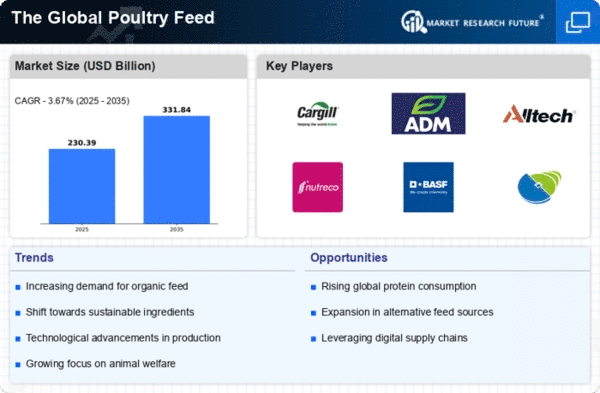
As per MRFR analysis, The Global Poultry Feed Size was estimated at 222.23 USD Billion in 2024. The poultry feed industry is projected to grow from 232.94 USD Billion in 2025 to 331.84 USD Billion by 2035, exhibiting a compound annual growth rate (CAGR) of 3.67 during the forecast period 2025 - 2035.

Key Market Trends & Highlights

The Global Poultry Feed is experiencing a dynamic shift towards sustainability and technological advancements.

  • Sustainability initiatives are increasingly shaping the production and formulation of poultry feed, particularly in North America.
  • Technological integration is enhancing feed efficiency and production processes, with Asia-Pacific emerging as a leader in innovation.
  • Nutritional customization is gaining traction, allowing producers to tailor feed to specific poultry needs, thereby improving overall health.
  • Rising meat consumption and advancements in feed technology are driving market growth, as stakeholders prioritize animal health and regulatory compliance.

Market Size & Forecast

2024 Market Size 222.23 (USD Billion)
2035 Market Size 331.84 (USD Billion)
CAGR (2025 - 2035) 3.67%

Major Players

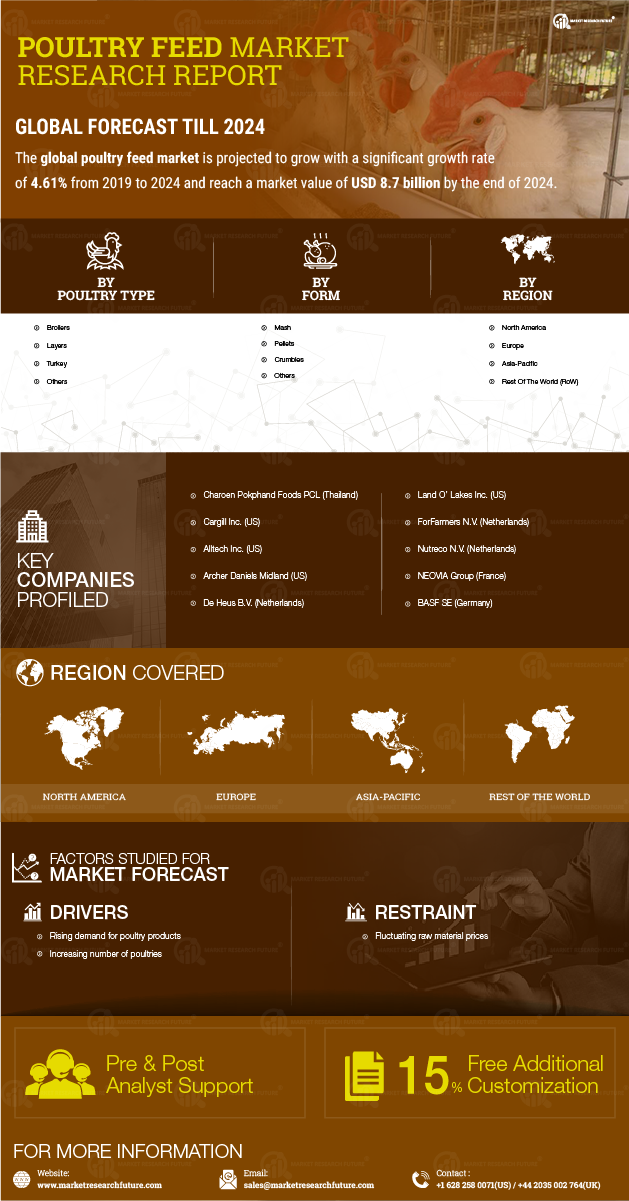
Cargill (US), Archer Daniels Midland (US), Alltech (US), Nutreco (NL), BASF (DE), De Heus (NL), Charoen Pokphand Foods (TH), Land O'Lakes (US), ForFarmers (NL), Meyn (NL)

Our Impact
Enabled $4.3B Revenue Impact for Fortune 500 and Leading Multinationals
Partnering with 2000+ Global Organizations Each Year
30K+ Citations by Top-Tier Firms in the Industry

Global Poultry Feed Market Trends

The Global Poultry Feed is currently experiencing a dynamic evolution, driven by various factors that influence production and consumption patterns. The increasing demand for poultry products, coupled with the rising awareness of animal nutrition, appears to be shaping the market landscape. Producers are focusing on enhancing feed quality and optimizing formulations to meet the nutritional needs of poultry. This shift is likely to result in the development of innovative feed solutions that cater to specific growth stages and health requirements of birds. Furthermore, sustainability concerns are prompting stakeholders to explore alternative ingredients and eco-friendly practices, which may redefine traditional feed production methods. In addition, The Global Poultry Feed is witnessing a growing trend towards the incorporation of technology in feed management. Digital tools and data analytics are being utilized to monitor feed efficiency and animal health, potentially leading to improved productivity. As the market continues to evolve, it is essential for industry players to remain adaptable and responsive to changing consumer preferences and regulatory frameworks. The interplay of these factors suggests a complex yet promising future for The Global Poultry Feed, where innovation and sustainability will likely play pivotal roles in shaping its trajectory.

Sustainability Initiatives

The Global Poultry Feed is increasingly focusing on sustainability initiatives. Stakeholders are exploring alternative protein sources and eco-friendly ingredients to reduce environmental impact. This trend reflects a broader commitment to responsible sourcing and production practices.

Technological Integration

The integration of technology in feed management is becoming more prevalent. Digital tools and data analytics are being employed to enhance feed efficiency and monitor animal health. This technological shift may lead to improved productivity and better resource management.

Nutritional Customization

There is a growing emphasis on nutritional customization within The Global Poultry Feed. Producers are tailoring feed formulations to meet specific dietary needs of poultry, which could enhance growth rates and overall health outcomes.

Global Poultry Feed Market Drivers

Rising Meat Consumption

The increasing demand for poultry meat is a primary driver of The Global Poultry Feed Industry. As populations grow and urbanization accelerates, meat consumption, particularly poultry, is on the rise. According to recent data, poultry meat consumption is projected to reach approximately 150 million metric tons by 2026. This surge in demand necessitates a corresponding increase in poultry feed production, as feed constitutes a significant portion of poultry farming costs. The Global Poultry Feed Industry must adapt to this growing demand by ensuring a steady supply of high-quality feed to support poultry growth and production efficiency. Furthermore, the shift towards more protein-rich diets in developing regions is likely to further bolster the market, indicating a robust growth trajectory for poultry feed manufacturers.

Advancements in Feed Technology

Technological advancements in feed production are transforming The Global Poultry Feed Industry. Innovations such as precision nutrition, which tailors feed formulations to the specific needs of poultry, are becoming increasingly prevalent. These advancements not only enhance feed efficiency but also improve the overall health and productivity of poultry. For instance, the incorporation of feed additives and probiotics has been shown to boost growth rates and reduce feed conversion ratios. The market is witnessing a shift towards more sophisticated feed formulations, with The Global Poultry Feed projected to grow significantly, indicating a strong correlation with the poultry feed sector. As producers seek to optimize their operations, the integration of technology in feed production is likely to remain a key driver of growth in the industry.

Focus on Animal Health and Welfare

The emphasis on animal health and welfare is becoming a crucial driver in The Global Poultry Feed Industry. Consumers are increasingly concerned about the conditions in which poultry are raised, leading to a demand for feed that supports better health outcomes. This trend is reflected in the growing market for organic and non-GMO feed options, which are perceived as healthier alternatives. Data suggests that the organic poultry feed market is expected to grow at a compound annual growth rate of over 10% in the coming years. Producers are responding by formulating feeds that not only meet nutritional needs but also promote overall well-being, thereby aligning with consumer preferences. This focus on health and welfare is likely to shape the future of poultry feed production and consumption.

Regulatory Compliance and Standards

Regulatory compliance is a significant driver influencing The Global Poultry Feed Industry. Governments and international bodies are increasingly implementing stringent regulations regarding feed safety, quality, and environmental impact. Compliance with these regulations is essential for producers to maintain market access and consumer trust. The introduction of standards such as the European Union's Feed Hygiene Regulation has necessitated changes in feed production practices. As a result, companies are investing in quality assurance and traceability systems to ensure compliance. This focus on regulatory adherence not only enhances product safety but also drives innovation in feed formulations. The need to meet these evolving standards is likely to continue shaping the landscape of the poultry feed market.

Sustainability and Environmental Concerns

Sustainability is emerging as a pivotal driver in The Global Poultry Feed Industry. With growing awareness of environmental issues, there is an increasing demand for sustainable feed sources that minimize ecological impact. This includes the use of alternative protein sources, such as insect meal and plant-based proteins, which are gaining traction as viable feed ingredients. The global market for sustainable feed is projected to expand significantly, reflecting a shift towards more environmentally friendly practices in poultry farming. Producers are under pressure to adopt sustainable practices not only to meet consumer expectations but also to comply with regulatory requirements. This trend towards sustainability is likely to influence feed production methods and ingredient sourcing in the poultry feed sector.

Market Segment Insights

By Application: Broilers (Largest) vs. Layers (Fastest-Growing)

In The Global Poultry Feed, the application segment is led by Broilers, which capture the largest share due to their significant consumption of feed in meat production. Layers follow closely, characterized by a robust market due to the increasing demand for eggs globally. Turkeys and Ducks, while vital, hold comparatively smaller shares, yet they still cater to niche markets, resulting in their unique positions within the poultry feed landscape.

Broilers (Dominant) vs. Layers (Emerging)

Broilers dominate the poultry feed market, primarily driven by the high demand for chicken meat across various regions. This segment benefits from advancements in feed formulations that enhance growth rates and feed conversion efficiency. On the other hand, Layers represent an emerging segment, rapidly growing due to the surge in egg production and consumption trends. The shift towards sustainable farming practices and enriched feed options positions Layers to capture more market share. Both segments are experiencing innovations in nutrition and feed technology, which promote healthier poultry and increase overall productivity.

By Formulation Type: Complete Feed (Largest) vs. Supplementary Feed (Fastest-Growing)

In The Global Poultry Feed, the formulation type segment is characterized by four primary categories: Complete Feed, Supplementary Feed, Concentrates, and Premixes. Among these, Complete Feed holds the largest market share, benefiting from its comprehensive nutritional profile that satisfies the complete dietary needs of poultry. Supplementary Feed, while smaller in market share, has been gaining traction due to rising consumer awareness of animal health and the importance of supplements in enhancing poultry productivity.

Complete Feed (Dominant) vs. Supplementary Feed (Emerging)

Complete Feed is the dominant formulation type in The Global Poultry Feed, offering a balanced mix of vitamins, minerals, and other nutrients essential for poultry growth and health. Its convenience and effectiveness cater to various poultry species, driving its widespread adoption. In contrast, Supplementary Feed is seen as an emerging option that enhances nutritional value and addresses specific dietary deficiencies. This feeding strategy appeals to producers focusing on optimizing poultry performance, particularly as animal welfare and health consciousness among consumers increase. Both segments are vital, yet their roles differ significantly within the market.

By Ingredient Type: Cereals (Largest) vs. Protein Meals (Fastest-Growing)

The Global Poultry Feed displays a diverse segment distribution in terms of ingredient types. Cereals dominate the market, serving as the primary energy source for poultry feed, making up a significant portion of the overall mix. Protein meals stand out as a vital component, providing essential amino acids and nutrients necessary for poultry growth, holding a considerable share that reflects increasing demands for high-protein feed alternatives. Growth trends in the ingredient type segment are influenced by several factors, including the rising global consumption of poultry products and the push for more sustainable feeding practices. As consumer preferences shift towards healthier and organic poultry options, protein meals are rapidly emerging as the fastest-growing segment due to their nutritional benefits. This trend is further supported by innovations in feed processing and formulations that enhance digestibility and nutrient absorption.

Cereals: Dominant vs. Protein Meals: Emerging

Cereals, particularly corn and wheat, are considered the dominant ingredient in the poultry feed market, primarily due to their energy content and availability at scale. They provide the bulk of calories needed for growth and maintenance in poultry, which is crucial for feed efficiency. On the other hand, protein meals, which include soybean meal and canola meal, are emerging as essential ingredients due to their high protein content and role in supporting the optimal growth of poultry. As feed formulations increasingly prioritize protein quality, these meals are gaining traction. The emphasis on nutritional profile and sustainability has catalyzed the growth of protein meals, allowing them to carve out a significant place in the market while complementing the traditional dominance of cereals.

By Distribution Channel: Retail Stores (Largest) vs. Online Sales (Fastest-Growing)

In The Global Poultry Feed, distribution through retail stores holds the largest market share due to their established presence and convenience for consumers. Retail locations provide a direct touchpoint for buyers, allowing customers to easily access various poultry feed products. In contrast, online sales are gaining traction, demonstrating significant growth as consumers increasingly turn to e-commerce for their poultry feed needs, driven by the convenience of online shopping and a growing number of platforms catering to this market.

Retail Stores: Dominant vs. Online Sales: Emerging

Retail stores serve as the dominant distribution channel in The Global Poultry Feed, leveraging physical locations to enhance customer interaction and allow for immediate purchasing experiences. With consumers valuing trust and familiarity, these retail outlets often have established relationships with customers, ensuring repeat business. On the other hand, online sales represent an emerging channel that is rapidly expanding, driven by technological adoption and the rising popularity of digital shopping. This segment appeals particularly to tech-savvy consumers looking for convenience and variety, fostering competitive pricing and broader product assortments, thus attracting a younger demographic that favors online transactions over traditional shopping.

Get more detailed insights about Global Poultry Feed Market

Regional Insights

North America : Established Market Leaders

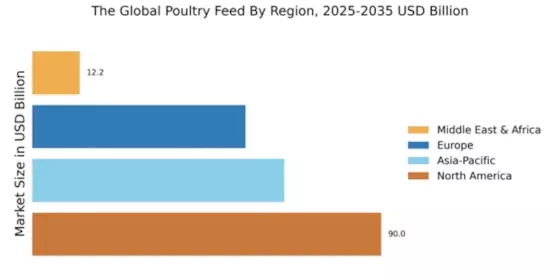
North America is a significant player in The Global Poultry Feed, holding a market size of $40.0 million. The region benefits from advanced agricultural practices, high demand for poultry products, and a focus on sustainable feed solutions. Regulatory support for animal health and nutrition further drives growth, as consumers increasingly seek quality and safety in food products. The market is expected to grow steadily, driven by innovations in feed formulations and nutritional enhancements. The United States dominates the North American market, with key players like Cargill, Archer Daniels Midland, and Alltech leading the charge. These companies are investing in research and development to create more efficient and sustainable feed options. The competitive landscape is characterized by a mix of large corporations and regional players, all striving to meet the evolving demands of poultry producers and consumers alike.

Europe : Innovative Feed Solutions

Europe's poultry feed market, valued at $35.0 million, is characterized by a strong emphasis on sustainability and innovation. Regulatory frameworks, such as the EU's Farm to Fork Strategy, promote environmentally friendly practices and animal welfare, driving demand for high-quality feed. The region is witnessing a shift towards organic and non-GMO feed options, reflecting consumer preferences for healthier poultry products. This regulatory support is expected to enhance market growth in the coming years. Leading countries in Europe include Germany, France, and the Netherlands, where companies like Nutreco and BASF are at the forefront of developing innovative feed solutions. The competitive landscape is robust, with numerous players focusing on research and development to meet regulatory standards and consumer demands. The presence of established firms and a growing number of startups contribute to a dynamic market environment, fostering continuous improvement in feed quality and sustainability.

Asia-Pacific : Rapid Expansion and Demand

Asia-Pacific is the largest regional market for poultry feed, with a staggering market size of $130.0 million. The region's growth is driven by increasing meat consumption, urbanization, and rising disposable incomes. Governments are also implementing policies to enhance food security, which boosts demand for poultry products. The focus on improving feed efficiency and nutritional value is critical, as producers seek to optimize production costs while meeting consumer expectations for quality. Countries like China, India, and Thailand are leading the charge in this market, with significant investments in poultry farming and feed production. Key players such as Charoen Pokphand Foods and Alltech are expanding their operations to cater to the growing demand. The competitive landscape is marked by both local and international companies striving to innovate and provide high-quality feed solutions, ensuring the region remains a powerhouse in The Global Poultry Feed.

Middle East and Africa : Emerging Market Potential

The Middle East and Africa region, with a market size of $17.23 million, presents significant growth opportunities in the poultry feed sector. The increasing demand for poultry products, driven by population growth and urbanization, is a key growth driver. Additionally, governments are focusing on enhancing agricultural productivity and food security, which is expected to boost the poultry feed market. Regulatory initiatives aimed at improving animal health and nutrition are also contributing to market expansion. Leading countries in this region include South Africa, Egypt, and Nigeria, where local and international players are investing in poultry feed production. Companies like De Heus and ForFarmers are actively participating in this market, focusing on developing tailored feed solutions to meet local needs. The competitive landscape is evolving, with a mix of established firms and new entrants striving to capture market share and address the growing demand for poultry products.

Global Poultry Feed Market Regional Image

Key Players and Competitive Insights

The Global Poultry Feed is currently characterized by a dynamic competitive landscape, driven by increasing demand for poultry products and a growing emphasis on sustainable practices. Key players such as Cargill (US), Archer Daniels Midland (US), and Alltech (US) are strategically positioned to leverage innovation and operational efficiency. Cargill (US) focuses on enhancing its product portfolio through research and development, while Archer Daniels Midland (US) emphasizes supply chain optimization and regional expansion to meet local market needs. Alltech (US) is investing in digital transformation initiatives to improve customer engagement and operational transparency. Collectively, these strategies contribute to a competitive environment that is increasingly focused on sustainability and technological advancement.

In terms of business tactics, companies are localizing manufacturing to reduce transportation costs and enhance supply chain resilience. The market structure appears moderately fragmented, with several key players holding substantial market shares. This fragmentation allows for a diverse range of products and services, fostering competition among established firms and new entrants alike. The collective influence of these major players shapes market dynamics, as they continuously adapt to changing consumer preferences and regulatory requirements.

In January 2026, Cargill (US) announced a partnership with a leading biotechnology firm to develop a new line of feed additives aimed at improving poultry health and growth rates. This strategic move is significant as it underscores Cargill's commitment to innovation and its proactive approach to addressing the evolving needs of poultry producers. By integrating advanced biotechnology into its offerings, Cargill (US) positions itself as a leader in the market, potentially enhancing its competitive edge.

In December 2025, Alltech (US) launched a new digital platform designed to provide poultry farmers with real-time data analytics and insights into feed efficiency and animal health. This initiative reflects Alltech's focus on digital transformation and its recognition of the importance of data-driven decision-making in modern poultry farming. By equipping farmers with actionable insights, Alltech (US) enhances its value proposition and strengthens customer loyalty.

In November 2025, Archer Daniels Midland (US) expanded its production capacity in Southeast Asia, responding to the growing demand for poultry feed in the region. This expansion is strategically important as it allows Archer Daniels Midland (US) to better serve local markets and capitalize on emerging opportunities. By increasing its footprint in a high-growth area, the company is likely to enhance its market share and operational efficiency.

As of February 2026, current trends in The Global Poultry Feed indicate a strong focus on digitalization, sustainability, and the integration of artificial intelligence (AI) into production processes. Strategic alliances among key players are shaping the competitive landscape, fostering innovation and collaboration. Looking ahead, it is anticipated that competitive differentiation will increasingly hinge on technological advancements and supply chain reliability, rather than solely on price. This shift suggests a transformative evolution in how companies compete, with a greater emphasis on innovation and sustainability as core drivers of market success.

Key Companies in the Global Poultry Feed Market include

Industry Developments

Regal DSM N.V.; Alltech Inc.; Novus International Inc.; Evonik Industries; Kent Nutrition Group, Inc.; and BASF are a portion of the organizations present in the business. Poultry feed makers intend to accomplish ideal business development and build up a solid market position through the execution of different procedures like acquisitions, joint endeavors, creation limit extensions, new item dispatches, advancement of key item marks, and critical interests in the examination and improvement.

Industry News and Events:

  • Mergers and Acquisitions: The recent merger of Novozymes and Chr. Hansen in the feed enzyme sector signifies a consolidation trend in the industry. (Source: Feed Strategy)
  • IPPE 2024 discussions: Poultry owners in India are exploring collaborative feed procurement strategies to combat rising costs and ensure supply chain stability. (Source: Poultry Dairy Feed)

Regional Developments:

  • Kerala, India: The poultry market faces a shortage of free-range feed, highlighting the need for improved infrastructure and local feed production. (Source: Poultry Dairy Feed)
  • North America: The poultry feed market is expected to witness steady growth due to factors like rising demand for organic and antibiotic-free poultry products. (Source: Poultry Feed Market by Type)

Future Outlook

Global Poultry Feed Market Future Outlook

The Global Poultry Feed is projected to grow at a 3.67% CAGR from 2024 to 2035, driven by rising meat consumption, technological advancements, and sustainable practices.

New opportunities lie in:

  • Development of precision nutrition solutions for optimized feed efficiency.
  • Expansion into organic and non-GMO feed product lines.
  • Investment in automated feed manufacturing technologies to reduce costs.

By 2035, the market is expected to be robust, reflecting evolving consumer preferences and innovative production methods.

Market Segmentation

Global Poultry Feed Market Application Outlook

  • Broilers
  • Layers
  • Turkeys
  • Ducks

Global Poultry Feed Market Ingredient Type Outlook

  • Cereals
  • Protein Meals
  • Fats and Oils
  • Vitamins and Minerals

Global Poultry Feed Market Formulation Type Outlook

  • Complete Feed
  • Supplementary Feed
  • Concentrates
  • Premixes

Global Poultry Feed Market Distribution Channel Outlook

  • Online Sales
  • Retail Stores
  • Wholesale Distributors
  • Direct Sales

Report Scope

MARKET SIZE 2024222.23(USD Billion)
MARKET SIZE 2025232.94(USD Billion)
MARKET SIZE 2035331.84(USD Billion)
COMPOUND ANNUAL GROWTH RATE (CAGR)3.67% (2024 - 2035)
REPORT COVERAGERevenue Forecast, Competitive Landscape, Growth Factors, and Trends
BASE YEAR2024
Market Forecast Period2025 - 2035
Historical Data2019 - 2024
Market Forecast UnitsUSD Billion
Key Companies ProfiledCargill (US), Archer Daniels Midland (US), Alltech (US), Nutreco (NL), BASF (DE), De Heus (NL), Charoen Pokphand Foods (TH), Land O'Lakes (US), ForFarmers (NL), Meyn (NL)
Segments CoveredApplication, Formulation Type, Ingredient Type, Distribution Channel
Key Market OpportunitiesAdoption of sustainable feed ingredients driven by consumer demand for environmentally friendly poultry products.

Key Market DynamicsRising demand for sustainable feed ingredients drives innovation and competition in the poultry feed sector.
Countries CoveredNorth America, Europe, APAC, South America, MEA

Market Highlights

Author
Harshita Gorade
Research Analyst

Harshita Post graduate MBA in Business Administration from Welingkar Institute, Mumbai and 5 years of experience in the field of product market research. As a Research Analyst, I have cross-domain experience in packaging, and industrial Automation & Equipment. I am currently looking after the research process of packaging, logistics & transportation, and industrial automation & equipment at Market Research Future Reports. My responsibilities at the organization involve handling syndicate and custom reports as well as responding to client inquiries, and organize, co-ordinate with a group of 5 to 6 persons to manage all workflows.

Leave a Comment

FAQs

What is the current valuation of the US The us global poultry feed market?

The US The us global poultry feed market was valued at 26.67 USD Billion in 2024.

What is the projected market valuation for the US The us global poultry feed market in 2035?

The market is projected to reach 38.24 USD Billion by 2035.

What is the expected CAGR for the US The us global poultry feed market during the forecast period 2025 - 2035?

The expected CAGR for the market during the forecast period 2025 - 2035 is 3.33%.

Which companies are considered key players in the US The us global poultry feed market?

Key players include Cargill, Archer Daniels Midland, Purina Animal Nutrition, Alltech, Nutreco, BASF, De Heus, Land O'Lakes, and Tyson Foods.

What are the main segments of the US The us global poultry feed market by application?

The main segments by application include Broiler Feed, Layer Feed, Breeder Feed, and Turkey Feed.

Download Free Sample

Kindly complete the form below to receive a free sample of this Report

Compare Licence

×
Features License Type
Single User Multiuser License Enterprise User
Price $4,950 $5,950 $7,250
Maximum User Access Limit 1 User Upto 10 Users Unrestricted Access Throughout the Organization
Free Customization
Direct Access to Analyst
Deliverable Format
Platform Access
Discount on Next Purchase 10% 15% 15%
Printable Versions