×
Hero Background
English
Chinese
French
Japanese
Korean
German
Spanish

Gestational Trophoblastic Disease Market Size

ID: MRFR/Pharma/5096-HCR
100 Pages
Rahul Gotadki
October 2025

Gestational Trophoblastic Disease Market Research Report Information By Type (Hydatidiform Mole, Choriocarcinoma, Placental-Site Trophoblastic Tumor, and Others), by Treatment (Surgery, Suction Dilation and Curettage, and Others), by End User—Forecast Till 2035

Share:
Download PDF ×

We do not share your information with anyone. However, we may send you emails based on your report interest from time to time. You may contact us at any time to opt-out.

Gestational Trophoblastic Disease Market Infographic
Purchase Options

Gestational Trophoblastic Disease Size

Gestational Trophoblastic Disease Market Growth Projections and Opportunities

Maternal age is a key element impacting the improvement of GTD, with higher frequency rates saw in ladies at the limits of regenerative age. Segment patterns, including the age movement of the female population, add to the market elements of GTD. Mechanical movements in demonstrative strategies, for example, ultrasound imaging and molecular testing, influence the early location and analysis of GTD. Further developed demonstrative precision adds to ideal intervention and impacts market patterns. Advancing treatment conventions for GTD, including chemotherapy, surgery, and follow-up care, impact the market. Progresses in treatment choices, individualized care plans, and the presentation of novel helpful methodologies add to the general market elements. Varieties in medical care foundation, including admittance to gynecological administrations, influence the determination and management of GTD. Deep rooted medical services frameworks might prompt higher inference rates and better therapy results, affecting market elements. The degree of health care coverage inclusion for GTD-related clinical intercessions impacts patient entry. Insurance contracts and repayment components influence market elements by influencing the moderateness of indicative tests and medicines. The accessibility of psychosocial support administrations for ladies impacted by GTD impacts market elements. Stable consideration, guiding, and patient support drives add to all-encompassing medical care approaches and effect patient results. The interconnectedness of medical services frameworks all around the world works with the trading of information and ability in overseeing GTD. Joint efforts, data sharing, and worldwide medical services drives add to the general market elements.

Gestational Trophoblastic Disease Market Size Graph
Author
Rahul Gotadki
Assistant Manager

He holds an experience of about 7+ years in Market Research and Business Consulting, working under the spectrum of Life Sciences and Healthcare domains. Rahul conceptualizes and implements a scalable business strategy and provides strategic leadership to the clients. His expertise lies in market estimation, competitive intelligence, pipeline analysis, customer assessment, etc. In addition to the above, his other responsibility includes strategic tracking of high growth markets & advising clients on the potential areas of focus they could direct their business initiatives

Leave a Comment

FAQs

What would drive the gestational trophoblastic disease market ahead?

Surge in risks affecting the spectrum of the diseases can boost Gestational Trophoblastic Disease Market.

Which type would dominate the Gestational Trophoblastic Disease Market?

Hydatidiform mole would dominate the type segment of Gestational Trophoblastic Disease Market.

Which region would lead the Gestational Trophoblastic Disease Market?

Gestational Trophoblastic Disease Market Asia Pacific would be the fastest-growing Gestational Trophoblastic Disease Market.

What would inspire the European Gestational Trophoblastic Disease Market growth?

Gestational Trophoblastic Disease Market in Europe would benefit from high funding for research and development.

Market Summary

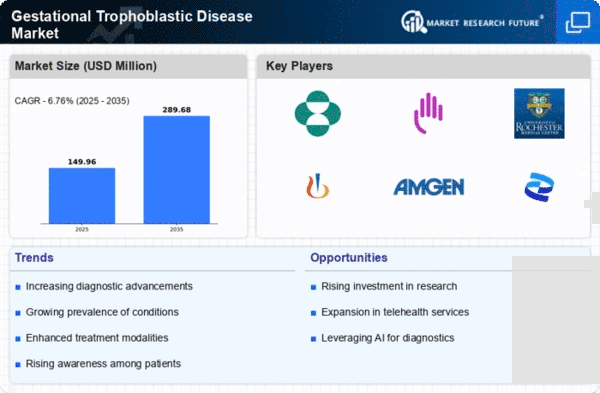
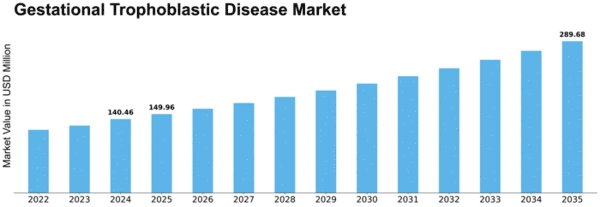
As per MRFR analysis, the Gestational Trophoblastic Disease Market was estimated at 140.46 USD Million in 2024. The Gestational Trophoblastic Disease industry is projected to grow from 151.57 USD Million in 2025 to 289.68 USD Million by 2035, exhibiting a compound annual growth rate (CAGR) of 6.76 during the forecast period 2025 - 2035.

Key Market Trends & Highlights

The Gestational Trophoblastic Disease Market is poised for substantial growth driven by advancements in diagnostics and increasing awareness.

  • North America remains the largest market for Gestational Trophoblastic Disease, reflecting a robust healthcare infrastructure and high awareness levels.
  • The Asia-Pacific region is emerging as the fastest-growing market, likely due to increasing healthcare investments and rising disease incidence.
  • Hydatidiform Mole represents the largest segment, while Choriocarcinoma is noted for its rapid growth, indicating shifting treatment dynamics.
  • Key market drivers include the rising incidence of Gestational Trophoblastic Disease and technological advancements in diagnostics, which are fostering market expansion.

Market Size & Forecast

2024 Market Size 140.46 (USD Million)
2035 Market Size 289.68 (USD Million)
CAGR (2025 - 2035) 6.76%
Largest Regional Market Share in 2024 North America

Major Players

<p>Merck & Co. (US), Bristol-Myers Squibb (US), Roche (CH), Novartis (CH), Amgen (US), Pfizer (US), Eli Lilly and Company (US), Bayer (DE), AstraZeneca (GB)</p>

Market Trends

The Gestational Trophoblastic Disease Market is currently experiencing notable developments, driven by a combination of increasing awareness and advancements in diagnostic techniques. Healthcare professionals are becoming more adept at identifying this rare group of conditions, which arise from abnormal growth of trophoblastic cells during pregnancy. As a result, there is a growing emphasis on early detection and treatment options, which may lead to improved patient outcomes. Furthermore, the market is witnessing a rise in research initiatives aimed at understanding the underlying mechanisms of these diseases, potentially paving the way for innovative therapeutic approaches. In addition to advancements in diagnostics, the Gestational Trophoblastic Disease Market is influenced by the evolving landscape of treatment modalities. Traditional methods are being complemented by novel therapies, which may offer enhanced efficacy and reduced side effects. The collaboration between academic institutions and pharmaceutical companies appears to be fostering a more dynamic environment for drug development. As awareness continues to grow, it is likely that more healthcare providers will integrate these emerging treatments into their practice, thereby expanding the market's reach and accessibility. Overall, the Gestational Trophoblastic Disease Market is poised for growth, driven by a confluence of factors that enhance both diagnosis and treatment options.

Increased Awareness and Education

There is a growing recognition of gestational trophoblastic diseases among healthcare providers and patients alike. Educational initiatives are being implemented to inform individuals about the symptoms and risks associated with these conditions, which may lead to earlier diagnosis and intervention.

Advancements in Diagnostic Technologies

The market is benefiting from innovations in diagnostic tools that facilitate the identification of gestational trophoblastic diseases. Enhanced imaging techniques and biomarker discovery are likely to improve accuracy in diagnosis, thereby influencing treatment decisions.

Emerging Therapeutic Options

New treatment modalities are being explored, which may offer improved outcomes for patients. Research into targeted therapies and personalized medicine is gaining traction, suggesting a shift towards more effective management of gestational trophoblastic diseases.

Gestational Trophoblastic Disease Market Market Drivers

Market Trends and Growth Projections

The Global Gestational Trophoblastic Disease Market Industry is experiencing notable trends and growth projections. The market is anticipated to grow at a compound annual growth rate (CAGR) of 9.32% from 2025 to 2035, reflecting the increasing demand for effective treatment options and healthcare services. This growth is driven by factors such as the rising incidence of GTD, advancements in diagnostics, and enhanced awareness. As the market evolves, stakeholders are likely to adapt to changing dynamics, focusing on innovative solutions and patient-centric care. The projected growth trajectory indicates a robust future for the GTD market, with significant opportunities for healthcare providers and pharmaceutical companies.

Advancements in Diagnostic Techniques

Technological advancements in diagnostic techniques are significantly influencing the Global Gestational Trophoblastic Disease Market Industry. Enhanced imaging modalities and biomarker identification are improving the accuracy of GTD diagnoses, allowing for earlier detection and treatment. For instance, the use of ultrasound and serum beta-hCG testing has become more refined, leading to better patient outcomes. As these technologies evolve, healthcare providers are likely to adopt them more widely, thereby increasing the market's growth potential. The ability to diagnose GTD at earlier stages may also lead to a reduction in complications, which could further drive demand for related healthcare services and products.

Supportive Government Policies and Funding

Supportive government policies and funding initiatives are instrumental in fostering the Global Gestational Trophoblastic Disease Market Industry. Governments are increasingly recognizing the need for improved healthcare services related to GTD, leading to the allocation of funds for research, awareness campaigns, and treatment accessibility. Such policies may include subsidies for diagnostic tests and treatments, which can alleviate the financial burden on patients. As a result, this support is likely to enhance the overall healthcare infrastructure, making it easier for patients to receive timely care. The combination of government backing and public health initiatives could significantly influence market growth and patient outcomes.

Growing Awareness and Education Initiatives

The increasing awareness and education initiatives surrounding gestational trophoblastic disease are pivotal in shaping the Global Gestational Trophoblastic Disease Market Industry. Healthcare organizations and advocacy groups are actively promoting knowledge about GTD, its symptoms, and treatment options. This heightened awareness is likely to lead to more women seeking medical advice and screening, thereby increasing diagnosis rates. As the understanding of GTD expands, it may also encourage research and development of new therapies, contributing to market growth. The collective efforts to educate both healthcare professionals and the public are expected to foster a more informed patient population, which could enhance treatment outcomes.

Rising Investment in Research and Development

The surge in investment in research and development (R&D) for gestational trophoblastic disease is a crucial factor driving the Global Gestational Trophoblastic Disease Market Industry. Pharmaceutical companies and research institutions are increasingly focusing on developing innovative treatment options and therapies for GTD. This trend is evidenced by the growing number of clinical trials aimed at exploring new drugs and treatment protocols. As the market is projected to grow to 4.08 USD Billion by 2035, the emphasis on R&D is likely to play a significant role in expanding treatment options and improving patient care. The potential for breakthroughs in GTD therapies could attract further investment, thereby enhancing market dynamics.

Increasing Incidence of Gestational Trophoblastic Disease

The rising incidence of gestational trophoblastic disease (GTD) is a primary driver of the Global Gestational Trophoblastic Disease Market Industry. Reports indicate that the prevalence of GTD is increasing, particularly in certain demographics, such as women of childbearing age. This trend is likely to contribute to the market's growth, as more cases necessitate medical intervention and treatment options. In 2024, the market is projected to reach 1.53 USD Billion, reflecting the urgent need for healthcare services and innovations in this field. As awareness and diagnosis improve, the demand for specialized care and therapies is expected to rise, further propelling the market forward.


Market Segment Insights

By Type of Gestational Trophoblastic Disease: Hydatidiform Mole (Largest) vs. Choriocarcinoma (Fastest-Growing)

<p>In the Gestational Trophoblastic Disease Market, Hydatidiform Mole holds the largest market share, significantly surpassing other types due to its more common occurrence among pregnant women. Choriocarcinoma, although less prevalent, is gaining attention as the fastest-growing segment owing to increasing awareness and advancements in treatment options that cater to this aggressive form of trophoblastic disease. Plausible factors such as rising diagnostic capabilities contribute to the enhanced recognition of both conditions, showcasing a clear divergence in their market dynamics. The growth trends in this segment are heavily influenced by evolving healthcare practices and an uptick in healthcare expenditure. Ongoing research and development initiatives aimed at improved therapeutic strategies are driving interest in Choriocarcinoma. Moreover, the prominence of Hydatidiform Mole can be attributed to its higher incidence rates, particularly in certain demographics. Continued public health campaigns aimed at educating women on the signs and symptoms of these diseases are expected to propel growth further, solidifying their respective positions in the market.</p>

<p>Hydatidiform Mole (Dominant) vs. Choriocarcinoma (Emerging)</p>

<p>Hydatidiform Mole is recognized as the dominant type in the Gestational Trophoblastic Disease sector, characterized by the abnormal growth of trophoblasts, leading to the formation of hydatidiform moles. This condition is often diagnosed in the early stages of pregnancy and is usually managed effectively, contributing to its prevalence. Clinicians widely understand its epidemiology and management, leading to higher detection rates. In contrast, Choriocarcinoma is recognized as an emerging segment, marked by its aggressive nature and potential for metastasis. It requires more specialized treatment and ongoing monitoring, resulting in an increased focus within oncology sectors. The growth of this segment is spurred by new therapies and greater awareness, presenting opportunities for market players to innovate in treatment protocols and patient education.</p>

By Diagnosis Method: Serum Beta-Human Chorionic Gonadotropin Testing (Largest) vs. Ultrasound Imaging (Fastest-Growing)

<p>In the Gestational Trophoblastic Disease Market, the Diagnosis Method segment is characterized by key technologies such as Serum Beta-Human Chorionic Gonadotropin (BHCG) Testing, Ultrasound Imaging, Histopathological Examination, and Magnetic Resonance Imaging (MRI). Out of these, Serum Beta-Human Chorionic Gonadotropin Testing holds the largest market share, attributed to its widespread clinical acceptance and effectiveness in diagnosing trophoblastic diseases. Ultrasound Imaging follows as a fast-growing modality, gaining traction due to its non-invasive nature and advancements in imaging technology. The growth trends within this segment are largely driven by technological advancements and increasing awareness of gestational trophoblastic diseases. As healthcare providers seek more accurate and effective diagnostic options, the demand for Serum BHCG Testing remains robust. Conversely, Ultrasound Imaging is quickly emerging as the preferred choice for initial assessments, enhancing early detection efforts. Meanwhile, Histopathological Examination and MRI continue to serve essential diagnostic roles, but growth in these areas is steadier and less dynamic compared to Serum BHCG Testing and Ultrasound Imaging.</p>

<p>Ultrasound Imaging (Dominant) vs. Histopathological Examination (Emerging)</p>

<p>In the competitive landscape of the Gestational Trophoblastic Disease Market, Ultrasound Imaging is recognized as a dominant diagnostic method due to its effectiveness in visualizing early signs of trophoblastic diseases and its ability to guide clinical decision-making. Its non-invasive characteristics and advancements in technology, such as 3D imaging, enhance its utility for both diagnostics and monitoring. In contrast, Histopathological Examination, while emerging as a vital diagnostic tool, provides conclusive diagnoses through tissue analysis and is crucial in determining treatment directions. This method's growth is fueled primarily by its role in confirming diagnoses established by other modalities, thereby complementing and enriching the diagnostic spectrum.</p>

By Treatment Approach: Surgical Intervention (Largest) vs. Chemotherapy (Fastest-Growing)

<p>In the Gestational Trophoblastic Disease (GTD) market, Surgical Intervention holds the largest market share, primarily due to its effectiveness in removing neoplastic tissue. Chemotherapy follows as a significant treatment approach owing to its efficacy in disease management for patients with persistent GTD, making it crucial in overall treatment strategies. Meanwhile, Radiation Therapy and Follow-up Monitoring have smaller shares, primarily serving supportive roles in the treatment landscape. The growth trends in the GTD treatment approach segment are largely driven by advancements in surgical techniques and chemotherapy regimens. Innovative therapies and personalized treatment plans are emerging, improving effectiveness and access to care. Additionally, increasing awareness of GTD, coupled with a rise in early diagnosis, is stimulating demand for these treatment options, particularly for Chemotherapy, which is gaining traction as a necessary adjunct in patient care.</p>

<p>Surgical Intervention: Dominant vs. Chemotherapy: Emerging</p>

<p>Surgical Intervention currently stands as the dominant treatment approach in the Gestational Trophoblastic Disease market due to its ability to effectively excise tumors and cytoreduce disease sites. This method is favored for acute cases and offers patients the best chance for a complete cure without the need for auxiliary treatments. Meanwhile, Chemotherapy is emerging rapidly, characterized by its non-invasive nature, which appeals to a broader patient demographic. The therapy is particularly beneficial for those with a high-risk classification or persistent disease after initial treatment. The dual approach of combining these modalities is gaining traction, as healthcare providers recognize the synergy between them, paving the way for better outcomes in the management of GTD.</p>

By Patient Demographics: Age Group (Largest) vs. Reproductive History (Fastest-Growing)

<p>In the Gestational Trophoblastic Disease market, the age group is the largest segment, representing a significant proportion of cases. Women aged 20 to 30 years are particularly prevalent in this demographic, reflecting the peak reproductive age range. Conversely, the reproductive history segment is gaining traction, with a notable increase in awareness and screening processes leading to a focus on women with a history of gestational issues. This demographic shift is crucial in understanding treatment pathways and patient needs.</p>

<p>Age Group (Dominant) vs. Reproductive History (Emerging)</p>

<p>The age group segment emerges as the dominant force in the Gestational Trophoblastic Disease market. This demographic is characterized by increased incidence rates among women aged 20 to 30, who are often in their prime reproductive years. Healthcare professionals are increasingly focusing on this group due to their vulnerability to gestational diseases. In contrast, the reproductive history segment represents an emerging market, highlighting the importance of women with previous complications such as molar pregnancies. This segment's growth is attributed to enhanced screening and a greater emphasis on patient education, driving demand for specialized care and tailored treatment plans.</p>

Get more detailed insights about Gestational Trophoblastic Disease Market Research Report – Forecast to 2035

Regional Insights

North America : Market Leader in Innovation

North America is poised to maintain its leadership in the Gestational Trophoblastic Disease market, holding a significant market share of 70.23% as of 2024. The region benefits from advanced healthcare infrastructure, high R&D investments, and a growing awareness of women's health issues. Regulatory support from agencies like the FDA further catalyzes market growth, ensuring timely access to innovative therapies and treatments. The United States stands out as the primary market, driven by key players such as Merck & Co., Bristol-Myers Squibb, and Pfizer. These companies are actively engaged in developing targeted therapies, enhancing treatment outcomes for patients. The competitive landscape is characterized by strategic collaborations and mergers, aimed at expanding product portfolios and improving market reach. This dynamic environment positions North America as a hub for advancements in gestational trophoblastic disease management.

Europe : Emerging Market with Growth Potential

Europe is witnessing a growing interest in the Gestational Trophoblastic Disease market, with a market size of €40.14M in 2024. Factors such as increasing healthcare expenditure, rising awareness of gynecological conditions, and supportive regulatory frameworks are driving this growth. The European Medicines Agency (EMA) plays a crucial role in facilitating the approval of new treatments, thereby enhancing patient access to innovative therapies. Leading countries in this region include Germany, France, and the UK, where healthcare systems are increasingly prioritizing women's health. Major pharmaceutical companies like Roche and Novartis are investing in research and development to address unmet medical needs. The competitive landscape is evolving, with a focus on personalized medicine and targeted therapies, positioning Europe as a key player in the global market for gestational trophoblastic disease.

Asia-Pacific : Emerging Powerhouse in Healthcare

The Asia-Pacific region is emerging as a significant player in the Gestational Trophoblastic Disease market, with a market size of $25.09M in 2024. Factors such as increasing healthcare investments, rising awareness of women's health issues, and improving access to healthcare services are driving this growth. Regulatory bodies in countries like Australia and Japan are enhancing frameworks to support the introduction of innovative therapies, fostering a conducive environment for market expansion. Countries such as Australia, Japan, and China are leading the charge, with a growing presence of key players like Amgen and Eli Lilly. The competitive landscape is characterized by collaborations between local and international firms, aimed at enhancing treatment options and improving patient outcomes. As the region continues to develop, it is expected to play a crucial role in The Gestational Trophoblastic Disease.

Middle East and Africa : Resource-Rich Frontier for Healthcare

The Middle East and Africa region is gradually establishing itself in the Gestational Trophoblastic Disease market, with a market size of $5.0M in 2024. The growth is driven by increasing healthcare investments, rising awareness of women's health issues, and the establishment of regulatory frameworks that support the introduction of new therapies. Governments are focusing on improving healthcare access, which is crucial for addressing the needs of patients with gestational trophoblastic disease. Countries like South Africa and the UAE are at the forefront of this emerging market, with local and international pharmaceutical companies exploring opportunities for growth. The competitive landscape is evolving, with a focus on partnerships and collaborations to enhance treatment options. As healthcare systems improve, the region is expected to see significant advancements in the management of gestational trophoblastic disease.

Key Players and Competitive Insights

The Gestational Trophoblastic Disease Market is characterized by a dynamic competitive landscape, driven by increasing awareness and advancements in treatment options. Key players such as Merck & Co. (US), Bristol-Myers Squibb (US), and Roche (CH) are actively shaping the market through strategic initiatives. Merck & Co. (US) has focused on innovation, particularly in developing targeted therapies that enhance patient outcomes. Meanwhile, Bristol-Myers Squibb (US) emphasizes partnerships with research institutions to accelerate drug development, thereby positioning itself as a leader in the therapeutic space. Roche (CH) has adopted a strategy of regional expansion, particularly in emerging markets, to broaden its reach and enhance accessibility to its treatments. Collectively, these strategies contribute to a competitive environment that is increasingly focused on innovation and patient-centric solutions.

In terms of business tactics, companies are localizing manufacturing and optimizing supply chains to enhance efficiency and reduce costs. The market appears moderately fragmented, with several players vying for market share. However, the influence of key players is substantial, as they leverage their resources and expertise to establish a competitive edge. This competitive structure suggests that while there is room for smaller entities, the dominance of major players is likely to shape market dynamics significantly.

In November 2025, Roche (CH) announced a collaboration with a leading biotechnology firm to develop a novel immunotherapy for gestational trophoblastic disease. This strategic move is expected to enhance Roche's portfolio and position it at the forefront of innovative treatment options. The collaboration underscores the importance of partnerships in accelerating research and development, potentially leading to breakthroughs that could redefine treatment paradigms.

In October 2025, Merck & Co. (US) launched a new clinical trial aimed at evaluating the efficacy of its latest drug candidate in patients with gestational trophoblastic disease. This initiative reflects Merck's commitment to advancing therapeutic options and demonstrates its proactive approach to addressing unmet medical needs. The trial's outcomes could significantly influence treatment guidelines and enhance Merck's competitive positioning in the market.

In September 2025, Bristol-Myers Squibb (US) expanded its manufacturing capabilities in response to increasing demand for its therapies. This expansion not only aims to streamline production but also enhances the company's ability to respond swiftly to market needs. Such operational enhancements are crucial in a market where timely access to treatments can significantly impact patient outcomes.

As of December 2025, current trends in the Gestational Trophoblastic Disease Market indicate a shift towards digitalization, sustainability, and the integration of artificial intelligence in drug development processes. Strategic alliances are increasingly shaping the competitive landscape, fostering innovation and collaboration among key players. Looking ahead, competitive differentiation is likely to evolve, with a pronounced shift from price-based competition to a focus on innovation, technological advancements, and supply chain reliability. This evolution suggests that companies that prioritize these aspects will be better positioned to thrive in an increasingly complex market.

Key Companies in the Gestational Trophoblastic Disease Market market include

Industry Developments

Future Outlook

Gestational Trophoblastic Disease Market Future Outlook

<p>The Gestational Trophoblastic Disease Market is projected to grow at a 6.76% CAGR from 2024 to 2035, driven by advancements in diagnostics, increasing awareness, and improved treatment options.</p>

New opportunities lie in:

  • <p>Development of targeted therapies for specific GTD subtypes.</p>
  • <p>Expansion of telemedicine services for remote patient monitoring.</p>
  • <p>Investment in AI-driven diagnostic tools for early detection.</p>

<p>By 2035, the market is expected to achieve substantial growth, reflecting enhanced treatment modalities and increased patient access.</p>

Market Segmentation

Gestational Trophoblastic Disease Market Diagnosis Method Outlook

  • Ultrasound Imaging
  • Serum Beta-Human Chorionic Gonadotropin Testing
  • Histopathological Examination
  • Magnetic Resonance Imaging

Gestational Trophoblastic Disease Market Treatment Approach Outlook

  • Surgical Intervention
  • Chemotherapy
  • Radiation Therapy
  • Follow-up Monitoring

Gestational Trophoblastic Disease Market Patient Demographics Outlook

  • Age Group
  • Reproductive History
  • Socioeconomic Status
  • Geographic Location

Gestational Trophoblastic Disease Market Type of Gestational Trophoblastic Disease Outlook

  • Hydatidiform Mole
  • Choriocarcinoma
  • Placental Site Trophoblastic Tumor
  • Epithelioid Trophoblastic Tumor

Report Scope

MARKET SIZE 2024140.46(USD Million)
MARKET SIZE 2025151.57(USD Million)
MARKET SIZE 2035289.68(USD Million)
COMPOUND ANNUAL GROWTH RATE (CAGR)6.76% (2024 - 2035)
REPORT COVERAGERevenue Forecast, Competitive Landscape, Growth Factors, and Trends
BASE YEAR2024
Market Forecast Period2025 - 2035
Historical Data2019 - 2024
Market Forecast UnitsUSD Million
Key Companies ProfiledMerck & Co. (US), Bristol-Myers Squibb (US), Roche (CH), Novartis (CH), Amgen (US), Pfizer (US), Eli Lilly and Company (US), Bayer (DE), AstraZeneca (GB)
Segments CoveredType of Gestational Trophoblastic Disease, Diagnosis Method, Treatment Approach, Patient Demographics
Key Market OpportunitiesAdvancements in targeted therapies and personalized medicine enhance treatment options in the Gestational Trophoblastic Disease Market.
Key Market DynamicsRising demand for targeted therapies drives innovation and competition in the Gestational Trophoblastic Disease market.
Countries CoveredNorth America, Europe, APAC, South America, MEA

FAQs

What would drive the gestational trophoblastic disease market ahead?

Surge in risks affecting the spectrum of the diseases can boost Gestational Trophoblastic Disease Market.

Which type would dominate the Gestational Trophoblastic Disease Market?

Hydatidiform mole would dominate the type segment of Gestational Trophoblastic Disease Market.

Which region would lead the Gestational Trophoblastic Disease Market?

Gestational Trophoblastic Disease Market Asia Pacific would be the fastest-growing Gestational Trophoblastic Disease Market.

What would inspire the European Gestational Trophoblastic Disease Market growth?

Gestational Trophoblastic Disease Market in Europe would benefit from high funding for research and development.

  1. Definition
  2. Research
  3. Assumptions
  4. Limitations
  5. Research Methodology
    1. Introduction
    2. Primary Research
    3. Secondary Research
    4. Market Size
    5. Estimation
    6. Chapter 4. Market Dynamics
    7. Drivers
    8. Restraints
    9. Opportunities
    10. Challenges
    11. Macroeconomic Indicators
    12. Technology
    13. Trends & Assessment
    14. Chapter 5. Market Factor Analysis
    15. Porter’s Five Forces Analysis
      1. Bargaining
      2. Threat of New Entrants
      3. Threat of Substitutes
      4. Intensity of Rivalry
    16. Bargaining Power of Suppliers
    17. Power of Buyers
    18. Value Chain Analysis
    19. Investment Feasibility Analysis
    20. Pricing Analysis
    21. Chapter 6. Global
  6. Gestational Trophoblastic Disease Market, by Type
    1. Introduction
    2. Hydatidiform mole
      1. Complete
  7. Market Estimates & Forecast, by Region, 2020–2027
    1. Market Estimates
    2. & Forecast, by Country, 2020–2027
  8. Partial
  9. Market Estimates & Forecast, by Region, 2020–2027
    1. Market Estimates
    2. & Forecast, by Country, 2020–2027
  10. Invasive
  11. Market Estimates & Forecast, by Region, 2020–2027
  12. Market Estimates & Forecast, by Country, 2020–2027
    1. Choriocarcinoma
  13. Market Estimates & Forecast, by Region, 2020–2027
  14. Market Estimates & Forecast, by Country, 2020–2027
    1. Placental-site trophoblastic tumor
    2. Market Estimates
    3. & Forecast, by Region, 2020–2027
    4. Market Estimates
    5. & Forecast, by Country, 2020–2027
    6. Epithelioid
    7. trophoblastic tumor
  15. Market Estimates & Forecast, by Region, 2020–2027
  16. Market Estimates & Forecast, by Country, 2020–2027
    1. Others
  17. Market Estimates & Forecast, by Region,
  18. Market Estimates & Forecast, by Country,
    1. Chapter 7. Global Gestational Trophoblastic
  19. Disease Market, by Treatment
    1. Introduction
      1. Abdominal hysterectomy
      2. Vaginal
    2. Surgery
    3. Market Estimates
    4. & Forecast, by Region, 2020–2027
    5. Market Estimates & Forecast,
    6. by Country, 2020–2027
    7. hysterectomy
  20. Market Estimates & Forecast, by Region, 2020–2027
  21. Market Estimates & Forecast, by Country, 2020–2027
    1. Chemotherapy
  22. Market Estimates & Forecast, by Region, 2020–2027
  23. Market Estimates & Forecast, by Country, 2020–2027
    1. Suction dilation and curettage (D&C)
    2. Market Estimates & Forecast,
    3. by Region, 2020–2027
  24. Market Estimates & Forecast, by Country, 2020–2027
    1. Radiation Therapy
      1. External
    2. beam radiation therapy
  25. Market Estimates & Forecast, by Region, 2020–2027
  26. Market Estimates & Forecast, by Country, 2020–2027
    1. Chapter 8.
  27. Global Gestational Trophoblastic Disease Market, by End-user
    1. Hospitals and Clinics
  28. Market Estimates & Forecast, by Region, 2020–2027
  29. Market Estimates & Forecast, by Country, 2020–2027
    1. Diagnostic Centers
  30. Market Estimates & Forecast, by Region, 2020–2027
  31. Market Estimates & Forecast, by Country, 2020–2027
    1. Others
    2. Market Estimates &
    3. Forecast, by Region, 2020–2027
  32. Market Estimates & Forecast, by Country,
    1. Chapter 9. Global Gestational Trophoblastic
  33. Disease Market, by Region
    1. Introduction
      1. North America
      2. South
    2. Americas
    3. US
    4. America
    5. Europe
      1. Western Europe
      2. Eastern
    6. Italy
    7. Europe
    8. Asia-Pacific
      1. Japan
      2. China
      3. India
      4. South Korea
    9. Australia
    10. Rest of Asia-Pacific
    11. Middle East & Africa
      1. Middle East
      2. Africa
    12. Chapter
  34. Company Landscape
    1. Introduction
    2. Market Share Analysis
    3. Key Development & Strategies
    4. Chapter 11. Company Profiles
    5. Teva Pharmaceutical Industries Ltd.
      1. Product
      2. Financials Overview
      3. Key Developments
    6. Company Overview
    7. Overview
    8. SWOT Analysis
    9. Hikma Pharmaceuticals
      1. Company Overview
      2. Financial
      3. Key Developments
      4. SWOT Analysis
      5. Company Overview
      6. Product Overview
      7. Key Development
      8. SWOT Analysis
      9. Company Overview
      10. Product Overview
      11. Key Development
      12. SWOT Analysis
      13. Company Overview
      14. Product Overview
      15. Key Developments
      16. SWOT Analysis
    10. PLC
    11. Product Overview
    12. Overview
    13. Pfizer Inc.
    14. Financial Overview
    15. Bristol-Myers Squibb Company
    16. Financial Overview
    17. Antares Pharma
    18. Financial overview
    19. Mylan N.V.
      1. Company Overview
      2. Product Overview
      3. Key Developments
      4. SWOT Analysis
    20. Financial Overview
    21. Novartis AG
      1. Overview
      2. Product Overview
      3. Key Developments
      4. SWOT Analysis
      5. Overview
      6. Product Overview
      7. Financials
      8. Key Developments
    22. Financial Overview
    23. BP Pharmaceuticals Laboratories Company
    24. SWOT Analysis
    25. Fresenius Kabi AG
      1. Product Overview
      2. Financials
      3. SWOT Analysis
    26. Overview
    27. Key Developments
    28. Accord Healthcare, Inc.
      1. Overview
      2. Product Overview
      3. Key Developments
      4. SWOT Analysis
    29. Financials
    30. Eli
      1. Overview
      2. Product Overview
      3. Key Developments
      4. SWOT Analysis
    31. Lilly and Company
    32. Financials
    33. Sanofi
      1. Overview
      2. Financials
      3. Key Developments
    34. Product Overview
    35. SWOT Analysis
    36. Bayer AG
      1. Product Overview
      2. Financials
      3. SWOT Analysis
    37. Overview
    38. Key Developments
    39. Amgen Inc.
      1. Overview
      2. Product Overview
      3. Key Developments
      4. SWOT Analysis
    40. Financials
    41. Merck
      1. Overview
      2. Financials
      3. Key Developments
    42. Product Overview
    43. SWOT Analysis
    44. Chapter 11 MRFR Conclusion
    45. Key Findings
      1. Unmet
    46. From CEO’s Viewpoint
    47. Needs of the Market
    48. Key Companies
    49. to Watch
    50. Predictions for the Gestational
    51. Trophoblastic Disease Industry
    52. Chapter 12. Appendix
  35. LIST OF TABLES
  36. Global Gestational
    1. Trophoblastic Disease Market Synopsis, 2020–2027
    2. Table 2
    3. Global Gestational Trophoblastic Disease Market Estimates and Forecast, 2020–2027
    4. (USD Million)
  37. Global Gestational
  38. Trophoblastic Disease Market, by Type, 2020–2027 (USD Million)
    1. Table
  39. Global Gestational Trophoblastic Disease Market, by Treatment,
  40. Global
  41. Gestational Trophoblastic Disease Market, by End-User, 2020–2027 (USD Million)
  42. Global Gestational Trophoblastic
  43. Disease Market, by Region, 2020–2027(USD Million)
    1. Table 7
  44. North America: Gestational Trophoblastic Disease Market, by Type, 2020–2027
    1. (USD Million)
    2. Table
  45. North America: Gestational Trophoblastic Disease Market, by
    1. Treatment, 2020–2027 (USD Million)
  46. North America:
  47. Gestational Trophoblastic Disease Market, by End-User, 2020–2027 (USD Million)
  48. North America: Gestational Trophoblastic Disease Market,
    1. by Region, 2020–2027 (USD Million)
  49. US: Gestational
  50. Trophoblastic Disease Market, by Type, 2020–2027 (USD Million)
    1. Table
  51. US: Gestational Trophoblastic Disease Market, by Treatment,
  52. US: Gestational Trophoblastic
  53. Disease Market, by End-User, 2020–2027 (USD Million)
    1. Table 14
  54. US: Gestational Trophoblastic Disease Market, by Region, 2020–2027 (USD
    1. Million)
  55. Canada: Gestational Trophoblastic Disease
  56. Market, by Type, 2020–2027 (USD Million)
  57. Canada:
  58. Gestational Trophoblastic Disease Market, by Treatment, 2020–2027 (USD Million)
  59. Canada: Gestational Trophoblastic Disease Market, by
    1. End-User, 2020–2027 (USD Million)
  60. Canada:
  61. Gestational Trophoblastic Disease Market, by Region, 2020–2027 (USD Million)
  62. South America: Gestational Trophoblastic Disease Market,
    1. by Type, 2020–2027 (USD Million)
  63. South America:
  64. Gestational Trophoblastic Disease Market, by Treatment, 2020–2027 (USD Million)
  65. South America: Gestational Trophoblastic Disease Market,
    1. by End-User, 2020–2027 (USD Million)
  66. South
  67. America: Gestational Trophoblastic Disease Market, by Region, 2020–2027 (USD
    1. Million)
  68. Europe: Gestational Trophoblastic Disease Market, by
    1. Type, 2020–2027 (USD Million)
  69. Europe: Gestational
  70. Trophoblastic Disease Market, by Treatment, 2020–2027 (USD Million)
    1. Table
  71. Europe: Gestational Trophoblastic Disease Market, by End-User,
  72. Europe: Gestational
  73. Trophoblastic Disease Market, by Region, 2020–2027 (USD Million)
    1. Table
  74. Western Europe: Gestational Trophoblastic Disease Market, by
    1. Type, 2020–2027 (USD Million)
  75. Western Europe: Gestational Trophoblastic
  76. Disease Market, by Treatment, 2020–2027 (USD Million)
  77. Western
  78. Europe: Gestational Trophoblastic Disease Market, by End-User, 2020–2027 (USD
    1. Million)
  79. Western Europe: Gestational Trophoblastic
  80. Disease Market, by Region, 2020–2027 (USD Million)
    1. Table 31
  81. Eastern Europe: Gestational Trophoblastic Disease Market, by Type, 2020–2027
    1. (USD Million)
    2. Table 32
  82. Eastern Europe: Gestational Trophoblastic Disease Market, by Treatment, 2020–2027
    1. (USD Million)
    2. Table
  83. Eastern Europe: Gestational Trophoblastic Disease Market, by
    1. End-User, 2020–2027 (USD Million)
  84. Eastern
  85. Europe: Gestational Trophoblastic Disease Market, by Region, 2020–2027 (USD
    1. Million)
  86. Asia-Pacific: Gestational Trophoblastic
  87. Disease Market, by Type, 2020–2027 (USD Million)
    1. Table
  88. Asia-Pacific: Gestational Trophoblastic Disease Market, by
    1. Treatment, 2020–2027 (USD Million)
  89. Asia-Pacific:
  90. Gestational Trophoblastic Disease Market, by End-User, 2020–2027 (USD Million)
  91. Asia-Pacific: Gestational Trophoblastic Disease Market,
    1. by Region, 2020–2027 (USD Million)
  92. Middle East &
  93. Africa: Gestational Trophoblastic Disease Market, by Type, 2020–2027 (USD
    1. Million)
    2. Table 40
    3. Middle East & Africa: Gestational Trophoblastic Disease Market,
    4. by Treatment, 2020–2027 (USD Million)
  94. Middle East & Africa: Gestational Trophoblastic
  95. Disease Market, by End-User, 2020–2027 (USD Million)
    1. Table
  96. Middle East & Africa: Gestational Trophoblastic Disease
  97. Market, by Region, 2020–2027 (USD Million)
  98. LIST OF FIGURES
  99. Research Process
  100. Segmentation
    1. for Global Gestational Trophoblastic Disease Market
  101. Segmentation
    1. Market Dynamics for Global Gestational Trophoblastic Disease Market
    2. Figure
  102. Global Gestational Trophoblastic Disease Market Share, by Type,
  103. Global Gestational Trophoblastic Disease
  104. Market Share, by Treatment, 2020 (%)
  105. Global Gestational
  106. Trophoblastic Disease Market Share, by End-User, 2020 (%)
    1. Figure 7
  107. Global Gestational Trophoblastic Disease Market Share, by Region, 2020 (%)
  108. North America: Gestational Trophoblastic Disease Market
    1. Share, by Country, 2020 (%)
  109. Europe: Gestational
  110. Trophoblastic Disease Market Share, by Country, 2020 (%)
    1. Figure 10
  111. Asia-Pacific: Gestational Trophoblastic Disease Market Share, by Country,
  112. Middle East & Africa: Gestational
  113. Trophoblastic Disease Market Share, by Country, 2020 (%)
    1. Figure 12
    2. Global Gestational Trophoblastic Disease Market: Company Share Analysis, 2020
    3. (%)
  114. Teva Pharmaceutical Industries Ltd.: Key Financials
  115. Teva Pharmaceutical Industries Ltd.: Segmental Revenue
  116. Teva Pharmaceutical Industries Ltd.:
    1. Geographical Revenue
  117. Hikma Pharmaceuticals PLC:
    1. Key Financials
  118. Hikma Pharmaceuticals PLC: Segmental
    1. Revenue
  119. Hikma Pharmaceuticals PLC: Geographical
    1. Revenue
  120. Pfizer Inc.: Key Financials
    1. Figure
  121. Pfizer Inc.: Segmental Revenue
  122. Pfizer
    1. Inc.: Geographical Revenue
  123. Bristol-Myers Squibb
    1. Company: Key Financials
  124. Bristol-Myers Squibb Company:
    1. Segmental Revenue
  125. Bristol-Myers Squibb Company:
    1. Geographical Revenue
  126. Antares Pharma: Key Financials
  127. Antares Pharma: Segmental Revenue
    1. Figure 27
    2. Antares Pharma: Geographical Revenue
  128. Mylan
    1. N.V.: Key Financials
  129. Mylan N.V.: Segmental Revenue
  130. Mylan N.V.: Geographical Revenue
  131. Novartis AG: Key Financials
    1. Figure 32
    2. Novartis AG: Segmental Revenue
  132. Novartis AG:
    1. Geographical Revenue
  133. BP Pharmaceuticals Laboratories
    1. Company: Key Financials
  134. BP Pharmaceuticals Laboratories
    1. Company: Segmental Revenue
  135. BP Pharmaceuticals Laboratories
    1. Company: Geographical Revenue
  136. Fresenius Kabi AG:
    1. Key Financials
  137. Fresenius Kabi
    1. AG: Segmental Revenue
  138. Fresenius Kabi AG: Geographical
    1. Revenue
  139. Accord Healthcare, Inc.: Key Financials
  140. Accord Healthcare, Inc.: Segmental Revenue
    1. Figure
  141. Accord Healthcare, Inc.: Geographical Revenue
    1. Figure 43
    2. Eli Lilly and Company: Key Financials
  142. Eli
    1. Lilly and Company: Segmental Revenue
  143. Eli Lilly
    1. and Company: Geographical Revenue
  144. Sanofi:
    1. Key Financials
  145. Sanofi: Segmental Revenue
    1. Figure
  146. Sanofi: Geographical Revenue
    1. Figure 49
    2. Bayer AG: Key Financials
  147. Bayer AG: Segmental
    1. Revenue
  148. Bayer AG: Geographical Revenue
  149. Amgen Inc.: Key Financials
    1. Figure 53
    2. Amgen Inc.: Segmental Revenue
  150. Amgen Inc.:
    1. Geographical Revenue
  151. Merck: Key Financials
  152. Merck: Segmental Revenue
    1. Figure 57
    2. Merck: Geographical Revenue

Gestational Trophoblastic Disease Market Segmentation

Market Segmentation Overview

  • Detailed segmentation data will be available in the full report
  • Comprehensive analysis by multiple parameters
  • Regional and country-level breakdowns
  • Market size forecasts by segment
Infographic

Free Sample Request

Kindly complete the form below to receive a free sample of this Report

Get Free Sample

Customer Strories

Compare Licence

×
Features License Type
Single User Multiuser License Enterprise User
Price $4,950 $5,950 $7,250
Maximum User Access Limit 1 User Upto 10 Users Unrestricted Access Throughout the Organization
Free Customization
Direct Access to Analyst
Deliverable Format
Platform Access
Discount on Next Purchase 10% 15% 15%
Printable Versions