×
Request Free Sample ×

Kindly complete the form below to receive a free sample of this Report

* Please use a valid business email

Leading companies partner with us for data-driven Insights

clients tt-cursor
Hero Background

Acute Agitation Aggression Treatment Market

ID: MRFR/Pharma/7365-CR
128 Pages
Kinjoll Dey
October 2023

Acute Agitation and Aggression Treatment Market Research Report Information by Drug Class (First-Generation Anti-Psychotics, Second-Generation Anti-Psychotics, Benzodiazepines, and Others), by Route of Administration (Oral, Intramuscular, and Others), by Indication (Schizophrenia, Dementia, Bipolar Disorder, Depression, Drug-induced Agitation and Aggression, Alcohol Withdrawal, and Others), by End User (Hospitals & Clinics, Psychiatric Care Facilities, and Others), and Region (North America, Europe, Asia-Pacific, and Rest of the World)—F... read more

Share:
Download PDF ×

We do not share your information with anyone. However, we may send you emails based on your report interest from time to time. You may contact us at any time to opt-out.

Acute Agitation Aggression Treatment Market Infographic
×
Acute Agitation Aggression Treatment Market Infographic Full View
Purchase Options

Acute Agitation Aggression Treatment Market Summary

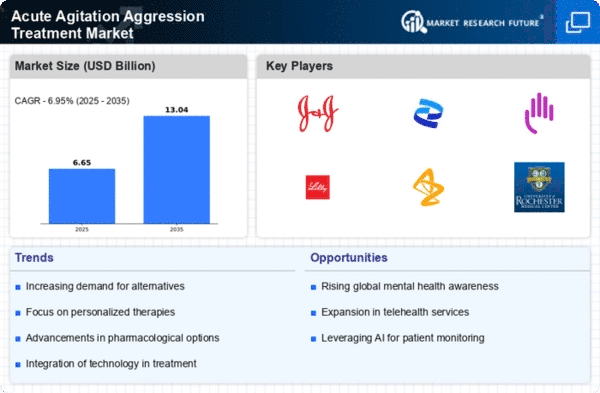
As per MRFR analysis, the Acute Agitation Aggression Treatment Market was estimated at 6.22 USD Billion in 2024. The Acute Agitation Aggression Treatment industry is projected to grow from 6.66 USD Billion in 2025 to 13.04 USD Billion by 2035, exhibiting a compound annual growth rate (CAGR) of 6.95 during the forecast period 2025 - 2035.

Key Market Trends & Highlights

The Acute Agitation Aggression Treatment Market is experiencing a dynamic evolution driven by technological advancements and a focus on personalized care.

  • Technological integration in treatment protocols is becoming increasingly prevalent, enhancing patient outcomes.
  • There is a notable shift towards personalized care, tailoring treatment plans to individual patient needs.
  • Research and development efforts are intensifying, particularly in North America, which remains the largest market.
  • The rising incidence of mental health disorders and advancements in pharmacological treatments are key drivers of market growth.

Market Size & Forecast

2024 Market Size 6.22 (USD Billion)
2035 Market Size 13.04 (USD Billion)
CAGR (2025 - 2035) 6.95%

Major Players

Johnson & Johnson (US), Pfizer (US), Bristol-Myers Squibb (US), Eli Lilly and Company (US), AstraZeneca (GB), Roche (CH), Novartis (CH), Otsuka Pharmaceutical (JP), H. Lundbeck A/S (DK)

Acute Agitation Aggression Treatment Market Trends

The Acute Agitation Aggression Treatment Market is currently experiencing a notable evolution, driven by an increasing recognition of the need for effective management strategies for individuals exhibiting acute agitation and aggression. This market encompasses a range of therapeutic interventions, including pharmacological treatments, behavioral therapies, and innovative approaches aimed at addressing the underlying causes of these behaviors. As mental health awareness continues to rise, stakeholders are increasingly focused on developing comprehensive treatment protocols that not only mitigate symptoms but also enhance overall patient well-being. Furthermore, the integration of technology in treatment modalities appears to be gaining traction, suggesting a shift towards more personalized and accessible care options. In addition, the Acute Agitation Aggression Treatment Market is likely to witness a growing emphasis on research and development initiatives. This trend may be fueled by the need for evidence-based practices that can effectively address the complexities associated with acute agitation and aggression. Collaborative efforts among healthcare providers, researchers, and policymakers could lead to the emergence of novel therapeutic agents and intervention strategies. As the landscape of mental health treatment continues to evolve, the Acute Agitation Aggression Treatment Market seems poised for significant advancements that could reshape the way care is delivered to affected individuals.

Technological Integration in Treatment

The incorporation of technology into treatment strategies is becoming increasingly prevalent. This trend includes the use of telehealth services, mobile applications, and digital monitoring tools that facilitate real-time assessment and intervention. Such innovations may enhance patient engagement and adherence to treatment protocols.

Focus on Personalized Care

There is a growing emphasis on tailoring treatment approaches to individual patient needs. This trend suggests that healthcare providers are recognizing the importance of considering unique patient characteristics, including their medical history and personal preferences, in developing effective treatment plans.

Increased Research and Development

The Acute Agitation Aggression Treatment Market is likely to see heightened investment in research initiatives aimed at discovering new therapeutic options. This trend indicates a commitment to advancing knowledge and understanding of the underlying mechanisms of acute agitation and aggression, potentially leading to more effective interventions.

Acute Agitation Aggression Treatment Market Drivers

Rising Prevalence of Mental Health Disorders

The increasing incidence of mental health disorders globally is a primary driver of the Global Acute Agitation and Aggression Treatment Market Industry. Conditions such as schizophrenia, bipolar disorder, and severe depression contribute significantly to acute agitation and aggression. According to the World Health Organization, mental health disorders affect approximately 1 in 4 individuals at some point in their lives. This growing prevalence necessitates effective treatment options, thereby expanding the market. As awareness of mental health issues rises, the demand for innovative treatment solutions is likely to increase, further propelling market growth.

Market Segment Insights

By Application: Emergency Departments (Largest) vs. Outpatient Clinics (Fastest-Growing)

The Acute Agitation Aggression Treatment Market showcases a diverse application landscape, with Emergency Departments holding the largest share. These facilities are pivotal in providing immediate care for patients exhibiting acute agitation and aggression, capitalizing on their access to critical resources and expertise. Following closely are Psychiatric Facilities and Long-term Care Facilities, which serve as integral components of the healthcare continuum, handling cases that require specialized attention over prolonged periods. Home Care and Outpatient Clinics, while smaller in market share, are becoming increasingly relevant as care shifts towards more personalized and accessible settings. The growth trends within the application segment are driven by an increasing awareness of mental health issues and the rising demand for timely interventions. Emergency Departments are continuously evolving to accommodate a surge in acute cases, often leading the way in adopting innovative treatment protocols. Meanwhile, Outpatient Clinics are emerging as the fastest-growing segment, fueled by the need for ongoing treatment and management of mental health conditions in more community-based environments. The combined focus on reducing hospital readmissions and enhancing patient accessibility points to a forward-moving trajectory for both segments.

Emergency Departments (Dominant) vs. Outpatient Clinics (Emerging)

Emergency Departments play a dominant role in the Acute Agitation Aggression Treatment Market due to their critical function in managing urgent psychiatric cases. These facilities are equipped with trained personnel and emergency resources, allowing rapid intervention and stabilization of acute agitation behaviors. The ability to handle severe cases promptly positions Emergency Departments as central to the treatment landscape. In contrast, Outpatient Clinics are emerging as vital players by providing continuous care and personalized treatment plans that cater to individual needs. This shift towards outpatient care aligns with broader trends in healthcare, emphasizing accessibility and patient-centered approaches, allowing for effective management of conditions outside of hospital settings. The combined strength of these two segments underscores the evolving dynamics in acute treatment frameworks.

By Treatment Type: Pharmacological Treatment (Largest) vs. Psychotherapeutic Treatment (Fastest-Growing)

In the Acute Agitation Aggression Treatment Market, the segment distribution shows that Pharmacological Treatment is the largest segment, capturing a significant share due to its established efficacy in managing acute agitation episodes. Pharmacological treatments, including antipsychotics and sedatives, are widely used in clinical settings and are preferred for their rapid onset of action. Conversely, Psychotherapeutic Treatment, while smaller in market share, is emerging as a significant focus area due to increasing recognition of the importance of addressing the psychological aspects of acute agitation. This shift is leading to greater adoption and integration of psychotherapeutic strategies in treatment protocols. Current trends indicate a rising demand for more holistic approaches in the treatment of acute agitation, driven by a growing awareness of mental health issues and the effectiveness of non-pharmacologic interventions. The industry is witnessing a surge in interest towards Psychotherapeutic Treatment as healthcare providers aim to reduce reliance on medications and enhance patient outcomes. Additionally, the increase in training for mental health professionals in psychotherapeutic techniques is facilitating the use of these methods in acute settings, contributing to their rapid growth within the market.

Pharmacological Treatment (Dominant) vs. Behavioral Therapy (Emerging)

Pharmacological Treatment remains the dominant approach in the Acute Agitation Aggression Treatment Market, owing to its proven efficacy and immediate effects in controlling aggressive behaviors. Medications such as benzodiazepines and antipsychotics are frequently utilized as first-line options by healthcare providers due to their ability to stabilize patients quickly. Moreover, ongoing research continues to refine the application and combinations of these pharmacological agents, reinforcing their strong market position. On the other hand, Behavioral Therapy is considered an emerging strategy that focuses on modifying maladaptive behaviors through targeted therapeutic techniques. As behavioral interventions gain traction, they are concurrently being integrated with pharmacological treatments to create comprehensive care models that address both the biological and psychological aspects of acute agitation. This combination holds promise for improving long-term outcomes for patients.

By Patient Demographics: Adults (Largest) vs. Elderly (Fastest-Growing)

The Acute Agitation Aggression Treatment Market exhibits a diverse demographic segmentation. Among these, adults represent the largest share, largely due to the increasing prevalence of anxiety disorders and stress-related conditions that manifest in acute aggression. This adult demographic is pivotal as they seek immediate therapeutic interventions and are more likely to respond to various treatment modalities. Conversely, the elderly population, though currently a smaller segment, is experiencing rapid growth due to the rising incidences of dementia and other age-related conditions that exacerbate agitation and aggression, creating an urgent need for specialized treatment options.

Adults: Dominant vs. Elderly: Emerging

The adult demographic is currently the dominant segment within the Acute Agitation Aggression Treatment Market, driven by lifestyle factors, increasing stress levels, and a higher prevalence of mental health issues. Adults typically respond well to a range of treatment options, including pharmacotherapy and psychotherapy, offering a diverse array of interventions. On the other hand, the elderly segment is emerging rapidly, influenced by the expanding aging population and associated cognitive decline. Treatments for elderly patients must be tailored, considering their unique medical histories and sensitivities, leading to increased investment in research and development to cater to this growing need.

By Severity of Agitation: Severe Agitation (Largest) vs. Mild Agitation (Fastest-Growing)

In the Acute Agitation Aggression Treatment Market, the distribution of market share among the severity levels of agitation reveals that Severe Agitation holds the largest share, driven by the high incidence of severe cases requiring immediate treatment interventions. Moderate Agitation follows, with Mild Agitation emerging as a notable contender due to an increasing focus on early intervention strategies among healthcare providers, thereby enhancing patient outcomes and reducing progression to more severe states. Growth trends indicate a significant movement towards addressing Mild Agitation, marking it as the fastest-growing segment in the market. This growth is fueled by increasing awareness of mental health issues and the benefits of timely treatment, as well as advancements in pharmacological and therapeutic interventions designed for mild cases. Healthcare systems are increasingly prioritizing comprehensive treatment plans that encompass all levels of agitation severity, leading to sustained demand across the spectrum.

Severe Agitation (Dominant) vs. Mild Agitation (Emerging)

Severe Agitation represents the dominant segment within the Acute Agitation Aggression Treatment Market, as it frequently necessitates urgent and intensive management approaches. This segment includes patients exhibiting extreme restlessness or aggression, often resulting in a need for hospitalization and intensive therapeutic measures. Conversely, Mild Agitation is emerging as a vital focus, gaining traction for its potential in preventive care. Responding to earlier signs of agitation can mitigate future escalation into severe episodes, fostering a shift towards more proactive treatment. As support systems expand, Mild Agitation is likely to see increased integration within standard care protocols, challenging the longstanding dominance of Severe Agitation in treatment paradigms.

By Duration of Treatment: Short-term Treatment (Largest) vs. Continuous Treatment (Fastest-Growing)

The Acute Agitation Aggression Treatment Market is segmented by Duration of Treatment into Short-term Treatment, Long-term Treatment, Intermittent Treatment, Continuous Treatment, and Crisis Management. Currently, Short-term Treatment holds the largest market share, driven by the immediate need for rapid intervention in acute cases. On the other side, Continuous Treatment is rapidly gaining traction as it offers sustained management of agitation and aggression, which is critical in long-term care settings and psychiatric environments. Growth trends reveal that the Continuous Treatment segment is poised to outpace others due to the increasing recognition of the need for ongoing support in managing acute agitation. Factors contributing to this upward trajectory include advancements in treatment protocols, increased awareness among healthcare providers about the long-term benefits of continuous management, and a growing patient population requiring immediate and sustained intervention. Advances in technology and treatment methods further enhance the efficacy and accessibility of continuous treatment options, allowing for better patient outcomes.

Short-term Treatment (Dominant) vs. Continuous Treatment (Emerging)

Short-term Treatment is characterized by immediate, temporary interventions aimed at reducing acute agitation and aggression symptoms swiftly. This approach is often utilized in emergency settings, where rapid assessment and intervention are critical. As such, it remains the dominant strategy in the market due to its effectiveness in crisis situations. However, Continuous Treatment is emerging as an essential alternative that focuses on prolonged management to prevent escalation of symptoms. This approach is particularly viable for populations at risk of recurrent episodes, such as those with underlying psychiatric conditions. By focusing on long-term recovery and consistent care, Continuous Treatment is gaining acceptance among healthcare providers and patients alike, marking its position as a significant player in the future of agitation and aggression management.

Get more detailed insights about Acute Agitation Aggression Treatment Market

Regional Insights

North America : Market Leader in Treatment

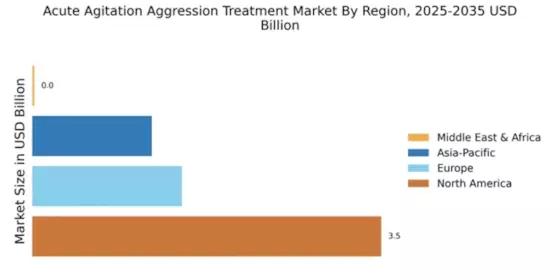
North America is poised to maintain its leadership in the Acute Agitation Aggression Treatment Market, holding a significant market share of 3.5B in 2024. The region's growth is driven by increasing incidences of mental health disorders, heightened awareness, and advancements in treatment methodologies. Regulatory support from agencies like the FDA further catalyzes market expansion, ensuring that innovative therapies are swiftly approved and accessible to patients. The competitive landscape in North America is robust, featuring key players such as Johnson & Johnson, Pfizer, and Eli Lilly. These companies are at the forefront of developing effective treatments, leveraging cutting-edge research and development. The presence of established healthcare infrastructure and a strong focus on mental health initiatives contribute to the region's dominance, making it a critical hub for innovation and patient care.

Europe : Emerging Market Potential

Europe is witnessing a growing demand for Acute Agitation Aggression Treatment, with a market size of 1.5B in 2024. Factors such as increasing mental health awareness, supportive healthcare policies, and the integration of mental health services into primary care are driving this growth. The European Medicines Agency (EMA) plays a crucial role in regulating and approving new treatments, ensuring that patients have access to effective therapies in a timely manner. Leading countries in this region include Germany, France, and the UK, where significant investments in mental health services are being made. The competitive landscape features major players like AstraZeneca and Roche, who are actively involved in research and development. The collaboration between public and private sectors is enhancing treatment options, making Europe a promising market for future growth in this sector.

Asia-Pacific : Rapidly Growing Market

The Asia-Pacific region is emerging as a significant player in the Acute Agitation Aggression Treatment Market, with a market size of 1.2B in 2024. The growth is fueled by rising awareness of mental health issues, increasing healthcare expenditure, and government initiatives aimed at improving mental health services. Countries like Japan and Australia are leading the charge, supported by favorable regulatory environments that encourage the development of new therapies. The competitive landscape is evolving, with key players such as Otsuka Pharmaceutical and H. Lundbeck A/S making strides in the market. The region's diverse population and varying healthcare needs present both challenges and opportunities for companies. As mental health becomes a priority, the Asia-Pacific market is expected to witness substantial growth, driven by innovation and increased access to treatments.

Middle East and Africa : Untapped Market Opportunities

The Middle East and Africa region represents an untapped market for Acute Agitation Aggression Treatment, with a market size of only 0.02B in 2024. The growth in this region is hindered by limited healthcare infrastructure, stigma surrounding mental health, and insufficient regulatory frameworks. However, increasing awareness and initiatives by governments and NGOs are beginning to address these challenges, paving the way for future growth in mental health services. Countries like South Africa and the UAE are making efforts to improve mental health care access, but the competitive landscape remains sparse. Key players are beginning to explore opportunities in this region, focusing on partnerships and collaborations to enhance treatment availability. As mental health awareness grows, the potential for market expansion in the Middle East and Africa is significant, albeit gradual.


Acute Agitation Aggression Treatment Market Regional Image

Key Players and Competitive Insights

The Acute Agitation Aggression Treatment Market is characterized by a dynamic competitive landscape, driven by increasing incidences of mental health disorders and a growing recognition of the need for effective treatment options. Key players such as Johnson & Johnson (US), Pfizer (US), and Eli Lilly and Company (US) are at the forefront, each adopting distinct strategies to enhance their market presence. Johnson & Johnson (US) focuses on innovation through the development of novel therapeutic agents, while Pfizer (US) emphasizes strategic partnerships to expand its product portfolio. Eli Lilly and Company (US) is investing heavily in research and development to create targeted therapies, thereby positioning itself as a leader in the treatment of acute agitation and aggression.The market structure appears moderately fragmented, with several players vying for market share. Key business tactics include localizing manufacturing to reduce costs and optimize supply chains, which is crucial in maintaining competitive pricing. The collective influence of these major companies shapes the market dynamics, as they leverage their resources to enhance product availability and accessibility.

In November Johnson & Johnson (US) announced a collaboration with a leading technology firm to integrate AI-driven analytics into their treatment protocols. This strategic move is likely to enhance patient outcomes by personalizing treatment plans based on real-time data, thereby reinforcing Johnson & Johnson's commitment to innovation in mental health care. The integration of technology into treatment methodologies may set a new standard in the industry.

In October Pfizer (US) launched a new initiative aimed at expanding access to its acute agitation treatment in underserved regions. This initiative, which includes partnerships with local healthcare providers, underscores Pfizer's strategy to enhance its market footprint while addressing critical healthcare disparities. By focusing on accessibility, Pfizer not only strengthens its market position but also aligns with global health priorities.

In September Eli Lilly and Company (US) received regulatory approval for a new formulation of its leading treatment for acute agitation. This approval is pivotal as it allows for a more flexible dosing regimen, potentially increasing patient adherence and satisfaction. Eli Lilly's proactive approach in refining its product offerings demonstrates its commitment to meeting evolving patient needs and maintaining a competitive edge.

As of December the competitive trends in the Acute Agitation Aggression Treatment Market are increasingly defined by digitalization, sustainability, and the integration of AI technologies. Strategic alliances are becoming more prevalent, as companies recognize the value of collaboration in enhancing innovation and expanding market reach. The shift from price-based competition to a focus on technological advancement and supply chain reliability is evident, suggesting that future competitive differentiation will hinge on the ability to innovate and adapt to changing market demands.

Key Companies in the Acute Agitation Aggression Treatment Market include

Industry Developments

In July 2022, Impel Pharmaceuticals commenced a Phase 2a proof-of-concept study for INP105, a nasal formulation of olanzapine, aimed at addressing acute agitation in individuals diagnosed with autism spectrum disorder (ASD). This investigation utilizes Impel's unique Precision Olfactory Delivery (POD) technology, designed to administer drugs to the upper nasal cavity, providing a non-invasive approach with a swift onset of action.

Otsuka Pharmaceutical Co., Ltd. has established itself as a significant contributor in the market for treating acute agitation and aggression. In June 2022, the company, in partnership with H. Lundbeck A/S, reported favorable outcomes from a Phase III clinical trial of brexpiprazole aimed at addressing agitation in individuals with Alzheimer's dementia.

In December 2024, Axsome Therapeutics revealed its intention to pursue marketing approval for its oral medication, AXS-05, aimed at addressing agitation in individuals diagnosed with Alzheimer's disease. The medication showed considerable delays in relapse time and provided symptom relief in the majority of the four late-stage studies carried out.

Future Outlook

Acute Agitation Aggression Treatment Market Future Outlook

The Acute Agitation Aggression Treatment Market is projected to grow at a 6.95% CAGR from 2025 to 2035, driven by increasing prevalence of mental health disorders and advancements in treatment methodologies.

New opportunities lie in:

  • Development of telehealth platforms for remote patient monitoring
  • Integration of AI-driven analytics for personalized treatment plans
  • Expansion of training programs for healthcare professionals in de-escalation techniques

By 2035, the market is expected to achieve substantial growth, reflecting evolving treatment paradigms.

Market Segmentation

Acute Agitation Aggression Treatment Market Application Outlook

  • Emergency Departments
  • Psychiatric Facilities
  • Long-term Care Facilities
  • Home Care
  • Outpatient Clinics

Acute Agitation Aggression Treatment Market Treatment Type Outlook

  • Pharmacological Treatment
  • Psychotherapeutic Treatment
  • Physical Restraint
  • Crisis Intervention
  • Behavioral Therapy

Acute Agitation Aggression Treatment Market Patient Demographics Outlook

  • Adults
  • Children
  • Elderly
  • Gender-specific
  • Cultural Background

Acute Agitation Aggression Treatment Market Duration of Treatment Outlook

  • Short-term Treatment
  • Long-term Treatment
  • Intermittent Treatment
  • Continuous Treatment
  • Crisis Management

Acute Agitation Aggression Treatment Market Severity of Agitation Outlook

  • Mild Agitation
  • Moderate Agitation
  • Severe Agitation
  • Acute Episodes
  • Chronic Conditions

Report Scope

MARKET SIZE 20246.22(USD Billion)
MARKET SIZE 20256.66(USD Billion)
MARKET SIZE 203513.04(USD Billion)
COMPOUND ANNUAL GROWTH RATE (CAGR)6.95% (2025 - 2035)
REPORT COVERAGERevenue Forecast, Competitive Landscape, Growth Factors, and Trends
BASE YEAR2024
Market Forecast Period2025 - 2035
Historical Data2019 - 2024
Market Forecast UnitsUSD Billion
Key Companies ProfiledJohnson & Johnson (US), Pfizer (US), Bristol-Myers Squibb (US), Eli Lilly and Company (US), AstraZeneca (GB), Roche (CH), Novartis (CH), Otsuka Pharmaceutical (JP), H. Lundbeck A/S (DK)
Segments CoveredApplication, Treatment Type, Patient Demographics, Severity of Agitation, Duration of Treatment
Key Market OpportunitiesIntegration of digital therapeutics and telehealth solutions in the Acute Agitation Aggression Treatment Market.
Key Market DynamicsRising demand for innovative therapies drives competition and regulatory scrutiny in the Acute Agitation Aggression Treatment Market.
Countries CoveredNorth America, Europe, APAC, South America, MEA

Market Highlights

Author
Kinjoll Dey
Research Analyst Level I

He is an extremely curious individual currently working in Healthcare and Medical Devices Domain. Kinjoll is comfortably versed in data centric research backed by healthcare educational background. He leverages extensive data mining and analytics tools such as Primary and Secondary Research, Statistical Analysis, Machine Learning, Data Modelling. His key role also involves Technical Sales Support, Client Interaction and Project management within the Healthcare team. Lastly, he showcases extensive affinity towards learning new skills and remain fascinated in implementing them.

Leave a Comment

FAQs

What is the projected growth of the Acute Agitation and Aggression Treatment market?

The Acute Agitation and Aggression Treatment market is the expected increase in total market value of 13.04 USD billion over a defined forecast period 2025–2035. It is driven by factors such as demand trends, technological advances, regulatory changes, and geographic expansion.

What is the size of the Acute Agitation and Aggression Treatment market?

Acute Agitation and Aggression Treatment market size was valued at approximately 6.22 billion USD in 2024. This figure will reach 13.04 billion USD covering all regions (America, Europe, Asia, MEA and ROW), focusing its segments / services / distribution channels till 2035.

What is the CAGR of the Acute Agitation and Aggression Treatment market?

Acute Agitation and Aggression Treatment market is expected to grow at a CAGR of 6.95% between 2025 and 2035.

How much will the Acute Agitation and Aggression Treatment market be worth by 2035?

Acute Agitation and Aggression Treatment market is expected to be worth of 13.04 billion USD, reflecting growth driven by usage, technology and global demands by the end of 2035.

How will the Acute Agitation and Aggression Treatment market perform over the next 10 years?

Over the next 10 years the Acute Agitation and Aggression Treatment market is expected to shift from usd billion 6.22 to 13.04 billion USD, led by adoption of advanced tech, demographic trends, regulatory approvals, with potential headwinds from 2025 to 2035.

How much is the acute agitation and aggression treatment market?

How much is the acute agitation and aggression treatment market?

How big is the US acute agitation and aggression treatment market?

The US is expected to hold a 70-80% share of the North American market for the acute agitation and aggression treatment market during the forecast period of 2024-2035.

Download Free Sample

Kindly complete the form below to receive a free sample of this Report

Compare Licence

×
Features License Type
Single User Multiuser License Enterprise User
Price $4,950 $5,950 $7,250
Maximum User Access Limit 1 User Upto 10 Users Unrestricted Access Throughout the Organization
Free Customization
Direct Access to Analyst
Deliverable Format
Platform Access
Discount on Next Purchase 10% 15% 15%
Printable Versions