×
Request Free Sample ×

Kindly complete the form below to receive a free sample of this Report

* Please use a valid business email

Leading companies partner with us for data-driven Insights

clients tt-cursor
Hero Background
English
Chinese
French
Japanese
Korean
German
Spanish

Depression Screening Mental Health Market Share

ID: MRFR/Pharma/2518-CR
128 Pages
Kinjoll Dey
October 2023

Depression Screening Market Research Report Information by Indication (Major Depressive Disorder, Anxiety Distress, Bipolar Disorder, Psychotic Disorders, and Others), by Diagnosis (Psychological Tests, Blood Tests, Pharmacogenomic Testing, and Others), by End User (Hospitals and Clinics, Home-based, and Research and Academic Institutes), and by Region (North America, Europe, Asia-Pacific, and Rest of the World) - Forecast till 2035

Share:
Download PDF ×

We do not share your information with anyone. However, we may send you emails based on your report interest from time to time. You may contact us at any time to opt-out.

Depression Screening Mental Health Market Infographic
×
Depression Screening Mental Health Market Infographic Full View
Purchase Options

Market Share

Depression Screening Mental Health Market Share Analysis

Depression is a severe medical condition that leads to various abnormal behaviors, feelings, and thoughts, causing distress and impairment, either emotionally or physically. Screening is crucial to eliminate any underlying medical causes for depression. The screening process mainly focuses on the neurological and endocrine systems. There is a growing trend of strategic initiatives aimed at improving depression screening through actions like mergers, acquisitions, product approvals, collaborations, and partnerships. These initiatives aim to gain a competitive edge and provide advanced treatment options for depression screening.

An example of such strategic initiatives is seen in the actions of Bruker, a US-based company. In June 2022, Bruker launched the Enhanced 3D Holographic Stimulation for optogenetics on its Ultima 2Pplus Multiphoton Microscope. This technology not only offers 3D holographic photo stimulation but also supports large-scale studies of neural networks and brain computation. Such innovations contribute to the advancement of depression screening methods.

Similarly, in February 2022, Siemens Healthineers from Germany and Universal Medical Imaging from the US joined forces in a strategic collaboration. Their goal is to promote 5G remote imaging diagnosis for primary care in various regions of China. This collaboration reflects the increasing focus on utilizing technology to enhance the efficiency and accessibility of depression screening, particularly in remote areas.

Another noteworthy example comes from MYND Life Sciences Inc., a Canadian company, which launched a depression biomarker diagnostic program in June 2021. This program is designed to diagnose and monitor the treatment regime for patients with Major Depressive Disorder (MDD) and other inflammatory diseases. The initiative not only demonstrates a commitment to improving diagnostic programs for depressive disorders but also reflects a global perspective, aiming to reach and help patients worldwide.

These strategic initiatives in the field of depression screening underline the importance of continuous improvement and innovation. Companies are actively seeking opportunities to enhance their offerings, not only for competitive reasons but also to contribute positively to the well-being of individuals dealing with depression. The initiatives mentioned, such as technological advancements and global collaborations, showcase a multi-faceted approach to addressing the challenges associated with depression screening.

In conclusion, the rising number of strategic initiatives in the form of mergers, acquisitions, product approvals, collaborations, and partnerships is shaping the landscape of depression screening. Companies are leveraging advanced technologies and global partnerships to improve diagnostic programs, providing more effective and accessible options for individuals dealing with depression. These efforts not only contribute to the competitiveness of the companies involved but, more importantly, enhance the overall quality of depression screening and treatment options for those in need.


Author
Kinjoll Dey
Research Analyst Level I

He is an extremely curious individual currently working in Healthcare and Medical Devices Domain. Kinjoll is comfortably versed in data centric research backed by healthcare educational background. He leverages extensive data mining and analytics tools such as Primary and Secondary Research, Statistical Analysis, Machine Learning, Data Modelling. His key role also involves Technical Sales Support, Client Interaction and Project management within the Healthcare team. Lastly, he showcases extensive affinity towards learning new skills and remain fascinated in implementing them.

Leave a Comment

FAQs

What is the projected growth of the Depression Screening market?

The Depression Screening market is the expected increase in total market value of 1.37 USD billion over a defined forecast period 2025–2035. It is driven by factors such as demand trends, technological advances, regulatory changes, and geographic expansion.

What is the size of the Depression Screening market?

Depression Screening market size was valued at approximately 0.73 billion USD in 2024. This figure will reach 1.37 billion USD covering all regions (America, Europe, Asia, MEA and ROW), focusing its segments / services / distribution channels till 2035.

What is the CAGR of the Depression Screening market?

Depression Screening market is expected to grow at a CAGR of 5.87% between 2025 and 2035.

How much will the Depression Screening market be worth by 2035?

Depression Screening market is expected to be worth of 1.37 billion USD, reflecting growth driven by usage, technology and global demands by the end of 2035.

How will the Depression Screening market perform over the next 10 years?

Over the next 10 years the Depression Screening market is expected to shift from usd billion 0.73 to 1.37 billion USD, led by adoption of advanced tech, demographic trends, regulatory approvals, with potential headwinds from 2025 to 2035.

How much is the depression screening market?

The Depression Screening Market is anticipated to reach 1.24 billion during the forecast period of 2024-2035.

Market Summary

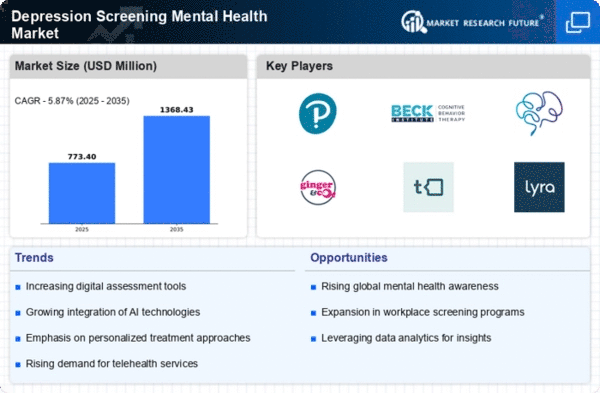
As per MRFR analysis, the Depression Screening Mental Health Market was estimated at 730.52 USD Million in 2024. The Depression Screening industry is projected to grow from 773.41 USD Million in 2025 to 1368.43 USD Million by 2035, exhibiting a compound annual growth rate (CAGR) of 5.87 during the forecast period 2025 - 2035.

Key Market Trends & Highlights

The Depression Screening Mental Health Market is experiencing a transformative shift towards integrated and personalized care solutions.

  • Technological integration is reshaping the landscape of depression screening, enhancing accessibility and efficiency.
  • The focus on preventive care is driving demand for early detection and intervention strategies in mental health.
  • Personalized screening solutions are gaining traction, catering to the unique needs of diverse patient populations.
  • Rising prevalence of depression and advancements in digital health technologies are key drivers propelling market growth, particularly in North America and Asia-Pacific.

Market Size & Forecast

2024 Market Size 730.52 (USD Million)
2035 Market Size 1368.43 (USD Million)
CAGR (2025 - 2035) 5.87%
Largest Regional Market Share in 2024 North America

Major Players

<p>Pearson (GB), Beck Institute for Cognitive Behavior Therapy (US), Mind Diagnostics (US), Ginger (US), Talkspace (US), Lyra Health (US), Cerebral (US), BetterHelp (US), Headspace Health (US)</p>

Market Trends

The Depression Screening Mental Health Market is currently experiencing a notable evolution, driven by an increasing awareness of mental health issues and the importance of early detection. This market appears to be expanding as healthcare providers and organizations recognize the necessity of implementing effective screening tools. The integration of technology into mental health services, such as telehealth and mobile applications, seems to enhance accessibility and convenience for patients seeking support. Furthermore, the growing emphasis on preventive care may lead to a more proactive approach in addressing depression, thereby fostering a culture of mental wellness. In addition, the rising prevalence of depression across various demographics indicates a pressing need for comprehensive screening solutions. Stakeholders in the Depression Screening Mental Health Market are likely to focus on developing innovative assessment tools that cater to diverse populations. This trend suggests a shift towards personalized care, where screening processes are tailored to individual needs. As the market continues to evolve, collaboration among healthcare professionals, technology developers, and policymakers may play a crucial role in shaping the future landscape of mental health screening services.

Technological Integration

The incorporation of advanced technologies into the Depression Screening Mental Health Market is becoming increasingly prevalent. Digital platforms, including mobile applications and telehealth services, facilitate remote assessments and consultations, thereby enhancing patient engagement and accessibility. This trend indicates a shift towards more user-friendly and efficient screening processes.

Focus on Preventive Care

There is a growing emphasis on preventive care within the Depression Screening Mental Health Market. Healthcare providers are recognizing the importance of early detection and intervention, which may lead to improved patient outcomes. This trend suggests a proactive approach to mental health, encouraging regular screenings as part of routine healthcare.

Personalized Screening Solutions

The demand for personalized screening solutions is on the rise in the Depression Screening Mental Health Market. Stakeholders are increasingly focusing on developing tailored assessment tools that address the unique needs of diverse populations. This trend highlights the importance of cultural competence and individualization in mental health care.

Depression Screening Mental Health Market Market Drivers

Market Growth Projections

The Global Depression Screening Market Industry is projected to experience substantial growth over the coming years. With a market value of 0.73 USD Billion in 2024, it is anticipated to reach 1.37 USD Billion by 2035, reflecting a compound annual growth rate (CAGR) of 5.86% from 2025 to 2035. This growth is driven by various factors, including the rising prevalence of depression, increased awareness of mental health, and advancements in screening technologies. As stakeholders in the healthcare sector recognize the importance of early detection and intervention, the market is likely to expand, presenting opportunities for innovation and investment.

Rising Prevalence of Depression

The increasing prevalence of depression globally serves as a primary driver for the Global Depression Screening Market Industry. Recent statistics indicate that approximately 264 million individuals are affected by depression worldwide, highlighting a pressing need for effective screening methods. As awareness of mental health issues grows, healthcare systems are prioritizing early detection and intervention strategies. This trend is likely to bolster the demand for screening tools and services, contributing to the market's projected growth from 0.73 USD Billion in 2024 to an estimated 1.37 USD Billion by 2035, reflecting a compound annual growth rate (CAGR) of 5.86% from 2025 to 2035.

Government Initiatives and Funding

Government initiatives aimed at improving mental health services significantly influence the Global Depression Screening Market Industry. Various countries are implementing policies that promote mental health awareness and allocate funding for screening programs. For instance, national health services are increasingly integrating depression screening into routine healthcare practices, thereby enhancing accessibility. Such initiatives not only encourage healthcare providers to adopt screening protocols but also facilitate the development of innovative screening tools. This supportive environment is expected to drive market growth, as evidenced by the projected increase in market value from 0.73 USD Billion in 2024 to 1.37 USD Billion by 2035.

Increased Awareness of Mental Health

The growing awareness of mental health issues among the global population significantly drives the Global Depression Screening Market Industry. Public campaigns and educational programs are fostering a better understanding of depression, its symptoms, and the importance of early detection. This heightened awareness encourages individuals to seek screening and treatment, thereby increasing the demand for screening services. As mental health becomes a priority in public health discussions, healthcare providers are more likely to implement screening protocols. The market is projected to grow from 0.73 USD Billion in 2024 to 1.37 USD Billion by 2035, reflecting the positive correlation between awareness and market expansion.

Integration of Screening in Primary Care

The integration of depression screening into primary care settings is a vital driver for the Global Depression Screening Market Industry. Healthcare providers are increasingly recognizing the importance of addressing mental health within general health services. This integration allows for early identification and management of depression, improving overall patient care. As primary care physicians adopt standardized screening tools, the demand for these tools is expected to rise. The market's growth trajectory, from 0.73 USD Billion in 2024 to 1.37 USD Billion by 2035, illustrates the potential impact of this integration on enhancing screening practices and expanding market opportunities.

Technological Advancements in Screening Tools

Technological advancements play a crucial role in shaping the Global Depression Screening Market Industry. The integration of artificial intelligence and machine learning into screening tools enhances their accuracy and efficiency, allowing for more effective identification of depression symptoms. Innovations such as mobile applications and telehealth platforms facilitate remote screening, making it easier for individuals to access mental health services. These advancements not only improve patient outcomes but also expand the market reach, as more healthcare providers adopt these technologies. The anticipated growth from 0.73 USD Billion in 2024 to 1.37 USD Billion by 2035 underscores the impact of technology on market dynamics.

Market Segment Insights

By Application: Clinical Screening (Largest) vs. Telehealth Services (Fastest-Growing)

<p>In the Depression Screening Mental Health Market, the application segment showcases a diverse range of screening methods. Clinical Screening stands out as the largest segment, capturing a significant market share due to its established protocols and direct interaction with healthcare providers. Self-Assessment and Workplace Screening follow, providing a personalized approach to mental health evaluations. Telehealth Services, while currently smaller in proportion, is quickly gaining traction as more individuals embrace virtual consultations, especially in the post-pandemic landscape. Community Programs also contribute to the mix, promoting mental health awareness and support at a grassroots level.</p>

<p>Clinical Screening: Dominant vs. Telehealth Services: Emerging</p>

<p>Clinical Screening, with its traditional approach, continues to dominate the Depression Screening Mental Health Market by offering clinicians reliable methods for diagnosing depression through structured assessments and patient interviews. On the other hand, Telehealth Services are emerging rapidly as a viable alternative, especially among younger demographics who prefer the convenience and accessibility of remote evaluations. This shift toward digital solutions is fueled by increased internet penetration and the proliferation of mobile health applications, making mental health care more accessible. As telehealth expands, it is being integrated into traditional clinical practices, creating a hybrid model that enhances patient engagement and broadens the reach of screening initiatives.</p>

By End User: Healthcare Providers (Largest) vs. Mental Health Professionals (Fastest-Growing)

<p>In the Depression Screening Mental Health Market, the distribution of market share among various end users is critical to understanding overall dynamics. Healthcare Providers represent the largest segment, with significant involvement due to their primary role in diagnosing and treating mental health issues. Following them, Mental Health Professionals are witnessing rapid growth as awareness and acceptance of mental health screening increase, leading to a rising demand for specialized screening tools tailored for their practices. The growth trends in this segment are being driven by several factors, including an increasing focus on mental health awareness, particularly in light of recent global events. Healthcare Providers are capitalizing on this trend as they integrate depression screenings into standard care protocols. Meanwhile, the Mental Health Professionals segment is experiencing a surge, attributed to the rise in personalized therapeutic interventions and the expanding reach of telehealth, which makes screenings more accessible to diverse populations.</p>

<p>Healthcare Providers (Dominant) vs. Educational Institutions (Emerging)</p>

<p>Healthcare Providers stand as a dominant force in the Depression Screening Mental Health Market, owing to their extensive networks and established relationships with patients. They provide foundational support in managing depression, leveraging established protocols to screen individuals effectively. Conversely, Educational Institutions are emerging as a vital segment of this landscape. They recognize the importance of mental health in academic settings and are progressively integrating screening programs to address student well-being. With initiatives aimed at fostering mental health awareness among students, these institutions are tapping into the significant potential of early intervention strategies, making mental health support an integral part of student services.</p>

By Technology: Digital Screening Tools (Largest) vs. Telemedicine Platforms (Fastest-Growing)

<p>In the Depression Screening Mental Health Market, Digital Screening Tools account for the largest share, reflecting their widespread adoption among health professionals for early detection and regular monitoring of depression. Mobile Applications and Wearable Devices follow closely, providing valuable tools that empower users to manage their mental health actively. Telemedicine Platforms, while gaining popularity, still represent a smaller segment but are rapidly growing as more practitioners embrace remote consultations and digital interventions, especially in response to global health challenges.</p>

<p>Digital Screening Tools (Dominant) vs. Telemedicine Platforms (Emerging)</p>

<p>Digital Screening Tools are recognized as the dominant force in the Depression Screening Mental Health Market due to their integration into routine clinical practices and user-friendly interfaces that facilitate effective self-assessment. These tools offer structured pathways for users to engage with their mental health actively. On the other hand, Telemedicine Platforms represent an emerging segment that leverages technology to provide remote mental health services. With a significant increase in telehealth solutions, these platforms are becoming essential for individuals seeking convenient access to mental health professionals, thus expanding the available options for screening and ongoing support.</p>

By Demographics: Age Groups (Largest) vs. Socioeconomic Status (Fastest-Growing)

<p>In the Depression Screening Mental Health Market, the 'Age Groups' segment holds the largest market share, with a significant portion of individuals within the 30-50 age range seeking depression screening services. This age group is more likely to acknowledge mental health issues and seek help, creating a robust demand for screening services. Conversely, socioeconomic status is an emerging segment, reflecting the increasing awareness and accessibility of mental health services among diverse income groups, leading to its rapid growth in recent years.</p>

<p>Age Groups: 30-50 (Dominant) vs. Socioeconomic Status (Emerging)</p>

<p>The 30-50 age group is a dominant segment in the Depression Screening Mental Health Market, characterized by higher awareness of mental health issues and a willingness to seek help. This age range often faces multiple stressors, including career pressures and family responsibilities, driving the need for effective depression screening. On the other hand, the socioeconomic status segment is emerging rapidly, driven by increasing access to mental health resources across varying income levels. As mental health awareness rises, more individuals from lower-income brackets are seeking screening services, reflecting an important shift towards inclusivity in mental health care.</p>

By Screening Methodology: Standardized Questionnaires (Largest) vs. Machine Learning Algorithms (Fastest-Growing)

<p>The Depression Screening Mental Health Market has witnessed a diverse array of screening methodologies with varying levels of adoption. Currently, standardized questionnaires dominate the market due to their widespread acceptance and ease of use in clinical settings. This method captures the majority of clients who undergo regular screenings, making it a staple in the diagnosis and treatment of depression. Conversely, machine learning algorithms, while still in the nascent stages of deployment, are rapidly gaining traction as mental health professionals recognize their potential for predictive accuracy and efficiency in screening processes.</p>

<p>Standardized Questionnaires: Dominant vs. Machine Learning Algorithms: Emerging</p>

<p>Standardized questionnaires are the predominant choice among clinicians for depression screening due to their structured nature and validated effectiveness in capturing depressive symptoms. They allow for straightforward scoring and interpretation, leading to quicker diagnosis and targeted treatment. On the other hand, machine learning algorithms are emerging as a revolutionary tool, leveraging vast datasets to train models that can identify patterns and predict mental health outcomes. This innovative approach promises to enhance screening processes by providing personalized assessments and potentially uncovering subtleties in patient data that traditional methods may overlook. As technology evolves, these algorithms are expected to complement existing methodologies, creating a more holistic screening approach.</p>

Get more detailed insights about Depression Screening Market Research Report - Forecast till 2035

Regional Insights

North America : Market Leader in Mental Health

North America is poised to maintain its leadership in the Depression Screening Mental Health Market, holding a significant market share of $365.26M in 2024. The region's growth is driven by increasing awareness of mental health issues, advancements in telehealth technologies, and supportive regulatory frameworks. The demand for effective screening tools is further fueled by rising incidences of depression and anxiety, prompting healthcare providers to adopt innovative solutions. The competitive landscape in North America is robust, featuring key players such as Talkspace, BetterHelp, and Ginger. The U.S. leads the market, supported by a strong healthcare infrastructure and a growing emphasis on mental health services. The presence of established organizations and startups alike fosters innovation, ensuring a diverse range of screening options for consumers. This dynamic environment positions North America as a critical hub for mental health advancements.

Europe : Emerging Market for Mental Health

Europe is witnessing a notable expansion in the Depression Screening Mental Health Market, with a market size of $210.15M. This growth is driven by increasing government initiatives aimed at mental health awareness, coupled with a rise in mental health disorders across the region. Regulatory support, such as the European Commission's Mental Health Action Plan, is catalyzing the adoption of screening tools, enhancing accessibility and affordability for patients. Leading countries in Europe include Germany, the UK, and France, where mental health services are increasingly integrated into primary care. The competitive landscape features key players like Mind Diagnostics and Headspace Health, which are innovating to meet the growing demand. The emphasis on digital health solutions is reshaping the market, making it essential for providers to adapt to evolving consumer needs and preferences.

Asia-Pacific : Rapidly Growing Mental Health Sector

The Asia-Pacific region is emerging as a significant player in the Depression Screening Mental Health Market, with a market size of $130.0M. The growth is driven by increasing awareness of mental health issues, coupled with a rising prevalence of depression and anxiety disorders. Governments are beginning to implement policies that promote mental health screening, which is expected to further boost market demand in the coming years. Countries like Australia, Japan, and India are at the forefront of this growth, with a mix of public and private sector initiatives aimed at enhancing mental health services. The competitive landscape includes both local and international players, with companies like Lyra Health and Cerebral making strides in the region. The focus on digital health solutions is also gaining traction, making mental health services more accessible to a broader audience.

Middle East and Africa : Developing Mental Health Market

The Middle East and Africa region is gradually developing its Depression Screening Mental Health Market, currently valued at $25.11M. The growth is primarily driven by increasing awareness of mental health issues and a growing recognition of the importance of early screening. Governments and NGOs are beginning to invest in mental health initiatives, which is expected to catalyze market growth in the near future. Countries such as South Africa and the UAE are leading the way in mental health reforms, with a focus on integrating mental health services into primary healthcare. The competitive landscape is still in its infancy, with a few key players beginning to establish their presence. As awareness and funding increase, the market is likely to attract more players, creating opportunities for innovation and growth in mental health screening services.

Key Players and Competitive Insights

The Depression Screening Mental Health Market is characterized by a dynamic competitive landscape, driven by increasing awareness of mental health issues and the growing demand for accessible screening solutions. Key players such as Pearson (GB), Ginger (US), and Talkspace (US) are strategically positioned to leverage digital transformation and innovative service delivery models. Pearson (GB) focuses on integrating evidence-based assessments into educational and clinical settings, enhancing their reach and impact. Meanwhile, Ginger (US) emphasizes on-demand mental health support through its digital platform, which combines AI-driven chat support with licensed therapists, thereby catering to a diverse user base. Talkspace (US) has carved a niche by offering flexible therapy options, appealing to a broad demographic seeking mental health services. Collectively, these strategies contribute to a competitive environment that prioritizes accessibility, innovation, and user engagement.

In terms of business tactics, companies are increasingly localizing their services to better meet regional needs, optimizing their supply chains to enhance service delivery. The market appears moderately fragmented, with a mix of established players and emerging startups. This structure allows for a variety of approaches to depression screening, fostering competition that drives innovation and service improvement. The collective influence of these key players shapes the market dynamics, as they continuously adapt to changing consumer preferences and technological advancements.

In November 2025, Ginger (US) announced a partnership with a leading health insurance provider to expand its mental health services coverage. This strategic move is likely to enhance Ginger's market penetration, making mental health support more accessible to insured individuals. By aligning with insurance providers, Ginger not only broadens its user base but also reinforces its commitment to integrating mental health care into mainstream health services, which could set a precedent for other companies in the sector.

In October 2025, Talkspace (US) launched a new AI-driven feature aimed at personalizing therapy sessions based on user feedback and progress. This innovation is significant as it reflects a growing trend towards the integration of technology in mental health services, potentially improving user engagement and outcomes. By harnessing AI, Talkspace positions itself at the forefront of digital mental health solutions, which may enhance its competitive edge in a crowded market.

In September 2025, Pearson (GB) introduced a new suite of digital assessment tools designed for educational institutions, focusing on early detection of mental health issues among students. This initiative underscores Pearson's commitment to proactive mental health screening, which is increasingly recognized as vital in educational settings. By targeting this demographic, Pearson not only expands its market reach but also contributes to the broader discourse on mental health awareness in schools.

As of December 2025, current competitive trends in the Depression Screening Mental Health Market are heavily influenced by digitalization, AI integration, and a growing emphasis on sustainability. Strategic alliances are becoming increasingly important, as companies seek to enhance their service offerings and expand their market presence. The competitive differentiation is likely to evolve from traditional price-based competition towards a focus on innovation, technology, and reliability in service delivery. This shift suggests that companies that prioritize these aspects may gain a substantial advantage in the evolving landscape.

Key Companies in the Depression Screening Mental Health Market include

Industry Developments

  • In June 2022, Bruker (US) launched enhanced 3d holographic stimulation for optogenetics on its ultima 2pplus multiphoton microscope.
  • In November 2021, Siemens (Ireland) introduced Magnetom Free. It is a cost-effective whole-body MRI scanner designed to enable significantly better access to magnetic resonance imaging.
  • In November 2019, Siemens (Ireland) introduced a new Somatom X.cite CT scanner with a revolutionary user guidance system.

Depression Screening Segmentation

Depression Screening Indication Outlook

  • Major Depressive Disorder
  • Anxiety Distress
  • Bipolar Disorder
  • Psychotic Disorders
  • Others 

Depression Screening Diagnosis Outlook

  • Psychological Tests
  • Blood Tests
  • Pharmacogenomic Testing
  • Others

Depression Screening End User Outlook

  • Hospitals and Clinics
  • Home-based
  • Research and Academic Institutes

Depression Screening Regional Outlook

    • North America
      • US
      • Canada
    • Europe
      • Germany
      • France
      • UK
      • Italy
      • Spain
      • Rest of Europe
    • Asia-Pacific
      • China
      • Japan
      • India
      • South Korea
      • Australia
      • Rest of Asia-Pacific
    • Rest of the World
      • Middle East
      • Africa
      • Latin America

Future Outlook

Depression Screening Mental Health Market Future Outlook

<p>The Depression Screening Mental Health Market is projected to grow at a 5.87% CAGR from 2024 to 2035, driven by increasing awareness and technological advancements.</p>

New opportunities lie in:

  • <p>Integration of AI-driven screening tools in primary care settings.</p>
  • <p>Development of mobile applications for remote depression assessments.</p>
  • <p>Partnerships with employers for workplace mental health programs.</p>

<p>By 2035, the market is expected to be robust, reflecting enhanced screening capabilities and broader accessibility.</p>

Market Segmentation

Depression Screening Mental Health Market End User Outlook

  • Healthcare Providers
  • Mental Health Professionals
  • Educational Institutions
  • Corporate Sector
  • Non-Profit Organizations

Depression Screening Mental Health Market Technology Outlook

  • Digital Screening Tools
  • Mobile Applications
  • Wearable Devices
  • Telemedicine Platforms
  • Artificial Intelligence Solutions

Depression Screening Mental Health Market Application Outlook

  • Clinical Screening
  • Self-Assessment
  • Telehealth Services
  • Workplace Screening
  • Community Programs

Depression Screening Mental Health Market Demographics Outlook

  • Age Groups
  • Gender
  • Socioeconomic Status
  • Cultural Background
  • Geographic Location

Depression Screening Mental Health Market Screening Methodology Outlook

  • Standardized Questionnaires
  • Interviews
  • Behavioral Assessments
  • Biomarker Analysis
  • Machine Learning Algorithms

Report Scope

MARKET SIZE 2024730.52(USD Million)
MARKET SIZE 2025773.41(USD Million)
MARKET SIZE 20351368.43(USD Million)
COMPOUND ANNUAL GROWTH RATE (CAGR)5.87% (2024 - 2035)
REPORT COVERAGERevenue Forecast, Competitive Landscape, Growth Factors, and Trends
BASE YEAR2024
Market Forecast Period2025 - 2035
Historical Data2019 - 2024
Market Forecast UnitsUSD Million
Key Companies ProfiledPearson (GB), Beck Institute for Cognitive Behavior Therapy (US), Mind Diagnostics (US), Ginger (US), Talkspace (US), Lyra Health (US), Cerebral (US), BetterHelp (US), Headspace Health (US)
Segments CoveredApplication, End User, Technology, Demographics, Screening Methodology
Key Market OpportunitiesIntegration of digital tools enhances accessibility and efficiency in the Depression Screening Mental Health Market.
Key Market DynamicsRising demand for digital screening tools drives innovation and competition in the Depression Screening Mental Health Market.
Countries CoveredNorth America, Europe, APAC, South America, MEA

FAQs

What is the projected growth of the Depression Screening market?

The Depression Screening market is the expected increase in total market value of 1.37 USD billion over a defined forecast period 2025–2035. It is driven by factors such as demand trends, technological advances, regulatory changes, and geographic expansion.

What is the size of the Depression Screening market?

Depression Screening market size was valued at approximately 0.73 billion USD in 2024. This figure will reach 1.37 billion USD covering all regions (America, Europe, Asia, MEA and ROW), focusing its segments / services / distribution channels till 2035.

What is the CAGR of the Depression Screening market?

Depression Screening market is expected to grow at a CAGR of 5.87% between 2025 and 2035.

How much will the Depression Screening market be worth by 2035?

Depression Screening market is expected to be worth of 1.37 billion USD, reflecting growth driven by usage, technology and global demands by the end of 2035.

How will the Depression Screening market perform over the next 10 years?

Over the next 10 years the Depression Screening market is expected to shift from usd billion 0.73 to 1.37 billion USD, led by adoption of advanced tech, demographic trends, regulatory approvals, with potential headwinds from 2025 to 2035.

How much is the depression screening market?

The Depression Screening Market is anticipated to reach 1.24 billion during the forecast period of 2024-2035.

  1. SECTION I: EXECUTIVE SUMMARY AND KEY HIGHLIGHTS
    1. | 1.1 EXECUTIVE SUMMARY
  2. SECTION II: SCOPING, METHODOLOGY AND MARKET STRUCTURE
    1. | 2.1 MARKET INTRODUCTION
    2. | 2.2 RESEARCH METHODOLOGY
  3. SECTION III: QUALITATIVE ANALYSIS
    1. | 3.1 MARKET DYNAMICS
    2. | 3.2 MARKET FACTOR ANALYSIS
  4. SECTION IV: QUANTITATIVE ANALYSIS
    1. | 4.1 Healthcare, BY Application (USD Million)
    2. | 4.2 Healthcare, BY End User (USD Million)
    3. | 4.3 Healthcare, BY Technology (USD Million)
    4. | 4.4 Healthcare, BY Demographics (USD Million)
    5. | 4.5 Healthcare, BY Screening Methodology (USD Million)
    6. | 4.6 Healthcare, BY Region (USD Million)
  5. SECTION V: COMPETITIVE ANALYSIS
    1. | 5.1 Competitive Landscape
    2. | 5.2 Company Profiles
    3. | 5.3 Appendix

Depression Screening Market Segmentation

Market Segmentation Overview

  • Detailed segmentation data will be available in the full report
  • Comprehensive analysis by multiple parameters
  • Regional and country-level breakdowns
  • Market size forecasts by segment
Infographic

Free Sample Request

Kindly complete the form below to receive a free sample of this Report

Get Free Sample

Customer Strories

Compare Licence

×
Features License Type
Single User Multiuser License Enterprise User
Price $4,950 $5,950 $7,250
Maximum User Access Limit 1 User Upto 10 Users Unrestricted Access Throughout the Organization
Free Customization
Direct Access to Analyst
Deliverable Format
Platform Access
Discount on Next Purchase 10% 15% 15%
Printable Versions