Request Free Sample ×

Kindly complete the form below to receive a free sample of this Report

* Please use a valid business email

Leading companies partner with us for data-driven Insights

clients tt-cursor
Hero Background

Clinical Laboratory Services Market

ID: MRFR/HC/5679-CR
200 Pages
Rahul Gotadki
Last Updated: April 14, 2026

Clinical Laboratory Services Market Research Report: Size, Share, Trend Analysis By Test Type (Clinical Chemistry, Microbiology, Pathology, Genetic Testing, Immunology), By Service Type (Laboratory Testing Services, Consultation Services, Support Services), By End Users (Hospitals, Diagnostic Laboratories, Clinics, Research Institutions), By Technology (Conventional Laboratory Technology, Automated Laboratory Technology, Point-of-Care Testing) - Growth Outlook & Industry Forecast Till 2035

Share:
Download PDF ×

We do not share your information with anyone. However, we may send you emails based on your report interest from time to time. You may contact us at any time to opt-out.

Clinical Laboratory Services Market Infographic
Purchase Options

Clinical Laboratory Services Market Summary

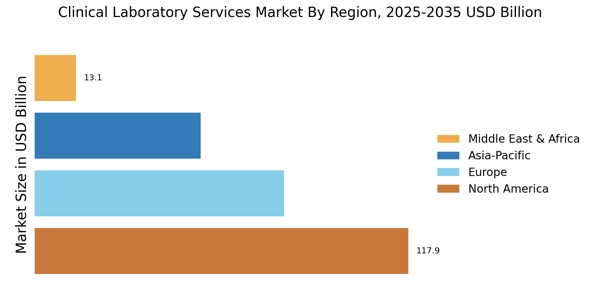
Global Clinical Laboratory Services Market Size was valued at USD 262.01 Billion in 2024 & the market is projected to grow from USD 272.23 Billion in 2025 to USD 399.19 Billion by 2035, registering a CAGR of 3.9% during the forecast period 2026–2035. North America led the market with over 45% share, generating around USD 117.90 billion in revenue.
 
The market is primarily driven by the rising demand for early and accurate disease diagnosis, supported by increasing chronic disease burden and expanding preventive healthcare initiatives, encouraging higher testing volumes and advanced diagnostic service adoption globally.
 

  • According to the CDC, about 6 in 10 adults in the U.S. live with at least one chronic disease, while the WHO reports chronic diseases account for nearly 74% of global deaths, reinforcing strong demand for diagnostic testing and laboratory services growth worldwide.

Key Market Trends & Highlights

The Clinical Laboratory Services Market is experiencing robust growth driven by technological advancements and a shift towards preventive healthcare.

  • North America dominates with over 45% share, driven by high chronic disease prevalence and advanced diagnostic infrastructure investment.
  • Europe holds USD 78.60 billion market size with 30% share, supported by strong regulations and preventive healthcare initiatives.
  • Preventive healthcare initiatives reduce premature deaths by 40%, driving increased utilization of routine screening and laboratory diagnostic services.
  • Point-of-care testing improves access for 2 billion people and reduces diagnosis time by 60%, enhancing rapid clinical decision-making.

Market Size & Forecast

2024 Market Size 262.01 (USD Billion)
2035 Market Size 399.19 (USD Billion)
CAGR (2025 - 2035) 3.9%

Major Players

Companies such as LabCorp (US), Quest Diagnostics (US), Eurofins Scientific (FR), Roche Diagnostics (CH), Abbott Laboratories (US), Thermo Fisher Scientific (US), Siemens Healthineers (DE), PerkinElmer (US), Becton Dickinson (US)  are some of the major participants in the global market.
Our Impact
Enabled $4.3B Revenue Impact for Fortune 500 and Leading Multinationals
Partnering with 2000+ Global Organizations Each Year
30K+ Citations by Top-Tier Firms in the Industry

Clinical Laboratory Services Market Trends

The Clinical Laboratory Services Market is currently experiencing a transformative phase, driven by advancements in technology and an increasing demand for accurate diagnostic services. The integration of artificial intelligence and automation into laboratory processes appears to enhance efficiency and reduce turnaround times, which is crucial for timely patient care. 

Furthermore, the growing emphasis on preventive healthcare and personalized medicine suggests a shift in focus towards more specialized testing services. This evolution is likely to foster innovation and expand the range of services offered by clinical laboratories, thereby meeting the diverse needs of healthcare providers and patients alike. Providers are expanding their clinical lab service to include high-value molecular and genetic testing.

In addition, the Clinical Laboratory Services Market seems to be influenced by the rising prevalence of chronic diseases and the aging population, which necessitates regular monitoring and diagnostic testing. A comprehensive clinical laboratory market analysis reveals that decentralized testing is becoming a major threat to traditional central lab models. As healthcare systems worldwide strive to improve patient outcomes, the role of clinical laboratories becomes increasingly vital.

The ongoing development of point-of-care testing and home-based diagnostic solutions indicates a potential shift in how laboratory services are delivered, making them more accessible to patients. Overall, the Clinical Laboratory Services Market is poised for growth, with various factors converging to shape its future landscape.

Technological Advancements

The integration of cutting-edge technologies, such as artificial intelligence and automation, is revolutionizing laboratory operations. Private medical labs are increasingly adopting high-throughput automation to manage rising sample volumes. These innovations enhance accuracy, streamline workflows, and reduce processing times, ultimately improving patient outcomes. Advanced research at the care bio clinical lab level facilitates the development of early cancer detection assays. 

  • According to the WHO, over 70% of high-income countries have adopted digital health technologies in diagnostics, while the CDC highlights that automation can reduce laboratory errors by up to 30%, supporting improved accuracy, efficiency, and faster turnaround times in clinical laboratory operations.

Shift Towards Preventive Healthcare

There is a noticeable trend towards preventive healthcare, with an increasing focus on early detection and personalized medicine. This shift drives demand for specialized testing services, enabling healthcare providers to tailor treatments to individual patient needs. The clinical laboratory industry is also a vital partner in the transition toward personalized patient care.

  • The WHO states that preventive healthcare could reduce premature deaths by 40%, while IHME estimates that early detection strategies significantly lower disease burden, contributing to improved life expectancy and increased reliance on routine laboratory testing services globally.

Expansion of Point-of-Care Testing

The rise of point-of-care testing solutions is transforming the delivery of laboratory services. These advancements allow for immediate results and greater accessibility, particularly in remote or underserved areas, thereby enhancing patient care.

  • According to the PAHO, point-of-care testing improves access in over 50% of underserved regions, while ECDC reports rapid diagnostic testing can reduce diagnosis time by up to 60%, enhancing timely clinical decision-making and expanding laboratory service accessibility.

Clinical Laboratory Services Market Drivers

Expansion of Point-of-Care Testing

The Clinical Laboratory Services Market is witnessing a significant expansion in point-of-care testing (POCT). This trend is driven by the increasing demand for rapid diagnostic results and the convenience of testing in non-traditional settings. POCT allows for immediate decision-making, which is particularly beneficial in emergency situations and remote areas.
 
The market for POCT is projected to grow at a robust rate, with estimates suggesting a potential increase of over 10% annually. This growth is indicative of the evolving landscape of laboratory services, where accessibility and speed are becoming paramount. As a result, clinical laboratories are adapting to incorporate POCT into their service offerings, enhancing their relevance in the market.
 

  • According to UNICEF, rapid diagnostic tools have improved healthcare access for over 2 billion people, while WHO reports point-of-care diagnostics can reduce treatment delays by up to 50%, significantly enhancing clinical outcomes and increasing demand for decentralized laboratory services globally.

Shift Towards Preventive Healthcare

The Clinical Laboratory Services Market is increasingly influenced by a shift towards preventive healthcare. As healthcare systems worldwide emphasize early detection and prevention of diseases, the demand for laboratory services is likely to rise. Preventive screenings and routine tests are becoming integral components of healthcare plans, leading to an increase in laboratory service utilization.
 
Reports indicate that preventive healthcare spending is expected to grow, potentially reaching a market size of several billion dollars by the end of the decade. This trend underscores the importance of clinical laboratories in providing essential data for preventive measures, thereby solidifying their role within the market.
 

  • The UNFPA highlights that preventive healthcare programs can reduce maternal mortality by up to 30%, while IHME reports early screening initiatives have contributed to a 20% decline in premature deaths, strengthening the role of laboratory services in preventive care frameworks.

Rising Incidence of Chronic Diseases

The Clinical Laboratory Services Market is significantly impacted by the rising incidence of chronic diseases. Conditions such as diabetes, cardiovascular diseases, and cancer are becoming increasingly prevalent, necessitating regular monitoring and diagnostic testing. The World Health Organization has reported a steady increase in the global burden of chronic diseases, which is expected to drive demand for laboratory services.
 
This trend is likely to result in a substantial increase in laboratory testing volumes, as healthcare providers seek to manage and treat these conditions effectively. Consequently, clinical laboratories are positioned to play a crucial role in the ongoing management of chronic diseases within the market.
 

  • The WHO reports chronic diseases cause 41 million deaths annually, while the CDC estimates healthcare spending on chronic conditions accounts for nearly 90% of total expenditure, significantly increasing demand for continuous laboratory monitoring and diagnostic services worldwide.

Regulatory Changes and Quality Standards

The Clinical Laboratory Services Market is also shaped by evolving regulatory changes and quality standards. Governments and health organizations are continuously updating regulations to ensure the safety and efficacy of laboratory services. Compliance with these regulations is essential for laboratories to maintain accreditation and trust among healthcare providers and patients.
 
The implementation of stringent quality standards is likely to enhance the reliability of laboratory results, thereby increasing the demand for clinical laboratory services. As laboratories adapt to these regulatory changes, they may invest in new technologies and training, further driving growth within the market.
 

  • According to ECDC, implementation of standardized laboratory protocols has improved diagnostic accuracy by over 25%, while PAHO reports regulatory compliance programs have enhanced laboratory service reliability across 30+ countries, boosting trust and adoption of clinical laboratory services.

Technological Advancements in Clinical Laboratory Services

The Clinical Laboratory Services Market is experiencing a notable transformation due to rapid technological advancements. Innovations such as automation, artificial intelligence, and advanced diagnostic tools are enhancing the efficiency and accuracy of laboratory tests. For instance, the integration of AI algorithms in diagnostic processes has the potential to reduce human error and improve patient outcomes.
 
Furthermore, the market for laboratory automation is projected to grow significantly, with estimates suggesting a compound annual growth rate of over 7% in the coming years. These advancements not only streamline operations but also facilitate the development of new tests, thereby expanding the service offerings within the market.
 

  • The Global Fund supports diagnostic programs reaching over 100 countries, while Gavi has enabled immunization and diagnostic access for over 981 million children, highlighting the growing integration of advanced technologies in laboratory ecosystems and their impact on global healthcare delivery.

Market Segment Insights

By Test Type: Clinical Chemistry (Largest) vs. Genetic Testing (Fastest-Growing)

Clinical chemistry stands as the largest segment in the clinical laboratory services market, accounting for a 38% share and maintaining a strong position compared to other test types. This segment includes a broad range of diagnostic tests that assess the chemical components of blood and other bodily fluids, making it indispensable in clinical settings. Following closely are Microbiology and Immunology, which also hold substantial shares, while Pathology and Genetic Testing demonstrate rapid growth trends, particularly as personalized medicine gains traction and testing capabilities advance.

Genetic Testing (Emerging) vs. Clinical Chemistry (Dominant)

Clinical Chemistry, being the dominant segment, encompasses various biochemical tests used for diagnosing health conditions and monitoring disease. It has a robust infrastructure that supports widespread availability and efficiency, positioning it as the cornerstone of laboratory diagnostics. In contrast, Genetic Testing is rapidly emerging as a critical area, driven by advancements in genomic technologies and increased awareness of genetic disorders. As more patients seek personalized healthcare solutions, genetic testing is witnessing accelerated growth, paving the way for new diagnostics and treatment methods. Together, these segments illustrate the evolving landscape of clinical testing, merging traditional methods with innovative approaches.

By Service Type: Laboratory Testing Services (Largest) vs. Consultation Services (Fastest-Growing)

Laboratory testing services dominate the service type segment, accounting for the largest share in the clinical laboratory services market at 62% due to their essential role in disease diagnosis, management, and monitoring. Testing services encompass a wide range of procedures including routine blood tests, microbiological cultures, and genetic testing, which are vital for patient care and treatment plans. Consultation services are emerging as the fastest-growing segment within the market, driven by an increasing demand for personalized medicine and advanced diagnostic techniques. These services include expert advice from laboratory professionals who guide medical decisions, further enhancing the accuracy and efficiency of laboratory operations. Support services, although necessary, hold a comparatively smaller share, primarily focused on administrative functions and logistical support in laboratory settings.

Laboratory Testing Services (Dominant) vs. Support Services (Emerging)

Laboratory testing services are the cornerstone of the market, characterized by their broad application in routine healthcare and specialized diagnostics. This segment includes a vast array of testing options, from general health screenings to complex diagnostic assays that leverage cutting-edge technology. The demand for accurate and timely test results continues to propel this service type. On the other hand, support services, while less visible, are becoming increasingly important as healthcare facilities look to streamline operations. These services cover functions such as specimen handling, data management, and quality control, ensuring that laboratory testing processes are efficient and compliant. As technology advances, the reliance on support services is expected to grow, positioning them as an emerging player in this dynamic market.

By End User: Hospitals (Largest) vs. Diagnostic Laboratories (Fastest-Growing)

In the Clinical Laboratory Services Market, hospitals play a pivotal role, commanding a significant 55% share of the market. They cater to a diverse range of diagnostic needs, providing comprehensive services that include laboratory testing, imaging, and disease diagnosis. Hospitals are increasingly adopting advanced laboratory technologies and automation, which enhances their operational efficiency and service delivery. On the other hand, diagnostic laboratories are witnessing rapid growth due to the rising demand for specialized tests and personalized medicine. As healthcare shifts towards preventive care, diagnostic laboratories are becoming crucial for early disease detection, contributing to their expanding market share.

Hospitals (Dominant) vs. Clinics (Emerging)

Hospitals dominate the market due to their extensive resources and capabilities in providing a wide array of diagnostic tests. They are often the first point of care for patients, equipped with state-of-the-art laboratory facilities. In contrast, clinics represent an emerging segment, leveraging advances in point-of-care testing and telemedicine. Clinics often offer convenience and accessibility, attracting patients who prefer localized services. As the healthcare landscape evolves, clinics are increasingly investing in laboratory services to provide immediate results, thus complementing the traditional hospital setting while also meeting the demands for personalized and rapid testing.

By Technology: Automated Laboratory Technology (Largest) vs. Point-of-Care Testing (Fastest-Growing)

In the Clinical Laboratory Services Market, the distribution of market share across the technology segment reveals that automated laboratory technology holds the largest share at 47%, driven by the demand for efficiency and accuracy. Conventional Laboratory Technology, while a traditional favorite, is gradually declining as healthcare providers shift towards more innovative solutions. Point-of-Care Testing, though smaller in share, is rapidly gaining traction due to its ability to deliver rapid results in diverse settings, such as clinics and pharmacies.

Technology: Automated Laboratory Technology (Dominant) vs. Point-of-Care Testing (Emerging)

Automated Laboratory Technology stands as the dominant force in the market, known for its ability to streamline processes and reduce human error. It capitalizes on advanced robotics and sophisticated software to perform a multitude of tests simultaneously, thereby increasing throughput and efficiency. Conversely, Point-of-Care Testing is emerging as a formidable contender, focusing on delivering immediate diagnostic results at or near the point of care. This segment appeals to patient-centric services and is driven by the increasing need for rapid diagnosis in emergency and primary care settings, thus positioning it well for future growth.

Get more detailed insights about Clinical Laboratory Services Market

Regional Insights

North America : Market Leader in Innovation

North America leads in the Clinical Laboratory Services Market size, accounting for over 45% of the global revenue in 2024. The region's growth is driven by increasing healthcare expenditure, technological advancements, and a rising prevalence of chronic diseases. The American clinical laboratory sector continues to attract significant investment for digital pathology integration. 

  • According to the CDC, chronic diseases affect 60% of U.S. adults, while IHME reports the U.S. healthcare expenditure exceeds $4 trillion annually, supporting advanced diagnostic infrastructure and high adoption of laboratory testing services across the region.

Regulatory support from agencies like the FDA and CDC further catalyzes market expansion, ensuring high standards in laboratory practices and patient safety. The United States is the primary contributor, with key players such as LabCorp and Quest Diagnostics leading the competitive landscape. The presence of advanced healthcare infrastructure and a focus on personalized medicine are pivotal in shaping the market. Canada also plays a significant role, emphasizing innovation and research in laboratory services, thereby enhancing the overall market dynamics. 

Europe : Emerging Regulatory Frameworks

Europe Clinical Laboratory Services Market size was valued at USD 78.60 billion in 2024, making it the second-largest regional market with a 30% share. The region's growth is propelled by stringent regulatory frameworks and an increasing focus on preventive healthcare. The European Medicines Agency (EMA) and national health authorities are pivotal in ensuring compliance and quality in laboratory services, fostering trust among consumers and healthcare providers.

  • The ECDC reports that over 80% of EU countries have structured disease surveillance systems, while the WHO highlights preventive healthcare initiatives reduce healthcare burden by up to 25%, driving demand for laboratory testing and diagnostic accuracy across Europe.

Leading countries include Germany, France, and the UK, where established healthcare systems and a high demand for diagnostic services drive market growth. Key players like Eurofins Scientific and Roche Diagnostics are at the forefront, leveraging technological advancements to enhance service delivery. The competitive landscape is characterized by collaborations and mergers, aimed at expanding service offerings and geographical reach.

Asia-Pacific : Rapid Growth and Expansion

Asia-Pacific is witnessing rapid growth in the clinical laboratory services market, holding approximately 20% of the global share. The region's expansion is driven by increasing healthcare investments, a growing population, and rising awareness of preventive healthcare. Emerging economies in this region are becoming high-growth regions within the global clinical diagnostic market.

Countries like China and India are leading this growth, supported by government initiatives aimed at improving healthcare infrastructure and access to diagnostic services. China is the largest market in the region, with significant contributions from local players and multinational corporations. Clinical labs in India are rapidly adopting international accreditation standards to serve as a global hub for cost-effective diagnostic outsourcing.

Middle East and Africa : Untapped Market Opportunities

The Middle East and Africa region is gradually emerging in the clinical laboratory services market, accounting for about 5% of the global share. The growth is driven by increasing healthcare investments, a rising prevalence of diseases, and government initiatives aimed at improving healthcare access. However, challenges such as limited infrastructure and regulatory hurdles remain.

Countries like South Africa and the UAE are leading the market, focusing on enhancing laboratory capabilities and expanding service offerings. The competitive landscape is characterized by a mix of local and international players, with companies like Abbott Laboratories and Becton Dickinson making significant inroads. The region's potential for growth is substantial, as investments in healthcare infrastructure and technology continue to rise, paving the way for improved laboratory services and patient care.

Clinical Laboratory Services Market Regional Image

Key Players and Competitive Insights

The Clinical Laboratory Services Market is characterized by a dynamic competitive landscape, driven by technological advancements, increasing demand for diagnostic services, and a growing emphasis on personalized medicine. Major players such as LabCorp (US), Quest Diagnostics (US), and Roche Diagnostics (CH) are strategically positioned to leverage these trends.
 
LabCorp (US) focuses on expanding its testing capabilities through innovative technologies, while Quest Diagnostics (US) emphasizes partnerships with healthcare providers to enhance service delivery. Roche Diagnostics (CH) is heavily invested in research and development, aiming to introduce cutting-edge diagnostic solutions. Collectively, these strategies foster a competitive environment that prioritizes innovation and responsiveness to market needs. 
 
In terms of business tactics, companies are increasingly localizing manufacturing and optimizing supply chains to enhance efficiency and reduce costs. The Clinical Laboratory Services Market appears moderately fragmented, with a mix of large multinational corporations and smaller regional players. The collective influence of key players shapes market dynamics, as they compete not only on service offerings but also on operational excellence and customer engagement. 
 
In September 2025, LabCorp (US) announced a strategic partnership with a leading telehealth provider to integrate laboratory services into virtual care platforms. This move is likely to enhance patient access to diagnostic testing, aligning with the growing trend of telemedicine. By streamlining the testing process within telehealth frameworks, LabCorp (US) positions itself as a leader in the evolving healthcare landscape, potentially increasing its market share. 
 
In August 2025, Quest Diagnostics (US) launched a new suite of at-home testing kits aimed at improving patient convenience and adherence to testing protocols. This initiative reflects a broader trend towards patient-centric care, where accessibility and ease of use are paramount. By diversifying its service offerings, Quest Diagnostics (US) not only meets consumer demand but also strengthens its competitive edge in the market. 
 
In July 2025, Roche Diagnostics (CH) unveiled a groundbreaking diagnostic platform that utilizes artificial intelligence to enhance the accuracy and speed of test results. This innovation underscores Roche's commitment to integrating advanced technology into its operations, potentially setting new industry standards. The introduction of AI-driven diagnostics may significantly influence the competitive landscape, as other players may feel compelled to adopt similar technologies to remain relevant. 
 
As of October 2025, current competitive trends in the Clinical Laboratory Services Market include a pronounced shift towards digitalization, sustainability, and the integration of artificial intelligence. Strategic alliances are increasingly shaping the landscape, enabling companies to pool resources and expertise. Looking ahead, competitive differentiation is likely to evolve, with a greater emphasis on innovation and technology rather than solely on price. Companies that can reliably deliver advanced solutions while ensuring supply chain resilience will likely emerge as leaders in this rapidly changing market.

Key Companies in the Clinical Laboratory Services Market include

Industry Developments

In the Clinical Laboratory Services Market, recent developments have highlighted a strong growth trajectory, with an increasing demand for diagnostic testing influenced by the COVID-19 pandemic and a rise in chronic diseases. For instance, in September 2023, Quest Diagnostics announced an expansion of its laboratory capacity to accommodate growing testing needs, reflecting a significant uptick in service demand.

Concurrently, Thermo Fisher Scientific and Charles River Laboratories continue to enhance their offerings through strategic partnerships, providing innovative solutions in diagnostics and clinical research. In terms of mergers and acquisitions, LabCorp completed the acquisition of Genoptix in August 2023 to strengthen its oncology diagnostic capabilities. This was followed by Eurofins Scientific acquiring certain assets of BioReference Laboratories in July 2023 to broaden its genetic testing services.

Additionally, advancements in technology and automation are driving operational efficiencies among major players, such as Siemens Healthineers and Abbott Laboratories, which are investing heavily in Artificial Intelligence applications for diagnostics. Over the past two to three years, overall market valuation has surged, positioning the Clinical Laboratory Services Market for continued expansion, as healthcare providers emphasize the value of accurate and timely diagnostic services.

Future Outlook

Clinical Laboratory Services Market Future Outlook

The Clinical Laboratory Services Market size is projected to reach USD 399.19 Billion by 2035, growing at a CAGR of 3.9%, driven by technological advancements, increasing demand for diagnostics, and a growing aging population. Clinical testing laboratories focus on scaling diagnostic infrastructure for large-scale population health programs. Upgrading clinical laboratory facilities with sustainable energy systems has become a priority for corporate social responsibility. Technological convergence between diagnostics and therapeutics is opening new avenues in the laboratory market which is a another strong factor determining the 

New opportunities lie in:

  • Expansion of telehealth services for remote diagnostics Development of personalized medicine testing solutions Investment in automation technologies for laboratory efficiency

By 2035, the market is expected to be robust, reflecting sustained growth and innovation.

Market Segmentation

Clinical Laboratory Services Market End User Outlook

  • Hospitals
  • Diagnostic Laboratories
  • Clinics
  • Research Institutions

Clinical Laboratory Services Market Test Type Outlook

  • Clinical Chemistry
  • Microbiology
  • Pathology
  • Genetic Testing
  • Immunology

Clinical Laboratory Services Market Technology Outlook

  • Conventional Laboratory Technology
  • Automated Laboratory Technology
  • Point-of-Care Testing

Clinical Laboratory Services Market Service Type Outlook

  • Laboratory Testing Services
  • Consultation Services
  • Support Services

Report Scope

MARKET SIZE 2024 262.01(USD Billion)
MARKET SIZE 2025 272.23(USD Billion)
MARKET SIZE 2035 399.19(USD Billion)
COMPOUND ANNUAL GROWTH RATE (CAGR) 3.9% (2025 - 2035)
REPORT COVERAGE Revenue Forecast, Competitive Landscape, Growth Factors, and Trends
BASE YEAR 2024
Market Forecast Period 2026 - 2035
Historical Data 2019 - 2024
Market Forecast Units USD Billion
Key Companies Profiled LabCorp (US), Quest Diagnostics (US), Eurofins Scientific (FR), Roche Diagnostics (CH), Abbott Laboratories (US), Thermo Fisher Scientific (US), Siemens Healthineers (DE), PerkinElmer (US), Becton Dickinson (US)
Segments Covered Test Type, Service Type, End Users, Technology
Key Market Opportunities Integration of advanced diagnostic technologies enhances efficiency in the market.
Key Market Dynamics Technological advancements and regulatory changes are reshaping competitive dynamics in the market.
Countries Covered North America, Europe, APAC, South America, MEA

Market Highlights

FAQs

What is the projected market valuation of the Clinical Laboratory Services Market by 2035?

The Clinical Laboratory Services Market is projected to reach a valuation of 399.19 USD Billion by 2035.

What was the overall market valuation of the Clinical Laboratory Services Market in 2024?

In 2024, the overall market valuation of the Clinical Laboratory Services Market was 262.01 USD Billion.

What is the expected CAGR for the market during the forecast period 2025 - 2035?

The expected CAGR for the market during the forecast period 2025 - 2035 is 3.9%.

Which companies are considered key players in the Clinical Laboratory Services Market?

Key players in the Clinical Laboratory Services Market include LabCorp, Quest Diagnostics, Eurofins Scientific, Roche Diagnostics, and Abbott Laboratories.

What are the projected revenues for Clinical Chemistry in the market?

The projected revenues for Clinical Chemistry are expected to range from 80.0 to 120.0 USD Billion.

How much is the market for Microbiology expected to grow by 2035?

The market for Microbiology is projected to grow to between 50.0 and 75.0 USD Billion by 2035.

What is the expected revenue range for Laboratory Testing Services in the Clinical Laboratory Services Market?

The expected revenue range for Laboratory Testing Services is between 150.0 and 230.0 USD Billion.

What segment of the market is anticipated to have the highest revenue by 2035?

Laboratory Testing Services is anticipated to have the highest revenue, projected between 150.0 and 230.0 USD Billion.

What is the revenue projection for Point-of-Care Testing technology by 2035?

The revenue projection for Point-of-Care Testing technology is expected to be between 91.51 and 139.19 USD Billion.

Which end-user segment is expected to generate significant revenue in the Clinical Laboratory Services Market?

The Hospitals segment is expected to generate significant revenue, projected between 80.0 and 120.0 USD Billion.

Author
Author
Author Profile
Rahul Gotadki LinkedIn
Research Manager
He holds an experience of about 9+ years in Market Research and Business Consulting, working under the spectrum of Life Sciences and Healthcare domains. Rahul conceptualizes and implements a scalable business strategy and provides strategic leadership to the clients. His expertise lies in market estimation, competitive intelligence, pipeline analysis, customer assessment, etc.
Leave a Comment

Research Approach

Research Methodology on Clinical Laboratory Services Market

Introduction

Research methodology is an important part of the research process, as it defines the steps taken to answer a research question or objective. It is a systematic process that involves defining research objectives and questions, developing a data collection plan, carrying out data collection, analyzing the data and then drawing a conclusion. This research methodology outlines the steps taken to study the “Clinical Laboratory Services Market – Global Forecast to 2030” report.

Background and Research Objective

Clinical laboratory services are increasingly being used by healthcare organizations to diagnose, prevent and treat diseases. These services are designed to provide highly accurate results that can be used to diagnose patients, monitor progress and analyze research samples. The aim of this research project is to evaluate the market size, structure and current trends of the global clinical laboratory services market. The research report provides an in-depth analysis and forecast of the market trends and drivers for the period 2023 to 2030.

Research Design

This research study is based on both qualitative and quantitative research methods. Qualitative methods involve interviews and surveys to assess opinions and current opinions of the market. Quantitative methods involve data collection and analysis of existing market information and data about the market size, competitive dynamics and end-users. The research is conducted using primary and secondary sources.

Primary Research Methods

The primary research methods used in this study are focus group interviews, online surveys and face-to-face interviews. Focus group interviews are conducted with industry experts in order to understand the current market situation, trends and future prospects of the process. Online surveys are conducted to receive input from industry leaders, clinical laboratory services providers, suppliers, end-users and regulatory bodies. Face-to-face interviews are conducted with clinical laboratory services operators, providers and suppliers.

Secondary Research Method

The secondary research methods used in this study are industry databases and journals, industry reports and web sources. Industry databases and journals are used to identify and access key data about the market such as size, structure and market trends. Industry reports are used to collect information on market strategies and competitive dynamics adopted by industry players. Web sources were used to gain access to additional information related to the market.

Data Analysis

The research data collected through the primary and secondary research methods is analysed using statistical tools including excel. The data is further analysed using the various stages of the market design such as Market Drivers, Restraints and Opportunities.

Conclusion

This research methodology outlines the steps taken to study the Clinical Laboratory Services Market – Global Forecast to 2030 report. Primary and secondary research methods such as focus group interviews, online surveys, industry databases and journals, industry reports and web sources are used to collect and analyse data about the market.

Download Free Sample

Kindly complete the form below to receive a free sample of this Report

Compare Licence

×
Features License Type
Single User Multiuser License Enterprise User
Price $4,950 $5,950 $7,250
Maximum User Access Limit 1 User Upto 10 Users Unrestricted Access Throughout the Organization
Free Customization
Direct Access to Analyst
Deliverable Format
Platform Access
Discount on Next Purchase 10% 15% 15%
Printable Versions