×
Request Free Sample ×

Kindly complete the form below to receive a free sample of this Report

* Please use a valid business email

Leading companies partner with us for data-driven Insights

clients tt-cursor
Hero Background
English
Chinese
French
Japanese
Korean
German
Spanish

Chronic Granulomatous Disease Market Trends

ID: MRFR/Pharma/4986-HCR
100 Pages
Rahul Gotadki
October 2025

Chronic Granulomatous Disease Market Size, Growth Research Report By Diagnosis (Neutrophil Function Tests, Genetic Testing, Others), by Treatment (Infection Management, Interferon-gamma, Stem Cell Transplantation), by End-User (Hospitals, Others) - Competitor Industry Analysis and Trends Forecast Till 2035

Share:
Download PDF ×

We do not share your information with anyone. However, we may send you emails based on your report interest from time to time. You may contact us at any time to opt-out.

Chronic Granulomatous Disease Market Infographic
Purchase Options

Market Trends

Key Emerging Trends in the Chronic Granulomatous Disease Market

The CGD market has seen huge progressions in remedial methodologies. Novel treatment modalities, including quality treatment and targeted immunomodulatory drugs, are arising as promising choices. These forward leaps give new desire to patients with CGD, tending to the underlying driver of the disease and possibly offering more effective and robust arrangements. Notwithstanding the positive patterns, challenges persevere in the CGD market, for example, high treatment costs and the intricacy of quality treatment organization. In any case, these difficulties additionally present open doors for market players to develop concerning estimating models, repayment procedures, and patient assistance programs, guaranteeing more extensive availability and maintainability. The administrative scene for CGD medicines is developing to oblige the fast progressions in the field. Administrative organizations are working intimately with drug organizations to smooth out endorsement processes for novel treatments, encouraging a more favorable climate for market growth and guaranteeing the ideal accessibility of creative medicines to patients. Escalating competition among drug organizations is driving expanded interest in innovative work for CGD medicines. This obstruction energizes advancement as well as adds to advertisement importance, possibly prompting more reasonable and available treatment choices for patients later. The CGD market is ready for proceeded with growth and change. Continuous examination, mechanical progressions, and cooperative endeavors are expected to achieve a change in outlook in the treatment scene for CGD. As the market develops, a more differentiated and patient-driven cluster of helpful choices is probably going to arise, offering new desire to people affected by this interesting and testing genetic misunderstanding.

Author
Rahul Gotadki
Assistant Manager

He holds an experience of about 7+ years in Market Research and Business Consulting, working under the spectrum of Life Sciences and Healthcare domains. Rahul conceptualizes and implements a scalable business strategy and provides strategic leadership to the clients. His expertise lies in market estimation, competitive intelligence, pipeline analysis, customer assessment, etc. In addition to the above, his other responsibility includes strategic tracking of high growth markets & advising clients on the potential areas of focus they could direct their business initiatives

Leave a Comment

FAQs

What would be the driving factor for the chronic granulomatous disease market?

Chronic granulomatous disease market would be driven by increased expenditure for infrastructural setup and research activities, government initiatives, and others.

What could prevent the chronic granulomatous disease market growth?

The market growth would be hindered by the high cost of genetic testing.

What are the infection management segments discussed in the chronic granulomatous disease market?

The segments are sulfamethoxazole, itraconazole, trimethoprim, and others.

What is the diagnosis involved in the chronic granulomatous disease market report?

The diagnosis segment would include genetic testing, prenatal testing, neutrophil function tests, and others.

Who are the players involved in the chronic granulomatous disease market?

The players are InterMune, Inc., Pfizer, Inc., Lonza Group, Novartis AG, Eli Lilly and Company, GlaxoSmithKline Plc, Merck KGaA, Janssen Pharmaceuticals, JCR Pharmaceuticals Co., Ltd., Maxcyte Inc., Osiris Therapeutics, Inc, and Horizon Pharma Plc.

Market Summary

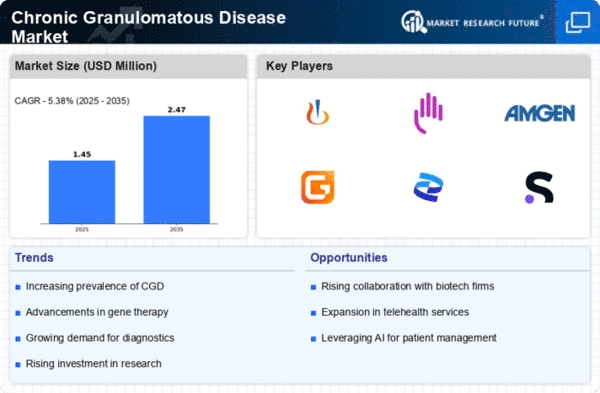
As per MRFR analysis, the Chronic Granulomatous Disease Market Size was estimated at 1.38 USD Million in 2024. The Chronic Granulomatous Disease industry is projected to grow from 1.47 in 2025 to 2.47 by 2035, exhibiting a compound annual growth rate (CAGR) of 5.38 during the forecast period 2025 - 2035.

Key Market Trends & Highlights

The Chronic Granulomatous Disease market is poised for growth driven by innovative therapies and increasing awareness.

  • The market is witnessing the emergence of novel therapies that enhance treatment options for patients.
  • North America remains the largest market, while Asia-Pacific is recognized as the fastest-growing region in this sector.
  • The diagnosis segment holds the largest share, whereas the treatment segment, particularly gene therapy, is experiencing rapid growth.
  • Key market drivers include the rising incidence of Chronic Granulomatous Disease and advancements in genetic research.

Market Size & Forecast

2024 Market Size 1.38 (USD Million)
2035 Market Size 2.47 (USD Million)
CAGR (2025 - 2035) 5.38%
Largest Regional Market Share in 2024 North America

Major Players

<p>Novartis (CH), Bristol-Myers Squibb (US), Amgen (US), GSK (GB), Pfizer (US), Sanofi (FR), Roche (CH), Merck (DE), AbbVie (US)</p>

Market Trends

The Chronic Granulomatous Disease Market is currently experiencing notable developments driven by advancements in treatment options and increased awareness of the condition. This rare genetic disorder, characterized by the inability of phagocytes to kill certain bacteria and fungi, has led to a growing demand for effective therapies. As healthcare providers and patients alike become more informed about the disease, the market is likely to expand, with a focus on innovative therapies and supportive care. Furthermore, the rise in genetic testing and personalized medicine is expected to enhance patient outcomes, thereby influencing market dynamics. In addition, the Chronic Granulomatous Disease Market is witnessing a shift towards more comprehensive care models. This includes multidisciplinary approaches that integrate various healthcare professionals to address the complex needs of patients. The emphasis on early diagnosis and intervention may also contribute to improved management of the disease. As research continues to evolve, the market appears poised for growth, with potential for new treatment modalities and increased investment in research and development. Overall, the landscape of the Chronic Granulomatous Disease Market is transforming, reflecting a commitment to better patient care and innovative solutions.

Emergence of Novel Therapies

The Chronic Granulomatous Disease Market is seeing the introduction of innovative therapies that target the underlying genetic causes of the disorder. These advancements may lead to more effective treatment options, potentially improving patient outcomes and quality of life.

Increased Awareness and Education

There is a growing emphasis on raising awareness about Chronic Granulomatous Disease among healthcare professionals and the general public. This trend may facilitate earlier diagnosis and better management of the condition, ultimately benefiting patients.

Focus on Personalized Medicine

The market is shifting towards personalized medicine approaches, which tailor treatments based on individual genetic profiles. This trend could enhance the effectiveness of therapies and lead to more targeted interventions for patients with Chronic Granulomatous Disease.

Chronic Granulomatous Disease Market Market Drivers

Advancements in Gene Therapy

Recent advancements in gene therapy present a transformative opportunity for the Global Chronic Granulomatous Disease Market Industry. Innovative treatments targeting the genetic mutations responsible for CGD are emerging, potentially offering long-term solutions for affected individuals. These therapies could significantly improve patient outcomes and quality of life, thereby increasing the market's attractiveness to investors and healthcare providers. As gene therapy continues to evolve, it may lead to a more robust pipeline of products, contributing to the anticipated growth of the market, which is projected to reach 1.48 USD Billion by 2035.

Rising Awareness and Education Initiatives

Enhanced awareness and education initiatives regarding Chronic Granulomatous Disease Market are pivotal for the Global Chronic Granulomatous Disease Market Industry. Increased public and professional knowledge about CGD leads to earlier diagnosis and treatment, which is crucial for managing the disease effectively. Organizations dedicated to rare diseases are actively promoting educational campaigns, which could result in a higher number of diagnosed cases and, consequently, a greater demand for therapeutic options. This growing awareness is expected to contribute positively to market dynamics, fostering an environment conducive to growth and innovation.

Growing Investment in Rare Disease Research

The Global Chronic Granulomatous Disease Market Industry benefits from increased investment in research focused on rare diseases. Governments and private organizations are allocating more resources to understand and develop treatments for conditions like CGD. This trend is likely to enhance the development of novel therapies and diagnostic tools, thereby expanding the market. As funding increases, the potential for breakthroughs in treatment options rises, which could lead to a more competitive landscape. The anticipated compound annual growth rate (CAGR) of 6.71% from 2025 to 2035 reflects the optimism surrounding this investment trend.

Increasing Prevalence of Chronic Granulomatous Disease

The rising incidence of Chronic Granulomatous Disease Market (CGD) globally is a primary driver for the Global Chronic Granulomatous Disease Market Industry. As awareness and diagnostic capabilities improve, more cases are identified, contributing to a projected market value of 0.72 USD Billion in 2024. This increase in diagnosed cases necessitates enhanced treatment options and patient management strategies, thereby stimulating market growth. Furthermore, the prevalence of CGD is expected to rise, leading to a greater demand for therapies and interventions tailored to this condition, which could further elevate the market's value in the coming years.

Emerging Markets and Healthcare Infrastructure Development

The expansion of healthcare infrastructure in emerging markets is a significant driver for the Global Chronic Granulomatous Disease Market Industry. As countries develop their healthcare systems, access to diagnostics and treatments for rare diseases like CGD improves. This trend is particularly evident in regions where healthcare investments are increasing, leading to better patient outcomes and higher treatment rates. The growth of healthcare facilities and services in these markets is likely to create new opportunities for market players, thereby enhancing the overall market landscape.

Market Segment Insights

By Application: Diagnosis (Largest) vs. Treatment (Fastest-Growing)

<p>Within the Chronic Granulomatous Disease (CGD) market, the application segment reflects a diverse range of uses with Diagnosis occupying the largest share. This part of the market primarily focuses on identifying CGD through various diagnostic techniques including genetic testing and functional assays. Diagnosis is crucial for early intervention and influences patient outcomes significantly, thereby warranting substantial investment and attention from healthcare providers and pharmaceutical companies alike. On the other hand, Treatment is emerging as the fastest-growing segment due to the continuous introduction of innovative therapies and supportive care options. With advancements in gene therapy and new drug formulations tailored to address the specific needs of CGD patients, the treatment landscape is rapidly evolving, reflecting the increased understanding of the disease pathology and patient management requirements.</p>

<p>Diagnosis (Dominant) vs. Treatment (Emerging)</p>

<p>In the application segment of the Chronic Granulomatous Disease market, Diagnosis is recognized as the dominant force. This is largely attributed to the robust demand for precise and timely diagnoses which are invaluable for effective disease management. Diagnostic methods such as flow cytometry and genetic screening are critical in confirming CGD and are widely utilized by clinicians. In contrast, the Treatment segment is viewed as emerging, driven by the ongoing research into novel therapies and improved healthcare practices. Treatment options not only include antibiotics and antifungals but also gene therapies that are seeing a surge in development and approval, providing hope for improved patient outcomes. As research uncovers further insights into CGD, the treatment landscape is set to evolve, positioning itself strongly in the market.</p>

By Type of Treatment: Antibiotic Therapy (Largest) vs. Gene Therapy (Fastest-Growing)

<p>In the Chronic Granulomatous Disease Market, the treatment landscape is diversified, with Antibiotic Therapy currently holding the largest share. This segment plays a crucial role in managing infections associated with this genetic disorder. Interferon Gamma Therapy and Stem Cell Transplantation also contribute to the market, but with smaller shares, highlighting the dominance of antibiotic treatments in overall management strategies. These therapies aim to address the underlying persistent infection challenges presented by chronic granulomatous disease.</p>

<p>Treatment: Antibiotic Therapy (Dominant) vs. Gene Therapy (Emerging)</p>

<p>Antibiotic Therapy remains the dominant treatment modality in the Chronic Granulomatous Disease Market due to its immediate effectiveness in managing infections. It provides significant benefits to patients, offering a preventive measure against recurrent infections that are characteristic of this condition. In contrast, Gene Therapy is emerging as a groundbreaking treatment option. This innovative approach is focused on correcting the genetic defects responsible for the disease, thus addressing the root cause. As technology advances and research continues in the field of genetics, gene therapy is anticipated to grow rapidly, providing new hope for patients with chronic granulomatous disease.</p>

By Patient Demographics: Pediatric Patients (Largest) vs. Adult Patients (Fastest-Growing)

<p>The Chronic Granulomatous Disease market exhibits a significant distribution across patient demographics, with pediatric patients representing the largest segment. This population’s need for specialized care due to their unique physiological characteristics is driving demand for targeted therapies. Adult patients, while a smaller segment, are rapidly gaining attention as advancements in treatment options become more accessible, fostering growth in this demographic. Growth trends in the segment are influenced by several key factors, including increased awareness of Chronic Granulomatous Disease among healthcare providers and advances in understanding patient needs across different age groups. Additionally, ongoing research is enhancing treatment efficacy, making therapies more appealing to both pediatric and adult patients. As the market evolves, the differentiation in treatment approaches between these demographics will likely drive further segmentation and targeted marketing strategies.</p>

<p>Pediatric Patients (Dominant) vs. Adult Patients (Emerging)</p>

<p>Pediatric patients represent a dominant segment in the Chronic Granulomatous Disease market, primarily due to the early onset of the condition and the vital need for effective management from a young age. This subgroup requires specific considerations concerning dosing, treatment administration, and ongoing monitoring to ensure quality of life improvements. Conversely, adult patients are an emerging focus, spurred by a growing recognition of adult-onset CGD cases and the distinctive challenges they face. As treatments evolve, adult demographics are becoming increasingly significant, with an emphasis on developing robust therapies tailored to their unique health needs. The development of new therapies for both segments reflects a comprehensive approach to disease management across different life stages.</p>

By Healthcare Setting: Hospitals (Largest) vs. Specialty Clinics (Fastest-Growing)

<p>In the Chronic Granulomatous Disease Market, the healthcare setting plays a critical role in treatment accessibility and patient support. Hospitals dominate the market due to their comprehensive resources, specialized healthcare professionals, and ability to provide advanced diagnostic technologies. This segment not only represents the largest share of the market but also delivers extensive services beneficial for patients requiring immediate and complex care. On the other hand, specialty clinics are emerging as a fast-growing segment, catering specifically to individuals with Chronic Granulomatous Disease. These clinics provide tailored treatment plans and foster patient-provider relationships that significantly enhance patient outcomes. Their growth is driven by an increased focus on specialized care, streamlined patient processes, and heightened awareness of chronic conditions, thereby attracting a broader patient base seeking focused expertise.</p>

<p>Hospitals (Dominant) vs. Specialty Clinics (Emerging)</p>

<p>Hospitals play a dominant role in the Chronic Granulomatous Disease Market, equipped with multi-disciplinary teams and extensive treatment capabilities, addressing the comprehensive needs of patients including diagnostics, treatment, and support services. These institutions are often the first point of contact for patients, providing necessary inpatient and outpatient care. Conversely, specialty clinics are emerging as significant contenders by offering focused care and expertise in managing Chronic Granulomatous Disease. They focus on specialized treatment options, personalized care, and direct patient engagement, appealing to patients who prefer targeted management of their condition. The adaptability and patient-centric approach of specialty clinics mark their rise in the market as vital players in chronic disease management.</p>

Get more detailed insights about Chronic Granulomatous Disease Market Research Report – Forecast to 2035

Regional Insights

North America : Market Leader in CGD Treatments

North America is poised to maintain its leadership in the Chronic Granulomatous Disease (CGD) market, holding a significant market share of 0.7 in 2025. The region benefits from advanced healthcare infrastructure, high R&D investments, and a growing prevalence of CGD. Regulatory support, including expedited approval processes for innovative therapies, further drives market growth. The increasing awareness of CGD among healthcare professionals is also contributing to rising demand for effective treatments. The competitive landscape in North America is robust, featuring key players such as Novartis, Bristol-Myers Squibb, and Amgen. These companies are actively engaged in developing novel therapies and expanding their product portfolios. The U.S. is the leading country in this market, supported by a strong reimbursement framework and a focus on personalized medicine. The presence of major pharmaceutical firms ensures a continuous influx of innovative solutions for CGD patients.

Europe : Emerging Market with Growth Potential

Europe is witnessing a growing market for Chronic Granulomatous Disease (CGD) treatments, with a market size of 0.4 in 2025. The region's growth is driven by increasing healthcare expenditure, advancements in biotechnology, and a rising incidence of CGD. Regulatory bodies are actively promoting research and development, which is expected to enhance the availability of new therapies. Collaborative efforts among European nations to streamline drug approval processes are also contributing to market expansion. Leading countries in Europe include Germany, France, and the UK, where major pharmaceutical companies like GSK and Roche are investing in CGD research. The competitive landscape is characterized by a mix of established players and emerging biotech firms, fostering innovation. The European Medicines Agency (EMA) is committed to ensuring that patients have access to effective treatments, stating that "the EMA aims to facilitate timely access to innovative therapies for rare diseases like CGD."

Asia-Pacific : Growing Awareness and Demand

The Asia-Pacific region is gradually emerging in the Chronic Granulomatous Disease (CGD) market, with a market size of 0.2 in 2025. Factors such as increasing healthcare investments, rising awareness of rare diseases, and improving diagnostic capabilities are driving market growth. Governments are implementing policies to enhance healthcare access, which is expected to boost demand for CGD treatments. The region's diverse population also presents unique challenges and opportunities for tailored therapies. Countries like Japan, Australia, and China are leading the way in CGD treatment advancements. The competitive landscape is evolving, with both multinational corporations and local firms striving to capture market share. Key players are focusing on collaborations and partnerships to enhance their product offerings. However, the market still faces challenges related to regulatory hurdles and varying healthcare standards across countries.

Middle East and Africa : Emerging Market with Challenges

The Middle East and Africa (MEA) region is in the nascent stages of developing its Chronic Granulomatous Disease (CGD) market, with a market size of 0.08 in 2025. The growth is hindered by limited healthcare infrastructure, low awareness of rare diseases, and economic challenges. However, increasing investments in healthcare and international collaborations are expected to drive future growth. Governments are beginning to recognize the importance of addressing rare diseases, which may lead to improved policies and funding. Countries like South Africa and the UAE are making strides in healthcare improvements, but the competitive landscape remains fragmented. Local players are emerging, but the presence of major global companies is limited. Efforts to enhance awareness and education about CGD are crucial for market development. The World Health Organization emphasizes the need for better healthcare access, stating that "improving healthcare systems is essential for addressing rare diseases in developing regions."

Key Players and Competitive Insights

The Chronic Granulomatous Disease Market is characterized by a competitive landscape that is increasingly shaped by innovation, strategic partnerships, and a focus on patient-centric solutions. Key players such as Novartis (CH), Bristol-Myers Squibb (US), and Amgen (US) are actively engaged in enhancing their product portfolios and expanding their market reach. Novartis (CH) has positioned itself as a leader in gene therapy, emphasizing the development of novel treatments that address the underlying genetic causes of chronic granulomatous disease. Meanwhile, Bristol-Myers Squibb (US) is focusing on immunotherapy approaches, which may offer new avenues for treatment. Amgen (US) is leveraging its expertise in biologics to develop therapies that could potentially improve patient outcomes, thereby shaping the competitive dynamics of the market.

The business tactics employed by these companies reflect a concerted effort to optimize supply chains and localize manufacturing processes. The market appears to be moderately fragmented, with several players vying for dominance. However, the collective influence of these key players is significant, as they drive innovation and set industry standards. Their strategies not only enhance their competitive positioning but also contribute to a more robust market structure that encourages collaboration and knowledge sharing.

In November 2025, Novartis (CH) announced a strategic partnership with a leading biotechnology firm to co-develop a groundbreaking gene therapy for chronic granulomatous disease. This collaboration is expected to accelerate the development timeline and enhance the therapeutic options available to patients. The strategic importance of this partnership lies in its potential to combine Novartis's extensive research capabilities with the biotechnology firm's innovative approaches, thereby fostering a more comprehensive treatment landscape.

In October 2025, Bristol-Myers Squibb (US) launched a new clinical trial aimed at evaluating the efficacy of its immunotherapy treatment in patients with chronic granulomatous disease. This initiative underscores the company's commitment to advancing treatment options and highlights its focus on patient outcomes. The trial's results could significantly influence the treatment paradigm, positioning Bristol-Myers Squibb as a frontrunner in this therapeutic area.

In September 2025, Amgen (US) expanded its manufacturing capabilities by investing in a new facility dedicated to the production of biologics for chronic granulomatous disease. This strategic move is likely to enhance supply chain reliability and ensure that the company can meet the growing demand for its therapies. By bolstering its manufacturing infrastructure, Amgen is not only improving its operational efficiency but also reinforcing its competitive edge in the market.

As of December 2025, the competitive trends in the Chronic Granulomatous Disease Market are increasingly defined by digitalization, sustainability, and the integration of artificial intelligence in drug development. Strategic alliances are becoming more prevalent, as companies recognize the value of collaboration in driving innovation. The competitive landscape is shifting from a focus on price-based competition to one that prioritizes technological advancements and supply chain reliability. This evolution suggests that future differentiation will hinge on the ability to innovate and deliver high-quality, effective treatments that meet the needs of patients.

Key Companies in the Chronic Granulomatous Disease Market include

Industry Developments

Abbott Laboratories said in February 2022 that it has created Lingo, a consumer bio wearable that can track important body signals to help people better understand their overall health and take steps to improve it. It may allow biohackers to use a continuous stream of data instead of finger-prick tests, urine samples, and breath readings. OncoDNA, a genomic and prognostic firm, released the OncoDEEP kit in February 2022.

The package includes a complete workflow solution that allows laboratories with Chronic Granulomatous Disease Market to do thorough Chronic Granulomatous Disease Market testing, perform robust data analysis, and assist oncologists in providing the most effective and customized treatments for their cancer patients.

Intended Audience

    • Pharmaceutical & Biopharmaceutical Companies
    • Research and Development (R&D) Companies
    • Government Research Institutes
    • Academic Institutes and Universities

Future Outlook

Chronic Granulomatous Disease Market Future Outlook

<p>The Chronic Granulomatous Disease Market is projected to grow at a 5.38% CAGR from 2024 to 2035, driven by advancements in gene therapy, increased awareness, and improved diagnostic techniques.</p>

New opportunities lie in:

  • <p>Development of targeted gene therapies for CGD patients</p>
  • <p>Expansion of telehealth services for remote patient monitoring</p>
  • <p>Investment in personalized medicine approaches for treatment optimization</p>

<p>By 2035, the market is expected to achieve substantial growth, reflecting evolving treatment paradigms.</p>

Market Segmentation

Chronic Granulomatous Disease Market Application Outlook

  • Diagnosis
  • Treatment
  • Research

Chronic Granulomatous Disease Market Type of Treatment Outlook

  • Antibiotic Therapy
  • Interferon Gamma Therapy
  • Gene Therapy
  • Stem Cell Transplantation

Chronic Granulomatous Disease Market Healthcare Setting Outlook

  • Hospitals
  • Specialty Clinics
  • Home Healthcare

Chronic Granulomatous Disease Market Patient Demographics Outlook

  • Pediatric Patients
  • Adult Patients
  • Geriatric Patients

Report Scope

MARKET SIZE 20241.38(USD Million)
MARKET SIZE 20251.47(USD Million)
MARKET SIZE 20352.47(USD Million)
COMPOUND ANNUAL GROWTH RATE (CAGR)5.38% (2024 - 2035)
REPORT COVERAGERevenue Forecast, Competitive Landscape, Growth Factors, and Trends
BASE YEAR2024
Market Forecast Period2025 - 2035
Historical Data2019 - 2024
Market Forecast UnitsUSD Million
Key Companies ProfiledNovartis (CH), Bristol-Myers Squibb (US), Amgen (US), GSK (GB), Pfizer (US), Sanofi (FR), Roche (CH), Merck (DE), AbbVie (US)
Segments CoveredApplication, Type of Treatment, Patient Demographics, Healthcare Setting
Key Market OpportunitiesAdvancements in gene therapy present transformative potential for the Chronic Granulomatous Disease Market.
Key Market DynamicsRising demand for innovative therapies drives competitive dynamics in the Chronic Granulomatous Disease market.
Countries CoveredNorth America, Europe, APAC, South America, MEA

FAQs

What would be the driving factor for the chronic granulomatous disease market?

Chronic granulomatous disease market would be driven by increased expenditure for infrastructural setup and research activities, government initiatives, and others.

What could prevent the chronic granulomatous disease market growth?

The market growth would be hindered by the high cost of genetic testing.

What are the infection management segments discussed in the chronic granulomatous disease market?

The segments are sulfamethoxazole, itraconazole, trimethoprim, and others.

What is the diagnosis involved in the chronic granulomatous disease market report?

The diagnosis segment would include genetic testing, prenatal testing, neutrophil function tests, and others.

Who are the players involved in the chronic granulomatous disease market?

The players are InterMune, Inc., Pfizer, Inc., Lonza Group, Novartis AG, Eli Lilly and Company, GlaxoSmithKline Plc, Merck KGaA, Janssen Pharmaceuticals, JCR Pharmaceuticals Co., Ltd., Maxcyte Inc., Osiris Therapeutics, Inc, and Horizon Pharma Plc.

  1. Definition
    1. Scope of the Study
      1. Research Objective
      2. Assumptions
      3. Limitations
    2. Introduction
    3. Primary Research
    4. Secondary Research
    5. Market Size Estimation
    6. Drivers
    7. Restraints
    8. Opportunities
    9. Challenges
    10. Macroeconomic Indicators
    11. Technology Trends & Assessment
    12. Porter’s Five Forces Analysis
      1. Bargaining Power of Suppliers
      2. Bargaining Power of Buyers
      3. Threat of New Entrants
      4. Threat of Substitutes
      5. Intensity of Rivalry
    13. Value Chain Analysis
    14. Investment Feasibility Analysis
    15. Pricing Analysis
  2. Chapter 6. Global Chronic Granulomatous Disease Market, by Type
    1. Introduction
    2. X-Linked Chronic Granulomatous Disease
  3. Market Estimates & Forecast, by Region, 2020–2027
  4. Market Estimates & Forecast, by Country, 2020–2027
    1. Autosomal Recessive Chronic Granulomatous Disease
  5. Market Estimates & Forecast, by Region, 2020–2027
  6. Market Estimates & Forecast, by Country, 2020–2027
  7. Chapter 7. Global Chronic Granulomatous Disease Market, by Diagnosis
    1. Introduction
    2. Neutrophil Function Test
  8. Market Estimates & Forecast, by Region, 2020–2027
  9. Market Estimates & Forecast, by Country, 2020–2027
    1. Genetic Testing
  10. Market Estimates & Forecast, by Region, 2020–2027
  11. Market Estimates & Forecast, by Country, 2020–2027
    1. Prenatal Testing
  12. Market Estimates & Forecast, by Region, 2020–2027
  13. Market Estimates & Forecast, by Country, 2020–2027
    1. Others
  14. Chapter 8. Global Chronic Granulomatous Disease Market, by Treatment
    1. Introduction
    2. Infection Management
      1. Trimethoprim
  15. Market Estimates & Forecast, by Region, 2020–2027
  16. Market Estimates & Forecast, by Country, 2020–2027
  17. Sulfamethoxazole
  18. Market Estimates & Forecast, by Region, 2020–2027
  19. Market Estimates & Forecast, by Country, 2020–2027
  20. Itraconazole
  21. Market Estimates & Forecast, by Region, 2020–2027
  22. Market Estimates & Forecast, by Country, 2020–2027
  23. Others
    1. Interferon-gamma
  24. Market Estimates & Forecast, by Region, 2020–2027
  25. Market Estimates & Forecast, by Country, 2020–2027
    1. Stem Cell Transplantation
  26. Market Estimates & Forecast, by Region, 2020–2027
  27. Market Estimates & Forecast, by Country, 2020–2027
    1. Others
  28. Chapter 9. Global Chronic Granulomatous Disease Market, by End-User
    1. Introduction
    2. Hospitals
  29. Market Estimates & Forecast, by Region, 2020–2027
  30. Market Estimates & Forecast, by Country, 2020–2027
    1. Clinical Laboratory
  31. Market Estimates & Forecast, by Region, 2020–2027
  32. Market Estimates & Forecast, by Country, 2020–2027
    1. Others
  33. Chapter 10. Global Chronic Granulomatous Disease Market, by Region
    1. Introduction
    2. Americas
      1. North America
      2. South America
    3. Europe
      1. Western Europe
      2. Eastern Europe
    4. Asia-Pacific
      1. Japan
      2. China
      3. India
      4. Australia
      5. South Korea
      6. Rest of Asia-Pacific
    5. Middle East & Africa
      1. Middle East
      2. Africa
    6. Chapter 11. Company Landscape
    7. Introduction
    8. Market Share Analysis
    9. Key Development & Strategies
    10. Chapter 12. Company Profiles
    11. Pfizer, Inc.
      1. Company Overview
      2. Product Overview
      3. Financials Overview
      4. Key Developments
      5. SWOT Analysis
    12. InterMune, Inc.
      1. Company Overview
      2. Product Overview
      3. Financial Overview
      4. Key Developments
      5. SWOT Analysis
    13. Novartis AG
      1. Company Overview
      2. Product Overview
      3. Financial Overview
      4. Key Development
      5. SWOT Analysis
    14. Lonza Group
      1. Company Overview
      2. Product Overview
      3. Financial Overview
      4. Key Development
      5. SWOT Analysis
    15. GlaxoSmithKline Plc
      1. Company Overview
      2. Product Overview
      3. Financial overview
      4. Key Developments
      5. SWOT Analysis
    16. Eli Lily and Company
      1. Company Overview
      2. Product Overview
      3. Financial Overview
      4. Key Developments
      5. SWOT Analysis
    17. Janssen Pharmaceuticals
      1. Overview
      2. Product Overview
      3. Financial Overview
      4. Key Developments
      5. SWOT Analysis
    18. Merck KGaA
      1. Overview
      2. Product Overview
      3. Financials
      4. Key Developments
      5. SWOT Analysis
    19. Osiris Therapeutics, Inc.
      1. Overview
      2. Product Overview
      3. Financials
      4. Key Developments
      5. SWOT Analysis
    20. JCR Pharmaceuticals Co., Ltd
      1. Overview
      2. Product Overview
      3. Financials
      4. Key Developments
      5. SWOT Analysis
    21. Maxcyte, Inc.
      1. Overview
      2. Product Overview
      3. Financials
      4. Key Developments
      5. SWOT Analysis
    22. Horizon Pharma Plc
      1. Overview
      2. Product Overview
      3. Financials
      4. Key Developments
      5. SWOT Analysis
    23. Others
    24. Chapter 13 MRFR Conclusion
    25. Key Findings
      1. From CEO’s Viewpoint
      2. Unmet Needs of the Market
    26. Key Companies to Watch
    27. Predictions for the Chronic Granulomatous Disease Industry
    28. Chapter 14. Appendix
  34. LIST OF TABLES
  35. Global Chronic Granulomatous Disease Market Synopsis, 2020–2027
  36. Global Chronic Granulomatous Disease Market Estimates and Forecast, 2020–2027
    1. (USD Million)
  37. Global Chronic Granulomatous Disease Market, by Region, 2020–2027 (USD Million)
  38. Global Chronic Granulomatous Disease Market, by Type, 2020–2027 (USD Million)
  39. Global Chronic Granulomatous Disease Market, by Diagnosis, 2020–2027 (USD Million)
  40. Global Chronic Granulomatous Disease Market, by Treatment, 2020–2027(USD Million)
  41. Global Chronic Granulomatous Disease Market, by End-User, 2020–2027 (USD Million)
  42. North America: Chronic Granulomatous Disease Market, by Type, 2020–2027 (USD
    1. Million)
  43. North America: Chronic Granulomatous Disease Market, by Diagnosis, 2020–2027 (USD
    1. Million)
  44. North America: Chronic Granulomatous Disease Market, by Treatment, 2020–2027 (USD
    1. Million)
  45. North America: Chronic Granulomatous Disease Market, by End-User, 2020–2027 (USD
    1. Million)
  46. US: Chronic Granulomatous Disease Market, by Type, 2020–2027 (USD Million)
  47. US: Chronic Granulomatous Disease Market, by Diagnosis, 2020–2027 (USD Million)
  48. US: Chronic Granulomatous Disease Market, by Treatment, 2020–2027 (USD Million)
  49. US: Chronic Granulomatous Disease Market, by End-User, 2020–2027 (USD Million)
  50. Canada: Chronic Granulomatous Disease Market, by Type, 2020–2027 (USD Million)
  51. Canada: Chronic Granulomatous Disease Market, by Diagnosis, 2020–2027 (USD Million)
  52. Canada: Chronic Granulomatous Disease Market, by Treatment, 2020–2027 (USD
    1. Million)
  53. Canada: Chronic Granulomatous Disease Market, by End-User, 2020–2027 (USD
    1. Million)
  54. South America: Chronic Granulomatous Disease Market, by Type, 2020–2027 (USD
    1. Million)
  55. South America: Chronic Granulomatous Disease Market, by Diagnosis, 2020–2027 (USD
    1. Million)
  56. South America: Chronic Granulomatous Disease Market, by Treatment, 2020–2027
    1. (USD Million)
  57. South America: Chronic Granulomatous Disease Market, by End-User, 2020–2027 (USD
    1. Million)
  58. Europe: Chronic Granulomatous Disease Market, by Type, 2020–2027 (USD Million)
  59. Europe: Chronic Granulomatous Disease Market, by Diagnosis, 2020–2027 (USD Million)
  60. Europe: Chronic Granulomatous Disease Market, by Treatment, 2020–2027 (USD
    1. Million)
  61. Europe: Chronic Granulomatous Disease Market, by End-User, 2020–2027 (USD Million)
  62. Western Europe: Chronic Granulomatous Disease Market, by Type, 2020–2027
    1. (USD Million)
  63. Western Europe: Chronic Granulomatous Disease Market, by Diagnosis, 2020–2027
    1. (USD Million)
  64. Western Europe: Chronic Granulomatous Disease Market, by Treatment, 2020–2027
    1. (USD Million)
  65. Western Europe: Chronic Granulomatous Disease Market, by End-User, 2020–2027
    1. (USD Million)
  66. Eastern Europe: Chronic Granulomatous Disease Market, by Type, 2020–2027
    1. (USD Million)
  67. Eastern Europe: Chronic Granulomatous Disease Market, by Diagnosis, 2020–2027
    1. (USD Million)
  68. Eastern Europe: Chronic Granulomatous Disease Market, by Treatment, 2020–2027
    1. (USD Million)
  69. Eastern Europe: Chronic Granulomatous Disease Market, by End-User, 2020–2027
    1. (USD Million)
  70. Asia-Pacific: Chronic Granulomatous Disease Market, by Type, 2020–2027 (USD
    1. Million)
  71. Asia-Pacific: Chronic Granulomatous Disease Market, by Diagnosis, 2020–2027 (USD
    1. Million)
  72. Asia-Pacific: Chronic Granulomatous Disease Market, by Treatment, 2020–2027 (USD
    1. Million)
  73. Asia-Pacific: Chronic Granulomatous Disease Market, by End-User, 2020–2027 (USD
    1. Million)
  74. Middle East & Africa: Chronic Granulomatous Disease Market, by Type, 2020–2027
    1. (USD Million)
  75. Middle East & Africa: Chronic Granulomatous Disease Market, by Diagnosis, 2020–2027
    1. (USD Million)
  76. Middle East & Africa: Chronic Granulomatous Disease Market, by Treatment, 2020–2027
    1. (USD Million)
  77. Middle East & Africa: Chronic Granulomatous Disease Market, by End-User, 2020–2027
    1. (USD Million)
  78. LIST OF FIGURES
  79. Research Process
  80. Segmentation for Global Chronic Granulomatous Disease Market
  81. Segmentation Market Dynamics for Global Chronic Granulomatous Disease Market
  82. Global Chronic Granulomatous Disease Market Share, by Type, 2020
  83. Global Chronic Granulomatous Disease Market Share, by Diagnosis, 2020
  84. Global Chronic Granulomatous Disease Market Share, by Treatment, 2020
  85. Global Chronic Granulomatous Disease Market Share, by End-User, 2020
  86. Global Chronic Granulomatous Disease Market Share, by Region, 2020
  87. North America: Chronic Granulomatous Disease Market Share, by Country, 2020
  88. Europe: Chronic Granulomatous Disease Market Share, by Country, 2020
  89. Asia-Pacific: Chronic Granulomatous Disease Market Share, by Country, 2020
  90. Middle East & Africa: Chronic Granulomatous Disease Market Share, by Country, 2020
  91. Global Chronic Granulomatous Disease Market: Company Share Analysis, 2020 (%)
  92. Pfizer, Inc.: Key Financials
  93. Pfizer, Inc.: Segmental Revenue
  94. Pfizer, Inc.: Geographical Revenue
  95. InterMune, Inc.: Key Financials
  96. InterMune, Inc.: Segmental Revenue
  97. InterMune, Inc.: Geographical Revenue
  98. Novartis AG: Key Financials
  99. Novartis AG: Segmental Revenue
  100. Novartis AG: Geographical Revenue
  101. Lonza Group : Key Financials
  102. Lonza Group: Segmental Revenue
  103. Lonza Group : Geographical Revenue
  104. GlaxoSmithKline Plc: Key Financials
  105. GlaxoSmithKline Plc: Segmental Revenue
  106. GlaxoSmithKline Plc. Geographical Revenue
  107. Eli Lily and Company: Key Financials
  108. Eli Lily and Company: Segmental Revenue
  109. Eli Lily and Company: Geographical Revenue
  110. Janssen Pharmaceuticals: Key Financials
  111. Janssen Pharmaceuticals: Segmental Revenue
  112. Janssen Pharmaceuticals: Geographical Revenue
  113. Merck KGaA: Key Financials
  114. Merck KGaA: Segmental Revenue
  115. Merck KGaA: Geographical Revenue
  116. Osiris Therapeutics, Inc.: Key Financials
  117. Osiris Therapeutics, Inc.: Segmental Revenue
  118. Osiris Therapeutics, Inc.: Geographical Revenue
  119. JCR Pharmaceuticals Co., Ltd: Key Financials
  120. JCR Pharmaceuticals Co., Ltd: Segmental Revenue
  121. JCR Pharmaceuticals Co., Ltd: Geographical Revenue
  122. Maxcyte, Inc.: Key Financials
  123. Maxcyte, Inc.: Segmental Revenue
  124. Maxcyte, Inc.: Geographical Revenue
  125. Horizon Pharma Plc: Key Financials
  126. Horizon Pharma Plc: Segmental Revenue
  127. Horizon Pharma Plc: Geographical Revenue

Chronic Granulomatous Disease Market Segmentation

Market Segmentation Overview

  • Detailed segmentation data will be available in the full report
  • Comprehensive analysis by multiple parameters
  • Regional and country-level breakdowns
  • Market size forecasts by segment
Infographic

Free Sample Request

Kindly complete the form below to receive a free sample of this Report

Get Free Sample

Customer Strories

Compare Licence

×
Features License Type
Single User Multiuser License Enterprise User
Price $4,950 $5,950 $7,250
Maximum User Access Limit 1 User Upto 10 Users Unrestricted Access Throughout the Organization
Free Customization
Direct Access to Analyst
Deliverable Format
Platform Access
Discount on Next Purchase 10% 15% 15%
Printable Versions