×
Request Free Sample ×

Kindly complete the form below to receive a free sample of this Report

* Please use a valid business email

Leading companies partner with us for data-driven Insights

clients tt-cursor
Hero Background
English
Chinese
French
Japanese
Korean
German
Spanish

Cervical dystonia Market Size

ID: MRFR/Pharma/0907-HCR
85 Pages
Rahul Gotadki
October 2025

Cervical Dystonia Market Research Report Information By Drug Type (Torticollis, Retrocollis, Laterocollis, Others), By Treatment (Oral Therapy, Intravenous, Surgery, Others), By End-User (Hospital, Clinics, Others) And By Region (North America, Europe, Asia-Pacific, And Rest Of The World) –Market Forecast Till 2035

Share:
Download PDF ×

We do not share your information with anyone. However, we may send you emails based on your report interest from time to time. You may contact us at any time to opt-out.

Cervical dystonia Market Infographic
Purchase Options

Cervical Dystonia Size

Cervical dystonia Market Growth Projections and Opportunities

The market for cervical dystonia is essentially impacted by the pervasiveness and frequency paces of the condition. Districts with higher detailed cases drive the demand for compelling medicines and restorative mediations for people impacted by cervical dystonia. Segment qualities, for example, age and orientation assume a part in the pervasiveness of cervical dystonia. The condition frequently appears in midlife, and ladies are more usually impacted. These segment factors shape the objective populace for cervical dystonia medicines and impact market patterns. Botulinum toxin injections are an essential treatment methodology for cervical dystonia. The market is receptive to advancements in plans, infusion procedures, and span of adequacy, as these elements influence patient fulfillment and treatment decisions. Working on continual personal satisfaction is a focal concentration in cervical dystonia care. Medicines that address the engine side effects as well as the effect on day to day working and mental prosperity impact market inclinations and add to a comprehensive way to deal with management. The degree of health protection inclusion for cervical dystonia therapies influences patient admittance to clinical intercessions. Complete insurance contracts that cover botulinum toxin injections, neurostimulation gadgets, and other restorative choices influence the general demand for cervical dystonia care. Interest in research subsidizing by administrative bodies, confidential associations, and drug organizations drives progressions in cervical dystonia treatment. Subsidizing for research projects pointed toward understanding the pathophysiology and creating novel treatments directly affects market growth.

Cervical dystonia Market Size Graph
Author
Rahul Gotadki
Assistant Manager

He holds an experience of about 7+ years in Market Research and Business Consulting, working under the spectrum of Life Sciences and Healthcare domains. Rahul conceptualizes and implements a scalable business strategy and provides strategic leadership to the clients. His expertise lies in market estimation, competitive intelligence, pipeline analysis, customer assessment, etc. In addition to the above, his other responsibility includes strategic tracking of high growth markets & advising clients on the potential areas of focus they could direct their business initiatives

Leave a Comment

FAQs

What is the projected growth of the Cervical Dystonia market?

The Cervical Dystonia market is the expected increase in total market value of 0.5 USD billion over a defined forecast period 2025–2035. It is driven by factors such as demand trends, technological advances, regulatory changes, and geographic expansion.

What is the size of the Cervical Dystonia market?

Cervical Dystonia market size was valued at approximately 0.23 billion USD in 2024. This figure will reach 0.5 billion USD covering all regions (America, Europe, Asia, MEA and ROW), focusing its segments / services / distribution channels till 2035.

What is the CAGR of the Cervical Dystonia market?

Cervical Dystonia market is expected to grow at a CAGR of 7.3% between 2025 and 2035.

How much will the Cervical Dystonia market be worth by 2035?

Cervical Dystonia market is expected to be worth of 0.5 billion USD, reflecting growth driven by usage, technology and global demands by the end of 2035.

How will the Cervical Dystonia market perform over the next 10 years?

Over the next 10 years the Cervical Dystonia market is expected to shift from usd billion 0.23 to 0.5 billion USD, led by adoption of advanced tech, demographic trends, regulatory approvals, with potential headwinds from 2025 to 2035.

Which Region held the largest market share in the Cervical Dystonia market?

North America had the largest share of the market

Market Summary

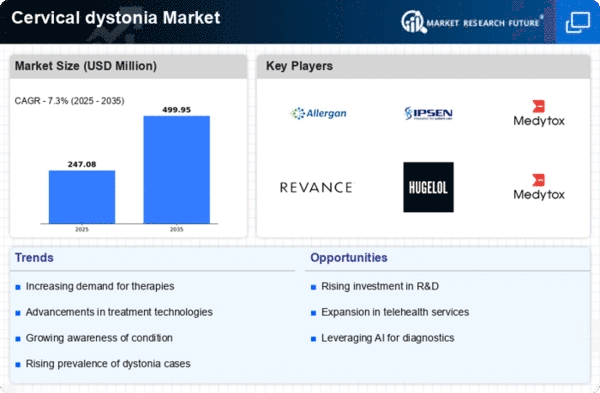
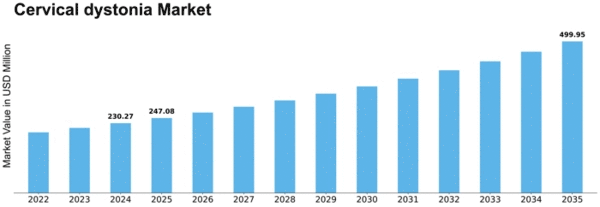
As per MRFR analysis, the Cervical dystonia market Size was estimated at 230.27 USD Million in 2024. The Cervical dystonia industry is projected to grow from 247.08 in 2025 to 499.95 by 2035, exhibiting a compound annual growth rate (CAGR) of 7.3 during the forecast period 2025 - 2035.

Key Market Trends & Highlights

The Cervical Dystonia Market is experiencing notable advancements and growth driven by various factors.

  • North America remains the largest market for cervical dystonia treatments, primarily due to its advanced healthcare infrastructure.
  • The Asia-Pacific region is emerging as the fastest-growing market, fueled by increasing awareness and access to treatment options.
  • Botulinum toxin injection continues to dominate the market, while oral medications are rapidly gaining traction among patients.
  • The rising prevalence of cervical dystonia and technological innovations in treatment are key drivers propelling market expansion.

Market Size & Forecast

2024 Market Size 230.27 (USD Million)
2035 Market Size 499.95 (USD Million)
CAGR (2025 - 2035) 7.3%
Largest Regional Market Share in 2024 North America

Major Players

<p>Allergan (US), Ipsen (FR), Medytox (KR), Revance Therapeutics (US), Hugel (KR), Medytox (US), Evolus (US), Sientra (US)</p>

Market Trends

The Cervical dystonia Market is currently experiencing a notable evolution, driven by advancements in treatment options and increased awareness of the condition. This neurological disorder, characterized by involuntary muscle contractions in the neck, has garnered attention from both healthcare professionals and patients alike. As a result, there is a growing demand for effective therapies, including botulinum toxin injections and physical therapy. The market landscape is further shaped by ongoing research efforts aimed at understanding the underlying mechanisms of cervical dystonia, which may lead to innovative treatment modalities in the future. Additionally, the rise of telemedicine has facilitated access to care, allowing patients to receive consultations and follow-ups remotely, thereby enhancing patient engagement and adherence to treatment regimens. Moreover, the Cervical dystonia Market is influenced by the increasing prevalence of neurological disorders and the aging population. As individuals age, the likelihood of developing various movement disorders, including cervical dystonia, tends to rise. This demographic shift is prompting healthcare systems to adapt and expand their services to accommodate the needs of this growing patient population. Furthermore, collaborations between pharmaceutical companies and research institutions are likely to foster the development of novel therapies, potentially transforming the treatment landscape. Overall, the Cervical dystonia Market appears poised for growth, with a focus on improving patient outcomes and enhancing the quality of life for those affected by this challenging condition.

Advancements in Treatment Modalities

The Cervical dystonia Market is witnessing a surge in innovative treatment options, particularly in the realm of botulinum toxin therapies. These advancements are aimed at improving efficacy and reducing side effects, thereby enhancing patient satisfaction. Additionally, ongoing research into alternative therapies, such as deep brain stimulation, suggests a potential shift in treatment paradigms.

Increased Patient Awareness and Advocacy

There is a growing movement towards raising awareness about cervical dystonia, driven by patient advocacy groups and healthcare professionals. This trend is likely to lead to earlier diagnosis and treatment, as well as increased funding for research initiatives. Enhanced awareness may also empower patients to seek appropriate care and support.

Integration of Telehealth Services

The integration of telehealth services into the Cervical dystonia Market is transforming how patients access care. Remote consultations and follow-up appointments are becoming more commonplace, which may improve patient adherence to treatment plans. This trend reflects a broader shift towards digital health solutions, making healthcare more accessible.

Cervical dystonia Market Market Drivers

Market Growth Projections

The Global Cervical Dystonia Market Industry is projected to experience robust growth over the next decade. With an estimated market value of 0.23 USD Billion in 2024, the industry is expected to expand significantly, reaching approximately 0.5 USD Billion by 2035. This growth trajectory is underpinned by a compound annual growth rate of 7.4% from 2025 to 2035. The increasing prevalence of cervical dystonia, advancements in treatment options, and supportive government policies are key factors contributing to this upward trend. The market's potential for innovation and improved patient outcomes positions it favorably for future developments.

Growing Geriatric Population

The aging population is a significant driver of the Global Cervical Dystonia Market Industry. As individuals age, the likelihood of developing neurological disorders, including cervical dystonia, increases. This demographic shift is expected to lead to a higher prevalence of the condition, thereby driving demand for effective treatments. With the market projected to reach 0.5 USD Billion by 2035, the growing geriatric population presents a substantial opportunity for healthcare providers and pharmaceutical companies. Addressing the needs of this demographic will be crucial in shaping the future of cervical dystonia management.

Rising Awareness and Education

The Global Cervical Dystonia Market Industry is benefiting from increased awareness and educational initiatives aimed at both healthcare professionals and the general public. Campaigns focusing on the symptoms, diagnosis, and treatment options for cervical dystonia are crucial in reducing the stigma associated with the disorder. As more individuals recognize the signs and seek medical help, the demand for treatment options is likely to rise. This heightened awareness is expected to contribute to a compound annual growth rate of 7.4% from 2025 to 2035, indicating a growing market as more patients are diagnosed and treated effectively.

Supportive Government Policies

Government initiatives and policies aimed at improving healthcare access and funding for neurological disorders are positively impacting the Global Cervical Dystonia Market Industry. Various countries are implementing programs to enhance research funding and support for patients suffering from cervical dystonia. These policies not only facilitate better access to treatments but also encourage pharmaceutical companies to invest in research and development. As a result, the market is likely to experience sustained growth, with the potential for new therapies to emerge, thereby enhancing patient care and outcomes in the coming years.

Advancements in Treatment Options

Innovations in treatment modalities are significantly influencing the Global Cervical Dystonia Market Industry. The introduction of botulinum toxin injections, which have become a standard treatment, showcases the evolution of therapeutic approaches. Additionally, emerging therapies such as deep brain stimulation and oral medications are gaining traction. These advancements not only enhance patient outcomes but also expand the market by attracting new patients. The projected growth from 2024 to 2035, with an estimated market value of 0.5 USD Billion by 2035, suggests that ongoing research and development will play a crucial role in shaping the future landscape of cervical dystonia treatments.

Increasing Prevalence of Cervical Dystonia

The Global Cervical Dystonia Market Industry is witnessing a notable increase in the prevalence of cervical dystonia, which is a neurological movement disorder characterized by involuntary muscle contractions. As awareness grows, more individuals are being diagnosed, contributing to market expansion. In 2024, the market is valued at approximately 0.23 USD Billion, reflecting the rising demand for effective treatment options. This trend is expected to continue as the population ages and the incidence of neurological disorders rises. The increasing number of patients seeking medical intervention is likely to drive the market further, indicating a robust growth trajectory.


Market Segment Insights

By Treatment Type: Botulinum Toxin Injection (Largest) vs. Oral Medications (Fastest-Growing)

<p>The cervical dystonia treatment market is primarily driven by Botulinum Toxin Injection, which holds the largest market share. This treatment type is highly favored due to its targeted approach and long-lasting relief from symptoms, making it a first-line option for many healthcare professionals. In contrast, Oral Medications are gradually growing in popularity, particularly among patients seeking a non-invasive alternative, but they currently hold a smaller share of the market. Growth trends in this segment are influenced by ongoing research and development efforts to enhance the effectiveness and safety profiles of these treatments. While Botulinum Toxin remains the gold standard, the emergence of new oral therapies is capturing attention, particularly as patients seek more convenient treatment regimens. Additionally, increased awareness and diagnosis of cervical dystonia are driving demand across all treatment types, signaling positive growth ahead for the market.</p>

<p>Botulinum Toxin Injection (Dominant) vs. Oral Medications (Emerging)</p>

<p>Botulinum Toxin Injection is the dominant treatment for cervical dystonia, recognized for its efficacy in reducing muscle spasms and improving patient quality of life. It works by blocking nerve signals to the muscles, providing significant symptom relief. Its well-established clinical usage and patient satisfaction contribute to its leading position in the market. On the other hand, Oral Medications are emerging as a viable option for some patients who prefer easier administration over injections. Though currently less dominant, these medications are being developed with new formulations that promise to address various symptoms with improved efficacy. Their growing popularity is indicative of a shift towards more varied treatment options in response to patient preferences.</p>

By Patient Demographics: Age Group (Largest) vs. Gender (Fastest-Growing)

<p>In the Cervical dystonia market, the patient demographics segment is clearly dominated by specific age groups, with the majority of cases being reported among individuals aged 40-60 years. This demographic holds a significant market share compared to younger age groups, which show lower prevalence rates. Gender distribution indicates a varying incidence of cervical dystonia, with women being more frequently diagnosed than men, although the male demographic is witnessing a noticeable uptick in reported cases, contributing to overall market dynamics. Growth trends in the Cervical dystonia market are significantly influenced by an aging population, with more individuals reaching ages associated with higher susceptibility to this condition. As awareness and diagnostic capabilities improve, younger populations and males are being increasingly recognized, thus prompting a shift in focus within healthcare offerings. Additionally, advances in treatment options are driving demand across all demographics, although age remains a critical factor in prevalence and treatment seeking behavior.</p>

<p>Age Group (Dominant) vs. Gender (Emerging)</p>

<p>The age group of 40-60 years stands as the dominant segment within the Cervical dystonia market, primarily due to anatomical changes and increased susceptibility in this age range. This demographic is highly responsive to treatment modalities, showcasing an inclination towards exploring therapeutic interventions. On the other hand, the gender segment is emerging, particularly as growing awareness leads to enhanced diagnosis in men, who previously maintained a lower profile in terms of reported cases. The increased attention towards understanding gender differences in symptomatology and treatment response is progressively shaping this segment's market presence. Overall, while the older age group remains dominant, the insights into gender disparities are opening pathways for tailored treatment approaches.</p>

By Disease Severity: Moderate (Largest) vs. Severe (Fastest-Growing)

<p>In the Cervical dystonia market, the disease severity segments showcase a distinctive distribution. The moderate severity segment holds the largest market share, catering to a significant proportion of patients who experience substantial but manageable symptoms. This group often seeks treatment options that allow for improved quality of life while maintaining functional independence. In contrast, the severe segment, while smaller in share, is rapidly expanding as awareness of severe cases grows and treatment options advance, capturing the attention of both healthcare providers and patients. Growth trends in the Cervical dystonia market are influenced by several factors, including increased diagnostics and awareness of the condition. The moderate segment is bolstered by a combination of lifestyle management strategies and tailored therapies. Meanwhile, the severe segment benefits from innovations in treatment protocols and an aging population that experiences an upsurge in neurological disorders. These dynamics drive a more comprehensive approach to addressing the needs of both moderate and severe patients in this market space.</p>

<p>Moderate (Dominant) vs. Severe (Emerging)</p>

<p>The moderate disease severity segment is characterized by patients who display symptoms that are impactful yet not debilitating, making this group the dominant force in the Cervical dystonia market. Patients in this category often seek consistent management approaches and have a diverse range of treatment options, including physical therapy and pharmaceutical interventions. On the other hand, the severe segment, while currently smaller, is emerging rapidly due to rising incidences and increased medical attention. Patients with severe symptoms face substantial daily challenges, leading to a growing demand for more aggressive treatment modalities and support services. The emergence of new therapies and ongoing clinical trials contribute to the appeal of this segment, as improved outcomes become more accessible.</p>

By Healthcare Setting: Hospital (Largest) vs. Outpatient Clinic (Fastest-Growing)

<p>In the Cervical Dystonia Market, the distribution of healthcare settings indicates that hospitals currently account for the largest share, serving a significant number of patients requiring specialized care. Outpatient clinics follow closely behind, experiencing notable growth as they provide accessible treatment options tailored to patients with cervical dystonia. Home care and rehabilitation centers also contribute to the landscape, but their market share remains smaller compared to hospitals and outpatient clinics. The growth of outpatient clinics as a treatment option for cervical dystonia is driven by the rising preference for non-hospital-based care. This trend emphasizes patient convenience and reduces the burden on hospital resources. The increasing awareness of cervical dystonia and advancements in treatment methodologies further fuel the growth of home care and rehabilitation centers, as more patients seek personalized care and support in managing their condition.</p>

<p>Hospital: (Dominant) vs. Rehabilitation Center (Emerging)</p>

<p>In the context of the Cervical Dystonia Market, hospitals represent the dominant healthcare setting, offering specialized services and advanced treatment options for patients with cervical dystonia. They are equipped with comprehensive facilities, including neurologists and allied health professionals, ensuring patients receive holistic care. Conversely, rehabilitation centers are emerging as a vital support system, focusing on recovery and management strategies for those with cervical dystonia. While they may not provide acute care, their personalized rehabilitation programs are becoming increasingly recognized for helping patients regain functional independence and improve their quality of life.</p>

By Market Distribution Channel: Direct Sales (Largest) vs. Online Sales (Fastest-Growing)

<p>In the Cervical dystonia market, the market distribution channel shows a varied landscape with Direct Sales leading as the largest segment. This channel benefits from established relationships between healthcare providers and patients, facilitating a direct communication line that enhances trust and personalization in care. Following Direct Sales, Pharmacy Sales and Distributors present notable shares, while Online Sales is emerging rapidly, driven by changing consumer purchasing behaviors and the rise of e-commerce platforms. Online Sales, while currently smaller in terms of market share compared to Direct Sales, is recognized as the fastest-growing channel. This growth is propelled by increasing internet penetration, the convenience of purchasing medications and devices online, and a demographic shift towards e-health solutions. As patients seek more accessible options for managing Cervical dystonia, online platforms are becoming more favorable as they provide easy access to information and products.</p>

<p>Direct Sales (Dominant) vs. Online Sales (Emerging)</p>

<p>Direct Sales in the Cervical dystonia market are characterized by strong relationships between healthcare professionals and patients, allowing tailored treatment approaches and fostering trust in product efficacy. This method allows for immediate feedback and adaptation in treatment plans based on patient responses. Conversely, Online Sales, while still in their growth phase, are becoming increasingly relevant. They cater to a tech-savvy consumer base that prioritizes convenience and immediacy in accessing treatments. This segment appeals particularly to younger demographics comfortable with e-commerce, providing a broader market reach and supporting the overall accessibility of cervical dystonia treatments. The competition between these channels is thus shaping future marketing strategies within the market.</p>

Get more detailed insights about Cervical Dystonia Market Research Report Forecast to 2035

Regional Insights

North America : Market Leader in Innovation

North America is poised to maintain its leadership in the cervical dystonia market, holding a significant market size of $115.14M as of December 2025. The region's growth is driven by increasing awareness of cervical dystonia, advancements in treatment options, and supportive regulatory frameworks. The demand for effective therapies is further fueled by a growing aging population and rising healthcare expenditures, which are expected to enhance market dynamics in the coming years. The competitive landscape in North America is characterized by the presence of key players such as Allergan, Revance Therapeutics, and Evolus. These companies are actively engaged in research and development to innovate and improve treatment options. The U.S. remains the leading country in this market, supported by robust healthcare infrastructure and favorable reimbursement policies, which collectively contribute to the region's dominant market share.

Europe : Emerging Market with Potential

Europe's cervical dystonia market is valued at $70.08M, reflecting a growing interest in innovative treatment solutions. The region is witnessing an increase in the prevalence of cervical dystonia, which is driving demand for effective therapies. Regulatory bodies are also playing a crucial role in facilitating market growth by approving new treatment options and ensuring patient access to necessary medications. The focus on improving healthcare systems and patient outcomes is expected to further enhance market dynamics in Europe. Leading countries in this region include France, Germany, and the UK, where key players like Ipsen and Medytox are making significant strides. The competitive landscape is evolving, with companies investing in clinical trials and partnerships to expand their market presence. The European market is characterized by a mix of established players and emerging companies, creating a dynamic environment for growth and innovation.

Asia-Pacific : Rapidly Growing Market

The Asia-Pacific cervical dystonia market, valued at $38.05M, is experiencing rapid growth driven by increasing awareness and diagnosis of the condition. The region's expanding healthcare infrastructure and rising disposable incomes are contributing to a higher demand for effective treatment options. Additionally, government initiatives aimed at improving healthcare access are expected to further stimulate market growth. The increasing prevalence of cervical dystonia in countries like South Korea and Japan is also a significant factor in this upward trend. Key players in the Asia-Pacific market include Medytox and Hugel, who are focusing on expanding their product offerings and enhancing treatment efficacy. Countries such as South Korea and Japan are leading the charge, with a growing number of clinical trials and research initiatives aimed at developing innovative therapies. The competitive landscape is becoming increasingly dynamic, with both local and international players vying for market share.

Middle East and Africa : Emerging Market with Challenges

The Middle East and Africa (MEA) cervical dystonia market is valued at $7.0M, reflecting the region's emerging status in this therapeutic area. The growth is primarily driven by increasing awareness of cervical dystonia and the need for effective treatment options. However, challenges such as limited healthcare infrastructure and access to advanced therapies hinder market expansion. Regulatory bodies are gradually improving frameworks to facilitate better access to treatments, which is expected to positively impact market dynamics in the future. Countries like South Africa and the UAE are at the forefront of this market, with a growing number of healthcare initiatives aimed at improving patient outcomes. The competitive landscape is still developing, with a few key players beginning to establish their presence. As awareness and healthcare access improve, the MEA market is likely to see increased investment and growth opportunities.

Key Players and Competitive Insights

The Cervical dystonia Market is characterized by a dynamic competitive landscape, driven by a confluence of innovation, strategic partnerships, and regional expansions. Key players such as Allergan (US), Ipsen (FR), and Revance Therapeutics (US) are at the forefront, each adopting distinct strategies to enhance their market presence. Allergan (US) focuses on leveraging its established portfolio of botulinum toxin products, while Ipsen (FR) emphasizes its commitment to research and development, particularly in novel therapeutic approaches. Revance Therapeutics (US) appears to be carving a niche through its innovative DaxibotulinumtoxinA injection, which may offer longer-lasting effects compared to traditional treatments, thereby reshaping patient expectations and treatment paradigms.

The business tactics employed by these companies reflect a concerted effort to optimize supply chains and localize manufacturing processes. The Cervical dystonia Market is moderately fragmented, with a blend of established players and emerging firms vying for market share. This competitive structure allows for a diverse range of treatment options, yet the influence of major players remains pronounced, as they set benchmarks for quality and efficacy that smaller companies strive to meet.

In November 2025, Allergan (US) announced a strategic partnership with a leading telehealth provider to enhance patient access to its cervical dystonia treatments. This move is significant as it aligns with the growing trend of digital health solutions, potentially increasing patient engagement and adherence to treatment protocols. By integrating telehealth services, Allergan (US) may not only expand its market reach but also improve patient outcomes through more personalized care.

In October 2025, Ipsen (FR) launched a new clinical trial aimed at evaluating the long-term efficacy of its botulinum toxin product in cervical dystonia patients. This initiative underscores Ipsen's commitment to advancing clinical research and may solidify its position as a leader in the therapeutic landscape. The outcomes of this trial could provide valuable data that enhances the company's product offerings and informs future treatment guidelines.

In September 2025, Revance Therapeutics (US) secured a strategic collaboration with a prominent research institution to explore the potential of its DaxibotulinumtoxinA formulation in additional neurological disorders. This collaboration is indicative of Revance's forward-thinking approach, as it seeks to diversify its product pipeline and leverage its innovative technology in broader therapeutic areas. Such strategic alliances may enhance the company's competitive edge and foster innovation in treatment methodologies.

As of December 2025, the competitive trends within the Cervical dystonia Market are increasingly defined by digitalization, sustainability, and the integration of artificial intelligence (AI) in treatment protocols. Strategic alliances are becoming pivotal, as companies recognize the value of collaborative innovation in addressing complex healthcare challenges. The competitive differentiation is likely to evolve from traditional price-based strategies to a focus on technological advancements, innovative treatment solutions, and robust supply chain reliability, positioning companies to better meet the evolving needs of patients and healthcare providers.

Key Companies in the Cervical dystonia Market include

Industry Developments

  • Q2 2024: Ipsen receives FDA approval for expanded indication of Dysport® (abobotulinumtoxinA) for the treatment of cervical dystonia in pediatric patients Ipsen announced that the U.S. FDA has approved Dysport® for the treatment of cervical dystonia in pediatric patients aged two years and older, expanding its market reach in the U.S. for this neurological disorder.
  • Q1 2024: Merz Therapeutics launches Xeomin® (incobotulinumtoxinA) in Japan for cervical dystonia Merz Therapeutics announced the commercial launch of Xeomin® for the treatment of cervical dystonia in Japan, marking its entry into the Japanese market for this indication.
  • Q2 2024: Revance Therapeutics announces positive topline results from Phase 3 clinical trial of DaxibotulinumtoxinA for Injection in cervical dystonia Revance Therapeutics reported positive topline results from its Phase 3 clinical trial evaluating DaxibotulinumtoxinA for Injection in patients with cervical dystonia, supporting future regulatory submissions.
  • Q1 2024: AbbVie completes acquisition of Cerevel Therapeutics to expand neuroscience portfolio AbbVie finalized its acquisition of Cerevel Therapeutics, strengthening its pipeline in neurological disorders including cervical dystonia.
  • Q2 2024: Ipsen and Medtronic announce partnership to develop new neuromodulation therapies for movement disorders Ipsen and Medtronic entered a strategic partnership to co-develop neuromodulation therapies targeting movement disorders, including cervical dystonia.
  • Q1 2025: Eli Lilly announces $150 million investment in new neuroscience R&D facility Eli Lilly revealed plans to invest $150 million in a new research and development facility focused on neurological disorders, including cervical dystonia, to accelerate drug discovery and development.
  • Q2 2024: FDA grants orphan drug designation to Addex Therapeutics’ ADX71441 for cervical dystonia Addex Therapeutics received orphan drug designation from the U.S. FDA for its investigational compound ADX71441 for the treatment of cervical dystonia.
  • Q1 2024: Ipsen opens new manufacturing facility in Ireland to support global supply of Dysport® Ipsen inaugurated a new manufacturing facility in Ireland dedicated to producing Dysport®, enhancing its global supply capabilities for cervical dystonia treatment.
  • Q2 2025: Merz Pharma appoints new CEO to lead global expansion in neurology Merz Pharma announced the appointment of a new CEO, with a strategic focus on expanding its neurology Devices business, including cervical dystonia therapeutics.
  • Q1 2025: Revance Therapeutics secures $80 million in Series C funding to advance cervical dystonia pipeline Revance Therapeutics raised $80 million in Series C funding to support the development and commercialization of its cervical dystonia treatment candidates.
  • Q2 2024: FDA approves new formulation of botulinum toxin for cervical dystonia The U.S. FDA approved a new formulation of botulinum toxin for the treatment of cervical dystonia, providing patients with an additional therapeutic option.
  • Q1 2025: Lundbeck announces partnership with University of California for cervical dystonia research Lundbeck entered a research partnership with the University of California to advance understanding and treatment options for cervical dystonia.

Future Outlook

Cervical dystonia Market Future Outlook

<p>The Cervical dystonia Market is projected to grow at a 7.3% CAGR from 2024 to 2035, driven by advancements in treatment options and increasing awareness.</p>

New opportunities lie in:

  • <p>Development of telehealth platforms for remote patient monitoring</p>
  • <p>Investment in innovative botulinum toxin formulations</p>
  • <p>Expansion of patient education programs to enhance treatment adherence</p>

<p>By 2035, the market is expected to achieve substantial growth, reflecting evolving treatment paradigms.</p>

Market Segmentation

Cervical dystonia Market Treatment Type Outlook

  • Botulinum Toxin Injection
  • Oral Medications
  • Physical Therapy
  • Surgical Procedures

Cervical dystonia Market Disease Severity Outlook

  • Mild
  • Moderate
  • Severe
  • Chronic

Cervical dystonia Market Healthcare Setting Outlook

  • Hospital
  • Outpatient Clinic
  • Home Care
  • Rehabilitation Center

Cervical dystonia Market Patient Demographics Outlook

  • Age Group
  • Gender
  • Socioeconomic Status
  • Geographic Location

Cervical dystonia Market Market Distribution Channel Outlook

  • Direct Sales
  • Online Sales
  • Pharmacy Sales
  • Distributors

Report Scope

MARKET SIZE 2024230.27(USD Million)
MARKET SIZE 2025247.08(USD Million)
MARKET SIZE 2035499.95(USD Million)
COMPOUND ANNUAL GROWTH RATE (CAGR)7.3% (2024 - 2035)
REPORT COVERAGERevenue Forecast, Competitive Landscape, Growth Factors, and Trends
BASE YEAR2024
Market Forecast Period2025 - 2035
Historical Data2019 - 2024
Market Forecast UnitsUSD Million
Key Companies ProfiledAllergan (US), Ipsen (FR), Medytox (KR), Revance Therapeutics (US), Hugel (KR), Medytox (US), Evolus (US), Sientra (US)
Segments CoveredTreatment Type, Patient Demographics, Disease Severity, Healthcare Setting, Market Distribution Channel
Key Market OpportunitiesAdvancements in neuromodulation therapies present new avenues in the Cervical dystonia Market.
Key Market DynamicsRising demand for innovative therapies drives competition and regulatory scrutiny in the cervical dystonia market.
Countries CoveredNorth America, Europe, APAC, South America, MEA

FAQs

What is the projected growth of the Cervical Dystonia market?

The Cervical Dystonia market is the expected increase in total market value of 0.5 USD billion over a defined forecast period 2025–2035. It is driven by factors such as demand trends, technological advances, regulatory changes, and geographic expansion.

What is the size of the Cervical Dystonia market?

Cervical Dystonia market size was valued at approximately 0.23 billion USD in 2024. This figure will reach 0.5 billion USD covering all regions (America, Europe, Asia, MEA and ROW), focusing its segments / services / distribution channels till 2035.

What is the CAGR of the Cervical Dystonia market?

Cervical Dystonia market is expected to grow at a CAGR of 7.3% between 2025 and 2035.

How much will the Cervical Dystonia market be worth by 2035?

Cervical Dystonia market is expected to be worth of 0.5 billion USD, reflecting growth driven by usage, technology and global demands by the end of 2035.

How will the Cervical Dystonia market perform over the next 10 years?

Over the next 10 years the Cervical Dystonia market is expected to shift from usd billion 0.23 to 0.5 billion USD, led by adoption of advanced tech, demographic trends, regulatory approvals, with potential headwinds from 2025 to 2035.

Which Region held the largest market share in the Cervical Dystonia market?

North America had the largest share of the market

  1. INTRODUCTION
    1. DEFINITION
    2. SCOPE OF STUDY
      1. RESEARCH OBJECTIVE
      2. ASSUMPTIONS & LIMITATIONS
    3. MARKET STRUCTURE:
  2. RESEARCH METHODOLOGY
    1. RESEARCH PROCESS:
    2. PRIMARY RESEARCH
    3. SECONDARY RESEARCH:
  3. MARKET DYNAMICS
    1. DRIVERS
    2. RESTRAINTS
    3. OPPORTUNITIES
    4. MACROECONOMIC INDICATORS
  4. MARKET FACTOR ANALYSIS
    1. PORTERS FIVE FORCES MODEL
    2. BARGAINING POWER OF SUPPLIERS
    3. BARGAINING POWER OF BUYERS
    4. THREAT OF NEW ENTRANTS
    5. THREAT OF SUBSTITUTES
    6. INTENSITY OF RIVALRY
  5. GLOBAL CERVICAL DYSTONIA MARKET, BY DRUG TYPE
    1. TORTICOLLIS
    2. RETROCOLLIS
    3. LATEROCOLLIS
    4. OTHERS
  6. GLOBAL CERVICAL DYSTONIA MARKET, BY TREATMENT
    1. ORAL THERAPY
    2. INTRAVENOUS
    3. SURGERY
    4. OTHER
  7. GLOBAL CERVICAL DYSTONIA MARKET, BY END USER
    1. HOSPITAL
    2. CLINICS
    3. OTHER
  8. GLOBAL CERVICAL DYSTONIA MARKET, BY REGION
    1. INTRODUCTION
    2. NORTH AMERICA
      1. US
      2. CANADA
    3. EUROPE
      1. WESTERN EUROPE
      2. EASTERN EUROPE
    4. ASIA
      1. JAPAN
      2. CHINA
      3. INDIA
      4. AUSTRALIA
      5. REPUBLIC OF KOREA
    5. REST OF ASIA-PACIFIC
    6. MIDDLE EAST & AFRICA
  9. COMPETITIVE LANDSCAPE
    1. MAJOR STRATEGIES ADOPTED BY MARKET PLAYERS
      1. STRATEGIC PARTNERSHIP
      2. MERGER & ACQUISITION
  10. COMPANY PROFILE
    1. ALLERGAN
      1. OVERVIEW
      2. PRODUCT OVERVIEW
      3. FINANCIALS
      4. KEY DEVELOPMENTS
    2. SOLSTICE NEUROSCIENCES LLC
      1. OVERVIEW
      2. PRODUCT OVERVIEW
      3. FINANCIALS
      4. KEY DEVELOPMENTS
    3. IPSEN BIOPHARMACEUTICALS INC
      1. OVERVIEW
      2. PRODUCT OVERVIEW
      3. FINANCIALS
      4. STRATEGY
      5. KEY DEVELOPMENT
    4. REVANCE THERAPEUTICS INC.
      1. OVERVIEW
      2. PRODUCT OVERVIEW
      3. FINANCIALS
      4. KEY DEVELOPMENTS
    5. MERZ INC
      1. OVERVIEW
      2. PRODUCT OVERVIEW
      3. FINANCIALS
      4. KEY DEVELOPMENTS
    6. OTHERS
    7. "

Cervical Dystonia Market Segmentation Cervical Dystonia Drug Type Outlook (USD Billion, 2018-2032)

Torticollis

Retrocollis

Laterocollis

Others

Cervical Dystonia Treatment Outlook (USD Billion, 2018-2032)

Oral Therapy

Intravenous

Surgery

Others

Cervical Dystonia End-User Outlook (USD Billion, 2018-2032)

Hospital

Clinics

Others

Cervical Dystonia Regional Outlook (USD Billion, 2018-2032)

North AmericaOutlook (USD Billion, 2018-2032)

North America Cervical Dystonia by Drug type

Torticollis

Retrocollis

Laterocollis

Others

North America Cervical Dystonia by Treatment

Oral Therapy

Intravenous

Surgery

Others

North America Cervical Dystonia by End-User

Hospital

Clinics

Others

US Outlook (USD Billion, 2018-2032)

US Cervical Dystonia by Drug type

Torticollis

Retrocollis

Laterocollis

Others

US Cervical Dystonia by Treatment

Oral Therapy

Intravenous

Surgery

Others

US Cervical Dystonia by End-User

Hospital

Clinics

Others

CANADA Outlook (USD Billion, 2018-2032)

CANADA Cervical Dystonia by Drug type

Torticollis

Retrocollis

Laterocollis

Others

CANADA Cervical Dystonia by Treatment

Oral Therapy

Intravenous

Surgery

Others

CANADA Cervical Dystonia by End-User

Hospital

Clinics

Others

Europe Outlook (USD Billion, 2018-2032)

Europe Cervical Dystonia by Drug type

Torticollis

Retrocollis

Laterocollis

Others

Europe Cervical Dystonia by Treatment

Oral Therapy

Intravenous

Surgery

Others

Europe Cervical Dystonia by End-User

Hospital

Clinics

Others

Germany Outlook (USD Billion, 2018-2032)

Germany Cervical Dystonia by Drug type

Torticollis

Retrocollis

Laterocollis

Others

Germany Cervical Dystonia Treatment

Oral Therapy

Intravenous

Surgery

Others

Germany Cervical Dystonia by End-User

Hospital

Clinics

Others

France Outlook (USD Billion, 2018-2032)

France Cervical Dystonia by Drug type

Torticollis

Retrocollis

Laterocollis

Others

France Cervical Dystonia by Treatment

Oral Therapy

Intravenous

Surgery

Others

France Cervical Dystonia by End-User

Hospital

Clinics

Others

UK Outlook (USD Billion, 2018-2032)

UK Cervical Dystonia by Drug type

Torticollis

Retrocollis

Laterocollis

Others

UK Cervical Dystonia by Treatment

Oral Therapy

Intravenous

Surgery

Others

UK Cervical Dystonia by End-User

Hospital

Clinics

Others

ITALY Outlook (USD Billion, 2018-2032)

ITALY Cervical Dystonia by Drug type

Torticollis

Retrocollis

Laterocollis

Others

ITALY Cervical Dystonia by Treatment

Oral Therapy

Intravenous

Surgery

Others

ITALY Cervical Dystonia by End-User

Hospital

Clinics

Others

SPAIN Outlook (USD Billion, 2018-2032)

Spain Cervical Dystonia by Drug type

Torticollis

Retrocollis

Laterocollis

Others

Spain Cervical Dystonia by Treatment

Oral Therapy

Intravenous

Surgery

Others

Spain Cervical Dystonia by End-User

Hospital

Clinics

Others

Rest Of Europe Outlook (USD Billion, 2018-2032)

Rest Of Europe Cervical Dystonia by Drug type

Torticollis

Retrocollis

Laterocollis

Others

REST OF EUROPE Cervical Dystonia by Treatment

Oral Therapy

Intravenous

Surgery

Others

REST OF EUROPE Cervical Dystonia by End-User

Hospital

Clinics

Others

Asia-Pacific Outlook (USD Billion, 2018-2032)

Asia-Pacific Cervical Dystonia by Drug type

Torticollis

Retrocollis

Laterocollis

Others

Asia-Pacific Cervical Dystonia by Treatment

Oral Therapy

Intravenous

Surgery

Others

Asia-Pacific Cervical Dystonia by End-User

Hospital

Clinics

Others

China Outlook (USD Billion, 2018-2032)

China Cervical Dystonia by Drug type

Torticollis

Retrocollis

Laterocollis

Others

China Cervical Dystonia by Treatment

Oral Therapy

Intravenous

Surgery

Others

China Cervical Dystonia by End-User

Hospital

Clinics

Others

Japan Outlook (USD Billion, 2018-2032)

Japan Cervical Dystonia by Drug type

Torticollis

Retrocollis

Laterocollis

Others

Japan Cervical Dystonia by Treatment

Oral Therapy

Intravenous

Surgery

Others

Japan Cervical Dystonia by End-User

Hospital

Clinics

Others

India Outlook (USD Billion, 2018-2032)

India Cervical Dystonia by Drug type

Torticollis

Retrocollis

Laterocollis

Others

India Cervical Dystonia by Treatment

Oral Therapy

Intravenous

Surgery

Others

India Cervical Dystonia by End-User

Hospital

Clinics

Others

Australia Outlook (USD Billion, 2018-2032)

Australia Cervical Dystonia by Drug type

Torticollis

Retrocollis

Laterocollis

Others

Australia Cervical Dystonia by Treatment

Oral Therapy

Intravenous

Surgery

Others

Australia Cervical Dystonia by End-User

Hospital

Clinics

Others

Rest of Asia-Pacific Outlook (USD Billion, 2018-2032)

Rest of Asia-Pacific Cervical Dystonia by Drug type

Torticollis

Retrocollis

Laterocollis

Others

Rest of Asia-Pacific Cervical Dystonia by Treatment

Oral Therapy

Intravenous

Surgery

Others

Rest of Asia-Pacific Cervical Dystonia by End-User

Hospital

Clinics

Others

Rest of the World Outlook (USD Billion, 2018-2032)

Rest of the World Cervical Dystonia by Drug type

Torticollis

Retrocollis

Laterocollis

Others

Rest of the World Cervical Dystonia by Treatment

Oral Therapy

Intravenous

Surgery

Others

Rest of the World Cervical Dystonia by End-User

Hospital

Clinics

Others

Middle East Outlook (USD Billion, 2018-2032)

Middle East Cervical Dystonia by Drug type

Torticollis

Retrocollis

Laterocollis

Others

Middle East Cervical Dystonia by Treatment

Oral Therapy

Intravenous

Surgery

Others

Middle East Cervical Dystonia by End-User

Hospital

Clinics

Others

Africa Outlook (USD Billion, 2018-2032)

Africa Cervical Dystonia by Drug type

Torticollis

Retrocollis

Laterocollis

Others

Africa Cervical Dystonia by Treatment

Oral Therapy

Intravenous

Surgery

Others

Africa Cervical Dystonia by End-User

Hospital

Clinics

Others

Latin America Outlook (USD Billion, 2018-2032)

Latin America Cervical Dystonia by Drug type

Torticollis

Retrocollis

Laterocollis

Others

Latin America Cervical Dystonia by Treatment

Oral Therapy

Intravenous

Surgery

Others

Latin America Cervical Dystonia by End-User

Hospital

Clinics

Others

Infographic

Free Sample Request

Kindly complete the form below to receive a free sample of this Report

Get Free Sample

Customer Strories

Compare Licence

×
Features License Type
Single User Multiuser License Enterprise User
Price $4,950 $5,950 $7,250
Maximum User Access Limit 1 User Upto 10 Users Unrestricted Access Throughout the Organization
Free Customization
Direct Access to Analyst
Deliverable Format
Platform Access
Discount on Next Purchase 10% 15% 15%
Printable Versions