Request Free Sample ×

Kindly complete the form below to receive a free sample of this Report

* Please use a valid business email

Leading companies partner with us for data-driven Insights

clients tt-cursor
Hero Background
English
Chinese
French
Japanese
Korean
German
Spanish

Cell Line Development Market Analysis

ID: MRFR/HC/7659-CR
141 Pages
Vikita Thakur
February 2023

Cell Line Development Market Research Report: Size, Share, Trend Analysis By Applications (Drug Discovery, Bioproduction, Toxicity Testing, Stem Cell Research, Genetic Engineering), By Types (Hybridoma Cell Lines, Recombinant Cell Lines, Continuous Cell Lines, Primary Cell Lines), By End Users (Pharmaceutical Companies, Biotechnology Companies, Academic Research Institutions, Contract Research Organizations), By Process (Cell Line Development, Cell Line Banking, Characterization, Quality Control) and By Regional (North America, Europe, South America, Asia Pacific, Middle East and Africa) - Growth Outlook & Industry Forecast 2025 To 2035

Share:
Download PDF ×

We do not share your information with anyone. However, we may send you emails based on your report interest from time to time. You may contact us at any time to opt-out.

Cell Line Development Market Infographic
Purchase Options

Market Analysis

In-depth Analysis of Cell Line Development Market Industry Landscape

The cell line development market has seen notable trends in recent years, driven by advancements in biotechnology and increased demand for cell-based therapies and biopharmaceuticals. One prominent trend is the rising adoption of novel technologies for cell line engineering and optimization. Researchers and biopharmaceutical companies are leveraging techniques such as CRISPR/Cas9 gene editing and high-throughput screening to develop cell lines with enhanced productivity, stability, and desired biological characteristics. These technologies not only expedite the cell line development process but also enable the creation of cell lines tailored for specific applications, contributing to improved efficiency and efficacy in biomanufacturing.

Another significant trend in the cell line development market is the growing emphasis on the development of bioproduction cell lines for emerging modalities such as cell and gene therapies. With the increasing commercialization of cell therapies and gene editing technologies, there is a growing need for scalable and reproducible cell lines capable of producing therapeutic proteins, viral vectors, and engineered cells. Consequently, there has been a surge in research and investment focused on establishing robust cell lines suitable for large-scale biomanufacturing of these advanced therapies, addressing critical challenges related to yield, quality, and regulatory compliance.

Furthermore, the cell line development market is witnessing a shift towards the use of alternative expression systems beyond traditional mammalian cell lines. While mammalian cells remain the preferred choice for many biopharmaceutical applications due to their ability to produce complex proteins with human-like post-translational modifications, alternative expression systems such as microbial and insect cells are gaining traction for certain applications. These systems offer advantages such as lower production costs, simpler cultivation requirements, and higher expression levels for certain proteins, driving their adoption in biomanufacturing processes and expanding the diversity of cell line options available to researchers and manufacturers.

Moreover, there is a growing focus on the development of cell lines derived from non-traditional sources, including stem cells and primary cells obtained from diverse species. Stem cell-derived cell lines hold promise for regenerative medicine and disease modeling applications, offering the potential to generate functional cell types for transplantation and drug discovery. Similarly, primary cells sourced from various tissues and organisms are being explored for their utility in studying disease mechanisms, drug responses, and toxicity profiles, fueling research efforts to establish reliable methods for immortalizing and culturing these cells in vitro.

Additionally, the cell line development market is experiencing increased collaboration and partnerships among industry players to streamline the development and commercialization of novel cell-based products. Biotechnology companies are forming strategic alliances with contract research organizations (CROs), academic institutions, and technology providers to access specialized expertise, resources, and technologies for accelerating cell line development initiatives. Collaborative efforts encompass a wide range of activities, including technology licensing, joint research projects, and co-development agreements, aimed at overcoming technical challenges, reducing development timelines, and expanding market reach.

Author
Author Profile
Vikita Thakur
Senior Research Analyst

She holds an experience of about 5+ years in market research and business consulting projects for sectors such as life sciences, medical devices, and healthcare IT. She possesses a robust background in data analysis, market estimation, competitive intelligence, pipeline analysis market trend identification, and consumer behavior insights. Her expertise lies in technical Sales support, client interaction and project management, designing and implementing market research studies, conducting competitive analysis, and synthesizing complex data into actionable recommendations that drive business growth.

Leave a Comment

FAQs

What is the projected market valuation of the market by 2035?

The market is projected to reach a valuation of 25.03 USD Billion by 2035.

What was the market valuation of the Cell Line Development Market in 2024?

<p>In 2024, the overall market valuation was 7.11 USD Billion.</p>

What is the expected CAGR for the market during the forecast period 2025 - 2035?

The expected CAGR for the market during the forecast period 2025 - 2035 is 12.12%.

Which application segment is anticipated to have the highest growth in the Cell Line Development Market?

<p>The Bioproduction application segment is anticipated to grow from 2.0 USD Billion in 2024 to 8.0 USD Billion by 2035.</p>

What are the key types of cell lines in the Cell Line Development Market?

<p>Key types of cell lines include Continuous Cell Lines, which are projected to grow from 2.83 USD Billion in 2024 to 10.0 USD Billion by 2035.</p>

Who are the leading players in the market?

Leading players in the market include Thermo Fisher Scientific, Merck KGaA, and Lonza Group, among others.

What is the expected growth of the Pharmaceutical Companies segment in the market?

The Pharmaceutical Companies segment is expected to grow from 2.83 USD Billion in 2024 to 10.12 USD Billion by 2035.

How does the Cell Line Banking process segment perform in the market?

<p>The Cell Line Banking process segment is projected to increase from 1.42 USD Billion in 2024 to 5.12 USD Billion by 2035.</p>

What is the anticipated growth for the Toxicity Testing application segment?

<p>The Toxicity Testing application segment is expected to grow from 1.0 USD Billion in 2024 to 3.5 USD Billion by 2035.</p>

What role do Contract Research Organizations play in the Cell Line Development Market?

<p>Contract Research Organizations are projected to grow from 1.44 USD Billion in 2024 to 4.43 USD Billion by 2035.</p>

Market Summary

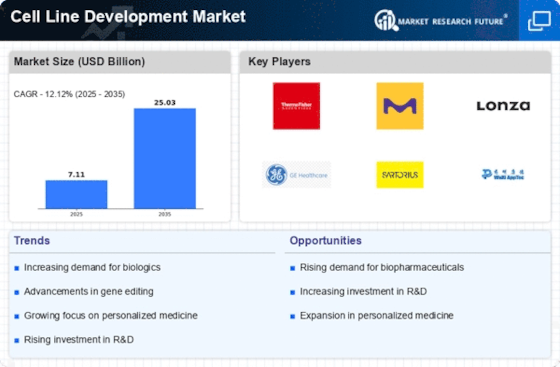
According to Market Research Future analysis, the Cell Line Development Market size was valued at USD 7.11 Billion in 2024. The market is projected to grow from USD 7.972 Billion in 2025 to USD 25.03 Billion by 2035, exhibiting a CAGR of 12.1% during the forecast period 2025-2035. North America led the market with over 45% share, generating around USD 3.2 billion in revenue.
 
Rising demand for biologics and advanced therapeutic development is driving cell line development adoption, supported by expanding monoclonal antibody production, vaccine innovation, and personalized medicine approaches that require stable, high-yield, and reproducible cell systems for efficient drug discovery and manufacturing.
 
According to WHO, noncommunicable diseases cause 41 million deaths annually, representing 74% of global mortality, increasing demand for biologics and advanced therapies. Growing therapeutic needs, including vaccines and monoclonal antibodies, directly support scalable cell line development for improved global treatment access and biomanufacturing capacity.

Key Market Trends & Highlights

The Cell Line Development Market is poised for substantial growth driven by technological advancements and increasing demand for biopharmaceuticals.

  • North America leads with over 45% share in 2024, supported by strong biopharmaceutical R&D and chronic disease burden. Europe holds 30% market share in 2024, valued at USD 2.13 billion, driven by strong regulatory healthcare frameworks. Drug discovery segment dominated with 52% share in 2024, fueled by rising global noncommunicable disease burden and innovation. Hybridoma cell lines accounted for 61% share in 2024, driven by global monoclonal antibody demand for cancer treatment therapies.

Market Size & Forecast

2024 Market Size 7.11 (USD Billion)
2035 Market Size 25.03 (USD Billion)
CAGR (2025 - 2035) 12.12%
Largest Regional Market Share in 2024 North America

Major Players

Companies such as <a href="https://www.thermofisher.com/in/en/home/products-and-services/services/custom-services/assay-development-services/cell-line-development.html">Thermo Fisher Scientific</a> (US), Merck KGaA (DE), Lonza Group (CH), GE Healthcare (US), Sartorius AG (DE), WuXi AppTec (CN), Celerion (US), Charles River Laboratories (US), <a href="https://www.sigmaaldrich.com/US/en/search/cell-line-development?focus=documents&amp;page=1&amp;perpage=30&amp;sort=relevance&amp;term=cell-line-development&amp;type=site_content&amp;srsltid=AfmBOop_KR4rw4W6-70AyBdUF4AU4ruKtunXAi447DDvPl_AYfBwplCY">Sigma-Aldrich</a> (US) are some of the major participants in the global market.

Market Trends

The Cell Line Development Market is currently experiencing a dynamic evolution, driven by advancements in biotechnology and increasing demand for biopharmaceuticals. This market encompasses the creation and maintenance of cell lines for research and therapeutic applications, which are essential for drug discovery, vaccine development, and various other applications in life sciences.

The growing emphasis on personalized medicine and the need for efficient production processes are propelling innovations in cell line development techniques. Furthermore, the rise of contract research organizations is facilitating access to specialized expertise and resources, thereby enhancing the overall efficiency of cell line development processes. In addition, regulatory frameworks are becoming more stringent, necessitating compliance with quality standards and safety protocols.

This trend is likely to influence the operational strategies of companies within the Cell Line Development Market, as they adapt to meet these requirements. The integration of automation and artificial intelligence in cell line development is also emerging, potentially streamlining workflows and improving accuracy. As the market continues to expand, stakeholders must remain vigilant to emerging trends and technological advancements that could shape the future landscape of cell line development.

Increased Focus on Personalized Medicine

The Cell Line Development Market is witnessing a heightened emphasis on personalized medicine, which tailors treatments to individual patient profiles. This trend is likely to drive demand for specific cell lines that can mimic patient-specific conditions, thereby enhancing the efficacy of therapeutic interventions.

WHO reports that noncommunicable diseases account for 41 million deaths annually, with 17.9 million from cardiovascular diseases alone, increasing demand for precision and personalized treatment approaches. This rising burden supports development of patient-specific biologics and tailored cell lines that improve therapeutic response and clinical outcomes globally.

Adoption of Advanced Technologies

The integration of advanced technologies, such as automation and artificial intelligence, is transforming the Cell Line Development Market. These innovations appear to streamline processes, reduce human error, and enhance the overall efficiency of cell line generation and maintenance.

According to WHO, 1.1 billion people live with vision impairment, many due to preventable or treatable conditions, highlighting the need for efficient biomedical innovation. Automation and AI-enabled cell line systems improve scalability and accuracy in drug discovery, supporting faster therapeutic development and reducing experimental variability in research workflows.

Rising Demand for Biopharmaceuticals

The growing demand for biopharmaceuticals is significantly influencing the market. As the biopharmaceutical sector expands, the need for robust and reliable cell lines for drug development and production is becoming increasingly critical.

WHO states that cancer alone caused 9.7 million deaths in 2022, making it one of the leading global causes of mortality. This rising burden is accelerating demand for biopharmaceuticals, including monoclonal antibodies and vaccines, thereby increasing reliance on advanced cell line development for scalable and effective drug production systems.

Cell Line Development Market Market Drivers

Growing Investment in Biotechnology

The Cell Line Development Market is experiencing a surge in investment, particularly from venture capital and private equity firms. This influx of capital is primarily directed towards research and development initiatives aimed at enhancing cell line technologies. In 2025, the biotechnology sector is projected to reach a valuation of approximately 1.5 trillion USD, indicating a robust growth trajectory.
 
Such financial backing not only accelerates innovation but also facilitates the establishment of new companies specializing in cell line development. As a result, the industry is likely to witness an increase in the availability of advanced cell lines, which are essential for drug discovery and development processes. This trend underscores the importance of financial resources in driving advancements within the market.

Rising Demand for Monoclonal Antibodies

The Cell Line Development Market is significantly influenced by the increasing demand for monoclonal antibodies, which are pivotal in therapeutic applications. The market for monoclonal antibodies is expected to exceed 300 billion USD by 2025, reflecting a growing reliance on these biologics for treating various diseases, including cancer and autoimmune disorders.
 
This demand necessitates the development of efficient and reliable cell lines that can produce high yields of monoclonal antibodies. Consequently, companies within the market are focusing on optimizing cell line development processes to meet this rising demand. The emphasis on quality and efficiency in cell line production is likely to drive innovations and improvements in the industry.

Increased Focus on Regenerative Medicine

The Cell Line Development Market is benefiting from the heightened focus on regenerative medicine, which aims to repair or replace damaged tissues and organs. This field is gaining traction, with the regenerative medicine market expected to surpass 100 billion USD by 2025. The development of cell lines that can differentiate into various cell types is crucial for advancing regenerative therapies. As researchers explore the potential of stem cells and other regenerative approaches, the demand for specialized cell lines is likely to grow. This focus on regenerative medicine not only drives innovation within the market but also fosters collaborations between academic institutions and industry players.

Advancements in Gene Editing Technologies

The Cell Line Development Market is poised for transformation due to advancements in gene editing technologies, such as CRISPR-Cas9. These technologies enable precise modifications of cell lines, enhancing their utility in research and therapeutic applications. The Cell Line Development Market is projected to reach 10 billion USD by 2026, indicating a strong interest in these innovative tools.
 
As researchers increasingly adopt gene editing techniques, the demand for customized cell lines tailored to specific research needs is likely to rise. This trend may lead to a more dynamic and responsive market, where the ability to create bespoke cell lines becomes a competitive advantage for companies.

Regulatory Support for Biologics Development

The Cell Line Development Market is experiencing favorable regulatory support, which is crucial for the development of biologics. Regulatory agencies are increasingly streamlining approval processes for cell-based therapies and biologics, thereby encouraging innovation and investment in the sector.
 
In 2025, the biologics market is anticipated to reach 500 billion USD, driven by the need for effective treatments for chronic diseases. This supportive regulatory environment is likely to enhance the efficiency of cell line development processes, enabling companies to bring their products to market more rapidly. As a result, the market is expected to thrive, benefiting from both regulatory advancements and the growing demand for biologics.

Market Segment Insights

By Application: Drug Discovery (Largest) vs. Bioproduction (Fastest-Growing)

The market is heavily influenced by its application segments, with Drug Discovery currently leading the Cell Line Development Market share at 52%.. As pharmaceutical companies increasingly prioritize the development of vaccines and therapeutics, this segment remains pivotal. Bioproduction follows closely behind, buoyed by the demand for <a title="biopharmaceuticals" href="https://www.marketresearchfuture.com/reports/biopharmaceuticals-market-8439" target="_blank" rel="noopener">biopharmaceuticals</a> and monoclonal <a title="antibodies" href="https://www.marketresearchfuture.com/reports/antibodies-market-20684" target="_blank" rel="noopener">antibodies</a>. The diversification of cell lines and advancements in production technologies contribute to a dynamic balance in market interests across these applications.

Drug Discovery (Dominant) vs. Bioproduction (Emerging)

<a href="https://www.marketresearchfuture.com/reports/drug-discovery-services-market-5870">Drug Discovery</a> is recognized as the dominant force within the Cell Line Development Market, driven by the necessity for innovative therapeutic solutions and personalized medicines. Pharmaceutical enterprises leverage advanced cell line technologies to enhance drug candidates' efficacy and safety. In contrast, Bioproduction emerges as a strong segment thanks to the rise in biologics, such as monoclonal antibodies and vaccines. This segment is characterized by its rapid technological improvements and increasing capacity for high-yield production processes, ensuring consistent supply to meet global healthcare needs. Together, these segments illustrate the vital role of cell line development in modern medicine.

By Type: Hybridoma Cell Lines (Largest) vs. Recombinant Cell Lines (Fastest-Growing)

The market is significantly driven by the various types of cell lines utilized in research and therapeutics, with Hybridoma cell lines currently dominating this segment, accounting for the largest Cell Line Development Market share at 61%. due to their extensive use in monoclonal antibody production. In contrast, recombinant cell lines are rapidly gaining traction, showcasing the fastest growth as advancements in <a title="genetic engineering" href="https://www.marketresearchfuture.com/reports/genetic-engineering-market-1528" target="_blank" rel="noopener">genetic engineering</a> and cell culture methodologies boost their adoption for therapeutic applications.

Hybridoma Cell Lines (Dominant) vs. Recombinant Cell Lines (Emerging)

Hybridoma cell lines are characterized by their ability to produce a specific antibody indefinitely, making them essential for the development of monoclonal antibodies for various diseases. Their established usage in diagnostic and therapeutic products solidifies their dominant position in the market. On the other hand, recombinant cell lines are emerging as a key player, driven by their potential for producing proteins with enhanced characteristics, such as improved solubility and stability. The increase in biopharmaceuticals and the need for high-yield production methods are propelling recombinant cell lines into a strong growth trajectory, appealing to biotech and pharmaceutical industries.

By End User: Pharmaceutical Companies (Largest) vs. Biotechnology Companies (Fastest-Growing)

The pharmaceutical companies account for the largest Cell Line Development Market share at 58%, supported by their significant investments in research and development focused on drug discovery and therapeutic interventions. This segment's dominance stems from the growing demand for biologics and monoclonal antibodies, leading to increased reliance on cell line development processes to ensure the efficacy and safety of new drugs. Conversely, biotechnology companies are emerging as the fastest-growing segment, fueled by innovations in genetic engineering and cellular therapies, making significant contributions to personalized medicine.

Pharmaceutical Companies (Dominant) vs. Biotechnology Companies (Emerging)

Pharmaceutical companies are at the forefront of the market share, characterized by their significant research capabilities and substantial funding for advanced therapies. They leverage extensive infrastructure to develop robust cell lines for drug approval processes. On the other hand, biotechnology companies are emerging powerhouses, focusing on harnessing biological systems for innovative products. This segment is particularly agile, enabling rapid adaptation to technological advancements in cell manipulation and genetic engineering, positioning them as key players in the future landscape of biopharmaceutical development.

By Process: Cell Line Development (Largest) vs. Cell Line Banking (Fastest-Growing)

The process segment is crucial, encompassing key areas such as Cell Line Development, Cell Line Banking, Characterization, and Quality Control. Among these, Cell Line Development dominates the Cell Line Development Market share at 54%, as it is essential for producing high-quality cell lines vital for research and therapeutic applications. Meanwhile, Cell Line Banking is emerging as the fastest-growing segment, reflecting increased demands for storage and preservation of viable cell lines to ensure their availability for future use. The growth of the Cell Line Development segment is primarily driven by the rising need for biopharmaceuticals and personalized medicine, accelerating the demand for tailored cell lines. Additionally, advancements in technologies utilized for cell line banking and characterization are significantly propelling the market forward. The burgeoning investment in biologics and regenerative medicine further underscores the importance of these segments in the overall market landscape.

Cell Line Development (Dominant) vs. Characterization (Emerging)

Cell Line Development is recognized as the dominant sector within the Cell Line Development Market, serving as a critical foundation for the production of recombinant proteins and monoclonal antibodies. Its leading position is attributed to a steady demand for biopharmaceutical products and a robust pipeline of innovative therapies. Conversely, Characterization is an emerging segment that plays an essential role in validating the quality and functionality of cell lines. As regulatory demands grow for thorough assessment and documentation of cell lines, the characterization process has gained significant attention, becoming a necessity for ensuring the integrity and reproducibility of research. This evolution in prioritizing characterization highlights a shift towards more rigorous quality control measures in the industry.

Get more detailed insights about Cell Line Development Market Research Report—Global Forecast till 2035

Regional Insights

North America : Innovation and Market Leadership

North America dominated the global Cell Line Development Market in 2024, reaching a market size of USD 3.2 billion. The region's growth is driven by advanced research facilities, increasing investments in biopharmaceuticals, and supportive regulatory frameworks. The demand for personalized medicine and biologics is also propelling market expansion, with a focus on innovative therapies and technologies. 

The United States is the leading country in this sector, hosting major players like Thermo Fisher Scientific and GE Healthcare. The competitive landscape is characterized by significant R&D investments and collaborations among key players. Canada is also emerging as a notable market, contributing to the overall growth with its expanding biotech sector.

CDC reports that 6 in 10 adults in the U.S. have a chronic disease, and 4 in 10 have two or more conditions, significantly increasing demand for biologics and advanced therapeutics. This high disease prevalence strongly supports North America’s leadership in cell line development and biopharmaceutical innovation.

Europe : Regulatory Support and Growth

Europe is the second-largest market for cell line development, accounting for around 30% of the global market share. The region benefits from strong regulatory support and a robust healthcare infrastructure, which fosters innovation in biopharmaceuticals. The increasing prevalence of chronic diseases and the demand for advanced therapies are key drivers of market growth, alongside initiatives to enhance research and development.

Germany and the United Kingdom are the leading countries in this market, with significant contributions from companies like Merck KGaA and Sartorius AG. The competitive landscape is marked by strategic partnerships and collaborations aimed at enhancing product offerings. The European Medicines Agency continues to play a crucial role in ensuring compliance and facilitating market access for new therapies.

ECDC and WHO data show that cardiovascular diseases cause over 1.7 million deaths annually in the EU, representing the leading cause of mortality. This growing burden of chronic illnesses supports increased investment in biologics, accelerating demand for advanced cell line development across European biopharmaceutical industries.

Asia-Pacific : Rapid Growth and Investment

Asia-Pacific is witnessing rapid growth in the market, holding approximately 20% of the global share. The region's expansion is fueled by increasing investments in biotechnology, a growing number of research institutions, and rising healthcare expenditures. Countries like China and India are leading this growth, driven by their large populations and increasing demand for advanced medical treatments.

China is the largest market in the region, with significant contributions from companies like WuXi AppTec. The competitive landscape is evolving, with local players gaining prominence alongside established global firms. The region is also seeing a rise in collaborations between academic institutions and industry players, enhancing innovation and development in cell line technologies.

Middle East and Africa : Untapped Potential and Growth

The Middle East and Africa represent an emerging market for cell line development, accounting for about 5% of the global share. The region is characterized by untapped potential, with increasing investments in healthcare infrastructure and biotechnology. The demand for advanced medical solutions is rising, driven by a growing population and increasing prevalence of diseases, which is expected to catalyze market growth in the coming years.

Countries like South Africa and the UAE are leading the way in this sector, with a focus on enhancing research capabilities and attracting foreign investments. The competitive landscape is still developing, with opportunities for both local and international players to establish a presence. Initiatives to improve regulatory frameworks are also underway, aiming to facilitate market entry for innovative therapies.

Key Players and Competitive Insights

The Cell Line Development Market is characterized by a dynamic competitive landscape, driven by increasing demand for biopharmaceuticals and advancements in cell-based therapies. Key players such as Thermo Fisher Scientific (US), Merck KGaA (DE), and Lonza Group (CH) are strategically positioned to leverage their extensive portfolios and technological capabilities.
Thermo Fisher Scientific (US) focuses on innovation through continuous investment in research and development, while Merck KGaA (DE) emphasizes strategic partnerships to enhance its product offerings. Lonza Group (CH) adopts a customer-centric approach, tailoring solutions to meet specific client needs. Collectively, these strategies foster a competitive environment that prioritizes innovation and responsiveness to market demands. In terms of business tactics, companies are increasingly localizing manufacturing and optimizing supply chains to enhance operational efficiency.
 
The market appears moderately fragmented, with several players vying for market share. However, the influence of major companies is substantial, as they set industry standards and drive technological advancements. This competitive structure encourages smaller firms to innovate and differentiate their offerings, thereby contributing to a vibrant market ecosystem. In August 2025, Thermo Fisher Scientific (US) announced the launch of a new cell line development platform designed to streamline the production of therapeutic proteins.
 
 
This initiative is significant as it not only enhances the company’s product portfolio but also positions it as a leader in the rapidly evolving biopharmaceutical sector. By integrating advanced automation and AI technologies, Thermo Fisher aims to reduce development timelines and improve yield, which could potentially reshape industry benchmarks.
 
In September 2025, Merck KGaA (DE) expanded its collaboration with a leading biotechnology firm to co-develop next-generation cell lines for monoclonal antibody production. This strategic move underscores Merck’s commitment to innovation and its proactive approach to addressing the growing demand for efficient bioproduction methods. The partnership is likely to enhance Merck’s competitive edge by leveraging complementary expertise and resources, thereby accelerating the development of cutting-edge therapeutic solutions.
 
In July 2025, Lonza Group (CH) unveiled a new facility dedicated to cell line development in Asia, aimed at catering to the increasing demand in the region. This expansion reflects Lonza’s strategic focus on regional growth and its intent to capitalize on the burgeoning biopharmaceutical market in Asia. By establishing a local presence, Lonza not only enhances its supply chain reliability but also strengthens its customer relationships, which are crucial for long-term success in this competitive landscape.
 
As of October 2025, current trends in the market indicate a pronounced shift towards digitalization, sustainability, and the integration of artificial intelligence. Strategic alliances are increasingly shaping the competitive landscape, enabling companies to pool resources and expertise for enhanced innovation. Looking ahead, competitive differentiation is likely to evolve from traditional price-based competition to a focus on technological advancements, innovation, and supply chain resilience. This transition suggests that companies that prioritize these elements will be better positioned to thrive in an increasingly complex market.

Key Companies in the Cell Line Development Market include

Industry Developments

The Cell Line Development Market has seen significant activity in recent months, with various developments impacting the landscape. In September 2023, Sartorius AG announced the expansion of its cell line development capabilities to enhance research efficiency and productivity, catering to the growing demand in biopharmaceutical development.

Thermo Fisher Scientific has been focused on strengthening its position by introducing innovative technologies that aim to streamline cell line development processes. Notable mergers and acquisitions in the market include Merck KGaA's acquisition of a cell line development platform in August 2023, which aimed to bolster its biopharmaceutical capabilities.

Additionally, in July 2023, Lonza Group updated investors on their robust growth strategy that emphasizes expanding their cell line development services. The market valuation of companies such as Charles River Laboratories and IDT Biologika has also increased as they adapt to a dynamic regulatory environment and the shift towards personalized therapies.

These developments illustrate the ongoing transformation and growth potential within the market, driven by increased investment in Research and Development and the burgeoning demand for biopharmaceuticals and advanced therapies.

Future Outlook

Cell Line Development Market Future Outlook

The Cell Line Development Market size is projected to reach USD 25.03 Billion by 2035, growing at a CAGR of 12.12%, driven by advancements in biopharmaceuticals, increasing R&amp;D investments, and rising demand for personalized medicine.

New opportunities lie in:

  • <p>Development of high-throughput screening platforms for rapid cell line generation. Expansion of contract development and manufacturing organizations (CDMOs) for outsourcing cell line services. Integration of artificial intelligence in cell line optimization processes.</p>

By 2035, the Cell Line Development Market is expected to be robust, reflecting substantial growth and innovation.

Market Segmentation

Cell Line Development Market Type Outlook

  • Hybridoma Cell Lines
  • Recombinant Cell Lines
  • Continuous Cell Lines
  • Primary Cell Lines

Cell Line Development Market Process Outlook

  • Cell Line Development
  • Cell Line Banking
  • Characterization
  • Quality Control

Cell Line Development Market End User Outlook

  • Pharmaceutical Companies
  • Biotechnology Companies
  • Academic Research Institutions
  • Contract Research Organizations

Cell Line Development Market Application Outlook

  • Drug Discovery
  • Bioproduction
  • Toxicity Testing
  • Stem Cell Research
  • Genetic Engineering

Report Scope

MARKET SIZE 2024 7.11(USD Billion)
MARKET SIZE 2025 7.972(USD Billion)
MARKET SIZE 2035 25.03(USD Billion)
COMPOUND ANNUAL GROWTH RATE (CAGR) 12.12% (2025 - 2035)
REPORT COVERAGE Revenue Forecast, Competitive Landscape, Growth Factors, and Trends
BASE YEAR 2024
Market Forecast Period 2025 - 2035
Historical Data 2019 - 2024
Market Forecast Units USD Billion
Key Companies Profiled Thermo Fisher Scientific (US), Merck KGaA (DE), Lonza Group (CH), GE Healthcare (US), Sartorius AG (DE), WuXi AppTec (CN), Celerion (US), Charles River Laboratories (US), Sigma-Aldrich (US)
Segments Covered Applications, Types, End Users, Process, Regional
Key Market Opportunities Advancements in gene editing technologies enhance efficiency in the Cell Line Development Market.
Key Market Dynamics Rising demand for biopharmaceuticals drives innovation and competition in the cell line development market.
Countries Covered North America, Europe, APAC, South America, MEA

FAQs

What is the projected market valuation of the market by 2035?

The market is projected to reach a valuation of 25.03 USD Billion by 2035.

What was the market valuation of the Cell Line Development Market in 2024?

<p>In 2024, the overall market valuation was 7.11 USD Billion.</p>

What is the expected CAGR for the market during the forecast period 2025 - 2035?

The expected CAGR for the market during the forecast period 2025 - 2035 is 12.12%.

Which application segment is anticipated to have the highest growth in the Cell Line Development Market?

<p>The Bioproduction application segment is anticipated to grow from 2.0 USD Billion in 2024 to 8.0 USD Billion by 2035.</p>

What are the key types of cell lines in the Cell Line Development Market?

<p>Key types of cell lines include Continuous Cell Lines, which are projected to grow from 2.83 USD Billion in 2024 to 10.0 USD Billion by 2035.</p>

Who are the leading players in the market?

Leading players in the market include Thermo Fisher Scientific, Merck KGaA, and Lonza Group, among others.

What is the expected growth of the Pharmaceutical Companies segment in the market?

The Pharmaceutical Companies segment is expected to grow from 2.83 USD Billion in 2024 to 10.12 USD Billion by 2035.

How does the Cell Line Banking process segment perform in the market?

<p>The Cell Line Banking process segment is projected to increase from 1.42 USD Billion in 2024 to 5.12 USD Billion by 2035.</p>

What is the anticipated growth for the Toxicity Testing application segment?

<p>The Toxicity Testing application segment is expected to grow from 1.0 USD Billion in 2024 to 3.5 USD Billion by 2035.</p>

What role do Contract Research Organizations play in the Cell Line Development Market?

<p>Contract Research Organizations are projected to grow from 1.44 USD Billion in 2024 to 4.43 USD Billion by 2035.</p>

  1. SECTION I: EXECUTIVE SUMMARY AND KEY HIGHLIGHTS |
    1. EXECUTIVE SUMMARY | |
      1. Market Overview | |
      2. Key Findings | |
      3. Market Segmentation | |
      4. Competitive Landscape | |
      5. Challenges and Opportunities | |
      6. Future Outlook 2
  2. SECTION II: SCOPING, METHODOLOGY AND MARKET STRUCTURE |
    1. MARKET INTRODUCTION | |
      1. Definition | |
      2. Scope of the study | | |
    2. RESEARCH METHODOLOGY | |
      1. Overview | |
      2. Data Mining | |
      3. Secondary Research | |
      4. Primary Research | | |
      5. Forecasting Model | |
      6. Market Size Estimation | | |
      7. Data Triangulation | |
      8. Validation 3
  3. SECTION III: QUALITATIVE ANALYSIS |
    1. MARKET DYNAMICS | |
      1. Overview | |
      2. Drivers | |
      3. Restraints | |
      4. Opportunities |
    2. MARKET FACTOR ANALYSIS | |
      1. Value chain Analysis | |
      2. Porter's Five Forces Analysis | | |
      3. COVID-19 Impact Analysis | | |
  4. SECTION IV: QUANTITATIVE ANALYSIS |
    1. Healthcare, BY Application (USD Billion) | |
      1. Drug Discovery | |
      2. Bioproduction | |
      3. Toxicity Testing | |
      4. Stem Cell Research | |
      5. Genetic Engineering |
    2. Healthcare, BY Type (USD Billion) | |
      1. Hybridoma Cell Lines | |
      2. Recombinant Cell Lines | |
      3. Continuous Cell Lines | |
      4. Primary Cell Lines |
    3. Healthcare, BY End User (USD Billion) | |
      1. Pharmaceutical Companies | |
      2. Biotechnology Companies | |
      3. Academic Research Institutions | |
      4. Contract Research Organizations |
    4. Healthcare, BY Process (USD Billion) | |
      1. Cell Line Development | |
      2. Cell Line Banking | |
      3. Characterization | |
      4. Quality Control |
    5. Healthcare, BY Region (USD Billion) | |
      1. North America | | |
      2. Europe | | |
      3. APAC | | |
      4. South America | | |
      5. MEA | | |
  5. SECTION V: COMPETITIVE ANALYSIS |
    1. Competitive Landscape | |
      1. Overview | |
      2. Competitive Analysis | |
      3. Market share Analysis | |
      4. Major Growth Strategy in the Healthcare | |
      5. Competitive Benchmarking | |
      6. Leading Players in Terms of Number of Developments in the Healthcare | |
      7. Key developments and growth strategies | | |
      8. Major Players Financial Matrix | | |
    2. Company Profiles | |
      1. Thermo Fisher Scientific (US) | | |
      2. Merck KGaA (DE) | | |
      3. Lonza Group (CH) | | |
      4. GE Healthcare (US) | | |
      5. Sartorius AG (DE) | | |
      6. WuXi AppTec (CN) | | |
      7. Celerion (US) | | |
      8. Charles River Laboratories (US) | | |
      9. Sigma-Aldrich (US) | | |
    3. Appendix | |
      1. References | |
      2. Related Reports 6 LIST OF FIGURES |
    4. MARKET SYNOPSIS |
    5. NORTH AMERICA MARKET ANALYSIS |
    6. US MARKET ANALYSIS BY APPLICATION |
    7. US MARKET ANALYSIS BY TYPE |
    8. US MARKET ANALYSIS BY END USER |
    9. US MARKET ANALYSIS BY PROCESS |
    10. CANADA MARKET ANALYSIS BY APPLICATION |
    11. CANADA MARKET ANALYSIS BY TYPE |
    12. CANADA MARKET ANALYSIS BY END USER |
    13. CANADA MARKET ANALYSIS BY PROCESS |
    14. EUROPE MARKET ANALYSIS |
    15. GERMANY MARKET ANALYSIS BY APPLICATION |
    16. GERMANY MARKET ANALYSIS BY TYPE |
    17. GERMANY MARKET ANALYSIS BY END USER |
    18. GERMANY MARKET ANALYSIS BY PROCESS |
    19. UK MARKET ANALYSIS BY APPLICATION |
    20. UK MARKET ANALYSIS BY TYPE |
    21. UK MARKET ANALYSIS BY END USER |
    22. UK MARKET ANALYSIS BY PROCESS |
    23. FRANCE MARKET ANALYSIS BY APPLICATION |
    24. FRANCE MARKET ANALYSIS BY TYPE |
    25. FRANCE MARKET ANALYSIS BY END USER |
    26. FRANCE MARKET ANALYSIS BY PROCESS |
    27. RUSSIA MARKET ANALYSIS BY APPLICATION |
    28. RUSSIA MARKET ANALYSIS BY TYPE |
    29. RUSSIA MARKET ANALYSIS BY END USER |
    30. RUSSIA MARKET ANALYSIS BY PROCESS |
    31. ITALY MARKET ANALYSIS BY APPLICATION |
    32. ITALY MARKET ANALYSIS BY TYPE |
    33. ITALY MARKET ANALYSIS BY END USER |
    34. ITALY MARKET ANALYSIS BY PROCESS |
    35. SPAIN MARKET ANALYSIS BY APPLICATION |
    36. SPAIN MARKET ANALYSIS BY TYPE |
    37. SPAIN MARKET ANALYSIS BY END USER |
    38. SPAIN MARKET ANALYSIS BY PROCESS |
    39. REST OF EUROPE MARKET ANALYSIS BY APPLICATION |
    40. REST OF EUROPE MARKET ANALYSIS BY TYPE |
    41. REST OF EUROPE MARKET ANALYSIS BY END USER |
    42. REST OF EUROPE MARKET ANALYSIS BY PROCESS |
    43. APAC MARKET ANALYSIS |
    44. CHINA MARKET ANALYSIS BY APPLICATION |
    45. CHINA MARKET ANALYSIS BY TYPE |
    46. CHINA MARKET ANALYSIS BY END USER |
    47. CHINA MARKET ANALYSIS BY PROCESS |
    48. INDIA MARKET ANALYSIS BY APPLICATION |
    49. INDIA MARKET ANALYSIS BY TYPE |
    50. INDIA MARKET ANALYSIS BY END USER |
    51. INDIA MARKET ANALYSIS BY PROCESS |
    52. JAPAN MARKET ANALYSIS BY APPLICATION |
    53. JAPAN MARKET ANALYSIS BY TYPE |
    54. JAPAN MARKET ANALYSIS BY END USER |
    55. JAPAN MARKET ANALYSIS BY PROCESS |
    56. SOUTH KOREA MARKET ANALYSIS BY APPLICATION |
    57. SOUTH KOREA MARKET ANALYSIS BY TYPE |
    58. SOUTH KOREA MARKET ANALYSIS BY END USER |
    59. SOUTH KOREA MARKET ANALYSIS BY PROCESS |
    60. MALAYSIA MARKET ANALYSIS BY APPLICATION |
    61. MALAYSIA MARKET ANALYSIS BY TYPE |
    62. MALAYSIA MARKET ANALYSIS BY END USER |
    63. MALAYSIA MARKET ANALYSIS BY PROCESS |
    64. THAILAND MARKET ANALYSIS BY APPLICATION |
    65. THAILAND MARKET ANALYSIS BY TYPE |
    66. THAILAND MARKET ANALYSIS BY END USER |
    67. THAILAND MARKET ANALYSIS BY PROCESS |
    68. INDONESIA MARKET ANALYSIS BY APPLICATION |
    69. INDONESIA MARKET ANALYSIS BY TYPE |
    70. INDONESIA MARKET ANALYSIS BY END USER |
    71. INDONESIA MARKET ANALYSIS BY PROCESS |
    72. REST OF APAC MARKET ANALYSIS BY APPLICATION |
    73. REST OF APAC MARKET ANALYSIS BY TYPE |
    74. REST OF APAC MARKET ANALYSIS BY END USER |
    75. REST OF APAC MARKET ANALYSIS BY PROCESS |
    76. SOUTH AMERICA MARKET ANALYSIS |
    77. BRAZIL MARKET ANALYSIS BY APPLICATION |
    78. BRAZIL MARKET ANALYSIS BY TYPE |
    79. BRAZIL MARKET ANALYSIS BY END USER |
    80. BRAZIL MARKET ANALYSIS BY PROCESS |
    81. MEXICO MARKET ANALYSIS BY APPLICATION |
    82. MEXICO MARKET ANALYSIS BY TYPE |
    83. MEXICO MARKET ANALYSIS BY END USER |
    84. MEXICO MARKET ANALYSIS BY PROCESS |
    85. ARGENTINA MARKET ANALYSIS BY APPLICATION |
    86. ARGENTINA MARKET ANALYSIS BY TYPE |
    87. ARGENTINA MARKET ANALYSIS BY END USER |
    88. ARGENTINA MARKET ANALYSIS BY PROCESS |
    89. REST OF SOUTH AMERICA MARKET ANALYSIS BY APPLICATION |
    90. REST OF SOUTH AMERICA MARKET ANALYSIS BY TYPE |
    91. REST OF SOUTH AMERICA MARKET ANALYSIS BY END USER |
    92. REST OF SOUTH AMERICA MARKET ANALYSIS BY PROCESS |
    93. MEA MARKET ANALYSIS |
    94. GCC COUNTRIES MARKET ANALYSIS BY APPLICATION |
    95. GCC COUNTRIES MARKET ANALYSIS BY TYPE |
    96. GCC COUNTRIES MARKET ANALYSIS BY END USER |
    97. GCC COUNTRIES MARKET ANALYSIS BY PROCESS |
    98. SOUTH AFRICA MARKET ANALYSIS BY APPLICATION |
    99. SOUTH AFRICA MARKET ANALYSIS BY TYPE |
    100. SOUTH AFRICA MARKET ANALYSIS BY END USER |
    101. SOUTH AFRICA MARKET ANALYSIS BY PROCESS |
    102. REST OF MEA MARKET ANALYSIS BY APPLICATION |
    103. REST OF MEA MARKET ANALYSIS BY TYPE |
    104. REST OF MEA MARKET ANALYSIS BY END USER |
    105. REST OF MEA MARKET ANALYSIS BY PROCESS |
    106. KEY BUYING CRITERIA OF HEALTHCARE |
    107. RESEARCH PROCESS OF MRFR |
    108. DRO ANALYSIS OF HEALTHCARE |
    109. DRIVERS IMPACT ANALYSIS: HEALTHCARE |
    110. RESTRAINTS IMPACT ANALYSIS: HEALTHCARE |
    111. SUPPLY / VALUE CHAIN: HEALTHCARE |
    112. HEALTHCARE, BY APPLICATION, 2024 (% SHARE) |
    113. HEALTHCARE, BY APPLICATION, 2024 TO 2035 (USD Billion) |
    114. HEALTHCARE, BY TYPE, 2024 (% SHARE) |
    115. HEALTHCARE, BY TYPE, 2024 TO 2035 (USD Billion) |
    116. HEALTHCARE, BY END USER, 2024 (% SHARE) |
    117. HEALTHCARE, BY END USER, 2024 TO 2035 (USD Billion) |
    118. HEALTHCARE, BY PROCESS, 2024 (% SHARE) |
    119. HEALTHCARE, BY PROCESS, 2024 TO 2035 (USD Billion) |
    120. BENCHMARKING OF MAJOR COMPETITORS 7 LIST OF TABLES |
    121. LIST OF ASSUMPTIONS | |
      1. |
    122. North America MARKET SIZE ESTIMATES; FORECAST | |
      1. BY APPLICATION, 2025-2035 (USD Billion) | |
      2. BY TYPE, 2025-2035 (USD Billion) | |
      3. BY END USER, 2025-2035 (USD Billion) | |
      4. BY PROCESS, 2025-2035 (USD Billion) |
    123. US MARKET SIZE ESTIMATES; FORECAST | |
      1. BY APPLICATION, 2025-2035 (USD Billion) | |
      2. BY TYPE, 2025-2035 (USD Billion) | |
      3. BY END USER, 2025-2035 (USD Billion) | |
      4. BY PROCESS, 2025-2035 (USD Billion) |
    124. Canada MARKET SIZE ESTIMATES; FORECAST | |
      1. BY APPLICATION, 2025-2035 (USD Billion) | |
      2. BY TYPE, 2025-2035 (USD Billion) | |
      3. BY END USER, 2025-2035 (USD Billion) | |
      4. BY PROCESS, 2025-2035 (USD Billion) |
    125. Europe MARKET SIZE ESTIMATES; FORECAST | |
      1. BY APPLICATION, 2025-2035 (USD Billion) | |
      2. BY TYPE, 2025-2035 (USD Billion) | |
      3. BY END USER, 2025-2035 (USD Billion) | |
      4. BY PROCESS, 2025-2035 (USD Billion) |
    126. Germany MARKET SIZE ESTIMATES; FORECAST | |
      1. BY APPLICATION, 2025-2035 (USD Billion) | |
      2. BY TYPE, 2025-2035 (USD Billion) | |
      3. BY END USER, 2025-2035 (USD Billion) | |
      4. BY PROCESS, 2025-2035 (USD Billion) |
    127. UK MARKET SIZE ESTIMATES; FORECAST | |
      1. BY APPLICATION, 2025-2035 (USD Billion) | |
      2. BY TYPE, 2025-2035 (USD Billion) | |
      3. BY END USER, 2025-2035 (USD Billion) | |
      4. BY PROCESS, 2025-2035 (USD Billion) |
    128. France MARKET SIZE ESTIMATES; FORECAST | |
      1. BY APPLICATION, 2025-2035 (USD Billion) | |
      2. BY TYPE, 2025-2035 (USD Billion) | |
      3. BY END USER, 2025-2035 (USD Billion) | |
      4. BY PROCESS, 2025-2035 (USD Billion) |
    129. Russia MARKET SIZE ESTIMATES; FORECAST | |
      1. BY APPLICATION, 2025-2035 (USD Billion) | |
      2. BY TYPE, 2025-2035 (USD Billion) | |
      3. BY END USER, 2025-2035 (USD Billion) | |
      4. BY PROCESS, 2025-2035 (USD Billion) |
    130. Italy MARKET SIZE ESTIMATES; FORECAST | |
      1. BY APPLICATION, 2025-2035 (USD Billion) | |
      2. BY TYPE, 2025-2035 (USD Billion) | |
      3. BY END USER, 2025-2035 (USD Billion) | |
      4. BY PROCESS, 2025-2035 (USD Billion) |
    131. Spain MARKET SIZE ESTIMATES; FORECAST | |
      1. BY APPLICATION, 2025-2035 (USD Billion) | |
      2. BY TYPE, 2025-2035 (USD Billion) | |
      3. BY END USER, 2025-2035 (USD Billion) | |
      4. BY PROCESS, 2025-2035 (USD Billion) |
    132. Rest of Europe MARKET SIZE ESTIMATES; FORECAST | |
      1. BY APPLICATION, 2025-2035 (USD Billion) | |
      2. BY TYPE, 2025-2035 (USD Billion) | |
      3. BY END USER, 2025-2035 (USD Billion) | |
      4. BY PROCESS, 2025-2035 (USD Billion) |
    133. APAC MARKET SIZE ESTIMATES; FORECAST | |
      1. BY APPLICATION, 2025-2035 (USD Billion) | |
      2. BY TYPE, 2025-2035 (USD Billion) | |
      3. BY END USER, 2025-2035 (USD Billion) | |
      4. BY PROCESS, 2025-2035 (USD Billion) |
    134. China MARKET SIZE ESTIMATES; FORECAST | |
      1. BY APPLICATION, 2025-2035 (USD Billion) | |
      2. BY TYPE, 2025-2035 (USD Billion) | |
      3. BY END USER, 2025-2035 (USD Billion) | |
      4. BY PROCESS, 2025-2035 (USD Billion) |
    135. India MARKET SIZE ESTIMATES; FORECAST | |
      1. BY APPLICATION, 2025-2035 (USD Billion) | |
      2. BY TYPE, 2025-2035 (USD Billion) | |
      3. BY END USER, 2025-2035 (USD Billion) | |
      4. BY PROCESS, 2025-2035 (USD Billion) |
    136. Japan MARKET SIZE ESTIMATES; FORECAST | |
      1. BY APPLICATION, 2025-2035 (USD Billion) | |
      2. BY TYPE, 2025-2035 (USD Billion) | |
      3. BY END USER, 2025-2035 (USD Billion) | |
      4. BY PROCESS, 2025-2035 (USD Billion) |
    137. South Korea MARKET SIZE ESTIMATES; FORECAST | |
      1. BY APPLICATION, 2025-2035 (USD Billion) | |
      2. BY TYPE, 2025-2035 (USD Billion) | |
      3. BY END USER, 2025-2035 (USD Billion) | |
      4. BY PROCESS, 2025-2035 (USD Billion) |
    138. Malaysia MARKET SIZE ESTIMATES; FORECAST | |
      1. BY APPLICATION, 2025-2035 (USD Billion) | |
      2. BY TYPE, 2025-2035 (USD Billion) | |
      3. BY END USER, 2025-2035 (USD Billion) | |
      4. BY PROCESS, 2025-2035 (USD Billion) |
    139. Thailand MARKET SIZE ESTIMATES; FORECAST | |
      1. BY APPLICATION, 2025-2035 (USD Billion) | |
      2. BY TYPE, 2025-2035 (USD Billion) | |
      3. BY END USER, 2025-2035 (USD Billion) | |
      4. BY PROCESS, 2025-2035 (USD Billion) |
    140. Indonesia MARKET SIZE ESTIMATES; FORECAST | |
      1. BY APPLICATION, 2025-2035 (USD Billion) | |
      2. BY TYPE, 2025-2035 (USD Billion) | |
      3. BY END USER, 2025-2035 (USD Billion) | |
      4. BY PROCESS, 2025-2035 (USD Billion) |
    141. Rest of APAC MARKET SIZE ESTIMATES; FORECAST | |
      1. BY APPLICATION, 2025-2035 (USD Billion) | |
      2. BY TYPE, 2025-2035 (USD Billion) | |
      3. BY END USER, 2025-2035 (USD Billion) | |
      4. BY PROCESS, 2025-2035 (USD Billion) |
    142. South America MARKET SIZE ESTIMATES; FORECAST | |
      1. BY APPLICATION, 2025-2035 (USD Billion) | |
      2. BY TYPE, 2025-2035 (USD Billion) | |
      3. BY END USER, 2025-2035 (USD Billion) | |
      4. BY PROCESS, 2025-2035 (USD Billion) |
    143. Brazil MARKET SIZE ESTIMATES; FORECAST | |
      1. BY APPLICATION, 2025-2035 (USD Billion) | |
      2. BY TYPE, 2025-2035 (USD Billion) | |
      3. BY END USER, 2025-2035 (USD Billion) | |
      4. BY PROCESS, 2025-2035 (USD Billion) |
    144. Mexico MARKET SIZE ESTIMATES; FORECAST | |
      1. BY APPLICATION, 2025-2035 (USD Billion) | |
      2. BY TYPE, 2025-2035 (USD Billion) | |
      3. BY END USER, 2025-2035 (USD Billion) | |
      4. BY PROCESS, 2025-2035 (USD Billion) |
    145. Argentina MARKET SIZE ESTIMATES; FORECAST | |
      1. BY APPLICATION, 2025-2035 (USD Billion) | |
      2. BY TYPE, 2025-2035 (USD Billion) | |
      3. BY END USER, 2025-2035 (USD Billion) | |
      4. BY PROCESS, 2025-2035 (USD Billion) |
    146. Rest of South America MARKET SIZE ESTIMATES; FORECAST | |
      1. BY APPLICATION, 2025-2035 (USD Billion) | |
      2. BY TYPE, 2025-2035 (USD Billion) | |
      3. BY END USER, 2025-2035 (USD Billion) | |
      4. BY PROCESS, 2025-2035 (USD Billion) |
    147. MEA MARKET SIZE ESTIMATES; FORECAST | |
      1. BY APPLICATION, 2025-2035 (USD Billion) | |
      2. BY TYPE, 2025-2035 (USD Billion) | |
      3. BY END USER, 2025-2035 (USD Billion) | |
      4. BY PROCESS, 2025-2035 (USD Billion) |
    148. GCC Countries MARKET SIZE ESTIMATES; FORECAST | |
      1. BY APPLICATION, 2025-2035 (USD Billion) | |
      2. BY TYPE, 2025-2035 (USD Billion) | |
      3. BY END USER, 2025-2035 (USD Billion) | |
      4. BY PROCESS, 2025-2035 (USD Billion) |
    149. South Africa MARKET SIZE ESTIMATES; FORECAST | |
      1. BY APPLICATION, 2025-2035 (USD Billion) | |
      2. BY TYPE, 2025-2035 (USD Billion) | |
      3. BY END USER, 2025-2035 (USD Billion) | |
      4. BY PROCESS, 2025-2035 (USD Billion) |
    150. Rest of MEA MARKET SIZE ESTIMATES; FORECAST | |
      1. BY APPLICATION, 2025-2035 (USD Billion) | |
      2. BY TYPE, 2025-2035 (USD Billion) | |
      3. BY END USER, 2025-2035 (USD Billion) | |
      4. BY PROCESS, 2025-2035 (USD Billion) |
    151. PRODUCT LAUNCH/PRODUCT DEVELOPMENT/APPROVAL | |
      1. |
    152. ACQUISITION/PARTNERSHIP | |

Healthcare Market Segmentation

Healthcare By Application (USD Billion, 2025-2035)

  • Drug Discovery
  • Bioproduction
  • Toxicity Testing
  • Stem Cell Research
  • Genetic Engineering

Healthcare By Type (USD Billion, 2025-2035)

  • Hybridoma Cell Lines
  • Recombinant Cell Lines
  • Continuous Cell Lines
  • Primary Cell Lines

Healthcare By End User (USD Billion, 2025-2035)

  • Pharmaceutical Companies
  • Biotechnology Companies
  • Academic Research Institutions
  • Contract Research Organizations

Healthcare By Process (USD Billion, 2025-2035)

  • Cell Line Development
  • Cell Line Banking
  • Characterization
  • Quality Control
Infographic

Free Sample Request

Kindly complete the form below to receive a free sample of this Report

Get Free Sample

Customer Strories

Compare Licence

×
Features License Type
Single User Multiuser License Enterprise User
Price $4,950 $5,950 $7,250
Maximum User Access Limit 1 User Upto 10 Users Unrestricted Access Throughout the Organization
Free Customization
Direct Access to Analyst
Deliverable Format
Platform Access
Discount on Next Purchase 10% 15% 15%
Printable Versions