×
Hero Background
English
Chinese
French
Japanese
Korean
German
Spanish

Biomass Market Size

ID: MRFR/CnM/17302-CR
128 Pages
Sejal Akre
February 2024

Biomass Market Research Report Information By Feedstock (Food Crop, Non-Food Crop, Wood, Agricultural Residue, Municipal Solid Waste (MSW), Microalgae and others), By Technology (Combined Heat and Power (CHP), Anaerobic Digestion and Gasification, Co-Firing and Landfill Gas), By Product (Biodiesel, Biomethanol, Biogas and Others) By End-Use (Industrial, Commercial and Residential) and By Region - Global Forecast to 2035

Share:
Download PDF ×

We do not share your information with anyone. However, we may send you emails based on your report interest from time to time. You may contact us at any time to opt-out.

Biomass Market Infographic
Purchase Options

Biomass Size

Biomass Market Growth Projections and Opportunities

The Biomass market is influenced by a variety of factors that shape its dynamics and growth trajectory. One significant factor is the increasing focus on renewable energy sources and sustainability. Biomass, which includes organic materials such as wood, agricultural residues, and municipal solid waste, is considered a renewable energy source because it can be replenished relatively quickly compared to fossil fuels. As governments and industries seek to reduce carbon emissions and mitigate climate change, there is a growing demand for biomass as a cleaner alternative to traditional energy sources.

Moreover, policy and regulatory frameworks play a crucial role in shaping the Biomass market. Governments around the world have implemented various incentives, subsidies, and mandates to promote the use of biomass for energy production. These policies include renewable energy targets, feed-in tariffs, tax credits, and renewable energy portfolio standards, which encourage investment in biomass projects and drive market growth. Additionally, regulations governing air quality, emissions, and sustainability criteria influence the production, transportation, and utilization of biomass resources.

Technological advancements also drive market developments in the Biomass sector. Continuous innovation in biomass conversion technologies, such as combustion, gasification, pyrolysis, and anaerobic digestion, improves efficiency, reduces costs, and expands the range of biomass feedstocks that can be utilized. Advancements in biomass pretreatment, enzyme engineering, and fermentation processes also enhance the production of biofuels, biochemicals, and bioproducts from biomass resources, driving market expansion and diversification.

Another key factor is the availability and cost of biomass feedstocks. Biomass resources are derived from a variety of sources, including forestry residues, agricultural residues, energy crops, and organic waste streams. The availability, quality, and cost of these feedstocks vary depending on factors such as geography, climate, land use practices, and supply chain logistics. Fluctuations in feedstock prices, weather patterns, and agricultural yields can impact biomass supply chains and influence market dynamics.

Market competition and industry structure also influence the Biomass market. The market comprises a diverse range of stakeholders, including biomass producers, suppliers, processors, technology providers, and end-users. Competition among biomass suppliers and energy producers drives innovation, efficiency improvements, and cost reductions, benefiting consumers and driving market growth. Additionally, strategic partnerships, joint ventures, and mergers and acquisitions shape the competitive landscape and market dynamics, leading to market consolidation and vertical integration.

Furthermore, economic factors such as energy prices, government subsidies, and market demand influence investment decisions and project economics in the Biomass market. Biomass-based energy projects compete with other renewable energy sources, such as wind, solar, and hydropower, as well as conventional fossil fuels, in the electricity and heat generation markets. Changes in energy policies, market dynamics, and technological advancements impact the competitiveness of biomass-based energy solutions and drive market developments.

Global market trends and geopolitical factors also impact the Biomass market. Shifts in energy consumption patterns, geopolitical tensions, trade policies, and economic developments influence biomass trade flows, market prices, and investment trends. Additionally, international agreements and initiatives aimed at addressing climate change, such as the Paris Agreement and the United Nations Sustainable Development Goals, drive global efforts to promote sustainable biomass production and utilization, shaping market dynamics and opportunities.

Lastly, environmental considerations and public perception play a significant role in shaping the Biomass market. Concerns about deforestation, land use change, biodiversity loss, and air and water pollution associated with biomass production and utilization influence regulatory frameworks, industry practices, and consumer preferences. Sustainable biomass production practices, certification schemes, and transparency initiatives are increasingly important for stakeholders seeking to demonstrate environmental responsibility and meet market demand for environmentally friendly products.
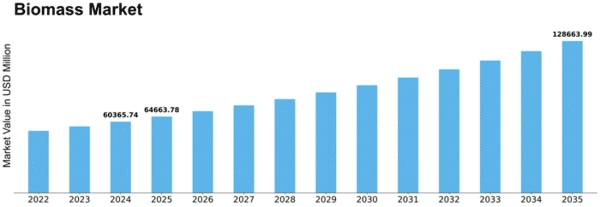

Biomass Market Size Graph
Author
Sejal Akre
Senior Research Analyst

She has over 5 years of rich experience, in market research and consulting providing valuable market insights to client. Hands on expertise in management consulting, and extensive knowledge in domain including ICT, Automotive & Transportation and Aerospace & Defense. She is skilled in Go-to market strategy, industry analysis, market sizing, in depth company profiling, competitive intelligence & benchmarking and value chain amongst others.

Leave a Comment

FAQs

How much is the Biomass Market?

Biomass Market was valued at USD 60365.74 Billion in 2024

What is the growth rate of the Biomass Market?

The growth rate of biomass market is 7.12%

Which region held the largest market share in the Biomass Market?

Asia Pacific held the largest market share in the Biomass Market.

Who are the key players in the Biomass Market?

Babcock & Wilcox Enterprises, Inc (B&W) (US), Dalkia (France), EnviTec Biogas AG (Germany), Ameresco Inc. (US), Drax Group (UK), Orsted A/S (Denmark), MVV Energie AG (Germany), Mitsubishi Heavy Industries, Ltd. (Japan), Vattenfall AB (Sweden) and Statkraft AS (Norway)

Which feedstock had the largest share in the Biomass Market?

Wood had the largest share in the biomass Market.

Which Technology had the largest market share in the Biomass Market?

Combined Heat and Power (CHP) has the largest market share in the Biomass Market

Which Product had the largest market share in the Biomass Market?

The biodiesel segment had the largest market share in the Biomass Market.

Which End-Use had the largest market share in the Biomass Market?

The commercial segment had the largest market share in the Biomass Market.

Market Summary

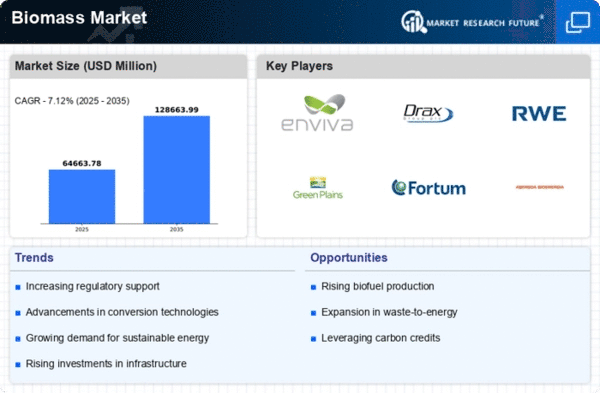
As per MRFR analysis, the Biomass Market Size was estimated at 60365.74 USD Million in 2024. The Biomass industry is projected to grow from 64665.0 in 2025 to 128663.99 by 2035, exhibiting a compound annual growth rate (CAGR) of 7.12 during the forecast period 2025 - 2035.

Key Market Trends & Highlights

The Biomass Market is experiencing robust growth driven by technological advancements and increasing demand for sustainable energy solutions.

  • Technological advancements in biomass conversion are enhancing efficiency and reducing costs across the sector.
  • North America remains the largest market for biomass, while Asia-Pacific is emerging as the fastest-growing region.
  • Electricity generation continues to dominate the biomass market, with biofuels showing the fastest growth potential.
  • Government policies and rising energy prices are key drivers propelling the expansion of biomass supply chains.

Market Size & Forecast

2024 Market Size 60365.74 (USD Million)
2035 Market Size 128663.99 (USD Million)
CAGR (2025 - 2035) 7.12%
Largest Regional Market Share in 2024 North America

Major Players

<p>Enviva Holdings (US), Drax Group (GB), RWE AG (DE), Fortum Oyj (FI), Green Plains Inc. (US), Biomass Energy Ltd. (AU), A2A S.p.A. (IT), Vattenfall AB (SE), Pacific BioEnergy Corporation (CA)</p>

Market Trends

The Biomass Market is currently experiencing a transformative phase, driven by a growing emphasis on renewable energy sources and sustainability. As global awareness of climate change intensifies, stakeholders are increasingly recognizing the potential of biomass as a viable alternative to fossil fuels. This shift is not merely a trend but appears to be a fundamental change in energy consumption patterns, with various sectors exploring biomass for its environmental benefits and energy security. The integration of advanced technologies in biomass conversion processes is likely to enhance efficiency and reduce costs, further propelling market growth. Moreover, the Biomass Market is characterized by a diverse range of feedstocks, including agricultural residues, forestry by-products, and dedicated energy crops. This diversity not only supports a wide array of applications, from electricity generation to biofuels, but also indicates a robust supply chain that can adapt to varying regional demands. As governments and industries continue to invest in research and development, the potential for innovation within this sector seems promising, suggesting that the Biomass Market will play a crucial role in the global energy landscape in the coming years.

Technological Advancements in Biomass Conversion

Recent innovations in biomass conversion technologies are enhancing the efficiency and viability of biomass as an energy source. These advancements may lead to improved methods for converting biomass into biofuels and biopower, potentially reducing production costs and increasing market competitiveness.

Growing Demand for Sustainable Energy Solutions

The increasing The Biomass. As consumers and industries seek to reduce their carbon footprints, biomass is emerging as a favorable option, aligning with broader environmental goals and regulatory frameworks.

Expansion of Biomass Supply Chains

The Biomass Market is witnessing an expansion of supply chains, which is crucial for ensuring a steady flow of feedstocks. This development may facilitate better access to biomass resources, thereby supporting the growth of various applications and enhancing market stability.

Biomass Market Market Drivers

Market Growth Projections

The Global Biomass Market Industry is poised for substantial growth, with projections indicating a market size of 60.4 USD Billion in 2024 and an anticipated increase to 101.5 USD Billion by 2035. This growth trajectory suggests a robust expansion driven by various factors, including rising energy demands, technological advancements, and supportive government policies. The compound annual growth rate of 4.84% from 2025 to 2035 further emphasizes the market's potential. Such projections highlight the increasing recognition of biomass as a critical component of the global energy mix, reinforcing its role in achieving energy security and sustainability.

Growing Environmental Concerns

Increasing environmental concerns regarding greenhouse gas emissions and pollution are propelling the Global Biomass Market Industry. Biomass Market is perceived as a cleaner alternative to fossil fuels, as it can significantly reduce carbon emissions when sourced sustainably. The growing awareness of environmental issues is prompting both consumers and industries to seek greener energy solutions. This shift is reflected in the rising investments in biomass energy projects globally. As stakeholders prioritize sustainability, the biomass market is expected to expand, aligning with global efforts to combat climate change and promote environmental stewardship. This trend indicates a robust future for biomass as a key player in the renewable energy sector.

Diverse Applications of Biomass

The versatility of biomass fuels in various applications is a notable driver of the Global Biomass Market Industry. Biomass Market can be utilized for electricity generation, heating, and as a feedstock for biofuels, catering to diverse energy needs across sectors. This adaptability enhances its appeal to a wide range of industries, including transportation, agriculture, and manufacturing. As the demand for sustainable energy solutions grows, the biomass market is likely to benefit from its ability to serve multiple purposes. This multifaceted nature of biomass fuels positions the industry for continued growth, as it aligns with the evolving energy landscape and the quest for sustainable alternatives.

Government Incentives and Policies

Government incentives and supportive policies are crucial drivers of the Global Biomass Market Industry. Many countries are establishing regulations that favor the use of biomass for energy production, such as tax credits, grants, and subsidies. These initiatives not only encourage investment in biomass technologies but also facilitate the development of infrastructure necessary for biomass production and distribution. For example, the European Union has set ambitious targets for renewable energy, which include significant contributions from biomass. Such policies are expected to propel the biomass market, with projections indicating a market size of 101.5 USD Billion by 2035, underscoring the importance of governmental support in fostering growth.

Rising Demand for Renewable Energy

The Global Biomass Market Industry is experiencing a surge in demand for renewable energy sources, driven by increasing awareness of climate change and the need for sustainable energy solutions. Governments worldwide are implementing policies to promote renewable energy, which includes biomass as a viable option. For instance, the global biomass market is projected to reach 60.4 USD Billion in 2024, reflecting a growing shift towards cleaner energy alternatives. This transition is further supported by technological advancements in biomass conversion processes, enhancing efficiency and reducing costs. As countries strive to meet their renewable energy targets, the biomass sector is likely to play a pivotal role in the global energy landscape.

Technological Advancements in Biomass Conversion

Technological innovations in biomass conversion processes are significantly influencing the Global Biomass Market Industry. Advances in gasification, anaerobic digestion, and fermentation technologies are enhancing the efficiency and viability of biomass as an energy source. These improvements not only increase the yield of biofuels but also reduce production costs, making biomass more competitive with fossil fuels. As a result, the market is likely to witness a compound annual growth rate of 4.84% from 2025 to 2035. Enhanced technologies also contribute to better waste management practices, as biomass can be derived from agricultural residues and organic waste, thereby promoting a circular economy.

Market Segment Insights

By Application: Electricity Generation (Largest) vs. Biofuels (Fastest-Growing)

<p>In the Biomass Market, the application segment is diverse, with a prominent share attributed to electricity generation, which stands as the largest application. Following electricity generation, heating, and transportation also hold significant market shares, while industrial processes contribute meaningfully to the segment. Biofuels, while currently smaller in share, represent a rapidly expanding area. Each of these applications plays a critical role in the overall growth and adoption of biomass as a sustainable alternative.</p>

<p>Electricity Generation: Dominant vs. Biofuels: Emerging</p>

<p>Electricity generation from biomass is currently the dominant application, leveraging advanced technologies for converting organic materials into electricity. This approach not only meets growing energy demands but also contributes to carbon neutrality through sustainable practices. On the other hand, biofuels are recognized as an emerging segment, propelled by advancements in production processes and increasing regulatory support. They serve as a renewable substitute for fossil fuels in transportation and industrial applications, highlighting a pivotal shift toward sustainable energy sources. The intricate balance between these segments illustrates the versatility and potential of biomass in addressing global energy challenges.</p>

By Feedstock Type: Wood Biomass (Largest) vs. Energy Crops (Fastest-Growing)

<p>The biomass market demonstrates a diverse feedstock landscape, with wood biomass currently holding the largest share. Agricultural residues and animal manure also play significant roles, complementing the dominance of wood. In contrast, energy crops are emerging rapidly, capturing the attention of investors and researchers alike. Algal biomass, while smaller, offers unique advantages, contributing to the overall growth of the segment.</p>

<p>Wood Biomass (Dominant) vs. Energy Crops (Emerging)</p>

<p>Wood biomass remains the dominant feedstock type, largely due to its established supply chains and the availability of resources. It is commonly sourced from forestry residues and dedicated woodlots, making it a reliable option for energy generation. On the other hand, energy crops, such as switchgrass and miscanthus, are emerging as viable alternatives, with significant potential to improve yield and lower greenhouse gas emissions. These crops are specifically cultivated for biomass energy, leading to innovations in cultivation practices and attracting interest for their sustainability benefits. This shift indicates a growing market inclination toward renewable and environmentally-friendly options.</p>

By Technology: Anaerobic Digestion (Largest) vs. Gasification (Fastest-Growing)

<p>The Biomass Market exhibits diverse technological approaches, with anaerobic digestion holding the largest market share due to its efficiency in waste management and energy production. This process converts organic material into biogas, making it a preferred choice for municipalities and industries looking to optimize waste. Following this, gasification is emerging as a key player, transforming biomass into syngas, which can be utilized for various energy applications. Other technologies like combustion and pyrolysis hold smaller yet significant shares in the market.</p>

<p>Technology: Anaerobic Digestion (Dominant) vs. Gasification (Emerging)</p>

<p>Anaerobic digestion stands out as the dominant technology in the Biomass Market, known for its ability to generate renewable energy from organic waste. Its widespread application in agricultural sectors and urban waste management systems emphasizes its practicality and benefits in reducing landfill waste. On the other hand, gasification represents an emerging technology that is rapidly gaining traction. By converting solid biomass into gas, it offers higher efficiency and flexibility in energy production, catering to various energy generation needs. As industries increasingly seek sustainable energy solutions, the growth of gasification technology signals a significant shift towards innovative biomass conversion processes.</p>

Get more detailed insights about Biomass Market Research Report — Global Forecast till 2035

Regional Insights

North America : Leading Biomass Market

North America is poised to maintain its leadership in the biomass market, holding a significant share of 30100.0 in 2025. The region's growth is driven by increasing demand for renewable energy sources, supported by favorable regulations and government incentives aimed at reducing carbon emissions. The push for sustainable energy solutions is further catalyzed by technological advancements in biomass conversion processes, making it a viable alternative to fossil fuels. The United States and Canada are the primary players in this market, with key companies like Enviva Holdings and Green Plains Inc. leading the charge. The competitive landscape is characterized by a mix of established firms and emerging startups, all vying for a share of the growing biomass sector. The presence of robust infrastructure and investment in research and development further solidifies North America's position as a biomass powerhouse.

Europe : Sustainable Energy Transition

Europe is rapidly advancing in the biomass market, with a market size of 18000.0 in 2025. The region's commitment to sustainability and reducing greenhouse gas emissions is driving demand for biomass as a renewable energy source. Regulatory frameworks, such as the EU Renewable Energy Directive, are pivotal in promoting biomass utilization, ensuring that it plays a crucial role in the energy transition towards a low-carbon economy. Leading countries like Germany, the UK, and Sweden are at the forefront of this movement, with companies such as Drax Group and RWE AG making significant contributions. The competitive landscape is marked by a strong emphasis on innovation and sustainability, with numerous initiatives aimed at enhancing biomass production efficiency. The European market is characterized by a diverse range of biomass sources, including wood pellets and agricultural residues, further diversifying its energy portfolio.

Asia-Pacific : Emerging Biomass Market

The Asia-Pacific region is emerging as a significant player in the biomass market, with a market size of 10000.0 in 2025. The growth is primarily driven by increasing energy demands and a shift towards renewable energy sources. Governments in countries like China and India are implementing policies to promote biomass energy, recognizing its potential to reduce reliance on fossil fuels and enhance energy security. The region's diverse agricultural landscape also provides ample biomass feedstock, further supporting market growth. China and India are leading the charge in biomass adoption, with numerous initiatives aimed at enhancing production and utilization. The competitive landscape is evolving, with both local and international players entering the market. Companies like Biomass Energy Ltd. and Fortum Oyj are making strides in this sector, contributing to the region's overall growth and sustainability goals.

Middle East and Africa : Developing Biomass Sector

The Middle East and Africa region is in the nascent stages of developing its biomass market, with a market size of 1265.74 in 2025. The growth potential is significant, driven by increasing energy demands and a growing awareness of renewable energy benefits. Governments are beginning to recognize biomass as a viable alternative to traditional energy sources, with initiatives aimed at promoting its use in various sectors, including agriculture and waste management. Countries like South Africa and Kenya are leading efforts to explore biomass energy solutions, supported by international partnerships and investments. The competitive landscape is still developing, with a mix of local startups and international firms looking to establish a foothold. The presence of key players like A2A S.p.A. and Vattenfall AB indicates a growing interest in the region's biomass potential, paving the way for future growth.

Key Players and Competitive Insights

The Biomass Market is currently characterized by a dynamic competitive landscape, driven by increasing demand for renewable energy sources and stringent environmental regulations. Key players are actively pursuing strategies that emphasize innovation, regional expansion, and partnerships to enhance their market positions. For instance, Enviva Holdings (US) has focused on expanding its production capacity and enhancing its supply chain efficiency, which appears to be a critical factor in maintaining its leadership in the market. Similarly, Drax Group (GB) is investing heavily in digital transformation initiatives to optimize its operations and reduce carbon emissions, thereby aligning with global sustainability goals. These strategic moves collectively shape a competitive environment that is increasingly focused on sustainability and operational efficiency.

In terms of business tactics, companies are localizing manufacturing and optimizing their supply chains to respond to regional demands effectively. The market structure is moderately fragmented, with several key players exerting considerable influence. This fragmentation allows for a variety of operational strategies, enabling companies to differentiate themselves through localized solutions and tailored offerings.

In November 2025, RWE AG (DE) announced a strategic partnership with a leading technology firm to develop advanced biomass conversion technologies. This collaboration is expected to enhance RWE's capabilities in producing sustainable energy solutions, thereby reinforcing its commitment to reducing greenhouse gas emissions. The strategic importance of this partnership lies in its potential to position RWE at the forefront of technological innovation in the biomass sector.

In October 2025, Fortum Oyj (FI) launched a new biomass-based energy project aimed at increasing its renewable energy output by 30% over the next five years. This initiative not only underscores Fortum's commitment to sustainability but also reflects a broader trend among energy companies to diversify their energy portfolios. The strategic significance of this project is its alignment with European Union targets for renewable energy, potentially enhancing Fortum's competitive edge in the market.

In September 2025, Green Plains Inc. (US) completed the acquisition of a biomass processing facility, which is expected to bolster its production capabilities and expand its market reach. This acquisition is particularly noteworthy as it indicates a trend towards consolidation within the industry, allowing companies to leverage economies of scale and enhance operational efficiencies. The strategic implications of this move suggest that Green Plains is positioning itself to capitalize on the growing demand for biomass energy solutions.

As of December 2025, the Biomass Market is witnessing trends that emphasize digitalization, sustainability, and the integration of advanced technologies such as AI. Strategic alliances are increasingly shaping the competitive landscape, enabling companies to pool resources and expertise to drive innovation. Looking ahead, competitive differentiation is likely to evolve from traditional price-based competition to a focus on technological advancements, supply chain reliability, and sustainable practices. This shift indicates a growing recognition that long-term success in the biomass sector will depend on the ability to innovate and adapt to changing market dynamics.

Key Companies in the Biomass Market market include

Industry Developments

March 2023, Mitsubishi Heavy Industries, Ltd., and PT. PLN Nusantara Power has signed a Memorandum of Understanding (MoU) to begin three technical studies related to co-firing of less carbon-intensive fuels at Nusantara Power plants. This MoU builds on a previous agreement signed in November 2022 with PLN Group company PT. PLN Indonesia Power and will contribute to the implementation of solutions to accelerate the decarbonization of Indonesia's energy systems.

March 2023: Dalkia has entered long-term cooperation with Solvay to install a biomass boiler in Saint-Fons, France. Dalkia will use waste wood from demolished buildings and furniture that is acquired locally to generate steam and the plant will be put into operation by 2025.

Feb 2023, Ameresco, Inc has acquired ENERQOS Energy Solutions S.r.l., a renewable energy and energy efficiency company headquartered in Milan and signed a definitive purchase and sale agreement. With this acquisition, Ameresco will be able to expand its range of renewable energy projects and solutions throughout Italy.

November 2022: Babcock & Wilcox Enterprises, Inc. has signed a contract agreement with NRG Korea to investigate the viability of employing B&W's BrightLoopTM technology to produce hydrogen using biomass fuel in South Korea. B&W and NRG have signed a memorandum in order to research the technology and perhaps implement the project. The project would employ waste biomass as a feedstock to create hydrogen for fuel cells used for electricity generation.

November 2022, Renault Group collaborated with Dalkia to install a biomass boiler at its Maubeuge facility and replace 65% of the company's gas consumption to accelerate the decarbonization plan. 

Future Outlook

Biomass Market Future Outlook

<p>The Biomass Market is projected to grow at a 7.12% CAGR from 2024 to 2035, driven by increasing energy demands, sustainability initiatives, and technological advancements.</p>

New opportunities lie in:

  • <p>Development of advanced biomass gasification technologies</p>
  • <p>Expansion of biomass supply chains for urban energy solutions</p>
  • <p>Investment in biomass-based biofuels for transportation sectors</p>

<p>By 2035, the Biomass Market is expected to be a pivotal player in the global energy landscape.</p>

Market Segmentation

Biomass Market Technology Outlook

  • Anaerobic Digestion
  • Gasification
  • Combustion
  • Fermentation
  • Pyrolysis

Biomass Market Application Outlook

  • Electricity Generation
  • Heating
  • Transportation
  • Industrial Processes
  • Biofuels

Biomass Market Feedstock Type Outlook

  • Wood Biomass
  • Agricultural Residues
  • Animal Manure
  • Energy Crops
  • Algal Biomass

Report Scope

MARKET SIZE 202460365.74(USD Million)
MARKET SIZE 202564665.0(USD Million)
MARKET SIZE 2035128663.99(USD Million)
COMPOUND ANNUAL GROWTH RATE (CAGR)7.12% (2024 - 2035)
REPORT COVERAGERevenue Forecast, Competitive Landscape, Growth Factors, and Trends
BASE YEAR2024
Market Forecast Period2025 - 2035
Historical Data2019 - 2024
Market Forecast UnitsUSD Million
Key Companies ProfiledEnviva Holdings (US), Drax Group (GB), RWE AG (DE), Fortum Oyj (FI), Green Plains Inc. (US), Biomass Energy Ltd. (AU), A2A S.p.A. (IT), Vattenfall AB (SE), Pacific BioEnergy Corporation (CA)
Segments CoveredApplication, Feedstock Type, Technology
Key Market OpportunitiesAdvancements in biomass conversion technologies enhance efficiency and sustainability in the Biomass Market.
Key Market DynamicsRising demand for renewable energy sources drives innovation and competition in the biomass market.
Countries CoveredNorth America, Europe, APAC, South America, MEA

FAQs

How much is the Biomass Market?

Biomass Market was valued at USD 60365.74 Billion in 2024

What is the growth rate of the Biomass Market?

The growth rate of biomass market is 7.12%

Which region held the largest market share in the Biomass Market?

Asia Pacific held the largest market share in the Biomass Market.

Who are the key players in the Biomass Market?

Babcock &amp; Wilcox Enterprises, Inc (B&amp;W) (US), Dalkia (France), EnviTec Biogas AG (Germany), Ameresco Inc. (US), Drax Group (UK), Orsted A/S (Denmark), MVV Energie AG (Germany), Mitsubishi Heavy Industries, Ltd. (Japan), Vattenfall AB (Sweden) and Statkraft AS (Norway)

Which feedstock had the largest share in the Biomass Market?

Wood had the largest share in the biomass Market.

Which Technology had the largest market share in the Biomass Market?

Combined Heat and Power (CHP) has the largest market share in the Biomass Market

Which Product had the largest market share in the Biomass Market?

The biodiesel segment had the largest market share in the Biomass Market.

Which End-Use had the largest market share in the Biomass Market?

The commercial segment had the largest market share in the Biomass Market.

  1. EXECUTIVE SUMMARY
    1. MARKET ATTRACTIVENESS
    2. ANALYSIS
  2. BIOMASS MARKET, BY FEEDSTOCK
    1. BIOMASS MARKET, BY TECHNOLOGY
    2. BIOMASS MARKET, BY PRODUCT
    3. BIOMASS MARKET, BY END-USE
    4. BIOMASS MARKET, BY
    5. REGION
  3. MARKET
    1. INTRODUCTION
    2. DEFINITION
    3. SCOPE OF THE STUDY
    4. RESEARCH OBJECTIVE
    5. MARKET STRUCTURE
  4. RESEARCH METHODOLOGY
    1. RESEARCH PROCESS
    2. PRIMARY RESEARCH
    3. SECONDARY RESEARCH
    4. MARKET SIZE ESTIMATION
    5. TOP-DOWN & BOTTOM-UP APPROACH
    6. FORECAST MODEL
    7. LIST OF ASSUMPTIONS
  5. MARKET DYNAMICS
    1. OVERVIEW
    2. DRIVERS
      1. RISING NEED TO CONTROL THE GREENHOUSE GAS EMISSIONS
    3. RESTRAINTS
      1. COST INTENSIVE
    4. SETUP WITH FEEDSTOCK AND SUPPLY CHAIN COMPLEXITIES
    5. OPPORTUNITIES
      1. SURGING FAVORABLE REGULATIONS AND INITIATIVES
    6. BY GOVERNMENT AND MAJOR MARKET PLAYERS
    7. CHALLENGES
      1. PRESENCE OF ALTERNATIVE RENEWABLE ENERGY RESOURCES
  6. MARKET FACTOR ANALYSIS
    1. SUPPLY CHAIN ANALYSIS
      1. BIOMASS FEEDSTOCK
    2. PRODUCTION
    3. PRE-TREATMENT
    4. ENERGY CONVERSION
    5. END USERS
    6. LIST OF POTENTIAL BUYERS (NAME, HEADQUARTERS, APPLICATION)
    7. PORTER''S FIVE FORCES MODEL
      1. THREAT OF NEW ENTRANTS
      2. BARGAINING POWER
      3. INTENSITY OF RIVALRY
    8. OF SUPPLIERS
    9. THREAT OF SUBSTITUTES
    10. BARGAINING POWER OF BUYERS
    11. FEEDSTOCK PRICING OVERVIEW (USD/TON)
    12. COST COMPONENTS & BREAKDOWN
    13. (2021)
    14. BIOMASS PRODUCTION ANALYSIS, 2019 TO 2050, (KILOTONS)
    15. SUPPLY DEMAND ANALYSIS BY REGION, CURRENT &
    16. DEVLOPMENT TO 2050
    17. REGULATORY FRAMEWORK
    18. REGULATORY FRAMEWORKS BY GOVERNMENTS
  7. US
  8. CANADA:
  9. FRANCE:
  10. GERMANY:
  11. UK
  12. CHINA:
  13. INDIA:
  14. SOUTH AFRICA:
  15. UAE:
  16. BRAZIL:
    1. REGIONAL MARKET TRENDS
    2. IMPACT OF CORONAVIRUS OUTBREAK ON THE GLOBAL
  17. BIOMASS MARKET
  18. GLOBAL BIOMASS MARKET, BY FEEDSTOCK
    1. OVERVIEW
      1. BIOMASS: MARKET ESTIMATES & FORECAST BY FEEDSTOCK,
      2. BIOMASS: MARKET
    2. BIOMASS: MARKET ESTIMATES & FORECAST BY FEEDSTOCK, 2019–2050
    3. ESTIMATES & FORECAST BY FEEDSTOCK, 2019–2050
    4. WOOD
    5. FOOD CROP
    6. NON-FOOD CROP
    7. AGRICULTURAL RESIDUE
    8. MUNICIPAL SOLID WASTE (MSW)
    9. MICROALGAE
    10. OTHERS
  19. GLOBAL BIOMASS MARKET, BY TECHNOLOGY
    1. OVERVIEW
      1. BIOMASS: MARKET
      2. BIOMASS: MARKET ESTIMATES & FORECAST BY
    2. ESTIMATES & FORECAST BY TECHNOLOGY, 2019–2050
    3. TECHNOLOGY, 2019–2050
    4. CO-FIRING COMBINED HEAT AND POWER (CHP)
    5. ANAEROBIC DIGESTION, AND GASIFICATION
    6. CO-FIRING
    7. LANDFILL GAS
  20. GLOBAL BIOMASS MARKET,
    1. BY PRODUCT
    2. OVERVIEW
    3. BIOMASS: MARKET ESTIMATES & FORECAST BY PRODUCT, 2019–2050
    4. & FORECAST BY PRODUCT, 2019–2050
  21. BIOMASS: MARKET ESTIMATES
    1. BIODIESEL
    2. BIOMETHANOL
    3. BIOGAS
    4. OTHERS
  22. GLOBAL BIOMASS MARKET, BY END-USE
    1. OVERVIEW
      1. BIOMASS: MARKET ESTIMATES
      2. BIOMASS: MARKET ESTIMATES & FORECAST BY
    2. & FORECAST BY END-USE, 2019–2050
    3. END-USE, 2019–2050
    4. INDUSTRIAL
    5. COMMERCIAL
    6. RESIDENTIAL
  23. GLOBAL BIOMASS MARKET, BY REGION
    1. OVERVIEW
    2. NORTH AMERICA
      1. US
      2. CANADA
    3. EUROPE
      1. GERMANY
      2. ITALY
      3. FRANCE
      4. SPAIN
      5. UK
      6. REST OF EUROPE
    4. ASIA-PACIFIC
      1. CHINA
      2. INDIA
      3. JAPAN
      4. SOUTH KOREA
      5. REST OF ASIA-PACIFIC
    5. LATIN AMERICA
      1. BRAZIL
      2. MEXICO
      3. ARGENTINA
      4. RSET OF LATIN AMERICA
    6. MIDDLE EAST & AFRICA
      1. GCC COUNTRIES
      2. SOUTH AFRICA
      3. EGYPT
      4. REST OF MIDDLE EAST & AFRICA
  24. COMPETITIVE LANDSCAPE
    1. MARKET INTRODUCTION
    2. KEY DEVELOPMENTS
    3. GLOBAL MARKET STRATEGY
    4. ANALYSIS
    5. COMPETITIVE BENCHMARKING
    6. PRODUCTION ANALYSIS, BY KEY PLAYERS* (METRIC TONS PER ANNUM)
  25. COMPANY PROFILES
    1. BABCOCK & WILCOX
    2. ENTERPRISES, INC
    3. COMPANY OVERVIEW
    4. FINANCIAL OVERVIEW
    5. PRODUCT OFFERED
    6. KEY DEVELOPMENTS
  26. SWOT ANALYSIS
    1. KEY STRATEGIES
    2. DALKIA
    3. COMPANY OVERVIEW
    4. FINANCIAL OVERVIEW
    5. PRODUCTS OFFERED
    6. KEY DEVELOPMENTS
  27. SWOT ANALYSIS
    1. KEY STRATEGIES
    2. ENVITEC BIOGAS AG
    3. COMPANY OVERVIEW
    4. FINANCIAL OVERVIEW
    5. PRODUCTS OFFERED
    6. KEY DEVELOPMENTS
  28. SWOT ANALYSIS
    1. KEY STRATEGIES
    2. AMERESCO INC.
    3. COMPANY OVERVIEW
    4. FINANCIAL OVERVIEW
    5. PRODUCTS OFFERED
    6. KEY DEVELOPMENT
  29. SWOT ANALYSIS
    1. KEY STRATEGIES
    2. DRAX GROUP
    3. COMPANY OVERVIEW
    4. FINANCIAL OVERVIEW
    5. PRODUCTS OFFERED
    6. KEY DEVELOPMENTS
  30. SWOT ANALYSIS
    1. KEY STRATEGIES
    2. ORSTED A/S
    3. COMPANY OVERVIEW
    4. FINANCIAL OVERVIEW
    5. PRODUCTS OFFERED
    6. KEY DEVELOPMENTS
  31. SWOT ANALYSIS
    1. KEY STRATEGIES
    2. MVV ENERGIE AG
    3. COMPANY OVERVIEW
    4. FINANCIAL OVERVIEW
    5. PRODUCTS OFFERED
    6. KEY DEVELOPMENTS
  32. SWOT ANALYSIS
    1. KEY STRATEGIES
    2. MITSUBISHI HEAVY INDUSTRIES, LTD
  33. COMPANY OVERVIEW
  34. FINANCIAL OVERVIEW
  35. PRODUCTS OFFERED
  36. KEY DEVELOPMENTS
  37. SWOT ANALYSIS
  38. KEY STRATEGIES
    1. VATTENFALL AB
      1. COMPANY OVERVIEW
      2. FINANCIAL OVERVIEW
      3. PRODUCTS OFFERED
      4. KEY DEVELOPMENTS
      5. SWOT ANALYSIS
      6. KEY STRATEGIES
    2. STATKRAFT AS
      1. COMPANY OVERVIEW
      2. FINANCIAL OVERVIEW
      3. PRODUCTS OFFERED
      4. KEY DEVELOPMENTS
      5. SWOT ANALYSIS
      6. KEY STRATEGIES
  39. APPENDIX
    1. REFERENCES
    2. RELATED REPORTS
  40. LIST OF TABLES
  41. LIST OF ASSUMPTIONS
  42. LIST OF POTENTIAL BUYERS (NAME, HEADQUARTERS,
    1. APPLICATION)
    2. TABLE
  43. GLOBAL BIOMASS PRICING OVERVIEW, (USD/TON), 2019-2021
  44. GLOBAL BIOMASS MARKET, BY REGION (KILOTON),
    1. TABLE
  45. SUPPLY DEMAND ANALYSIS BY REGION (KILOTONS), 2021
  46. SUPPLY DEMAND ANALYSIS BY REGION (KILOTONS),
    1. TABLE
  47. BIOMASS MARKET ESTIMATES & FORECAST, BY FEEDSTOCK, 2019–2050 (USD MILLION)
  48. BIOMASS MARKET
    1. ESTIMATES & FORECAST, BY FEEDSTOCK, 2019–2050 (KILOTONS)
  49. BIOMASS MARKET ESTIMATES
    1. & FORECAST, BY FEEDSTOCK, 2019–2050 (TERAJOULES)
  50. BIOMASS MARKET ESTIMATES & FORECAST,
    1. BY TECHNOLOGY, 2019–2050 (USD MILLION)
  51. BIOMASS MARKET ESTIMATES & FORECAST,
    1. BY TECHNOLOGY, 2019–2050 (KILOTONS)
  52. BIOMASS MARKET ESTIMATES & FORECAST,
    1. BY PRODUCT, 2019–2050 (USD MILLION)
  53. BIOMASS MARKET ESTIMATES & FORECAST,
    1. BY PRODUCT, 2019–2050 (KILOTONS)
  54. BIOMASS MARKET ESTIMATES & FORECAST, BY END-USE,
  55. BIOMASS MARKET ESTIMATES & FORECAST, BY END-USE, 2019–2050
    1. (KILOTONS)
    2. TABLE
  56. GLOBAL BIOMASS MARKET, BY REGION, 2019–2050 (USD MILLION)
  57. GLOBAL BIOMASS MARKET,
    1. BY REGION, 2019–2050 (KILOTONS)
  58. NORTH AMERICA: BIOMASS MARKET, BY COUNTRY, 2019–2050
    1. (USD MILLION)
    2. TABLE
  59. NORTH AMERICA: BIOMASS MARKET, BY COUNTRY, 2019–2050 (KILOTONS)
  60. NORTH AMERICA:
  61. BIOMASS MARKET, BY FEEDSTOCK, 2019–2050 (USD MILLION)
  62. NORTH AMERICA: BIOMASS MARKET, BY FEEDSTOCK,
  63. NORTH AMERICA: BIOMASS MARKET, BY TECHNOLOGY, 2019–2050
    1. (USD MILLION)
    2. TABLE
  64. NORTH AMERICA: BIOMASS MARKET, BY TECHNOLOGY, 2019–2050 (KILOTONS)
  65. NORTH AMERICA:
  66. BIOMASS MARKET, BY PRODUCT, 2019–2050 (USD MILLION)
  67. NORTH AMERICA: BIOMASS MARKET, BY PRODUCT,
  68. NORTH AMERICA: BIOMASS MARKET, BY END-USE, 2019–2050
    1. (USD MILLION)
    2. TABLE
  69. NORTH AMERICA: BIOMASS MARKET, BY END-USE, 2019–2050 (KILOTONS)
  70. US: BIOMASS
  71. MARKET, BY FEEDSTOCK, 2019–2050 (USD MILLION)
  72. US: BIOMASS MARKET, BY FEEDSTOCK, 2019–2050
    1. (KILOTONS)
    2. TABLE
  73. US: BIOMASS MARKET, BY TECHNOLOGY, 2019–2050 (USD MILLION)
  74. US: BIOMASS MARKET,
    1. BY TECHNOLOGY, 2019–2050 (KILOTONS)
  75. US: BIOMASS MARKET, BY PRODUCT, 2019–2050
    1. (USD MILLION)
    2. TABLE
  76. US: BIOMASS MARKET, BY PRODUCT, 2019–2050 (KILOTONS)
  77. US: BIOMASS MARKET,
    1. BY END-USE, 2019–2050 (USD MILLION)
  78. US: BIOMASS MARKET, BY END-USE, 2019–2050
    1. (KILOTONS)
    2. TABLE
  79. CANADA: BIOMASS MARKET, BY FEEDSTOCK, 2019–2050 (USD MILLION)
  80. CANADA BIOMASS
  81. MARKET, BY FEEDSTOCK, 2019–2050 (KILOTONS)
  82. CANADA: BIOMASS MARKET, BY TECHNOLOGY, 2019–2050
    1. (USD MILLION)
    2. TABLE
  83. CANADA: BIOMASS MARKET, BY TECHNOLOGY, 2019–2050 (KILOTONS)
  84. CANADA: BIOMASS MARKET,
    1. BY PRODUCT, 2019–2050 (USD MILLION)
  85. CANADA: BIOMASS MARKET, BY PRODUCT, 2019–2050
    1. (KILOTONS)
    2. TABLE
  86. CANADA: BIOMASS MARKET, BY END-USE, 2019–2050 (USD MILLION)
  87. CANADA: BIOMASS MARKET,
    1. BY END-USE, 2019–2050 (KILOTONS)
  88. EUROPE: BIOMASS MARKET, BY COUNTRY, 2019–2050
    1. (USD MILLION)
    2. TABLE
  89. EUROPE: BIOMASS MARKET, BY COUNTRY, 2019–2050 (KILOTONS)
  90. EUROPE: BIOMASS MARKET,
    1. BY FEEDSTOCK, 2019–2050 (USD MILLION)
  91. EUROPE BIOMASS MARKET, BY FEEDSTOCK, 2019–2050
    1. (KILOTONS)
    2. TABLE
  92. EUROPE: BIOMASS MARKET, BY TECHNOLOGY, 2019–2050 (USD MILLION)
  93. EUROPE: BIOMASS
  94. MARKET, BY TECHNOLOGY, 2019–2050 (KILOTONS)
  95. EUROPE: BIOMASS MARKET, BY PRODUCT, 2019–2050
    1. (USD MILLION)
    2. TABLE
  96. EUROPE: BIOMASS MARKET, BY PRODUCT, 2019–2050 (KILOTONS)
  97. EUROPE: BIOMASS MARKET,
    1. BY END-USE, 2019–2050 (USD MILLION)
  98. EUROPE: BIOMASS MARKET, BY END-USE, 2019–2050
    1. (KILOTONS)
    2. TABLE
  99. GERMANY: BIOMASS MARKET, BY FEEDSTOCK, 2019–2050 (USD MILLION)
  100. GERMANY BIOMASS
  101. MARKET, BY FEEDSTOCK, 2019–2050 (KILOTONS)
  102. GERMANY BIOMASS MARKET, BY TECHNOLOGY, 2019–2050
    1. (USD MILLION)
    2. TABLE
  103. GERMANY BIOMASS MARKET, BY TECHNOLOGY, 2019–2050 (KILOTONS)
  104. GERMANY BIOMASS MARKET,
    1. BY PRODUCT, 2019–2050 (USD MILLION)
  105. GERMANY BIOMASS MARKET, BY PRODUCT, 2019–2050
    1. (KILOTONS)
    2. TABLE
  106. GERMANY: BIOMASS MARKET, BY END-USE, 2019–2050 (USD MILLION)
  107. GERMANY: BIOMASS
  108. MARKET, BY END-USE, 2019–2050 (KILOTONS)
  109. ITALY: BIOMASS MARKET, BY FEEDSTOCK, 2019–2050
    1. (USD MILLION)
    2. TABLE
  110. ITALY BIOMASS MARKET, BY FEEDSTOCK, 2019–2050 (KILOTONS)
  111. ITALY BIOMASS MARKET,
    1. BY TECHNOLOGY, 2019–2050 (USD MILLION)
  112. ITALY BIOMASS MARKET, BY TECHNOLOGY, 2019–2050
    1. (KILOTONS)
    2. TABLE
  113. ITALY BIOMASS MARKET, BY PRODUCT, 2019–2050 (USD MILLION)
  114. ITALY BIOMASS MARKET,
    1. BY PRODUCT, 2019–2050 (KILOTONS)
  115. ITALY: BIOMASS MARKET, BY END-USE, 2019–2050
    1. (USD MILLION)
    2. TABLE
  116. ITALY: BIOMASS MARKET, BY END-USE, 2019–2050 (KILOTONS)
  117. FRANCE: BIOMASS MARKET,
    1. BY FEEDSTOCK, 2019–2050 (USD MILLION)
  118. FRANCE BIOMASS MARKET, BY FEEDSTOCK, 2019–2050
    1. (KILOTONS)
    2. TABLE
  119. FRANCE BIOMASS MARKET, BY TECHNOLOGY, 2019–2050 (USD MILLION)
  120. FRANCE BIOMASS
  121. MARKET, BY TECHNOLOGY, 2019–2050 (KILOTONS)
  122. FRANCE BIOMASS MARKET, BY PRODUCT, 2019–2050
    1. (USD MILLION)
    2. TABLE
  123. FRANCE BIOMASS MARKET, BY PRODUCT, 2019–2050 (KILOTONS)
  124. FRANCE: BIOMASS MARKET,
    1. BY END-USE, 2019–2050 (USD MILLION)
  125. FRANCE: BIOMASS MARKET, BY END-USE, 2019–2050
    1. (KILOTONS)
    2. TABLE
  126. SPAIN: BIOMASS MARKET, BY FEEDSTOCK, 2019–2050 (USD MILLION)
  127. SPAIN: BIOMASS
  128. MARKET, BY FEEDSTOCK, 2019–2050 (KILOTONS)
  129. SPAIN: BIOMASS MARKET, BY TECHNOLOGY, 2019–2050
    1. (USD MILLION)
    2. TABLE
  130. SPAIN: BIOMASS MARKET, BY TECHNOLOGY, 2019–2050 (KILOTONS)
  131. SPAIN: BIOMASS MARKET,
    1. BY PRODUCT, 2019–2050 (USD MILLION)
  132. SPAIN: BIOMASS MARKET, BY PRODUCT, 2019–2050
    1. (KILOTONS)
    2. TABLE
  133. SPAIN: BIOMASS MARKET, BY END-USE, 2019–2050 (USD MILLION)
  134. SPAIN: BIOMASS MARKET,
    1. BY END-USE, 2019–2050 (KILOTONS)
  135. UK: BIOMASS MARKET, BY FEEDSTOCK, 2019–2050
    1. (USD MILLION)
    2. TABLE
  136. UK BIOMASS MARKET, BY FEEDSTOCK, 2019–2050 (KILOTONS)
  137. UK BIOMASS MARKET, BY
    1. TECHNOLOGY, 2019–2050 (USD MILLION)
  138. UK BIOMASS MARKET, BY TECHNOLOGY, 2019–2050
    1. (KILOTONS)
    2. TABLE
  139. UK BIOMASS MARKET, BY PRODUCT, 2019–2050 (USD MILLION)

Biomass Market Segmentation

Biomass Feedstock Outlook (USD Million, 2019-2030)

  • Food Crop
  • Non-Food Crop
  • Wood
  • Agricultural Residue
  • Municipal Solid Waste (MSW)
  • Microalgae
  • Others

Biomass Technology Outlook (USD Million, 2019-2030)

  • Combined Heat and Power (CHP)
  • Anaerobic Digestion and Feedstockification
  • Co-Firing
  • Landfill Feedstock

Biomass Product Outlook (USD Million, 2019-2030)

  • Biodiesel
  • Biomethanol
  • BioFeedstock
  • Others

Biomass End Use Outlook (USD Million, 2019-2030)

  • Industrial
  • Commercial
  • Residential

Biomass market Regional Outlook (USD Million, 2019-2030)

  • North America Outlook (USD Million, 2019-2030)
    • North America Biomass market by Feedstock
      • Food Crop
      • Non-Food Crop
      • Wood
      • Agricultural Residue
      • Municipal Solid Waste (MSW)
      • Microalgae
      • Others
    • North America Biomass market by Technology
      • Combined Heat and Power (CHP)
      • Anaerobic Digestion and Feedstockification
      • Co-Firing
      • Landfill Feedstock
    • North America Biomass market by Product
      • Biodiesel
      • Biomethanol
      • BioFeedstock
      • Others
    • North America Biomass market by End use
      • Industrial
      • Commercial
      • Residential
    • US Outlook (USD Million, 2019-2030)
    • US Biomass market by Feedstock
      • Food Crop
      • Non-Food Crop
      • Wood
      • Agricultural Residue
      • Municipal Solid Waste (MSW)
      • Microalgae
      • Others
    • US Biomass market by Technology
      • Combined Heat and Power (CHP)
      • Anaerobic Digestion and Feedstockification
      • Co-Firing
      • Landfill Feedstock
    • US Biomass market by Product
      • Biodiesel
      • Biomethanol
      • BioFeedstock
      • Others
    • US Biomass market by End Use
      • Industrial
      • Commercial
      • Residential
    • Canada Outlook (USD Million, 2019-2030)
    • Canada Biomass market by Feedstock
      • Food Crop
      • Non-Food Crop
      • Wood
      • Agricultural Residue
      • Municipal Solid Waste (MSW)
      • Microalgae
      • Others
    • Canada Biomass market by Technology
      • Combined Heat and Power (CHP)
      • Anaerobic Digestion and Feedstockification
      • Co-Firing
      • Landfill Feedstock
    • Canada Biomass market by Product
      • Biodiesel
      • Biomethanol
      • BioFeedstock
      • Others
    • Canada Biomass market by End use
      • Industrial
      • Commercial
      • Residential


  • Europe Outlook (USD Million, 2019-2030)
    • Europe Biomass market by Feedstock
      • Food Crop
      • Non-Food Crop
      • Wood
      • Agricultural Residue
      • Municipal Solid Waste (MSW)
      • Microalgae
      • Others
    • Europe Biomass market by Technology
      • Combined Heat and Power (CHP)
      • Anaerobic Digestion and Feedstockification
      • Co-Firing
      • Landfill Feedstock
    • Europe Biomass market by Product
      • Biodiesel
      • Biomethanol
      • BioFeedstock
      • Others
    • Europe Biomass market by End use
      • Industrial
      • Commercial
      • Residential
    • Germany Outlook (USD Million, 2019-2030)
    • Germany Biomass market by Feedstock
      • Food Crop
      • Non-Food Crop
      • Wood
      • Agricultural Residue
      • Municipal Solid Waste (MSW)
      • Microalgae
      • Others
    • Germany Biomass market by Technology
      • Combined Heat and Power (CHP)
      • Anaerobic Digestion and Feedstockification
      • Co-Firing
      • Landfill Feedstock
    • Germany Biomass market by Product
      • Biodiesel
      • Biomethanol
      • BioFeedstock
      • Others
    • Germany Biomass market by End use
      • Industrial
      • Commercial
      • Residential
    • France Outlook (USD Million, 2019-2030)
    • France Biomass market by Feedstock
      • Food Crop
      • Non-Food Crop
      • Wood
      • Agricultural Residue
      • Municipal Solid Waste (MSW)
      • Microalgae
      • Others
    • France Biomass market by Technology
      • Combined Heat and Power (CHP)
      • Anaerobic Digestion and Feedstockification
      • Co-Firing
      • Landfill Feedstock
    • France Biomass market by Product
      • Biodiesel
      • Biomethanol
      • BioFeedstock
      • Others
    • France Biomass market by End use
      • Industrial
      • Commercial
      • Residential
    • UK Outlook (USD Million, 2019-2030)
    • UK Biomass market by Feedstock
      • Food Crop
      • Non-Food Crop
      • Wood
      • Agricultural Residue
      • Municipal Solid Waste (MSW)
      • Microalgae
      • Others
    • UK Biomass market by Technology
      • Combined Heat and Power (CHP)
      • Anaerobic Digestion and Feedstockification
      • Co-Firing
      • Landfill Feedstock
    • UK Biomass market by Product
      • Biodiesel
      • Biomethanol
      • BioFeedstock
      • Others
    • UK Biomass market by End use
      • Industrial
      • Commercial
      • Residential
    • ITALY Outlook (USD Million, 2019-2030)
    • Italy Biomass market by Feedstock
      • Food Crop
      • Non-Food Crop
      • Wood
      • Agricultural Residue
      • Municipal Solid Waste (MSW)
      • Microalgae
      • Others
    • Italy Biomass market by Technology
      • Combined Heat and Power (CHP)
      • Anaerobic Digestion and Feedstockification
      • Co-Firing
      • Landfill Feedstock
    • Italy Biomass market by Product
      • Biodiesel
      • Biomethanol
      • BioFeedstock
      • Others
    • Italy Biomass market by End use
      • Industrial
      • Commercial
      • Residential
  •  
  • Spain Outlook (USD Million, 2019-2030)
  • Spain Biomass market by Feedstock
    • Food Crop
    • Non-Food Crop
    • Wood
    • Agricultural Residue
    • Municipal Solid Waste (MSW)
    • Microalgae
    • Others
  • Spain Biomass market by Technology
    • Combined Heat and Power (CHP)
    • Anaerobic Digestion and Feedstockification
    • Co-Firing
    • Landfill Feedstock
  • Spain Biomass market by Product
    • Biodiesel
    • Biomethanol
    • BioFeedstock
    • Others
  • Spain Biomass market by End use
    • Industrial
    • Commercial
    • Residential
  • Rest Of Europe Outlook (USD Million, 2019-2030)
  • Rest of Europe Biomass market by Feedstock
    • Food Crop
    • Non-Food Crop
    • Wood
    • Agricultural Residue
    • Municipal Solid Waste (MSW)
    • Microalgae
    • Others
  • Rest Of Europe Biomass market by Technology
    • Combined Heat and Power (CHP)
    • Anaerobic Digestion and Feedstockification
    • Co-Firing
    • Landfill Feedstock
  • Rest of Europe Biomass market by Product
    • Biodiesel
    • Biomethanol
    • BioFeedstock
    • Others
  • Rest of Europe Biomass market by End use
    • Industrial
    • Commercial
    • Residential
  • Asia-Pacific Outlook (USD Million, 2019-2030)
    • Asia-Pacific Biomass market by Feedstock
      • Food Crop
      • Non-Food Crop
      • Wood
      • Agricultural Residue
      • Municipal Solid Waste (MSW)
      • Microalgae
      • Others
    • Asia-Pacific Biomass market by Technology
      • Combined Heat and Power (CHP)
      • Anaerobic Digestion and Feedstockification
      • Co-Firing
      • Landfill Feedstock
    • Asia-Pacific Biomass market by Product
      • Biodiesel
      • Biomethanol
      • BioFeedstock
      • Others
    • Asia-Pacific Biomass market by End use
      • Industrial
      • Commercial
      • Residential
    • China Outlook (USD Million, 2019-2030)
    • China Biomass market by Feedstock
      • Food Crop
      • Non-Food Crop
      • Wood
      • Agricultural Residue
      • Municipal Solid Waste (MSW)
      • Microalgae
      • Others
    • China Biomass market by Technology
      • Combined Heat and Power (CHP)
      • Anaerobic Digestion and Feedstockification
      • Co-Firing
      • Landfill Feedstock
    • China Biomass market by Product
      • Biodiesel
      • Biomethanol
      • BioFeedstock
      • Others
    • China Biomass market by End use
      • Industrial
      • Commercial
      • Residential
    • Japan Outlook (USD Million, 2019-2030)
    • Japan Biomass market by Feedstock
      • Food Crop
      • Non-Food Crop
      • Wood
      • Agricultural Residue
      • Municipal Solid Waste (MSW)
      • Microalgae
      • Others
    • Japan Biomass market by Technology
      • Combined Heat and Power (CHP)
      • Anaerobic Digestion and Feedstockification
      • Co-Firing
      • Landfill Feedstock
    • Japan Biomass market by Product
      • Biodiesel
      • Biomethanol
      • BioFeedstock
      • Others
    • Japan Biomass market by End use
      • Industrial
      • Commercial
      • Residential


  • India Outlook (USD Million, 2019-2030)
  • India Biomass market by Feedstock
    • Food Crop
    • Non-Food Crop
    • Wood
    • Agricultural Residue
    • Municipal Solid Waste (MSW)
    • Microalgae
    • Others
  • India Biomass market by Technology
    • Combined Heat and Power (CHP)
    • Anaerobic Digestion and Feedstockification
    • Co-Firing
    • Landfill Feedstock
  • India Biomass market by Product
    • Biodiesel
    • Biomethanol
    • BioFeedstock
    • Others
  • India Biomass market by End use
    • Industrial
    • Commercial
    • Residential
  • Australia Outlook (USD Million, 2019-2030)
  • Australia Biomass market by Feedstock
    • Food Crop
    • Non-Food Crop
    • Wood
    • Agricultural Residue
    • Municipal Solid Waste (MSW)
    • Microalgae
    • Others
  • Australia Biomass market by Technology
    • Combined Heat and Power (CHP)
    • Anaerobic Digestion and Feedstockification
    • Co-Firing
    • Landfill Feedstock
  • Australia Biomass market by Product
    • Biodiesel
    • Biomethanol
    • BioFeedstock
    • Others
  • Australia Biomass market by End use
    • Industrial
    • Commercial
    • Residential
  • Rest of Asia-Pacific Outlook (USD Million, 2019-2030)
  • Rest of Asia-Pacific Biomass market by Feedstock
    • Food Crop
    • Non-Food Crop
    • Wood
    • Agricultural Residue
    • Municipal Solid Waste (MSW)
    • Microalgae
    • Others
  • Rest of Asia-Pacific Biomass market by Technology
    • Combined Heat and Power (CHP)
    • Anaerobic Digestion and Feedstockification
    • Co-Firing
    • Landfill Feedstock
  • Rest of Asia-Pacific Biomass market by Product
    • Biodiesel
    • Biomethanol
    • BioFeedstock
    • Others
  • Rest of Asia-Pacific Biomass market by End use
    • Industrial
    • Commercial
    • Residential
  • Middle East & Africa Outlook (USD Million, 2019-2030)
    • Middle East & Africa Biomass market by Feedstock
      • Food Crop
      • Non-Food Crop
      • Wood
      • Agricultural Residue
      • Municipal Solid Waste (MSW)
      • Microalgae
      • Others
    • Middle East & Africa Biomass market by Technology
      • Combined Heat and Power (CHP)
      • Anaerobic Digestion and Feedstockification
      • Co-Firing
      • Landfill Feedstock
    • Middle East & Africa Biomass market by Product
      • Biodiesel
      • Biomethanol
      • BioFeedstock
      • Others
  • Middle East & Africa Biomass market by End use
    • Industrial
    • Commercial
    • Residential


  • Saudi Arabia Outlook (USD Million, 2019-2030)
  • Saudi Arabia Biomass market by Feedstock
    • Food Crop
    • Non-Food Crop
    • Wood
    • Agricultural Residue
    • Municipal Solid Waste (MSW)
    • Microalgae
    • Others
  • Saudi Arabia Biomass market by Technology
    • Combined Heat and Power (CHP)
    • Anaerobic Digestion and Feedstockification
    • Co-Firing
    • Landfill Feedstock
  • Saudi Arabia Biomass market by Product
    • Biodiesel
    • Biomethanol
    • BioFeedstock
    • Others
  • Saudi Arabia Biomass market by End use
    • Industrial
    • Commercial
    • Residential
  • UAE Outlook (USD Million, 2019-2030)
  • UAE Biomass market by Feedstock
    • Food Crop
    • Non-Food Crop
    • Wood
    • Agricultural Residue
    • Municipal Solid Waste (MSW)
    • Microalgae
    • Others
  • UAE Biomass market by Technology
    • Combined Heat and Power (CHP)
    • Anaerobic Digestion and Feedstockification
    • Co-Firing
    • Landfill Feedstock
  • UAE Biomass market by Product
    • Biodiesel
    • Biomethanol
    • BioFeedstock
    • Others
  • UAE Biomass market by End use
    • Industrial
    • Commercial
    • Residential
  • South Africa Outlook (USD Million, 2019-2030)
  • South Africa Biomass market by Feedstock
    • Food Crop
    • Non-Food Crop
    • Wood
    • Agricultural Residue
    • Municipal Solid Waste (MSW)
    • Microalgae
    • Others
  • South Africa Biomass market by Technology
    • Combined Heat and Power (CHP)
    • Anaerobic Digestion and Feedstockification
    • Co-Firing
    • Landfill Feedstock
  • South Africa Biomass market by Product
    • Biodiesel
    • Biomethanol
    • BioFeedstock
    • Others
  • South Africa Biomass market by End use
    • Industrial
    • Commercial
    • Residential
  • Rest of Middle East & Africa Outlook (USD Million, 2019-2030)
  • Rest of Middle East & Africa Biomass market by Feedstock
    • Food Crop
    • Non-Food Crop
    • Wood
    • Agricultural Residue
    • Municipal Solid Waste (MSW)
    • Microalgae
    • Others
  • Rest of Middle East & Africa Biomass market by Technology
    • Combined Heat and Power (CHP)
    • Anaerobic Digestion and Feedstockification
    • Co-Firing
    • Landfill Feedstock
  • Rest of Middle East & Africa Biomass marketby Product
    • Biodiesel
    • Biomethanol
    • BioFeedstock
    • Others
  • Rest of Middle East & Africa Biomass market by End use
    • Industrial
    • Commercial
    • Residential
  • Latin America Outlook (USD Million, 2019-2030)
    • Latin America Biomass market by Feedstock
      • Food Crop
      • Non-Food Crop
      • Wood
      • Agricultural Residue
      • Municipal Solid Waste (MSW)
      • Microalgae
      • Others
    • Latin America Biomass market by Technology
      • Combined Heat and Power (CHP)
      • Anaerobic Digestion and Feedstockification
      • Co-Firing
      • Landfill Feedstock
    • Latin America Biomass market by Product
      • Biodiesel
      • Biomethanol
      • BioFeedstock
      • Others
    • Latin America Biomass market by End use
      • Industrial
      • Commercial
      • Residential
    • Brazil Outlook (USD Million, 2019-2030)
    • Brazil Biomass market by Feedstock
      • Food Crop
      • Non-Food Crop
      • Wood
      • Agricultural Residue
      • Municipal Solid Waste (MSW)
      • Microalgae
      • Others
    • Brazil Biomass market by Technology
      • Combined Heat and Power (CHP)
      • Anaerobic Digestion and Feedstockification
      • Co-Firing
      • Landfill Feedstock
    • Brazil Biomass market by Product
      • Biodiesel
      • Biomethanol
      • BioFeedstock
      • Others
    • Brazil Biomass market by End use
      • Industrial
      • Commercial
      • Residential
    • Argentina Outlook (USD Million, 2019-2030)
    • Argentina Biomass market by Feedstock
      • Food Crop
      • Non-Food Crop
      • Wood
      • Agricultural Residue
      • Municipal Solid Waste (MSW)
      • Microalgae
      • Others
    • Argentina Biomass market by Technology
      • Combined Heat and Power (CHP)
      • Anaerobic Digestion and Feedstockification
      • Co-Firing
      • Landfill Feedstock
    • Argentina Biomass market by Product
      • Biodiesel
      • Biomethanol
      • BioFeedstock
      • Others
    • Argentina Biomass market by End use
      • Industrial
      • Commercial
      • Residential
    • Rest of Latin America Outlook (USD Million, 2019-2030)
    • Rest of Latin America Biomass market by Feedstock
      • Food Crop
      • Non-Food Crop
      • Wood
      • Agricultural Residue
      • Municipal Solid Waste (MSW)
      • Microalgae
      • Others
    • Rest of Latin America Biomass market by Technology
      • Combined Heat and Power (CHP)
      • Anaerobic Digestion and Feedstockification
      • Co-Firing
      • Landfill Feedstock
    • Rest of Latin America Biomass market by Product
      • Biodiesel
      • Biomethanol
      • BioFeedstock
      • Others
    • Rest of Latin America Biomass market by End use
      • Industrial
      • Commercial
      • Residential
Infographic

Free Sample Request

Kindly complete the form below to receive a free sample of this Report

Get Free Sample

Customer Strories

Compare Licence

×
Features License Type
Single User Multiuser License Enterprise User
Price $4,950 $5,950 $7,250
Maximum User Access Limit 1 User Upto 10 Users Unrestricted Access Throughout the Organization
Free Customization
Direct Access to Analyst
Deliverable Format
Platform Access
Discount on Next Purchase 10% 15% 15%
Printable Versions