×
Request Free Sample ×

Kindly complete the form below to receive a free sample of this Report

* Please use a valid business email

Leading companies partner with us for data-driven Insights

clients tt-cursor
Hero Background

Bardet Biedl Syndrome Market

ID: MRFR/HC/39571-HCR
100 Pages
Rahul Gotadki
October 2025

Bardet-Biedl Syndrome Market Research Report By Type (Genetic Diagnosis, Symptomatic Treatment, Genetic Counseling, Supportive Therapies), By Diagnosis Method (Clinical Examination, Genetic Testing, Imaging Studies, Family History Analysis), By Therapeutic Approach (Pharmacotherapy, Physical Therapy, Surgical Intervention, Nutritional Support), By Patient Age Group (Pediatric, Adult, Geriatric) and By Regional (North America, Europe, South America, Asia Pacific, Middle East and Africa) - Growth & Industry Forecast 2025 To 2035

Share:
Download PDF ×

We do not share your information with anyone. However, we may send you emails based on your report interest from time to time. You may contact us at any time to opt-out.

Bardet Biedl Syndrome Market
 Infographic
Purchase Options

Bardet Biedl Syndrome Market Summary

As per Market Research Future analysis, the Bardet-Biedl Syndrome Market Size was estimated at 1.043 USD Billion in 2024. The Bardet-Biedl Syndrome industry is projected to grow from 1.145 USD Billion in 2025 to 2.895 USD Billion by 2035, exhibiting a compound annual growth rate (CAGR) of 9.72% during the forecast period 2025 - 2035

Key Market Trends & Highlights

The Bardet-Biedl Syndrome market is poised for growth driven by advancements in genetic research and increased awareness.

  • North America remains the largest market for Bardet-Biedl Syndrome treatments, reflecting a robust healthcare infrastructure.
  • The Asia-Pacific region is emerging as the fastest-growing market, driven by increasing healthcare investments and awareness.
  • Genetic diagnosis continues to dominate the market, while symptomatic treatment is rapidly gaining traction as a vital segment.
  • The rising prevalence of Bardet-Biedl Syndrome and innovations in treatment modalities are key drivers propelling market expansion.

Market Size & Forecast

2024 Market Size 1.043 (USD Billion)
2035 Market Size 2.895 (USD Billion)
CAGR (2025 - 2035) 9.72%

Major Players

Boehringer Ingelheim (DE), Novartis (CH), Pfizer (US), Bristol-Myers Squibb (US), Sanofi (FR), Roche (CH), AstraZeneca (GB), Eli Lilly (US), Amgen (US)

Bardet Biedl Syndrome Market Trends

The Bardet-Biedl Syndrome Market is currently experiencing a notable evolution, driven by advancements in genetic research and increased awareness of the condition. This rare genetic disorder, characterized by a combination of symptoms including obesity, retinal degeneration, and polydactyly, has garnered attention from both the medical community and pharmaceutical companies. As a result, there is a growing emphasis on developing targeted therapies and interventions that address the multifaceted nature of the syndrome. Furthermore, the integration of genetic testing into clinical practice appears to enhance early diagnosis, which may lead to improved patient outcomes and management strategies. In addition to therapeutic advancements, the Bardet-Biedl Syndrome Market is witnessing a rise in collaborative efforts among researchers, healthcare providers, and patient advocacy groups. These partnerships are crucial for fostering a comprehensive understanding of the syndrome and promoting research initiatives. Moreover, the increasing availability of educational resources and support networks for patients and families suggests a shift towards a more informed and engaged patient population. This evolving landscape indicates a promising future for the Bardet-Biedl Syndrome Market, as stakeholders work together to address the challenges associated with this complex disorder.

Advancements in Genetic Research

Recent developments in genetic research are paving the way for more effective treatments for Bardet-Biedl Syndrome. These advancements may lead to a better understanding of the underlying mechanisms of the disorder, potentially resulting in targeted therapies that address specific symptoms.

Increased Awareness and Education

There is a growing emphasis on raising awareness about Bardet-Biedl Syndrome among healthcare professionals and the general public. Educational initiatives are likely to improve early diagnosis and encourage timely intervention, which could enhance patient care.

Collaborative Research Efforts

The Bardet-Biedl Syndrome Market is benefiting from increased collaboration among researchers, healthcare providers, and advocacy groups. These partnerships may facilitate the sharing of knowledge and resources, ultimately leading to more comprehensive approaches to treatment and support.

Bardet Biedl Syndrome Market Drivers

Innovations in Treatment Modalities

Innovative treatment modalities are emerging as a critical driver in the Bardet-Biedl Syndrome Market. Recent advancements in gene therapy and pharmacological interventions hold promise for improving patient outcomes. For instance, the development of targeted therapies aimed at specific genetic mutations associated with BBS may enhance treatment efficacy. Additionally, the integration of personalized medicine approaches is likely to revolutionize how BBS is managed, tailoring interventions to individual patient profiles. As these innovations gain traction, they are expected to attract investment and research funding, further propelling the market forward. The Bardet-Biedl Syndrome Market may witness a surge in new product launches and clinical trials, reflecting the growing interest in effective treatment solutions.

Rising Prevalence of Bardet-Biedl Syndrome

The increasing prevalence of Bardet-Biedl Syndrome (BBS) is a notable driver in the Bardet-Biedl Syndrome Market. Recent estimates suggest that BBS affects approximately 1 in 160,000 individuals, with variations in prevalence across different populations. This rise in cases necessitates enhanced diagnostic and therapeutic options, thereby expanding the market. As awareness grows among healthcare professionals and patients, the demand for specialized treatments and management strategies is likely to increase. Furthermore, the identification of genetic mutations associated with BBS has led to more accurate diagnoses, which may contribute to the rising number of reported cases. Consequently, the Bardet-Biedl Syndrome Market is poised for growth as stakeholders seek to address the needs of this patient population.

Growing Patient Advocacy and Support Groups

The emergence of patient advocacy and support groups is playing a pivotal role in the Bardet-Biedl Syndrome Market. These organizations are dedicated to raising awareness about BBS, providing resources for patients and families, and advocating for research funding. Their efforts contribute to increased visibility of the syndrome, which may lead to earlier diagnoses and improved access to care. Furthermore, these groups often collaborate with researchers and healthcare providers to facilitate clinical trials and studies, thereby fostering innovation in treatment approaches. As the influence of patient advocacy continues to grow, the Bardet-Biedl Syndrome Market is likely to experience a positive shift, with enhanced support for affected individuals and their families.

Increased Funding for Rare Disease Research

The surge in funding for rare disease research is significantly impacting the Bardet-Biedl Syndrome Market. Governments and private organizations are increasingly recognizing the need to allocate resources for the study of rare genetic disorders, including BBS. This influx of funding facilitates research initiatives aimed at understanding the underlying mechanisms of the syndrome and developing novel therapeutic strategies. For example, initiatives such as the National Institutes of Health Rare Diseases Clinical Research Network have been instrumental in advancing research on BBS. As more financial resources become available, the Bardet-Biedl Syndrome Market is likely to benefit from enhanced research capabilities, leading to improved diagnostic tools and treatment options for affected individuals.

Regulatory Support for Rare Disease Therapies

Regulatory support for therapies targeting rare diseases is emerging as a crucial driver in the Bardet-Biedl Syndrome Market. Regulatory agencies are increasingly implementing policies that expedite the approval process for treatments aimed at rare conditions, including BBS. Initiatives such as orphan drug designations and fast-track approvals are designed to encourage pharmaceutical companies to invest in the development of therapies for underserved patient populations. This regulatory environment not only incentivizes innovation but also enhances the likelihood of bringing effective treatments to market more swiftly. As a result, the Bardet-Biedl Syndrome Market may witness an influx of new therapies, ultimately benefiting patients with BBS.

Market Segment Insights

By Type: Genetic Diagnosis (Largest) vs. Symptomatic Treatment (Fastest-Growing)

In the Bardet-Biedl Syndrome Market, the segment values showcase varying dynamics in their market shares. Genetic Diagnosis stands out as the largest component, underpinned by its critical role in identifying the syndrome early and informing patient management strategies. In contrast, Symptomatic Treatment is gaining traction, reflecting a shift towards managing symptoms and improving the quality of life for individuals diagnosed with Bardet-Biedl Syndrome, thereby rapidly increasing its market share.

Genetic Diagnosis (Dominant) vs. Symptomatic Treatment (Emerging)

Genetic Diagnosis serves as the cornerstone of managing Bardet-Biedl Syndrome and is recognized for its fundamental importance in early detection and intervention. It encompasses various testing methodologies, including genetic testing and biomarker identification, which are vital for accurate diagnosis and subsequent treatment path decisions. Meanwhile, Symptomatic Treatment has emerged as a pivotal approach, focusing on alleviating symptoms and enhancing patients' quality of life. Treatments can range from medications to manage specific symptoms to therapies aimed at addressing multifaceted aspects of the syndrome, reflecting a growing acknowledgment of the need for comprehensive care.

By Diagnosis Method: Genetic Testing (Largest) vs. Clinical Examination (Fastest-Growing)

The diagnosis methods for Bardet-Biedl Syndrome (BBS) reflect a diverse share distribution among Clinical Examination, Genetic Testing, Imaging Studies, and Family History Analysis. Genetic Testing holds the largest market share due to its definitive nature, allowing for accurate and early identification of the syndrome at a genetic level. Clinical Examination follows closely, gaining traction as a rapid assessment tool, while Imaging Studies and Family History Analysis provide complementary insights but are less utilized in direct diagnosis.

Genetic Testing (Dominant) vs. Clinical Examination (Emerging)

Genetic Testing has established itself as the dominant method in diagnosing Bardet-Biedl Syndrome, as it enables precise identification of genetic mutations associated with the condition. This method has become increasingly vital in clinical practice, alleviating uncertainties that clinical examinations might present. On the other hand, Clinical Examination is emerging rapidly due to its accessibility and the ability to perform initial assessments without the need for specialized equipment. Its adaptability in various clinical settings makes it an appealing choice for healthcare providers seeking to diagnose BBS efficiently. Together, these methods represent a crucial crossroads in the diagnostic journey of patients.

By Therapeutic Approach: Pharmacotherapy (Largest) vs. Surgical Intervention (Fastest-Growing)

Among the therapeutic approaches for Bardet-Biedl Syndrome, pharmacotherapy holds the largest market share due to the increased adoption of targeted drug therapies aimed at managing the complex symptoms of the disease. Physical therapy and nutritional support also play significant roles, ensuring that patients maintain optimal health and function. Surgical intervention, while currently lesser in share compared to pharmacotherapy, is gaining traction as new surgical techniques and interventions become available to address specific complications associated with the syndrome. Growth trends in the Bardet-Biedl Syndrome therapeutic market are being driven by significant advancements in pharmacological treatments and surgical technologies. As understanding of the disorder improves, more effective therapies and surgical options are being developed, leading to a greater demand from patients and healthcare providers alike. The emergence of specialized clinics and multi-disciplinary treatment approaches is further promoting awareness and access to these therapies, positioning surgical intervention as a rapidly evolving field within this market.

Pharmacotherapy (Dominant) vs. Surgical Intervention (Emerging)

Pharmacotherapy is the dominant therapeutic approach in managing Bardet-Biedl Syndrome, focusing primarily on alleviating symptoms and improving quality of life through medication. This segment includes the use of various drugs to treat obesity, diabetes, and other comorbidities related to the syndrome. On the other hand, surgical intervention is viewed as an emerging strategy, particularly with advancements in techniques such as bariatric surgery and weight management procedures. These interventions are becoming more relevant as the need to address profound obesity and its health complications gains recognition. As the medical community continues to seek comprehensive treatment options for Bardet-Biedl Syndrome, the collaborative efforts between pharmacotherapy and surgical methods showcase a promising future, aimed at enhancing patient outcomes.

By Patient Age Group: Pediatric (Largest) vs. Adult (Fastest-Growing)

In the Bardet-Biedl Syndrome market, the patient age group segmentation reveals a significant variation in market share among pediatric, adult, and geriatric populations. The pediatric segment holds the largest share, driven by the prevalence of early-onset cases which necessitate diagnosis and management from a young age. This group includes children who require ongoing surveillance and interventions to address their complex health needs. Conversely, the adult segment is witnessing noteworthy growth, largely due to improved awareness and diagnosis of the syndrome in older populations who may have been previously undiagnosed or misdiagnosed in their youth.

Pediatric (Dominant) vs. Adult (Emerging)

The pediatric age group remains dominant in the Bardet-Biedl Syndrome market, characterized by a focused approach to management and treatment tailored for children. Healthcare providers in this segment emphasize early diagnosis and intervention to mitigate the long-term impacts of the syndrome. In contrast, the adult segment is emerging rapidly, as more adults are being identified due to heightened awareness and better diagnostic technologies. This segment is marked by unique challenges such as the need for comprehensive care strategies that address both physical and psychosocial aspects of living with Bardet-Biedl Syndrome. Both segments highlight the necessity for specialized care pathways and support systems.

Get more detailed insights about Bardet Biedl Syndrome Market

Regional Insights

North America : Leading Market for Innovation

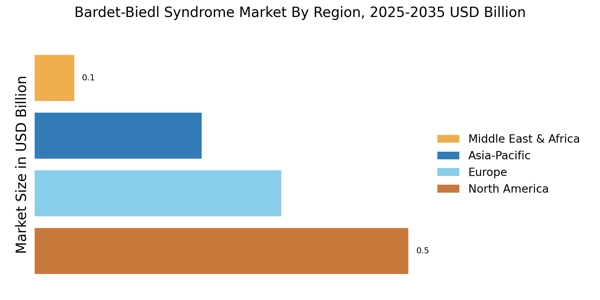
North America is the largest market for Bardet-Biedl Syndrome (BBS) treatments, accounting for approximately 45% of the global market share. The region benefits from advanced healthcare infrastructure, significant R&D investments, and a growing awareness of rare diseases. Regulatory support from agencies like the FDA further catalyzes market growth, driving demand for innovative therapies and personalized medicine. The United States is the primary contributor, with a robust presence of key players such as Pfizer, Amgen, and Eli Lilly. Canada also plays a significant role, focusing on patient access and treatment options. The competitive landscape is characterized by collaborations among pharmaceutical companies and research institutions, enhancing the development of effective therapies for BBS.

Europe : Emerging Market with Potential

Europe is witnessing a growing interest in the Bardet-Biedl Syndrome market, holding approximately 30% of the global share. The region's growth is driven by increasing awareness, supportive healthcare policies, and initiatives aimed at rare disease research. Countries like Germany and France are leading the charge, with regulatory frameworks that encourage innovation and expedite the approval of new treatments. Germany stands out as a key player, with significant investments in healthcare and research. France follows closely, focusing on patient-centric approaches and access to therapies. The competitive landscape includes major pharmaceutical companies like Novartis and Roche, which are actively involved in developing BBS treatments. The European Medicines Agency's commitment to rare diseases further strengthens the market's potential.

Asia-Pacific : Emerging Powerhouse in Healthcare

The Asia-Pacific region is emerging as a significant player in the Bardet-Biedl Syndrome market, accounting for about 20% of the global share. The growth is fueled by increasing healthcare investments, rising awareness of rare diseases, and improving access to treatments. Countries like Japan and Australia are at the forefront, with regulatory bodies promoting research and development in rare disease therapies. Japan is particularly notable for its advanced healthcare system and strong pharmaceutical industry, with companies like Takeda leading the way. Australia is also making strides in patient access and treatment options. The competitive landscape is evolving, with both local and international players vying for market share, enhancing the availability of BBS treatments across the region.

Middle East and Africa : Untapped Market with Challenges

The Middle East and Africa region represents an untapped market for Bardet-Biedl Syndrome treatments, holding approximately 5% of the global share. The growth potential is significant, driven by increasing healthcare investments and a rising focus on rare diseases. However, challenges such as limited access to healthcare and regulatory hurdles hinder market expansion. Countries like South Africa and the UAE are making efforts to improve healthcare infrastructure and patient access. South Africa is emerging as a key player, with initiatives aimed at enhancing awareness and treatment options for rare diseases. The UAE is also investing in healthcare advancements, fostering collaborations with international pharmaceutical companies. The competitive landscape is still developing, with opportunities for growth as awareness and access improve across the region.

Bardet Biedl Syndrome Market
 Regional Image

Key Players and Competitive Insights

The Bardet-Biedl Syndrome Market is characterized by a complex interplay of competitive dynamics, driven by a growing awareness of the syndrome and advancements in therapeutic options. Key players such as Boehringer Ingelheim (DE), Novartis (CH), and Pfizer (US) are actively shaping the landscape through strategic initiatives focused on innovation and partnerships. Boehringer Ingelheim (DE) has emphasized research and development, particularly in gene therapy, which appears to be a promising avenue for addressing the genetic underpinnings of Bardet-Biedl Syndrome. Meanwhile, Novartis (CH) has pursued collaborations with academic institutions to enhance its understanding of the syndrome, potentially leading to novel treatment pathways. Pfizer (US) has adopted a dual approach, focusing on both drug development and patient engagement, which may foster a more comprehensive treatment ecosystem.

The market structure is moderately fragmented, with several players vying for dominance. Companies are increasingly localizing manufacturing and optimizing supply chains to enhance efficiency and responsiveness to market demands. This strategy not only reduces costs but also allows for quicker adaptation to regulatory changes across different regions. The collective influence of these key players is significant, as they drive innovation and set benchmarks for quality and efficacy in treatment options.

In August 2025, Novartis (CH) announced a strategic partnership with a leading biotechnology firm to co-develop a novel gene therapy aimed at treating Bardet-Biedl Syndrome. This collaboration is expected to leverage cutting-edge technology and expertise, potentially accelerating the development timeline for new therapies. The strategic importance of this partnership lies in its potential to enhance Novartis's portfolio and position it as a leader in innovative treatment solutions for rare genetic disorders.

In September 2025, Pfizer (US) launched a patient-centric initiative aimed at improving access to treatment for Bardet-Biedl Syndrome. This initiative includes educational programs and support networks for patients and healthcare providers. The significance of this move is multifaceted; it not only enhances Pfizer's brand reputation but also aligns with the growing trend of patient engagement in healthcare, which is crucial for the successful adoption of new therapies.

In October 2025, Boehringer Ingelheim (DE) unveiled a new research facility dedicated to rare diseases, including Bardet-Biedl Syndrome. This facility is expected to focus on innovative drug discovery and development processes. The establishment of this facility underscores Boehringer Ingelheim's commitment to addressing unmet medical needs and positions the company to be at the forefront of research in this niche market.

As of October 2025, the competitive landscape is increasingly defined by trends such as digitalization, sustainability, and the integration of artificial intelligence in drug development. Strategic alliances are becoming more prevalent, as companies recognize the value of collaboration in navigating the complexities of rare disease markets. Looking ahead, competitive differentiation is likely to evolve from traditional price-based strategies to a focus on innovation, technological advancements, and the reliability of supply chains. This shift may redefine how companies approach market entry and product development, emphasizing the importance of creating value through cutting-edge solutions.

Key Companies in the Bardet Biedl Syndrome Market market include

Industry Developments

  • Q4 2024: Rhythm Pharmaceuticals & Axovia Therapeutics Announce Joint Research Collaboration in Bardet-Biedl Syndrome Rhythm Pharmaceuticals and Axovia Therapeutics announced a joint research collaboration to advance the understanding of Bardet-Biedl syndrome (BBS), leveraging their expertise in gene therapy and rare disease drug development to improve outcomes for BBS patients.
  • Q4 2024: Rhythm Pharma & Axovia ink joint research collaboration designed to advance the understanding of Bardet-Biedl syndrome Rhythm Pharmaceuticals and Axovia Therapeutics entered into a joint research collaboration focused on advancing the understanding and treatment of Bardet-Biedl syndrome, with Axovia utilizing gene therapy approaches and Rhythm contributing its experience in rare disease therapeutics.
  • Q1 2025: Viralgen and Axovia Therapeutics partner to manufacture gene therapy for Bardet-Biedl Syndrome Viralgen and Axovia Therapeutics announced a partnership to manufacture an investigational AAV9-based gene therapy for retinal dystrophy in Bardet-Biedl Syndrome (BBS) patients, with clinical development of the lead program, AXV-101, expected to begin in mid-2025.
  • Q1 2024: Clinical Practice — Bardet Biedl Syndrome Foundation MeiraGTx, in collaboration with Dr. Arlene Drack and Invision, manufactured a GMP-grade BBS10 gene therapy vector and is in the process of obtaining approval for a Specials clinical study in the UK to treat a small number of Bardet-Biedl syndrome patients.

The market is poised for growth due to heightened interest in orphan drugs and increased governmental support aimed at funding rare disease research, further impacting the dynamics within this specialized sector. The rising market valuations of companies such as Genentech, Regeneron Pharmaceuticals, and Bristol Myers Squibb demonstrate the optimistic outlook for future investments in this field.

Future Outlook

Bardet Biedl Syndrome Market Future Outlook

The Bardet-Biedl Syndrome market is projected to grow at a 9.72% CAGR from 2024 to 2035, driven by advancements in genetic research, increased awareness, and improved treatment options.

New opportunities lie in:

  • Development of targeted gene therapies for Bardet-Biedl Syndrome.
  • Expansion of telehealth services for remote patient monitoring.
  • Investment in personalized medicine approaches for treatment optimization.

By 2035, the Bardet-Biedl Syndrome market is expected to be robust, driven by innovative therapies and enhanced patient care.

Market Segmentation

Bardet Biedl Syndrome Market Type Outlook

  • Genetic Diagnosis
  • Symptomatic Treatment
  • Genetic Counseling
  • Supportive Therapies

Bardet Biedl Syndrome Market Diagnosis Method Outlook

  • Clinical Examination
  • Genetic Testing
  • Imaging Studies
  • Family History Analysis

Bardet Biedl Syndrome Market Patient Age Group Outlook

  • Pediatric
  • Adult
  • Geriatric

Bardet Biedl Syndrome Market Therapeutic Approach Outlook

  • Pharmacotherapy
  • Physical Therapy
  • Surgical Intervention
  • Nutritional Support

Report Scope

MARKET SIZE 20241.043(USD Billion)
MARKET SIZE 20251.145(USD Billion)
MARKET SIZE 20352.895(USD Billion)
COMPOUND ANNUAL GROWTH RATE (CAGR)9.72% (2024 - 2035)
REPORT COVERAGERevenue Forecast, Competitive Landscape, Growth Factors, and Trends
BASE YEAR2024
Market Forecast Period2025 - 2035
Historical Data2019 - 2024
Market Forecast UnitsUSD Billion
Key Companies ProfiledBoehringer Ingelheim (DE), Novartis (CH), Pfizer (US), Bristol-Myers Squibb (US), Sanofi (FR), Roche (CH), AstraZeneca (GB), Eli Lilly (US), Amgen (US)
Segments CoveredType, Diagnosis Method, Therapeutic Approach, Patient Age Group, Regional
Key Market OpportunitiesAdvancements in gene therapy and personalized medicine enhance treatment options in the Bardet-Biedl Syndrome Market.
Key Market DynamicsRising demand for targeted therapies drives innovation and competition in the Bardet-Biedl Syndrome treatment landscape.
Countries CoveredNorth America, Europe, APAC, South America, MEA

Leave a Comment

FAQs

What is the current valuation of the Bardet-Biedl Syndrome Market?

The Bardet-Biedl Syndrome Market was valued at 1.043 USD Billion in 2024.

What is the projected market size for Bardet-Biedl Syndrome by 2035?

The market is projected to reach 2.895 USD Billion by 2035.

What is the expected CAGR for the Bardet-Biedl Syndrome Market during the forecast period?

The expected CAGR for the market from 2025 to 2035 is 9.72%.

Which companies are the key players in the Bardet-Biedl Syndrome Market?

Key players include Boehringer Ingelheim, Novartis, Pfizer, Bristol-Myers Squibb, Sanofi, Roche, AstraZeneca, Eli Lilly, and Amgen.

What are the main segments of the Bardet-Biedl Syndrome Market?

The main segments include Type, Diagnosis Method, Therapeutic Approach, and Patient Age Group.

How does the Genetic Diagnosis segment perform in terms of market valuation?

The Genetic Diagnosis segment was valued between 0.25 and 0.65 USD Billion.

What is the market valuation for Symptomatic Treatment in 2024?

The Symptomatic Treatment segment was valued between 0.35 and 0.9 USD Billion.

What is the projected valuation for the Pediatric patient age group by 2035?

The Pediatric segment is projected to reach between 0.35 and 0.95 USD Billion by 2035.

What therapeutic approaches are included in the Bardet-Biedl Syndrome Market?

Therapeutic approaches include Pharmacotherapy, Physical Therapy, Surgical Intervention, and Nutritional Support.

What is the market valuation for Genetic Testing in the Diagnosis Method segment?

The Genetic Testing segment was valued between 0.35 and 0.95 USD Billion.

Download Free Sample

Kindly complete the form below to receive a free sample of this Report

Compare Licence

×
Features License Type
Single User Multiuser License Enterprise User
Price $4,590 $5,950 $7,250
Maximum User Access Limit 1 User Upto 10 Users Unrestricted Access Throughout the Organization
Free Customization
Direct Access to Analyst
Deliverable Format
Platform Access
Discount on Next Purchase 10% 15% 15%
Printable Versions