×
Request Free Sample ×

Kindly complete the form below to receive a free sample of this Report

* Please use a valid business email

Leading companies partner with us for data-driven Insights

clients tt-cursor
Hero Background
English
Chinese
French
Japanese
Korean
German
Spanish

Bacteriostatic Water for Injection Market Trends

ID: MRFR/HC/10604-HCR
128 Pages
Rahul Gotadki
October 2025

Bacteriostatic Water for Injection Market Research Report: Information By Application (Medication Dilution, Clinical Pharmacology, and Anti-bacterial Applications), By Distribution Channel (Hospital Pharmacies, Online Pharmacies, and Others), By End User (Hospitals, Clinics, and Others), and By Region (North America, Europe, Asia-Pacific, and Rest Of The World) - Growth & Industry Forecast 2025 To 2035

Share:
Download PDF ×

We do not share your information with anyone. However, we may send you emails based on your report interest from time to time. You may contact us at any time to opt-out.

Bacteriostatic Water for Injection Market Infographic
×
Bacteriostatic Water for Injection Market Infographic Full View
Purchase Options

Market Trends

Key Emerging Trends in the Bacteriostatic Water for Injection Market

The market trends of bacteriostatic water for injection (BWI) have undergone notable developments, influenced by various factors that cater to the pharmaceutical and healthcare sectors. Bacteriostatic water is a key component used in reconstituting medications for injection and is known for inhibiting the growth of bacteria in the solution. One prominent trend in the BWI market is the increasing demand for injectable medications across various medical applications. With the rise in chronic diseases and the development of novel therapeutic solutions, the need for bacteriostatic water for injection has surged, driving market growth.

The pharmaceutical industry's inclination towards biologics and biosimilars has also impacted the bacteriostatic water for injection market. Biopharmaceuticals often require precise reconstitution to maintain their stability and efficacy. Bacteriostatic water serves as a reliable medium for dilution, ensuring the safety and integrity of these complex therapeutic agents. As the biopharmaceutical sector continues to expand, the demand for bacteriostatic water for injection is expected to grow in tandem, reflecting a significant market trend.

Another notable trend is the emphasis on product innovation and the development of advanced packaging solutions. Manufacturers in the BWI market are investing in research and development to enhance the safety and convenience of their products. Innovations include user-friendly vials, pre-filled syringes, and advanced packaging materials that contribute to easier handling and administration of medications. These developments align with the industry's focus on patient-centric solutions and are likely to influence purchasing decisions, fostering market growth.

Stringent regulatory requirements and quality standards have become pivotal factors shaping the bacteriostatic water for injection market trends. Compliance with regulatory guidelines, particularly in pharmaceutical manufacturing, is crucial for ensuring product safety and efficacy. Manufacturers are investing in quality assurance measures, such as Good Manufacturing Practices (GMP), to meet these standards. This focus on adherence to regulatory requirements contributes to building trust among consumers and stakeholders, positively impacting the market.

The growing awareness of infectious diseases and the importance of safe injection practices have propelled the demand for bacteriostatic water for injection in healthcare settings. With an increased emphasis on preventing healthcare-associated infections, healthcare professionals are seeking reliable and sterile solutions for medication preparation. Bacteriostatic water's ability to prevent bacterial growth in reconstituted medications aligns with these safety objectives, making it a preferred choice in healthcare facilities and contributing to market expansion.

Cost-effectiveness is another significant factor influencing market trends in the bacteriostatic water for injection market. As healthcare systems strive to optimize operational costs, there is a growing preference for affordable yet high-quality solutions. Manufacturers are responding to this trend by offering competitively priced bacteriostatic water for injection without compromising on product quality. This affordability factor is contributing to the widespread adoption of bacteriostatic water, especially in settings where cost considerations play a crucial role in decision-making.

Author
Rahul Gotadki
Assistant Manager

He holds an experience of about 7+ years in Market Research and Business Consulting, working under the spectrum of Life Sciences and Healthcare domains. Rahul conceptualizes and implements a scalable business strategy and provides strategic leadership to the clients. His expertise lies in market estimation, competitive intelligence, pipeline analysis, customer assessment, etc. In addition to the above, his other responsibility includes strategic tracking of high growth markets & advising clients on the potential areas of focus they could direct their business initiatives

Leave a Comment

FAQs

How much is the Bacteriostatic Water for Injection market?

The Bacteriostatic Water for Injection market Distribution Channel was valued at USD 1.0 Billion in 2022.

What is the growth rate of the Bacteriostatic Water for Injection market?

The market is projected to grow at a CAGR of 7.80% during the forecast period, 2023-2032.

Which region held the largest market share in the Bacteriostatic Water for Injection market?

North America had the largest share in the market

Who are the key players in the Bacteriostatic Water for Injection market?

The key players in the market are Acella Pharmaceuticals, LLC, Merck KGaA, Abbott Laboratories, Procter and Gamble, Pfizer, Inc., Reckitt Benckiser Group PLC, Novartis AG, GlaxoSmithKline PLC, Sanofi, and Johnson and Johnson Services, Inc.

Which Application led the Bacteriostatic Water for Injection market?

The Medication Dilution Application dominated the market in 2022.

Which Distribution Channel had the largest market share in the Bacteriostatic Water for Injection market?

The Hospital Pharmacies Distribution Channel had the largest share in the market.

Market Summary

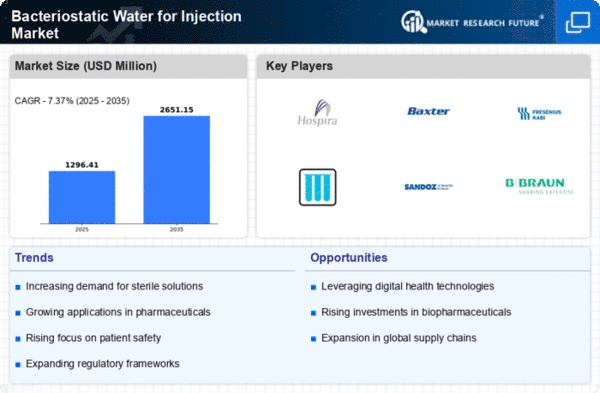
As per MRFR analysis, the Bacteriostatic Water for Injection Market Size was estimated at 1207.42 USD Million in 2024. The Bacteriostatic Water for Injection industry is projected to grow from 1310.24 in 2025 to 2651.15 by 2035, exhibiting a compound annual growth rate (CAGR) of 7.37 during the forecast period 2025 - 2035.

Key Market Trends & Highlights

The Bacteriostatic Water for Injection Market is experiencing robust growth driven by increasing demand for injectable solutions.

  • The market is witnessing a rising demand for injectable medications, particularly in North America, which remains the largest market.
  • Technological advancements in production processes are enhancing the quality and safety of bacteriostatic water for injection.
  • The pharmaceuticals segment dominates the market, while the biotechnology segment is emerging as the fastest-growing area.
  • Key market drivers include the increasing prevalence of chronic diseases and the expansion of biopharmaceuticals, particularly in the Asia-Pacific region.

Market Size & Forecast

2024 Market Size 1207.42 (USD Million)
2035 Market Size 2651.15 (USD Million)
CAGR (2025 - 2035) 7.37%
Largest Regional Market Share in 2024 North America

Major Players

Hospira (US), Baxter (US), Fresenius Kabi (DE), Mylan (US), Sandoz (CH), B. Braun (DE), Eagle Pharmaceuticals (US), Amgen (US), Teva Pharmaceuticals (IL)

Market Trends

The Bacteriostatic Water for Injection Market is currently experiencing notable developments, driven by various factors that influence its growth trajectory. This market, which serves as a critical component in the pharmaceutical and healthcare sectors, is characterized by its use in diluting or dissolving medications for injection. The increasing demand for injectable drugs, coupled with the rising prevalence of chronic diseases, appears to be propelling the market forward. Furthermore, advancements in manufacturing processes and stringent regulatory frameworks are likely to shape the landscape of this market, ensuring product safety and efficacy. In addition, the growing emphasis on sterile and safe drug administration is fostering innovation within the Bacteriostatic Water for Injection Market. As healthcare providers seek to enhance patient outcomes, the focus on high-quality injectable solutions is becoming paramount. This trend suggests a potential shift towards more sophisticated formulations and packaging solutions that cater to the evolving needs of healthcare professionals and patients alike. Overall, the Bacteriostatic Water for Injection Market seems poised for continued expansion, driven by technological advancements and an increasing awareness of the importance of safe medication practices.

Rising Demand for Injectable Medications

The Bacteriostatic Water for Injection Market is witnessing a surge in demand for injectable medications. This trend is largely attributed to the growing prevalence of chronic illnesses that require long-term treatment through injections. As healthcare providers increasingly rely on injectable therapies, the need for high-quality bacteriostatic water becomes essential to ensure the safety and effectiveness of these medications.

Technological Advancements in Production

Innovations in manufacturing processes are significantly impacting the Bacteriostatic Water for Injection Market. Enhanced production techniques are likely to improve the quality and consistency of bacteriostatic water, thereby meeting the stringent regulatory requirements. These advancements may also lead to more efficient production methods, potentially reducing costs and increasing accessibility for healthcare providers.

Focus on Patient Safety and Quality Assurance

There is a growing emphasis on patient safety and quality assurance within the Bacteriostatic Water for Injection Market. Healthcare professionals are increasingly prioritizing the use of sterile and safe injectable solutions to minimize risks associated with drug administration. This trend indicates a shift towards more rigorous quality control measures and the adoption of best practices in the handling and storage of bacteriostatic water.

Bacteriostatic Water for Injection Market Market Drivers

Market Growth Projections

The Global Bacteriostatic Water for Injection Market Industry is projected to experience substantial growth over the next decade. With a market value of 1.2 USD Billion in 2024, it is anticipated to reach 2.51 USD Billion by 2035, reflecting a CAGR of 6.92% from 2025 to 2035. This growth trajectory is driven by various factors, including the rising demand for injectable medications, advancements in manufacturing technologies, and increased regulatory support. The market's expansion indicates a robust future for bacteriostatic water, highlighting its critical role in the pharmaceutical industry.

Increase in Biologics and Biosimilars

The rise of biologics and biosimilars is a key driver for the Global Bacteriostatic Water for Injection Market Industry. As these complex therapies often require reconstitution with bacteriostatic water, the demand for such solutions is expected to increase. The global shift towards personalized medicine and the growing number of biologics entering the market necessitate reliable and safe diluents. This trend is likely to contribute to the market's growth, as manufacturers adapt to meet the specific needs of biologics, thereby enhancing the overall landscape of injectable therapies.

Rising Demand for Injectable Medications

The Global Bacteriostatic Water for Injection Market Industry experiences a notable surge in demand for injectable medications, driven by the increasing prevalence of chronic diseases and the growing geriatric population. As healthcare providers increasingly prefer injectable formulations for their rapid onset of action, the market is poised for growth. In 2024, the market is valued at approximately 1.2 USD Billion, reflecting the rising reliance on injectable therapies. This trend is expected to continue, as the World Health Organization emphasizes the importance of effective medication delivery systems in improving patient outcomes.

Regulatory Support for Injectable Solutions

Regulatory bodies worldwide are increasingly supporting the development and approval of injectable solutions, which positively impacts the Global Bacteriostatic Water for Injection Market Industry. Initiatives aimed at streamlining the approval process for new injectable drugs encourage pharmaceutical companies to invest in research and development. This regulatory environment fosters innovation and enhances the availability of injectable medications. As a result, the market is expected to expand significantly, with projections indicating a market value of 2.51 USD Billion by 2035, reflecting the growing acceptance of injectable therapies in clinical practice.

Advancements in Pharmaceutical Manufacturing

Technological advancements in pharmaceutical manufacturing processes significantly influence the Global Bacteriostatic Water for Injection Market Industry. Innovations such as automated filling systems and enhanced sterilization techniques improve the efficiency and safety of injectable drug production. These advancements not only reduce production costs but also ensure compliance with stringent regulatory standards. As a result, manufacturers are better positioned to meet the growing demand for high-quality bacteriostatic water. The market is projected to grow at a CAGR of 6.92% from 2025 to 2035, indicating a robust future driven by these manufacturing improvements.

Global Health Initiatives and Vaccination Programs

Global health initiatives and vaccination programs significantly impact the Global Bacteriostatic Water for Injection Market Industry. As governments and organizations prioritize vaccination to combat infectious diseases, the demand for bacteriostatic water as a diluent for vaccines is likely to rise. These initiatives not only enhance public health but also stimulate market growth by increasing the volume of injectable solutions required. The ongoing commitment to improving global health outcomes suggests a sustained demand for bacteriostatic water, further solidifying its role in the pharmaceutical landscape.

Market Segment Insights

By Application: Pharmaceuticals (Largest) vs. Biotechnology (Fastest-Growing)

The Bacteriostatic Water for Injection Market is primarily segmented by application, with Pharmaceuticals holding the largest share, driven by the rising demand for injectable medicines in various therapeutic areas. This segment's dominance can be attributed to the extensive use of bacteriostatic water in preparing pharmaceutical formulations, ensuring product safety and efficacy. Following closely, Biotechnology is emerging rapidly due to the increasing number of biopharmaceutical products entering the market that require sterile diluents for injections. This shift underscores the pivotal role biotechnology plays in modern medicine.

Biopharmaceuticals: Pharmaceuticals (Dominant) vs. Biotechnology (Emerging)

In the Bacteriostatic Water for Injection Market, Pharmaceuticals remains the dominant application segment. It is characterized by its wide-ranging use in creating injectable therapies, necessitating precision and stringent safety protocols. Pharmaceutical companies leverage bacteriostatic water to enhance the shelf-life and effectiveness of various drug formulations. Conversely, the Biotechnology sector is emerging robustly, fueled by innovations and an uptick in biotechnological research and development. This segment addresses the growing demand for biologics and advanced therapies, incorporating specialized formulations that often require bacteriostatic diluents, thereby driving its rapid growth.

By End Use: Hospitals (Largest) vs. Clinics (Fastest-Growing)

In the Bacteriostatic Water for Injection Market, the distribution of market share among the end use segments reveals that hospitals hold the largest portion due to the high volume of procedures requiring injectable solutions. Clinics, on the other hand, though smaller in market share, are experiencing rapid growth as more outpatient procedures and minor surgeries increase in popularity. This segment's rising demand reflects a shift towards decentralized care, influencing the market dynamics significantly. Additionally, the growth trends in this segment are fueled by the rise in chronic diseases requiring frequent treatment and ongoing medication administration, particularly in hospitals. The increasing adoption of home healthcare practices in some regions has further contributed to the expanding clinic segment, which is now accommodating more patients with specialized needs. The overall emphasis on patient-centered care is expected to propel demand across these end use categories in coming years.

Hospitals (Dominant) vs. Clinics (Emerging)

Hospitals serve as the dominant end-use segment in the Bacteriostatic Water for Injection Market, driven by extensive use in surgical procedures and critical care settings where sterile solutions are paramount. They maintain a strong focus on safety and quality, investing in advanced storage and handling procedures for injectable medications. Conversely, clinics are emerging as a significant growth area, influenced by the increasing trend of outpatient treatments and minor surgeries. They cater to a wider demographic that prefers localized care with fewer hospital visits, offering flexibility and convenience. This shift not only enhances accessibility but also encourages a more tailored approach to patient care, which is likely to attract more healthcare providers to invest in this space.

By Formulation Type: Multi Dose Vials (Largest) vs. Pre-filled Syringes (Fastest-Growing)

In the Bacteriostatic Water for Injection Market, the segment value distribution shows that Multi Dose Vials hold a significant market share due to their versatility and convenience in clinical settings. On the other hand, Pre-filled Syringes have emerged as a growing choice, attracting attention because of their ease of use and time efficiency for healthcare professionals. Single Dose Vials, although important, are less favored compared to these two segment values.

Formulation Type: Multi Dose Vials (Dominant) vs. Pre-filled Syringes (Emerging)

Multi Dose Vials are characterized by their ability to deliver multiple doses, making them a cost-effective option for both healthcare providers and patients. This formulation type is particularly popular in hospitals where medications need to be accessed frequently. Conversely, Pre-filled Syringes represent an emerging trend in the market, catering to a demand for user-friendly solutions that reduce preparation time and minimize errors during drug administration. As healthcare shifts towards more streamlined processes, these syringes are gaining traction, particularly in outpatient settings and for self-administration.

By Distribution Channel: Direct Sales (Largest) vs. Online Sales (Fastest-Growing)

In the Bacteriostatic Water for Injection Market, the distribution channels manifest varied dynamics. Direct sales continue to dominate the market, accounting for the largest share of the distribution. This channel benefits from established relationships between manufacturers and healthcare providers. On the other hand, online sales are gaining traction, driven by a growing demand for convenience and accessibility among healthcare professionals and patients alike.

Direct Sales (Dominant) vs. Online Sales (Emerging)

Direct sales represent a mature segment in the Bacteriostatic Water for Injection Market, characterized by strong personal connections with healthcare facilities and practitioners. This traditional channel is preferred for its reliability and immediate access to products. Conversely, online sales are rapidly emerging, appealing to a younger demographic and those seeking efficiency. As digital platforms evolve, online sales are projected to capture a larger audience, providing flexibility and streamlined purchasing processes. Pharmacies, while relevant, lag in growth compared to the dynamic online segment, emphasizing the need for adaptation in distribution strategies.

By Packaging Type: Glass Vials (Largest) vs. Plastic Vials (Fastest-Growing)

In the Bacteriostatic Water for Injection Market, Glass Vials dominate the packaging type segment due to their excellent inert properties and ability to maintain the sterility of the product. As the largest segment, glass vials are preferred for their chemical resilience and the ability to protect sensitive formulations from environmental factors. Plastic vials, while holding a smaller share, are on a growth trajectory as manufacturing technologies advance, making them an appealing choice for cost-effective and lightweight alternatives. The growth trends within the packaging type segment are driven by the increasing demand for safer and more efficient drug delivery systems. Plastic vials are emerging as a dynamic alternative, spurred by their benefits in terms of sustainability and lower production costs. Additionally, the rise in injectable drugs and biologics contributes to the expanding landscape, with plastic vials projected to see faster adoption due to their versatility and ease of handling in clinical settings.

Glass Vials (Dominant) vs. Plastic Vials (Emerging)

Glass vials are currently the dominant packaging type in the Bacteriostatic Water for Injection Market, appreciated for their inert nature, which ensures the stability and safety of sensitive injectable formulations. They are largely preferred for their robustness and ability to prevent contamination. On the other hand, plastic vials represent an emerging packaging type, gaining traction due to innovations that enhance their compatibility with various drug formulations. Their lightweight nature and potential for lower production costs make them appealing amidst the increasing push for efficiency in pharmaceutical manufacturing. As healthcare providers and manufacturers seek more cost-effective solutions without compromising quality, the balance between traditional glass and innovative plastic vials will shape the market dynamics in the years to come.

Get more detailed insights about Bacteriostatic Water for Injection Market Research Report 2035

Regional Insights

North America : Market Leader in Innovation

North America is poised to maintain its leadership in the Bacteriostatic Water for Injection market, holding a significant market share of $600.0M in 2024. The region's growth is driven by increasing healthcare expenditures, a robust pharmaceutical sector, and stringent regulatory frameworks that ensure product safety and efficacy. The demand for injectable medications continues to rise, further propelling market expansion. The competitive landscape is characterized by key players such as Hospira, Baxter, and Mylan, who are investing in R&D to enhance product offerings. The U.S. remains the largest market, supported by advanced healthcare infrastructure and a high prevalence of chronic diseases. The presence of major pharmaceutical companies fosters innovation and ensures a steady supply of high-quality bacteriostatic water, solidifying North America's market dominance.

Europe : Growing Market with Regulatory Support

Europe's Bacteriostatic Water for Injection market is projected to reach $300.0M, driven by increasing demand for injectable drugs and supportive regulatory frameworks. The European Medicines Agency (EMA) has established stringent guidelines that enhance product quality and safety, fostering consumer confidence. The rising prevalence of chronic diseases and the aging population further contribute to market growth, as healthcare providers seek reliable solutions for patient care. Leading countries in this region include Germany, France, and the UK, where major players like Fresenius Kabi and B. Braun are actively involved. The competitive landscape is marked by innovation and strategic partnerships, ensuring a steady supply of bacteriostatic water. The presence of established pharmaceutical companies enhances market dynamics, making Europe a key player in the global landscape.

Asia-Pacific : Emerging Market with High Potential

The Asia-Pacific region is witnessing rapid growth in the Bacteriostatic Water for Injection market, projected to reach $250.0M. Factors such as increasing healthcare investments, rising awareness of injectable medications, and a growing population are driving demand. Additionally, government initiatives aimed at improving healthcare infrastructure and access to medications are expected to further boost market growth. Regulatory bodies are also enhancing guidelines to ensure product safety and efficacy. Countries like China, India, and Japan are leading the market, with significant contributions from local manufacturers and multinational companies. Key players such as Mylan and Teva Pharmaceuticals are expanding their presence in the region, focusing on innovation and affordability. The competitive landscape is evolving, with an increasing number of players entering the market, enhancing the overall supply chain and product availability.

Middle East and Africa : Developing Market with Challenges

The Middle East and Africa (MEA) market for Bacteriostatic Water for Injection is valued at $57.42M, with growth driven by increasing healthcare needs and rising investments in the pharmaceutical sector. However, the region faces challenges such as regulatory hurdles and varying healthcare standards across countries. Despite these challenges, the demand for injectable medications is on the rise, driven by an increase in chronic diseases and a growing population. Leading countries in the MEA region include South Africa and the UAE, where local manufacturers are striving to meet the increasing demand. The competitive landscape is characterized by a mix of local and international players, with companies like Eagle Pharmaceuticals and Amgen making significant inroads. The region's potential for growth is substantial, provided that regulatory frameworks are strengthened to support market expansion.

Key Players and Competitive Insights

The Bacteriostatic Water for Injection Market is characterized by a competitive landscape that is increasingly shaped by innovation, strategic partnerships, and regional expansions. Key players such as Hospira (US), Baxter (US), and Fresenius Kabi (DE) are at the forefront, each adopting distinct strategies to enhance their market presence. Hospira (US) focuses on expanding its product portfolio through continuous innovation, while Baxter (US) emphasizes strategic partnerships to bolster its distribution channels. Fresenius Kabi (DE) appears to be concentrating on regional expansion, particularly in emerging markets, which collectively influences the competitive dynamics by fostering a more diversified product offering and enhanced accessibility for healthcare providers.The market structure is moderately fragmented, with several players vying for market share. Key business tactics include localizing manufacturing to reduce costs and optimize supply chains, which is crucial in maintaining competitive pricing. The collective influence of these major players is significant, as they not only drive innovation but also set industry standards that smaller companies often follow.

In November Baxter (US) announced a strategic partnership with a leading logistics firm to enhance its supply chain efficiency. This move is likely to streamline operations and improve delivery times, thereby increasing customer satisfaction and potentially capturing a larger market share. Such partnerships are indicative of a broader trend where companies seek to leverage external expertise to optimize their operational capabilities.

In October Fresenius Kabi (DE) launched a new line of environmentally friendly packaging for its Bacteriostatic Water products. This initiative aligns with the growing emphasis on sustainability within the pharmaceutical industry, suggesting that Fresenius Kabi is positioning itself as a leader in eco-conscious practices. The strategic importance of this move lies in its potential to attract environmentally aware consumers and healthcare providers, thereby enhancing brand loyalty.

In September Hospira (US) expanded its manufacturing capabilities by investing in advanced automation technologies. This investment is expected to increase production efficiency and reduce operational costs, allowing Hospira to remain competitive in a price-sensitive market. The strategic importance of automation cannot be overstated, as it not only improves output but also enhances product quality, which is paramount in the pharmaceutical sector.

As of December current competitive trends indicate a shift towards digitalization, sustainability, and the integration of AI technologies in production processes. Strategic alliances are increasingly shaping the landscape, enabling companies to pool resources and expertise. Looking ahead, competitive differentiation is likely to evolve from traditional price-based competition to a focus on innovation, technological advancements, and supply chain reliability. This shift underscores the importance of adaptability in a rapidly changing market environment.

Key Companies in the Bacteriostatic Water for Injection Market include

Industry Developments

April 2020:The COVID-19 Treatment Acceleration Program (CTAP) was started by the US Food and pharmacological Administration (US FDA) in order to approve new therapies and carry out pharmacological trials for COVID-19.

September 2021:Two facilities in Argentina and Brazil have been chosen by the Pan American Health Organization (PAHO) to serve as regional hubs for the development and production of COVID-19 vaccines based on messenger ribonucleic acid (mRNA).

July 2021:Potassium chloride in water for injection was first made available by Nexus Pharmaceuticals in single-dose IV bags containing 10mEq/100mL, 10mEq/50mL, and 20mEq/50mL. When oral replacement is not an option, potassium chloride injection is used to address deficiency.

Future Outlook

Bacteriostatic Water for Injection Market Future Outlook

The Bacteriostatic Water for Injection Market is projected to grow at a 7.37% CAGR from 2024 to 2035, driven by increasing demand for injectable medications and advancements in pharmaceutical manufacturing.

New opportunities lie in:

  • Expansion of sterile compounding services in hospitals
  • Development of customized bacteriostatic formulations for niche therapies
  • Investment in automated filling and packaging technologies for efficiency

By 2035, the market is expected to achieve robust growth, reflecting evolving healthcare needs and technological advancements.

Market Segmentation

Bacteriostatic Water for Injection Market End Use Outlook

  • Hospitals
  • Clinics
  • Home Healthcare
  • Pharmaceutical Companies

Bacteriostatic Water for Injection Market Application Outlook

  • Pharmaceuticals
  • Biotechnology
  • Research Laboratories
  • Veterinary Medicine

Bacteriostatic Water for Injection Market Packaging Type Outlook

  • Glass Vials
  • Plastic Vials
  • Ampoules

Bacteriostatic Water for Injection Market Formulation Type Outlook

  • Single Dose Vials
  • Multi Dose Vials
  • Pre-filled Syringes

Bacteriostatic Water for Injection Market Distribution Channel Outlook

  • Direct Sales
  • Online Sales
  • Pharmacies

Report Scope

MARKET SIZE 20241207.42(USD Million)
MARKET SIZE 20251310.24(USD Million)
MARKET SIZE 20352651.15(USD Million)
COMPOUND ANNUAL GROWTH RATE (CAGR)7.37% (2025 - 2035)
REPORT COVERAGERevenue Forecast, Competitive Landscape, Growth Factors, and Trends
BASE YEAR2024
Market Forecast Period2025 - 2035
Historical Data2019 - 2024
Market Forecast UnitsUSD Million
Key Companies ProfiledHospira (US), Baxter (US), Fresenius Kabi (DE), Mylan (US), Sandoz (CH), B. Braun (DE), Eagle Pharmaceuticals (US), Amgen (US), Teva Pharmaceuticals (IL)
Segments CoveredApplication, End Use, Formulation Type, Distribution Channel, Packaging Type
Key Market OpportunitiesIncreasing demand for sterile solutions in pharmaceuticals drives growth in the Bacteriostatic Water for Injection Market.
Key Market DynamicsRising demand for sterile injectable solutions drives innovation and regulatory scrutiny in the Bacteriostatic Water for Injection market.
Countries CoveredNorth America, Europe, APAC, South America, MEA

FAQs

How much is the Bacteriostatic Water for Injection market?

The Bacteriostatic Water for Injection market Distribution Channel was valued at USD 1.0 Billion in 2022.

What is the growth rate of the Bacteriostatic Water for Injection market?

The market is projected to grow at a CAGR of 7.80% during the forecast period, 2023-2032.

Which region held the largest market share in the Bacteriostatic Water for Injection market?

North America had the largest share in the market

Who are the key players in the Bacteriostatic Water for Injection market?

The key players in the market are Acella Pharmaceuticals, LLC, Merck KGaA, Abbott Laboratories, Procter and Gamble, Pfizer, Inc., Reckitt Benckiser Group PLC, Novartis AG, GlaxoSmithKline PLC, Sanofi, and Johnson and Johnson Services, Inc.

Which Application led the Bacteriostatic Water for Injection market?

The Medication Dilution Application dominated the market in 2022.

Which Distribution Channel had the largest market share in the Bacteriostatic Water for Injection market?

The Hospital Pharmacies Distribution Channel had the largest share in the market.

  1. SECTION I: EXECUTIVE SUMMARY AND KEY HIGHLIGHTS
    1. | 1.1 EXECUTIVE SUMMARY
  2. SECTION II: SCOPING, METHODOLOGY AND MARKET STRUCTURE
    1. | 2.1 MARKET INTRODUCTION
    2. | 2.2 RESEARCH METHODOLOGY
  3. SECTION III: QUALITATIVE ANALYSIS
    1. | 3.1 MARKET DYNAMICS
    2. | 3.2 MARKET FACTOR ANALYSIS
  4. SECTION IV: QUANTITATIVE ANALYSIS
    1. | 4.1 Healthcare, BY Application (USD Million)
    2. | 4.2 Healthcare, BY End Use (USD Million)
    3. | 4.3 Healthcare, BY Formulation Type (USD Million)
    4. | 4.4 Healthcare, BY Distribution Channel (USD Million)
    5. | 4.5 Healthcare, BY Packaging Type (USD Million)
    6. | 4.6 Healthcare, BY Region (USD Million)
  5. SECTION V: COMPETITIVE ANALYSIS
    1. | 5.1 Competitive Landscape
    2. | 5.2 Company Profiles
    3. | 5.3 Appendix

Bacteriostatic Water for Injection Market Segmentation

Market Segmentation Overview

  • Detailed segmentation data will be available in the full report
  • Comprehensive analysis by multiple parameters
  • Regional and country-level breakdowns
  • Market size forecasts by segment
Infographic

Free Sample Request

Kindly complete the form below to receive a free sample of this Report

Get Free Sample

Customer Strories

Compare Licence

×
Features License Type
Single User Multiuser License Enterprise User
Price $4,950 $5,950 $7,250
Maximum User Access Limit 1 User Upto 10 Users Unrestricted Access Throughout the Organization
Free Customization
Direct Access to Analyst
Deliverable Format
Platform Access
Discount on Next Purchase 10% 15% 15%
Printable Versions