×
Request Free Sample ×

Kindly complete the form below to receive a free sample of this Report

* Please use a valid business email

Leading companies partner with us for data-driven Insights

clients tt-cursor
Hero Background
English
Chinese
French
Japanese
Korean
German
Spanish

Autologous Cell Therapy Market Analysis

ID: MRFR/HC/7487-HCR
200 Pages
Rahul Gotadki
October 2025

Autologous Cell Therapy Market Research Report: Size, Share, Trend Analysis By Applications (Oncology, Cardiology, Orthopedics, Dermatology), By Cell Type (Stem Cells, T Cells, Dendritic Cells, Platelet Rich Plasma), By End-use (Hospitals, Clinics, Research Laboratories), By Technology (Cell Isolation, Cell Expansion, Cryopreservation), and By Regional (North America, Europe, South America, Asia Pacific, Middle East and Africa) - Growth Outlook & Industry Forecast 2025 To 2035

Share:
Download PDF ×

We do not share your information with anyone. However, we may send you emails based on your report interest from time to time. You may contact us at any time to opt-out.

Autologous Cell Therapy Market Infographic
×
Autologous Cell Therapy Market Infographic Full View
Purchase Options

Market Analysis

In-depth Analysis of Autologous Cell Therapy Market Industry Landscape

The global autologous cell therapy market is set to reach US$ 30.12 BN by 2032, at a 19.56% CAGR between years 2023-2032. Portrayed by a unique character, the autologous cell therapy market is characterized by dynamic growth due to the several collisions of factors as well as where medical innovation meets personalized medicine and regenerative therapies. Fundamentally, the market is powered by the illusion that a patient’s own cells can be employed in dealing with an array of health-related conditions ranging from various apparitions of degenerative diseases to some cases of cancer. The growing prevalence of chronic diseases is a key driving force for this market growth. Since the populations’ life trajectories around the world are getting constantly occupied with various chronic conditions like cardiovascular diseases, diabetes mellitus, and neurodegenerative disorders; this causes an increasing need of innovative and adequate treatment methods. Autologous uses the cells of one individual which are damaged to be healed or replaced. In this way it provides personized approach that has great promise for addressing personal needs of each patient. The use of new technologies improves the market dynamics in autologous cell surgery. This therapy is based on the use of cells that are present in a patient’s body, and continuous studies and implementation of innovations related to cellular biology, genetic engineering, and tissue engineering progress them in this field. Scientific advancement in harvesting, manipulating as well as re-introduction of the cells for therapeutic processes enables an efficient way and safe practice to be accepted widely by individuals. Institutions like hospitals, specialized clinics, and research institutions have an important part in the process of integrating autologous cell therapies into clinical practice and this is because their influence over the dynamics of market participation is rather significant. These individualistic ways are discovered and introduced to establish value-based care, which is characterized by the need for patient results, within the general population. Autologous cell therapies are no longer viewed only as an honor of novelty by medical professionals, but rather as a genuine innovation that has the potential to change treatment norms in medically relevant fields where standard treatments have insufficiencies. The most important aspect in the market of autologous cell therapy is to take regulatory compliance into consideration. In light of the peculiarity in manipulating human cells to treat diseases, associating regulations accompanied autologous cell therapies development, manufacturing and clinical utilization. The soul factor for companies conducting their activities in the market is compliance with the above regulations, which ensures that products prepare during product development does not deviate from clinical trial protocols as wellness and local authorities for a specific market approval. Economic aspects such as the share of health spending, reimbursement issues and cost effectiveness influence these trends in a major way. The costing of and reimbursement policies associated with autologous cell therapies correlate directly to their accessibility by a greater number of individuals looking for cures. On the other hand, financial factors are an essential element in deciding uptake rate and penetration into the market for these new forms of therapy. International alliances and research programs serve dual functions – they help advance the autologous cell therapy market while also helping countries involved with the projects.

Author
Rahul Gotadki
Assistant Manager

He holds an experience of about 7+ years in Market Research and Business Consulting, working under the spectrum of Life Sciences and Healthcare domains. Rahul conceptualizes and implements a scalable business strategy and provides strategic leadership to the clients. His expertise lies in market estimation, competitive intelligence, pipeline analysis, customer assessment, etc. In addition to the above, his other responsibility includes strategic tracking of high growth markets & advising clients on the potential areas of focus they could direct their business initiatives

Leave a Comment

FAQs

What is the projected growth of the Autologous Cell Therapy market?

The Autologous Cell Therapy market is the expected increase in total market value of 45.91 USD billion over a defined forecast period 2025–2035. It is driven by factors such as demand trends, technological advances, regulatory changes, and geographic expansion.

What is the size of the Autologous Cell Therapy market?

Autologous Cell Therapy market size was valued at approximately 6.43 billion USD in 2024. This figure will reach 45.91 billion USD covering all regions (America, Europe, Asia, MEA and ROW), focusing its segments / services / distribution channels till 2035.

What is the CAGR of the Autologous Cell Therapy market?

Autologous Cell Therapy market is expected to grow at a CAGR of 19.56% between 2025 and 2035.

How much will the Autologous Cell Therapy market be worth by 2035?

Autologous Cell Therapy market is expected to be worth of 45.91 billion USD, reflecting growth driven by usage, technology and global demands by the end of 2035.

How will the Autologous Cell Therapy market perform over the next 10 years?

Over the next 10 years the Autologous Cell Therapy market is expected to shift from usd billion 6.43 to 45.91 billion USD, led by adoption of advanced tech, demographic trends, regulatory approvals, with potential headwinds from 2025 to 2035.

What was the market size of the Autologous Cell Therapy Market in 2024?

The Autologous Cell Therapy Market was valued at 12.77 USD Billion in 2024.

Which region is expected to dominate the Autologous Cell Therapy Market by 2035?

North America is expected to dominate the Autologous Cell Therapy Market, with a projected value of 18.1 USD Billion by 2035.

What will be the market size for Autologous Cell Therapy in the Oncology application by 2035?

The market size for Autologous Cell Therapy in the Oncology application is expected to be valued at 16.2 USD Billion by 2035.

What are the expected market values for Autologous Cell Therapy in Cardiology by 2024 and 2035?

In 2024, the market value for Autologous Cell Therapy in Cardiology was 3.2 USD Billion, growing to 11.7 USD Billion by 2035.

Who are some of the key players in the Autologous Cell Therapy Market?

Key players in the Autologous Cell Therapy Market include Novartis, Regenative Labs, Takeda Pharmaceutical, and Gilead Sciences.

Market Summary

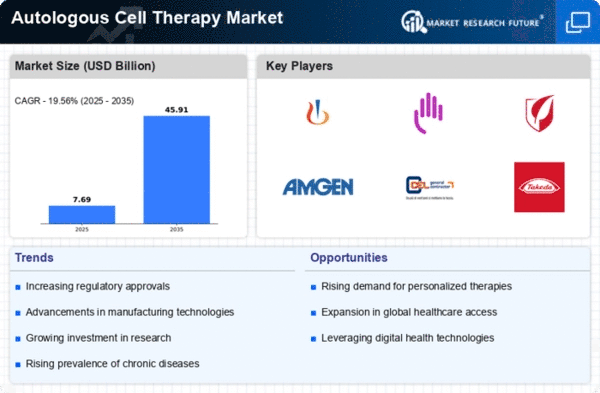
As per MRFR analysis, the Autologous Cell Therapy Market Size was estimated at 6.43 USD Billion in 2024. The Autologous Cell Therapy industry is projected to grow from 7.69 USD Billion in 2025 to 45.91 USD Billion by 2035, exhibiting a compound annual growth rate (CAGR) of 19.56 during the forecast period 2025 - 2035.

Key Market Trends & Highlights

The Autologous Cell Therapy Market is experiencing robust growth driven by technological advancements and increasing investment.

  • Technological advancements are enhancing the efficacy and safety of autologous cell therapies, particularly in oncology. North America remains the largest market, while Asia-Pacific is emerging as the fastest-growing region for autologous cell therapies. The mesenchymal stem cells segment dominates the market, whereas hematopoietic stem cells are witnessing rapid growth. Rising prevalence of chronic diseases and advancements in cell processing technologies are key drivers propelling market expansion.

Market Size & Forecast

2024 Market Size 6.43 (USD Billion)
2035 Market Size 45.91 (USD Billion)
CAGR (2025 - 2035) 19.56%
Largest Regional Market Share in 2024 North America

Major Players

<p><a href="https://www.novartis.com/research-and-development/technology-platforms/cell-therapy/car-t-cell-therapy-and-beyond">Novartis </a>(CH), Bristol-Myers Squibb (US), Gilead Sciences (US), Amgen (US), Celgene (US), Takeda (JP), Roche (CH), Sangamo Therapeutics (US), Celyad (BE)</p>

Market Trends

The Autologous Cell Therapy Market is currently experiencing a notable evolution, driven by advancements in regenerative medicine and personalized treatment approaches. This market encompasses therapies that utilize a patient's own cells for therapeutic purposes, which may enhance efficacy and reduce the risk of immune rejection. As research progresses, the potential applications of autologous cell therapies are expanding, particularly in areas such as oncology, orthopedics, and cardiovascular diseases. The increasing prevalence of chronic conditions and the growing demand for innovative treatment modalities appear to be propelling market growth. Furthermore, regulatory frameworks are evolving to accommodate these novel therapies, which may facilitate faster approvals and broader accessibility. In addition to technological advancements, the Autologous Cell Therapy Market is influenced by rising investments in research and development. Pharmaceutical companies and biotechnology firms are increasingly focusing on developing new therapies that leverage autologous cells, which could lead to a surge in product offerings. Collaborations between academic institutions and industry players are also becoming more common, fostering innovation and accelerating the translation of research into clinical applications. As the market matures, it seems poised for significant growth, with an emphasis on improving patient outcomes and enhancing the overall healthcare landscape.

Technological Advancements

Recent innovations in cell processing and manipulation techniques are enhancing the efficacy of autologous therapies. These advancements may lead to improved patient outcomes and broaden the scope of applications.

Regulatory Developments

Evolving regulatory frameworks are likely to streamline the approval process for autologous cell therapies. This could facilitate quicker access to novel treatments for patients, thereby expanding market reach.

Increased Investment

Growing investments in research and development by both public and private sectors are fostering innovation in the Autologous Cell Therapy Market. This trend may result in a wider array of therapeutic options and improved treatment modalities.

Autologous Cell Therapy Market Market Drivers

Regulatory Support and Frameworks

Regulatory support plays a pivotal role in shaping the Global Autologous Cell Therapy Market Industry. Governments are establishing frameworks that facilitate the approval and commercialization of autologous therapies. These regulations aim to ensure safety and efficacy while promoting innovation. For example, streamlined approval processes for cell-based therapies can expedite their availability to patients. This supportive environment encourages companies to invest in the development of new treatments, thereby driving market growth. As regulatory bodies continue to adapt to the evolving landscape of cell therapies, the industry is likely to experience enhanced momentum.

Rising Prevalence of Chronic Diseases

The Global Autologous Cell Therapy Market Industry is experiencing growth due to the increasing prevalence of chronic diseases such as cancer, diabetes, and cardiovascular disorders. These conditions often require innovative treatment approaches, and autologous cell therapy offers personalized solutions. For instance, the use of stem cells derived from a patient's own body has shown promise in treating various ailments. As the global population ages and the incidence of these diseases rises, the demand for effective therapies is expected to surge. This trend is likely to contribute to the market's projected growth, with an estimated value of 12.8 USD Billion in 2024.

Technological Advancements in Cell Therapy

Technological innovations are significantly shaping the Global Autologous Cell Therapy Market Industry. Advances in cell processing, gene editing, and biomanufacturing techniques enhance the efficacy and safety of therapies. For example, CRISPR technology allows for precise modifications of genetic material, potentially improving treatment outcomes. These advancements not only facilitate the development of new therapies but also streamline production processes, making treatments more accessible. As a result, the market is poised for substantial growth, with projections indicating a rise to 45 USD Billion by 2035, reflecting a compound annual growth rate of 12.13% from 2025 to 2035.

Increased Investment in Research and Development

Investment in research and development is a critical driver of the Global Autologous Cell Therapy Market Industry. Governments and private entities are allocating significant resources to explore the potential of autologous therapies. This funding supports clinical trials and the development of innovative treatment modalities. For instance, various initiatives aim to enhance the understanding of stem cell applications in regenerative medicine. As research progresses, new therapies are likely to emerge, further expanding the market. The anticipated growth trajectory suggests that the industry will continue to attract investment, fostering advancements that could lead to improved patient outcomes.

Growing Awareness and Acceptance of Cell Therapies

The Global Autologous Cell Therapy Market Industry benefits from increasing awareness and acceptance of cell therapies among healthcare professionals and patients. Educational campaigns and successful case studies are helping to demystify these treatments, leading to greater trust and demand. As patients become more informed about the potential benefits of autologous therapies, they are more likely to seek these options. This shift in perception is crucial for market expansion, as it encourages healthcare providers to incorporate these therapies into treatment protocols. Consequently, the market is expected to witness robust growth, driven by a more informed patient population.

Market Segment Insights

By Application: Oncology (Largest) vs. Cardiology (Fastest-Growing)

<p>The Autologous Cell Therapy Market exhibits significant diversity across its application segment, with Oncology holding the largest share due to the increasing incidence of cancer and advancements in treatment modalities. This segment benefits from robust research and development efforts aimed at immunotherapies and personalized medicine that leverage patients' own cells to combat malignancies. Moreover, other areas like Cardiology and Neurology are progressively gaining traction, attributed to the rise in cardiovascular diseases and neurological disorders that necessitate innovative and effective therapeutic alternatives. In recent years, Cardiology has emerged as the fastest-growing application, driven by an increasing number of clinical trials and successful outcomes from cell-based therapies targeting heart repair and regeneration. The demand for effective treatment options for chronic heart conditions, combined with technological advancements in cell therapy, is propelling this segment's growth. Neurology and Orthopedics are also accelerating, spurred by a rising focus on regenerative medicine and the potential of cell therapies to repair damaged tissues in these fields.</p>

<p>Oncology (Dominant) vs. Orthopedics (Emerging)</p>

<p>Oncology is currently the dominant application segment in the Autologous Cell Therapy Market, characterized by its specialization in utilizing patient-derived cells to develop tailored treatments for various cancers. This dominance is fueled by extensive research efforts, innovative clinical trials, and a growing understanding of the immune system's role in fighting cancer. Conversely, Orthopedics is identified as the emerging application, capturing attention for its potential to utilize autologous cells in regenerative solutions for musculoskeletal injuries. The emphasis on healing and regeneration within Orthopedics is increasingly recognized in clinical practices, showcasing the segment's potential to address chronic pain and joint degradation effectively.</p>

By Cell Type: Mesenchymal Stem Cells (Largest) vs. Hematopoietic Stem Cells (Fastest-Growing)

<p>In the Autologous Cell Therapy Market, Mesenchymal Stem Cells (MSCs) hold the largest share, predominantly due to their versatile applications in regenerative medicine and their capability to differentiate into various cell types. Meanwhile, Hematopoietic Stem Cells (HSCs) are swiftly gaining traction, positioned as the fastest-growing segment thanks to advancements in gene therapy and improved outcomes in hematological disorders. Understanding these dynamics is crucial for stakeholders looking to navigate a competitive landscape or invest effectively in autologous therapies. Current growth trends reflect a burgeoning interest in MSCs for applications beyond traditional therapy, such as their use in immunotherapy, thus contributing to their sustained dominance. Conversely, the rapid expansion of HSCs is propelled by their successful incorporation into clinical practices for treating blood cancers and genetic diseases. As stem cell technologies evolve, competition and consumer awareness are expected to drive significant growth across both segments.</p>

<p>Stem Cell Types: MSC (Dominant) vs. HSC (Emerging)</p>

<p>Mesenchymal Stem Cells (MSCs) are recognized as the dominant force in the Autologous Cell Therapy Market due to their unique ability to modulate immune responses and their broad application in tissue repair. Their multipotent nature enables them to develop into various cell lineages, making them invaluable in treatments for conditions such as osteoarthritis and cardiovascular diseases. Hematopoietic Stem Cells (HSCs), on the other hand, are emerging rapidly as essential components in regenerative medicine and oncology, particularly in treating hematological malignancies. Their established role in bone marrow transplants and ongoing innovations in cellular therapies have positioned HSCs at the forefront of this evolving market, appealing to both clinicians and researchers aiming to improve patient care.</p>

By End User: Hospitals (Largest) vs. Research Institutes (Fastest-Growing)

<p>In the Autologous Cell Therapy Market, hospitals hold the largest share among end users, driven by their capability to offer comprehensive healthcare services, including advanced treatments involving cell therapies. This segment dominates due to the increasing number of hospital facilities and the growing acceptance of personalized medicine. Research institutes, on the other hand, are witnessing rapid growth as they play a crucial role in the innovation and development of novel therapies. Their focus on clinical trials and academic research enhances their market importance. The growth trends in the autologous cell therapy market are significantly influenced by the rising prevalence of chronic diseases and the escalating demand for advanced therapeutic options. Innovations in cell therapy techniques and an increasing number of strategic collaborations between hospitals and research entities are anticipated to propel expansion within this segment. Furthermore, the emergence of specialty clinics and ambulatory surgical centers is also nurturing the overall market dynamics, promoting accessibility and treatment advancements in personalized medicine.</p>

<p>Hospitals (Dominant) vs. Research Institutes (Emerging)</p>

<p>Hospitals remain the dominant end user in the Autologous Cell Therapy Market, primarily due to their robust infrastructure and capability to integrate advanced therapies into clinical routines seamlessly. Their extensive patient base and well-established operational facilities facilitate the administration and management of autologous treatments efficiently. On the other hand, research institutes are viewed as emerging players within this sector, focusing on cutting-edge research, development, and clinical trials. These institutions are pivotal in aligning scientific innovations with therapeutic practices, thus driving the discovery of novel applications for cell therapies. The synergy between hospitals and research institutes fosters a dynamic environment that enhances treatment modalities and ultimately benefits patient outcomes.</p>

Get more detailed insights about Autologous Cell Therapy Market Research Report - Global Forecast till 2035

Regional Insights

North America : Market Leader in Innovation

North America continues to lead the Autologous Cell Therapy market, holding a significant share of 3.5B in 2024. The region benefits from advanced healthcare infrastructure, substantial R&D investments, and a growing demand for personalized medicine. Regulatory support from agencies like the FDA has accelerated the approval of innovative therapies, driving market growth. The increasing prevalence of chronic diseases and the aging population further fuel demand for these therapies. The competitive landscape in North America is robust, featuring key players such as Novartis, Gilead Sciences, and Bristol-Myers Squibb. These companies are at the forefront of developing cutting-edge therapies, leveraging their strong financial positions to invest in research and development. The U.S. remains the largest market, with Canada also showing promising growth in the sector. The presence of leading biotech firms enhances the region's position as a hub for autologous cell therapy advancements.

Europe : Emerging Market with Potential

Europe's Autologous Cell Therapy market is valued at 1.8B, reflecting a growing interest in innovative treatment options. The region is witnessing increased investment in healthcare and biotechnology, driven by supportive regulatory frameworks from the European Medicines Agency (EMA). The rising incidence of genetic disorders and cancer is propelling demand for personalized therapies, making Europe a key player in this market. Collaborative efforts among countries are also enhancing research capabilities. Leading countries in Europe include Germany, France, and the UK, which are home to several prominent companies like Roche and Takeda. The competitive landscape is characterized by a mix of established pharmaceutical giants and emerging biotech firms. The region's focus on research and development, coupled with a favorable regulatory environment, positions it well for future growth in autologous cell therapies. "The European market is poised for significant growth as we see more innovative therapies being approved," states a recent EMA report.

Asia-Pacific : Rapidly Growing Market

The Asia-Pacific region, with a market size of 0.9B, is rapidly emerging in the Autologous Cell Therapy landscape. Factors such as increasing healthcare expenditure, a growing patient population, and advancements in biotechnology are driving this growth. Countries like Japan and China are leading the charge, supported by government initiatives aimed at enhancing healthcare infrastructure and regulatory frameworks. The demand for personalized medicine is also on the rise, further propelling market expansion. Japan stands out as a leader in the region, with significant investments from companies like Takeda and a strong focus on research and development. China is also making strides, with a burgeoning biotech sector and increasing collaborations between public and private entities. The competitive landscape is evolving, with both local and international players vying for market share, indicating a promising future for autologous cell therapies in Asia-Pacific.

Middle East and Africa : Emerging Market Opportunities

The Middle East and Africa (MEA) region, with a market size of 0.23B, is beginning to explore the potential of Autologous Cell Therapy. Factors such as increasing healthcare investments and a rising prevalence of chronic diseases are driving interest in innovative therapies. Regulatory bodies are gradually establishing frameworks to support the development and approval of these therapies, which is crucial for market growth. The region's diverse healthcare needs present unique opportunities for tailored solutions. Countries like South Africa and the UAE are leading the way in adopting advanced medical technologies, including cell therapies. The competitive landscape is still developing, with a mix of local and international players entering the market. As awareness of the benefits of autologous therapies grows, the MEA region is expected to see increased investment and innovation in this sector. "The potential for growth in the MEA region is significant as healthcare systems evolve," notes a report from the World Health Organization.

Key Players and Competitive Insights

The Autologous Cell Therapy Market is currently characterized by a dynamic competitive landscape, driven by advancements in technology, increasing investment in research and development, and a growing demand for personalized medicine. Major players such as Novartis (CH), Bristol-Myers Squibb (US), and Gilead Sciences (US) are strategically positioned to leverage their extensive portfolios and innovative capabilities. Novartis (CH) focuses on enhancing its CAR-T cell therapy offerings, while Bristol-Myers Squibb (US) emphasizes its commitment to expanding its immuno-oncology pipeline. Gilead Sciences (US) is actively pursuing partnerships to bolster its autologous cell therapy initiatives, indicating a collaborative approach to market expansion. Collectively, these strategies contribute to a competitive environment that is increasingly centered on innovation and strategic partnerships.

In terms of business tactics, companies are localizing manufacturing to enhance supply chain efficiency and reduce costs. This approach is particularly relevant in the context of autologous therapies, which require rapid processing of patient-derived cells. The market structure appears moderately fragmented, with several key players exerting influence while also facing competition from emerging biotech firms. The collective actions of these companies shape a landscape where agility and responsiveness to market demands are paramount.

In November 2025, Novartis (CH) announced a strategic collaboration with a leading academic institution to advance its research in next-generation CAR-T therapies. This partnership is expected to accelerate the development of innovative treatment options, potentially enhancing Novartis's competitive edge in the market. The collaboration underscores the importance of academic partnerships in driving research and development, which is crucial for maintaining leadership in the rapidly evolving field of autologous cell therapy.

In October 2025, Bristol-Myers Squibb (US) revealed the successful results of a pivotal clinical trial for its autologous T-cell therapy targeting specific hematological malignancies. This announcement not only reinforces the efficacy of its product but also positions the company favorably against competitors. The positive trial results are likely to bolster investor confidence and may lead to accelerated regulatory approvals, further solidifying Bristol-Myers Squibb's market presence.

In September 2025, Gilead Sciences (US) expanded its manufacturing capabilities by investing in a new facility dedicated to autologous cell therapies. This strategic move is anticipated to enhance production capacity and streamline operations, allowing Gilead to meet the growing demand for personalized therapies. The investment reflects a broader trend within the industry, where companies are prioritizing infrastructure development to support innovative treatment modalities.

As of December 2025, current competitive trends in the Autologous Cell Therapy Market are increasingly influenced by digitalization, sustainability, and the integration of artificial intelligence (AI) in research and development processes. Strategic alliances are becoming more prevalent, as companies recognize the value of collaboration in navigating complex regulatory environments and accelerating product development. Looking ahead, competitive differentiation is likely to evolve from traditional price-based competition to a focus on innovation, technological advancements, and supply chain reliability. This shift suggests that companies that prioritize these elements will be better positioned to thrive in the future.

Key Companies in the Autologous Cell Therapy Market include

Industry Developments

Using EsoBiotec's in-body genetic modification technology to improve treatment speed and efficacy, AstraZeneca announced in March 17, 2025, that it would buy the company for up to $1 billion in order to expand its capabilities in autologous cell therapies for autoimmune diseases and cancer.

The world's first Nebula-powered autologous iPSC-derived endothelial cell therapy, which targets peripheral artery and coronary artery diseases, was developed by Cellino and South Korea's Karis Bio on April 15, 2025.The two companies intend to industrialize production and start first-in-human trials. MaxCyte and Ori Biotech established a collaboration in June 2025 to improve production efficiency by streamlining closed-loop, scalable autologous cell therapy manufacturing.

Limula has started beta testing their completely automated autologous cell-processing technology in June 2025, which is intended to streamline processes for individualized treatment. Reiterating AbbVie's post-Humira strategic expansion, the company announced in June 30, 2025, that it had acquired Capstan Therapeutics for $2.1 billion.Capstan Therapeutics is the company behind the development of CPTX2309, an autologous CAR-T candidate that targets autoimmune illnesses.

A significant milestone for the use of autologous cell therapy beyond hematologic malignancies was reached on May 31, 2025, when the findings of China's first randomized controlled study of CAR-T treatment for solid tumors showed a 40% increase in overall survival for patients with gastric and GEJ cancer.The continued dominance of autologous CAR-T modalities was further confirmed in March 2024 when Kite Pharma (Gilead) was granted extended FDA clearance for its Yescarta CAR-T treatment in recurrent follicular lymphoma.

Future Outlook

Autologous Cell Therapy Market Future Outlook

<p>The Autologous Cell Therapy Market is projected to grow at a 19.56% CAGR from 2024 to 2035, driven by technological advancements, increasing R&amp;D investments, and rising demand for personalized medicine.</p>

New opportunities lie in:

  • <p>Expansion of telehealth platforms for remote patient monitoring</p>
  • <p>Development of advanced cryopreservation techniques for cell storage</p>
  • <p>Partnerships with biotech firms for innovative product pipelines</p>

<p>By 2035, the Autologous Cell Therapy Market is expected to be robust, reflecting substantial growth and innovation.</p>

Market Segmentation

Autologous Cell Therapy Market End User Outlook

  • Hospitals
  • Research Institutes
  • Ambulatory Surgical Centers
  • Specialty Clinics
  • Laboratories

Autologous Cell Therapy Market Cell Type Outlook

  • Mesenchymal Stem Cells
  • Hematopoietic Stem Cells
  • Adipose-derived Stem Cells
  • Induced Pluripotent Stem Cells
  • T Cells

Autologous Cell Therapy Market Application Outlook

  • Oncology
  • Cardiology
  • Neurology
  • Orthopedics
  • Dermatology

Report Scope

MARKET SIZE 2024 6.43(USD Billion)
MARKET SIZE 2025 7.69(USD Billion)
MARKET SIZE 2035 45.91(USD Billion)
COMPOUND ANNUAL GROWTH RATE (CAGR) 19.56% (2024 - 2035)
REPORT COVERAGE Revenue Forecast, Competitive Landscape, Growth Factors, and Trends
BASE YEAR 2024
Market Forecast Period 2025 - 2035
Historical Data 2019 - 2024
Market Forecast Units USD Billion
Key Companies Profiled Novartis (CH), Bristol-Myers Squibb (US), Gilead Sciences (US), Amgen (US), Celgene (US), Takeda (JP), Roche (CH), Sangamo Therapeutics (US), Celyad (BE)
Segments Covered Application, Cell Type, End User
Key Market Opportunities Advancements in personalized medicine enhance growth potential in the Autologous Cell Therapy Market.
Key Market Dynamics Rising demand for personalized medicine drives innovation and competition in the autologous cell therapy market.
Countries Covered North America, Europe, APAC, South America, MEA

FAQs

What is the projected growth of the Autologous Cell Therapy market?

The Autologous Cell Therapy market is the expected increase in total market value of 45.91 USD billion over a defined forecast period 2025–2035. It is driven by factors such as demand trends, technological advances, regulatory changes, and geographic expansion.

What is the size of the Autologous Cell Therapy market?

Autologous Cell Therapy market size was valued at approximately 6.43 billion USD in 2024. This figure will reach 45.91 billion USD covering all regions (America, Europe, Asia, MEA and ROW), focusing its segments / services / distribution channels till 2035.

What is the CAGR of the Autologous Cell Therapy market?

Autologous Cell Therapy market is expected to grow at a CAGR of 19.56% between 2025 and 2035.

How much will the Autologous Cell Therapy market be worth by 2035?

Autologous Cell Therapy market is expected to be worth of 45.91 billion USD, reflecting growth driven by usage, technology and global demands by the end of 2035.

How will the Autologous Cell Therapy market perform over the next 10 years?

Over the next 10 years the Autologous Cell Therapy market is expected to shift from usd billion 6.43 to 45.91 billion USD, led by adoption of advanced tech, demographic trends, regulatory approvals, with potential headwinds from 2025 to 2035.

What was the market size of the Autologous Cell Therapy Market in 2024?

The Autologous Cell Therapy Market was valued at 12.77 USD Billion in 2024.

Which region is expected to dominate the Autologous Cell Therapy Market by 2035?

North America is expected to dominate the Autologous Cell Therapy Market, with a projected value of 18.1 USD Billion by 2035.

What will be the market size for Autologous Cell Therapy in the Oncology application by 2035?

The market size for Autologous Cell Therapy in the Oncology application is expected to be valued at 16.2 USD Billion by 2035.

What are the expected market values for Autologous Cell Therapy in Cardiology by 2024 and 2035?

In 2024, the market value for Autologous Cell Therapy in Cardiology was 3.2 USD Billion, growing to 11.7 USD Billion by 2035.

Who are some of the key players in the Autologous Cell Therapy Market?

Key players in the Autologous Cell Therapy Market include Novartis, Regenative Labs, Takeda Pharmaceutical, and Gilead Sciences.

  1. SECTION I: EXECUTIVE SUMMARY AND KEY HIGHLIGHTS |
    1. EXECUTIVE SUMMARY 2
  2. SECTION II: SCOPING, METHODOLOGY AND MARKET STRUCTURE |
    1. MARKET INTRODUCTION |
    2. RESEARCH METHODOLOGY 3
  3. SECTION III: QUALITATIVE ANALYSIS |
    1. MARKET DYNAMICS |
    2. MARKET FACTOR ANALYSIS 4
  4. SECTION IV: QUANTITATIVE ANALYSIS |
    1. Healthcare, BY Application (USD Billion) |
    2. Healthcare, BY Cell Type (USD Billion) |
    3. Healthcare, BY End User (USD Billion) |
    4. Healthcare, BY Region (USD Billion) 5
  5. SECTION V: COMPETITIVE ANALYSIS |
    1. Competitive Landscape |
    2. Company Profiles |
    3. Appendix

Autologous Cell Therapy Market Segmentation

Market Segmentation Overview

  • Detailed segmentation data will be available in the full report
  • Comprehensive analysis by multiple parameters
  • Regional and country-level breakdowns
  • Market size forecasts by segment
Infographic

Free Sample Request

Kindly complete the form below to receive a free sample of this Report

Get Free Sample

Customer Strories

Compare Licence

×
Features License Type
Single User Multiuser License Enterprise User
Price $4,950 $5,950 $7,250
Maximum User Access Limit 1 User Upto 10 Users Unrestricted Access Throughout the Organization
Free Customization
Direct Access to Analyst
Deliverable Format
Platform Access
Discount on Next Purchase 10% 15% 15%
Printable Versions