×
Request Free Sample ×

Kindly complete the form below to receive a free sample of this Report

* Please use a valid business email

Leading companies partner with us for data-driven Insights

clients tt-cursor
Hero Background
English
Chinese
French
Japanese
Korean
German
Spanish

Aortic Coarctation Market Trends

ID: MRFR/MED/1322-HCR
90 Pages
Rahul Gotadki
October 2025

Aortic Coarctation Market Research Report Information, by treatment (Balloon angioplasty, Patch aortoplasty, Subclavian flap aortoplasty and others), by end user (Hospital, Clinic, Cardiac Institutes and others) - Growth & Industry Forecast 2025 To 2035

Share:
Download PDF ×

We do not share your information with anyone. However, we may send you emails based on your report interest from time to time. You may contact us at any time to opt-out.

Aortic Coarctation Market Infographic
×
Aortic Coarctation Market Infographic Full View
Purchase Options

Market Trends

Key Emerging Trends in the Aortic Coarctation Market

The Aortic Coarctation market is seeing an ascent driven by the rising rate of this intrinsic heart imperfection. Aortic coarctation includes a limiting of the aorta, and as awareness and indicative capacities improve, more cases are being recognized, prompting a more popularity for clinical mediations. Consistent progresses in demonstrative advancements are molding the Aortic Coarctation market. Further developed imaging techniques, like echocardiography, attractive reverberation angiography, and computerized tomography, upgrade the accuracy of finding, considering early recognition and appropriate intercession. An outstanding pattern in the Aortic Coarctation market is the rising reception of minimally invasive surgical techniques. Negligibly invasive methods offer benefits, for example, more limited recovery times, reduced postoperative agony, and lower chance of misperceptions, adding to their fame in the treatment of aortic coarctation. With aortic coarctation frequently analyzed in earliest stages or youth, there is a developing spotlight on pediatric cardiology inside the Aortic Coarctation market. Consideration for pediatric patients, including surgical and non-surgical mediations, is becoming a vital thought in the general management of this inherited heart imperfection. The investigation of regenerative medication and tissue designing is arising as a pattern in the Aortic Coarctation market. Analysts are researching inventive ways to deal with fix or replace damaged aortic tissues, possibly offering more solid and customized answers for patients with aortic coarctation. A shift towards patient-driven care models is impacting the Aortic Coarctation market elements. Medical services suppliers are progressively fitting therapy plans to the singular necessities of patients, considering factors like age, wellbeing, and the importance of aortic coarctation, to advance results and work on the patient experience. The joining of telehealth administrations for distant conferences is becoming more predominant in the Aortic Coarctation market. Telehealth works with virtual cooperations among patients and medical services suppliers, further developing admission to consideration and empowering appropriate meetings for people situated in remote or underserved regions. Changes in medical care strategies and reimbursement components are affecting the Aortic Coarctation market. State run administrations and wellbeing organizations are attempting to further develop admission to specific cardiovascular consideration, guaranteeing that people with aortic coarctation have sufficient inclusion for analytic systems, medicines, and follow-up care. Regardless of positive patterns, challenges connected with admittance to heart care for aortic coarctation patients persevere. Endeavors are continuous to address these difficulties through awareness campaigns, preparing programs for medical services experts, and the improvement of focuses to guarantee convenient and successful management of this intrinsic heart imperfection.
Author
Rahul Gotadki
Assistant Manager

He holds an experience of about 7+ years in Market Research and Business Consulting, working under the spectrum of Life Sciences and Healthcare domains. Rahul conceptualizes and implements a scalable business strategy and provides strategic leadership to the clients. His expertise lies in market estimation, competitive intelligence, pipeline analysis, customer assessment, etc. In addition to the above, his other responsibility includes strategic tracking of high growth markets & advising clients on the potential areas of focus they could direct their business initiatives

Leave a Comment

FAQs

What would be the aortic coarctation market CAGR during the forecast period of 2022 to 2030?

Aortic coarctation market CAGR would be 5.6% during the forecast period.

Name the players taking part in the aortic coarctation market.

The players in aortic coarctation market are Freudenberg Medical, LLC (Germany), Creganna (Ireland), Medtronic (Ireland), B. Braun Melsungen AG (Germany), Clada Medical Devices (Ireland), Braile Biomedica (Brazil) and others.

Who are the end users of aortic coarctation market?

The end users of the aortic coarctation market are Clinic, Cardiac Institute, Hospital, and others.

What are the types discussed in the aortic coarctation market report?

The types discussed in the aortic coarctation market are Balloon Angioplasty, Patch Aortoplasty, Subclavian Flap Aortoplasty and others.

Which region would dominate the aortic coarctation market?

North America would take charge of the aortic coractation market.

Market Summary

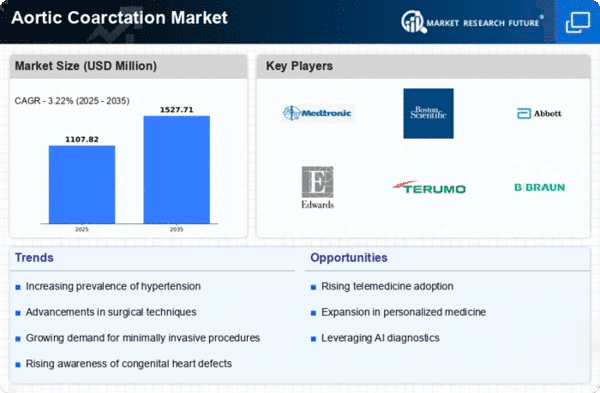
As per MRFR analysis, the Aortic Coarctation Market Size was estimated at 1073.26 USD Million in 2024. The Aortic Coarctation industry is projected to grow from 1120.11 USD Million in 2025 to 1527.71 USD Million by 2035, exhibiting a compound annual growth rate (CAGR) of 3.22 during the forecast period 2025 - 2035.

Key Market Trends & Highlights

The Aortic Coarctation Market is poised for growth driven by technological advancements and increased awareness.

  • Technological advancements in treatment are reshaping the Aortic Coarctation Market, particularly in North America. The focus on early diagnosis is becoming increasingly prominent, especially in the Asia-Pacific region. Personalized medicine is gaining traction, with Preductal Aortic Coarctation representing the largest segment. Market drivers include technological innovations in surgical procedures and growing awareness of congenital heart defects.

Market Size & Forecast

2024 Market Size 1073.26 (USD Million)
2035 Market Size 1527.71 (USD Million)
CAGR (2025 - 2035) 3.22%
Largest Regional Market Share in 2024 North America

Major Players

Medtronic (US), Boston Scientific (US), Abbott Laboratories (US), Edwards Lifesciences (US), Terumo Corporation (JP), B. Braun Melsungen AG (DE), LivaNova PLC (GB), Cardinal Health (US), Sorin Group (IT)

Market Trends

The Aortic Coarctation Market is currently experiencing a notable evolution, driven by advancements in medical technology and an increasing awareness of cardiovascular diseases. The condition, characterized by a narrowing of the aorta, necessitates timely diagnosis and intervention.

As healthcare systems globally prioritize early detection and treatment, the demand for innovative solutions is on the rise. This trend is further supported by ongoing research efforts aimed at improving surgical techniques and developing less invasive procedures, which may enhance patient outcomes and reduce recovery times.

Moreover, the growing prevalence of aortic coarctation, particularly among pediatric populations, underscores the need for specialized care. Healthcare providers are increasingly focusing on personalized treatment plans that cater to the unique needs of each patient.

This shift towards individualized care, combined with the integration of telemedicine and remote monitoring technologies, appears to be reshaping the landscape of the Aortic Coarctation Market.

As stakeholders continue to explore new avenues for intervention and management, the market is poised for further growth and innovation in the coming years.

Technological Advancements in Treatment

The Aortic Coarctation Market is witnessing a surge in technological innovations, particularly in minimally invasive surgical techniques. These advancements are likely to enhance the precision of interventions, thereby improving patient outcomes and reducing hospital stays.

As new devices and methodologies emerge, healthcare providers may adopt these technologies to offer more effective treatment options.

Increased Focus on Early Diagnosis

There is a growing emphasis on the early diagnosis of aortic coarctation, driven by heightened awareness among healthcare professionals and patients alike. Enhanced screening protocols and diagnostic tools are being developed, which could lead to earlier interventions.

This trend may significantly impact the overall management of the condition, potentially reducing complications.

Rise of Personalized Medicine

The Aortic Coarctation Market is gradually shifting towards personalized medicine, where treatment plans are tailored to individual patient profiles. This approach may involve genetic testing and comprehensive assessments to determine the most effective interventions.

As this trend gains traction, it could lead to improved patient satisfaction and outcomes.

Aortic Coarctation Market Market Drivers

Growing Aging Population

The aging population is another significant factor influencing the Global Aortic Coarctation Market Industry. As individuals age, the risk of developing cardiovascular diseases, including aortic coarctation, increases.

This demographic shift is prompting healthcare systems to adapt and expand their services to cater to the needs of older patients. The market is likely to see a surge in demand for diagnostic and therapeutic options tailored to this population.

With the aging demographic projected to grow substantially in the coming years, the Global Aortic Coarctation Market Industry is poised for continued expansion, reflecting the evolving healthcare landscape.

Market Growth Projections

The Global Aortic Coarctation Market Industry is anticipated to experience robust growth, with projections indicating a market value of 1.07 USD Billion in 2024 and an increase to 1.88 USD Billion by 2035. This growth trajectory suggests a compound annual growth rate of 5.31% from 2025 to 2035.

Such figures highlight the increasing demand for effective treatment options and the ongoing advancements in medical technology.

The market's expansion is likely to be driven by a combination of factors, including rising prevalence, technological innovations, and supportive government initiatives, positioning it as a critical area within the healthcare sector.

Rising Awareness and Education

The Global Aortic Coarctation Market Industry benefits from heightened awareness and education regarding congenital heart defects. Healthcare professionals and organizations are increasingly focusing on educating both the public and medical community about the signs and symptoms of aortic coarctation.

This increased awareness leads to earlier diagnosis and treatment, which is crucial for improving patient outcomes. As more individuals become informed about this condition, the demand for healthcare services and interventions is likely to rise.

Consequently, this trend is expected to bolster the market's growth trajectory, further solidifying its importance in the healthcare landscape.

Government Initiatives and Funding

Government initiatives aimed at improving healthcare infrastructure and funding for congenital heart disease research are pivotal drivers of the Global Aortic Coarctation Market Industry. Various countries are implementing policies to enhance early diagnosis and treatment options for aortic coarctation.

For example, increased funding for research projects and public health campaigns raises awareness and promotes early intervention. Such initiatives are likely to lead to a more substantial market presence, as they encourage the development of new therapies and technologies.

This supportive environment is expected to contribute to a compound annual growth rate of 5.31% from 2025 to 2035.

Technological Advancements in Treatment

Technological innovations in the medical field are significantly impacting the Global Aortic Coarctation Market Industry. The introduction of minimally invasive surgical techniques and advanced imaging technologies has improved patient outcomes and reduced recovery times.

For instance, the use of catheter-based interventions has become increasingly popular, allowing for effective treatment with fewer complications.

These advancements not only enhance the quality of care but also attract more patients seeking treatment. As a result, the market is expected to grow, with a projected value of 1.88 USD Billion by 2035, reflecting the positive influence of technology on the industry.

Increasing Prevalence of Aortic Coarctation

The Global Aortic Coarctation Market Industry is experiencing growth due to the rising prevalence of aortic coarctation among various demographics. Studies indicate that this condition affects approximately 5-10% of congenital heart disease patients.

As awareness increases, more individuals are diagnosed, leading to a projected market value of 1.07 USD Billion in 2024.

This growing patient population necessitates advancements in treatment options and healthcare services, thereby driving market expansion. The demand for surgical interventions and innovative therapies is likely to rise, contributing to the overall growth of the Global Aortic Coarctation Market Industry.

Market Segment Insights

By Type of Aortic Coarctation: Preductal Aortic Coarctation (Largest) vs. Postductal Aortic Coarctation (Fastest-Growing)

In the Aortic Coarctation Market, Preductal Aortic Coarctation holds the largest market share due to its higher prevalence in neonates and infants, leading to prompt diagnosis and treatment.</p> <p> </p> <p>Postductal Aortic Coarctation follows as a significant segment; however, it is experiencing rapid growth as awareness and screening methods improve, allowing for earlier detection in older populations. Both segments contribute substantially to the overall market dynamics, catering to varied patient demographics throughout different stages of life.

<h4 style="margin-top: 25px; margin-bottom: 15px;">Preductal Aortic Coarctation (Dominant) vs. Postductal Aortic Coarctation (Emerging)</h4>

Preductal Aortic Coarctation is characterized by its presence before the ductus arteriosus, primarily affecting infants and leading to critical conditions requiring immediate medical intervention. This segment dominates due to the significant clinical attention required in the early stages of life.</p> <p> </p> <p>In contrast, Postductal Aortic Coarctation, occurring after the ductus arteriosus, is increasingly recognized as an emerging segment. Often found in older children and adults, its growth is driven by rising awareness and advancements in minimally invasive treatment options, which enhance prognosis and quality of life.

By Diagnosis Method: Echocardiography (Largest) vs. Magnetic Resonance Imaging (Fastest-Growing)

The Diagnosis Method segment within the Aortic Coarctation Market showcases a diverse array of imaging techniques, with Echocardiography holding the largest market share. This method is favored for its widespread availability and ability to provide rapid assessment during clinical evaluations.</p> <p> </p> <p>Following closely, Magnetic Resonance Imaging is emerging as the fastest-growing technique, primarily due to its superior imaging capabilities and the increasing adoption in pediatric populations for non-invasive assessments. Other methods such as Computed Tomography Angiography and Chest X-ray contribute significantly, but they do not match the dominance of Echocardiography and the rapid rise of MRI.</p> <p> </p> <p>Market trends indicate a shift toward advanced imaging technologies, driven by technological innovations and the need for enhanced diagnostic accuracy. Increasing awareness and early detection of Aortic Coarctation are fueling the demand for effective diagnostic methods.</p> <p> </p> <p>Additionally, the rising prevalence of congenital heart diseases among the population underscores the importance of reliable imaging techniques. As clinical practices evolve, the reliance on Echocardiography versus emerging techniques like MRI reflects the dynamic landscape of the Aortic Coarctation Market.

<h4 style="margin-top: 25px; margin-bottom: 15px;">Echocardiography (Dominant) vs. Magnetic Resonance Imaging (Emerging)</h4>

Echocardiography remains the dominant diagnosis method in the Aortic Coarctation Market due to its real-time imaging capabilities, non-invasiveness, and cost-effectiveness. It is particularly favored in pediatric cardiology for the evaluation of congenital heart defects.</p> <p> </p> <p>In contrast, Magnetic Resonance Imaging is swiftly emerging as a valuable option for comprehensive anatomical assessment, especially in complex cases requiring detailed visualization of the aorta and surrounding structures.</p> <p> </p> <p>The growth of MRI is propelled by advancements in imaging technology and increased clinical validation of its superior diagnostic accuracy, positioning it as an attractive alternative to traditional imaging methods.

By Treatment Approach: Surgical Repair (Largest) vs. Balloon Angioplasty (Fastest-Growing)

In the aortic coarctation market, Surgical Repair holds the largest share, significantly outpacing other treatment approaches. This method is widely accepted due to its effectiveness in correcting structural abnormalities in patients.</p> <p> </p> <p>Following this, Balloon Angioplasty is rapidly gaining traction as a less invasive alternative, appealing particularly to a wider patient demographic, thereby contributing to its accelerated market growth. On the other hand, Stenting and Medication Management, while essential, occupy smaller portions of the market share compared to the leading approaches.

<h4 style="margin-top: 25px; margin-bottom: 15px;">Surgical Repair (Dominant) vs. Balloon Angioplasty (Emerging)</h4>

Surgical Repair stands as the dominant approach in the aortic coarctation treatment landscape, characterized by its proven efficacy in restoring normal blood flow and preventing long-term complications. This method is typically the go-to choice for severe cases, driven by its capability to provide lasting results.</p> <p> </p> <p>Conversely, Balloon Angioplasty is emerging as a preferred option for many, particularly in pediatric patients. It offers a minimally invasive solution, resulting in shorter recovery times and less risk associated with traditional surgery. Both methods reflect a significant evolution in treatment options, responding to patient preferences and advancements in medical technology.

By Age Group: Adults (Largest) vs. Infants (Fastest-Growing)

In the Aortic Coarctation Market, the age group of adults holds the largest market share, driven by factors such as the increasing prevalence of lifestyle-related conditions that contribute to cardiovascular issues.</p> <p> </p> <p>Alongside adults, the infant segment is gaining significant attention due to advancements in pediatric healthcare which have made early detection and treatment of aortic coarctation more accessible. This growth pattern highlights the necessity to address both adult and pediatric populations effectively.

<h4 style="margin-top: 25px; margin-bottom: 15px;">Adults (Dominant) vs. Infants (Emerging)</h4>

Adults represent a dominant segment within the Aortic Coarctation Market, largely due to higher incidences of hypertension and cardiovascular diseases that are linked to the condition. Furthermore, adults seek a range of treatment options, from surgical procedures to minimally invasive methods, which contribute to their prevalent market presence.</p> <p> </p> <p>In contrast, the infant segment is emerging strongly, driven by improvements in diagnostic technologies and increasing awareness among healthcare providers regarding congenital heart defects. This dual focus on treatment for both adults and infants emphasizes the need for tailored healthcare solutions in managing aortic coarctation effectively.

By Severity of Condition: Mild Coarctation (Largest) vs. Severe Coarctation (Fastest-Growing)

In the Aortic Coarctation Market, the distribution of cases by severity reveals a significant presence of Mild Coarctation, which constitutes the largest segment due to its higher prevalence and manageable treatment options.</p> <p> </p> <p>Moderate Coarctation also holds a notable share, but it is the Severe Coarctation segment that is projected to grow rapidly, driven by increasing awareness and improved diagnostic techniques that prompt earlier identification and intervention.

<h4 style="margin-top: 25px; margin-bottom: 15px;">Mild Coarctation (Dominant) vs. Severe Coarctation (Emerging)</h4>

Mild Coarctation is characterized by a lower degree of narrowing in the aorta, leading to fewer clinical symptoms and generally favorable patient outcomes. As the dominant segment, it benefits from established treatment protocols and widespread monitoring practices.</p> <p> </p> <p>In contrast, Severe Coarctation presents a more significant clinical challenge and is emerging rapidly in the market. With higher risks of complications and the necessity for more complex interventions, this segment is attracting attention from healthcare providers and researchers, driving innovations in treatment options and enhancing patient management strategies.

Get more detailed insights about Aortic Coarctation Market Research Report- Global Forecast to 2035

Regional Insights

North America : Market Leader in Innovation

North America is poised to maintain its leadership in the Aortic Coarctation market, holding a significant market share of $600.0M in 2024. The region's growth is driven by advanced healthcare infrastructure, increasing prevalence of congenital heart defects, and robust regulatory support for innovative medical devices.

The demand for minimally invasive procedures is also on the rise, further propelling market expansion. The United States stands as the primary contributor, with key players like Medtronic, Boston Scientific, and Abbott Laboratories leading the charge.

The competitive landscape is characterized by continuous innovation and strategic partnerships among these companies. The presence of a well-established healthcare system and favorable reimbursement policies further enhance the market's attractiveness, ensuring sustained growth in the coming years.

Europe : Emerging Market with Potential

Europe's Aortic Coarctation market is valued at $300.0M, reflecting a growing demand for advanced treatment options. The region benefits from a strong emphasis on research and development, alongside supportive regulatory frameworks that encourage innovation.

Increasing awareness of congenital heart diseases and the need for effective treatment solutions are key drivers of market growth in this region. Leading countries such as Germany, France, and the UK are at the forefront, with significant contributions from companies like B. Braun Melsungen AG and LivaNova PLC.

The competitive landscape is evolving, with a focus on enhancing patient outcomes through innovative technologies. The European market is expected to witness further growth as healthcare providers adopt new solutions to address the rising incidence of aortic coarctation.

Asia-Pacific : Rapidly Growing Healthcare Sector

The Asia-Pacific Aortic Coarctation market, valued at $150.0M, is experiencing rapid growth due to increasing healthcare investments and rising awareness of congenital heart conditions. The region's expanding population and improving healthcare infrastructure are significant growth drivers.

Additionally, government initiatives aimed at enhancing healthcare access are expected to further boost market demand. Countries like Japan and Australia are leading the charge, with key players such as Terumo Corporation making substantial contributions.

The competitive landscape is characterized by a mix of local and international companies striving to capture market share. As the region continues to develop, the demand for advanced medical devices and treatment options is anticipated to rise, creating new opportunities for growth.

Middle East and Africa : Emerging Market with Challenges

The Middle East and Africa Aortic Coarctation market, valued at $23.26M, is gradually emerging, driven by increasing healthcare investments and a growing focus on addressing congenital heart defects.

However, challenges such as limited access to advanced medical technologies and varying healthcare standards across countries hinder rapid growth. Nonetheless, the region is witnessing a gradual shift towards improved healthcare solutions. Countries like South Africa and the UAE are leading the market, with efforts to enhance healthcare infrastructure and access to treatment.

The competitive landscape is still developing, with both local and international players exploring opportunities. As awareness of congenital heart diseases increases, the demand for effective treatment options is expected to grow, paving the way for future market expansion.

Key Players and Competitive Insights

The Aortic Coarctation Market is characterized by a competitive landscape that is increasingly shaped by innovation, strategic partnerships, and regional expansions. Key players such as Medtronic (US), Boston Scientific (US), and Abbott Laboratories (US) are at the forefront, leveraging their extensive research and development capabilities to enhance product offerings. Medtronic (US) focuses on developing minimally invasive solutions, while Boston Scientific (US) emphasizes its commitment to advancing cardiac care through innovative technologies. Abbott Laboratories (US) appears to be concentrating on expanding its product portfolio to include advanced imaging and diagnostic tools, which could potentially enhance patient outcomes. Collectively, these strategies indicate a trend towards a more integrated approach to treatment, where companies are not only competing on product efficacy but also on the overall patient experience. In terms of business tactics, companies are increasingly localizing manufacturing to reduce costs and improve supply chain efficiency. This trend is particularly evident in the Aortic Coarctation Market, which is moderately fragmented, with several players vying for market share. The collective influence of these key players is significant, as they not only drive innovation but also set industry standards that smaller companies must adhere to in order to remain competitive. In November 2025, Edwards Lifesciences (US) announced a strategic partnership with a leading telehealth provider to enhance remote monitoring capabilities for patients with aortic coarctation. This move is indicative of a broader trend towards digital health solutions, which are becoming increasingly vital in managing chronic conditions. By integrating telehealth services, Edwards Lifesciences (US) aims to improve patient engagement and adherence to treatment protocols, thereby potentially reducing hospital readmissions and improving overall patient outcomes. In October 2025, Terumo Corporation (JP) launched a new line of catheter-based devices specifically designed for the treatment of aortic coarctation. This product introduction is significant as it reflects Terumo's commitment to innovation and its strategic focus on expanding its presence in the cardiovascular market. The new devices are expected to enhance procedural efficiency and patient safety, which could provide Terumo with a competitive edge in a crowded marketplace. In September 2025, LivaNova PLC (GB) completed the acquisition of a smaller medical device company specializing in aortic repair technologies. This acquisition is likely to bolster LivaNova's product offerings and enhance its market position. By integrating these advanced technologies, LivaNova PLC (GB) may be able to offer more comprehensive solutions for aortic coarctation, thereby appealing to a broader range of healthcare providers and patients. As of December 2025, the Aortic Coarctation Market is witnessing trends that emphasize digitalization, sustainability, and the integration of artificial intelligence in product development. Strategic alliances are increasingly shaping the competitive landscape, allowing companies to pool resources and expertise to drive innovation. The shift from price-based competition to a focus on technological advancement and supply chain reliability is becoming more pronounced. In this evolving environment, companies that prioritize innovation and patient-centric solutions are likely to emerge as leaders in the market.

Key Companies in the Aortic Coarctation Market include

Industry Developments

There has been a radical growth in the alertness in the accessibility of efficient treatments for aortic coarctation. This growth in the market helps to augment the growth of the aortic coarctation market.

Furthermore, there has been a prominent growth in prominent market factors for example the increase of the healthcare expenses, followed by others like the development of the techniques gaining in early diagnosis and treatments are the factors expected to cushion the growth of the aortic coarctation market in the forecast region of North America during the ongoing forecast period.

However, the market developments like the increasing the per-capita healthcare expenditure and the availability of quality care are the reasons enhancing of the economy to encourage the growth of the aortic coarctation market in the coming years, especially during the period.


Future Outlook

Aortic Coarctation Market Future Outlook

The Aortic Coarctation Market is projected to grow at a 3.22% CAGR from 2024 to 2035, driven by advancements in surgical techniques, increased awareness, and improved diagnostic tools.

New opportunities lie in:

  • Development of minimally invasive surgical devices for coarctation repair.
  • Expansion of telemedicine platforms for remote patient monitoring.
  • Investment in AI-driven diagnostic tools for early detection of aortic coarctation.

By 2035, the Aortic Coarctation Market is expected to achieve substantial growth and innovation.

Market Segmentation

Aortic Coarctation Market Age Group Outlook

  • Infants
  • Children
  • Adults
  • Elderly

Aortic Coarctation Market Diagnosis Method Outlook

  • Echocardiography
  • Magnetic Resonance Imaging
  • Computed Tomography Angiography
  • Chest X-ray

Aortic Coarctation Market Treatment Approach Outlook

  • Surgical Repair
  • Balloon Angioplasty
  • Stenting
  • Medication Management

Aortic Coarctation Market Severity of Condition Outlook

  • Mild Coarctation
  • Moderate Coarctation
  • Severe Coarctation

Aortic Coarctation Market Type of Aortic Coarctation Outlook

  • Preductal Aortic Coarctation
  • Postductal Aortic Coarctation
  • Juxtaductal Aortic Coarctation
  • Complex Aortic Coarctation

Report Scope

MARKET SIZE 2024 1073.26(USD Million)
MARKET SIZE 2025 1120.11(USD Million)
MARKET SIZE 2035 1527.71(USD Million)
COMPOUND ANNUAL GROWTH RATE (CAGR) 3.22% (2025 - 2035)
REPORT COVERAGE Revenue Forecast, Competitive Landscape, Growth Factors, and Trends
BASE YEAR 2024
Market Forecast Period 2025 - 2035
Historical Data 2019 - 2024
Market Forecast Units USD Million
Key Companies Profiled Medtronic (US), Boston Scientific (US), Abbott Laboratories (US), Edwards Lifesciences (US), Terumo Corporation (JP), B. Braun Melsungen AG (DE), LivaNova PLC (GB), Cardinal Health (US), Sorin Group (IT)
Segments Covered Type of Aortic Coarctation, Diagnosis Method, Treatment Approach, Age Group, Severity of Condition
Key Market Opportunities Advancements in minimally invasive surgical techniques enhance treatment options in the Aortic Coarctation Market.
Key Market Dynamics Technological advancements in minimally invasive procedures drive growth in the Aortic Coarctation Market.
Countries Covered North America, Europe, APAC, South America, MEA

FAQs

What would be the aortic coarctation market CAGR during the forecast period of 2022 to 2030?

Aortic coarctation market CAGR would be 5.6% during the forecast period.

Name the players taking part in the aortic coarctation market.

The players in aortic coarctation market are Freudenberg Medical, LLC (Germany), Creganna (Ireland), Medtronic (Ireland), B. Braun Melsungen AG (Germany), Clada Medical Devices (Ireland), Braile Biomedica (Brazil) and others.

Who are the end users of aortic coarctation market?

The end users of the aortic coarctation market are Clinic, Cardiac Institute, Hospital, and others.

What are the types discussed in the aortic coarctation market report?

The types discussed in the aortic coarctation market are Balloon Angioplasty, Patch Aortoplasty, Subclavian Flap Aortoplasty and others.

Which region would dominate the aortic coarctation market?

North America would take charge of the aortic coractation market.

  1. SECTION I: EXECUTIVE SUMMARY AND KEY HIGHLIGHTS |
    1. EXECUTIVE SUMMARY 2
  2. SECTION II: SCOPING, METHODOLOGY AND MARKET STRUCTURE |
    1. MARKET INTRODUCTION |
    2. RESEARCH METHODOLOGY 3
  3. SECTION III: QUALITATIVE ANALYSIS |
    1. MARKET DYNAMICS |
    2. MARKET FACTOR ANALYSIS 4
  4. SECTION IV: QUANTITATIVE ANALYSIS |
    1. Healthcare, BY Type of Aortic Coarctation (USD Million) |
    2. Healthcare, BY Diagnosis Method (USD Million) |
    3. Healthcare, BY Treatment Approach (USD Million) |
    4. Healthcare, BY Age Group (USD Million) |
    5. Healthcare, BY Severity of Condition (USD Million) |
    6. Healthcare, BY Region (USD Million) 5
  5. SECTION V: COMPETITIVE ANALYSIS |
    1. Competitive Landscape |
    2. Company Profiles |
    3. Appendix

Aortic Coarctation Market Segmentation

Market Segmentation Overview

  • Detailed segmentation data will be available in the full report
  • Comprehensive analysis by multiple parameters
  • Regional and country-level breakdowns
  • Market size forecasts by segment
Infographic

Free Sample Request

Kindly complete the form below to receive a free sample of this Report

Get Free Sample

Customer Strories

Compare Licence

×
Features License Type
Single User Multiuser License Enterprise User
Price $4,950 $5,950 $7,250
Maximum User Access Limit 1 User Upto 10 Users Unrestricted Access Throughout the Organization
Free Customization
Direct Access to Analyst
Deliverable Format
Platform Access
Discount on Next Purchase 10% 15% 15%
Printable Versions