×
Hero Background
English
Chinese
French
Japanese
Korean
German
Spanish

Actinic Keratosis Treatment Market Analysis

ID: MRFR/Pharma/1746-CR
95 Pages
Rahul Gotadki
July 2019

Actinic Keratosis Treatment Market Research Report Information By Type (Medications and Procedures), By End User (Hospitals & Oncology Centers, Dermatology Clinics and Ambulatory Surgical Center) - Forecast till 2035

Share:
Download PDF ×

We do not share your information with anyone. However, we may send you emails based on your report interest from time to time. You may contact us at any time to opt-out.

Actinic Keratosis Treatment Market Infographic
Purchase Options

Market Analysis

In-depth Analysis of Actinic Keratosis Treatment Market Industry Landscape

The global economy faced some challenges between 2014 and 2016, but it's on track to grow by 3.6% by the end of 2018. Notably, the money spent on healthcare worldwide is going up. In 2014, the total global healthcare expenditure was about USD 7.82 trillion, and it's projected to reach approximately USD 9.2 trillion by 2018, showing a significant 17.64% increase. In North America, healthcare spending is also increasing. According to the Centers for Medicare & Medicaid Services, the U.S. national health spending is expected to grow by an average of 5.6% annually from 2016 to 2025, and on a per-person basis, it's anticipated to rise by 4.7%. The Affordable Care Act (ACA) and reforms in 2014 have played a role in reducing Medicare costs, and it's estimated to spend around USD 1 trillion from 2010 to 2020.

In the Asia Pacific region, not many people are getting treatment for actinic keratosis, a skin condition. But in recent times, more and more people in this part of the world are getting affected by it. In a study from 2015, it was found that Australia had the highest rate of actinic keratosis, with over 40% of Australians aged 40 or older having the condition. This increase in people having actinic keratosis means there's a growing need for treatments, and that's making the market for these treatments go up.

The healthcare sector in countries like India, China, and Australia is growing really fast. In India, for example, it was expected to be one of the quickest-growing industries. The healthcare sector in India was predicted to grow by 22.87% from 2015 to 2020, reaching a whopping USD 280 billion by 2020. This rapid growth in the healthcare sector provides a big opportunity for companies that make treatments for actinic keratosis. They can step into these developing markets and help more people who are dealing with this skin condition.

So, what does this mean for the companies making treatments for actinic keratosis? Well, it's a chance for them to expand their business to new places where not many people are getting treated yet. In simpler terms, they can reach out to more individuals in the Asia Pacific region who need help with actinic keratosis. It's like saying, "Hey, we have a solution for your skin problem, and we can bring it to you!"

In conclusion, the Asia Pacific region is seeing more cases of actinic keratosis, and this is creating a higher demand for treatments. Countries like India and China have rapidly growing healthcare sectors, providing a great opportunity for companies to expand their reach and help more people in these areas. It's a win-win situation where companies can grow their business, and people in the Asia Pacific region can get the treatments they need for actinic keratosis.

Author
Rahul Gotadki
Assistant Manager

He holds an experience of about 7+ years in Market Research and Business Consulting, working under the spectrum of Life Sciences and Healthcare domains. Rahul conceptualizes and implements a scalable business strategy and provides strategic leadership to the clients. His expertise lies in market estimation, competitive intelligence, pipeline analysis, customer assessment, etc. In addition to the above, his other responsibility includes strategic tracking of high growth markets & advising clients on the potential areas of focus they could direct their business initiatives

Leave a Comment

FAQs

What will be the CAGR value of actinic keratosis treatment market during the forecast period ?

The actinic keratosis treatment market CAGR would be 13.39% during the forecast period.

What is the projected valuation for the Actinic Keratosis Treatment Market by 2035?

The valuation would be USD 4.78 Billion by 2035.

What are the restraining factors of the Actinic Keratosis Treatment Market?

The restraining factors of the market are high cost and various associated risks.

What was the hospital & oncology centers segment valuation in 2035?

The valuation was USD 4.78 Billion in 2035.

Which region would dominate the global Actinic Keratosis Treatment Market?

The Americas would dominate the Actinic Keratosis Treatment Market.

Market Summary

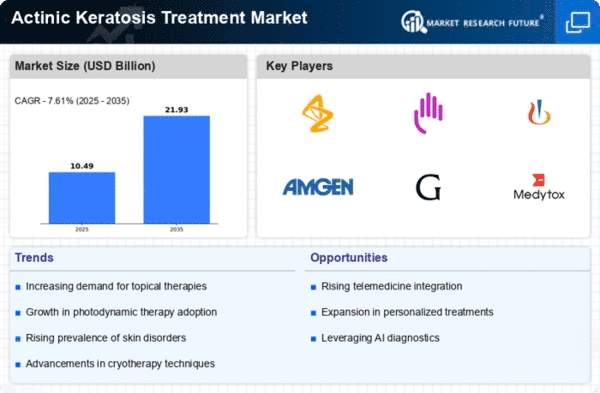
As per MRFR analysis, the Actinic Keratosis Treatment Market was estimated at 9.75 USD Billion in 2024. The Actinic Keratosis Treatment industry is projected to grow from 10.59 USD Billion in 2025 to 21.93 USD Billion by 2035, exhibiting a compound annual growth rate (CAGR) of 7.61 during the forecast period 2025 - 2035.

Key Market Trends & Highlights

The Actinic Keratosis Treatment Market is poised for substantial growth driven by innovative therapies and increasing awareness.

  • The market is witnessing the emergence of novel therapies that enhance treatment efficacy.
  • North America remains the largest market, while Asia-Pacific is recognized as the fastest-growing region.
  • Cryotherapy continues to dominate as the largest segment, whereas topical medications are rapidly gaining traction.
  • The rising incidence of actinic keratosis and advancements in treatment modalities are key drivers propelling market growth.

Market Size & Forecast

2024 Market Size 9.75 (USD Billion)
2035 Market Size 21.93 (USD Billion)
CAGR (2025 - 2035) 7.61%
Largest Regional Market Share in 2024 North America

Major Players

<p>AstraZeneca (GB), Bristol-Myers Squibb (US), Galderma (CH), Medytox (KR), Novartis (CH), Pfizer (US), Sun Pharmaceutical Industries (IN), Valeant Pharmaceuticals (CA), Mylan (US)</p>

Market Trends

The Actinic Keratosis Treatment Market is currently experiencing notable developments driven by an increasing awareness of skin health and the rising prevalence of actinic keratosis among various demographics. This condition, characterized by rough, scaly patches on sun-exposed skin, has prompted a surge in demand for effective treatment options. As healthcare providers and patients alike recognize the potential risks associated with untreated actinic keratosis, including the possibility of progression to skin cancer, the market is witnessing a shift towards more proactive management strategies. Innovations in treatment modalities, including topical therapies, cryotherapy, and photodynamic therapy, are becoming more prevalent, reflecting a broader trend towards personalized medicine in dermatology. Moreover, the Actinic Keratosis Treatment Market is influenced by advancements in technology and research, which are paving the way for novel therapeutic approaches. The integration of digital health solutions, such as teledermatology, is enhancing patient access to care and facilitating timely interventions. Additionally, the growing emphasis on preventive measures and early detection is likely to shape the market landscape in the coming years. As stakeholders continue to explore new avenues for treatment and management, the Actinic Keratosis Treatment Market appears poised for sustained growth, driven by a combination of clinical innovation and heightened public awareness regarding skin health.

Emergence of Novel Therapies

The Actinic Keratosis Treatment Market is witnessing a rise in the development of innovative therapies that offer enhanced efficacy and safety profiles. These novel treatments, which may include biologics and targeted therapies, are designed to address the underlying mechanisms of actinic keratosis, potentially leading to improved patient outcomes.

Increased Focus on Preventive Care

There is a growing emphasis on preventive care within the Actinic Keratosis Treatment Market, as healthcare providers advocate for early detection and intervention. This trend reflects a broader societal shift towards proactive health management, encouraging individuals to seek regular skin assessments and adopt sun protection measures.

Integration of Digital Health Solutions

The incorporation of digital health technologies is transforming the Actinic Keratosis Treatment Market. Teledermatology and mobile health applications are facilitating remote consultations and monitoring, thereby improving patient access to care and enabling timely treatment decisions.

Actinic Keratosis Treatment Market Market Drivers

Market Growth Projections

The Global Actinic Keratosis Treatment Market Industry is poised for substantial growth, with projections indicating a market value of 1.2 USD Billion in 2024 and an anticipated increase to 4.78 USD Billion by 2035. This growth trajectory reflects a compound annual growth rate of 13.39% from 2025 to 2035. Such figures underscore the increasing recognition of actinic keratosis as a significant public health concern, driving investments in research, treatment development, and patient education initiatives. As the market evolves, stakeholders are likely to focus on enhancing treatment accessibility and effectiveness.

Growing Geriatric Population

The global demographic shift towards an aging population is a significant factor influencing the Global Actinic Keratosis Treatment Market Industry. Older adults are more susceptible to skin conditions, including actinic keratosis, due to cumulative sun exposure over their lifetimes. As the proportion of elderly individuals increases, so does the demand for effective treatment options. This demographic trend is particularly pronounced in developed nations, where healthcare systems are adapting to meet the needs of older patients. Consequently, the market is likely to expand, driven by the necessity for targeted therapies that address the unique challenges faced by this population.

Regulatory Support and Approval

Regulatory bodies are playing a crucial role in shaping the Global Actinic Keratosis Treatment Market Industry by facilitating the approval of new therapies. Streamlined processes for clinical trials and drug approvals are encouraging pharmaceutical companies to invest in research and development for actinic keratosis treatments. This supportive regulatory environment not only accelerates the introduction of innovative therapies but also enhances market competition. As more treatment options become available, patients benefit from increased choice and improved outcomes, further stimulating market growth.

Increased Awareness and Education

Heightened awareness about actinic keratosis and its potential risks is driving growth in the Global Actinic Keratosis Treatment Market Industry. Educational campaigns by health organizations and dermatology associations are informing the public about the importance of early detection and treatment. This increased knowledge encourages individuals to seek medical advice and treatment options, leading to higher diagnosis rates. Furthermore, healthcare providers are becoming more vigilant in screening for actinic keratosis, contributing to a larger patient base. As a result, the market is expected to experience a compound annual growth rate of 13.39% from 2025 to 2035.

Advancements in Treatment Modalities

Innovations in treatment options for actinic keratosis are shaping the Global Actinic Keratosis Treatment Market Industry. New therapies, including topical medications, cryotherapy, and photodynamic therapy, are being developed and refined, offering patients more effective and less invasive choices. For instance, the introduction of novel topical agents has shown promising results in clinical trials, enhancing patient compliance and satisfaction. As these advancements continue to emerge, they are likely to attract more patients seeking treatment, thereby expanding the market. The anticipated growth trajectory suggests that the market could reach 4.78 USD Billion by 2035.

Rising Incidence of Actinic Keratosis

The increasing prevalence of actinic keratosis globally is a primary driver for the Global Actinic Keratosis Treatment Market Industry. Factors such as prolonged sun exposure and aging populations contribute to this rise. It is estimated that millions of individuals are affected by this condition, particularly in regions with high UV radiation. As awareness grows regarding the potential progression of actinic keratosis to skin cancer, there is a corresponding surge in demand for effective treatments. This trend is expected to propel the market significantly, with projections indicating a market value of 1.2 USD Billion in 2024.

Market Segment Insights

By Treatment Type: Cryotherapy (Largest) vs. Topical Medications (Fastest-Growing)

<p>In the Actinic Keratosis Treatment Market, Cryotherapy holds the largest market share due to its widespread use and effectiveness in removing precancerous lesions. It is preferred by practitioners for its rapid results and minimal invasiveness. Topical Medications are close behind, appealing to a large patient demographic who prefer non-invasive treatments. They are gaining traction due to their convenience and ease of application, indicating a growing acceptance among patients and dermatologists alike.</p>

<p>Topical Medications: Fastest-Growing vs. Surgical Excision: Dominant</p>

<p>Topical Medications have emerged as the fastest-growing segment in the Actinic Keratosis Treatment Market, driven by an increasing preference for home-based treatment options. Patients are often seeking less invasive alternatives, and these medications offer a convenient solution. They include options like 5-FU and imiquimod, which are effective in treating mild to moderate lesions. In contrast, Surgical Excision remains a dominant method for treating more significant lesions, as it provides definitive removal of abnormal growths. Although more invasive, it is considered a reliable option in clinical practice, ensuring complete excision and lower recurrence rates.</p>

By End User: Hospitals (Largest) vs. Dermatology Clinics (Fastest-Growing)

<p>In the Actinic Keratosis Treatment Market, the distribution of market share among end users is predominantly led by hospitals, which account for the largest segment. These institutions provide comprehensive treatment facilities, skilled medical professionals, and varied therapeutic approaches, making them the preferred choice for patients seeking treatment for actinic keratosis. Dermatology clinics are also significant players in this market, capturing a growing share due to their specialized focus on skin conditions and personalized patient care, which has resulted in increasing patient preferences towards these facilities.</p>

<p>Hospitals (Dominant) vs. Dermatology Clinics (Emerging)</p>

<p>Hospitals hold a dominant position in the Actinic Keratosis Treatment Market due to their extensive resources, advanced treatment options, and the ability to manage complex cases. These establishments are equipped with a multi-disciplinary team which enables comprehensive care. On the other hand, dermatology clinics are emerging as a preferred choice for many patients, offering specialized services tailored to skin disorders. Their focused approach, shorter wait times, and personalized care pathways resonate well with patients seeking efficient treatment methods, thereby driving their rapid growth in the market.</p>

By Patient Demographics: Age Group (Largest) vs. Gender (Fastest-Growing)

<p>In the Actinic Keratosis Treatment Market, the distribution of patient demographics varies significantly across different age groups and genders. Patients aged 50 and above represent the largest share of the treatment market, as they are more prone to developing actinic keratosis due to cumulative sun exposure over the years. Conversely, gender demographics show that while men historically have had a higher prevalence, the rapid increase in awareness and health-seeking behavior among women is leading to a faster-growing segment within the market.</p>

<p>Age Group: 50+ (Dominant) vs. Gender: Female (Emerging)</p>

<p>The age group of 50 and above remains dominant in the Actinic Keratosis treatment market due to a greater incidence of skin lesions associated with aging and sun exposure. This demographic primarily includes individuals who have lifelong exposure to ultraviolet light, putting them at higher risk for skin abnormalities. On the other hand, the female segment is emerging as a crucial part of the market. Increased awareness of skin health and proactive treatment seeking among women fosters growth in this segment, with a notable rise in the number of females seeking treatment options in recent years.</p>

Get more detailed insights about Actinic Keratosis Treatment Market Research Report - Forecast till 2035

Regional Insights

North America : Market Leader in Treatments

North America is poised to maintain its leadership in the Actinic Keratosis Treatment Market, holding a significant market size of $4.88 billion in 2025. The region's growth is driven by increasing skin cancer awareness, advancements in treatment technologies, and supportive regulatory frameworks. The demand for effective therapies is further fueled by a rising aging population and a growing prevalence of actinic keratosis, which is expected to continue driving market expansion. The competitive landscape in North America is robust, featuring key players such as Pfizer, Bristol-Myers Squibb, and Galderma. The U.S. is the leading country, accounting for the majority of the market share, supported by a well-established healthcare infrastructure and high healthcare expenditure. The presence of major pharmaceutical companies enhances innovation and accessibility to advanced treatment options, solidifying North America's position as a market leader.

Europe : Emerging Market Dynamics

Europe's Actinic Keratosis Treatment Market is projected to reach $3.25 billion by 2025, driven by increasing awareness of skin health and the rising incidence of actinic keratosis. Regulatory support for innovative therapies and a focus on preventive healthcare are key growth drivers. The region is witnessing a shift towards personalized medicine, enhancing treatment efficacy and patient outcomes, which is expected to further boost market growth. Leading countries in Europe include Germany, France, and the UK, where the presence of established healthcare systems facilitates access to advanced treatments. Key players such as Novartis and Galderma are actively involved in research and development, contributing to a competitive landscape. The European Medicines Agency (EMA) plays a crucial role in regulating new therapies, ensuring safety and efficacy for patients across the region.

Asia-Pacific : Rapidly Growing Market

The Asia-Pacific Actinic Keratosis Treatment Market is expected to grow significantly, reaching $1.8 billion by 2025. This growth is driven by increasing awareness of skin conditions, rising disposable incomes, and a growing aging population. Regulatory bodies in the region are beginning to support the introduction of new therapies, which is expected to enhance treatment accessibility and effectiveness, further propelling market growth. Countries like Japan, Australia, and South Korea are leading the market, supported by advanced healthcare systems and increasing investments in dermatological research. The competitive landscape features key players such as Medytox and Sun Pharmaceutical Industries, which are focusing on innovative treatment solutions. The region's market dynamics are characterized by a growing demand for effective therapies and a shift towards more personalized treatment approaches, creating ample opportunities for growth.

Middle East and Africa : Emerging Market Potential

The Middle East and Africa Actinic Keratosis Treatment Market is projected to reach $0.82 billion by 2025, driven by increasing awareness of skin health and the rising prevalence of actinic keratosis. The region is witnessing a gradual shift towards modern healthcare practices, with regulatory bodies beginning to support the introduction of new treatment options. This trend is expected to enhance patient access to effective therapies, contributing to market growth. Leading countries in this region include South Africa and the UAE, where healthcare infrastructure is improving. The competitive landscape is evolving, with key players like Valeant Pharmaceuticals and Mylan entering the market. The focus on dermatological health is increasing, and as awareness grows, the demand for effective treatments is expected to rise, creating significant opportunities for market expansion.

Key Players and Competitive Insights

The Actinic Keratosis Treatment Market is characterized by a dynamic competitive landscape, driven by increasing awareness of skin cancer risks and the growing prevalence of actinic keratosis (AK). Key players are actively engaged in innovation and strategic partnerships to enhance their market presence. Companies such as AstraZeneca (GB), Bristol-Myers Squibb (US), and Galderma (CH) are at the forefront, focusing on developing advanced therapies and expanding their product portfolios. Their strategies, which include mergers and acquisitions, regional expansion, and digital transformation, collectively shape a competitive environment that is increasingly focused on patient-centric solutions and innovative treatment options.

In terms of business tactics, companies are localizing manufacturing and optimizing supply chains to enhance efficiency and reduce costs. The market appears moderately fragmented, with several key players exerting significant influence. This structure allows for a diverse range of treatment options, catering to varying patient needs and preferences. The collective efforts of these companies contribute to a robust competitive framework, where innovation and operational excellence are paramount.

In November 2025, Galderma (CH) announced the launch of a new topical treatment for actinic keratosis, which is expected to significantly improve patient compliance due to its once-daily application. This strategic move not only enhances Galderma's product offerings but also positions the company as a leader in patient-friendly solutions, potentially increasing its market share in the AK treatment segment. The emphasis on ease of use reflects a broader trend towards patient-centric care in dermatology.

In October 2025, AstraZeneca (GB) entered into a collaboration with a biotechnology firm to develop a novel immunotherapy for actinic keratosis. This partnership is indicative of AstraZeneca's commitment to innovation and its strategic focus on leveraging cutting-edge technologies to address unmet medical needs. The collaboration may accelerate the development timeline and enhance the efficacy of treatments available in the market, thereby strengthening AstraZeneca's competitive position.

In September 2025, Bristol-Myers Squibb (US) expanded its clinical trial program for a new combination therapy targeting actinic keratosis, which is anticipated to provide enhanced therapeutic outcomes. This strategic initiative underscores the company's focus on research and development, aiming to deliver more effective treatment options. The expansion of clinical trials not only demonstrates Bristol-Myers Squibb's commitment to advancing dermatological therapies but also positions it favorably in a competitive landscape increasingly driven by clinical evidence and efficacy.

As of December 2025, current competitive trends in the Actinic Keratosis Treatment Market include a pronounced shift towards digitalization, sustainability, and the integration of artificial intelligence in treatment development. Strategic alliances are becoming increasingly vital, as companies seek to pool resources and expertise to foster innovation. The competitive differentiation is likely to evolve from traditional price-based competition to a focus on technological advancements, innovative treatment modalities, and reliable supply chains. This shift suggests that companies prioritizing research, development, and patient-centric solutions will be better positioned to thrive in the evolving market.

Key Companies in the Actinic Keratosis Treatment Market market include

Industry Developments

  • Q2 2024: Almirall receives FDA approval for Klisyri (tirbanibulin) for the treatment of actinic keratosis on the face or scalp Almirall announced that the U.S. FDA has approved Klisyri (tirbanibulin) ointment for the topical treatment of actinic keratosis on the face or scalp, marking a significant regulatory milestone for the company in the dermatology sector.
  • Q1 2024: LEO Pharma launches Adtralza (tralokinumab) in new markets for actinic keratosis treatment LEO Pharma expanded the availability of Adtralza (tralokinumab), introducing the product in several new European countries for the treatment of actinic keratosis, strengthening its dermatology portfolio.
  • Q2 2024: Biofrontera AG receives marketing authorization for Ameluz in Brazil for actinic keratosis Biofrontera AG announced that its photodynamic therapy product Ameluz has received marketing authorization in Brazil for the treatment of actinic keratosis, expanding its international footprint.
  • Q2 2024: Cipher Pharmaceuticals announces partnership with Sun Pharmaceutical for distribution of actinic keratosis treatment in Canada Cipher Pharmaceuticals entered into a strategic partnership with Sun Pharmaceutical to distribute its actinic keratosis treatment products in the Canadian market.
  • Q3 2024: Galderma launches new clinical trial for investigational topical therapy for actinic keratosis Galderma initiated a Phase III clinical trial to evaluate the safety and efficacy of a new investigational topical therapy for actinic keratosis, aiming to expand its treatment options.
  • Q1 2025: Hill Dermaceuticals receives FDA orphan drug designation for novel actinic keratosis treatment Hill Dermaceuticals announced that the FDA has granted orphan drug designation to its investigational therapy for actinic keratosis, providing regulatory incentives for further development.
  • Q2 2025: Bausch Health launches new manufacturing facility for actinic keratosis topical treatments in the United States Bausch Health Companies Inc. opened a new manufacturing facility dedicated to producing topical treatments for actinic keratosis, increasing its production capacity to meet rising demand.
  • Q2 2024: LEO Pharma announces acquisition of Vidac Pharmaceuticals to expand actinic keratosis portfolio LEO Pharma acquired Vidac Pharmaceuticals, aiming to strengthen its portfolio of actinic keratosis treatments and accelerate innovation in dermatology.
  • Q3 2024: Athenex, Inc. secures $30 million Series B funding to advance actinic keratosis drug development Athenex, Inc. raised $30 million in Series B funding to support the clinical development of its novel actinic keratosis drug candidates.
  • Q1 2025: GALDERMA receives EMA approval for new actinic keratosis gel formulation GALDERMA announced that the European Medicines Agency (EMA) has approved its new gel formulation for the treatment of actinic keratosis, enabling commercialization across the EU.
  • Q2 2025: Sun Pharmaceutical launches generic imiquimod cream for actinic keratosis in India Sun Pharmaceutical Industries Ltd. launched a generic version of imiquimod cream for the treatment of actinic keratosis in India, expanding access to affordable therapies.
  • Q2 2024: Perrigo Company plc appoints new CEO to drive growth in dermatology and actinic keratosis segment Perrigo Company plc announced the appointment of a new CEO, with a strategic focus on expanding its dermatology business, including actinic keratosis treatments.

Future Outlook

Actinic Keratosis Treatment Market Future Outlook

<p>The Actinic Keratosis Treatment Market is projected to grow at a 7.61% CAGR from 2024 to 2035, driven by increasing awareness and advancements in treatment options.</p>

New opportunities lie in:

  • <p>Development of personalized treatment plans leveraging genetic profiling.</p>
  • <p>Expansion of telemedicine platforms for remote consultations and follow-ups.</p>
  • <p>Investment in innovative topical formulations with enhanced efficacy and patient compliance.</p>

<p>By 2035, the market is expected to be robust, driven by innovation and increased patient access.</p>

Market Segmentation

Actinic Keratosis Treatment Market End User Outlook

  • Hospitals
  • Dermatology Clinics
  • Ambulatory Surgical Centers
  • Homecare Settings

Actinic Keratosis Treatment Market Treatment Type Outlook

  • Cryotherapy
  • Topical Medications
  • Photodynamic Therapy
  • Surgical Excision

Actinic Keratosis Treatment Market Patient Demographics Outlook

  • Age Group
  • Gender
  • Skin Type
  • Health Status

Report Scope

MARKET SIZE 20249.75(USD Billion)
MARKET SIZE 202510.59(USD Billion)
MARKET SIZE 203521.93(USD Billion)
COMPOUND ANNUAL GROWTH RATE (CAGR)7.61% (2024 - 2035)
REPORT COVERAGERevenue Forecast, Competitive Landscape, Growth Factors, and Trends
BASE YEAR2024
Market Forecast Period2025 - 2035
Historical Data2019 - 2024
Market Forecast UnitsUSD Billion
Key Companies ProfiledAstraZeneca (GB), Bristol-Myers Squibb (US), Galderma (CH), Medytox (KR), Novartis (CH), Pfizer (US), Sun Pharmaceutical Industries (IN), Valeant Pharmaceuticals (CA), Mylan (US)
Segments CoveredTreatment Type, End User, Patient Demographics
Key Market OpportunitiesEmergence of novel topical therapies and photodynamic treatments enhances options in the Actinic Keratosis Treatment Market.
Key Market DynamicsRising demand for non-invasive treatments drives innovation and competition in the Actinic Keratosis Treatment Market.
Countries CoveredNorth America, Europe, APAC, South America, MEA

FAQs

What will be the CAGR value of actinic keratosis treatment market during the forecast period ?

The actinic keratosis treatment market CAGR would be 13.39% during the forecast period.

What is the projected valuation for the Actinic Keratosis Treatment Market by 2035?

The valuation would be USD 4.78 Billion by 2035.

What are the restraining factors of the Actinic Keratosis Treatment Market?

The restraining factors of the market are high cost and various associated risks.

What was the hospital & oncology centers segment valuation in 2035?

The valuation was USD 4.78 Billion in 2035.

Which region would dominate the global Actinic Keratosis Treatment Market?

The Americas would dominate the Actinic Keratosis Treatment Market.

  1. Report Prologue
  2. Market Introduction
    1. Introduction 14
    2. Assumptions & Limitations 14
  3. Research Methodology
    1. Research Process 17
    2. Primary Research 17
    3. Secondary Research 18
    4. Market Size Estimation 18
      1. Market Share Analysis 19
      2. Market Pricing Approach 19
  4. Market Dynamics
    1. Introduction 21
    2. Drivers 21
      1. Increasing Prevalence Of Actinic Keratosis 21
      2. Rising Demand And Acceptance Of Minimally Invasive Therapeutic Procedures 21
      3. Suitable Medical Coverage For A Variety Of Treatment Options Available In The Market 22
      4. Growing Geriatric Population 22
      5. Drivers Impact Analysis 22
    3. Restraints 23
      1. High Cost Of Therapeutic Procedures 23
      2. Risk Factors Associated With The Available Treatment Options In The Market 23
      3. Restraints Impact Analysis 23
    4. Opportunity 24
      1. Growing Markets Of Asia-Pacific 24
    5. Mega Trends 24
      1. Application Of Cryosurgery In The Therapeutics Of Actinic Keratosis 24
    6. Macroeconomic Indicator 24
    7. Product Pipeline Analysis 25
      1. Introduction 25
      2. Aminolevulinic Acid Topical 20% Topical Solution, Device: BLU-U Blue Light Phototherapy Illuminator 25
      3. Oleogel-S10 100 Mg/G, Placebo (Petroleum Jelly) 26
      4. Aminolevulinic Acid-Based Photodynamic Therapy 26
      5. Topical Steroid Ointment, Skin Barrier Moisturizer 27
      6. Ingenol Mebutate Gel 0.015%, Ingenol Mebutate Gel 0.05% 27
      7. SR-T100 Gel 28
      8. Aminolevulinic Acid HCl 28
      9. SOR007 (Uncoated Nanoparticulate Paclitaxel) Ointment 29
      10. KX01 (Ointment) 29
  5. Market Factor Analysis
    1. Value Chain Analysis 31
      1. R&D And Designing 31
      2. Manufacturing 31
      3. Distribution & Sales 31
      4. Post-Sales Review 32
    2. Porter’s Five Forces Model 32
      1. Bargaining Power Of Suppliers 32
      2. Bargaining Power Of Buyers 33
      3. Threat Of New Entrants 33
      4. Threat Of Substitutes 33
      5. Intensity Of Rivalry 33
    3. Investment Opportunities 33
    4. Pricing Analysis 33
  6. Actinic Keratosis Treatment Market, By Type
    1. Introduction 35
      1. Medications 36
      2. Procedures 36
  7. Actinic Keratosis Treatment Market, By End User
    1. Introduction 38
      1. Hospitals & Oncology Centers 39
      2. Dermatology Clinics 39
      3. Ambulatory Surgical Center 39
  8. Global Actinic Keratosis Treatment Market, By Region
    1. Introduction 41
    2. Americas 42
  9. Actinic Keratosis Treatment Market, By Type
  10. Actinic Keratosis Treatment Market, By End User
  11. North America 44
  12. Actinic Keratosis Treatment Market, By Type
  13. Actinic Keratosis Treatment Market, By End User
  14. US 45
  15. Actinic Keratosis Treatment Market, By Type
  16. Actinic Keratosis Treatment Market, By End User
  17. Canada 46
  18. Actinic Keratosis Treatment Market, By Type
  19. Actinic Keratosis Treatment Market, By End User
  20. South America 47
  21. Actinic Keratosis Treatment Market, By Type
  22. Actinic Keratosis Treatment Market, By End User
    1. Europe 48
  23. Actinic Keratosis Treatment Market, By Type
  24. Actinic Keratosis Treatment Market, By End User
  25. Western Europe 50
  26. Actinic Keratosis Treatment Market, By Type
  27. Actinic Keratosis Treatment Market, By End User
  28. Germany 51
  29. Actinic Keratosis Treatment Market, By Type
  30. Actinic Keratosis Treatment Market, By End User
  31. France 52
  32. Actinic Keratosis Treatment Market, By Type
  33. Actinic Keratosis Treatment Market, By End User
  34. UK 53
  35. Actinic Keratosis Treatment Market, By Type
  36. Actinic Keratosis Treatment Market, By End User
  37. Italy 54
  38. Actinic Keratosis Treatment Market, By Type
  39. Actinic Keratosis Treatment Market, By End User
  40. Spain 55
  41. Actinic Keratosis Treatment Market, By Type
  42. Actinic Keratosis Treatment Market, By End User
  43. Rest Of Western Europe 56
  44. Actinic Keratosis Treatment Market, By Type
  45. Actinic Keratosis Treatment Market, By End User
  46. Eastern Europe 57
  47. Actinic Keratosis Treatment Market, By Type
  48. Actinic Keratosis Treatment Market, By End User
    1. Asia-Pacific 58
  49. Actinic Keratosis Treatment Market, By Type
  50. Actinic Keratosis Treatment Market, By End User
  51. China 60
  52. Actinic Keratosis Treatment Market, By Type
  53. Actinic Keratosis Treatment Market, By End User
  54. India 61
  55. Actinic Keratosis Treatment Market, By Type
  56. Actinic Keratosis Treatment Market, By End User
  57. Japan 62
  58. Actinic Keratosis Treatment Market, By Type
  59. Actinic Keratosis Treatment Market, By End User
  60. Australia 63
  61. Actinic Keratosis Treatment Market, By Type
  62. Actinic Keratosis Treatment Market, By End User
  63. Rest Of Asia-Pacific 64
  64. Actinic Keratosis Treatment Market, By Type
  65. Actinic Keratosis Treatment Market, By End User
    1. Middle East & Africa 65
  66. Actinic Keratosis Treatment Market, By Type
  67. Actinic Keratosis Treatment Market, By End User
  68. Middle East 67
  69. Actinic Keratosis Treatment Market, By Type
  70. Actinic Keratosis Treatment Market, By End User
  71. Africa 68
  72. Actinic Keratosis Treatment Market, By Type
  73. Actinic Keratosis Treatment Market, By End User
  74. Competitive Landscape
    1. Introduction 70
  75. Company Profiles
    1. Biofrontera AG 72
      1. Company Overview 72
      2. Financial Overview 72
      3. Products Offering 72
      4. Key Developments 73
      5. SWOT Analysis 73
      6. Key Strategy 73
    2. Cipher Pharmaceuticals Inc. 74
      1. Company Overview 74
      2. Financial Overview 74
      3. Products Offering 75
      4. Key Developments 75
      5. SWOT Analysis 75
      6. Key Strategy 75
    3. BioLineRx. 76
      1. Company Overview 76
      2. Financial Overview 76
      3. Products Offering 76
      4. Key Developments 76
      5. SWOT Analysis 77
      6. Key Strategy 77
    4. Valeant Pharmaceuticals. 78
      1. Company Overview 78
      2. Financial Overview 78
      3. Products Offering 79
      4. Key Developments 79
      5. SWOT Analysis 79
      6. Key Strategy 79
    5. Leo Pharma 80
      1. Company Overview 80
      2. Financial Overview 80
      3. Products Offering 81
      4. Key Developments 81
      5. SWOT Analysis 81
      6. Key Strategy 81
    6. Galderma SA 82
      1. Company Overview 82
      2. Financial Overview 82
      3. Products Offering 82
      4. Key Developments 82
      5. SWOT Analysis 82
      6. Key Strategy 82
    7. Sun Pharmaceutical Industries Ltd 83
      1. Company Overview 83
      2. Products Offerings 84
      3. Key Developments 84
      4. SWOT Analysis 84
      5. Key Strategy 84
    8. 3M 85
      1. Company Overview 85
      2. Products Offerings 85
      3. Key Developments 86
      4. SWOT Analysis 86
      5. Key Strategy 86
    9. Alma Lasers 87
      1. Company Overview 87
      2. Products Offerings 87
      3. Key Developments 87
      4. SWOT Analysis 87
      5. Key Strategy 87
    10. Stanford Chemicals 88
      1. Company Overview 88
      2. Financial Overview 88
      3. Products Offering 88
      4. Key Developments 88
      5. SWOT Analysis 88
  76. Conclusion
    1. Key Findings 90
      1. From CEO’s View Point 90
    2. Key Companies To Watch 90
  77. Appendix
    1. Discussion Blue Print 92
  78. List Of Tables
  79. ACTINIC KERATOSIS TREATMENT MARKET: PRODUCT PIPELINE ANALYSIS 25
  80. GLOBAL ACTINIC KERATOSIS TREATMENT MARKET BY TYPE 2020–2027 (USD MILLION) 35
  81. GLOBAL ACTINIC KERATOSIS TREATMENT MARKET FOR MEDICATIONS 2020–2027 (USD MILLION) 36
  82. GLOBAL ACTINIC KERATOSIS TREATMENT MARKET FOR PROCEDURES 2020–2027 (USD MILLION) 36
  83. GLOBAL ACTINIC KERATOSIS TREATMENT MARKET BY END USER 2020–2027 (USD MILLION) 38
  84. GLOBAL ACTINIC KERATOSIS TREATMENT MARKET FOR HOSPITALS & ONCOLOGY CENTERS 2020–2027 (USD MILLION) 39
  85. GLOBAL ACTINIC KERATOSIS TREATMENT MARKET FOR DERMATOLOGY CLINICS 2020–2027 (USD MILLION) 39
  86. GLOBAL ACTINIC KERATOSIS TREATMENT MARKET FOR AMBULATORY SURGICAL CENTER 2020–2027 (USD MILLION) 39
  87. GLOBAL ACTINIC KERATOSIS TREATMENT MARKET BY REGION 2020–2027 (USD MILLION) 41
  88. GLOBAL ACTINIC KERATOSIS TREATMENT MARKET BY REGION MARKET SHARE 2020 (%) 41
  89. AMERICAS ACTINIC KERATOSIS TREATMENT MARKET BY REGION 2020–2027 (USD MILLION) 42
  90. AMERICAS ACTINIC KERATOSIS TREATMENT MARKET BY TYPE 2020–2027 (USD MILLION) 43
  91. AMERICAS ACTINIC KERATOSIS TREATMENT MARKET BY END USER 2020–2027 (USD MILLION) 43
  92. NORTH AMERICA ACTINIC KERATOSIS TREATMENT MARKET BY TYPE 2020–2027 (USD MILLION) 44
  93. NORTH AMERICA ACTINIC KERATOSIS TREATMENT MARKET BY END USER 2020–2027 (USD MILLION) 44
  94. US ACTINIC KERATOSIS TREATMENT MARKET BY TYPE 2020–2027 (USD MILLION) 45
  95. US ACTINIC KERATOSIS TREATMENT MARKET BY END USER 2020–2027 (USD MILLION) 45
  96. CANADA ACTINIC KERATOSIS TREATMENT MARKET BY TYPE 2020–2027 (USD MILLION) 46
  97. CANADA ACTINIC KERATOSIS TREATMENT MARKET BY END USER 2020–2027 (USD MILLION) 46
  98. SOUTH AMERICA ACTINIC KERATOSIS TREATMENT MARKET BY TYPE 2020–2027 (USD MILLION) 47
  99. SOUTH AMERICA ACTINIC KERATOSIS TREATMENT MARKET BY END USER 2020–2027 (USD MILLION) 47
  100. EUROPE ACTINIC KERATOSIS TREATMENT MARKET BY REGION 2020–2027 (USD MILLION) 48
  101. EUROPE ACTINIC KERATOSIS TREATMENT MARKET BY TYPE 2020–2027 (USD MILLION) 49
  102. EUROPE ACTINIC KERATOSIS TREATMENT MARKET BY END USER 2020–2027 (USD MILLION) 49
  103. WESTERN EUROPE ACTINIC KERATOSIS TREATMENT MARKET BY TYPE 2020–2027 (USD MILLION) 50
  104. WESTERN EUROPE ACTINIC KERATOSIS TREATMENT MARKET BY END USER 2020–2027 (USD MILLION) 50
  105. GERMANY ACTINIC KERATOSIS TREATMENT MARKET BY TYPE 2020–2027 (USD MILLION) 51
  106. GERMANY ACTINIC KERATOSIS TREATMENT MARKET BY END USER 2020–2027 (USD MILLION) 51
  107. FRANCE ACTINIC KERATOSIS TREATMENT MARKET BY TYPE 2020–2027 (USD MILLION) 52
  108. FRANCE ACTINIC KERATOSIS TREATMENT MARKET BY END USER 2020–2027 (USD MILLION) 52
  109. UK ACTINIC KERATOSIS TREATMENT MARKET BY TYPE 2020–2027 (USD MILLION) 53
  110. UK ACTINIC KERATOSIS TREATMENT MARKET BY END USER 2020–2027 (USD MILLION) 53
  111. ITALY ACTINIC KERATOSIS TREATMENT MARKET BY TYPE 2020–2027 (USD MILLION) 54
  112. ITALY ACTINIC KERATOSIS TREATMENT MARKET BY END USER 2020–2027 (USD MILLION) 54
  113. SPAIN ACTINIC KERATOSIS TREATMENT MARKET BY TYPE 2020–2027 (USD MILLION) 55
  114. SPAIN ACTINIC KERATOSIS TREATMENT MARKET BY END USER 2020–2027 (USD MILLION) 55
  115. REST OF WESTERN EUROPE ACTINIC KERATOSIS TREATMENT MARKET BY TYPE 2020–2027 (USD MILLION) 56
  116. REST OF WESTERN EUROPE ACTINIC KERATOSIS TREATMENT MARKET BY END USER 2020–2027 (USD MILLION) 56
  117. EASTERN EUROPE ACTINIC KERATOSIS TREATMENT MARKET BY TYPE 2020–2027 (USD MILLION) 57
  118. EASTERN EUROPE ACTINIC KERATOSIS TREATMENT MARKET BY END USER 2020–2027 (USD MILLION) 57
  119. ASIA-PACIFIC ACTINIC KERATOSIS TREATMENT MARKET BY COUNTRY 2020–2027 (USD MILLION) 58
  120. ASIA-PACIFIC ACTINIC KERATOSIS TREATMENT MARKET BY TYPE 2020–2027 (USD MILLION) 59
  121. ASIA-PACIFIC ACTINIC KERATOSIS TREATMENT MARKET BY END USER 2020–2027 (USD MILLION) 59
  122. CHINA ACTINIC KERATOSIS TREATMENT MARKET BY TYPE 2020–2027 (USD MILLION) 60
  123. CHINA ACTINIC KERATOSIS TREATMENT MARKET BY END USER 2020–2027 (USD MILLION) 60
  124. INDIA ACTINIC KERATOSIS TREATMENT MARKET BY TYPE 2020–2027 (USD MILLION) 61
  125. INDIA ACTINIC KERATOSIS TREATMENT MARKET BY END USER 2020–2027 (USD MILLION) 61
  126. JAPAN ACTINIC KERATOSIS TREATMENT MARKET BY TYPE 2020–2027 (USD MILLION) 62
  127. JAPAN ACTINIC KERATOSIS TREATMENT MARKET BY END USER 2020–2027 (USD MILLION) 62
  128. AUSTRALIA ACTINIC KERATOSIS TREATMENT MARKET BY TYPE 2020–2027 (USD MILLION) 63
  129. AUSTRALIA ACTINIC KERATOSIS TREATMENT MARKET BY END USER 2020–2027 (USD MILLION) 63
  130. REST OF ASIA PACIFIC ACTINIC KERATOSIS TREATMENT MARKET BY TYPE 2020–2027 (USD MILLION) 64
  131. REST OF ASIA PACIFIC ACTINIC KERATOSIS TREATMENT MARKET BY END USER 2020–2027 (USD MILLION) 64
  132. THE MIDDLE EAST & AFRICA ACTINIC KERATOSIS TREATMENT MARKET BY REGION 2020–2027 (USD MILLION) 65
  133. THE MIDDLE EAST & AFRICA ACTINIC KERATOSIS TREATMENT MARKET BY TYPE 2020–2027 (USD MILLION) 66
  134. THE MIDDLE EAST & AFRICA ACTINIC KERATOSIS TREATMENT MARKET BY END USER 2020–2027 (USD MILLION) 66
  135. THE MIDDLE EAST ACTINIC KERATOSIS TREATMENT MARKET BY TYPE 2020–2027 (USD MILLION) 67
  136. THE MIDDLE EAST ACTINIC KERATOSIS TREATMENT MARKET BY END USER 2020–2027 (USD MILLION) 67
  137. AFRICA ACTINIC KERATOSIS TREATMENT MARKET BY TYPE 2020–2027 (USD MILLION) 68
  138. AFRICA ACTINIC KERATOSIS TREATMENT MARKET BY END USER 2020–2027 (USD MILLION) 68
  139. List Of Figures
  140. MARKET STRUCTURE 15
  141. RESEARCH PROCESS 17
  142. DROC ANALYSIS OF THE GLOBAL ACTINIC KERATOSIS TREATMENT MARKET 21
  143. DRIVERS IMPACT ANALYSIS: GLOBAL ACTINIC KERATOSIS TREATMENT MARKET 22
  144. RESTRAINTS IMPACT ANALYSIS: GLOBAL ACTINIC KERATOSIS TREATMENT MARKET 23
  145. VALUE CHAIN: GLOBAL ACTINIC KERATOSES TREATMENT MARKET 31
  146. PORTERS FIVE FORCES MODEL: GLOBAL ACTINIC KERATOSES TREATMENT MARKET 32
  147. GLOBAL ACTINIC KERATOSIS TREATMENT MARKET BY TYPE 2020 & 2027 (USD MILLION) 36
  148. GLOBAL ACTINIC KERATOSIS TREATMENT MARKET BY END USER 2020 & 2027 (USD MILLION) 38
  149. AMERICAS ACTINIC KERATOSIS TREATMENT MARKET BY REGION MARKET SHARE 2020 (%) 42
  150. EUROPE ACTINIC KERATOSIS TREATMENT MARKET BY REGION MARKET SHARE 2020 (%) 48
  151. ASIA PACIFIC ACTINIC KERATOSIS TREATMENT MARKET BY REGION MARKET SHARE 2020 (%) 58
  152. THE MIDDLE EAST & AFRICA ACTINIC KERATOSIS TREATMENT MARKET BY REGION MARKET SHARE 2020 (%) 65
  153. GLOBAL ACITNIC KERATOSES TREATMENT, MAJOR PLAYERS MARKET SHARE ANALYSIS, 2020 (%) 70

Actinic Keratosis Treatment Market Segmentation

Market Segmentation Overview

  • Detailed segmentation data will be available in the full report
  • Comprehensive analysis by multiple parameters
  • Regional and country-level breakdowns
  • Market size forecasts by segment
Infographic

Free Sample Request

Kindly complete the form below to receive a free sample of this Report

Get Free Sample

Customer Strories

Compare Licence

×
Features License Type
Single User Multiuser License Enterprise User
Price $4,950 $5,950 $7,250
Maximum User Access Limit 1 User Upto 10 Users Unrestricted Access Throughout the Organization
Free Customization
Direct Access to Analyst
Deliverable Format
Platform Access
Discount on Next Purchase 10% 15% 15%
Printable Versions