Report Details:
15 Companies Covered
111 Pages
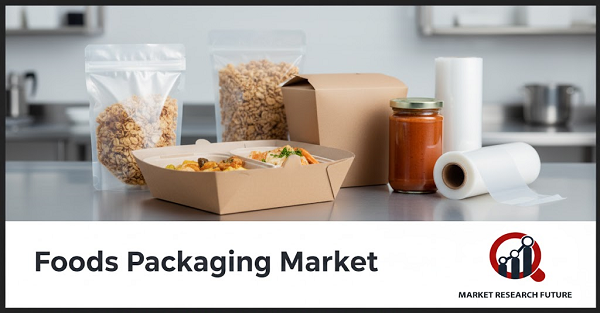
Food Packaging Market Overview
The food packaging market is projected to reach USD 679.94 billion by 2035, growing from USD 388.74 billion in 2024 at a CAGR of 5.79% during the forecast period.
The market’s expansion is primarily driven by the rising global consumption of packaged and ready-to-eat foods, urban lifestyle shifts, and increasing awareness regarding food safety and sustainability.
Food manufacturers are continuously innovating to ensure longer shelf life, superior hygiene, and product integrity, fueling demand for advanced packaging solutions.
Furthermore, the growing emphasis on eco-friendly and recyclable packaging materials, supported by government initiatives to reduce plastic waste, is reshaping market trends globally.
Segment Insights
Based on material type, the market is segmented into plastic, paper and paperboard, metal, glass, and others. The plastic segment accounted for the largest market share of USD 130 billion in 2024 and is projected to reach USD 198.96 billion by 2035, owing to its cost-effectiveness, durability, and adaptability in various packaging applications.
The paper and paperboard segment is anticipated to exhibit strong growth, expanding from USD 85 billion in 2024 to USD 132.55 billion by 2035, driven by the growing shift toward sustainable packaging and stringent government regulations on plastic usage.
The glass packaging category reached USD 45 billion in 2024, which is expected to reach USD 61.37 billion by 2035. The metal category, on the other hand, reached USD 67.39 billion in 2024, which is likely to reach USD 107.12 billion by 2035.
By packaging type, the market is divided into rigid, flexible, and semi-rigid packaging. The growth of the flexible packaging category was attributed to its lightweight properties, reduced material consumption, and versatility for a wide range of food categories.
The rigid packaging category growth was supported by the increased demand for beverages, dairy, and processed foods requiring enhanced protection.
Based on application, the market is categorized into bakery and confectionery, dairy products, beverages, fruits and vegetables, meat and seafood, and others. The beverages segment held the largest market share.
The dairy products category’s growth was propelled by the rising demand for packaged milk, cheese, and yogurt in developing markets.
Bakery and confectionery, fruits and vegetables, and meat and seafood segments collectively contribute a substantial share, driven by the expanding processed food sector.
Based on the end-use segment, the market can be classified into food retail, food service, and e-commerce. The food retail category is likely to lead the segment, followed by the food service category.
Regional Insights
Regionally, North America dominated the global food packaging market in 2024 with a valuation of USD 110 billion and is projected to reach USD 160 billion by 2035. The market’s growth is fueled by strong demand for convenience foods, technological advancements in packaging, and an established network of food processing industries.
Europe held the second-largest market share, valued at USD 90 billion in 2024 and anticipated to reach USD 130 billion by 2035. The region’s market growth is influenced by the rapid adoption of biodegradable materials and compliance with stringent environmental regulations in countries such as Germany, France, and the UK.
The Asia-Pacific region is expected to register the fastest growth, expanding from USD 85 billion in 2024 to USD 150 billion by 2035 at a CAGR of 6.80%. The surge in population, evolving dietary patterns, and booming e-commerce and food delivery sectors in China, India, and Japan are key growth drivers.
Latin America and the Middle East & Africa together accounted for USD 12.39 billion in 2024 and are projected to reach USD 20 billion by 2035, supported by infrastructure improvements and increased packaged food consumption.
Key Players
Major players in the global food packaging market include Amcor plc, Tetra Pak International S.A., Crown Holdings, Inc., Ball Corporation, Sealed Air Corporation, Berry Global Inc., DS Smith Plc, Smurfit Kappa Group, Mondi Group, and Huhtamaki Oyj.
These companies are focusing on sustainable packaging innovations, lightweight material development, and recyclable design enhancements to meet evolving consumer expectations. Mergers, acquisitions, and technological collaborations remain strategic measures to expand product portfolios and strengthen market positions.
Industry Developments
- In February 2024, Amcor plc introduced a line of lightweight, fully recyclable polyethylene films that reduce carbon emissions by 30%.
- In April 2024, Tetra Pak partnered with Elopak to develop fiber-based beverage cartons from renewable materials.
- In July 2024, Huhtamaki Oyj expanded its paper-based flexible packaging production facility in Malaysia to cater to rising eco-friendly packaging demand in the Asia-Pacific region.
Key Findings
- The global food packaging market is expected to reach USD 679.94 billion by 2035, growing at a CAGR of 5.79% from USD 388.74 billion in 2024.
- Plastic dominated the material segment, which held USD 130 billion, while paper and paperboard reached USD 85 billion in 2024, and the category witnessed rapid growth due to sustainability initiatives.
- Flexible packaging led by type, followed by rigid packaging driven by beverage and dairy product demand.
- North America held the largest share, accounting for USD 110 billion, while Europe recorded the valuation of USD 90 billion in 2024.
- Key players are investing in recyclable and biodegradable material innovations to comply with global environmental standards.
- Recent developments emphasize a transition toward carbon-efficient and renewable packaging solutions.
Get More Information about this Report: Food Packaging Market
