Report Details:
15 Companies Covered
185 Pages
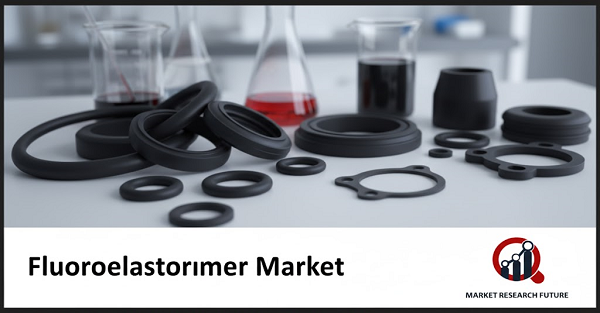
Fluoroelastomers Market Overview
The fluoroelastomers market was valued at USD 15.40 billion in 2024 and is projected to reach USD 20.21 billion by 2035, growing at a CAGR of 2.50% from 2025 to 2035.
The market growth is primarily driven by the increasing demand from the automotive industry for high-performance materials that withstand heat, chemicals, and oils.
Fluoroelastomers, known for their superior chemical and temperature resistance, are increasingly utilized in applications across the automotive, aerospace, and electronics industries.
The Asia-Pacific region continues to lead the market owing to its rapidly expanding automotive and electronics sectors. Key manufacturers are investing in research and development activities and pursuing strategic initiatives to strengthen their global presence and technological capabilities.
Segment Insights
Based on product type, the market is segmented into fluorocarbon elastomers, fluorosilicone elastomers (FVMQ), and perfluoroelastomers (FFKM). Among these, the fluorocarbon elastomers segment held the majority share in 2022, attributed to its superior properties such as resistance to heat, oils, and chemicals.
These elastomers are extensively used in seals, gaskets, and hoses, making them indispensable in industries demanding high-performance materials.
By application, the market is categorized into O-rings, seals & gaskets, hoses, complex molding parts, and others. The seals & gaskets segment dominated the market and is projected to maintain its lead throughout the forecast period.
The rising use of fluoroelastomer-based seals and gaskets in the automotive, aerospace, oil & gas, and chemical processing sectors contributes significantly to this dominance. These components provide critical sealing performance in extreme conditions, enhancing the operational reliability of equipment and vehicles.
Based on end-user, the market is segmented into automotive, aerospace & defense, chemical processing, semiconductor, oil & gas, medical, and others. The Automotive segment accounted for the largest share and is anticipated to grow at the fastest rate during the forecast period.
The increasing demand for fuel-efficient, durable, and lightweight vehicles drives the need for FKM materials. Growth in vehicle production across Asia-Pacific and the Middle East & Africa further supports the expansion of this segment.
Regional Insights
Regionally, the Fluoroelastomers market is segmented into North America, Europe, Asia-Pacific, and the Rest of the World. The Asia-Pacific region is expected to continue dominating the global market through 2035. This dominance is attributed to robust growth in the region’s automotive and electronics industries.
Countries such as China, Japan, and India are leading contributors, with expanding manufacturing bases and growing demand for high-performance materials. The electronics industry in the region also serves as a major consumer of fluoroelastomers, particularly for applications requiring excellent dielectric and heat-resistant properties.
North America and Europe represent mature markets characterized by steady demand from aerospace, chemical processing, and semiconductor industries. The presence of established automotive manufacturers and advancements in material science contribute to stable growth in these regions.
Meanwhile, the Rest of the World, including Latin America and the Middle East, is expected to witness moderate growth due to ongoing industrialization and infrastructure development.
Key Players
Major players operating in the global Fluoroelastomers (FKM) market include Chemours Company, Solvay SA, 3M, AGC Chemicals Inc., Daikin Industries, DuPont, Gujarat Fluorochemicals Limited, Halo Polymer OJSC, Shin-Etsu Chemical Co., and Eagle Elastomer Inc.
These companies are focusing on expanding their product portfolios, enhancing production capacities, and forming strategic partnerships to strengthen their market positions.
Solvay, for instance, operates through three core divisions, Materials, Chemicals, and Solutions, offering specialty polymers and composite materials that serve diverse industrial sectors.
AGC Chemicals, meanwhile, specializes in high-tech materials for industries such as automotive, electronics, and life sciences. Leading manufacturers are increasingly adopting strategies like mergers, acquisitions, and R&D collaborations to maintain competitiveness and meet evolving industry standards.
Industry Developments
In September 2023, Apple announced the introduction of its Apple Watch Series 9, marking a significant step in sustainable material innovation. The company revealed that it would replace silicone and fluoroelastomer accessories with next-generation, environmentally friendly materials.
This shift reflects the growing trend of sustainability in product design and material sourcing, signaling new opportunities for the development of advanced fluoroelastomer alternatives in the global market.
Key Findings
- The fluoroelastomers market was valued at USD 15.40 billion in 2024 and is projected to reach USD 20.21 billion by 2035, growing at a CAGR of 2.50%.
- The fluorocarbon elastomers segment held the largest share in 2022 due to superior heat and chemical resistance.
- The seals and gaskets application segment dominated the market and is expected to sustain its lead through 2035.
- The automotive end-user segment remains the fastest-growing category, driven by demand for fuel-efficient and lightweight vehicles.
- The Asia-Pacific region continues to dominate the global market, supported by strong growth in the automotive and electronics industries.
- Key market participants include Chemours Company, Solvay SA, 3M, AGC Chemicals Inc., Daikin Industries, and DuPont.
- Technological advancements and sustainability initiatives, such as Apple’s 2023 material transition, are shaping the future of the FKM market.
Get More Information about this Report: Fluoroelastomers Market
