Top Global Gluten-free Food Brands
food industry Overview
The global food industry is witnessing a paradigm shift as consumers increasingly embrace gluten-free products—not merely as a dietary choice but as a lifestyle transformation. Once confined to individuals with celiac disease or gluten sensitivity, gluten-free diets have now entered the mainstream, driven by rising health consciousness, awareness about food intolerances, and a broader focus on digestive wellness. The growing demand for cleaner, label-transparent, and nutrient-rich food has positioned gluten-free products at the forefront of the functional food revolution.
As consumers move toward mindful eating, global brands are responding with innovation—creating gluten-free alternatives that retain flavor, texture, and nutrition. From cereals and bakery items to snacks and ready-to-eat meals, gluten-free offerings are redefining how the world perceives healthy eating.
Etymology and Understanding Gluten-Free Foods
The term gluten originates from the Latin word meaning “glue,” referring to the sticky, elastic protein complex found in wheat, rye, and barley. It primarily consists of glutenin and gliadin, two proteins responsible for the texture and structure of dough.
Gluten-free food products eliminate or replace these proteins with alternative grains and ingredients such as rice, corn, quinoa, buckwheat, and almond flour. The shift toward gluten-free consumption stems mainly from medical conditions like celiac disease, non-celiac gluten sensitivity, and wheat allergy—all of which can lead to nutrient malabsorption and gastrointestinal discomfort. Beyond medical reasons, many health-conscious consumers are adopting gluten-free diets to support better digestion, weight management, and improved energy levels.
Market Demand and Growth Trends
The gluten-free food market has expanded significantly in recent years.
Key factors fuelling this growth include:
- Rising prevalence of celiac disease and gluten intolerance worldwide
- Greater awareness about the benefits of clean-label, allergen-free diets
- Expansion of supermarkets and online retail offering gluten-free options
- Increased R&D and innovation by major food manufacturers
- Growing adoption of health-conscious eating patterns post-COVID-19
North America, Europe, and Asia-Pacific have emerged as the primary growth hubs, with consumers demonstrating strong brand loyalty and a willingness to pay premium prices for trusted gluten-free alternatives.
Top Global Gluten-Free Brands
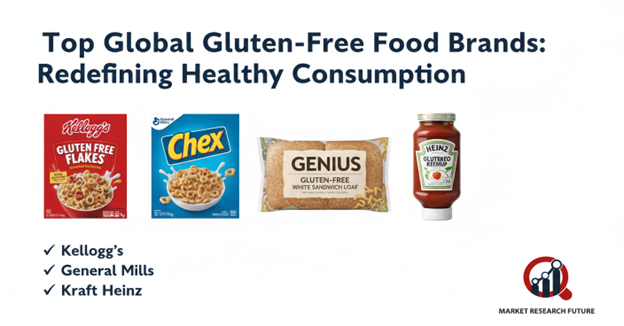
1. Kellogg’s
Synonymous with breakfast innovation, Kellogg’s has been a leader in providing nutritious, protein-rich cereal options for over a century across 180 countries. Recognizing the growing demand for gluten-free choices, the company introduced Kellogg’s Gluten-Free Corn Flakes, Special K Gluten-Free, and Baked Gluten-Free Muesli Breakfast Biscuits. These products deliver the same classic crunch and taste while catering to consumers seeking allergen-free diets.
2. General Mills
A pioneer in gluten-free food innovation, General Mills offers an extensive portfolio of over 600 gluten-free products. Its flagship offerings include Chex cereals, Betty Crocker gluten-free mixes, Pillsbury cookies and pizza crusts, and Chex oatmeal. Guided by its tagline, “Making Food People Love,” the brand has become a household favorite, ensuring taste and inclusivity for gluten-intolerant consumers.
3. Genius Foods
Founded in 2009, Genius Foods revolutionized the gluten-free bakery market with its line of artisan loaves. The brand has since expanded into a comprehensive range of gluten-free breakfast items, snacks, pancakes, and desserts, including muffins and pasta. With a focus on texture and freshness, Genius Foods continues to win consumer trust across Europe and North America.
4. Kraft Heinz
A global food giant, Kraft Heinz has leveraged its innovation and brand strength to deliver high-quality gluten-free products across multiple categories. With a revenue exceeding USD 26 billion from gluten-free offerings, the company focuses on taste enhancement, nutritional value, and global accessibility. Its commitment to product transparency aligns with the rising demand for healthy, allergen-free alternatives.
Consumer Psychology and Lifestyle Trends
Modern consumers view gluten-free diets not only as a medical necessity but also as a symbol of holistic wellness. The growing awareness of gluten’s potential to cause inflammation, nutrient malabsorption, and autoimmune reactions has fueled a proactive approach to food selection. Social media influence, celebrity endorsements, and the global “clean eating” movement have further accelerated adoption.
Gluten-free consumption is now associated with energy balance, improved metabolism, and longevity. The availability of diverse gluten-free products has eliminated the notion of dietary compromise, allowing consumers to enjoy familiar flavors with added nutritional benefits.
Regional Insights
- North America: The largest market for gluten-free food, supported by strong brand presence, consumer awareness, and widespread retail penetration.
- Europe: Growing rapidly due to high diagnostic rates of celiac disease, government support for allergen-free labeling, and premium product innovation.
- Asia-Pacific: Emerging as the fastest-growing region, driven by urbanization, western dietary influence, and rising disposable incomes in countries such as India, Japan, and China.
- Latin America, Middle East & Africa: Gradually expanding markets, with increasing exposure to global gluten-free brands and growing awareness about healthy diets.
Future Outlook
The future of the gluten-free food market lies in innovation, accessibility, and affordability. Manufacturers are investing heavily in food science, ingredient technology, and flavor development to bridge the sensory gap between gluten-free and conventional foods. Advancements in AI-based formulation, sustainable packaging, and plant-based ingredient sourcing will further enhance market competitiveness.
As consumers continue to align their food choices with health, ethics, and sustainability, gluten-free products are expected to transition from a niche dietary category to a mainstream global staple.
Conclusion
The evolution of gluten-free food products underscores a global shift toward health-conscious and inclusive nutrition. Backed by strong consumer demand, technological innovation, and industry investment, the gluten-free market is poised for sustained growth. Brands like Kellogg’s, General Mills, Genius Foods, and Kraft Heinz are redefining the standards of taste, safety, and convenience—proving that healthy can also be delicious.
In the coming years, gluten-free diets will play a central role in shaping the next era of conscious consumption, offering consumers a blend of wellness, indulgence, and sustainability.
Related Report


Leave a Comment