Sterility Testing
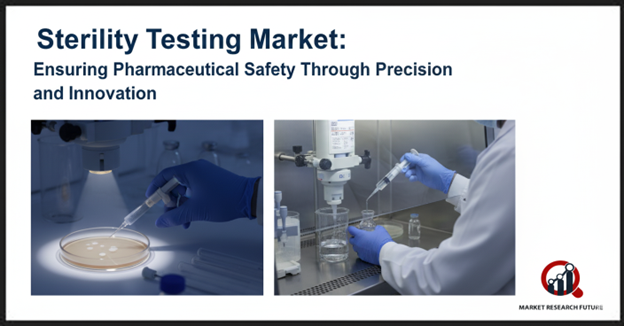
Sterility Testing Market Overview
Sterility testing plays a critical role in the pharmaceutical and biotechnology industries, ensuring that products are free from viable microorganisms that could compromise patient safety. In the context of pharmaceuticals, sterility refers not to an absolute absence of all life forms—which is often impossible—but to a functional assurance that the probability of contamination is less than one in a million.
This testing is essential across a wide range of medicinal products, including injectables, vaccines, biologicals, and blood-derived products, where even minimal microbial presence can have serious consequences. As global health standards tighten and biologics continue to dominate the therapeutic landscape, the sterility testing market is witnessing steady growth, supported by regulatory mandates, technological advancements, and expanding pharmaceutical manufacturing capacities.
According to market insights, the global sterility testing market is expected to grow at a significant rate through 2030, driven by the rising production of pharmaceuticals, biologics, and advanced cell and gene therapies.
What is Sterility Testing?
Sterility testing refers to analytical procedures used to detect the presence or absence of viable contaminating microorganisms in pharmaceutical and biotechnological products. Since it is infeasible to open and inspect every container individually, sterility testing relies on sample-based analysis, where representative samples from a production batch are tested to ensure the sterility of the entire lot.
These samples are incubated in nutrient-rich growth media under controlled conditions that promote microbial proliferation—if any organisms are present, their growth will indicate contamination.
Key Benefits and Importance of Sterility Testing
- Ensures Patient Safety: Detects microbial contamination that could cause infection or reduce drug efficacy.
- Regulatory Compliance: Meets global quality standards set by organizations such as WHO, USP, and FDA.
- Supports Product Integrity: Validates that sterilization and aseptic manufacturing processes are effective.
- Protects Brand Reputation: Prevents costly recalls, legal challenges, and damage to consumer trust.
- Drives Innovation: Encourages adoption of advanced sterile manufacturing and testing technologies.
Implementation and Testing Methods
Sterility testing methods are designed to detect a broad spectrum of microorganisms under controlled laboratory conditions. The most commonly used techniques include:
- Membrane Filtration Method
Ideal for filterable solutions, this technique involves passing the product through a sterile membrane filter that traps microorganisms, followed by incubation in fluid thioglycollate and soybean casein digest media.
- Direct Inoculation Method
Product samples are directly introduced into sterile culture media. This method is preferred for viscous or non-filterable materials.
- Advanced Molecular Methods
Recent advancements, including Nucleic Acid Amplification Techniques (NAT) such as PCR, have improved detection sensitivity by identifying even minute traces of microbial DNA or RNA—offering faster and more precise results compared to traditional incubation methods.
Market Growth Drivers
The global sterility testing market is expanding rapidly, supported by the following factors:
- Rising Pharmaceutical and Biologics Production – The growing demand for biologics, biosimilars, and vaccines requires rigorous sterility validation.
- Stringent Regulatory Frameworks – Mandatory compliance with sterility testing standards set by global health authorities.
- Technological Advancements – Integration of rapid microbial detection and automated testing systems.
- Increased Outsourcing – Pharmaceutical companies increasingly rely on contract research and manufacturing organizations (CROs/CMOs) for sterility testing services.
- Expansion of Cell and Gene Therapy – The complexity of advanced therapies drives the need for specialized sterility testing protocols.
Challenges
Despite strong market potential, several challenges persist:
- Complex Testing Procedures – Time-consuming and labour-intensive methods may delay product release.
- High Cost of Validation and Equipment – Particularly burdensome for small manufacturers.
- Contamination Risk During Testing – Requires stringent aseptic environments and trained personnel.
- Limited Awareness in Emerging Markets – Slower adoption in regions with less developed regulatory oversight.
Addressing these challenges through automation, digital monitoring, and standardized global practices will be key to improving reliability and efficiency.
Regional Insights
- North America: Dominates the global sterility testing market, led by the United States, with a strong presence of pharmaceutical giants, advanced testing facilities, and strict FDA regulations.
- Europe: Countries like Germany, France, and the U.K. are major contributors, with well-established biotech industries and robust compliance standards.
- Asia-Pacific: Expected to register the fastest growth, driven by expanding pharmaceutical manufacturing in India, China, Japan, and South Korea, supported by government incentives and foreign investment.
- Latin America: Emerging markets such as Brazil and Mexico are investing in GMP-certified facilities and modern testing infrastructure.
- Middle East & Africa: Witnessing gradual adoption as healthcare infrastructure improves and local pharmaceutical production scales up.
Future Outlook
The sterility testing market is evolving alongside advancements in biotechnology, automation, and molecular diagnostics. The future will see greater reliance on rapid sterility testing methods, integrated digital monitoring systems, and AI-driven quality control for real-time contamination detection.
As biologics and personalized medicines reshape the pharmaceutical industry, sterility testing will remain an indispensable pillar of quality assurance, ensuring patient safety and regulatory compliance across all therapeutic segments.
Conclusion
Sterility testing stands at the intersection of science, safety, and regulation, playing an essential role in maintaining product integrity and consumer trust. With rising global demand for pharmaceuticals and biopharmaceuticals, the importance of precise and reliable sterility testing has never been greater.
Backed by technological innovation and evolving quality frameworks, the sterility testing market is poised for robust growth—ensuring that the medicines of tomorrow remain as safe and effective as science can make them.
Related Report


Leave a Comment