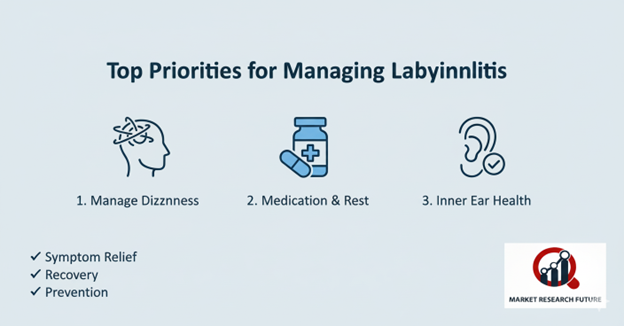
Top Priorities for Managing Labyrinthitis
Labyrinthitis Market Overview
Labyrinthitis, an inflammation of the inner ear, is a complex condition that affects balance and hearing. Though often mistaken as a childhood illness, it predominantly occurs in adults and can cause severe dizziness, vertigo, nausea, vomiting, and in some cases, temporary hearing loss. The condition usually develops following a viral or bacterial infection that triggers inflammation within the labyrinth — the delicate structure responsible for hearing and spatial orientation.
As patients move or shift their head, symptoms can worsen, disrupting daily activities and overall quality of life. While there is currently no definitive cure for labyrinthitis, treatment focuses on managing symptoms, reducing inflammation, and accelerating recovery through a combination of behavioural, physical, and pharmacological approaches.
Understanding Labyrinthitis
Labyrinthitis occurs when the labyrinth — a fluid-filled structure in the inner ear containing the cochlea and vestibular system — becomes inflamed. This inflammation disturbs the transmission of sensory signals between the ear and brain, leading to dizziness and balance disorders.
Common causes include viral infections (such as influenza or the common cold), bacterial infections, or, in rare cases, autoimmune reactions.
Typical symptoms include:
- Vertigo (a spinning sensation)
- Nausea and vomiting
- Unsteady gait or balance issues
- Hearing impairment or tinnitus
- Difficulty focusing the eyes
Symptoms often intensify with movement, making it challenging for patients to walk or turn their heads.
Treatment Approaches
1. Behavioural Treatments
Behavioural therapies focus on retraining the brain to better process sensory signals and restore equilibrium. By combining visual, auditory, speech, and vestibular exercises, these therapies enhance coordination and stability.
Examples include:
- Posture correction and controlled head movements
- Vestibular rehabilitation exercises
- Visual tracking and balance training
These therapies are effective for both children and adults and can help patients become symptom-free within a few days. The goal is to strengthen the brain’s ability to adapt to disrupted sensory input, thereby reducing vertigo and improving motion tolerance.
2. Physical Treatments
Physical interventions aim to stabilize the pressure and fluid dynamics within the inner ear. Certain procedures and devices are used to regulate inner ear pressure and minimize vertigo episodes.
One notable procedure is the Meniett treatment, which involves creating a small incision in the eardrum and using low-pressure pulses to balance the fluid in the semicircular canals.
Although still under study, this treatment has shown potential in alleviating symptoms in patients with recurrent or chronic labyrinthitis.
3. Pharmacological Management
Medications such as Tylenol (acetaminophen) are often used to ease discomfort, while anti-nausea and anti-vertigo drugs help manage acute symptoms. However, emerging research suggests that these traditional treatments may not fully prevent relapses or long-term complications.
Ongoing research efforts are exploring more targeted pharmacological options that can reduce inflammation and restore normal vestibular function more effectively.
Recent Research and Developments
Researchers in China are actively investigating new drug-based therapies for labyrinthitis. The focus is on developing compounds capable of reducing relapse frequency and inflammation at the cellular level.
Preclinical studies have identified a promising combination of three non-toxic chemicals, structurally similar to anti-cancer drugs, that target microtubules — essential components that maintain cell integrity.
By disrupting the function of inflamed cells in the inner ear, these drugs may provide a novel pathway for reducing inflammation and accelerating recovery. Although these findings are yet to be validated in human clinical trials, early results are promising and could pave the way for next-generation labyrinthitis treatments.
Challenges in Managing Labyrinthitis
Despite advancements, several challenges persist:
- Limited Treatment Options: No cure exists; current therapies only manage symptoms.
- Delayed Diagnosis: Overlapping symptoms with other vestibular disorders often delay accurate diagnosis.
- Patient Variability: Recovery rates vary significantly among individuals.
- Research Gaps: Lack of extensive human clinical trials for emerging drug therapies.
Overcoming these barriers requires interdisciplinary collaboration between neurologists, otolaryngologists, and researchers, alongside continued investment in clinical research.
Future Outlook
The future of labyrinthitis management lies in precision medicine and neurosensory innovation. As research progresses, integrated treatment models combining behavioural therapy, personalized drug regimens, and vestibular technology could transform patient outcomes.
Technological advancements, such as AI-powered vestibular diagnostics, wearable balance monitors, and targeted drug delivery systems, will enhance diagnosis accuracy and therapy effectiveness. In parallel, public health initiatives emphasizing early detection and awareness will be crucial for minimizing long-term complications.
Conclusion
Labyrinthitis remains a challenging yet increasingly understood condition within the broader vestibular disorder landscape. With growing awareness, medical innovation, and global research efforts, the management of labyrinthitis is gradually shifting from symptomatic relief to root-cause treatment and neural rehabilitation.
As science moves closer to uncovering effective pharmaceutical solutions and optimizing behavioural therapies, the long-term outlook for patients continues to improve — offering hope for better balance, clearer hearing, and restored quality of life.


Leave a Comment