Do Measles Happen around the world?
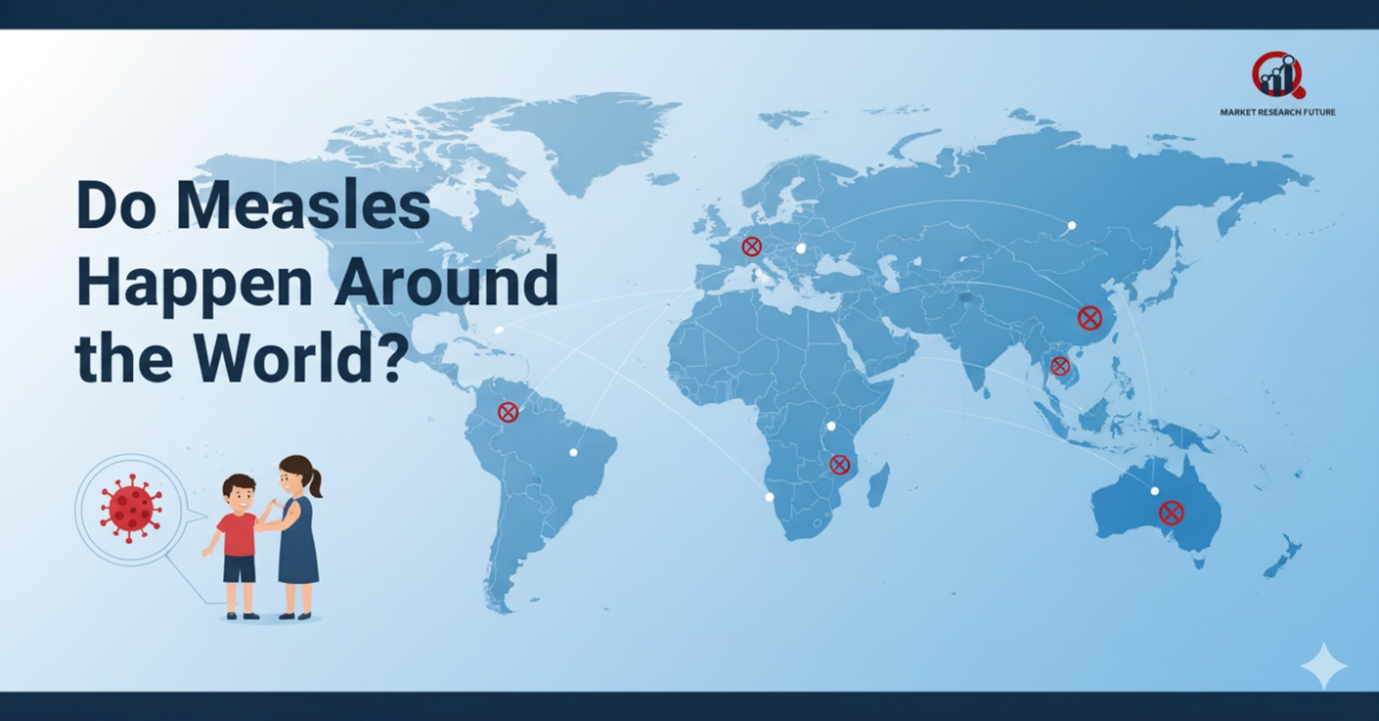
Yes, measles transmission varies by region and climate. In countries with temperate climates, transmission rises in late winter and early spring, while in tropical nations, it increases after the rainy season.
Overview of the Measles Market
People have become more aware about measles, increasing the number of vaccination programs and healthcare initiatives for the same. The global measles market promises to progress at a sluggish CAGR of 2.78% through the forecast period to predict to reach USD 1230 million by 2035. The valuation of the industry in 2024 was USD 910 million.
Before measles vaccination, epidemics occurred every two to three years. The duration of outbreaks depended on population size, density, and immunity levels. In endemic areas, most children were infected by age 10. In the United States, when measles was endemic, over 90% of people were infected by age 15.
Countries with higher vaccination coverage may experience outbreaks less frequently, approximately every five to seven years. However, as susceptible individuals accumulate over time, large outbreaks can occur even in countries with high immunization rates.
The incubation period from exposure to the onset of fever is usually 10 days, followed by an additional four days for rash appearance. Measles is most contagious one to three days before fever and cough begin.
Secondary attack rates among susceptible household contacts exceed 80%. Outbreaks have been reported in populations where only 3–7% were susceptible. Immunity increases markedly following rash onset.
Rising Incidence
Measles, or rubeola, is a highly contagious viral infection that has caused pandemics for over 5,000 years. Historically, it occurred endemically in densely populated areas as a childhood illness.
While the clinical course is often non-fatal, it causes high mortality in populations previously unexposed to the virus and in malnourished children in developing nations. Before the licensing of Enders’ effective vaccine in 1963, many deadly measles epidemics occurred worldwide.
One notable epidemic struck Fiji in 1875, killing up to one-fourth of the population in three months. In recent decades, the World Health Organization (WHO) has launched multiple initiatives to control and eliminate measles.
Despite substantial efforts, measles elimination has not been fully achieved, even in Europe and the Eastern Mediterranean.
Complications
Measles can be severe, most commonly complicated by diarrhea (8%), middle ear infection (7%), and pneumonia (6%). The most serious complications include blindness and encephalitis. Encephalitis often causes permanent brain damage and occurs in approximately 1 in 1,000 measles cases.
The most severe sequela is subacute sclerosing panencephalitis (SSPE), a rare neurologic degenerative disease occurring in 4–11 per 100,000 cases, typically 7–10 years post-infection. In developing countries with widespread malnutrition, measles-related mortality may reach 25%.
Regional Analysis:
Measles continues to affect regions globally, though incidence varies based on vaccination coverage. Africa and Southeast Asia experience higher infection rates and mortality due to lower immunization and malnutrition. Europe and North America have lower rates but face outbreaks among unvaccinated populations.
The Eastern Mediterranean and Western Pacific regions report sporadic outbreaks, particularly in countries with uneven vaccine distribution. Global initiatives by WHO and UNICEF focus on increasing vaccination campaigns, improving surveillance, and reducing mortality, aiming for eventual measles elimination worldwide.
Related Report


Leave a Comment